Early Win-Loss Predictions for the Phoenix Suns Next Season
Before the 2013-14 season, almost nobody expected the Phoenix Suns to finish the year with 48 wins and the ninth seed in the Western Conference. In fact, most expected they would be among the worst teams in the NBA.
And that isn't something just ESPN and SI analysts were guilty of. I predicted that the Suns would finish last in the conference and win just 24 games as well.
And now, going into the 2014-15 season, it is just as difficult to make a reliable, accurate prediction. This year's roster has almost as many question marks as last year's and could plausibly end up almost anywhere in the standings, depending on whether the team takes a step forward, a step back or even remains stagnant.
TOP NEWS

LeBron's Special Helicopter Deal

MJ Makes Record-Setting Donation 🙌
Report: Embiid Down to Rookie Weight
But, taking into account various factors such as key additions, key losses, breakout and regression candidates and relative strength of division and conference, let's make our best educated guess. Here's an early win-loss projection for the 2014-15 Suns.
Key Loss
Let's start with the major player the Suns lost this summer.
The list is relatively thin, and for the most part Phoenix kept its core intact. However, one integral part of last year's roster did manage to slip away.
Perhaps the biggest loss will be Channing Frye. The 31-year-old power forward played in Arizona for five years and was one of the biggest comeback stories of the 2013-14 season after missing all of the prior season due to an enlarged heart. Last year, he managed to play and start all 82 games and score 11.1 points per game despite having avoided all physical activity (other than yoga and golf) for 12 months.
If you are a Suns fan and have watched Frye play over the past several seasons, you should be well-aware of his rebounding and defensive struggles. His main contribution was always on the offensive end, as he established himself as one of the best three-point shooting big men in the NBA.
In fact, the offensive spacing that Frye gave the Suns through his shooting made the Frye-Goran Dragic duo absolutely deadly in pick-and-pop situations.
And it's no surprise that when those two were on the court together, the offense flourished. Here's a chart comparing the Suns' stats with Dragic and Frye on the court together compared to the team averages.
| Off Rating | Def Rating | 3P% | EFG% | TS% | TO Ratio | |
Dragic and Frye | 111.3 | 103.7 | 39.1% | 54.3% | 57.6% | 15.0 |
Team Average | 107.1 | 103.8 | 37.2% | 51.9% | 55,8% | 15.6 |
Of course, keep in mind that when Dragic and Frye were playing, the other starters were often with them. And generally speaking, starters are going to be more productive and efficient than bench players.
But there's also no doubting that Frye had a positive influence on the offense and its ability to score and make jump shots.
And Dragic is one of the first to point out Frye's importance. In a Grantland article by Kirk Goldsberry back in March, Dragic was quoted as saying:
"This year, when we play pick-and-roll, Channing stretches the floor so I have room to operate; I can get inside the paint and make other plays for him and everybody else. He just gives us that spacing, and especially for me and Eric he makes things much easier because nobody can rotate from him.
"
Now the question will be how do Dragic and Eric Bledsoe adjust after losing such an effective three-point shooter? And will someone else on the roster step up?
Overall, the Suns likely made the right decision opting not to re-sign Frye for $8 million per year, which is what the aging veteran will make with the Orlando Magic.
Key Additions
The Suns may have lost Frye, but they also acquired a few players who most would argue could easily match or even exceed his level of production. Let's take a detailed look at each of those acquisitions.
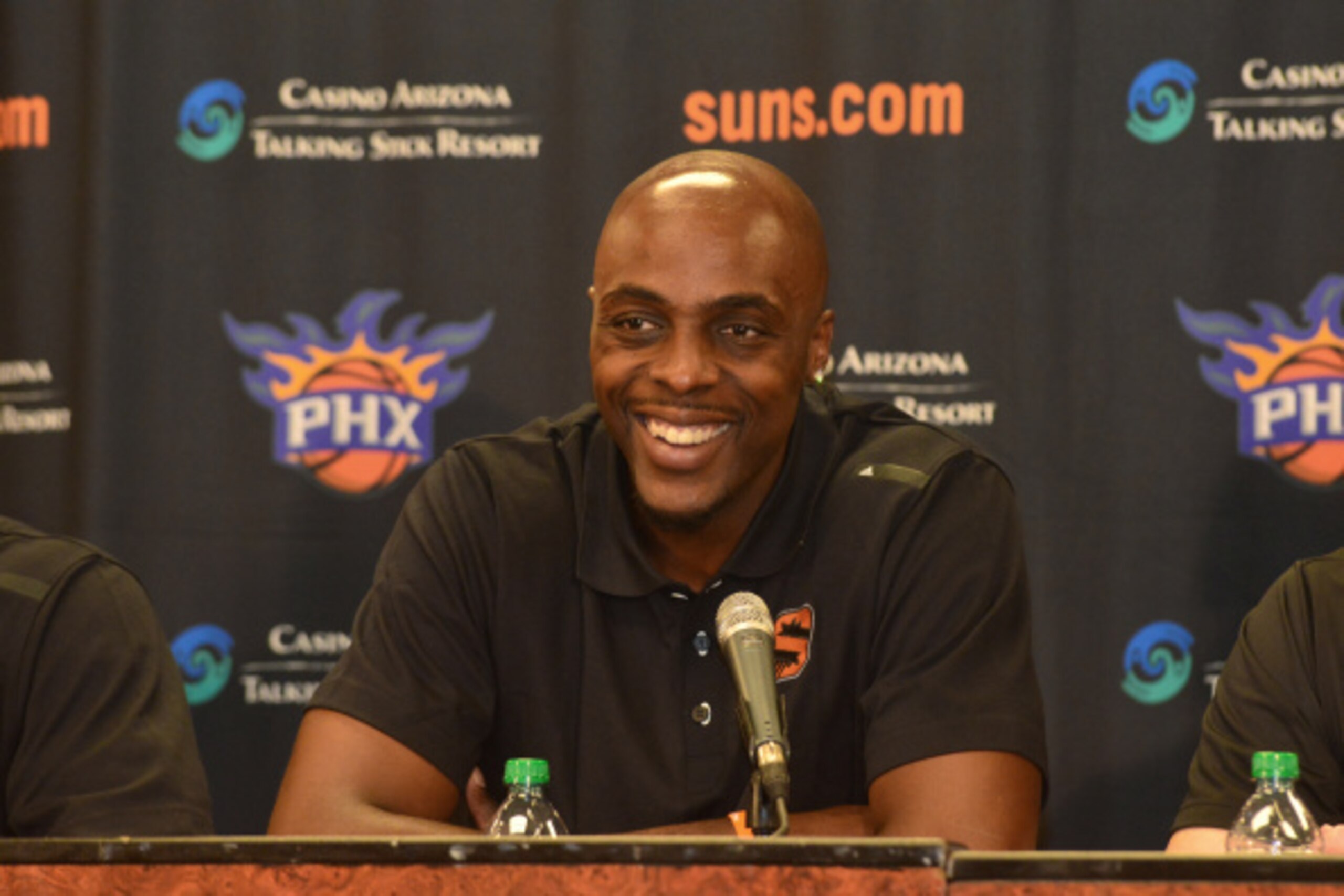
Anthony Tolliver may not seem like a "major" signing, but he is the player most capable to filling in for Channing Frye.
Why? Because last season the 6'8" forward shot 41.3 percent from downtown. Additionally, 247 of his 307 total field-goal attempts were three-pointers. That is an astounding 80.4 percent of his attempts. Even Frye didn't shoot that high a frequency of threes (55.5 percent of his total attempts were threes).
Tolliver has one job on this team, and it is to shoot. Like Frye, his rebounding and defense will leave much to be desired. And he is not a versatile and reliable enough weapon to play 25-30 minutes per game the way that Frye could. However, he could easily step onto the court for 10-15 minutes each night and make one or two threes, sparking the offense and stretching the floor.
Now, let's talk about rookie and 2014 14th overall pick T.J. Warren. Rookies are generally not expected to make a big impact in their first season, and the Suns' picks from the past few years (Kendall Marshall, Alex Len and Archie Goodwin) have certainly followed that trend.
However, there is a reason to be excited about the potential of Warren, a 6'8" combo forward from NC State.
Just take a glance at his stats from the Las Vegas Summer League. In five games and 24.8 minutes per game Warren averaged 17.8 points and 4.8 rebounds per game while shooting 54 percent from the field. He was the team's leading scorer, even though players like Archie Goodwin, Miles Plumlee and Alex Len (all of whom have NBA experience) were on the roster.
Do not expect Warren to enter the league and immediately be an above-average NBA player. Even if he does end up being one of the better picks of the 2014 draft, it should take him at least a few years to develop.
But in the short term, he adds depth to a team that was relatively lacking at the small forward position last year.
And finally, the biggest acquisition of the summer has to be former Sacramento Kings point guard Isaiah Thomas.
It's true; the Suns lost some guards over the summer, such as Ish Smith, Dionte Christmas and Leandro Barbosa.
But none of those three could come close to matching the production of Thomas, who averaged 20.3 points and 6.3 assists per game as a 24-year-old.
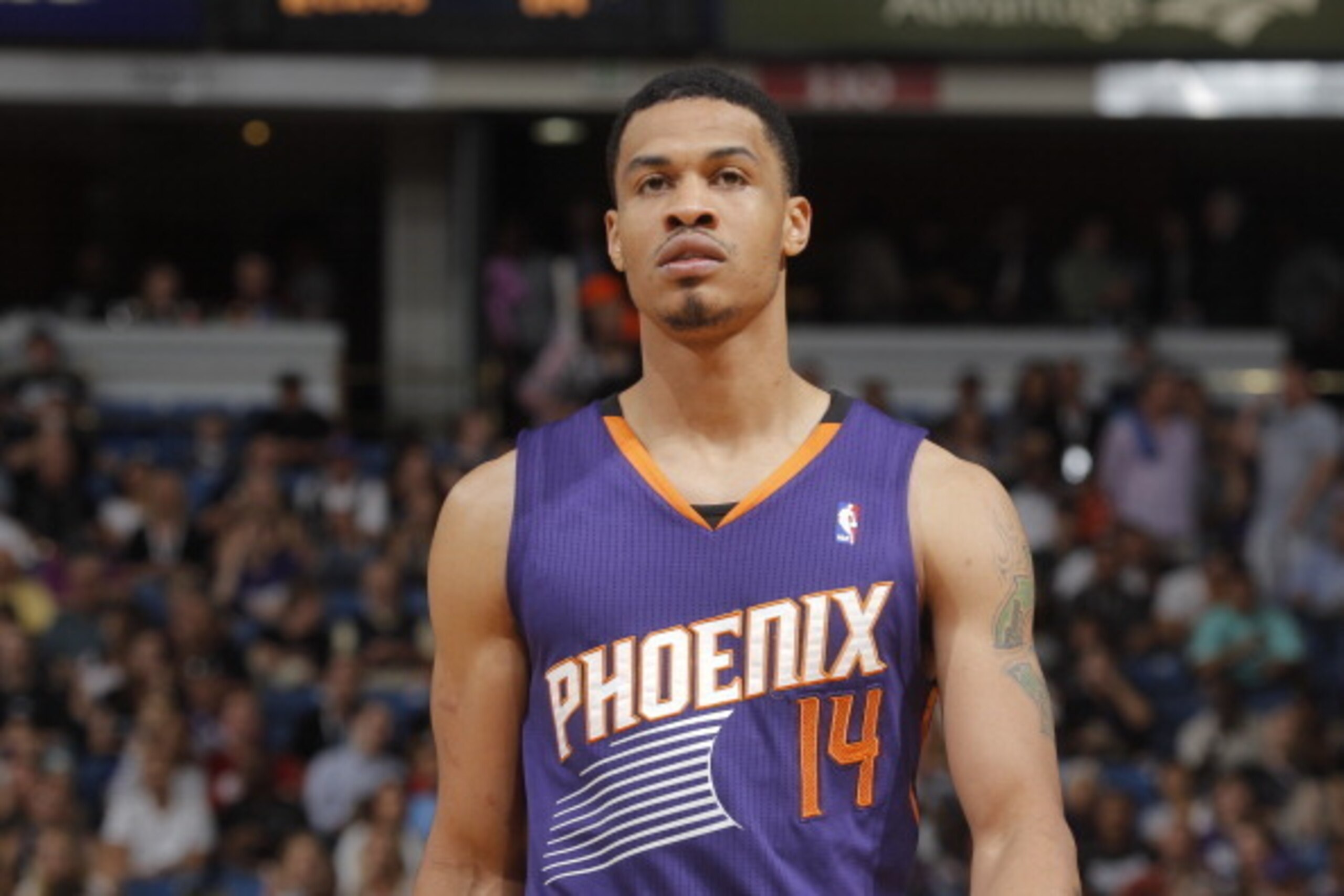
Some may ask why the Suns would add another great point guard to a backcourt that already features Goran Dragic, Eric Bledsoe and Gerald Green.
That is a valid question, but think about the advantage that this move gives Phoenix in terms of depth and overall player stamina. Dragic just spent the summer playing for the Slovenian national team, and Bledsoe is an injury-prone point guard who managed to only play 43 games in his first season as a starter.
Now, imagine being able to play both of those players only around 30 minutes per game rather than 36 while still remaining productive when they're off the court. Thomas gives coach Jeff Hornacek the ability to keep his star players healthy and well-rested, which could be a major advantage for the Suns as the season drags on.
Of course, Thomas has his faults. At just 5'9", he isn't nearly the elite perimeter defender that Bledsoe is, and he can be pushed around by larger guards. That is why a sixth-man role is more suitable for him and why Bledsoe should remain in the starting lineup.
But offensively, Thomas is as good as almost any guard in the league. He pushes the ball in transition, he is a great ball-handler, he has a smooth jumper and he is an efficient scorer. His court vision is questionable, but for just about $7 million per year he is an absolute steal.
And best of all, this gives the Suns the flexibility to not worry about losing Bledsoe or Green to free agency in the future. Thomas is the only Suns guard locked up for multiple years, and if he is only making about $7 million the Suns need not worry about giving Bledsoe a max contract in free agency. Rather, they can focus their cap space on the greater area of need in the frontcourt.
X-Factor
Last season, Markieff Morris took a big step forward by becoming one of the key Suns players off the bench. He consistently outperformed Frye in the second half of the season and averaged 13.8 points and 6.0 rebounds per game overall.
This season, he will join Dragic, Bledsoe, Tucker and Plumlee in the starting lineup to replace Frye. And whether the Suns are able to improve their record heavily depends on how Morris reacts to that change and whether he is able to take another great leap forward.
On paper he looks ready. Last season Markieff averaged 18.6 points and 8.1 rebounds per 36 minutes, and his field-goal percentage skyrocketed from 41 percent the year prior to 49 percent.
He is a great offensive player with a better mid-range jump shot and arsenal of post moves than Frye. He is also able to expand his range and make shots from beyond the perimeter, though not as consistently as someone like Frye or Tolliver (he is a career 33 percent long-distance shooter).
The concerns are more focused on Markieff's defense and whether his offense will continue to be as productive against other starting power forwards. Will he still be shooting almost 50 percent from the field against Western Conference big men like Serge Ibaka, LaMarcus Aldridge, Zach Randolph or Blake Griffin?
Because Markieff is still only 25 years old, one might naturally expect him to continue to improve and develop his game. At his best, he could produce far more than Frye ever did and establish himself as an above-average starting power forward. If that happens, the Suns could easily improve their record, even in an extremely tough conference.
But the other possibility is that Morris takes weeks or months to adapt to the starting lineup and to playing fewer minutes with his twin brother, Marcus.
Perhaps he will lose confidence in his shot or become inconsistent. There's a possibility he will never seem comfortable at all this season and could even be forced back into a bench role. And if that happens, it would be very difficult for Phoenix to take a step forward.
So the question is, which Morris will show up? All signs point to Morris improving, but there's never any guarantee of success.
Regression Candidate
Although the Suns are an incredibly young team with plenty of prospects who should improve, there are also players who could conceivably take a step backward.
And perhaps the best candidate for that position this season is Gerald Green, even though this is a contract year for him.
If Thomas, Bledsoe and Dragic all remain healthy, there is absolutely no need for Green to play 28.4 minutes per game like he did last year. In fact, Hornacek may not need to play him for more than 20 minutes each night with so many other guards to choose from.
That decrease in playing time alone will lower Green's numbers. But, in addition to that, he has been the most inconsistent Sun throughout his career, perhaps making him most susceptible to regression.
Just look at what he did with the Indiana Pacers in 2012-13. After scoring 12.9 points per game with the New Jersey Nets the season before, Green went to Indiana and immediately became a benchwarmer, shooting 36 percent from the field and scoring just seven points per game on the year.
Last season Green seemed to gain confidence under Jeff Hornacek's coaching style. And yet, his style of play—which involves a lot of transition threes and questionable shots—is prone to inconsistency. There may be a time when Green's crazy shots stop falling, and suddenly the fans may cease to love him as much as they currently do.
Another aspect of Green's game that cannot be ignored is his defense.
Last season, there were 53 total five-man lineups that played at least 200 minutes together. The Suns' starting lineup of Bledsoe, Dragic, Tucker, Frye and Plumlee ranked second out of 53 with an astounding 93.1 defensive rating.
But without Bledsoe, the defense disappeared. And that can be attributed as much to Green's poor defensive abilities as much as it is credited to Bledsoe's elite defense.
The starting lineup of Dragic, Green, Tucker, Frye and Plumlee ranked 46th out of 53 with a defensive rating of 111.5.
Why such a big change when only one player was substituted for another? Green is not the worst defensive player out there, but without Bledsoe the Suns defense was immediately exposed. And that is why Green, like Thomas, is so much better suited for a sixth-man role than for a spot in the starting lineup.
None of this means that Green will revert to the level of production he gave in 2012-13 with the Pacers. But the fans' honeymoon with the 28-year-old swingman may soon be coming to an end, as he may not be able to keep up the same level of offensive production and efficiency for a second year in a row.
The Other Guys
And what about the rest of the division and conference? Because, after all, the Suns will play most of their games against interconference rivals, making those matchups vitally important to the team's final record.
In the Pacific Division not too much has changed. The Sacramento Kings have a blossoming superstar in DeMarcus Cousins, but they also lost starting point guard Isaiah Thomas to the Suns. And acquisitions such as Darren Collison and Nik Stauskas may not be enough to make them a legitimate threat in the West just yet.
The Los Angeles Lakers have Kobe Bryant back, but they also lost Pau Gasol to the Chicago Bulls. Carlos Boozer is an underrated power forward, Jeremy Lin was a great signing and Julius Randle is a promising rookie, but none of that should make the Lakers playoff bound this season.
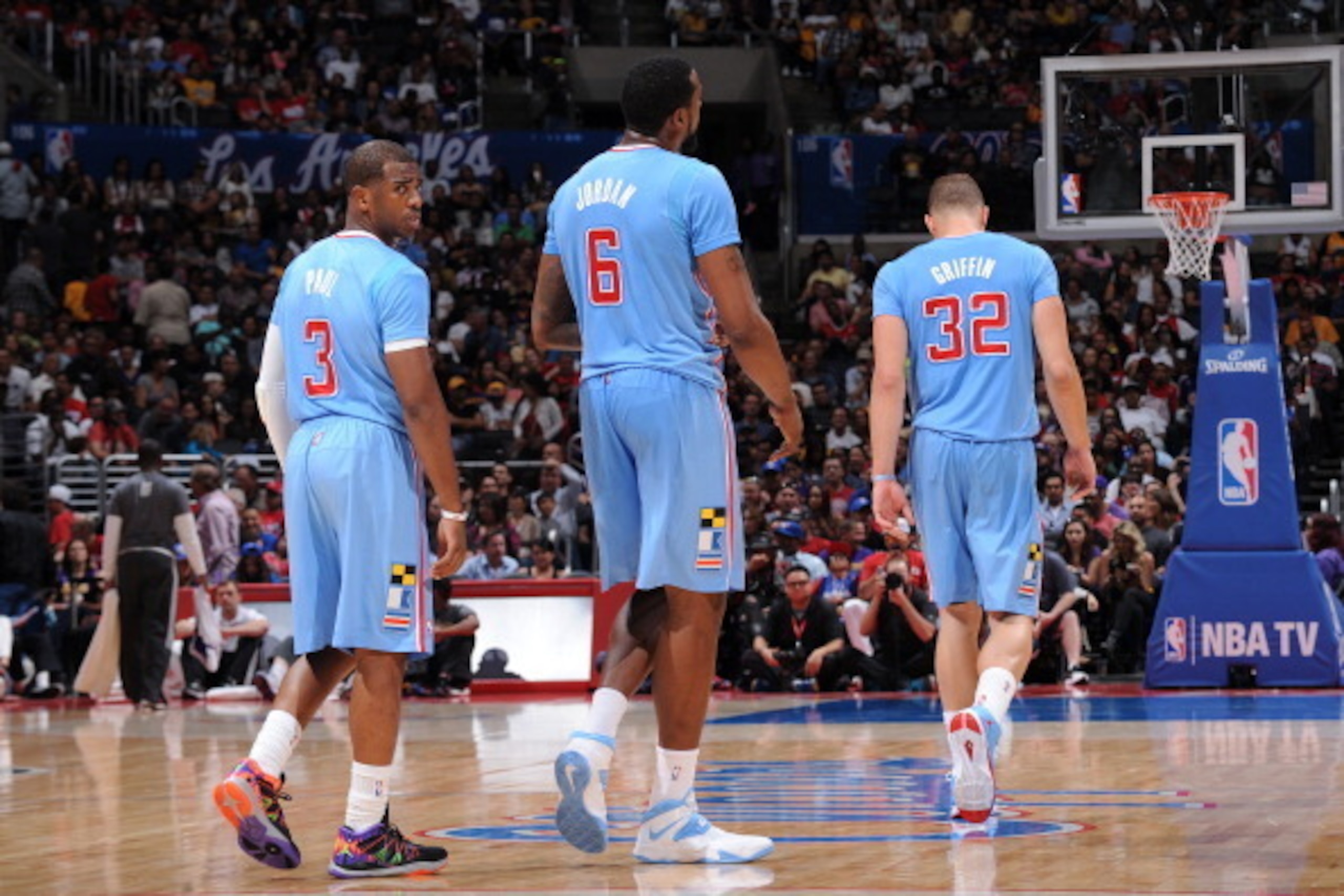
The Suns' main competition in the division will still be the Los Angeles Clippers and Golden State Warriors, and neither of those teams has changed all that much. Both will enter the 2014-15 season with better benches, but they made no major acquisitions.
In the rest of the conference there was plenty of player movement. Teams like the Dallas Mavericks, who added Chandler Parsons, Tyson Chandler and Jose Calderon, will be on the rise. Other teams like the Houston Rockets, who lost Parsons, Jeremy Lin and Omer Asik, should fall in the conference standings.
But overall, the makeup of the conference should not be drastically different. As always, some teams will improve, and others will struggle. But few major superstars migrated to the Western Conference this summer, meaning that it should be about just as difficult to clinch a playoff seed.
Prediction
The acquisitions of Thomas, Warren and Tolliver should easily outweigh the losses of Frye and Ish Smith. And with so many young prospects like the Morris twins, Alex Len, Tyler Ennis, Archie Goodwin and Miles Plumlee, the Suns will look like a stronger team in 2013-14.
But how much stronger? Some players will improve, but others, like Gerald Green or even Goran Dragic, may not put up such historically brilliant numbers for two years in a row.
A lot will also depend on Eric Bledsoe and if he signs the qualifying offer to stay for one year or signs a long-term deal. Because, if Bledsoe is only around for one more season and is solely focused on looking good so that he can earn a max contract on the open market, he may negatively affect team chemistry as well as the organization's chances of making the playoffs.
Another question is can he even stay healthy? When Bledsoe was healthy last season, the Suns were on track to winning 54 games. And now, they have an even deeper roster.
But it would be foolish to expect every player to perform at his best. There is always unexpected regression coming from someone or a couple injuries to key players. The team will likely face adversity in some form.
This time, maybe that won't stop the Suns from making the playoffs regardless.
Final Prediction: 50-32, No. 7 seed in Western Conference
.jpg?w=2560 "2 NFL Officials Suspended")


.jpg?w=2560 "Mahomes' Wife Trolls Kubiak 💀")
.jpg?w=2560 "Injury-stricken Seahawks signing veteran RB")
.jpg?w=2560 "Love's Body Already 'Tired'")