New York Mets Offseason: GM Sandy Alderson Has Decision To Make on Daniel Murphy
The New York Mets’ 2011 season has been one of pleasant surprises, an unfamiliar feeling for this generation’s fanbase, thanks mostly to a rebuilding state and expectations lower than the Phillies’ team ERA.
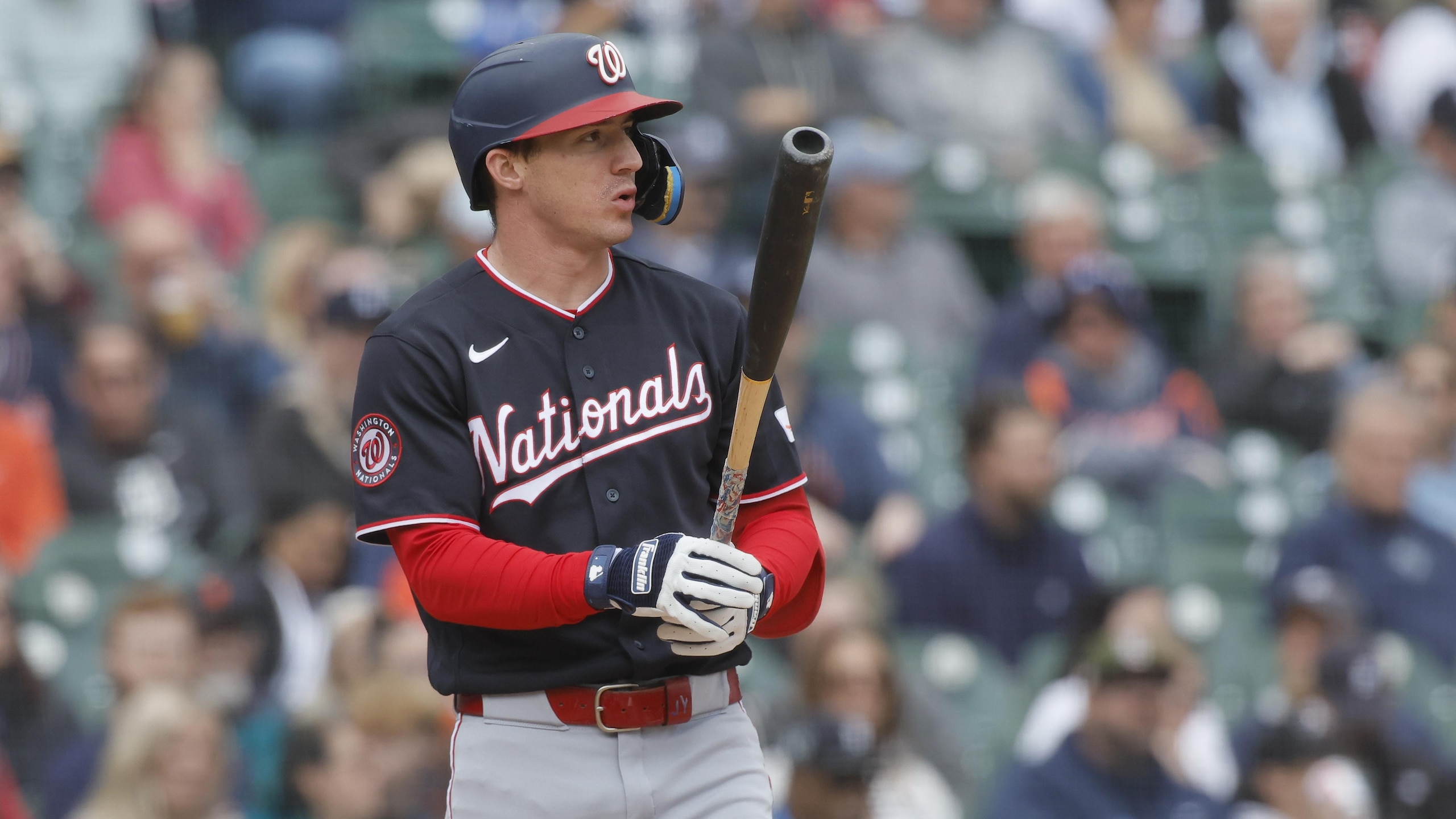
Daniel Murphy, the lefty hitter from Jacksonville, Florida, stroked his way to a .320 batting average through 109 games before suffering his second MCL injury in two years. At the time, he was fifth in the league in hitting.
As the rebuilding movement in New York evolves completely into Sandy Alderson’s brainchild, the GM has a lot of options and freedom over what to do with Murphy, as he does with the rest of the team. Here are four of those options, ranging anywhere from realistic to bold.
Play Him at Second or in Right Field
1 of 4At one point, this might have been the easy call. Murphy’s natural position is third base, but coming up under All-Star stalwart David Wright ignited Murphy’s forays into middle infield play and the corner outfield positions.
Following this season, however, starting him at either spot almost seems out of the question.
From a health perspective, Mets fans want nothing more than for Murphy to avoid playing second at all costs; he has twice injured an MCL covering the base (in a 2010 minor league game while trying to turn a double-play, and this season covering on a steal attempt). Not only were the injuries cringe-worthy, they were seemingly avoidable.
Health reasons aside, Murphy’s defensive liability is too much for the Mets to handle in the middle of their infield, and Ruben Tejada and Justin Turner’s friendly competition for second this season and defensive prowess (Tejada more so than Turner) have left the fans and front office content with whichever player eventually wins the job.
As for right field, the emergence of Lucas Duda as a serious power threat over the second half of the season has ended most doubts about who will play there next season. Duda has 20 doubles and 49 RBI in only 341 plate appearances, with a slash line of .292/.365/.480.
Trade Him
2 of 4Normally a pretty loyal bunch, this move would mostly likely be an unpopular one among Mets fans, at least immediately.
But what Murphy provides—good contact hitting and on-base percentage—the Mets have plenty of; the team currently ranks sixth in the majors in batting average and on-base percentage.
And for all the offensive prowess he displayed over the course of his 109 games this season, next year he’ll be replaced by an even better hitter in Ike Davis, who had a slash line of .302/.383/.543 before an ankle injury cut his season short, and who many scouts believe might win a Gold Glove someday.
The team’s offense has been a welcomed surprise this season, in spite of missing their best hitters—Davis, David Wright, Jose Reyes, Carlos Beltran—for considerable stretches. With the team effectively reaching base and getting runners home, it might be both bold and prudent to exchange Murphy’s offensive boon for something the Mets sorely lack: pitching.
Trade Someone Else
3 of 4As unpopular as trading Murphy may be, what I’m about to suggest might surpass heresy.
Who to trade to make room for Murphy? Well, there’s always Ike Davis at first, but the Mets would like to have him for an entire season and know what they’ve got before exchanging him, not to mention his value is diminished for now by this season’s injury.
Jason Bay’s contract is too big to move out of left field, and Mets fans want to see if he can return to form after his latest offensive tear.
But what about Duda in right? If Bay is too expensive to move, Duda is too cheap to trade. A team in such financial flux needs all the cheap assets it can get, and right now, that’s Duda.
That leaves one position left for a room-making trade, and it’s Murphy’s best position: David Wright’s spot at third base. See what I mean about heresy?
Obviously it’s a downgrade both on offense and defense, but if Murphy can contribute three-quarters worth of Wright’s production on both sides of the ball—and that’s a very conservative estimate—they’d be paying just cents on the dollar.
Murphy’s defensive potential would be maxed out playing his best position. He’d be surrounded by a very strong defensive infield. And in a division topped off by the potent pitching of the Phillies starting staff and the Braves' lethal bullpen back end, the Mets would be in a position to receive a certifiable ace to pair with whatever contributions they get from Johan Santana, or could haul a bevy of young arms for the talented Mr. Wright.
.jpg?w=2560)

Super-Utility Role
4 of 4The hoped prototype for this role is Ben Zobrist’s 2009 season with the Tampa Bay Devil Rays. For Joe Maddon’s playoff-bound squad, Zobrist played in 152 games, hit 27 homers with 91 runs batted in, 97 walks and a slash line of .297/.405/.543. He spent much of his time at second and in right field, but played every position on the field other than pitcher and catcher.
Unfortunately for the Mets, I think this is the most likely of scenarios barring permanent injuries to any of the positions Murphy is semi-capable of handling (that kind of injury, however, is no longer a likely scenario but a norm in Queens). I say “unfortunately” because, unlike Murphy, Zobrist is an average to above-average defender at any position he plays.
Murphy is actually a serviceable third baseman, with good range and a decent arm. But his play at his second-best position, first base, is often kindly described by Mets color commentator and 11-time Gold Glove winner at first, Keith Hernandez, as “an adventure.” And it only gets worse from there.
Ultimately the question of what to do with Murphy parallels many of the other decisions Sandy Alderson and his colleagues face this offseason: Will they be bold? Or will they try to force an offensively gifted square peg into a defense-necessary round hole?
.jpg?w=2560 "Ref Slips on Wet Turf in London 🎥")
.png?w=2560 "B/R CFB Top 25 After Week 7 🔢")
.jpg?w=2560 "NFL Addresses Paris Concerns")

.jpg?w=2560 "Rookies Looking Like Draft Steals 😏")
.jpg?w=2560 "Latest Fantasy Injury News 🗞️")
.jpg?w=2560 "Skattebo Role Reduced")