

The Biggest Reason MLB Free Agency Is Moving at a Snail's Pace
It's December and the winter meetings have come and gone, yet Major League Baseball's free-agent market is ice-cold with seemingly no hope of heating up any time soon.
There's more than one reason for this, but perhaps none are more consequential than the uncertainty about whether the designated hitter will remain universal in 2021.
Per Ken Rosenthal of The Athletic, MLB sent a memo to teams last week instructing them to proceed as if the National League won't have the DH next season. But according to ESPN's Buster Olney, the general assumption is that it eventually will.
Meanwhile, the free-agent market can't really open up until there's an official decision either way.
Designated Hitter History
- Adopted by the American League in 1973
- National League voted against also adopting the DH in 1980
- Upon the introduction of interleague play in 1997, the DH was used only in AL parks through 2019
- In response to the coronavirus pandemic, MLB instituted a universal DH rule for the 2020 season
- For the first time since 1974, NL teams (4.71 R/G) outscored AL teams (4.58 R/G) in 2020
Why the Market Badly Needs Clarity on the Universal DH
For starters, MLB and the MLB Players Association aren't at a stalemate over the universal DH because it was poorly received in 2020. On the contrary, nobody in uniform seemed to mind that pitchers were no longer hitting for themselves.
"It is very normal now," Los Angeles Dodgers manager Dave Roberts told Gabe Lacques of USA Today in October, wherein his club won the World Series. "I was kind of always on the other side of that, being a traditional National League, pitcher hit guy. But I actually have warmed up to it.
"I flipped. I like the DH."
Numbers-wise, it's little wonder the DH helped National League clubs outscore their American League counterparts for the first time in 46 years.
It's not so much that National League DHs were that good collectively, as they posted only a slightly above-average 101 wRC+. It's just that they were so much better than pitchers, who had been mired in never-ending offensive decline prior to 2020:

An average wRC+ is an even 100. That means by posting a minus-18 wRC+ in 2019, pitchers were a staggering 118 percent below average offensively. And that was actually a step up from 2018, in which they finished at minus-24.
All this didn't necessarily influence MLB's decision to make the DH universal in 2020. The idea was more so to help keep pitchers healthy amid the pandemic-shortened season. With interleague games comprising one-third of each team's schedule, it also made sense to balance the competition.
Still, the DH going universal was likely inevitable even before 2020. Now that it actually did and was widely accepted, the question is why there's even a smidgen of doubt over whether it should stay.
Well, don't bug the players. As ESPN's Jeff Passan reported in November, they want the universal DH to return in 2021. Presumably, they'll take the same stance when it's time to replace the current collective bargaining agreement, which expires after the '21 season.
The owners, however, wanted the players to agree to expanded playoffs for next season in exchange for keeping the DH universal. That would effectively carry over the status quo of this past season, wherein everyone had the DH and 16 teams—as opposed to the usual 10—made the playoffs.
As it always does, the central issue here has to do with money.
From the players' perspective, keeping the DH in the National League would be good for free-agent hitters who are gifted in the batter's box but not so gifted in the field. In theory, they would have more negotiating leverage from their markets doubling in size.
Because it means more money out of their pockets, owners wouldn't be enthusiastic about that idea even in the best of times. And 2020 obviously hasn't been the best of times as the league reportedly lost about $3 billion in revenue while playing out a 60-game schedule in (mostly) fan-less stadiums throughout 2020.
Of course, the league's losses would have been even worse if it hadn't recouped revenue by expanding the playoff field. What the owners implied in November is that they'll need to keep this enhanced revenue stream in order to pay the raises for which the players are angling through the continuation of the universal DH.
But in Passan's words, this isn't a "particularly equitable trade" as far as the players are concerned. Hence their rejection and the ensuing stalemate.
According to Ken Davidoff of the New York Post, MLB and the MLBPA know they can't wait much longer to iron out a plan for the 2021 season. Beyond the universal DH and expanded playoffs, they also need to determine whether a normal 162-game season is even feasible for 2021. After all, the pandemic is hardly under control, and it could be a while before a vaccine is widely available.
In the meantime, a lot of players are looking for work.
Out of several hundred free agents—including 59 who were non-tendered on Dec. 2—only 16 have signed major league contracts as of this writing. Also of note is that this group includes only five hitters.
This might imply that the market is simply better stocked with pitchers than hitters, but the opposite is true. To wit, eight of our top 10 free agents are hitters.
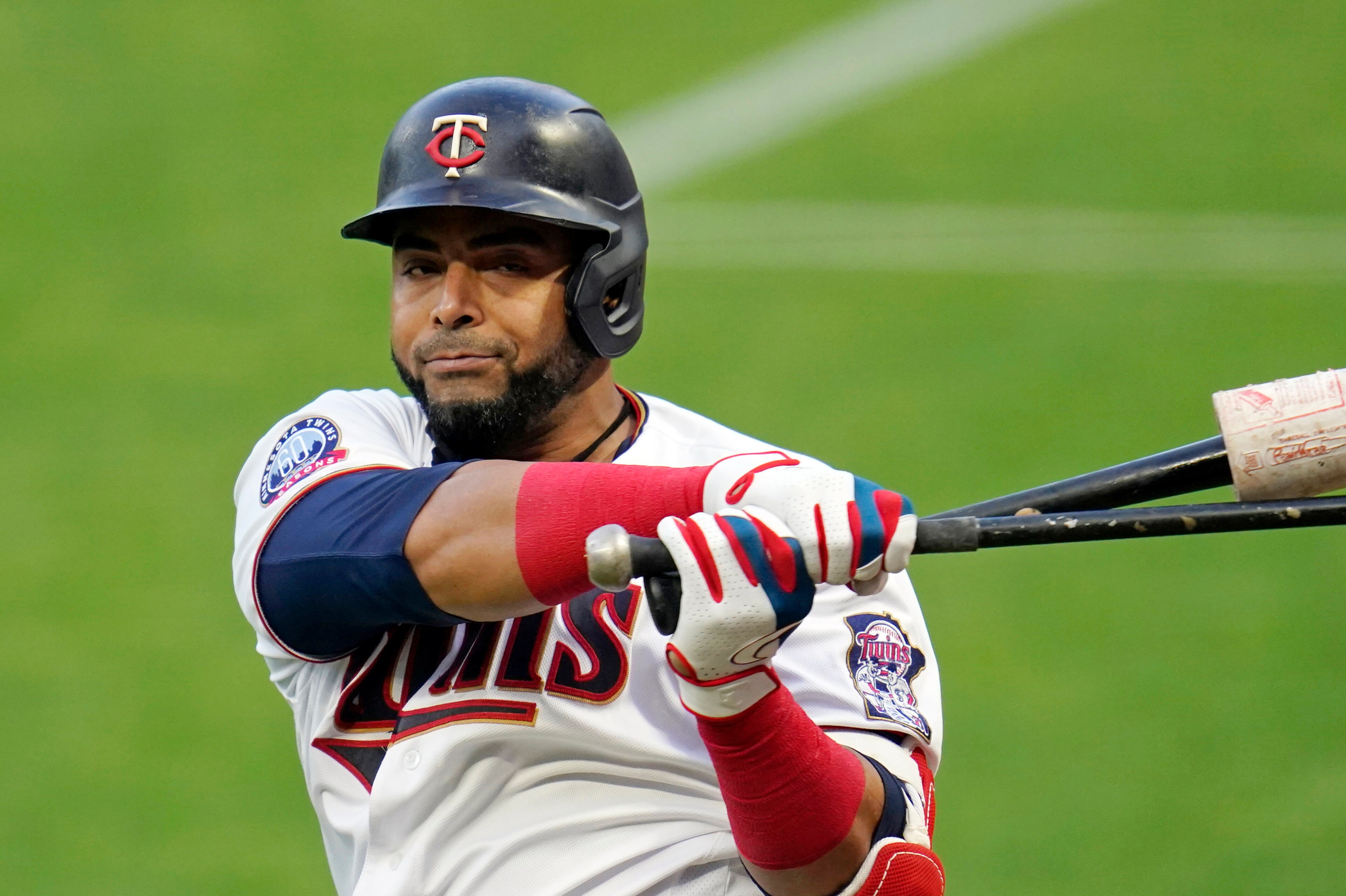
One catch, though, is that the top of the hitting market is skewed toward older and one-dimensional players. Nelson Cruz, for example, is 40 years old and strictly a DH. Kyle Schwarber (27), Marcell Ozuna (30), DJ LeMahieu (32), Michael Brantley (33) and Justin Turner (36) are younger, yet each fits the mold of a hitter who might at least moonlight at DH going forward.
Officially, there's nothing stopping these guys from signing now. But it's understandable if they'd rather wait for clarity on whether the DH will return to the National League. For that matter, it's equally understandable if NL clubs don't want a non-binding memo dictating their free-agent shopping lists.
If this, in and of itself, isn't a strong enough incentive for the league and union to figure out the DH situation, the utter lack of buzz surrounding the sport ought to alarm both parties.
It's never a good thing when baseball struggles to generate headlines during the winter. It's an even worse thing this winter, during which MLB's offseason is sharing the stage with that of the National Basketball Association. You know, the one in which Paul George just signed a max contract potentially worth $226 million.
At a trying time like this, confirming the universal DH for 2021 might be baseball's best hope for a magic bullet.
Stats courtesy of Baseball Reference and FanGraphs.
_0.png?w=3840 "Summer League Takeaways ✍️")
.jpg?w=3840 "Watch: Jerry Rice Chases After Heckler")
.png?w=3840 "Offseason Moves Sure To Backfire 💥")

.png?w=3840 "Spida's Pitch to LeBron 🗣️")