NFL1000 Week 4 Notebook: It's Officially Mitchell Trubisky Time
If there's one thing we've learned after the first quarter of the 2017 NFL season, it's that we know very little.
Who would have expected that Bill Belichick, probably the finest defensive mind of his era, would have perhaps the league's worst defense despite touted free-agent acquisitions? And that the Patriots and the allegedly tanking Jets to have the same 2-2 record? And that the Raiders offense to go mute over the last two games after a pair of impressive performances to start the season?
You could have won a lot of bets if you'd guessed the Detroit Lions would finally find a bit of a running game, or that the Buffalo Bills would stand atop the AFC East. And there's the top surprise of the season so far: Under new head coach Sean McVay, the Rams have one of the league's most explosive offenses. It's hard to imagine after the nightmare season quarterback Jared Goff went through in 2016, but that's a testament to what good coaching and play design can do.
When looking to explain the league's biggest surprises, it's always wise to head to the tape, and that's what Bleacher Report's NFL1000 scouts do every week.
Lead Scout: Doug Farrar
Quarterbacks: Mark Schofield
Running backs/Fullbacks: Mark Bullock
Receivers/Tight Ends: Marcus Mosher
Offensive Line: Ethan Young
Defensive Line: Justis Mosqueda
Linebackers: Derrik Klassen
Secondary: Ian Wharton
Here's what stood out to our scouts during Sunday's Week 4 action.
It's Mitchell Trubisky Time in Chicago
1 of 11
When the Bears signed former Tampa Bay Buccaneers quarterback Mike Glennon to a three-year, $45 million deal and then moved up to take Mitchell Trubisky with the second overall pick in the 2017 draft, the clear idea was for Glennon to use his veteran acumen to ease the transition for Trubisky, who had started just one season at North Carolina, and start for the majority of the season.
The plan has been derailed because Glennon has played miserably through the season’s first four weeks. He ranked 32nd in our NFL1000 QB Rankings last week, and he was set to be ranked last again after a Thursday night performance against the Packers in which he completed 21 of 33 passes for 218 yards, one touchdown, two interceptions and two lost fumbles. On Monday, ESPN.com’s Adam Schefter and Dan Graziano reported that the team has pulled the plug on the Glennon experiment and will go with Trubisky instead when the Bears face the Vikings on Monday Night Football.
Starting your rookie quarterback in his first regular-season game against one of the best defenses in football is a bit strange, but the Bears had to do this now, and they should have done it sooner. Glennon has not shown the physical reaction ability nor the mental acuity to be successful at this level. Now, the question is how Trubisky will respond, and how offensive coordinator Dowell Loggains can help him.
Loggains did a nice job presenting clear pictures for Trubisky in the preseason—I wrote tape notes of his preseason performance against the Broncos’ excellent defense, and I was impressed with Trubuisky’s arm talent, mobility and toughness. I was also impressed with Loggains’ ability to alter and pare down his playbook to help Trubisky overcome his current liabilities—he will telegraph throws at times, he’s still learning to read the field, and he will occasionally create turnover opportunities with hero throws when he should be checking down.
Against the Broncos, Loggains dialed up pre-snap motion to help Trubisky diagnose coverages, and sent him on several boot-action rollouts to clear himself from pressure and get a better read of his receivers.
Will the Bears go through growing pains with Trubicky as their starter? Sure, but it’s far better than starting a veteran who has no credible NFL future. Mike Glennon has shown everything he is (and isn’t); Mitchell Trubisky has a great deal of potential despite his rough spots. The time to make this change was probably two weeks ago, but at least the Bears finally made the right call.
—NFL1000 Lead Scout Doug Farrar
Are the Buffalo Bills for Real?
2 of 11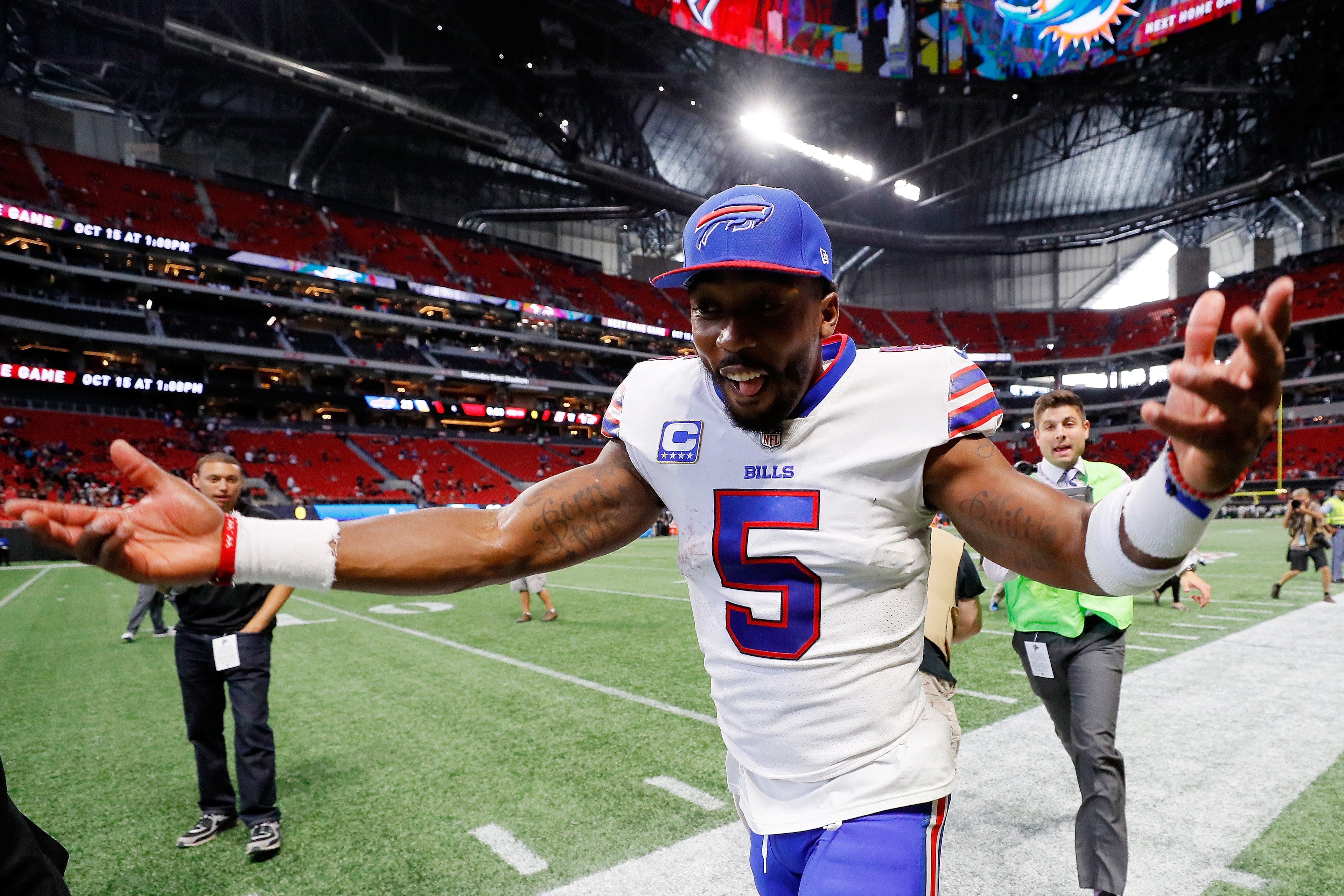
The 2017 Buffalo Bills came into their season with a new coaching staff led by Sean McDermott, and a quarterback in Tyrod Taylor with an uncertain future. After two seasons of subpar results under Rex Ryan, the Bills were not expected would lead the AFC East with a 3-1 record at the season's quarter turn, but that's exactly what they've done.
McDermott's team hasn't bulked up on creampuffs, either. They started their season with a win over the Jets, yes, but they also beat the Broncos at home and shocked the defending NFC champion Falcons on the road. Their only loss (a 0-3 snore fest) came against the Panthers in Week 2.
The question now is whether the Bills have what it takes to challenge in this division all the way through the season, perhaps picking up the franchise's first playoff berth since 1999. Right now, they're getting things done with a conservative passing offense and a defense that has surprised.
In years past, Bills defenders were frequently playing out of position according to the whims of Ryan and former defensive coordinator Dennis Thurman. But under McDermott, a fine defensive mind, and new defensive coordinator Leslie Frazier, this defense is now tougher to handle.
Rookie cornerback Tre'Davious White, the first-rounder from LSU, has allowed just 13 catches on 26 targets on the season, and E.J. Gaines has matched him in pass-defensive efficiency. It's not the result expected after Stephon Gilmore left for the Patriots in free agency. The pass rush is led by veterans Lorenzo Alexander, who can get pressure from any gap, and Jerry Hughes, who is the team's premier edge-rusher.
On offense, new coordinator Rick Dennison brings a trademark zone-blocking style which merges perfectly with the skills of running backs LeSean McCoy and Mike Tolbert, and Taylor is always a threat to run, too.
Where things might get complicated throughout the rest of the season is in the passing game. Taylor, who only got a two-year contract extension in the preseason, has not generated a great deal of excitement in the Bills' front office. If the team sees him as a bridge quarterback, it will be up to Taylor to dissuade them.
So far this season, he's been more of a game manager, to use that pejorative term—entirely efficient and relatively mistake-proof but hardly explosive. He's completed 65 of 99 passes for 744 yards, five touchdowns and one interception. Not bad numbers, but he hasn't thrown for more than 224 yards in any game.
To be fair, Taylor could use some help from his receivers. Second-round rookie Zay Jones has been up and down so far, and receiver Jordan Matthews is more of a complementary player in the slot than a primary explosive weapon. McCoy and tight end Charles Clay are the primary receivers at this point.
If the Bills are going to keep this stretch of success going, they'll have to find ways to make their passing game more dimensional. One way is with play-action. Taylor has completed 22 of 28 passes for 319 yards, three touchdowns, no interceptions and a league-leading passer rating of 149.9 when faking to backs first. In these plays, Taylor uses the force of his backs and his own rushing ability to confuse defenses. Dennison will have to scheme some new wrinkles into the passing game as the season goes on to take advantage.
—NFL1000 Lead Scout Doug Farrar
Cam Heyward Is Becoming a Dominant Force on the Pittsburgh Steelers Defense
3 of 11
It's not that Pittsburgh Steelers defensive lineman Cameron Hayward is an anonymous entity. He was selected in the first round of the 2011 draft out of Ohio State, and he'd put up 25 sacks and a ton of important run-stops in his NFL career through last season. And the Steelers showed how much they believed in him by inking Heyward to a six-year, $59.2 million contract extension with $15 million guaranteed in July of 2015.
Unfortunately, he missed nine games in the 2016 season due to injuries, but he flashed talent in limited action, amassing three sacks and 19 total pressures in just 224 pass-rushing snaps and adding seven run stops in 115 run snaps.
Still, what we've seen from a totally healthy Heyward through the first four games of the 2017 season is quite a revelation. More than ever, Heyward is blowing up blockers on his way to the backfield, and he appears to be just about unstoppable from multiple gaps. He was a star in the Steelers' 26-9 Week 4 victory over the Ravens with two sacks and two forced fumbles, but he's been on a tear all season.
The stats bear that out: He already has nine run stops in 84 run snaps this season, and he leads all 3-4 defensive ends with 19 total quarterback pressures—four sacks, three quarterback hits and 12 quarterback hurries.
Heyward's tape is even more impressive than his numbers. As a base 3-4 end or three-technique tackle in nickel fronts, he can bull through double-teams with his upper-body strength, or run through open spaces and get to the quarterback with amazing closing speed. As a nose tackle, he's dangerous with hand moves and penetrative ability. There isn't a gap he won't disrupt from.
Heyward is playing as well as any multigap lineman, from Jurrell Casey to J.J. Watt to Michael Bennett, and if he keeps up this pace, he should earn consideration for Defensive Player of the Year.
—NFL1000 Lead Scout Doug Farrar
.jpg?w=3840 "Rams Ravens Football")
.jpg?w=3840 "Cardinals 49ers Football")
Is Jay Cutler Sinking the Miami Dolphins?
4 of 11
Before this weekend, I thought it was not time to panic yet in Miami. If Adam Gase started to vary up the offense and use Jarvis Landry as more of a downfield receiver, the offense would start to flourish.
Gase opened up the offense a bit, but it was not enough. And quarterback Jay Cutler did not exactly hold up his end of the bargain.
The Dolphins came out and looked impressive on their opening drive of the game. They used some downfield concepts on their first few passing plays, and while Cutler still threw the ball to receivers underneath, they were stretching the New Orleans defense a bit vertically, using route concepts such as Levels or Flood.
But then, Gase emptied the backfield on a first-and-goal situation, and Cutler lofted a fade route in the direction of tight end Julius Thomas. The TE could have fought more for the football, but the pass was underthrown and intercepted.
That was the closest the Dolphins got to scoring any points all day.
Cutler finished the day completing 20 of 28 passes, which looks nice on paper, but those completions went for only 164 yards. Averaging 5.9 yards per attempt is not a recipe for success in the NFL.
Part of the issue is the play-calling. The Dolphins continue to rely on plays such as smoke screens, or designed shallow routes to receivers with blocking setting up downfield to generate offensive production. Teams are starting to collapse in the shallow areas of the field and taking away the opportunities for yardage after the catch.
DeVante Parker looked to be developing into a vertical, downfield threat, but other than winning a jump ball against the Los Angeles Chargers in Week 2, he has not contributed a ton in the downfield, vertical game.
Right now, the Dolphins seem like an offense without a true identity. If they are going to go all in on their shallow-crossing screen concepts, then they need to design a few different looks to let those plays hit. Or, they need to incorporate some more vertical stuff so they at least stress the defense in the back half, and secondaries are prevented from simply collapsing underneath.
Cutler can still be a successful quarterback. The onus is on the coaching staff to right this rudderless ship.
—NFL1000 QB Scout, Mark Schofield
Bilal Powell and Elijah McGuire Carry Jets in Matt Forte's Absence
5 of 11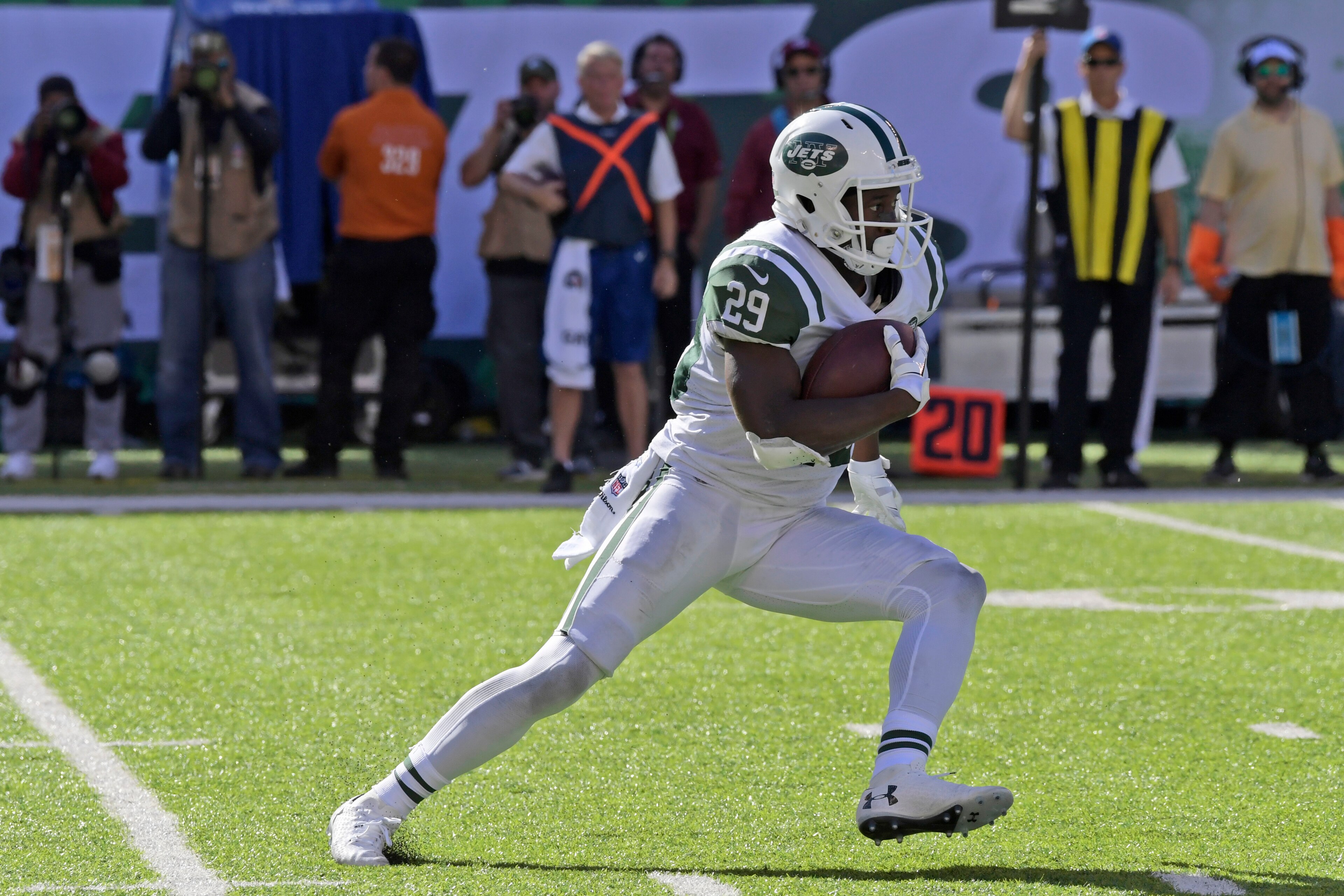
With Matt Forte inactive because of a knee injury, the Jets needed a running back to carry the load. Going into Week 4, Forte had been the only back with any production of note, averaging 4.1 yards per carry and 9.7 yards per catch. Bilal Powell, who split time with Forte during the first three weeks of the season, averaged less than three yards per carry, while Elijah McGuire is a rookie who hadn't seen the field before this week.
It was a grim situation going into the game, but the Jets were up against the Jaguars, who have one of the worst run defenses in the league. Powell took the bulk of the carries and exploded into life in the first quarter. On a toss play to the right, Powell made a cut inside his blockers and leapt over a defender, but lost his balance as he landed and stumbled to the ground. Jacksonville defenders stood still, believing he had been tackled, but Powell got back up and sprinted down the middle of the field for a 75-yard touchdown run.
In the third quarter, McGuire took a handoff on an outside zone play to the left. The Jets offensive line did a great job washing out the front side of the Jaguars defensive front, while the back side was held by the quarterback faking the bootleg. This left a huge lane down the middle of the defense for McGuire to cut back into. McGuire ran free into the second level where he was met by the deep free safety working down to help support the run. McGuire made a quick stutter move before bursting to his right. The stutter was enough to force the safety to stop his feet, allowing McGuire to run past him and away from the rest of the Jaguars defenders on his way to a 69-yard touchdown run.
With Powell and McGuire in tandem, the Jets running backs accumulated 256 rushing yards and two touchdowns on 31 carries. However, 177 of those yards and both touchdowns came on just three plays. Take out those three outliers and the Jets only managed 79 yards on 28 attempts at 2.8 yards per carry, which is about what Powell had been averaging coming into the game. It may not be something the Jets are able to replicate consistently as the season progresses, but those explosive plays from Powell and McGuire helped them to their second win of the season.
—NFL1000 RB Scout, Mark Bullock
Vikings Will Have to Turn to Passing Game After Loss of Dalvin Cook
6 of 11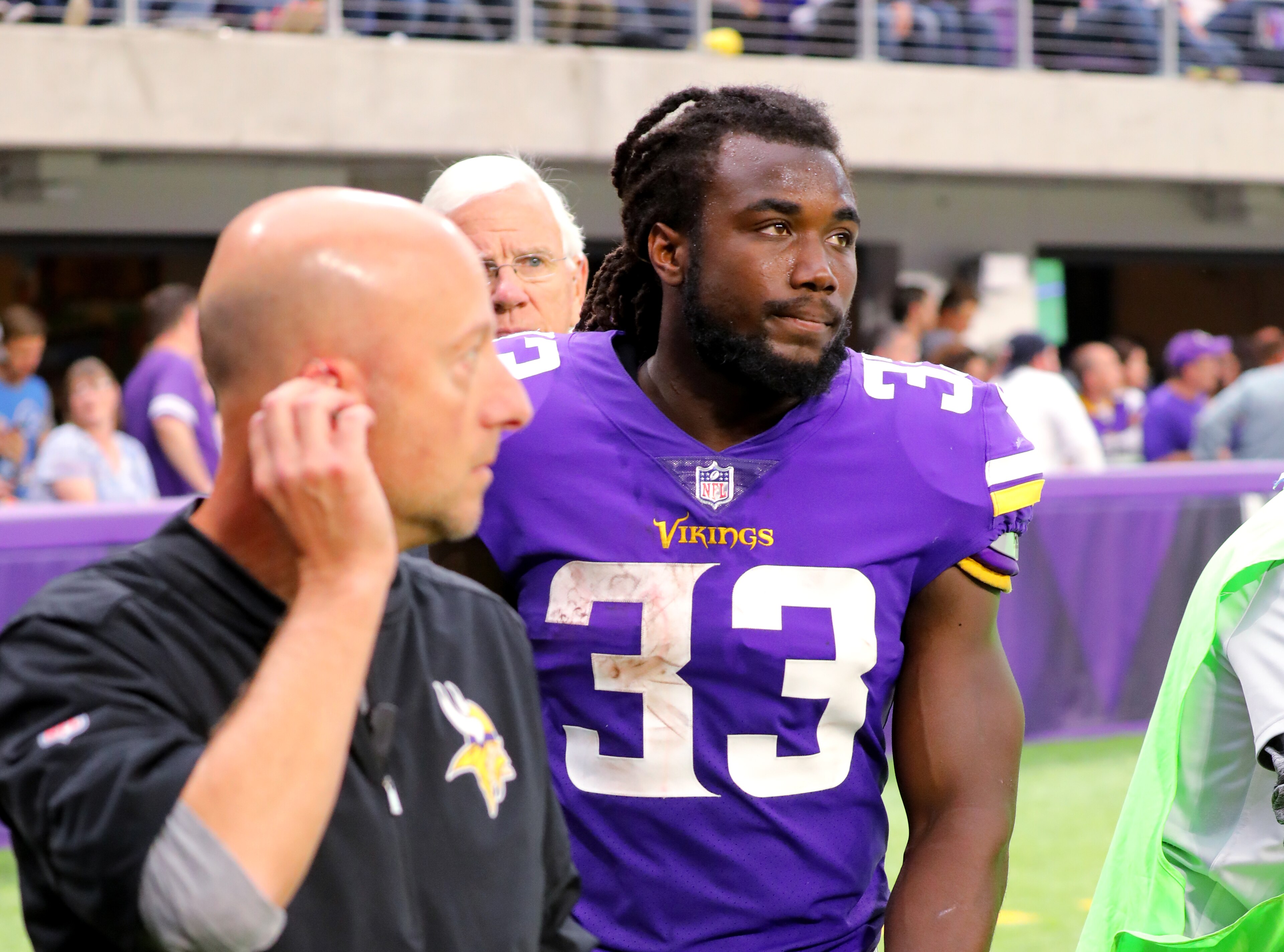
Going into Week 4, Cook was the league's second leading runner, behind only Kareem Hunt. Through three games, he had displayed the ability to carry the Vikings offense on his shoulders as the workhorse back on first and second down while also being a strong receiving option out of the backfield on third down and other obvious passing situations. He'd given the Vikings a consistent option to pick up yards and keep the offense in check despite the inconsistencies at quarterback with Case Keenum under center.
It appears the Vikings will have to rely on their backups for the foreseeable future, as Cook left Sunday's game with a knee injury that NFL Network's Ian Rapoport and Tom Pelissero reported is a "nearly complete ACL tear." Cook's MRI on Monday will reveal the severity of the injury.
Going forward, the Vikings will take some solace in the fact their offensive line has been able to open up some rushing lanes for Cook, but they won't be able to replicate his ability to create his own yards. Cook has fantastic vision and has used it to set up blocks by pressing the hole and quickly cutting back the other way. He's also done terrifically well to elude unblocked defenders in the backfield or at the line of scrimmage to turn potentially negative plays into positive ones, keeping the Vikings ahead of the chains. Cook has truly managed to maximize the gain on the vast majority of his run plays.
Latavius Murray took his place as the starting running back once he went down. Murray averages just 2.7 yards per carry on his 14 carries so far this season. He had a couple of good runs on Sunday, but they were mostly a result of strong blocking, rather than a reflection of his ability. Murray doesn't have the same natural ability to set up blocks and avoid tackles that Cook has, and he won't be able to consistently make up for blocking miscues up front. Jerick McKinnon took over on third downs as a receiving option of the backfield but failed to register a catch. He dropped one pass and was unable to hold on to another as he was hit when the ball arrived.
Without the same consistency from the running game, the Vikings will have to rely more on their passing attack. Wide receivers Stefon Diggs and Adam Thielen have both started off the season well, and the Vikings might look to increase Diggs' workload on screens, jet sweeps and end-arounds as an extension of the running game. Cook is a big loss that will be tough to make up for, but using Diggs in this creative way would add more misdirection to keep the second-level defenders guessing.
—NFL1000 RB Scout, Mark Bullock
DeAndre Hopkins Bounce-Back Season in Full Swing with Deshaun Watson
7 of 11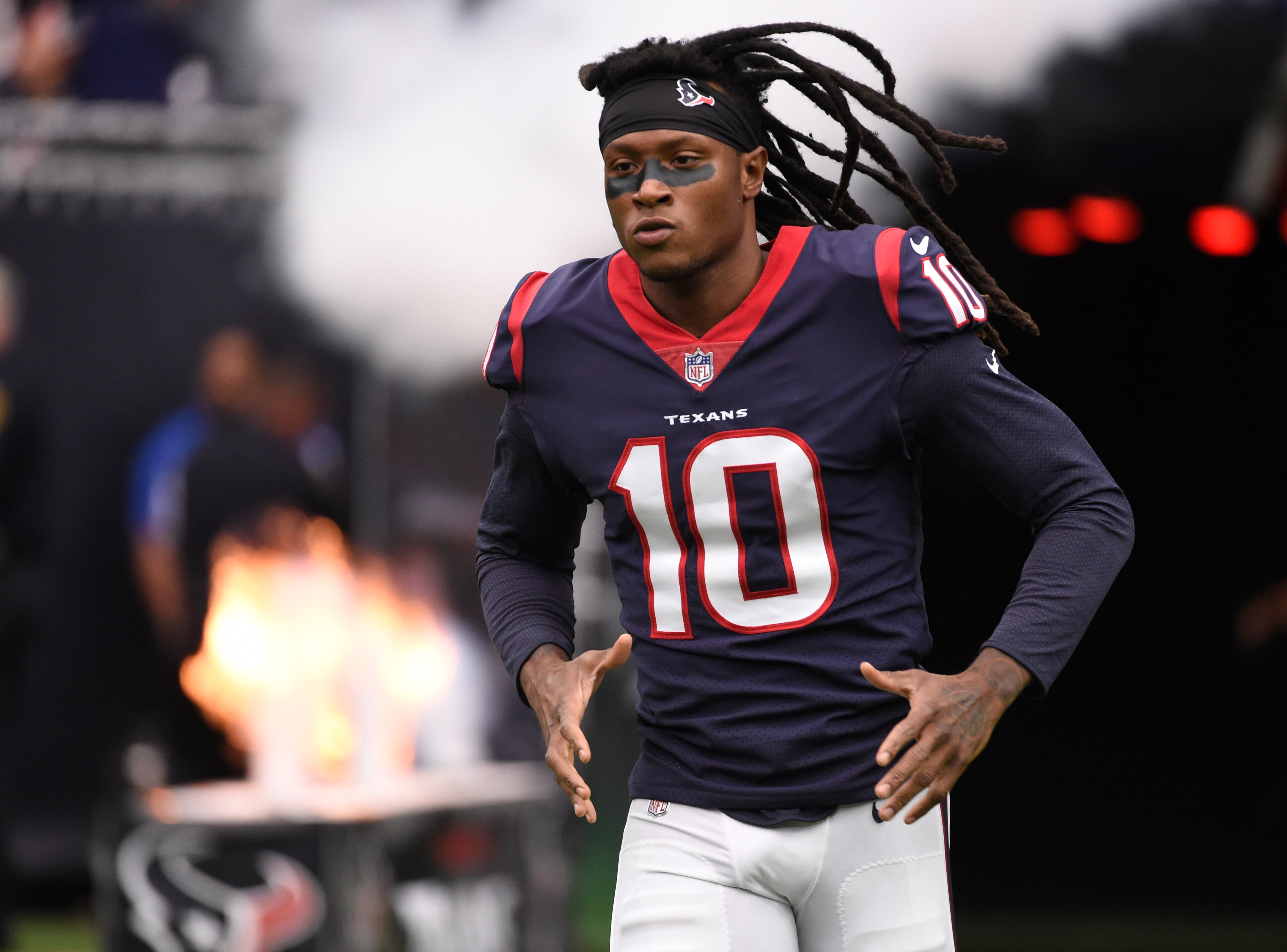
After a disappointing 2016 season in which he had less than 1,000 receiving yards, DeAndre Hopkins has returned to his usual elite form. In his last three games, Hopkins has caught 24 passes for 256 yards and a score. He’s playing with confidence and swagger for the first time since 2015. The biggest reason for Hopkins’ resurgence? Rookie quarterback Deshaun Watson.
With Watson, Hopkins is finally getting the target share of a No. 1 receiver, but more importantly, he’s established a rhythm with his new quarterback. Unlike Brock Osweiler and Tom Savage, Watson isn’t afraid to test cornerbacks when Hopkins is covered and is willing to throw him open rather than just wait until he creates separation. Watson is also willing to feed Hopkins targets, knowing that getting his best receiver on track will help the rest of the offense flourish.
Watson is willing to give Hopkins chances in jump-ball situations as he tries to get him involved early in the game. Hopkins is one of the elite route-runners in today’s NFL, and that makes him an easy player to target, especially for a young quarterback. And the type of routes (short-to-intermediate routes on the outside) pair well with Watson’s skill set as he prefers to get the ball into his playmakers’ hands quick rather than make big plays down the field.
As long as Watson can stay healthy and on the field, Hopkins is a sneaky bet to lead the league in receiving yards this season. Hopkins has firmly reestablished himself as one of the top five wide receivers in the AFC, and his production and play should only improve as Watson becomes more comfortable in this offense.
—NFL1000 WR Scout, Marcus Mosher
Raiders Offensive Line Suddenly a Sore Spot for Oakland
8 of 11
After a dominant run last season and a great first two weeks, the Raiders offensive line has had a few issues over its last two games. The Raiders only have 57 yards rushing on 2.04 yards per carry over their last two games and have given up 17 pressures (compared to four in the first two weeks of the year) in pass protection.
What's been the problem? Well it’s been a few things. Left guard Kelechi Osemele has kept up his dominant play, while left tackle Donald Penn and center Rodney Hudson have lost a few more reps than normal, but the play of Penn and Hudson is nothing to lose sleep over for Raiders fans.
The right side has seen a clear dip in play. Right tackle Marshall Newhouse has struggled, and his neighbor at right guard, Gabe Jackson, has been beat a lot more than his typical high levels of play. Newhouse had the difficult assignment of handling Von Miller this week, and even though the Raiders tried to help him out with chips and back help, he predictably struggled.
Tough matchups don't explain Jackson's struggles, though, as he should be able to handle the likes of Matt Ioannidis and Stacy McGee (from Week 3) and Derek Wolfe (from Sunday).
Jackson went through a similar rough stretch to start last season, and he needs to focus on getting out of his stance to get out of this funk like he did last time. Jackson wins with power rather than mirroring ability, and if he gets behind the eight ball coming out of his stance, it can be hard for him to recover. His improvement will be a big part of keeping Derek Carr—or EJ Manuel if Carr misses time with his back injury—clean going forward.
—NFL1000 OL Scout, Ethan Young
What Can Be Done About the New England Patriots Defense?
9 of 11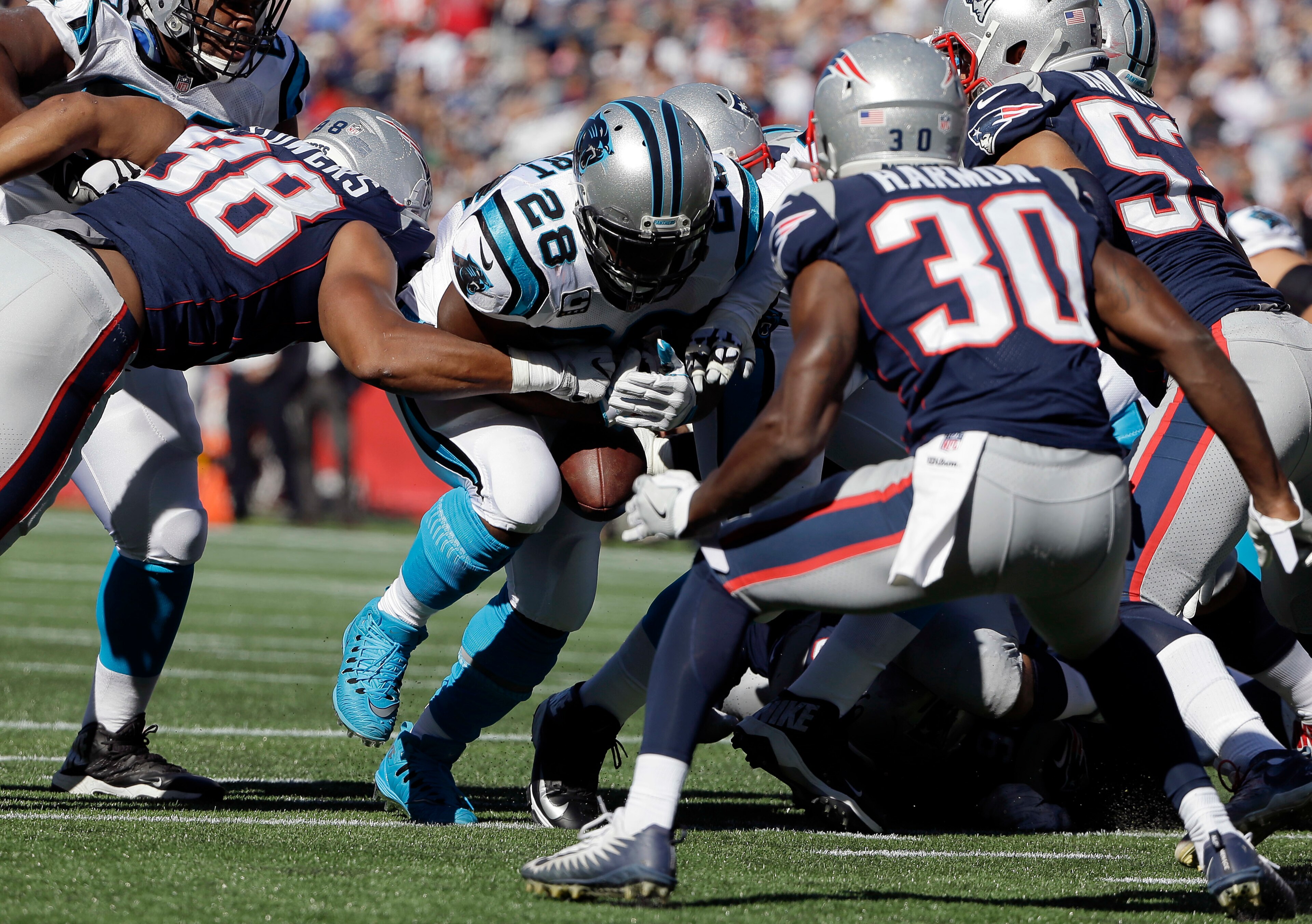
Relative to what was expected of an NFL team, the New England Patriots came into Week 4 ranked 27th in defensive completion percentage, 27th in defensive sack percentage and 31st in yards per completion allowed value. After throwing for just two touchdowns and four interceptions against the San Francisco 49ers, Buffalo Bills and New Orleans Saints, Carolina Panthers quarterback Cam Newton had a “get right” game against a poor Patriots secondary to the tune of a 130.8 passer rating and a win.
Some may ask "What is wrong?" with the New England defense, but we need to ask what is right about its pass-rushing situation. In 2015, the team recorded 49 sacks, with 26 coming from Chandler Jones, Jamie Collins and Jabaal Sheard alone. The Patriots' sack total dropped to 34 in 2016, with the trades of Jones and Collins to Arizona and Cleveland, respectively.
In 2017, the team lost Sheard and Chris Long to free agency, while Rob Ninkovich, with 46 career sacks under his belt, retired in the summer. To put that into perspective, the defensive linemen to register at least 30 percent of the Patriots' defensive snaps in any of the team's first three games of the season have a combined 50 sacks, just four short of Ninkovich's career.
This isn't to say that New England planned to have a bad pass rush, but it's not difficult to see why it is falling short in the defensive passing game, despite, per Spotrac, a 2017 $29.6 million cap hit on a secondary of Devin McCourty, Stephon Gilmore, Patrick Chung and Malcolm Butler, each earning more than the Patriots' highest-paid defensive lineman.
Trey Flowers and Deatrich Wise, two "big ends" who are more complementary rushers than primary rushers stylistically, are a solid tandem from Arkansas, but losing all of those bodies at defensive end and linebacker takes a toll. Losing Derek Rivers, the team's first draft pick in 2017, to a knee injury and missing on Kony Ealy, a former second-rounder who they traded for this offseason but couldn't make the 53-man roster, also is being felt.
The defensive line issues are a talent issue. The Patriots are going to need to ask themselves what they can do to bring in more legitimate pass-rushing talent. That could come from a free agent like Dwight Freeney or from a trade with a team like the Washington Redskins, who currently have Ryan Kerrigan, Preston Smith, Ryan Anderson and Junior Galette in a loaded two-deep.
2017 is showing New England that it can only spread so many snaps between Flowers, Wise and Cassius Marsh, acquired via a late summer trade, while also being effective against the pass. Playing Dont'a Hightower, an off-the-ball linebacker, on the line of scrimmage isn't solving much, either. Fresh blood is the only answer.
—NFL1000 DL Scout, Justis Mosqueda
Myles Jack Enjoying Breakout Sophomore Campaign
10 of 11
Myles Jack was a forgotten member of the Jacksonville Jaguars defense last season. The Jaguars misplaced in their defense last year, often asking him to play near the line of scrimmage as an edge strong-side linebacker. It wasn’t his natural position.
Jack is an off-ball linebacker. He always was at UCLA because of how athletic and comfortable he is in space. This year, the Jaguars realized that and transitioned Jack to a true off-ball position, where he has been thriving.
The most notable difference is how Jack approaches the run game. When he was near the edge, Jack did not know how to take on blocks immediately and sift through chaos. He held his own, but he was not a difference-maker. Now, Jack can see plays unfold and attack them. His speed and agility make it easy for him to sprint through breaks in the offensive line. Jack has been more commanding at the point of attack this year, too. While he needs to pick his battles better, Jack has shown great improvement in not being bullied out of plays.
Now being in space, Jack has been more easily able to make plays. Versus the New York Jets this week, Jack scooped up a fumble on a botched screen pass and took it 81 yards the other way for a Jaguars touchdown. Jack recovered the ball so quickly because he sniffed out the screen pass and attacked the backfield. Even if the running back had caught the ball, Jack would have been right there to bring him down for a tackle for loss.
Jack still has room to grow. It would serve him well to play more assignment-sound, and he still needs to develop his confidence in NFL coverages. Jack’s development to this point cannot be discounted, though. He went from being swept under the rug to being one of the most exciting players on a loaded defense. Brick by brick, the Jaguars are building an elite defense, and Jack is the latest young player to come on strong.
—NFL1000 LB Scout, Derrik Klassen
Cowboys Secondary Struggling After Injury Bug
11 of 11
After the Dallas Cowboys spent significant draft capital and modest free-agent money to overhaul their secondary, the unit is still waiting to see the dividends from their investments. The decision to let former Cowboys corner Mo Claiborne walk in free agency and replace him with Nolan Carroll has backfired, as Carroll has missed the last two games with a concussion. Chidobe Awuzie and Orlando Scandrick have also missed time with injuries.
The Cowboys dropped to 2-2 with their Week 4 loss to the Rams, and they lost was largely because of a pass defense that faltered when they needed a stop the most. Rams quarterback Jared Goff posted 256 yards and two touchdowns as he varied short and intermediate passes without much resistance. Opposing quarterbacks have now completed 101 of 154 attempts, good for 66 percent completion percentage. The young secondary has forced just two interceptions as well.
Rookies Xavier Woods and Jourdan Lewis have had good moments as aggressive tacklers in space, but there’s room for improvement for them and Anthony Brown in coverage. The Cowboys' zone-heavy defense protects them from allowing big plays over the top. A bend-don’t-break defense can survive, but the unit is not having success with it as-is.
As Awuzie gets back, the Cowboys will have more versatility with their personnel. Lewis looked more comfortable in the slot in previous games, and if he plays the slot well moving forward, that would allow Awuzie and Brown to be aggressive in man coverage on the outside. Scandrick and Lewis are similar players despite their size difference, but that’s an asset for defensive coordinator Rod Marinelli.
Safeties Byron Jones and Jeff Heath have had differing experiences this year so far, too. Heath’s been solid as an enforcer downhill and also when he’s dropping back into deeper coverage responsibilities. But Jones has struggled in his usual role, taking poor angles and failing to provide the elite coverage on tight ends that he provided in 2016. The Cowboys need Jones to get back to that level quickly.
—NFL1000 DB Scout, Ian Wharton
.jpg?w=3840 "Cowboys Football")
.jpg?w=3840 "Buccaneers Seahawks Football")