

Rookie QB C.J. Beathard Isn't Exciting, but He May Be Perfect for the 49ers
To understand why the 49ers invested a third-round pick in exceptionally ordinary quarterback prospect C.J. Beathard, you have to understand Kyle Shanahan. To understand Kyle Shanahan, you have to understand Robert Griffin III and Johnny Manziel.
Griffin and Manziel, you recall, were the two incandescently talented first-round rookie quarterbacks Shanahan was tasked with developing in Washington and Cleveland, respectively. They are also two big reasons why Shanahan is no longer in Washington or Cleveland.
Shanahan doesn't do high-wattage quarterback talent and never really did. After beginning his career with Tampa Bay, he eventually became a coordinator tasked with grooming Matt Schaub to replace David Carr, a former first overall pick. It even took him a year and some beer to find his groove with Matt Ryan, who already had all the rough edges sanded down.
.jpg?w=2560 "Colts Football")
.jpg?w=2560)
.jpg?w=2560 "Commanders 49ers Football")
So when Shanahan said that Beathard reminded him of Kirk Cousins, it was some of the highest praise he could offer.
Beathard looked nothing like a third-round pick to most draft analysts. A deep tape dive reveals an ordinary passer, when Beathard passes at all. Four times in the last two seasons, Beathard led Iowa to victory while completing fewer than 10 passes for less than 100 yards. Watching 2016 Iowa games sometimes felt like watching 1974 Iowa games. Beathard was a handoff machine with a kinda-OK arm and mobility.
Beathard ended his college career with three interceptions and 55 passing yards in a 30-3 loss to Florida in the Outback Bowl. He looked sturdy and adequate during Senior Bowl practices then injured his hamstring and barely played in the game itself. He did nothing breathtaking at the combine. Beathard fit the profile of a quarterback drafted in the sixth or seventh round, relegated to the third string and destined to a short and uneventful career.
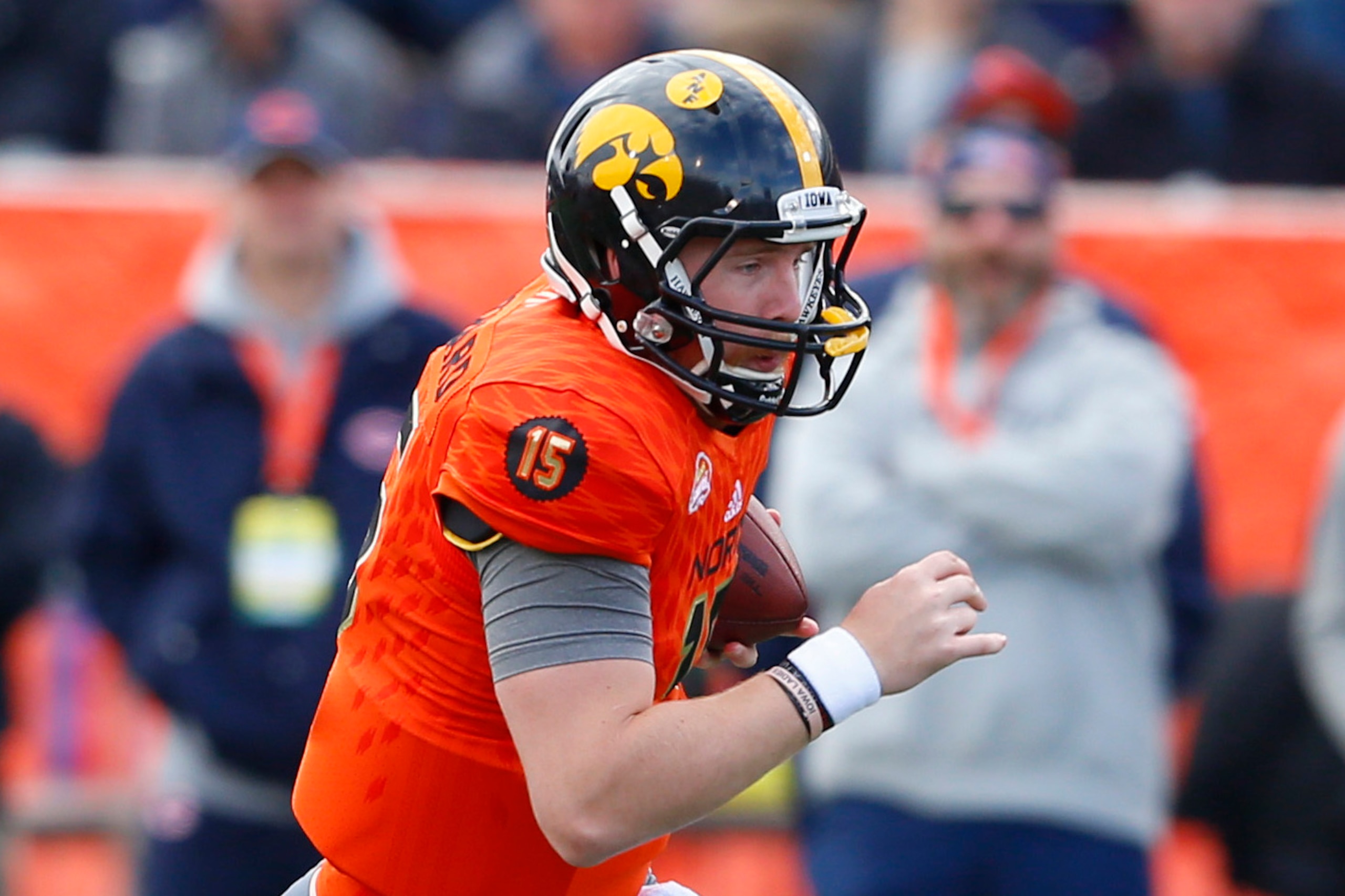
To everyone but Shanahan and the 49ers, only four things really stood out about Beathard:
- Beathard is legendary general manager Bobby Beathard's grandson;
- His father (Casey) and brother (Tucker) are big-time country music personalities;
- He played in a pro-style offense at Iowa; and
- He is renowned for his toughness.
Now, nepotism is alive and thriving in the NFL—Shanahan's dad was not a lawyer—but a famous family member usually gets a player a seventh-round selection, not a third-rounder. And while it's easy to imagine Jim Harbaugh drafting the son of the guy who wrote "No Shoes, No Shirt, No Problems" (and somehow making the selection work), the current 49ers braintrust is probably not impressed by Beathard's Nashville ties.
But those last two items matter a lot.
Iowa's offense looks like an NFL offense. Beathard took snaps from under center as well as shotgun. He huddled. He made adjustments.
"I came from a pro system that put a lot on the quarterback," Beathard said at the combine. "It's a huge advantage. ... I've had to make Mike points and change protections all the time. That's all we did at Iowa. It's really prepared me."
Taking center snaps and recognizing the Mike linebacker are not the be-all and end-all of NFL preparation. But there are subtleties, like timing and executing a play fake during a drop from center, that some of this year's top quarterbacks have never even been introduced to, let alone mastered.
Beathard happens to be a good play-action faker, having done it often for the run-heavy Hawkeyes. That's significant because there's a diagram of a play-action pass on the Shanahan family coat of arms.
As for toughness, Beathard played through the 2015 season with what turned out to be a sports hernia. He suffered a hamstring injury in the Outback Bowl, which puts the three-interception disaster in a fresh perspective. He looked like a ballistics dummy at times behind an offensive line that wasn't up to Iowa's usual standards, but he kept playing.
"I'm a tough player; I've taken a lot of hits," Beathard said. "I've been banged up but haven't missed a game since I've been the starter."

So Beathard can call the play, read the defense, take the center snap, play-fake, drop back, get hammered, get hurt, stay in the game and hopefully not get his team crushed. That still sounds like a fifth-to-seventh round pick.
To see what Shanahan sees in Beathard, we have to look back at Griffin and Manziel.
Now, no one knows for certain what really happened with Griffin, Cousins and the Shanahans in Washington back in 2012-13. According to the latest story retcons, Shanahan and his poor papa were tasked by mean old Dan Snyder with making an NFL quarterback out of the mercurial Griffin, though they knew the plucky Cousins was the better alternative. History proved the Shanahans correct, but alas, it was too late to save their jobs.
To believe this version of events, we must forget the Shanahan family predraft weekend summits with Griffin in 2012, or the fact that the Shanahans left a limping Griffin in a playoff game, which exacerbated his knee injury, or Mike Shanahan's long history of quarterback melodramas or dozens of other recorded facts.
But none of that is important. What matters is that Kyle Shanahan was there when a radiant talent burned out and a Steady Eddie replaced him, producing better and more sustainable results.

Shanahan got squeezed out by forces above and beyond his control while Cousins stayed behind and blossomed under Jay Gruden. You can almost hear Shanahan whispering "Rosebud" when he mentions Cousins: the symbol of a simpler path not taken. Shanahan moved on to Cleveland and yet another rookie from a let-er-rip offense with swoon-worthy college highlights.
It's less of a secret what happened with Johnny Manziel. Shanahan could not count on his rookie quarterback to show up ready to perform his duties. Yet there was pressure from all sides to play him.
Shanahan eventually jerry-rigged a game plan to get Manziel through a start in 2014. Manziel threw two interceptions in a 30-3 loss. He pulled a hamstring in the next game, allowing the Browns to hand the reins back to Brian Hoyer, the journeyman who led Cleveland to a 7-4 record to start the season and is now Shanahan's starter for the 49ers. Hoyer, like Cousins and Beathard, is a former Big 10 quarterback who left school short on sizzle but long on old-school fundamentals.
Two coaching jobs, two clear lessons: Glittery college superstars will get you fired; humble middle-round nobodies make you look like an offensive wizard if you build an offense that hides their limitations and lets them distribute the ball.
Whether this is the right lesson for a coach helping to rebuild a franchise is a matter of debate. But there was no quarterback prospect of Griffin's caliber in this draft class, just a lot of big, fast, strong-armed guys from shotgun spread offenses with lots of built-in risk. Why take a chance on any of them when a dedicated, competitive, well-schooled passer with a smidge of talent—the kind who doesn't prompt pressure from the owner or bring national television cameras to the team facility for minicamp—will be available in the third round?
The third round is the Goldilocks zone for selecting a quarterback like Beathard. It's high enough to represent a commitment but low enough that a disappearance to the back of the bench will not cause controversy if things don't work out. It's the stay-humble, work-your-way-up selection.
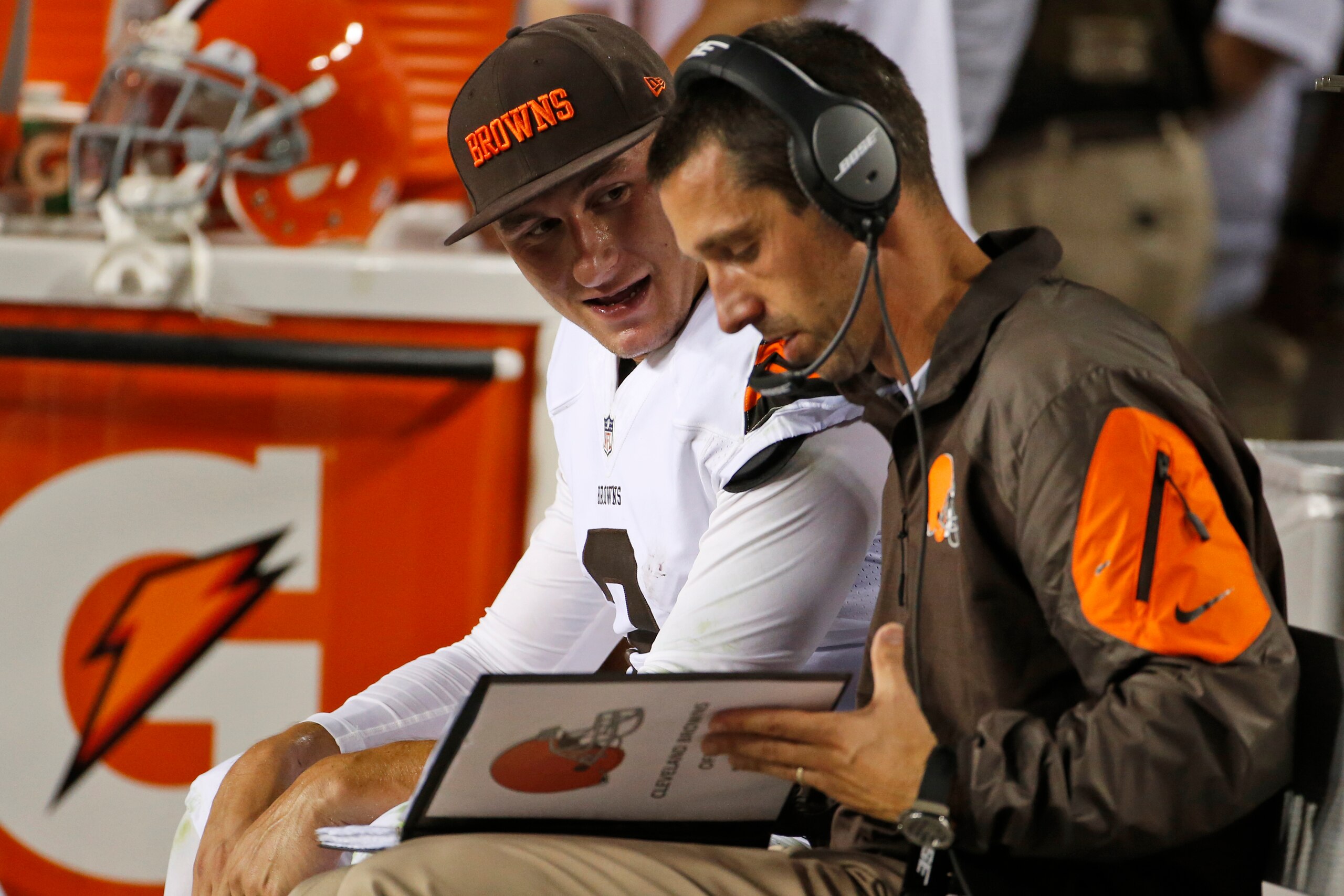
Beathard is the Designated Cousins, the quarterback Shanahan can mold into his system without spending a year teaching the seven-step drop to a project who is busy filming candy bar commercials. Shanahan isn't anointing Beathard as the franchise savior because franchise saviors take the franchise with them when they flame out. He'll have to earn "quarterback of the future" status, but he will be given a clear path toward earning it, a clearer path than his collegiate performance and reputation really merit.
And if Beathard fails, Shanahan can pursue the real Cousins next year. Though perhaps he's just a little wary of working with a quarterback who now looks a little too much like a franchise savior.
Mike Tanier covers the NFL for Bleacher Report. Follow him on Twitter: @MikeTanier.

.jpg?w=2560 "DOLPHINS-AIKMAN")








