Fear and Free Agency in the Era of Political Activism
Will political activism cost an NFL player a job?
That's a serious question as free agency dawns on one of the most politically divisive periods in recent American history. Free agents from Colin Kaepernick to Martellus Bennett have staged controversial protests, criticized the president and supported social movements, many of which did not seem particularly radical until a few months ago.
NFL owners and executives, meanwhile, tend to support the establishment; a few even openly support this particular establishment.
.jpg?w=3840 "Chargers Giants Football")
Outspoken players are worried that their services might no longer be desired by some, if not all, of the 32 potential employers on the open market.
"It's definitely a fear," said Eagles safety Malcolm Jenkins, one of the league's most vocal social activists.
"We know the nature of our business," he said. "We know that one thing the NFL is very particular about is their PR, their image. So when guys speak out and cause some kind of attention outside of football, there's a fear that they'll consider that.
"Those are all risks that you have to weigh before you participate in this. But guys are definitely thinking about it."
Jenkins and other players took part in a seminar by the Ross Initiative for Sports Equality (RISE) in February. RISE, formed by Dolphins owner Stephen Ross to harness "the unifying power of sports to improve race relations and drive social progress," according to the organization's website, isn't exactly an extremist group. But at a time when those in power casually throw around the phrase "enemy of the people," many NFL players find the climate too hot for even a moderate political pronouncement.

"It is unfortunate that it does happen to guys, whether they have endorsements or whatever it may be, where they don't want to stand on one side of the line or not," said Bills safety James Ihedigbo, another RISE contributor. "You often see that."
Ihedigbo is optimistic that a little political activism won't turn a free agent into a pariah. "I would hope not," he said. "It's our duty as players to speak up about it with our platform."
"This is a tricky question, and I don't think it's the same answer for everyone," said former Eagles and Browns executive Joe Banner. "I wish my answer was 'it won't matter.' I do think that's mostly true, but I don't think that's all true."
A current team executive I spoke to was slightly less concerned about teams putting politics ahead of performance. "I don't think it's a real risk," he said.
"Most owners allow [their] people to make football decisions," he said. While an owner might make his opinions known or raise objections, "I don't think that the head coach and general manager, if they are doing what they are being paid to do, which is win football games, will do that."
The key word there is "most." All it would take is a cabal of owners with extreme political opinions and hands-on personnel habits to lump everyone from Kaepernick to guys who participate in some hometown march into the if you don't like America then leave category to skew the free-agent market, leaving those players out of work and terrifying the rest of the league into silence.
Fortunately, that's not likely to happen. "That's not a conceivable scenario to me," Banner said.
NFL owners do not all share the same political opinions: Shahid Khan, the Rooney family and Paul Allen probably watch different cable news networks than Woody Johnson, Jerry Jones and Stan Kroenke. "There's a range of ultra-conservative, politically active owners, and some fairly liberal and somewhat politically active owners," Banner explained.
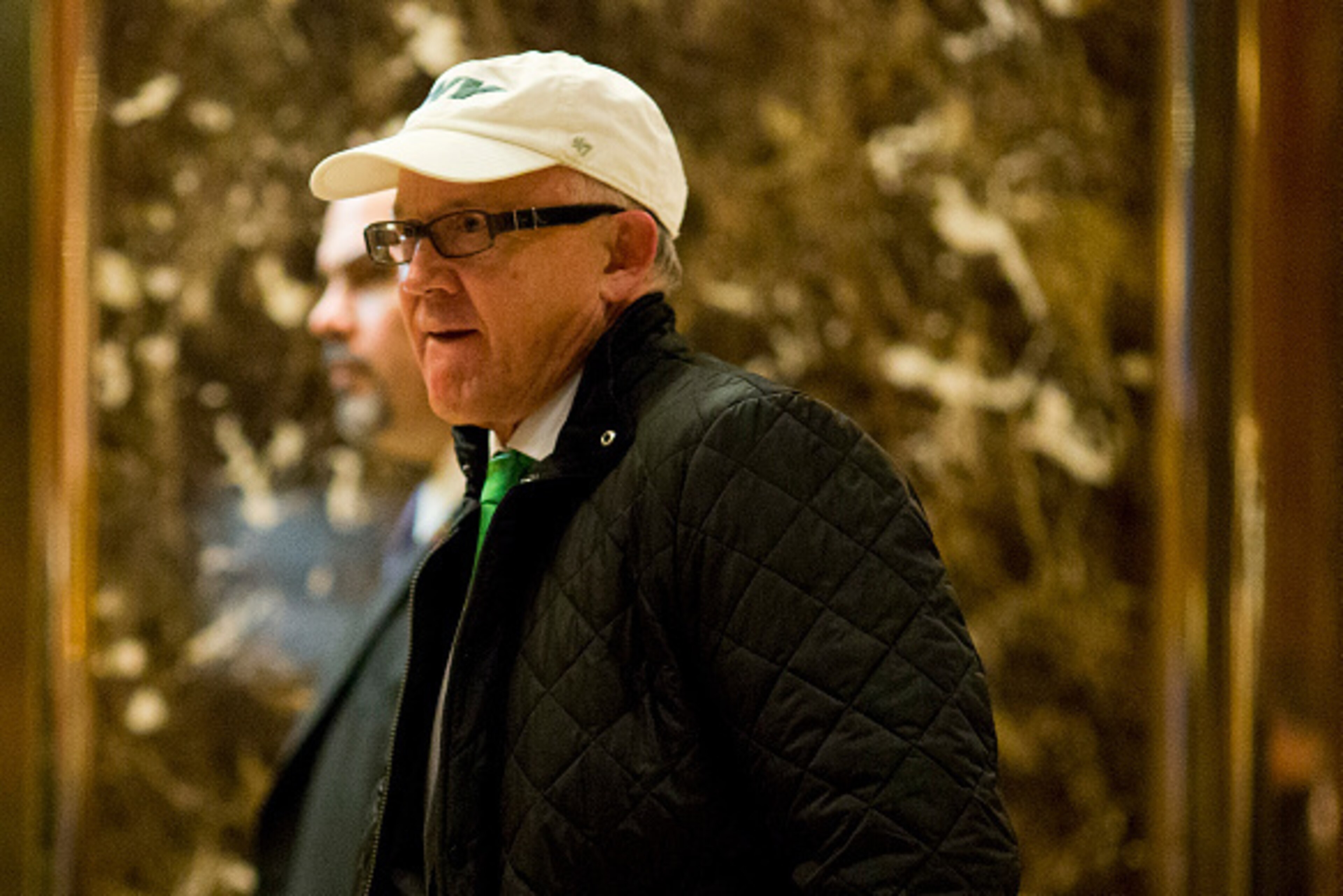
Even among traditional conservatives, there are a range of attitudes on social matters. "I know a bunch of owners who probably voted for Trump for the financial windfall and tax breaks," the current executive said, "but they don't believe in any of the things that Donald Trump believes in from a human standpoint."
While massive blacklisting is extremely unlikely, an owner's political leanings and willingness to meddle in football operations could be one sliding factor that affects an activist free agent's desirability. There are other factors. For example: What's the nature of the player's activism?
"I think it depends on what they're doing, how far it's going, and how much they're minding their business, so to speak, in the locker room," Banner said, clarifying that he does not share such an opinion himself.
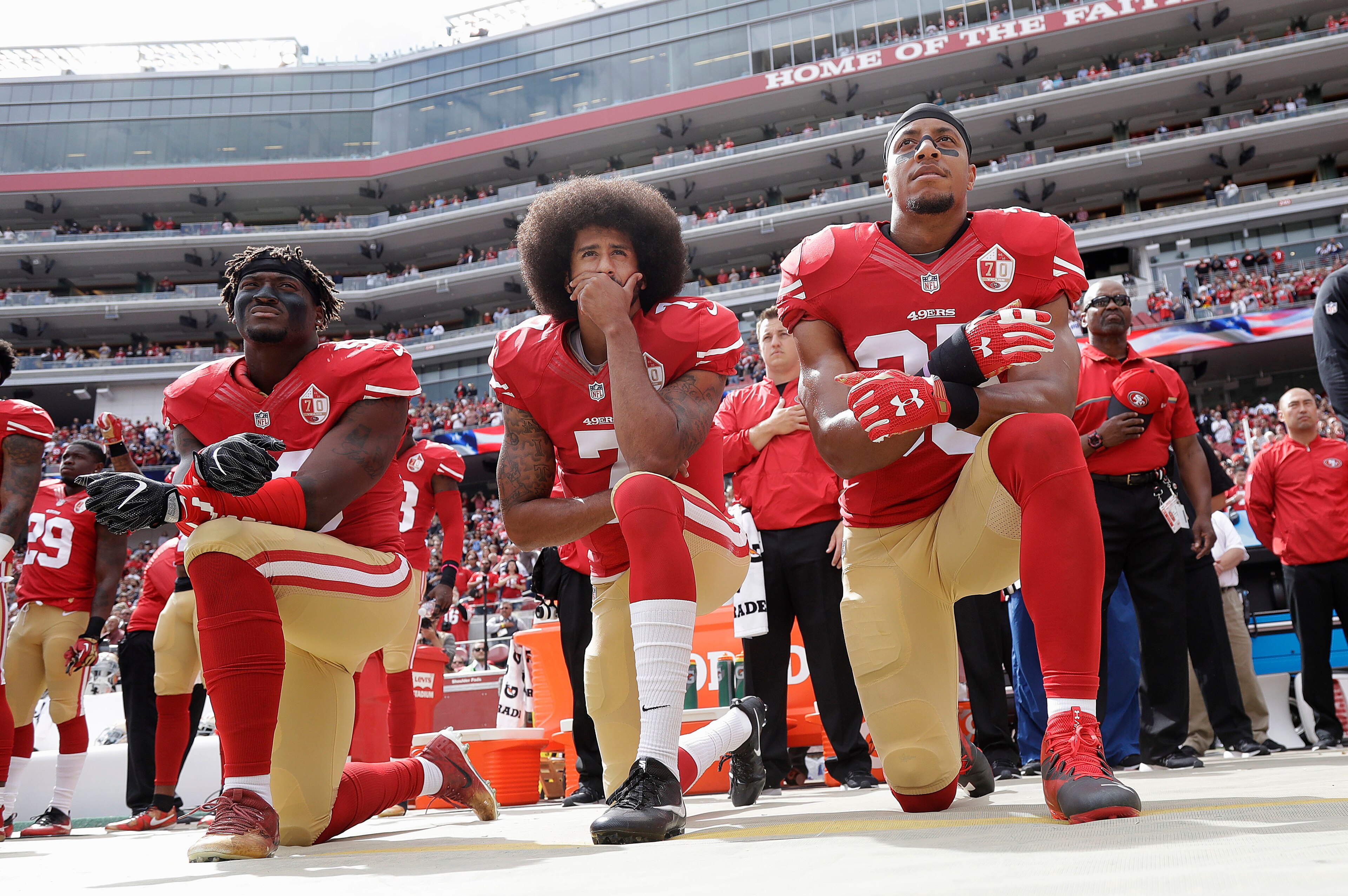
A player who speaks at a midweek rally probably has less to fear than one who kneels during the national anthem. Off-duty activism can be compartmentalized, or even promoted as community involvement. On-field protests, on the other hand, can get slapped with the dreaded d-word: a distraction.
"Coaches are obsessed with avoiding distractions, things that waste time," Banner said. "It gets a little over-the-top. But they are consumed by that at times."
"I can picture coaches who may agree with players politically, but it's not political. To them, it would be pure football."
Pure football is also the third factor. It goes without saying that a great player like Martellus or Michael Bennett is less likely to get pushback from teams for his political views than a fringe player.
Players are well-aware that their freedom to speak out is typically proportional to their on-field value.
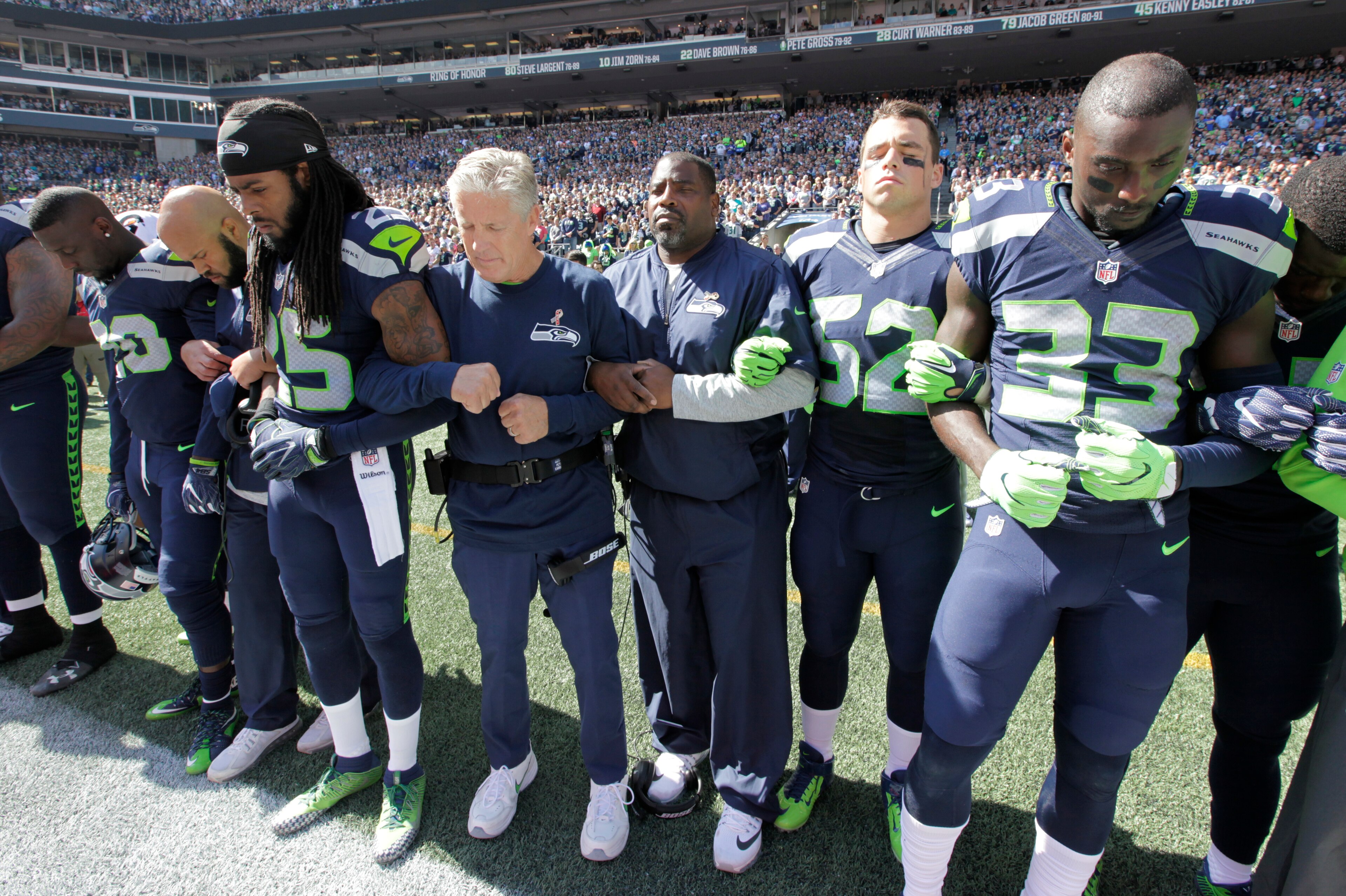
"No one has complete security," Jenkins said. "But for players like myself, who do have a little bit more security than a fringe player or rookie, it's more on our backs and shoulders to be able to approach our teams and put pressure on them to do stuff in the community."
Brandon Marshall, Rashad Jennings, Andrew Hawkins—all of whom were panel speakers at February's RISE conference—were three such players, but each have since been released by their respective teams.
This isn't to suggest something shady was afoot, as there were financial football reasons for cutting all three veterans. (And Marshall quickly signed with the Giants). But it does underscore just how insecure an NFL player's job security is. One moment, he's a respected veteran leader. The next, he's competing for a job, and one coach's "leadership" might be a new coach's cause of "friction."
There's no better evidence of that than Kaepernick, who stands at the eye of this particular storm. Kaepernick opted out of his contract with the 49ers and, not coincidentally, decided he will no longer kneel during the national anthem, according to a report from ESPN's Adam Schefter. He's the most polarizing of the NFL's activists, and as a former Super Bowl quarterback coming off a string of bad years, his on-field value is tricky to evaluate. As Bleacher Report's Mike Freeman reported Wednesday, some teams are still wary about what Kaepernick might bring to the locker room or ticket counter.
The executive I spoke to bristles at the idea that Kaepernick would be written off as a "distraction" or worse by some teams. "If we're going to be OK with someone who actually beats their girlfriend and gets convicted, but we're going to have a hangup with Colin Kaepernick, then a lot of people having that judgment just have to rethink things," the executive told me.
Message boards are full of folks who make that very judgment. Others may think Kaepernick's headline-dominating protests make him too much of a radical to be worth the risk.
"I wouldn't say Colin was radical," Jenkins said. "It's all perception. We're all saying the same thing that Kaepernick is saying. If we are going to stand up for change and actually make some things happen, then people viewing you a certain way is just collateral damage."
The problem in 2017 is that everything political sounds radical, and the collateral damage can be more devastating as rhetoric gets harsher and stances more extreme.
Political activity may have only a tiny impact on a free agent's marketability. But that's small consolation to an out-of-work player waiting for a call, wondering if a few tweets erased him from some team's list, or some fringe player worried that he will drop off the back of the roster for speaking his mind.
Then again, millions of Americans are making the same nervous decisions about their political activity and speech each day.
"The climate has changed rapidly," Jenkins said. "There are so many issues now that people are riled up for. It's not just athletes; it's the nation that feels the need to get active. People who tried to stay away from politics and activism their whole lives almost feel the need and the responsibility to be active."
For NFL players with little job security (about 80 percent of them, by my estimation), safety and courage may have to come in numbers.
"It's one thing when you're the only one making noise," Jenkins continued. "But when we make this noise the norm, then the people who aren't talking are now the minority. The people who are not involved are the ones who will seem like there is something wrong with them."
Until that happens, players will have to test free agency one at a time and worry that their attempt to publicize their opinions made them look like the wrong choice for one too many teams.
"Our goal isn't to change everybody. You can't," Ihedigbo said. "What you can do is educate people. You can give people an opportunity to understand something they might not understand. That's what we have as players: a platform to be a voice of reason, to express issues and concerns of others."
And what if the mind you cannot change is the one in charge of writing checks?
"That's a scary proposition," Ihedigbo said. "It is."
Mike Tanier covers the NFL for Bleacher Report. Follow him on Twitter: @MikeTanier.
.jpg?w=3840 "Commanders Football")