Why My Brother Can Still Win the NFL Rushing Title
Abdul Foster is the brother and trainer of NFL running back Arian Foster. This is a first-person take on Arian's rehab and NFL future, as told to Bleacher Report's Gary Davenport.
I could sit here and tell you that my brother Arian is excited for this next chapter in his NFL career. That he’s determined. Give the cliched answers to the same old questions. But that’s all bulls--t.
Arian is pissed that this is happening to him and his career. He’s motivated, sure. But he’s scared too. Anyone would be without knowing what will happen. He’s nervous about what team will give him a shot. After seven years in the same spot, he has no idea where he’ll be in six months. Will his kids be with him? Will his family? What about his support system?
TOP NEWS
.jpg?w=3840 "Pro Bowl Football")
Jerry Rice CHASES Heckler 😳
.jpg?w=3840 "Commanders Football")
Overlooked Rookie RBs Who Can Make NFL Impact in 2026
.jpg?w=3840 "Steelers Ravens Football")
Coaches, Execs Rank Top 10 Safeties 🗳️
But Arian has never been one to shy away from new challenges and experiences. He takes them on headfirst. There are a lot of emotions right now, but he takes all the questions and doubts and focuses them on his work. It’s all he knows. All he’s ever known. Taking it all and focusing on the task at hand.
"Problems don’t go away. They just change faces."
It’s a saying (passed along by a buddy of ours) that my brother and I have taken to heart. It also defines where Arian is at this point in his professional career—facing the challenge of recovering from some significant injuries and navigating free agency.
But as he has always done, Arian will attack these obstacles the way he does everything in life. Go to work, control what he can and, when the opportunity comes, take the bull by the horns.
And while some may have written my brother off after almost 1,500 career carries and all the injuries, Arian is going to do what Arian has always done.
Prove those doubters wrong.
In a lot of respects, this latest challenge isn’t that much different from all the steps Arian has taken to get to this point. He wasn’t a top prospect coming out of high school. In the same city as Reggie Bush and in the same year as some other big-name prospects, none of the big California schools came calling.
In fact, when Tennessee saw Arian play, it wasn't even there to scout him. It was there to watch the quarterback of his opponent. For the record, Arian destroyed the opposing team for more than 200 yards on the ground.
Years later, when the Texans were warming up for a game in Seattle, head coach Pete Carroll (who came to Seattle after holding the same position at USC) came over to my brother and said, "How the f--k did we ever let you get out of California?" It’s been the story of his life—no hype.
And it wasn’t just colleges that missed the boat. As everyone knows, Arian went undrafted in 2009. Two hundred fifty-six picks came and went without his name being called. Of course, by the time he led the NFL in rushing one year later with 1,616 yards, everyone knew who Arian was.
It’s going to sound cliche, but what really sets Arian apart isn’t his talent on the football field. Don’t get me wrong—he’s incredibly talented. The thing I really enjoy about watching Arian play is that there just aren’t that many players who are fun to watch. But Arian is. He can block with the best of them. He takes as much pride in blocking as a left tackle and has taken on Haloti Ngata—and would again.
He’s an intelligent, cerebral player. He knows the protections and pass routes in and out. He knows the latter so well that early in his comeback, he talked to me about coming back as a receiver. And he could do it. The Texans were already mixing in more plays where Arian would split out wide or into the slot. He actually tore his Achilles (in October 2015) planting on just such a play.
Arian can do it all. He isn’t the fastest back, but as your youth coach used to say, he’s plenty fast enough to get where he needs to be. He’ll get the tough yards between the tackles. Carry the ball 25-30 times per game. Catch the ball out of the backfield. He just embodies everything you want in an NFL back. His skill set is second to none.
But what really sets Arian apart is his will. I see the same thing when I watch old Muhammad Ali fights. Ali wasn’t as fast as Joe Frazier. Or as strong as George Foreman. But he willed himself to win. Willed himself to be great.
Arian has that ability. That will. He wants to be great, and he knows it isn’t easy.

The first time Arian asked me to train with him, I asked him something I ask all potential clients: Why are you doing this? His answer? "I want to leave my mark on the game of football." Not money. Not fame. Leaving his mark.
Leaving a legacy.
Arian’s work ethic is unmatched. I may sound biased as both his brother and trainer, but ask anyone here at Nine Innovations. Ask his former teammates. I’ve been around a lot of pro athletes. I know big names who say, "I work hard." But they don’t do a lick compared to what I put in front of my brother every single day. The only person whose work ethic I can really compare Arian’s to (and I didn’t see it) is Jerry Rice.
And that’s a good thing because there’s a lot of work to do. A process. The first step was to follow the advice of Arian’s doctors and therapists. With a tendon injury, you have to make sure it has healed properly, with the scar tissue diminishing as much as possible. Then, you can work on getting range of motion and strength back.
Arian had the luxury of a good relationship with Kobe Bryant, who shared some information on how to attack his rehab. We talked to Chauncey Billups, who came back from an Achilles tear. They are both veteran players who have had the injury and came back to play at the top level in their sport.
I liken professional athletes to race cars. To Ferraris. You can’t just fill them with unleaded, start them up and stomp on the gas. They need constant tuneups and maintenance. Massages. Adjustments. When you’re a tailback carrying the ball 20-plus times per game every game, you’re having one collision after another with guys as big as you, if not bigger. Things are going to get out of place.
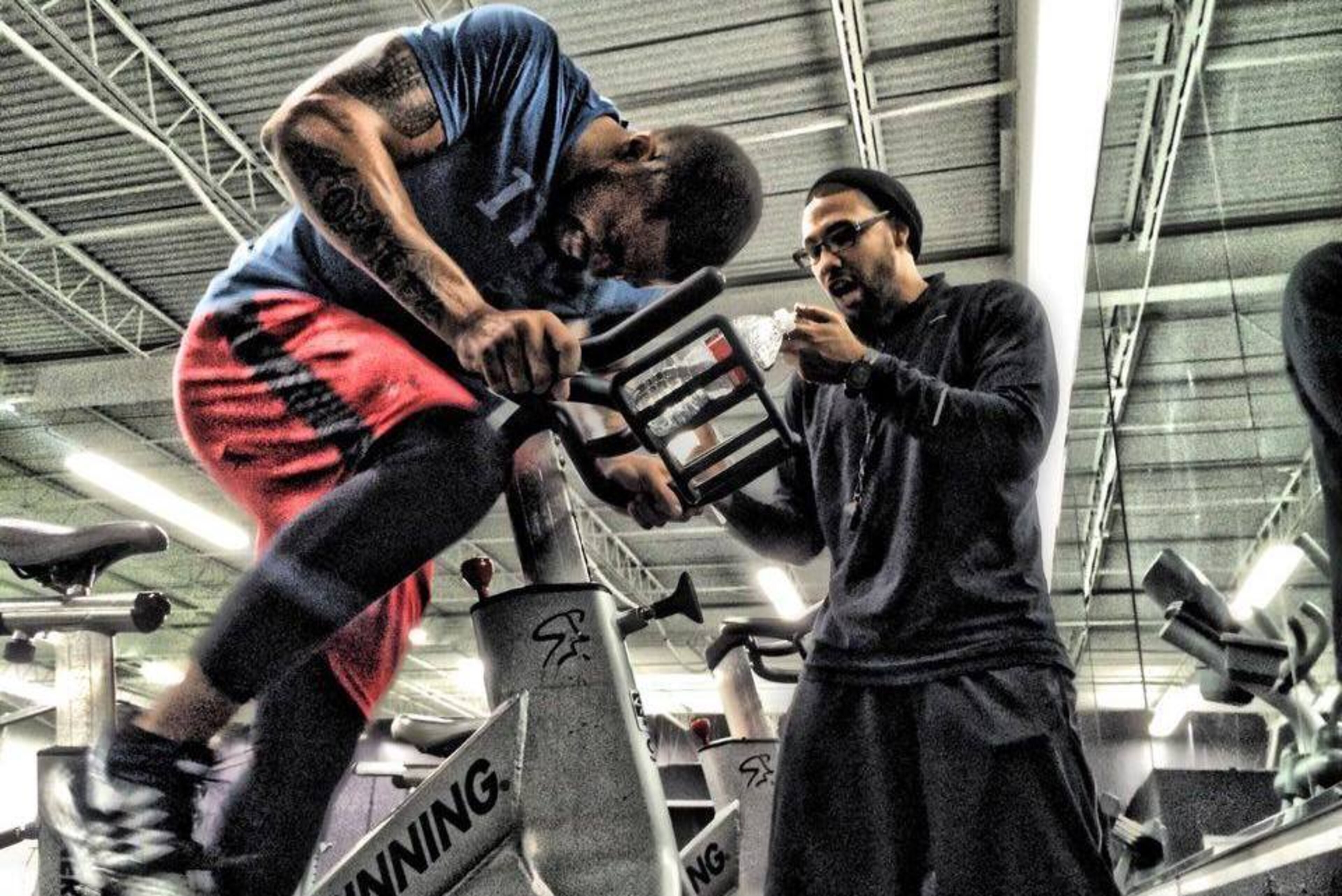
Right now, we’re trying to strengthen more than anything. Arian gets to Nine Innovations at 4:30 a.m. No sprints. No heavy lifting. Just stabilize the area and do small isolation exercises to help get the strength back in his muscles. We’re also heavy into physical therapy—getting on the table to address issues we didn’t handle as well as we could have earlier in Arian’s career.
He wasn’t a big fan of that maintenance initially, and he had some bad experiences with doctors who were overly aggressive in treatment early in his career. He’s a no-nonsense person, but being so young at the time, he just didn’t see the importance.
And he’s far from alone. A lot of players don’t allow themselves the recovery and maintenance time they should. I could rattle off a list of guys who are playing right now who shouldn’t be. I can tell just by looking at them. But that’s part of the business.
Where Arian is at now, two or three times per week, he gets on the table. He’s being adjusted frequently. We do as much as we can to break up scar tissue and promote blood flow. And it can be painful. A deep-tissue massage isn’t a spa treatment. Breaking up the bad blood and lactic acid in muscles can hurt. But whatever we ask him to do, he’s on board with.
Arian will come in at 4:30 a.m., do a workout and then come back at 4:30 in the afternoon, when we’ll isolate other muscles. The morning workouts focus on strengthening weakened areas from his injuries and surgeries. The evening workouts focus on the rest of his body.
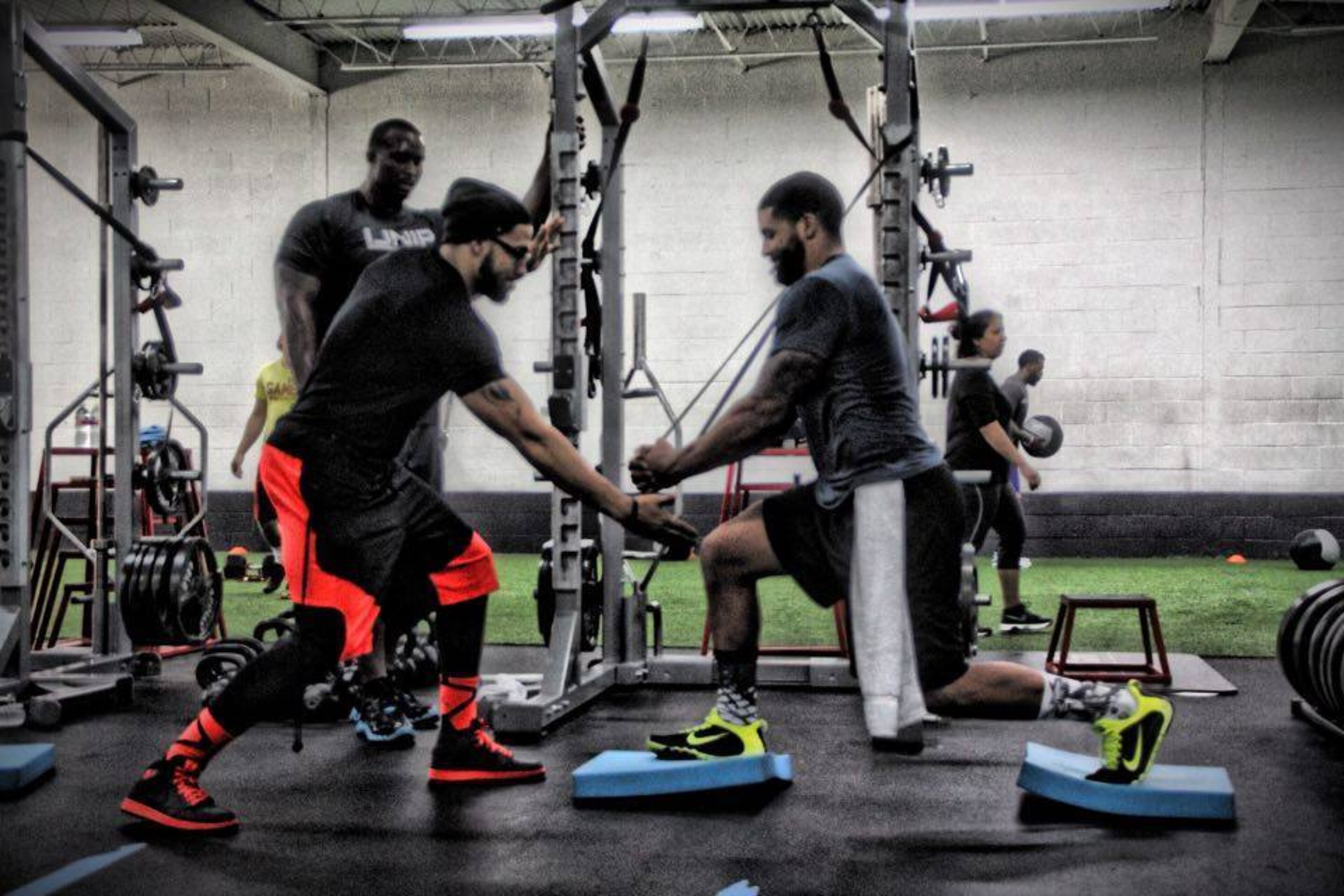
After all, in addition to getting healthy, he also has to stay in shape. In between those times, it’s table work and those deep-tissue massages—taking all-around care of his body is a full-time job, six days per week.
Another thing that’s contributed to Arian’s injuries (something that’s also common among athletes) is his ridiculous tolerance for pain. In 2010, when he led the league in rushing, he played much of the season with a broken collarbone. You or I would barely be able to lift our arms. Arian banged his way to more than 1,600 yards.
A lot of players (my brother included) have what they think are just nicks or bumps or bruises that could in reality be serious injuries. But they are so used to it that they just suck it up and say, "I gotta play through it." You’re looking at a lot of responsibilities and millions of dollars on the table, and you have to go out there and perform. You literally have to will yourself through the pain, to the point that you could be doing further damage. And I, as a trainer, can’t tell, short of MRI vision.
For Arian to have taken the time to sit out and not play, to not absorb all that blunt force on his body—he’s just starting to get back to what it’s like to feel normal. And while he’s missed quite a bit of time over the past few years, there’s a silver lining: He also avoided quite a bit of wear and tear.
Once Arian is healthy, the real grunt work begins. Hit the weights. And the track for 1,200-meter repeats. And the miles and miles of running on different terrain. On the grass. Up hills. In the sand. In the pool. It’s no joke.
I'll say this: More than a few players and teammates have told Arian they want to work out with him. Very few can really stick with him. Most fall off.
Personally, I’m excited to see where this new direction takes my younger brother. Arian has always capitalized on every opportunity he’s been given. I have no doubt he will again and that he’ll rise once more to the top of the NFL. It’s really not that far to climb—Arian ranked third in yards after contact just two years ago. All he needs is a chance. The right opportunity.
My brother will take care of the rest.
.jpg?w=3840 "SEMANA 10-PANORAMA")
.png?w=3840 "Every City's 2000s Mt. Rushmore 🤩")