

AJ McCarron Has the Toughest Job in Football, Just Ask These Guys Who Lived It
In an instant last Sunday, we went from wondering how Cincinnati Bengals quarterback Andy Dalton would avoid his annual January meltdown to discussing how his team will avert playoff disaster without him.
Optimism has risen from those ashes during the days since Dalton's thumb didn't survive a lunging tackle attempt following an interception. Initial fears that a 10-3 team starved for playoff success would lose its starting quarterback were quickly quieted.
Bengals head coach Marvin Lewis said Wednesday that Dalton's broken right thumb won't require surgery.
TOP NEWS

New NFL Power Rankings 📊
The Robinsons POUND the Rock 🪨
Takeaways from Falcons' dominant MNF win
"That's about as good an outcome right now that we could expect," Lewis said during a press conference, via ESPN.com's Coley Harvey.
Dalton has been ruled out for Week 15 and will now be evaluated on a week-by-week basis. While there's some optimism he could be ready for a tune-up regular-season finale appearance, the more likely scenario is we won't get another Dalton sighting until the playoffs.
That means AJ McCarron is about to make his first NFL start for a team that is leading its division. Oh, and a team that is trailing the AFC-leading New England Patriots by only one game while clinging to a first-round bye, with the Denver Broncos sharing an identical record.
The importance of that bye is now magnified, as every day Dalton has to heal becomes precious. Securing it is in the hands of a fifth-round pick who has taken only 61 career regular-season snaps and has attempted just 36 passes, per Pro Football Focus.
McCarron is about to see if he can be the walking, breathing and throwing embodiment of a few standard quotes in the NFL cliche reference manual. He needs to be the "next man up" after "preparing like he's the starter" all season in a backup role.
What, exactly, does that second one mean? Cliched football language tries to help the layman understand the complexities of an intricate game. But the mentality of a backup quarterback can only be grasped through experience.
So I talked to someone who has been through the mental grind required to be a backup QB. In 2014 around this time he was staring down a nearly identical situation to the one McCarron and several others find themselves in now.
The dual thinking of a backup quarterback
Ryan Lindley wasn't just pushed into a starting role by the Arizona Cardinals in December 2014. He was booted into it.
Forget starting experience, though let's note he had little of that anyway at the time. Like McCarron, Lindley was a late-round pick (sixth round in 2012). Also like McCarron, he had barely seen the field in meaningful action and had started only four career games.
The emergency facing Lindley, now 26 years old, came with even more blaring sirens as he was tossed into an inferno. The Cardinals signed him in early November when starter Carson Palmer suffered a torn ACL.
Lindley knew the offense after spending time with the team and being cut at the end of training camp. He was still easing back in, however, and often splitting second-string practice snaps with Logan Thomas. Then Drew Stanton also suffered a knee injury in Week 15, and suddenly it was Lindley's turn to carry a 10-win team forward.
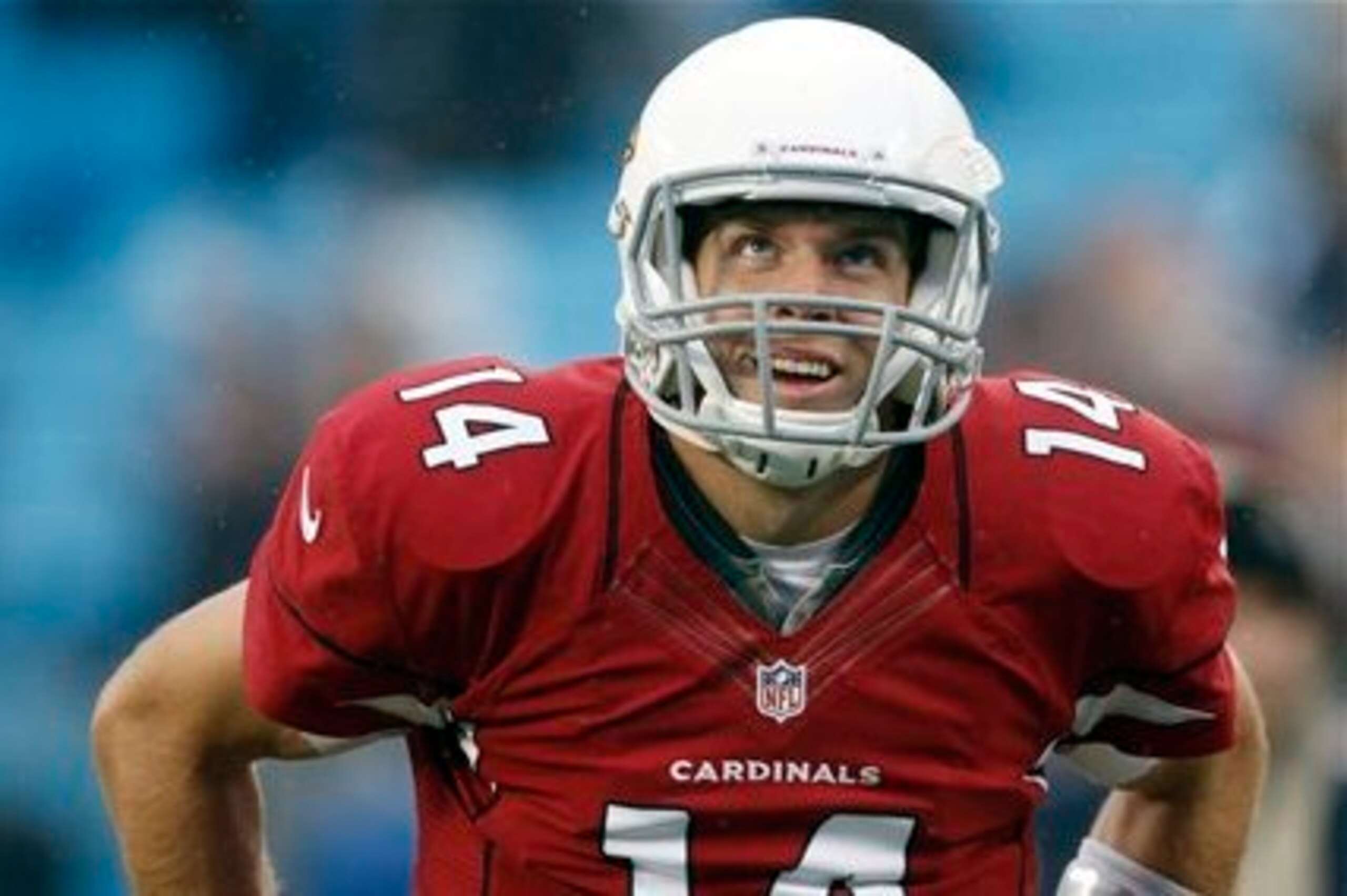
So Lindley knows what McCarron is facing, as he attempted to douse the same flames. He knows the backup life well and said the notion of preparing to be the starter isn't just for one game or one week.
It guides your entire existence in a role that's part passer, part competitor, part cheerleader and part support staff.
"A lot of the time whatever team you're on, you'll sort of adapt to what the guy in front of you is doing," Lindley told Bleacher Report during a phone conversation. "That's the dual thinking you need to have as the backup quarterback. You're there firstly to prepare yourself and make sure you're an asset to the team. But also you need to support the guy in front of you."
Support means much more than simply waving imaginary sideline pompoms. Or in Stanton's case, doing the greatest dance in recorded quarterback history.
The backup quarterback typically takes on a role that's more than meaningful. It's significant, and hearing Lindley describe how film-room work was delegated makes you immediately think of a certain philosophy used by New England Patriots head coach Bill Belichick: "Do your job."
A classroom environment is fostered throughout a week and throughout the season. One guy may start and throw the touchdowns, but everyone has a job in the quarterback film room.
"The good rooms I've been a part of, everyone always does something," Lindley said. "For us in Arizona, we split it up.
"Some of us would look at different games on the schedule. By the end of the year, one quarterback can't cover all 16 games. So one guy will look at, say, four to six games that are the most important and likely coming up soon. Then the other guys will take a take a peek and see if there's something crazy or outlandish in the first eight to 10 games that would jump out at you and maybe we need to prepare for."
The backup quarterback wears many hats all at once. He's preparing himself and also preparing the starter while functioning as an extra assistant coach.
"You kind of have a job of your own, and you're helping the team out," Lindley said, "which makes it easier for you to say the cliche 'prepare like a starter' when you feel like you're doing something that's productive for the team."
A finely tuned mental approach is central to everything the backup quarterback does. That includes game day, when being a backup quarterback is just as mentally taxing as being the starter.
Or maybe worse.

"It's more nerve-racking than being a starter"
You've heard the unoriginal barbs thrown at backup quarterbacks. They're clipboard holders, or headset wearers, because that's all we see when the camera pans down the sideline.
But imagine playing a football game in your mind and mentally going through every motion, every protection call and every audible.
"You make sure you're loose throughout the game and going through everything you can from the sideline," Lindley said. "You're basically simulating every decision your counterparts are making.
"It's a funny thing, because if you ask any backup, they'll say it's more nerve-racking being a backup than it is a starter. Just because every play you're doing that mental simulating and then saying, 'All right, I have to be ready to go in the next play,' and then you don't go in. Then the next play comes, and oh, here's a check. What would I check to? What did he do?"
Those words were echoed by Joe Webb, who was an emergency playoff starting quarterback for the Minnesota Vikings in the 2012 season when Christian Ponder suffered an elbow injury.
"You have to always be ready mentally and physically," said Webb, who also spoke to Bleacher Report. "You're constantly watching the game and watching what the defense is doing, so if your number is called you know what they'll try to do.

"When the starter is on the field you're basically having a mental rep," Webb added. "You get the pre-snap read from the defense, then once the play starts you read to see what the defense is doing. When the starter comes to the sideline you're his ears. You hear what the coaches say, but it's better coming from a player or one of the teammates you're preparing with."
You may find yourself fighting the urge to take a nap after reading that perspective from Lindley and Webb. The mental snaps taken by the backup sound exhausting.
The No. 2 quarterback is always one awkward fall away from stepping into a game, and he needs to know what plays will be called in a specific situation, along with how to beat the opposing defense. All this mental juggling is taking place while he's still balancing the same assistant coach role he takes on in the film room.
"You can discuss the game with the starter and be that extra set of eyes and a coach on the sideline," said Lindley. "But at the same time you're getting yourself ready. So there's really double and triple duty as a backup, and a lot more going on than what most people see."
Everything about being a backup revolves around preparing for a moment your coaches hope never comes. But when it does, a plan is already in place.
The emergency list
Outside of garbage-time play or a benching, it usually means disaster has struck when a backup quarterback makes an appearance. That is when what Lindley calls the "emergency list" comes into play.
He said backup quarterbacks often find 10 to 15 plays in the game plan they're really comfortable with. They're sometimes situation-specific too, with a 3rd-and-long play possibly highlighted.
That's the in-game adjustment made when the backup enters, with the playbook temporarily scaled down. The emphasis there is on temporary.
"You have your bread and butter right there and narrow it down to that," said Lindley. "But in AJ's situation he played the majority of the game last week. So if [the Bengals] have a list like that, they went through it pretty quickly and had to move on to the same stuff Andy was running."
If that's true, it doesn't spell doom, especially not in McCarron's case. Unlike Lindley in 2014, he has a comforting advantage on his side: familiarity after being in the same offense for nearly two full seasons now and putting in extra time with the same receivers.
"It's not going to be his first time throwing to A.J. Green in a live situation," said Lindley. "For me that was one of the toughest things last year. I hadn't thrown a pass to Larry Fitzgerald in probably a year."
Lindley said building a trust and connection with the pass-catchers assembled in your huddle becomes a steep challenge without critical practice time together. Even then, when the backup slides into a starting role temporarily, the adjustment process is tedious and goes beyond just the receivers.
"There's not only the chemistry between you and the wide receivers," said Lindley. "There's also the chemistry you have with the offensive line. Often there's a certain way a quarterback makes his checks or uses his cadence.
"There are tiny details like that you should be able to iron out over a few days on the practice field. But even then it's still nerve-racking, and you have to spend time and energy getting on the same page as those guys and adjusting."
Being an effective quarterback always comes down to the finest detail. Being an effective backup quarterback lies in mastering those details before you're called upon and making sure the work done before you arrived carries on seamlessly.
"You need to take the team over like it's yours"
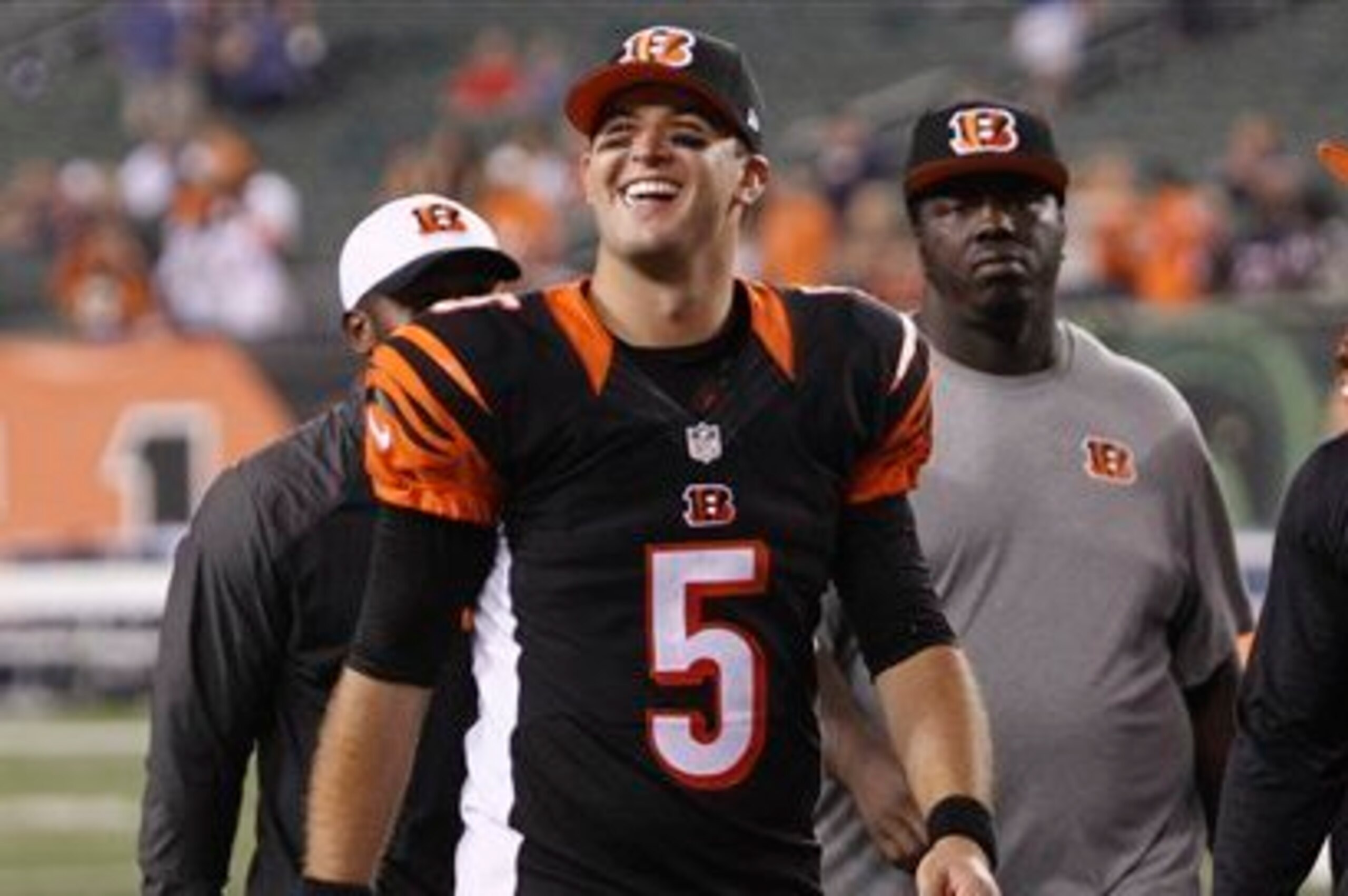
McCarron will make his first career start in Week 15, and he'll do it on the road against the San Francisco 49ers. The clinching scenario is simple: The Bengals can take the AFC North with a win and a Pittsburgh Steelers loss.
Then the Bengals will be one step closer to getting a free pass into the second round. At that point, extra rest will hopefully heal Dalton's wounds, giving him a shot at playoff redemption after four straight clunkers for a team that is still looking for its first postseason win since 1990.
It's McCarron's job to pass the baton. His first extended playing time in Week 14 featured both impressive downfield throws (8.8 yards per attempt) and poor decisions (two interceptions). Now, Lindley says the mission is straightforward, as is the mental focus for a position that can require actual mind games.
But as Lindley knows after leading an offense to the fewest yards in NFL playoff history, the jump from engaged observer to participant is a difficult transition. Success can be rooted in both preparation and a confident approach.
"You're spending all season supporting the guy in front of you," said Lindley. "But now it's all about you.
"You need to take the team over like it's yours."

.jpg?w=2560 "Commanders Eagles Football")
.jpg?w=2560 "Grading WWE Raw 🔠")



.jpg?w=2560 "Viral Rams Coach Vid 🖕")