

B/R MLB 300: Ranking the Top 80 Starting Pitchers
With designated hitters rounding out our look at the league's top position players, the B/R MLB 300 now moves to the mound for our list of starting pitchers.
There are quite a few talented starting pitchers out there these days, so our countdown will contain 80 of our 300 overall players. Like position players, we rated them using a scoring system that adds up to 100 possible points.
First, there are 30 points for control. The basic idea is to look at how well pitchers throw strikes and by extension avoid walks. But we'll also dive into how well pitchers hit their spots and whether there's any rhyme or reason to their location patterns.
Next, there are 25 points for whiffability. This is where we'll look at how well pitchers miss bats and rack up strikeouts, and that's pretty much all there is to it.
After that, there are 25 points for hittability. This is where we'll look at how well pitchers manipulate contact. Ground balls and pop-ups are preferred, and we'll look at how well (or not) they keep the ball in the yard and how well they stifle hard contact.
Lastly, there are 20 points for what we call the "workhorse" factor. This is where we'll get into how well pitchers eat innings, which is a matter of how many pitches they tend to throw and whether they have any durability question marks.
A score in the middle is meant to denote average, not failing. For example, having 15 out of 30 control points means the player has merely average control, whereas 10 out of 30 is clearly below-average and 20 out of 30 is above-average. It's also important to note that if two or more players ended up with the same final score, the edge went to our preference.
Before we begin, here's an important reminder that while we used what's happened in 2015 as a foundation for the scores, this list projects performances for the 2016 season. Players were evaluated based on the staying power of each of their skills with progression, decline and past luck in mind—which created different rankings than simply judging where each player stands today would have.
You may now start the show.
Notes on Stats, Links and Sources
1 of 45
Putting together these rankings did require some good, old-fashioned video scouting. But for the most part, it involved digging deep into baseball's treasure chest of statistics.
The primary sources for these stats were Baseball-Reference.com, FanGraphs, Brooks Baseball, Baseball Prospectus and Baseball Savant. There are also plenty of links to GIFs of pitches at PitcherList.com. The various links you'll find throughout will take you to relevant data on these sites. Clicking on them is not mandatory. They're there for your pleasure.
As for the stats referenced within, there are some you may not be familiar with. These would be:
- BB% and Zone%: The first tells us the rate at which pitchers walk batters on a per-plate-appearance basis, and the second tells us the rate at which they find the strike zone. These will be our guiding stars for figuring out control scores. The averages for starting pitchers are a 7.1 BB% and a 45.3 Zone%.
- K% and SwStr%: The first tells us the rate at which pitchers strike out batters on a per-plate-appearance basis, and the second tells us the rate at which they get swings and misses. These will guide us for whiffability scores. The averages for starters are a 19.5 K% and a 9.3 SwStr%.
- GB%, IFFB% and HR/FB: These tell us the rate at which pitchers get ground balls, infield pop-ups and give up home runs on fly balls. They'll be helpful in figuring out hittability scores. The averages for starters are a 45.2 GB%, a 9.5 IFFB% and an 11.7 HR/FB.
- Soft% and Hard%: These tell us the rate at which pitchers give up soft and hard contact, which will also help for hittability scores. The averages for starters are an 18.3 Soft% and a 29.0 Hard%.
Lastly, for the workhorse scoring, it's good to know that the typical starter averaged 5.8 innings and 93 pitches per start in 2015.
The averages noted above are reference points that will often come in handy throughout the piece, but know they're among many plucked from FanGraphs to help inform the rankings.
Lastly, bear in mind the season is still ongoing. With final edits taking place the day before publication, the statistics within are accurate through play on Saturday, Oct. 3.
Now then. Let's get started.
80-71: Gallardo-Chavez
2 of 45
80. Yovani Gallardo, Texas Rangers
Control: 13/30; Whiffability: 5/25; Hittability: 15/25; Workhorse: 12/20
Because his strikeout rate continued its descent and his practice of largely avoiding the zone led to an 8.6 BB%, it was no surprise Gallardo's outings started getting shaky in the second half of the year. But it's also no surprise he was generally good at picking up ground balls and avoiding hard contact, and that'll happen when you combine just a bit of wildness with an increasingly diverse pitch mix.
79. Alex Wood, Los Angeles Dodgers
Control: 14/30; Whiffability: 8/25; Hittability: 11/25; Workhorse: 13/20
It's hard not to wonder if there's a correlation between Wood's lower release point and his general loss of effectiveness, as he can't control the ball or miss bats as well as he used to. It's a good thing, then, that his general deceptiveness and sinker-happy attack are at least keeping the ground balls coming and doing just enough to get him through six innings on a regular basis.
78. Andrew Cashner, San Diego Padres
Control: 13/30; Whiffability: 11/25; Hittability: 12/25; Workhorse: 12/20
Cashner definitely has a big-time arm capable of generating a whole bunch of velocity, and he proved in 2015 that he can regularly go six innings as long as he can stay healthy. But how he can take the next step is a good question. His stuff moves so much that it's hard for him to have pinpoint command, and at the same time he's nothing special at missing bats and limiting hard contact.
77. Carlos Rodon, Chicago White Sox
Control: 7/30; Whiffability: 15/25; Hittability: 14/25; Workhorse: 12/20
Though his control got better as 2015 moved along, Rodon still ended with the highest walk rate among starters with at least 100 innings. But on the bright side, his unstable control helps make his hard fastball and highly GIF-able slider even harder to hit, as he missed bats and limited solid contact just fine. And with his 6'3", 235-pound frame, he should be able to eat innings despite his lack of efficiency.
76. Eduardo Rodriguez, Boston Red Sox
Control: 16/30; Whiffability: 10/25; Hittability: 13/25; Workhorse: 11/20
With a free-and-easy delivery and an electric fastball, Rodriguez showed he's capable of sharp command and an ability to produce plenty of pop-ups and soft contact in general. His secondary pitches, however, were at best inconsistent. And though he was generally good, there were times when he lived too much in the middle of the zone and got shelled. He has an excellent arm, but his craft needs some honing.
75. Mike Fiers, Houston Astros
Control: 18/30; Whiffability: 13/25; Hittability: 8/25; Workhorse: 11/20
As he showcased in his August no-hitter, Fiers gets movement on his pitches that can make them more overpowering than the radar gun would lead one to believe—hence the solid whiff rate and strong ability to induce pop-ups. However, this movement is a double-edged sword. It can sometimes get away from Fiers, leading to walks and a whole bunch of hard contact. With his ups come downs.
74. Taylor Jungmann, Milwaukee Brewers
Control: 12/30; Whiffability: 12/25; Hittability: 14/25; Workhorse: 13/20
Jungmann's inconsistent fastball command could continue to make it difficult for him to avoid walks, and it is indeed somewhat alarming that such a big guy (6'6", 220 lbs) could struggle to maintain his velocity within starts. But because Jungmann is at least armed with a beautiful curveball he trusted more with time, strikeouts and ground balls should continue to be there for him.
73. Joe Ross, Washington Nationals
Control: 14/30; Whiffability: 17/25; Hittability: 11/25; Workhorse: 9/20
Ross' slider can give his older brother's (Tyson) a run for its money in the whiff department. But what's even better is that the younger Ross, 22, has smoother mechanics than his brother, 28, leading to superior control. That control isn't exactly pinpoint, however, and it's hard to say Ross will keep getting ground balls from his four-seamer and pop-ups from his slider.
72. Edinson Volquez, Kansas City Royals
Control: 14/30; Whiffability: 12/25; Hittability: 10/25; Workhorse: 14/20
Give Volquez the ball, and he's going to give you at least six innings most times out. In a related story, it certainly helps he's gotten a lot better at finding the zone in the last two years. But he still doesn't have pinpoint command of stuff that's not especially overpowering, leading to a modest ability to miss bats and a slight propensity for solid contact. So, six solid innings is all anyone can count on.
71. Jesse Chavez, Oakland Athletics
Control: 20/30; Whiffability: 10/25; Hittability: 13/25; Workhorse: 9/20
Chavez makes the most of what he has, showing hitters three different fastballs that he uses to toy with the edges of the strike zone. For evidence for how befuddling he can be, see his elite pop-up rate. However, Chavez's batted-ball profile makes it clear he doesn't have the stuff to get away with mistakes, and his in-season drop-off in velocity highlights how he doesn't have a good build for the long haul.
70-61: DeSclafani-Ventura
3 of 45
70. Anthony DeSclafani, Cincinnati Reds
Control: 18/30; Whiffability: 12/25; Hittability: 10/25; Workhorse: 12/20
It bodes well for DeSclafani that his K% and BB% both improved in the second half, and he has the overall Zone% and whiff-happy slider to back up both improvements. Now he must work on his hittability, as he surrendered too much hard contact despite getting his share of ground balls and pop-ups. He'll have to overcome that to allow his K/BB potential shine.
69. Taijuan Walker, Seattle Mariners
Control: 16/30; Whiffability: 15/25; Hittability: 9/25; Workhorse: 12/20
There's no doubting Walker has an outstanding arm, as he spent 2015 showing off a mid-90s fastball and sharp splitter that helped him miss his share of bats. He also demonstrated an ability to find the zone consistently. Now all he needs to do is work on his command within the zone so he's not so easy to hit hard, and he'll be on his way.
68. J.A. Happ, Pittsburgh Pirates
Control: 20/30; Whiffability: 10/25; Hittability: 12/25; Workhorse: 10/20
With an average fastball in the low 90s and mediocre secondary pitches, suffice it to say Happ doesn't have overpowering stuff. But he did a good job of showing in 2015—particularly toward the end of the year—that strong command of a four-seam fastball with pretty good movement can get you just enough whiffs (10.0 SwStr% in Pittsburgh) and pop-ups to get you through five innings most nights.
67. Andrew Heaney, Los Angeles Angels
Control: 24/30; Whiffability: 10/25; Hittability: 8/25; Workhorse: 11/20
Heaney showed in 2015 that he's pretty good at keeping the ball down and avoiding walks, and his modest whiff rate undersells a changeup with killer fade and a curveball that was very hard to hit. He remained prone to loud contact, however, at least in part because he lacked the stamina to maintain his velocity within games. He's definitely on the right track, but more work is needed.
66. Chris Heston, San Francisco Giants
Control: 15/30; Whiffability: 13/25; Hittability: 15/25; Workhorse: 11/20
It's hard to ignore the correlation between the drop in Heston's arm slot and his inferior control and general ineffectiveness. But we also shouldn't overlook how Heston demonstrated earlier in the year that he could work the corners with his quietly nasty four-pitch mix, allowing him to miss bats at a solid rate and rack up ground balls. If he can do that over a full season, he's at least a good No. 3.
65. Erasmo Ramirez, Tampa Bay Rays
Control: 18/30; Whiffability: 14/25; Hittability: 14/25; Workhorse: 8/20
Ramirez is an undersized right-hander (5'11", 200 lbs) who came into 2015 with limited starting experience, so it's no surprise he didn't rack up high pitch counts or work deep into games. But after showing strong command of a diverse repertoire that includes a quietly unhittable changeup, it's also no wonder Ramirez showed he can miss bats and limit loud contact. He's a classic Rays hidden gem.
64. Jason Hammel, Chicago Cubs
Control: 22/30; Whiffability: 16/25; Hittability: 7/25; Workhorse: 9/20
It's a testament to the quality of Hammel's slider and his control of it that he could make it his primary pitch and gain plenty of whiffs without issuing more walks. Nonetheless, Hammel remained easy to square up, posting one of the league's highest Hrd% rates. That's part of the reason why his outings tended to be short. Hence why Hammel can only be as good as a solid mid-rotation type.
63. Jimmy Nelson, Milwaukee Brewers
Control: 14/30; Whiffability: 14/25; Hittability: 15/25; Workhorse: 12/20
Nelson diversified his repertoire in 2015, and one of the casualties of that was his control. He generally has an idea of what he's doing, but so much movement allowed the walks to come easily. The trade-off, however, was a steady diet of whiffs and ground balls that helped turn Nelson into a solid six-inning starter. The next step involves lowering his ERA below 4.00, and it's not hard to see that happening.
62. Luis Severino, New York Yankees
Control: 11/30; Whiffability: 14/25; Hittability: 20/25; Workhorse: 10/20
Severino showed that he can find the strike zone, but his 8.6 BB% and general location pattern highlight a lack of pinpoint command that stems from his funky delivery. The good news is his stuff plays in the majors. He has at least one strong whiff pitch in his changeup, and overall he proved very difficult to square up. Don't call him an ace just yet, but he is on his way to earning that distinction.
61. Yordano Ventura, Kansas City Royals
Control: 12/30; Whiffability: 15/25; Hittability: 16/25; Workhorse: 12/20
Ventura took a step back from his rookie year in 2015, but he was better than his 4.08 ERA indicates. His control remains largely hit-or-miss, but with his stuff, it's no surprise he continued to miss bats and eventually began avoiding hard contact like he always deserved alongside his high ground-ball rate. It's become easy to doubt his future as a potential ace, but he's at least a solid mid-rotation guy.

60-51: McCullers-Lynn
4 of 45
60. Lance McCullers Jr., Houston Astros
Control: 13/30; Whiffability: 16/25; Hittability: 15/25; Workhorse: 11/20
McCullers could be worse at finding the strike zone, but his high-effort delivery and the sheer electricity of his stuff could make it tough to improve on his 8.3 BB%. But because his stuff—specifically his curveball and changeup—is indeed so electric, whiffs and soft contact should keep coming naturally for him. If he does happen to find some extra command, watch out.
59. Gio Gonzalez, Washington Nationals
Control: 12/30; Whiffability: 14/25; Hittability: 17/25; Workhorse: 12/20
Gonzalez is still unpredictable from a control perspective, which is indeed part of the reason why he struggles to consistently go deep into games. Fortunately, his wildness combined with his strong raw stuff is still making it easy for him to miss bats, and making his sinker his primary fastball helped result in by far the best ground-ball percentage of his career. He's volatile but better than his 3.79 ERA indicates.
58. James Shields, San Diego Padres
Control: 15/30; Whiffability: 18/25; Hittability: 8/25; Workhorse: 14/20
With Shields' release point suddenly lower than it was a couple of years ago, his control, velocity and by extension his ability to avoid loud contact have taken steps back. But on the bright side, going with more of a varied pitch mix has helped make him an excellent swing-and-miss artist, and he's still good for at least six innings and 100 pitches when he takes the ball. He's not done as a useful pitcher.
57. Wade Miley, Boston Red Sox
Control: 16/30; Whiffability: 10/25; Hittability: 16/25; Workhorse: 14/20
It's hard to get excited about Miley's 4.46 ERA, to be sure, but he pitched better than that throughout 2015. As usual, he kept the ball low and lower, helping to result in a strong ground-ball rate and a shortage of hard contact. There will continue to be times when he pays dearly for being just a little off, but for the most part he's going to provide six solid innings.
56. Kyle Gibson, Minnesota Twins
Control: 16/30; Whiffability: 10/25; Hittability: 16/25; Workhorse: 14/20
It's not surprising Gibson couldn't maintain his 2.85 first-half ERA, but his 2015 season was still largely a success. By working almost exclusively just below the strike zone, he maintained his status as a quality ground-ball artist while also turning his slider and changeup into dependable whiff pitches. He's also owed props for being one of surprisingly few qualified starters who averaged 100 pitches per start.
55. Brett Anderson, Los Angeles Dodgers
Control: 18/30; Whiffability: 6/25; Hittability: 22/25; Workhorse: 10/20
Anderson is at best a six-inning pitcher, at least in part because he's not at all overpowering. He's one of the worst in MLB at collecting strikeouts. But he at least looks healthy for the first time in years, and he's showing that you don't need stamina or whiffs to get by when you're elite at inducing ground balls and soft contact in general. Welcome him back to the land of the relevant.
54. Kyle Hendricks, Chicago Cubs
Control: 20/30; Whiffability: 10/25; Hittability: 16/25; Workhorse: 11/20
It's easy to not be impressed by his 3.95 ERA, but Hendricks is in the "Better Than You Think" club. He keeps it simple with heavy use of his sinker and changeup, and he has every reason to. His sinker racks up ground balls, and his changeup is one of the best at inducing whiffs. He'll need to prove he can be hold his velocity for a full season, but the pieces are there for a solid mid-rotation type.
53. Marco Estrada, Toronto Blue Jays
Control: 18/30; Whiffability: 14/25; Hittability: 12/25; Workhorse: 13/20
Estrada's return to form may not look especially trustworthy, but you'd be surprised. The 2015 season saw him do a fine job working away from lefties and righties, allowing him to turn his diving changeup and rising four-seamer into a decent amount of whiffs and medium-depth fly balls. He's hardly an ace by any stretch, but he's turned himself back into a solid mid-rotation type.
52. Raisel Iglesias, Cincinnati Reds
Control: 19/30; Whiffability: 17/25; Hittability: 12/25; Workhorse: 10/20
Iglesias doesn't look like much based on his 4.15 ERA, but he's worth your attention. He has strong control of a diverse arsenal, allowing him to miss bats and avoid hard contact. This might seem too good to be true, but it's not hard to notice that everything he throws has life. Oneworry is that his mix of electric stuff and funky mechanics could bar him from the efficiency he needs to work deep into games.
51. Lance Lynn, St. Louis Cardinals
Control: 15/30; Whiffability: 13/25; Hittability: 15/25; Workhorse: 15/20
Lynn took a step back in 2015, at least in part because a bout with release-point inconsistency made him even more prone to walks. It's therefore to his credit that he was still largely an effective pitcher, using his array of fastballs to miss bats and limit hard contact at passable rates. Provided his health doesn't betray him again, he should return to being a dependable source of six solid innings in 2016.
50-41: Dickey-Verlander
5 of 45
50. R.A. Dickey, Toronto Blue Jays
Control: 15/30; Whiffability: 10/25; Hittability: 17/25; Workhorse: 17/20
In keeping with more recent affairs, Dickey still bears little resemblance to the guy who dominated his way to a Cy Young Award in 2012. But that's not the same as being irrelevant. His elite pop-up rate and strong overall contact management can vouch his knuckleball is tough to square up. And with his fifth straight 200-inning season under his belt, he's still among the more reliable workhorses in MLB.
49. Jake Odorizzi, Tampa Bay Rays
Control: 20/30; Whiffability: 14/25; Hittability: 13/25; Workhorse: 12/20
It's hard to project Odorizzi as a top-of-the-rotation type, but he's established himself as a solid No. 2/3-type starter. He keeps things simple with heavy usage of his four-seamer and splitter, and he works wonders by setting up low splitters with high fastballs and vice versa. He gets his share of whiffs and has proven to be tough to square up. It's hard to see what the next step is, but where he is now is just fine.
48. Bartolo Colon, New York Mets
Control: 30/30; Whiffability: 6/25; Hittability: 9/25; Workhorse: 15/20
Baseball's ageless wonder just kept on keeping on in 2015. The 42-year-old Colon's fastball-heavy attack led to the lowest BB% and highest Zone% among qualified starters, and he was once again good for at least six innings pretty much every time he took the ball. The catch continues to be that his effectiveness comes and goes, but being a dependable innings-eater is a good enough talent on its own.
47. Jaime Garcia, St. Louis Cardinals
Control: 20/30; Whiffability: 11/25; Hittability: 22/25; Workhorse: 7/20
The catch with Garcia is there's just no telling whether he's going to stay healthy for a full season. But in 2015, he reminded everyone what he's capable of when he is healthy. Though he strayed into hittable areas too often, he had no trouble pounding the zone and using his arsenal of moving pitches to collect ground balls and weak contact in bulk. Hence his 2.43 ERA and the revival of his career.
46. Clay Buchholz, Boston Red Sox
Control: 25/30; Whiffability: 15/25; Hittability: 15/25; Workhorse: 5/20
Once again, Buchholz was incapable of making it through a season in one piece. But let's not overlook how dominant he was when healthy. He showed off excellent command of a more unpredictable pitch mix, resulting in a career-best whiff rate and strong contact management that revolved around ground balls. He was one of the AL's top pitchers while he was healthy, and may be again.
45. Aaron Nola, Philadelphia Phillies
Control: 20/30; Whiffability: 12/25; Hittability: 15/25; Workhorse: 13/20
Though Nola didn't arrive in The Show until July 21, he did enough to tease his potential as at least a solid mid-rotation guy. He proved he could work consistently down in the zone with his four-pitch mix, laying a foundation as a solid whiff artist and an avoider of hard contact. He's on his way to becoming one of the more crafty starters in the big leagues.
44. Patrick Corbin, Arizona Diamondbacks
Control: 25/30; Whiffability: 14/25; Hittability: 11/25; Workhorse: 10/20
We'll have to trust that Corbin will be able to go deeper into games in 2016, but for now it's good enough that he made a successful return from Tommy John surgery. He showed an ability to work both sides of the plate, helping to result in a minuscule 4.8 BB%. And though he got tagged for some slightly above-average hard contact, Corbin once again missed bats at a solid rate. If you forgot about him, now's the time to remember him.
43. Mike Leake, San Francisco Giants
Control: 25/30; Whiffability: 5/25; Hittability: 15/25; Workhorse: 15/20
Leake continued to do his usual thing in 2015. That unfortunately means being one of the worst in MLB at missing bats, but Leake makes up for that with excellent command—his 6.3 BB% actually undersells that talent—and an ability to get ground balls. He's not a dominant pitcher, but he remains one of the best bets for (at least) six solid innings that MLB has to offer.
42. Nathan Eovaldi, New York Yankees
Control: 17/30; Whiffability: 13/25; Hittability: 19/25; Workhorse: 12/20
Before his elbow acted up in early September, Eovaldi was finally starting to translate his tremendous raw talent into results. He started pairing his high-90s heat with his splitter more often in June, and that helped him become a more consistent whiff artist and a downright excellent contact manager. If he gets healthy and uses the same formula in 2016, he could emerge as a top-of-the-rotation type.
41. Justin Verlander, Detroit Tigers
Control: 20/30; Whiffability: 13/25; Hittability: 14/25; Workhorse: 14/20
Verlander's absence early in the year makes it clear he's no longer invincible. But apart from that, 2015 looks like a success. In addition to regaining some of his lost velocity, he began working up in the zone with his heat rather than down the middle. Beyond cutting down his BB% to 6.0, this helped revive his whiff rate and his ability to avoid hard contact. He's not all the way back, but he's back enough.
40. Mark Buehrle, Toronto Blue Jays
6 of 45
Control
Mark Buehrle's reputation as an elite control artist continued in 2015. His 3.9 BB% was one of the lowest in MLB, and it's a much better reflection of what he was doing than his modest (but still good) 45.9 Zone%. Such things don't always come across so easily, but it only takes one look at Buehrle's zone profile to get a sense of how good he was at playing with the edges of the zone. That he did so despite a varied arsenal makes that more impressive and is a testament to the value of a nice, simple delivery.
Whiffability
Buehrle may be able to put the ball where he wants it, but he can no longer command it to miss bats. He finished with an MLB-low 11.2 K%, as well as an AL-low 5.2 SwStr%. How he ended up with such low numbers isn't complicated. Buehrle may be a master of sequencing and location, but you at least need to change speeds to get whiffs. With a fastball that's now in the low 80s to go with secondaries that are all in the high 70s, suffice it to say he can't do that. So yeah.
Hittability
When you can't miss bats, you better at least be able to miss the sweet spot. That's something Buehrle is still able to do. He may not have outpaced the average starter with his 16.9 Soft%, but he did with his 46.1 GB% and 28.1 Hard%. At play in all this is the fact that Buehrle induced more contact outside the strike zone than any other starter, and in so doing he was generally able to avoid being hurt by power. His whole act may not get him whiffs, but it works fine from a contact-management perspective.
Workhorse
It used to be death, taxes and Mark Buehrle pitching over 200 innings, but the Tampa Bay Rays spoiled that on the last day of 2015. All the same, Buehrle still averaged over six innings per start on his way to finishing just under 200 innings, this despite also averaging only 90 pitches per start. That's a testament to what you can accomplish with outstanding efficiency, as well as how long you can stay healthy with the right delivery. Whether the 36-year-old Buehrle will come back and do it all again in 2016 is not so much a matter of if he can, but if he wants to.
Total
Granted, it's possible that Buehrle will decide not to stick around for another season in 2016. But if he does, you can expect to see 200 solid innings built upon elite command and, by extension, strong contact management.
39. Jeff Samardzija, Chicago White Sox
7 of 45
Control
Right off the bat, here's an obligatory "HEAR ME OUT ON THIS ONE." Control was one of Jeff Samardzija's redeeming qualities in 2015, as he posted a 5.4 BB% with a strong 48.2 Zone%. After establishing consistency with his release point in 2014, he carried it over into 2015. And indeed, throwing so many strikes with such a varied arsenal is impressive. The catch is that he continued a pattern of throwing too many pitches across the middle. His command within the zone definitely needs work.
Whiffability
This is where Samardzija seemingly suffered a big drop-off, as his K% fell to 17.9 from 23.0 in 2014. But he still posted an above-average 9.8 SwStr%, which came with help from his entire arsenal. Four of his five pitches finished with Whiff% rates in the double digits, with one of them being a four-seamer that still averages in the mid-90s. So while it may be true he no longer has a standout swing-and-miss pitch, there's no denying he still has several good ones that are coming from an arm that's still very strong.
Hittability
This is the area where Samardzija really struggled. Spotty location within the zone contributed to the death of his ground-ball habit, as his GB% fell from over 50 to under 40. He also proved largely unable to manipulate contact in the air, balancing out a 10.1 IFFB% with a 10.8 HR/FB. The bright side is that his 18.7 Soft% and 26.7 Hard% indicate he actually avoided loud contact reasonably well, but there's still no ignoring that he got what he deserved for spending so much time in the middle of the zone. Until that problem is fixed, his contact management will continue to suffer.
Workhorse
Along with Samardzija's ability to throw strikes, this was another redeeming quality of his 2015 season. He once again averaged nearly seven innings and over 100 pitches per start, making him one of the top innings-eaters in MLB. And though he's now on the wrong side of 30, bear in mind that he's very well-built and relatively well-preserved for a pitcher his age. The innings should keep coming.
Total
There's no denying that 2015 was a struggle for Samardzija, who just never really got on track. But given that the qualities that made him a good pitcher before remained largely intact, he should be able to make a strong comeback.
38. Michael Pineda, New York Yankees
8 of 45
Control
Michael Pineda assaulted the strike zone in 2014, and he didn't let up in 2015. He ended the year with a superb 3.2 BB% and a 48.5 Zone%. He certainly had very little trouble throwing his hard stuff in the strike zone, and it's noteworthy that he could spot his slider both at and below the knees. It wasn't strictly designed to get hitters to expand the zone. But if Pineda's control has a flaw, it's that he too often strays down the middle in his quest to pound lefties and righties on the outside edge with his heat.
Whiffability
In addition to outstanding control, Pineda has a strong ability to miss bats. That's reflected in the 23.2 K% and 11.9 SwStr% he authored in 2015, with the latter putting him among the top whiff artists in the game. This goes to show what a pitcher can do with a slider and changeup that are both above-average swing-and-miss pitches, and goodness knows they both look the part. As long as he has those two pitches working for him, whiffs won't be much trouble.
Hittability
Pineda's control and ability to miss bats often make him look unhittable, but the catch is that he tends to get hit hard when hitters make contact. His slider and changeup contributed to a solid 48.8 GB% in 2015, and he also managed a 9.4 IFFB%. But overall, he did worse than the average starter with an 18.1 Soft% and 29.8 Hard%, and his 15.4 HR/FB is arguably a more accurate depiction of his proneness to hard contact. This is reflective of how there are times when Pineda's generally excellent stuff flattens out, making it all too easy for the opposition to tee off.
Workhorse
Thanks to a midsummer arm injury, Pineda has still yet to log as many as 30 starts in a season. And when he was healthy, he only averaged six innings and 95 pitches per start. He may be plenty big and strong at 6'7" and 260 pounds, but he had issues with maintaining his stuff deep into games, making him more vulnerable as his pitch count climbed. Pineda is a fine talent, but not so much a fine workhorse.
Total
Because he has excellent stuff and an ability to throw strikes, there are days when Pineda looks like one of the best pitchers in either league. Now all he has to do is work on consistency, which continues to elude him thanks to his disappointing hittability and lack of durability.
37. Tyson Ross, San Diego Padres
9 of 45
Control
This is Tyson Ross we're talking about, so his ugly score here shouldn't surprise you. His 10.2 BB% was the highest among qualified NL starters, and a subpar 43.0 Zone% backed it up. His inability to hit the strike zone was partially related to how he prefers two pitches, in his sinker and slider, that have quite a bit of movement. But it was more so related to how his funky delivery leads to inconsistency with his release point. Barring any changes, good control should continue to elude him.
Whiffability
The bright side of having inconsistent command is that it can make nasty stuff that much harder to hit. Ross' 25.8 K% and 12.3 SwStr% are strong testaments to that notion. But more than anything, Ross simply has his slider to thank for his whiffability. It's certainly one of the more GIF-able sliders in the league, and it placed among the top five swing-and-miss sliders thrown by the league's starters in 2015. It's a beautiful complement to his 93 mph heat and should keep the whiffs coming in droves.
Hittability
When you combine a heavy sinker and slider with unpredictable locations, this is another department you stand to excel in. So it is with Ross, whose sinker and slider once again made him an elite ground-ball artist with a 61.5 GB%. Add in a solid 9.8 IFFB%, and it's no wonder he also easily outpaced the average starter in Soft% (20.2) and Hard% (23.7). Numbers such as these don't quite put Ross on the same level of contact management as, say, Dallas Keuchel. But at the least, he's on the next level down.
Workhorse
As you would expect from a high-walk, high-strikeout pitcher, Ross didn't have the easiest time eating innings in 2015. He averaged only 5.9 innings on 98 pitches per start. But while inefficiency was certainly a factor in that, it wasn't the only one. Ross also tended to bleed velocity within starts, resulting in things getting interesting after pitch No. 76. He can dominate, but eating innings isn't a specialty.
Total
Ross certainly has his shortcomings, but he's still been one of the better pitchers in the National League for two-and-a-half seasons now. That just goes to show how well a guy can hide his flaws when he's tough to hit and even tougher to hit well.
36. Scott Kazmir, Houston Astros
10 of 45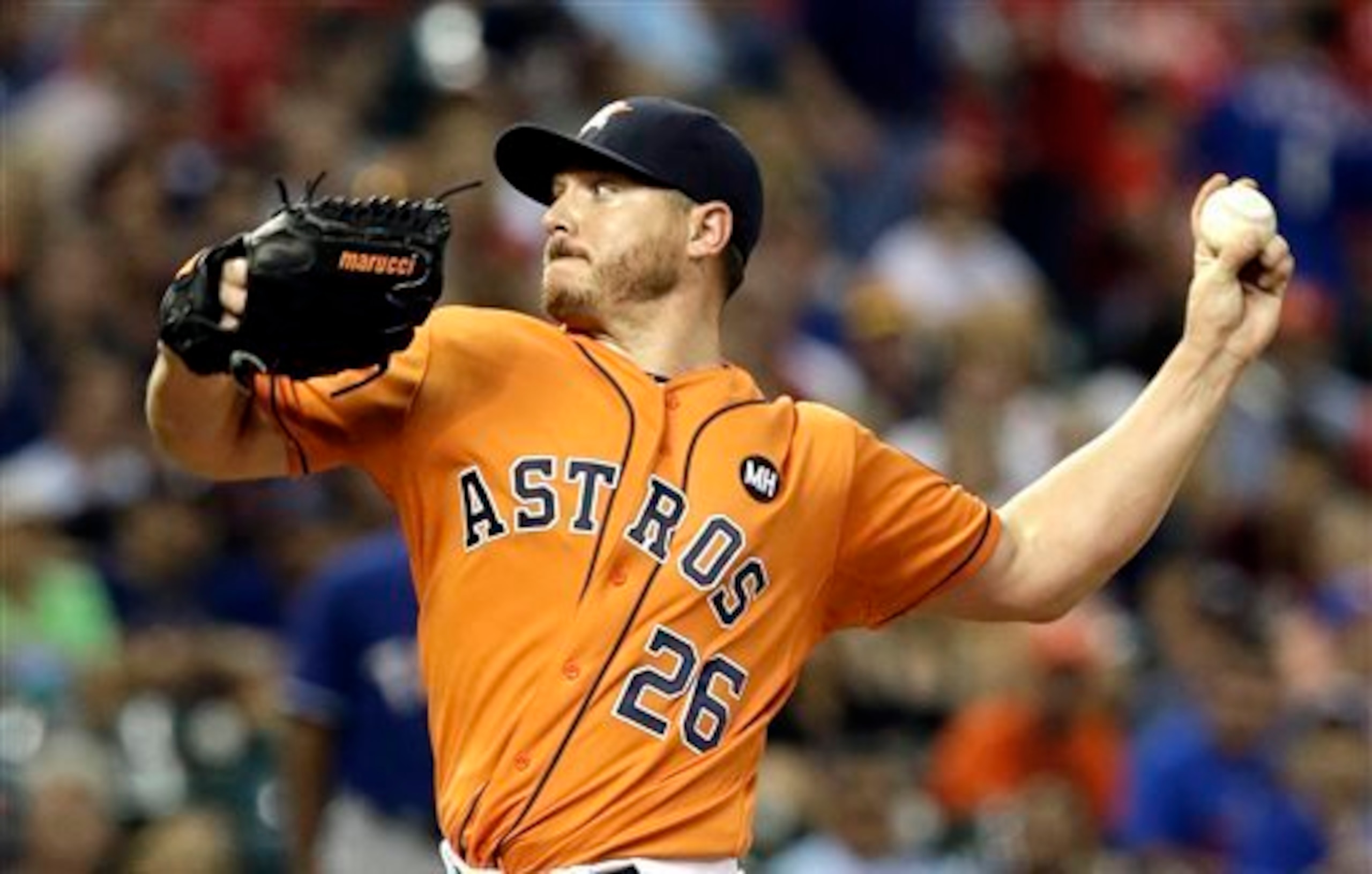
Control
Scott Kazmir didn't impress with a 7.7 BB%, and his below-average 44.9 Zone% says he deserved that figure. But these numbers don't quite do Kazmir's control justice. The veteran left-hander made it easy on himself by throwing roughly 70 percent hard stuff, and with that he was able to do a solid job working the outside corner against lefties and righties before finishing them off with sliders and changeups below the knees. It all starts with a delivery that, while not exactly simple, is balanced throughout.
Whiffability
It doesn't look particularly impressive that Kazmir only posted a 20.3 K% down from career rate of 22.1, but the number to focus on is his easily above-average 10.3 SwStr%. His changeup was mainly responsible for that, but it was also just one of four pitches to finish with a Whiff% over 10. More so than the movement of each of those pitches, that speaks to how well he sequences and locates his offerings. Assuming he doesn't change his style, he should be able to keep his whiffs coming.
Hittability
Because Kazmir finished with a subpar GB% (42.9) and IFFB% (7.1), you'd think he wouldn't rate so well in this department. But with a solid 18.9 Soft% and 25.7 Hard%, he managed to outpace the average starter in both departments despite not having the benefit ground balls or pop-ups. This, too, is a testament to his sequencing and locating. Opposing hitters may have had a relatively easy time elevating against him, but getting the ball deep in the outfield wasn't particularly easy.
Workhorse
Though Kazmir was solid for most of 2015, he still only averaged only averaged 5.9 innings and 95 pitches per start on his way to finishing with just 183 innings. In 11 big-league seasons, he's still only had one year in which he worked over 200 innings. But because hes found a formula that works while holding his velocity well throughout the year, he should at least be able to stick in the 180-190 range.
Total
The 3.10 ERA that Kazmir finished with slightly oversells how good he was in 2015. But there's no mistaking that he was definitely good and that he generally has been good for over two years now. He may not be the overpowering pitcher he once was, but he's getting by just fine on his much-improved control and contact management.
35. Hisashi Iwakuma, Seattle Mariners
11 of 45
Control
Hisashi Iwakuma remains one of the top control artists in MLB, and the 4.1 BB% and 47.5 Zone% he put up in 2015 only tell about half the story. Though he's not immune to missing over the middle, he generally does a good job of working the edges with his hard stuff. This allows him to set up hitters for splitters just below the zone, and he's a danger to throw right-handers sliders either on or just off the outside corner. When he's on, he gives master classes in how to sequence and hit your spots.
Whiffability
Given all that was just said, it's not the biggest surprise that Iwakuma carried on as a solid whiff artist with a 21.5 K% and 10.6 SwStr%. Whether the 34-year-old's four-seamer can carry on as such a dependable whiff pitch with its velocity leaking is a good question. But at the least, Iwakuma's splitter and slider should keep 'em coming—especially the latter, which is still one of the top swing-and-miss splitters thrown by any starter and arguably the most GIF-able to boot.
Hittability
Regarding this aspect of Iwakuma's game, it's easy to notice the good: A par-for-his-career 50.4 GB% and an above-average 26.1 Hard%. But it's also easy to notice the bad. There's his ugly 15.3 HR/FB, and both that and his subpar 16.2 Soft% go to show that even all those ground balls can only help him so much in the soft-contact department. The big-picture summary is that while he is capable of befuddling hitters with his style of pitching, he gets hit pretty hard when he doesn't execute.
Workhorse
Iwakuma has made it two years in a row with fewer than 30 starts thanks to injuries. And with his age-35 season on deck, it's hard to count on much-improved durability. But on the bright side, Iwakuma once again showed in 2015 that he has no trouble working deep into games when he is healthy. His efficiency is a factor, but it also helps that he maintains what stuff he has.
Total
Exactly how durable Iwakuma can be going forward is a good question after the events of the last two seasons. But his talent isn't more in doubt than it was before. He remains one of the best control artists in MLB, and it's largely thanks to that talent that he's generally good at avoiding damage.
34. Collin McHugh, Houston Astros
12 of 45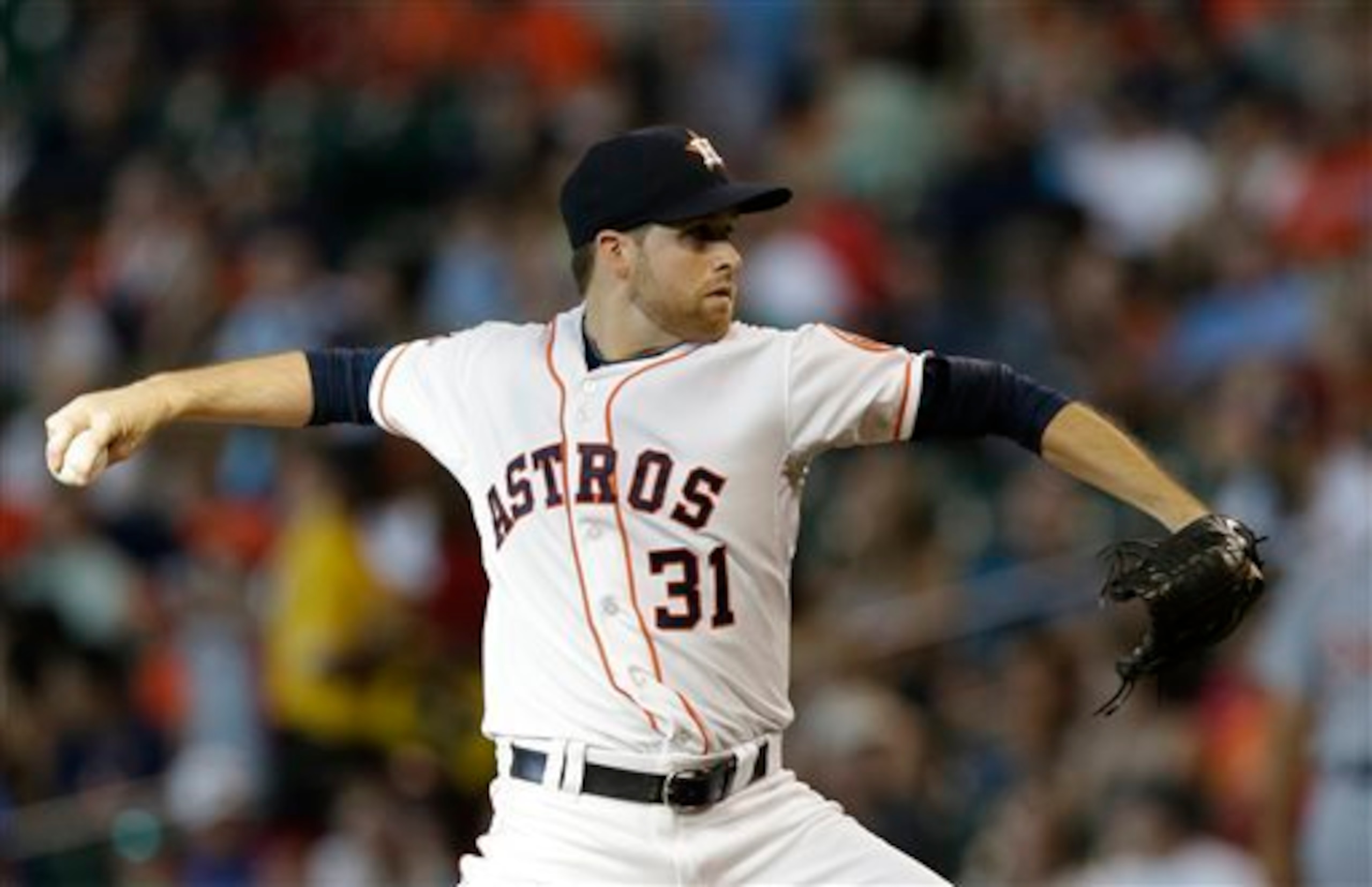
Control
Collin McHugh posted a 6.2 BB% and 45.0 Zone% in 2015, pretty good for a guy who throws only 33 percent four-seamers. He makes that work by using his slider like a cutter—working lefties around the belt and righties off the outside corner—and by putting his curve at and below the knees. With hitters watching out for those two pitches, it's easier for him to sneak attack them in the zone with his fastball. He can be only so precise with this approach, but he executes it about as well as you could ask.
Whiffability
McHugh wasn't able to carry over the whiffability he had in 2014, but he still finished with a solid 19.9 K% and 10.3 SwStr%. Neither his slider nor his curveball are particularly excellent at drawing whiffs, but he throws so many of them that they get their share anyway. His preference for breaking balls also allows his four-seamer to be more overpowering than its low-90s velocity would suggest. Though hitters should continue to adjust to McHugh's approach, odds are they won't be able to figure it out completely.
Hittability
More so than whiffs, this is where McHugh's unique approach really comes in handy. Throwing so many breaking balls naturally earns him his share of ground balls, as he posted a solid 45.4 GB%. He also showed he could keep the pop-ups coming with an 11.3 IFFB%, and overall he easily outdid the average starter with a 21.4 Soft% and 24.8 Hard%. All this goes to show that when you have solid command of such an unorthodox pitch mix, hitters are going to have a hard time punishing you.
Workhorse
McHugh was quietly a consistent workhorse as a rookie in 2014, and he built on that by averaging over six innings and 100 pitches per start in 2015. That's a good way to get over 200 innings. The downside is that McHugh's velocity faded slightly both throughout the year and within games. And because he throws so many breaking balls, you can't help but wonder about how durable he can be going forward.
Total
McHugh has an unusual style of pitching, but he makes it work. He has good control despite throwing so many breaking balls, and it adds up to a decent swing-and-miss ability, very strong contact management and, by extension, quite a few innings.
33. Wei-Yin Chen, Baltimore Orioles
13 of 45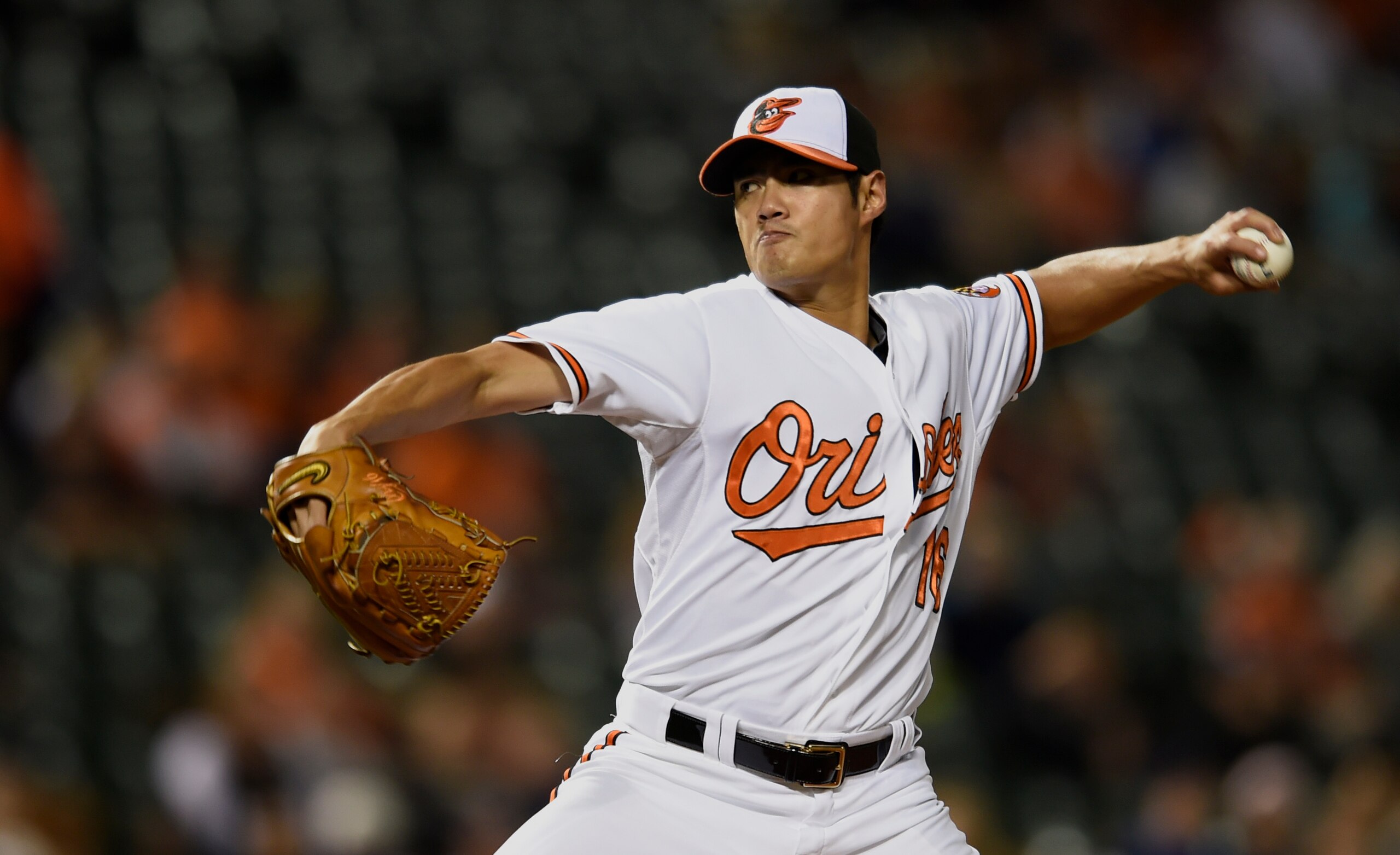
Control
Wei-Yin Chen was quietly an elite control artist in 2014, and he picked up right where he left off in 2015. In addition to finishing with a 5.2 BB%, he also finished with the AL's highest Zone% at 50.6. He's certainly built for elite control. Everything starts with simple mechanics that involve very little effort in throwing the ball, and his arsenal revolves around his four-seam fastball. The lone gripe: He works way too much in the middle against right-handed batters, which explains a lot.
Whiffability
Chen finished 2015 with a career-best 19.3 K%. But on the not-so-bright side, that and his 8.7 SwStr% were still below average. Chen's insistence on pounding the zone over and over with his low-90s four-seamer is a factor, but the bigger issue is that he just doesn't have a standout secondary pitch. His slider and splitter are passable options, but neither has ever been reliable at drawing whiffs. He can get whiffs by forcing hitters to protect, but he can't get them at will.
Hittability
Because Chen isn't overpowering and spends a lot of time in the zone, you wouldn't expect much in this category. But he did well to outpace the average starter with a 21.9 Soft% and 28.2 Hard%, with a rock-solid 14.0 IFFB% at the heart of those figures. Those pop-ups came mainly from his four-seamer, which does have some decent late life to help make up for its modest velocity. Here's thinking it'll be hard for Chen to totally repeat his 2015 performance, but at least he has that to fall back on.
Workhorse
Chen has been a reliable six-inning starter since he first set foot in the majors in 2012, but he was a little bit better than that in 2015. That's what throwing a near-endless amount of strikes can do, but it's also to Chen's credit that he has little trouble maintaining his velocity deep into games and, indeed, throughout a season. The Orioles can quite count on him for 200 innings, but he's an easy best for 180-190.
Total
It's hard to get excited about a pitcher like Chen, as he's not going to dazzle you on any given night. But there is value in consistency, and his excellent command and solid contact management allow him to specialize in that.
32. John Lackey, St. Louis Cardinals
14 of 45
Control
Good control has long been one of John Lackey's best tools, and so it went in 2015. Beyond posting a below-average 6.0 BB%, his 49.1 Zone% was one of the highest in MLB. He already had a straightforward delivery, but he further helped himself by turning into a fastball-slider pitcher. And while he did stray down the middle too often with his heat, he generally stayed on the edges and set up hitters for sliders off the glove-side edge. Not very complicated, to be sure. But certainly effective.
Whiffability
It's been years since Lackey was a truly overpowering pitcher, but he maintained a level of respectability in 2015 with a 19.4 K% and 9.4 SwStr%. It helps that his fastball velocity is still hanging steady in the low 90s, but what's really keeping Lackey going is his slider. It's not a particularly nasty slider, but it's good enough to maintain an overall Whiff% near 20. When you throw a pitch like that north of 20 percent of the time, the whiffs are going to be there. Once again: It's simple but effective.
Hittability
The best thing we can say about Lackey's contact management is he remains a solid source of pop-ups, posting an easily above-average 11.8 IFFB%. But with a 45.8 GB%, he remained only a modest ground-ball artist. And with a 17.6 Soft% and 30.2 Hard%, he didn't outperform the average starter in either category. As good as Lackey is with his command, we did note that he's not immune to mistakes down the middle. This, alas, is where he pays for those.
Workhorse
It's a testament to Lackey's efficiency that he averaged nearly seven innings per start despite averaging fewer than 100 pitches. Having a strong 6'6", 235-pound frame also helps. Still, he's not without red flags. Lackey's velocity tends to dip later in games, and it's notable that his arm slot was lower throughout 2015 than it had been in past years. With his 37th birthday upon him, it's hard to imagine him crossing 210 innings again.
Total
Lest you read too much into his 2.69 ERA, Lackey wasn't actually that overpowering in 2015. But if nothing else, he showed that when you combine strong control with a simple arsenal, you don't necessarily need to be overpowering to be efficient.
31. Masahiro Tanaka, New York Yankees
15 of 45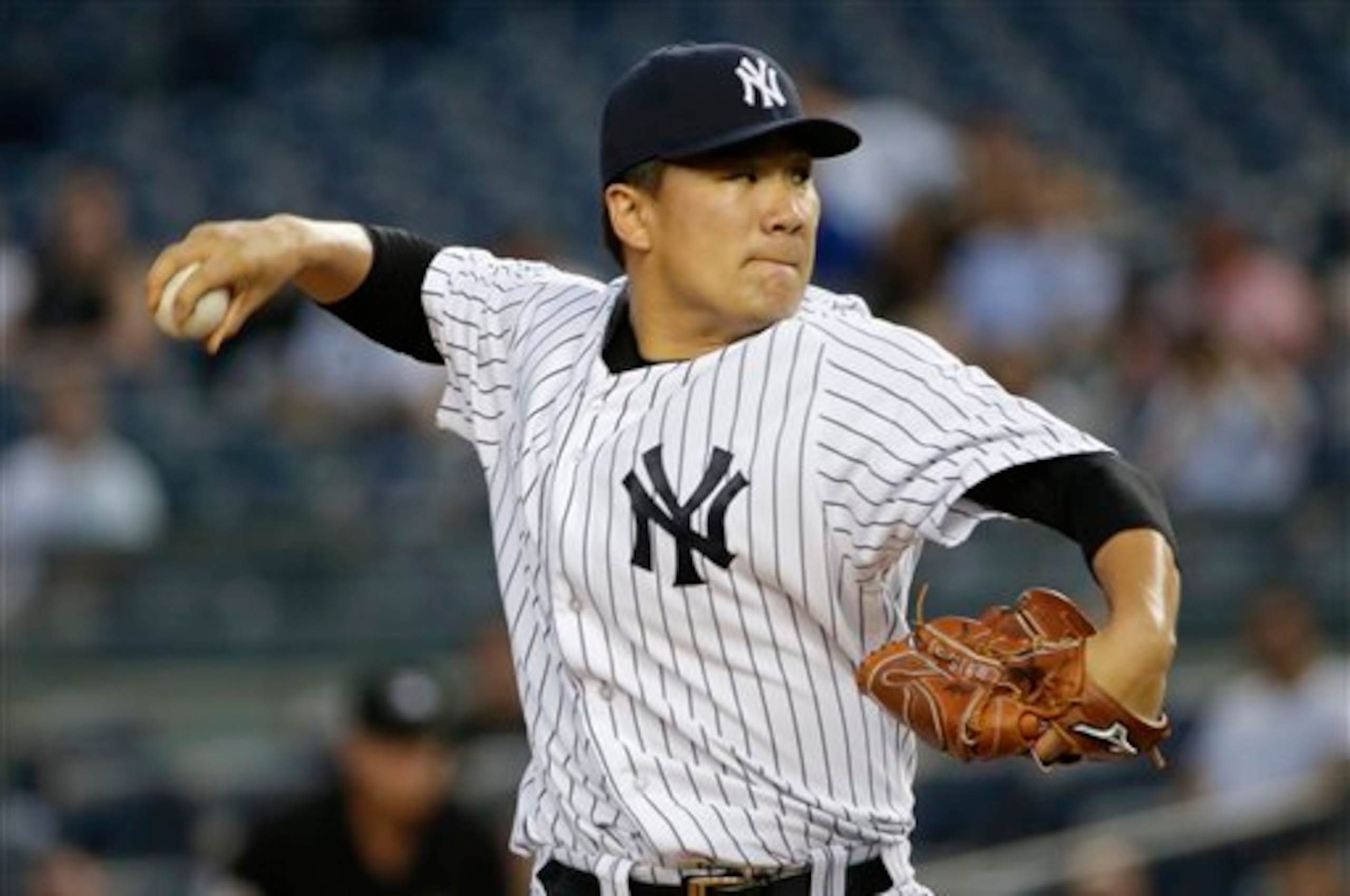
Control
Masahiro Tanaka finished with an excellent walk rate at 4.4 percent. But like in 2014, he didn't come about such a low BB% in an orthodox fashion. He only posted a 43.6 Zone%, which is actually higher than you'd expect from a guy who began working off his splitter and slider. But what this allowed him to do was maintain his status as one of the league's best at getting hitters to expand outside the zone, as he put 'em out there and they chased 'em. This made it that much easier for him to sneak attack hitters with fastballs in the zone, which he did more frequently in 2015. His is a very complex system that would be tough to copycat. But hey, it works for him.
Whiffability
With lots of swings outside the zone inevitably come plenty of whiffs. And that was indeed the key to Tanaka racking up his 22.8 K% and 11.4 SwStr%. His slider and eminently GIF-able splitter once again posted strong whiff rates, with the majority of those whiffs coming below the knees. If there is a concern going forward, however, it's that 2015 was the second straight year that Tanaka's splitter had a harder time drawing whiffs as time elapsed. He'll have issues if hitters are wise to it from the start.
Hittability
There's a good side of Tanaka's contact management, and that's the one that had the 47.0 GB% and 9.5 IFFB% in 2015. But the downside is that an already bad problem with home runs got considerably worse, to the tune of a 16.9 HR/FB. Not surprisingly, he also posted a slightly subpar 30.6 Hard%, mainly because he continued to get killed on mistakes in the middle of the strike zone. You have to take the bad with the good with Tanaka's contact management, and the bad unfortunately looms larger.
Workhorse
The right elbow that had most worried coming into the year never did succumb to everyone's worst fears, but his right arm did put Tanaka on the DL for a few weeks in the first half. As a result, we still don't know if he can make it through a full season. But on the bright side, he once again had no issues working deep into games when he was healthy, thanks to both his efficiency and his ability to maintain his stuff. To put it one way: Tanaka is reliable when he's not injured.
Total
Whether Tanaka can make it through a full season may be a good question, but there's little question he's a really talented pitcher when he is on the mound. Thanks to outstanding command and a strong ability to miss bats, he's liable to dazzle when he takes the ball.
30. Danny Salazar, Cleveland Indians
16 of 45
Control
Based on his 7.1 BB%, it doesn't look like Danny Salazar had especially great command in 2015. But that's slightly misleading. Being much more consistent with his release point helped point him toward a career-best 48.8 Zone%, and he was pretty good about not giving hitters much to hit. He did a good job of working lefties and righties away with his four-seamer, and he showed he could put his splitter both at and below the knees. He has the look of a guy who's figuring out his control.
Whiffability
Salazar hit his whiffability peak back in 2013, but there's still plenty to like about the 25.7 K% and 11.7 SwStr% he posted in 2015. There's no big secret to how he gets whiffs. He works off a mid-90s four-seamer that's pretty good at missing bats in its own right, but his splitter is his money pitch. It's the best swing-and-miss splitter thrown by any starter, and it certainly looks the part with late, fading movement that easily gets hitters off-balance. With that and his fastball, he has what he needs to rack up strikeouts.
Hittability
Though he's quite good at missing bats, Salazar remains largely incapable of managing contact. He doesn't go to his sinker often enough to boost his GB% much higher than 44.1, and he finished 2015 with just a 6.1 IFFB%. Given that he was also once again prone to home runs with a 12.8 HR/FB rate, it's no wonder he balanced out a solid 28.3 Hard% with a not-so-solid 17.4 Soft%. This is a reminder that no matter how hard a pitcher throws, hitters can time velocity.
Workhorse
Salazar got a bit of a late start to his 2015 season and thus fell short of 200 innings. But he showed by averaging over six innings and 100 pitches per start that he can handle a consistently heavy workload. And though he's not the biggest guy at 6'0" and 195 pounds, he also showed he can maintain his stuff both over time and pretty well within games. We're looking at an emerging workhorse.
Total
Salazar's big flaw is that he's not overly difficult to square up, which keeps him short of being truly overpowering. But he's clearly establishing some control to go with his mid-90s heat and his awesome splitter, and he showed in 2015 that he can handle durability just fine.
29. Stephen Strasburg, Washington Nationals
17 of 45
Control
Nobody's ever questioned Stephen Strasburg's ability to throw strikes, nor is anyone about to. He had his ups and downs, but he still finished with a 5.0 BB% and 50.0 Zone%. He's never had any trouble repeating his mechanics, and he certainly makes things easy on himself by throwing over 60 percent four-seam fastballs. But his command of his fastball within the zone is still easy to nitpick, as he lives too often right down the middle. This has been and still is his control's fatal flaw.
Whiffability
Alongside control, whiffs also continued to be a mainstay for Strasburg in 2015. He finished with an elite 29.6 K% and a strong (if not quite elite) 11.2 SwStr%. His fastball remains just OK at missing bats despite its velocity (95.4), but his changeup and curveball are both still excellent swing-and-miss pitches. That goes particularly for his changeup, which remains one of the most unhittable changeups thrown by any starting pitcher. As long as he at least has that, the whiffs will be there.
Hittability
More than any other area, this is where Strasburg has struggled to stand out. But 2015 was somewhat of a different story. He posted a career-best 14.2 IFFB% and also got by with a 21.8 Soft% and 28.9 Hard%. Whether Strasburg can sustain this is a good question, however. The only noticeable change he made in 2015 was to throw even more fastballs, and that's a pitch hitters have handled well and continued to handle well. Color us somewhat skeptical.
Workhorse
Strasburg finally arrived as a workhorse in 2014, in which he made 34 starts and pitched 215 innings. But that didn't last into 2015. Injuries helped limit him to just 22 starts, and he struggled to eat innings in those outings with an average of 5.5 innings per start. He continued to be reasonably consistent with his velocity within games, but his strikeout habit makes him prone to high pitch counts. There's also the reality that the Nationals still don't seem very comfortable turning him loose.
Total
As you might have noticed and/or been told by the Internet, Strasburg isn't the ace he was supposed to become. But while that makes it easy to downplay what he can do, we shouldn't lose sight of the fact that a pitcher who can throw a ton of strikes and miss a ton of bats is a pretty good player.
28. Shelby Miller, Atlanta Braves
18 of 45
Control
With an 8.4 BB%, Shelby Miller once again had an issue with walks in 2015. But he also once again blew away the starting-pitcher average with a 49.4 Zone%, both by being slightly more consistent with his release point and by continuing to throw roughly 90 percent fastballs. And though it's admittedly hard to demonstrate as much with visualized data, he's solid at using all that hard stuff to mix and match on the edges of the strike zone. As such, he's certainly a better control artist than his walk rate lets on.
Whiffability
Miller doesn't seem to make whiffs a priority when he pitches, but his 19.8 K% and 9.1 SwStr% show that he was OK at getting them in 2015. It certainly helped that he was throwing his heat a little harder at an average of 94.1 mph. That and the way he sequenced his fastballs helped make Miller's four-seamer one of the best in the business at missing bats. But because he lacks a reliable pitch to change speeds with, exactly how Miller is supposed to improve his whiffability is a good question.
Hittability
Miller finished 2015 with just an OK GB% at 48.1 and a subpar 8.2 IFFB%. As such, it may seem odd that he rates so well here. But he's a rare case of a pitcher not needing many ground balls or pop-ups to specialize in contact management. That's best reflected in how he easily topped the averages with a 21.3 Soft% and 26.6 Hard%, which goes to show what you can do when you sequence and locate several different types of high-velocity fastballs.
Workhorse
Miller collected his first 200-inning season in 2015, mainly because he was simply able to work deep into games on a regular basis. Despite averaging only 98 pitches, he still averaged over six innings per start. That's what good control and solid whiffability and contact management can do, and Miller further helped himself by maintaining his stuff within games better than he used to. With his 25th birthday on deck, he should just be coming into his own as a workhorse.
Total
Let's put it this way: Miller is very likely the most talented 6-17 pitcher in recent memory. He may not be elite at any one thing, but he showed in 2015 that he can handle good control and solid whiffability while consistently jamming hitters with his fastball-heavy attack.
27. Michael Wacha, St. Louis Cardinals
19 of 45
Control
If it seems like Michael Wacha's good-not-great 7.6 BB% undersells his control a bit, that's because it does. His 48.6 Zone% is a much better reflection of how well he throws strikes, mainly because he has no issue filling up the zone with his four-seamer. And though he's not yet a master at working the edges with that pitch, he is headed in that direction. And in the meantime, he's already good at keeping his cutter, curveball and changeup out of the danger zones. He's a control artist to watch.
Whiffability
Wacha doesn't pitch like a man who chases whiffs, but his 20.1 K% and 9.5 SwStr% are proof that he runs into them anyway. He lacks a true standout swing-and-miss pitch, but his four-seamer, curve and changeup are all capable of getting them. As much as anything, that speaks to how well he changes speeds, as he can go from a 94 mph fastball to the mid-80s on his changeup to the mid-70s on his curveball. This approach may not make him a whiff king, but it'll ensure he doesn't fall too far behind.
Hittability
Wacha has altered his pitch mix to become less reliant on his four-seamer, and that's had the expected benefit with regard to his contact management. With a 45.8 GB%, he's become a solid ground-ball artist. But thanks to his four-seamer (which has a bit of rising action) and cutter, he's also managed an 11.2 IFFB%. That and his GB% are at the heart of his solid 20.7 Soft%. But be warned he's not perfect, as his 29.5 Hard% reflects how he can't quite overpower hitters within the zone.
Workhorse
Wacha needed to prove in 2015 that he could handle a full season's workload after last year's shoulder injury, and he largely succeeded in doing so. He made 30 starts, he averaged six innings on just short of 100 pitches per outing. He also maintained his velocity well throughout the year. The catch is that he wasn't as good at that within games, which contributed to the issues he had the third time through the lineup. He'll eat his share of innings, but maybe not a whole bunch.
Total
What Wacha essentially did in 2015 was live up to the promise he showed as a rookie back in 2013, developing into a fine control artist who can miss bats and manipulate contact well. Whether he can be a true No. 1 is a good question, but he's at least a strong No. 2 starter.
26. Jordan Zimmermann, Washington Nationals
20 of 45
Control
It was par for the course for Jordan Zimmermann's control in 2015, as he posted a top-five BB% at 4.7 and backed it up with a a 49.8 Zone%. It helps that he has some of the simplest throwing mechanics in the majors and that over 60 percent of his pitches are four-seamers. With those, he continued a pattern of working up in the zone before changing eye levels with sliders and curves at and below the knees. Top-to-bottom is a different approach from side-to-side, but he executes it very well.
Whiffability
This is where Zimmermann struggled to get by in 2015, posting a modest 19.7 K% and subpar 8.4 SwStr%. His slider and fastball notably saw their whiff rates peel off from where they were in 2014, and there's a good reason for that. Zimmermann's average fastball velocity dropped by nearly a full mile per hour, making his four-seamer more hittable and decreasing the amount of velocity differential between his heat and his slider. He's at an age (29) where it's not the best idea to anticipate a turnaround.
Hittability
As you would expect from a guy who throws mostly high fastballs, Zimmermann continued to be a subpar ground-ball pitcher in 2015. And while the bright side is that he continued to get pop-ups well with a 12.3 IFFB%, but his HR/FB rose from 6.4 to 10.9 and he couldn't add a good Hard% (29.2) to go with his good Soft% (20.2). But most disconcerting of all is how his fastball became easier to hit, which could very well turn into a bigger problem if he leaks more velocity.
Workhorse
It feels like Zimmermann should be one of the top workhorses in the league, but he's not quite. He continued a pattern of working barely over six innings on an average of fewer than 100 pitches per start in 2015. Though he's definitely efficient with his pitches and holds his velocity within games, instances of him lasting longer than six innings are surprisingly rare. He's certainly good enough to flirt with 200 innings, but he can't be counted on to go too far over that magic number.
Total
Zimmermann achieved a new level of excellence when he finally started missing bats in 2014, but that skill didn't last into 2015 and may have disappeared for good. It's a good thing, then, that he still has excellent control that gives him the efficiency to produce six solid innings on a regular basis.
25. Jose Fernandez, Miami Marlins
21 of 45
Control
Jose Fernandez's control picked up where it left of following his Tommy John recovery. He finished with a 5.3 BB% and a 47.8 Zone%. Throwing 50 percent four-seamers definitely helps, and he can certainly find the zone with those. But his fastball command within the zone? Not as good, which is why it's crucial that he continues to put his curveball and changeup in perfect spots. Hitters will be doomed if Fernandez ever develops pinpoint fastball command, but what he has is more than good enough.
Whiffability
Just as Fernandez's control came right back, so did his ability to mow down the opposition. He posted a 29.8 K% and a 13.3 SwStr% to reclaim his place among MLB's most unhittable pitchers. His fastball, curveball and changeup all got their share of whiffs, and that's no wonder. His fastball averaged 95.8 mph with late life, and his curveball (especially) and changeup continued to look like Hollywood special effects. His only crime in this department, really, is that he's not named Clayton Kershaw.
Hittability
If there's a weakness in Fernandez's game, it's that he's not an especially gifted contact manager. His pitches all miss bats, but his 40.1 GB% and 7.7 IFFB% reflect that he doesn't really have a go-to pitch for a ground ball or pop-up. As such, it's not surprising that he posted only an 18.2 Soft% and 29.4 Hard%, figures that are more or less in line with his career norms. It's hard to say that his stuff is truly vulnerable to getting knocked around, but he's also not out there to jam hitters.
Workhorse
The Marlins kept the training wheels on for Fernandez's return, limiting him to 90 pitches per start. More than likely, the wheels will come off next year. But we can still only take so much for granted. Fernandez isn't a proven innings-eater, after all, and it wasn't that long ago that his comeback from Tommy John was interrupted by a shoulder injury. It's best not to expect the world from him in 2016.
Total
All questions about his durability aside, Fernandez's return to action in 2015 made one thing clear enough: He's still an otherworldly talent. With his mix of control and deadly swing-and-miss stuff, he has the goods to be among the most dominant pitchers in a truly stacked National League.
24. Carlos Martinez, St. Louis Cardinals
22 of 45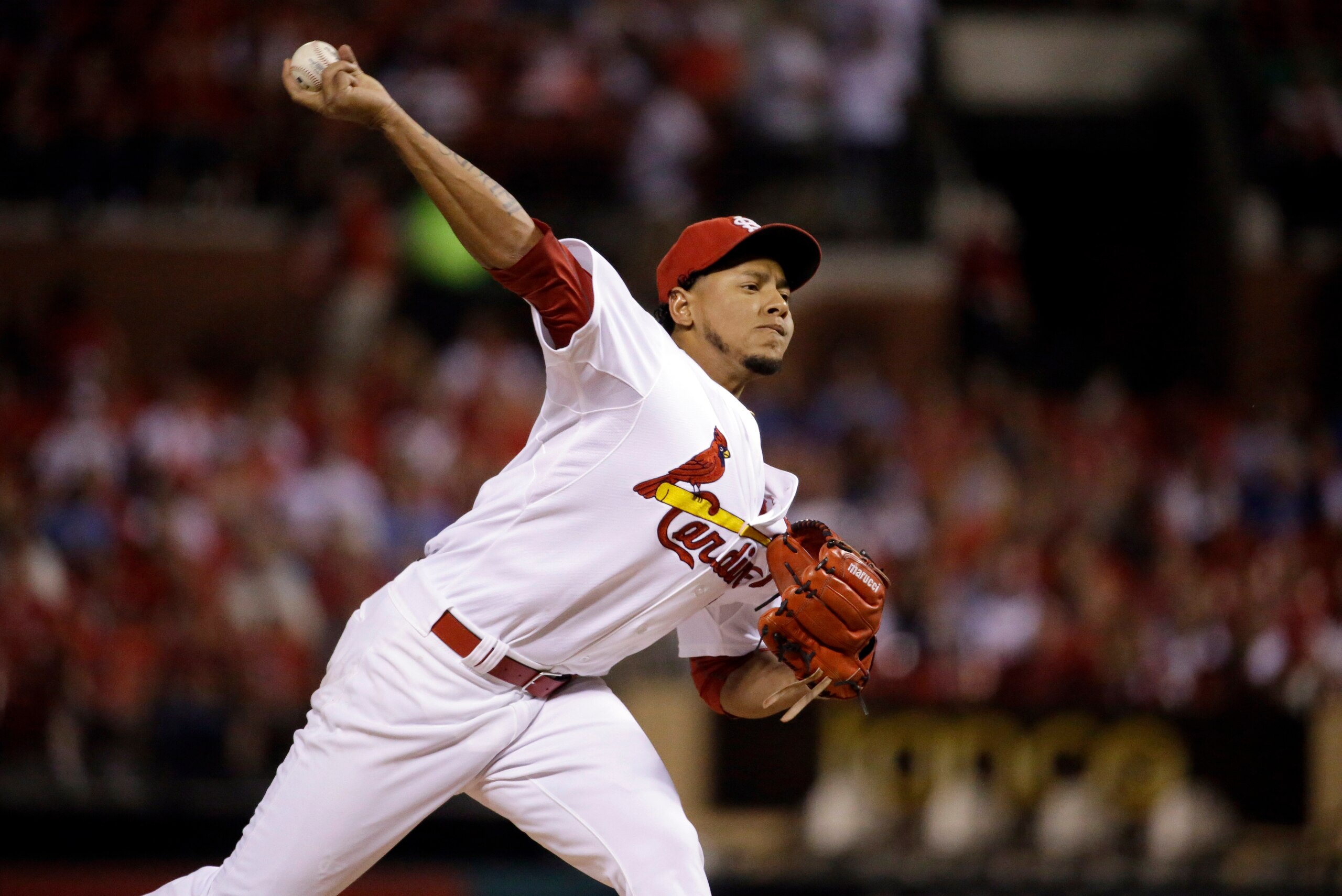
Control
Before a bad right shoulder ended his season in late September, Carlos Martinez's 8.3 BB% and 45.7 Zone% made his control look at best OK. And that generally was the case, as he combined a high-effort delivery with a repertoire that favored movement. But it's to Martinez's credit that he could at least work the edges against lefties and righties with his heat, and it's notable that he got better at hitting the zone later in the year as his arm slot got higher. Going forward, he has potential for solid control.
Whiffability
Martinez was one of the league's better strikeout artists in 2015 with a 24.4 K%, so it's somewhat disappointing that he had "only" a 10.5 SwStr%. But that number certainly undersells his potential in that department. Martinez has the mid-90s heat to set up his secondaries. One of those, his changeup, is already an elite swing-and-miss pitch. His slider wasn't elite in 2015, but it may be an equally nasty pitch. If it starts getting as many whiffs as it should, Martinez is going to become even harder to hit.
Hittability
Whiffs aren't the only thing that can come from electric stuff thrown with unpredictable control. Excellent contact management can also happen, as it did with Martinez. His sinker and slider played about an equal role in forming his elite 54.5 GB%, and overall he held the opposition to a 21.2 Soft% and 27.2 Hard%. Martinez could sacrifice some of his contact-management ability if his control does indeed improve in 2016. But with his electric stuff, it would likely only be a small portion.
Workhorse
Martinez made it to 179.2 innings, a solid amount for an undersized right-hander (6'0" and 185 lbs) in his first full season as a starter. It's also impressive that he actually gained velocity as the season moved along. But the reality that Martinez averaged only 6.0 innings and 95 pitches per start shines light on how he wasn't regularly going deep into games. And knowing that he is an undersized pitcher with a high-effort delivery, we can't disregard the notion that maybe his shoulder isn't finished with him.
Total
It will indeed be interesting to see what Martinez will have after he comes back from his season-ending shoulder injury. But if it's anything like what he showed throughout 2015, National League hitters won't be happy. By missing plenty of bats and plenty of sweet spots, Martinez showed his stuff can play in a starting role.
23. Francisco Liriano, Pittsburgh Pirates
23 of 45
Control
Francisco Liriano's low score shouldn't surprise you. Beyond posting a 9.1 BB% in 2015, he once again threw fewer pitches in the zone than any other qualified starter with a 36.2 Zone%. One redeeming quality of Liriano's control is that he at least works the edges with his bread-and-butter sinker, but it's a stretch to say he can throw the pitch exactly where he wants. It's hard for him to do that with any of his offerings, as they all have quite a bit of movement and come from a stiff, short-arm throwing motion.
Whiffability
Of course, one of the primary benefits of Liriano's style is whiffs. Lots and lots of whiffs. He once again posted a strong K% at 26.5 and an even stronger 14.3 SwStr% to rank among MLB's very best. His sinker isn't much for missing bats, but his changeup and slider are both elite swing-and-miss offerings among his starter brethren. And understandably so, as both pitches have late, explosive movement that often makes hitters look totally overmatched.
Hittability
Another thing you get when you combine wildness with nasty pitches is excellent contact management. Everything Liriano throws induces ground balls, so it's no surprise he once again posted a GB% over 50 at 51.2. He also once again ranked among MLB's best soft-contact merchants with a 25.4 Soft%, and he allowed just a 23.9 Hard%. Add all this to the above, and there's little question he's one of the hardest pitchers to hit in all of MLB.
Workhorse
Liriano managed to top 30 starts for the first time since 2010, and he averaged over six innings on fewer than 100 pitches along the way. But more than likely, this is the best he's capable of at this stage of his career. The durability the enjoyed in 2015 can't be taken for granted in light of his injury track record and his age (nearly 32), and there's the reality that he's not one for working deep into games when he is healthy. His lack of efficiency with his pitches sees to that.
Total
Liriano's outlook may not be a lock to eat a whole bunch of innings, but he once again showed in 2015 that he doesn't offer hitters easy at-bats. Between his ability to miss bats and to consistently jam hitters, he remains one of the hardest pitchers to hit.
22. Garrett Richards, Los Angeles Angels
24 of 45
Control
Nobody's ever accused Garrett Richards of having pinpoint control, so nobody should be shocked at the 8.8 BB% he posted in 2015. The bright side is that he at least had a solid 45.5 Zone%, but that number is also only worth so much. Richards continued to go heavy on sliders below the knees. And though he's not incapable of putting his fastball in the zone, he's neither especially good at it nor capable of putting it where he wants. Given that everything flows from a funky delivery, Richards' control is what it is.
Whiffability
The modest 20.3 K% Richards posted in 2015 says he was just OK at missing bats, but his 11.2 SwStr% says quite another thing. He continued to showcase a mid-90s fastball with late life, but his bread-and-butter whiff pitch was still his slider. It was a top-10 swing-and-miss slider in 2015, and he certainly got his money's worth out of it by throwing it over 30 percent of the time. Between that and a fastball and curveball that are also nasty, Richards is definitely capable of a better K% than the one he posted.
Hittability
Richards' raw stuff isn't just good for missing bats. It's also quite good for missing the sweet spot of bats. With contributions from all his pitches, he once again posted a very strong GB% at 54.8. In light of that and his 10.4 IFFB%, it's no wonder he finished with an excellent 22.5 Soft% and 23.2 Hard%. The catch is that Richards was slightly home run prone with an 11.7 HR/FB—his punishment for too often straying down the middle. But even despite that, he remained one of the league's toughest pitchers to square up.
Workhorse
It wasn't just Richards' stuff that showed no ill effects from last year's season-ending knee injury. He also proved to be quite durable in 2015, averaging 6.5 innings and over 100 pitches per start. And just like in 2014, he showed he has no trouble holding his extreme velocity throughout the season. His iffy control is one thing standing in his way of working deeper into games, but that's about it.
Total
Richards' 3.62 ERA makes it look like he wasn't nearly as nasty in 2015 as he was in his breakout 2014 season (2.61 ERA). But he really was. Though his control was still hit-or-miss, Richards once again proved he's capable of overpowering hitters and working deep into games on his pure stuff alone.
21. Jose Quintana, Chicago White Sox
25 of 45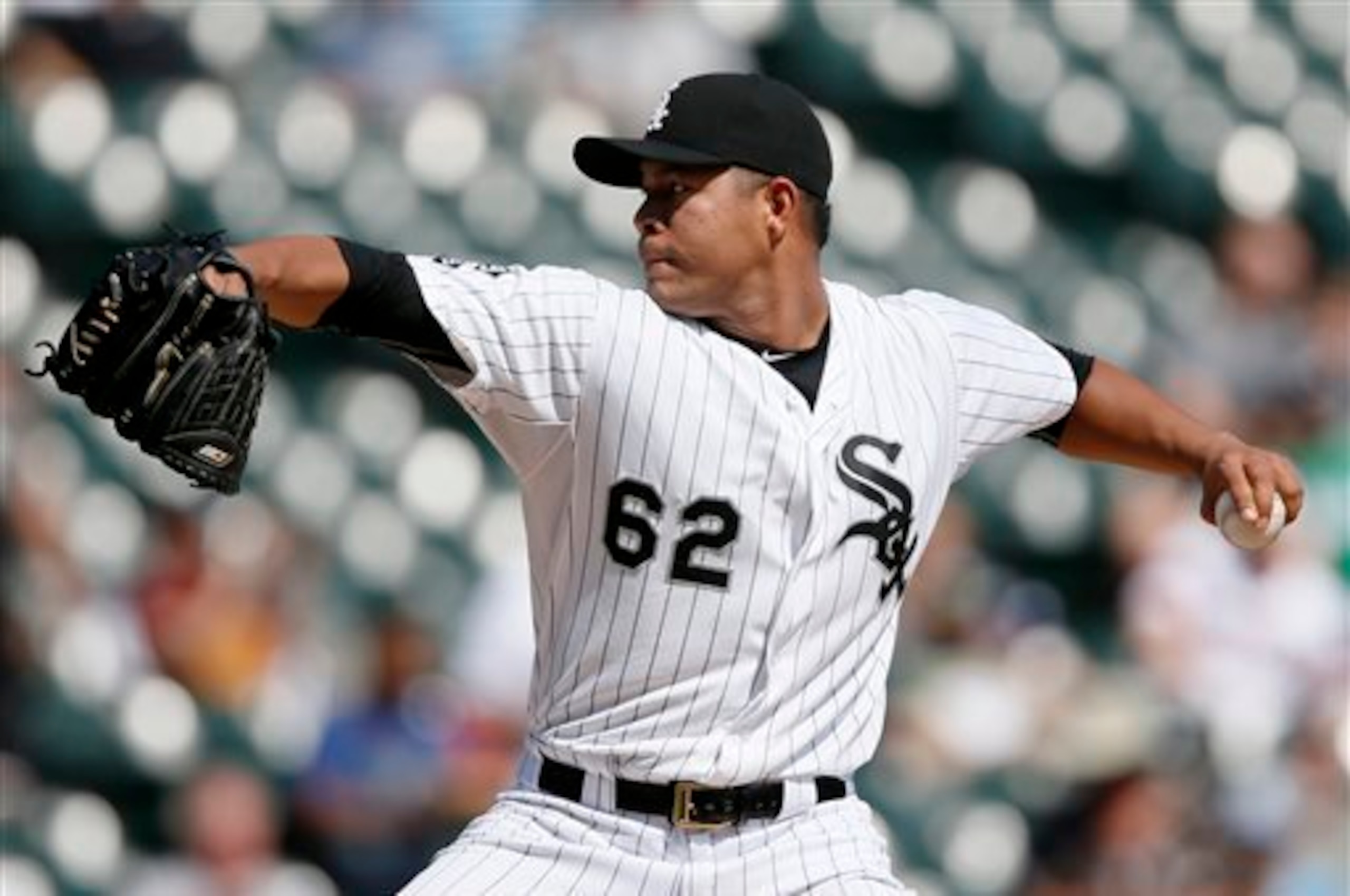
Control
Jose Quintana is only getting better at avoiding walks, as his BB% counted down to 5.1 in 2015. And though he managed that with only a 46.3 Zone%, that figure undersells how well he commands the ball. Though he can stray down the middle with his four-seamer against righties, he's generally quite good at working both sides of the plate with his heat against righties and lefties. This helps set up his curveball, and he's quite good at using that to toy with the glove-side corner. All told, he knows what he's doing.
Whiffability
Quintana remains only solid in this department, finishing 2015 with a 20.5 K% and 9.3 SwStr%. He attracted more whiffs by making his curveball an even more prominent part of his arsenal, but the pitch itself isn't overpowering enough to rack up whiffs on a rate basis. But of note is the fact that his four-seamer remains a surprisingly solid source of whiffs. That's owed to how his low-90s velocity plays up thanks to how his calm windup ends with explosive movement toward home plate.
Hittability
Quintana's increased curveball usage also helped boost his ground-ball rate, as he finished 2015 with a solid 47.1 GB%. That's part of the reason he finished with a decent 27.3 Hard%. But soft contact keeps eluding Quintana. He continues to operate with a low IFFB% (6.4) and a low Soft% (16.7). And though it's solid, his Hard% hides the fact that Quintana was just OK at keeping fly balls to medium depths. He's not necessarily easy to square up, but he's not hard to square up either.
Workhorse
Quintana made it three straight seasons of at least 200 innings in 2015, and he has consistency to thank for that. Just like in 2014, he averaged roughly 6.4 innings and 105 pitches per start. But while that makes it easy to project another 200 innings for Quintana in 2016, it's hard to imagine him going too far over 200 innings. He leaks velocity within starts, making him easy pickings late in games.
Total
Quintana is far from the most overpowering starter, but there are definitely reasons why he's emerged as such a dependable source of innings over the last few years. His excellent control allows him to be efficient with his pitches, and he's at least good enough at missing bats and managing contact.
20. Jon Lester, Chicago Cubs
26 of 45
Control
Jon Lester became an elite control artist in 2014, and he didn't let up in 2015. He posted a strong 5.7 BB% despite also posting an easily below-average 40.9 Zone%, but neither number really does his style justice. He works off a four-seamer that he has little trouble spotting on the edges against lefties and righties, and he's very good at playing with the glove-side corner with his cutter. His style allows him to be something of a modern-day Tom Glavine, as he doesn't need to hit the zone to get strikes.
Whiffability
On that last note, the 25.0 K% Lester posted in 2015 has as much to do with his ability to catch hitters looking as it does with his ability to miss bats. But his 10.4 SwStr% is evidence that he can do that, too. His four-seamer doesn't miss a ton of bats, but his cutter and curveball are equal to the task. His curve is more than equal, in fact, which is one of the top swing-and-miss curveballs in MLB. He doesn't throw it often enough to pile up whiffs with it, but it's definitely there in case he needs it.
Hittability
As evidenced by the 21.4 Soft% Lester posted in 2015, his style of working the edges of the zone does make it possible for him to jam hitters. But his contact management is otherwise a mixed bag. It's unlikely he'll maintain his 48.9 GB% given that it sprang mainly from his four-seamer, and his 29.2 overall Hard% reflects how he didn't have much luck jamming hitters when he dared to go into the strike zone. Because he doesn't have overpowering stuff, that should continue to be a fact of life.
Workhorse
Lester once again crossed the 200-inning plateau in 2015, making it four years in a row and seven out of eight that he's done so. That's what you can do when you're efficient with your pitches, as Lester averaged 6.4 innings on 100 pitches per start. And though he's darn near 32, he's still maintaining his stuff just fine within games. He should have no trouble making it back across 200 innings in 2016.
Total
Lester's first season with the Cubs wasn't as successful as he probably hoped. But make no mistake: It was still a success. By continuing to show off excellent control, miss bats and, by extension, rack up innings, he was once again one of the game's better starting pitchers.
19. Johnny Cueto, Kansas City Royals
27 of 45
Control
Johnny Cueto doesn't need to live in the zone to avoid walks, as he again demonstrated in 2015 by posting a 5.0 BB% with only a 42.2 Zone%. His approach works because of how he sequences and locates his hard stuff. It only sort of comes across in his zone profile, but his M.O. is to work the edges and use different movements to get hitters to expand the zone, which he's quite good at. One red flag is that he got less fine with his location after moving to Kansas City, with a related story being that he had issues with his release point. It's probably nothing to panic about, but it can't be ignored either.
Whiffability
Cueto had another strong season in this department, posting a 20.4 K% and 10.1 SwStr%. For this, he once again had his four-seamer and changeup to thank for bringing him the bulk of his whiffs. His smoke-and-mirrors style of pitching allows his four-seamer to play above its good-not-great velocity, and his changeup is just plain nasty. But there's another red flag. Cueto posted just a 9.0 SwStr% in Kansas City, the result of his stuff flattening out. It's another reason to be cautious going forward.
Hittability
Cueto was one of the best contact managers in MLB in 2014, notably inducing hitters to a 24.7 Soft% and 22.1 Hard%. But he couldn't keep this up in 2015, finishing with a 19.2 Soft% and 28.6 Hard%. One factor was that he posted his lowest GB% in years at 42.2, and he just plain got knocked around in Kansas City despite authoring a 13.6 IFFB% there. This was another result of his stuff flattening out, and it's another reason to be cautious with Cueto moving forward.
Workhorse
Despite the fact he didn't treat himself to many easy outings in Kansas City, Cueto still crossed the 200-inning plateau in the end. For the season, he averaged darn near seven innings on 102 pitches per start. And though it's easy to worry about him losing some durability as he nears his 30th birthday, it's notable that he held his velocity fine throughout the year and continued a pattern of increasing his velocity over time within games. His demise as an innings-eater isn't nigh.
Total
Cueto had a tough time in Kansas City, as he all of a sudden struggled to do the things that made him so successful in Cincinnati. But we shouldn't ignore that, on the whole, he had another good season. He's still one of the league's top workhorses and control artists, and his ability to befuddle hitters shouldn't be written off just yet.
18. Noah Syndergaard, New York Mets
28 of 45
Control
Noah Syndergaard had no trouble avoiding walks, finishing 2015 with a 5.1 BB%. But that makes his control look better than it actually was. He only finished with a 42.5 Zone%. And though he could throw his hard stuff in the strike zone well enough, he wasn't particularly fine with his command in the zone. But there's room for optimism on that front. Syndergaard is certainly going to be leaning heavily on his hard stuff going forward, and his simple throwing mechanics should allow him to command it better.
Whiffability
Syndergaard has a big arm that produces some electric stuff, so it wasn't surprising to see him end 2015 with a 27.5 K% and 12.2 SwStr%. He'll be one of the top whiff artists in MLB if he can maintain this, and he should. His fastball averaged over 97 miles per hour with good life and thus should continue being an easily above-average swing-and-miss pitch. The same goes for his curveball and changeup, which are about as easy on the eye as his fastball. That's three swing-and-miss pitches, which is plenty.
Hittability
Syndergaard's contact management may look like a mixed bag at first glance, as he only posted a 46.5 GB% while surrendering a 14.3 HR/FB. But while he's likely to continue posting modest figures in those departments, it's notable that he also had a 10.5 IFFB%, a 19.9 Soft% and a 24.6 Hard%. Those speak to how—sort of like Garrett Richards—Syndergaard can get by on the sheer heaviness of his stuff. Everything he throws is electric, and that electricity makes it tough to barrel.
Workhorse
Though Syndergaard started just 24 games in his rookie season, he did enough to show he's on his way to becoming a legit workhorse. He averaged 6.3 innings on 99 pitches per start, using both his efficiency and his ability to maintain his stuff to his advantage. Taking that into account with the reality that he's a 6'6", 240-pounder with efficient mechanics, there's every reason to think he can make a run at 200 innings as soon as 2016.
Total
Syndergaard may be a relative newcomer, but he looks like he very much belongs in the Mets' vaunted starting rotation. He showed in his rookie season that he can handle control, whiffability, hittability and durability, all of which should cement him as a top-of-the-rotation starter in the very near future.
17. Chris Archer, Tampa Bay Rays
29 of 45
Control
Chris Archer finished 2015 with a 7.6 BB% that doesn't inspire confidence, but in reality he took a step forward with his control. He posted a career-best 48.1 Zone% and established a simple yet effective pattern of locations for his fastball and slider. For the most part, high fastballs set up low sliders and vice versa. But while this is a good start, Archer must now work on becoming more consistent with his mechanics. That's true both on a month-to-month level and on a smaller pitch-to-pitch level.
Whiffability
Whiffability, on the other hand, is something Archer handles just fine. He finished 2015 with a 29.0 K% and a 12.9 SwStr%. And though his mid-90s fastball did get in on the fun, it was Archer's slider that did the heavy lifting. He continues to throw it harder, and yet all that extra velocity isn't taking away from its movement. When it's on, it looks like he's throwing a traditional curveball in the high 80s and low 90s, which borders on being unfair. With that pitch alone, Archer can lay waste to many a hitter.
Hittability
Archer has become a solid control pitcher with an overwhelming slider, but contact management is something he needs work on. All those low sliders helped keep his GB% afloat at 46.1, but he also posted just an 18.3 Soft% and a 31.1 Hard%. That's reflective of how all his high fastballs aren't quite as effective, as hitters showed throughout 2015 that they can tag them pretty well. Until he figures that out, his hittability will lag behind his whiffability.
Workhorse
After brushing up against 200 innings in 2014, Archer broke through in 2015. To do that, he averaged 6.2 innings and 101 pitches per start. Whether Archer can do any better, however, is a good question. Though he showed in 2015 that he can maintain his stuff just fine deep into games, his high-walk, high-strikeout style is a threat to make sure he doesn't work deep into games too often.
Total
Archer still isn't the most polished pitcher under the sun, as his control can be hit-or-miss, and he tends to get stung when hitters make contact. But his control is at least on the right track, and there's no questioning he has some of the nastiest stuff you're going to find anywhere.
16. Cole Hamels, Texas Rangers
30 of 45
Control
Cole Hamels no longer looks like an outstanding control artist, as 2015 was his second year in a row with a pedestrian BB% (7.1) and Zone% (43.9). It's hard to ignore the correlation between his Zone% decline and the slow descent of his release point. Also, far too much of his heat ends up in the middle of the zone. But if we can pay him one compliment, it's that fastballs like those work well to set up his changeup, which often looks ticketed for the heart of the plate before dropping off the table.
Whiffability
Hamels may not be much of a control artist, but whiffs remain his specialty. He finished 2015 with a 24.4 K% and an outstanding 13.3 SwStr%. It certainly helps that he maintained his 2014 velocity spike, but there's no question his top weapon is still his changeup. It remains the best swing-and-miss changeup in MLB. Also, don't overlook how his curveball has become a partner in crime, as it just keeps getting better at missing bats. With those two pitches in his arsenal, whiffs shall remain Hamels' specialty.
Hittability
As Hamels has weaned himself off his four-seamer through the years, he's become a more consistent ground-ball pitcher, finishing 2015 with a solid 47.4 GB%. But because his four-seamer remains a good source of pop-ups, he also once again enjoyed the best of both worlds with an 11.9 IFFB%. With those two things combined, his 21.7 Soft% and 27.1 Hard% definitely add up. The big catch, however, is that the AL dealt Hamels a bit of a reality check by making all these numbers worse. Since he's not leaving Texas anytime soon, that's something worth worrying about.
Workhorse
Hamels notched yet another 200-inning season in 2015, along the way averaging easily over six innings and 100 pitches per start. He also maintained his velocity just fine throughout the year and within games. So, par for the course. But if there's one thing worth worrying about, it's that Hamels is a soon-to-be 32-year-old with a lengthy track record and a drooping arm slot. These things could signal trouble ahead.
Total
Hamels isn't the best pitcher in MLB. Far from it, in fact. But he remains both very good and very reliable. There's no aspect of the game he really struggles with, and he remains a consistent innings-eater.
15. Felix Hernandez, Seattle Mariners
31 of 45
Control
It doesn't look good that Felix Hernandez's BB% rose to 7.0 from 5.0 in 2014, nor does it look good that he finished with just a 43.9 Zone%. But these numbers don't sum up his control. He doesn't make things easy on himself by throwing so few fastballs, but he's quite good at playing with the arm-side edge with the ones he does throw. And with his curveball and changeup, he can either hit the zone or entice hitters to chase by putting them below the zone. All the movement in his arsenal certainly restricts how precise his control can be, but he definitely has an idea how to make the most of all that movement.
Whiffability
Hernandez finished with a solid 23.1 K% and a 10.7 SwStr%, but these numbers are disappointments after what he did in 2014. He wasn't able to hold his velocity spike. And though his changeup and curveball remained strong swing-and-miss pitches, his changeup's whiff rate is now significantly lower than it was a couple of years ago. It could be that his insistence on using it so much is now holding it back. If that continues in 2016, his whiff rate may decline even further.
Hittability
Arguably the primary benefit of Hernandez scaling back his fastball usage is what it's meant to his ground-ball habit. With a 56.2 GB%, he placed among the league's elite ground-ball artists for a second straight year in 2015. That, indeed, is a main reason why he finished with a solid 25.4 Hard%. The downside is that Hernandez also finished with a 15.3 HR/FB and a modest 18.3 Soft%, numbers that reflect how he was more vulnerable than usual to getting knocked around. Like in the above category, that seems to be due to hitters getting used to his increasingly fastball-light style.
Workhorse
Hernandez again made it across 200 innings in 2015, making eight years in a row in which he's done that. Along the way, he averaged over six innings per start. But Hernandez also averaged fewer than 100 pitches per start for the first time since 2006. And though it didn't affect his velocity, his arm slot tailed off toward the end of the year. Given that he's nearing 30 and has a ton of innings on his arm, it wouldn't be surprising if this is the beginning of the end for him as a truly elite innings-eater.
Total
Hernandez wasn't nearly as dominant in 2015 as he was in 2014, and there are tangible reasons for that. But with good command of a nasty arsenal of pitches, he showed he can still overwhelm hitters and eat a whole bunch of innings.
14. Sonny Gray, Oakland Athletics
32 of 45
Control
Sonny Gray made strides in this department in 2015, lowering his BB% to 7.1 and upping his Zone% to 46.5. And these numbers only tell half the story. Though he hasn't quite mastered the art yet, Gray has gotten quite good at working the outside corner with his heat against lefties and righties. And in addition to consistently dropping his curve below the knees, he hits the arm-side corner with it about as well as anyone. With this being where he is now, watching Gray evolve as a control artist should be fun.
Whiffability
Gray isn't exactly a swing-and-miss fiend, but his 20.3 K% and 9.7 SwStr% prove he can get them. And while it's unfortunate to see that Gray's curveball no longer misses bats like it once did, his slider has emerged to pick up the slack. It overtook his curveball as his primary breaking ball and cemented itself as one of the better swing-and-miss sliders in the game. Though that's really all Gray has in the way of swing-and-miss pitches, it's enough.
Hittability
More so than his ability to miss bats, contact management is what Gray gets by on. Specifically, his ability to induce ground balls. Everything he throws is capable of inducing them, so it makes perfect sense that he once again finished with a GB% over 50 at 52.7. In a related note, he was also good at limiting hard contact with a 25.0 Hard%. Where Gray doesn't quite measure up is in his ability to collect soft contact, but that's not a deal-breaker.
Workhorse
Gray made it over 200 innings for a second year in a row, averaging nearly seven innings and 99 pitches along the way. Come 2016, yet another 200-inning season should be in the offing. But Gray may be barred from joining the ranks of MLB's super-workhorses. In each of the last two seasons, his velocity has peaked in the middle of the summer only to fall off afterward. Given that he goes only 5'11" and 195 pounds, there may be no avoiding this.
Total
With yet another strong season in 2015 following his big breakout in 2014, there's now no question that Gray is one of the best starting pitchers in baseball. He may not be the best whiff artist, but he's becoming one of the better control artists and is indeed one of the toughest pitchers to square up.
13. Matt Harvey, New York Mets
33 of 45
Control
Missing 2014 didn't have much of an impact on Matt Harvey's control, as he returned to post a strong 4.9 BB% and an even stronger 48.5 Zone%. He actually kept his release point more consistent than he did in 2013, and it paid off. Harvey was able to work consistently around the outer edge with his fastball against lefties while staying out of the middle against righties, setting up both batters for his array of secondaries at and below the knees. He's not just a hard thrower out there, people.
Whiffability
Harvey wasn't quite as good in this department as he was in 2013, posting "only" a 24.9 K% and "only" an 11.6 SwStr% in 2015. It was a welcome sight to see he hadn't lost any fastball velocity, as he still averaged right around 96 miles per hour. That helped make it one of his four pitches to finish the year with a double-digit whiff percentage. The only gripe is that none of the four really stands out as being much better than all the others, but there's no denying a pitcher can do plenty of damage with four good swing-and-miss pitches.
Hittability
Harvey's stuff is quite good at missing bats, but he's just OK when it comes to managing contact. His solid 26.7 Hard% gives some evidence for the notion that the sheer electricity of his stuff makes him hard to square up, but his pedestrian 17.2 Soft% reflects how he doesn't specialize in jamming hitters either. Part of the issue is that he lacks a go-to pitch for a ground ball or a pop-up, posting an average-ish 46.0 GB% and an average-ish 9.8 IFFB%.
Workhorse
As much as anything, this is the big question with Harvey. He was actually quite a good workhorse on strictly a start-to-start basis in 2015, averaging 6.5 nnings per outing. But he didn't average way over 100 pitches per start like he did in 2013, as the Mets watched his pitch count like hawks. Of course, they also put up a stop sign on his workload at the end of the year, and his drop-off in velocity says they were right to do so. Harvey has the goods to be an elite workhorse, but suffice it to say he'll go into 2016 needing to prove he can be one.
Total
The narrative of Harvey's 2015 season grew uncomfortable toward the end of the year, but let's not lose sight of the fact that, for the most part, it was a huge success. He had little trouble reclaiming the control and sizzling stuff that made him a rising superstar in 2013, and these things should continue to serve him very well going forward.
12. Gerrit Cole, Pittsburgh Pirates
34 of 45
Control
Gerrit Cole had good control to begin with, but it got even better in 2015. His Zone% didn't budge far in going from 46.7 to 47.0, but his BB% fell from 7.0 to 5.3. It helped that his release point was more consistent, but throwing over 50 percent four-seamers doesn't hurt either. And though he was a little too eager to work in the middle of the zone, you can do that when you have mid-90s heat. It also worked fine to set up his slider, which he placed on and off the glove-side corner. If he takes the next step in 2016, he'll be one of the game's top control artists.
Whiffability
Cole continued to build his swing-and-miss habit in 2015, posting a 24.3 K% and a career-best 10.2 SwStr%. He always had the stuff for whiffs, but the big key for him in 2015 was simply using his slider more and collecting on its outstanding ability to draw whiffs. If you haven't seen it, it is indeed pretty nasty. Now all Cole needs to do is find a way to squeeze more whiffs out of his fastball and curveball.
Hittability
Like in 2013 and 2014, Cole remained a solid ground-ball pitcher with a 48.0 GB% in 2015, mainly courtesy of his sinker and slider. But he also managed just a 6.0 IFFB% and posted a 29.5 Hard% to balance out his 20.0 Soft%. That reflects how he's not impossible to square up, an issue that's related to his tendency to go right down the middle with his heat. He could save himself the trouble by chasing more ground balls with his sinker, but he seems to have lost interest in doing so.
Workhorse
By going over 200 innings for the first time, Cole is continuing to build his reputation as an innings-eater. And he had to do more than just stay healthy in 2015 to do so, as he also established new career bests with 6.5 innings and 101 pitches per start. On that front, it was key that he tended to throw harder late in games than he did early on. At 25 years old, Cole could soon be one of the league's top workhorses.
Total
It may be easier to square up Cole than his awesome raw stuff would have you believe, but that's really the only gripe to make about his pitching. The 2015 season saw him continue to grow as a control and swing-and-miss artist, and he proved he could rack up innings almost as well as anyone.
11. Carlos Carrasco, Cleveland Indians
35 of 45
Control
With a 5.9 BB% and only a 42.0 Zone%, Carlos Carrasco demonstrated in 2015 how you don't need to pound the zone to avoid walks. His trick is to draw more swings outside the zone than any other starter. Part of that has to do with how consistent he is with his release point regardless of the pitch he's throwing, giving him all sorts of deception. But it also helps that everything works off solid command of his four-seam fastball, which he works on the edges against lefties and righties. And thanks to his strong command of his slider and changeup, he easily entices hitters to chase them.
Whiffability
Carrasco's control is good, but this is where he really shines. With a 29.6 K% and 14.0 SwStr%, he was one of the best swing-and-miss artists in MLB in 2015. How he does it isn't complicated: His mid-90s heat sets up two outstanding whiff pitches in his slider and changeup. That's doubly true of his slider, which is among the nastiest in baseball, but both his slider and his changeup are among the prettiest pitches to look at. With those two pitches in his pocket, he can have all the whiffs he desires.
Hittability
Beyond being tough to hit, Carrasco is also tough to hit well. He once again built his contact management on his ability to get ground balls, finishing with a 51.2 GB% that came courtesy of his sinker and changeup. It's largely because of that that he finished with a solid 27.3 Hard%. The downside is that Carrasco also posted a 13.2 HR/FB and subpar 17.6 Soft%, once again making it clear that even electric stuff can be crushed if it strays over the middle.
Workhorse
Carrasco just finished his first full year as a starter, and it went well. He didn't make it to 200 innings, but he did top 180 and averaged over six innings per start along the way. Whether Carrasco can take the next step is a good question, though. His high-strikeout style makes him vulnerable to high pitch counts, and his average of 93 pitches per start indicates he can only go so high. That and the reality that his velocity peaks early in games make it hard to imagine him emerging as a lock for 200 innings.
Total
He's easy to notice when he's flirting with no-hitters, but in general Carrasco is one of the best hidden gems in all of MLB. He's been one of the more overpowering pitchers in the game for over a year now, and his combination of strong command and electric stuff should allow that to continue.
10. David Price, Toronto Blue Jays
36 of 45
Control
David Price finished 2015 with a slightly higher BB% than he's used to at 5.3, but he was really his same old self from a control perspective. He posted his best Zone% in years at 49.3, and by the end of the season he'd established a more consistent release point than he'd had in years. He put that to work pumping plenty of fastballs into the strike zone. And though he did tend to wade down the middle with those, it really doesn't come across in his zone profile how good he is at using different fastballs to give hitters different looks in different locations. Rest assured, he's still one of the best control artists around.
Whiffability
Price also continued to be a strong swing-and-miss pitcher, posting a 25.3 K% and an 11.9 SwStr%. Regaining the velocity he lost in 2014 allowed his fastballs to continue being strong swing-and-miss pitches, but his changeup is still his main meal ticket in the whiff department. It has some of the best arm-side run of any changeup in the majors. Between that and how well Price locates it, it's no wonder it's only earning him more whiffs as the years roll by. With that and his array of deadly fastballs, he should be able to keep the whiffs coming.
Hittability
This is where Price comes up a little short. Thanks to his array of fastballs and his ability to locate and change speeds, one thing he can do pretty well these days is induce pop-ups, as he finished 2015 with a solid 11.0 IFFB%. But he's long since stopped chasing ground balls, and his 17.0 Soft% and 27.7 Hard% reflect how he's just OK at keeping loud contact to a minimum.
Workhorse
In 2015, Price made it three out of five seasons in which he's pitched at least 220 innings. He also continued a pattern of pitching roughly seven innings and averaging easily over 100 pitches per start. He also held his velocity fine throughout the year and pretty well within games, too. He may be on the wrong side of 30 now, but he's giving no indication that he's finished as a truly elite workhorse.
Total
There were times in 2013 and 2014 when Price looked human, but such instances were few and far between throughout 2015. He's one of the league's top workhorses and a darn effective one thanks to his elite control and strong ability to miss bats.
9. Jacob DeGrom, New York Mets
37 of 45
Control
Jacob deGrom showcased good control in 2014, but he was even better in 2015 in posting a 4.9 BB% and a 45.8 Zone%. It helped that he kept his release point up more consistently. And though he could have just tried to blow hitters away with his mid-90s heat, he went for more nuance by working away from lefties and righties. He also had little trouble playing with the corners with his changeup and slider. If this is what he can do after one year of experience, one shudders to think what he could do after two.
Whiffability
DeGrom got even better in this department as well, posting a 26.9 K% and 12.5 SwStr% that ranked him among the league's most unhittable pitchers. He continued to blow away hitters with his four-seamer, which is one of the better swing-and-miss fastballs in the league. But the real key to his whiffability is the reality that his four-seamer is liable to be just one of four swing-and-miss pitches he can feature on a good day. Assuming that remains the case, he'll continue to be a terror for opposing hitters.
Hittability
DeGrom is really more about overpowering hitters than he is about managing contact, but he can handle that aspect of the game as well. For the second straight year, he didn't post a standout GB% (44.2) or IFFB% (8.9) in 2015. But he did outpace the average starter with a 19.4 Soft% and 25.7 Hard%. These figures reflect how the sheer electricity of his stuff allows him to miss the sweet spot, even if he doesn't specialize in getting grounders or pop-ups in the process.
Workhorse
Though deGrom fell shy of 200 innings in 2015, it wasn't for lack of trying. He once again averaged over six innings and 100 pitches per start, and he maintained his velocity throughout the year and within games. Really, the only thing that got in the way of his crossing 200 innings was the Mets stepping in and limiting his workload toward the end. Assuming the training wheels come off in 2016, he should have no issues crossing the 200-inning threshold.
Total
DeGrom came out of nowhere in 2014, but he showed in 2015 that his rise to prominence was no fluke. With strong control and overwhelming stuff, he's established himself as one of the most dominant pitchers in the National League and indeed in all of baseball.
8. Corey Kluber, Cleveland Indians
38 of 45
Control
The outstanding control Corey Kluber showed in 2014 managed to get a little better in 2015, as he finished with a 5.1 BB% and a 46.6 Zone%. He makes things slightly easy on himself with beautiful mechanics and by throwing about 80 percent fastballs, which he doesn't have too much trouble putting in the zone. And while one gripe is that he drifted over the middle a bit too much with his four-seamer and sinker throughout 2015, he went a long way toward making up for that with his command of his cutter and slider. Control isn't Kluber's best talent, but he's better at it than he gets credit for.
Whiffability
It may seem like Kluber wasn't quite as overpowering in 2015, but he was once again an elite whiff artist with a 27.7 K% and 12.9 SwStr%. He maintained good velocity at an average of 92.8 miles per hour and turned his four-seamer into a solid swing-and-miss pitch. But it's still all about his slider and cutter. The former has more lateral movement than any other starter's slider, and the latter might be the best swing-and-miss cutter there is. With those two pitches alone, he can have all the whiffs he wants.
Hittability
This is the department where Kluber actually regressed from 2014 to 2015. His slider and cutter didn't induce ground balls nearly as well as they drew whiffs, resulting in his GB% falling from 48.0 to 42.4. He also watched his IFFB% fall from 11.1 to 7.8 and his Soft% fall from 20.3 to 17.9. The lone bright side was that his Hard% stayed strong at 27.0, reflecting how it was still tough to barrel Kluber's pitches. But even with that being the case, it looked like his 2014 hittability was his ceiling, not his floor.
Workhorse
Kluber may have lost a smidge of effectiveness in 2015, but he kept right on eating innings. He easily crossed the 200-inning plateau, averaging over 100 pitches and just about seven innings per start. One slightly concerning thing, however, is that Kluber's velocity did the opposite of what it did in 2014 by peaking early and fading late. That might have been all his innings over the last two years catching up with him.
Total
It's saying something about how amazing Kluber was in 2014 that he could regress in 2015 and still be one of the game's best pitchers. Maybe this wasn't reflected in his record (8-16) or ERA (3.62), but he definitely continued to look the part of an ace by throwing strikes, missing bats and eating innings with the best of 'em.
7. Zack Greinke, Los Angeles Dodgers
39 of 45
Control
For the second year in a row, Zack Greinke was an expert at avoiding walks with just a 4.7 BB%. Also for the second year in a row, he did it with a minuscule Zone% at just 40.6. This is a testament to an extremely simple yet extremely effective pattern of locations. He mainly conducted his business against left-handers by mixing fastballs away and changeups away. Against right-handers, it was fastballs away and sliders away. Simple though his approach was, Greinke gets all the credit in the world for rarely failing to execute it. That goes to show how he's totally in command when he pitches.
Whiffability
Not content to just be an elite control artist, Greinke is also a strong swing-and-miss pitcher, finishing 2015 with a 23.7 K% and a 12.0 SwStr%. The way in which he locates and changes speeds allows his low-90s fastball to play up as a swing-and-miss pitch, but there's no arguing his best weapons are his changeup and slider. There are certainly nastier changeups and sliders out there, but his process of sequencing and locating bought him plenty of whiffs when he put these pitches below the zone. That just goes to show, you need not have an especially electric arm to miss bats.
Hittability
Greinke was tough to hit in 2015, but he was also tough to hit well. His location patterns helped result in a strong GB% at 48.0, and his merely solid 9.3 IFFB% hides the fact that his four-seamer was a pretty reliable go-to pitch for pop-ups. And because he could get ground balls, it's no wonder Greinke outpaced the average pitcher both with his 21.7 Soft% and 26.6 Hard%. Odds are all this represents the best Greinke can be, but it's further evidence for how craftiness can be just as effective as power.
Workhorse
For the first time since his Cy Young season in 2009, Greinke topped 220 innings in making it to exactly 222.2. It's no surprise that he did, as you'd certainly expect a guy with such an absurdly low ERA (1.66) to average roughly seven innings and throw over 100 pitches per start. That's what efficiency and pretty consistent stuff can do for you. But knowing that Greinke will soon be 32 years old with a lot of miles on his arm, we should stop short of assuming he has more 220-plus inning seasons in him.
Total
Here's thinking we're not going to see Greinke post an ERA well south of 2.00 again, but that doesn't mean what he did in 2015 wasn't impressive. He was a good control artist who could miss bats and manipulate contact even before this season, and he took all those talents to another level.
6. Madison Bumgarner, San Francisco Giants
40 of 45
Control
Madison Bumgarner joined the ranks of baseball's elite control pitchers in 2014, and he maintained his place among them by posting a 4.5 BB% in 2015. He did this despite only posting a modest 45.3 Zone%, but his walk rate is the more accurate picture of his control. There's a strong dynamic at work with his four-seamer and cutter, as he throws the former up in the zone and the latter down in the zone. That allows him to keep hitters guessing on where he's going in the zone, making opponents easy picks when he throws curves that dive out of the zone. He always had good stuff. Now he's legitimately crafty.
Whiffability
With more strikes tend to come more strikeouts, and Bumgarner is now excelling there, too. He finished 2015 with a career-best 26.9 K% and a career-best 12.5 SwStr%. His deceptive delivery allows his fastballs to play above his low-90s velocity, hence why his four-seamer and cutter are both such strong swing-and-miss pitches. His curveball is also a good whiff pitch, giving him three pitches to go to for whiffs. None of the three truly stands out more than the others, but they're all quite dangerous.
Hittability
Bumgarner's contact management used to revolve around his ability to induce ground balls, but he's strayed from that as he's become a power-oriented pitcher. The good news is that he's now a very reliable pop-up artist, as his 12.1 IFFB% makes it three years in a row he's had an IFFB% in double digits. And overall, his 19.2 Soft% and 27.8 Hard% gave him his best balance between soft and hard contact since 2011. He's no more immune to trouble than the next pitcher when he drifts over the middle, but he's established a pitching style that makes him very tough to square up.
Workhorse
After what he pulled in 2014, most of us were expecting Bumgarner's arm to fall off in 2015. Instead, he made it far past the 200-inning plateau, averaging 104 pitches and nearly seven innings per start along the way. And though his velocity peaked midway through the season, he was about as consistent within games as a pitcher can possibly be. There should be no doubt about it now: He's a beast.
Total
After having his big coming-out party in the 2014 postseason, Bumgarner was able to keep right on dominating throughout 2015. He was always good before, but the last two campaigns have seen him evolve into a dangerous power pitcher with elite control and a tireless arm.
5. Chris Sale, Chicago White Sox
41 of 45
Control
Though he posted a career-low 46.1 Zone%, 2015 was probably Chris Sale's best season yet from a control standpoint. He was more consistent with his release point, helping to lead to a career-best 4.9 BB%. The one gripe we can make is that he's still not particularly fine with his fastball command. He tries to work the edges, but he mostly throws challenge fastballs over the middle. But by at least keeping the ball up, he sets up hitters for his changeup and slider, and he arguably has even better command of those than he does of his fastball.
Whiffability
Meanwhile, Sale just keeps getting more unhittable. He finished 2015 with a 32.1 K% and an elite 14.6 SwStr%, both career bests by plenty. He keeps adding more velocity to his fastball, which has also always had an extreme amount of natural movement. It's no wonder it's now the best swing-and-miss fastball thrown by any starter. Not to be outdone, his changeup and slider are also outstanding swing-and-miss pitches; particularly the former, which is among the best of the best. His slider doesn't quite measure up, but it's also up there. That gives Sale three elite swing-and-miss pitches, which isn't fair.
Hittability
From one perspective, Sale's contact management is a mixed bag. His capacity to induce ground balls and/or pop-ups is at best inconsistent, as was the case in 2015 with a 42.6 GB% and 9.8 IFFB%. But one thing that's been certain the last two years is that he's not liable to be hit hard. With a 21.0 Soft% and 25.3 Hard%, Sale was among the best in both departments in 2015. That goes to show that when you have stuff as electric as his, you need not get ground balls or pop-ups to frequently jam hitters.
Workhorse
By crossing 200 innings in 2015, Sale made it two out of three years in which he's done so. And it's no wonder, as he's generally good for over 100 pitches and nearly seven innings when he takes the ball. But one catch with Sale is that he has a hard time making it through a season without at least one minor injury. Another is that his velocity is still prone to ups and downs both on a month-to-month basis and even on an inning-to-inning basis.
Total
Sale's 3.41 ERA makes it look like he took a major step back in 2015, but he didn't. With strong command of a power arsenal, he continued to overwhelm hitters and gobble up innings with the best of 'em. He remains one of the few true aces in MLB.
4. Dallas Keuchel, Houston Astros
42 of 45
Control
Here's something that, by all rights, should not have happened: Dallas Keuchel posted a strong 5.6 BB% in 2015 despite visiting the strike zone less often than any other AL pitcher with a 38.0 Zone%. The left-hander avoids walks by simply being one of the best in the business at merely flirting with the strike zone, enticing umpires and hitters alike with a barrage of arm-side sinkers and glove-side cutters, as well as sliders and changeups that fade in and out of the strike zone. It's not the kind of approach you want to teach little leaguers, but it might be the most fun to watch when it's working.
Whiffability
Because Keuchel's fastball averages just short of 90 miles per hour, you wouldn't peg him as a whiff artist. But it's no accident that he finished with a 23.7 K% and 10.3 SwStr%. He may have a smoke-and-mirrors approach, but his slider and changeup are both capable swing-and-miss pitches. His slider has huge two-plane break, and his changeup benefits from strong arm-side run and about a 10 mph velocity differential from his fastball. Thanks to these two pitches, he can get whiffs with little trouble.
Hittability
Without question, you're looking at the best contact manager in MLB. Thanks to his ultra-ground-bally sinker, Keuchel wrapped 2015 as an elite ground-ball artist with a 61.7 GB%. Thanks in part to his cutter, he was also a top pop-up artist with a 12.0 IFFB%. Elsewhere, his 25.2 Soft% was the best in the AL, and his 21.2 Hard% was the best in either league. When you don't give hitters anything to hit, well, surprise! They don't hit.
Workhorse
After making it to 200 innings in 2014, Keuchel made it past 230 innings in 2015, a testament to both his extreme efficiency and the way in which he maintained his stuff (such as it is) on an inning-by-inning basis. And though he's relatively new to this whole innings-eating thing, it reflects very well on him that this is two years in a row now that he's averaged roughly seven innings and over 100 pitches per start.
Total
Keuchel is far from the most overpowering pitcher in terms of stuff, but you'd never know it from looking at what he can do. The way in which he mixes and matches his stuff buys him plenty of whiffs and an absurd amount of soft contact, allowing him to dominate hitters as well as any power pitcher.
3. Max Scherzer, Washington Nationals
43 of 45
Control
Max Scherzer has come an awful long way from the guy who never seemed to know where the ball was going. He finished 2015 with a superb 3.8 BB% and an equally superb 50.4 Zone%, making him one of the league's elite strike-throwers. To boot, there was a method to his madness. Scherzer took to throwing his heater almost exclusively up in the zone, making it easier to change both speeds and eye levels with low sliders and changeups. So beyond being one of the best at pounding the zone, he was also one of the best at getting hitters to expand the zone. Like we said, he's come a long way.
Whiffability
Scherzer didn't just improve his walk rate with his new approach. He also boosted his K% to 30.7 and his SwStr% to an absurd 15.3, figures that put him in the company of Chris Sale and Clayton Kershaw. Of course, it also helped that he added some velocity to his fastball. That and his newfound preference for throwing them up in the zone made his fastball one of the most unhittable in the league. Add in a slider that was already an elite swing-and-miss pitch and a changeup and curveball that are pretty good in their own right, and you get a pitcher who basically throws nothing but swing-and-miss pitches.
Hittability
This is where things get tricky regarding what Scherzer did in 2015, as it was truly a tale of two seasons for his contact management. In the first half, he overwhelmed hitters to the tune of a 14.4 IFFB% while racking up a 22.9 Soft% and 26.8 Hard%. But in the second half, his IFFB% fell to 10.4, his Soft% fell to 18.2 and his Hard% rose to 29.0. He still did well overall, of course, but there's no ignoring that what happened in the second half is more reflective of Scherzer's career track record. He's not terrible at it, but managing contact generally isn't one of his strengths.
Workhorse
Scherzer used to struggle to make it to 200 innings, but 2015 marked his third straight year of at least 214 innings. He's now pretty much a sure thing to go darn close to seven innings and throw over 100 pitches when he takes the ball, and not just because he's more efficient with his pitches. Taking a page out of his old rotation mate Justin Verlander's book, Scherzer threw harder as games progressed in 2015. He's a beast.
Total
Scherzer may have become more hittable as 2015 progressed, but it's hard not to be impressed when focusing on the whole. He assaulted the strike zone like he never had before, and in the process he missed bats and gobbled up innings like never before. He's more of a true ace now than he was even when he signed his $210 million contract.
2. Jake Arrieta, Chicago Cubs
44 of 45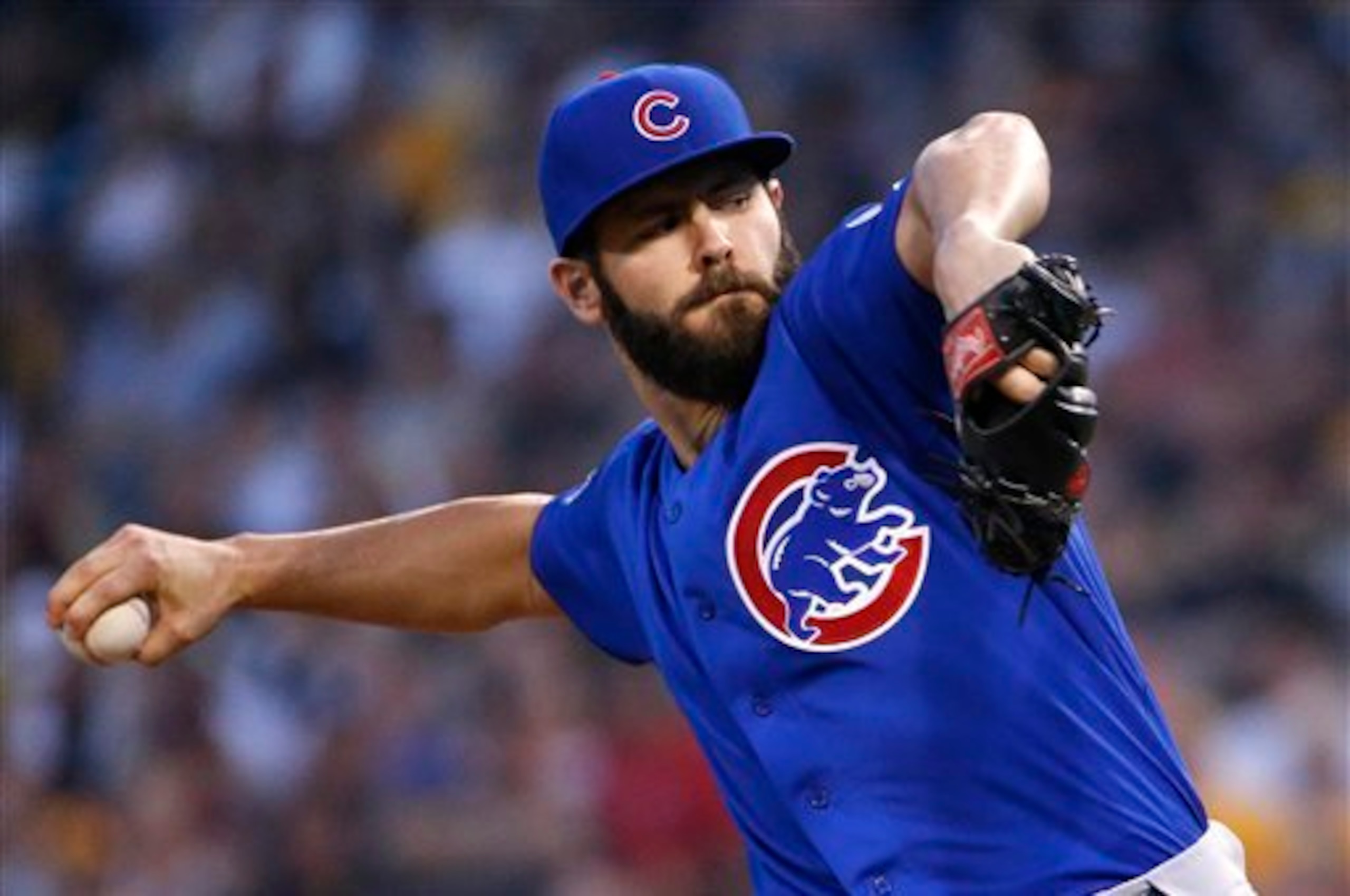
Control
With a 5.5 BB% and 44.6 Zone% to his name, it looks like Jake Arrieta spent 2015 as a good-not-great control artist. But those numbers and even Arrieta's zone profile only provide a hint of how he got by in 2015. He mastered the many movements in his arsenal of pitches, using everything he had to play with the edges of the zones and setting up hitters to further expand the zone. At that, he got to be quite good. Granted, the sheer movement of his pitches means his control can likely only be so good. But even if it doesn't get any better, it's plenty good enough as is.
Whiffability
Arrieta was quietly an excellent strikeout artist in 2014, and he carried that talent over by posting a 27.1 K% in 2015. The downside is that he posted "only" an 11.1 SwStr% on the side, but his K% is a truer representation of how unhittable he was. Everything worked off his mid-90s fastball, but his slider (or cutter, if you prefer) and curveball were his two big swing-and-miss pitches. And certainly, they both looked the part. With such electric stuff at his disposal, he should keep the whiffs and strikeouts coming.
Hittability
Even more so than whiffability, contact management is what Arrieta really got by on in 2015. He posted an elite 56.2 GB%, and he was one of the top soft-contact artists with a 22.9 Soft% and 22.2 Hard%. And as you might have noticed, he got even tougher to square up in the second half, posting a 26.2 Soft% and 20.8 Hard%. All in all, he showed what a pitcher can do with strong command of a totally nasty arsenal.
Workhorse
The 29-year-old Arrieta had never even sniffed 200 innings in any season prior to 2015, but you'd never know it. In crossing the 220-inning plateau this year, he averaged nearly seven innings and over 100 pitches per start. In a related note, he held his velocity just fine both within games and throughout the year. The fact that this was his first time handling a full workload might make you pessimistic about a repeat performance. But knowing that Arrieta is an exceptional pitcher who's also well-built at 6'4" and 225 pounds, it's actually sensible to think he can do this again.
Total
Few seemed to notice Arrieta's breakthrough in 2014, but he certainly had everyone's attention by the end of 2015. And what we all saw was a monster of a pitcher who can hit his spots and overwhelm hitters with some of the deadliest pitches around.
1. Clayton Kershaw, Los Angeles Dodgers
45 of 45
Control
Clayton Kershaw found a new level of control in 2014, and he didn't back down from it in 2015. He posted a 4.8 BB% and a 49.3 Zone%, both of which put him among the best of the best. Everything works off the left-hander's fastball command, as he's generally good at avoiding the sweet spot in working away from lefties and on the inside edge against righties. Then it's really just a matter of not hanging his slider or curveball, which he's quite good at. There's not much to it, but it works.
Whiffability
No pitcher demonstrated whiffability quite like Kershaw in 2015. In finishing with 301 strikeouts, he posted an MLB-best 33.5 K% and 15.9 SwStr%. Upping his average fastball velocity to 93.6 helped turn his heater into an even bigger swing-and-miss weapon, but it was still all about his slider and curveball. The former was a top-five swing-and-miss pitch among sliders, and the latter was also once again an elite swing-and-miss offering among curves. But then, why listen to me when you can just go look at them?
Hittability
After being maybe the best contact manager in MLB in 2014, Kershaw wasn't quite as good in 2015. But he was still well above average. He continued his renaissance as a ground-ball machine with a 50.0 GB% and continued to get pop-ups at a solid rate with a 9.5 IFFB%. And though he didn't own either category like he did in 2014, he still impressed with a 19.8 Soft% and 25.2 Hard%. So though he took a step back from where he was in 2014, Kershaw still has a place among MLB's top contact managers.
Workhorse
After missing a month and falling just short of 200 innings in 2014, Kershaw once again blew past the 200-inning threshold in 2015. Along the way, he stuck to his usual habit of averaging over seven innings and 100 pitches per start. His efficiency was a factor in that and so was the fact that he maintained his stuff within games about as well as a pitcher possibly can. The same goes for the season in general. All told, he remains perhaps the best workhorse in MLB.
Total
All things considered, 2015 probably wasn't Kershaw's best season. But he was still more dominant than any other pitcher in the game, showing off elite control, unparalleled whiffability and a very strong ability to manage contact on his way to eating a whole bunch of innings. He's the most perfect pitcher in the game today, and that makes him arguably the game's best player.







.jpg?w=2560 "Weather Channel Trolls Texans-Titans 💀")

.jpg?w=2560 "Grading WWE Raw 🔠")