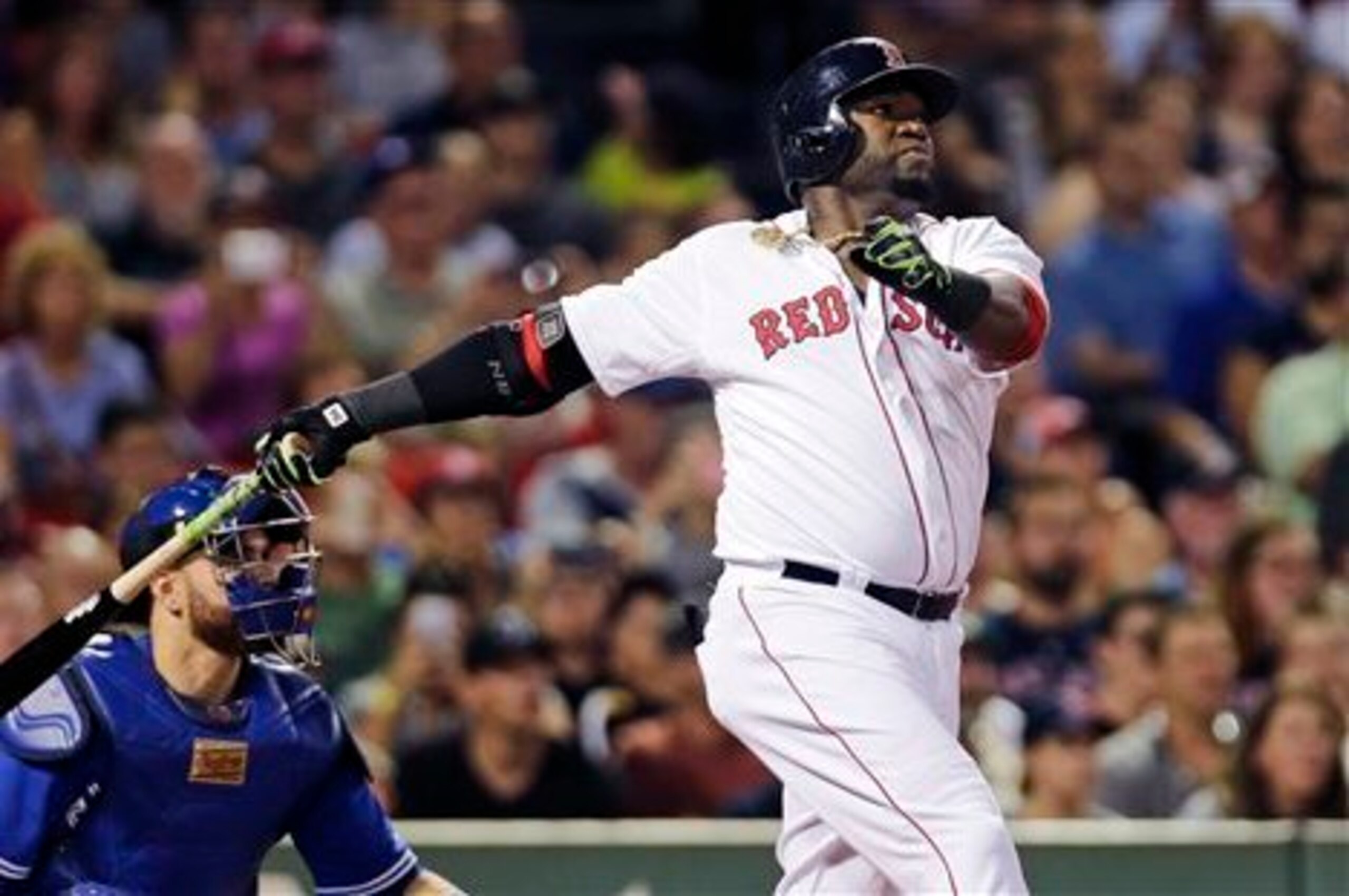

B/R MLB 300: Ranking the Top 5 Designated Hitters
With the top corner outfielders in the bag, the B/R MLB 300 now moves on to the guys who only work in the batter's box: designated hitters.
There aren't many true DHs in the league, and there are even fewer who are especially good at their craft. As such, our list of DHs contains only five of our overall 300 players. And whereas all other position players could earn up to 100 points, the max score for DHs is 80.
First, there are 35 points for hitting. Our focus is on how well each player is equipped to hit for average and get on base. This means looking not only at how they hit the ball, but also at how consistently they make contact and whether they have the discipline to draw walks.
Then, there are 40 points for power. We concentrated on how well each player collects extra-base hits, which means looking at how often they put the ball in the air—ground balls don't tend to go for extra-base hits, after all—how hard they hit it and how much of the field they can use for power.
Lastly, there are five points for baserunning. We'll be looking at whether they can steal bases as well as whether they're capable of running the bases aggressively. These being DHs, suffice it to say these aren't exactly priorities.
As for how the scoring works, a score in the middle is meant to denote average, not failing. For example, a 20 out of 40 for power means the player has merely average power, whereas 15 out of 40 is clearly below average and 25 out of 40 is above average. It's also important to note that if two or more players end up with the same final score, the priority goes to our preference.
Before we begin, here's an important reminder that while we're using what's happened in 2015 as a foundation for the scores, this list projects performance for the 2016 season. Players are evaluated based on the staying power of each category with progression, decline and past luck in mind—creating a different ranking system than simply judging where each player stands today.
You may now start the show.
Notes on Sources, Stats and Links
1 of 6
Putting together these rankings did require some good, old-fashioned video scouting. But for the most part, it involved digging deep into baseball's treasure chest of statistics.
The primary sources for these numbers were Baseball-Reference.com, FanGraphs, Brooks Baseball, Baseball Prospectus and Baseball Savant. The various links you'll find throughout will take you to relevant data on these sites. Clicking on them is not mandatory. They're there for your pleasure.
As for the stats referenced within, there are some you may not be familiar with. These would be:
- Soft% and Hard%: These show the rate at which a hitter makes soft and hard contact, allowing for a picture of how well each hitter barrels up the ball. The average DH has a 16.8 Soft% and 33.2 Hard%.
- ISO: This is isolated power, which is a measure of raw power. It's what you get when you take slugging percentage and subtract batting average. The average DH's ISO is predictably high at .191.
- XBT%: This is extra bases taken percentage, which looks at how often runners advance more than one base on a single or more than two bases on a double. It's not perfect, but it works as a go-to measurement for baserunning aggressiveness. These being DHs, anything over 20 can be considered good.
The averages noted above are reference points that will often come in handy throughout the piece, but know that they're among many plucked from FanGraphs to help inform the rankings.
Lastly, bear in mind the season is still ongoing. With final edits taking place the day before publication, the statistics within are accurate through play on Wednesday, September 30.
Now then. Let's get started.
5. Kendrys Morales, Kansas City Royals
2 of 6
Hitting
After a miserable 2014, Kendrys Morales has returned to hit .291 with a .359 OBP, outpacing the average DH's .265 batting average and .334 OBP. The big difference has been a quicker bat, as Morales has been destroying good heat (92-plus mph) after being overwhelmed by it in 2014. Elsewhere, he has a solid contact habit that produces plenty of hard contact. But Morales' weakness is his aggression. He swings and chases outside the zone at a slightly higher rate than the next DH, and he's still not a particularly good bad-ball hitter despite that. With this being the case, there's a natural limit on how good he can be.
Power
Morales' power has also returned, as he's hit 22 homers with a .196 ISO that's slightly better than that of the average DH (.191). That's about where he deserves to be. That he's only hit 55 percent of his batted balls in the air reflects how he doesn't sell out for power. And though his Hard% rates on fly balls (49.4) and line drives (44.8) are solid, rest assured we're going to come across better. Another thing holding back the switch-hitting Morales' power is the fact that, while his power is good from the left side, his power from the right side has never really measured up. He can only be counted on for solid power.
Baserunning
Morales is one of the slowest runners in baseball, if not the slowest. As such, don't expect him to steal his first base since 2009 anytime soon. And while the 36 XBT% he's posted this year is surprisingly solid, it's not surprising that he's run into eight outs on the basepaths along the way. These things don't make him a terrible runner compared to other DHs, but they don't make him particularly good either.
Total
After a season he'd like to forget in 2014, Morales has rediscovered his stroke in 2015 and retaken his place among the game's more reliable DHs. It's too bad that relative to his peers, he doesn't have much power to offer.
4. Prince Fielder, Texas Rangers
3 of 6
Hitting
So, who saw Prince Fielder coming back from neck surgery to hit .309 with a .382 OBP? Granted, he has slowed down in the second half, mainly because hitting the ball squarely hasn't been as easy. But when taken as a whole, his season is full of positives. After arguably becoming too passive at the plate in 2014, he's become more aggressive and has made that work by maintaining a consistent contact habit and making better use of the whole field. And as if to prove he is indeed finally healthy, he can handle fastballs again. All told, Fielder is taking the "hitter" part of his new job description to heart.
Power
This is where Fielder hasn't been quite the same. His 23 homers are fine, but his .161 ISO is well short of being up to par by DH standards. And this adds up. He's hitting fewer than 55 percent of his batted balls in the air, and he's underperforming his career rates in both fly-ball Hard% (37.5 to 40.1) and line drive Hard% (52.6 to 56.5). Whether it's because of his overhauled hitting approach, his age (31) or lingering effects of last year's surgery, he just doesn't have the same booming power that he once had.
Baserunning
Fielder's not much faster, but he's somehow making even Kendrys Morales look like a good baserunner by comparison. The two have stolen the same number of bases this season (zero), but Fielder's 20 XBT% pales in comparison. And while one wants to entertain the notion that maybe he can improve on that, that's actually right in line with his career rate (22 percent). When it comes to running the bases, he is what he is.
Total
It's to Fielder's credit that he's remade himself in the batter's box, becoming less reliant on power and more reliant on his abilities as a pure hitter. The downside is that the huge power he once had may now be permanently barred from coming back.


3. Alex Rodriguez, New York Yankees
4 of 6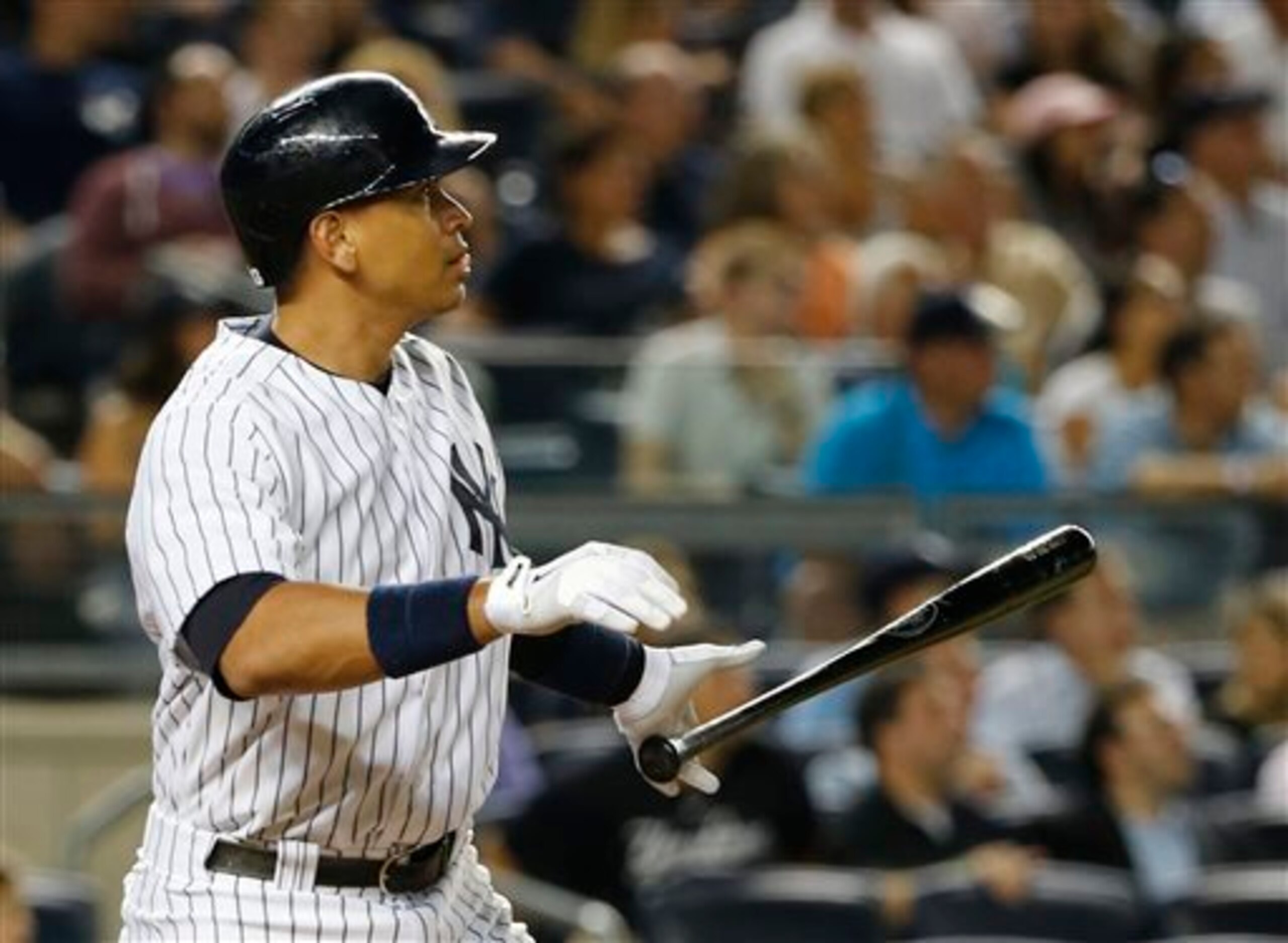
Hitting
A slow second half has taken a bite out of Alex Rodriguez's big comeback, as he finds himself hitting a modest .252 with a .356 OBP on the year. And in reality, his second half is a truer reflection of his hitting talent than his overall numbers. A-Rod has good discipline and is fine at making hard contact, but there are good reasons consistency has eluded him. One is a bad swing-and-miss habit that gets worse outside of the inner third of the zone. Another is a heavy pull preference that has led to many easy outs on the left side of the infield. It'll be a surprise if he manages to hit .250 with a .350-ish OBP again.
Power
It may be hard to love A-Rod's approach, but his power is a different story. In hitting 33 homers and racking up a .240 ISO, he's shown power is something he can still handle just fine. He's hit over 55 percent of his batted balls in play and with strong Hard% rates on fly balls (48.3) and line drives (50.7). And though he loves his pull side, he hasn't needed to pull the ball to hit it over the fence. One word of warning, however, is that A-Rod's ability to drive the ball has greatly diminished in the second half. If that's because he's begun to feel his 40 years, that may not let up.
Baserunning
A-Rod may be old and rickety, but that apparently doesn't mean he's totally immobile. He's been successful on all four of his stolen base attempts and posted a 32 XBT% that's pretty good by DH standards. To boot, he's only run into four outs on the basepaths. He certainly doesn't run like he used to, but some of his old baserunning know-how still survives.
Total
How consistent A-Rod is capable of being at the plate is as good a question as any, as he's definitely not the advanced hitter he once was. But if he can at least keep the power coming, he'll continue to make a fine DH.
2. David Ortiz, Boston Red Sox
5 of 6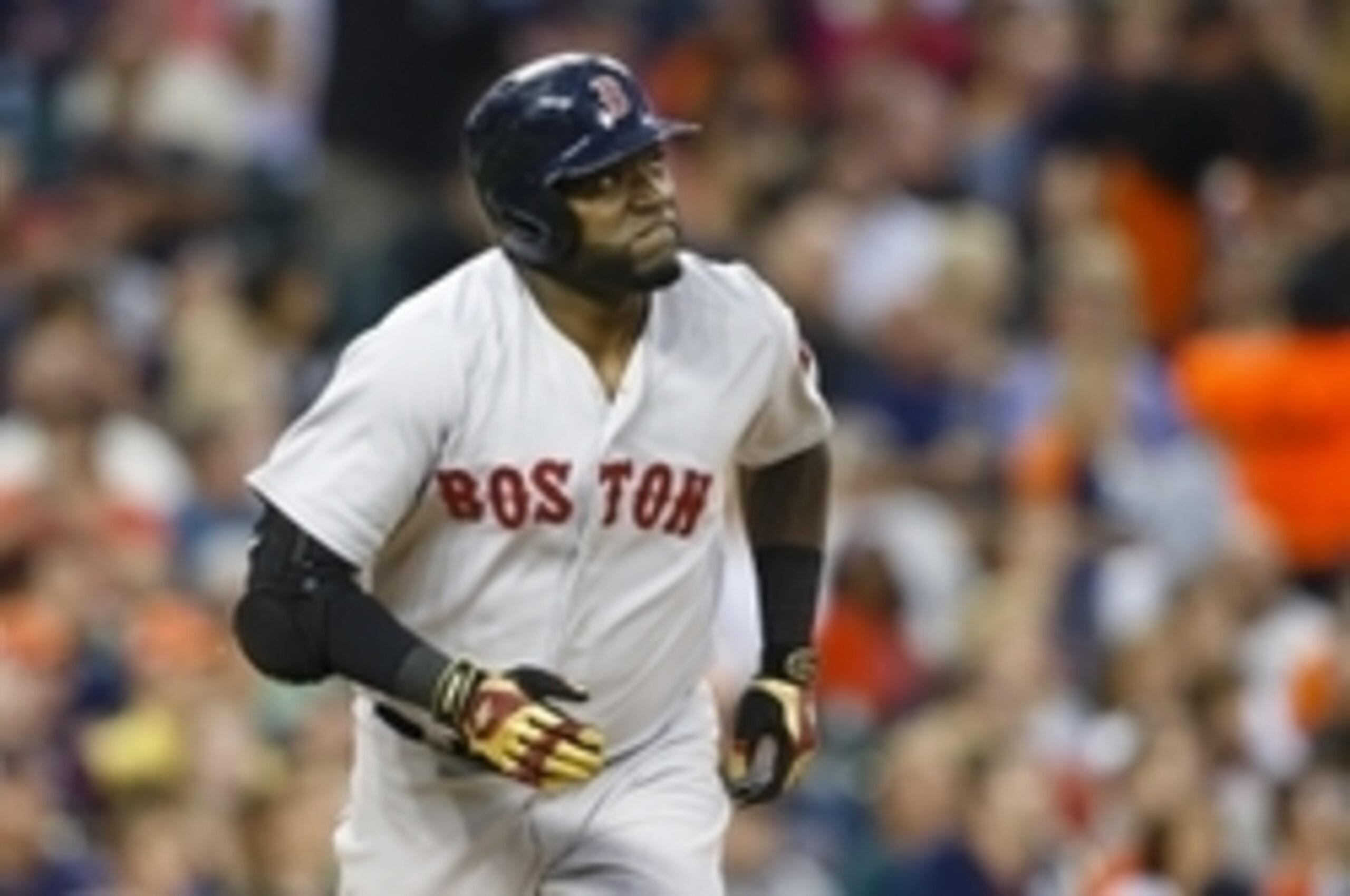
Hitting
Thanks to a hot second half, David Ortiz finds himself with a respectable average and OBP at .272 and .359, respectively. How he accumulates these numbers isn't complicated. Ortiz's success is built upon strong discipline, a consistent contact habit and a swing that makes him one of the top hard-contact merchants in MLB. But in his old age (he'll turn 40 in November), Ortiz has his kryptonite. Left-handers have been a problem in two of three seasons now; he's not the threat he once was against 92-plus heat; and, in a related story, he's now very easily beaten with high pitches. He's definitely still good, but these weaknesses hold him back.
Power
Ortiz's power has also come back in the second half, and how. He now finds himself with 36 homers and a .275 ISO. And this is no accident. Ortiz is still hitting over 60 percent of his batted balls in the air. And as he's one of the best sources of hard contact in MLB, it's no surprise to see him with strong Hard% rates on fly balls (46.4) and line drives (59.2). And while it's easy to wonder when he's finally going to be too old for such huge power numbers, the reality is that he's not giving any indication he means to quit doing this anytime soon. Expect the power to keep coming.
Baserunning
Ortiz must have been feeling frisky back in 2013, when he was a perfect 4-for-4 in stolen bases. But, alas, those are also the last four stolen bases on his track record. Meanwhile, he's also following up last year's 15 XBT% with a mere 18 XBT% in 2015. He may not be too old for power, but it appears he is too old for running the bases.
Total
Compared to where he was a couple of years ago, Ortiz just isn't his old self when it comes to consistency at the plate. But that doesn't mean he's not still good, and the power is most definitely still there. Big Papi may be pushing 40, but you'd never know it from watching him hit.
1. Miguel Sano, Minnesota Twins
6 of 6
Hitting
Miguel Sano hasn't even been in The Show for half a season, but his .275 average and .390 OBP highlight how impressive he's been. What's stood out the most is his excellent plate discipline, which has and should continue to earn him plenty of walks. Apart from that, there's no ignoring that only Giancarlo Stanton has hit the ball harder on a regular basis. But while these talents will keep Sano afloat, his weaknesses will keep him from going too high above water. He has a huge swing-and-miss habit that hasn't exactly improved with time. He's also an extreme pull hitter. And while he doesn't often do it, any pitcher who can get him to chase outside the zone stands to earn a very easy out. Sano is talented, but his current average and OBP might be overstating that a bit.
Power
In less than half a season, the 22-year-old Sano has hit 18 homers and put up a .275 ISO. Project that out over 162 games, and you're looking at 35-homer potential. But even that's too conservative. Sano hits 65 percent of his batted balls in the air. And when he does, he demolishes both his fly balls (54.1 Hard%) and his line drives (53.9 Hard%). He also gets the most out of his heavy pull habit. Put all these ingredients together, and there's a very real chance of Sano turning into a 40-homer guy very soon.
Baserunning
At 6'4" and 260 pounds, Sano is a massive human being. But while that obviously explains his power, it also explains his baserunning. He's just 1-for-2 in stolen bases and has posted an 16 XBT%. And in his shortened 2015, he's run into five outs. Suffice it to say that none of this bodes especially well.
Total
Sano hasn't been in the big leagues that long, but he's done more than enough to show he's going to be a dangerous hitter. His plate discipline will ensure he's always working with a strong OBP, and we're only witnessing the beginning of what could be a huge power legacy.





.jpg?w=2560 "Weather Channel Trolls Texans-Titans 💀")

.jpg?w=2560 "Grading WWE Raw 🔠")