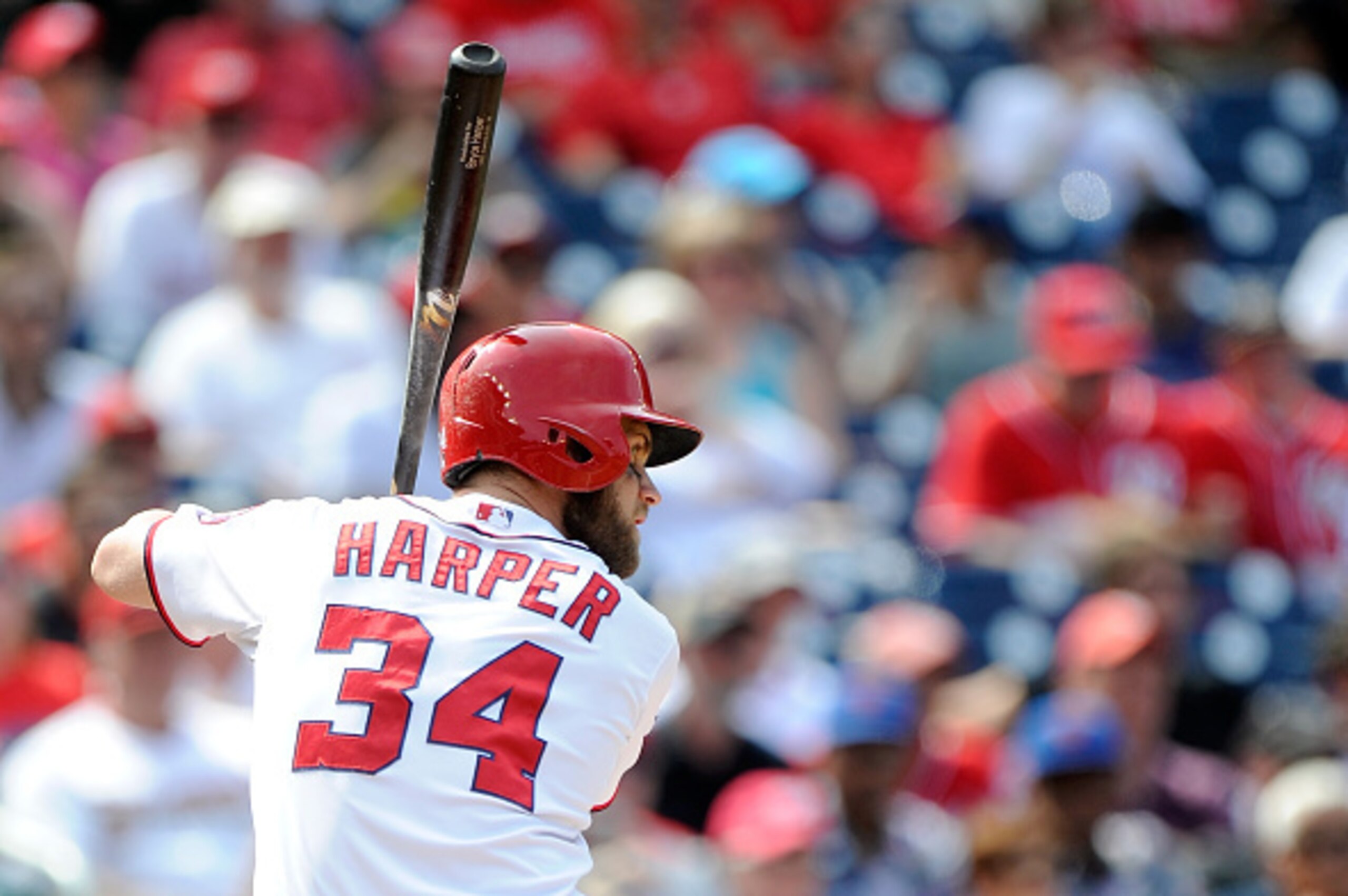

B/R MLB 300: Ranking the Top 40 Corner Outfielders
After checking in with center fielders, the B/R MLB 300 now moves on to the top corner outfielders in the league.
Our list of the top corner outfielders consists of 40 of the overall 300 players. As for how this list came to be, we subjected each player to a scoring system that adds up to 100 possible points.
First, there are 30 points for hitting. We focused on how well each player is equipped to hit for average and get on base. This meant looking not only at how they hit the ball, but also at how consistently they make contact and whether or not they have the discipline to draw walks.
Then, there are 35 points for power. We concentrated on how many extra-base hits each player collects, which meant looking at how often he puts the ball in the air—ground balls don't tend to go for extra-base hits, after all—how hard he hits it and how much of the field he uses for power.
Next, there are 15 points for baserunning. We looked at whether or not guys can steal bases as well as whether or not they're capable of running the bases aggressively.
Lastly, there are 20 points for defense. We used defensive metrics as a guiding star and judged guys on how much range they have and if they can make plays with their arms.
A score in the middle is meant to denote average, not failing. For example, 15 out of 30 hitting points means the player is a merely average hitter, whereas 10 out of 30 is clearly below average and 20 out of 30 is above average. It's also important to note that if two or more players ended up with the same final score, the edge went to the player we'd choose if we had to pick just one.
Before we begin, here's an important reminder that while we used what's happened in 2015 as a foundation for the scores, this list projects performances for the 2016 season. Players were evaluated based on the staying power of each of their skills with progression, decline and past luck in mind—which created different rankings than simply judging where each player stands today would have.
You may now start the show.
Notes on Sources, Stats and Links
1 of 41
Putting together these rankings required some good, old-fashioned video scouting. But for the most part, it involved digging deep into baseball's treasure chest of statistics.
The primary sources for these statistics were Baseball-Reference.com, FanGraphs, Brooks Baseball, Baseball Prospectus and Baseball Savant. The various links you'll find throughout will take you to relevant data on these sites. Clicking on them is not mandatory; they're there for your pleasure.
As for the stats referenced within, there are some you may not be familiar with. They are:
- Soft% and Hard%: These show the rate at which a hitter makes soft and hard contact, which conveys how well he barrels up the ball. The average corner outfielder has roughly an 18.5 Soft% and a 29.5 Hard%.
- ISO: This is isolated power, which is a measure of raw power. It's what you get when you take slugging percentage and subtract average. The average corner outfielder's mark is about .165.
- XBT%: This is extra bases taken percentage, which quantifies how often a runner advances more than one base on a single and more than two bases on a double. It's not perfect, but it works as a go-to measurement for baserunning aggressiveness. Among the players on this list, the average XBT% is around 45.
- DRS and UZR: Defensive runs saved and ultimate zone rating are the two most prominent defensive metrics and provided the basis for our defensive scores. Regardless of position, zero represents league average.
The averages of corner outfielders noted above are reference points that will come in handy throughout the piece. Know that they were among many plucked from FanGraphs (left field, right field) to help inform the rankings.
Lastly, bear in mind that the season is still ongoing. With final edits taking place the day before publication, the statistics within are accurate through Tuesday, September 29.
Now then. Let's get started.
40. Nick Markakis, Atlanta Braves
2 of 41
Hitting
With a .295 average and .372 OBP—which trump the average marks of roughly .260 and .325 for corner outfielders—Nick Markakis is having a fine season. He still works off an approach that blends a sharp batting eye with an emphasis on contact, and is once again showing off excellent bat control as well. It's too bad he's not much for hard contact and that he can also be troubled by left-handers and inside fastballs. His bat is strong, but it has its weaknesses.
Power
Markakis rediscovered some of his old power last year, but it hasn't carried over. He's hit just three homers and posted an .081 ISO, about half the average (roughly .165) for corner outfielders. It doesn't help that he hits over half his batted balls on the ground. His Hard% on fly balls is just 25.0, and his Hard% on line drives is just 42.1. The averages for the guys on this list are about 42 and 48 percent, respectively. It's possible to blame this on Markakis' offseason neck surgery, but then you notice Markakis had a season just like this in 2013. So, don't bet the house on a turnaround.
Baserunning
Markakis was capable of stealing double-digit bases once, but that was a while ago. He's stolen only two in three attempts this year. Elsewhere, his 37 XBT% is easily below the positional average of 44 percent. It's tempting to say he's slowing down as he nears his 32nd birthday, but that's not entirely true. He's been slow for a few years now, and he's going to stay that way.
Defense
Markakis has minus-seven DRS and a minus-4.8 UZR. It's not exactly news that he struggles to cover ground, as his slow reactions and modest speed have made that a reality for years. The real shocker is that his arm hasn't been a weapon this year. That could change as he gets further away from his neck surgery, but let's not take that for granted. Neck surgery is no joke, and Markakis' age won't make recovering any easier.
Total
Markakis' power, speed and defense are not what they once were, rendering him a decidedly one-dimensional player. The one dimension he has is a good one, however, as he's turned himself into one of the more advanced hitters in the National League.
39. Ben Revere, Toronto Blue Jays
3 of 41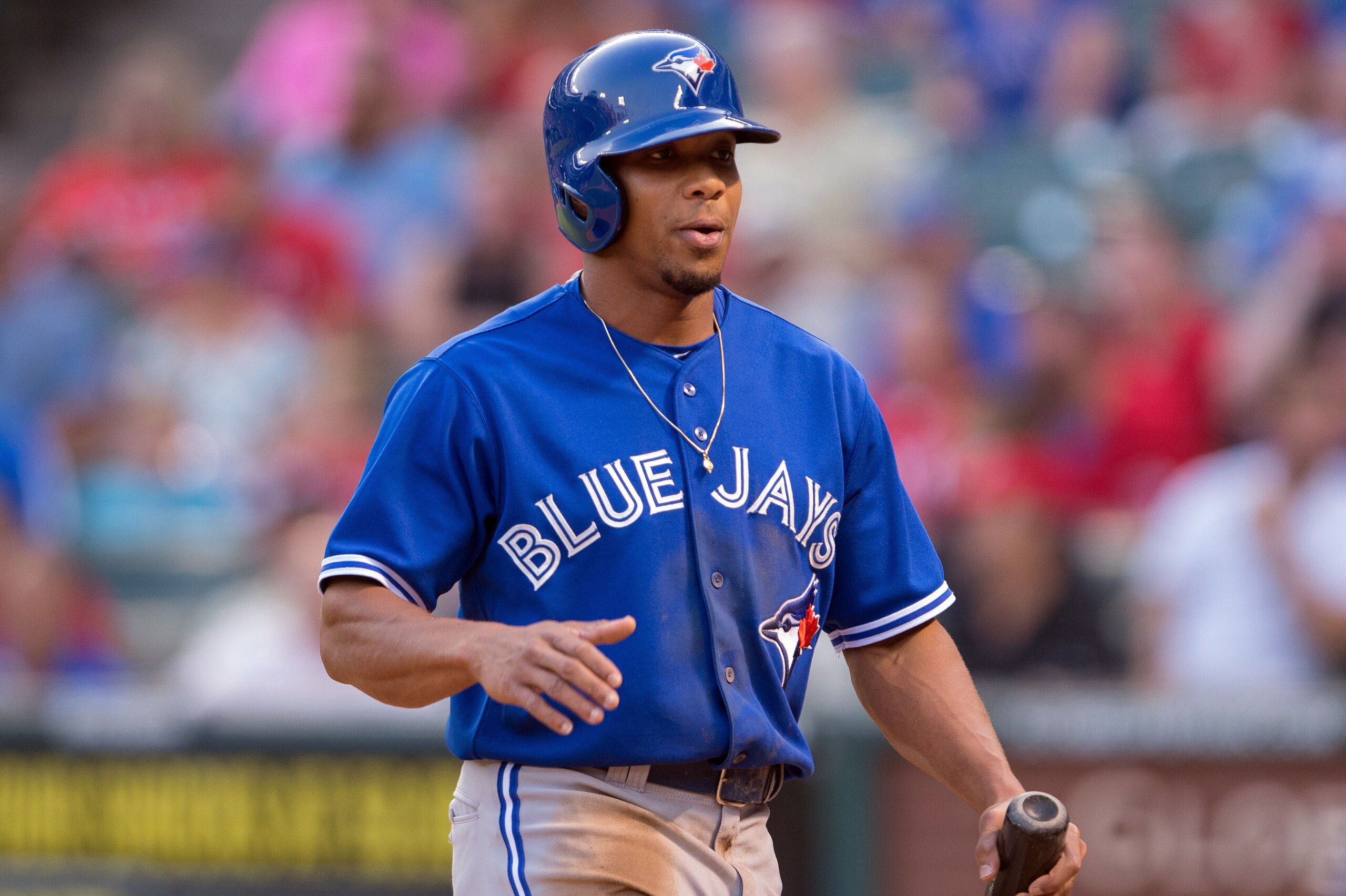
Hitting
You'll find Ben Revere looking just fine with a .304 average and .342 OBP. He bears the marks of an advanced hitter, showing off excellent discipline and a very good contact habit. He also downplays his lack of strength by hitting lots of line drives and putting the ball in play in all directions. The catch is that he can only be so good. Unafraid of his power, pitchers come right at him with fastballs. And while Revere can produce a good average, his ceiling is restricted by his utter inability to hit the ball hard.
Power
On that last note, yeah, it's not pretty here either. Revere is doing his thing with just two homers and a .070 ISO, and even those numbers might oversell his power. Hitting 55 percent of your batted balls on the ground is no way to become a consistent power hitter. And with an 20.8 Hard% on fly balls and a 27.4 Hard% on line drives, the balls Revere does get in the air generally don't go far. His speed makes him dangerous when he finds an alley, but that doesn't happen all that often.
Baserunning
A year after stealing 49 bags, Revere has stolen "only" 30 this year. That's still excellent for a corner outfielder, and Revere has also blown away the position average with a 55 XBT%. That's right around his norm, but what makes Revere's aggressiveness on the basepaths doubly impressive is how he rarely runs into outs. He's a good baserunner for any position, but he's elite by corner outfielder standards.
Defense
Revere was a disaster in center field in 2014, but he's been OK in left field this year, with one DRS and a minus-2.3 UZR. He probably runs more indirect routes than any other outfielder in MLB, but his speed allows him to make up for that more often in left field than he could in center. It's too bad, therefore, that his virtually nonexistent arm strength is more of a deal-breaker in left than it was in center.
Total
With Revere, you know what you're getting. He doesn't offer any power, and his defense is at best inconsistent. But because he can get on base and create chaos on the basepaths, he's a useful player.

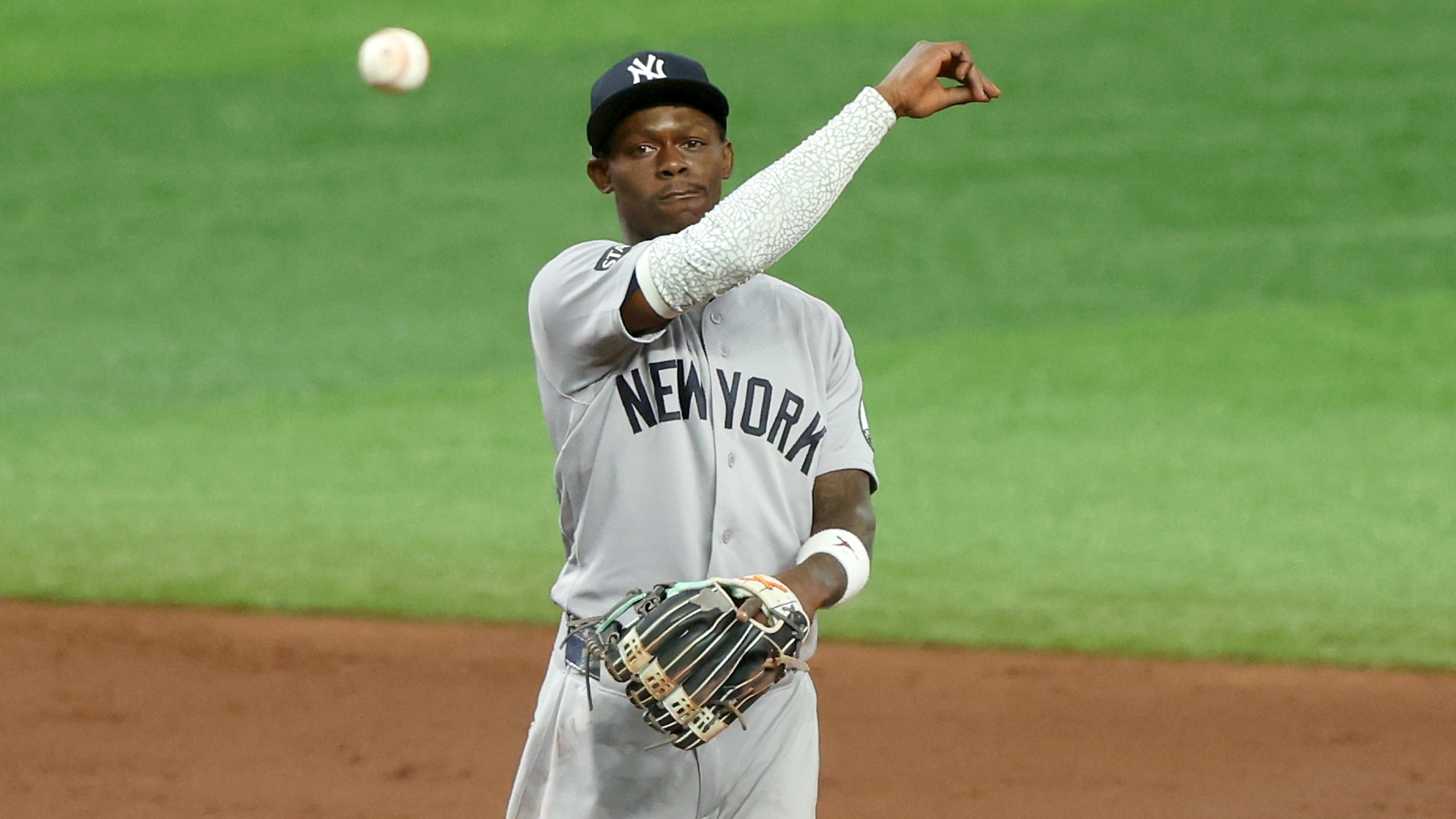

38. Seth Smith, Seattle Mariners
4 of 41
Hitting
A rough second half has taken a bite out of Seth Smith's numbers, but he's still doing OK with a .248 average and .327 OBP. He's strictly a platoon hitter, but he can handle right-handers just fine. He's also showing off a disciplined approach, and he's made consistent hard contact while using more of the field. But with a swing that gives even righties areas to exploit, he can only be so good in his role.
Power
Smith has provided some power, hitting 11 homers with a .189 ISO. He gets by mostly on volume, as he puts close to 60 percent of his batted balls in the air. And he has solid Hard% of 38.7 on fly balls and 52.5 on line drives. But the catch—apart from the fact his power isn't available on an everyday basis—is that his power is largely nonexistent to the left of center field.
Baserunning
To put it lightly, running the bases isn't really Smith's thing. He hasn't attempted a stolen base this year, and he's just 1-for-2 over the last three years. He's also posted a subpar 38 XBT%. That's low, even by his standards. But given that Smith's now 33, it's unlikely to prove to be an outlier.
Defense
It's easy to picture Smith as an offense-only lug, but he's actually been rated as a passable outfielder over the last few seasons. With one DRS and a 7.1 UZR, that's continuing this year. Smith doesn't have the best speed or get the best jumps, but he helps himself by going from A to B more directly than many corner outfielders. And while his arm isn't good by the position's standards, it's not a liability either.
Total
Smith is up there with Andre Ethier among the more reliable left-handed platoon hitters in the league. And though he doesn't look the part, he's really not a bad defender.
37. Andre Ethier, Los Angeles Dodgers
5 of 41
Hitting
A forgotten man in 2014, Andre Ethier has rebounded to hit .299 with a .368 OBP. The catch is that he's done this in a platoon role. And even against right-handers, he's been tied up by fastballs near the belt. But playing exclusively against right-handers allows him to show off solid discipline and a consistent ability to make contact, and he's made a ton more hard contact than he did in 2014. Rather than the beginning of the end, 2014 now looks like an outlier. When Ethier plays regularly against righties, he hits.
Power
Ethier's power has also bounced back, as he's hit 14 homers with a .192 ISO. He has volume to thank for this, as he's hit over 60 percent of his batted balls in the air. But with just a 39.6 Hard% on fly balls and a 43.5 Hard% on line drives, he's not outpacing the average corner outfielder. Also, Ethier's power only applies to his pull side. Factor in his status as a part-time player, and what he's done this year is surely the extent of his power potential.
Baserunning
Ethier has never had the speed to be a stolen-base threat, and he's now 33 years old. So, his 2-for-5 showing in the steals department should surprise nobody. And though his 42 XBT% is just below the average around these parts, it's also unusually high by his standards. And it's unlikely to follow him into 2016.
Defense
Ethier has split his time between left field and right field, and he's racked up a solid four DRS and a 2.4 UZR overall. But he still doesn't inspire a ton of confidence in the field. He's not terrible at reading or tracking fly balls, but his speed is iffy, even by corner outfielder standards. He also lacks the arm strength that other plodding corner outfielders use to make up for their lack of range.
Total
The 2015 season has been a reminder that, contrary to what 2014 suggested, Ethier's actually a pretty good hitter when he's used exclusively against right-handers. Just don't expect much more out of him, as he remains a rather one-dimensional platoon hitter.
36. Matt Holliday, St. Louis Cardinals
6 of 41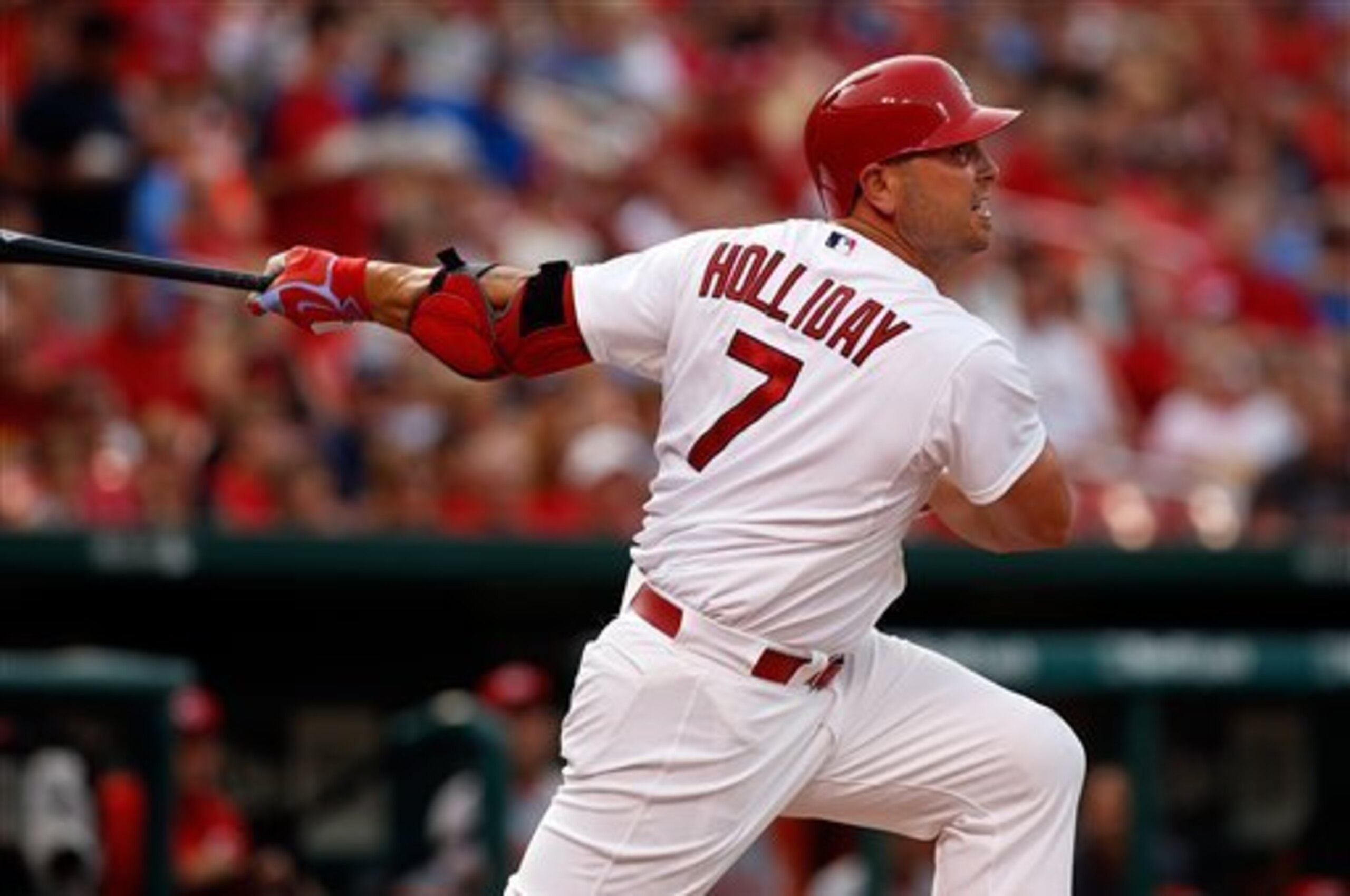
Hitting
Matt Holliday has missed a lot of time, but he's looked like himself when healthy, hitting .283 with a .399 OBP. He still strikes a rare balance between aggressiveness and discipline, with the trick being to be aggressive almost exclusively on pitches in the zone. And though he can be beaten by high fastballs in the zone, his controlled swing pattern otherwise allows him to balance excellent bat control with hard contact. The 35-year-old is still really good, and he's showing no interest in slowing down.
Power
This, unfortunately, is where Holliday is showing his age. With four homers and a .135 ISO, his power is continuing to decline. He's always been somewhat limited by his refusal to sell out for power, with a related issue being his tendency to produce a high ground-ball rate. Normally the trade-off for that is a high Hard% on fly balls and line drives, but he's struggling with just a 30.6 Hard% on flies to go with a par-for-the-course 50.0 Hard% on line drives. Hence the lack of home run power. And with Holliday soon to be 36 and coming off a major injury to his right leg, don't expect too much improvement.
Baserunning
This is another area in which Holliday has fallen off. He's stolen only two bases in three attempts, and his XBT% has dropped all the way to 30. Given that Holliday's XBT% is usually in the 40s, this could be seen as an outlier he can recover from. But, again, he'll soon be 36, and he's coming off a major leg injury. Taking it easy on the basepaths could be a priority from now on.
Defense
The outlook isn't good here either. Holliday's defense has never been great, and that's continuing this year. He owns minus-four DRS and a minus-1.2 UZR, and these numbers are kind. Holliday used to be able to move about as well as the next left fielder, but that's not true anymore. He could make up for his subpar speed with good technique, but that's something he's never had.
Total
Given how old and banged-up he is, it's fair to question what Holliday can provide in the power and defense departments from here on out. But at least this much is guaranteed: He's going to hit.
35. Gerardo Parra, Baltimore Orioles
7 of 41
Hitting
Gerardo Parra has had a rough time with the Baltimore Orioles, but he's still hitting a solid .285 with a .322 OBP. It doesn't help that he's had to face lefties, and he's continued to make things tough on himself by being a very aggressive swinger. He barely makes enough contact to justify a habit like that, and he excels neither from a bat control nor a hard contact perspective. So though he makes his approach work for the most part, there's a limit to how good he can be.
Power
Parra's power has also been solid in 2015, as he's hit a career-high 14 homers with a career-high .164 ISO. He's deviated from his usual path and gotten over half his batted balls in the air, and he's made better use of the field than you might think. That being said, what he has comes off as warning-track power, and his Hard% on fly balls (40.9) and line drives (42.0) bear that out. Parra does have some power, but it'll be surprising if he's this productive again.
Baserunning
Parra is typically a good bet for double-digit steals, and he's kept it up with 11 steals in 14 attempts this year. But next to that is a modest 42 XBT% that comes with eight outs on the bases. That's a few too many, and it speaks to a trend with Parra's baserunning. He's not quite 2013-14 Yasiel Puig, but running into outs can be an issue for him.
Defense
Parra has a couple Gold Gloves to his name, but he's rated poorly this year with minus-seven DRS and a minus-16.9 UZR. These numbers exaggerate the problem, as Parra still runs good routes and has a strong, accurate throwing arm. But he doesn't seem as quick as he was a couple years ago, and there are times when he perhaps overestimates the speed he has left. He gets the benefit of the doubt, but not much of it.
Total
Parra was at his best when he was an elite defender, but it looks like those days have passed him by. He still packs a solid bat, however, and speed to use on the bases.
34. Jay Bruce, Cincinnati Reds
8 of 41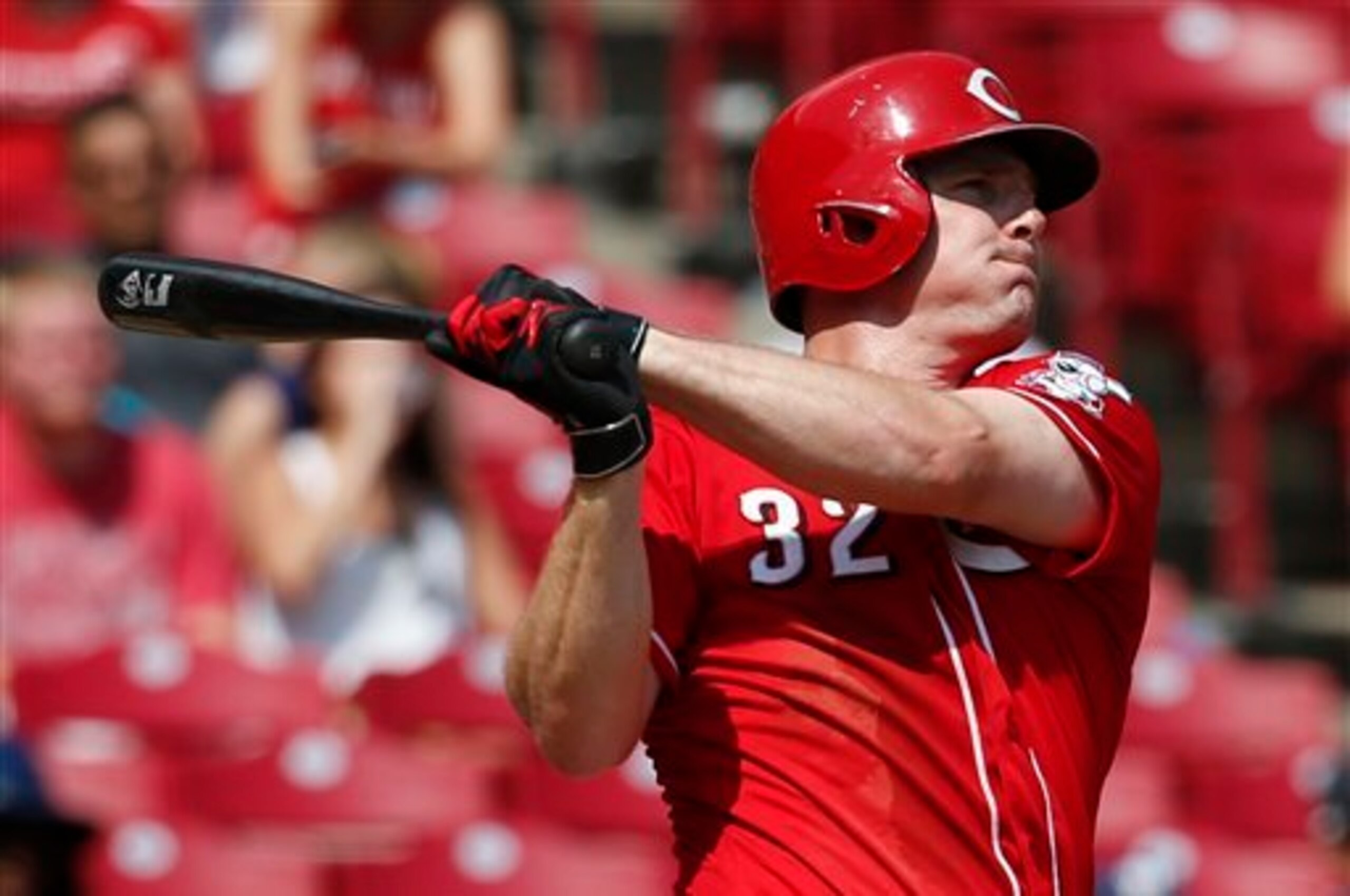
Hitting
Jay Bruce's average has dropped to .226 and his OBP to .296 with a brutal second half. He's still mostly dangerous when he makes contact, hitting the ball hard more often than your typical corner outfielder. But because of his tendency to pull the ball, he's easy to defend. His biggest problem, however, is that he's not as disciplined as he was at his peak, and that's made him particularly vulnerable against pitches off the outside corner. So, his horrid production in 2014 no longer looks like an outlier.
Power
At least this part of Bruce's game has made a comeback. He's hit 26 homers with a .211 ISO. A bad left knee rendered him unable to get under or drive the ball in 2014, but he's put that behind him. He's back to getting over 60 percent of his batted balls in the air. That combined with his pull habit and his Hard% on fly balls (41.6) and line drives (50.0) has not surprisingly allowed him to again hit for power. There's enough here to bank on at least 25 homers for another year or two.
Baserunning
Bruce's bad knee didn't stop him from running the bases last year, but this year has been different. His nine steals are fine, but he's needed 14 attempts to get there. He's also posted a career-low 19 XBT% with five outs on the basepaths. Given that he's still only 28, you want to think Bruce can turn this around. But he never was that quick to begin with, and he has put a lot of miles on his tires.
Defense
Bruce was an elite defender at his peak, but only one of the metrics now rates him as above average on defense: He has six DRS and a minus-3.6 UZR. His best asset is still his strong, accurate arm, but his ability to make ranging plays is at best inconsistent. There are times when he runs sharp routes with good speed and times when he's slow and indirect. It could be he's gun-shy after last year's knee woes.
Total
Bruce still hasn't fully rebounded from his awful 2014, but we shouldn't overlook the parts of his game that have recovered: He has his power back and is a good, if not quite great, defender in right field.
33. Yasiel Puig, Los Angeles Dodgers
9 of 41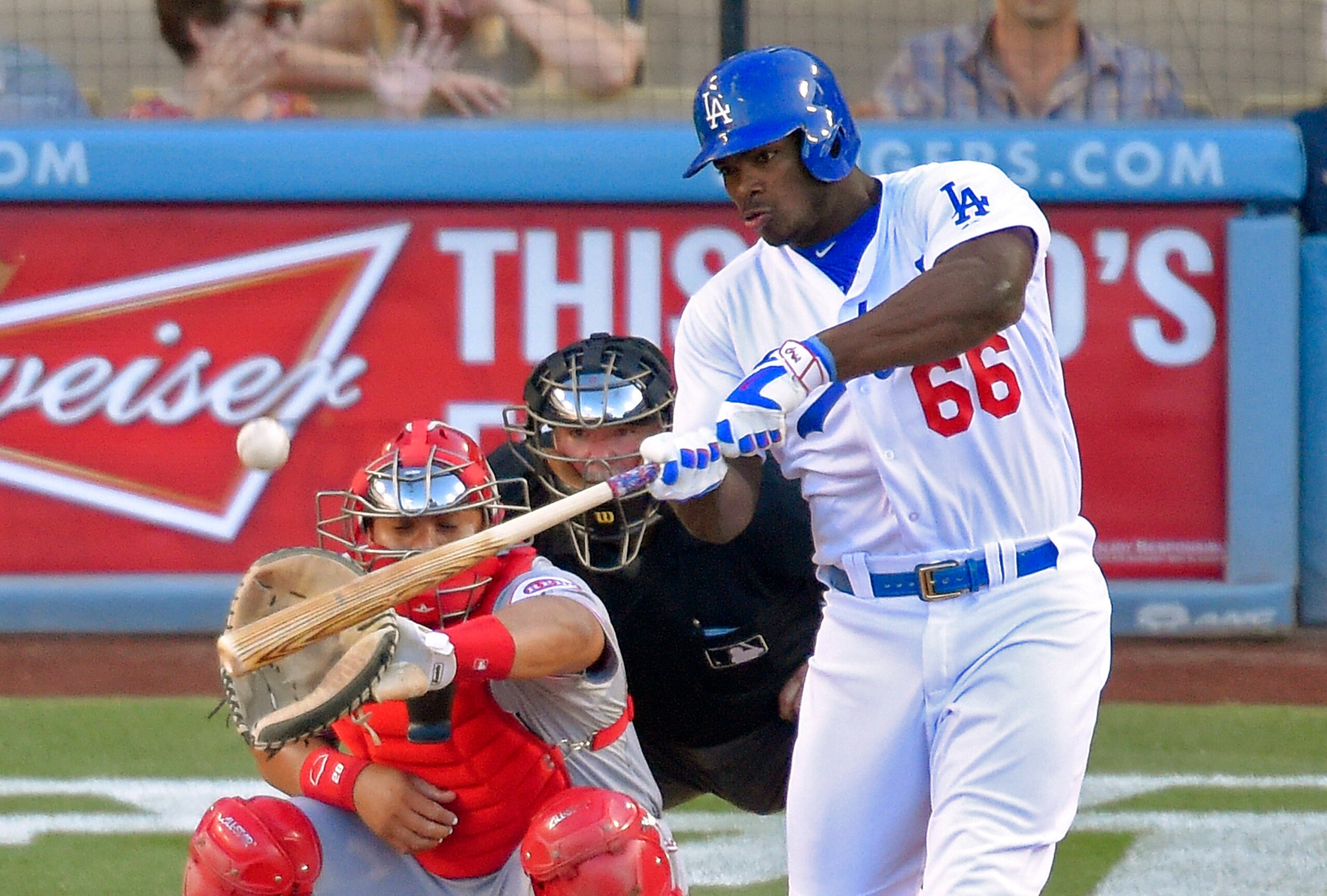
Hitting
Even if you look past his injuries, this is still Yasiel Puig's worst season. He's hit just .256 with a .324 OBP—when he's been healthy. Much of this has to do with his plate discipline and ability to make contact, which has regressed to not-so-great levels. Three years into his career, he also still has exploitable holes up and in and low and away. Still, there's room for a turnaround. Puig makes plenty of good contact, and he's becoming less reliant on his pull side. Don't give up on him yet.
Power
While Puig's hitting has become inconsistent, his power has remained solid. He's hit 11 homers with a .184 ISO, good stuff for a half-season of work. One thing he's done better is hit more balls in the air, going from over 50 percent ground balls to over 55 percent fly balls and line drives. And though his 28.4 Hard% on fly balls is far from special, his 59.5 Hard% on line drives shows he's perfectly capable of hitting rockets. Puig can also hit the ball everywhere. Health permitting, he still has solid power to offer.
Baserunning
Given that he's spent much of the year injured, it's no surprise Puig hasn't done much running in 2015. He's stolen only three bases in six attempts. But his 48 XBT% is both solid and right where it was last year. Better news still is that he's gone from running into 15 outs to running into only three. He's played more than half the number of games he did last year, so this is a marked improvement. As such, it's his best baserunning season to date.
Defense
Puig's defense in right field isn't a concern. He has two DRS and a 2.1 UZR, which are solid numbers for only a half-season of work. He can still get himself in trouble with his routes, but his speed gives him more range than the average right fielder. And, of course, there's no doubting his arm strength.
Total
Puig's lost season hasn't been a total disaster: He's shown he can be good even when he's struggling. Add in the improved baserunning and his customary strong defense, and you still have a good player.
32. Chris Coghlan, Chicago Cubs
10 of 41
Hitting
After a quiet resurgence in 2014, Chris Coghlan has kept it up by hitting .246 with a .337 OBP. He's strictly a platoon player, and rightfully so given his horrid performance against lefties. But his disciplined approach and consistent contact habit show he sees right-handers well. He gives them no safe quarter within the strike zone and is also immune to their changeups. And though he's too pull-happy to be a high-average guy, he at least makes consistent hard contact. All told, he's an ideal platoon hitter.
Power
Coghlan has also been a solid power producer, hitting 16 homers and racking up a .190 ISO. He's earned these numbers by enjoying the best of both worlds. He's put about 55 percent of his batted balls in the air and has done so with a solid Hard% on fly balls (46.2) and line drives (47.0). And though he has a collection of cheapies to left field, he does have power to the other side of center. As a part-time source of pop, he's pretty good.
Baserunning
Here's thinking you don't have Coghlan pegged as the fastest baserunner, but you'd be surprised. He has swiped 11 bags in 13 attempts this season and also posted a whopping 59 XBT%. Of course, that these are both career bests at the age of 30 makes it unlikely they'll continue. But since these figures aren't totally out of line with what Coghlan did in 2014, some optimism is OK.
Defense
Coghlan has played left and right field with some second base and third base mixed in, all told posting a UZR of 7.8 and minus-two DRS. The latter figure is more in line with Coghlan's track record, as well as the eye test. He has decent speed for a corner outfielder, but he doesn't break on the ball well and tends to run tentative routes. And despite a career-high nine outfield assists, he really doesn't have much arm strength.
Total
It's easy to lose sight of Coghlan next to all the Cubs' exciting young hitters, but he's pretty good in his own right. He's a solid platoon bat who can provide power and good baserunning.
31. Colby Rasmus, Houston Astros
11 of 41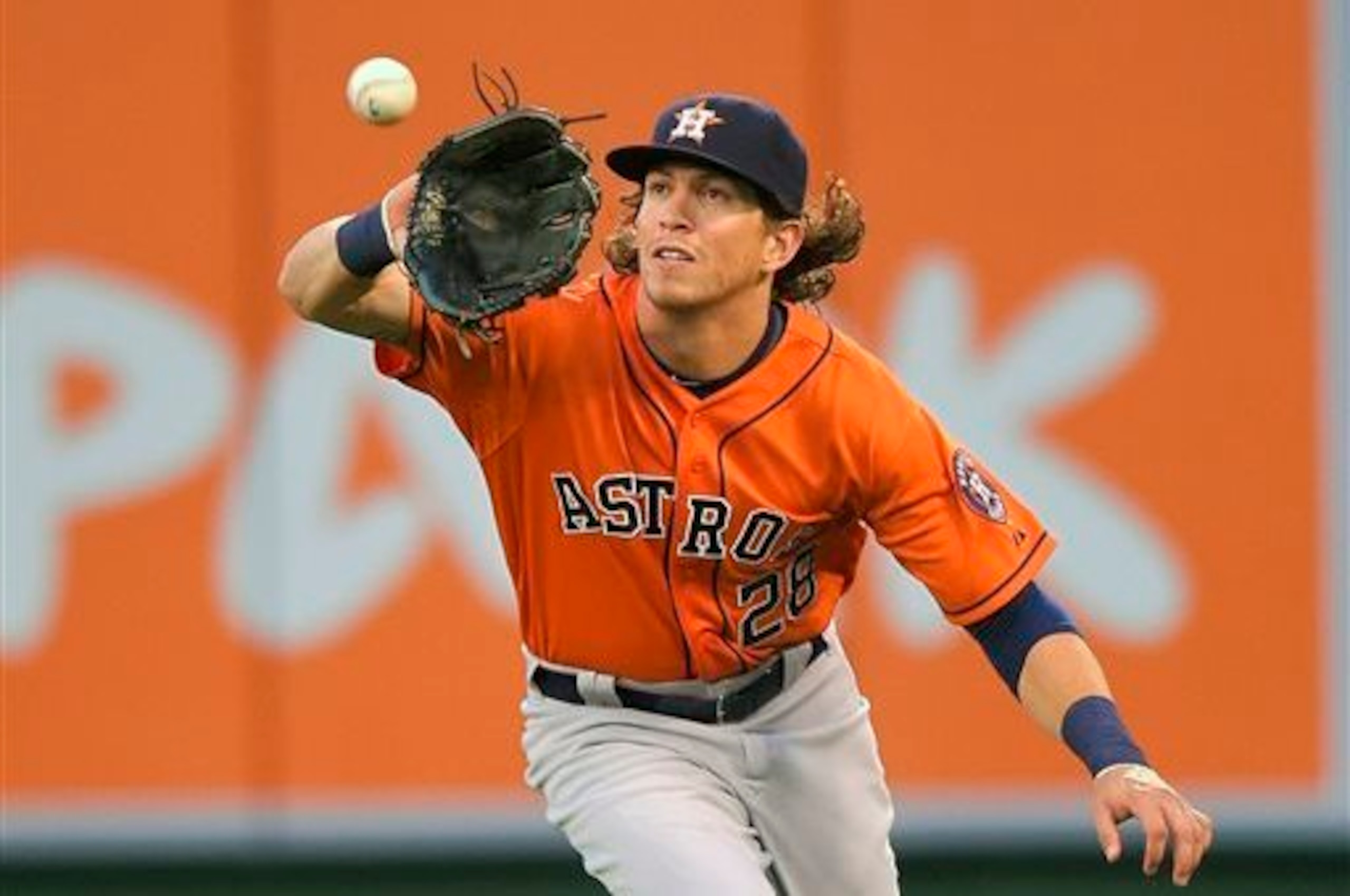
Hitting
With a .230 average and .306 OBP, Colby Rasmus is once again showing he's not a good hitter. His approach is entirely dedicated to the three true outcomes. He's disciplined, which allows him to draw walks, but frequently swinging for the fences has its complications. One is an undying whiff habit that pitchers are feeding into by throwing him fewer and fewer fastballs. The others are that he has an extreme fly-ball lean and an extreme pull habit. So, no, he's not exactly built for consistency.
Power
And now for the bright side: Rasmus' approach does produce plenty of power. He's basically been himself in that department, hitting 22 homers with a .222 ISO. His spray chart shows what you can do when you hit over 70 percent of your batted balls in the air with a heavy emphasis on your pull side. And though his Hard% on fly balls (36.0) and line drives (48.1) isn't particularly impressive, it doesn't need to be with his approach.
Baserunning
Don't look for Rasmus to steal bases, as his 2-for-3 showing this year is in line with his average. But he is living up to his reputation as an aggressive baserunner with a 67 XBT%. Just as important is how that aggression leads to surprisingly few mistakes: Rasmus has run into only two outs on the basepaths. He may not be a base stealer, but he's a pretty good baserunner.
Defense
Rasmus has spent time at all three outfield positions in 2015, and he's done well playing mostly left. In all, the metrics give him two DRS and a 0.4 UZR. He's still not the most efficient defender, but athleticism that was just OK for center field has afforded him pretty good range in the corners. And whereas it largely went to waste in center, he's put his arm strength to good use in the corners. He's no Jason Heyward, but Rasmus has shown he can handle his duties just fine.
Total
Don't go expecting Rasmus to hit .300 anytime soon, as that's just not going to happen with his approach. But his solid power, baserunning and defense more than make up for his wildness at the dish.
30. Matt Kemp, San Diego Padres
12 of 41
Hitting
Just like in 2014, Matt Kemp has rescued his season with a torrid second half. This time, he's bumped his average to .265 and his OBP to .312. He's still an aggressive hitter with a swing-and-miss habit, and his vulnerability against outside heat is only getting worse. But it's to Kemp's credit that he's toned down his wildness in the second half, and he's also showed he can still do the one thing he's always done well when healthy: absolutely mash the ball. His overall Hard% is 46.7, which is absurd. So at least Kemp's bat hasn't lost its thunder. It's not much, but it's a big something.
Power
Kemp's power has also returned since the break, and he now finds himself with 23 homers and a .178 ISO. But even without the context of the second half, his power looks legit. He's continued to hit nearly 60 percent of his batted balls in the air, and he's continued to crush them. With a 51.6 Hard% on fly balls and a 54.1 Hard% on line drives, he's not far behind Bryce Harper. The consistency of his power is therefore the only thing worth griping about.
Baserunning
Kemp is showing he can still steal bags with 12 thefts in 14 attempts. But given that he's now 31 years old and this is his first double-digit steal season since he swiped 40 back in 2011, don't count on a repeat performance. Meanwhile, his 36 XBT% is nothing special by corner outfield standards and is another step in the wrong direction. The writing is on the wall.
Defense
The metrics have never rated Kemp well. And minus-15 DRS and a minus-17.7 UZR this season make him arguably the worst defensive right fielder in MLB. It doesn't help that he no longer has explosive athleticism, and its erosion has highlighted another issue: Instinctively speaking, he's just not a good outfielder. His reads tend to be poor and his routes adventurous. The one good thing he has going for him is arm strength, which is better suited for right field than his old position of center.
Total
If you gave up on Kemp in the first half, you're not alone. But he's once again gotten hot and proved he still wields a dangerous bat. Now all he needs to work on is consistency—to better hide the fact he's an offense-only player.
29. Eddie Rosario, Minnesota Twins
13 of 41
Hitting
In keeping with his recent minor league track record, Eddie Rosario has not been a good hitter as a rookie. He's hit .270 and posted a .290 OBP, and it's a wonder he's even done that well. He's aggressive and undisciplined and swings through a lot of pitches, meaning he has to make the most of the balls he puts in play. To that end, he's shown a slight pull tendency and really only made an average amount of hard contact. So, suffice it to say, he has much to work on.
Power
This is where it becomes apparent Rosario's aggressive swinging isn't all for naught. He's slugged 12 homers and racked up an MLB-high 15 triples, and his power all adds up a .194 ISO. It helps that he's gotten about 60 percent of his batted balls in the air. And though he's done so with pedestrian Hard% on fly balls (35.4) and line drives (43.8), it's still encouraging to see a young hitter show an ability to drive the ball to all fields. That'll do as an excuse to believe we're only witnessing Rosario's power floor.
Baserunning
Rosario has 11 steals in 17 attempts, but even better is his 61 XBT%. That rate dwarfs that of the average corner outfielder, and Rosario's aggressiveness hasn't gotten him into much trouble. Apart from being caught stealing too many times, he's run into only three outs on the basepaths. It's a pretty good starting point.
Defense
This is where Rosario has stood out the most, racking up 11 DRS and a 7.2 UZR. His best tool is a strong and accurate arm, which has helped him cut down 16 runners. And though he's not as rangy as, say, Starling Marte, he does show good closing speed and a sense of fearlessness while tracking down balls in the air. The goods are there for elite defense.
Total
Rosario's approach at the plate needs a whole lot of work, but the other elements of his game are pluses. He combines power with speed and excellent defense, which make him a pretty good regular.
28. Stephen Piscotty, St. Louis Cardinals
14 of 41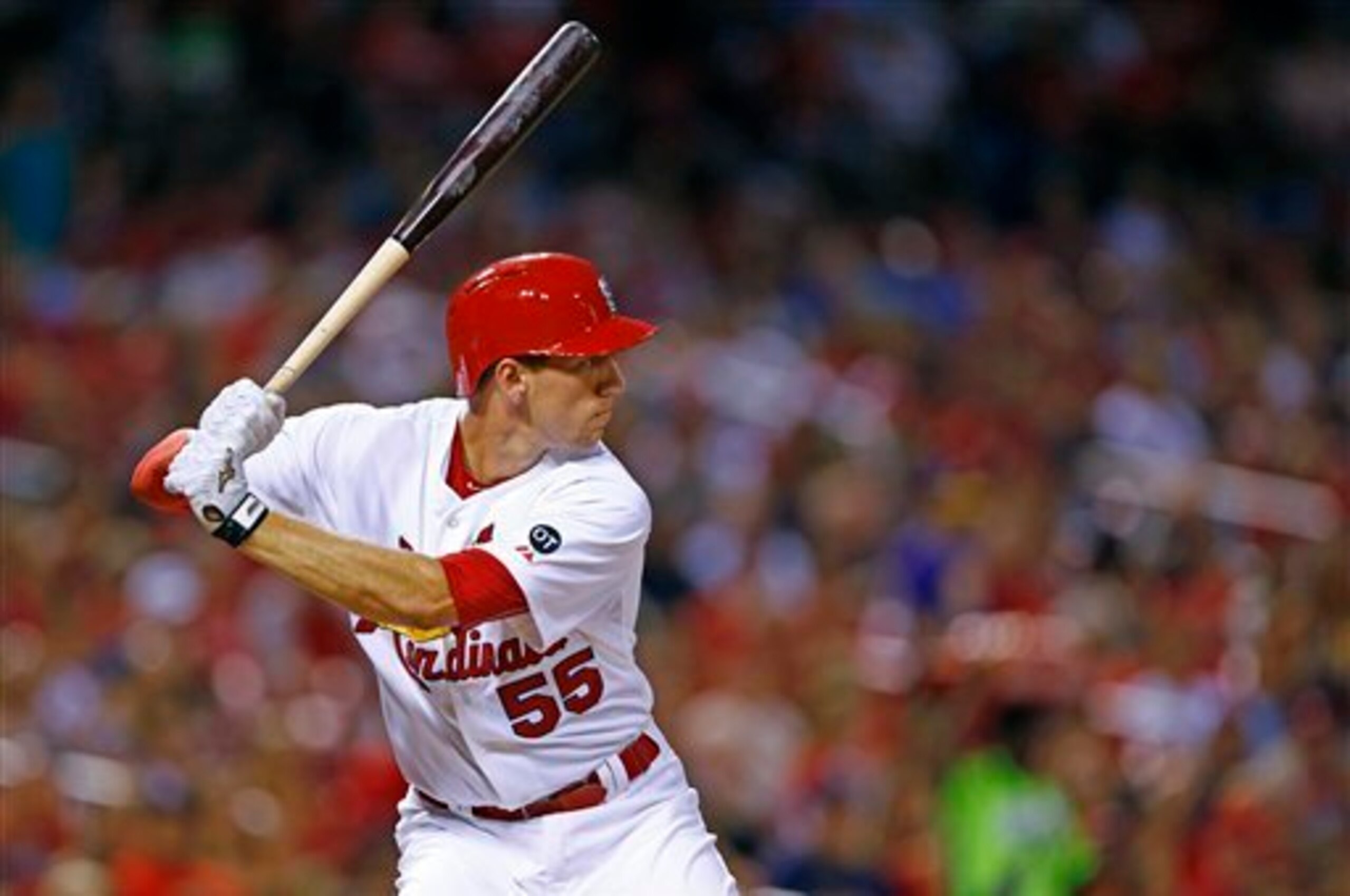
Hitting
Stephen Piscotty has been impressive, hitting .310 with a .365 OBP. Along the way, he's proved he's capable of the ideal combination of excellent bat control and consistent hard contact. That certainly is the best way to hit for average. But don't get too excited. Piscotty has also been an aggressive hitter with a whiff habit, and sooner or later the scouting report is going to get around that he is much less dangerous above the knees. He's a good hitter, but his numbers oversell him a bit for now.
Power
Piscotty's power has also been solid within the relatively small sample of games he's played. He's hit seven homers with a .192 ISO in 62 games, lending credence to Baseball America's notion that he could be a 15- to 20-homer player in a full season. He's hit 55 percent of his batted balls in the air with a strong Hard% on fly balls (49.2) and line drives (48.7). One thing that's clear, however, is that his power doesn't extend to the right of center field. So, it should remain short of elite.
Baserunning
None of the prospect gurus promised Piscotty would be an asset on the basepaths, so it's hardly surprising he hasn't been. He's stolen just two bags in two attempts and posted a decidedly unflattering 28 XBT%. If this is a sign of things to come, you can pencil him in as a guy who contributes only an occasional stolen base and lacks aggressiveness.
Defense
Piscotty is a right fielder by trade, but he's been needed mainly in left field this season. With minus-four DRS and a minus-0.9 UZR, it hasn't gone well. But these numbers misrepresent Piscotty's skill set. Though he doesn't have great speed, he at least tracks fly balls well. He also has a good arm that he hasn't gotten many chances to show off. Going forward, at least average defense should be in the cards.
Total
Excitement over Piscotty's rookie season should be tempered, as he hasn't looked quite as advanced as his numbers suggest. Even still, it's obvious the makings of a good hitter are there, so he's a guy to watch going forward.
27. Jackie Bradley Jr., Boston Red Sox
15 of 41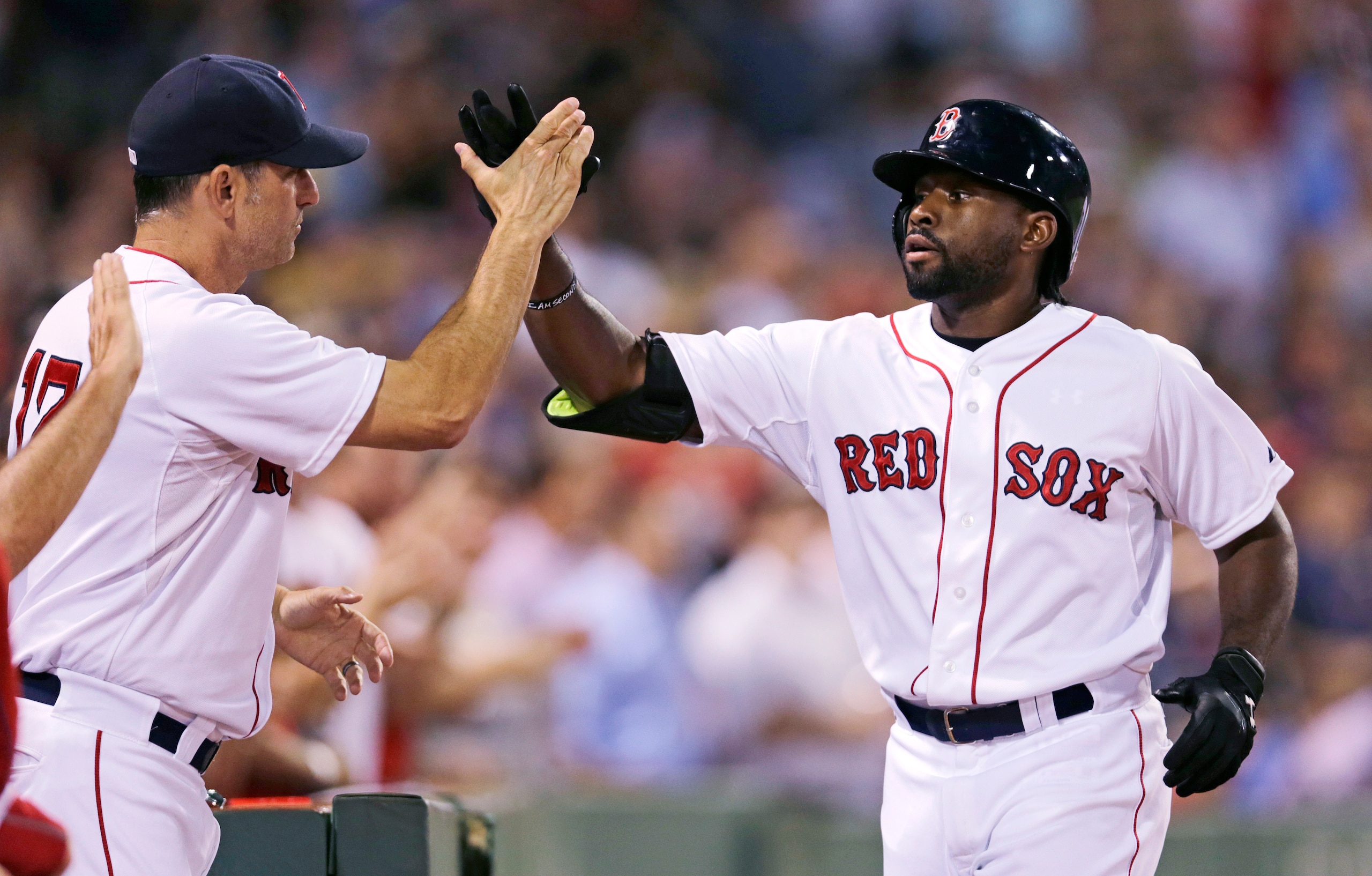
Hitting
Jackie Bradley Jr. came back to earth in a recent slump, but his .259 average and .343 OBP are still huge improvements over his track record. He's always had a disciplined approach, and his tendency for hard contact existed even before he started destroying the ball in August. The Red Sox credited this to mechanical adjustments that made Bradley's swing simpler and shorter. But Bradley is still a whiff-happy hitter who swings too much like a power hitter—which results in too many pulled balls and too many fly balls—to be consistent. Color me pessimistic.
Power
This is where Bradley really looks different, with 10 homers and a .263 ISO. So does the fact that he hits 55 percent of his batted balls in the air, with impressive Hard% on both fly balls (47.2) and line drives (62.5). And though he's gotten help from Fenway Park, it's significant that he's also shown he can drive the ball in all directions. It all seems too good to be true for a guy who goes just 5'10" and 195 pounds, but this is where the payoff from his mechanical adjustments is actually tangible.
Baserunning
Bradley isn't especially fast, but that doesn't stop him from making a solid impact on the basepaths. With three steals in three attempts this season, he's now a perfect 13-for-13 in his career. And though he only has a 36 XBT%, what he did in 2013 and 2014 says that's the low point of his abilities. He won't be an elite baserunner, but he can be a good one.
Defense
Bradley was arguably baseball's best defensive center fielder in 2014, but it looks like he'll play either right field or left field moving forward. He's shown he can handle either, posting two DRS and a 5.0 UZR in left and three DRS and a 4.0 UZR in right field. He may not have great speed, but he makes the most of what he has by getting good jumps and taking direct routes to the ball. His arm, meanwhile, is more than strong enough for right field. Over a full season, he's a potential Gold Glover at either position.
Total
Yes, Bradley is a tough player to figure out. But we can say he looks like a more dangerous hitter than he was a year ago. And after playing elite defense in center field, elite defense should be no problem in right field.
26. Hunter Pence, San Francisco Giants
16 of 41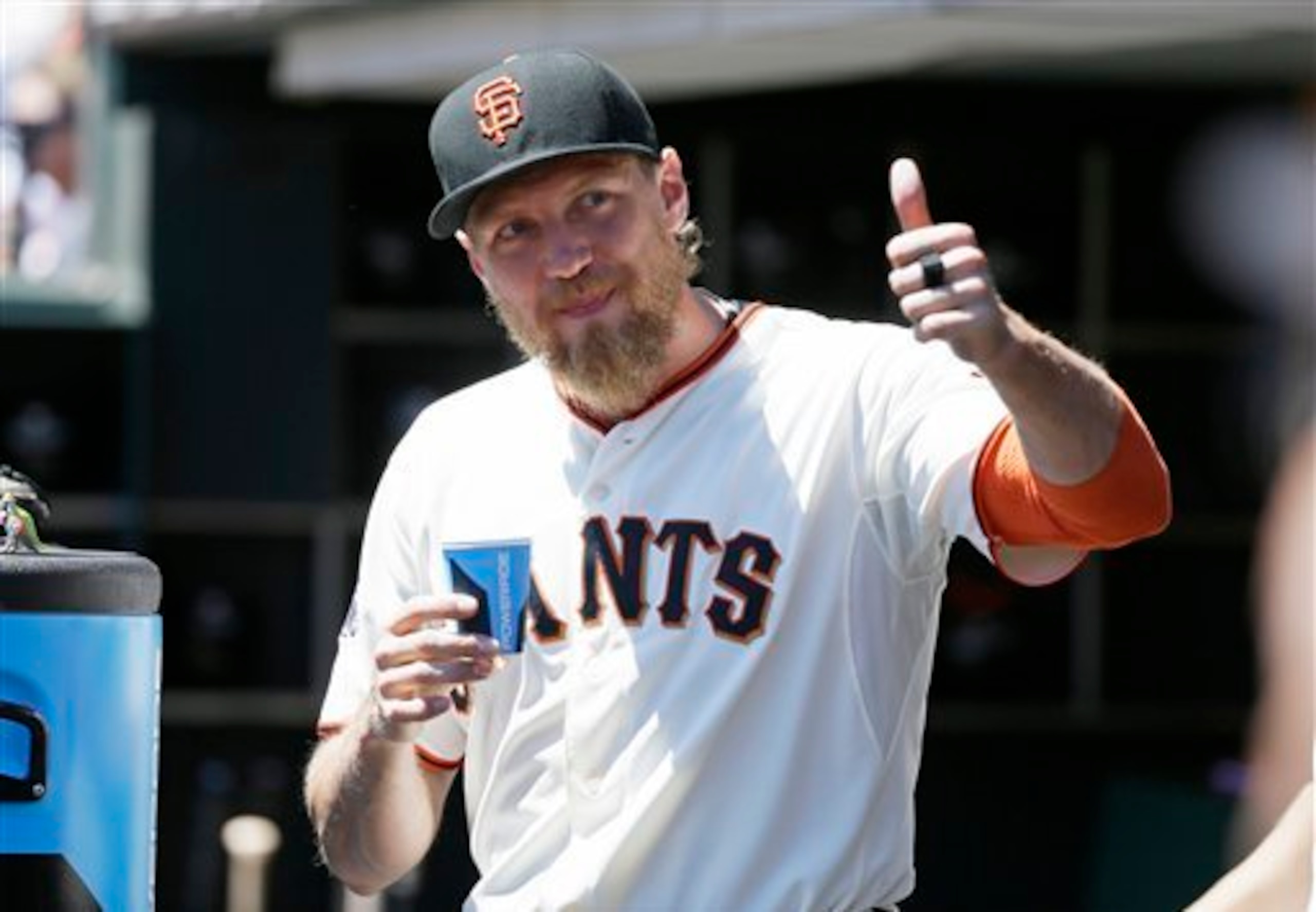
Hitting
Injuries derailed Hunter Pence's season, but we shouldn't overlook the fact that he was pretty good when healthy, with a .275 average and .327 OBP. He still showed the same old faults, most notably frequent whiffs on slow stuff below the zone and a frustratingly high ground-ball rate. But he's not the wild swinger his whiff rate would lead one to believe, and he made hard contact about as frequently as he did during his awesome 2013 season. That's Pence in a nutshell: It's not always pretty, but it works.
Power
Despite all his injuries, Pence managed to hit nine homers with a .203 ISO in 52 games. His tendency to hit over half his batted balls on the ground certainly limits his power potential. But as his Hard% on fly balls (50.0) and line drives (55.6) indicates, he can stand up to just about anyone in terms of raw power. The big question going forward is whether the injury bug will leave him alone. At 32 years old and with a lot of wear and tear on his body, missing time could become a new reality for him.
Baserunning
Pence didn't do a ton of running in the games in which he was healthy, but he did enough to show he was his usual self on the basepaths. Four steals in five attempts isn't bad for a third of a season, and Pence's 50 XBT% was in line with his past performance. But again, his age and injuries could force him not to overdo it on the basepaths going forward.
Defense
Pence has zero DRS and a 4.7 UZR. That should make sense to anyone who's watched him play, as his reads and routes are at best unpredictable. But his saving grace is that he's among the more athletic right fielders in the league, and he also has enough arm strength for the position. He does more good than harm.
Total
When he was healthy, Pence showed he can still hit, hit for power, run and play defense better than the average corner outfielder. All hope is not lost.
25. Josh Reddick, Oakland Athletics
17 of 41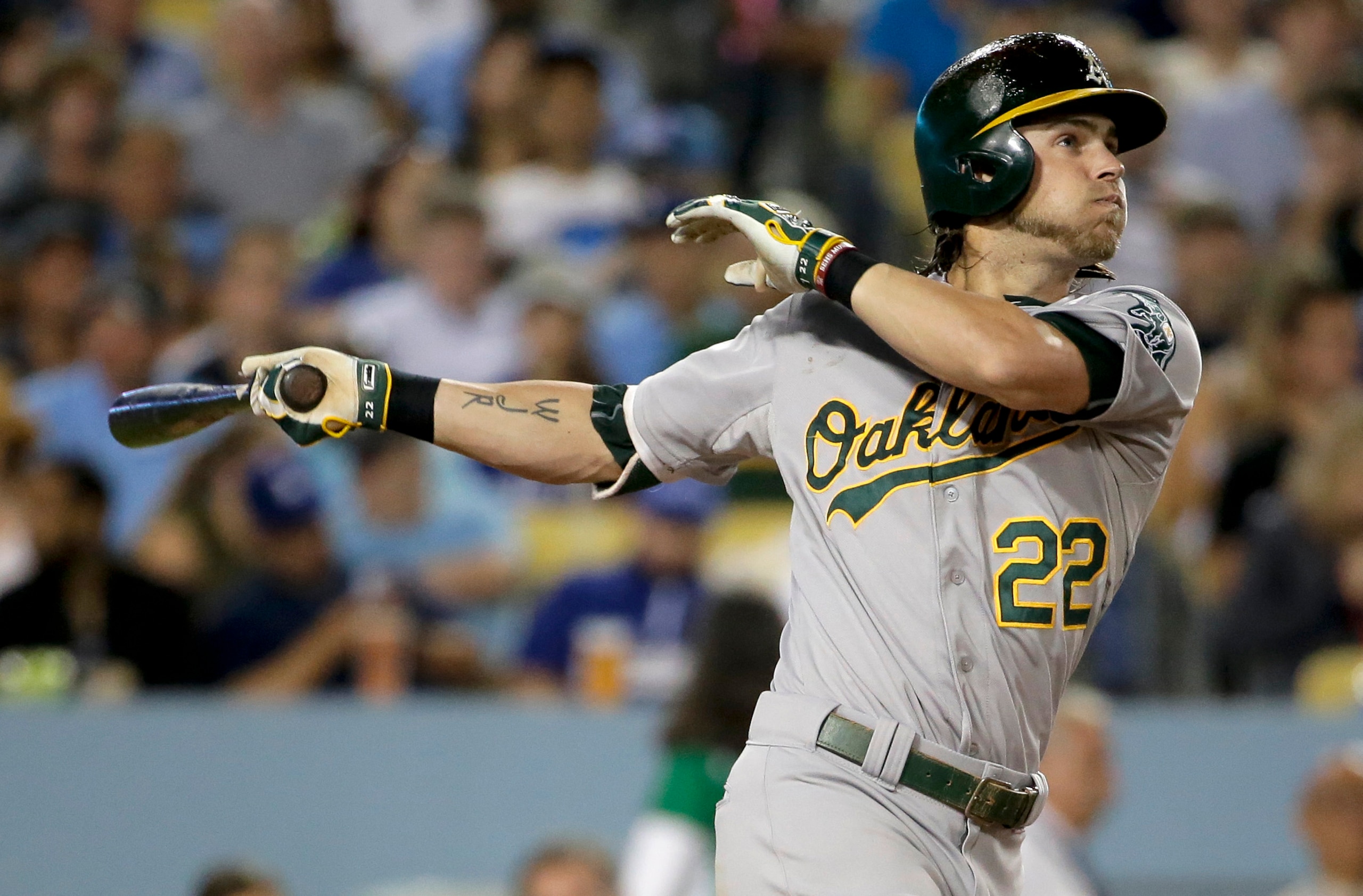
Hitting
Josh Reddick is much improved, with a .272 average and .333 OBP. This hasn't happened by accident. He's been more choosy with his swings, and he's placed a greater emphasis on making contact and using the whole field. But whether he likes it or not, he still deserves to be platooned. And despite the fact it's become harder to get the ball by him, he still has limited plate coverage. Though he's a better hitter now than he was before, Reddick has his limits.
Power
With 20 homers and a .182 ISO, Reddick is showing his adjustments at the plate haven't cost him much power. His main trick is getting the ball in the air over 60 percent of the time, with a special emphasis (40-ish percent) on fly balls. But he needs this volume, as his Hard% on fly balls (29.4) and line drives (35.8) highlight his modest raw power. Also, his power is skewed overwhelmingly to his pull side. So, what he's doing is about as good as it gets.
Baserunning
Reddick isn't a speedster, but he has more than enough athleticism for running the bases. His 10 steals in 12 attempts are solid for the position, and he's tacked on a solid 44 XBT% as well. And while he's run into a career-high five outs on the bases, that's an outlier that doesn't seem to indicate the start of a decline for a player who is still only 28.
Defense
Reddick's right field defense has been his primary moneymaker, but he has minus-one DRS and a minus-2.2 UZR this season. Reddick still runs well and tracks fly balls well, which gives him more than enough range. And though it's not being as tested as often as it was a couple of years ago, he still has a strong, accurate arm. The metrics may not show it, but his defense is still quite good.
Total
He's gone about it very quietly, but this has arguably been Reddick's best season. He's made some tweaks that have resulted in more consistency at the dish, and he still has solid power and a valuable glove and arm.
24. Kole Calhoun, Los Angeles Angels
18 of 41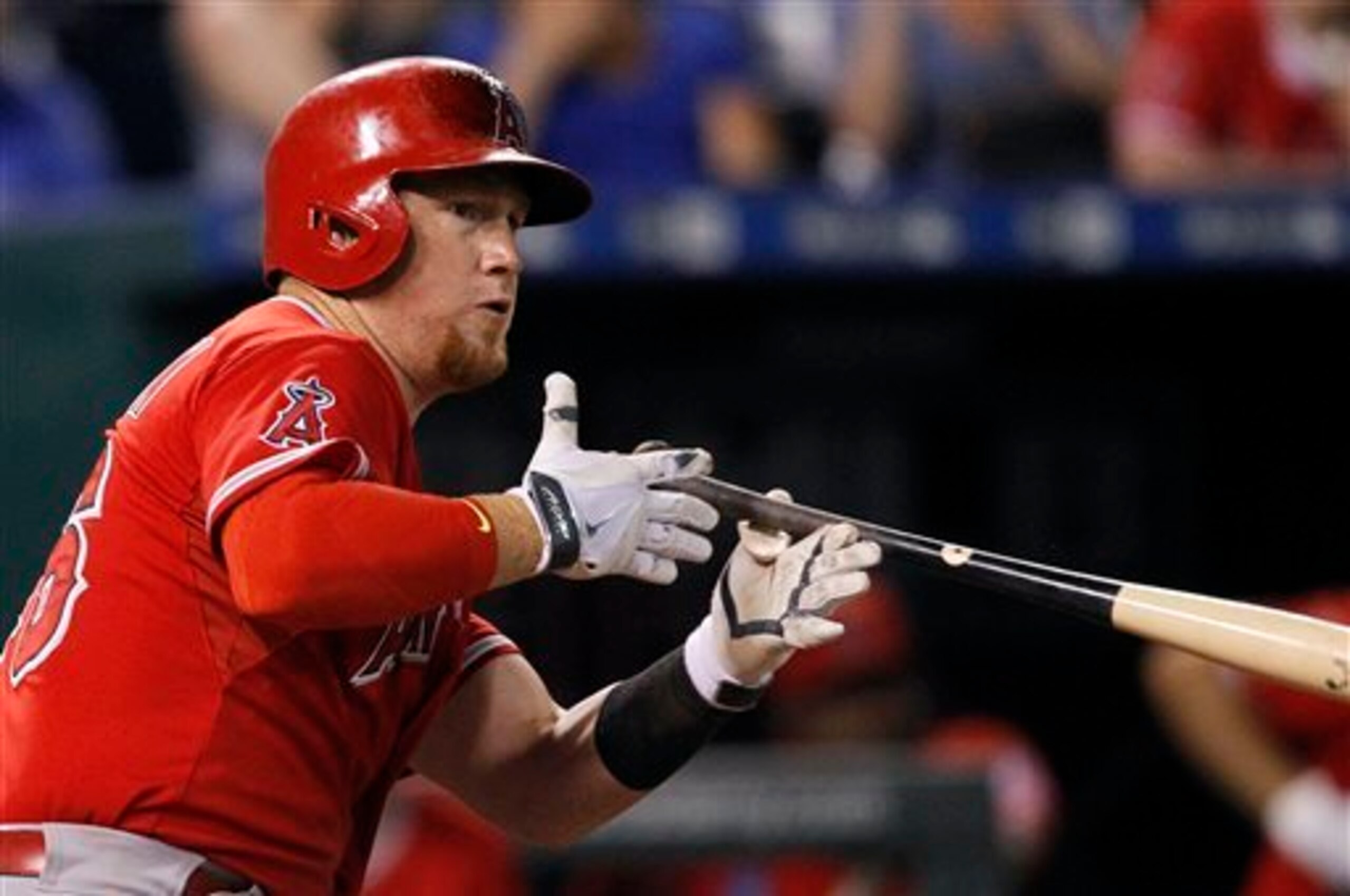
Hitting
Just like he did in 2014, Kole Calhoun has struggled to be consistent in the second half and has watched his average (.259) and OBP (.312) tumble as a result. The best compliment we can give him is that he has very good coverage of the strike zone, mainly because he's an excellent fastball hitter. But Calhoun is no more disciplined than the next corner outfielder, and he has a serious whiff weakness against anything slow. Add in that he still leans on his pull side, and you get a limited hitter.
Power
Calhoun has at least managed to keep the power coming, as he has 24 homers and a .161 ISO. But don't mistake him for a hitter with lots of raw power, as he has modest Hard% on fly balls (41.1) and line drives (35.9). Instead, his power production comes from how he combines volume—he gets about 60 percent of his batted balls in the air—with his pull habit, which results in a steady diet of balls hit deep to right field. It works well enough, but odds are we've seen the best of his power potential.
Baserunning
Nobody will mistake Calhoun for a burner on the basepaths, so his modest production comes as no surprise. He's stolen four bases in five attempts, which is fine, but his 39 XBT% isn't worth much. He's also made nine outs on the basepaths, which is way too many. But knowing that Calhoun had a 54 XBT%, with only five outs on the bases in 2014, odds are he can put this behind him.
Defense
Calhoun owns a 11.9 UZR and four DRS, making him one of the better-rated right fielders in the league. He doesn't always get the best breaks on the ball, but he moves more quickly and more direct than many right fielders, which gives him pretty good range. And though he's not Jose Guillen out there, he does have a strong, accurate arm.
Total
Calhoun's bat comes with some holes that stand in the way of him turning into a consistent hitter. But thanks to solid power and a pretty good glove, he's an above-average regular.
23. Michael Conforto, New York Mets
19 of 41
Hitting
Michael Conforto's meteoric rise has culminated in him hitting an impressive .280 with a .348 OBP. Now, we're talking about a small sample and also one in which the Mets have spared their prized youngster at-bats against lefties. But the good stuff can't be ignored. Conforto has shown good discipline and an ability to make contact, as well as a line-drive stroke that's produced a ton of hard contact. You should hold your excitement in check, but it's understandable if you don't want to.
Power
Conforto increased his power at each stop in the minors, but even that couldn't have prepared anyone for the eight homers and .236 ISO he's posted in the big leagues. And Conforto has indeed earned it, putting over 60 percent of his batted balls in the air and crushing them with impressive Hard% on fly balls (44.0) and line drives (64.5). He's also shown he can drive the ball to left and right fields. Small sample and all, but optimism is warranted.
Baserunning
Baseball America warned before the season that Conforto is a below-average runner, so it's not surprising he's attempted only one steal (he was thrown out). What is surprising is his 50 XBT%, which is a bit high for a below-average runner. But given the small sample, it shouldn't be taken as a promise of electric baserunning to come. Let's take Baseball America's word for it and play it safe.
Defense
Conforto's played excellent defense in left field, with eight DRS and a 6.1 UZR. This has a lot to do with how much of an impact he's made with his arm, but his arm strength is at best a tick above average. And though his speed plays a little better in the outfield than it does on the basepaths, his tendency to take indirect routes to the ball means he needs all of it. Yeah, there's likely some regression to the mean coming.
Total
Conforto hasn't been in the majors very long, and that makes it tricky to project his future. But with a bat that seems to contain plenty of thunder and a glove that's at least solid, he has the look of a pretty good regular.
22. Brett Gardner, New York Yankees
20 of 41
Hitting
Brett Gardner is having another solid season, with a .262 average and .347 OBP. It's possible, however, to wonder how he hasn't done even better. He's a patient, disciplined hitter who makes consistent contact, and he has a solid line-drive stroke that goes to all fields. But he's really only dangerous against hard stuff. And for whatever reason, this has been yet another season in which he's proved he just can't stay consistent in the second half. So while Gardner is a terrific hitter in theory, reality is another story.
Power
Gardner awoke as a solid power hitter in 2014, and his 16 homers and .144 ISO show it's carried over to 2015. He doesn't exactly have the profile of a power hitter, though. He's only hit about 55 percent of his batted balls in the air, and his Hard% on fly balls (31.7) and line drives (41.9) reflect a lack of raw power. This, of course, is when you notice he's gotten a boost from Yankee Stadium and its short right field porch. Gardner's power is better than it used to be, but it shouldn't be confused for great power.
Baserunning
Gardner isn't the speed demon he once was, but he still leaves many corner outfielders in the dust. He's stolen 20 bags in 25 attmepts to keep up with his recent track record, and his 59 XBT% is outstanding for the position. But the fact that he now tops out around 20 steals while making close to double-digit outs on the basepaths shows he's not as fast as he once was.
Defense
Gardner was once rated the best left fielder in MLB. But with one DRS and a minus-1.0 UZR, that's no longer the case. Those numbers don't tell the whole tale, as Gardner has good instincts and speed. But since he's not as fast as he once was, there are times when he misplays balls. He also has average arm strength at best. Gardner does more good than harm, but he's not an elite defender anymore.
Total
Gardner's inability to stay consistent into the second half is frustrating, but that doesn't mean we're not talking about a good player. He's one of the tougher outs in the American League, and he also packs a nice mix of power and speed.
21. Christian Yelich, Miami Marlins
21 of 41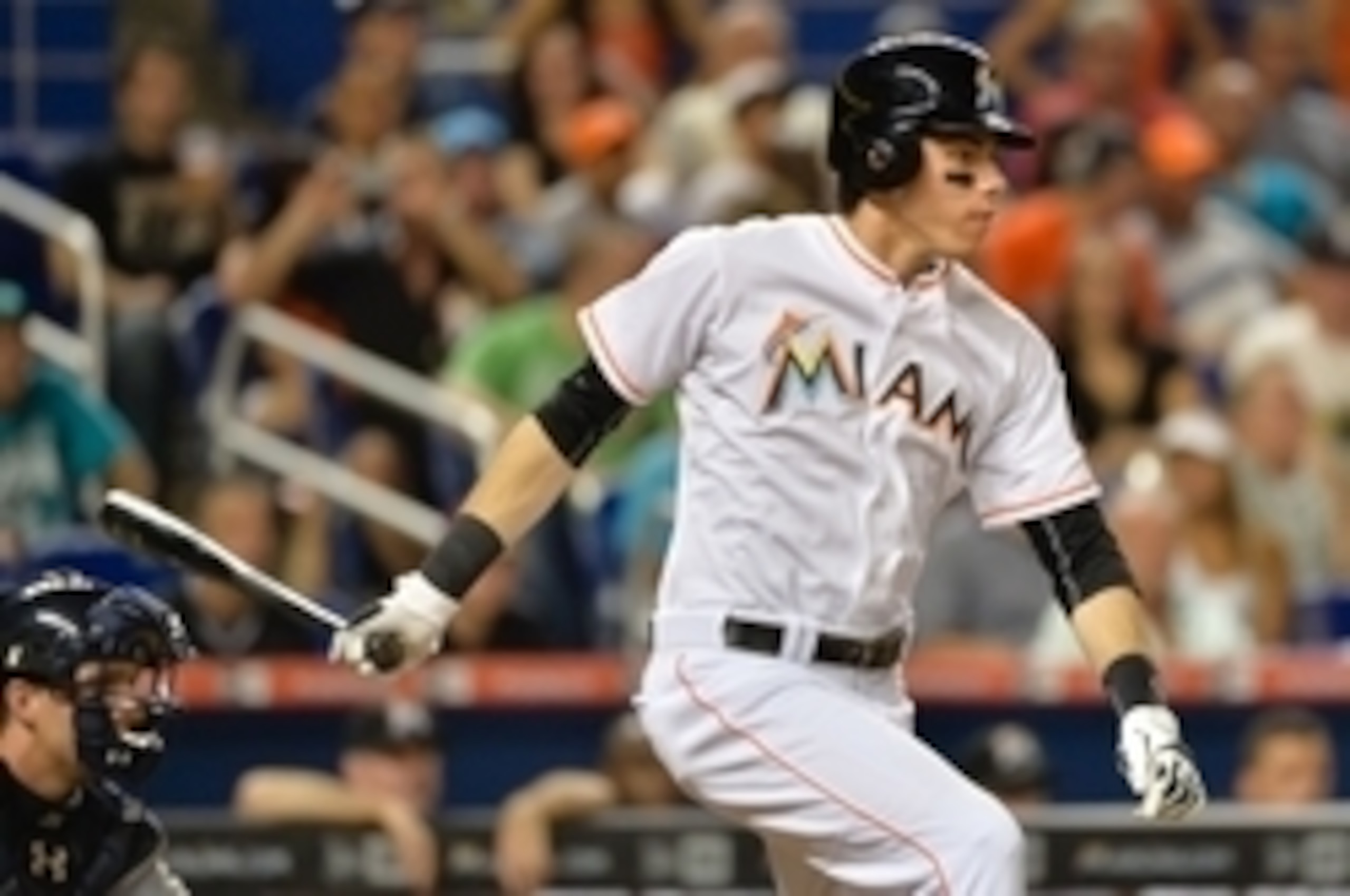
Hitting
Christian Yelich has rescued his season with a hot second half, and he's now hitting .293 with a .357 OBP. He has become a more aggressive hitter this year, particularly in the second half, which is not a bad thing if you are a good bad-ball hitter, but that's not Yelich's forte. Fortunately, he has gotten back to being a highly advanced bat-control guy, and he's found holes in the defense after the All-Star break by spraying hard line drives and ground balls in all directions. It's hard to say he's a better hitter now than he was a year ago, but it's clear he can still rake.
Power
With just seven homers and a .114 ISO, power isn't Yelich's thing. Mind you, it could be his thing. He has a 58.2 Hard% on fly balls and a 52.6 Hard% on line drives, so he's showing he can destroy balls he gets aloft. But he doesn't sell out for power. His ground-ball rate is north of 60, and his awesome line-drive power really only applies to the left-center gap. He has some thunder in his bat, but he chooses to downplay it in favor of consistency.
Baserunning
Despite missing some time with a knee injury, Yelich has stolen 16 bags in 21 attempts. He's also continued to be more aggressive than the average corner outfielder, posting a 52 XBT%. He's capable of stealing 20 bases with a healthy dose of extra aggression on the side, making him one of the position's better baserunners.
Defense
A year after winning a Gold Glove, Yelich has a just 0.2 UZR. But he also has 12 DRS. He isn't the fastest corner outfielder, but he handles reads and routes a lot better than the average player, which allows him to track down plenty of fly balls. His weakness is his arm strength, which is below average. But overall, he's still one of the better defenders you're going to find in left field.
Total
Yelich hasn't had the same kind of success he did in 2014, but he hasn't fallen off the face of the earth either. He's shown he can hit for average, run the bases well and play great defense, which makes him one of the better all-around left fielders in the league.
20. Shin-Soo Choo, Texas Rangers
22 of 41
Hitting
A red-hot second half has Shin-Soo Choo looking a lot like his old self. He's hitting .276 with a .375 OBP, and this second half hasn't happened by accident. Choo has turned back into an extremely disciplined hitter, with excellent coverage of the strike zone and an ability to spray line drives in every direction. But one good half isn't two good halves. And no matter what, he still can't be counted on to hit left-handers. Expectations for the future can only go so high.
Power
Choo's 21 homers and .187 ISO are reminiscent of his 2013 season. He's still only hitting about half his batted balls in the air, but with a 54.4 Hard% on fly balls and a 43.9 Hard% on line drives, his raw power compares favorably to the average corner outfielder. And though his home run power is focused on right field, he can drive the ball in all directions. It's not booming power, but it's plenty good.
Baserunning
Choo was a 20-steal guy as recently as 2013. But this season he's stolen only four bases in six attempts. He does have a solid 48 XBT%, however, and he's stopped running into outs at the cringe-worthy rate he was a couple years ago. But given that he's 33, it's fair to think this is another skill that will unravel.
Defense
After playing center field in 2013 and left field in 2014, Choo has moved back to his natural right field. But he has minus-10 DRS and a minus-4.0 UZR even despite the favorable transition. These figures reflect Choo's range, or lack thereof, which is limited by diminishing speed and inefficient routes to the ball. And though he has enough arm strength for right field, his slow release renders it less of a threat.
Total
Choo isn't the well-rounded player he was in his prime, but he deserves credit for rediscovering his approach at the plate. He's again one of the more advanced hitters you'll find in either league.
19. Ender Inciarte, Arizona Diamondbacks
23 of 41
Hitting
Ender Inciarte has built on his 2014 breakthrough with a .303 average and .338 OBP. The latter number isn't too impressive, though, and that points to the fact that walks remain out of Inciarte's reach. Pitchers aren't afraid to come at him in the zone, and Inciarte makes the zone even bigger by chasing balls out of the zone. But with an excellent ability to make contact and the wherewithal to spray line drives and ground balls in all directions, Inciarte fits the profile of a high-average hitter.
Power
This, naturally, is the reason pitchers aren't afraid to come right at Inciarte. He's hit only six homers and has a .105 ISO. It certainly doesn't help that he hits over half his batted balls on the ground. But apart from that, his lack of raw power is also an issue. With a 33.9 Hard% on fly balls and a 41.4 Hard% on line drives, he doesn't crush what he puts in the air. The one thing that can be said in his defense is he finds the left-center gap with aplomb.
Baserunning
Inciarte teased 20-steal potential last year, and he's made good on that with 21 steals in 31 attempts this year. That's not the best success rate, however, and Inciarte's 40 XBT% also fails to impress. He's made it clear he can be an asset on the basepaths, but there is also a limit to how dangerous he can be.
Defense
After playing like a game-changing defender in 2014, Inciarte has played even better. Between his work in left, center and right field, he has a whopping 29 DRS and a 15.0 UZR. He often looks like a center fielder, making quick reads, running direct routes and showing off good closing speed. He's also displayed a sense of fearlessness in sacrificing life and limb to finish plays. And he has a pretty good arm. Make no mistake, he's an elite defender.
Total
Inciarte is easy to overlook since not many of his skills show up on a stat sheet. But he can hit for average, run the bases well and play superb defense.
18. David Peralta, Arizona Diamondbacks
24 of 41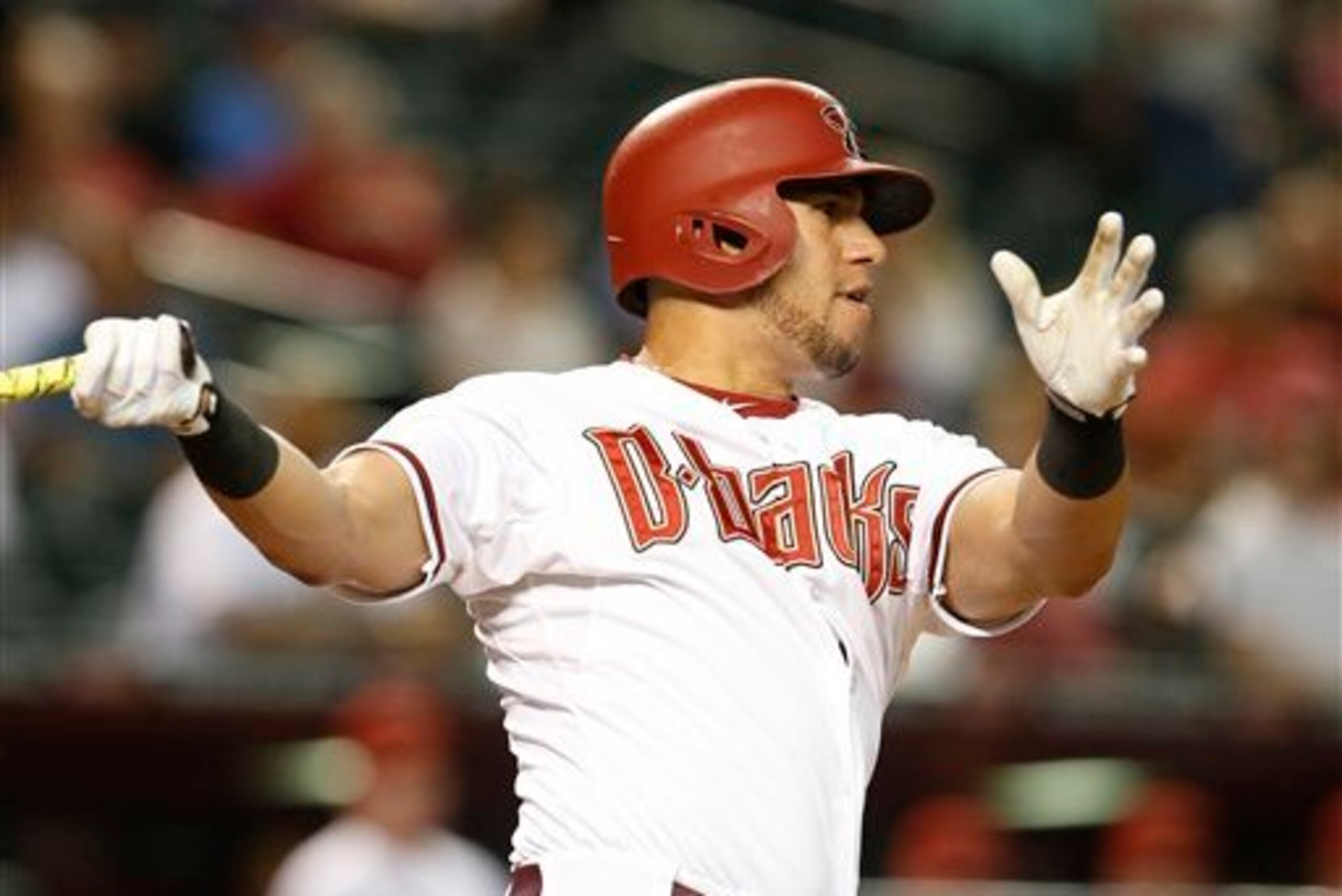
Hitting
David Peralta has supplemented his 2014 breakthrough with a .307 average and .367 OBP in 2015. Lefties still give him a hard time, but it must be noted we still don't really have a good idea of what he can do with regular playing time against lefties. In the meantime, it's to his credit that he's toned down his aggressiveness, focusing more swings inside the strike zone. The payoff has included better use of the field and more consistent hard contact. At 28 years old, he's looking like a classic late bloomer.
Power
With 17 homers and a .209 ISO, Peralta's power has also taken a leap forward this year. That this has happened despite him hitting over half his batted balls on the ground points to his efficiency, which is impressive. He has a 53.2 Hard% on fly balls and a 46.7 Hard% on line drives, so he crushes whatever he puts in the air. He's also shown he can use the whole field. Peralta's ground-ball habit limits his power potential, but he can definitely mash.
Baserunning
Peralta isn't the fastest runner, but that doesn't stop him from being good on the bases. He has swiped nine bags in 13 attempts and posted a 43 XBT%. These numbers are reasonably consistent with what he did in his first taste of the majors in 2014, so it's a good bet he'll stay the course in 2016.
Defense
Peralta has minus-four DRS and a UZR of minus-2.7 in left field. His athleticism is fine for a corner outfielder, but he hurts himself by getting bad breaks on balls, which costs him range. He also lacks arm strength, and a slow release doesn't help. All told, his defense doesn't quite measure up to his offense.
Total
You're looking at one of the most underrated outfielders in MLB, in part because the Diamondbacks haven't been able to find an everyday role for him. But when Peralta does play, he has little trouble punishing right-handers, hitting for both average and power. At the least, he's an elite platoon player.
17. Gregory Polanco, Pittsburgh Pirates
25 of 41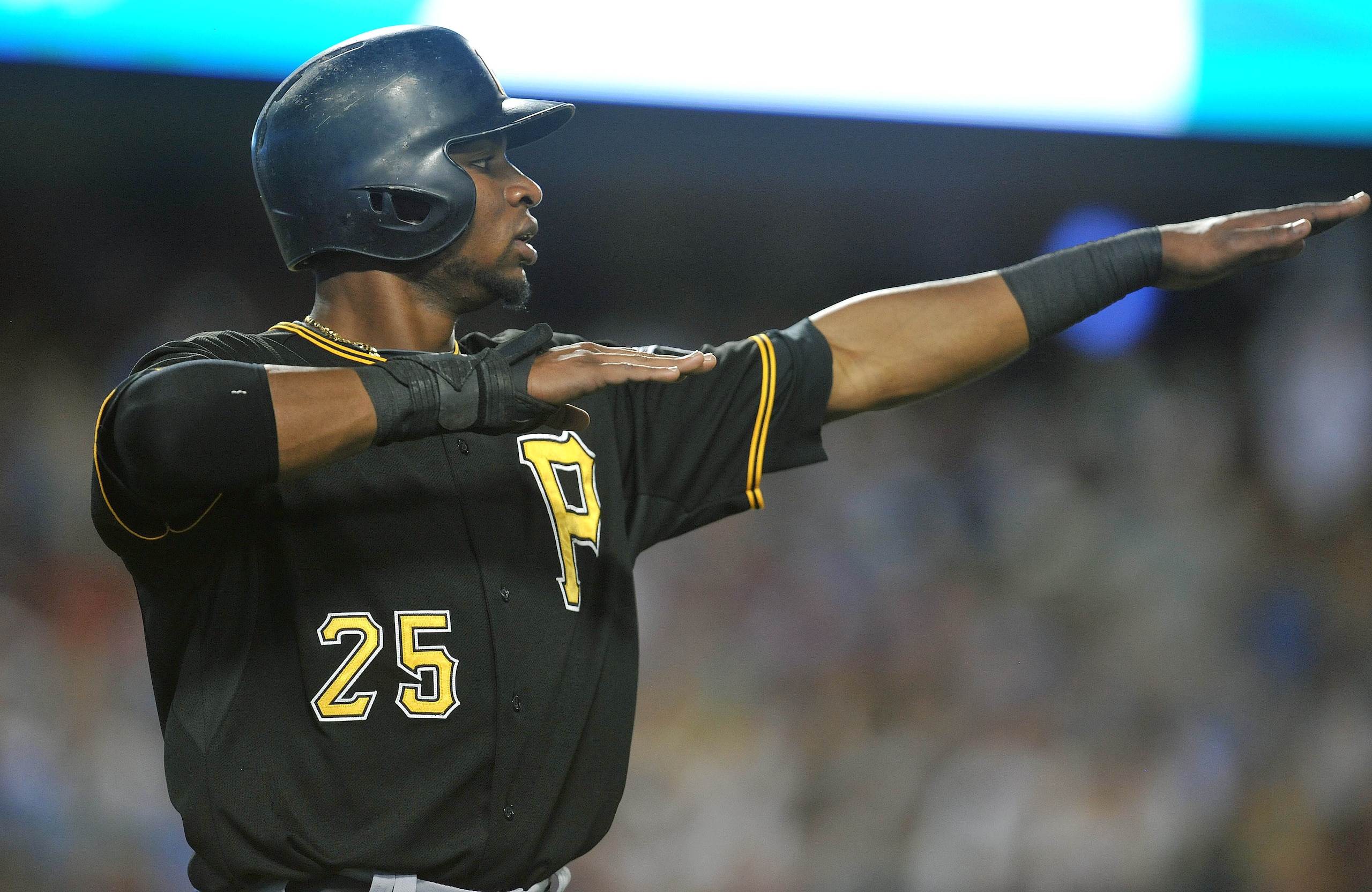
Hitting
Gregory Polanco is batting only .255 with a .318 OBP, but he's made some strides in a respectable second half. He's been notably more aggressive and has made good use of his extra swings by showing he can hit the ball to all fields and make consistent hard contact. This matches the eye test, which says Polanco has been more confident and swinging with more conviction. Now all he has to do is patch up his platoon split and expand his plate coverage, and he'll be on his way.
Power
Polanco's power doesn't look great at first glance, as he's hit only nine homers with a .124 ISO. Whether he'll develop more pop is a good question. Home runs come from fly balls, and Polanco's Hard% on fly balls hovers in the mid-30s. His 47.2 Hard% on line drives, however, is a lot better. His spray chart is promising too, showing he can hit hard liners in pretty much every direction. As long as that's the case, he'll at least manage respectable power.
Baserunning
Polanco has above-average speed, and he's put it to good use in his first full season. He's swiped 27 bags and posted a fantastic 64 XBT%. The catch is that he's had some blunders, like 10 caught-stealings and 10 additional outs on the basepaths sorts of blunders. But he's a young player with speed and a minor league track record of thievery, so improvement is possible.
Defense
Polanco made a rough first impression in 2014, but he's posted seven DRS and a 3.9 UZR this season. His fly-ball catching skills hinge more on his athleticism than his instincts, as he often looks tentative running balls down. But he can get away with that, and let's not overlook his strong arm. He may not be perfect, but he is an above-average right fielder.
Total
After getting off to a slow start in his first full season, Polanco has come around and shown he can cut it in the big leagues. Going forward, he looks like a solid everyday right fielder.
16. Randal Grichuk, St. Louis Cardinals
26 of 41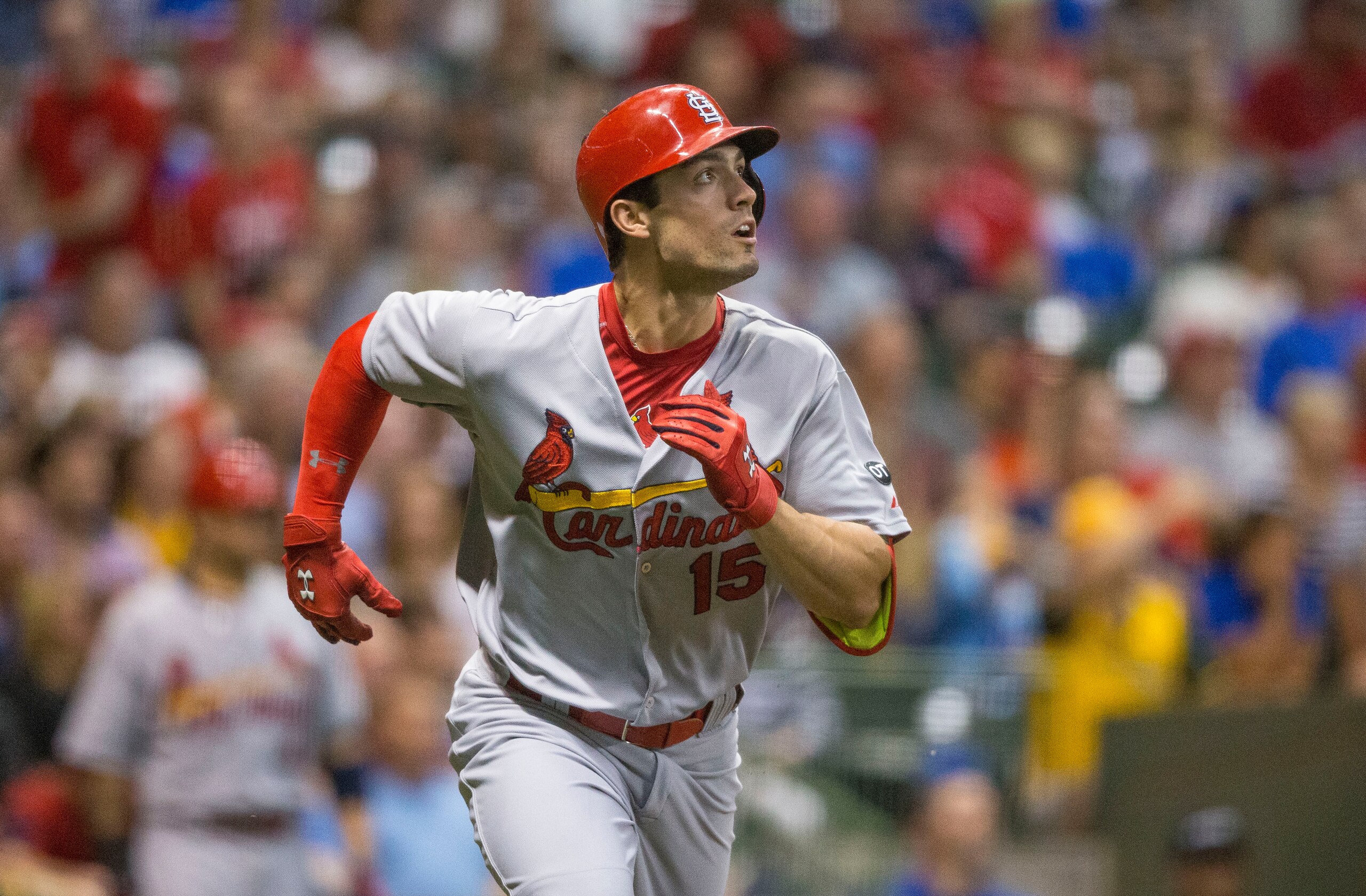
Hitting
In his rookie season, Randal Grichuk is hitting .280 with a .332 OBP. In racking up those numbers, his most noticeable talent has been his ability to whack the living daylights out of the ball. But apart from that, it's not too pretty. Grichuk is nothing if not an aggressive swinger, and he has a bad whiff habit that hasn't exactly gotten better over time. And while all his hard contact is nice, his tendency to pull the ball makes him easy to defend. The nice consistency he's enjoyed isn't built to last.
Power
This is what Grichuk's game is geared toward, and it's paid off to the tune of 17 homers and an impressive .280 ISO. Getting over 60 percent of his batted balls in the air with a heavy emphasis on his pull side has helped. And with a 41.4 Hard% on fly balls and a 51.2 Hard% on line drives, he's been efficient as well. Over a full season, you're looking at a guy who could make a run at 30 homers.
Baserunning
Grichuk has, of course, spent as much time jogging around the bases as he has running them. But he's done fine when he's been forced to do the latter, stealing four bags in six attempts and posting a 48 XBT%, which is right at the average mark for the position. His athleticism has served him well, and it bodes well for him going forward.
Defense
Grichuk has played mostly left field, but he's piled up seven DRS and a 2.1 UZR across all three outfield spots. He's not the fastest runner, but he makes the most of what he has with a high motor and by tracking balls well. He also packs an above-average arm, but that may not continue to be the case: Grichuk landed on the disabled list with a bad elbow in August, and throwing has remained an issue even after his return. It could sort itself out over time, but it's hard not to have at least some concern.
Total
If Grichuk has made anything clear, it's that he has the goods to be a source of major power. How far his abilities extend beyond that is something of a question for now, but his power alone will ensure he remains a productive player.
15. Ryan Braun, Milwaukee Brewers
27 of 41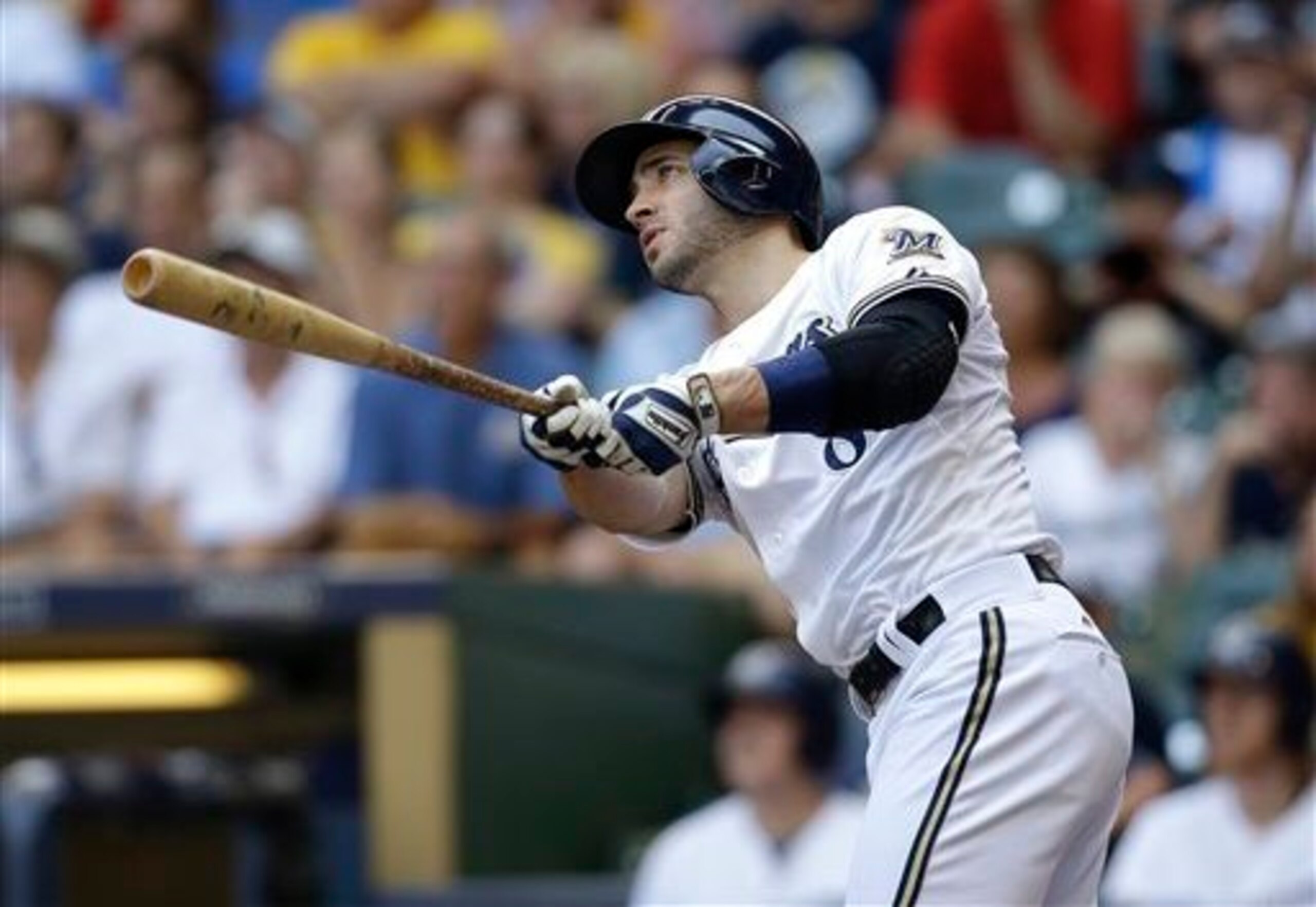
Hitting
Up until back troubles got in the way and shut him down, 2015 was a resurgent season for Ryan Braun, who hit a solid .285 with a .356 OBP. With his troublesome thumb finally healthy, he got back to crushing the ball to all fields at more like his usual rate. And though he was still an aggressive hitter, he showed he still knows when to take his walks. But lest anyone confuse this Braun for vintage Braun, vintage Braun was a more consistent contact hitter with reliable plate coverage beyond just the inner two-thirds of the zone. Braun was much better in 2015, but still not quite his old self.
Power
Braun's power also came back in 2015, as he slugged 25 homers with a .213 ISO. He only hit roughly half his batted balls in the air, but a 56.6 Hard% on fly balls and a 48.7 Hard% on line drives show his raw power is still there. The red flag is Braun's looming back surgery, which is supposed to remedy issues that limited him down the stretch. Given that those issues coincided with a drop in overall Hard% from 39.1 in the first half to 31.1 in the second, he'll need a full recovery to be the same in 2016.
Baserunning
Braun turned back the clock in this department too, stealing 24 bases in 28 attempts and posting a 52 XBT%. Even with eight outs on the bases, it was Braun's best baserunning season in years. But the coming offseason surgery raises questions. His bad back didn't slow his baserunning in the second half—see his 12 steals—but he could take it easier on the bases for the sake of avoiding injury in 2016.
Defense
Braun posted minus-two DRS and a minus-6.3 UZR. He has the athleticism and the arm to handle right field, but he doesn't look entirely comfortable playing the angles. He gets bad reads on balls and then compounds matters by running indirect routes. He could make improvements in his third year in right field, but his lack of improvement from Year 1 to Year 2 puts that in doubt.
Total
We'll have to see how Braun recovers from back surgery, but he could still be a good player even if he regresses from his performance this year, which included the rediscovery of some of his old superstar form as a hitter and as a baserunner.
14. George Springer, Houston Astros
28 of 41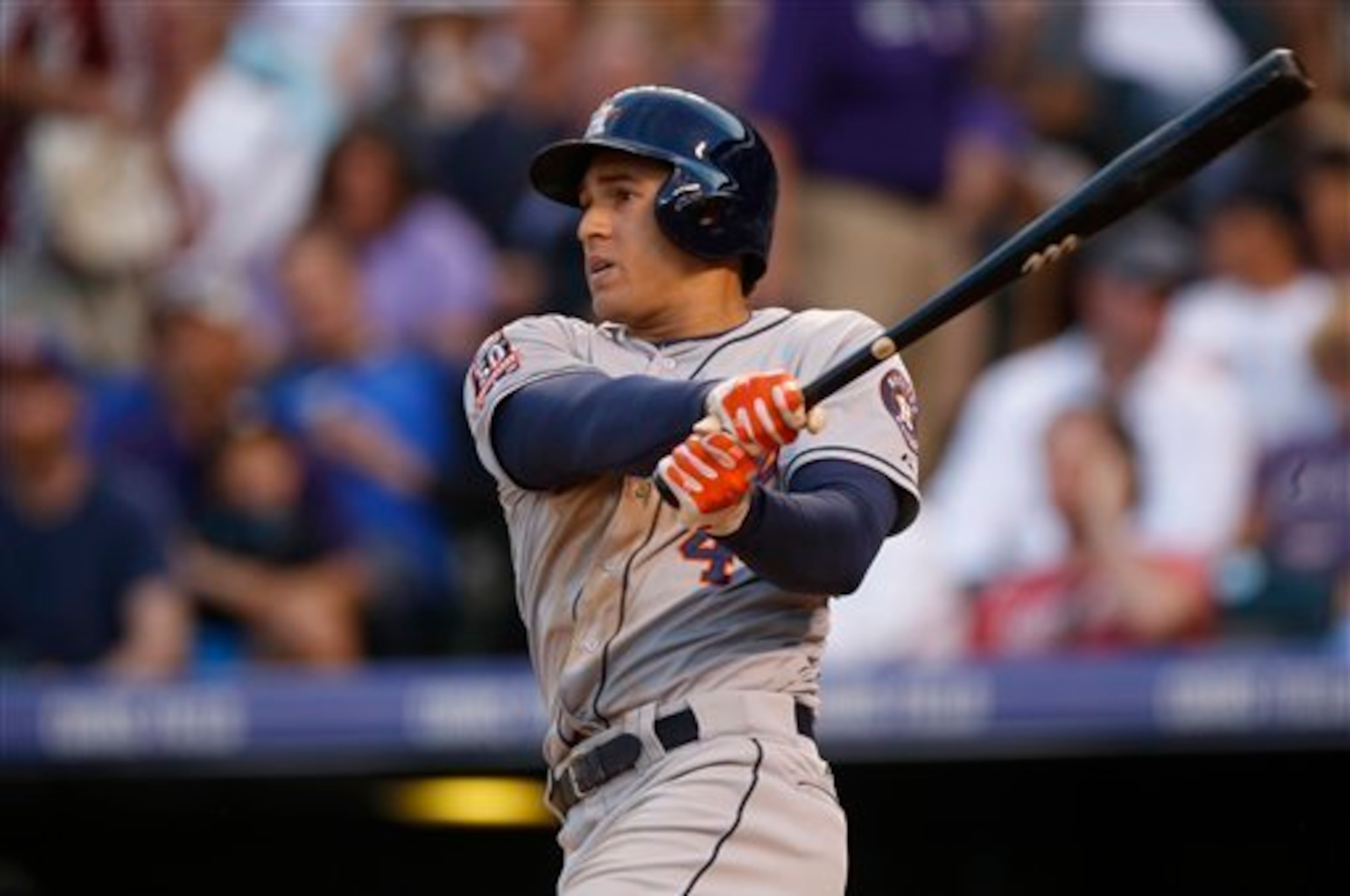
Hitting
Our look at George Springer has been limited thanks to a wrist injury, but his .268 average and .361 OBP show he is a much better hitter. He's gone from being a disciplined hitter to a very disciplined hitter, and he's hit more line drives and used the whole field. But whiffs remain a big problem, as well as the fact his swing path creates a big hole up in the zone. Springer is making progress, but those are two issues that need to be addressed.
Power
Springer's revamped approach has cost him some power, but he's still done well with 15 homers and a .179 ISO. He gets about 55 percent of his batted balls in the air, and his Hard% on fly balls (43.2) and line drives (47.0) are good. But it is notable that Springer has had issues driving the ball since returning from his wrist injury. There's at least a possibility this is something that could linger and continue to sap his power.
Baserunning
Springer hasn't even played in 100 games this season, but that's all he's needed to show his speed can play in the majors. He's stolen 15 bags in 19 attempts and tacked on a solid 45 XBT%. It's probably not the best idea to get too carried away with a relatively small sample, but this is a strong indication that he can steal 25-30 bases in a full season. Provided he ever gets the chance, of course.
Defense
This is Year 2 for Springer as an everyday right fielder, and the metrics indicate he's gotten better: He's posted three DRS and a 0.7 UZR. He doesn't always get quick jumps or take direct routes to the ball, so it's a good thing he has the athleticism and the arm strength to be a standout defender. If he can keep improving his feel for right field, he'll make the leap from "solid" to plain, ol' "good."
Total
This is the second year in a row Springer's been held back by injuries, and the fractured wrist gives reason to worry about his power going forward. But he has still developed at the plate and has the power and speed to be one of the game's top all-around corner outfielders.
13. Alex Gordon, Kansas City Royals
29 of 41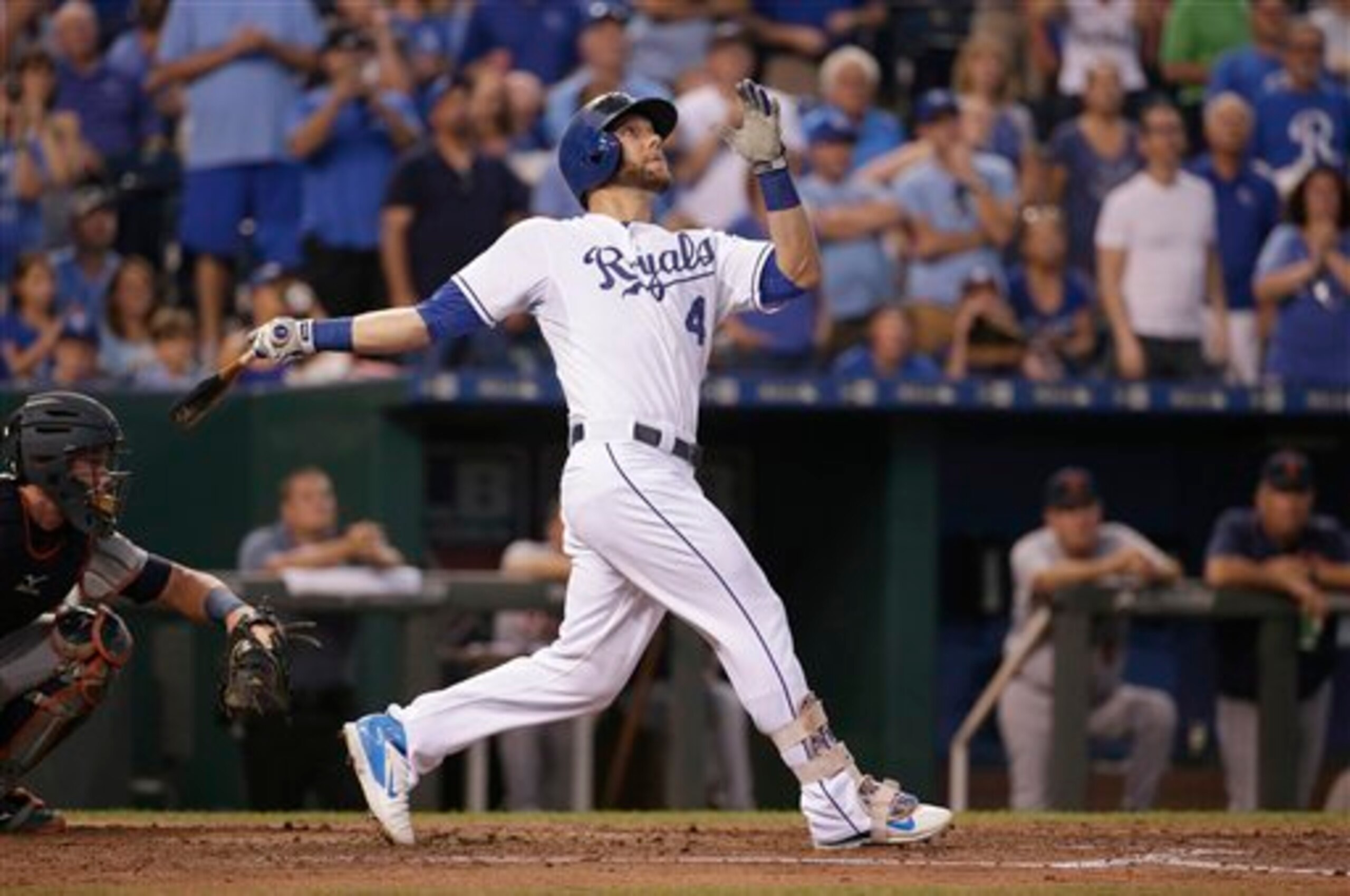
Hitting
With a .271 average and .377 OBP, this has been Alex Gordon's most consistent season in years. And he's done his part to earn it, taking a disciplined approach and piling up plenty of line drives and other well-hit balls. That's a pretty good way to be a very good hitter. But to be a great hitter, you can't have so many weak spots, a hole up top or too much of a pull habit. Gordon's hitting is very good but not elite.
Power
Gordon has also kept the power coming with 12 homers and a .153 ISO. He's once again giving himself plenty of chances to hit those long balls by getting over 60 percent of his batted balls in the air with decent Hard% on fly balls (39.2) and line drives (45.3). But his power fades to the left of center, and he hasn't been able to elevate the ball like he had been since returning from a left groin injury. You have to wonder if that will linger.
Baserunning
Gordon has spent the last few years as a quietly excellent baserunner, but that's not been the case this season. He's gone from being a sure thing for double-digit steals to just two in seven attempts, and his XBT% has fallen from the 50 percent range to just 38. A decline like this isn't surprising in light of his age, 32. And the injury gives him more incentive to take it easy on the basepaths.
Defense
The world finally took note of Gordon's excellent defense in 2014, so it figures the metrics wouldn't have him rated so well this season. His mere six DRS and 6.2 UZR could be the result of losing a step, but because Gordon's speed never stood out as much as his talent for reading fly balls, he should still be able to get by just fine. Oh, and let's not forget his arm is one of the best weapons possessed by any outfielder.
Total
In light of his age and injury, there's more than a fair chance Gordon has entered the decline phase of his career. But he still has a strong bat and glove, so don't expect him to quietly fade from the ranks of the elite.
12. Curtis Granderson, New York Mets
30 of 41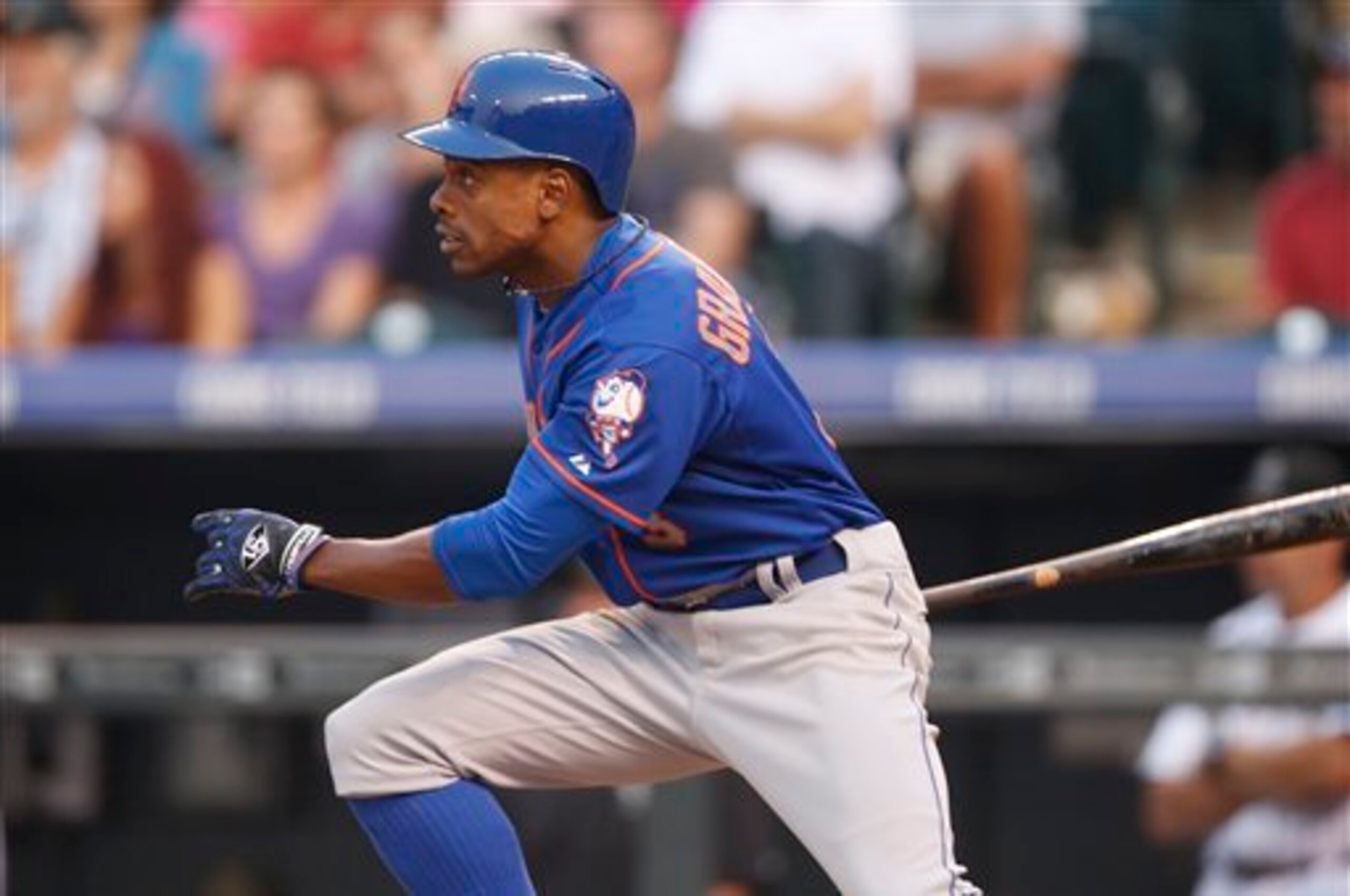
Hitting
All of a sudden, Curtis Granderson is a fairly consistent hitter, with a .256 average and .364 OBP. This is due to some notable adjustments, including an increase in discipline. An offshoot of that has been more consistent contact, and he's turned what was too many fly balls into more line drives. And yet, Granderson still hits a lot of fly balls. And pulls the ball. And he needs to get his arms extended to be of much use. He's better but still flawed.
Power
Granderson has hit 25 homers with a solid .194 ISO. You'd expect as much from a guy who gets nearly 70 percent of his batted balls in the air with most of them going to his pull side. In addition to that volume, Granderson is efficienct with a 44.0 Hard% on fly balls and a 48.3 Hard% on line drives. It'll be tough to replicate for a guy in his mid-30s, but this is also nothing Granderson hasn't done before.
Baserunning
Granderson has been on base more than usual this season, and he's taken advantage of that with 11 steals. He's also posted a 43 XBT%, which is in line with his career rate and the average for corner outfielders. But he hasn't been mistake-free. He's been caught stealing five times, and he's made eight outs on the bases. He still runs well, but not as well as he used to.
Defense
After getting his feet wet in right field in 2014, Granderson may have figured it out this season. He's posted 13 DRS and a 4.9 UZR. This may not be sustainable, though, because a good chunk of this value comes from Granderson's arm, and he doesn't have a cannon. But he does move faster and take better routes to the ball than many right fielders. It's almost as if he's a former center fielder.
Total
Granderson's subtle adjustments to his approach have made him a much tougher out at the plate, all without robbing him of his usual power. As a bonus, he's also a pretty good right fielder. This is what aging gracefully looks like.
11. Justin Upton, San Diego Padres
31 of 41
Hitting
With a .251 average and .336 OBP, Justin Upton isn't having his most consistent season. He still has weaknesses, with the big ones being an ongoing swing-and-miss problem and an escalating tendency toward fly balls. These make it tough for him to hit for average. But he has a disciplined approach and more than enough bat speed to make hard contact on a regular basis. Consistency will remain an issue, but his strengths allow him to do more good than harm overall.
Power
In keeping with his recent track record, Upton has again been a reliable source of power with 26 homers and a .203 ISO. He gives himself plenty of chances to hit those long balls by getting over 60 percent of his batted balls in the air. And though his Hard% on fly balls (38.0) and line drives (47.8) come off as pedestrian, they undersell what's really impressive raw power, as he can give the ball a ride in any direction. He likely can't surpass 25- to 30-homer territory, but that's plenty good enough.
Baserunning
Upton didn't steal many bases in Atlanta, swiping only 16 in 21 attempts over two seasons. But he's back to business with the Padres, recording 19 steals in 24 tries. He's also posted a 47 XBT%, which is in line with his career norm and the average corner outfielder. One wonders if all this activity is meant to prove something to prospective free-agent buyers, but that doesn't mean it can't last. He's showing he can still run, and he's too young (28) to slow down.
Defense
This is Upton's third season in left field, and he has eight DRS and a 2.0 UZR. The latter is a better indicator of his performance. Upton has more than enough athleticism, but consistency with his reads and routes to the ball is an issue, especially, it seems, when he has to go back on the ball. His arm strength, meanwhile, is average.
Total
It seems like Upton has become a guy who's easy to overlook, but he's still a very good player. He may not dazzle with his approach to hitting or his defense, but he's a good enough hitter with a fine combination of power and speed.
10. Nelson Cruz, Seattle Mariners
32 of 41
Hitting
Nelson Cruz has produced like a completely different player in 2015, hitting .302 with a .371 OBP. But is he actually a better hitter? He's still an aggressive swinger with a whiff habit and a hole up in the zone. So to those extents, not exactly, no. But Cruz has the low strike under control these days, and this year he has relied less on fly balls while still making solid contact. He's a power hitter first and foremost, but we should indeed give him credit for some helpful adjustments.
Power
It seemed unlikely that Cruz would repeat his power performance of 2014, but here he is topping it with 42 homers and a .266 ISO. He still hits plenty of balls in the air (about 55 percent), but his game is really about letting his raw power do all the work. On that front, his Hard% on fly balls and line drives are both right around 50, which is, well, pick any variation of the word "awesome." And while a power surge like this is unusual at his age, that he's now done this two years in a row definitely helps ease the doubt.
Baserunning
Cruz is a 35-year-old designated hitter-type who's spent much of 2015 masquerading as a slugger. He's actually stolen three bases in five attempts, but he's also posted a 23 XBT%, which is among the worst marks for corner outfielders. He's not fast, and he's not about to become fast.
Defense
Not to sound like a broken record, but Cruz is a 35-year-old DH-type. No wonder he has minus-eight DRS and a minus-6.4 UZR. He does have a good enough arm for a corner outfield gig, but his poor instincts and lack of speed result in limited range. Playing defense is not his thing, and it's not about to be anytime soon.
Total
You can count yours truly among the many critics Cruz shut up this season. He has two years in a row of outstanding offensive production, and though he doesn't offer anything in the way of baserunning or defense, he doesn't need to in order to be a valuable player.
9. Starling Marte, Pittsburgh Pirates
33 of 41
Hitting
With a .288 average and .336 OBP, Starling Marte is doing his thing. But that's not a compliment with regards to his approach, as he swings at anything and everything. He also has an increasing tendency to whiff. And yet, Marte remains one of MLB's most dependable players when it comes to having a high BABIP. He's not great at using all fields or making hard contact, but he hits so many line drives and ground balls that it doesn't matter. He makes an approach that shouldn't work, well, work.
Power
Marte's batted-ball profile belies his power: He has 18 homers and a .157 ISO despite hitting mainly ground balls, which is a testament to how well he drives the ball when he does put it in the air. His Hard% on fly balls (47.5) and line drives (46.6) are both solid, but with so many ground balls and a tendency to pull the ball, there's no question his power potential is only so high.
Baserunning
Marte is one of the fastest runners in the corner outfielder ranks, and his third straight 30-steal season shows it. That said, Marte isn't flawless. He only has a 43 XBT%, and his 10 caught-stealings and eight additional outs on the bases are the continuation of a bad trend. He's fast, but he can be stopped.
Defense
Marte is a center fielder who just so happens to play left field, so it's no wonder he's posted 20 DRS and a 7.1 UZR. He's a strong fly-ball tracker with very good speed, which gives him more range than your garden-variety left fielder. And though it doesn't stand out, Marte has a really good arm. He gets the vote of yours truly as the best defensive left fielder in MLB.
Total
Marte gets lost in the shuffle next to the big sluggers that play in the corners of the outfield, but he's been one of the best corner outfielders in the league for a couple years now. And with an outstanding defense and a well-rounded offensive game, that should continue.
8. Carlos Gonzalez, Colorado Rockies
34 of 41
Hitting
Even after catching fire, Carlos Gonzalez is still hitting just .269 with a .324 OBP. And even once you get past his troublesome splits—lefties and road games are his Kryptonite—he still doesn't look like a great hitter. He's an aggressive swinger with a swing-and-miss problem, and he favors his pull side. This leaves but two redeeming qualities: outstanding coverage of the strike zone and a strong ability to barrel up the ball, which has gone retro since July.
Power
This is where CarGo's resurgence stands out, as he's hit 40 homers with a .273 ISO. He's still not particularly great at getting the ball in the air, posting a ground-ball rate near 50 percent. But it's no surprise to see good Hard% on fly balls (43.0) and line drives (57.6). And though he favors his pull side, he can give the ball a ride in any direction. The catch is his power is skewed by Coors Field, but that only detracts so much from the fact he can absolutely crush the ball.
Baserunning
Gonzalez was a 20-steal guy once, but he's slowed down over the last two years. In stealing just two bases in two attempts this year, he's now only 5-for-5 since the start of 2014. He's also posted a 41 XBT% that, while solid, is nothing special. One wants to believe he can do better. But knowing this is happening after offseason knee surgery and in the shadow of his 30th birthday, the safer bet is on CarGo continuing to remain below average on the basepaths.
Defense
This is Gonzalez's first season as a full-time right fielder, and it's going well: He owns seven DRS and a 1.0 UZR. Though he's lost a step, he still moves better than most right fielders. That combined with his ability to take good routes to the ball give him solid range. He also has a strong arm, though that's occasionally hindered by his slow release. All in all, he has the goods to continue being a strong defender.
Total
It's possible to criticize Gonzalez's approach to hitting and his diminished speed. But he can still hit for power, and the move to right field is paying off.
7. Michael Brantley, Cleveland Indians
35 of 41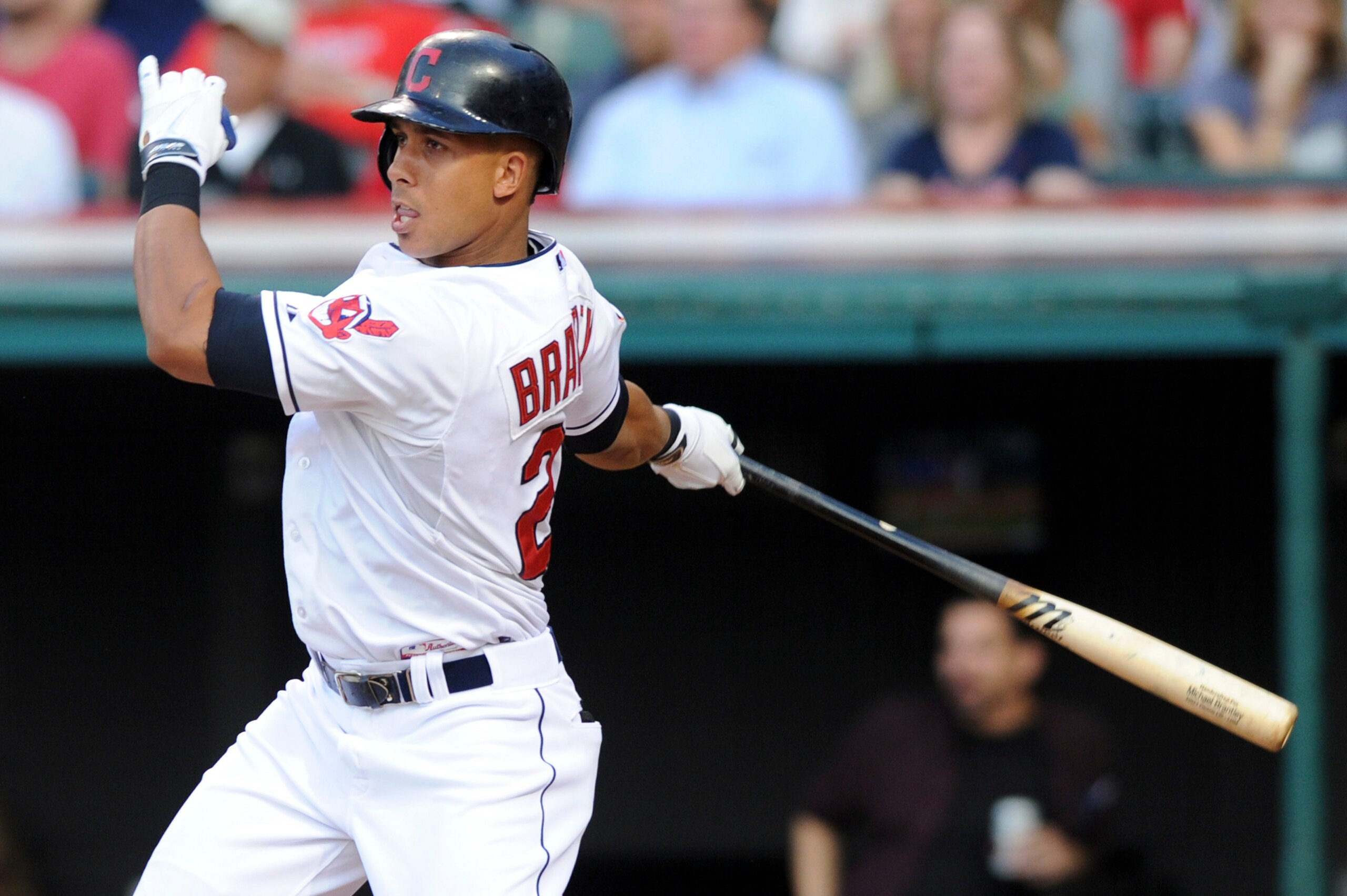
Hitting
Michael Brantley hasn't let up following his breakout 2014, hitting .310 with a .379 OBP. His approach is still a thing of beauty, combining excellent discipline with one of the best contact rates in MLB. It's no accident he's one of very few players with more walks than strikeouts. And though he hasn't crushed the ball at the same rate he did last year, he's still made plenty of hard contact with better bat control than his 40-plus Pull% would lead you to believe. Make no mistake, this is one of MLB's best pure hitters.
Power
Brantley likely isn't going to hit 20 homers again, but his 15 homers and .170 ISO are still solid. He gives himself enough chances for extra-base hits by getting about 55 percent of his batted balls in the air. But his 31.6 Hard% on fly balls shows he doesn't sell out for power. Instead, he has more line-drive power with a 50.9 Hard%. And though he mostly peppers right field, he can go foul line to foul line.
Baserunning
Brantley was an excellent baserunner in 2014, but he's taken a step back in 2015. After 23 steals in 24 attempts, he only has 15 in 16 tries. Pitchers have been keeping a closer eye on him, daring him to beat them with his not-so-elite speed. He also has a 32 XBT%, which is not good. But odds are such modest production is merely a low point for Brantley.
Defense
Brantley is a fine athlete, but he has minus-one DRS and just a 0.1 UZR as a left fielder. His physical tools aren't the problem; it has more to do with his instincts, as his athleticism is wasted on occasionally bad reads and even more occasional indirect routes to the ball. It's a good thing he has a strong, accurate arm.
Total
Brantley hasn't put forth the same kind of MVP-level performance he did in 2014, but that's OK. He's still an elite hitter who brings some power and speed to the table. With a package like that, he's a darn good player.
6. J.D. Martinez, Detroit Tigers
36 of 41
Hitting
J.D. Martinez has declined from his breakout 2014 performance, but only to a .281 average and .343 OBP. He's limited by his big-time swing-and-miss habit, which is especially prevalent on breaking balls and off-speed pitches. On a related note, he's still a wild hacker. What keeps Martinez going, however, is that he's dangerous almost everywhere within the strike zone and is the best of any qualified MLB'er at making hard contact. When you don't have the most technical approach, that's a pretty good way to go.
Power
Martinez's power breakout has carried over, as he's hit 38 homers with a .256 ISO. He gets roughly 65 percent of his batted balls in the air, and you won't be surprised that hitting these balls hard is no problem. With a 52.2 Hard% on fly balls and a 47.8 Hard% on line drives, Martinez has no problem combining volume with efficiency. And just as impressive is his power in all directions. All told, he's one of the top power hitters in MLB.
Baserunning
This is where Martinez falls short. He's stolen only three bases in five attempts and posted a 29 XBT%, which is well short of the average mark for a corner outfielder. His career XBT% is 34, however, and he's only 28, so he may be capable of a turnaround.
Defense
Martinez has played right field on a full-time basis in 2015, and it's gone quite well. He's posted four DRS and a 7.9 UZR. This has a lot to do with Martinez's 15 assists, which is more than likely an unsustainable number. His arm is above average, but not exactly a Yasiel Puig-like canon. A lack of athleticism and pedestrian instincts make him just an OK fly-ball catcher. He's good, but let's not call him great.
Total
Martinez has shown that his big breakout was no fluke. He's not the most well-rounded player, but he is decent in right field and provides all sorts of value at the dish.
5. Jason Heyward, St. Louis Cardinals
37 of 41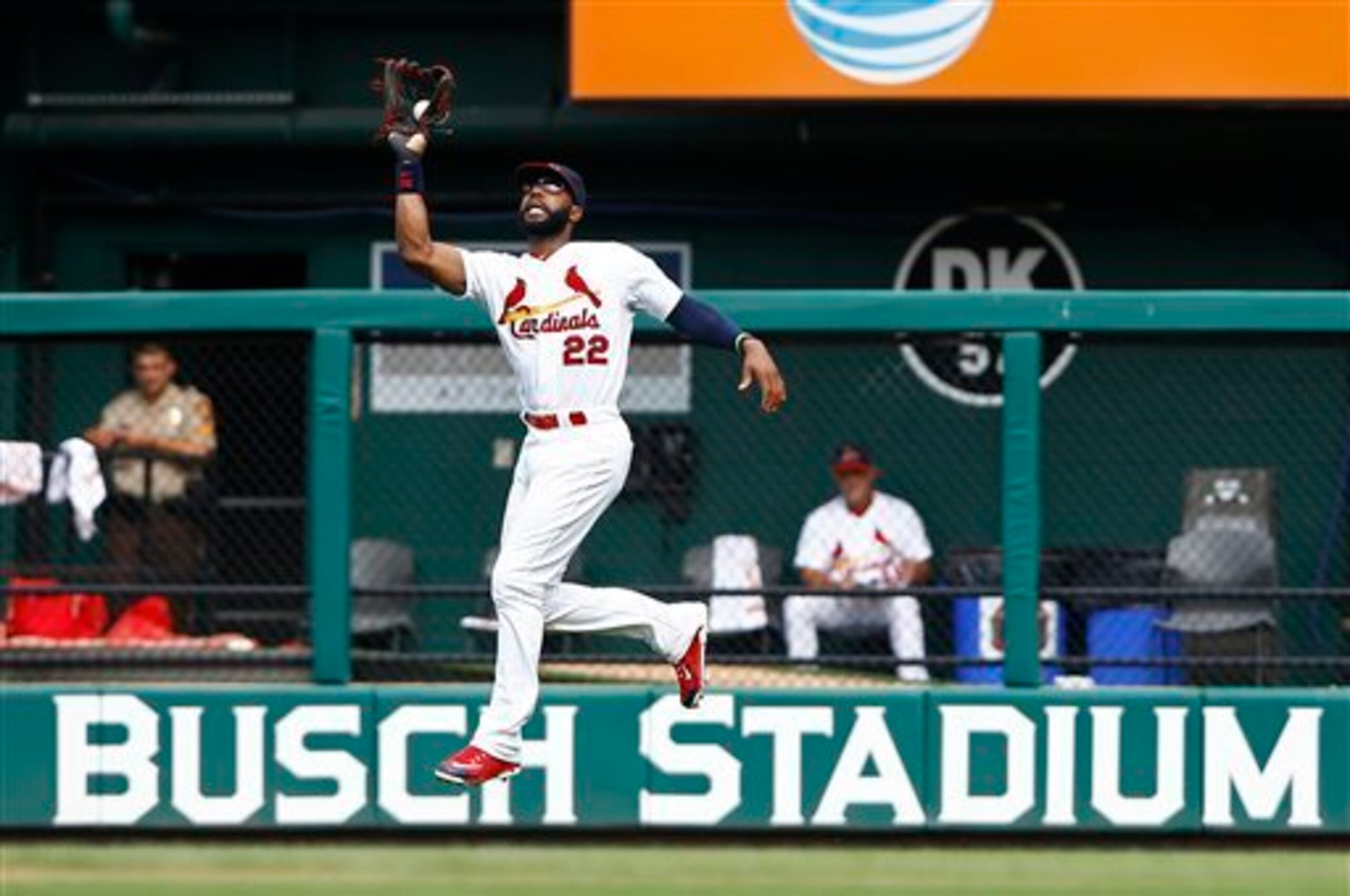
Hitting
This is turning out to be one of Jason Heyward's most consistent seasons. He's hitting .289 with a .355 OBP. He hasn't been more patient or more disciplined since his rookie year, and he's never been better at making contact. He's even cleaned up the hole he'd developed on pitches above the knees. The one red flag is that he's done all this despite an extremely high ground-ball rate and without particularly impressive hard-contact rates. But there's little question he's turned himself into a more complete hitter.
Power
Power is one aspect of Heyward's game that hasn't improved much, as he's hit just 12 homers with a .142 ISO. Part of this has to do with him hitting over 55 percent of his batted balls on the ground, but his raw power doesn't measure up either: He has only a 38.7 Hard% on fly balls and a 43.2 Hard% on line drives. He'd have to hit more balls in the air to make the most of this kind of power. And given how well his approach has worked for him this year, he may be in no hurry to do so.
Baserunning
Baserunning remains the most under-appreciated aspect of Heyward's game. He has 23 steals in 26 attempts, which is average for him both in terms of volume and efficiency. He's also near his usual rate with a 56 XBT%. He has, however, run into a career-high eight outs. But given that he's hardly slowing down, that should be an outlier.
Defense
Heyward is as an elite defensive right fielder, with 21 DRS and a 19.3 UZR. He really is the total package, with excellent instincts, which help him get good jumps and run direct routes to the ball, and athleticism, which he uses to cover a lot of ground. And as any good right fielder should, he has a strong, accurate arm. All told, Heyward remains the best corner outfield defender in baseball.
Total
It's been another ho-hum season for Heyward. His power fails to impress, but he's turned himself into a solid hitter while continuing to provide loads of value on the basepaths and on defense.
4. Jose Bautista, Toronto Blue Jays
38 of 41
Hitting
With a .252 average and .375 OBP, Jose Bautista finds himself in line with his career performance. The latter number stands out, and that points to a patient and disciplined approach at the dish. And though he doesn't hold back on his swings—hence all the hard contact—he's surprisingly good at avoiding whiffs. That's how you become one of the best in MLB at balancing walks and strikeouts. But because Bautista is geared toward hitting the ball in the air to his pull side and ineffective against most low pitches, he's not exactly built to be a high-average hitter.
Power
Bautista aims to hit for power, and his 39 homers and .286 ISO show how well he does just that. When you get over 60 percent of your batted balls in the air with most of them going to your pull side, you're sure to run into lots of long balls. And when you have enough raw power to post high Hard% on fly balls (40.1) and line drives (62.9), you're sure to run into even more dingers. Bautista is nearly 35, so his power should be winding down, but he's shown no indication that this is going to happen.
Baserunning
Though Bautista prefers to jog around the bases, he is quietly a pretty good baserunner. He's stolen eight bags in 10 attempts this season and also posted a 51 XBT%, which is in line with his career norm. His speed is another thing that should be declining, but that it's not is a testament to his fitness level. Maybe it's all the jogging in between sprints.
Defense
Bautista is generally rated as a solid defensive right fielder, but he has minus-two DRS and a minus-10.6 UZR this season. He doesn't have the most range despite his athleticism, and his arm hasn't been as much of a weapon as usual, thanks to a shoulder injury. But if recent events are any indication, that's no longer the case. Going forward, he'll at least have that working for him.
Total
Bautista has been lost in Josh Donaldson's shadow in Toronto, but rest assured he's still a great player. He has the perfect approach for getting on base and hitting for power, and he's a better athlete than most guys his age.
3. Yoenis Cespedes, New York Mets
39 of 41
Hitting
With a .291 average and .326 OBP, Yoenis Cespedes is having his most consistent season since he was a rookie in 2012. His approach hasn't changed much, as he's still an aggressive swinger with a mediocre contact rate. But one notable improvement is that he's gone from being a merely good low-ball hitter to an excellent low-ball hitter, and he's no longer hitting everything up in the air. Instead, he's hitting more line drives and ground balls, all while sustaining his ability to make hard contact. Though still far from perfect, he has indeed improved as a hitter.
Power
In addition to becoming more consistent, Cespedes is more powerful. He's hit 35 homers and posted a .252 ISO. That seems backward in a year in which his batted balls in the air have dropped from nearly 70 percent to under 60 percent, but he's made more hard contact on both fly balls and line drives. With a 42.2 Hard% on the former and a 53.5 Hard% on the latter, this is his best season yet. It may well be that he's coming into his prime.
Baserunning
Though Cespedes is fast, his ability to steal bases is average at best. He's swiped only seven in 11 attempts this season, and that's in line with his usual numbers. But he's also posted a 54 XBT%, which is a career-best mark. And despite taking all those extra bases, he's still run into only two outs. He may just be rounding into form in this department as well.
Defense
Cespedes has been one of the best defensive left fielders in MLB for two years in a row now. He owns 14 DRS and a 18.5 UZR. He still seems a little uncertain in reading and tracking some fly balls, but his athleticism allows him to make up for that, and there's no arguing his throwing arm is one of the best in the business.
Total
Cespedes always had the skills to be one of the top players in the majors, and this is the year he's finally put it all together. He's been a reasonably consistent hitter with plenty of power, good speed and an excellent glove and arm.
2. Giancarlo Stanton, Miami Marlins
40 of 41
Hitting
A hand injury cut Giancarlo Stanton's season short, but he hit a solid .265 with a .346 OBP while he was healthy. He had a reasonably disciplined approach, but his strikeout rate increased from a career-best mark in 2014. He seemed like he geared his swing toward power, with more fly balls and a higher percentage of batted balls to his pull side. And he made hard contact a staggering 49.7 percent of the time. That combined with his discipline show he's still a capable hitter.
Power
Given that Stanton's hand injury took longer to heal than expected, there has to be some concern about his power going forward. But not that much. This is a guy who hit 27 homers with a .341 ISO in only 74 games. He did that by putting about 65 percent of his batted balls in the air, and he absolutely destroyed both his fly balls (54.8 Hard%) and line drives (81.6 Hard%). Hand injury or no hand injury, there's no question we're talking about one of the most lethal power threats in MLB.
Baserunning
After stealing a career-high 13 bags in 2014, Stanton had a shot to hit double digits again with four steals in six attempts in less than half a season. He moves pretty well for a 6'6", 240-pound behemoth. His 36 XBT% is less impressive, but it's also way off his solid 46 XBT% mark from 2014. Given that he's only 25, there's a chance he could return to a figure more like the latter in 2016.
Defense
Stanton's defense doesn't stand out when juxtaposed with what he can do at the plate, but he posted nine DRS and an 8.4 UZR, which are excellent figures over 74 games. Stanton's not fast, per se, but he has good range thanks to long strides and an ability to read and track fly balls. Add in an above-average arm and you have a very good defender.
Total
It's been a while since we last saw Stanton on the diamond, and that's a shame. But in the games he played, he showed he's still a solid hitter with monstrous power, good legs and an excellent glove. You can and should be looking forward to his return in 2016.
1. Bryce Harper, Washington Nationals
41 of 41
Hitting
Most of us figured Bryce Harper would become a good hitter, but a .334 average and .466 OBP is something else entirely. At the heart of his transformation is an overdue response to pitchers refusing to throw strikes; he's tightened up his discipline and accepted walks. He also took away the outer two-thirds of the strike zone, as no other lefty hitter even comes close to matching his .443 average there. And he's turned into one of MLB's hardest hitters. It would be nice if he made more consistent contact, but his strengths are now way too strong for us to fret over that.
Power
How do 41 homers and a .320 ISO sound? Pretty good, right? Indeed. And those numbers are no joke. Harper has given himself more chances to hit home runs by getting over 60 percent of his batted balls in the air, and then his insane raw power does the rest. All he's done is hit frozen ropes, with booming Hard% on fly balls (49.3) and line drives (56.3). And though he favors his pull side, he's been able to make any part of any yard look small. Bryce Harper, power hitter, has arrived.
Baserunning
It looks like we can rule out Harper ever matching the 18 steals he posted in 2012. After swiping only two bases in four attempts last year, though, he has six in 10 tries this season. His trademark aggressiveness still shows in his 57 XBT%, however, which makes it easier to swallow the nine outs he's run into on the basepaths. If he can cut down that latter figure next, he'll be a true menace on the bases.
Defense
Harper has eight DRS but only a minus-3.2 UZR. The former is more accurate. Harper has always had more than enough athleticism for right field, and he's seemingly improved his reads and routes to the ball in 2015, which results in good range. Then there's his arm, which is among the strongest at the position. He's not quite perfect, but he is one of the top defensive right fielders in the game.
Total
The Harper everyone had been waiting patiently (/sarcasm) for has finally arrived. He is an elite hitter with elite power and a very good glove. Add all that up, and you get arguably baseball's best player.





.jpg?w=2560 "Weather Channel Trolls Texans-Titans 💀")

.jpg?w=2560 "Grading WWE Raw 🔠")