

B/R MLB 300: Ranking the Top 25 Center Fielders
After stopping off at the hot corner, the B/R MLB 300 now moves to the outfield for a look at the top center fielders in the league.
Like the four infield positions, our list of center fielders consists of 25 out of the overall 300 players. As for how this list came to be, we subjected each player to a scoring system that adds up to a total of 100 possible points.
First, there are 25 points for hitting. Our focus is on how well each player is equipped to hit for average and get on base. This means looking not only at how he hits the ball but also at how consistently he makes contact and whether he has the discipline to draw walks.
Then, there are 25 points for power. We concentrated on how well each player collects extra-base hits, which means looking at how often he puts the ball in the air—ground balls don't tend to go for extra-base hits, after all—how hard he hits it and how much of the field he can use for power.
Next, there are 20 points for baserunning. It's more of a priority for center fielders than it is for most, so we'll look at whether players can steal bases as well as whether they're capable of running the bases aggressively.
Lastly, there are 30 points for defense. This is arguably overrating the importance of center field a little, but by conventional wisdom it's an important position. We'll use defensive metrics as a guiding star and judge center fielders on how much range they have and whether they can make plays with their arms.
As for how the scoring works, a score in the middle is meant to denote average, not failing. For example, a 15 out of 30 for defense means the player is a merely average defender, whereas 10 out of 30 is clearly below average and 20 out of 30 is above average. It's also important to note that if two or more players end up with the same final score, the priority goes to our preference.
Before we begin, here's an important reminder that while we're using what's happened in 2015 as a foundation for the scores, this list projects performance for the 2016 season. Players are evaluated based on the staying power of each category with progression, decline and past luck in mind—creating a different ranking system than simply judging where each player stands today.
You may now start the show.
Notes on Sources, Stats and Links
1 of 26
Putting together these rankings did require some good, old-fashioned video scouting. But for the most part, it involved digging deep into baseball's treasure chest of statistics.
The primary sources for these statistics were Baseball-Reference.com, FanGraphs, Brooks Baseball, Baseball Prospectus and Baseball Savant. The various links you'll find throughout will take you to relevant data on these sites. Clicking on them is not mandatory. They're there for your pleasure.
As for the stats referenced within, there are some you may not be familiar with. These would be:
- Soft% and Hard%: These show the rate at which a hitter makes soft and hard contact, allowing for a picture of how well each hitter barrels up the ball. The average center fielder has a 20.0 Soft% and 27.5 Hard%.
- ISO: This is isolated power, which is a measure of raw power. It's what you get when you take slugging percentage and subtract batting average. The average center fielder is at .146.
- XBT%: This is extra bases taken percentage, which looks at how often runners advance more than one base on a single or more than two bases on a double. It's not perfect, but it works as a go-to measurement for baserunning aggressiveness. Among the center fielders on this list, the average XBT% is roughly 50.
- UZR and DRS: Ultimate zone rating and defensive runs saved are the two most prominent defensive metrics and will be our guiding stars for defensive scores. Regardless of the position, zero represents league average.
The averages noted above are reference points that will often come in handy throughout the piece, but know that they're among many plucked from FanGraphs to help inform the rankings.
Lastly, bear in mind that the season is still ongoing. With final edits taking place the day before publication, the statistics within are accurate through play on Monday, September 28.
Now then. Let's get started.
25. Anthony Gose, Detroit Tigers
2 of 26
Hitting
Anthony Gose has spent his first full year hitting slightly worse than the average center fielder (.261 AVG and .324 OBP) at .253 with a .320 OBP. The catch is that he's been rightfully spared action against left-handed pitching; his other shortcomings are his whiff susceptibility against slow stuff and issues making hard contact. But he's not a defenseless hitter. His strengths include solid discipline, good bat control and a preference for ground balls that plays into his speed. He has a solid foundation to build on.
Power
Gose hasn't hit for much power with just five home runs and a .112 ISO, and there's an obvious explanation for that. Beyond being limited by a platoon role, he's favored ground balls with a GB% near 55. But one thing he does have going for him is good line-drive power, with a 42.9 Hard% on line drives and a well-placed emphasis on the left-center gap. He's not going to be much of a power hitter, but his line-drive power will allow him to stay close to respectability.
Baserunning
Speed is the best tool Gose has in his belt, but it's clear he needs to work on when to use it. It's taken him 33 tries to steal 22 bases, and the eight additional outs he's run into on the basepaths mars his excellent 56 XBT%. The only way for him to go is up, but he's made enough miscues on the basepaths for expectations to be tempered.
Defense
The metrics have gotten a good look at Gose's defense and haven't liked what they've seen. His minus-13 DRS and minus-11.0 UZR make him one of the worst-rated center fielders in the league. Athleticism isn't his problem. His main issue has to do with how his speed is undermined by frequently iffy reads and routes, as well as a merely solid arm. This is likely the worst Gose can be, but even some improvement may still leave him below average.
Total
It's unclear whether Gose can be an everyday player, as it looks like the Tigers have the right idea sitting him against left-handers. In addition, his defense hasn't been good enough to force their hand. He does pack a solid bat for a center fielder, though, and 2015 is likely to be his worst defensive showing.
24. Denard Span, Washington Nationals
3 of 26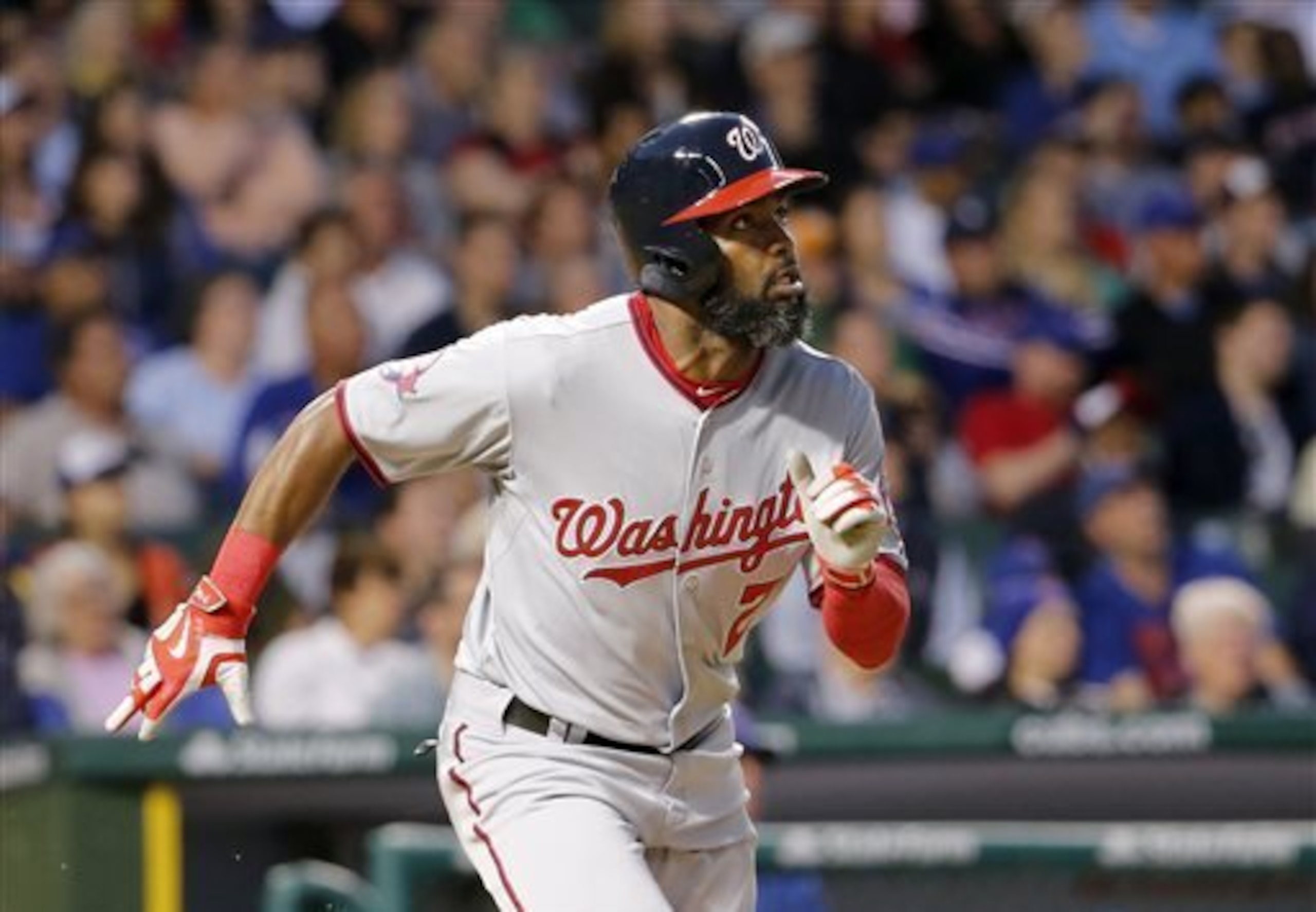
Hitting
A series of core injuries finally undid Denard Span's season in August, but let's not overlook that he hit .301 with a .365 OBP while he was healthy. And he largely looked like the same hitter as years previous. He showed off a disciplined approach that was heavily geared toward making contact, and he maintained his line-drive stroke with good bat control. One thing worth worrying about, though, is that Span has never been the hardest hitter. And given his age (31) and injury issues, that problem could get worse.
Power
Span hit five homers with a .130 ISO while he was healthy, which is solid stuff by his standards. But the chances of this happening again are slim. Span doesn't have an approach geared toward power, hitting only about half his batted balls in the air and using his pull side relatively infrequently. Also, his modest Hard% rates on fly balls (35.1) and line drives (34.0) didn't exactly blow away the center field averages (roughly roughly 34 and 40), and highlight how he has warning-track power at best. And once again, driving the ball could be a challenge for him coming off his injuries.
Baserunning
Span was also productive on the basepaths while healthy, stealing 11 bases in 11 tries and posting a solid 43 XBT%. Granted, this won't be an easy performance to repeat given his current predicament. But given that his baserunning has more to do with his brains than his speed at this point anyway, he should avoid falling off too hard.
Defense
Span may not have played much this year (61 games), but the metrics didn't need to see much to be convinced his defense is no longer an asset. He posted just minus-10 DRS and a minus-4.8 UZR. His instincts are fine, as he can still read and track fly balls well. But his diminished speed restricts the amount of ground he can cover, especially if it needs to be covered quickly. And if this is the case now, it's hard to have optimism going forward.
Total
After getting banged up so bad in 2015, exactly what Span is going to be capable of moving forward is a good question. But at the least, he can be expected to show off the same advanced approach that's made him one of the league's better leadoff hitters in recent years.

23. Austin Jackson, Chicago Cubs
4 of 26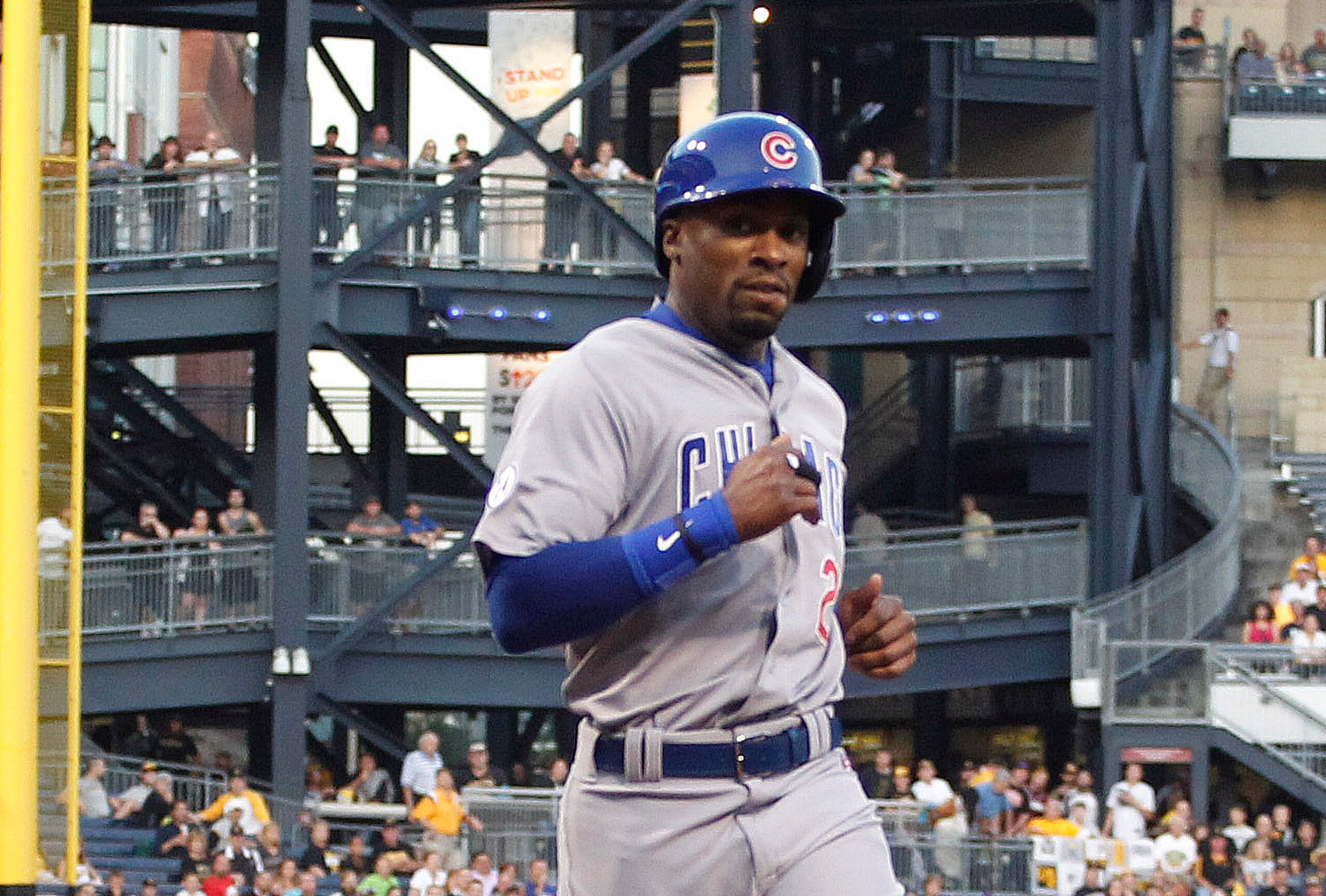
Hitting
Austin Jackson finds himself hitting .263 with a .306 OBP. The first number is solid by center field standards, and that points to how he is still a good all-fields hitter who makes consistent hard contact. And certainly, it helps that everything begins with a disciplined approach. But his fatal flaw is a platoon split that's gotten bad the last couple of years. Now, all right-handers have to do against him is avoid making a mistake in the middle tier of the zone. With a fatal flaw like that, Jackson can only be so good.
Power
With eight homers and a .111 ISO, Jackson's power doesn't look good relative to the center field standard. Certainly a key part of his problem is that he's hit over half his batted balls on the ground. But things could be worse. His Hard% rates on fly balls (35.7) and line drives (44.2) show he can still put a solid charge into the ball, and his all-fields power is better than you'd expect. How often his power is going to be on display going forward is a good question, but it hasn't dried up yet.
Baserunning
Jackson has generally been good for around 20 steals per season, but he's not going to make it this year with only 16 in 25 tries. Elsewhere, he has a 46 XBT% that's a tick short of average. It's certainly a stretch to call him slow at this point. But with his 29th birthday looming in the offseason, it does appear he's slowing down. He may no longer be capable of running the bases like his fellow center fielders.
Defense
The metrics have been indecisive on Jackson's defense in recent years, and the pattern is continuing this season. He has a minus-three DRS but also a 6.6 UZR. Either way, there's little question he doesn't cover ground as well as he used to because of his diminishing speed. But UZR has the right idea that his defense is still valuable, as he's at least still capable of quick jumps, good reads and efficient routes when tracking down fly balls. It's not much, but it's something.
Total
It's clear that Jackson's best days are behind him, as he's no longer the impact two-way player he once was. But with his bat still clinging to life and his defense still very much playable, he hasn't run out of time as a useful player.
22. Cameron Maybin, Atlanta Braves
5 of 26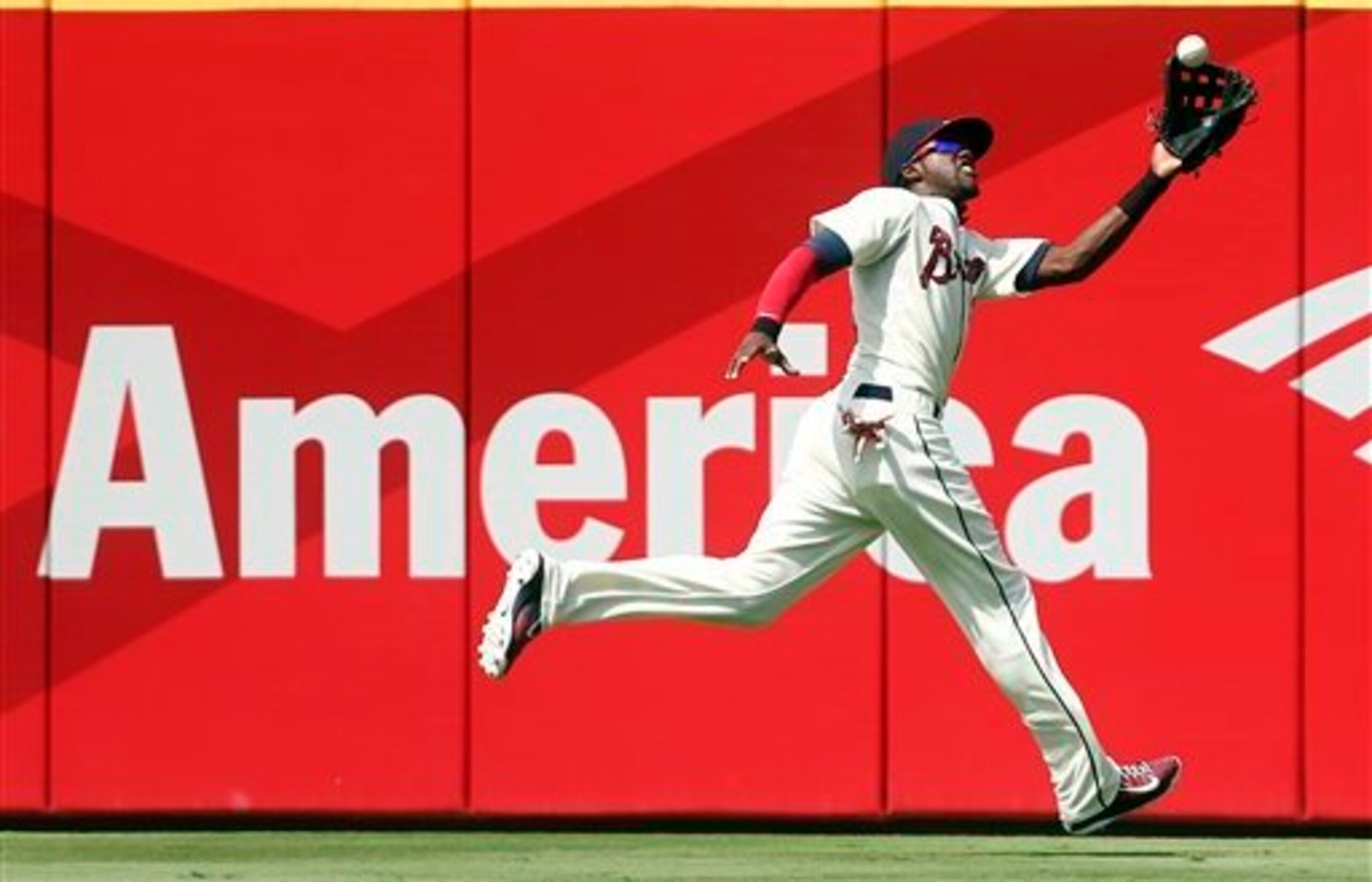
Hitting
The second half has been tough on Cameron Maybin, who has dropped his average to .266 and his OBP to .327. It's understandable if this is him running out of gas after playing so little in recent years, but that's not the only explanation. His first-half success hinged on his continuing to get lucky with a ground-ball habit that featured little hard contact—a dicey proposition if there ever was one. But knowing that he still owns a strong approach and is capable of solid bat control, he should bounce back.
Power
With 10 homers and a .105 ISO, Maybin is living up to his track record as a slightly below-average power hitter. The biggest thing standing in the way of his power is his preference for ground balls, as near 60 percent of his batted balls go on the ground. But though his Hard% rates on fly balls (28.2) and line drives (37.7) aren't great, they're also short of terrible. And if anything, they undersell Maybin's ability to drive the ball. He's not going to hit for much power, but he's far from the worst at it.
Baserunning
Maybin hasn't proved to be the same 40-steal runner he was in 2011, but he's made a solid return to form this year. He's stolen 22 bases in 28 tries and posted an excellent 63 XBT% on the side. This makes him an easily above-average runner, and he's still too young (28) for anyone to be worrying about a major decline.
Defense
The metrics once rated Maybin as an elite defender, but not this year as he's produced minus-17 DRS and a minus-7.1 UZR. His main issue is his speed plays better on the basepaths than it does on defense. In particular, he no longer has the closing speed to catch up to balls that are sinking fast. It's a good thing he at least has long strides to cover ground, and he still reads and tracks balls well.
Total
Maybin's second-half slump has squashed a solid comeback season and revealed that he's still a flawed player. But he at least reminded us that he can be a solid regular when he's healthy, as he's capable of good work at the plate and on the basepaths.
21. Billy Burns, Oakland Athletics
6 of 26
Hitting
Billy Burns is hitting .297 with a .335 OBP, numbers that compare well to the average center fielder. He's one of the better contact hitters in center field but also one of the position's most aggressive swingers. And given that hard contact is definitely not his thing, he should be hitting even more ground balls so as to take advantage of his speed. He's been able to ride his contact and bat control to strong numbers, but the numbers he's achieved likely represent his ceiling rather than his floor.
Power
Burns has hit only five homers with a well-below-average .101 ISO, and even those numbers oversell his power. The one bright side of not hitting as many ground balls as he should is that he puts a solid 50 percent of his batted balls in the air, but he rarely hits those hard. His Hard% rates on fly balls (16.7) and line drives (17.8) are far below the center field averages. Even though his ISO doesn't reflect it, there's a solid argument to be made that he's the least powerful hitter in MLB.
Baserunning
Speed is undoubtedly the best tool Burns has going for him, and it has served him well on the basepaths. He's stolen 26 bases in 34 tries, and that's but a taste of the kind of damage he can do in the stolen base department. The same goes for his 41 XBT%, which is a bit low relative to this list's average of roughly 50 percent. He's no Billy Hamilton, but Burns is definitely a speedster to watch.
Defense
The metrics haven't been overly impressed by Burns' defense, giving him three DRS and a minus-5.4 UZR. There's no question he has more than enough speed to cut it in center field, but where he falls short is with his instincts. He often doesn't read or track balls well, resulting in tentative, zig-zaggy routes. To boot, below-average arm strength further limits his defensive skill set. It's fair to assume he could look more comfortable going forward, but let's not assume too much.
Total
With the sustainability of his solid hitting in doubt, Burns has the look of a speed-only player. On the bright side, he has more than enough speed to burn on the basepaths and in the outfield to cut it as a passable regular.
20. Jacoby Ellsbury, New York Yankees
7 of 26
Hitting
This season has largely been a struggle for Jacoby Ellsbury, who's hitting a modest .262 with a .322 OBP. He still has a strong approach that puts an emphasis on contact, and it leads to a line-drive stroke that makes use of the whole field. But his injuries have taken their toll, especially in the second half. He's tried to be the same hitter, but his ugly 23.4 Soft% and 19.2 Hard% reflect how he simply hasn't been able to hit the ball with any authority. And given that he's now 32, it's tough to take it for granted that he can make a full comeback.
Power
Ellsbury's power has also dropped off in 2015, as he's hit just seven homers with a .087 ISO. He's given himself enough chances by hitting about 55 percent of his batted balls in the air, but his efficiency has been sorely lacking. His Hard% rates on fly balls (23.4) and line drives (25.0) are both well short of par. His inability to drive the ball in the second half certainly hasn't helped, but the bright side is that Ellsbury's power at Yankee Stadium has been curiously low. That's at least one thing that shouldn't last.
Baserunning
Considering that Ellsbury missed a good chunk of 2015 with a bad knee, it's not surprising his baserunning has also fallen off. He's swiped 21 bags in 29 tries and posted a pedestrian 37 XBT%. It would be easier to write off this decline if he was a younger man capable of bouncing back, but he's not. At 32 and with a long list of injuries on his record, this could be the beginning of a new normal.
Defense
The metrics witnessed a drop-off in Ellsbury's defense last year, and he hasn't full recovered in 2015 with just two DRS and a minus-3.3 UZR. It's easy to point to his diminished health as the cause, but his trademark closing speed seemed to be fading even before he got hurt. And without it, he's nothing special in the outfield. Fortunately, the good news is he still reacts to and tracks balls well, which allows him to cover decent ground even without his old closing speed. Things could be worse.
Total
Injuries have knocked Ellsbury down a few pegs in 2015, and his immediate future is much murkier as a result. But keep in mind that he was having a good year before the injuries came. So long as he can recover at least a little bit, he'll get back to being a solid player.
19. Delino DeShields Jr., Texas Rangers
8 of 26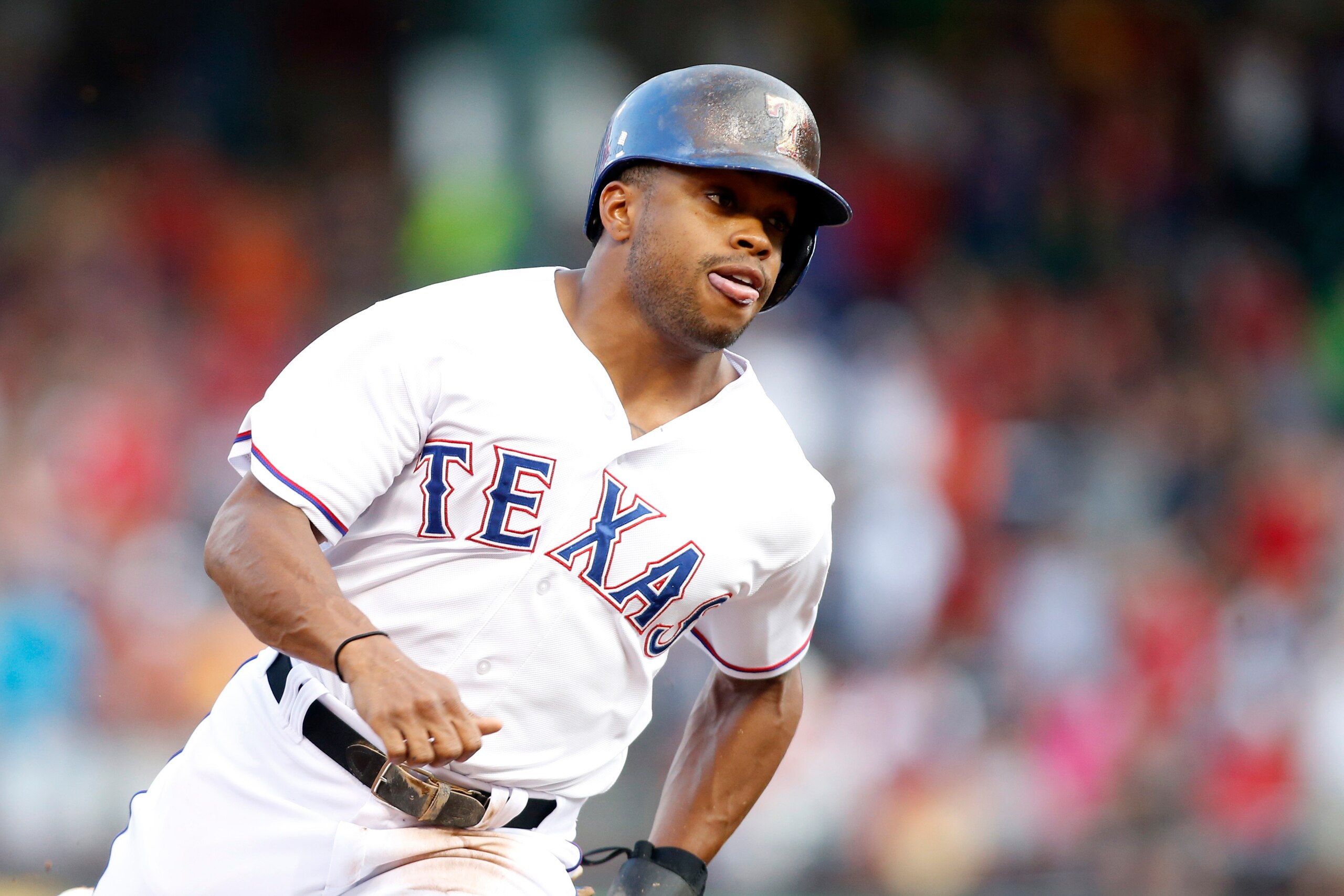
Hitting
A slow second half has knocked Delino DeShields Jr.'s rookie year down a few pegs, as he's now hitting just .258 with a .338 OBP. The best thing he has going for him is his discerning approach, as he has an outstanding batting eye and is picky with his swings. That's an ideal foundation to build off. The trouble is he's really too picky with his swings given that pitchers come right at him in the zone. A related story is that he hasn't proved to be a dangerous hitter, making little solid contact. He has the potential to be a good hitter, but he needs work.
Power
It looks good that DeShields has posted a .113 ISO despite hitting only two homers, but that's somewhat misleading. He only hits a little over 50 percent of his batted balls in the air, and his subpar Hard% rates on fly balls (23.0) and line drives (31.5) show he's not in the habit of walloping what he does put in the air. Still, he has shown an ability to find the gaps, and his speed is going to make sure that anything that does find a gap is going to be trouble for the defense.
Baserunning
Like father, like son. DeShields has clearly inherited his father's speed, and he's shown as much on the basepaths in his rookie season. He's stolen 24 bases in 31 tries and posted an easily above-average 57 XBT%. Numbers like these may not make him Billy Hamilton's equal, but they represent the low end of what he's capable of on the basepaths. He should emerge as a 30-steal weapon in the near future.
Defense
As you would expect given his lineage, DeShields comes from a background as a second baseman. He's still somewhat new to center field, and the metrics (minus-12 DRS, minus-4.0 UZR) say it's showing. The speed is obviously there, but it's often clear that reading and tracking fly balls don't come naturally to him. That's something that could change with more experience, but DeShields is starting from a point where improvement may only take him from "below average" to "average."
Total
DeShields has the skills to be a good player, as there's always something intriguing about a speedster with a solid batting eye. But if his rookie season has made anything clear, it's that he needs to work on pretty much everything else.
18. Jake Marisnick, Houston Astros
9 of 26
Hitting
This is our first good look at Jake Marisnick, and he's not impressing with just a .236 average and a .283 OBP. Like your typical Astro, he limits his OBP potential by swinging at everything in sight when he's at the plate. You can get away with that if you can make contact, but Marisnick is a good bet for a whiff on pretty much anything that's not in the middle tier of the zone. And when he does put the ball in play, he has a pull tendency and struggles to make hard contact. In all, he offers little to be optimistic about.
Power
Marisnick's hitting isn't anything to brag about, but his nine homers and .148 ISO go to show his power could be worse. He does hit a high number of fly balls with an FB% near 40, and his 35.3 Hard% on flies highlights how he doesn't waste those. And though he's mainly a pull hitter, he is capable of driving the ball over the right fielder's head. The only catch is that he's not really an everyday player, as he fills more of a platoon hitter/defensive specialist role. Because of that, he can only provide so much pop.
Baserunning
His power is good, but speed is Marisnick's best weapon on offense. He's used it to steal 22 bases in 31 tries and has added a 57 XBT%. And despite all that aggressiveness, he's run into only two outs on the basepaths. He has the potential to provide upward of 25 steals with plenty of extra bases taken on the side, which is darn good stuff.
Defense
The metrics give Marisnick four DRS and 3.6 UZR in center field. That doesn't sound like much, but that's pretty good for a little over 700 innings, and he's also played above-average defense in left and right field. His speed is his best asset, and he gets the most out of it with quick breaks and by running efficient routes. And when it comes time to finish plays off, he's one of those center fielders whose fearlessness stands out. But like with his power, we have no choice but to ding him for not being an everyday guy.
Total
Marisnick has proved himself to be a lousy hitter, and it's because of that it's unclear whether he'll be getting any more playing time in the future. But his power and speed allow him to salvage some dignity on offense, and his defense is legit.
17. Billy Hamilton, Cincinnati Reds
10 of 26
Hitting
Billy Hamilton's season is done thanks to a shoulder injury, making his .226 average and .274 OBP final. He did have his redeeming qualities, including a disciplined approach and solid bat control. But the former is only worth so much when he can't hit fastballs, something pitchers are exploiting more and more. Also, Hamilton's bat control was largely wasted on soft contact. And not unlike Willie Mays Hayes, he still hits too many balls in the air to make the most of his blinding speed. In all, he's a mess.
Power
With four homers and a .063 ISO, Hamilton's power also suffered in 2015. In theory, he should have hit for more power given that nearly 60 percent of his batted balls were in the air, but he suffered from the same lack of raw power that afflicts Billy Burns. Hamilton is not quite as bad, but his Hard% rates on fly balls (22.0) and line drives (23.0) were definitely way below par. Rather than driving the ball, his best hope of getting an extra-base hit is dropping a blooper somewhere and then turning on his speed.
Baserunning
And now for the good news. Hamilton may not get on base that often, but he puts on a show when he does. He put his plus-plus (plus-plus-plus, even) speed to good use by stealing 57 bags in 65 tries, and he posted a 63 XBT% with not a single out run into. As most everyone expected he would, Hamilton has become the game's most dangerous baserunner.
Defense
Hamilton didn't blow away the metrics as much as he did in 2014, but they still liked him a lot with seven DRS and a 14.6 UZR. He's not the most instinctive center fielder, which you'd expect from a guy who was a shortstop not that long ago. But that doesn't matter so much in his case, as he has enough closing speed to make up for any bad route he might take. And to make things even better, he has a solid arm for a center fielder.
Total
Hamilton has been a lousy hitter for a year-and-a-half now, so there's not much point in hoping he can turn things around on that front. But because his amazing speed works so well on the basepaths and on defense, he still manages to be a solid regular.
16. Aaron Hicks, Minnesota Twins
11 of 26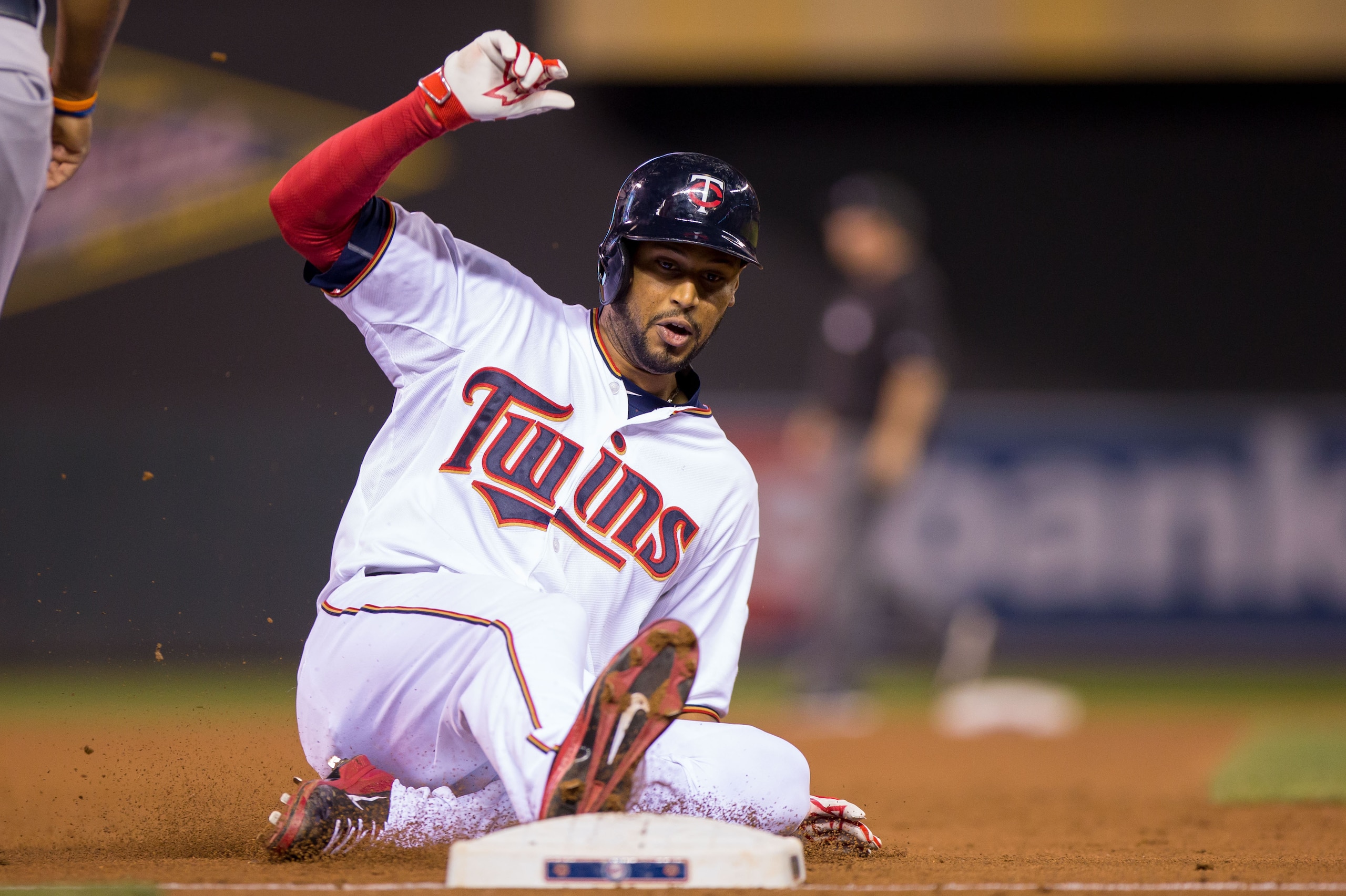
Hitting
Aaron Hicks now looks like a perfectly average-hitting center fielder with a .258 average and .324 OBP. For this, he has tangible improvements to thank. He still has his good eye for the strike zone, but he's now much more aggressive within the zone. This has paid off in more consistent contact and a line-drive stroke that makes better use of the whole field. It's therefore too bad that he remains easily silenced by right-handers and by anyone with a good breaking ball. He's getting better, but work remains.
Power
With 11 homers and a .144 ISO, Hicks is also looking like a solid source of power. To this end, his main talent is getting the ball up in the air at about a 60 percent clip, which gives him plenty of chances to hit for power. But that's pretty much it. He only has pull power regardless of whether he's batting lefty or righty, and neither his Hard% on fly balls (32.3) nor his Hard% on line drives (34.9) inspires much confidence. As such, he may only be a volume power hitter.
Baserunning
Hicks is an above-average runner, and he's finally showing with 13 steals in 16 tries that he can put his speed to use stealing bases. But next to that is just a 36 XBT%. That would seem to undersell his potential in that department, but it's hard to ignore how his XBT% is stuck on a downward trend. He may be content to play it safe when he's not stealing bags.
Defense
According to the metrics, Hicks' defense has also come along this year. He has two DRS and a 5.8 UZR, solid stuff for short of 100 games played. He has good speed to put to use, and he generally looks comfortable tracking fly balls. And for a center fielder, he also has a strong arm. But if there's still a gripe to be aired, it's that he doesn't seem as comfortable going back on the ball. Of all the fatal flaws you don't want your center fielder to have, that's near the top of the list.
Total
The Twins have a potential superstar center fielder on their hands in top prospect Byron Buxton, but Hicks has progressed enough this season to put them in a tight spot. Whereas he looked largely like a throwaway player before 2015, he now looks like a center fielder who can be solid on both sides of the ball.
15. Adam Eaton, Chicago White Sox
12 of 26
Hitting
Just like in 2014, a hot second half has pushed Adam Eaton toward a solid average (.283) and OBP (.357). Eaton has his weaknesses—hint: curveballs and fastballs up in the zone—but he has a foundation for solid production. It consists of a disciplined approach that produces plenty of contact, and he uses good bat control to hit line drives and ground balls where they ain't. The one thing he's still working on is making consistent hard contact, but everything else is solid enough to keep the train moving.
Power
Eaton was one of the least powerful hitters in baseball before 2015, but his 13 homers and .141 ISO show that's no longer the case. He's earned these numbers by becoming less reliant on ground balls, only hitting about half his batted balls on the ground for a change. And though he's bunched his homers to right field, his all-fields power is better than expected. But lest we get too carried away, Eaton's Hard% rates on fly balls (29.6) and line drives (39.8) make it clear he's still not exactly a Silver Slugger.
Baserunning
Speed is Eaton's best tool, but it's still not serving as well on the basepaths as it probably could. He's stolen only 17 bases in 25 tries, making him 32-for-49 over the last two seasons. Also, he's gone from eight additional outs on the bases to 10 this year. Still, 15-steal potential is better than nothing, and a rock-solid 53 XBT% makes outs on the bases easier to swallow.
Defense
The metrics were split on Eaton's defense last year, but there's a consensus that he's been terrible in 2015. With minus-14 DRS and a minus-13.0 UZR, he's been one of the league's worst center fielders. And this matches the eye test. Eaton's speed should make him a good center fielder, but he's yet another guy who has issues reading the ball off the bat and taking direct routes. And given that this has been the case for a couple of years now, it's hard to have high hopes.
Total
Eaton's defensive issues bar him from being a great two-way center fielder. But with a solid bat that's developing some power to go with his speed, he's at least a good offensive threat.
14. Dexter Fowler, Chicago Cubs
13 of 26
Hitting
As he usually is, Dexter Fowler is flying under the radar with a .248 average and .344 OBP. The latter is what stands out, and he has earned that through the same old superb discipline. And when he puts the ball in play, he generally makes loud contact. He can only be so good, though. Fowler is still easily beaten by breaking balls, not to mention anything hard up in the zone when he's batting lefty. So though he can handle a high OBP, high averages will likely continue to elude him.
Power
After a down year in 2014, Fowler's power has returned to the tune of 17 homers and a .166 ISO. He puts himself in a good position to hit for power by hitting over 55 percent of his batted balls in the air, and he still shows off solid raw power with a 34.4 Hard% on fly balls and 40.2 Hard% on line drives. The catch is that he basically has warning-track power as a righty hitter and little besides pull power as a lefty hitter. He has solid power, but it's less than thunderous.
Baserunning
On the surface, it looks good that Fowler has stolen 20 bases with a 50 XBT% on the side. That's good stuff by center field standards. The dilemma is that he still has an issue with running into outs. He's been caught stealing seven times and made 13 additional outs on the basepaths. That's way too many, and it's nothing new for him. And with his age-30 season due up, things won't get easier.
Defense
The metrics have never liked Fowler's defense, and that's once again true this year with minus-12 DRS and a minus-0.3 UZR. His problem isn't so much that he can't track balls well; it has more to do with how he tends to get slow breaks and then exacerbates things with his subpar closing speed. He's playable in center field, but nobody should expect him to be an asset anytime soon.
Total
With Fowler, you know what you're getting at this point. His defense and baserunning are nothing special, but he makes them worthwhile by being a dependable OBP merchant with good power.
13. Michael A. Taylor, Washington Nationals
14 of 26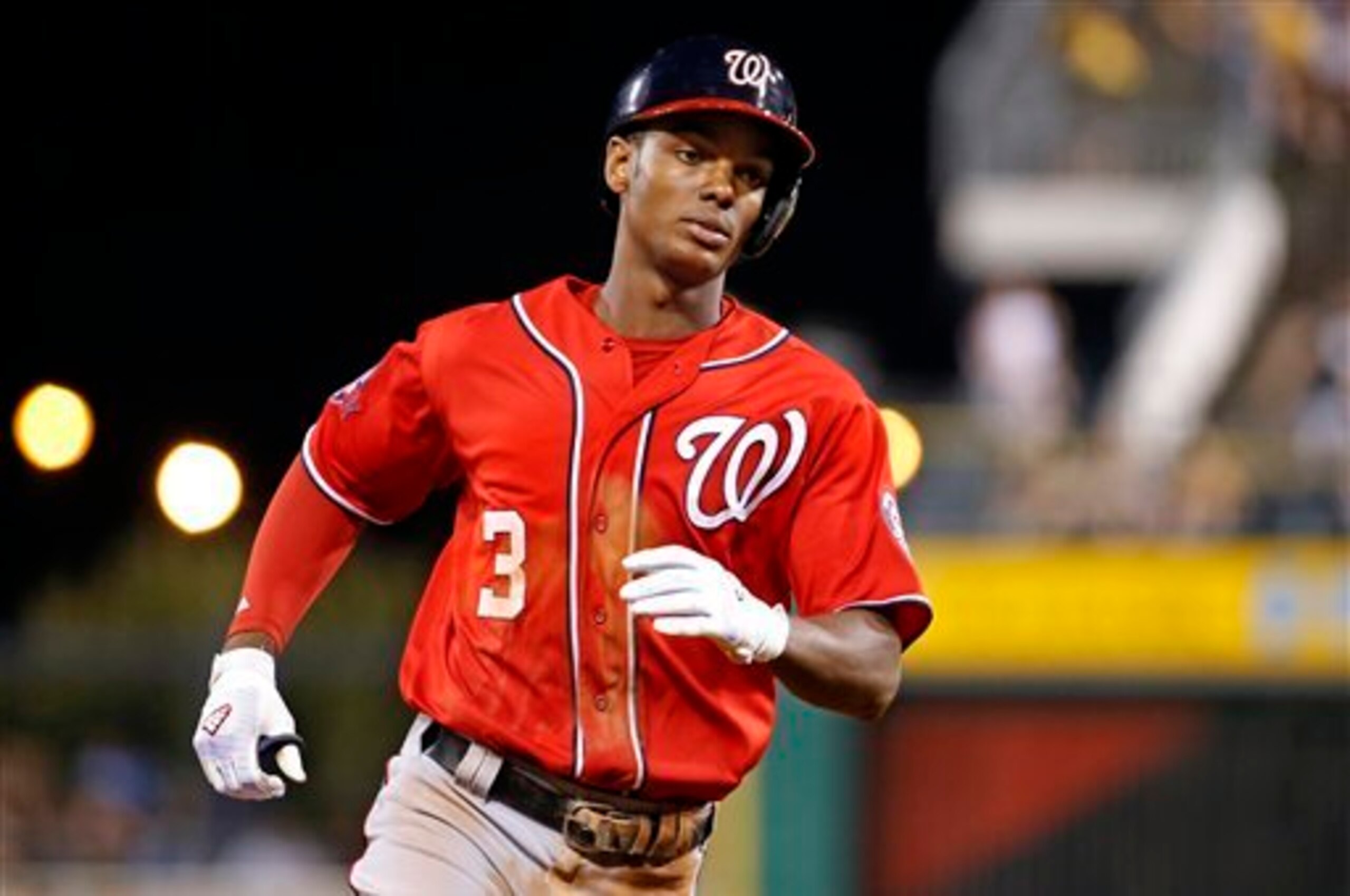
Hitting
Denard Span's injuries have meant plenty of playing time for Michael A. Taylor, but he hasn't impressed at the plate by hitting just .233 with a .284 OBP. He's dangerous when he makes contact, showing off a line-drive stroke. But those skills are downplayed by an extreme pull habit, and making contact in general is no easy task for Taylor. He's an aggressive swinger with far too many holes for pitchers to exploit. Add it all up, and there's plenty holding him back.
Power
Taylor is a wild swinger, but at least he's a powerful one. He's hit 14 home runs with a .130 ISO, and those figures undersell his power. He gives himself enough chances by hitting about 55 percent of his batted balls in the air, and what he hits in the air tends to be struck well. With a 41.9 Hard% on fly balls and 51.5 Hard% on line drives, he's showed off strong raw power. And though he definitely favors his pull side, he doesn't need to rely on it to drive the ball. Over a full season, he has 20-homer potential.
Baserunning
Taylor has some good speed to burn on the basepaths, and he's shown with 16 steals in 19 tries that he has some solid stolen base potential. What's less exciting is his 38 XBT%. That's modest aggressiveness, and he'll need to be better than that to make up for the seven outs he's run into. Chances are this is the worst Taylor is capable of, but it highlights how he's not perfect.
Defense
The metrics are split on what Taylor has done on defense, with DRS putting him at minus-two and UZR putting him at 5.2. But it's UZR that has the right idea. Taylor rarely fails to break quickly on fly balls. And though he doesn't always run the most direct routes after the fact, his speed and ability to adjust well before the last second allow him to run down most balls anyway. So though he may not be the most technical center fielder, he's gifted enough to be a good one.
Total
Taylor has all sorts of issues to figure out with his approach to hitting. But because he can provide a solid mix of power and speed to go with good defense, he need not be an elite hitter to be a useful regular.
12. Kevin Pillar, Toronto Blue Jays
15 of 26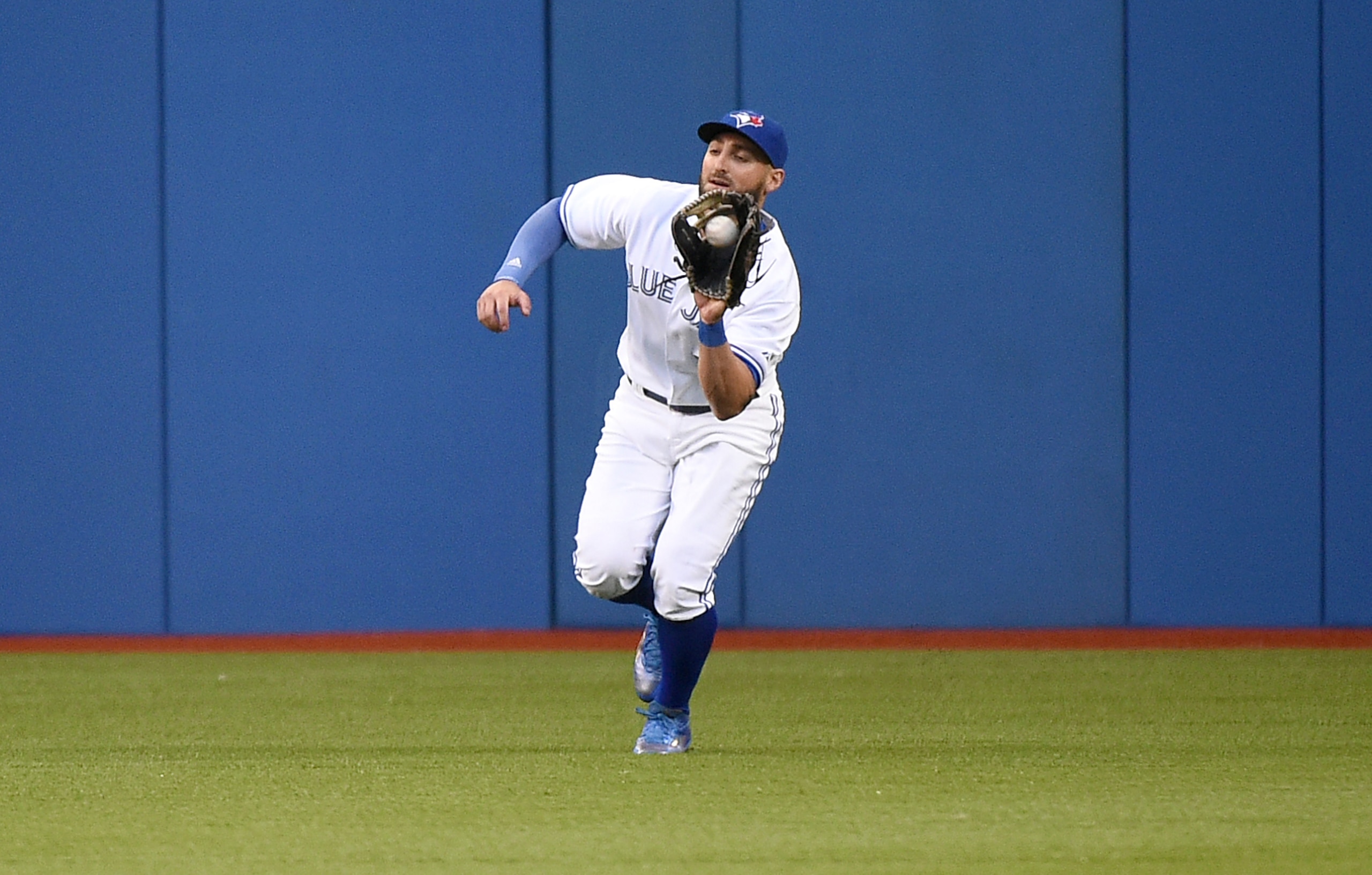
Hitting
Nobody has ever accused Kevin Pillar of being a good hitter, and no one is about to with him hitting .272 with a .309 OBP. He's a good enough contact hitter with an adequate line-drive stroke, but that's about where you run out of compliments. He's a hugely aggressive swinger who has a hard time barreling the ball, at least in part because he's not much more than a mistake hitter. He's not the most hopeless hitter in center field, but even the modest numbers he's put up this year look like a reach.
Power
With 12 homers and a .123 ISO, Pillar's power comes off looking better than his hitting does. He helps himself by hitting close to 60 percent of his batted balls in the air, and he makes good use of his slight pull tendency. However, his 22.6 Hard% on fly balls can vouch that he doesn't have booming raw power. And though his 42.9 Hard% on line drives is better, it's hard to say he has good gap power. His power production comes from his tendency to pull the ball in the air, but not much else.
Baserunning
Getting regular playing time in 2015 has allowed Pillar to show off his speed on the basepaths. He's swiped 25 bags and in only 28 tries. His 39 XBT% is less impressive, but that more than likely represents the low end of what he's capable of. The infrequency with which he gets on base will limit his baserunning potential, but he can do damage when he gets there.
Defense
The metrics suggest Pillar's speed has also served him well in center field, where he's posted 14 DRS and an 11.9 UZR. But it's not so much speed that makes his defense work. He also tracks balls well and is totally fearless when it comes time to finish off plays. That's why he's been a regular in highlight reels this season. If only he had an arm, he'd be in the running for the game's best all-around defender in center.
Total
Pillar's bat isn't much to look at, but he's still a viable regular thanks to his legs and defense. Particularly the latter, which is truly special.
11. Carlos Gomez, Houston Astros
16 of 26
Hitting
Carlos Gomez simply hasn't been himself in 2015, hitting .253 with a .313 OBP. To be sure, he's still a terror against anything middle-in, which is part of the reason he still makes more hard contact than the typical center fielder. But pitchers have figured out they're best served avoiding the middle-in territories against him, and his intense need to swing his bat is allowing them to get away with it. He's in need of a major adjustment, and he may not be a capable hitter again unless he makes it.
Power
Gomez's power has dropped off big-time in 2015, but it's still solid. He has 12 homers with a .155 ISO. His swing is still geared toward getting the ball high in the air, and his 38.3 fly-ball percentage can vouch that it's still working. With a fly-ball rate that large, his good-not-great 32.3 Hard% on fly balls qualifies as good enough. And that probably undersells his raw power, as he can still give the ball a good ride between straightaway left and right-center. With his 30th birthday approaching, his power may not revert to its old form. But if it stays the way it is now, he'll be fine.
Baserunning
Gomez stole 40 bases back in 2013, but he seemed to slow down in 2014, and now it's hard to ignore that he doesn't have the same speed. He's swiped only 15 bags in 24 tries after going 34-for-46 in 2014. Knowing that, it won't be surprising if his stolen base habit is downplayed even more going forward. The good news is that his 61 XBT% shows he can still handle aggressiveness, and that he's gone from 13 outs on the bases to just three shows he's getting smarter about it.
Defense
The metrics don't think Gomez is coming anywhere close to his 2013 performance, but his five DRS and 5.2 UZR mean they still like his defense. His raw speed may not be the same, but he still covers ground by getting quick breaks and running good routes. He also still has a sense of fearlessness, and it shouldn't be overlooked that he has a good arm for the position. But while all this is nice, it's hard to ignore that his diminishing speed is limiting him on defense. You can expect that to continue.
Total
Gomez was one of the best all-around players in the majors in 2013 and 2014, but not as much in 2015. His bat has developed some holes, and both his power and speed have seen better days. But his talents aren't dead yet, and he can still put them to good use.
10. Charlie Blackmon, Colorado Rockies
17 of 26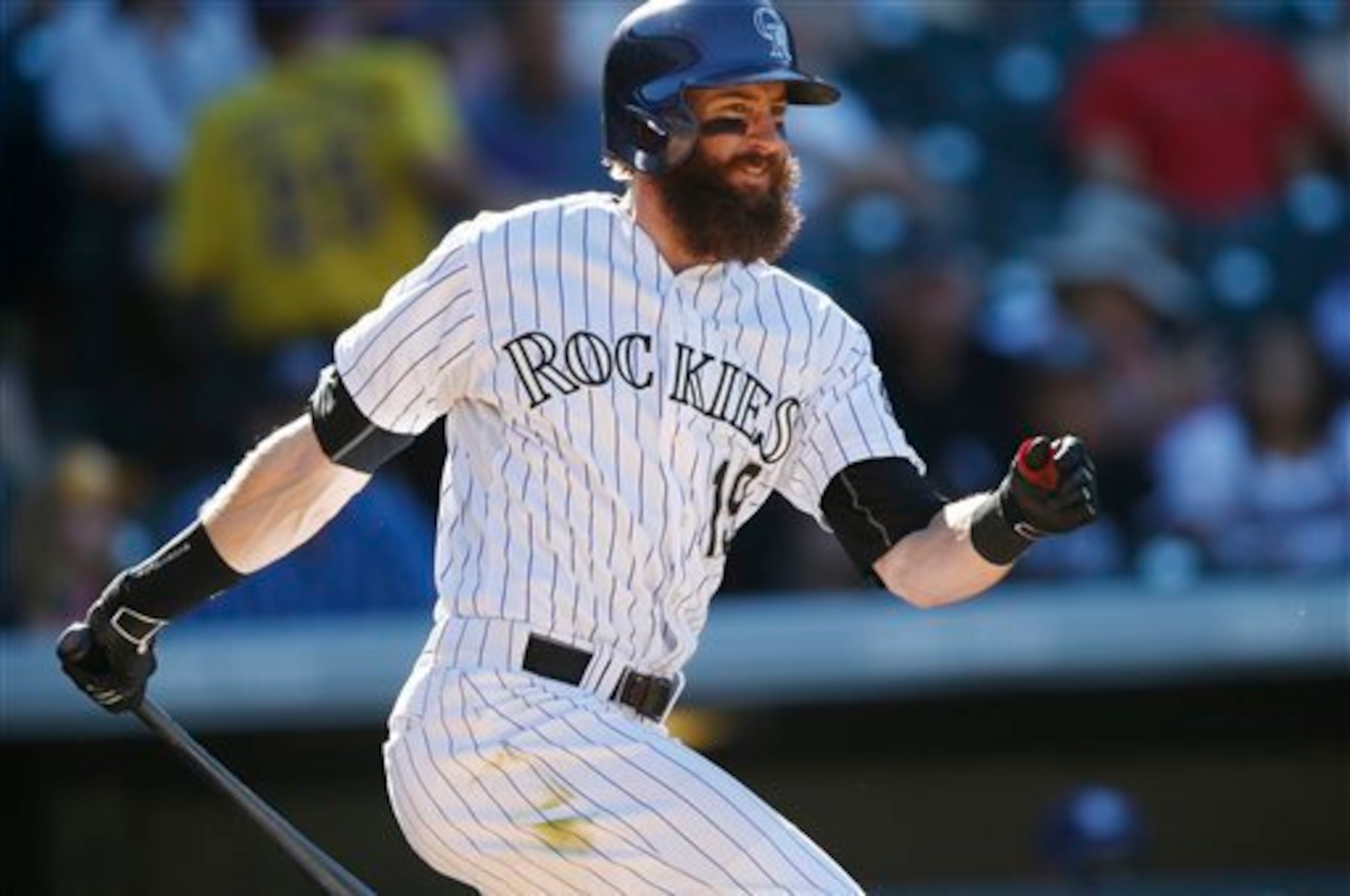
Hitting
Charlie Blackmon is hitting a solid .290 with a .351 OBP, but the catch remains that he is a man of bad splits. Left-handers and games away from Coors Field easily defeat him. But to his credit, he is a different hitter than he was last year. He's far more disciplined with more of an emphasis on making contact. Not surprisingly, the upshot has been a more consistent line-drive stroke that's produced additional hard contact. His weaknesses shouldn't be ignored, but neither should his strengths.
Power
Blackmon's power has continued to be solid, as he's hit 17 homers with a .168 ISO. And it's actually a wonder that he hasn't done even better. He's given himself plenty of chances by hitting over 60 percent of his batted balls in the air, and he's posted above-average Hard% rates on both fly balls (38.4) and line drives (50.0). He's also been able to drive the ball in all directions, so it makes sense that his power has been solid even away from Coors Field. He may be coming into his own as a power source.
Baserunning
Blackmon was quietly a productive baserunner in 2014, and he's (literally) taken the next step in 2015. He's been one of the top base stealers in the majors with 41 stolen bags, and he's upped his XBT% all the way from 36 to 53. This leaves but one gripe: He's not terribly efficient. Blackmon has been caught stealing 13 times and has run into 10 additional outs on the bases. That's a few too many.
Defense
This is Blackmon's first season as a full-time center fielder, and the metrics don't think it's going well. He has minus-10 DRS and a minus-9.9 UZR, which make him one of the worst-rated defenders in center. He definitely has good speed, and it seems to serve him just fine when he goes side to side. But going back on the ball is not his strength, as he can freeze on impact and then run tentative routes. That's a bad shortcoming for a center fielder, and he'll be short of average so long as it persists.
Total
It's easy to write off Blackmon as a Coors Field product, and to an extent he is. But he's turned himself into a better hitter than the one he used to be, and he rounds out his value with solid power and productive baserunning.
9. Odubel Herrera, Philadelphia Phillies
18 of 26
Hitting
Odubel Herrera started slow, but a strong second half has pushed his average to .287 and his OBP to .333. His approach hasn't changed so much, as he remains an aggressive swinger. But the good news is he's cleaned up his whiff habit on slow stuff and has turned into a line-drive machine who makes solid contact in all directions. There's obviously a limit to how much we can get excited about one good half, but it's also hard to ignore that Herrera has been a hitter on the rise for two years now.
Power
Herrera's hitting has gotten better, but his power remains just OK. Overall, he's hit eight homers with a .119 ISO. He only hits a little over half of his batted balls in the air. And though his solid 35.7 Hard% on fly balls suggests otherwise, he's mostly about line-drive power. He's shown that he knows how to plug the gaps, and his transformation into a legit line-drive hitter means we're likely just seeing the beginning of his doubles and triples power. That only counts for so much, but it's better than nothing.
Baserunning
There's no question that Herrera has above-average speed, but this year has made it clear that he needs some seasoning in order to put it to good use. He's needed 23 tries to steal 15 bases and has posted a 47 XBT% that, while solid, is nothing special. But with Herrera still short of being 24 years old, chances are this is the worst he'll be doing with his speed.
Defense
Herrera is a newcomer to center field, and it showed earlier in 2015. But now the metrics have him with 10 DRS and an 8.6 UZR, and that's reflective of how he's gotten more comfortable at his new position over time. Herrera looks much more confident running his routes and finishing off plays. Those two abilities combined with his speed allow him to track down pretty much everything. There are still times when he looks like a newbie in center field, but defense is another area where he's improving.
Total
It took some time for Herrera to get settled, but he's since taken off and shown what kind of player he can be. That's a guy who can hit well atop the order while providing extra value on the basepaths and on defense, which is pretty good.
8. Kevin Kiermaier, Tampa Bay Rays
19 of 26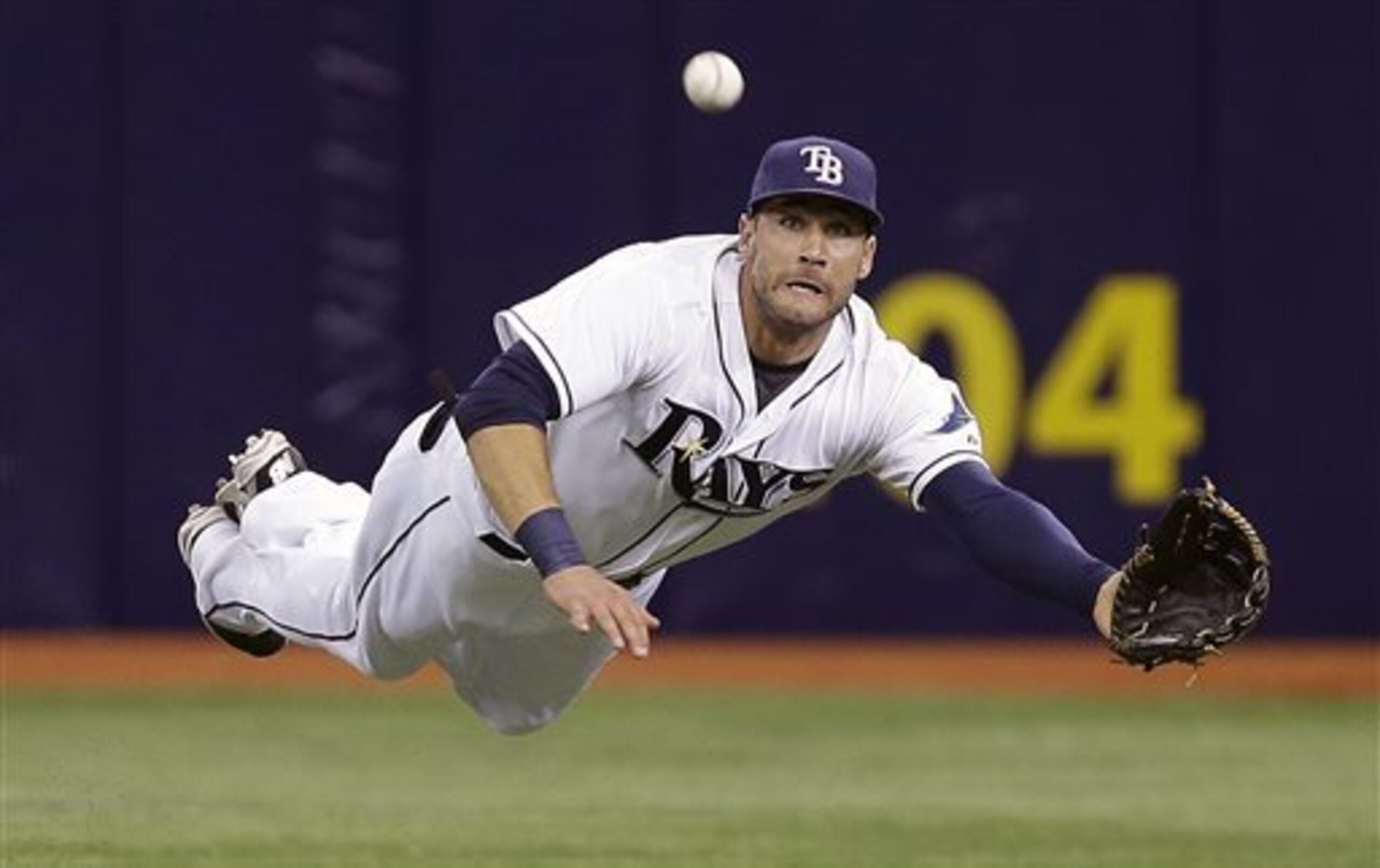
Hitting
Kevin Kiermaier's first season as an everyday player hasn't gone so well from a hitting standpoint, as he's hitting just .264 with a .301 OBP. Part of the problem is that his defense is too good—more on that in a moment—for the Rays to sit him against left-handers, whom he can't hit. But he's also an aggressive swinger who isn't much of a contact hitter, and his swing produces little hard contact despite being geared toward line drives. There are worse hitters than him, but he's definitely not good.
Power
Like he did in 2014, Kiermaier has at least shown solid power by hitting 10 home runs with a .159 ISO. However, it's hard to be too optimistic. He doesn't put much in the air, hitting nearly half his batted balls on the ground. And with just a 24.4 Hard% on fly balls and 36.7 Hard% on line drives, he doesn't regularly crush what he does put in the air. There are occasions when he showcases strong raw power, but they're infrequent. So, don't expect him to be a particularly strong power source going forward.
Baserunning
Speed is the best physical tool Kiermaier has, and he's shown he can put it to good use on the basepaths. He's swiped 18 bags in 23 tries and posted a solid 49 XBT%. This may be the best he's capable of, granted, but a center fielder who can steal 15-20 bases while taking plenty of extra bases on the side is a good guy to have.
Defense
The numbers are downright absurd. The metrics give Kiermaier 39 DRS and a 28.5 UZR, making him easily the top-rated defender in MLB. He's not exactly Jim Edmonds when it comes to running direct routes, but he breaks so quickly and runs with so much speed and conviction that it's hard to notice. He can chase down anything. And unlike a lot of center fielders, he also has a cannon for an arm. Chances are he won't be this good again, but right now he's the best there is in center field.
Total
Kiermaier's game is all about his defense, which is good enough to a point where a case can be made for him as baseball's best defensive player. Because of that, it's easy to downplay his subpar offensive game.
7. Joc Pederson, Los Angeles Dodgers
20 of 26
Hitting
Joc Pederson is a weird case study in this department, as his .211 average is as bad as his .346 OBP is good. His strengths include a strong batting eye and an ability to pummel anything he comes into contact with. He's one of MLB's hardest-hitting center fielders. But because he doesn't get cheated on his swings, he's liable to whiff on pretty much anything. That and the degree to which he heavily favors his pull side and fly balls mean hitting for a high average is basically a hopeless endeavor. That he can get on base consistently is a good thing, but few hitters can downplay a good OBP like he can.
Power
If Pederson's wild swinging is good for anything, it's hitting for power. Despite tailing off in the second half, he's still hit 25 home runs with a .203 ISO. At the heart of this is his preference for fly balls, as over 40 percent of his batted balls have classified as such. And as his excellent 43.9 Hard% on fly balls can vouch, he doesn't waste what he hits aloft. He also doesn't need his pull habit to drive the ball, as he can hit it over any fence. He may not make it there this year, but he has 30-homer potential going forward.
Baserunning
Given Pederson's track record as a 30-steal guy in the minors, what he's done in this department is a huge disappointment. He's been successful in only four of 11 attempts and has also posted a 39 XBT% that's decidedly "meh" by center field standards. And despite his track record's suggestion to the contrary, all this comes off as an accurate reflection of his speed. He appears to be more of a good athlete than a speedster, so what we've seen may be what we'll keep getting.
Defense
The legendary Vin Scully is a fan of Pederson's defense, but the metrics aren't. With minus-three DRS and a minus-2.5 UZR, he's rating as a subpar defender. There's something to this. There are times when Pederson looks outstanding, but other times he gets slow breaks and runs indirect routes. And in addition to that kind of inconsistency, he doesn't have the best closing speed. Still, he's too good of an athlete to be a below-average defender. With more consistent jumps and routes, he'll be better.
Total
Pederson's star power was rising fast heading into the All-Star break, but his struggles since then have highlighted his limitations as a player. That being said, an athletic center fielder with awesome power and a strong ability to get on base is still a pretty good player.
6. Adam Jones, Baltimore Orioles
21 of 26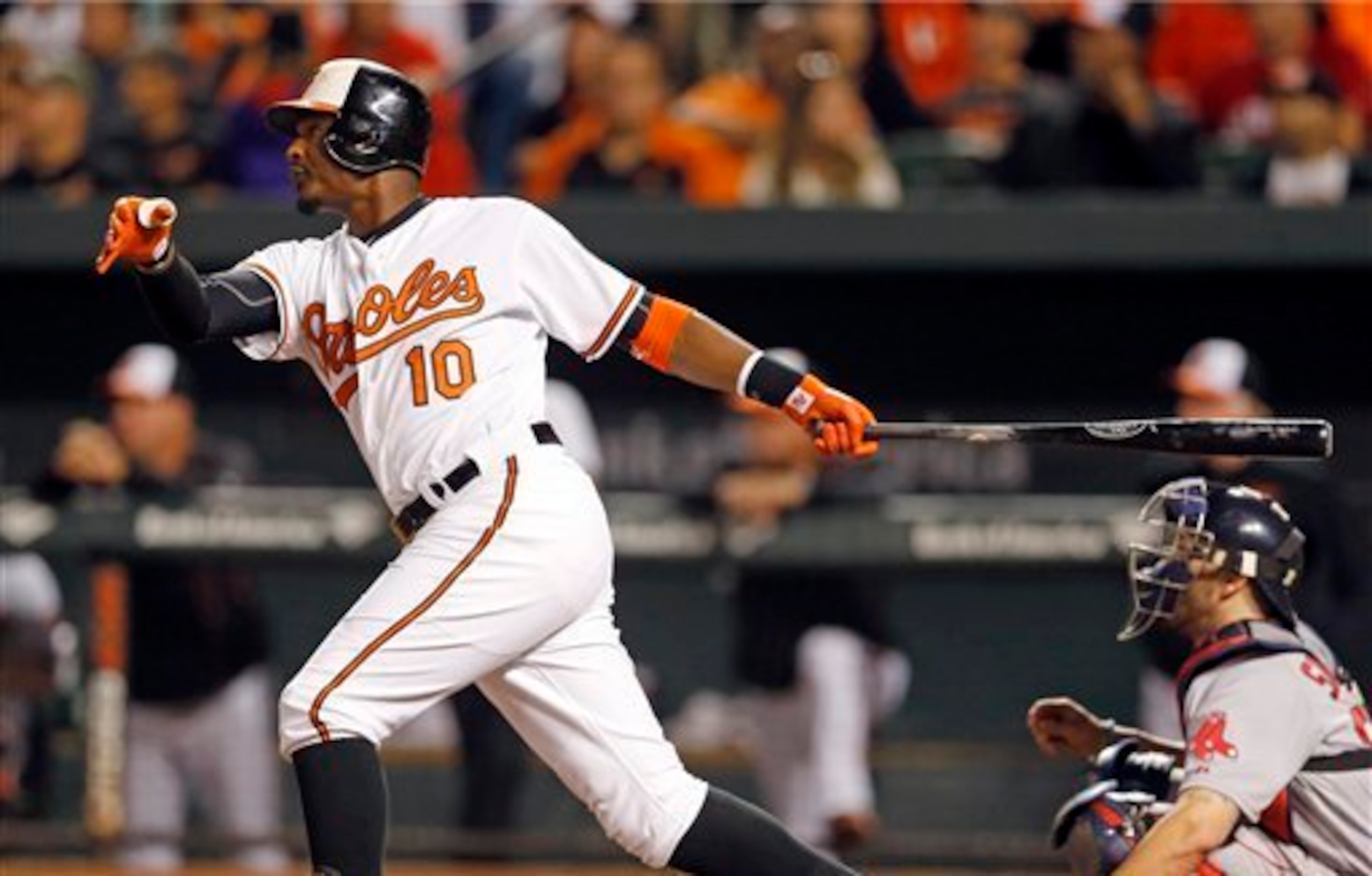
Hitting
With a .269 average and .308 OBP, 2015 has been one of Adam Jones' most inconsistent seasons. This was bound to happen eventually, given that he is one of the most aggressive, undisciplined hitters in MLB. And though it looked for a time like he was putting more emphasis on making contact, that hasn't lasted. With all this wildness, he needs to take advantage of what he can hit, and he's fortunately still good at that. He doesn't miss mistake pitches, and his ability to make hard contact is still there. He's not a good hitter, but the numbers he has this year do oversell his demise.
Power
Jones' hitting has been more of a roller coaster ride than usual, but his 27 homers and .205 ISO show his power is still there. He's once again getting about 55 percent of his batted balls in the air, and he's hitting those balls well with Hard% rates just north of 40 on fly balls (42.9) and line drives (41.8). One worry, however, is that Jones may soon start to break down. He's now on the wrong side of 30, and he admitted he's spent much of 2015 playing through injuries. If that keeps up, his power could suffer.
Baserunning
Jones started to slow down with only seven steals last year, and he's continued to slow down with only three steals in four tries this season. He is indeed at the age where this would start happening, so don't be so surprised. And it's not just stolen bases to worry about. He also has a pedestrian 42 XBT% that's below his career rate of 48. If another dip comes in 2016, his baserunning will be decidedly subpar.
Defense
The metrics used to vehemently disagree with Jones' reputation as a Gold Glove defender, but not anymore. He's doing just fine with four DRS and a 7.3 UZR. Part of this has to do with how he has a much stronger arm than the average center fielder and often puts it to use. But he remains just OK at tracking down fly balls. His route running has seemingly improved with age, but slow reactions and less-than-awesome closing speed limit the amount of ground he covers.
Total
Jones remains a dangerous power hitter who can play a solid center field, but the cracks of age are starting to show. He's had a harder time making his free-swinging approach work this season, and he's not the same source of value on the basepaths he once was.
5. Mookie Betts, Boston Red Sox
22 of 26
Hitting
Mookie Betts is doing just fine with a .292 average and .340 OBP. He's carried over the advanced approach he teased in 2014, showing off a strong eye and making plenty of loud contact, and he made himself an even tougher out by closing up the hole he had on the outside part of the plate earlier in the year. His biggest shortcomings are how he's too much of a fly-ball hitter and how his power doesn't scare pitchers enough to make them stop pounding the zone against him. As such, his average and OBP may remain lower than expected in light of how advanced his approach is.
Power
Pitchers may not be afraid of Betts' power, but it's been solid. He's hit 15 homers and racked up a .178 ISO. Mind you, this does have something to do with how his tendency to pull fly balls plays much better at Fenway Park than it does on the road, which isn't surprising, knowing that his Hard% on fly balls is only 33.7. However, his 49.0 Hard% on line drives shows that his line-drive power is legit, and overall he hits enough balls in the air (about 60 percent) to be a good volume power hitter.
Baserunning
Betts is easily an above-average runner, and he's shown as much with his work on the bases this year. He's stolen 20 bags in 26 attempts and has posted a 46 XBT% that, while not great, is solid. Betts will do fine if he doesn't improve on any of these numbers, but it's a good, ahem, bet that he will. He has the speed to steal upward of 25 bags, and his XBT% probably undersells his style on the bases.
Defense
Betts is still a relative newcomer to center field, but the metrics think he's getting by just fine with a 0.9 UZR and, even better, nine DRS. The latter comes closer to summing up the impact he makes on defense. His route running isn't polished, but his speed and sense of fearlessness allow him to close on pretty much any fly ball. With this year's experience behind him, there's a good chance his route running will become more efficient and he'll be an even better fly-ball fielder.
Total
Betts hasn't shown a single standout skill in his first full season, but he's made it clear that he's the kind of player who's going to be good at everything. Between his hitting, power, baserunning and defense, you're looking at one of the game's top all-around center fielders.
4. Andrew McCutchen, Pittsburgh Pirates
23 of 26
Hitting
Andrew McCutchen got off to a painful (not just figuratively) start, but he's since come around strong enough to be hitting .293 with a .405 OBP. His escalating whiff habit is a slight concern, but it's easily downplayed. He still has a disciplined approach that earns him plenty of free passes, and this season has seen him become a more consistent all-fields hitter who is still up there with Mike Trout among center field's hardest hitters. So all told, Cutch is still Cutch.
Power
McCutchen has once again been a quality power producer with 22 homers and a .197 ISO, and his underlying performance says this actually undersells his power. He's continued to hit over 60 percent of his batted balls in the air and with excellent Hard% rates on fly balls (51.5) and line drives (44.6). And yes, he can still whack the ball in any direction. He's not going to hit 30 homers, but you can keep betting your bottom dollar on around 25 with plenty of doubles on the side.
Baserunning
Unlike the two categories above, McCutchen hasn't been the same threat on the basepaths this season. He's stolen only 11 bags in 16 tries and has posted a pedestrian 29 XBT%. But we can cut him some slack. The knee injury he was dealing with earlier in the year gave him a good excuse to take it easy on the bases. And though that would be a tough thing for an older player to put behind him, he's only turning 29 in October. He should bounce back and be more like his usual self.
Defense
The metrics have tended to go back and forth on McCutchen's defense, and this is another down year. He's produced minus-eight DRS and a minus-4.4 UZR. And in their defense, there are times when he breaks slowly and comes up short on balls that should be catchable. But the metrics also exaggerate. McCutchen remains a smooth route-runner with good closing speed, and some more of the latter may be in store for him in 2016 if he does indeed return 100 percent healthy.
Total
It looked earlier in 2015 like McCutchen was in for a rough season, but that didn't last. His legs may not be what they once were, but he's still an outstanding hitter who should get back to providing good value away from the plate in 2016.
3. A.J. Pollock, Arizona Diamondbacks
24 of 26
Hitting
A.J. Pollock teased in an injury-marred 2014 that he could be a really good hitter, so we shouldn't be too surprised at his .317 average and .367 OBP. He certainly has the look of a good hitter, too, as he mixes solid discipline with consistent contact and strong bat control. He also hits the ball harder than most center fielders, making him almost a total threat. But we say "almost," of course, because he's not perfect. He has a heavy ground-ball habit that could soon get in his way, with a related story being that he's not the best low-ball hitter at a time when low pitches are all the rage.
Power
With 19 homers and a .187 ISO, Pollock is also showing he can be a good power hitter. These numbers look out of place on a guy who hits half his batted balls on the ground, but that's what good efficiency can do. On the balls he puts in the air, Pollock has a solid 40.1 Hard% on fly balls and an even better 46.1 Hard% on line drives. To boot, his power goes to all fields. So while his ground-ball habit does hold his power back, it hardly kills it.
Baserunning
In addition to power, Pollock also has speed. He's stolen 37 bases in 44 tries and has also posted a solid 51 XBT% on the side. These numbers make him a complete threat on the basepaths. And yet, whether Pollock can be this productive again is a good question. He's definitely fast, but he's also been getting away with murder on his leads and breaks, catching pitchers napping at a likely unsustainable rate. The scouting report is probably going to get around, which will slow him down.
Defense
As impressive as Pollock's offensive game is, don't overlook his defense. The metrics once again love him, giving him 15 DRS and a 7.1 UZR. And it's fun to watch him rack up these numbers, as he gets quick breaks and makes the most of his speed with good routes. He's also one of those center fielders who is fearless when it comes time to catch the ball. He's not quite Kevin Kiermaier, but he's certainly a member of the tier below the Rays outfielder.
Total
Pollock has largely flown under the radar this season, but here's thinking he would be a super-duper star if he happened to be wearing, say, pinstripes or Dodgers blue. As a guy who can hit for average and power, steal bases and play a killer center field, you better believe he's become one of the game's best players.
2. Lorenzo Cain, Kansas City Royals
25 of 26
Hitting
After taking a big step forward in 2014, Lorenzo Cain's .308 average and .362 OBP highlight how he's progressed further in 2015. He's still an aggressive swinger, but he's become more consistent at making contact. And whereas he relied almost totally on bat control before, he now excels in that area and features a consistent ability to barrel the ball. He still has a hole up in the zone, but overall he's looked the part of a much more confident hitter. And though he may be 29, he's clearly a late-bloomer who just now is coming into his own.
Power
Cain has also emerged as a power source, hitting 16 homers with a .171 ISO. And this hasn't happened by accident. He's gone from being a ground-ball hitter to now hitting about 55 percent of his batted balls in the air, and he's done so with strong efficiency. His Hard% rates on fly balls (43.2) and line drives (46.2) are both north of 40. The downside is that his power doesn't extend far to the right of center field, but that's really the only gripe. Cain's power may be short of elite, but it's solid.
Baserunning
Cain now has power, but he already had speed. After stealing 28 bags in 33 tries last year, he's stolen 28 bags in 34 tries in 2015. Not content to stop there, he's upped his XBT% from 55 to a downright absurd 68. That makes it two years in a row that he's been one of the most active baserunners in MLB. And though you normally worry about guys slowing down as they near 30, that his major league career is still relatively young should allow him to keep going.
Defense
Defense, of course, is another thing we already knew Cain could handle. The metrics have been fans of his for several years now, and the pattern is holding to the tune of 18 DRS and an 11.4 UZR. He often doesn't look like he moves very fast, but his long strides combine with quick jumps and efficient routes to allow him to cover a ton of ground. To boot, he has a solid arm. He's not in Kevin Kiermaier's league, but Cain may well be the best defensive center fielder outside of him.
Total
This time last year, it was easy to see Cain as a speed-and-defense guy who lucked into a .300 average. But not anymore. He's continued to mature as a hitter while maintaining excellent baserunning and defensive production. Now there's no mistaking it: He's one of the very best players in the game.
1. Mike Trout, Los Angeles Angels
26 of 26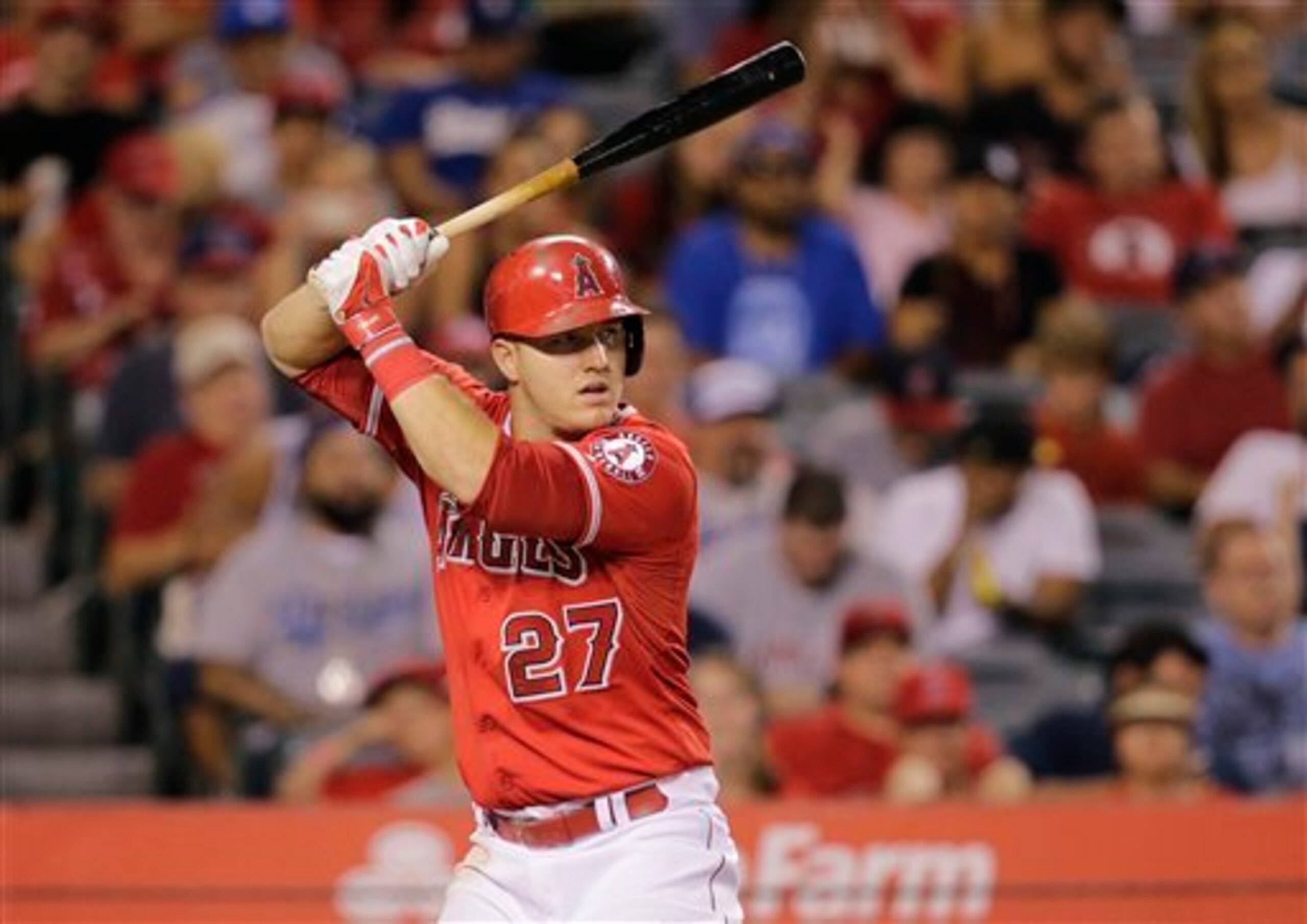
Hitting
Reigning AL MVP Mike Trout has rebounded nicely from his "down" year in 2014, as he finds himself hitting .295 with a .397 OBP. He's most notably erased his weakness against high fastballs and in general has looked a lot less like a strictly power-oriented hitter. He's continued to show off excellent discipline with a stronger contact habit than his strikeout rate suggests, and he hasn't relied so much on fly balls. He's hit more line drives while continuing to use the whole field and crushing the ball more often than any other center fielder. Though he never really left, we can still say he's back.
Power
Trout may be acting like less of a power-oriented hitter, but there he is with 40 homers and an absurd .286 ISO anyway. Not that anyone should be surprised, of course. He is still getting over 60 percent of his batted balls in the air, with Hard% rates near 50 on both fly balls (48.4) and line drives (49.5). He can also still make any ballpark look small no matter which direction he hits the ball in. So, yeah.
Baserunning
After swiping 49 bags back in 2012, he's all the way down to 10 in 17 tries this year. If one didn't know any better, one would say he's slowing down as he becomes more and more powerful. But you can watch him run and know that's not the case. His stolen base decline has more to do with his spending a portion of the season not wanting to step on Albert Pujols' toes and because pitchers simply don't take their eyes off him anymore. But we can allow ourselves to believe things could be different in 2016. And in the meantime, Trout is showing with a 65 XBT% that he can at least still handle aggressiveness.
Defense
The metrics still aren't loving Trout as much as they did in his rookie season, but he could be doing worse with a minus-0.3 UZR and five DRS. The latter has the better idea about his defense, and even undersells it. Trout is still one of the top fly-ball fielders in MLB thanks to his quick jumps, generally strong routes and top-notch closing speed. And relative to a couple of years ago, his arm has actually gotten better. The only gripe? As time goes on, Trout seems less interested in risking life and limb to make plays.
Total
Because he's not the same elite baserunner or defender he once was, Trout no longer has a vise grip on the "best player in baseball" label. But we can still call him the best all-around talent in MLB, and there's no question he's the best of the best in center field.





.jpg?w=2560 "Weather Channel Trolls Texans-Titans 💀")

.jpg?w=2560 "Grading WWE Raw 🔠")