B/R MLB 300: Ranking the Top 25 Third Basemen
After checking in on the top shortstops in the league, the B/R MLB 300 now moves on to its final stop in the infield: third base.
Like the other three infield positions, this ranking consists of 25 out of the overall 300 players. As for how this list of 25 came to be, we subjected each player to a scoring system that adds up to a total of 100 possible points.
First, there are 30 points for hitting. Our focus is on how well each player is equipped to hit for average and get on base. This means looking not only at how they hit the ball, but also at how consistently they make contact and whether they have the discipline to draw walks.
Then, there are 30 points for power. We concentrated on how well each player collects extra-base hits, which means looking at how often they put the ball in the air—ground balls don't tend to go for extra-base hits, after all—how hard they hit it and how much of the field they can use for power.
Next, there are 15 points for baserunning. It's not a huge priority for third basemen, but they're at least expected to be better on the basepaths than catchers and first basemen. We'll look at whether they can steal bases as well as whether they're capable of running the bases aggressively.
Lastly, there are 25 points for defense. Third base is about as important a defensive position as second base. We'll use defensive metrics as a guiding star and judge third basemen on things like their range, arm strength and sure-handedness.
As for how the scoring works, a score in the middle is meant to denote average, not failing. For example, a 15 out of 30 for power means the player has merely average power, whereas 10 out of 30 is clearly below average and 20 out of 30 is above average. It's also important to note that if two or more players end up with the same final score, the priority goes to our preference.
Before we begin, here's an important reminder that while we're using what's happened in 2015 as a foundation for the scores, this list projects performance for the 2016 season. Players are evaluated based on the staying power of each category with progression, decline and past luck in mind—creating a different ranking system than simply judging where each player stands today.
You may now start the show.
Notes on Sources, Stats and Links, and Some Honorable Mentions
1 of 26
Putting together these rankings did require some good, old-fashioned video scouting. But for the most part, it involved digging deep into baseball's treasure chest of statistics.
The primary sources for these numbers were Baseball-Reference.com, FanGraphs, Brooks Baseball, Baseball Prospectus and Baseball Savant. The various links you'll find throughout will take you to relevant data on these sites. Clicking on them is not mandatory. They're there for your pleasure.
As for the stats referenced within, there are some you may not be familiar with. These would be:
- Soft% and Hard%: These show the rate at which a hitter makes soft and hard contact, allowing for a picture of how well each hitter barrels up the ball. For perspective, the average third baseman has a 17.4 Soft% and 30.4 Hard%.
- ISO: This is isolated power, which is a measure of raw power. It's what you get when you take slugging percentage and subtract average. The average third baseman is at .160.
- XBT%: This is extra bases taken percentage, which looks at how often runners advance more than one base on a single or more than two bases on a double. It's not perfect, but it works as a go-to measurement for baserunning aggressiveness. Among the players on this list, the average third baseman's XBT% is roughly 40 percent.
- UZR and DRS: Ultimate zone rating and defensive runs saved are the two most prominent defensive metrics and will be our guiding stars for defensive scores. Regardless of the position, zero represents league average.
The averages noted above are reference points that will often come in handy throughout the piece, but know that they're among many plucked from FanGraphs to help inform the rankings.
Also, bear in mind the season is still ongoing. With final edits taking place the day before publication, the statistics within are accurate through play on Saturday, September 26.
Lastly, this slideshow comes with some honorable mentions. Because we're looking ahead to 2016, we didn't include the soon-to-be-retired (and greatly under-appreciated) Aramis Ramirez. Also omitted on purpose were Pablo Sandoval and David Wright. Sandoval has had a fine career, but a terrible 2015 season. And while Wright has been good when healthy in 2015, he's only been healthy for 34 games.
Now then. Let's get started.
25. Nick Castellanos, Detroit Tigers
2 of 26
Hitting
Relative to the average third baseman (.261 and .319), Nick Castellanos is again struggling with a .258 average and .308 OBP. He's fine when he puts the ball in play, as he's capable of hitting the ball hard and using the whole field. But his approach is still overly aggressive, resulting in plenty of whiffs on breaking and off-speed pitches. Right-handers in particular can easily exploit that problem, resulting in a bad platoon split. This all marks a lack of progress from his rookie year, which isn't the most encouraging observation.
Power
Fortunately, the 23-year-old Castellanos has at least managed power well with 15 home runs and a .166 ISO that tops the third base average of .160. And though his 37.0 Hard% on fly balls and 41.1 Hard% on line drives don't measure up to the averages around these parts (roughly 40 and 47), those shouldn't undersell his potential. He hits darn near 65 percent of his batted balls in the air, and his all-fields power is still developing. He's only OK at hitting for power now, but the potential for better things is there.
Baserunning
For a guy who doesn't often get on base, Castellanos needs to be a better baserunner. His 0-for-3 showing in the stolen base department can be forgiven, but not so much his 23 XBT%. That's well below this list's average of 40 percent, and it's concerning because the 27 XBT% he posted last year suggests this is par for the course for him. The only thing that allows for optimism is his youth.
Defense
It appeared earlier in the year the Tigers had changed Castellanos' stripes on defense, but the metrics strongly suggest that hasn't lasted. With minus-10 DRS and a minus-11.9 UZR, Castellanos is once again rating as one of the worst at the position. His comfort level seems higher than it did in 2014, but he's still limited by sluggish reactions and a lack of quickness in general. To say his hands and arm strength are average may be pushing it.
Total
If there's something worth getting excited about where Castellanos is concerned, it's his potential to be a solid power hitter. But between his subpar hitting, baserunning and fielding, it's becoming harder to see him turning into a truly well-rounded third baseman.
24. David Freese, Los Angeles Angels
3 of 26
Hitting
David Freese is continuing his trek to mediocrity, hitting .258 with a .320 OBP. Of course, this is still fine by third base standards, and there are things he does well. He still offers a reasonably disciplined approach, as well as consistent hard contact when he puts the ball in play. But he's still wasting too much of that contact on ground balls, and that's part of a larger problem: Freese isn't quite disciplined enough to hide the fact he's become a lousy bad-ball hitter. And at 32 years old, things may only get worse.
Power
Freese has been better in this department than he was in 2014, but he's still toying around average with 12 homers and a .159 ISO. It doesn't help that he can't make it through a season unscathed, nor does it help that he hits over half his batted balls on the ground. And yet, things could be worse. His 48.2 Hard% on fly balls and 54.6 Hard% on line drives show he doesn't waste what he puts in the air, and he can still drive the ball in pretty much any direction. Things could be better, but they could also be worse.
Baserunning
Nobody's accused Freese of being a burner, nor is anyone about to. He's stolen just one base in two tries this year and has been a station-to-station runner with a 25 XBT%. The fact that that mark is well below his career average of 34 percent suggests he can do better, but let's not take that for granted. At 32 years old, it's hardly inconceivable that Freese's best baserunning days are over.
Defense
With zero DRS and a 1.1 UZR, the metrics say Freese's defense at the hot corner is at best average. And even that's too much of a compliment. Relative to where he was a couple of years ago, he has gotten better at fielding what's hit right at him. But that's about the extent of his talent. He lacks the quickness to have much range away from the bag, and his arm strength is average at best.
Total
Freese still packs a solid bat for a third basemen, and there are indeed worse defenders than him at the position. But he also appears to be fading from the solid player he once was, so his time as one of the more dependable third basemen in the league is running short.


23. Brett Lawrie, Oakland Athletics
4 of 26
Hitting
With a .265 average and .303 OBP, Brett Lawrie is still struggling to get a handle on this whole "hitting" thing. He's generally fine when he puts the ball in play, making good contact while showing off solid bat control. But his approach is getting less disciplined and more whiff-happy every year, and pitchers know where his holes are. His long swing creates a gap up in the zone, and his preference for the ball on the inner third makes him especially vulnerable to breaking balls away. All told, he's a pretty easy out.
Power
Lawrie was able to find some power last year, and that's sort of carried over to 2015. He's hit 16 homers with a .154 ISO—solid stuff for a third baseman. He's still only hitting a little over 50 percent of his batted balls in the air, but his efficiency could be worse with Hard% rates north of 40 on both fly balls (41.1) and line drives (46.1). The bigger gripe is that, while Lawrie may be a solid all-fields hitter, his power really only exists to the left of center. What we're seeing is thus probably the extent of his power potential.
Baserunning
Lawrie is more athletic than your typical corner infielder, and that shows through well enough on the basepaths. His five steals in seven tries might undersell his stolen base potential, and his 37 XBT% almost certainly undersells how aggressive he can be. His career rate is 50 percent, and he's too young (25) to be straying too far from that.
Defense
Lawrie looked like an elite defender once, but the metrics have since changed their tune and now have him with minus-three DRS and a minus-10.3 UZR. With his first-step quickness and above-average range and arm strength, there are indeed times when he looks like an elite defender. But his hands and accuracy tend to abandon him, resulting in enough miscues to overrule his good plays. He's probably the single biggest hit-or-miss defender at the position. And given that he hasn't impressed (minus-four DRS, minus-2.0 UZR) in a late-season move to second base, that may not be a solution either.
Total
Lawrie's athleticism continues to make him a tantalizing player, and he looks even more so when he shows off his solid raw power. But he's still having issues putting all the pieces together, resulting in a player who's considerably less than the sum of his parts.
22. Juan Uribe, New York Mets
5 of 26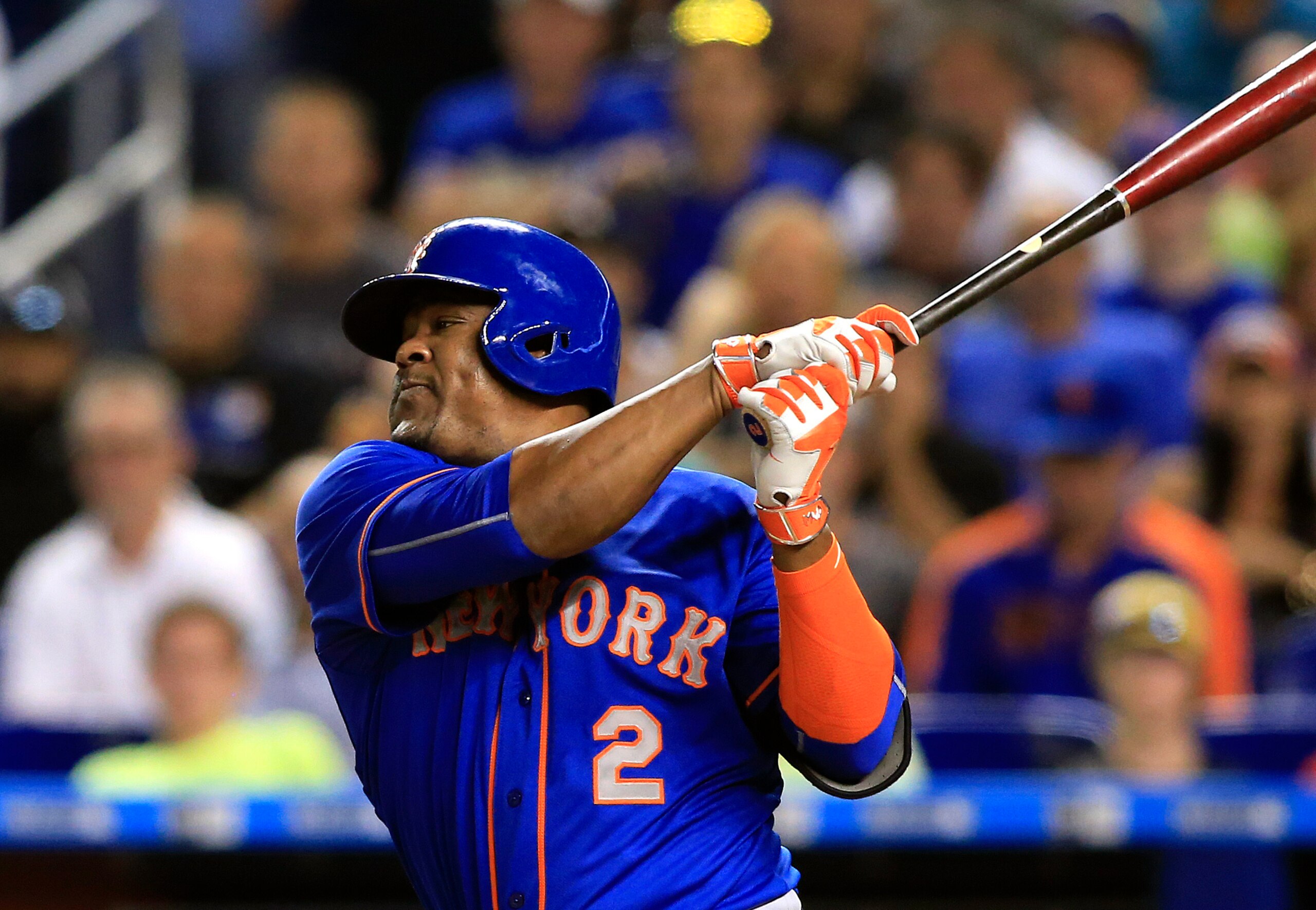
Hitting
Juan Uribe hasn't lost his knack for hitting, but this season has been more of a struggle than his .253 average and .320 OBP let on. It's to his credit that he's tightened up his discipline after it got away from him in 2014, and he's also gotten back to using more of the field. But he's also struggled to make hard contact, and the degree to which he's struggled to hit anything slow suggests he may be cheating on fastballs. If that's true, hitting that stuff won't get any easier at age 37 next year.
Power
With 14 home runs and a .164 ISO, Uribe has at least managed to keep the power coming this year. He's made it somewhat easy on himself by putting 55 percent of his batted balls in the air and by not wasting anything he lofts to his pull side. However, he doesn't pull the ball often enough to truly take advantage of his pull power, and his efficiency on balls in the air in general is lacking. He only has a 35.3 Hard% on fly balls and a 41.5 Hard% on line drives. Odds are his power will only regress.
Baserunning
Uribe is a bad-bodied 36-year-old, so you'll probably be surprised to hear he's stolen two bases in two tries this year. He's also posted a 41 XBT% that's perfectly acceptable, and with only one out on the basepaths to boot. But while all this is nice, well, he is a bad-bodied 36-year-old. This won't be an easy performance to repeat.
Defense
The metrics think Uribe's arrival in Queens has led to a defensive boost, allowing him to pass as solid overall with one DRS and a 1.3 UZR. He's not as athletic as other third basemen, but he still has good tools to put to use. Among those are his instincts and a quicker-than-expected first step, as well as soft hands and a strong arm. Even at his advanced age, the metrics therefore understate how well Uribe can play defense.
Total
It's hard to have too much faith in what's left in Uribe's bat, but at least it's dying a slow death. And in the meantime, he can still pick it at the hot corner.
21. Luis Valbuena, Houston Astros
6 of 26
Hitting
With a .212 average and .300 OBP, Luis Valbuena hasn't exactly been a model of consistency. The Astros are partially to blame for that, as they've given him too many plate appearances against his mortal enemy: left-handed pitchers. But Valbuena is also to blame. He has decent discipline, but swing-for-the-fences style creates spotty plate coverage and opens him up to both whiffs and an unhealthy amount of fly balls. The bright side is that he at least makes hard contact, but that's about it.
Power
Valbuena's approach hasn't been for naught, as he's hit 23 dingers with a .198 ISO. That's what you can do when you hit over 65 percent of your batted balls in the air with a preference for your pull side, as his spray chart clearly demonstrates. The downside is that his efficiency isn't great, as he's managed only a solid 39.2 Hard% on fly balls and 43.8 Hard% on line drives. He's also helped himself to a few cheapies the other way at Minute Maid Park. As such, it won't be easy for Valbuena to do this again.
Baserunning
It says something about Valbuena's recent track record that one steal in one try represents an improvement, so don't expect much from him in the stolen base department. The bright side is that he has a 43 XBT% that passes as solid, and it's also right at his career rate. Provided he can keep that up at age 30 next season, his baserunning won't be a liability.
Defense
Valbuena has played mostly third base this season, and the metrics are still down on him with zero DRS and a minus-4.3 UZR. This isn't surprising, as he doesn't have any standout skills or attributes and sometimes looks like he's trying not to make mistakes rather than trying to make plays. The good news is he generally does avoid miscues at the hot corner, and he's shown in a limited sample that this ability can also follow him to first base. He's not good, but he's not a bad guy to have on defense, either.
Total
There's nothing pretty about Valbuena's approach at the plate, which has been made worse in 2015 by somewhat frequent at-bats against left-handers. But he can definitely hit for power, and he's continued to show solid defensive versatility.
20. Yunel Escobar, Washington Nationals
7 of 26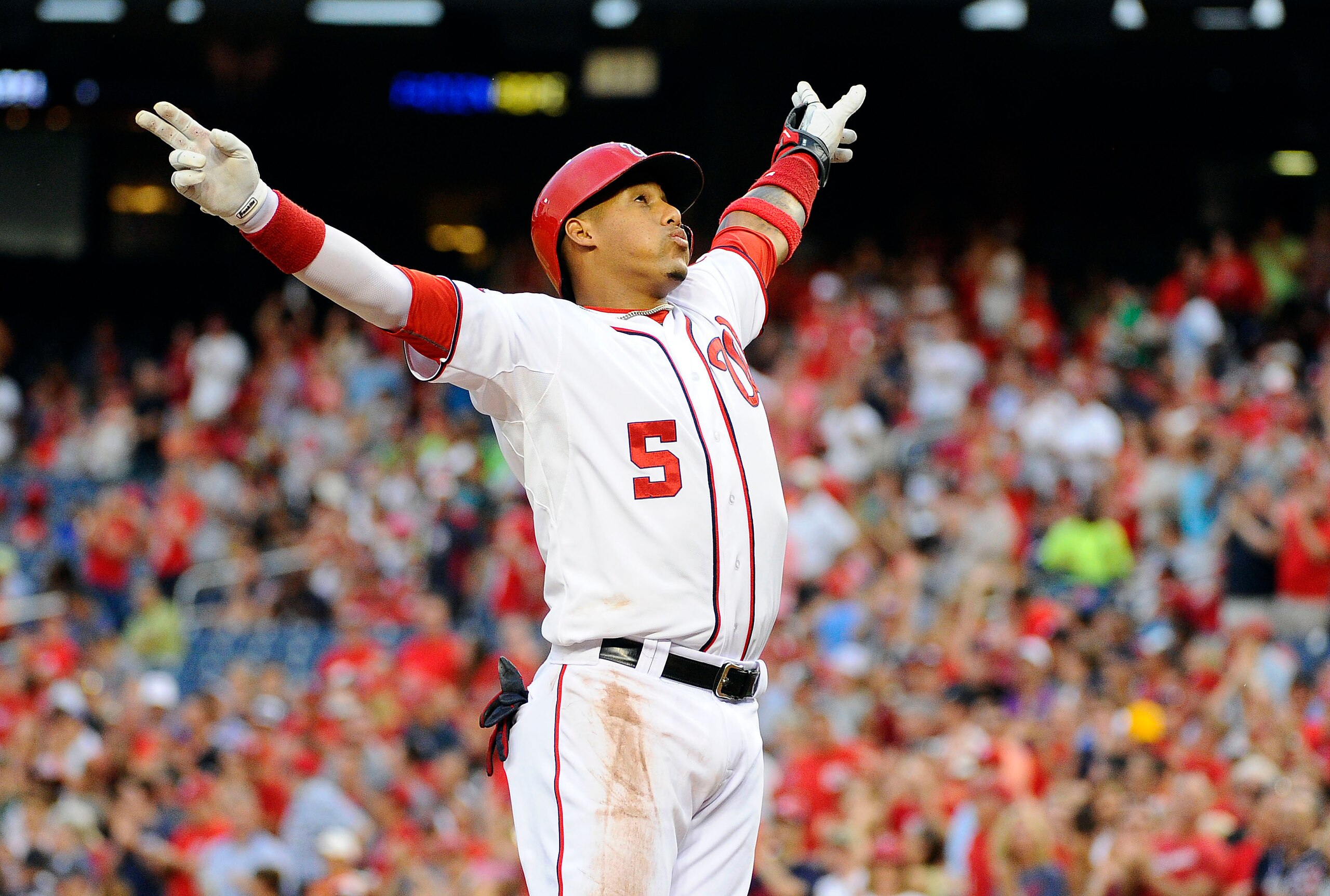
Hitting
Here's one of the bigger surprises of 2015, as few could have predicted Yunel Escobar would be hitting .321 with a .380 OBP. This is a case of increased aggression done right, as Escobar has been more aggressive in the zone and clearly benefited from it. But lest anyone get too excited, Escobar's aggression means forgoing walks. And thanks in large part to a high ground ball rate, it hasn't meant more loud contact. He's better, but probably not this better.
Power
Escobar has experienced a revival here, too, but only to the extent of nine home runs and a .103 ISO. This is easily subpar stuff by third base standards, and it points to how much a ground-ball rate near 55 percent can restrict a guy. Escobar also has Hard% rates on fly balls and line drives in the 35-40 range, and what power he does have is mainly focused up the middle. It's to his credit that he has enough raw pop to not totally waste a habit like that, but it is another thing that restricts his power.
Baserunning
Escobar has never been of much use stealing bases, and that hasn't changed this year. He's been successful on two of only four tries. The bigger red flag, though, is his 25 XBT%. That's well below this list's average and his career norm of 42. That could indicate this is a fluke, but his age must be taken into consideration. At nearly 33 years old, he would begin slowing down around now.
Defense
The metrics pegged Escobar as maybe the worst defensive shortstop in baseball last year, and his minus-10 DRS and minus-6.8 UZR say he hasn't been much better at third base. What's noticeable is that last year's sudden loss of quickness has followed him to the hot corner. It's less of a deal-breaker there, sure, but it means he can only field balls that are hit right at him. Fortunately, he still has good enough hands to do that, as well as a strong enough arm.
Total
Escobar's offensive renaissance can't be written off completely, as he's done his part to become one of the most consistent hitters third base has to offer. But it's hard to count on a repeat performance, and his shortcomings in other aspects of the game highlight how you can only learn so much from batting average.
19. Josh Harrison, Pittsburgh Pirates
8 of 26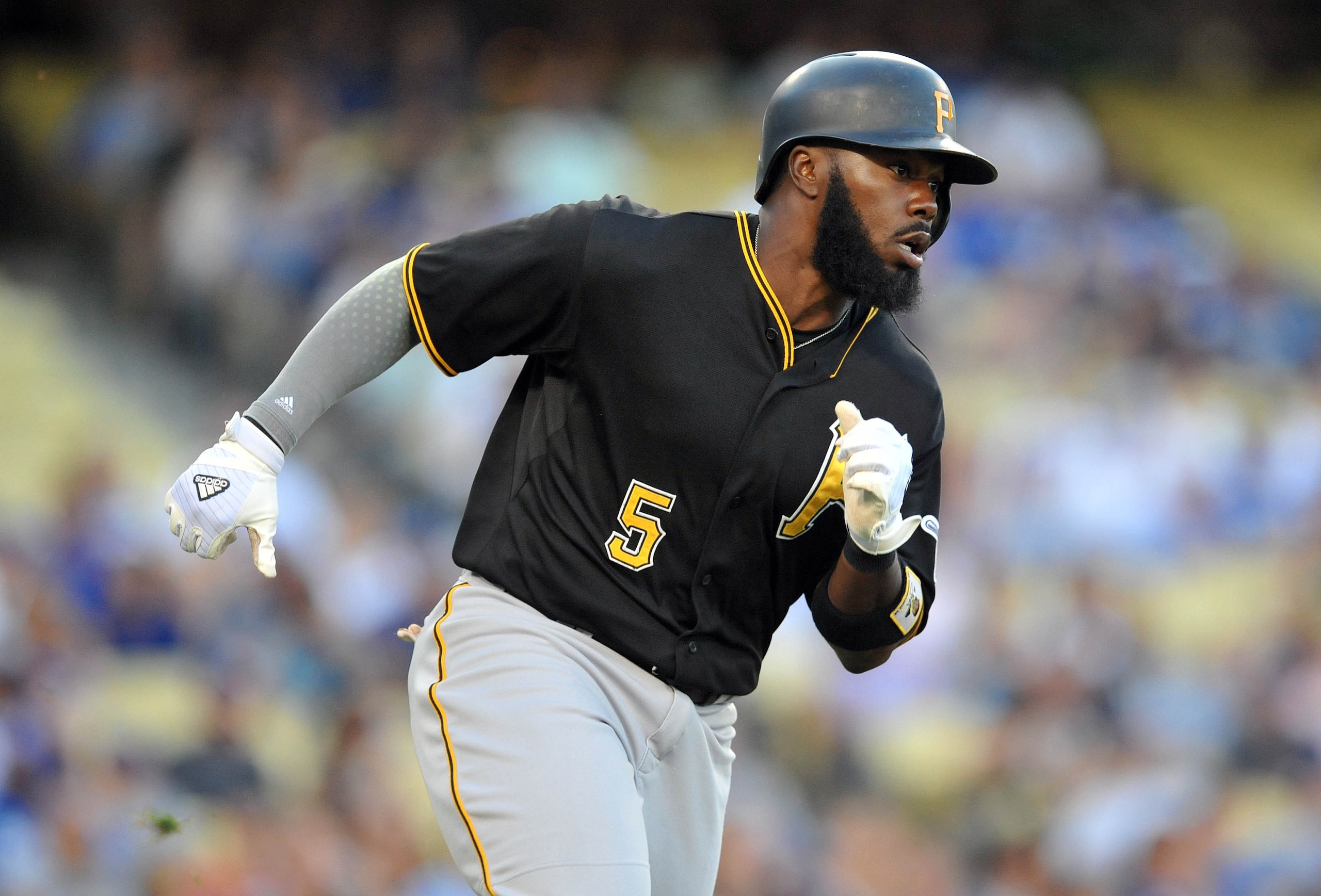
Hitting
Josh Harrison has come back down to earth in 2015, hitting just .281 with a .321 OBP. He hasn't helped himself by becoming even more aggressive and undisciplined. Also, he hasn't been routinely stinging the ball like he did throughout 2014. The bright side is he remains a decent contact hitter for somebody so aggressive, and he's maintained a good line-drive stroke while continuing to make good use of the whole field. He's regressed, but not quite s much as his numbers suggest.
Power
This is where Harrison has really gone backward, hitting just four homers with a .095 ISO. He has hit close to 60 percent of his batted balls in the air but without great efficiency. His Hard% on fly balls is only 30.9, and his Hard% on line drives is only 45.0. But his bigger issue right now concerns how his power has dried up even more since he returned from left thumb surgery in August. Such things have been known to happen following thumb injuries, and it's something that may linger into 2016.
Baserunning
Harrison has pretty good speed, but he still needs to work on his timing with stolen bases. After needing 25 tries to swipe 18 in 2014, he's needed 18 tries to steal 10 this year. The bright side is that his 58 XBT% is both quite good by the position's standards and right in line with his career average. Efficiency may remain a struggle, but not many third basemen can steal double-digit bases with good aggressiveness on the side.
Defense
Harrison is a third baseman here, but it's admittedly hard to slap a specific label on him given how he plays all over the diamond. He's played mostly third base in 2015, with the metrics giving him one DRS and a minus-0.6 UZR. He definitely doesn't have ideal hands for the position, but his sheer energy, quick-twitch athleticism and solid arm allow him to play the hot corner pretty well. Likewise, these tools let him play well elsewhere too. He's not an in-his-prime Ben Zobrist, but Harrison is a good utility guy.
Total
Harrison has regressed mightily from his awesome 2014 season, and his thumb injury makes it easy to worry about his power in particular going forward. But he can still handle a bat well enough, and he brings good speed to the basepaths and versatility on defense.
18. Maikel Franco, Philadelphia Phillies
9 of 26
Hitting
Assuming Maikel Franco's left wrist injury puts an early end to his season, he'll finish hitting .277 with a .340 OBP. But while those numbers look good, what's underneath isn't so pretty. Franco hasn't shown off the most disciplined approach, and his preference for high pitches gives hurlers an avenue to easy outs. Throwing him low is a good idea in general, and it's doubly good when breaking balls and off-speed pitches are involved. Elsewhere, it's also not the best sign that Franco hasn't crushed the ball. Though he's put up good numbers, expectations should be tempered going forward.
Power
This is where we can allow ourselves a little more optimism. Power was Franco's calling card in the minors, and the 13 homers and .213 ISO he's put up suggests it's going to be there in the majors, too. He only hit a little over 50 percent of his batted balls in the air, but he did so with Hard% rates easily north of 40 on fly balls and line drives. And though he's a pull hitter, he doesn't need his pull tendency to hit for power. The one red flag is his wrist injury, which is a threat to linger and limit his power.
Baserunning
Running the bases was never supposed to be Franco's thing, so his 1-for-1 showing in the stolen base department is likely a sign of things to come. But next to that is a 41 XBT% that would do fine if he can keep it up, and that's not asking for too much at 23 years old.
Defense
Franco has only played in basically a half season's worth of games, but that's all the metrics have needed to be disgusted. He's produced minus-10 DRS and a minus-8.0 UZR. His first-step quickness is fine and leads to some solid range, but mistakes are likely to be a part of his game. He doesn't have the best hands. And his plus arm strength doesn't come with plus accuracy thanks to his funky sidearm throwing motion. The metrics likely overstate how bad he is, but he likely won't be an asset on defense.
Total
Some red flags cloud Franco's immediate future, most notably his (likely) unsustainable performance at the dish and subpar defense at third base. But at the least, his power should make him a solid regular at the hot corner.
17. Martin Prado, Miami Marlins
10 of 26
Hitting
A hot second half has rescued Martin Prado's numbers, as he now finds himself hitting a solid .288 with a .337 OBP. He still has a discerning, contact-oriented approach and is getting by on a line-drive stroke that makes good use of the whole field. But if he has a fatal flaw, it's that he's too discerning. Being so choosy with your swings isn't the best idea when pitchers are aggressively attacking you in the zone. And it's especially hard to get by these days when you don't like swinging at pitches at your knees. So just like his career numbers suggest, this is about as good as Prado can be.
Power
Prado's hot second half has also brought some power, but he still only has nine homers and a .107 ISO. And even those figures may be too kind. Prado hits a little under 50 percent of his batted balls in the air, and with subpar efficiency. His Hard% on fly balls is only 29.8, and his Hard% on line drives is only 37.8. And though he uses the whole field well, his power only applies to his pull side. He's not completely finished as a power hitter, but he's at an age (nearly 32) where any decline must be taken as a warning.
Baserunning
We're only a few years removed from Prado swiping 17 bases in 2012, but those days look long finished. He's stolen only one base in one try this year and posted a modest 39 XBT% on the side. His career track record says he's capable of doing better than that, but this is yet another area where we have to take age into account.
Defense
The metrics are once again smiling on Prado's defense at third base, giving him a eight DRS and a 7.5 UZR. Those are big numbers for a guy who doesn't stand out as a treasure chest of tools, as Prado has neither great range nor a great arm. But he does react well at the crack of the bat, and he seems to never make a play tougher than it has to be. That's an underrated talent. Though the metrics probably overstate Prado's talent, he is an asset at third base.
Total
Prado doesn't rank among the more exciting players in the game, as nothing he does will make you say "wow." But with a solid bat and glove at his disposal, he carves out his share of value as a decent two-way player.
16. Yangervis Solarte, San Diego Padres
11 of 26
Hitting
Yangervis Solarte has basically picked up where he left off in 2014, hitting .274 with a .325 OBP. The best thing he has going for him is how hard he is to beat within the zone, as he rarely fails to make contact on in-zone pitches. And overall, he's good at making consistent hard contact. The downside is that he also has a big-time pull habit. And though he's tough to beat in the zone, he hasn't been as good at keeping his swings there as he was in 2014. He's a solid hitter, but that's all.
Power
The move from Yankee Stadium to Petco Park hasn't hurt Solarte's power, as he's hit 13 homers with a solid .159 ISO. For a guy who's hit over 55 percent of his batted balls in the air with a pull tendency, this isn't too surprising. But be warned that Solarte's line-drive power (57.3 Hard%) is a lot more impressive than his fly-ball power (30.8 Hard%), so we may be seeing the peak of his home run potential. Even still, he should maintain passable power as long as he keeps whacking line drives like he does.
Baserunning
The one stolen base Solarte has this year brings his career success rate to 1-for-2. That tells you all you need to know about that aspect of his game. Elsewhere, he has a 40 XBT% that's solid by the position's standards. And given that this is right where he was last year, too, it's where one can expect him to stay.
Defense
Like in 2014, the metrics think Solarte has been just OK at third base with zero DRS and a 0.4 UZR. That about sums him up, as neither in particular stands out when he's on defense. He's not especially quick on his feet, nor does he have particularly soft hands or a great arm. But he has shown he can at least play a mistake-free third base, and his ability to fill in at second and first shouldn't be overlooked. Dependability and versatility are both worth something.
Total
Solarte may have disappeared from your radar after his time in the spotlight early last season came to a close. But he's still out there, and he's still a solid two-way player thanks to a capable bat and versatile glove.
15. Trevor Plouffe, Minnesota Twins
12 of 26
Hitting
With a .245 average and .308 OBP, Trevor Plouffe is adhering to his career rates. There's nothing wrong with his approach, which features a blend of discipline and contact. And though he has a pull tendency, he also makes hard contact at a decent rate. But more than anything else, his shortcoming is a lack of plate coverage. Anything up in the zone is a good bet to beat him, and he continues to be largely useless against anything outside the zone. Regarding his true hitting talent, his career rates don't lie.
Power
Plouffe may not be much of a hitter, but he's hit for good power this year with 21 homers and a .191 ISO. It's nothing new that he's hit 60 percent of his batted balls in the air, but his Hard% rates on fly balls (40.8) and line drives (42.7) represent an improvement for him in the efficiency department. And though he definitely favors left field, he's showing he doesn't need to rely on his pull side for power. Plouffe is no youngster at 29, but it looks like he's rediscovered the power he had a few years ago.
Baserunning
Following his normal pattern, Plouffe has made it to two steals in three tries this year. That's about the extent of his stolen base ability, though, and his 38 XBT% is only solid. And while that's not a bad thing on its own, he'll have do better than eight outs on the basepaths to make such a modest XBT% pass as solid. Given that this makes it two years in a row he's had a TOOTBLAN issue, don't get your hopes up.
Defense
After rating him as a solid defender last year, the metrics see Plouffe as average at best with minus-two DRS and a 1.5 UZR. Even saying that much is a kindness. Plouffe can field what's hit to him, but his ability to make plays is limited by slow reactions and merely average arm strength. Good instincts would help him account for such shortcomings, but he doesn't seem to possess those, either. He's not quite a liability on defense, but it's hard to call him an asset.
Total
It's hard to get too excited about a guy like Plouffe, as he's not a particularly good hitter or defender. But he at least has a semi-dependable glove and pretty good power for a third baseman, making him a solid everyday option.
14. Jake Lamb, Arizona Diamondbacks
13 of 26
Hitting
After a rough taste of the majors in 2014, Jake Lamb has rebounded to hit .271 with a .338 OBP in regular action in 2015. Well, semi-regular, actually. The D-Backs have spared him from facing left-handers, so understand we're talking about a platoon bat here. The bright side is that Lamb clearly sees right-handers well, showing off an advanced approach and beating them with strong plate coverage that produces plenty of hard contact. He may not escape his platoon role, but it serves him well.
Power
Lamb showed off some pretty good power in the minors, but he's had issues translating it to the majors with just six homers and a .131 ISO this year. There's room for optimism, though. The left foot injury he battled earlier in the season held him back, but he's been driving the ball better in the second half with a 38.5 overall Hard%. And in general, he's put 55 percent of his batted balls in the air with strong Hard% rates on fly balls (41.6) and line drives (53.7). Odds are we've only seen the least of his power.
Baserunning
Lamb hasn't made much noise on the basepaths this season, swiping only three bags in five tries and posting a 34 XBT% that's short of being up to par. And while we could point to his foot injury here, too, we'll defer to Baseball America's report (subscription article) that Lamb is a below-average runner to begin with.
Defense
The metrics have gotten a pretty good look at Lamb and like what they see to the tune of a 6.6 UZR and four DRS. He doesn't have explosive quickness, but he does react well and easily corrals balls thanks to his soft hands. And while his arm strength is probably short of plus, it's plenty solid and comes with good accuracy. UZR may be overstating his talent a little, but Lamb is definitely good.
Total
The big catch where Lamb is concerned is that he's been spared action against dangerous left-handers. But even accounting for that, he's teased himself to be a solid-hitting third baseman who also features a good glove.
13. Chase Headley, New York Yankees
14 of 26
Hitting
Chase Headley was slow out of the gate, but he's rebounded enough to be hitting .262 with a .326 OBP. Such figures are in line with his career rates, and they point to how he's largely doing the same ol' thing. Everything starts with a disciplined, contact-oriented approach and ends with a stroke that's made for line drives. But as per usual, a good breaking ball still easily silences Headley. And given his age (31), it's not the best sign that his contact rates have fallen off so much. There are cracks forming.
Power
It was easy to theorize that a full season at Yankee Stadium would boost Headley's power, but there's nothing boosted about 11 homers and a .113 ISO. He gives himself chances by hitting over 55 percent of his batted balls in the air, but his line-drive power (44.8 Hard%) dwarfs his fly-ball power (33.1 Hard%). And when he bats lefty (his primary side), his power doesn't extend far beyond his pull side. Once again, you wonder if he's starting to feel his age.
Baserunning
Headley was good for 15-20 steals per year not too long ago, but those days look finished. Opposing catchers threw him out in his only two steal attempts this year. Elsewhere, he's posted a 36 XBT% that's just south of the average around these parts. It's possible that a July leg injury has lingered more than anyone's letting on, but the more likely explanation is that this is simply Headley acting his age.
Defense
The metrics normally love Headley's defense, but not so much this year. He's produced minus-four DRS and a minus-2.0 UZR. But some of that is left over from when Headley was out of sorts earlier in the year. He's gotten better with time, showing off the skills that made him so good in the first place. He doesn't have the most impressive collection of physical tools, but he shows that a guy can do a lot with instincts, good hands and an accurate arm.
Total
Headley's bat has developed some question marks, and these question marks could well become more pronounced with time. But his bat is still solid despite those, and the metrics are overstating the demise of his defense.
12. Justin Turner, Los Angeles Dodgers
15 of 26
Hitting
Justin Turner was red hot for the better part of a year-and-a-half, but an injury-marred second half has knocked his production down to a .291 average and .368 OBP. He still bears the marks of an awesome hitter, as he blends a disciplined approach with a line-drive stroke that produces good contact to all fields. But the damage his legs have taken in the second half has compromised his ability to hit good heat (i.e. four-seamers) as well as his ability to turn on inside pitches. It's tempting to assume time will heal his wounds. But given that he's pushing 31, it may not be so easy for him to fully recover.
Power
With 15 homers and a .197 ISO, Turner's overall power production looks fine. And indeed it would, as he's hit nearly 65 percent of his batted balls in the air and knocked the ball all over the yard. But his leg injuries have taken a bite out of his ability to drive the ball, as his Hard% in the second half is only 28.6. Partially as a result of that, his overall Hard% rates on fly balls (38.5) and line drives (40.7) fail to inspire. And again, recovering from his difficulties may not be so easy.
Baserunning
It also looks like Turner's leg injuries have slowed his baserunning, as he's stolen only five bases in seven tries and posted a pedestrian 34 XBT%. But he really never had much speed to begin with. These figures are very much in line with what he did in 2014. That makes him a modest baserunner by default, and his second-half leg woes and nearing 31st birthday likely won't help him get better.
Defense
Turner has gone from being a utility man to being more of a full-time third baseman, and the metrics say it's gone well with four DRS and a 1.8 UZR. But this is likely the best Turner is capable of on defense. He does have a good feel for third base, but none of his physical tools stand out as assets. He's not particularly quick on his feet, nor does he possess especially soft hands or a strong arm. And if he does indeed struggle to recover from all his leg troubles, playing defense won't get any easier.
Total
Turner was quietly one of the most dangerous players in the NL for a while there, but he's had such a tough second half that it's impossible not to worry about him getting back to that status. But even if he does decline across the board, he should still be a quality hitter who can play passable defense.
11. Adrian Beltre, Texas Rangers
16 of 26
Hitting
Adrian Beltre has been hot for a few months now, but even this hot stretch has only elevated his average to .280 and his OBP to .327. He still resembles the same hitter he's always been, using an aggressive approach that somehow doesn't stop him from making frequent, solid contact all over the field. But his plate coverage has diminished in 2015, which has specifically hurt his talent as a bad-ball hitter. This could be a blip in the radar, but it's hard to ignore the notion that Beltre is overdue for a hitting decline. Odds are that's what we're looking at.
Power
Beltre's power has been going downhill since peaking from 2010 to 2012, and this year it's produced just 16 homers and a .157 ISO. It's not all bad, as he's still putting close to 60 percent of his batted balls in the air and sending well-hit balls all over the field. But he's seemingly turned into more of a gap power hitter than a home run hitter, and his Hard% rates support that. He's at 58.6 for line drives and 36.1 for fly balls. His power is only average now, and you can expect another step down.
Baserunning
Beltre was perfectly capable of stealing bases when he was younger, but he's well past that point now at 36 years old. He's stolen only one base in only one try. The bigger surprise in light of that is his 59 XBT%, which is superb for a third baseman regardless of age. But given that he is indeed 36 and said mark is way above his career norm, it more than likely won't last.
Defense
The metrics signaled that Beltre's defense was on the decline a couple of years ago, but here he is now with 16 DRS and an 11.7 UZR. There seems to be little question that he's not as quick as he once was, but he manages to have good range anyway. His instincts tend to put him in the right spot to make plays, and his soft hands and awesome arm strength allow him to make tough plays look easy. He's not in his defensive prime, but he's still very good.
Total
It's looking like Beltre's prime years are finally in the past, but don't even think about writing him off as a useful player. His bat still has some life left in it, and his defense at the hot corner is elite.
10. Evan Longoria, Tampa Bay Rays
17 of 26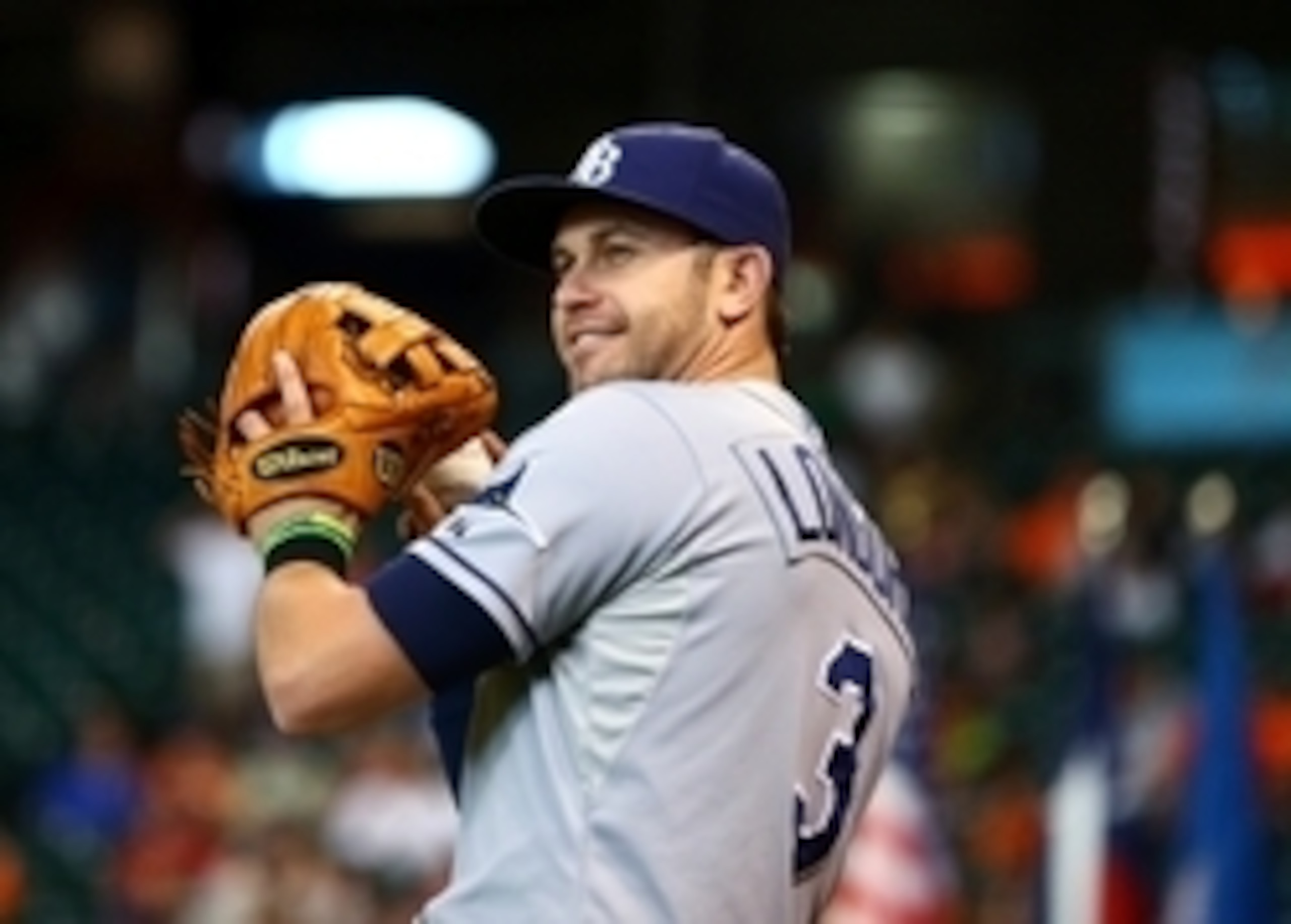
Hitting
With a .270 average and .330 OBP, Evan Longoria has rebounded from a down year in 2014. This has involved being somewhat less aggressive and more willing to use the whole field while still making solid contact. But he's still not his vintage self. His discipline is a shadow of what it used to be. The same goes for his ability to hit the ball hard. And scariest of all is his worsening platoon split, which features a hole up and in for right-handers to exploit. Longo can still hit, but we're witnessing his decline.
Power
Longoria has hit for some solid power with 20 home runs and a .164 ISO, but this is another area where he's not his vintage self. He's still hitting over 60 percent of his batted balls in the air and has the ability to drive the ball to all parts of the yard. But he's now relying on volume more than he once did, as neither his Hard% rate on fly balls (37.5) or line drives (48.0) leaves other third basemen in the dust. With his age-30 season due up, it could become more of a struggle just to make it to 20 homers.
Baserunning
Longoria was a solid stolen base threat, but that's ancient history. His three steals in four tries is the best he can do. And while his 44 XBT% looks good and potentially sustainable after last year's 40 XBT%, the catch is his eight outs on the bases this year make it 15 total since the start of last season. Running the bases no longer comes especially easy for him.
Defense
The metrics have mostly loved Longoria's defense, and they haven't quit on him yet. He has just two DRS, but a 7.1 UZR. His first-step quickness and his range in general aren't what they once were, and that means he can only have so much of an impact on defense. But with the same soft hands and strong, accurate arm he's always had, he's still going to do plenty more good than harm in the field.
Total
Longoria isn't the same impact offensive and defensive player he was in his prime, and that's a darn shame. The bright side, however, is that a third baseman who can at least provide above-average offense and defense is still a pretty good player.
9. Matt Duffy, San Francisco Giants
18 of 26
Hitting
Of all the unexpected things to happen, there's Matt Duffy hitting .299 with a .339 OBP. And this doesn't appear to be a total fluke. Duffy has looked the part of a high-average hitter, showing off solid discipline and an ability to make consistent contact. And he's used the whole field as well as anyone. But we can't ignore how Duffy has been largely unwilling to take a walk, and his high ground-ball rate and modest hard-contact rate make it tough to believe he can keep hitting .300. He clearly has an idea how to hit, but it's more than likely we've seen him at his very best this year.
Power
With 11 homers and a .135 ISO, Duffy hasn't been a huge source of power. But it's fair to say he's hit for more power than expected, especially given that he's hit over half his batted balls on the ground. His trick has been to make the most of his fly balls in particular, hitting them at a 44.5 Hard% rate. But his future as a power hitter likely rests more on his line-drive power, which hasn't been great. His Hard% on liners is below 40, and his line-drive power largely dies off to the right of center. You can expect Duffy's power to regress.
Baserunning
Duffy may not be more powerful than the typical third baseman, but he's clearly faster. He's swiped 11 bags in 11 tries and posted a well-above-average 52 XBT%. Figures like these make him a far more aggressive and indeed more productive baserunner than the typical third baseman, and these are talents that should have lasting power.
Defense
Duffy is a shortstop by trade, but the metrics think he's handled his transition to third base just fine. He's put up 10 DRS and an 8.9 UZR. He doesn't have the same kind of arm strength other third basemen have, and that limits the kind of impact he can have at the hot corner defensively. But his shortstop's hands and athleticism have served him well at third base, giving him the ability to get to more balls than many other third basemen. That's a fair trade-off for a subpar arm.
Total
It may not be the best idea to take Duffy's big breakout at face value, as chances are he's not going to make such a huge impact on offense again. But he's shown he clearly knows how to handle a bat, and he rounds out his value with capable baserunning and defense. So even with pessimistic lenses on, he still looks like a darn fine third baseman.
8. Mike Moustakas, Kansas City Royals
19 of 26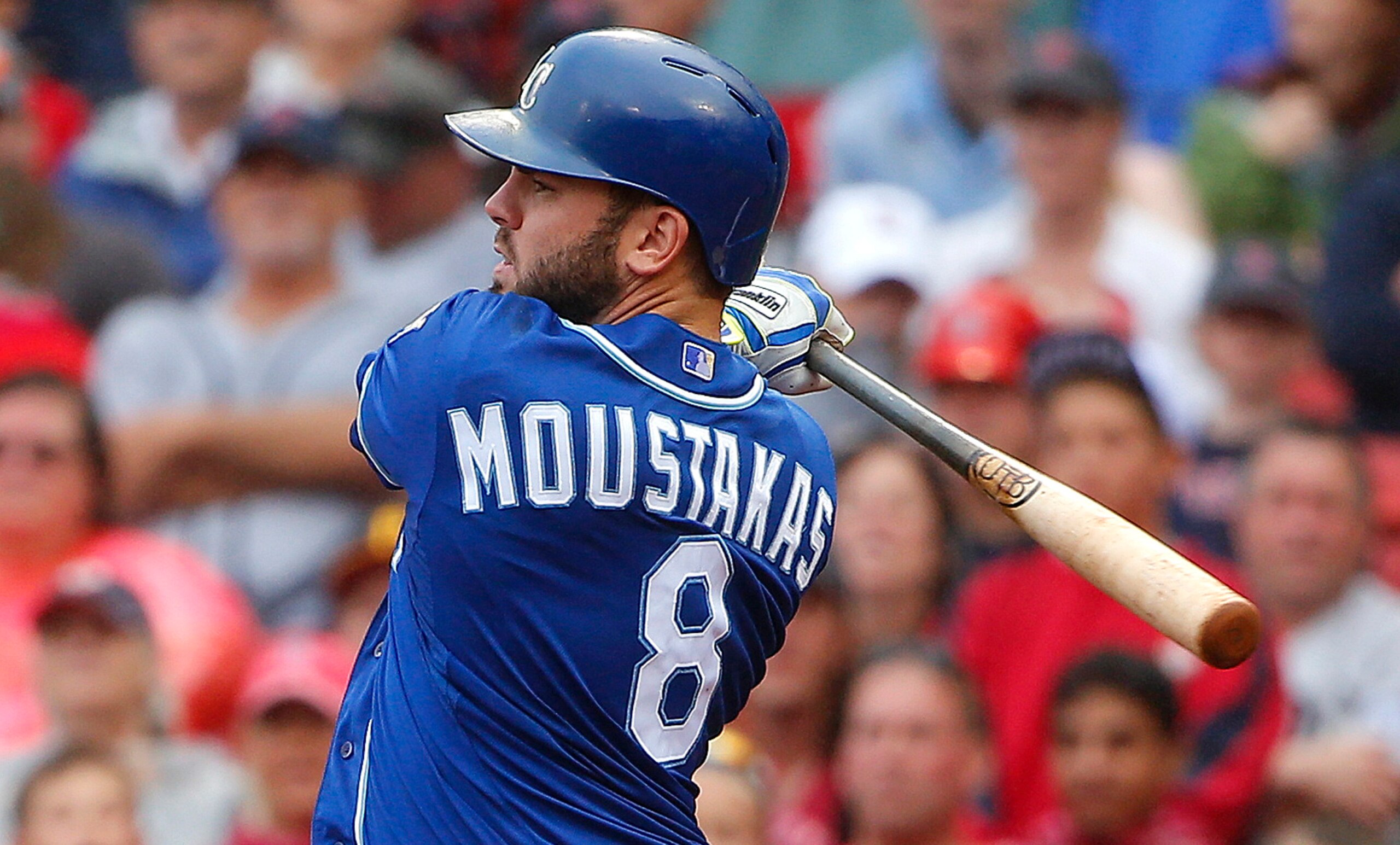
Hitting
With a .282 average and .347 OBP, Mike Moustakas might be baseball's most improved hitter. He's notably erased his platoon split, in part by cutting down on his whiffs. That's indeed part of a larger overall trend, and Moustakas has used the extra contact he's made to show off improved bat control. His Pull% has fallen from over 50 to under 40. He does have his limits, though. He doesn't have the most disciplined approach, and more bat control not surprisingly hasn't meant a big increase in loud contact. And as we'll discuss below, he may not be 100 percent committed to his new approach.
Power
Moustakas was struggling in this department, but a huge second-half surge has given him 21 homers and a .185 ISO. This isn't surprising to the extent that he's still hitting 60 percent of his batted balls in the air, but what's changed is that he's put more of an emphasis on his pull side (42.5 Pull%) and on driving the ball (39.3 Hard%). In the process, he's looked like his old self. That may not help him from a consistency standpoint, but it's hardly the worst thing for his power production.
Baserunning
Suffice it to say Moustakas is not a fast runner, so none of the following should come as a shock. He's stolen just one base in three tries and posted a 32 XBT% on the side. To make matters worse, he's run into eight outs on the basepaths. He should be able to bounce back from this given that he's only 27, but he won't be much of a baserunner even if he does.
Defense
The metrics have tended to flip-flop on Moustakas' defense, but they're mostly on board this year with six DRS and a 2.8 UZR. He does have limited range thanks to a lack of general quickness, but he's capable of making nifty plays at third base nonetheless. He possesses crafty footwork and has plenty of arm strength for finishing off the tough throws. One hesitates to call him a great defender, but he's definitely good.
Total
Moustakas has played the role of two different hitters this season, and that makes it somewhat difficult to project his future. But there's no question that his bat inspires more confidence than it did before, and it still comes paired with a capable glove. He is indeed a changed player.
7. Kyle Seager, Seattle Mariners
20 of 26
Hitting
Kyle Seager is hitting .272 with a .331 OBP, which is right where he's been the last three years. His longish uppercut swing limits his plate coverage, and he's still not the best off-speed hitter. But he does choose his swings carefully with an emphasis on making contact, and he gets by on a line-drive stroke that produces its share of loud contact. And by targeting fastballs, he's destroyed his platoon split against left-handers. As such, Seager could be getting better.
Power
With 25 home runs and a .185 ISO, Seager is continuing to hit for good power. He doesn't have particularly great power efficiency, posting a 34.3 Hard% on fly balls and a 46.3 Hard% on line drives. But he makes up for that with volume. About 65 percent of his batted balls are in the air, and he clearly gets the most out of his pull tendency. His lack of booming raw power means there's a limit to how much power he can provide, but he's a good bet to stay in the 25-homer range.
Baserunning
Seager used to be a good source of baserunning production, but not so much anymore. His 6-for-12 showing in the stolen base department is a continuation of a downward trend, and his 38 XBT% is down from 51 in 2013. To boot, his eight outs on the basepaths make it 27 over the last three years. He's not exactly a slow baserunner, but it's hard to still call him a good one.
Defense
The metrics think Seager has fallen off last year's Gold Glove performance, with minus-one DRS and a 1.8 UZR. He hasn't been as sure-handed, and that's actually more in line with his track record than what he did in 2014. But he can still look the part of a gifted third baseman. He shows off good range that comes from a solid first step, and he adds to his solid arm strength with a quick release. Last year may have been a peak performance, but it wasn't a total outlier.
Total
Seager's defense has slipped a little, but his 2015 season has otherwise been another success. He's made some additional adjustments to turn into an even more well-rounded hitter, and he's kept the power coming at his usual rate.
6. Matt Carpenter, St. Louis Cardinals
21 of 26
Hitting
It says a lot about Matt Carpenter that he could be hitting .266 with a .361 OBP and have that represent a step down. Likewise, it says a lot that he's being more aggressive and is still the pickiest swinger at third base. His trademark discipline is intact, while the extra aggressiveness has paid off in more hard contact. This makes Carpenter basically the perfect hitter in theory, but he's not quite. He's becoming more strikeout-prone every year, and his uppercut swing leaves a hole up in the zone. He'll have to settle for being merely really good.
Power
This is where Carpenter has really changed in 2015, hitting 26 bombs with a .221 ISO. This is mainly a volume thing, as he's hitting 70 percent of his batted balls in the air. But he's also been efficient. Over 40 percent of his batted balls classify as fly balls, and he's hit those hard 47.7 percent of the time. He also hasn't needed to rely on his pull power to hit the ball over the fence. One definitely senses this will be a hard performance to repeat, but Carpenter has at least proved he can hit for power when he wants to.
Baserunning
Carpenter is by no means a fast runner, and his 4-for-7 showing in the stolen base department is pretty much par for the course. He could make up for that with aggressiveness, and his 42 XBT% says he does. The catch is that he's also run into 10 outs on the basepaths, making it 20 total over the last two years. That's a legit TOOTBLAN problem.
Defense
Just like last year, the metrics aren't rating Carpenter's defense well with minus-nine DRS and minus-3.3 UZR. There's no question he's limited. He lacks a single standout attribute, as his first step, hands and arm allow him to only do so much on defense. The one compliment he can be paid is he does have solid instincts that allow him to be a little better than the sum of his parts. But even with that, he's still not an above-average defender.
Total
This season has seen Carpenter return to his status as one of the NL's more dangerous hitters, as he's combined his awesome discipline with some serious power. As long as he can come anywhere close to repeating this performance in 2016, he'll remain one of the league's top third basemen.
5. Todd Frazier, Cincinnati Reds
22 of 26
Hitting
Thanks to yet another second-half slump, Todd Frazier is only hitting .260 with a .314 OBP. He definitely crushes the ball when he makes contact, but making contact is tough thanks to a hyper-aggressive approach that leaves him vulnerable to whiffs. He also has very limited plate coverage beyond the inner two-thirds of the zone, with a related note being that everything is geared toward hitting the ball in the air to his pull side. In all, his is an approach that doesn't jibe with consistency.
Power
And now for the good news. Frazier's approach to hitting may not be good for consistency, but it has produced 35 homers and a .250 ISO. You'd certainly expect as much from a pull hitter who hits over 65 percent of his batted balls in the air, and his raw power is no joke. He's hit his fly balls (40.1 Hard%) well and crushed his line drives (56.0 Hard%), and he hasn't needed his pull tendency to show off his power. One catch is that Frazier's power gets a boost from Great American Ball Park, but that's about it.
Baserunning
After stealing 20 bases in 2014, Frazier hasn't quit trying to make a difference on the basepaths in 2015. He just hasn't been as successful. He's needed 20 tries to steal 13 bags, and 10 the additional outs he made on the basepaths overrule his modest 34 XBT%. These figures shouldn't undersell the kind of athleticism Frazier has, but they send a clear signal that he should stop trying to do so much.
Defense
The metrics are once again rating Frazier as a well-above-average third baseman with nine DRS and an 8.4 UZR. He's an athletic third basemen, showing off good quickness and the strong arm needed to make tough plays. But it's not a fluke that he's also one of the more mistake-prone third basemen in the league. He doesn't have great instincts to help him make the most of athleticism, resulting in awkward plays and instances where he tries to force things. He's good, but short of truly great.
Total
It's easy to nitpick Frazier's hitting approach, but it's harder to downplay his status as one of the game's more talented third basemen. Thanks to elite power, good speed and a solid glove, he's one of the better two-way threats at the position.
4. Nolan Arenado, Colorado Rockies
23 of 26
Hitting
It feels like Nolan Arenado is a much-improved hitter, but his .283 average and .317 OBP say otherwise. One issue, as expected, is he's had trouble away from Coors Field. But the big underlying problem is that he has a hugely aggressive approach that doesn't feature nearly enough contact or overall plate coverage to justify it. And while his big redeeming quality is he crushes the ball when he puts it in play, his preference for his pull side subtracts from that a little. All told, he's not geared for consistency.
Power
This is where Arenado's wild approach becomes worth the trouble. He's hit 40 homers with a .281 ISO, and he hasn't needed to rely on Coors Field to do so. What makes his power legit is both volume and efficiency: He's hit about 65 percent of his batted balls in play and posted Hard% rates north of 40 on both fly balls (41.7) and line drives (48.5). And though his power has skewed heavily toward left field, his pull habit allows him to make the most of that. This has been a true power awakening.
Baserunning
Arenado doesn't have enough speed to be a proficient base stealer, as he's once again proven this year with two steals in six tries. But his 52 XBT% stands out as being safely better than average, and it's a good sign that it's the latest stop on an upward trend. Whether he can do better than this is a good question, but he should continue producing solid baserunning.
Defense
The metrics don't think Arenado's defense has gotten better since his rookie season, but he's still rating as elite with 14 DRS and a 7.4 UZR. He is indeed the total package on defense. His instincts and quick reactions give him plus range, and he packs soft hands and a well-above-average arm. All his athleticism opens him up to extra opportunities for mistakes, but the good he can do will continue to far outweigh the bad.
Total
Arenado is certainly not the most advanced hitter you're going to find among the third base ranks, but that's one of few gripes about his game. His awakening as a power hitter looks legit, and he offers solid baserunning and superb defense.
3. Kris Bryant, Chicago Cubs
24 of 26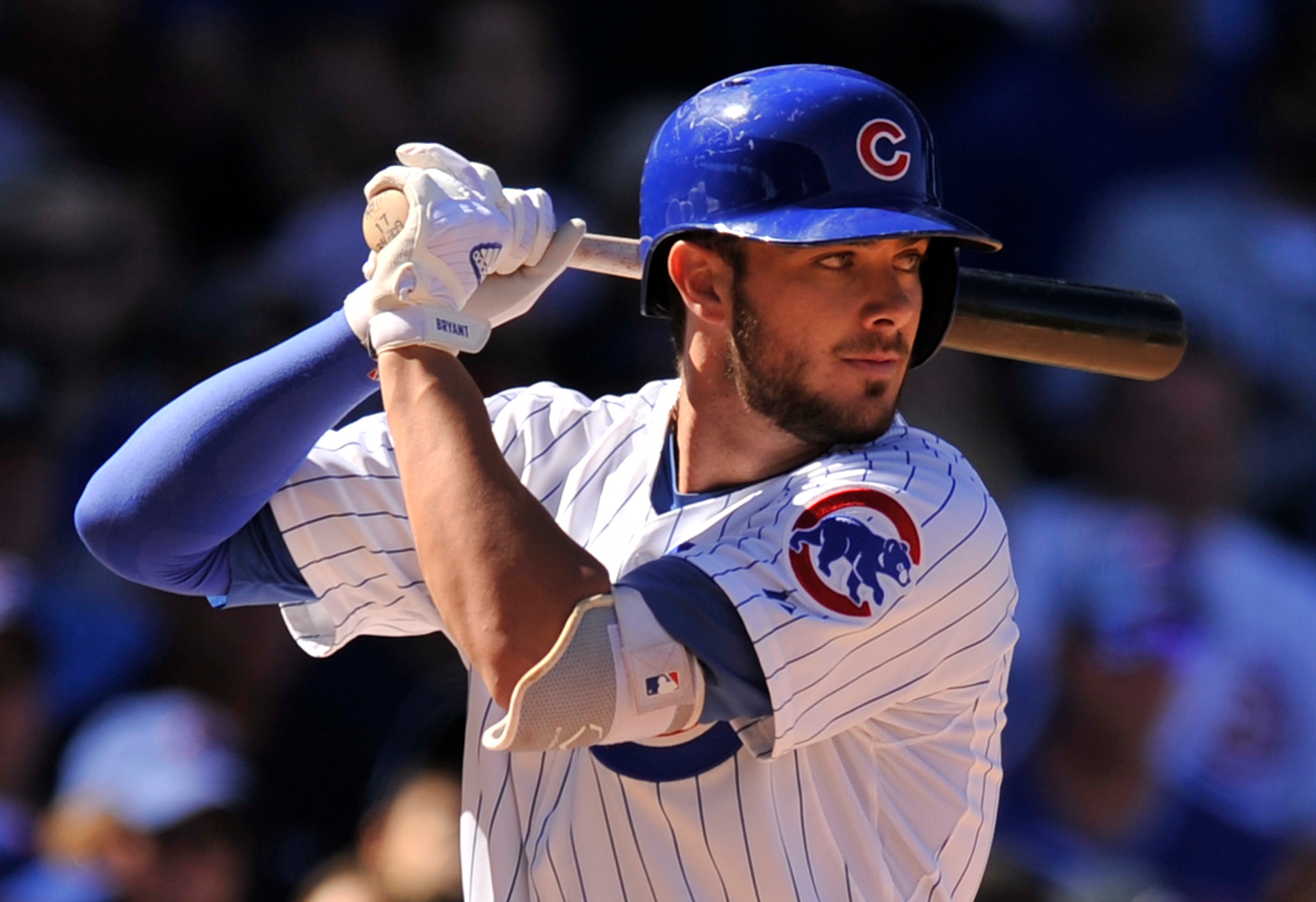
Hitting
They said Kris Bryant could hit, and he's proving them right with a .280 average and .372 OBP. Certainly the biggest flaw in his game is his whiff habit, which has been about as bad as advertised. And no, it's not the best sign that it hasn't gotten better as the year has progressed. But he at least does himself a favor by remaining reasonably disciplined, and he has pretty good plate coverage despite that whiff habit. In a related story, he tends to crush the ball when he does make contact. So though Bryant has a big vulnerability, he's going to draw enough walks and smash enough hits to hide it.
Power
It took a while for Bryant's power to really get going, but there he is with 26 home runs and a .224 ISO. He gives himself plenty of chances to hit for power by putting around 65 percent of his batted balls in the air, and he's done so with strong efficiency. His Hard% rates on fly balls (40.8) and line drives (49.3) are both north of 40. And though he favors his pull side, he can hit the ball over any fence. With all this happening in his rookie year and at an increasing rate as he's gained more experience, even better things should be in store for next season.
Baserunning
It's easy (and indeed advised) to focus on Bryant's power, but don't overlook his speed. He showed he could steal bases in the minors last year, and he's continued doing so with 13 steals in 17 tries in the majors this season. In addition, he owns a 46 XBT% that's quite good for a third baseman. The potential is there for 15 stolen bases and plenty of extra bases taken, making Bryant one of the league's top baserunning third basemen.
Defense
Bryant was never billed as much of a defender, but the metrics say he's held his own with a one DRS and a 1.9 UZR. He does have some things going for him on defense, including a rocket arm and sheer size (6'5") that gives him a bigger reach than most third basemen. But his range is limited despite that, as he's not especially quick at the crack of the bat. He also doesn't have the softest hands. Given those two limitations, holding his own is likely the best he can do on defense.
Total
Bryant may not be the perfect third baseman, but he's definitely made good on all the preseason hype. He's proven himself to be a special hitting talent with power that's trending toward elite and good enough speed to make him a truly well-rounded offensive threat.
2. Manny Machado, Baltimore Orioles
25 of 26
Hitting
Manny Machado has come into his own in 2015, hitting .286 with a .360 OBP. At the heart of his transformation is an approach that's gotten considerably calmer, as it now features excellent discipline and an emphasis on contact. Not surprisingly, one of the major upshots of this has been an increase in hard contact. He's not quite perfect yet, however. Machado's plate coverage is limited beyond the inner two-thirds of the zone, with a related story being that he's regressed with his production to the opposite field. Even still, his hitting is on the up-and-up.
Power
Machado's offensive awakening has also helped his power. He's slugged 30 homers and posted a .201 ISO. He's hit a little over 55 percent of his batted balls in the air, and with solid efficiency to boot. His Hard% rate on fly balls is 39.0, and his Hard% on line drives is even better at 55.6. And though he favors his pull side, he's proven he can apply his power to all fields. One catch is that he gets a boost from Oriole Park at Camden Yards, but that's it. His power is also on the up-and-up.
Baserunning
Machado isn't the fastest third baseman out there, but that hasn't stopped him from becoming more active on the basepaths. He's stolen 17 bases in 25 tries and upped his XBT% to a solid 42. Granted, his lack of efficiency stealing bases could very well result in his toning it down a little going forward. But even if he does, he could still steal double-digit bags while also being aggressive on the basepaths.
Defense
The metrics don't think Machado is matching his incredible defensive performance from 2013, but they like him plenty with 14 DRS and a 10.8 UZR. And the fact is he still has arguably unparalleled skills at third base. His instincts and first-step quickness give him well-above-average range, and his soft hands and rocket arm allow him to make the most of it. He's not completely immune to miscues, mind you, but he makes too many good plays for that to really matter.
Total
Machado was always supposed to turn into a special player, and we've watched it happen this year. He's become a much more advanced, much more powerful hitter, and he has kept on playing superb defense at third base. He's now arguably the game's top third baseman.
1. Josh Donaldson, Toronto Blue Jays
26 of 26
Hitting
After experiencing some struggles in 2014, Josh Donaldson is hitting like it's 2013 with a .299 average and .373 OBP. It's not the best sign that he's becoming increasingly likely to whiff against slow stuff, nor is it ideal that his plate coverage basically stops at the outer third of the zone. But his impressive discipline does minimize the latter problem, and it's at least as noteworthy that he doesn't give pitchers any safe havens within the strike zone. On a related note, he's only getting better at making loud contact. Donaldson isn't a flawless hitter, but he's definitely good.
Power
This is where Donaldson has really broken out in 2015, slugging 40 homers so far and posting a .276 ISO. He doesn't give himself a ton of chances to drive the ball by hitting just 55 percent of his batted balls in the air, but his efficiency is off the charts. With a 44.8 Hard% on fly balls and a 59.5 Hard% on line drives, he doesn't waste what he puts in the air. And keeping in line with his track record, he's able to apply his raw power to all parts of the yard. Make no mistake: You're looking at a legit power threat in his prime.
Baserunning
Donaldson isn't the most productive baserunner, but he's better than you might think. His 6-for-6 showing in the stolen base department makes it 14-for-14 over the last two years, and his 37 XBT% is close enough to average for government work. And though he's done better than that, the trade-off this year is that he's run into very few outs (3) on the basepaths. So, again, he's better than you think.
Defense
The metrics aren't rating Donaldson's defense as highly as they did in 2014, but they still like him to the tune of nine DRS and a 7.3 UZR. He's definitely capable of filling up a highlight reel, as he combines good instincts with strong athleticism and high energy to make all sorts of tough plays. That, undoubtedly, is what makes his defense worthwhile. The only downside is that he can get excitable and make mistakes, particularly with his throwing accuracy.
Total
Donaldson has been one of the top all-around third basemen in the league for a couple of years now, but this is the year he's really come into his own. He's remained a good hitter and defender, and he has turned himself into an elite power hitter. It's hard to ask for a better third baseman than that.


.jpg?w=2560 "Mahomes Reacts to Bettors Vid 😂")
.jpg?w=2560 "Week 1 Fantasy Duds 👎")