Mike Freeman's 10-Point Stance: Do NFL Players Really Have 'Fall Guys'?
1. The Fall Guy
I've covered several NFL rookie symposiums. Once, some years ago, I was part of a panel that spoke to hundreds of players about dealing with the media. It was one of the more fascinating moments of my career. My life, actually.
There was no mention of a fall guy.
.jpg?w=2560 "NFL Owners Football")
.jpg?w=2560 "Chiefs Buccaneers Football")
.jpg?w=2560 "Commanders Lions Football")
The NFL gets things wrong. We all know that. But the league also gets stuff right, and the symposium is an example of that. It might be at the top of the list. It is an amazing thing to see, and many of the rookies are into it. For some, what they take away from the symposium stays with them forever. Others don't get it. The objectives are lost on them. Those are the players whose names we later read on a police blotter.
The questions players ask at the symposium are smart and their dedication is evident. When I spoke, it felt like I was talking to future CEOs. In many ways, that's what NFL players are. They are their own brand. Their own company.
There is cursing at these symposiums. Blunt talk. Anger. Sadness. Raw, unfiltered stories from veterans telling rookies what life will be like.
But of all the symposiums I've written about, and the one I participated in, I never heard anything like what Cris Carter said.
For the full context of what Carter was saying, you can watch the full speech here. But the point: An NFL player needs to have a "fall guy" in his crew, to take the fall if he gets into trouble.
This still has me shaking my damn head.
What's more is how long the speech went unnoticed. These comments weren't from this year's rookie symposium; they were from last year's.
People started to notice thanks to a story on ESPN on Chris Borland's decision to retire from the sport. Borland recalled the incident to authors Steve Fainaru and Mark Fainaru-Wada:
""Get yourself a fall guy," Borland says one of the former players advised. The former player, whom Borland declined to name, told the rookies that if they ran into legal trouble, their designated fall guy would be there to take the blame and, if necessary, go to jail. "'We'll bail him out,'" Borland says the former player assured them.
Borland was appalled. "I was just sitting there thinking, 'Should I walk out? What am I supposed to do?'" he recalls. He says he didn't leave the room because he didn't want to cause a scene, but the incident stayed with him.
"
I tweeted about the remarkable passage and on Saturday received and retweeted a reply linking to the video showing Carter as the speaker Borland hadn't named.
"In the ESPN story, Chris Borland says at rook symposium, vet told rooks if they get in legal trouble, assign a "fall guy."
— mike freeman (@mikefreemanNFL) August 20, 2015"
By Sunday, everyone was running it. It went viral, to the point of the NFL yanking the video from its site and issuing a statement about it:
"This was an unfortunate and inappropriate comment made by Cris Carter during the 2014 NFC rookie symposium. The comment was not representative of the message of the symposium or any other league program. The league's player engagement staff immediately expressed concern about the comment to Cris. The comment was not repeated in the 2014 AFC session or this year's symposium.
"
Then ESPN released a statement, saying Carter's words don't reflect ESPN's values:
"We completely disagree with Cris's remarks and we have made that extremely clear to him. Those views were entirely his own and do not reflect our company's point of view in any way.
"
Then Carter made his own statement, apologizing on Twitter:
Talented Sports Illustrated writer Robert Klemko then became part of the story, also making a statement to explain why he didn't report Carter's words after he was given "near-unfettered access" to the symposium.
So, after the video sat unnoticed for more than a year, over the span of a just a few hours the story entered hyperspace, becoming simultaneously a football story, an ethics story, a social media story and a journalism story.
Some people will be critical of Klemko (some journalists hypocritically so), but the reality is that journalists don't report everything we know or hear. The symposium is a place where rookies are supposed to feel uninhibited, and reporting their every word would betray this.
It is true that the NFL tries to have it both ways with the symposium. The league wants good publicity from the event, minus some of the raw words and scenes. I'm not certain how I would have handled it. Probably the same way Klemko did, mainly because I think that Carter might not have actually meant what he said, that he just got caught up in the showbiz part of the symposium.
Overall, we need to really focus on several things here:
First, Carter, an NFL Hall of Famer, at an NFL-sanctioned event was advocating to rookies that if they get caught breaking the law, they should lie and designate a fall guy.
Second, the NFL posted a video of that advice on its website.
Third, the video was online for more than a year, and no one noticed. Not journalists like me. Not the NFL. No one.
That is a pretty remarkable string of events, and likely nothing like it will ever happen again.
I had never heard of this fall guy thing. Not once in more than 25 years of covering the sport. What struck me most about Carter's words were the ease with which he spoke them. Despite the fact I'm not certain he meant to say what he did, he spoke like someone who had an eerie familiarity with the construct.
It got me wondering: Does this actually occur? Are there designated fall guys around a player?
The best answer I could forage is, yes, this does happen. It's incredibly rare. Like, really, really rare. But it does happen.
I asked several active players, who basically said, "Yeah, I have heard of something like this, but I wouldn't do that." They mostly said the whole notion was extremely dumb.
Former player Tom Crabtree, one of the game's class acts when he played, said something more blunt. He called Carter "a f-----g moron."
"No one is ever assigned to be a fall guy. It's just understood," said one Hall of Famer I spoke to. "You have a close group of guys you grew up with, and one of them will step up for you if you get in trouble. A lot of this goes back to how some guys grew up in [rough] neighborhoods, and there are sometimes a different set of rules for guys like that.
"There's a different way of going about things for rich guys of all kinds. You don't think some actors have fall guys? A lot of NFL players are very wealthy, and like other rich people they will do unusual things to protect that wealth."
Asked if he knows of examples of this happening, where a player got in legal trouble and had someone in his crew take the blame for it, the player said, "Yes, but really rare." He would not disclose any examples.
That explanation made a lot of sense. There's not like a Fall Guy Internship Program. If someone does take the fall for a player—and, again, to be clear, it probably almost never happens—it's not because he's designated "fall guy" in advance.
The impression I get is that the fall guy concept would apply in an example like this one: A player and three friends are in a car. The car is pulled over by police. The officers smell marijuana. All of them were smoking, but one of the three friends says it was him smoking it, not the player.
"It's a terrible thing to do," said the Hall of Famer. "But this is how life goes."
In other words, the fall guy is an organic thing, not something preplanned. It's more of a concept put into practice during a crisis.
So while it's easy—and perhaps fair—to blast Carter for what he said, it is apparently not an unknown concept. It's wrong. It's gutless. It's rare. But it does sometimes happen.
2. Carter's legacy

Full confession: I really like Cris Carter. A lot.
He's brilliant on television. Absolutely brilliant. One of the few must-watch analysts out there. His message has also been an important one: be accountable.
What Carter said on the video makes what he has said all these years seem insincere. My guess is that if someone on that stage with him, like Warren Sapp, or in the audience had challenged him, Carter might have changed his stance.
In that moment, Carter needed someone to save him, the way he has helped to save others. One utterance shouldn't tarnish a legacy, even in the age of social media.
3. Seeing how the sausage is made
One more thing on Carter and FallGuygate.
What's fascinating about these stories is how they provide fans and readers with a real glimpse into how players and the league truly think and act.
There are really good human beings who are players. There are really good human beings who work in the league office. What some people often forget about the NFL, however, is it's a massive business. Both players and the NFL will sometimes do what it takes to protect that cash-generating machine.
Many times, players and the league will do the right thing. Other times, both entities will do what's politically expedient.
The video is an example of what often happens behind the scenes. Players aren't superhuman, and the league office isn't some omnipotent entity. Both often try to do the right thing but sometimes screw up. Badly. Just like the rest of us.
4. The Packers will miss Nelson, but...

They will still be formidable, for two reasons:
First, Aaron Rodgers.
And second, Aaron Rodgers.
It would be foolish to say that a top-five wide receiver lost for the season won't hurt them, but the only quarterback in football better at elevating his game than Rodgers is Tom Brady, and I'm beginning to even wonder if that's still the case. It's possible Rodgers is the best at it.
OK, there is a third reason, too: The Packers are absolutely stacked on offense, at every position.
So losing Nelson hurts, but it's far from catastrophic. The Packers could still easily reach the Super Bowl.
5. More on meaningless preseason games
As I've said before, preseason games are meaningless garbage. An antiquated system from the past. After losing his favorite wide receiver in one of these preseason games, the best quarterback in football agrees with me.
"It's difficult to lose a guy like that in a meaningless game," Rodgers told reporters Sunday (via ESPN).
When asked about the Packers' opening series, Rodgers took another shot, saying, "This game doesn't mean anything."
Then, when asked if preseason games should be eliminated, he added, "I think a lot of players around the league probably do. At least cut it down, maybe, to a couple."
6. Moss return?
Randy is talking comeback, but does anyone want him?
One front-office executive said the interest in Moss is "definitely there but not great. Someone might take a chance, but the general feeling is that Moss' better days are behind him."
One look at Moss' stats in recent years suggests why:
| 2009 | Patriots | 16 | 137 | 83 | 1264 | 13 |
| 2010 | 3 teams | 16 | 63 | 28 | 393 | 5 |
| 2011 | DNP | 0 | 0 | 0 | 0 | 0 |
| 2012 | 49ers | 16 | 50 | 28 | 434 | 3 |
| 2013 | DNP | 0 | 0 | 0 | 0 | 0 |
| 2014 | DNP | 0 | 0 | 0 | 0 | 0 |
It's been a full five years since Moss, now 38, was a high-impact player.
7. The Browns would be foolish to start Manziel
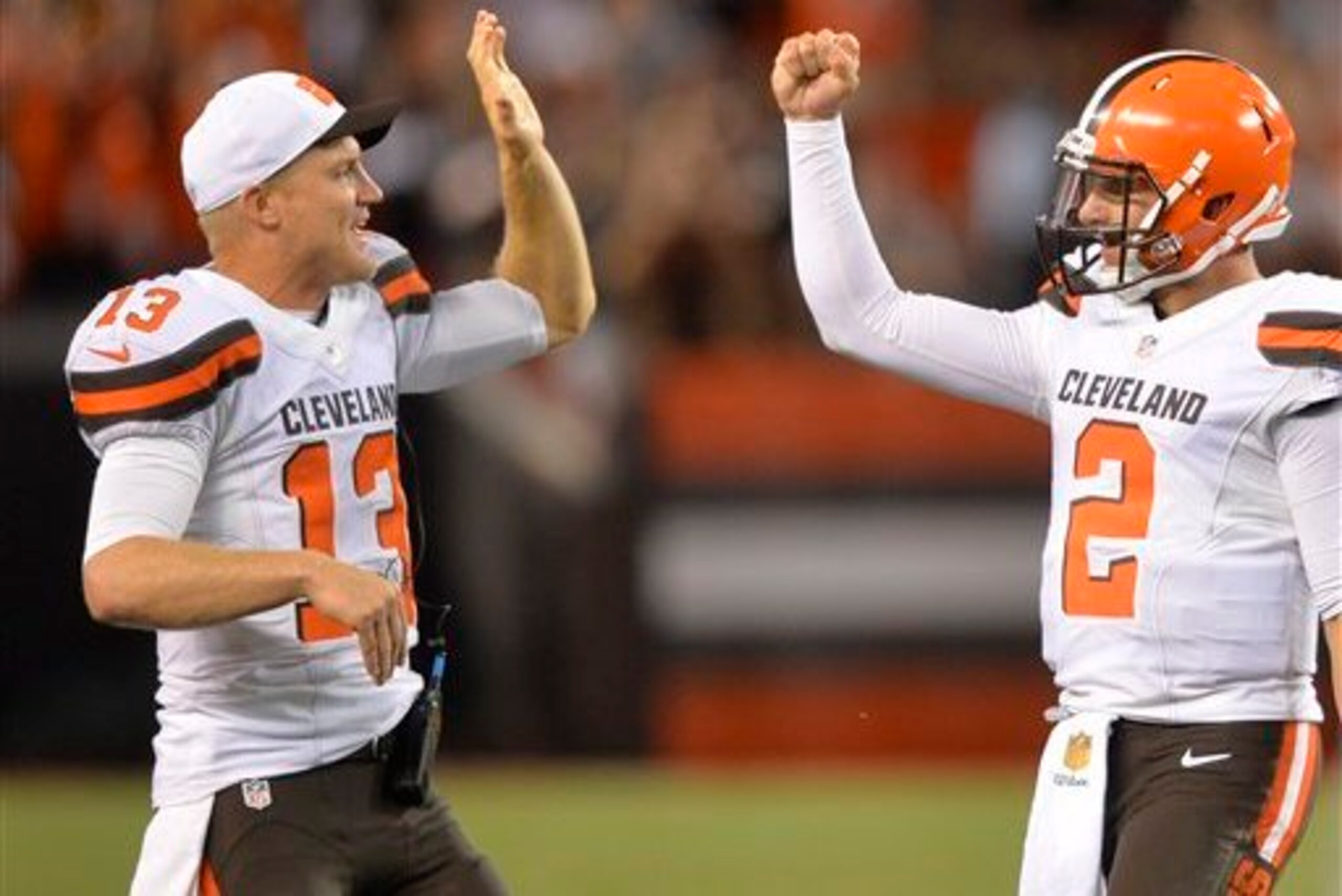
What Johnny Manziel has done so far this preseason has been impressive. Truly impressive. By many accounts, his change from riding swans to being a pro is for real. He's not Johnny Football anymore. He's a serious, studious man, dedicated to becoming better.
But even if the change is sincere, starting him would be a mistake. It's too soon. From what I'm hearing, the Browns coaches, at least for now, feel the same. Emphasis on "for now." Manziel is an alluring figure, almost an entrancing one, but it seems like the coaching staff is resisting that temptation for the moment.
For the moment...
8. The Rex Ryan effect
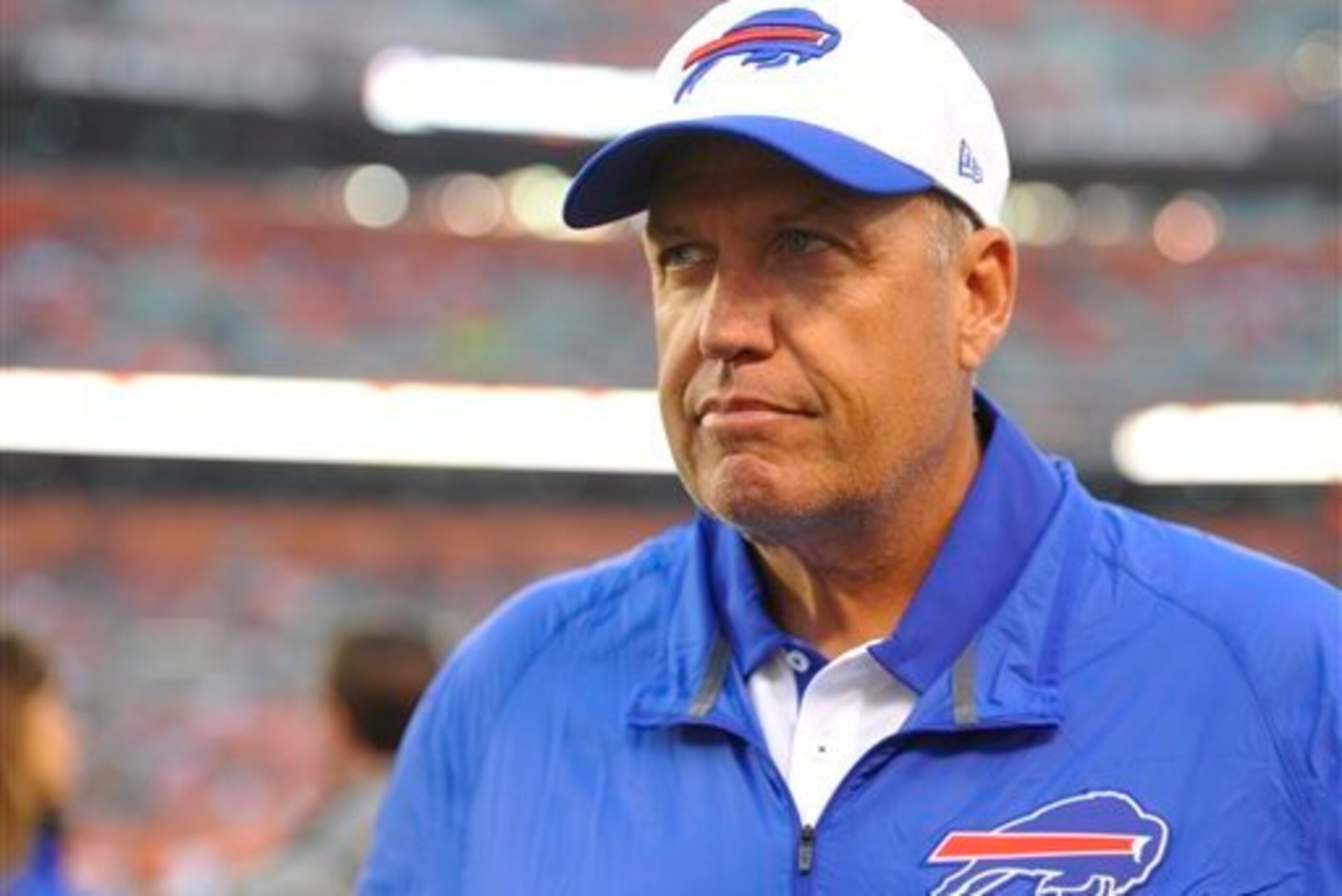
The Bills announced this week that they've topped 60,000 season tickets for the first time in franchise history. Think about that for a moment. This is a franchise that went to four straight Super Bowls and apparently didn't top that number.
This is the Rexy Effect. There is no other explanation. He's the best salesman in football, and despite the fact that he's terrible at developing quarterbacks, his ability to talk a great game has Buffalo fans excited. I can't blame them.
9. The Goodell-McMahon comparison

Browns offensive lineman Joe Thomas says commissioner Roger Goodell is acting like the NFL is the WWE in how it handles Tom Brady and Deflategate.
"It's like the Vince McMahon stuff. Basically Goodell is like Vince McMahon," Thomas told ESPN's Pat McManamon.
I find his reasoning mildly compelling. Crazy but compelling.
10. A once great franchise
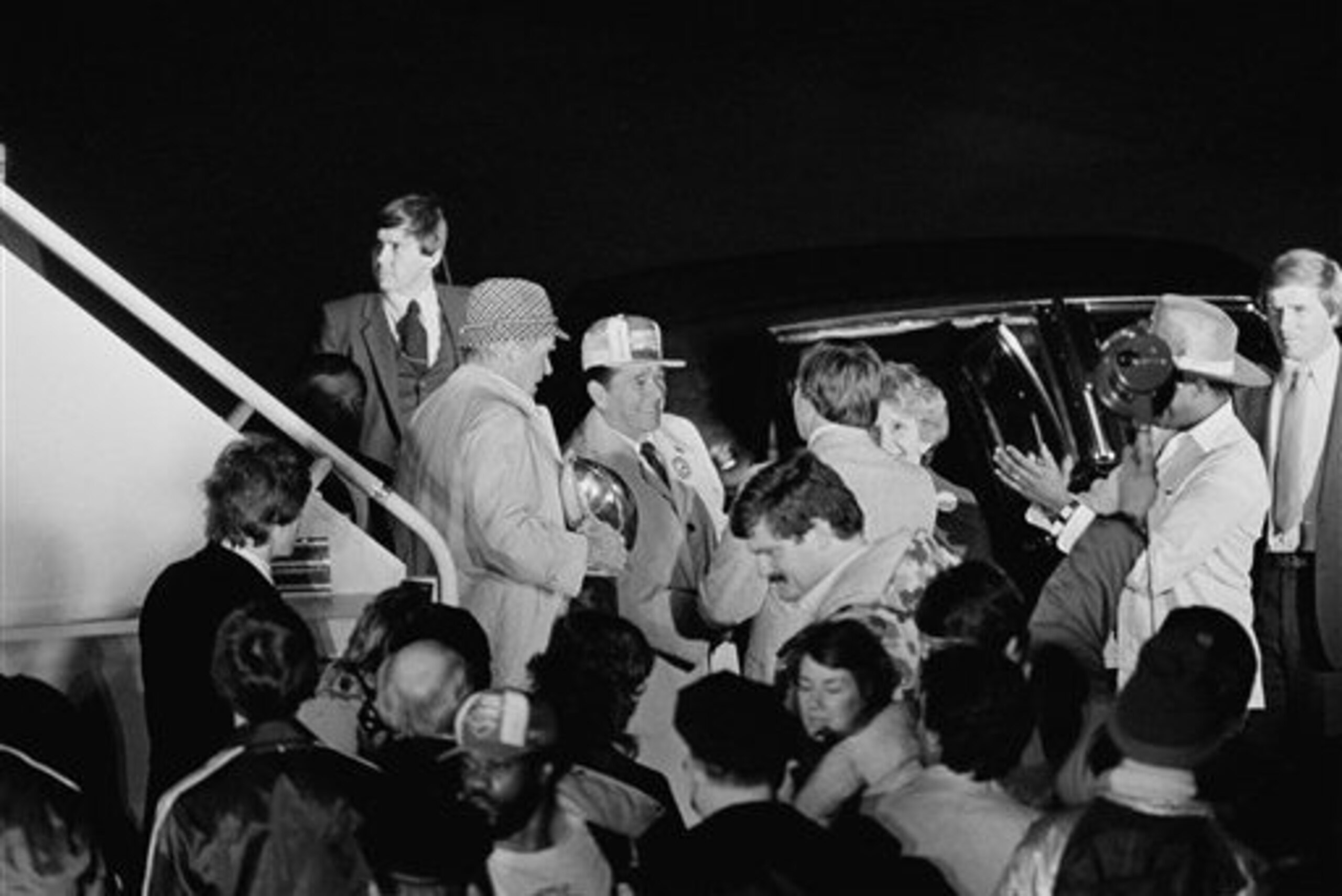
We look at the Washington franchise now, and we see ineptitude and chaos. But there was a time, despite the team's racist nickname, when it was great. When it was better than almost any other franchise. It was that good.
An excellent new book by Adam Lazarus looks back at when this team was great and did incredible things. There was one part in particular that struck me, a once-hardcore fan of the team, and reminded me of how good things used to be.
The team had just won Super Bowl XVII and landed at Dulles Airport, where they were greeted by Ronald Reagan. "Congratulations," Reagan told coach Joe Gibbs, "you really brought the city together."
That's what the team used to do: bring people together. This passage demonstrated that, demonstrated the effect the franchise used to have. Once upon a time:
"On Wednesday, 500,000 people gathered for a rally by the District Building on Pennsylvania Avenue—Reagan and D.C. mayor Marion Berry had granted federal and city employees a two-hour paid hiatus, and most local schools allowed students to skip class if they brought a signed note from their parents."
Mike Freeman covers the NFL for Bleacher Report.
.jpg?w=2560 "Rams Camp Football")
.jpg?w=2560 "APTOPIX Lions Commanders Football")