How Much Do Physical Attributes Matter for First-Round NFL Draft Picks?
One thing I noticed while filing my Top 25 NFL Players Under 25 piece was just how many players in that top 25 qualified as physical outliers and how that affected their draft stock.
Take the tale of Aaron Donald, who I consider the fourth-best player under 25 in the NFL today. Here's what NFL Network analyst Mike Mayock said about him as he was drafted: "The lack of size (6-foot-1, 285 pounds) concerns some teams, but not me. He had a really big week at the Senior Bowl. He's as quick a defensive tackle I've seen since Geno Atkins."
I don't put this forward as evidence that Donald should have been drafted higher—indeed, it was a victory for the NFL that they learned their mistake from the Geno Atkins pick and made Donald a first-round pick—but because it fits a pet theory that I've had ever since reading a piece on the analytical baseball site FanGraphs.
.jpg?w=2560 "Buccaneers Camp Football")
.jpg?w=2560 "Esports-Betting")
.jpg?w=2560 "Jets Saints Football")
FanGraphs' Kiley McDaniel pointed out that, as far as first-round picks go, the recent track record of Major League Baseball teams picking short right-handed college pitchers is pretty good:
"If you look at right-handed college starters under 6’0 drafted in the top-25 picks (as a proxy for top-15 to -20 talents, though I remember how guys were seen pre-draft in this window) in the last 10 drafts, you get four examples: Marcus Stroman, Mike Leake, Tim Lincecum and Sonny Gray. That’s literally the whole list and that wasn’t cherry-picked to exclude a dud just outside those parameters. ...
... The principle we can take from this is that players against whom the industry is biased (short righty starters) and who still are regarded as consensus top-20 prospects in their respective draft class (due in part to great performance at big-time college programs) turn out pretty well (six out of seven are big successes). It turns out that the more extreme the example (i.e. the shorter the pitcher), the more successful they are (four out of four). Using this evidence and the general principles above, you could start walking towards the idea that the amount of uniqueness (to use an awkward phrase) in a consensus first-round pitcher may be a good tie-breaker for whether he ought to be selected.
"
This would be sort of a corollary to NBC/Rotoworld's Josh Norris' "don't count it twice" theory. The size of the game is more important than the size of the player. In some cases.
This is an interesting time to be a scout. The information era has made it much easier to compile large swaths of data. New people with outside ideas are clashing with the established guard. You can no longer get by just on being a football lifer—now you've got to be able to understand and apply much, much more to your evaluation practices to truly understand how to work the draft.
And I can understand why scouts do this—they are taught from the very beginning to weed out the weak. They are taught to underestimate those with a smaller build. The Eagles, in fact, broadcast the fact that they tell their scouts to look for players within a certain physical bell curve. The Seahawks have an entire philosophy built around the SPARQ score and trying to train their physically gifted players to get great at football.
But there will always be players who fall outside of the normal range of success for their physical attributes. How do we find those players?
Translating this to the NFL
All one needs to do is look at the history of the running back position to understand the kind of shift I'm talking about here. At one time, the physical prototype of a running back was Jim Brown. But after success story after success story with smaller running backs—Warrick Dunn, Emmitt Smith, Barry Sanders, Ray Rice, Maurice Jones-Drew—NFL teams have begun to factor this in to their evaluations. Darren Sproles got a shot despite his literally off-the-chart height and weight combination. Backs with less mass to hit actually may get hit less.
Unfortunately, this isn't quite as easy as centering something in the first 15 picks of the draft, looking back over time and declaring a theory legit. Because in translating McDaniel's theory over to football, we also need to consider the translation in terms of positions. A small running back won't ever get drafted in the top 15—nobody values running backs at that price anymore.
But in putting together that U25 list, one thing that jumped out at me was with Donald and how that market has (somewhat) stabilized. Here's a list of every 3-technique defensive lineman on the list and how they compared to the physical prototype for tackles:
| Aaron Donald | 1-11 | 1 | 6 | 7 |
| Sheldon Richardson | 1-11 | 17 | 18 | 35 |
| Fletcher Cox | 1-12 | 61 | 28 | 89 |
| Sharrif Floyd | 1-23 | 37 | 26 | 63 |
Of course, you may realize, this makes some intuitive sense given that tackles also include drafted big nose tackles. But Sheldon Richardson was dinged during the process as undersized, while Floyd was deemed a "prototypical" 3-tech tackle. Over a difference of roughly 10 pounds.
And even despite Floyd's somewhat puzzling fall, they all went in the first round, but none of them were deemed worthy of a top-10 pick, which is an interesting hedge.
Here's another interesting example: I put Sammy Watkins, Odell Beckham and Mike Evans on the U25 list. Watkins was hyped as the kind of generational talent worth trading an extra first-rounder to get, but notice a reason that might have made Beckham go third in the group:
| Sammy Watkins | 1-4 | 35 | 71 | 106 |
| Mike Evans | 1-7 | 95 | 97 | 192 |
| Odell Beckham | 1-12 | 29 | 43 | 72 |
A year later, it's Beckham who is looked at as a potential generational talent.
Applications
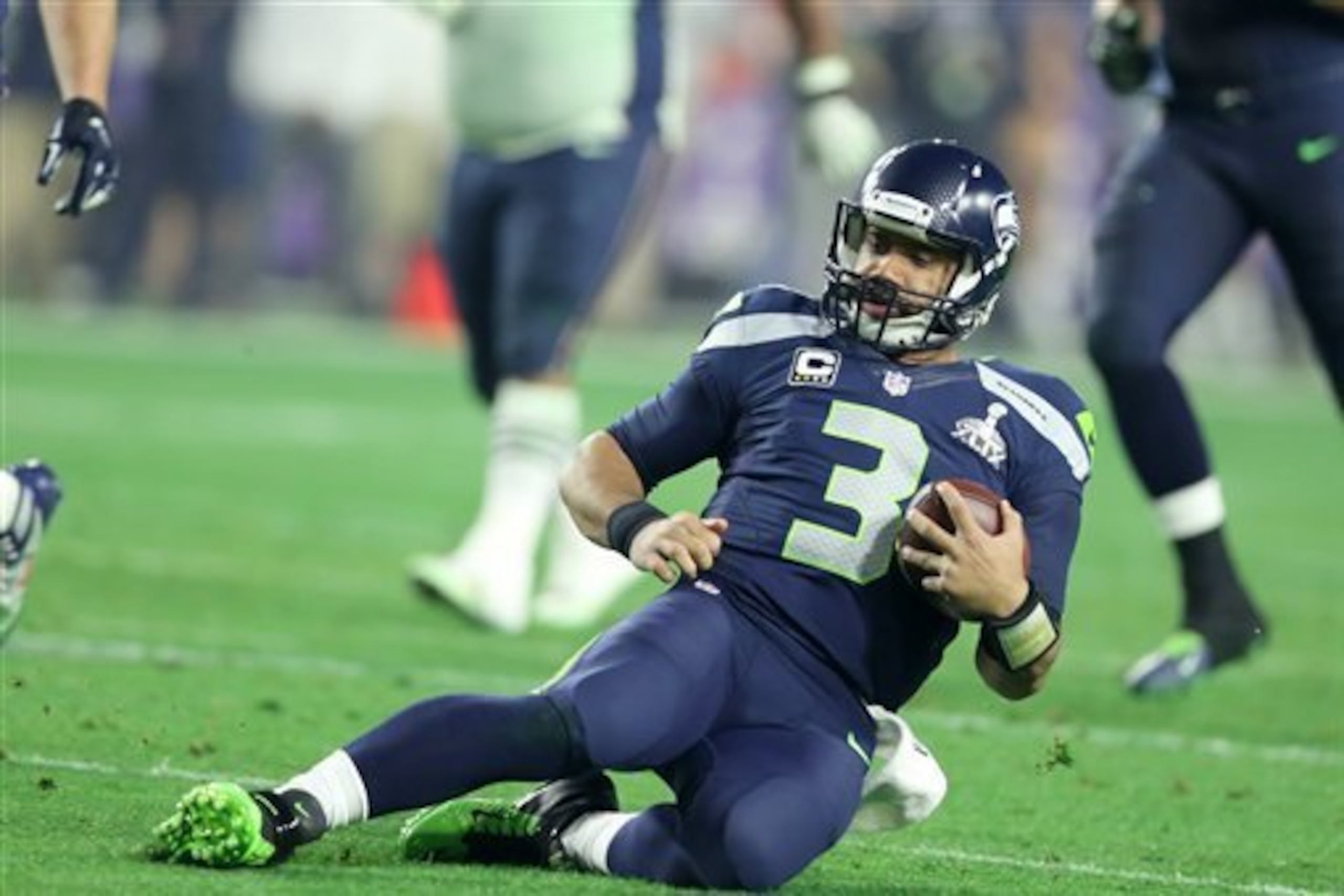
I would posit this theory: If a player is considered good enough to be near the top of his positional draft board, and he's doing it despite being undersized, we may be considering him a little too lightly. We may be double-counting his size as a weakness because we expect him to have trouble with the conversion, when he's already done enough to be considered among the best at his position in college.
I used some examples here, but I haven't gone in to it as deeply as I would have liked due to time restrictions. Teddy Bridgewater was knocked for his lack of ideal size. Russell Wilson wasn't even taken as a serious prospect because of his. Chris Borland, the same. And if you need another example of the NFL being slow to come around to downsizing, just look at what's happened to off-the-ball linebackers, where speed and coverage ability are becoming requirements rather than luxuries. That prototype has been changing for thirty years.
In what is a physical, brutal sport, it makes sense that NFL teams value the ability to dominate smaller players. And when you mix physical domination with skill, you get a player for the ages like Cowboys wideout Dez Bryant.
But perhaps as a culture, football has been a bit too slow to come to grips with the idea that size is not a necessity because it has so many roots in the idea of physical domination. There's multiple ways to get open on press coverage—you just have to have a player who can do it.
Rivers McCown is an NFL Analyst for Bleacher Report and the co-host of the Three-Cone Drill podcast. His work has also appeared on Football Outsiders and ESPN.com. Follow him on Twitter at @riversmccown.
.jpg?w=2560 "Buccaneers Dolphins Football")
.jpg?w=2560 "Patriots Ravens Football")