
NFL Draft 2015 Results: Biggest Winners & Losers from This Year's Draft
Time will tell...
Any assessment of the NFL draft—whether before or after the event itself—needs to include the acknowledgment that anything can happen. Just like mock drafts are rarely any better than a third correct (at best), post-draft analysis like grades and picking "Winners and Losers" are simply good faith efforts at taking the information we now have and projecting future results.
No one knows for sure, but it's equally silly to pretend as if no one should say anything about the draft for 2-3 years while we wait for the results to play out. We can present what we know now and a subjective opinion of those facts while admitting not only that we may be wrong, but also that there are parts where these predictions most certainly will be wrong.
So, if we're sure to be wrong—at least, in part—what's the point?
Click ahead to be entertained and to find points that will generate both debate and discussion. Click ahead to be informed—both in factual evidence you may not have known and in dissenting opinion you may not have considered. Click ahead to be persuaded that the first ideas you had about a certain pick may not be as rock solid as you had originally thought.
If nothing else, click ahead so you can comment below and tell me where I'm wrong.
In a few years, we'll both look back on this and hopefully learn something from where we messed up.
Editor's note: La'el Collins was not considered in this slideshow given his ongoing situation.
Winner: St. Louis Rams
1 of 11
The St. Louis Rams have a mission and they're sending a message.
Head coach Jeff Fisher is known as an old-school-style head coach, and the issues the Rams had at the quarterback and offensive line positions last year mandated some big changes on the offensive side of the ball. Where those two points meet fits this draft class to a T.
Running back Todd Gurley is a top-five talent who had a bad knee injury, but the Rams (like every other team) did their due diligence on that knee and clearly felt it was up to snuff. They'll hopefully pair him with Tre Mason, although he could be a trade chip much like Zac Stacy now that the more talented former Georgia Bulldog is on the roster.
In addition, the Rams have paired Gurley with Wisconsin offensive lineman Rob Havenstein, Louisville offensive lineman Jamon Brown and Iowa offensive lineman Andrew Donnal. All three have some positional flexibility and can put defenders on roller skates in a hurry.
The Rams defense has always been on par with the physicality (if not always the talent) of their divisional opponents. Now, their offense has a chance to be that way as well.
Loser: SEC Fans
2 of 11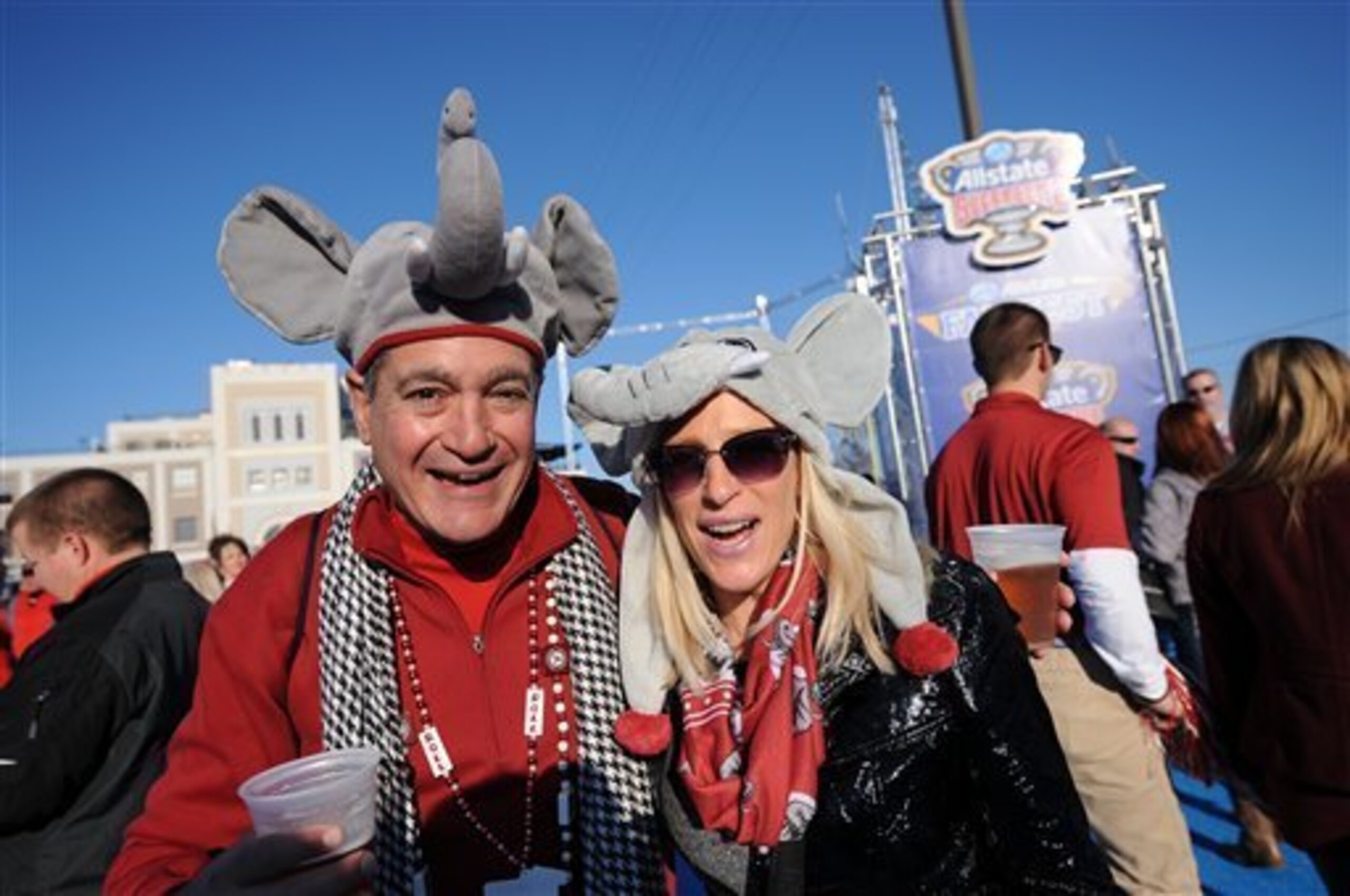
No, no, I'm not actually calling you all losers.
Calm down.
However, in the grand back-and-forth of "SEC vs. the World," draft status has always been pretty important. Not only was the SEC the cream of the college football world, but it was the fastest and best direct pipeline for NFL prospects.
Now?
The Pac-12 had its best first round ever, with nine selections. The continued onslaught of Florida State on the game produced not only Jameis Winston (the first overall pick), but it also helped the ACC make its mark on the first couple rounds of the draft.
It's not like the SEC is going anywhere. The conference had two of the top five picks with Florida defensive end Dante Fowler Jr. (now in Jacksonville) and Alabama wide receiver Amari Cooper (Raiders). It's just that other conferences are getting their due as well.
The consistent din of this particular pro-SEC argument just doesn't ring true any longer.
Winner: Tennessee Titans
3 of 11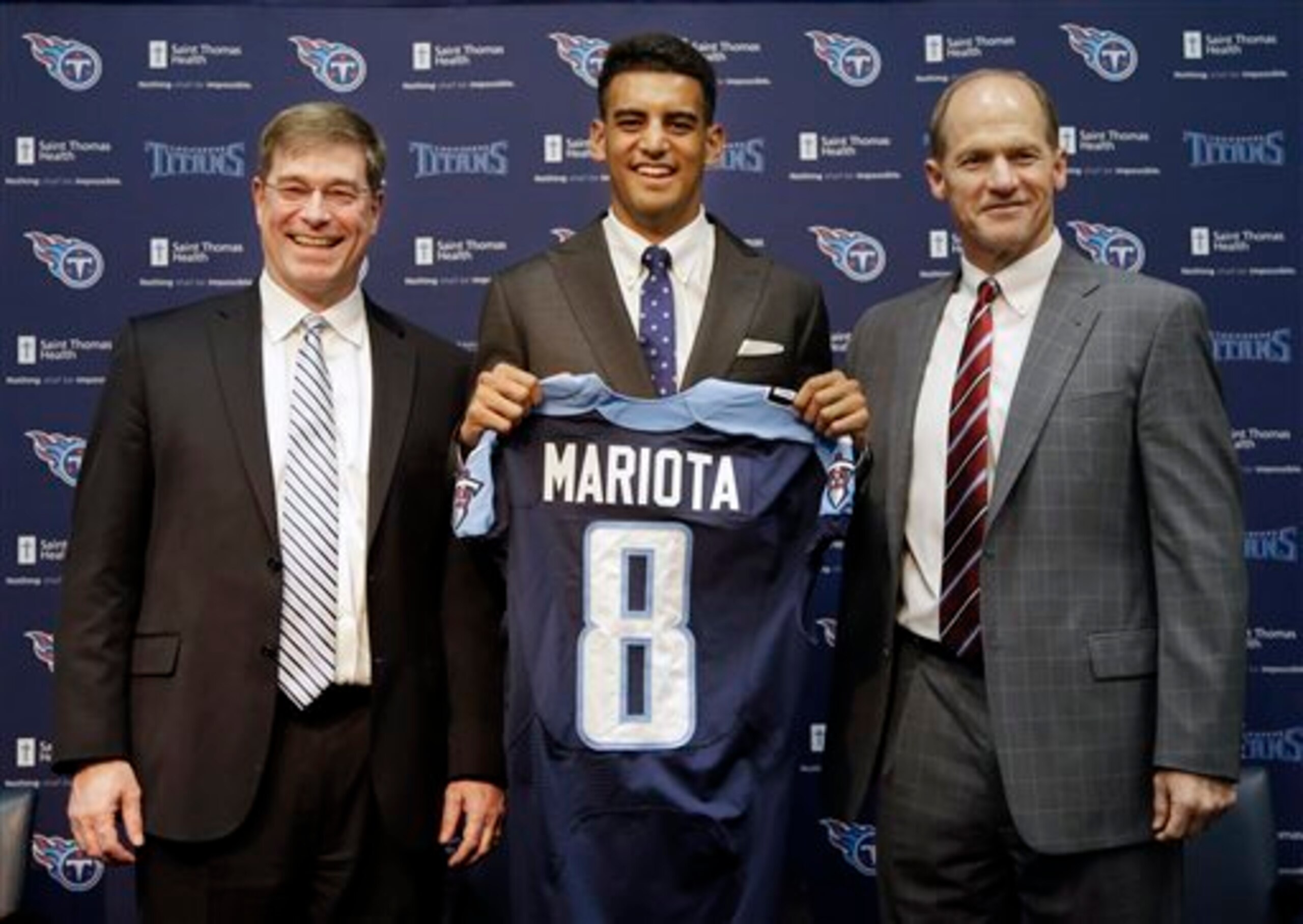
The Tennessee Titans are all in.
Bleacher Report's own Mike Freeman pointed this out following the selections of Oregon quarterback Marcus Mariota and Missouri wide receiver Dorial Green-Beckham, and I agree wholeheartedly. Both players are supremely talented from an athletic perspective but bring vastly different challenges to the table.
Mariota will need to help bridge the gap between the offense he ran at Oregon and Ken Whisenhunt's more complex pro-style offense. Sure, Whiz will simplify his offense for the rookie, but Mariota will not have an easy time without putting in an absolute ton of work.
DGB has all of the tools needed by an elite NFL wideout, but shaky times at Missouri and major off-field concerns mean he's still very raw and may not have been worth the investment from a character perspective.
If these two picks hit, it's going to be ridiculously exciting to watch.
I also love the selections of Louisville linebacker Deiontrez Mount and Minnesota running back David Cobb later in the draft. The earlier picks may have been full of buzz, but these picks are the lunch pail kind of players that make teams better in the long term.
The Titans finished off their draft with William & Mary receiver Tre McBride, who I had a fringe starter's grade on. I think he could start at receiver for the Titans by midseason, and I have no idea how he lasted so long on the board.
.jpg?w=2560 "Panthers Saints Football")
.jpg?w=2560 "Raiders Football")
.jpg?w=2560 "NFL Owners Football")
Loser: Zach Mettenberger
4 of 11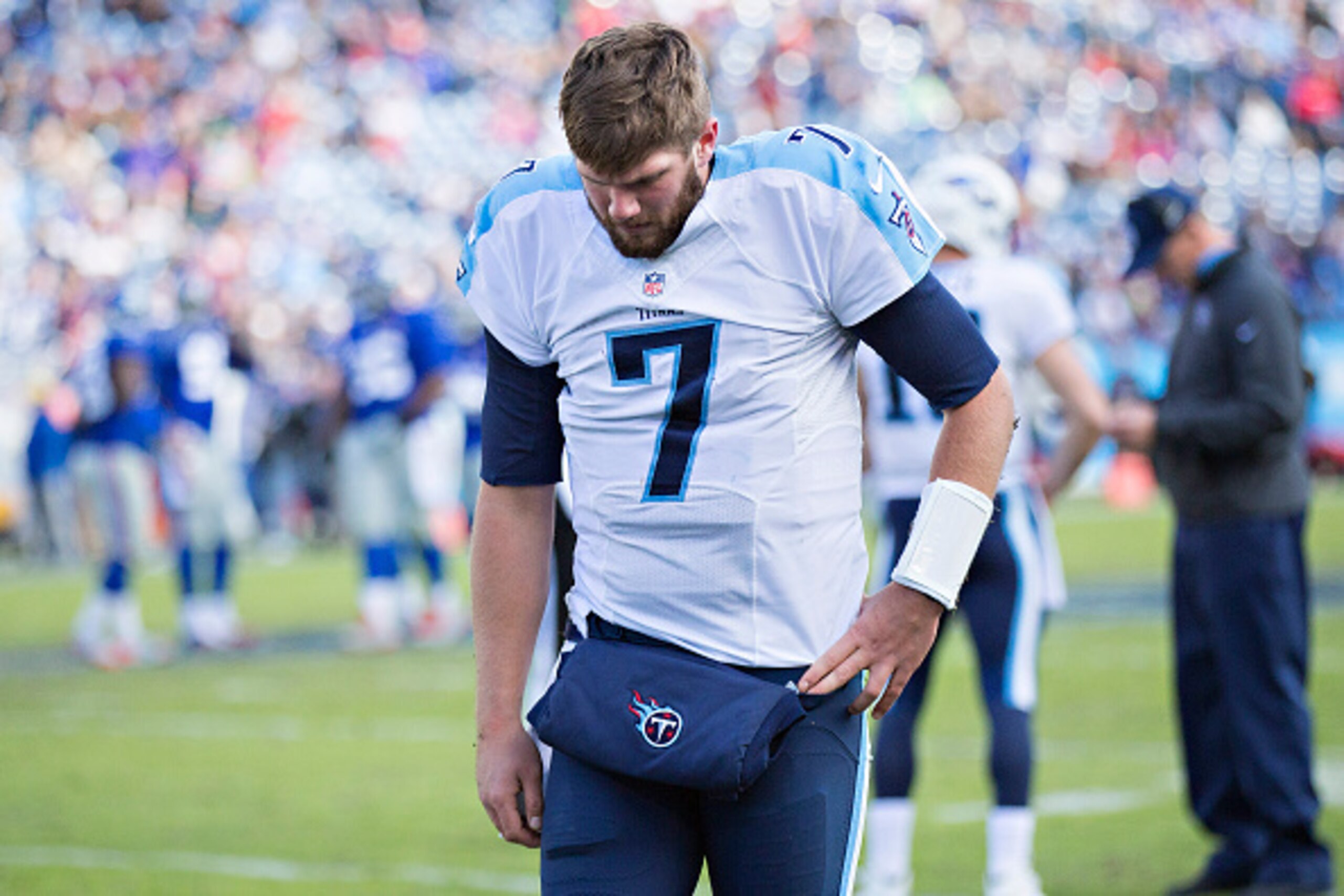
To most football fans, this might be self-explanatory, but for those of you living under a rock: Zach Mettenberger was the considered heir apparent at the quarterback position for the Tennessee Titans right up until they drafted Marcus Mariota.
Mettenberger was a sixth-round pick out of LSU last season, but injury issues and off-field concerns masked a prospect with a pro-caliber arm and the size NFL teams crave from the position. He wasn't as successful as the team hoped last season, but it wouldn't have been surprising if the Titans had taken a treasure trove to move out of position to draft Mariota and let Mettenberger have another crack with a better roster around him.
Now, he'll have to hope he either gets a chance to shine as a backup or a trade materializes.
Winner: Andy Dalton
5 of 11
Cincinnati Bengals quarterback Andy Dalton is one of the most inconsistent quarterbacks in the NFL.
He can put up big numbers and lead his team to wins, but on a week-to-week basis, he's just as liable to end up a liability. In many first-round playoff games, he's been the team's Achilles' heel, but the Bengals believe he is the answer. To make good on the investment, they continue to throw proverbial pearls before swine and add a ton of offensive talent around Dalton.
This year, that meant grabbing two of my highest-rated offensive linemen in the draft in Texas A&M tackle Cedric Ogbuehi and Oregon tackle Jake Fisher. Each is an athletic specimen and could be seen as a huge steal if the former remains healthy and the latter cleans up some minor mechanical issues.
On the defensive side of things, the Bengals picked up USC corner Josh Shaw, who had a starter's grade for me and probably would have gone in the first round if not for his off-the-field issue where he created an elaborate fantasy about saving his nephew when he really had jumped from a window to evade law enforcement.
If Shaw can get his mind right, he could start at corner for the Bengals a lot sooner rather than later.
Winner: Oakland Raiders
6 of 11
In getting Alabama wide receiver Amari Cooper, the Oakland Raiders grabbed the most NFL-ready player in the class and someone who is a much better all-around athlete than anyone seems to give him credit for. Cooper, along with new tight end Clive Walford (from Miami) will add to the stable of pass-catches for quarterback Derek Carr and should make the offense a lot more viable.
Add in Florida State defensive end Mario Edwards, a second-round draft pick and Kansas linebacker Ben Heeney, a fifth-round pick, and it's possible they've added four starters with their first five picks. That's not exactly unheard of for a team that's been at the bottom of the barrel for as long as the Raiders have been, but it's a step in the right direction.
Loser: New York Jets
7 of 11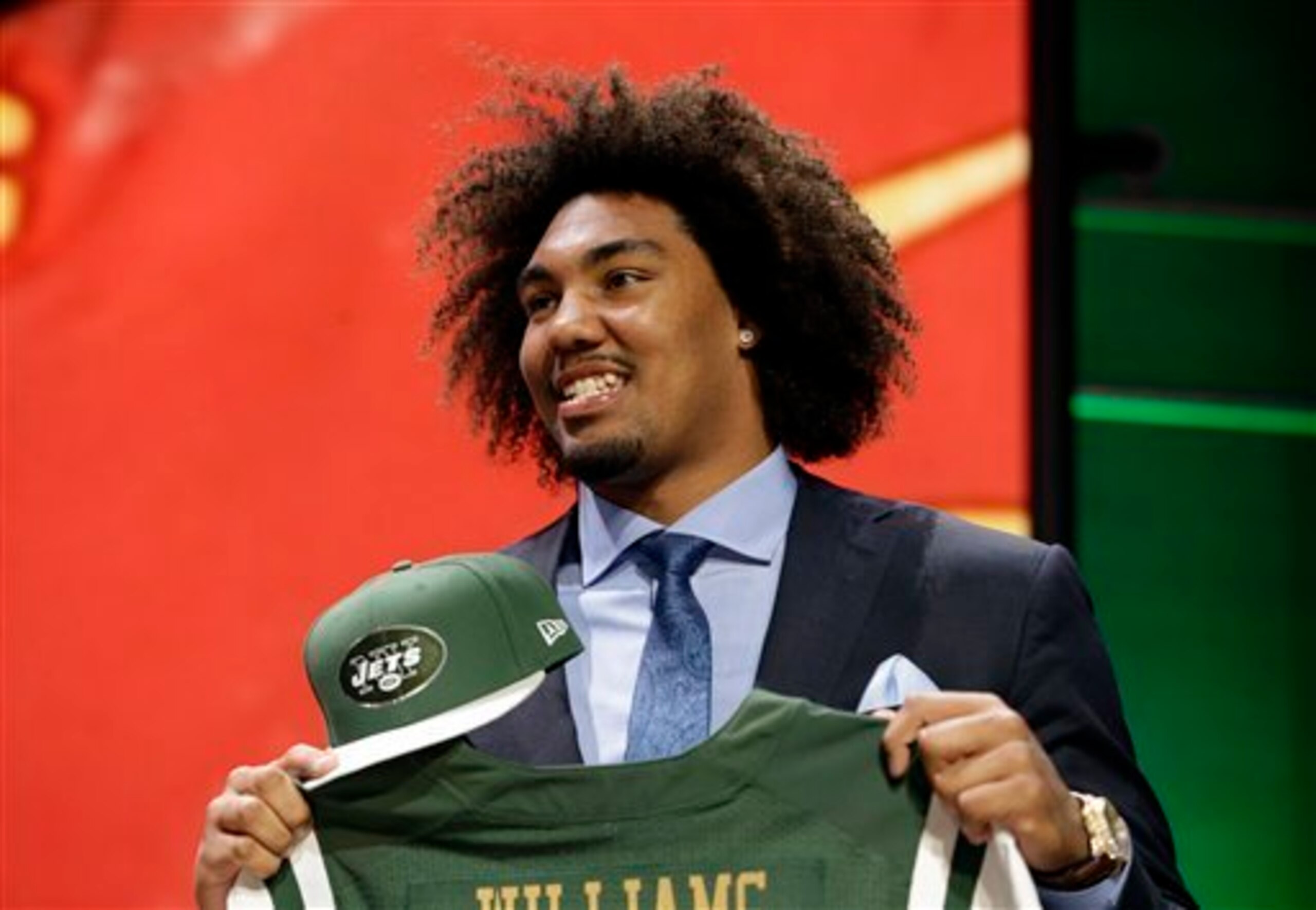
I can assume this slide will create a solid amount of controversy in the comments below.
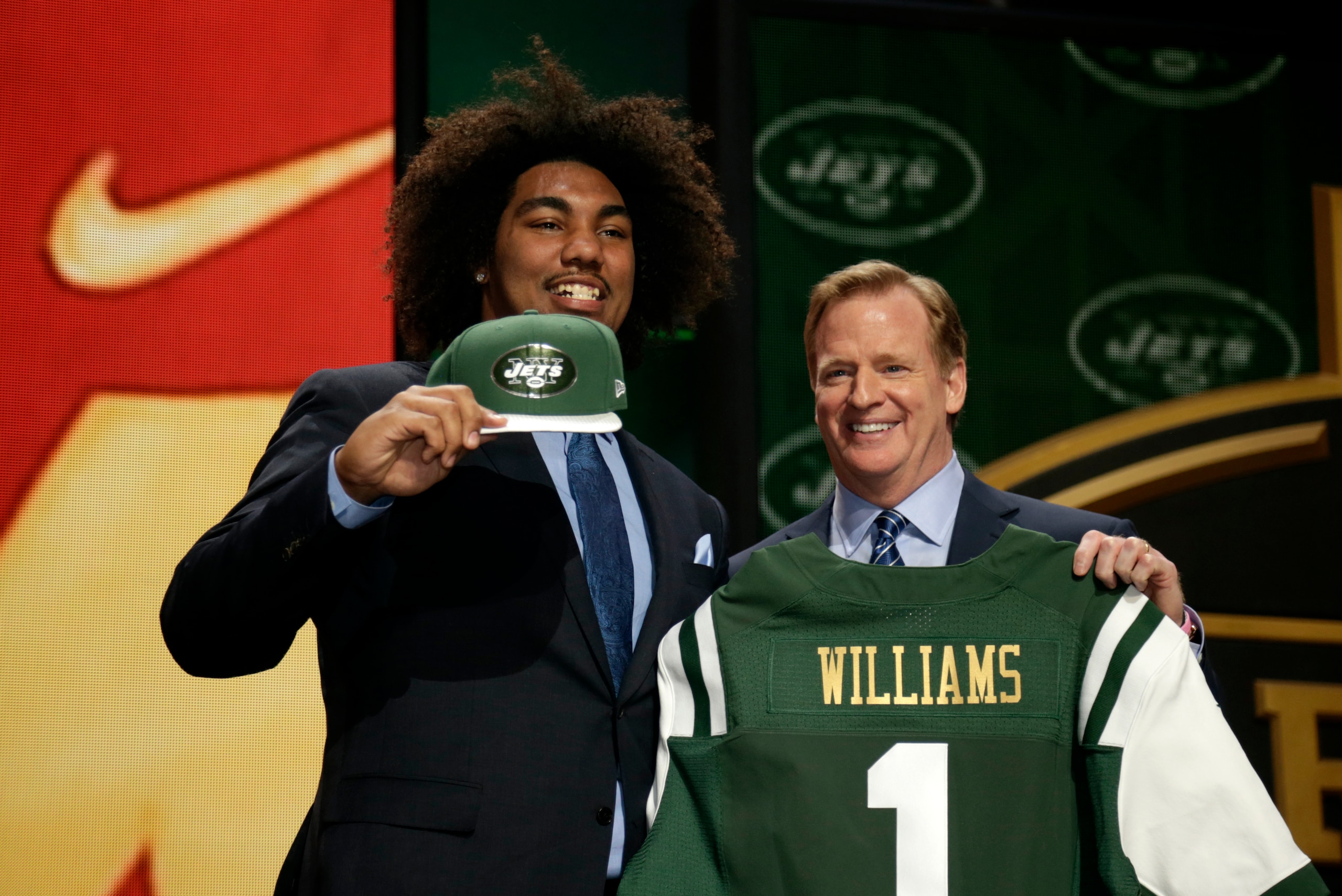
Look, I'm a huge fan of first-round selection Leonard Williams, a defensive tackle from USC. I'm just not a big fan of that selection for the New York Jets who already had a couple of the best young 3-4 defensive ends in the league in Muhammad Wilkerson and Sheldon Richardson.
Now, yes, new head coach Todd Bowles is much more willing to use hybrid fronts than his predecessor Rex Ryan was, but Williams is still duplicative of what they had on the roster in a draft with so many needs.
Normally, I would be happy when a team eschews needs for a top player, but this pick has to come with a concern that a top pick in the draft either isn't seeing the field enough in Year 1 or he's pushing out a supremely talented player when the Jets would've been well served either trading the pick or taking any number of the picks that went right after—wide receiver Kevin White, pass-rusher Vic Beasley or even running back Todd Gurley.
My biggest worry is that Williams isn't as much of a pass-rusher as the team likely will need him to be for this pick to pan out. Sam Monson of Pro Football Focus has written extensively on this, noting that although his production numbers looked good in college, he's much further along as a run-stopper.
It isn't just Williams. The Jets also overdrafted Ohio State wide receiver Devin Smith, Louisville linebacker Lorenzo Mauldin (who wasn't even the best pass-rusher on his defense in this class) and Baylor quarterback Bryce Petty, who has one of the steepest hills to climb as an older quarterback with a weak arm coming out of one of the most simplistic offenses in college football.
Winner: Sam Bradford
8 of 11
No Marcus Mariota? Check.
Don't have to go to the potentially quarterback-cursed Cleveland Browns? Double check.
If quarterback Sam Bradford can stay healthy—and, admittedly, that's a gigantic "if"—he can step in and be at least as much of a star as Nick Foles ever was in this offense. It's a perfect fit for his skills and is a similar scheme to what he ran at Oklahoma back when won a Heisman Trophy.
Add in USC wide receiver Nelson Agholor, who is one of the best route-runners in this draft class, and Bradford is not only safe as a Philadelphia Eagle, but he should also be looking forward to the best year of his career.
If he stays healthy...
Loser: Traditional Media Mock Draft Accuracy
9 of 11
As I said in the intro, mock drafts are not about accuracy...at least, not at their core.
For as many mock drafts as the media do (and it's a lot), NFL teams started the whole tradition by doing infinitely more each and every season because they know no mock draft will be accurate. Instead, they do a volume of them to try and play out scenarios that might happen—never worrying about what will, because that's something they can't control.
For teams, it's about being prepared for anything.
For the rest of us, it should be about information. Sure, the mock draft format is set up as a prediction that is sure to be wrong, but those that actually read the mocks learn something new about the players and the teams each and every time, as long as the person writing them does it the right way.
That doesn't stop people from caring who got how many picks right.
Over at The Huddle Report, they've been scoring mock drafts for years. This year, the first "traditional" media guy is Sam Farmer of the Los Angeles Times who scored 41 points by getting eight picks right and 25 first-round picks correctly...good for 30th.
With all due respect to the 29 people above Farmer, because many are well-respected analysts within the online draft community, the relative obscurity of some of the names both above and below Farmer goes to show that the draft is much more of an inexact science (or complete crapshoot) than people often allow.
Moving forward, readers should ask themselves this: Regardless of how accurate a mock will or won't be, did I learn something from reading it? If that's the case, every single pick could be wrong and it's still a valuable piece of content.
That said, maybe the guys who get paid to do mocks for a living could learn something from those who are doing it as a labor of love.
Winner: Baltimore Ravens
10 of 11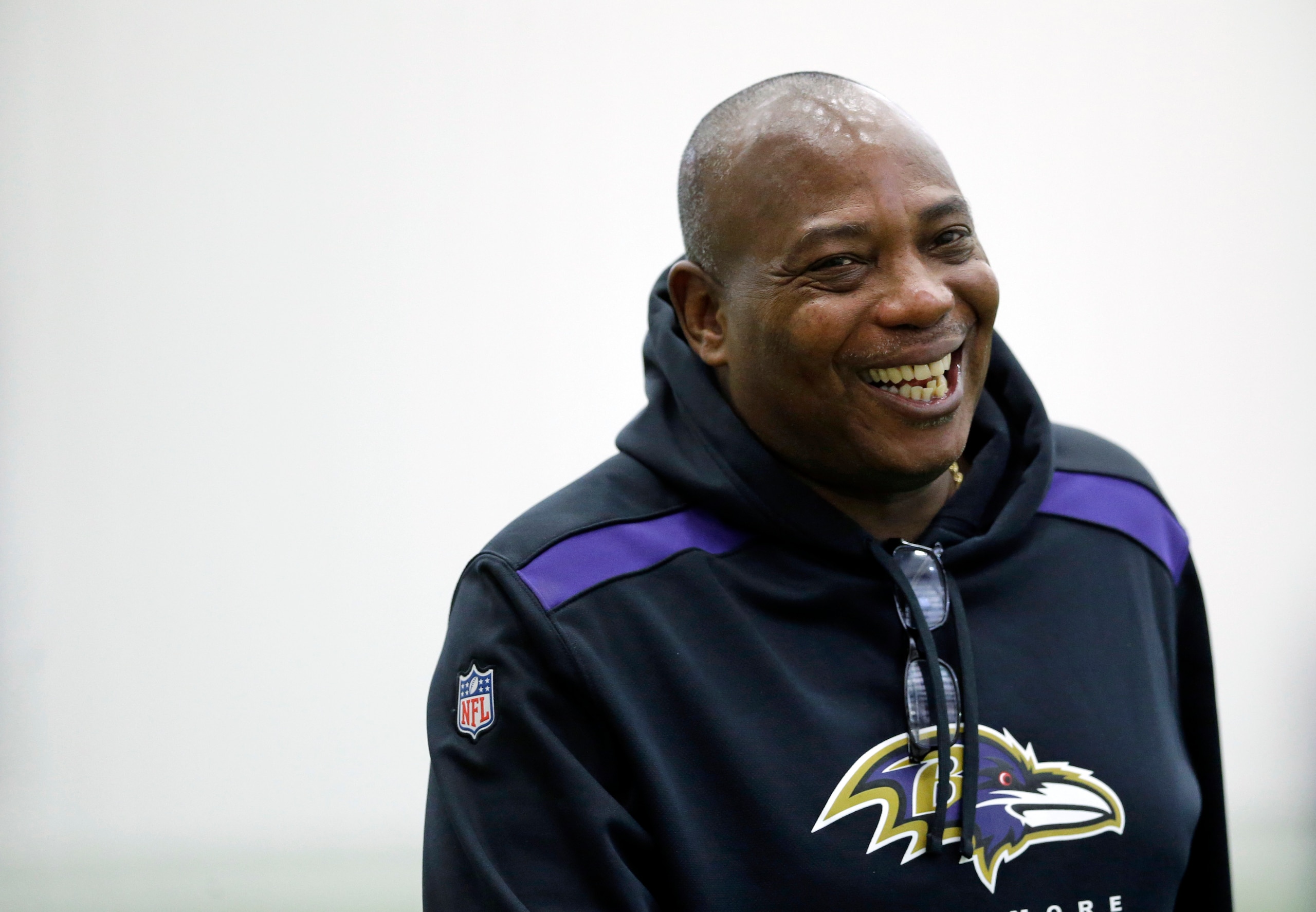
For as many years as the Baltimore Ravens lose (or simply don't participate in) free agency, the draft has been in general manager Ozzie Newsome's wheelhouse for so long, it's starting to look unfair that the rest of the league hasn't taken their ball and gone home.
Central Florida wide receiver Breshad Perriman wasn't my favorite receiver prospect in the draft, but he has fantastic triangle numbers and fits what the Ravens like to do from a vertical offense perspective. Quarterback Joe Flacco has one of the strongest arms in the NFL, and Perriman is one of the few receivers available in the class he can't overthrow.
The rest of the class is even stronger in my opinion, as I have extremely high opinions on guys like Minnesota tight end Maxx Williams, Iowa defensive tackle Carl Davis, Tennessee State offensive guard Robert Myers and USC running back Javorius Allen.
My favorite pick of their class, though, was Kentucky pass-rusher Za'Darius Smith, who I think could step in right away as a rotational pass-rusher and could mature as a Pro Bowl-caliber player for them out of the fourth round.
The entire class had quantity because of the Ravens' focus on compensatory picks as well as quality, both from a need and a value perspective.
Winner: Atlanta Falcons
11 of 11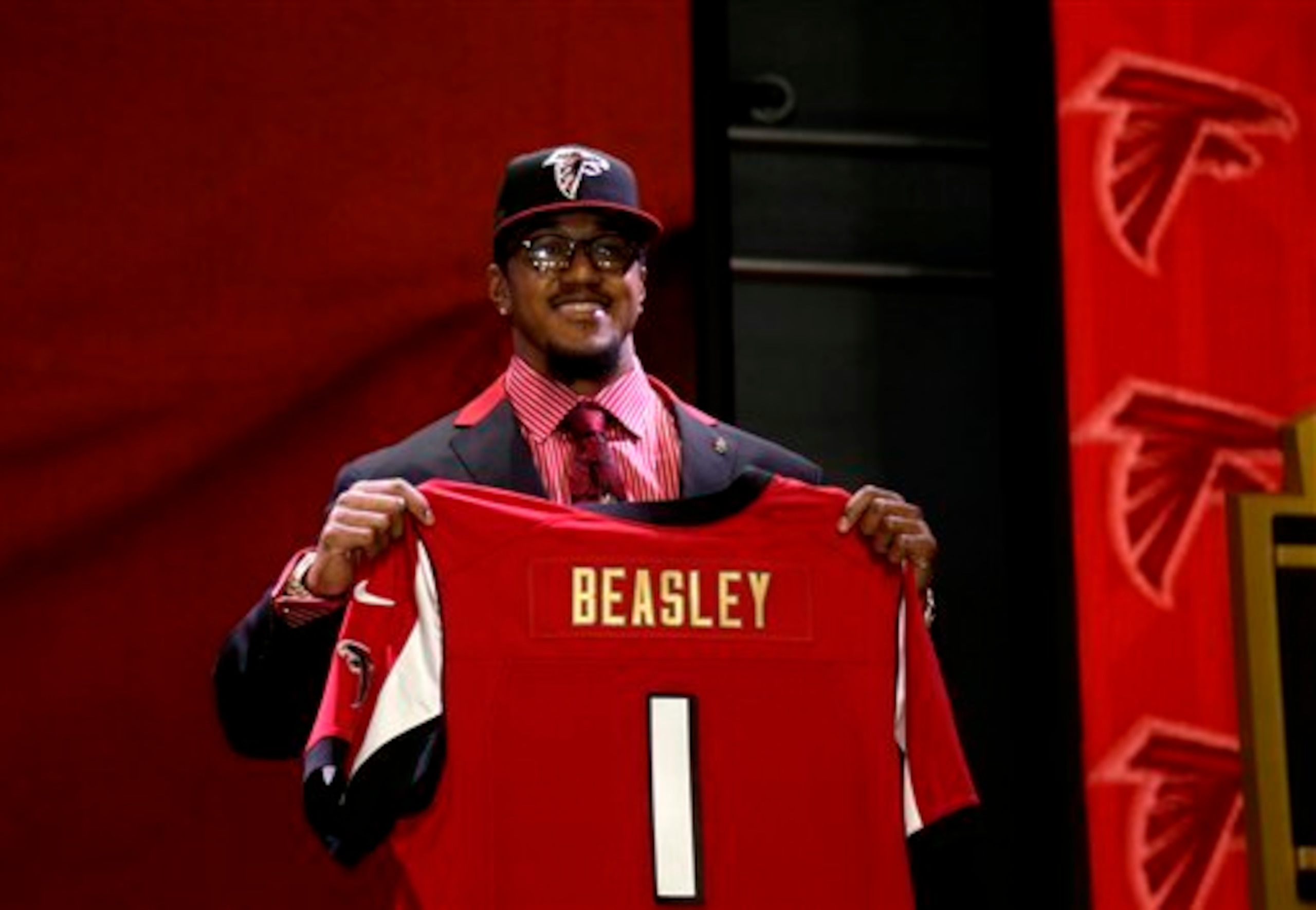
Clemson's Vic Beasley was my top-ranked pass-rusher in the entire draft (with Florida's Dante Fowler Jr., who went to the Jacksonville Jaguars, being the slightly higher-rated defensive end overall) and fits a need the Atlanta Falcons absolutely needed to fill.
This is one of those picks that seems almost too good to be true when it happens on a mock draft and can make an immediate impact for a Falcons team looking to rebound under head coach Dan Quinn. The fact that Beasley is undersized is mitigated by Quinn's work with similar players in the past, which makes this not only a perfect fit for the Falcons but for Beasley as well.
The Falcons fantastic draft didn't end there.
LSU corner Jalen Collins fell a bit both because of a late wrist injury and reports that he failed multiple drug tests in college, but the Falcons have been so tough on character concerns in the current front office regime that's it's comforting they were OK with that minor red flag.
On the field, Collins was one of the most impressive big corners of the draft class and, like Beasley, benefits from being on a Falcons team that should provide both time for him to acclimate to the NFL and a perfect home for what he brings to the table.
Other than the first-round pick, Beasley, I had every single player the Falcons drafted graded at least a round higher. I see potential impact players in both East Carolina wide receiver Justin Hardy and Clemson defensive lineman Grady Jarrett. Indiana running back Tevin Coleman, too, could make a lot of teams very sorry they passed on him.
This was a huge draft class for a team that needed it.
Michael Schottey is an award-winning NFL national lead writer for Bleacher Report and a writer for Football Insiders. Follow him on Twitter. Unless otherwise noted, all quotes were obtained by the author.
.jpg?w=2560 "Raiders Texans Football")