
Green Bay Packers NFL Draft Big Board: Position-by-Position Rankings
When looking at Day 1 and Day 2 selections for the Green Bay Packers, you can narrow down some of the Green and Gold's potential prospects by position.
General manager Ted Thompson does seem to typically go the "best player available" route on media boards, but at the end of the day he knows he's building a team, not just collecting talent.
Early on, there's no need for the Packers to address quarterback, running back, receiver, the offensive line or safety. For those positions, either starters are entrenched for the near future, or there are young assets still looking to pan out.
The same can't be said with confidence about cornerback, inside linebacker, outside linebacker, tight end and the defensive line, though.
At cornerback, both Tramon Williams and Davon House, the second and third boundary backs on the roster, respectively, left in free agency. At inside linebacker, A.J. Hawk and Brad Jones were cut this offseason. The other three positions, outside linebacker, tight end and defensive line, are more about developmental depth for the future than immediate need.
Searching through film for early Green Bay picks, names begin to shift into place. Let's take a look at some positive and negative traits of the top prospects at the abovementioned positions.
Cornerback
1 of 5
Marcus Peters, Washington
As far as press-man cornerbacks are concerned, Marcus Peters of Washington is the best option in this draft class. When playing press on the boundary, Peters absolutely grounds players into the turf, then goes into ball-hawking mode.
He was kicked off the University of Washington team his last year in Seattle, though, which makes him a bit of a red-flag prospect. He's a fiery player in the mold of Charles Woodson. If the Packers want to bring in a top cornerback with the 30th pick, he may be their only option.
Kevin Johnson, Wake Forest
When looking at consistency at the cornerback position, there might not be a better player with that attribute than Kevin Johnson of Wake Forest. He played a lot of off coverage instead of press, but he's done very well.
Johnson also is a 6'0" cornerback with 31-inch arms, so we can assume that he can play on an island outside. As far as a recent Packer, he's most comparable to Al Harris, a player Green Bay could desperately use.
Eric Rowe, Utah
Eric Rowe is an interesting prospect because many are viewing him as a safety. He played both safety and cornerback for Utah and did solid in both roles, but cornerback is a much more valuable position at the next level.
One would assume that the highest bidder will take him to play outside because of that positional value. He's a long and explosive cornerback, and with the NFL's emphasis on those traits at the position, he should go in the first round.
He's a player who might be gone by the time the Packers are on the clock, but there's a sliver of a chance that he might still be on the board. If he is, there's a solid shot that the Ute will be the best player available to fill a huge need for the squad.
Trae Waynes, Michigan State
Trae Waynes has second-round and first-round measurables on film and at the combine, respectively. The NFL wants to get longer and faster on the outside to combat longer and faster receivers, but that isn't the end-all and be-all.
Waynes is a vertical threat and will be able to stay on top of No. 9 routes, but his lateral agility is a question mark. For that reason, he may start to develop issues with double moves, as he was almost exclusively in Quarters coverage while at Michigan State.
In some ways, he's like Sam Shields of the Packers. Shields is a solid cornerback but was an undrafted free agent coming out of college. Waynes is being looked at as a top-10 selection, but it wouldn't surprise me if he started to slip on Day 1.
Byron Jones, Connecticut
Like Waynes, Byron Jones is a player who is inflated due to his combine performance. He's an explosive player, but not one with much nuance in his game. There are questions if he can play efficient off the ball, but he should do fine in press due to his recovery speed and length.
On top of his film questions, he is also recovering from a shoulder injury that ended his last season in college. He's an upside player, and his knocks are present, but if the Packers can scheme their defense around his flaws and he proves to be healthy, he should thrive.
Off-Ball Linebacker
2 of 5
Denzel Perryman, Miami
With A.J. Hawk gone, the defense needs a new defensive fullback. Hawk's role was to be strong at the point of attack, trying to drive through blockers to open up space for the linebacker next to him to make a play. With a giant vacancy now next to Sam Barrington, this would be a great role to address early.
Denzel Perryman of Miami isn't the most athletic player in the world, but he's an absolute dog. He's on the shorter side of the measuring stick, but in a booth he can thrive. Think of him as a Chris Borland type, a player drafted in the middle rounds last season because of his measurables but still able to post over 100 tackles in his rookie year.
Stephone Anthony, Clemson
Stephone Anthony is the most athletic player at the position in this draft class. On a loaded Clemson front, he was able to thrive off his speed and change-of-direction skills. A solid tackler, he can contribute from day one if Barrington moves into a strong-side role, keeping Clay Matthews III at the edge position for good.
The largest issue with Anthony isn't instincts but aggression. Too often he'll freelance, which allows him to make plays in the run game but will also cause him to blow assignments at times. In Dom Capers' scheme, his linebackers have it tough, as the Packers run a one-gapping 3-4 defense for the most part. He'll need to tighten that part of his game up quickly to see the field.
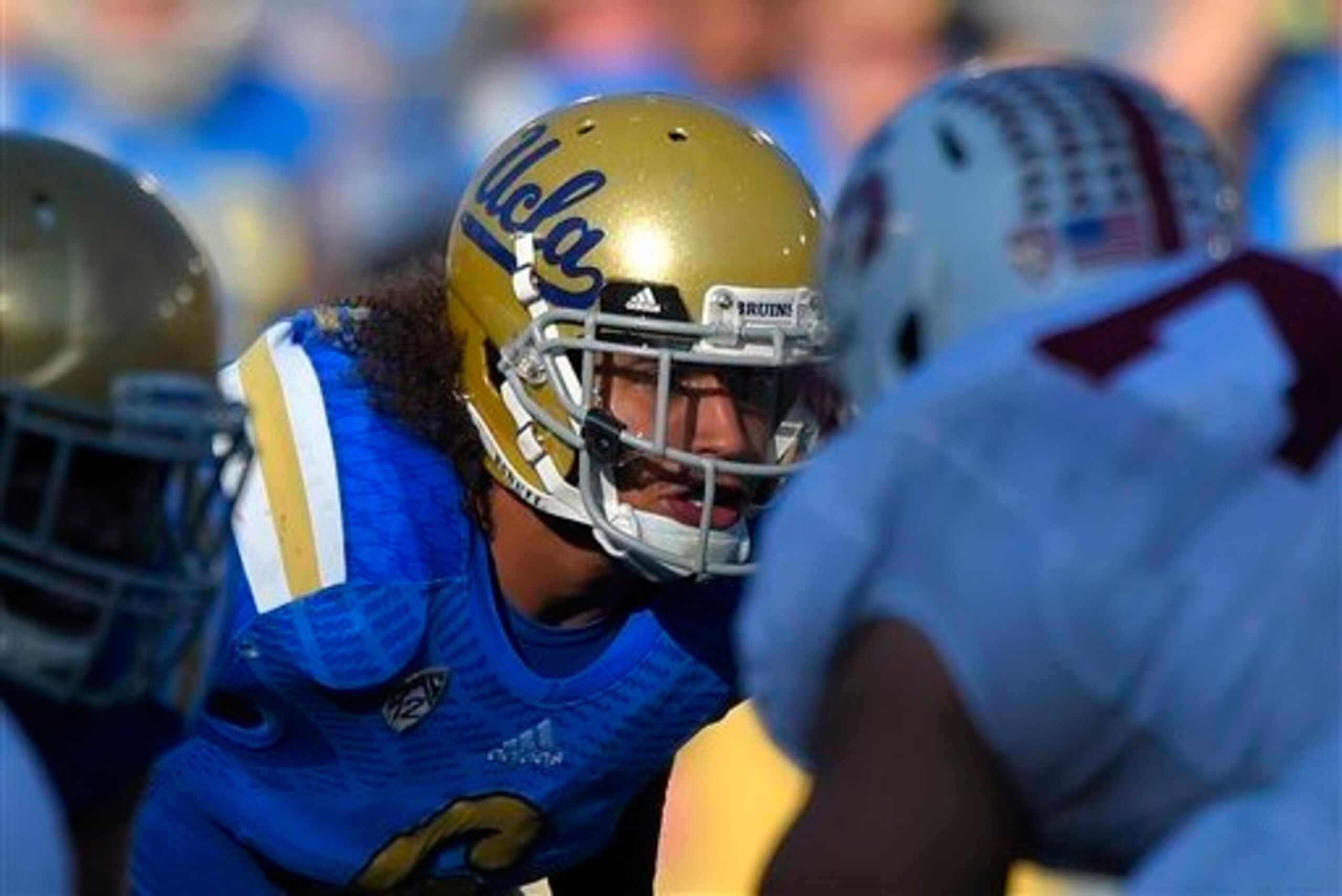
Eric Kendricks, UCLA
Eric Kendricks seems to be the highest inside linebacker as far as media grades go but has definitive flaws. He's very athletic like Anthony, but his largest issue is his strength at the point of attack.
He can run wheel routes with college running backs but was also blown up by Stanford's offensive line for 60 minutes. He's going to be great in coverage and potentially as a Will linebacker in a 4-3 defense, but in a 3-4, you worry about his ability to play in a booth when he doesn't have the opportunity to fill a downhill gap.
Benardrick McKinney, Mississippi State
If you're looking for a coverage linebacker, Benardrick McKinney isn't going to be your guy. McKinney has been tabbed as a freak but doesn't play like one on the field. Teams should be worried about him playing a Sam linebacker role in a 4-3, as he can't run the pipe with tight ends, but he should be fine as an inside linebacker.
He's a downhill player who is perfect to play in a booth. More of a true middle linebacker, he destroyed LSU on a goal-line stand, basically by himself. He'll be a plug-and-play starter for this Packers squad but shouldn't have heavy coverage responsibilities in man coverage.
Edge Defender
3 of 5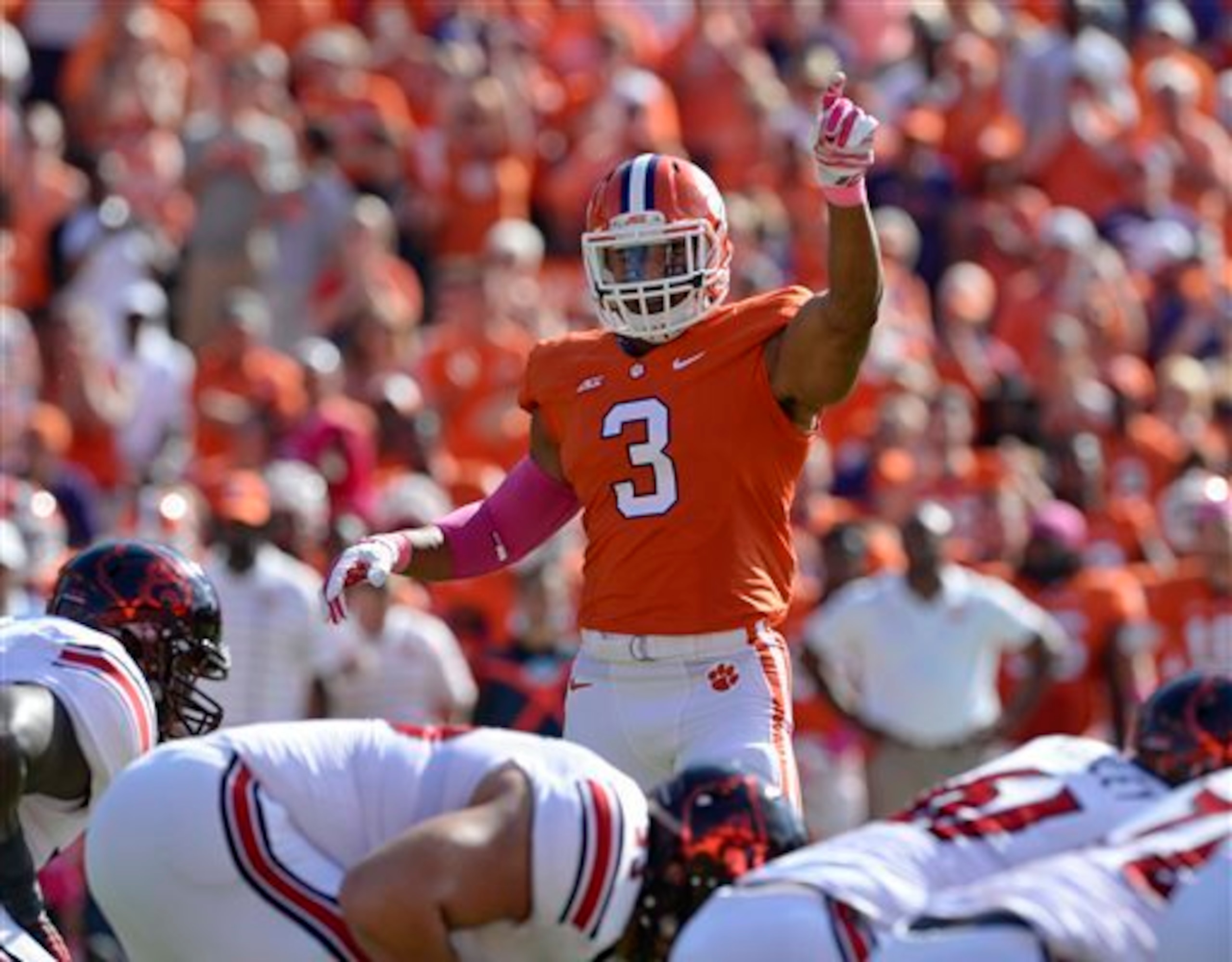
Vic Beasley, Clemson
Vic Beasley is an amazing athlete who put up great back-to-back seasons at Clemson after finding himself on defense. He's short at 6'2" but has the upside of a Von Miller. He has great closing speed and bend that will make All-Pros jealous.
He's not much of a factor in the run game, so 4-3 teams might look at him as a strong-side linebacker rather than a defensive end, but in a 3-4 scheme he's a great fit. He can give the Packers what Bruce Irvin does for the Seahawks immediately and could be a Pro Bowler in a few seasons.
Randy Gregory, Nebraska
There are a lot of tweeners in this class, and Randy Gregory of Nebraska fits in with them. He's very long, but he's skinny as a sub-250-pounder. He'll need to bulk up at the next level but has the potential to be a player like Aldon Smith.
He's got all the athleticism you'd ask for, plus solid hand usage, but has some off-field issues. He's admitted that he failed the combine drug test, tabbed by some as the "dummy test," as prospects know months beforehand that it's coming. He's an elite talent, but can a staff trust his judgment?
Alvin Dupree, Kentucky
Alvin Dupree has been producing at the SEC level for three years but is still a raw player. He destroys lanes when an offense doesn't scheme around him, but a lot of those advantages are determined pre-snap. He needs to learn how to better use his body on the move.
If he can put all the pieces of the puzzle together by 2016, he'll be a Cameron Wake level player, someone who should consistently make Pro Bowls. If he doesn't, though, he'll be a lost athlete on the football field.
Dante Fowler, Florida
One trait that makes Dante Fowler such a premium player is his age. As only a true junior, he's going to be drafted in the top 10. Many project future progression for him, but he's not necessarily a great pass-rusher.
He has very heavy hands and a good motor but doesn't convert speed to power like one wishes a top-tier prospect would, nor does he bend the edge consistently. Fowler is going to be a solid run defender, but he fits on the spectrum between Chandler Jones and Jabaal Sheard, not one of a top-10 pick.
Tight End
4 of 5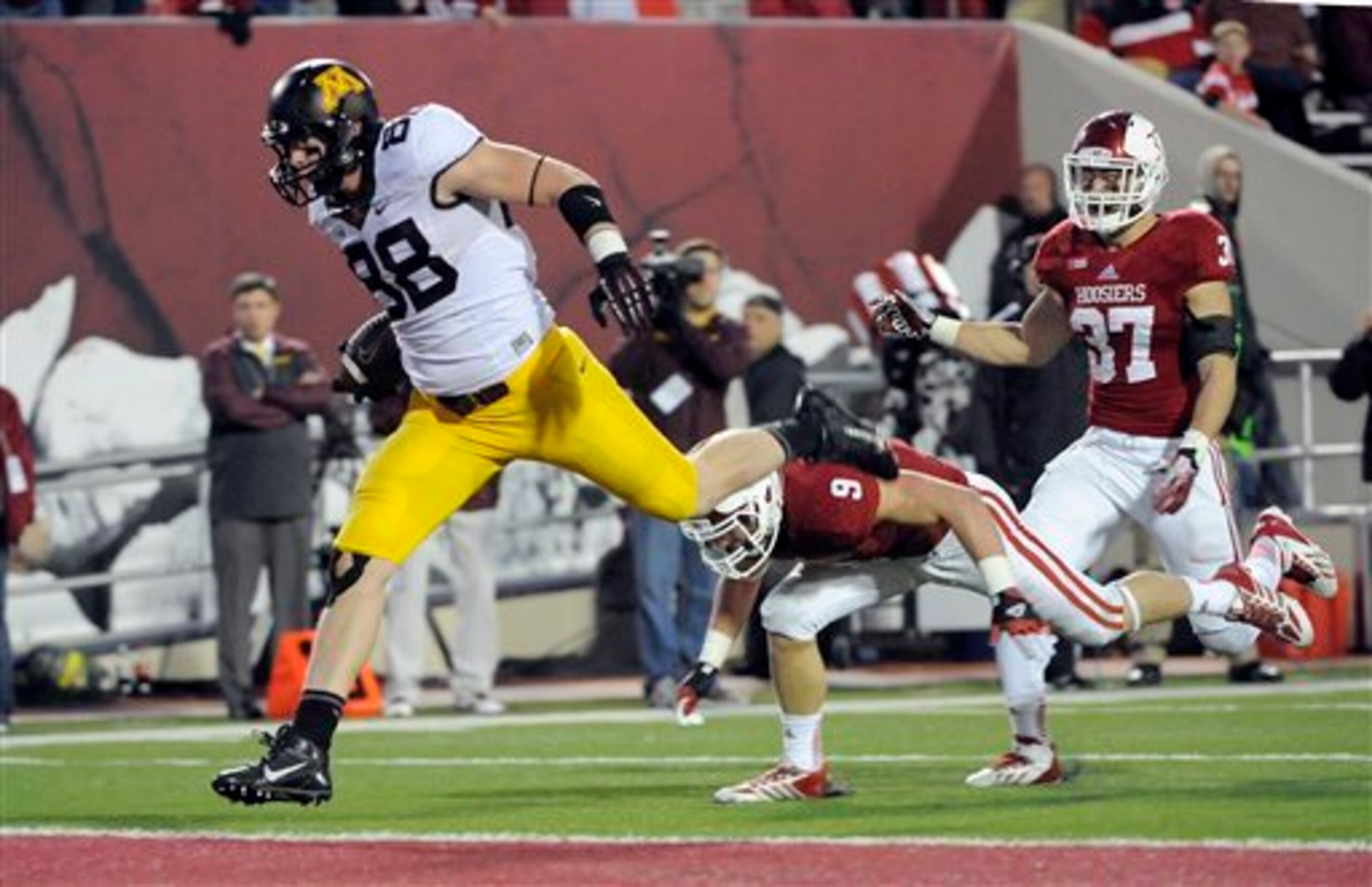
Maxx Williams, Minnesota
Maxx Williams is an odd prospect, because most tight ends don't declare early for the NFL draft. The position is one which is developed more in the NFL than in the spread-happy college football world. Williams, though, was just a sophomore when he said goodbye to his college career.
He shows some flashes of elite talent but is still raw and reckless. In some ways, he's like last year's undrafted free agent, Colt Lyerla, without the off-field makeup that Lyerla had. Williams' career is only looking up, and he should be worth a second-round pick.
Clive Walford, Miami
If you're looking at a Day 1 starter at the position, Clive Walford of Miami is the only senior prospect in the running. At Miami, he often ran a route that is known as "seam to win." Essentially, he dictated whether he was to run straight up vertically or cut underneath to find space in a defense.
He has a good feel for space and knows how to identify coverages, which makes him valuable. As a pass-catching tight end, he can be an above-average starter if he can clean up his drops.
Jeff Heuerman, Ohio State
Coming into the season, there was a lot of hype surrounding Jeff Heuerman's senior year. Despite Ohio State's championship season, it wasn't a good year for Heuerman as an individual. In 2014, he only caught 17 passes for 204 yards and two scores.
The reasons for this are twofold. First, he was accustomed to Braxton Miller's timing, and Miller was injured just before the season started, missing the entire year. From there, J.T. Barrett and Cardale Jones started for the team. Heuerman was also fighting a nagging foot injury all season.
Overall, Heuerman is a solid "move" tight end who might be able to play a bit in the backfield as an H-back, but he's not an every-down, in-line tight end. With his arrow trending downward, he's a bit of a risk, but if a pass-heavy team wants a bigger pass-catcher, he might be the best on the board.
Wes Saxton, South Alabama
Wes Saxton is the best tight end you've probably never heard of. He's a flex tight end who played three years at South Alabama after transferring from a junior college to start his career. Even before then, though, he was a teammate of Jameis Winston's in high school.
In 2013, he was one of the most productive players at the position but decided to stay another season in Mobile. With a new quarterback leading the offense, he wasn't able to repeat his previous year's effort.
Saxton is a freak athlete at the end of the day, though, and freaks matter more at the tight end position than any other in the sport.
Jesse James, Penn State
Jesse James was highly thought of when he declared early, but the value just doesn't present itself at the NFL level. He's a very strong and long player, but the top NFL tight ends are blocking tight ends. James will be labeled as that in NFL war rooms.
James' peak will be as a Heath Miller type, but it's going to take a lot of work and explosion training to get there. James is a great tight end for a run-heavy, in-line tight end offensive system, but Green Bay likes to flex their players out often, and he's not as versatile as one would like in that role.
Defensive Line
5 of 5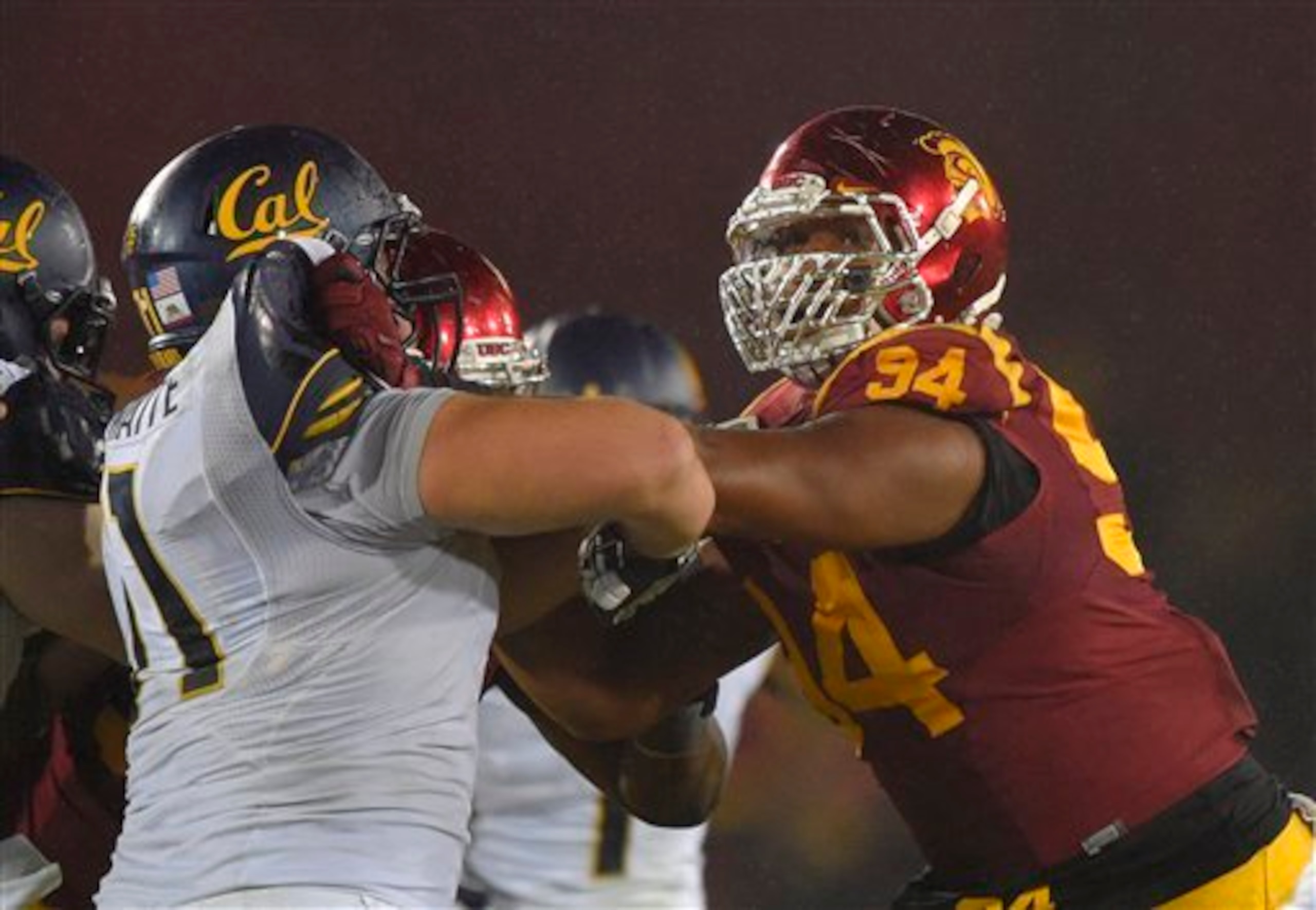
Leonard Williams, USC
At only 20 years old, Leonard Williams is one of the youngest prospects in the draft. He also happens to be on the top of many defensive draft boards in the media. Early on, Williams played at USC as a 3-technique but was switched to a 5-technique defensive end when the Trojans flipped to a 3-4 defense.
He's not much of a pressure player but is a very solid run defender. He still has an unfilled frame, so it would be hard to fit him in the starting defensive line early on, but if value presents itself, it's hard to imagine Ted Thompson will pass him up.
Jordan Phillips, Oklahoma
Jordan Phillips of Oklahoma can be a very good 1-technique defensive tackle in the NFL, and the Packers sure need help in the center of their defense.
Green Bay typically plays a 1-gap scheme despite having a 3-4 base defense. What this means is they need a large-body defensive tackle with the frame of a nose tackle and the penetration skills of an under tackle.
Phillips is fighting off a back injury, but so was Justin Harrell, a first-round defensive tackle from Thompson's past. Phillips is a bit of a wild card, since there's no guessing which teams passed or failed him due to health, but the Packers, who only have short-term contracts at 1-technique, could use a talent like him.
Malcom Brown, Texas
Because Mike Daniels and Datone Jones seem to be the penetrators on the front line while the nose tackles are the run-stoppers, it would be nice for the squad to have one hybrid player. Malcom Brown of Texas is about as hybrid as they come. He can play 5-technique, 3-technique, 1-technique and possibly even 0-technique at the NFL level.
He does enough as a run defender to get by as well as get after the passer. His body is also in a spot where he could lose weight and get more explosive or grow and be an anchor in the trenches. He's like a ball of clay at this point, with few flaws. That in itself has value.
Arik Armstead, Oregon
Arik Armstead was a blue-chip recruit out of the Sacramento area when he decided to play football at Oregon. He had his choice to play on either the offensive or defensive line and chose to play as a 3-4 defensive end for three years before declaring for the NFL draft.
He's very athletic, in the mold of Calais Campbell, but needs to put the pieces together. He's still not totally NFL-ready, but a true 3-4 team will love his two-gapping ability. The Packers could switch up their defense for a talent like his, but they don't often play a true 3-4 defense.


.jpg?w=2560 "Donald Works Out For Rams 🫨")