How Soon Should Rookies Start Planning for Life After the NFL? Now
What I'm about to tell you has to be stated vaguely for reasons you'll understand. There was a man. He was a former NFL player. Recently, he was considering taking his own life. He was eventually helped by another former NFL player.
Again, the details have to remain vague, to protect identities, but this isn't an uncommon occurrence.
But this is not a depressing story. This is a story about a group of men, former players who are mainly anonymous to the general public, who every day help fellow former players transition from NFL life to the less glamorous one. The one you and I live every day. The one where no one asks for your autograph and you are expected to pay bills and drive your kids to school and put together the grocery list without a standing ovation.
.jpg?w=2560 "Cowboys Rams Camp Football")
.jpg?w=2560 "Patriots Moves Football")

But this story is even more than that. In the near future, the NFL will welcome a new crop of rookies. They will be confident, thinking almost solely about camps and playbooks. Most aren't contemplating how their careers will end in 10 years or five or three or even less. Most care only about the now.
To Jameis Winston and Marcus Mariota and Leonard Williams and Amari Cooper and so many others, this is the beginning. The end is as distant as the farthest star system.
But what we've learned about NFL life is the beginning and end are interchangeable. The NFL is Schrodinger's cat. Because NFL careers are excessively finite, a career exists and simultaneously doesn't. One minute it's there and the next it's gone. This is something most rookies don't realize. They don't want to think about the end when it's all just beginning.
A bit of advice for those soon-to-be rookies: Call someone from the NFL's Transition Assistance Program right now. It's not too early.
The program—which is headed by former NFLers Dwight Hollier and James Thrash, and staffed by former players, including Keith Elias, Freddie Scott and Eddie Mason—is one of the sport's wildly successful endeavors that almost no one knows about. Its basic mission is to help players return to normal lives after their NFL careers. One of the smart things this program does is involve the spouses of the players.
To me, the men in this program are heroes. They do as much, if not more, to keep players whole in post-retirement as almost any other mechanism. It's not perfect. There are players who fall through the cracks. But it is a formidable system.
And it is needed now more than ever.
It's not just about player suicide attempts. It's also about the bankruptcies, the divorces. The program can help players through their problems, and it can help prevent many problems from forming in the first place.
This is where the future and past intertwine, and why, if I was a rookie, I'd get in touch with the transition team now. I wouldn't wait until the end. That's how good these guys are.
"In terms of transitioning from the NFL to after the NFL, it's harder than ever," Elias told me. "In the past, in the '70s, '80s and even the '90s, players used football as a springboard to another career. They don't do that now. To players now, football is everything. They hang on longer and don't want to acknowledge it's over."
"A lot of guys I meet are hopeless and despondent," Mason said. "The NFL was everything to them and it's gone. So some guys spend time trying to figure out, 'Who exactly am I?'"
"Whether you play in the NFL for two years or 20 years," Elias said, "someone will be eventually telling you to leave. You need to be ready for that."
There are stories. They are out there. Sporadic, occasionally in view, and then they are gone.
Stories like the one former Saint Eddie Williams told ESPN.com's Jim Trotter recently:
"What was going through my mind was, you know, taking myself out, ending my life. I felt like I was a big disappointment to people. I felt like I was less than a man because of the things I was doing and how I couldn't really provide for my family like I used to. It was tough feeling like you're 3-foot-nothing when you're 6-foot-5. I felt like I didn't have anybody to turn to [who could] understand the things I was going through. I was at the point that I just wanted to end it all.
"
Stories like the one Ray Lucas tells in GQ's documentary series Casualties of the Gridiron. After a career that led to more than 19 concussions and constant pain, Lucas came close to driving his car off the George Washington Bridge. "I came to the conclusion there was nothing else to do except end my miserable life," he said.
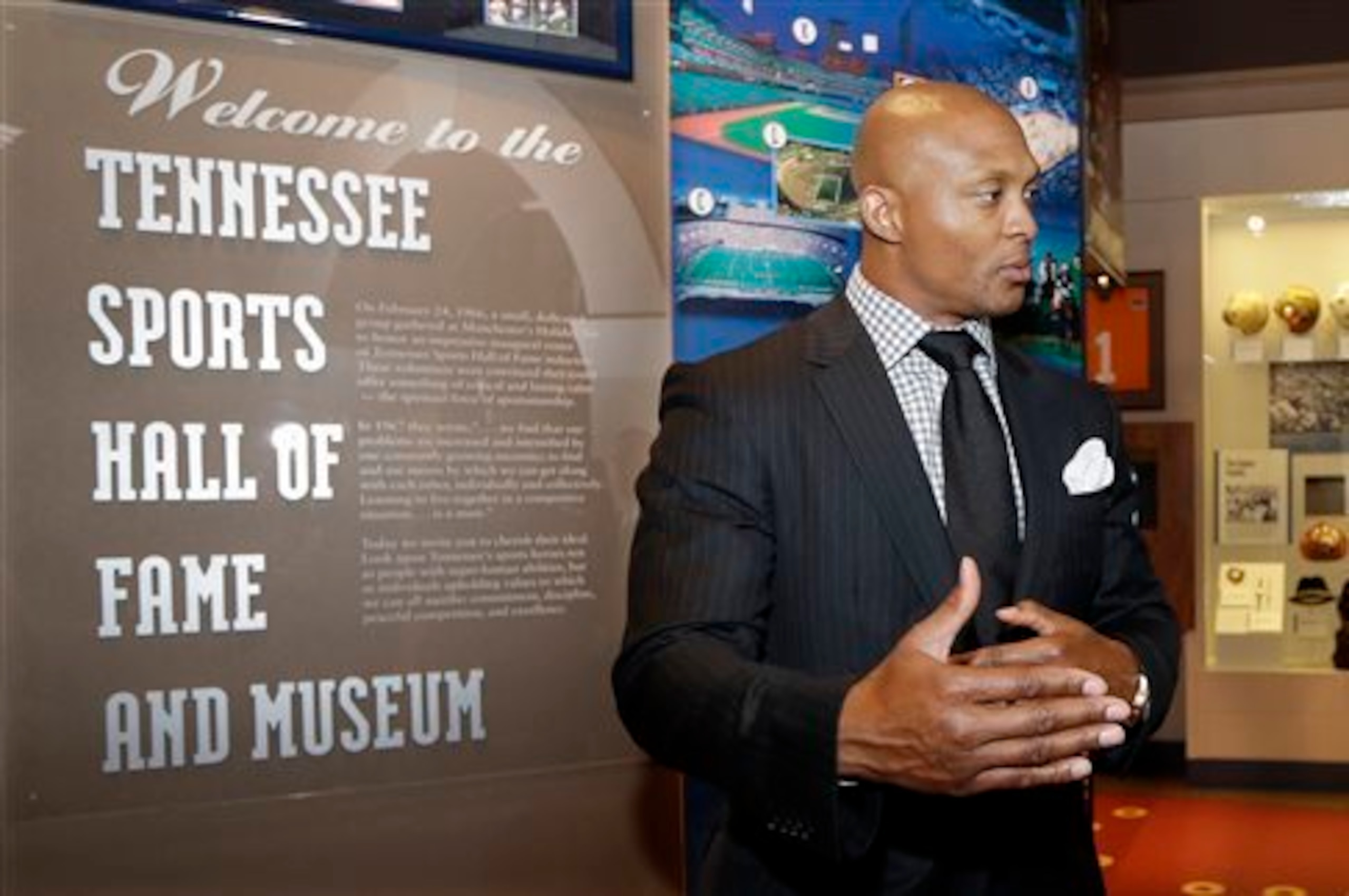
Stories like the one four-time Pro Bowl running back Eddie George told Trotter:
"I wanted to leave winning a Super Bowl, rushing for 2,000 yards, then having a press conference and crying at the podium. I wanted to have that moment, you know? But that didn't happen. I'm sitting at my kitchen table with my cell phone, just waiting for my agent to call for an opportunity with a team. And that's when I realized it was over.
I had saved my money. I had done well. I had businesses that I had already started. But there was that void, a huge void, of: "Man, what am I going to do tomorrow morning when I wake up?" It was pretty much, "Who am I? I'm no longer an athlete."
"
Stories like the one former linebacker Takeo Spikes told the NFL.com:
"What really gets you is it's from 60 miles per hour to zero like that. Now what? We're used to and programmed to be doing something football related year round. We've all done it probably for more than 20 years. Then it's cut off. That's the toughest thing former players deal with, especially in that first year.
"
What the transition program does is help players fill the void George spoke about. What rookies need is to start figuring out how to do that now.
One of my favorite players to cover was Maurice Jones-Drew. He was smart and forward-thinking. He retired recently and is now coaching high school football—and wants to coach college football some day soon.
Jones-Drew was always thinking far ahead. He saved his money. He prepared for the end from the very beginning.

"I was ready for retirement," he told me recently. "It wasn't a big shock to my system because I was always preparing for it."
Again, this isn't a depressing story; it is more a story about hope, about ex-players helping ex-players. You might not always hear about them, or hear anything more than vague details, but the stirring stories—the scary ones, the ones where members of the transition program pulled a former player from hell—are there, and they are outstanding tales of success.
The example given at the beginning of this story, where a player considering taking his own life intersected with the transition program, isn't the first time something like that has happened. Several years ago a former NFL linebacker was contemplating suicide when fellow ex-players who were part of the transition program got together with the player and talked him out of harming himself. The wife of the player was so thankful she wrote a letter to the players who likely saved her husband's life. The letter read:
"I just wanted to send out a HUGE THANK YOU to the two of you for what you did for my husband over the weekend! He is so enthusiastic about seeing the light at the end of a tunnel, and it absolutely would NOT have been possible without your support and this fabulous program. I honestly think it is the most worthwhile thing I've seen the NFL do in all of the years he was involved. He summed it up by saying, "I think those few days saved a couple of lives in that room." I don't profess to know or understand the small brotherhood of NFL alumni, but you guys did a phenomenal job in reaching out and changing lives. [Former player's name redacted] I know you spent years as an NFL great, but perhaps this is your best work, the thing for which you should be most proud. [Former player's name redacted] thank you for that initial phone call and email — you made a difference in our lives. As a wife, I thank you for doing something I couldn't. Please express to whomever the powers that be what great importance this program bears. It is an integral part of the transitioning process and if you ever have a board for families or wives involvement, count me in — this is the best thing the NFL has put money towards in years. THANK YOU and I hope to meet you two in person one day. Until then…
"
The message these draft picks need to digest is that football will likely end sooner than they think. It can come in a flash, and it can be brutal. And none of this includes how the potential complexities of CTE—the degenerative brain disease—factor into this.
The money can run out, too. In what has to be the most comprehensive study ever on NFL players and their finances, the National Bureau of Economic Research (via The Wall Street Journal) found that one in six players goes bankrupt within 12 years of retirement. While the researchers did write that the rate of NFL retiree bankruptcy filings was similar to, or higher than, estimates for similarly aged people, most of the general population does not earn $3-4 million within the first few years of employment. So that number is still disturbing.
The NFL has programs to help rookies and deals with some of these issues at the rookie symposium, but to me, the message the transition program sends—be ready financially and mentally for the end—is the most important they could ever receive. Guys like Elias, Scott or Mason could be on the phone with rookies monthly, helping them deal with that.
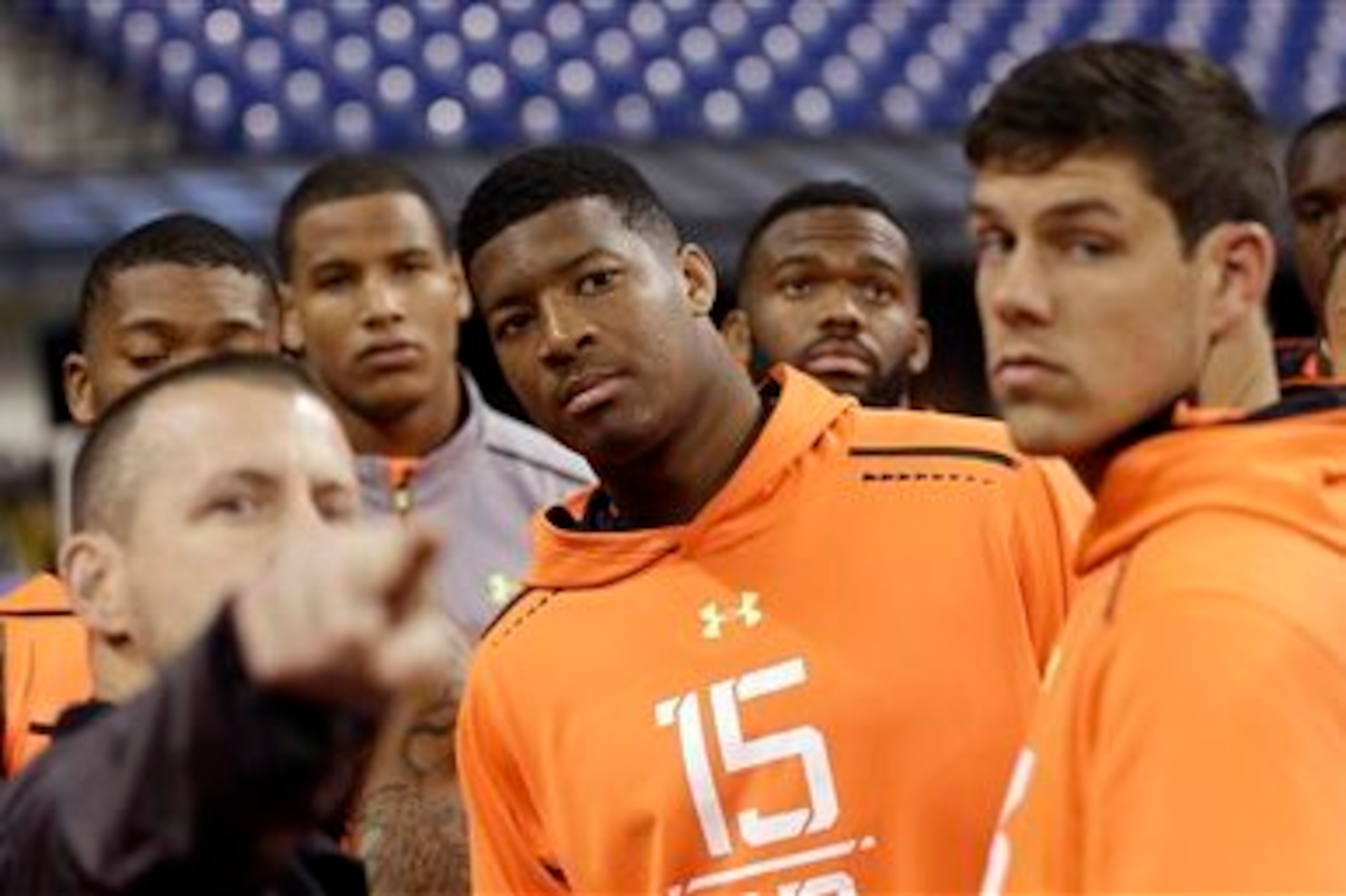
The NFL now is harder than ever before. Winston will likely go to a terrible franchise and be asked to be the savior while having his every move, his every scratch, chronicled and deciphered and analyzed. I remember once Michael Irvin, who came into the league in 1988, telling me that if he had come into the NFL during the social media age, it might have affected the trajectory—in a negative way—of his Hall of Fame career.
A good example of what the NFL can do to a rookie is Johnny Manziel. How skilled he actually is remains debatable. What is not is how the excessive aspects of his personality manifested themselves even more under the pressures of professional football.
Maybe Manziel would have always needed rehabilitation, but there's little doubt his struggles in the NFL acted at best as an accelerant. And at worse they were the cause.
Elias, Scott and Mason are among a larger group of transitional workers who assist ex-players. I've known Elias since I covered him as a player for the Giants. He's one of the smartest people I've ever known.
"For me, leaving the NFL was like going from Oz back to Kansas," said Elias, "or color to black and white."
Scott grew up in a football family. His father was a player for Amherst in college and played for the Colts and Lions in the 1970s and early 1980s. He was also inducted into the College Football Hall of Fame.
"When my father played, he used training camp to get in shape," Scott said, "because he worked other jobs to earn money.
"I was born my dad's rookie year. I was in locker rooms my entire life. I played football, made the NFL. I had this skewed expectation that, 'Hey, this NFL thing is pretty easy.' All of my identity was as a football player."
Mason played for the Jets, Washington and Jaguars.
"What I try to do is get to know players as human beings," he said, "not just as football players."
What these men do is mostly selfless work, and there is the probability this program has saved dozens of former players from harming themselves, or possibly even their loved ones. It is heroic stuff, and the depth to which these former players have gone to help other former players will likely never be known.
This story goes beyond the past and the future. It's also about the present. Winston has met with the commissioner, but if he and other rookies were smart, he'd place a call to one of these former players who could prepare them for the inevitable...
...the end.
Mike Freeman covers the NFL for Bleacher Report.
.jpg?w=2560 "Vikings Camp Football")
.jpg?w=2560 "Browns Camp Football")