

Fat Steaks and Big Promises: An Inside Look at NFL Free-Agent Visits
First-class flights and four-star hotel suites. Steak dinners, sightseeing tours and luxury-box NBA tickets. Everybody wants to be first on your dance card, and no one wants you to leave—unless you are departing with millions of dollars and a new contract.
Life is good when you are a top-tier NFL free agent. Billionaire owners and tough-guy coaches bend over backward like smitten prom dates to make you happy. Nothing is left to chance when you come a-calling; even your chauffeur is carefully selected. Everyone wants you to have a great time and leave rich.
We've all followed the flight plan as a superstar free agent jets across North America in search of his next employer. It's like tracking Santa on Christmas Eve. But what really goes into these grand tours? I asked three former general managers and a pair of agents to take me inside the planning and preparation of the perfect free-agent pitch. Speaking off the record, these insiders told me how teams organize an overnight visit to remember for a coveted player, and they explained just why teams bother to put out the good china when most of the nitty-gritty money matters are handled on cocktail napkins during the scouting combine.
TOP NEWS
The Contender Picture Takes Shape 🗣️

Geno Explains Wilson Exchange
.jpg?w=2560 "Rams Raiders Football")
Raiders Could Start Mendoza
To limit the hypotheticals and generalities, let's create a scenario in which Home Team is planning to host a blue-chip free agent named Kong, an All-Pro defensive tackle who will potentially entertain multiple massive offers before making a decision. Any resemblance between Kong and any real persons, living or dead, is purely coincidental.
The Organizer
Every team has an administrator who acts as the quarterback for organizing free-agent visits. Some teams give the task to a general manager's assistant. Others assign the duty to someone from the business side of the organization: the team's travel director, for example. For Home Team, we will call this combination administrator/concierge The Organizer. When it comes to lining up Kong's itinerary and making sure coaches, drivers and others are where they are supposed to be, The Organizer is the boss.
The Organizer conducts a logistical meeting the week before the start of free agency. The general manager has given The Organizer a list of expected free agents visiting and likely arrival dates, with Kong atop the list. Most of the other visits involve second-tier free agents who will get a physical, a meeting or two, perhaps a lunch and maybe an offer. Kong is an exceptional case, and Home Team must plan a precise itinerary for his visit.
Over the years, The Organizer has built relationships with local luxury hotels and restaurants; he or she can get tables or suites quickly, usually at a good price. The Organizer can also quickly conjure local basketball, hockey or concert tickets, or perhaps stake claim to a luxury suite for an NBA or NHL game.
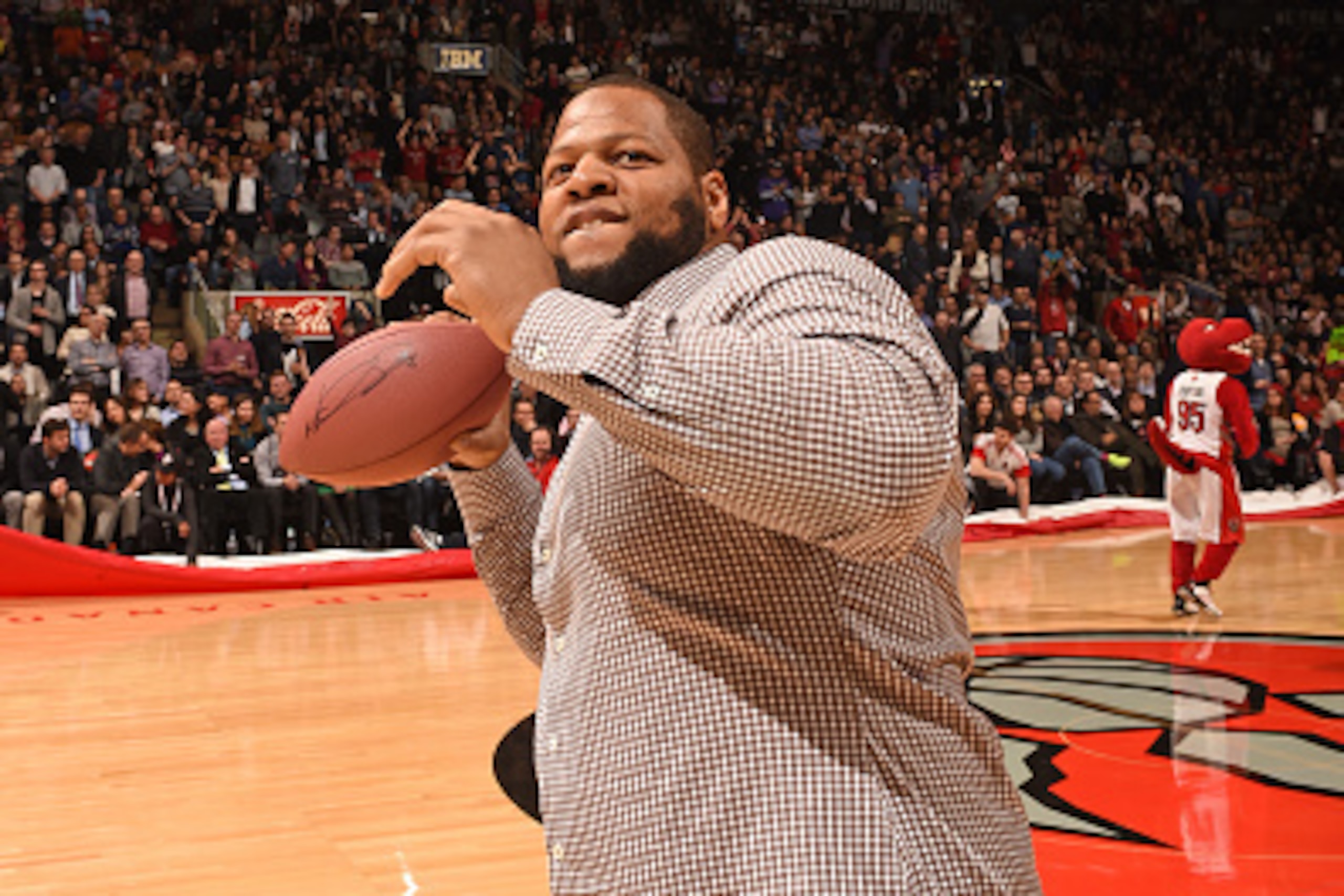
One general manager compared the process to what a power-conference college does to woo a 5-star recruit (minus the really sketchy stuff), saying that their owners and coaches made a point of adding special perks, like a trip to a basketball game. Another told me his teams shied away from extracurricular activities like NBA games; top free agents got a fancy dinner and a sightseeing tour but no velvet rope treatment. "These guys are on a business trip. It's not about getting out there and clubbin'."
The Organizer also knows who to contact at the local hospital to set up a full physical for Kong, who will get a full medical examination even if his injury history is spotless. Kong cannot be expected to hang around a waiting room reading a year-old Golf Digest until his name is called. His schedule is tight, and there are privacy issues to consider: The local press may have informants hanging around the lobby searching for a scoop about Home Team's latest free-agent target.
Some teams will announce a player's visit to the press on the morning of his arrival to prevent this kind of skullduggery. "We had people camping out all over the place, or people tipping some guy at the airport," one general manager said of the local media scene. A morning press release "stopped the craziness." It is one more thing The Organizer must consider while planning Kong's visit.
The Organizer manages other logistical details: some large, some small. Someone must pick up Kong at the airport and drive him to the team headquarters or hotel, then to the hospital or to social events. More on this chauffeur later. If Kong brings Mrs. Kong on the trip, The Organizer must plan for the extra guest. Coaches' wives will now be joining their husbands and the Kongs for dinner and other entertainment (if Kong is alone, it's more of a "boys' night out"), and a team employee will take Mrs. Kong on a sightseeing tour, perhaps of the best nearby neighborhoods and school districts, while Kong goes through meetings and physicals.
For both the general manager and The Organizer, solid intel is critical for a successful visit. If Kong has a former teammate on Home Team, that player might get invited to dinner or to the ballgame, or he'll simply drop by during a meeting. "Former teammate" could include Kong's college teammates, someone from the same childhood neighborhood or even a buddy from the Pro Bowl.
Former teammates and pals can also help The Organizer avoid potential pitfalls. Kong may not like basketball. He may be shy and easily overwhelmed at a dinner table with a dozen forceful personalities. Agents also help the general manager and Organizer customize the visit; there is no sense in sending a client on a doomed visit that could sour a lucrative opportunity.
But Kong is not in town for dinner and a show. The Organizer packs the schedule with formal meetings at team headquarters. Kong may be the job applicant and Home Team the potential employer, but for a top-tier free agent, the tables of the typical job interview are turned.
The Interview
By the time the general manager schedules a visit, Home Team is sold on Kong. They have watched the tape and know his background and reputation. Meetings, therefore, are more like sales pitches than job interviews when a player of Kong's stature comes to town.
"You ask some questions just to keep the process honest," one executive said, "but your primary objective is to convince him that he should want to play for you."
"It's him interviewing you," another former general manager said, "so you try to put on your best face."
In rare cases, a player might be so off-putting during meetings that he changes a team's mind.
"You're trying to fill a hot spot, but you don't want to upset the whole balance of the roster," one executive said.
Coaches will try to determine if Kong will cause friction in the locker or meeting rooms, and the team sometimes discovers in meetings that a coveted free agent struggles with basic terminology or concepts. But in most cases, the physical is the lone sticking point for the team—the discovery of scar tissue in a knee can suddenly cool enthusiasm for drawing up an eight-figure contract.
The Organizer makes sure that the free agent's time at headquarters is well spent. During the logistical meeting, he or she establishes a tight itinerary for the coaching staff. Kong will meet the D-line coach at 9 a.m., the defensive coordinator at 9:30 a.m., an athletic trainer at 10:30 a.m., the head coach at 11 a.m. One general manager compared the precise timing to a high school bell schedule.
Sometimes, a group of coaches interviews the player panel-style after individual meetings. Other times, the general manager or even the owner gets involved. A player of Kong's caliber likely merits a little face time with the person who signs the checks.
For Kong, who arrived on Tuesday evening and is scheduled to leave late Wednesday afternoon in our scenario, The Organizer and team have crafted a clockwork job interview/business junket/low-key bachelor party for Kong: dinner and a ballgame in the evening, interviews all morning, a physical after lunch, a final debriefing. Several team VIPs (and their wives) have bent their schedules to Kong's while he is in town.
The general manager, however, is probably not on the wine 'n' dine circuit. Instead of enjoying the slam dunks and surf 'n' turf, he must make sure all the meetings and merriment end with an actual contract.
The Negotiator
While coaches tag-team schmooze Kong and The Organizer makes sure a table will be waiting at Ruth's Chris Steakhouse (or Shula's, Elway's, St. Elmo's, Bookbinders, etc.) and a suite at the Ritz-Carlton is available, the general manager is stuck in his office, negotiating over the phone with the agent.
Kong and the coaches talk about strategies, roles and expectations. They never discuss money. Agents don't want the player talking about money. Management does not want the D-line coach talking money. Players and coaches generally hate talking about money, anyway. So the general manager calls the agent (who rarely joins the player on tour) at some point during the visit.
One general manager said he tries to make that initial call sound like a casual conversation. Kong seems to be enjoying his visit so far. Has he spoken to you yet?
"You don't want to sound too anxious, but you want to sound anxious enough," he said.
The general parameters of Kong's contract were worked out before the visit, theoretically during the "open negotiation" period before free agency the NFL introduced a few years ago, but more likely at Nicky Blaine's cigar bar in Indianapolis late one night at the scouting combine. This is the "tampering" some media types pretend to get in high dudgeon about, and it's as common as creeping up to 80 miles per hour on an open stretch of freeway. The NFL doesn't care unless it becomes reckless. Long before Kong gets on an airplane, Home Team knows that he wants a contract of a certain shape. Let's say he is angling for six years at a reported $114 million, which will set a new standard for players at his position.
The general manager is already willing to give Kong a contract of that scope when he picks up the phone to chitchat with the agent. But with Kong at the facility, urgency kicks in. The general manager wants a deal done before Kong leaves. No one wants a player to go offer shopping.
"If they leave you, they rarely come back," said one general manager.
On the agent's side, he has a motivated buyer on the telephone and a client who (ideally) is excited about the defensive coordinator's scheme and happy after enjoying lobster tails with an old college chum. "He's going to be most enthusiastic when he's right there with you," another executive said.
The visit is negotiation crunch time. It's time to guarantee money, add performance bonuses, extend the back end of the contract to make it more impressive and add fins and spoilers to what started as ballpark estimates.
Sometimes, the negotiations come down to what one general manager called "nickel-and-dime stuff"—much more than a year's salary to you and me. Some demands involve massaging a player's (or agent's) ego.
"The agent might say, 'It would make him really feel good if his average made him the second-highest player instead of the No. 4 at his position,'" one executive said. "So you slap another two million in the sixth year to make him feel good."
The agent may get a text message or other smoke signal from Kong during negotiations. I love this coach. I love this city. Make this happen. The agent cautions Kong to play it cool while he squeezes an easily reached performance bonus or a few more guaranteed bucks from Home Team. If the player hates what he hears and sees during the visit, the agent tries to carefully end the negotiation and politely ease the player to his next destination. Everyone has a relationship to preserve, so no one wants to slam a phone down or storm out of a meeting.
It sounds like a cross between the awkward early stages of dating (don't pick up the phone until the fourth ring) and the shenanigans at a used car dealership (what's it going to take to put you behind the wheel of this Edsel?). For the team, any information is critical. The general manager must know how much Kong's other suitors are capable of spending, so he does not extend further than he has to. If Home Team's capologist is good, he knows 31 other cap situations as well as he knows his own. Home Team must have a good sense of what makes Kong tick before he arrives at headquarters. Maybe he loves (or hates) old-school tough guy coaches or is tired of playing for a losing team, and so on.
Most of all, the team needs to know how Kong really feels about the visit, even though his agent has coached him to be politely vague (the way most of us act with a car salesman or pushy realtor) about whether the pitch is convincing enough.
How does a team extract information from a player who is doing his best to be noncommittal? Sometimes, the most important person in the negotiation is not the general manager, Organizer, agent, coach or player. It's the guy driving the car.
The Chauffeur
Kong spends much of his visit getting driven around town. He must get from the airport to the hotel, from the hotel to dinner and back, then to team headquarters, to a medical facility for a physical, back to headquarters and back to the airport. Add a hockey game or sightseeing tour to the itinerary, and Kong could be on the road for several hours. Most organizations hate to let that time go to waste.

Some teams send stretch limos to pick up free agents of Kong's caliber. But two of the general managers I spoke to said they used "company cars," usually spacious SUVs or minivans, and chose the driver carefully.
The driver might be an athletic trainer or a position coach. It could even be a coordinator. Anyone who can make Kong feel comfortable and has a valid driver's license can be assigned the task.
"Ideally, it's someone the player will relate to, not think of as management, maybe talk to openly," one general manager said. "Maybe he will let his guard down and just share a little bit."
"The driver is tasked with continuing the conversation all the way until we drop him off at the curb," explained another executive. The Chauffeur can find out how other visits went, get a sense of what the agent is telling the player and get a feel for what Kong is like when he is not in a structured meeting environment.
If driving a player back and forth to the airport sounds like a menial task for an NFL coach, keep in mind there is not much else to do when Kong is visiting except wait for him to arrive.
"Most of the time, everybody who's part of a visit is sitting around doing nothing," said one executive.
"We can watch film on nose tackles in the draft next week, if we don't get this guy," confirmed another.
If The Chauffeur is also the D-line coach, he can bond with Kong while stuck in traffic. We don't usually think of the position coach as a critical component of free-agent negotiations, but a likable assistant coach can lure players.
"They live with that position coach every single day," one general manager said. "You have to make sure that it's somebody they like and respect."
Over the course of several trips, The Chauffeur can extract more information about what Kong really wants—besides millions of dollars, of course—than the rest of the organization could glean from meetings and dinners. By the time he drives Kong back to the airport, The Chauffeur might know Kong better than anyone else does in the organization.
Of course, Home Team hopes that Kong is part of the organization by the time he returns to the airport.
The Endgame
Every organization that wants to sign Kong wants to be on his travel itinerary. In fact, every organization wants to be first on that itinerary. Get shunted to third on the schedule, and you must hope that the first two teams strike out—or be ready to go over the top to beat an offer.
General managers jockey for pole position during those hush-hush smoky-bar combine meetings (or, conceivably, in 100 percent legal conversations during the three-day negotiation window). The agent gets a boiled-down version of the pitch Kong will get. We have the money to spend. We have the perfect scheme. Why go anywhere else?
The player himself may pick his first destination, and basic travel realities sometimes play a role. There is no sense in going from Baltimore to Oakland to New York to Seattle to Miami. But the delicate agent-team relationship plays a major role in determining batting order. If the agent has had smooth negotiations with a general manager in the past, he will bump that executive to the top of the list. And even if Kong himself selected the first stop on the tour, he and his agent will not let the team know that: Such an obvious sign of preference can weaken negotiating leverage.
Home Team persuaded Kong to visit them first in our scenario. The Organizer kept Kong well-fed and stacked with meetings and activities. The Chauffeur made the most of every routine drive. The general manager ponied up a fair deal and sweetened it to something close to the agent's liking. It's now 3 p.m., and Kong is scheduled to be on an airplane at 6 p.m. to fly first class to visit with a conference rival.
Unless the physical uncovered some major problem or Kong revealed during meetings that he doesn't really know what "stunt" means, Home Team does not want Kong to board that plane without an agreement. In fact, the general manager may get an ultimatum from an owner or team president: You are not allowed to let him leave the building. At this point, negotiations can turn crazy or ugly.
The agent may extract one last roster bonus or a few more real or symbolic dollars. Add $250,000 workout bonuses for the next three years, and we cancel the rest of the flights. The executives I talked to spoke of sudden demand shifts the team could not possibly agree to on short notice: demanding an extra $1 million of guaranteed money so late in the conversation is bad form, but it happens. "That pisses you off," admitted one executive. The agent or another team might call to accuse Home Team of stalling so Kong will miss his flight. The accusation might not be 100 percent false.
Meanwhile, "the player is in some coach's office drinking a soda and reading the last issue of Sports Illustrated," one general manager joked. If the once-promising visit starts to go sour, someone from Home Team may switch from Good Cop to Bad Cop. Where are you going next? Oakland? So you want to go 3-13 every year? It's a desperation tactic—everyone wants to keep things positive—but leaning on the player can convince him to ask his agent to stand down.
In our hypothetical case, Kong and his agent finally agree in principle to a contract with a minimum of drama. After many joyous handshakes, Kong's agent probably cancels the rest of his tour. Some general managers ask for guarantees that a player will visit even after he reaches an agreement with another team, in the hopes of either knocking one out of the park before a contract is officially signed or just laying groundwork for future negotiations. But such promises are usually meaningless. The agent cancels and blames the player, who doesn't want to fly anymore and can afford his own prime rib.
A few days later, once the NFL approves the contract, the agent finally arrives at team headquarters for the official signing and press conference. Everybody in the organization worked hard to lure Kong, who probably just signed because Home Team offered the most guaranteed up-front cash.
The Aftermath
Free-agent grand tours aren't what they used to be. NFL teams generally offer the same types of contracts, as opposed to 20 years ago, when one team might offer much longer or more creative deals than another. Facilities have also become more uniform. One practice bubble and dining hall is very much like another in the modern team headquarters/performance facility. Smartphones make long-distance schmoozing a snap; that former teammate can text Kong a few times instead of waiting for him to arrive at an orchestrated dinner. Much more can be done over the telephone, and the open negotiation period provides deniability when a deal is announced 30 seconds after the official start of free agency.

So not many top free agents fly coast to coast like Peyton Manning did (with helicopters chasing his SUV at times) in 2012. But the touring circuit still exists, even if Ndamukong Suh-level superstars get things done long before the official start of free agency. Lowly Josh McCown enjoyed his own mini-tour of the Great Lakes a few weeks ago: As the only veteran quarterback allowed to sign before the official start of free agency (players who are released by their clubs can sign early), McCown looked like King Kong to the quarterback-starved Bills and Browns.
The general managers I spoke to were divided about how much the meetings and pitches really matter. One executive stressed that once the money reaches a certain point, players seek some combination of comfort and the chance to be competitive that can be "pitched" during a visit. Others were more jaundiced. Cash is king, and the best a team can hope for with steaks and sweet talk is the chance to come out the winner among several almost-identical offers. "Nine out of 10 times, it comes down to whose numbers are bigger" one general manager said.
Even if the visit has no impact on the free agent's decision, it still has value.
"It shows where your organization's standards are," said one executive. A player who loves the pitch but follows millions of dollars to the next employer will still rave about the organization to teammates, who may add that team to the tops of their lists when they are free agents. "Players talk, and they know who the teams are who do business right."
Kong's whole visit in our little scenario only cost Home Team a few thousand dollars—keep in mind that The Organizer can arrange deals with hotels and restaurants to trim costs—but it smoothed negotiations that may have saved hundreds of thousands of dollars in bonuses and guarantees. It also got him into Home Team's building, giving the franchise a high-leverage negotiating window. The well-crafted visit can increase a team's profile among other free agents, current and future. It can make both sides more comfortable about an eventual contract.
It may be an elaborate courtship dance among executives, agents, coaches and players, but there is a reason why courtship dances are so elaborate—and so common. And despite the fine restaurants and attention, the free-agent tour is not all fun and games for the player.
"They're traveling constantly," said one general manager. "They are in foreign cities meeting people they don't know. They are undergoing physicals. There are aspects of it that are exciting, and there are aspects of it that are very uncomfortable."
A whirlwind tour full of fine dining and great hotels, with millions of guaranteed dollars on the table? May we all get a chance to face that kind of discomfort.
Mike Tanier covers the NFL for Bleacher Report.
.jpg?w=2560 "Steelers Saints Football")


.jpg?w=2560 "🚨 Week 8 AP Top 25 Poll")

