

How Much Does Reggie Bush Have Left in the Tank?
Sleeping became difficult for Reggie Bush in March 2013.
The challenge was understandable: How does one manage to turn off the mind when there are thoughts of playing alongside Calvin Johnson and all the running lanes his presence creates? How does a versatile running back rest when he’s about to be used in space and become the target of Matthew Stafford’s quick-strike passes?
But most importantly, how is rest possible when you’re viewed as perhaps the final piece to complete a dynamic offense?
TOP NEWS
.jpg?w=2560 "49ers York Arrested")
York Responded to Ad on Prostitution Site Before Arrest
Joey Porter Jr. Trade Packages 📦
💀 McVay's Quote on CFB Returns
“I got about two or three hours of sleep last night, just because I was up, and I was thinking about all the possibilities,” Bush said in 2013 during his introductory press conference after the then free agent signed a four-year deal with the Detroit Lions worth $16 million.
He was so pleased with his free-agency visit that his new football home in Detroit "almost seemed too perfect.”
Perfection is fleeting in the NFL. Instead, it’s often a mirage and replaced with the repeated annual cycle of offseason optimism that turns into in-season despair.
For Bush, the rosy feelings and joyful unrest from two years ago have become something else entirely: unemployment.
Bush was released by the Lions Wednesday, a move prompted in part by the need to scrape together every possible dollar in an effort to retain impending free-agent defensive tackle Ndamukong Suh. But Bush’s release freed up only pennies, and in truth it communicated a different message.
He became expendable because of his advancing age (Bush turns 30 next week), his lack of durability (seven missed games over two seasons in Detroit) and the emergence of Theo Riddick. The second-year running back led his position in yards per route run during the 2014 season, according to Pro Football Focus.
But despite his age and bruising/breaking, Bush could again be filled with that blissful feeling of rejuvenation, just as he was two years ago when the possibilities in Detroit seemed endless.
As a free agent again he needs to land in the right situation and be given a specific (and reduced) role, a generic statement we can apply to most running backs nearing the age of 30. If that happens, Bush’s production as a pass-catcher could far exceed the minimal investment required for his services.
We might be looking at the dollar-store bargain of the 2015 free-agent class.
The running back market is loaded this year with talent and plenty of brittle bodies. Including Bush, whose body has suffered its share of dings.
The difference between him and the rest? Age and Bush’s running back odometer, a divide that’s immediately clear when he’s put alongside his position peers also set to cannonball into the free-agency pool.
| DeMarco Murray | 27 | 11 (over four seasons) | 1,104 |
| C.J. Spiller | 28 | 10 (over five seasons) | 826 |
| Ryan Mathews | 28 | 18 (over five seasons) | 1,069 |
| Mark Ingram | 25 | 14 (over four seasons) | 635 |
| Reggie Bush | 30 | 28 (over nine seasons) | 1,732 |
While the likes of C.J. Spiller and Ryan Mathews will certainly give prospective employers the injury jitters too, total touches is always the most important tool to use while attempting to gauge the likelihood of further breaking.
Bush has been exposed to far more abuse, though it’s important to remember much of it hasn’t come through the traditional way backs crumble: by repeatedly running into walls of humanity.
His status as a pass-catching dual-purpose threat has helped to somewhat soften the gut shots Bush takes. He hasn’t reached even the 250-carry plateau in a single season and peaked at only 227 carries during his final year with the Miami Dolphins in 2012.
Still, the injuries he’s suffered have been of the brutal variety. In 2010, Bush fractured his fibula, and in 2014, he dealt with an ankle injury that led to five missed games, often stripping him of his ability to cut effectively.
His production suffered when the juking, slippery and missed-tackle-creating Bush wasn’t on the field.
That’s the risk associated with Bush, one that will be readily absorbed when it comes with a discount. Please recall that last spring Chris Johnson received only a two-year contract worth $8 million despite never missing a game due to injury.
It’s easy to imagine a near future in which Bush will settle for a contract with an average annual base salary paying him only $2 million, half of what he was receiving under the deal just terminated by the Lions.
If we operate under that safe assumption, then the question we’re asking about Bush shifts.
What can a healthy Reggie Bush bring to an offense?
If Bush is available at a flea-market-level price, his combustible body becomes less of a concern, along with his climbing career touches. All an inquiring general manager would care about is what Bush can contribute for whatever length of time he’s able to stay in one working piece.
The answer: quite a bit still, assuming he’s used properly.
When healthy during the 2014 season, Bush still displayed his typical burst and ability to swiftly change direction in the open field. He forced 22 missed tackles even while receiving only 116 touches, per PFF. He’s also only a season removed from creating 42 missed tackles as a runner, sixth among all running backs (he added nine more in 2013 as a receiver).
Or better yet, he can still go full roadrunner and blaze by would-be tacklers. We don’t have to flip back far in our digital-play Rolodex to see Bush’s speed and silky-smooth hands at work.
First the hands, which have led to seven seasons with 40-plus receptions, including 88 during his rookie year. They were on full display during a Week 17 win over the Chicago Bears.
In the first quarter Bush was targeted on a screen that was sloppy and slow to develop. Lions quarterback Matthew Stafford dealt with backside pressure, and the resulting off-balance throw was low.
The ball was destined for Bush’s shoelaces, and the play was going absolutely nowhere. So, of course, Bush turned this into a 21-yard gain…
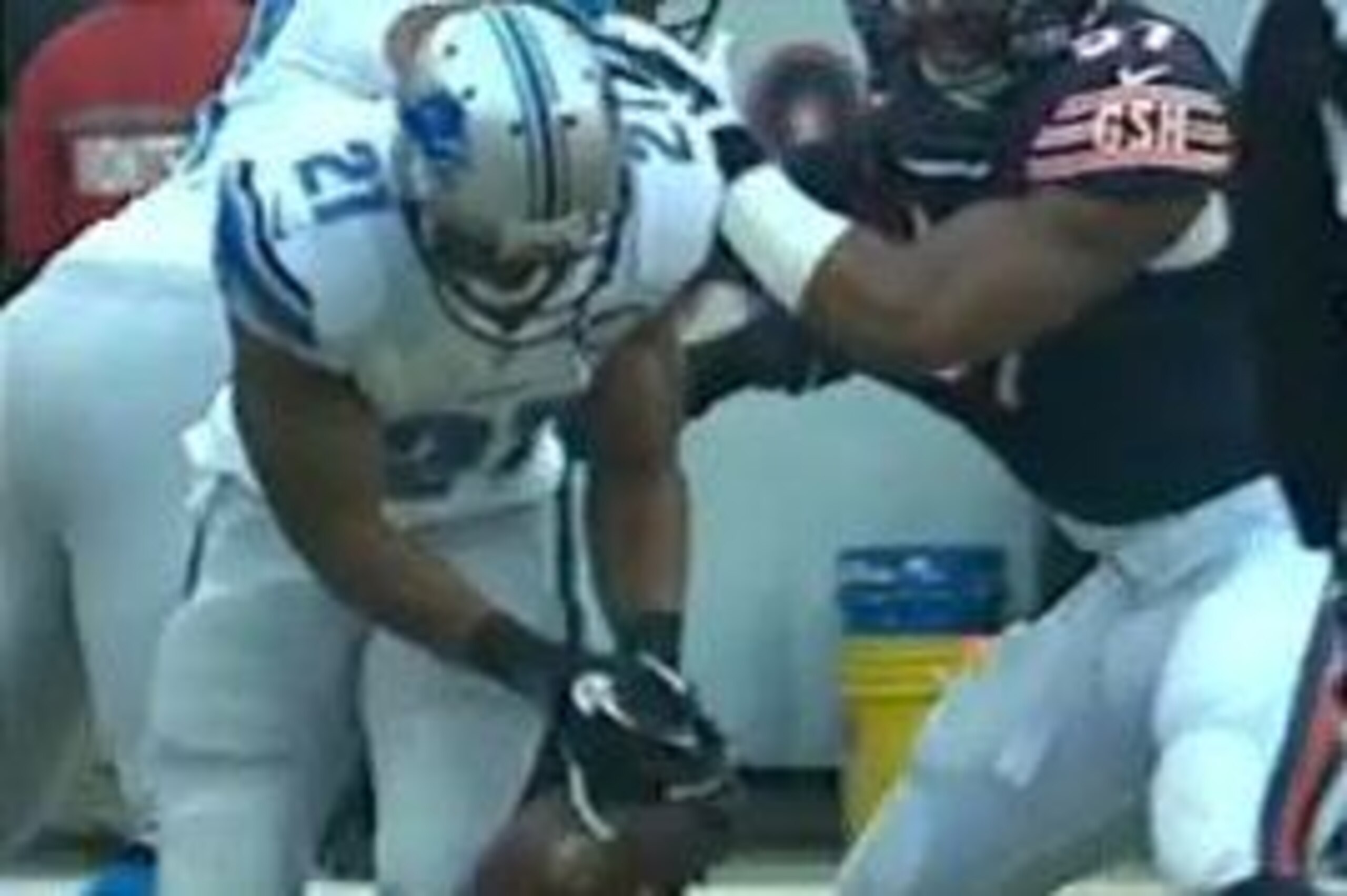
Bush was in heavy traffic and had Bears linebacker Jon Bostic closing in from behind. Yet he still had the concentration to juggle a wayward throw while continuing to turn the corner and push upfield.
Ideally, Bush will be plugged into a role that asks him to primarily become a receiver out of the backfield and often from the slot too. He’s most effective when used as a sort of hybrid running back and a multi-faceted option. In 2013, Bush averaged nearly a first down each reception, ending the season with a career single-season high 9.4 yards per catch.
That is why there’s already been speculation he could surface with the New England Patriots. Bush would be a much cheaper replacement for possibly departing free agent Shane Vereen, and he’d function in the same capacity. As ESPN.com’s Mike Reiss noted, even an injury-plagued Bush caught 94 passes over the past two seasons, and Vereen wasn't far ahead at 99.
But although Bush may be best suited for a pass-catching role, he still brings an outside speed threat from the backfield.
In Week 3 of the 2014 season, against the Green Bay Packers, Bush was healthy and looked very much like the old high-steppin’ USC version of himself. Early in the fourth quarter, Detroit spread the field with four receivers and Stafford in shotgun while flanked by Bush.
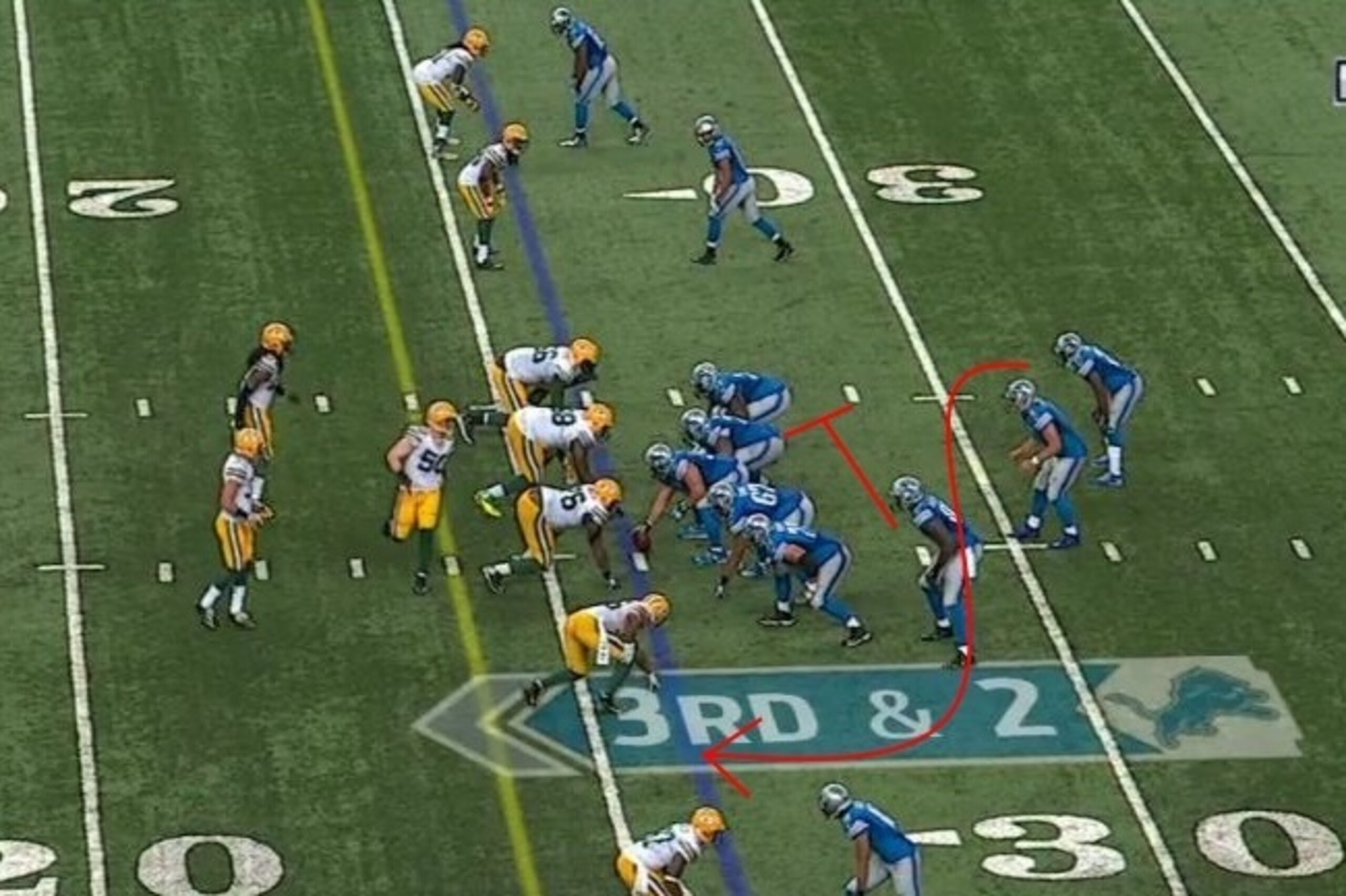
It was a formation that placed Bush in his natural habitat: plenty of space and an opportunity to bounce quickly to the outside. That is exactly what the play called for, as Lions offensive coordinator Joe Lombardi essentially (and smartly) created a situation in which Bush was isolated against one defender in the open field.
When you ask Reggie Bush to beat one man to the outside…

...Wonderful things usually happen. Like in this case, a 26-yard touchdown run.

Bush sprinted around the corner and accelerated a full two strides ahead of Packers safety Micah Hyde. He was gone almost instantly and not touched until he tumbled into the end zone.
Cheap and useful
The limitations of the salary cap place great value on being cheap and useful. If you’re cheap, really useful and also productive, you’ve become a walking slot machine. Congrats?
Like every gradually decaying veteran running back, Bush comes with a need for caution. The team that signs him needs to take a less is much, much more approach, using Bush in a more limited role on passing downs to keep him fresh and emphasizing his talent as a pass-catcher.
If all those boxes are checked, he can be cheap, useful, productive and explosive.
.jpg?w=2560 "Seahawks Camp Football")
.jpg?w=2560 "Rams Camp Football")


.jpg?w=2560 "Players with Shocking Career Earnings 😳")

.jpg?w=2560 "WWE NXT Results, Winners, Live Grades, Reaction, Highlights Before Heatwave 2026")