Marcus Mariota, Devin Smith Lead 2015 Draft Class' Top Mislabeled Prospects
Applying labels to NFL draft prospects is part of the evaluation process. It's a way to easily discern the type of talent being discussed. Each year, though, there are individuals who are misrepresented based on those labels.
One of the more dreaded perceptions of a player is that he is a product of his school's system. This perception devalues the prospect's level of production—therefore his overall level of success—he enjoyed during his career. It's a designation that essentially discredits that prospect, while it props up a superior scheme by that school's coaching staff.
Maybe the most obvious example is Mike Leach's Air Raid passing attack. The system, which began at Kentucky before moving to Texas Tech with Leach and now resides at Washington State, continues to churn out prolific passers.
.jpg?w=2560 "Rams 49ers Football")
Leach's quarterback disciples have included Tim Couch, Kliff Kingsbury, B.J. Symons, Cody Hodges, Graham Harrell and Jeff Tuel. Connor Halliday is his latest protege about to enter the NFL ranks. Only Couch experienced a modicum of success in the NFL.
Why?
It's easy to point to the system as the reason none of these quarterback ever fully developed at the NFL level. It puts up points and tons of yardage at the collegiate level but doesn't necessarily translate to the professional ranks.
Numerous other examples can be cited, particularly with the abundance of spread offenses.
Scouting is about individuals, not systems, though. A system might not work in a prospect's favor, but it's how certain traits translate to the NFL.
Below are five examples of very talented players who should overcome an unnecessary knock on their skills based on how they were utilized at the collegiate level.
Quarterback Marcus Mariota, Oregon
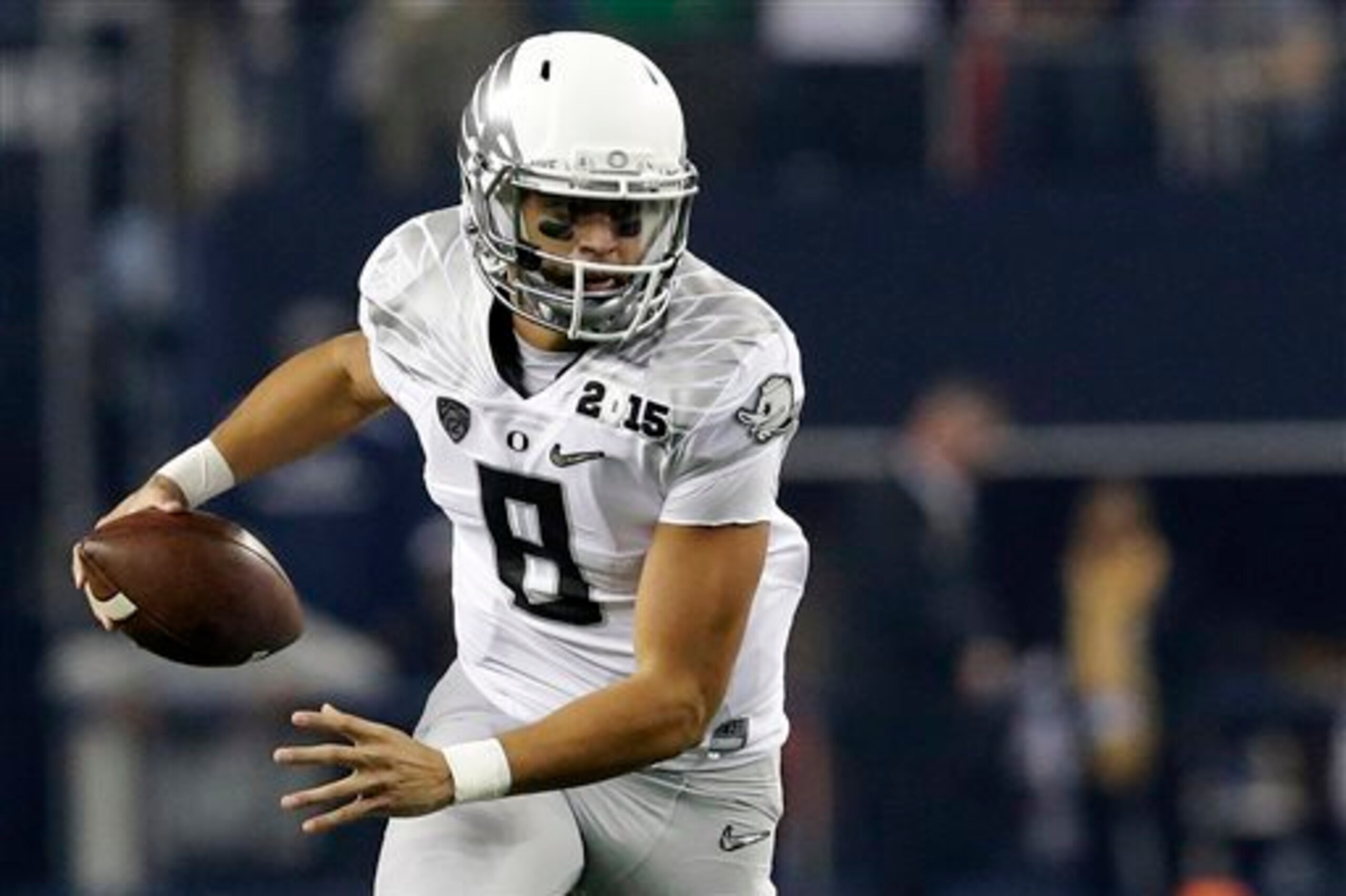
The first thing that is discussed regarding Mariota—almost without exception—is playing in the Ducks' spread offense.
Not only is the Oregon quarterback battling negative perceptions regarding his system, he apparently must atone for the past sins of Robert Griffin III, Brandon Weeden and Johnny Manziel, who struggled to pick up an NFL offense after playing in spread offenses at their respective universities.
Furthermore, not all spread offenses are the same. It's a generic term used for offenses that implement heavy doses of multiple-receiver sets, shotgun alignment, zone read and uptempo play—or some combination of these things.
Oregon operates a run-first spread that does utilize the zone read, but it's not the basis of the offense.
Mariota, even as athletic as he is, owned a 3.5-1 pass-to-run ratio over his career. He threw the ball 1,167 times in three seasons. He is a completely different player compared to previous Ducks quarterbacks like Dennis Dixon and Jeremiah Masoli.
Does that mean he's ready for the NFL?
No, but there is a learning curve for every young quarterback making that leap, including those who are believed to come out of "pro style" systems.
Mariota displayed traits, though, that show his ability to make the transition successfully. The NFL is a mental game, and the Ducks quarterback processes information very quickly. His ability to assimilate into an NFL scheme isn't as daunting as it's often made out to be.
At the NFL combine last week, Mariota impressed with his ability to digest and discuss NFL passing concepts.
“He did much better on the board than expected and his football IQ was surprisingly good," an anonymous scout told MMQB.com's Robert Klemko.
Mariota's combine workout proved he is more than capable to make the transition from a shotgun offense to operating from under center.
SI.com's Doug Farrar detailed his performance in Indianapolis:
"On the five-yard slant, Mariota was in his wheelhouse, and displayed nice footwork in three-step drops. He tends to be a little choppy with his legs on his dropbacks (Cam Newton had this issue in college as well), but he throws short passes with confidence and anticipation, which some had questioned about him. ... Mariota showed particularly quick feet on the 10-yard speed out. He transfers his weight very well from his back foot to his front, and he adjusts to different receivers very well. And again, though some may question his ability to throw receivers open, Mariota can do so pretty consistently when given the opportunity. I don't think this will be a major issue for him in the NFL. ... Mariota is better than advertised in certain nuances of the passing game, especially timing and anticipation. Just because he didn't make those types of throws at Oregon doesn't mean he can't when given the opportunity.
"
These things translate, which speaks well of Mariota's overall ability and potential.
Wide receiver Devin Smith, Ohio State
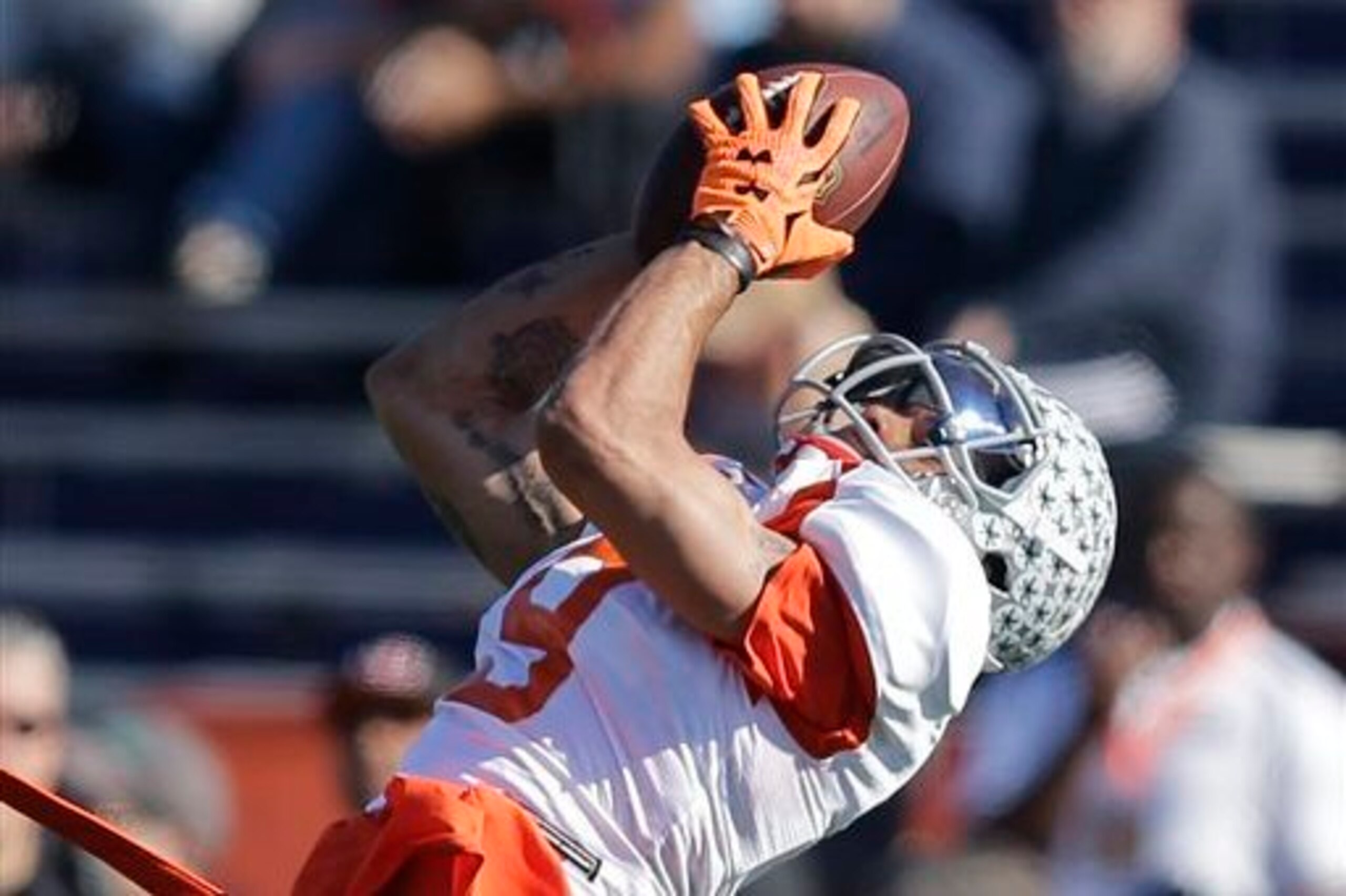
Many are guilty—including myself—of typecasting Smith as a limited wide receiver prospect.
It's easy to look at his game and be overwhelmed by his ability to stretch a defense vertically. After all, Smith led college football with an average of 28.2 yards per catch. Even the best collegiate defenses, including the Alabama Crimson Tide and Michigan State Spartans, couldn't stop Smith from getting behind the secondary.
With 4.42-second 40-yard-dash speed and subtle movements in his route running, Smith proved nearly impossible to stop when he was asked to run a go route.
After only catching 33 passes as a senior, the perception of Smith is that he isn't a polished route-runner. The reality of the situation may be far more benign.
Ohio State may have simply taken advantage of a mismatch on the outside with its best wide receiver.
“He looks like your classic guy who was hamstrung in a system and got pegged, when in reality he can do a lot,” an anonymous NFC scout told Klemko.
Smith made it his mission during his time in Mobile, Alabama, at the Senior Bowl and at the combine to prove he is a well-rounded receiver who can effectively run the entire route tree.
“I wanted to work on the slants, the ins, the outs, curls,” Smith told Klemko. “Everybody knows I can go deep. I’ve displayed that throughout my whole career. It kind of frustrates me when people say that’s all I can do because I know I can run all the other routes. I ran them all in high school and college.”
At times, the evaluation process can be more about what a player didn't do as opposed to what he did. Smith is a perfect example. But strong performances during the draft process have showed he can be a complete wide receiver for an NFL team.
Wide receiver Darren Waller, Georgia Tech
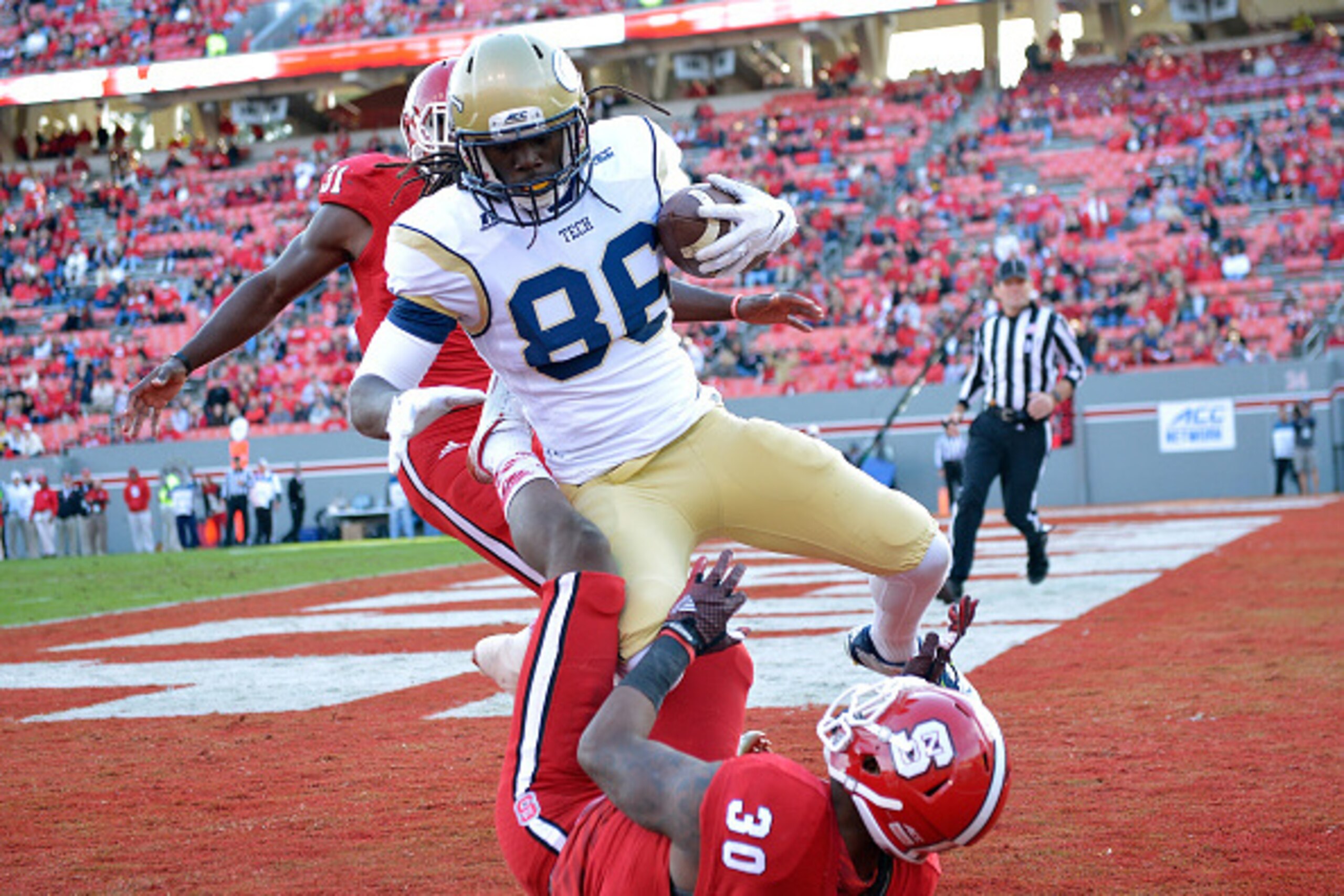
Any time the Georgia Yellow Jackets offense is discussed, the first thing mentioned is "assignment football."
Paul Johnson's program utilizes the only triple-option offense among those teams within the Power Five college football conferences.
As such, the Yellow Jackets only threw the ball 18.8 percent of the time during the 2014 season. Obviously, there are very few passes to go around and even less is asked of its wide receivers from a route-running perspective.
This hasn't stopped previous wide receivers, such as Demaryius Thomas and Stephen Hill, from becoming high draft picks. In Thomas' case, the former Yellow Jacket developed into one of the game's top receivers.
Waller isn't considered the same level of talent as those two. He wasn't even the best wide receiver on his team this past season. DeAndre Smelter was. But Waller is a highly intriguing prospect due to his combination of size and natural athleticism.
At 6'6" and 238 pounds, Waller completed an impressive workout at the combine. The massive target ran a 4.46-second 40-yard dash and posted a 37-inch vertical. Questions will continue regarding the flexibility in his hips and ability to sink and explode in and out of cuts. Teams, though, will see as an immediate red-zone threat.
The wide receiver certainly provided a spark for the Yellow Jackets late in the season after Smelter suffered a torn ACL. Against the Florida State Seminoles in the ACC Championship Game and the Mississippi State Bulldogs in the Orange Bowl, Waller caught 10 passes for 187 yards and a pair of touchdowns.
The Georgia Tech product certainly saved his best for last, and teams won't worry about the fact he played in a triple-option offense. All they'll see is his size and upside.
The concerns over Georgia Tech's system also extend to its offensive linemen. Shaq Mason is a mid-tier guard prospect in this year's draft class. Mason is a dominant run-blocker, but he wasn't asked to pass protect often. He did show he was capable of doing so at the Senior Bowl, though.
Defensive tackle Michael Bennett, Ohio State
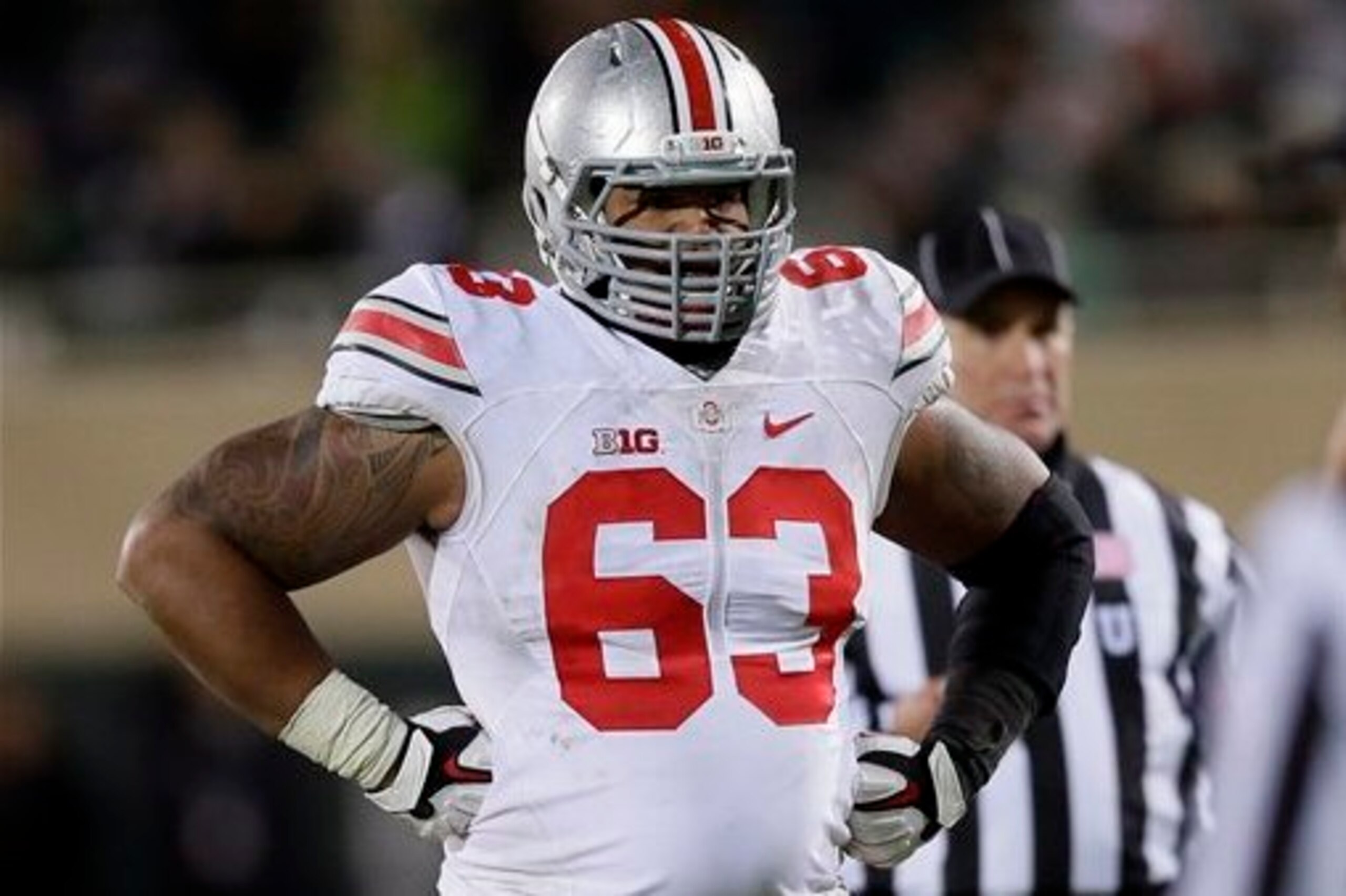
Another Buckeye included in the list, but Bennett's situation is different than Smith's.
While the wide receiver was seen as a limited prospect due to what he was asked to do in Ohio State's defense, the defensive tackle found a comfortable spot playing one position and didn't show the type of versatility he is capable of at the next level.
The senior was considered a first-round talent when the season began, but he struggled when asked to play the 1-technique (defensive tackle shaded over the center) for Ohio State. He didn't produce like he did previously, and the coaching staff decided to make a midseason change.
Bennett switched to 3-technique (defensive tackle shaded over the guard) and exploded. Adolphus Washington, meanwhile, slid inside to nose tackle.
"For whatever reason, that was where we fit best," Bennett told Cleveland.com's Bill Landis. "It worked out really well."
This position switch provided more freedom within the scheme and allowed the senior to be far more disruptive. Bennett finished the season with 14 tackles for loss and seven sacks. He was a monster against the Wisconsin Badgers in the Big Ten Championship Game and the Sugar Bowl against the Alabama Crimson Tide. The defensive tackle registered three sacks and 5.5 tackles for loss in those two contests.
The mistake at this point is assuming Bennett can only be a 3-technique in an NFL scheme.
He may have struggled as a 1-technique, but it doesn't mean he can't play in different fronts. This was a mistake commonly made with Sheldon Richardson when he played at Missouri.
| Player | Bennett | Richardson |
| Height | 6'2" | 6'2" |
| Weight | 293 | 294 |
| Arm length | 33.625" | 34.5" |
| Hand size | 10.25" | 10.5" |
Like Bennett, Richardson was at his best shooting gaps and consistently played in the opponent's backfield. As such, the Missouri product was generally perceived as a pure 3-technique prospect. Instead, the New York Jets selected Richardson with the 13th overall pick in the 2013 NFL draft and immediately placed him at defensive end in a 3-4 scheme.
The young veteran already established himself as one of the NFL's best defensive linemen. He may not have been viewed as the best fit for a three-man front when he entered the league, but his quickness and leverage have proved to be a boon for the Jets.
Bennett has similar potential. He might not enter the league and become an immediate wrecking ball or go on to win NFL Defensive Rookie of the Year, but this is a case where a prospect shouldn't be considered viable at only one position when he displays the potential to do more.
Defensive end Randy Gregory, Nebraska
Sometimes, a team's system can have an opposite effect. Instead of making a prospect look really good, it can negatively affect his production.
Gregory is generally considered a top-five talent. He's a natural pass-rusher, and teams are salivating over his athleticism and length off the edge.
The Nebraska product didn't produce like a top prospect, though. The defensive end registered 10 tackles for loss and seven sacks in 2014.
Concerns over Gregory's effort started to bubble to the surface. There were times during games when the defensive lineman shut it down after not beating a blocker with his initial pass-rushing move.
This was actually by design, and Gregory described what he was asked to do in the Cornhuskers scheme, via SB Nation's Brett Kollmann:
Instead of unleashing arguably the nation's best pass-rusher, Nebraska's coaching staff reined him in. The defensive end's primary responsibility on early downs was to maintain containment instead of simply pinning his ears back to create havoc behind the line of scrimmage.
With the questions surrounding production and motor answered, Gregory's overall talent level shouldn't be overlooked.
“He’s a better athlete than [Jadeveon] Clowney," NFL Films' Greg Cosell told NBC Sports Radio, via ProFootballTalk.com. "He’s more flexible. He’s more explosive in his movement. Clearly, not as strong. Clowney could get inside and push back, but Clowney did not have the loose hips that this guy does. Gregory’s a much more explosive mover, a much looser athlete.”
Clowney was the No. 1 overall pick in the 2014 NFL draft. If the Tampa Bay Buccaneers didn't desperately need a quarterback with this year's top pick, Gregory would certainly be in the conversation.
Look at the player, not the scheme
Broad generalizations don't work in any walk of life, and that certainly applies to the NFL draft.
Just because a player from the same school or scheme (or both) doesn't succeed in the NFL, it doesn't automatically mean similar prospects will fail as well.
Every prospect is based on a projection. Those projections are often boiled down to comparisons or certain labels to easily identify them with a certain type of player.
There are no perfect comparisons, though. Analogies are derived to provide an idea of the type of players one is discussing or viewing, not define them.
It's the player's responsibility to overcome the perception of who or what they supposedly are. He can be a "system player" in college or "a fit" in only one NFL scheme. Maybe, that prospect didn't show enough on film or didn't shine when given an opportunity. These are all things used to devalue and dehumanize aspiring athletes in order to try and make sound decisions regarding imperceptible traits.
The draft process is difficult.
The best way to evaluate any prospect is to view them as an individual instead of falling for the labels pressed upon them.
Brent Sobleski covers the NFL draft for Bleacher Report. Follow him on Twitter.

.jpg?w=2560 "Grading Dynamite From Mexico City 🔠")