2014 Breakout MLB Stars Who Could Prove to Be One-Year Wonders
Every baseball season has its breakout stars. And while it's happening, it's good fun. We get to geek out at the unexpected surprise and turn every which way for answers about how it's happening.
Sadly, not every breakout season leads to lasting stardom. And this time of year being, well, this time of year, we might as well ignore the whole "time will tell" thing and try to spot the likely one-year wonders.
There are 10 breakout stars from 2014 that I'm just not sure about. Some of them have the potential to be good, solid players going forward. But stars? Eh, maybe not.
For the record, I chose to ignore small-sample-size studs, as well as guys who aren't projected to get a chance to repeat their breakout year. So, basically, no Justin Turner. Aside from that, a 2014 breakout star not being on this list must mean he's legit.
But enough about them. Let's get to the (probably) doomed, who are ranked in order of their regression likelihood.
Note: Stats courtesy of Baseball-Reference.com and FanGraphs unless otherwise noted.
10. Josh Harrison, 3B, Pittsburgh Pirates
1 of 10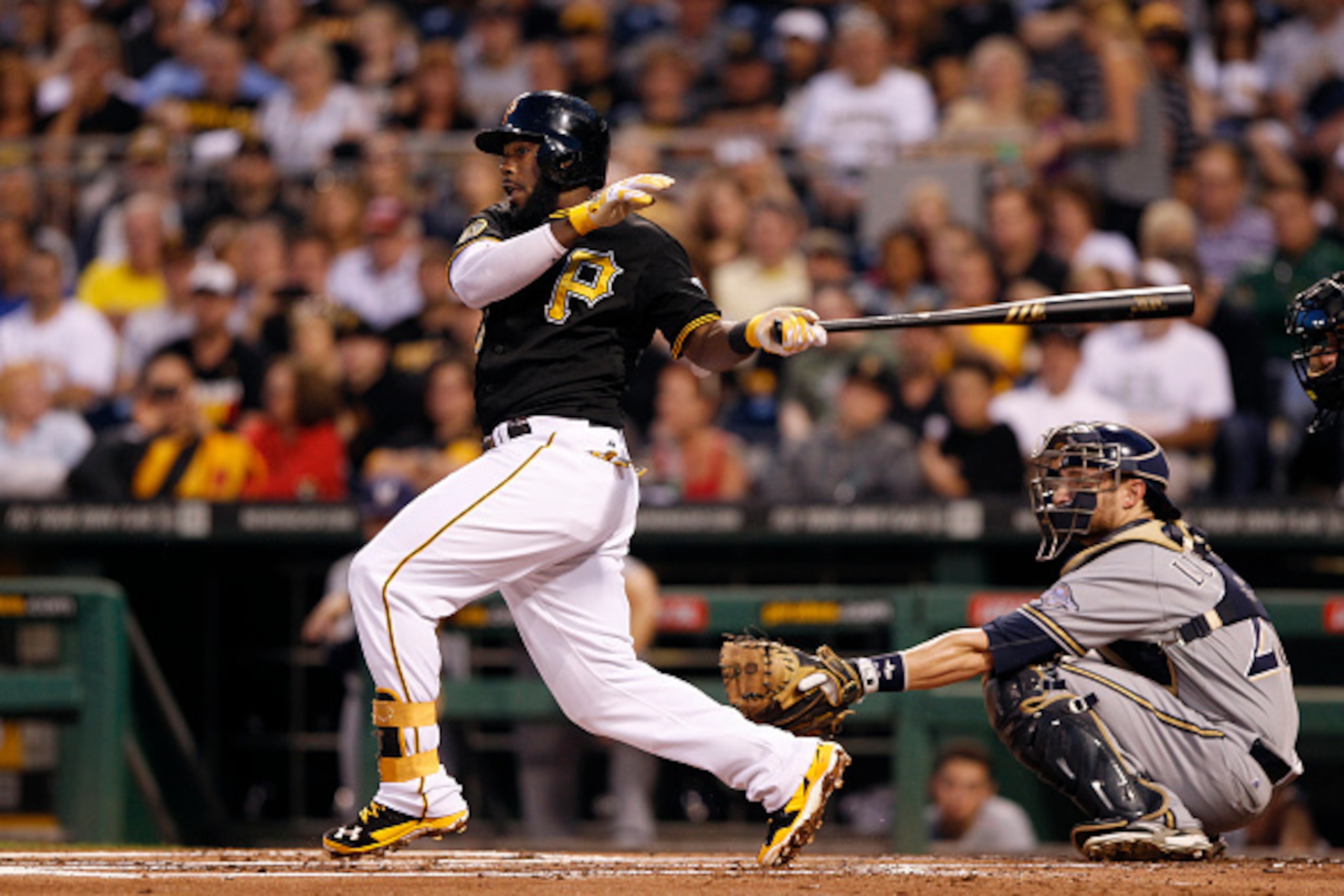
Josh Harrison defined the term "afterthought" before 2014. He was a utility player with a career .250/.282/.367 batting line whose biggest claim to fame was breaking up a Justin Verlander no-hitter.
But yeah. Then 2014 happened. Harrison earned an All-Star nod on his way to a batting line of .315/.347/.490. He also tacked on 13 homers and 18 steals.
What jumps out about Harrison's success is how he boosted his batting average on balls in play (BABIP) from .275 to .353, which is a gigantic leap. It wasn't entirely accidental, though, as he kept his strikeouts down and made a lot of hard contact. When you make hard contact, your BABIP does tend to be high.
But hard contact can be lost when pitchers adjust. And in this case, the adjustment could be easy. Brooks Baseball shows how Harrison went from being a lousy fastball hitter to a destroyer of fastballs, which is an invitation for pitchers to cut down their rather high fastball usage against him.
That adjustment alone could knock Harrison down a peg or two in 2015, and potentially keep him there.
9. Rick Porcello, SP, Boston Red Sox
2 of 10Rick Porcello wasn't a bad pitcher before 2014. More than anything, he just seemed unlucky. As FanGraphs can vouch, few could underperform their peripherals quite like him.
But Porcello finally broke through in 2014, posting a career-best 3.43 ERA in a career-high 204.2 innings. And after entering the year with zero career shutouts, he exited with three.
To do that, however, Porcello had to reverse a trend. He outperformed his peripherals for a change, an indication that it's not the best idea to take his breakthrough at face value.
Though Porcello deserves praise for becoming, according to Brooks Baseball, less predictable with his pitch selection and his location, his strikeout and ground-ball rates took a turn for the worse, which is discouraging.
Because Porcello doesn't have power stuff, there may be no fixing his wayward strikeout rate. And because his sinker stopped getting ground balls, there may be no fixing that either.
Porcello wasn't as bad as he looked before 2014, but he's not as good as he looked in 2014. In reality, he's somewhere in between.
8. Kelvin Herrera, RP, Kansas City Royals
3 of 10
OK, fine. Kelvin Herrera did have something of a breakout in 2012, when he logged a 2.35 ERA across 84.1 innings.
But 2014 was Herrera's real breakout. In 70 innings, he posted a sparkling 1.41 ERA and, notably, didn't allow a single dinger. That's a textbook example of a "good relief pitcher," and Herrera sure looked the part with his triple-digit throwing power.
What worries me, however, is that Herrera wasn't much of a strikeout pitcher even with his incredible heat. He only had about an average strikeout rate, as well as a "meh" (by reliever standards) 12.3 percent swinging-strike rate.
One problem is that Herrera's changeup seems to be losing some of its shine. It ticked downward as a swing-and-miss offering, according to Brooks Baseball. It also attracted more line drives than usual. So did his heat, for that matter.
Herrera has youth and an electric arm working for him, which honestly makes me feel a little uncomfortable about including him here. But that 1.41 ERA just doesn't pass the smell test, and it may never be repeated.
7. Tanner Roark, SP, Washington Nationals
4 of 10
Tanner Roark didn't have much of a track record before 2014. Only 14 major league appearances, of which five were starts. Not much to go off of, really.
Hence why his 2014 season was such a pleasant surprise. He posted a 2.85 ERA in 31 starts, and was one of the league's top-10 pitchers by according to wins above replacement.
But I'll repeat here what I said in Bleacher Report's spring training predictions last week: It worries me that Roark's final ERA was heavily influenced by a 2.65 second-half ERA that happened despite declines in strikeouts and ground balls and downward-creeping velocity, per Brooks Baseball.
In fairness to Roark, he is a good control pitcher who manages contact pretty well. But you only have so much margin for error without velocity, strikeouts or ground balls. And beyond good luck, probably the only reason he got away with his second-half performance was because of the lousy competition he faced.
Then there's the reality that Roark's role moving forward is up in the air. If he's not a regression candidate as a starter in 2015, he's a fish-out-of-water candidate as a reliever thanks to Max Scherzer's arrival in Washington.
6. Lorenzo Cain, CF, Kansas City Royals
5 of 10
Lorenzo Cain was a well-kept secret before 2014. He wasn't much of a hitter with a batting line of just .266/.318/.380, but he could run and play defense like few others.
In 2014, Cain added some offense to the equation. He finished the year with a .301/.339/.412 batting line, and the postseason stage allowed him to show a national audience what they'd been missing.
But Cain's offensive breakthrough looks fishy. He didn't walk more to make it happen, nor did he strike out less. And like Josh Harrison, Cain benefited from a suspiciously large BABIP raise, going from a career rate of .324 all the way to .380.
Where Cain differs from Harrison is that it's harder to chalk up his BABIP boost to hard contact. Over 50 percent of his batted balls were ground balls. Dig a little deeper, and you notice how he went from hitting under .290 on grounders in 2012 and 2013 to hitting nearly .320 on them.
Luck should take care of that in 2015, and age could take things from there. With Cain already nearing 30, it will be harder for him to use his speed to turn ground balls into base hits.
It was fun while it lasted, but Cain's 2014 was probably a singular occurrence.
5. J.D. Martinez, RF, Detroit Tigers
6 of 10
J.D. Martinez ended the 2013 season as a career .251/.300/.387 hitter. He must have noticed, as he decided right then and there to change his swing.
“I changed everything,” Martinez told Evan Drellich of the Houston Chronicle. “From my hands to my feet, my leg kick, my stride, my load—just everything.”
The Houston Astros could have taken a shot on Martinez's swing. Instead, they cut him and let the Tigers give it a shot. Martinez rewarded them with a .315/.358/.553 batting line and 23 homers.
You won't be surprised to hear there's a BABIP concern with Martinez too, as he went from a career .307 BABIP to a .389 BABIP. But since FanGraphs' Jeff Sullivan can break down how routinely Martinez crushed the ball, that's not the big concern.
What's more concerning is Martinez's approach. He operated with a subpar walk rate and a big strikeout rate in 2014, and he asked for that by chasing 37.7 percent of the pitches he saw outside the zone and hitting only 55.8 percent of them. That's an invitation for pitchers to go outside the zone more rather than continue to feed him more hittable strikes than the average major leaguer saw.
Martinez should continue to be a good source of power. But 2014's probably the last time we'll ever see him hit for power and average.
4. Danny Duffy, SP, Kansas City Royals
7 of 10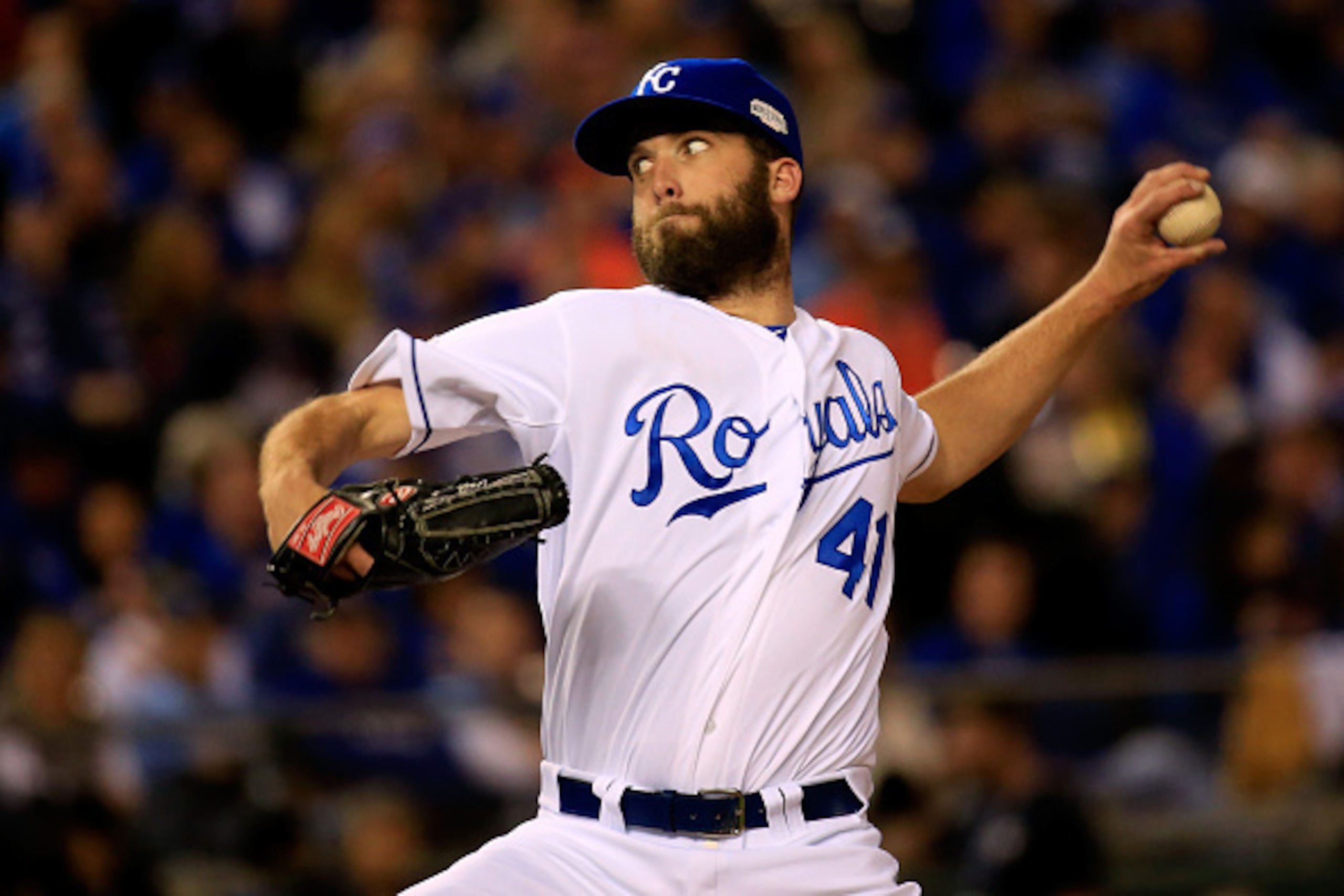
Danny Duffy barely got his career started before he needed Tommy John surgery in 2012. He didn't return from that until late in 2013.
But the 1.85 ERA he posted in five starts would prove to be the appetizer for the main course. He posted a 2.53 ERA across 31 appearances in 2014, 25 of which were starts. Among pitchers with at least 140 innings, Duffy's ERA tied him with Jake Arrieta for 10th in the league.
The trouble begins, however, with Duffy's strikeout rate. Despite his high average fastball velocity, he was worse than average at striking guys out. That's no mirage. He wasn't good at getting whiffs, probably because Brooks Baseball can vouch none of his pitches excelled at getting them.
What really makes Duffy's arsenal work is the rise he gets on his fastball. That produces a lot of fly balls, which is a good thing when you have the Royals outfield. But even knowing that, it's highly unlikely he will maintain the .239 BABIP that fed his 2014 success on a year-to-year basis.
Oh, and for the record, yes I do feel like a jerk for including three Royals on here. They seem like nice people.
3. Dee Gordon, 2B, Miami Marlins
8 of 10By the end of 2013, Dee Gordon looked like a failed prospect. He could certainly run, but he couldn't hack it at shortstop and his career .256/.301/.312 batting line was evidence he couldn't hit.
But then Gordon won the Los Angeles Dodgers' second base job last spring, and he embarked on an All-Star campaign that included 64 stolen bases and a .289/.326/.378 batting line.
In giving up top prospect Andrew Heaney to get Gordon, the Marlins evidently think he can keep on ticking. But Gordon was fresh off a second-half decline that included a mere .300 OBP when they traded for him. So his breakout only consists of one good half, and a rebound isn't guaranteed.
Gordon's BABIP rise from .307 to .346 last year also raises some skepticism, but what's more concerning is how pitchers contributed to his second-half slump. He didn't respond well to additional breaking balls, per Brooks Baseball, and pitchers were also more unpredictable with their location in the second half than they were in the first half.
Basically, Gordon stopped being a capable hitter when pitchers started treating him like one. He should continue to be useful thanks to his speed, but 2014 will likely prove to be his only All-Star year.
2. Steve Pearce, OF/1B, Baltimore Orioles
9 of 10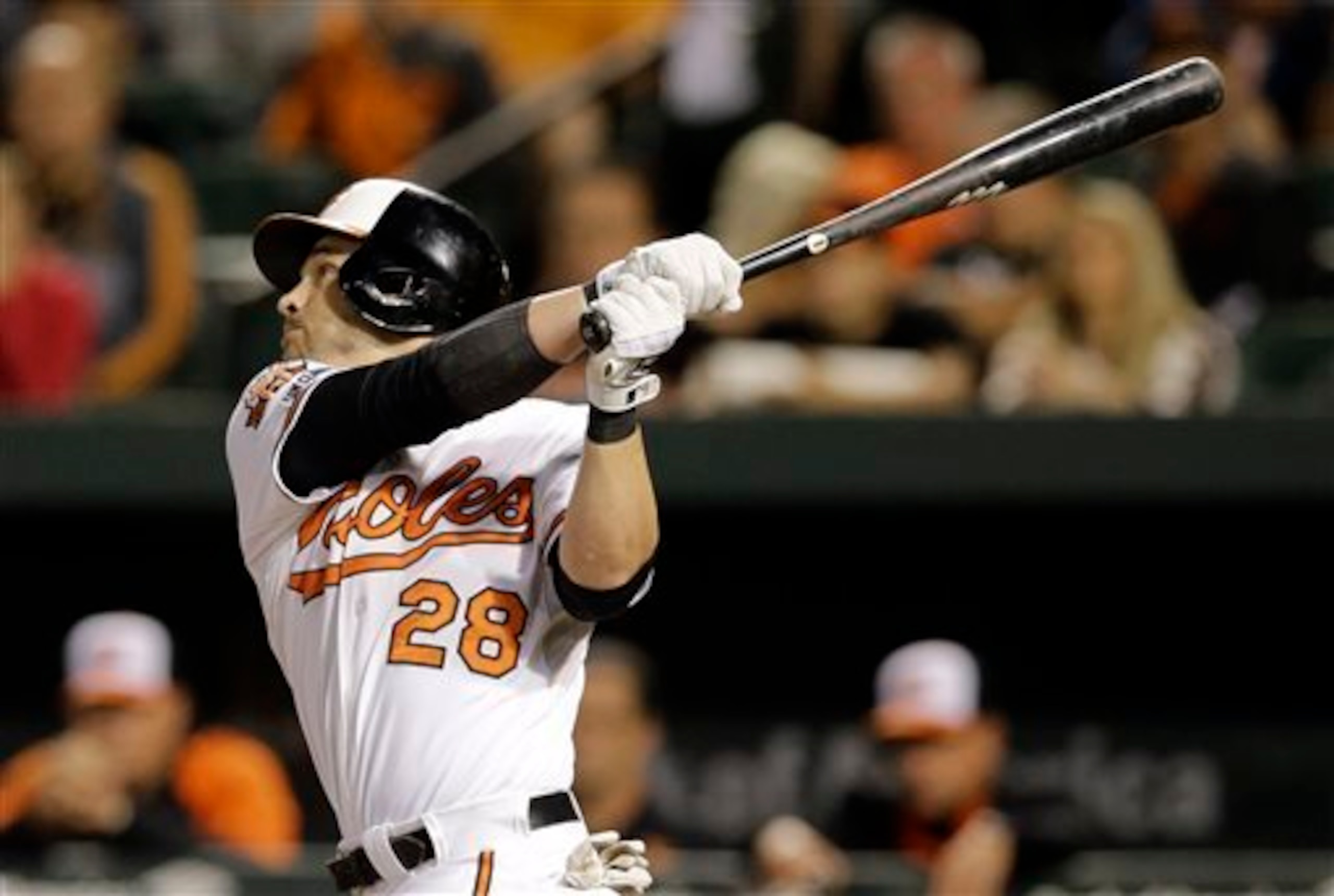
There wasn't much on Steve Pearce's track record worth looking at before 2014. He was a .238/.318/.377 career hitter, and was really only useful in a platoon role.
But in 2014, the righty-swinging Pearce suddenly started hitting righties. He hit everyone else, too, ultimately finishing with a .293/.373/.556 batting line and 21 homers.
And it all looks pretty legit. Pearce did it with a solid strikeout rate, an above-average walk rate and without a totally unreasonable BABIP. We can also once again turn to Brooks Baseball for a look at how Pearce made an adjustment that involved attacking and destroying fastballs.
However, you should always beware a breakout that happens in a player's age-31 season. And in Pearce's case, his fastball-destroying renaissance will come to a swift end if pitchers stop obliging him like they were in 2014. And in an age when pitchers are increasingly aiming low, it doesn't bode well for Pearce's future that virtually all of his power hitting happened up high, per Brooks Baseball.
Accepting that Pearce has turned a corner is OK. He's better now than he was before. But due to a combination of adjustments and age, his peak should be short-lived.
1. Alfedo Simon, SP, Detroit Tigers
10 of 10
Alfredo Simon found a nice niche as a reliever in 2012 and 2013, posting a 2.78 ERA across 99 games and 148.2 innings for the Cincinnati Reds.
But in 2014, Simon was forced into Cincinnati's rotation. From there, he made a stop at the All-Star Game on his way to finishing with a 3.44 ERA in 196.1 innings. Not bad for a 33-year-old.
Like with Steve Pearce, however, Simon's age is a big red flag. And like Dee Gordon, he struggled in the second half. His ERA went from 2.70 before the break to 4.52 after it.
You could actually see that coming in the first half, as there was a huge disconnect between Simon's actual and predicted ERAs. With a well-below-par strikeout rate, he was going to have to sustain his .217 BABIP to be successful. He didn't.
Looking ahead, there's not much to get excited about. Simon can get ground balls, but according to Brooks Baseball, he lacks a put-away pitch to go with his good velocity. And after having problems with home runs in the National League, the move to the American League could make them even worse.
So in Simon, we have an older pitcher who's already descending from his peak and who will be fighting an uphill battle to reverse the trend. Sounds like a picture-perfect one-year wonder.
.jpg?w=2560 "Texans Sign Vet WRs")
.jpg?w=2560 "Grading SmackDown 🔠")
.png?w=2560 "Nuggets to Sign DeMar 🚨")