Year of the Center: How Overlooked Linemen Shaped the 2014 NFL Season
The 2014 NFL season has been many things: the year of the scandal, the year of the cover-up, the year of J.J. Watt, the year of the rookie wide receiver, the latest pass-happy offensive year to end all years.
But look carefully, and you will see that 2014 was really the year of the center.
The center is critical to an NFL team's success, yet he is easy to overlook. He handles the football on every play, but we rarely mention him unless he makes a mistake.
TOP NEWS

Saints Mock Draft Pick 🔮
.jpg?w=2560 "49ers Player Shooting Arrests Football")
4 Arrested in February Shooting of 49ers' Keion White

Raiders May Rest Jeanty
Most of us don't really intensively scout or evaluate centers. We usually appoint a handful of new All-Pros every few years—Nick Mangold, Maurkice Pouncey and Max Unger replace Dan Koppen, Olin Kreutz and Jeff Saturday, who replaced Kevin Mawae and Tom Nalen, in a succession that dates back to Mike Webster and Jim Langer and beyond—then lump the rest together as if they were interchangeable parts.
This season, centers have been impossible to ignore. Perennial powerhouses rejuvenated their offenses by switching centers. Playoff hopefuls fell by the wayside for want of a warm body to snap the football and protect his quarterback. Investing heavily in a center changed one franchise's fortunes; trusting a rookie center helped another contender stay at the top of the standings.
Beside every great quarterback, there usually stands a great team and a great coach. But in front of many great quarterbacks this season—Tom Brady, Peyton Manning, Aaron Rodgers, Tony Romo, Philip Rivers and others—squats a center whose story has helped define the 2014 season.
Snapping legends out of a slump
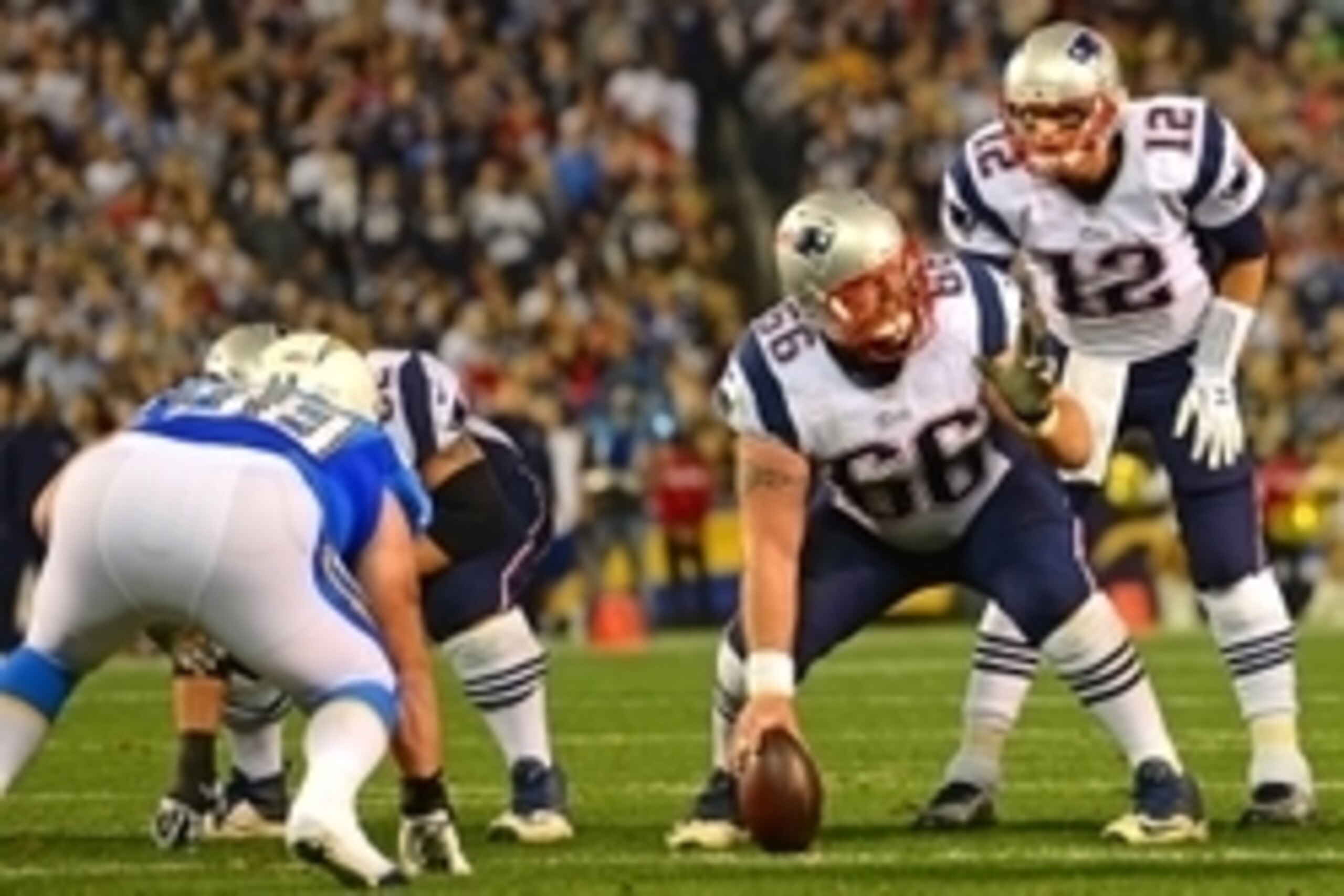
Without Bryan Stork and Will Montgomery, we might not be talking much about Tom Brady and Peyton Manning in mid-December.
The Patriots drafted Stork out of Florida State in the fourth round, presumably as a developmental prospect. Ryan Wendell and Dan Connolly had shared the center duties since 2011, and while neither ever truly seized the job that Dan Koppen had held for years, Super Bowl contenders with complex offenses and Hall of Fame quarterbacks don't typically start rookies in the middle of the offensive line.
The Broncos signed Montgomery as almost an afterthought during a free-agent spending splurge that brought DeMarcus Ware, Emmanuel Sanders, Aqib Talib and others to Denver. Veteran Manny Ramirez snapped Peyton Manning the ball on every meaningful play of 2013, playing exceptionally well until the Super Bowl. Montgomery, the Redskins center for three seasons and a guard early in his career, was just veteran interior depth.
Even the best-laid plans of Super Bowl favorites can go awry. Connolly was terrible at center to start the Patriots season. Guard prospects Jordan Devey and Cameron Fleming were worse, forcing Wendell to stabilize other positions. Stork took over at center during the infamous "dynasty is dead" 41-14 loss to the Chiefs and played as well (or poorly) as any of his peers, but he suffered a concussion in the next game, forcing even more line juggling.
Stork finally seized the starting job for good before the Bears blowout and has improved steadily ever since. His presence allows Wendell to stay at right guard and Connolly at left guard. Wendell has been a driving force in the improvement of the Patriots running game. Connolly still struggles, but not the way Devey and Fleming did. Thanks to Stork, Brady's protection has gone from potentially catastrophic to acceptable.
The Broncos had line problems of their own: Chris Clark proved ineffective at right tackle after a productive year in relief of injured Ryan Clady on the left side. Journeyman backup Paul Cornick flunked a tryout as Clark's replacement, so the Broncos made a more radical adjustment: Montgomery replaced Ramirez at center, Ramirez slid to right guard in place of Louis Vasquez, and Vasquez took over at right tackle.

The switch occurred in Week 9, but the difference did not become obvious until the Broncos faced the Dolphins in Week 12.
Montgomery is not overpowering, but he is a well-regarded second-level blocker who slips through the line of scrimmage and scoops away linebackers. Those blocks, plus the upgrade to Vasquez at right tackle, led to C.J. Anderson's big games against the Dolphins and Chiefs. Montgomery and Ramirez give the Broncos two experienced centers on the interior line, meaning they have two players who can diagnose blitzes and anticipate Manning's protection needs.
Would the Patriots and Broncos still be playoff teams without Stork and Montgomery? Probably. But the Broncos may well have lost to some combination of the Dolphins, Chiefs and Bills, pushing them down among the AFC pack. The Patriots would not be the 40-point powerhouse they once again became if they kept running Connolly-Devey-Fleming lines onto the field. Brady might not have even survived the onslaught.
Investment in infrastructure
Stork won the Rimington Trophy in 2013, which recognizes the best collegiate center in the nation. He started for two-and-a-half seasons at Florida State, blocking for collegiate superstars like Jameis Winston and EJ Manuel. Yet he was still on the board on the third day of the draft.
There were extenuating circumstances: Injuries limited Stork at the combine, he is not exactly sculpted from granite, and not all Rimington winners are outstanding prospects. But centers are also simply not high draft priorities. Most teams would rather develop a center than invest heavily in the position.
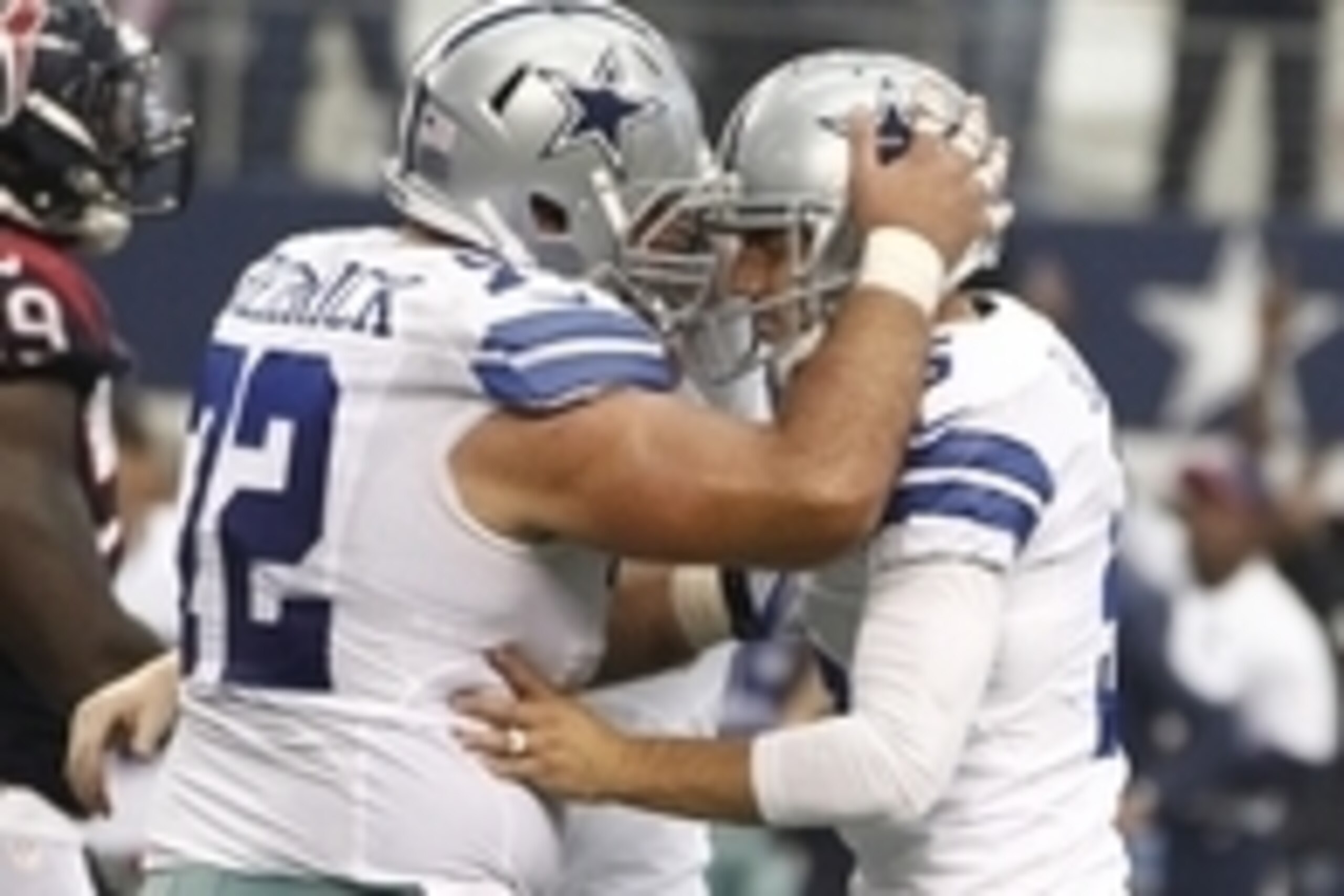
So when the Cowboys used a first-round draft pick on Travis Frederick in 2013, many of us in the "media draft expert fraternity" scoffed. Frederick was clearly good, a starter since his freshman season at Wisconsin, an All-America selection in 2012, a well-regarded "high motor" type. But only elite center prospects are drafted in the first round, and even then by teams with few other needs.
Only eight centers were drafted in the first round from 1994 until Frederick's selection in 2013. Dallas, desperate for defensive help, had reached for a solid-but-unspectacular player, the kind who is supposed to be plentiful in later rounds.
Less than two years later, the Cowboys' offensive line is the talk of the NFL, and Frederick ranks behind Nick Mangold as the second-best center in the NFL in Pro Football Focus' rankings. With the Cowboys playoff-bound, DeMarco Murray running away with the rushing title and draftniks like me publicly eating crow about our 2013 criticism, Frederick has become a rarity: a famous, high-profile center.
Before the Cowboys faced the Seahawks, Frederick's college quarterback offered high praise. "I knew Travis was going to be a first-round pick because of his demeanor," Russell Wilson said, via The Dallas Morning News. "His love for the game was pretty remarkable. … To get to watch him play on Sunday will be a really exciting thing. I love the guy to death."
Wilson probably did not love watching Dallas rush for 162 yards against the Seahawks in a 30-23 win, with Frederick helping to subdue the NFL's most feared defense.
The Cowboys face the Colts on Sunday, a team that chose not to make a heavy investment at center. They released veteran Samson Satele in a cap-conscious move in March. Career backup A.Q. Shipley took over the starting job; 2013 midround pick Khaled Holmes lost his opportunity to challenge Shipley due to an early training camp injury.
Seeking an athletic boost early in the season, the Colts switched to undrafted rookie Jonotthan Harrison before back-to-back meetings with the Ravens and Texans: a true baptism under fire for the unlikely starter.
Harrison played well initially, but opponents like the Steelers and Patriots got a book on him: Make Harrison move laterally against a fast-moving linebacker on a blitz or inside stunt, and he can be easy to knock off-balance. Shipley returned for the Browns game, stabilizing the pass protection in the second half, but Harrison was snapping again in Sunday's tight victory over the Texans. Satele, it must be pointed out, started the season well for the Dolphins but has been part of that team's late-season decline.
The Colts approach the playoffs with the inexperienced and exploitable Harrison protecting Andrew Luck and trying to create space for the team's glitchy running game. Harrison may be improving, but he will be hard-pressed to improve quickly enough to be an asset in a matchup against the conference superpowers.
Perhaps if the Colts had invested more at the center position—if not a Frederick, then a midround pick like Stork or a former starter like Montgomery—they might look like more than a one-and-done playoff team.
Next center up
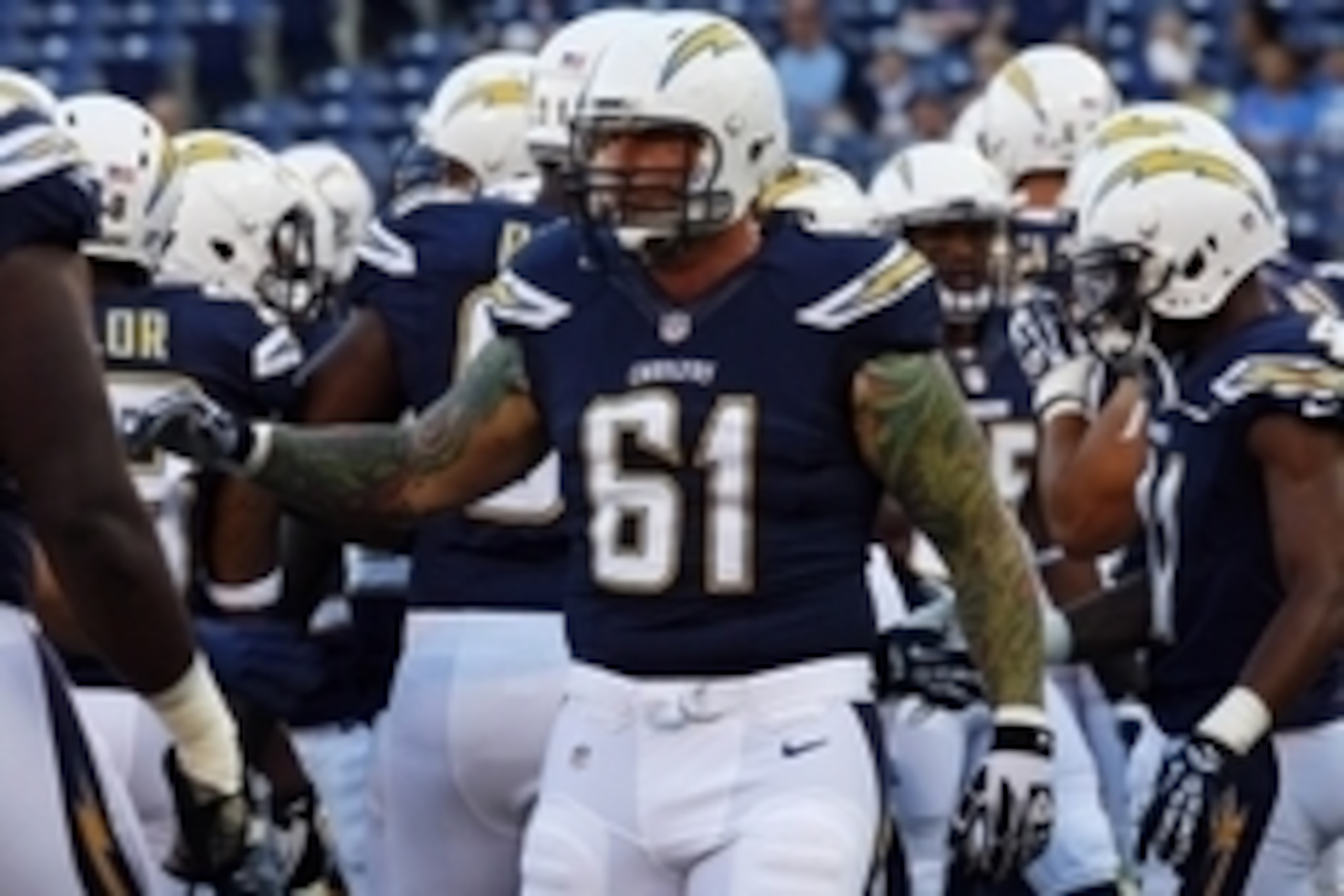
Saturday night's game between the Chargers and 49ers was supposed to be an intriguing out-of-conference matchup between playoff teams. But the 49ers have been eliminated from the postseason, and the Chargers are on the wild-card fringe. Injuries and a revolving door at center have been a big part of the problem for both teams.
Nick Hardwick had been the Chargers center since 2004. He snapped to Drew Brees and blocked for LaDainian Tomlinson back when they took their orders from Marty Schottenheimer. When Hardwick suffered a neck injury just 16 snaps into this season, it set off a chain reaction that has destabilized San Diego's offense from the inside out.
Journeyman backup Rich Ohmberger subbed adequately for Hardwick for a few games, then succumbed to ankle and back injuries. The Chargers hurriedly signed veteran Doug Legursky, who started two games (not very well) before suffering a knee injury.
Third-round pick and collegiate guard Chris Watt took over, but as the Chargers' enthusiasm for throwing veteran reserves into the fray suggests, Watt was not ready. When he was briefly injured in the Ravens game, San Diego turned to Trevor Robinson, yet another hasty acquisition, as its fifth center of the season.
Like Harrison in Indianapolis, Watt mixed decent performances with awful ones. The Patriots, serial exploiters of unprepared pass-protectors, made Watt look bad a few weeks ago, which doesn't bode well for the rookie as he tries to help the Chargers climb into the playoffs over the backs of the 49ers and Chiefs.
San Francisco allowed aging center Jonathan Goodwin to leave as a free agent in the offseason, re-signing and promoting backup Daniel Kilgore as his replacement. Kilgore played well at the start of the season, but a broken leg against the Broncos exposed the 49ers' lack of depth at center.
Third-round pick Marcus Martin replaced Kilgore, but Martin was less prepared than most rookies: He was a one-year starter at center for USC (he played guard early in his collegiate career), he missed some camp time with a knee injury, and most startlingly, he was just 20 years old when he entered the lineup.
Watch 49ers film from the team's recent downfall, and you will notice just how many hard-to-handle shotgun snaps Colin Kaepernick has hauled in. The offense had enough problems without unpredictable snaps throwing off the timings of plays. Martin's lack of polish is obvious, and his inexperience shows when blocking for Kaepernick, whose constant motion requires linemen to think and react quickly.
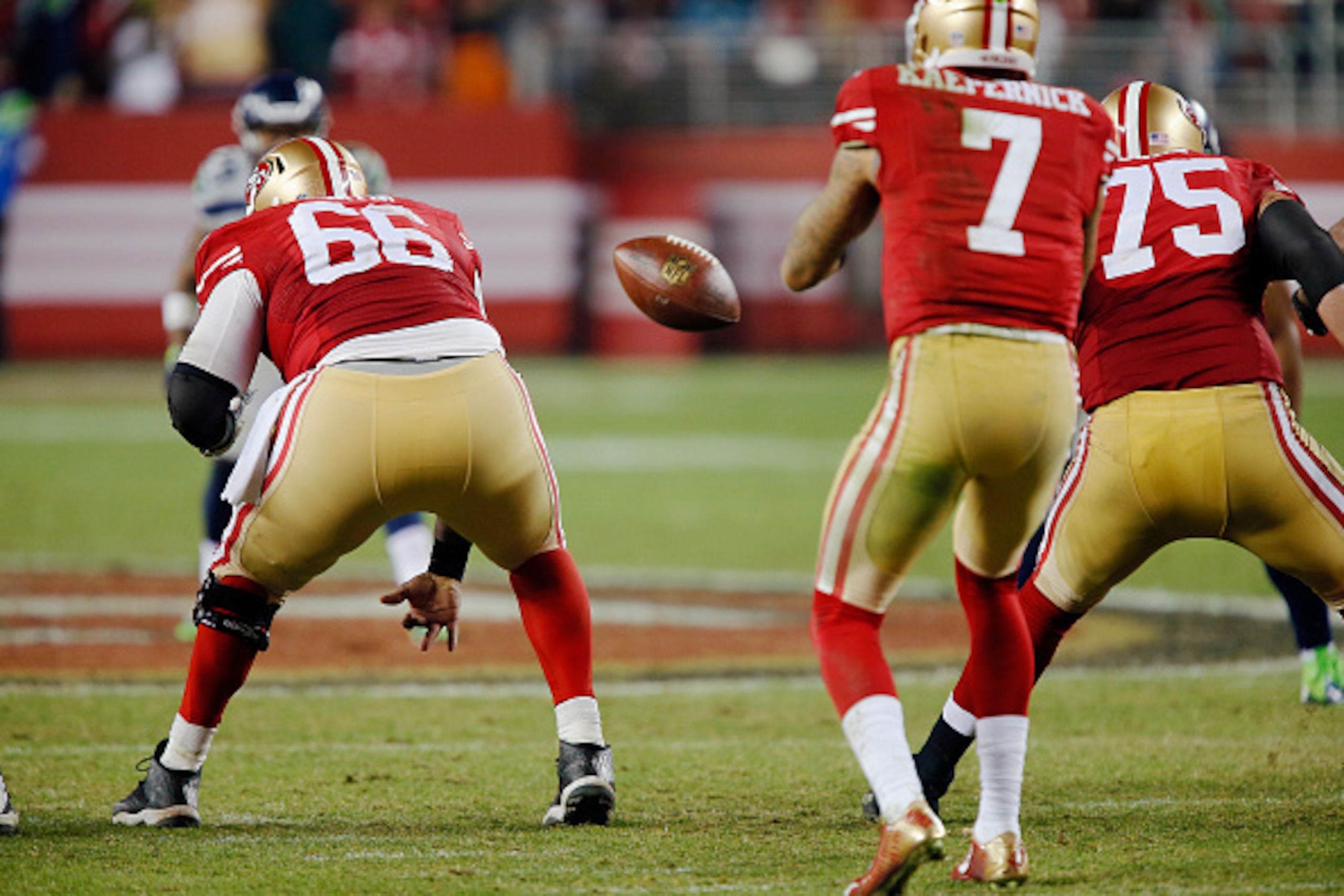
When a knee injury kept Martin out of Sunday's Seahawks loss, reserve guard Joe Looney slid to center. Looney did as well as could be expected, but he missed a few blocks and drifted about 10 yards downfield on a fourth-quarter rollout pass, a sign of a lineman who is not very familiar with his position and responsibilities. It was a bad-to-worse situation for a desperate team that just months ago prided itself on great offensive line play.
The Chargers and 49ers have dealt with numerous other issues and injuries this season. But their seasons would certainly have turned out much better if they did not have to rely on centers who were so inexperienced at their position that one of them could not even legally buy a beer.
A reliable 30-something Hardwick (who may retire) and Goodwin (who ended up starting for the Saints) could have made Saturday night's game much more meaningful.
A rookie who isn't lacking
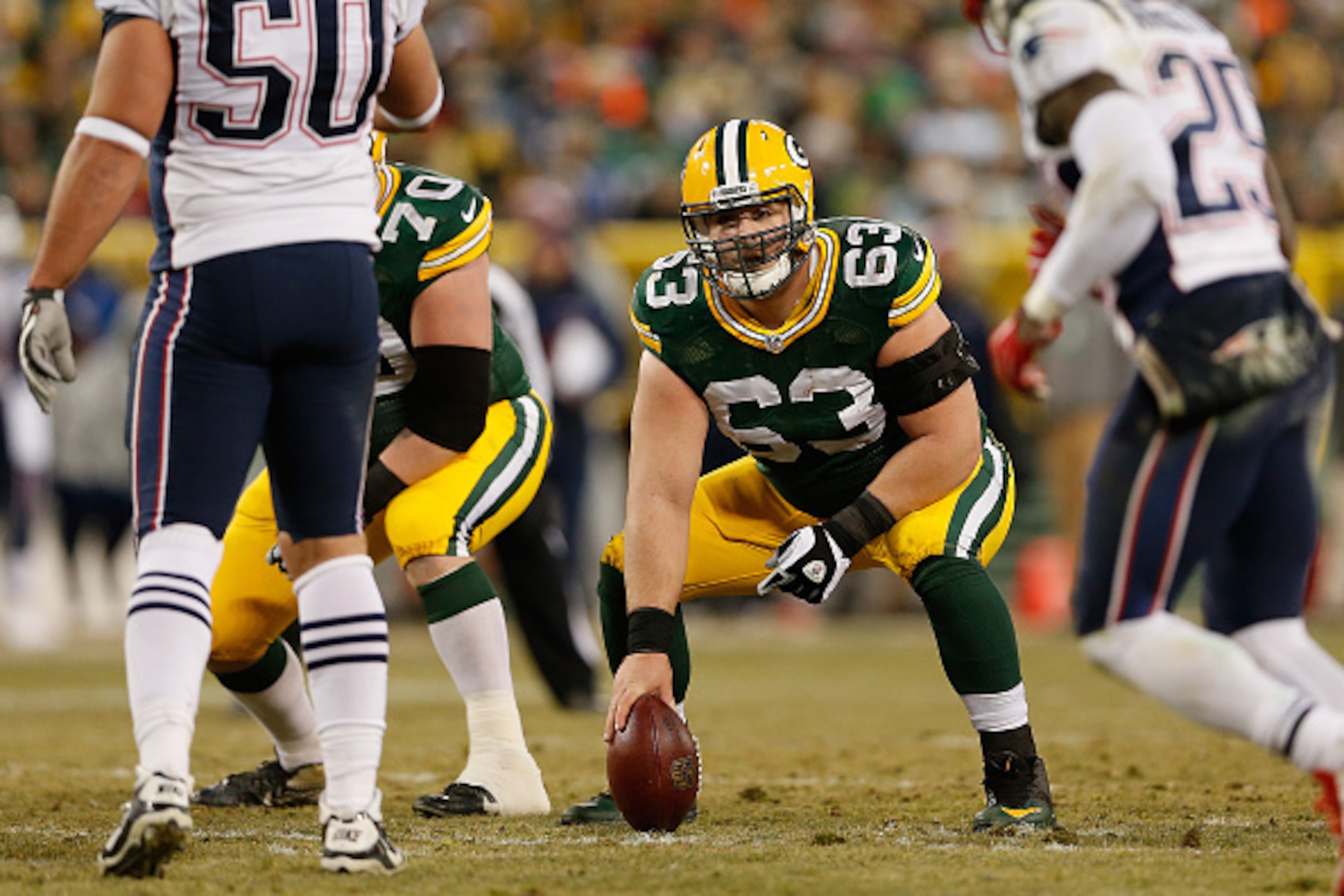
The struggles of Watt, Martin and Harrison remind us that rookie centers and playoff races are not an ideal mix. But Stork proves that a rookie center can help a playoff team while learning on the job. And Stork is not even the best rookie center in the playoff picture.
Corey Linsley was not supposed to start for the Packers. The team groomed second-year prospect J.C. Tretter throughout the offseason to snap the ball to Aaron Rodgers. When Tretter suffered an injury late in training camp, Green Bay turned to its fifth-round pick from Ohio State, a collegiate starter overlooked by much of the NFL because of his short arms and unspectacular measurables.
Linsley had not even taken snaps with the first-team offense as of mid-August. Suddenly, he was just days away from facing the unstoppable Seahawks defense.
Linsley turned in a solid game in the season opener against Seattle; the Packers' line troubles in that game were elsewhere. He built upon that performance each week until it was easy to forget that the man in the middle of the Packers offensive line was a rookie. Pro Football Focus ranks Linsley as the third-best center in the NFL—well ahead of Stork, not to mention veterans like Max Unger and Maurkice Pouncey.
Former Pro Bowl center and current Packers broadcaster Larry McCarren broke down Linsley's tape at length for the Milwaukee Journal Sentinel. The whole nuts-and-bolts breakdown is worth a read. McCarren outlines how opponents like the Eagles used tricky stunts to confuse Linsley—the kinds of plays that other rookie centers have had trouble coping with all season—only to be stymied by the alert, attentive, more-athletic-than-advertised center.
McCarren compares Linsley favorably to Unger and Mangold, Pro Bowl centers he scrutinized in advance of Packers broadcasts. "Can he pass protect one-on-one? Yeah. Can he move a nose one-on-one? Does he work to finish? Yeah. Does he have the brains for the job? Yeah. Is he a good kid? Yeah. I want to know where this guy is lacking? He isn't."
Linsley should join Frederick on the NFC Pro Bowl roster this year. More impressively, he could find himself in the Super Bowl. That's about as rare as a rookie quarterback starting in the Super Bowl. Maurkice Pouncey almost did it for the 2010 Steelers, but an injury kept him out of the game.
Stork or Harrison could also reach the Super Bowl. Forget all of those rookie wide receivers: A Brady-Rodgers or Luck-Rodgers Super Bowl could feature a rookie center undercard—unless the veteran Montgomery leads Peyton Manning to face the ground-pounding Cowboys, anchored by the center who made doubters look silly.
Brady, Manning, Rodgers and Romo-Murray will still get most of the attention. But in the year of the center, you have to pay attention to the guy who handles the ball before the quarterback.
Mike Tanier covers the NFL for Bleacher Report.
.jpg?w=2560)
.jpg?w=2560 "Cardinals Giants Football")