Packers Defense and Seahawks O-Line: Lies My Statistics Told Me
In the NFL, there are lies, damned lies, New England Patriots injury reports, Washington Redskins quarterback rumors, official on-the-record statements from league headquarters...and statistics.
We all know that the stat sheet can fib a little. Those lies can mislead us when we try to sort out the playoff picture. Is an offense or defense, passing game or running game, pass rush or secondary really as good as the numbers say? Or has the team gotten better or worse over the year, used one strength to conceal another weakness, or just faced the Tampa Bay Buccaneers a bunch of times?
TOP NEWS
.jpg?w=2560 "Cardinals Giants Football")
NFL investigating 2 referees for separate viral exchanges
.jpg?w=2560 "Titans Giants Football")
OBJ Calls Out Giants After Release
Lamar Jackson Day-to-Day
There are dozens of lies and misconceptions lurking in this year's numbers, so let's just focus on five of the biggest and most misleading of the whoppers. The numbers may say one thing about these playoff hopefuls, but listen more closely and you may hear something completely different.
Packers Yards Allowed
The Numbers: The Green Bay Packers defense ranks 26th in the NFL with 374.4 yards allowed per game. The Atlanta Falcons nearly came back on it Monday night. At first glance, the defense looks very vulnerable over the long haul.
The Truth: No one will mistake the Packers defense for the Seattle Seahawks defense. But there is an incredible amount of fluff in its yardage allowed totals, due to the fact that the Packers offense is so good that opponents rack up gobs of garbage yardage against a prevent defense.
Opponents have accumulated 1,126 passing yards and 359 rushing yards when trailing by 17 or more points (all stat splits come from the Football Outsiders internal database unless noted otherwise). Those 1,485 yards work out to an average of 114.2 yards per game, over 30 percent of the Packers total yardage allowed! It's safe to assume that the Packers defense can tighten up and cut down on that 114.2 yard figure if it has to. After all, those 17-point leads never happen if the defense does not make a few early stops.
Coming at it another way, Football Outsiders ranks defenses by quarter in its Premium Database. Here is how the Packers defense shakes out on a quarter-by-quarter basis:

Football Outsiders' methodology adjusts for late-game blowouts, but it does not completely ignore them; scares like the Packers received on Monday night are a reminder that so-called "meaningless" drives can pile up and cause a problem. But the quarter-by-quarter analysis shows a better-than-average defense through three quarters with a habit of letting up when it enters the fourth leading 48-7. That's as good a defense as the Packers need to remain Super Bowl contenders. When the games are tighter, the Packers are less likely to let up.
Seahawks Rushing Yardage/Sack Total
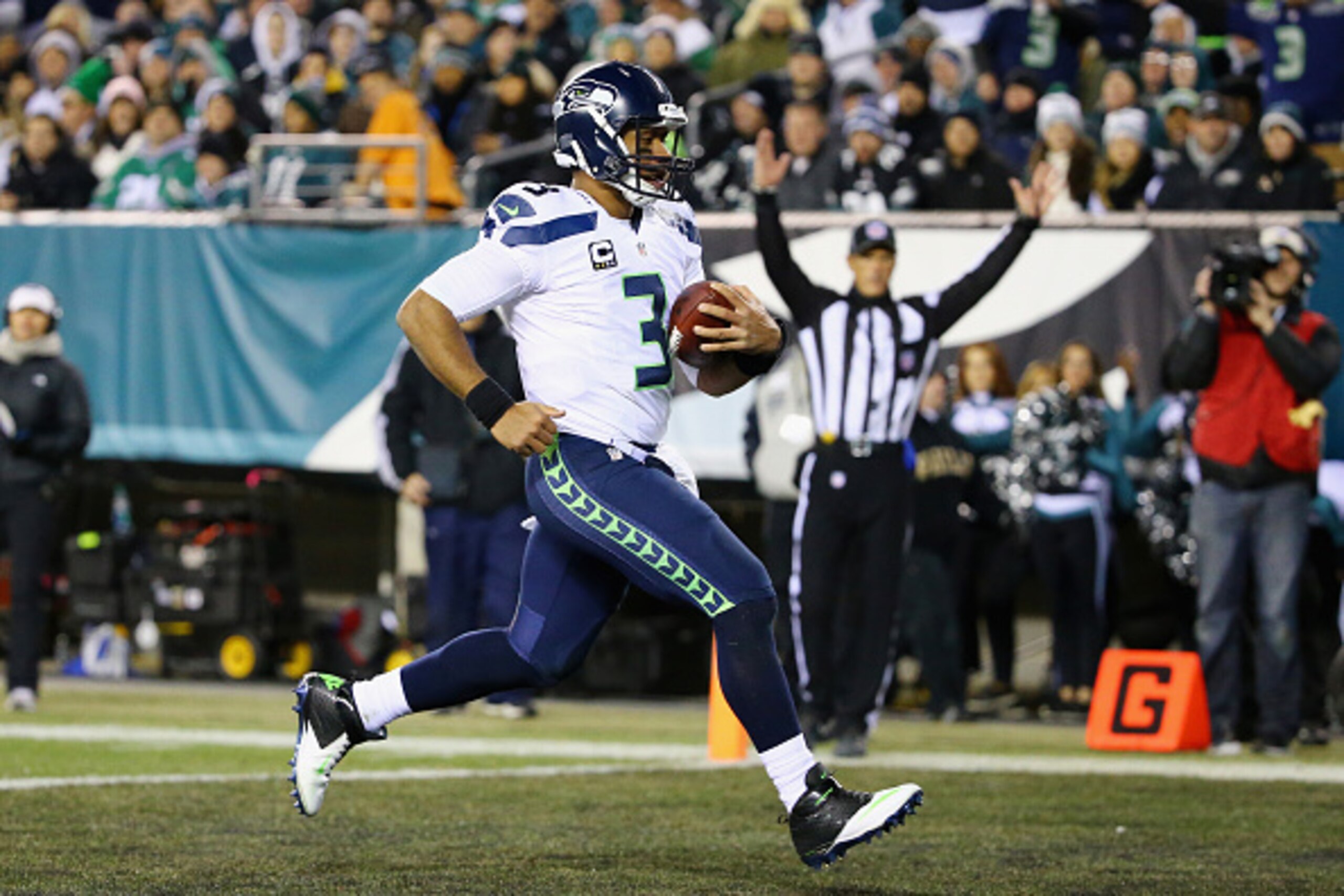
The Numbers: The Seahawks lead the NFL with 2,211 rushing yards and 5.2 yards per rush. They are a respectable 13th in the NFL with 33 sacks allowed. We have all seen highlights in which Russell Wilson and Marshawn Lynch are doing everything by themselves, but the Seahawks offensive line must be doing something right.
The Facts: Wilson and Lynch are doing everything by themselves, and the offensive line is doing little right.
| Quarter | Rank |
| First | 10th |
| Second | 14th |
| Third | 14th |
| Fourth | 28th |
To illustrate just how much Wilson compensates for his offensive line, let's focus on his scramble yardage, which can easily be separated from his option-keeper yardage in the Football Outsiders database. Wilson has scrambled 42 times for 374 yards this year; he has five fewer scramble yards than Colin Kaepernick has total rushing yards. Let's cut those scrambles in half and turn the other half into sacks. That's reasonable, right? Wilson doesn't turn into Joe Flacco in the pocket; he just turns into a more ordinary young scrambler. What does that do to the Seahawks' rushing and sack figures?
The Seahawks still lead the NFL in rushing yards, even with 187 scramble yards chopped out. But their sack total leaps to 54, tying them with the Jacksonville Jaguars for the league lead in sacks allowed.
If you do not like the idea of tacking 21 sacks onto the Seahawks' total that Wilson averted through one-man wizardry, consider this: Wilson has thrown 14 incomplete passes this season that were listed in the play-by-play as having "no intended" target. The play-by-play statisticians will list a receiver if the ball bounces twice to him, so "no intended" is almost always a throwaway to avoid a sack. (Note: These are not passes tipped at the line, which usually have a known intended target). Fourteen is a huge total—Tom Brady, Peyton Manning and Drew Brees have combined for nine this year—so the stats prove what Seahawks game tape shows: Wilson avoids a lot of sacks with last-second throws out of bounds after he escapes the pocket. Cut Wilson's throwaways in half and the Seahawks' sack total climbs to 41, tied for fourth in the NFL. Any way you slice it, Wilson is protecting his line.
As for the rushing data, Lynch is second to DeMarco Murray in the NFL with 639 yards after contact, according to Pro Football Focus. Wilson has produced 15 runs of 10-plus yards on designed runs, netting 272 more yards by using the fake handoff as his best blocker and outrunning defenders on the edge. We can jiggle the numbers all different ways, but we always come up with nearly 1,000 yards that the Seahawks would lose if they fielded an ordinary running back and quarterback.
If anything happened that made Lynch or Wilson ordinary—a minor injury, a stouter opponent—the Seahawks offense would become a major liability.
Patriots Running Game
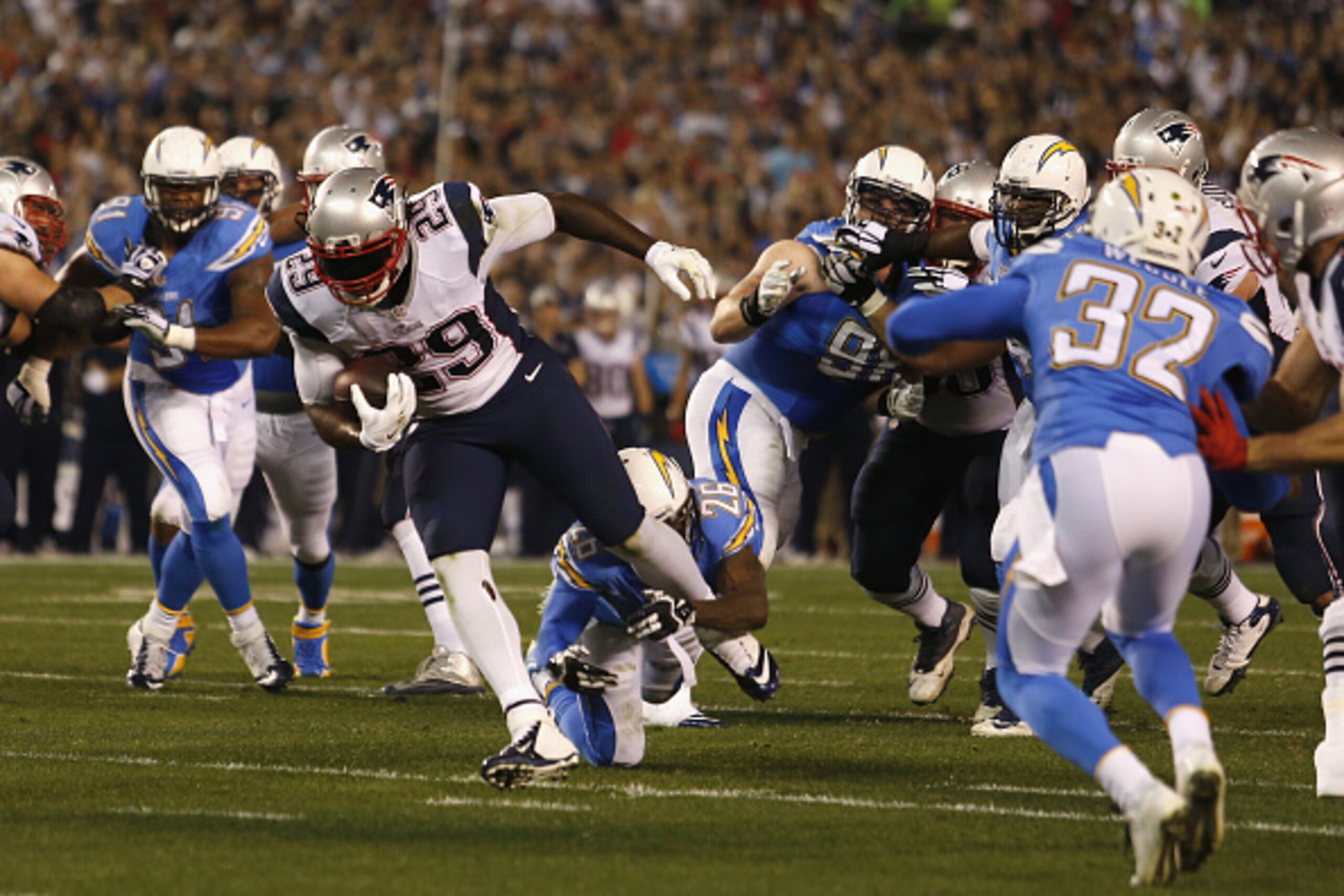
The Numbers: The Patriots rank 23rd in the NFL with 3.9 yards per attempt and 13th in the NFL with 109.1 yards per game. No one expects the Patriots to pound the ball like the 1960s Packers, but the low yards-per-rush, coupled with some red-zone woes, suggest the Patriots may not be getting what they need from their running game on a per-play basis.
The Truth: Focusing on the Patriots' season-long rushing figures ignores both the impact of LeGarrette Blount and the improvements the offensive line has made across the course of the season. Blount is averaging 4.8 yards per carry since his arrival in Foxborough. The Patriots have rushed for at least 80 yards in their last four games after some 32-carry, 76-yard (Oakland Raiders) and 27-carry, 50-yard (Buffalo Bills) stinkers earlier in the year. As Jonas Gray's big game against the Indianapolis Colts last month suggests, it's not all about Blount steamrolling tacklers; the Patriots are getting better blocking.
The Patriots running game is all about situational success, not 175-yard rushing performances, and the team had a real problem running in the red zone early in the year. Through the first nine games, the Patriots averaged just 0.88 yards per rush in goal-to-go situations, according to the Football Outsiders internal database. That number leapt to 2.88 in the last four games. The Patriots rushed for three goal-to-go touchdowns in those first nine games and seven in the last four. Brady does not have to do it all in the red zone, which can make a major difference in the playoffs.
The Patriots recognized a specific need and acquired the best available player to fill it, gradually improving their offensive line at the same time. The Patriots running game is not a problem; it's a problem solved.
Eagles, 49ers Time of Possession
The Numbers: The San Francisco 49ers rank sixth in the NFL in time of possession, averaging 32:04 on offense per game. The Eagles rank second-to-last at 27:01 per game (the Tennessee Titans are last; they may have started punting on second down for all we know). The 49ers' rank among playoff contenders like the Pittsburgh Steelers, Detroit Lions, Colts, Seahawks and fifth-place Dallas Cowboys indicates that tales of their offensive collapse are at least partially trumped up. As the Seahawks showed last week, the Philadelphia Eagles' blink-and-you-miss-it no-huddle offense can be a major liability against top-tier competition.
The Truth: Time of possession is one of the NFL's great correlation-not-causation stats. A high time-of-possession figure is usually the result of overall team quality, not one of the causes.
The Eagles are an exception to this rule, as their uptempo philosophy skews the data by design. Still, you may be surprised to learn that the Eagles have won six of their time-of-possession battles this season, including their first meeting with the Cowboys, one of the league's most determined ball-control teams. The Eagles also won their time-of-possession battle against the Arizona Cardinals in a 24-20 loss. Seconds of possession don't matter much when you fail in the red zone and give up a handful of huge plays.
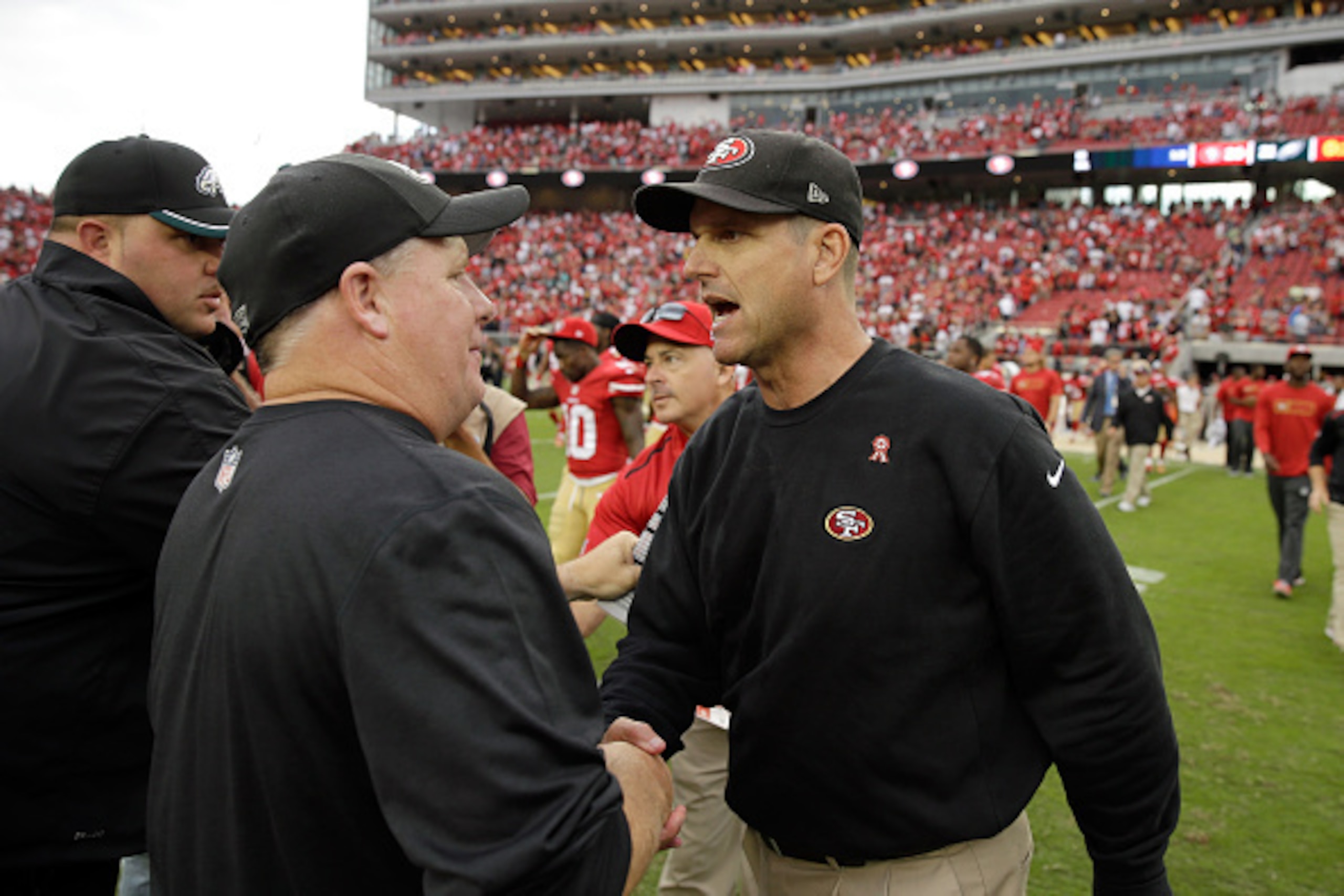
Two extremely lopsided clock-control games—the Eagles had the ball for just 18:04 against the Seahawks and 17:43 against the 49ers—distort the Eagles' numbers and create the impression that the no-huddle offense "caused" a pair of losses to strong opponents. The Eagles' primary problem in those games was an inability to move the ball consistently at all, not their pace of play. It's best to think of the no-huddle like any other strategic approach with strengths and weaknesses, like a Cover-2 defense or a zone-stretch offense, rather than something that can be magically neutralized.
As for the 49ers, they used to be among the NFL's most deliberate teams, slowing games down so they could win with running and defense. That has changed this year: The 49ers rank 22nd in neutral pace (seconds per play in non-crisis situations), thanks to some experiments with the hurry-up and a general philosophical shift.
The 49ers have lost the time-of-possession battle in their last two losses, and getting out-clocked by the Raiders takes some doing. A handful of early-season clock munchings give a false impression that these are the same old bulldozing 49ers. But just like nearly every other team, the 49ers hold onto the ball when playing well (especially when sitting on a lead) and give it up when playing poorly. Lately, we have seen much more of the latter.
Everybody's Completion Percentage
The Numbers: Drew Brees is completing 69.3 percent of his passes! Ryan Tannehill is completing 66.7 percent! Jay Cutler is completing 66.8 percent, and no, we are not counting interceptions as completions! As recently as 15 years ago, these three quarterbacks would rank first-through-third in completion rate, bringing seven of their friends to the top of the leaderboard. (Kurt Warner led the NFL with a 65.1 percent completion rate in 1999; 10 quarterbacks have a higher rate through 13 games this year). So don't blame these quarterbacks for their teams' inconsistency. They have been deadly accurate.
The Truth: The NFL's completion rate is at an all-time high. The league average is currently 62.95 percent, up 1.7 percentage points from last year and nearly eight points since 1999, when the Greatest Show on Turf completed a lower percentage of its passes than Cutler's Blowout Bonanza.
There are many causes for the uptick in completions. The latest round of defensive contact penalties is almost certainly one of the culprits. The rise of the wide receiver screen is also a major factor. Quarterbacks have thrown 4,248 passes that traveled less than two yards beyond the line of scrimmage this season: That's over 27 percent of all passes and an average of 8.3 teeny-tiny throws per team per game. The "long handoffs" inflate completion percentages to the point that it is hard to gain any useful information between the marginal differences among quarterbacks. Cutler is not more accurate than Tom Brady because his completion rate is 2.1 percentage points higher; the forces that shape modern offenses are just cramming all competent-to-great quarterbacks into a bundle that hovers just below two completions per three attempts.
Yards-per-attempt have been a better separator of quarterbacks than completion rates since the rise of the West Coast offense. (In olden times, you could tell much more about a quarterback by his 46 percent or 56 percent rate). Rank quarterbacks by yards per attempt, and Aaron Rodgers rises to the top (8.8), while Cutler (25th) and Tannehill (31st) show their true colors: They complete lots and lots of short passes, many of which do not help their teams as much as they could. Brees (13th) is in his own strange category, though it should be noted that 7.4 yards per attempt is his second-lowest figure since 2008. This is a down year by Brees standards, and it has combined with other forces to put the New Orleans Saints in NFC South limbo.
Completion rates are a major ingredient in the NFL's official quarterback rating formula, so if you still had any faith in that system, it's time to lose it. In a league where Derek Carr and Kirk Cousins complete more than 60 percent of their passes, it does not mean that much to complete 65 percent. Use a custom stat like Football Outsiders' DYAR or Pro Football References's AY/A, or use your eyes, but don't use completion rate or its derivatives until we figure out exactly what "average" means these days.
Mike Tanier covers the NFL for Bleacher Report.
.jpg?w=2560 "Dolphins Bills Football")