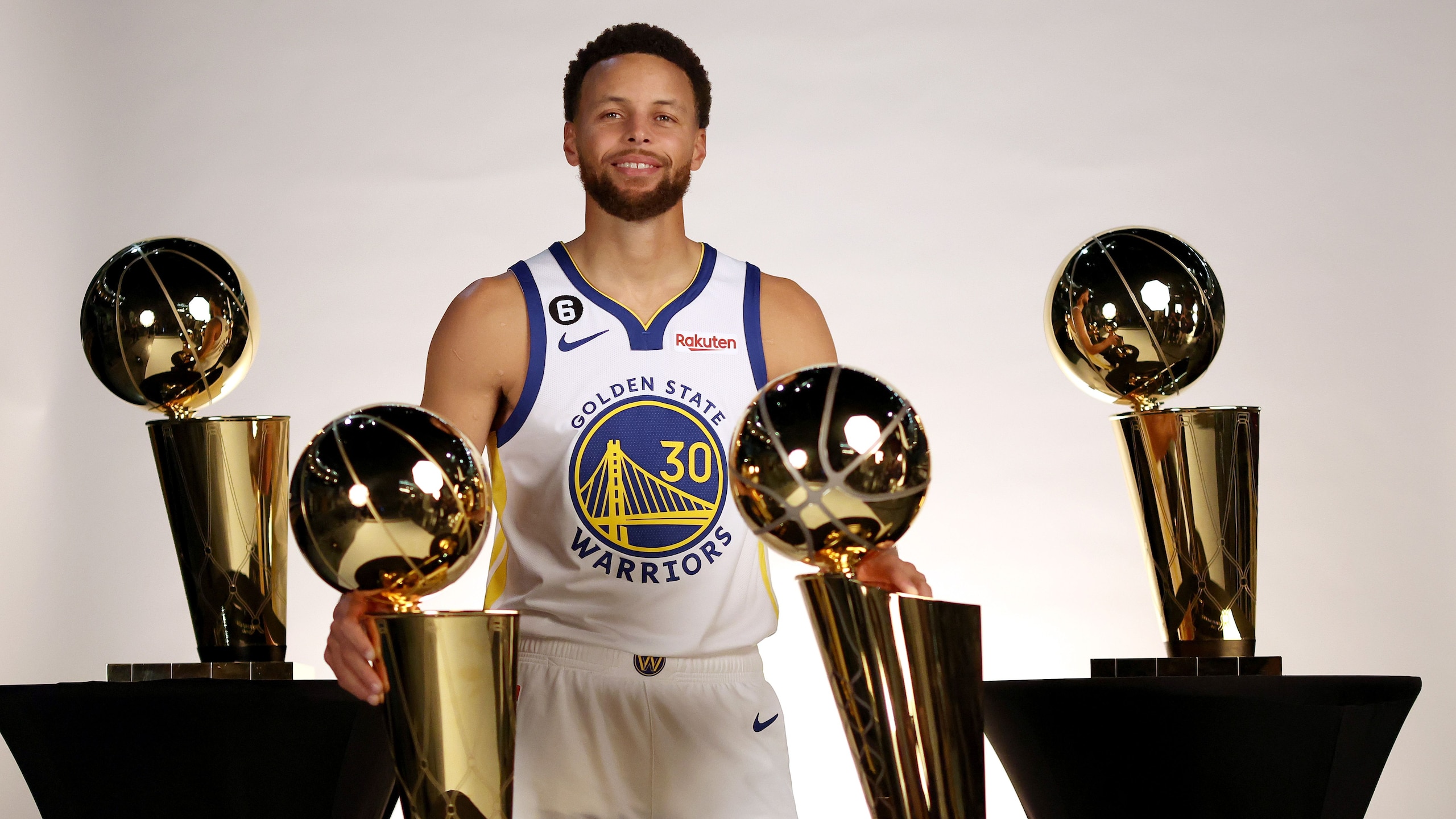
Jarryd Hayne Faces Long Odds to Reach NFL, But Rugby Star Wise to Try
One of the world's most dominant athletes is hoping to make the leap to the NFL.
National Rugby League star Jarryd Hayne has walked away from one of the league's richest contracts at a reported $1 million per season, according to Fox Sports. In a tearful press conference, Hayne announced that he was leaving rugby to attempt to make an NFL team, walking away from the sport that made him an Australian superstar for an opportunity to succeed across the pond.
Though no NFL team has offered Hayne a contract, some have speculated, including Bob Condotta in a blog for The Seattle Times, that the Seattle Seahawks may be interested in him after his previous visit to their headquarters.
.jpg?w=2560 "Panthers Falcons Football")
.jpg?w=2560 "Jaguars Saints Football")
He has at least one supporter already in the league's ranks. Detroit Lions electric running back Reggie Bush has perhaps played a small role in Hayne's potential transition, talking to the rugby player about what life on and off the NFL field is like, per The Associated Press' Dennis Passa (via the Detroit Free Press).
I know what you might be thinking, and no, he's probably not going to be the Lions' new kicker—though, the suggestion might have some merit based on this trick shot.
Hayne is certainly interested, but whether the NFL requites his feelings will remain to be seen. Whatever happens, Hayne is smart for trying to make this switch work.
Hayne Has Skills, But They May Not Translate to an NFL Field
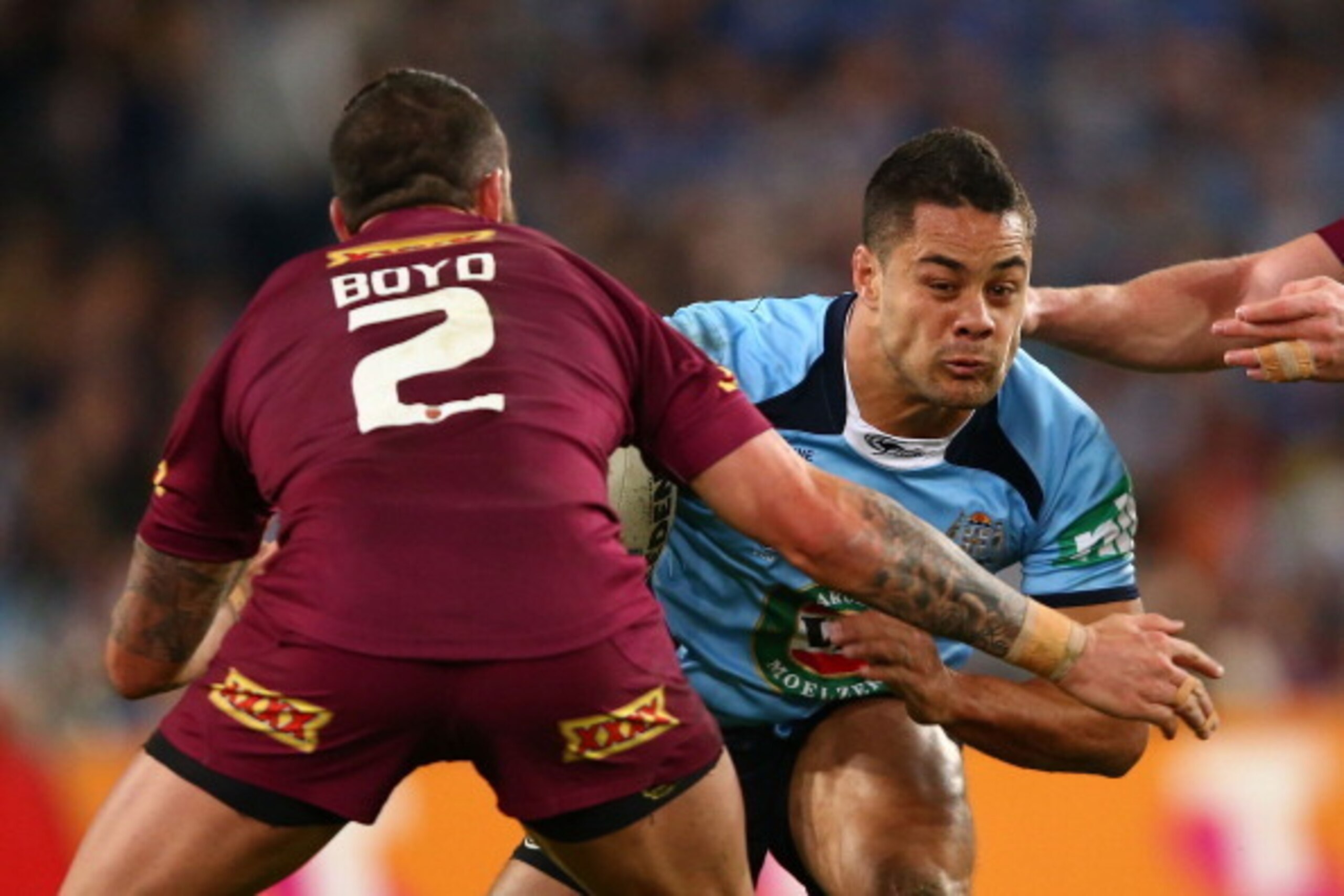
Rugby and football have a lot of similarities, but Hayne is up-front about the reality that he has a lot to learn before he can contribute on an American gridiron (via Fox Sports): "Ultimately I think offense would be the easiest transition...the easiest transition would be a punt returner or kick returner...This isn’t going to be an easy transition and I’m aware of that."
Because of his former job as a fullback in the NRL, a move to running back could also make sense, as running with an oblong spheroid in his hands has already earned him some renown. That said, regardless of where Hayne plays, some aspects of his game are sure to be lost in translation.
Take, for instance, this highlight reel of Hayne's best rugby moments:
The first thing that should stand out to anyone with a discerning eye is the kind of space, angles and pursuit that Hayne is succeeding against. Fast forward to the 35-second mark of that video above. Watch as Hayne bounces off one tackle in which the defender is standing straight up and down, before running through an arm tackle on his way to score.
It's an impressive rugby play, but one that has no basis in the NFL.
Or, here's a screenshot of that video at three minutes:
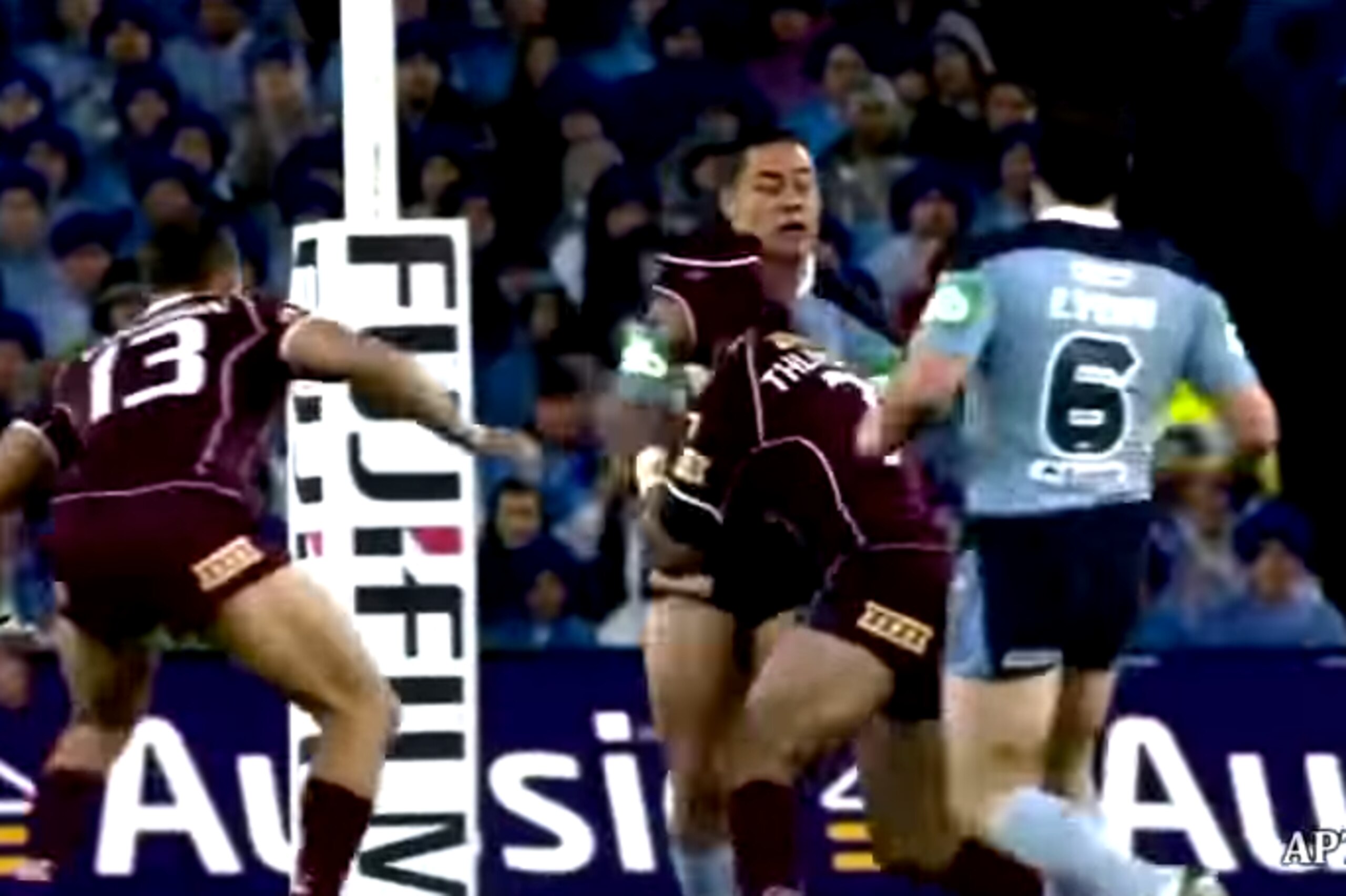
The collision is highlighted because it's massive, but it looks more at place on a basketball court than a football field. The player is less "tackling" Hayne and doing something more along the lines of drawing a charge.
The entire video, too, showcases a big difference between the two sports. In many ways, rugby is a lot like soccer with its pace and movement. It's not uncommon to see a large number of rugby players standing around the field or jogging lightly as the play is going on a short distance away. It's not a dig at the game in any way, just a big difference from the NFL where such things are considered shameful.
The pacing of the NFL doesn't allow an offensive player to often take advantage of defenders just standing around, or said defender is going to be finding himself a new job. A lot of what makes Hayne a fantastic rugby star—his speed, elusiveness and endurance—are going to be mitigated by the NFL's more punctuated and intense pace.
Here's a screenshot from 8:26 of the above video:
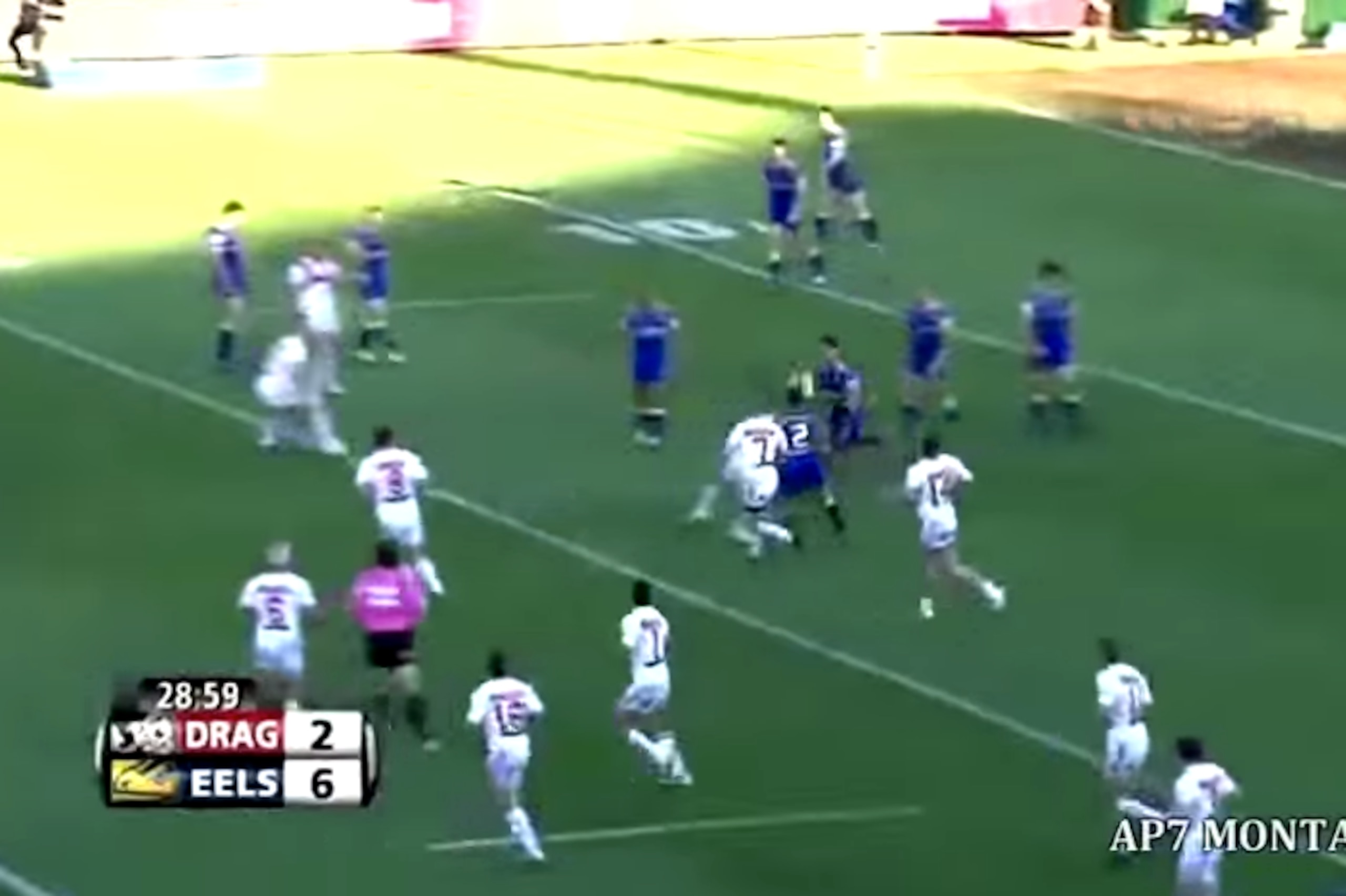
Note that this is perhaps the most NFL kick return-like instance on a rugby pitch, but it's not anything like an NFL kick return. An NFL kick return is less spread out. The kickoff team is aligned in a pincer-like formation that, when everything goes right, allows much less distance for the kind of moves that Hayne often utilizes to win his matchups.
Finally, Hayne's impressive speed might not be that impressive (at all) on an NFL field.
The NFL standard measurement for speed is a 40-yard dash. Though rugby players don't utilize that same measurement (nor even the yard as a distance to be measured), Hayne did run a 100-meter dash in 11.20 seconds, making him Australia's third-fastest footballer, according to Nick Walshaw of The Daily Telegraph.
Thankfully, some NFL players have done us the good favor of running 100m dashes themselves.
| Player | Position | 100m Dash Time |
| Jamaal Charles | RB | 10.18 |
| Trindon Holliday | KR | 9.98 |
| Marquise Goodwin | WR | 10.09 |
| Devin Hester | KR/WR | 10.42 |
| Reggie Bush | RB | 10.42 (High School) |
That's just a sampling of NFL players—not the fastest. It's kick returners, wide receivers and running backs, all of whom blow Hayne out of the water from a pure speed perspective. This ignores some important information, as Hayne's 11.20 mark was an off-handed run while these NFL players were trained track athletes at the time, but it's more evidence that takes the biggest positive from Hayne's game and shines it with a negative light.
Here are the positives, though.
Watching Hayne's highlight reels and performances, certain aspects of his style of play could intrigue NFL teams if further developed for the American game. First and foremost: He understands balance and minimizing contact—creating collisions that glance off of his body rather than hitting him head-on.
He also has good vision on a rugby pitch and is used to seeing lanes that other players might miss. On an NFL field, those lanes are going to appear and disappear much more quickly, but with some training, Hayne may be able to make that translate as well.
It's an uphill battle, but Hayne has a small shot at making this work.
The NFL May Not Need Hayne These Days
The NFL actually has some former rugby players in its ranks already.
Baltimore Ravens defensive tackle Haloti Ngata and Seattle Seahawks defensive tackle Jesse Williams both played rugby before college football. Former New York Jets tight end Hayden Smith had a cup of coffee in the NFL before heading back overseas for the Saracens Football Club. Former Olympic discus thrower Lawrence Okoye also has a rugby background and is currently on the San Francisco 49ers practice squad.
The fastest man in international rugby, Carlin Isles, spent a short time on the Detroit Lions practice squad (reportedly running a 4.2 40-yard dash while he was there), but has since gone back to Scotland to join the Glasgow Warriors.
So, this sort of thing has been done before—it's lightly charted waters instead of completely uncharted.
Smith talked a bit about making the switch with The Daily Telegraph's Gavin Mairs:
"It took a lot of work and wasn’t easy and I grew as a person by taking myself outside my comfort zone. American Football is about short bursts of speed and power. The guys are bigger but then they don’t have to have the endurance that rugby players do.
So, having come back, one of the things I need to work on is getting my conditioning back to where it needs to be to play rugby again. You spend more time in the gym and then sprint training and body control. It is key to be able to change direction quickly without breaking stride.
I did get a little bigger, stronger and faster as a result of the changes in my body and I hope to be able to keep some of those elements coming back to rugby.
"
The biggest problem may actually be that his skills are anachronistic to the NFL's current makeup.
Former Bleacher Report writer and current Football Outsider Scott Kacsmar looked at the impact of the NFL's move of kickoffs to the 35-yard line in 2011 and found that between that move and the end of last season, only 51.5 percent of kickoffs have been returned. Last season, that number was 48 percent.
Even when you add a few punt returns per game, it's clear that pure returning specialists are becoming an endangered breed.
Hayne will likely need to find other ways to make himself useful. His toughness and physicality would be a plus on the opposite side of special teams as well. He's big, at 6'2", 220 pounds, so if an NFL team can teach him to hit like an NFL player, he could be an impact gunner on a kick or punt coverage.
That size makes Hayne an odd fit as a pure running back like his friend Bush, who is 6'0", 205 pounds. Hayne would immediately be one of the bigger and taller halfbacks in the league, though too small to be a fullback or tight end as well.
When one remembers the hundreds, even thousands of college football players and other free agents trying to make an impact on NFL teams every single year, it's pretty hard to justify keeping Hayne around while he's learning the game. The things he could potentially do on an NFL field are dwarfed in comparison to the many athletes who are already proving they have those same skills.
Longest Odds Always Tease the Biggest Payoff
The worst-case scenario for Hayne is returning to rugby if his NFL dreams don't pan out.
According to News.com.au's Cameron Tomarchio, Hayne has a lifetime deal with his former rugby club, the Parramatta Eels. If he ever desires to return to rugby, his club will be waiting for him. Maybe his level of compensation wouldn't immediately be the same, as he would be a few years older than his current age of 26, but he wouldn't be headed to the poor house by any means.
From an NFL perspective, all Hayne needs to do is make an NFL practice squad to ensure himself of at least $6,300 per week. If he managed to stick with a team throughout the entire 17-week season, that's over $100,000. It's not the $1 million he was making or the amount he could've made on his next rugby contract, but it isn't spare change either.
If Hayne makes the active roster, that minimum number goes up to $420,000.
Looking at the switch from a financial standpoint, the move seems silly. Hayne isn't just making this switch with the most-likely possibility of being a fringe NFL player in mind, however. No, he's making this move due to the potential of becoming so much more.
In all likelihood, Hayne will never make as much money in the NFL as he did in the NRL. That said, he was one of the highest-paid NRL players, earning money many top NFL stars would sneer at if it were presented to them in a contract negotiation. According to Spotrac, the highest-paid NFL running back this season is Minnesota Vikings suspended back Adrian Peterson, whose base salary is over $11.7 million.
Go down that same list and see that backs like the New York Jets' Bilal Powell or Washington's Roy Helu make a base salary of $1.4 million. Philadelphia Eagles running back Darren Sproles is one of the league's best returners and recently signed a contract guaranteeing him $5.5 million. The league's best returner of all time, Atlanta Falcons wide receiver Devin Hester, got $3.5 million guaranteed.
For Hayne, the chances might be slim, but the theoretical math evens out. This is a low-risk/high-reward move that could pan out in Hayne making more money and receiving exponentially more notoriety than he ever would've gotten in the NRL.
Add in the potential positive impact from endorsements—both in the United States and back home in Australia—and it's an even easier decision to make.
Pragmatism isn't usually the defining attribute from elite athletes like Hayne. One of the things that drives people to be the best at something is the wholehearted belief that they can be the best at something.
In a world where basketball great Michael Jordan thought he could be a baseball player without being able to hit a curveball, it's easy to understand the mentality that would make Hayne jump at an NFL possibility.
Think of it this way: Imagine you find a dollar on the sidewalk and have no immediate use for it thanks to a good job, financial security, etc. Then, a few steps later, someone offers you a lottery ticket with a massive record-breaking payout for only the dirty $1 you already have in your hand.
We know the odds of winning the actual lottery are terrible, but then imagine that you were given, instead, a way to compete for that massive payout at something you believe you could be really good at.
Hayne could've sat comfortably, doing what he already knows he's one of the best in the world at and making plenty of money. He could've accepted where he was without challenging himself any further, but he's just not wired that way.
The potential winnings are not just financial, as Hayne said via Fox Sports: "It’s not financial … it’s for the challenge and following my heart. I’m always telling people to chase their dreams and follow their hearts, if I don’t live by that I’m not being honest with myself."
Part of being the best is betting on oneself to be the best.
One can acknowledge the uphill battle Hayne is about to face...even he does. It's just not realistic to expect someone like Hayne to not try to reach those heights when he's burst through every single impediment before.
Successful people like Hayne don't get to where they've gotten by betting against themselves.
Why would he start now?
Michael Schottey is an NFL National Lead Writer for Bleacher Report and an award-winning member of the Pro Football Writers of America. Find more of his stuff on his archive page and follow him on Twitter.

.jpg?w=2560 "Cardinals Rams Football")
.jpg?w=2560 "Grading Tonight's SmackDown 🔠")