B/R MLB 500: Top 70 Corner Outfielders
After a brief check-in with designated hitters, the B/R MLB 500 will now conclude its position-by-position tour with corner outfielders.
Corner fielders will be scored as such: 30 points for Hitting, 35 points for Power, 15 points for Baserunning and 20 points for Defense, for a total of 100 points.
The Hitting category involves not only looking at how good guys are at putting the bat on the ball and how they hit the ball, but also things like patience and plate discipline.
The Power category is not so much about raw power. It's more of a look at how much power guys have in actual games, which involves looking into how they tap into their power for extra-base hits.
The Baserunning category could be complicated, but we're going to keep it simple by focusing on how good guys are at stealing bases, taking extra bases and avoiding outs on the bases.
For Defense, we'll be putting more of an emphasis on arm strength than we did with center fielders. But range will still count for a lot, and that means looking not only at speed, but also reads and routes as well.
One thing we're not doing this year is a category for health. Rather than handle them separately, any health concerns we have will be applied to a specific category that could be impacted.
Please note that a score in the middle (i.e., 15/30 or 17/35) denotes average, not failing. And while the discussion will be centered on 2014, we also have one eye on 2015. Part of that includes B/R prospect guru Mike Rosenbaum providing scores and scouting reports for some MLB-ready corner outfielders.
Lastly, any ties will be resolved with the following question: "If we could pick only one, who would it be?"
When you're ready, you can read on.
A Note on Links and Sources
1 of 71
Before we begin, there are some things you should know about the links and stats that lie ahead.
The most important thing is that CLICKING ON THE LINKS IS NOT MANDATORY. The links are there in case you're curious where a given point (or points) is coming from.
They're not from the same place. The links will take you to Baseball-Reference.com, FanGraphs.com, BrooksBaseball.net, BaseballSavant.com and BaseballProspectus.com. All have different data to offer, the combination of which was the backbone for the research of this project.
However, just because this project was heavily informed by stats doesn't mean you're about to be hit over the head with sabermetric jargon in this space. There are really only a couple of terms to know.
One is XBT%. That stands for "extra bases taken percentage," and it's Baseball-Reference.com's way of tracking how often players advance more than one base on singles and doubles. It's a crude way to get a picture of aggressiveness, and you'll have to pardon us for being a day behind on the percentages, but it'll have to do.
I'm also going to repeatedly refer to "the defensive metrics." This means ultimate zone rating (UZR) and defensive runs saved (DRS), which are both tracked by FanGraphs. They go about it differently, but the idea behind both is to evaluate how good players are on defense.
70. Carlos Beltran, New York Yankees
2 of 71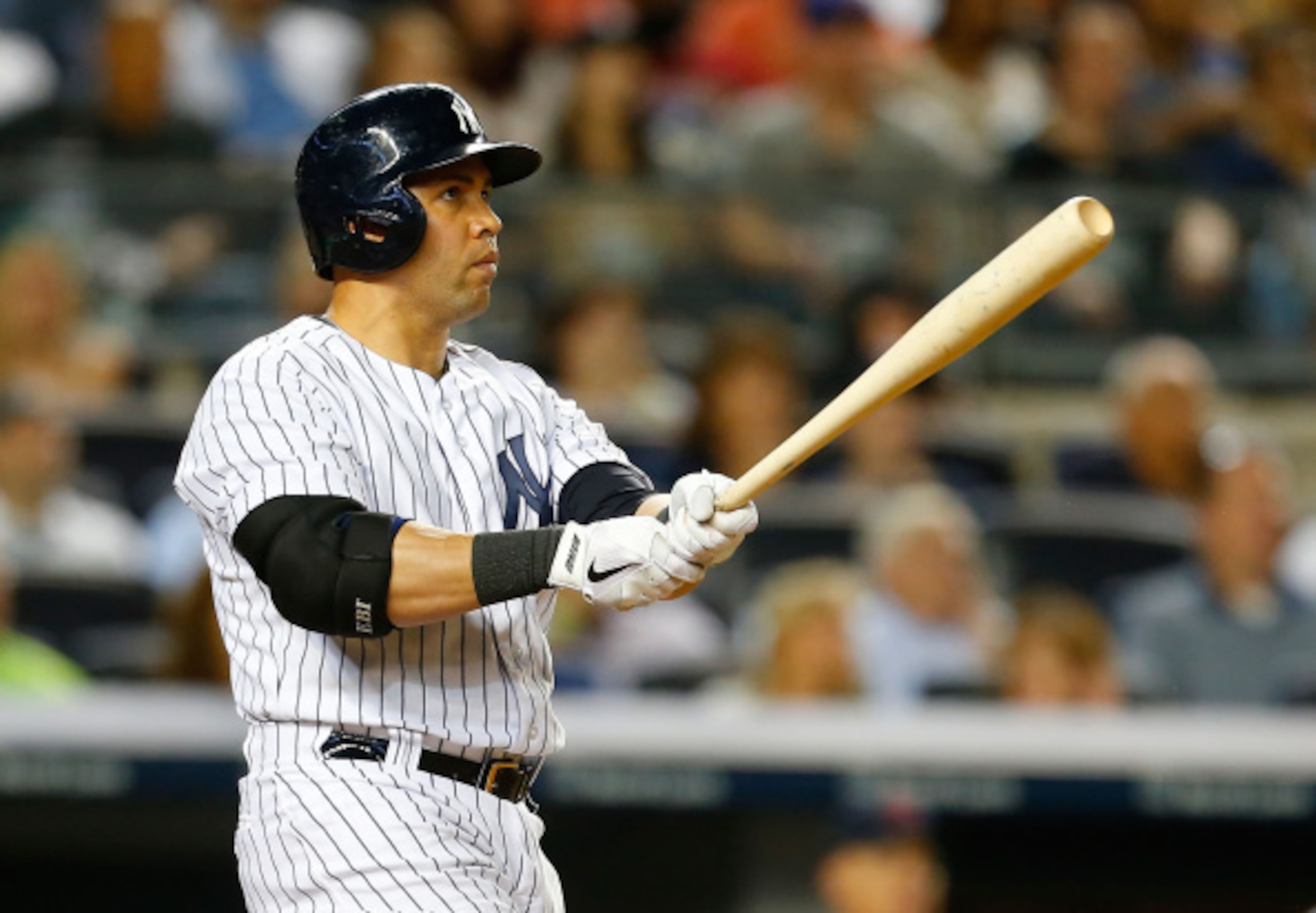
Hitting
Whether Carlos Beltran will be seen again this year is up in the air, but his 2014 qualified as a lost season long ago. It's seen him become less aggressive and more of a contact hitter than he was in St. Louis, sure, but actually making good contact has been tough. His line-drive rates have plummeted. Just as discouraging is how he’s having a tough time hitting 90-plus heat. This could all be thanks his bad right elbow, but it might also just be his age. At 37 with a lot of miles on him, this could be the new normal for Beltran's bat.
Power
That Beltran hasn’t been able to hit line drives hasn’t helped his power, but he’s at least kept his fly-ball habit afloat. He’s also continued to produce good pull power from both sides of the dish. Even still, you do wonder about how his power is going to hold up going forward, as age and injuries are already contributing to a power decline. It's a good bet that decline will continue in 2015.
Baserunning
Beltran’s aging legs haven’t been spared by the injury bug in recent years, so it’s not surprising to see him easing up on the basepaths. He can still sneak a couple of stolen bases but is otherwise trending toward a station-to-station guy with his XBT% falling from 41 to 28. That’s not so great even for a corner outfielder, and it’s something I’d expect to continue.
Defense
This is assuming that Beltran returns to playing right field with a healthy right elbow in 2015. If he does, the defensive metrics say the Yankees will have to live with below-average defense in right. This was the case with Beltran in 2013 too, and largely a function of him just not being able to move like he used to. Beyond that, you wonder if his throwing will be the same after this year’s elbow trouble.
Total
One sort of wants to give Beltran a pass for such a rough 2014 season, but it’s hard to do so. It shouldn’t be taken for granted that he’ll return to full health, and there are too many cracks in his game to overlook. But if he can at least provide some power and put together good at-bats, he’ll hold his own as a playable option.
69. David Murphy, Cleveland Indians
3 of 71
Hitting
The lefty-swinging Murphy is only of use in a platoon role against righty pitching. And after a rough 2013, he’s come out swinging more often. He hasn’t hurt his contact habit, but he hasn’t made better contact either. He’s dropped his line-drive rate slightly and hit more ground balls. He’s only been better because he’s collected good luck he was owed on grounders. Take that luck away, and you're not left with much.
Power
Murphy’s power is continuing to trend downward from its 2012 peak. You’d expect to see as much from a guy who’s hitting more ground balls. It doesn’t help that Murphy’s ability to drive the ball gets iffy beyond right field, so it's not good that he’s not pulling the ball in the air that much these days. There’s every reason to expect his power decline to continue.
Baserunning
It looks like Murphy’s no longer going to come off the bench and provide double-digit steals. Nor should he be expected to as he inches closer to 33. But his baserunning doesn’t look so bad if you take away the outs he’s made at home. He’s otherwise posted a 42 XBT% that’s right in line with his career norm. For a corner outfielder, he's still a passable baserunner.
Defense
After playing mostly left field in Texas, the Indians have used Murphy in right field. And according to the defensive metrics, they’ve gotten well-below-average defense. They might be overstating the weakness of his arm, however. And though Murphy doesn’t run as well as he used to, he’s looked more comfortable with the angles of right field as the season has gone along. He’s not good, but he’s not that bad.
Total
You can do worse than Murphy if you’re looking for a lefty-swinging platoon outfielder. But since he doesn’t hit, hit for power, run or play defense especially well, you can do better too.

68. Allen Craig, Boston Red Sox
4 of 71
Hitting
Allen Craig has been about as patient and as good at making contact as he was in 2013, and he’s done a better job of keeping his swings confined to the zone. Trouble is pitchers have found his weakness. They’ve pounded him with hard stuff in, and he hasn’t been able to hit it. Also, left field has all but disappeared from his radar. The approach should be taken as a positive, but Craig otherwise looks broken.
Power
Craig’s power was already trending downward, and now it’s trending downward even more. That he’s suddenly an extreme ground-ball hitter isn’t helping, and neither is the fact that he can no longer use left field. On the bright side, his opposite-field power is fine. He can still drive the ball the other way, and he hasn't had too much trouble producing results doing so.
Baserunning
After being slowed by a left foot injury toward the end of 2013, Craig has basically turned into a station-to-station runner. Stolen bases are still very much out of the question, but it’s not good that his XBT% has fallen from 36 percent to 29 percent. If this is him trying to protect his foot, this might just be how he's going to run the bases from now on.
Defense
Craig has played mainly right field in 2014, and reasonably well according to the defensive metrics. Though his arm is nothing special for right field, he actually does have decent range. That’s mainly when he’s coming in on the ball, where he makes his best reads and runs his best routes. Add in how he can fill in at first base and left field, and you have a decent defender.
Total
Craig can still put together solid at-bats, produce some opposite-field power and play decent defense at a couple of different positions. But knowing that he can't hit fastballs, use left field or run the bases anymore, don't hold your breath waiting for him to get back to being the player he used to be.
67. Josh Bell, Pittsburgh Pirates (Prospect)
5 of 71
Hitting
Josh Bell is a physically strong switch-hitter with the potential for an above-average-or-better hit tool. He employs a short line-drive stroke from the right side of the plate and a more leveraged and power-oriented swing from the left. In general, Bell has an advanced feel for the zone, evidenced by his strong strikeout and walk rates as a professional.
Power
Bell has hit nearly three times as many doubles (64) as home runs (23) as a professional, and it’s only a matter of time until some of those two-baggers start clearing fences. As he continues to add strength and gain experience against quality pitching, it’s easy to envision Bell becoming a middle-of-the-order threat capable of hitting 20-25 home runs at maturity.
Baserunning
Bell is an average-at-best runner at the present, as his speed plays better in the outfield than it does on the basepaths. That being said, he knows how to pick spots to run and could swipe around 8-10 bags in a given season.
Defense
Defensively, Bell’s average athleticism and range profile at either corner outfield position, though his strong arm is better suited for right field. The 6’2”, 235-pounder would also be a candidate to move to first base should he lose a step.
Total
Bell’s offensive development has progressed quickly after a slow, injury-filled start to his career, as he projects to hit for both average and power at the highest level. His future defensive home remains up in the air, especially given the Pirates’ current outfield configuration, but the organization still has time to determine how to get his bat into the mix.
66. Will Venable, San Diego Padres
6 of 71
Hitting
It’s been a down year for Will Venable, and it looks even worse knowing the lefty swinger only plays against righties. That he’s continued to be aggressive and whiff too much hasn’t helped, but more distressing is how easy it’s been for righties to beat him with anything slow. This has been true even in his second-half rebound. Knowing this, you have to figure pitchers won’t do him the courtesy of a spike in hard stuff again.
Power
Venable repeating last year’s 22-homer performance always was going to be tough. At the least, he was going to have to show off the same impressive pull power. He hasn’t done that, mainly because he just hasn’t pulled the ball in the air to right field as often. And in general, well-hit balls haven’t been nearly as frequent as they were in 2013. With Venable nearing 32, you naturally worry if this power loss will stick.
Baserunning
Venable’s streak of four straight 20-steal seasons is going to come to an end, and what steals he has produced haven’t come with ideal efficiency. He’s also run into more outs on the basepaths, and his 41 XBT% is no better than his career norm. He’s still a better runner than most corner outfield types, but not by much anymore.
Defense
Venable has actually played more center field than right field, but the defensive metrics are pretty well convinced he’s a better fit for right field. He has a better grasp of the angles of right field than he does in center field. And relative to most right fielders, he gets good jumps and tracks balls well. All he needs is arm strength, which, unfortunately, he doesn’t have.
Total
Coming off a year in which he was a surprise 20-20 player, it’s hard to look at what Venable has done in 2014 without feeling disappointed. And frankly, it’s hard to make excuses for him. But at the absolute least, he still has occasional power, solid baserunning skills and a good glove to offer.
65. Dayan Viciedo, Chicago White Sox
7 of 71
Hitting
Compared to 2013, Dayan Viciedo is actually being less aggressive and more disciplined. Hats off to him for that. It’s too bad he’s less aggressive and more disciplined only by his standards. He also swings and misses too much—and is getting worse as a line-drive hitter. And he still hasn’t solved his problem with making outs on pitches down and away. In short, he hasn’t solved the fact that he’s a lousy hitter.
Power
This, fortunately, is one thing Viciedo can manage just fine. He’s getting better at hitting the ball in the air, and his raw power is enough to make balls in the air go far regardless of the direction. Indeed, that he’s had his best season yet hitting homers to right field is encouraging. It’s therefore too bad about his dwindling line-drive habit, as that leaves him with one less avenue to add doubles to his homers.
Baserunning
You wouldn’t expect a guy known as “Tank” to be a good baserunner, and he’s not. He last stole a base back in 2011, and he’s only managed a 37 XBT% with just five first-to-thirds in 26 chances. If you’re looking for baserunning wizardry, don’t look in his direction.
Defense
Viciedo has been needed in both left and right field this season, and the defensive metrics think he’s been a subpar defender at both positions. That’s no surprise. He has a pretty good arm, but his range is very much limited. Beyond lacking good foot speed, he struggles with reads off the bat and running good routes.
Total
Viciedo has some pretty good power to offer, and potentially more so going forward at the rate he’s going. It’s just not going to come with consistent hitting, good baserunning or good defense.
64. Domingo Santana, Houston Astros (Prospect)
8 of 71
Hitting
Though he’s struck out at an alarming rate (30.1 percent) over six professional seasons, Domingo Santana still manages to make consistent contact and even improved his walk rate this year at Triple-A. His pitch recognition and approach are works in progress, but the natural ability is there to be a .250-plus hitter at maturity.
Power
Power will always be Santana’s calling card, as he’s tallied at least 12 home runs and 23 doubles in each of the last four seasons. His game obviously features too many swings and misses—he’s struck out at least 135 times in his last four seasons—but plus raw power like Santana’s doesn’t grow on trees. Once he settles in at the highest level, the 6’5”, 225-pound right-handed hitter should be good for upward of 20 bombs.
Baserunning
Given Santana’s massive frame and present strength, it probably won’t be long until he loses a step or two. However, he still runs the bases well, covering ground with his long strides.
Defense
Santana’s size, athleticism and plus arm strength make him a perfect fit in right field, though his reads and routes require further refinement.
Total
Santana has the potential to be a solid everyday right fielder who hits 20 home runs, but strikeouts likely will remain a problem during his career. That being said, Santana is still very young and will receive every opportunity to reach his potential.
63. Jesse Winker, Cincinnati Reds (Prospect)
9 of 71
Hitting
Jesse Winker, 21, is one of the best pure hitters in the minor leagues, as he features a smooth, compact stroke from the left side of the plate and is already adept at using the entire field. More importantly, Winker possesses plate discipline and pitch recognition well beyond his years, which is reflected through his impressive strikeout (17.5 percent) and walk (14.3 percent) rates over 1,100 minor league plate appearances.
Power
Winker has hit at least 15 home runs in each of his first two years in full-season ball, and his 6’3”, 210-pound frame and line-to-line approach suggest more will come. He did spend the final month-plus of the minor league regular season on the disabled list with a strained tendon in his right wrist, so it’ll be interesting to see whether it affects his power.
Baserunning
Speed is arguably Winker’s weakest tool, as he’s a tick below average and will never be considered a stolen base threat. That being said, he does have underrated athleticism and moves well station to station.
Defense
Winker’s defense has improved significantly over the last two seasons, but he’s still limited to only left field due to his lack of speed and arm strength.
Total
Winker was viewed as a potential .300 hitter with a 10-15 home run ceiling, but his power surge, even in the hitter-friendly California League, may show that he has more power than previously believed. Winker has demonstrated more power and a better approach than was previously anticipated, and he could be a solid left fielder who hits in the middle of the lineup.
62. Collin Cowgill, Los Angeles Angels
10 of 71
Hitting
Collin Cowgill takes decent patience and discipline to the plate, and the righty swinger is showing once again he can do damage against lefties. Exactly how much better he’s been in 2014 is a good question, though. Much of his success stems from a high average on ground balls, and his zone coverage really only covers pitches he doesn’t have to reach for. He’s had more than a little luck on his side.
Power
When you’re as much a ground-ball hitter as Cowgill, hitting for power isn’t so easy. Though he has a decent fly-ball rate, it looks less decent once you strip away all his pop-ups. That leaves one good thing: his pull power. Left field is the one spot where he can give the ball a good jolt, and he’s kept the pull power he established in 2013 coming in 2014. It’s not much, but it’s something.
Baserunning
This year has granted Cowgill with more chances to show off his baserunning chops, and the results have been solid. He’s swiped a few bases, and even better, he has posted a rock-solid 55 XBT%. The one gripe is that he’s also run into more outs than he ever has before, with the bulk of them coming at third base. He’s a good baserunner, but it’s safe to say his potential hasn’t been reached yet.
Defense
According to the defensive metrics, this is the real benefit of having a guy like Cowgill around. He’s rating as an easily above-average defender in both left and right field. That he has enough arm for either position helps, but it’s his range that stands out. His speed allows him to cover more ground than most corner outfielders, and it doesn’t hurt that he plays the outfield with energy to spare.
Total
Exactly how much value Cowgill can provide with his bat is a good question, as he’s mainly a ground-ball hitter who’s only good against lefties. But at the least, he can provide very good defense in both left and right field with some solid work on the basepaths on the side.
61. Oscar Taveras, St. Louis Cardinals
11 of 71
Hitting
Oscar Taveras has lived up to his billing by being an aggressive hacker who expands the zone. But he’s shown he can do so and be a good contact hitter, and it’s to his credit that he hasn’t been fazed by right-handed off-speed stuff. But while this is enough to be optimistic, he needs better zone coverage against hard stuff, a smaller ground-ball rate and to start living up to his billing as a bad-ball hitter.
Power
The biggest limitation on Taveras’ power since he’s been in the majors is his aforementioned high ground-ball rate. You’re not going to hit for much power when over half your batted balls are on the ground. His pull power has been decent enough, however, and he’s hit the ball better to left field than his opposite-field production indicates. Without getting too carried away, his power isn’t without potential.
Baserunning
It’s hard to form an opinion of Taveras’ baserunning on the sample size we have, but it hasn’t been impressive. He hasn’t been active stealing bases, and he’s managed just a 32 XBT% while also running into a couple outs at third base. Indications are he’ll be better than this, but you wonder if his baserunning ceiling has lowered since last year’s ankle trouble.
Defense
Taveras has been used almost exclusively in right field, and the defensive metrics are right to be skeptical of how good he is at the position. Taveras has the arm and the athleticism for right field, but he’s had his adventures with reads and routes. Though he should be better moving forward, he won’t be unless he cleans some things up first.
Total
Suffice it to say Taveras hasn’t taken to the majors like a duck to water. He’s shown flashes, but they’ve really only been flashes. But at the very least, it’s a good sign that he hasn’t been completely overmatched at the plate, showing off an ability to make contact and also a quiet ability to drive the ball.
60. Chris Heisey, Cincinnati Reds
12 of 71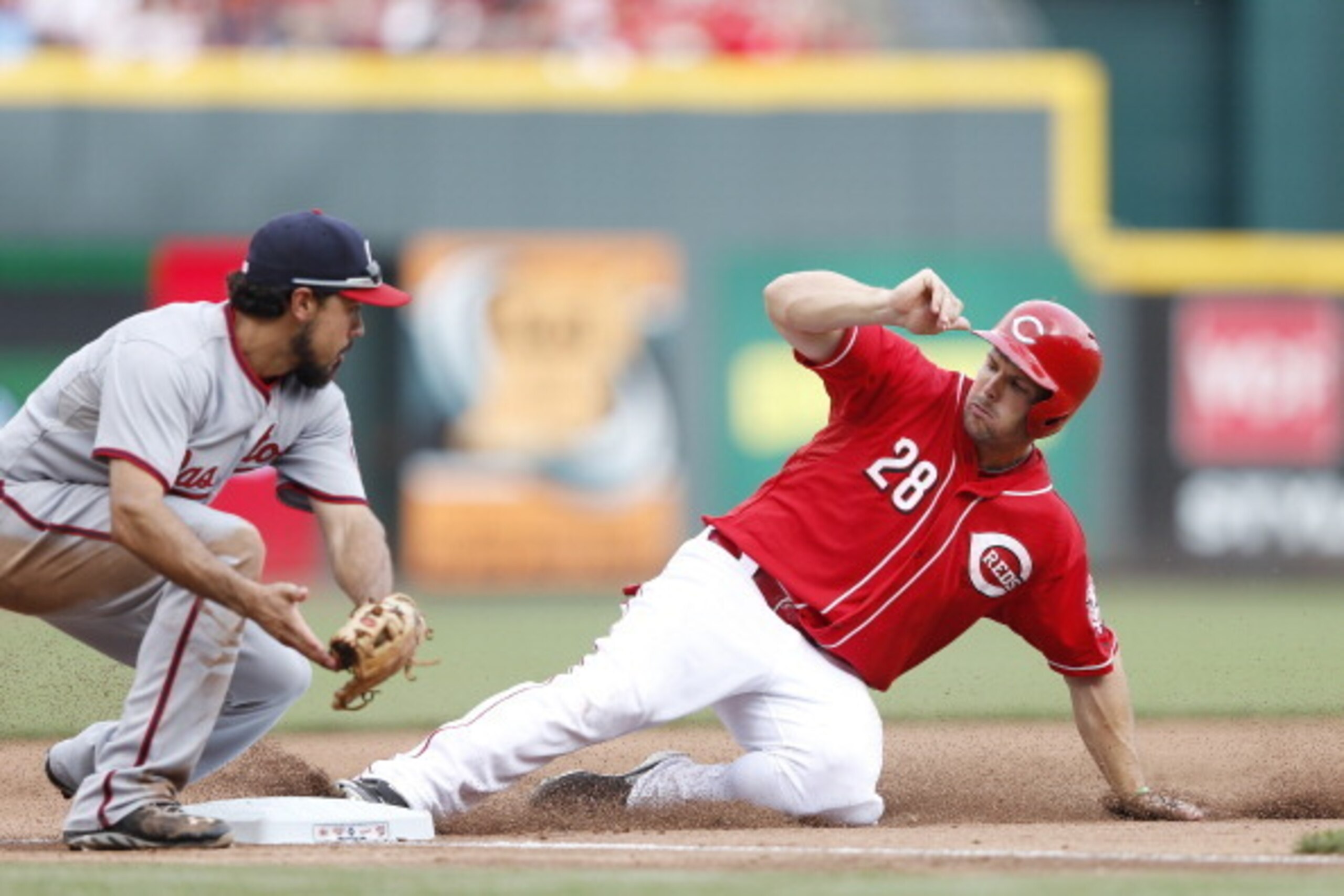
Hitting
If there’s one thing Chris Heisey can do well, it’s hit line drives to left field. To that end, he has few equals. Now all he has to do is learn how to use the rest of the field, how to hit slow pitches, how to stop whiffing so much, how to stop swinging so darn much and generally how to do everything else except that one thing.
Power
That Heisey specializes in rocketing the ball to his pull side means he has a pretty good floor for his power. That he’s also a prolific fly-ball hitter is even better. So not surprisingly, really anything he hits to left field has a chance to go for an extra-base hit. It’s only one field and he’s only a part-time player, but that’s enough to make him a decent power supply.
Baserunning
Heisey showed in the past that he was a threat to sneak a few steals here and there. He’s sneaked more than just a few this year, and with pretty good efficiency to boot. That’s a good look for a part-time player. And while not great, his 44 XBT% is at least good enough. It also looks slightly better knowing he’s gone first to third about half the time he’s had a chance.
Defense
Heisey has played a more even distribution of left, center and right field in 2014, and it’s a glowing endorsement that the defensive metrics like his defense at all three. He doesn’t have a dangerous arm, but what he does regardless of what position he's playing is get good jumps on balls with good closing speed. With that kind of versatility and that kind of talent, he’s a darn good guy to have around.
Total
Don’t go running to Heisey if you want a guy with a consistent bat. But if you want a guy with some legit pull power, solid baserunning skills and a good glove for all three outfield positions, he’s a good choice.
59. Wil Myers, Tampa Bay Rays
13 of 71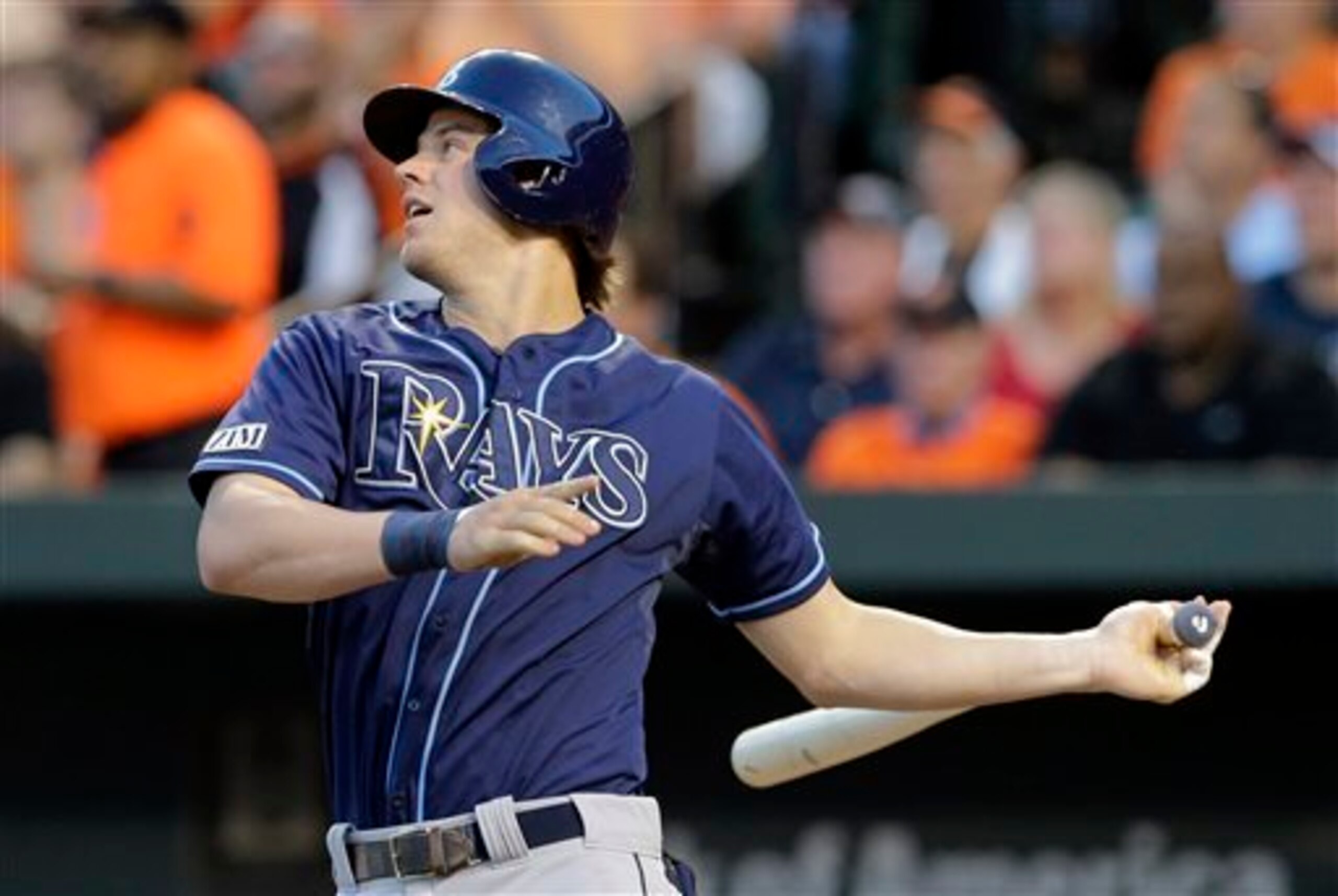
Hitting
A long absence with a fractured wrist hasn’t helped, but Myers has just plain looked lost in 2014. His approach isn’t as advanced as it looks knowing how much he’s offered at the increased amount of junk he’s seen off the outside corner, his line drives are down, and he’s not producing to the opposite field like he did in 2013. The talent is still there, but this is a perfect storm of problems to bounce back from.
Power
On paper, it’s good that Myers has hit more fly balls. It’s also good that he’s hit more balls in the air to his pull side, and that he’s been reasonably productive on those to boot. But wrist injuries are scary, and they’re even scarier when players who suffer them don’t show power after they return. That’s the case with Myers, so it’s hard to have high hopes going forward.
Baserunning
Not that we have much to go off of, but baserunning is one area where Myers has been fine in 2014. He’s continued to sneak the occasional steal, and he’s upped his already solid 46 XBT% to an even more solid 53 percent. This is more than likely as good as his baserunning is going to get, but that’s OK. Such production is pretty good for a corner outfielder.
Defense
They haven’t gotten to see much in 2014, but the defensive metrics haven’t needed much to conclude that Myers is still at best an average defender in right. They have legit gripes. Though he’s a solid athlete, his reads and routes still look like those of a guy who only recently moved to the outfield from catcher. And while his arm is normally solid, you have to wonder if it’s the same after his wrist injury.
Total
It’s been a lost season for the 2013 AL Rookie of the Year. In addition to his broken wrist, Myers has struggled with his hitting and fielding. That leaves just his talent to trust in. To that end, it's a good thing he has the whole "2013 AL Rookie of the Year" thing going for him.
58. Mark Trumbo, Arizona Diamondbacks
14 of 71
Hitting
One thing that’s getting better every year is Mark Trumbo’s chase rate, which tells us his eye is getting better. Just as good, his solid line-drive rates have helped him hit slow stuff better than he did in 2013. All he needs to do now is hit more line drives in general, make more contact outside the zone and cultivate more complete coverage in the zone, and he might actually become a good hitter.
Power
Trumbo’s power once produced the loudest sound I’ve ever heard, and his tendency toward fly balls should allow that power to be heard from often. But Trumbo’s power has really only been OK. This is partially because he hasn’t hit the ball in the air to left field that often, possibly because of his bad left foot. A turnaround should be in order, but his situation isn’t without doubt.
Baserunning
Nobody’s ever accused Trumbo of being fleet of foot, and he’s still not. Stolen base attempts haven’t gone too well, and he also has just a 21 XBT%. His bad foot has presumably had a hand in him slowing down, but it’s not like Trumbo was the aggressive sort to begin with. His XBT% the last two seasons was only 33 percent. Foot injury or no foot injury, he’s a station-to-station runner.
Defense
The defensive metrics have Trumbo rated as a decent first baseman. It’s therefore too bad he’ll have to go back to left field when Paul Goldschmidt returns in 2015, as he’s a downright terrible left fielder. His arm is fine—Trumbo is a former pitcher, after all—but his range is sorely lacking thanks to a lack of foot speed and a strong ability to read and trace fly balls. When he plays left, it’s not pretty.
Total
Trumbo has only ever had one good tool: his power. Alas, that tool hasn’t been seen that much in 2014 thanks to the left foot injury he suffered early in the season. In light of that, it’s even harder to anticipate him being a good player than it was before.
57. Carlos Gonzalez, Colorado Rockies
15 of 71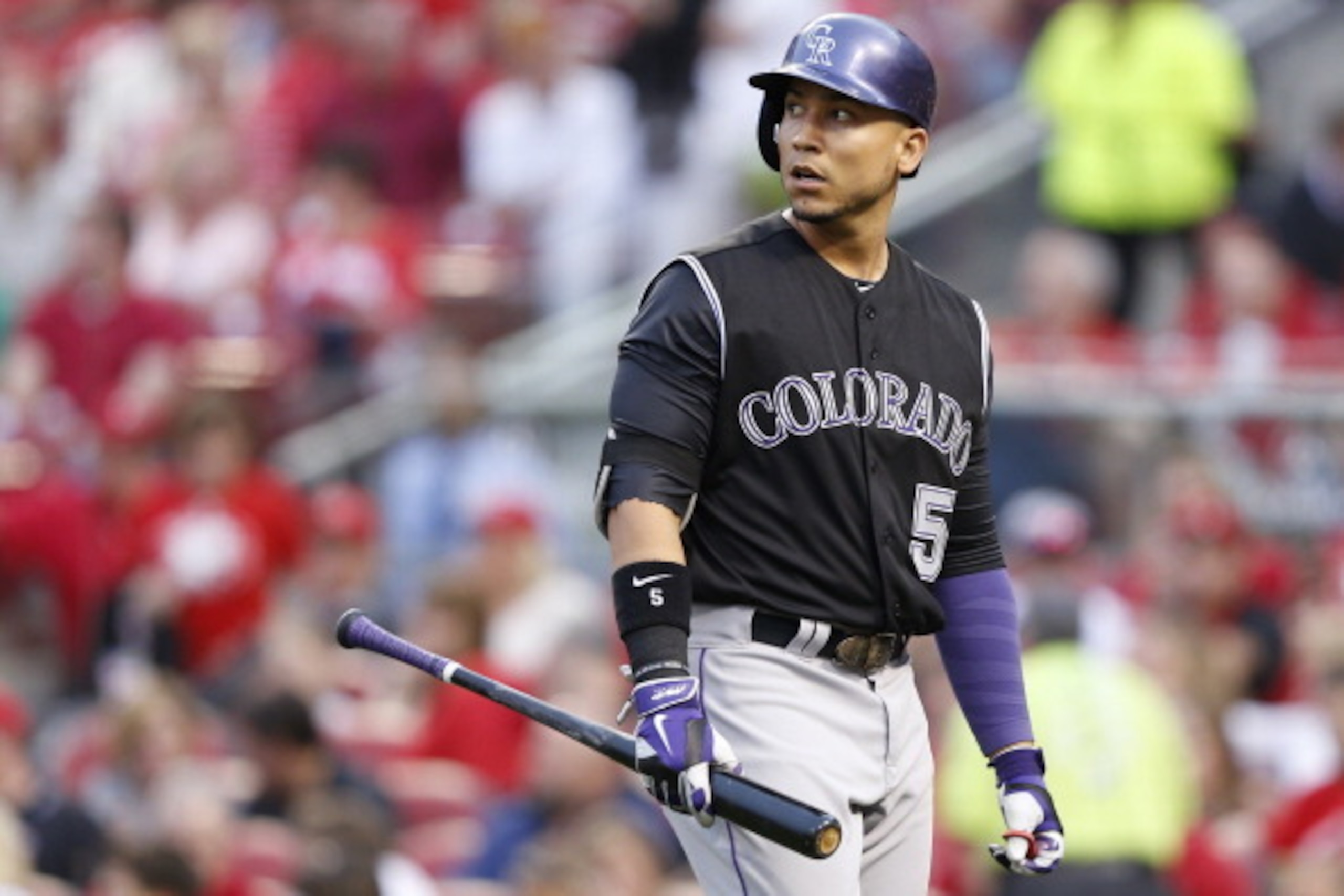
Hitting
Carlos Gonzalez’s season hit a bump when he basically had to have a Dalek removed from his finger, and then it ended early thanks to a bad left knee. In between, he was a total mess. He was way over-aggressive, couldn’t hit inside fastballs, stopped hitting line drives and whiffed a ton. And without help from Coors Field, things would have been even worse. As talented as Gonzalez is, this is an awful lot to correct.
Power
As messy as Gonzalez’s hitting was, his power could have been worse. He maintained a decent fly-ball rate and was actually more efficient hitting the ball out to right field than he’d ever been before. But he wasn’t driving the ball the other way and up the middle like he could in 2013. That power may not come back if his left knee is compromised, as it takes a strong base to drive the ball the other way.
Baserunning
Naturally, Gonzalez’s streak of four straight 20-plus steal seasons came to an end this year. He also watched his XBT% fall from 53 to 44, and three outs at third base in less than half a season’s worth of games isn’t such a good look. And, again, as much as you want to be optimistic about a turnaround, you worry about that knee going forward.
Defense
After actually living up to his Gold Glove reputation in 2013, the defensive metrics went back to being sour on Gonzalez’s defense in 2014. His arm is better than the metrics gave him credit for, though, and should continue to be an asset going forward. The bigger question is if his range will come back. It’s hit-or-miss to begin with because of how his routes can be inefficient, and his knee injury likely won’t help.
Total
This score is definitely low for a player of CarGo’s caliber. But after the kind of season he just went through, this score is actually going out on a limb that he can make a comeback. He has some serious talent, but he spent 2014 dealing with all sorts of serious issues that were compounded by serious health problems.
56. Alejandro De Aza, Baltimore Orioles
16 of 71
Hitting
Alejandro De Aza has been used as a platoon player, and that’s made him more aggressive. His swing, chase and swinging-strike rates are all up. The trade-off has been better contact. His line-drive rates are up, and he’s spread them around pretty well. Knowing this, he might deserve a better average on balls in play. As long as he’s kept in his platoon role, he could be in line for better numbers in 2015.
Power
De Aza isn’t repeating last year’s home run surge, in part because of his subdued playing time, and in part because his home run rate to his pull side has leveled off. But he’s kept his power in decent shape. Despite a lesser fly-ball rate, he’s been able to pull the ball in the air more often. If it’s that easy for him to pull the ball against righties, his power at least has a solid floor.
Baserunning
De Aza has an outside chance at a third straight 20-steal season, but even going past 15 is good enough considering his playing-time situation. It’s too bad that his stolen base habit doesn’t come with efficiency, and on the side he only has a 39 XBT% that’s low by his standards. This doesn’t make him a bad baserunner, but he’s not quite as good as his stolen base total says he is.
Defense
After stumbling around in center field in 2013, De Aza has been used mainly in left field in 2014—and to much better results as far as the defensive metrics are concerned. Range that was just OK in center has been better than OK in right, as De Aza breaks faster and moves quicker than a lot of corner outfielders. And though not perfect, his arm is at least passable for left field.
Total
His 2013 power surge has ended and his baserunning is just OK, but turning De Aza into a platoon left fielder has worked out reasonably well. He hits right-handers better than his numbers suggest, and he’s a better defender in left than he was in center.
55. Eric Young Jr., New York Mets
17 of 71
Hitting
Eric Young Jr. is now close to being the kind of hitter he should be, as he combines good discipline with an extreme ground-ball habit. With his speed, that’s ideal. Trouble is he hasn’t improved as a contact hitter, and he also doesn’t have ideal bat control to go with his ground-ball habit. From the left side, in particular, it’s either one side or the other rather than both sides and up the middle.
Power
When over 60 percent of your batted balls are on the ground, you’re not going to find yourself hitting for much power. And given his lack of home run power, the best thing Young can do is hope for doubles and triples on balls in the gaps. As such, it’s fortunate that he at least has a good eye for the right-center gap from both sides of the plate.
Baserunning
Young isn’t going to lead the league in steals again like he did in 2013, but he should at least pass 30 for a second straight season—and with pretty good efficiency to boot. You can add in an excellent 64 XBT% with very few non-caught-stealing outs on the side, and what you get is a picture of one of the better baserunners in the league.
Defense
Like they did in 2013, the defensive metrics rate Young as an above-average defender in left. It’s mainly his range that does the trick, and you can guess where it comes from. Though he has a tendency to make adventures of his routes to balls, he has more than enough speed to make up for it. His bigger limitation is his arm, which just isn’t strong enough for a corner outfield spot.
Total
Young’s bat isn’t much to speak of. His approach is sound, but he’s not actually that good at hitting the ball or hitting for power. It’s a good thing he has speed in abundance, and that he can use it both on the basepaths and in left field.
54. Mike Morse, San Francisco Giants
18 of 71
Hitting
Mike Morse has spent 2014 living up to the legend. He’s still hacking at everything and whiffing a lot, and his long swing leaves him vulnerable to hard stuff up and in on his hands. With weaknesses like these, consistency will always be tough for him. We can, however, give him credit for at least making good contact. His line-drive rates are up, and the whole field has been in play on his liners and ground balls.
Power
Morse has tremendous raw power, and it shows in how balls he hits in the air don’t tend to be cheapies. This said, there are good reasons why his power peak is in the past. Beyond simply being a little older at 32, he’s not the fly-ball hitter he once was. Partially because of that, he’s not hitting the ball in the air to his pull side as often. He still has good power to offer, but not great power.
Baserunning
You don’t look at Morse and see a fast runner. Probably because he’s not. His last stolen base happened in 2011, and it’s saying a lot that his mediocre 33 XBT% is actually pretty good by his standards. He is what he is, and that’s a station-to-station runner.
Defense
Morse has spent the bulk of 2014 playing left field, doing plenty in the process to remind everyone he really should be playing first or just DH’ing. The defensive metrics have him rated as an easily below-average left fielder, because of course they do. Morse’s arm doesn’t play well in the outfield, and his range is severely limited by inefficient routes and poor foot speed.
Total
That Morse is as useless as he is running the basepaths and playing the field puts a pretty big cap on his ability to rack up value. But we probably give him too much grief about his bat. Wild swinger though he may be, he could be a lot worse at squaring the ball up.
53. Matt Joyce, Tampa Bay Rays
19 of 71
Hitting
The lefty-swinging Matt Joyce is strictly a platoon hitter. His mix of patience and discipline—and, by extension, his walk rates—has long been indicative of how well he sees righties. This is not to say he doesn’t have weaknesses. His whiff rates are up across the board, his line drive rate is down and he still can’t hit right-handed slow stuff. It's a good thing he has that excellent approach.
Power
Joyce’s power is trending downward in a hurry, and what he’s done this year says another drop could be forthcoming. He’s not only hitting fewer fly balls, but also fewer balls in the air to right field. Because that’s clearly where the majority of his power is situated, that’s a problem. His pull power is still good enough for now, but his descending power and part-time role are a bad mix.
Baserunning
Joyce is typically a strong baserunner, but this is another area where he’s trending in the wrong direction. He hasn’t had any luck stealing bases, and he’s watched his XBT% fall from a peak of 61 percent in 2011 to 45 percent this year. Given how he’s now past 30, it's fair to expect Joyce's baserunning to continue its trend toward average.
Defense
The Rays play Joyce in right and left field, but mainly in left. The defensive metrics think that’s the right idea. Joyce does indeed look more comfortable with the angles of left field than he does with the angles of right field, and he has enough speed to put his range at about average for the position. It’s too bad he doesn’t have much of an arm to go with his range.
Total
There are some faults in Joyce’s bat and his power is declining, but he’s still of use as a platoon player. He sees right-handers very well, and he can play decent, if not quite great, defense in left field.
52. Josh Hamilton, Los Angeles Angels
20 of 71
Hitting
That pitchers are feeding Josh Hamilton progressively fewer fastballs makes his aggressiveness easier to forgive. We can also tip our caps to him for getting better hitting everything for line drives, and for improving against low-and-away pitches. What’s harder to forgive is how his whiff rates on slow stuff are back up, and how he's a perfect shift candidate. He's been better, but he's still vulnerable.
Power
With the number of line drives and fly balls he hits, Hamilton should still be a stud power hitter. But he just can’t drive the ball like he used to. That becomes obvious if you line up his 2014 batted-ball map with his batted-ball maps from 2012 and 2013. His power potential is further restricted by his constant health woes, the latest of which are a right shoulder injury and chest pain that could sideline him for the rest of 2014.
Baserunning
Hamilton isn’t about to become a base stealer, and it’s not a good look that 2014 has seen him run into so many outs on the bases. At the same time, he is a more aggressive baserunner than many might realize. He’s working on a 50 XBT% this season, and that’s not far off his career norm of 46 percent. He’s not going to get any faster at his age (33), but he’s not quite a station-to-station runner yet.
Defense
The defensive metrics rate Hamilton more strongly as a left fielder than they did as a right fielder in 2013, but only to the extent that he’s close to average. That’s fair, as he doesn’t have a good arm for a corner outfield spot and is still limited by a lack of good closing speed. About the only thing he still does well is track fly balls efficiently for the most part.
Total
Hamilton’s 2014 season hasn’t been completely without bright sides, but he still looks like a shell of the hitter he used to be. His bat still has holes in it, and his power is fading. At the rate he’s going, he’s really not much more than a playable outfielder. And that’s when he’s healthy, which isn't often.
51. Oswaldo Arcia, Minnesota Twins
21 of 71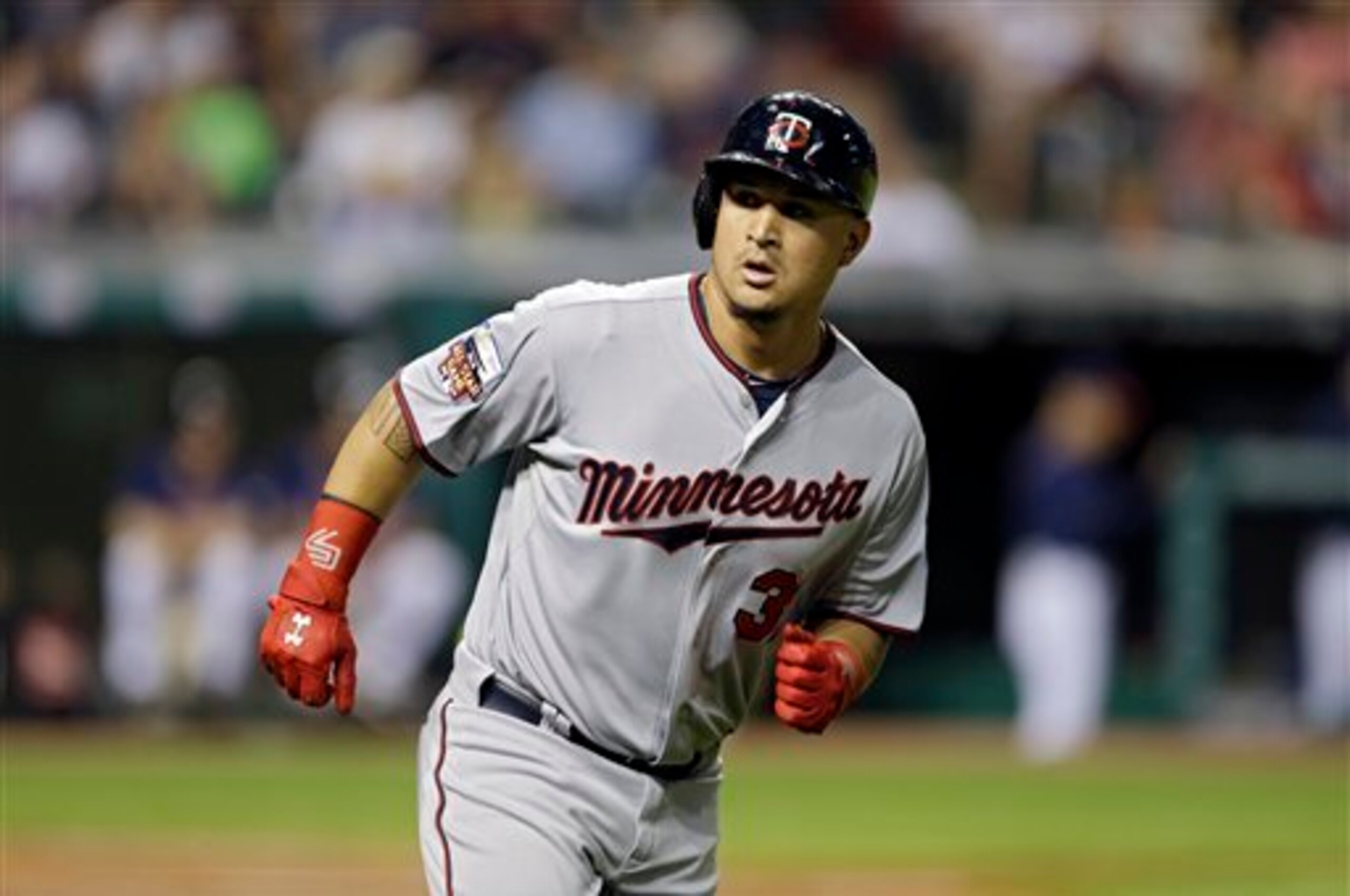
Hitting
We can give Oswaldo Arcia credit for making better contact against slow stuff than he did in his time in the majors in 2013, but not much else. He has an alarming platoon split, he’s over-aggressive with his swings, he swings and misses too much and he’s very weak against pitches up in the strike zone. His bat looked like it needed some fine-tuning in 2013. It still does in 2014.
Power
Arcia fortunately has more to offer in this department. He’s mixing line drives and fly balls better than he did in 2013, and he’s basically said “screw it” and gone for a more pull-heavy air assault on right field. It’s worked out quite well, but don’t overlook the power he has up the middle too. He doesn’t have any power to left, but what he’s shown this year is very real 30-homer power.
Baserunning
Arcia’s not enough of a burner to steal bases, so don’t expect him to start lighting things up in that department. But there’s potential in his ability to round the bases. The 56 XBT% he’s working on is good stuff for a corner outfielder, and it looks even better when you notice the eight first-to-thirds in 18 chances. If he can keep that up, baserunning won’t be a weakness.
Defense
The Twins have played Arcia in right field after playing him mostly in left field in 2013. According to the defensive metrics, the results have been about as ugly. They’re probably overstating his lack of a good playmaking ability, but his range is limited by his foot speed and occasionally limited by long and/or zigzag routes. At least he has more than enough arm to help make up for that.
Total
Arcia’s hitting is a mess and his defense in right field is lacking, but he does have one tool that looks very strong: his power. It’s been impressive in a little more than half a season and should be even more impressive over a full season.
50. Ryan Braun, Milwaukee Brewers
22 of 71
Hitting
Ryan Braun’s approach is a mess. He was an aggressive hitter before, but 2014 has seen him become over-aggressive, and with more of a whiff habit to boot. And while he has a decent line-drive rate, it’s shocking how few of them have been to left field. This is likely due to his wounded right hand, which sounds like it could be a lingering problem. If so, get used to seeing this new ordinary Ryan Braun.
Power
That Braun isn’t the fly-ball hitter he was in 2011 and 2012 is reason enough for his power to be down, but his suddenly sporadic ability to hit the ball hard to left field isn’t helping either. While the silver lining should be that he’s continued to show solid pop up the middle and to right field, it’s hard to put much faith in that. If Braun’s hand really is that bad, maybe his second-half power is a sign of things to come.
Baserunning
Braun isn’t doing so hot here either. He’s shown he still has the speed for double-digit steals, but not enough of it to do so with good efficiency. And while his 43 XBT% is passable, that he’s also made a staggering number of outs on the bases pretty much cancels it out. Braun’s baserunning is at best an average strength now, and you have to think it won’t get any better since he turns 31 in November.
Defense
It’s not too surprising to see the defensive metrics rating Braun as a liability in right field. He looks like he hasn’t had the easiest time adjusting to the angles, sometimes taking the long way to fly balls. But while that can be fixed, Braun’s average arm (by right field standards) and dwindling athleticism will be a lot tougher to fix.
Total
The best way to put it is that Braun looks broken. He’s not an asset on the basepaths or in the outfield, and that bad right hand of his has done a number on his hitting and could continue to do so going forward. The only positive thing to say is that lesser hitting from Braun should still be at least solid hitting.
49. Stephen Piscotty, St. Louis Cardinals (Prospect)
23 of 71
Hitting
Stephen Piscotty is a smart hitter with a mature approach and consistently uses the whole field, stinging the ball from line to line. The right-handed batter demonstrates patience at the plate as he works deep counts and waits for specific pitches, and he rarely cheats himself by chasing secondary pitches out of the zone. Piscotty’s hit tool grades as a plus, and he should have no problem batting at least .280 in his prime.
Power
At 6’3”, 210 pounds, Piscotty has plenty of gap power but previously lacked the pop commonly associated with a first-division corner outfielder. However, he’s shown more consistent power while moving up the ladder, amassing at least 40 extra-base hits in each of the last two seasons. Piscotty has plenty of strength and is still coming into his own as a hitter, so expect the power to continue to emerge with experience.
Baserunning
Piscotty’s speed is only average, but it plays up on both sides of the ball thanks to his impressive athleticism. In addition to being an aggressive and efficient baserunner, Piscotty’s feel for reading pitchers and situations could help him swipe roughly 10 bags per year.
Defense
A third baseman in college, Piscotty’s athleticism and high baseball IQ helped him make a smooth transition to the outfield in 2013. The 23-year-old profiles as an above-average defender in right field with plus arm strength, as he also gets consistently good reads off the bat and takes direct routes. Meanwhile, Piscotty isn’t afraid to sacrifice his body to make a highlight-reel play.
Total
Piscotty’s hit tool and solid defense will get him to the major leagues in 2015, but it will be his development of consistent in-game power that will ultimately determine whether he becomes more than a fourth outfielder at the highest level.
48. Daniel Nava, Boston Red Sox
24 of 71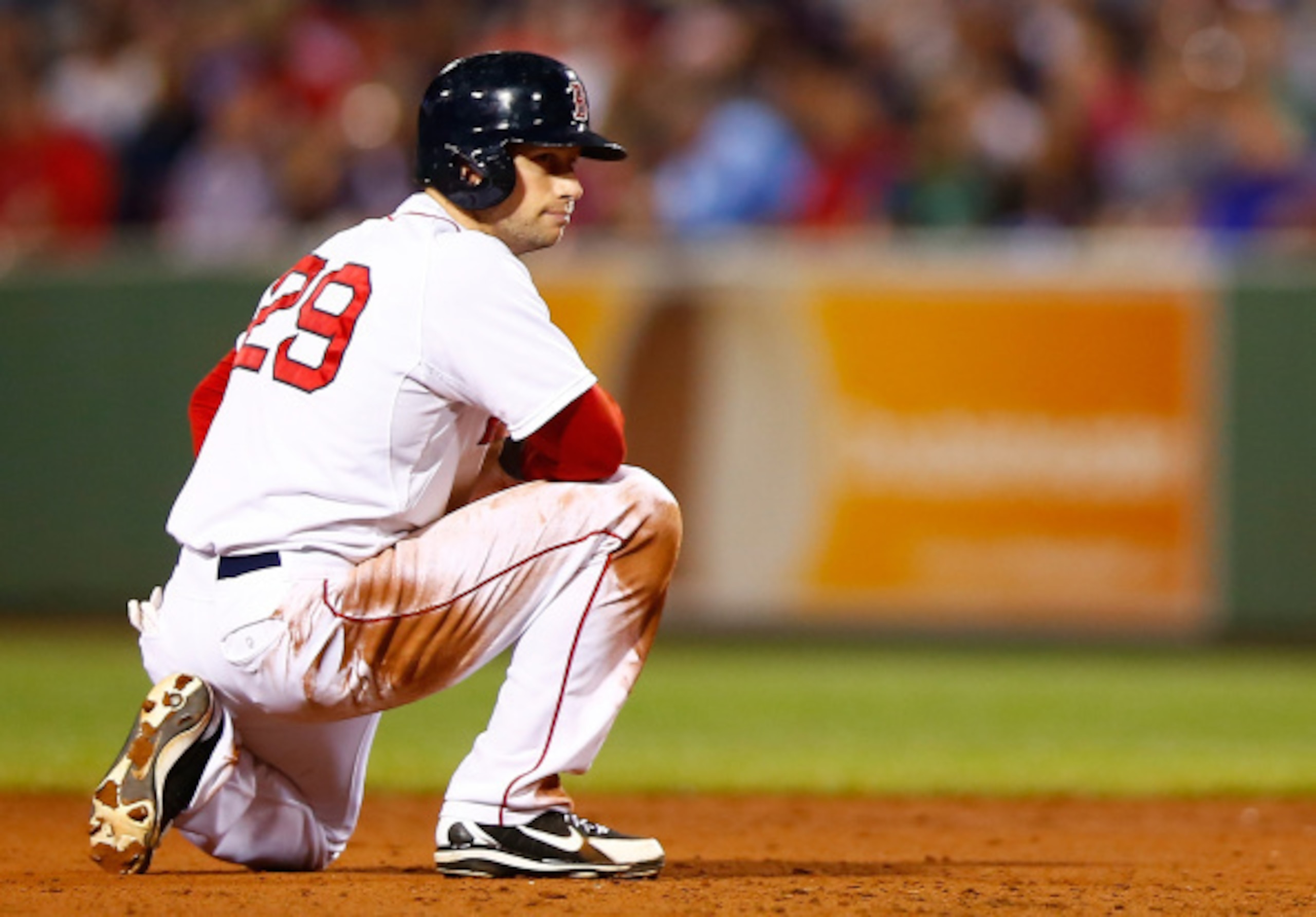
Hitting
Daniel Nava is a switch-hitter, but one with splits that demand he play only against right-handers. And with his long-ish swing, it’s no surprise they’ve been able to beat him with fastballs around his belt. Aside from that, he still works terrific at-bats with a very strong contact habit and a good line-drive rate against righties. It’s no fluke that he’s hit so much better since he returned from the minors in June.
Power
It’s good that Nava has found his hitting stroke, but his power has fallen off quite a bit from 2013. This is largely owed to how he’s hit more ground balls. He also hasn’t had the same opposite-field power from the left side, which doesn’t look like a fluke if you compare his 2013 batted-ball map to his 2014 batted-ball map. Without that and with all the ground balls, he doesn’t have much to offer.
Baserunning
As Nava has quietly resurrected his bat, so too has he quietly improved his baserunning. That he’s added some steals is nice, but the real improvement concerns his aggressiveness. He’s upped his XBT% from 37 last year all the way to 56 percent, and he’s done it without racking up additional outs on the basepaths. For a part-timer who’s not a fast runner, this is good stuff.
Defense
Nava has been used in left field, right field and at first base, and the defensive metrics think he’s been good at all three spots. Particularly in right field, they love his arm and playmaking ability. They’re overrating both—especially Nava’s arm—but he does get the most out of limited athleticism by breaking quickly and tracking fly balls well. That and his versatility make him a good guy to have around.
Total
That Nava’s a switch-hitter is a bit of a tease given that he’s only useful from the left side, and it’s not the best look that his power has dried up. But because he can put together good at-bats and is quietly a talented baserunner and defender, he’s a pretty good player.
47. Josh Willingam, Kansas City Royals
25 of 71
Hitting
Josh Willingham is one of the most patient hitters out there, as his M.O. is to see plenty of pitches and not swing at any bad ones. It’s thanks to this habit that he’s able to draw lots and lots of walks. The actual act of hitting, though, isn’t his specialty. Pitchers play into his weakness against slow stuff by giving him plenty of it, and such an extreme fly-ball style makes it pretty much impossible for him to hit for average.
Power
Willingham’s fly-ball style allows him to have a high floor for his power production. When he’s been healthy, he’s continued to make pretty much every ball in the air to left field count. But you do worry about lingering effects from the left wrist injury he suffered earlier this year, and it’s noteworthy that balls in the air to left field have actually been pretty infrequent. That could be him showing his 35 years.
Baserunning
You’re typically not going to see Willingham run the bases very well. That’s been slightly different this year in light of his solid 46 XBT%, which is up from 32 percent last year. But the lesser XBT% he has since joining the Royals is more likely his true baserunning talent at this juncture. Take that and combine it with a basically nonexistent stolen base habit, and there’s no reason to expect much.
Defense
Maybe Willingham will continue being a full-time DH after he leaves the Royals, but left field is where he’s spent most of 2014 and, indeed, his whole career. It’s not surprising that the defensive metrics generally don’t like his defense out in left field. His lack of foot speed severely limits his range, and he doesn’t have plus arm strength either. And at his age, he’s likely to get worse instead of better.
Total
Willingham really only has two things to offer: patience and power. Fortunately, he’s very good at the first thing and still good enough at the second thing. As such, he has enough to make up for the reality that running the bases and playing defense are not his specialties.
46. Torii Hunter, Detroit Tigers
26 of 71
Hitting
Torii Hunter is still doing his late-career aggressive guy thing, seeing few pitches and swinging at over half the pitches he does see. That he’s a good line-drive/ground-ball hitter with good coverage of the zone allows him to get away with it pretty well. His bigger problem is that he hasn't been the bad-ball hitter he was in 2012 and 2013. Without those extra hits, what he does in the zone only matters so much.
Power
Hunter’s transition over the last couple of years has rendered him a lesser fly-ball hitter, but his power could be in worse shape. He still has pretty good pop to both left and right field, and he’s helped keep his pull power alive by hitting the ball in the air that way more often. As a result, he’s kept himself in the discussion of 15-20-homer corner outfielders with good doubles power on the side.
Baserunning
Like it was in 2013, it’s apparent that Hunter’s too old for stolen bases. He only has the goods for a couple over a full season, and without good efficiency at that. Fortunately, he’s still rounding the bases well. His 52 XBT% is virtually the same as last year’s rate, and he’s further helped himself by running into much fewer outs on the basepaths than he normally does.
Defense
The defensive metrics said it was clear that Hunter couldn’t hack it in right field in 2013. They say it’s even more clear this year, and understandably so. He can’t accelerate quickly, nor does he have nearly the closing speed he used to have. As a result, he no longer has nearly the range he once had. With the way his defense is trending, he’d frankly be better off at DH.
Total
As aggressive as his approach has become, Hunter can still hit and hit for some power. He can also still run the bases reasonably well. He just can’t do these things quite well enough to make up for his horrid right field defense.
45. Charlie Blackmon, Colorado Rockies
27 of 71
Hitting
Things look good when you notice Charlie Blackmon has made more contact than in 2013 and that he’s spent 2014 aiming line drives and ground balls in all directions. But then you notice he hasn’t stopped being an overly aggressive hacker, that he’s been more prone to whiff as the season has progressed and that he’s basically been useless away from Coors Field. That’s when you wonder just how good he really is.
Power
The power Blackmon has shown is a bit more believable. He’s definitely been helped by Coors Field, but he’s also helped himself by hitting the ball in the air more and also hitting the ball in the air to right field more. The catch is that right field is clearly the only direction that Blackmon has any real power. Take that and combine it with the Coors Field caveat, and his power doesn't come off looking so great.
Baserunning
Blackmon’s hitting is suspect, but at least he runs pretty well. Well enough to give himself a fair shot at 30 steals by the end of the year, anyway, which is good stuff for a corner outfielder. It’s too bad that he hasn’t stolen his bases with much efficiency, however, and he also has a highly disappointing 34 XBT%. He’s a good baserunner, but short of great.
Defense
Blackmon has played left and right field in 2014, and the defensive metrics have him rated as roughly average in both spots, which makes sense. He doesn’t have the arm for left or right field, and he doesn’t have the range you’d expect a former full-time center fielder to have. His speed is fine, but he can make things overly adventurous with how he tracks fly balls.
Total
Blackmon’s early-season breakout happened a long time ago, and it’s hard to notice how he’s as much, or more, of a product of Coors Field as the next Rockies hitter. But because he can run the bases, hit for a little power and at least play passable defense in left and right field, he’s hardly useless.
44. Alex Rios, Texas Rangers
28 of 71
Hitting
Up until a nagging thumb injury finally got him shut down, Alex Rios was putting himself in good position to hit for average on balls in play. His line-drive rates were up, and he was doing a decent, if not spectacular, job of spreading his grounders around. It’s just too bad he really needs to hit like this. He had gotten more aggressive and more likely to swing and miss, and walks were as small a part of his game as ever. It adds up to a classic case of a hitter who's not as good as his batting average (.280) indicates.
Power
With Rios’ fly-ball rate going nowhere but down, it’s only becoming tougher for him to keep his power up. He has subpar power to offer now, and it’s only likely to get worse. His raw power isn’t totally gone, however. He was still able to drive the ball up the middle and to left field, buying himself a decent number of doubles and triples in the process. It’s not good power, but it could be worse.
Baserunning
After pulling a 42-steal season out of nowhere in 2013, Rios’ baserunning went back to normal this season. He only made it to 17 steals, and not with good efficiency. He also dropped his XBT% from 49 to 42. He’s still a solid baserunner relative to other corner outfielders, but what he’s done this year is probably the new normal given that he’s now past 33 years old.
Defense
The defensive metrics were rating Rios as a below-average right fielder. Given that the lack of acceleration he has on the basepaths also applies to his defense at times, and his playmaking ability indeed isn’t what it used to be, this isn't surprising. But he can still move relatively well for a right fielder, and the metrics were underrating his solid arm strength. He’s still at least average on defense.
Total
Rios doesn’t do anything well anymore, but he doesn’t really do anything that poorly either. He can still handle the bat and provide some power, and he can hold his own on the basepaths and in right field. He’s not a good player anymore, but he’s at least playable.
43. Jay Bruce, Cincinnati Reds
29 of 71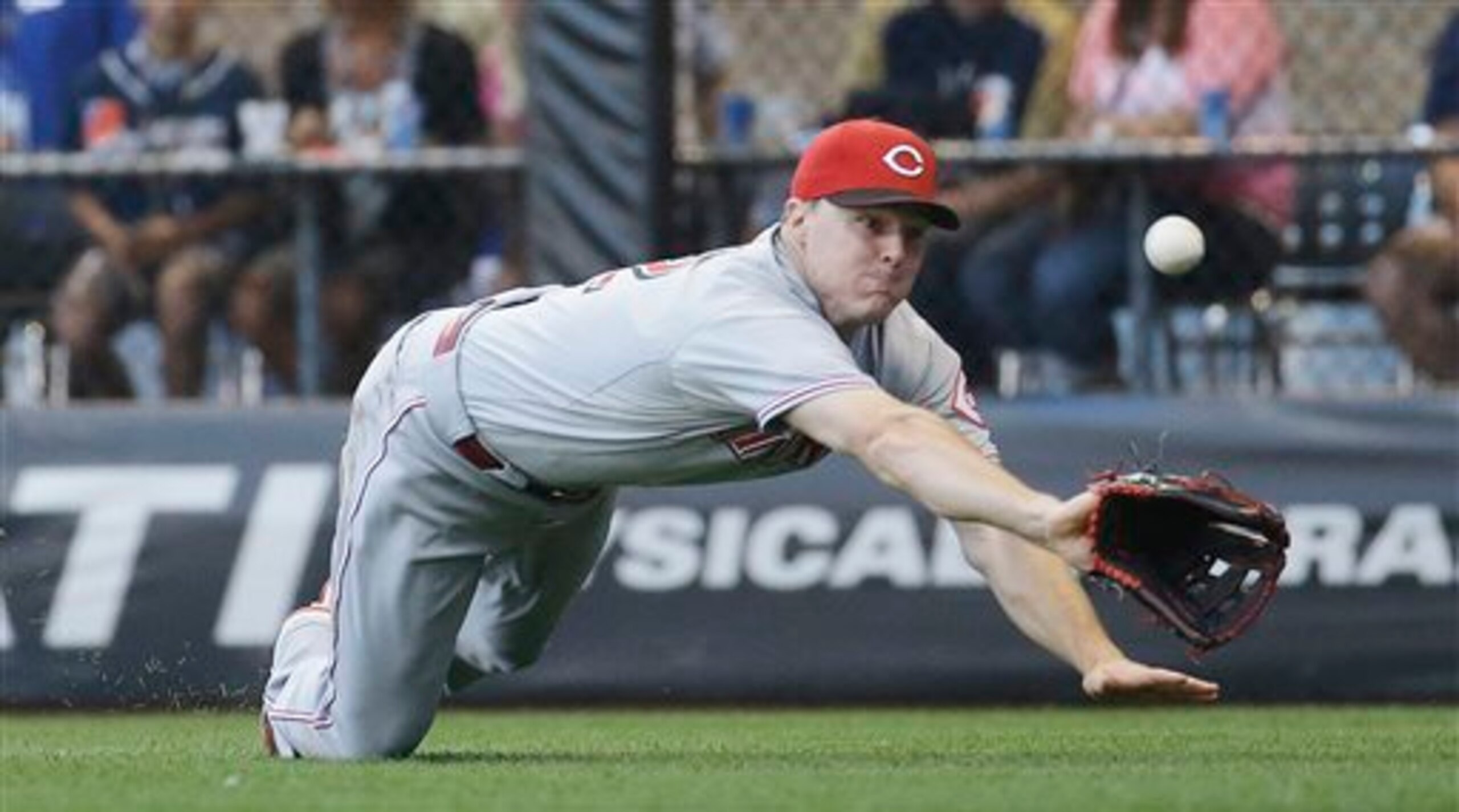
Hitting
Not that Jay Bruce was ever the most advanced hitter, but he’s looked lost at the plate in 2014. He’s been chasing more pitches out of the zone, hasn’t been able to hit hard or off-speed stuff on a line like he did in 2013 and has had no answer for a career-high rate of low-and-away pitches. He gets a slight pass because of his bum left knee, but what’s happened still isn’t encouraging.
Power
Bruce’s bad knee hasn’t killed his power, but it’s definitely limited it. He hasn’t been able to hit the ball in the air at his normal rate, and he’s only been able to hit the ball with authority to his pull side. He is a pull-power hitter, granted, but let’s not forget that he could give the ball a good jolt the other way last year. One can only hope that a return to good health in 2015 will allow that power to come back.
Baserunning
One thing Bruce’s bad knee hasn’t stopped him from doing is stealing bases. This season has seen him surpass double-digit steals for the first time, and with pretty good efficiency. But while that’s a good look, he’s only managing a 35 XBT% that’s below his career norm of 44 percent. Even with the steals, baserunning still only looks like a modest strength for Bruce.
Defense
The defensive metrics say Bruce has had a rough season defensively, and he’d agree. He recently told MLB.com he hasn’t been able to get the kind of jumps he usually gets, which is discouraging knowing that he doesn’t have closing speed to lean on. It’s a good thing his strong arm has still been working, and it’s frankly hard to imagine Bruce’s defense continuing to be downright poor going forward.
Total
The term “lost season” definitely applies with Bruce. He had to go in for surgery on his left knee early on, and frankly has paid the price for rushing back from it. Still, it’s a silver lining that he’s at least been a solid power producer and baserunner, and you have to figure that other things won’t continue to be as awful.
42. Shin-Soo Choo, Texas Rangers
30 of 71
Hitting
It wasn’t Shin-Soo Choo’s approach that was off before his season ended early. He was still a hugely discerning hitter who took his walks. His struggles stemmed more from how pitchers went right after him with hard stuff in the zone and how he never gave them a legit reason to stop. At least he remained a line-drive/ground-ball hitter who could aim the ball well. So, no, his bat isn’t totally a lost cause.
Power
It’s hard enough to hit for power consistently when you’re not hitting the ball in the air that often. It’s even harder to do it when you’re basically not hitting the ball in the air to your pull side. Really the only thing that kept Choo’s power afloat this year was how he could still give the ball a jolt to left-center for extra-base hits. That’s a good talent for a lefty hitter to have, so his power isn’t a lost cause either.
Baserunning
Choo came down with some ankle soreness early on in the season, and you can look back and wonder now if it ever went away. After topping 20 steals four times between 2009 and 2013, he only made it to three before his season ended. On the bright side, at least he upped his XBT% from 40 to 50. Even as his baserunning got less flashy, it didn’t necessarily get weak.
Defense
After rating him as a disaster in center field in 2013, the defensive metrics didn’t like Choo’s defense in left and right field in 2014 much better. That his elbow hurt his throwing was a factor, but aside from that is how he struggles with fly balls. He’s often slow to get after them and can take adventurous routes once he’s on the move. It would not be surprising if the Rangers kept playing him mainly at DH.
Total
In just a few short months, Choo has gone from one of the jewels of the free-agent class to a lesser hitter who may now be damaged goods. But at the very least, one thing he still have going forward is his terrific batting eye and solid opposite-field power. Those aren’t bad consolation prizes.
41. Nick Markakis, Baltimore Orioles
31 of 71
Hitting
Nick Markakis can offer the best of both worlds, as he’s both a disciplined hitter and one of the elite contact hitters in the game today. That he has the bat control to spray the ball in any direction is a bonus. That leaves only two catches: He’s a modest line-drive artist, and he’s no more dangerous on pitches away from him than he was in 2013. Such things keep him from being a truly great hitter.
Power
A slightly elevated fly-ball rate has helped Markakis’ power bounce back from a poor showing in 2013, and he’s generally driven the ball well to right and left-center. But his power is still mediocre by corner outfield standards. It doesn’t help that balls in the air to right field haven’t been much more frequent than they were in 2013, and his opposite-field power is absent for a third time in four years.
Baserunning
That Markakis is no longer the base stealer he once was can be forgiven now that he’s past 30, but his descent into a true station-to-station runner is harder to forgive. He only has a 17 XBT% this season. That’s well below last year’s mark of 34 percent, which he got in part because he went first to third 12 times in 47 chances. This year: four times in 48 chances. Yeesh.
Defense
The defensive metrics are convinced that it’s been a long time since Markakis was a truly terrific right fielder, and they’re split on what to think of him this year. That he has a great arm isn’t in dispute, but his playmaking ability with his legs and glove is. Rightfully so, as his habit of getting bad reads and running indirect routes limits his range and turns too many easy catches into tough catches.
Total
The way Markakis combines good discipline with a superior contact ability helps him stay consistent, and his power has made a slight comeback. He still has subpar power for a corner outfielder, however, and he doesn’t have much to offer on the basepaths or (despite his reputation) on defense.
40. Rajai Davis, Detroit Tigers
32 of 71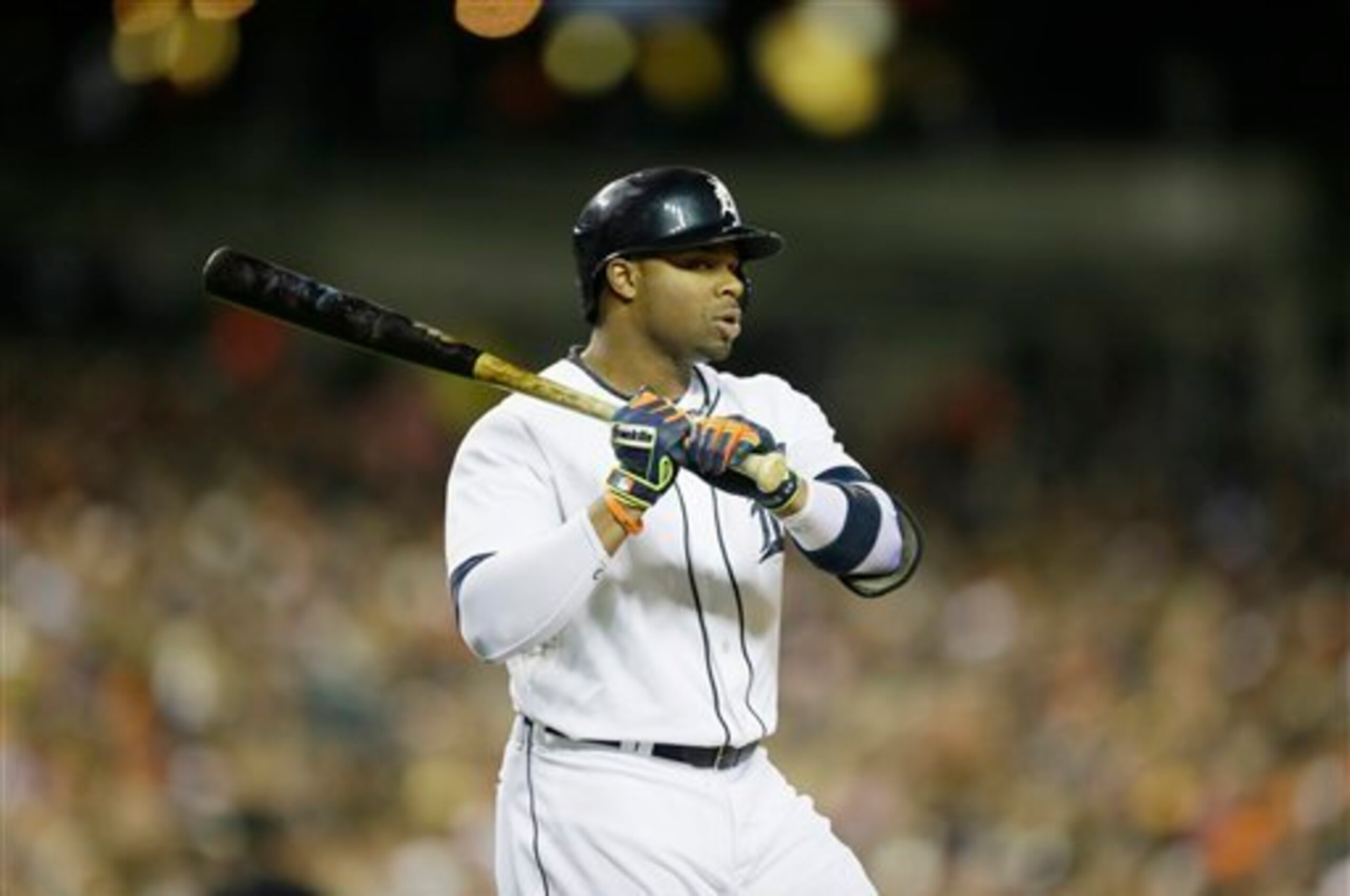
Hitting
Rajai Davis is still too aggressive, his line-drive rate is down and he’s trending in the wrong direction against fastballs. That he’s at least making more contact is definitely helping, however, and his return to a more extreme ground-ball style is working because of his speed and his ability to aim the ball. Thus, he’s allowed himself to continue being what he is: a solid, if not quite good or great, hitter.
Power
That Davis is hitting for solid power this year despite fewer line drives and fly balls might seem fluky. And it is. He really only has power to his pull side, and he’s actually not giving himself more chances to tap into it. His line drives and fly balls to left field are down from where they were in 2012 and 2013. He’s benefited from some good fortune around the foul pole. Take it away, and his power looks human.
Baserunning
This is the sixth year in a row that Davis has topped 30 stolen bases, but the catch is that he still gets caught a lot. This makes it five years out of six with double-digit caught-stealings, and you have to figure that things won’t improve after he turns 34. Still, you’ll take his stolen base habit for a corner outfielder, and you’ll also take something even remotely close to his 67 XBT%.
Defense
Davis has mainly found himself playing left field in 2014, and he’s failed to impress the defensive metrics with his glove. They’re likely overstating his lack of playmaking skills, but maybe not by much. He doesn’t have a great arm, and his range isn’t as good as his speed dictates it should be. Davis can be too casual after fly balls on occasion, and it can cost him.
Total
Davis has overachieved somewhat in the power department this year, and he’s really not as good a defender as he should be with his athleticism. But what he can do is get on base at a decent rate and then put his legs to good use. The combination of those talents is worth something.
39. Gerardo Parra, Milwaukee Brewers
33 of 71
Hitting
Gerardo Parra is an aggressive hitter with a tendency to expand the zone. That keeps him from drawing walks, and he’s never made up for it by being a good bad-ball hitter. Moreover, he should be a platoon player with his numbers against lefty pitching. What can be said in his defense, though, is that he’s actually becoming a better contact hitter and a better line-drive hitter.
Power
For a guy who has the look and size of a mere contact hitter, it’s actually surprising how much power Parra has. It makes limited appearances due to his small fly-ball rate, but this is a guy who can hit the ball reasonably well to all fields. Because of that, he can pick up extra-base hits in any direction. He doesn’t have the kind of pop to be a great source of power, but he’s better than he looks.
Baserunning
Because he’s done about as much harm as good stealing bases the last two seasons, Parra really should consider giving it up altogether. He’s not bad at rounding the bases, however. His 49 XBT% is good stuff by corner outfield standards, and the problem he had running into outs once upon a time is now a distant memory. Even if he does stop stealing bases, he can be a solid baserunner.
Defense
Parra was arguably the best defensive outfielder in baseball in 2013, so it’s surprising to see the defensive metrics rating him so poorly in 2014. He’s not actually that bad, though. One problem is that he hasn’t been able to squeeze as much value out of his arm, which is still terrific. And while there are better fly-ball catchers than him, the eye test says he still has closing speed to finish off good routes. Add in the ability to play all three spots well, and you have a dandy of an outfielder.
Total
Your opinion of Parra’s 2014 season might hinge on the opinion of the defensive metrics. If you’re with me and think they’re not doing Parra’s defense proper justice, then you should view him as a very good defensive outfielder who also packs a decent bat.
38. Gregory Polanco, Pittsburgh Pirates
34 of 71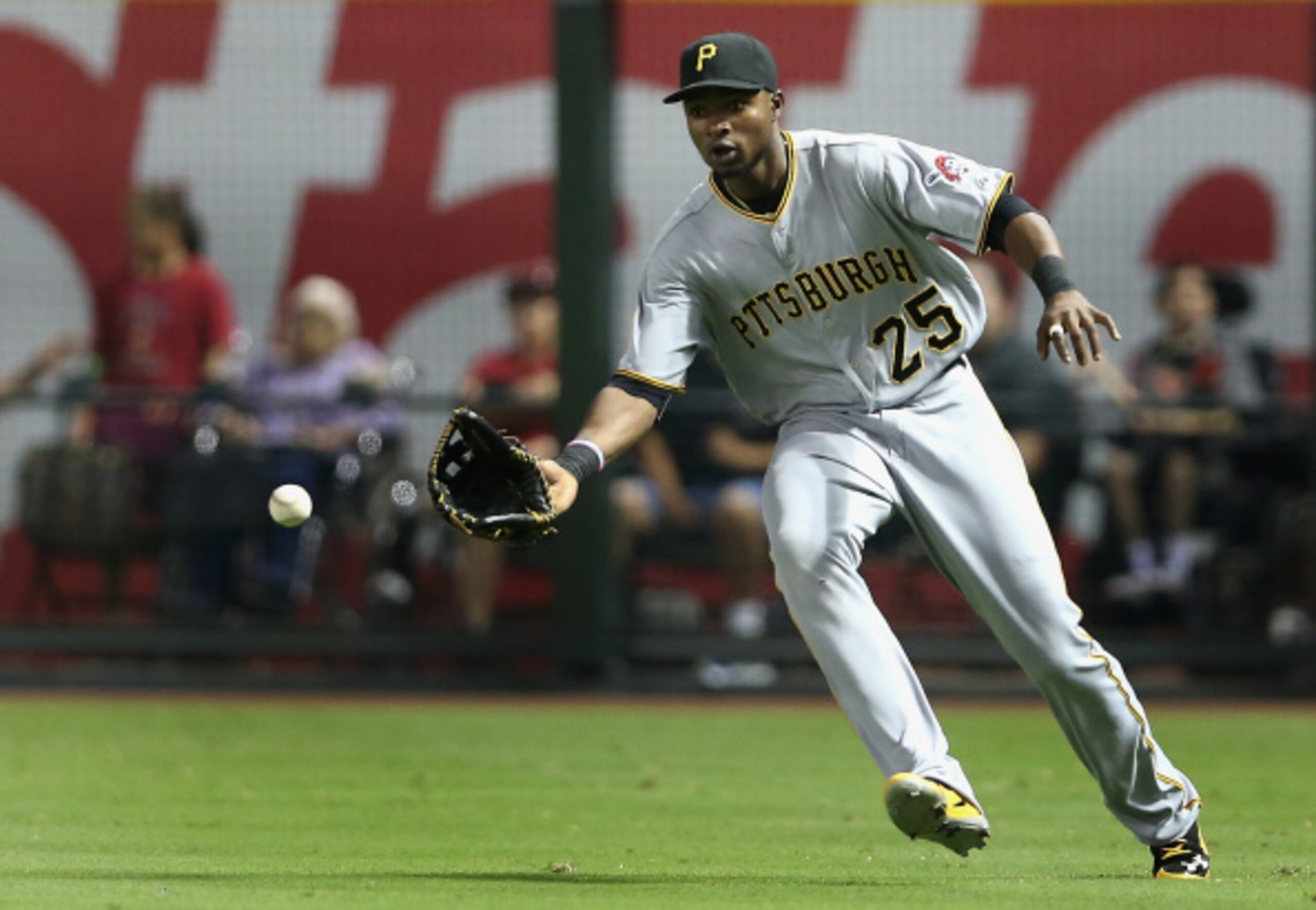
Hitting
There’s nothing really wrong with Gregory Polanco’s approach. He’s been reasonably patient and disciplined, and with a decent contact habit. He’s also shown he can be a line-drive/ground-ball hitter with a target on all fields. More worrisome is his spotty zone coverage against hard stuff, especially on the inner third against right-handers. That’s the danger of his long swing, and it's something he’ll need to adjust for.
Power
That Polanco is a modest source of fly balls is one thing holding his power back, but his biggest limitation is how he’s only shown an ability to hit for power to right field. Even in that direction, well-hit balls have been somewhat infrequent. He definitely has more power than he’s shown, but it may not show up consistently until he establishes his identity as a hitter first.
Baserunning
Polanco has run himself into a handful of outs at third base, which stands out as in need of fixing. Aside from that, his baserunning has been largely positive. Even with a modest OBP, he still entered September with a dozen steals in less than half a season’s worth of games. He’s also working on a 49 XBT%. Looking ahead to a full season, he could be a 25-30-steal guy with good aggressiveness on the side.
Defense
The defensive metrics haven’t liked what they’ve seen from Polanco in right field. They have a gripe. Polanco’s arm has looked good enough for right field, but his fly-ball catching is too much about athleticism at this point. He needs to get better at reading the ball off the bat and running more direct routes so he can turn his good speed into the best range possible.
Total
Polanco was something of an overnight sensation when he first arrived on the scene in June, but then all his shortcomings were put on display in subsequent months. Still, on the whole he’s done enough to show that his potential isn’t a total myth. Though he needs some work, he still looks like he could be a solid-hitting, solid-running and solid-fielding right fielder.
37. Scott Van Slyke, Los Angeles Dodgers
35 of 71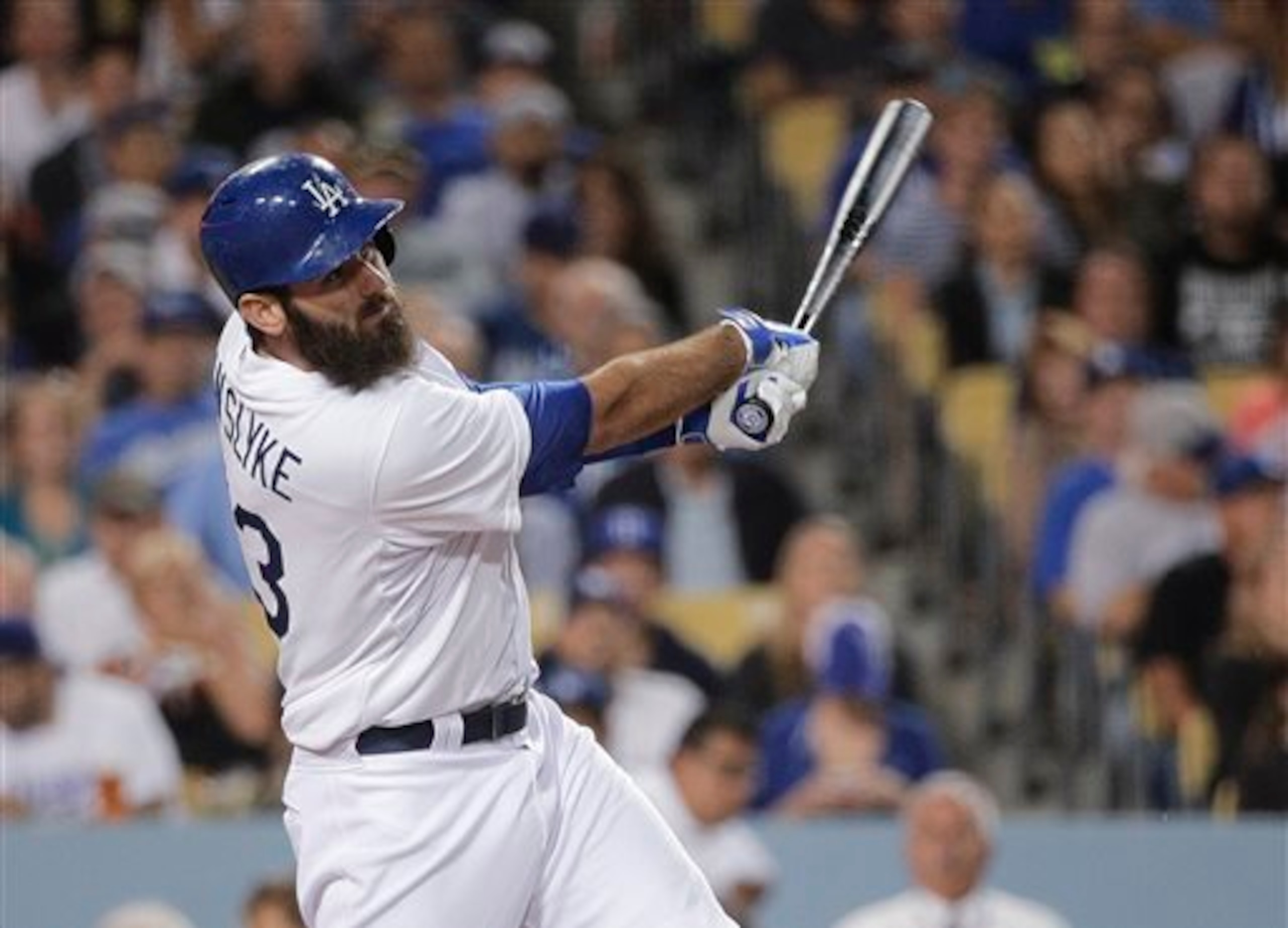
Hitting
Though he’s not entirely a platoon player, Scott Van Slyke’s primary talent is crushing lefties. He also has a terrific batting eye and has actually been able to hit breaking balls hard for a change. Where things get iffy is in how he still has a very hard time with right-handed slow stuff, and how he needs to get his arms extended to be really dangerous. And yes, he’ll definitely strike out.
Power
Another thing Van Slyke can do is get the ball in the air, as he’s been an extreme fly-ball hitter the last two years. He also tends to hit his fly balls very hard, with his main power alleys being center and left-center. As we’re seeing this year, this gives him the goods to be a source of home runs even on a part-time basis. It’s too bad he lacks a consistent line-drive habit to complement his dingers with doubles.
Baserunning
Don’t go looking for stolen bases from Van Slyke. Regardless of playing time, he only has the goods to manage a couple of steals here and there. He’s also nothing special in terms of aggressiveness, posting a modest 39 XBT% this season. As far as corner outfielders go, he fits the mold of a station-to-station runner.
Defense
Though he’s logged some time in center field, the Dodgers have played Van Slyke mainly in left and right. The defensive metrics rate him well at both positions, but there’s some overachieving going on. He has long strides that allow him to cover a decent amount of ground, but his reads and routes can both be adventurous. He also doesn’t have much of an arm. His best (and arguably only) asset is his versatility.
Total
Though Van Slyke has probably been a little too productive this year, he’s at least established himself as a good guy to have around for his ability to crush lefties, provide some power and play passable defense at two positions.
36. Corey Dickerson, Colorado Rockies
36 of 71
Hitting
Corey Dickerson is far from perfect at the plate. The lefty swinger is too much of a Coors Field product, he has a big platoon split and he’s a much too aggressive hitter who whiffs too much. It’s not all bad, though. He’s showing that he’s a darn good line-drive hitter, and that he also has the bat control to poke liners and ground balls wherever. Take away his faults, and you’re still left with a decent enough hitter.
Power
Dickerson’s having a very strong season in this department, partially because he hits the ball in the air so much. And though his oppo power plays better at home than on the road, you are left with the impression of good power when looking at his batted-ball map. And good luck if he pulls a fly ball, as there’s about a 50-50 chance it will go out. Coors Field or no Coors Field, he packs some real power.
Baserunning
Dickerson has teased potential for double-digit steals in a full-season setting, and his 58 XBT% is darn good stuff for a corner outfielder. But when you’re barely breaking even with your stolen base percentage and you’re otherwise running into double-digit outs on the basepaths, you have a lot to clean up.
Defense
The Rockies have played Dickerson mainly in left field in 2014, and the defensive metrics haven’t liked what they’ve seen. His arm hasn’t been much of a threat to anyone, nor is it likely to be. And though his athleticism is good enough for left, he really needs to work on getting better breaks on the ball. Until he does, he’ll be very limited defensively.
Total
Dickerson’s season doesn’t look so great if you look at what he’s done on the bases and on defense while also focusing on his home/road and lefty/righty splits. But underneath it all is a guy who really does make some pretty good contact. Maybe his bat isn't as dangerous as his numbers make it look, but it is dangerous all the same.
35. Kevin Kiermaier, Tampa Bay Rays
37 of 71
Hitting
The lefty-swinging Kevin Kiermaier is a platoon player with a platoon split, so you have to take his production for what it’s worth. And given how easily righties have beaten him with breaking balls and how he’s really only been dangerous in the middle of the zone, it’s not worth much. At least he has a reasonably disciplined approach and some semblance of an opposite-field approach.
Power
Another thing Kiermaier has is an extreme ground-ball habit. That and what’s likely to be part-time playing duty going forward will make it tough for him to hit for power. At the same time, I wouldn’t say he has a "low" fly-ball rate, exactly, and he’s displayed an ability to drive the ball to both left and right field. He’s probably overachieved as a power source in 2014, but he doesn’t look like a slap hitter either.
Baserunning
Kiermaier has good speed, but he wasn’t a prolific base stealer in the minors. It doesn’t look like he’s going to be one in the majors either. What he does have, however, is a 59 XBT%. That’s good stuff, and it looks even better when you notice that he’s gone first to third more than half the times he’s had a chance. Even if he doesn’t steal bases, there’s value in aggressiveness like that.
Defense
The defensive metrics have Kiermaier rated as a superb defensive right fielder, and anyone who’s seen him play should agree. He brings center fielder speed and range to right field, but his best asset is the sheer energy that allows him to make impressive plays. And though he hasn’t shown it off much, his arm is good too. This leaves his status as a part-time player the only thing to hold against him.
Total
Kiermaier has only established himself as a good platoon player, and one who’s overachieved offensively at that. In all likelihood, his bat isn’t going to be how he earns his checks going forward. But his glove? Oh, that glove. It’s something else.
34. Norichika Aoki, Kansas City Royals
38 of 71
Hitting
Norichika Aoki does a fine job of combining good discipline with one of the best contact abilities in the league. His problem has typically been making good contact, but less so this year. His line-drive rate has reached a new high. Take that and his career-high ground-ball rate and clearly good bat control, and you get a guy whose second-half numbers are more reflective of his talent than his first-half numbers.
Power
This is the big catch when it comes to Aoki’s solid hitting. He basically doesn’t hit fly balls, and that makes it extremely tough for him to hit for power. Indeed, so does his lack of raw power. The only thing that can be said in his defense is that his bat control does give him good access to the foul lines, which he can use to pick up doubles and triples.
Baserunning
The 32-year-old Aoki is showing he can still do double-digit steals, but he’s unfortunately also showing that efficiency still eludes him. The good news is that he’s really cleaned up the problem he had with running into outs and has tacked on a career-best 43 XBT% to boot. Notably, he’s gone first to third a third of the time he’s had a chance. As such, his baserunning has actually improved.
Defense
The defensive metrics are split on Aoki’s defense in right field, but the one viewing him as above average has the better idea. He still has his good arm, and he has enough athleticism to make up for his occasionally adventurous routes to fly balls. He’s probably not the best right fielder on his own team—Lorenzo Cain plays a mean right when he’s not playing center—but Aoki’s pretty good.
Total
The main attraction with Aoki is the bat control that allows him to hit for average, but he can also offer solid baserunning and defense in right field. The only thing he can't do better than most right fielders is hit for power. H
33. Jorge Soler, Chicago Cubs (Prospect)
39 of 71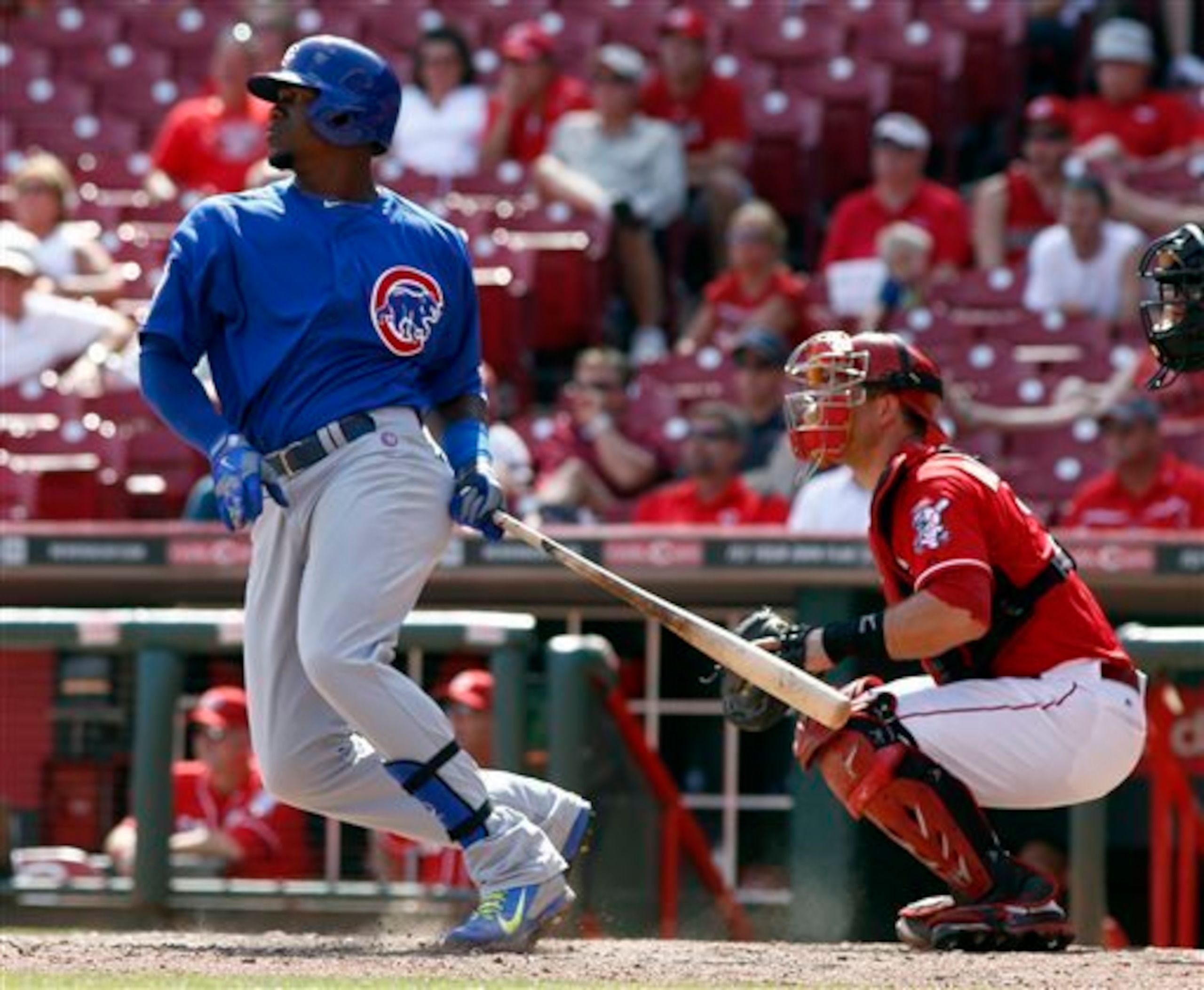
Hitting
Jorge Soler’s approach has been more polished than expected as a professional, as he has demonstrated the ability to hit when behind in the count and shown good pitch recognition despite his lack of experience. The right-handed batter’s tendency to get in his hacks means his batting average will likely depend on his BABIP, at least until his walk rate improves.
Power
At 6’4”, 215 pounds, Soler is a physically strong right-handed hitter with a mature frame that requires little projection. With blinding bat speed and an explosive swing, the ball absolutely jumps off Soler’s bat. Meanwhile, his extension and lift after contact generate exceptional backspin carry and suggest the potential for multiple 25-plus home runs in his prime.
Baserunning
Despite his muscular build, Soler is an above-average runner who moves well on both sides of the ball. He won’t steal many bases, but he can really move at full stride.
Defense
In addition to Soler’s aforementioned speed, he has the ideal profile of a big league right fielder with average range and plus arm strength. He may lose a step or two with physical development, but it’s hard to see him ever moving off the position.
Total
Soler claimed the Cubs’ right field gig following his call-up, with the 22-year-old showing all five tools and an impressive overall feel for the game. If he comes close to reaching his offensive ceiling, Soler should offer All-Star-caliber production in his prime seasons, batting .270-plus with roughly 25 home runs and double-digit stolen bases from the heart of the Cubs lineup.
32. Dustin Ackley, Seattle Mariners
40 of 71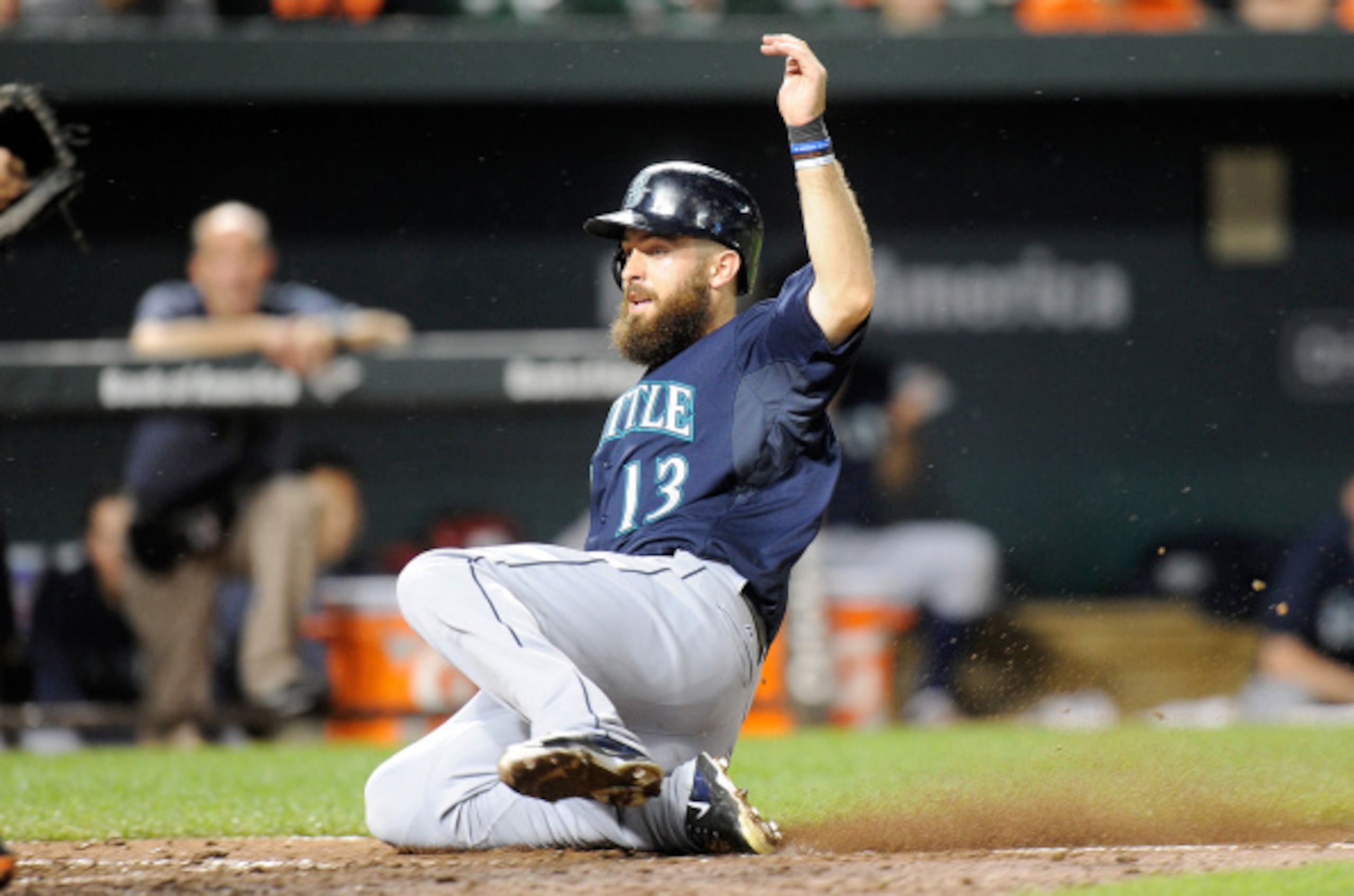
Hitting
Dustin Ackley has gotten less passive at the dish without sacrificing his strong contact habit. He’s also continued to make solid contact against slow stuff. The catch is that he’s still not as good a line-drive hitter as he should be. And even in his second-half surge, his zone coverage has been lacking. He’s a better hitter now than he was a year ago, but he should still be considered a work in progress.
Power
Ackley’s power has experienced a rebirth, and not out of nowhere. He’s helped himself not only by hitting more fly balls, but by pulling the ball in the air more often. To boot, he really has better power to the left-center gap than his results indicate. The obligatory catch is that too many of his fly balls float harmlessly to left field, but his newfound approach is good enough for at least average-ish power.
Baserunning
Ackley’s not a spectacular baserunner, but there’s value in how he mixes cautiousness with just enough aggressiveness. He’s shown once again this year that he can at least flirt with double-digit steals, and he’s tacked on a decent enough 42 XBT%. That he's made only one out at second or third in the last two seasons is the cherry on top.
Defense
The defensive metrics had Ackley pegged as an above-average defender at second base, and it’s the same story with his defense in left field. They recognize he has a weak arm for the position, but his range is fine. Though he can make things interesting when he goes back on fly balls, he’s good coming in on balls and has good foot speed for a corner outfielder.
Total
Even with his strong second half, I wouldn’t say Ackley has put it all together yet. But at the least, his bat and power are trending in the right direction, and he’s also a solid baserunner and defender. Look for him to be a fairly well-rounded player going forward.
31. Brock Holt, Boston Red Sox
41 of 71
Hitting
Brock Holt has spent 2014 establishing himself as a very discerning swinger who makes a lot of contact. And it’s average-friendly contact, with lots of line drives and ground balls that can go to any field. If he has a weakness, it’s that he’s only shown himself to be a mistake fastball hitter and that he can’t hit right-handed breaking stuff. Such weaknesses don’t make him a poor hitter, but they could make life tough.
Power
That fly balls are relatively rare for Holt limits his power potential, and what little home run power he has only goes to his pull side anyway. Line-drive power is more his thing, and he has a decent amount of it in the gaps and toward the left field corner. Even with a good collection of doubles and triples, though, the power he has to offer is nothing special by corner outfield standards.
Baserunning
Holt’s one of those guys who can show that you don’t need great speed to be a great baserunner. He’s topped double-digit steals with good efficiency and has also racked up a 50 XBT% with few mistakes on the side. Over a full season’s worth of games, you’re looking at a potential 15-20-steal guy with good aggressiveness.
Defense
Holt is here because he’s played more games in corner outfield spots as of this writing, mainly in right field. The defensive metrics say he’s been especially good in right field. And for a guy who didn’t play at all in the outfield in the minors, he has indeed looked surprisingly like a natural reading and tracking fly balls, and he hasn’t been shy about making aggressive plays. Even if the Red Sox choose to play him elsewhere in 2015, that’s the beauty of Brock Holt’s glove: Elsewhere is anywhere.
Total
The only thing really spectacular about Holt is that he can do a little bit of everything. He can hit a little bit, he can hit for a little bit of power, he can run the bases a little and he can play a little defense no matter where you put him. When you combine all that "little" into one thing, it looks like a lot.
30. Josh Reddick, Oakland A's
42 of 71
Hitting
Josh Reddick is useless against left-handers and an extreme fly-ball hitter, so his hitting potential is limited. That righties can easily get whiffs on high hard stuff limits it even further. However, that his approach isn’t out of control says he sees righties well, and they haven’t had any solid options for getting him out. Though not a dominant platoon hitter, he’s good enough.
Power
Reddick’s extreme fly-ball style means his power potential at least has a decent floor, but he’s also pretty good at making sure his balls in the air count. He doesn’t tend to miss when he pulls the ball to right field, and he also has some extra-base pop up the middle and to left-center. The wrist and knee injuries he’s battled in the last two years haven’t helped his power, but they haven’t killed it either.
Baserunning
In light of the problems he’s had with his right knee, it’s not surprising to see Reddick taking it easier on the basepaths. He’s not stealing bases, for one, and he’s watched his XBT% fall from the 50 percent neighborhood to a relatively less spectacular 41 percent. It’s a stretch to call him a station-to-station runner, but he’s going to be something closer to that as long as his knee is banged up.
Defense
Reddick’s bad knee hasn’t done much, if anything, to diminish his defense. The defensive metrics still have him as a clearly above-average defender. This is despite the fact they’re not giving him proper credit for his terrific arm, and he has more range than the typical right fielder too. He doesn’t have blinding speed, but he gets after balls quickly and tracks them very well.
Total
Reddick is only of use against right-handed pitching, and his power likely isn’t ever returning to its 2012 level. But he still has good pop to offer in addition to excellent defense in right field, so don’t be quick to disregard his value.
29. Curtis Granderson, New York Mets
43 of 71
Hitting
Curtis Granderson’s approach is the sharpest it’s been since 2011. He’s toned down his aggressiveness and has reversed a swing-and-miss habit that was getting worse. It adds up to more walks, fewer strikeouts and more balls in play. It’s too bad his average potential is still limited by an extreme fly-ball habit, poor zone coverage and a bad tendency to roll soft stuff over to the right side of the infield.
Power
In theory, Granderson’s high fly-ball habit should be translating into more power. So should the reality that he’s hitting the ball in the air to right field more frequently. It looks like the problem is Citi Field. His home run-per-fly-ball rate there is much lower than it is on the road, and he’s clearly lost a few to right-center. As such, yes, moving in the fences again could conceivably really do Granderson a favor.
Baserunning
Granderson’s days of stealing 20-plus bases are in the past. At his age, threatening double digits is as good as it’s going to get. That’s acceptable for a corner outfielder, however, and the 41 XBT% Granderson is working on while running into very few outs on the side is a good mix. He’s not the baserunner he used to be, but he’s still good.
Defense
The defensive metrics are split on Granderson’s defense in right field, but the one that favors him as slightly above average probably has the better idea. His arm is too weak for right field, and he still looks uncomfortable going back on the ball a lot of the time, but he has good speed that gives him pretty good range for a right fielder.
Total
We can do Granderson the courtesy of saying that his power is better than his numbers indicate, and that he can play at least a solid right field with solid baserunning on the side. But his bat is still very much prone to inconsistency, and it’s hard to expect that to be fixed at this point.
28. Carl Crawford, Los Angeles Dodgers
44 of 71
Hitting
The more measured and contact-oriented approach Carl Crawford had in 2013 has been replaced with his old swing- and whiff-happy approach. But this can be forgiven on the grounds that he hasn’t gotten enough luck to go with his mix of ground balls and a career-best line-drive rate, which he’s been good at spreading around. His hot hitting since the beginning of August is him collecting on some overdue good luck.
Power
It’s not easy to hit for power when you’re forgoing fly balls, and it’s even harder when you’re just not driving the ball that consistently. Crawford's doing a good job of picking his spots, though. He’s hitting the ball in the air to right field at a more frequent rate and has recaptured some of his old efficiency at getting the ball over the fence. Crawford hasn't lost his power just yet.
Baserunning
Crawford doesn’t run as fast or play as much as he used to, but he’s showing this year that he's far from done being an asset on the basepaths. He’s topped 20 steals for the first time since 2010 and has tacked on a 47 XBT%. Factor in how he hasn’t made any outs on the bases outside of caught-stealings and pickoffs, and you have a 33-year-old who’s not ready to go quietly.
Defense
The defensive metrics aren’t liking Crawford’s left field defense as much as they liked it in 2013. It’s frankly hard for him to be much better than average with subpar arm strength and unpredictable range. His range is unpredictable not because of his speed, but because of his reads and routes. He too often puts himself in a position where he has to improvise at the last moment to make the play.
Total
Crawford still doesn’t have the goods to live up to his big contract, but he really hasn’t tailed off that badly from his solid 2013 season. His hitting and power are hanging in there, and he’s shown he can still run the bases and play at least a decent left field.
27. Ryan Zimmerman, Washington Nationals
45 of 71
Hitting
Injuries have limited our look at Ryan Zimmerman, but what he’s shown has been positive. He’s displayed a better blend of patience and contact, mainly thanks to how well he’s laid off slow pitches. He’s also continued doing a solid job hitting line drives, and he deserves better than his subdued average on those. It may not be reflected in his numbers, but Zimmerman has made some improvements at the dish.
Power
Another thing Zimmerman has done is hit the ball in the air more often. And though we’re once again dealing with a small sample, he’s also continued to show that he has the power to drive the ball to any part of the yard. Yet it is hard not to worry about his power going forward. After adding a bad thumb injury and a bad hamstring injury to a growing list of injuries, his power potential comes with a question mark.
Baserunning
Zimmerman’s typically a pretty good baserunner for a corner infield type—more on this in just a second—but not this year. His stolen base production has been absent, and he’s dropped his XBT% from 44 percent to 30 percent. Now that he has a couple more serious injuries on his track record while he also happens to be pushing 30, this could be the new normal for him.
Defense
This is assuming the Nationals are done playing Zimmerman at third base, which they should be with his bad right shoulder impacting his throwing so much. Though the defensive metrics didn’t get much time to evaluate him, it’s fair to say his throwing is going to be a problem in left field too. Aside from that, though, he showed he can handle it. He reacted surprisingly well on fly balls, and his ability to close on fly balls is really no worse than that of an average left fielder.
Total
Zimmerman’s future on defense is a good question, and you have to wonder about how his health problems are going to impact his power and baserunning going forward. It’s not all bad, though. When he’s been healthy, he showed that he can still hit and that he’s surprisingly competent in left field.
26. Seth Smith, San Diego Padres
46 of 71
Hitting
You have to take Seth Smith’s 2014 season for what it’s worth knowing that he’s been used strictly in a platoon role. That said, props are in order for how he’s made himself into something of an ideal platoon hitter. He’s shown off a very disciplined approach with a very strong contact habit, hit everything harder, made good use of the opposite field and demolished mistakes down the middle.
Power
Smith’s power has returned to its pre-2013 level, and not by accident. He’s back to making sure his balls in the air to right field don’t miss, and he’s helped himself there by sending more balls in that direction. He’s not totally without power the other way too, as he can poke balls in the left-center gap and down the left-field line for extra-base hits. It’s power that’s available on a limited basis, but it’s good power.
Baserunning
Smith stole 10 bases in a season once, but that’s likely not happening again. His baserunning value has to come from how well he rounds the bases, and he’s nothing special at it. His 44 XBT% is no better than last year, and next to it lies the fact that he’s run into more outs on the basepaths than he has since 2011.
Defense
The Padres have played Smith in left and right field, and the defensive metrics are split on the defense he’s played at both positions. The idea that he’s at least average rings surprisingly true given that he spent much of his time in Oakland DH’ing. He doesn’t have a good arm or good speed, but he breaks after balls well and runs reasonably direct routes. That he can do this in both left and right is a bonus.
Total
Smith is merely a humble platoon outfielder, but also better than your garden-variety platoon outfielder. He hasn’t given righties many options for getting him out, he’s revived his power and he’s played surprisingly passable defense in both corner outfield spots.
25. Michael Cuddyer, Colorado Rockies
47 of 71
Hitting
Injuries have cut Michael Cuddyer’s season down to a small sample size, but his bat still looks like a weapon. He’s an aggressive swinger, yet he doesn’t have too bad a whiff habit, and he deals largely in line drives and ground balls that he’s good at aiming. He’s also improved even more as a bad-ball hitter. There are just two catches: He doesn’t walk much, and he’s really needed Coors Field more than he did in 2013.
Power
Dealing mainly in line drives and ground balls shouldn’t leave much room for power, but Cuddyer is something of an exception. He simply doesn’t miss home runs when he hits the ball in the air to left field, and he also has the pop to poke the ball over the right fielder’s head on a regular basis. If there’s a question after this year, however, it’s how much his health is going to allow him to add to his power.
Baserunning
Given the problems he’s had with his hamstrings, it’s not surprising to see Cuddyer taking it easy stealing bases and rounding the bases. His XBT% has dropped from 52 in 2013 to 40 this year. This is admittedly small-sample-size stuff, but it’s likely prophetic knowing that Cuddyer will exit 2014 as a 35-year-old with a longer medical history than the one he had had before.
Defense
The defensive metrics haven’t had ample time to evaluate Cuddyer’s defense in 2014, so we’ll make it easy on ourselves by putting it this way: There’s no way he’s gotten any better. He has a decent arm for right field, but his range is limited by slow breaks and his lack of foot speed. At his age and with an injury-marred season fresh in his wake, that foot speed probably isn’t getting better.
Total
Even with the Coors Field factor noted, Cuddyer can definitely hit and hit for a little power. He’ll be a valuable player as long as he can do these things. But baserunning and defense are both question marks, and likely even more so at his age and with his recent injury history.
24. Michael Saunders, Seattle Mariners
48 of 71
Hitting
Michael Saunders has never been more discerning or better at making contact, which are two ideal steps forward. He’s also working on a strong line-drive rate, and he’s been more than just a mistake hitter for a change. Which leads us to the gripes: He’s been way too lucky on ground balls, and he’s unfortunately regressed against slow stuff. He's getting better, but he’s still not there just yet.
Power
Saunders hits the ball in the air often enough to be a solid power source, and a couple of upper-body injuries haven’t stopped him from giving the ball a ride to center and right field this year. What he hasn’t been able to do is drive the ball the other way to left field, which isn’t out of the ordinary. He’s had his moments, but his opposite-field power is largely inconsistent. That limits his overall power potential.
Baserunning
Saunders can typically be counted on for double-digit steals, but he’s not going to make it there this year. Given the way he’s trending, it will certainly be surprising if we see him top 20 again like he did in 2012. This year’s silver lining, however, is how he’s managed a rock-solid 60 XBT% without many mistakes on the side. If he can repeat that, his baserunning will be fine.
Defense
Saunders is definitely a better fit for right field than he is for center, as the defensive metrics rate him as a big asset despite his limited playing time. They’re not wrong. He has the ideal combination of good speed and long strides to cover ground, giving him more range than most right fielders. And though the metrics don’t show it, he has enough arm for right field too.
Total
Injuries have taken a bite out of Saunders’ 2014 season, but he’s quietly been pretty good when he has been able to play. He’s improved his hitting, provided some power and played a very strong right field, the combination of which makes him a well-rounded player.
23. Marlon Byrd, Philadelphia Phillies
49 of 71
Hitting
The key for Marlon Byrd is to simply hit the ball hard. He’s done that pretty well the last two years, posting solid line-drive rates and maintaining high averages on ground balls. Then there’s what he can do when he gets the ball in the air. But the trade-off for this hard contact is the reality that contact is infrequent. Byrd swings, chases and whiffs as much as anyone. With habits like those, consistency is not his strong suit.
Power
Byrd is now even more of a fly-ball hitter than he was in 2013. And as mentioned above, good things happen when he gets the ball in the air. He can jolt fly balls in any direction, and he has little trouble getting results. One downside is that his line-drive power is largely limited to left field, but he’s still one of the best home run-hitting outfielders in the business despite that.
Baserunning
Younger Marlon Byrd was a good baserunner. But 37-year-old slugger Marlon Byrd? Not as much. He’s only going to sneak a few stolen bases here and there, and he’s working on a 26 XBT% that’s notably seen him go first to third just twice in 29 chances. Given his age and playing style, this is more than likely par for the course from now on.
Defense
Just like in 2013, the defensive metrics view Byrd as an above-average right fielder. There’s a slight disagreement between that and the eye test. Byrd can make things interesting, especially when he has to go back on the ball. But he does play right field with energy to spare, and he’s able to boost his range with it. He also has a solid arm for the position. It may not always be pretty, but it works.
Total
Byrd’s approach at the plate is too wild for him to maintain any kind of consistency, and he’s not among the baserunning elite. But if all you want is top-notch power and solid defense in right field, he's your guy.
22. Khris Davis, Milwaukee Brewers
50 of 71
Hitting
The best thing Khris Davis has is his ability to hit the ball hard, which shows up simply in how many well-struck balls are spread around his batted-ball map. Take that away, though, and you’re not left with much. He’s an aggressive swinger with a whiff habit, with off-speed pitches being by far his biggest weakness. Also, that he’s been so poor against outside slow pitches makes sense given how pull-heavy he is.
Power
Inconsistency can be worth the trouble when there’s power to go with it. Such is the reality of Davis. He boosts his power by keeping the line drives and fly balls coming, but it’s mainly owed to that hard-hit habit we just discussed. He’s most dangerous to his pull side with those, but he’s not without an ability to pick up extra-base hits the other way to right field either. All around, his power potential is legit.
Baserunning
Davis wasn’t much of a base stealer in the minors in 2012 and 2013, and he hasn’t been much of one in the majors. From the looks of things, he’s only a candidate to sneak in five-ish steals in a season. What’s better is his 49 XBT%, which is up from a 38 XBT% in a small sample size in 2013. Aggressiveness like that isn’t good enough to make him a great baserunner, but it works well enough for solid.
Defense
The defensive metrics have Davis rated as an above-average defender in left field, and it’s actually something of a surprise that they don’t seem to have the wrong idea. He has better closing speed than you’d expect a slugger to have, and his reads and routes are at least solid for the most part. The one thing he doesn’t have is a good arm for a corner outfield spot, but he’s a good fielder despite that.
Total
Davis has plenty of power and some good defense in left field to offer, two things that combine to make him a pretty solid regular. Just don’t expect his power and defense to come with consistent hitting or much baserunning.
21. Bryce Harper, Washington Nationals
51 of 71
Hitting
Pitchers are still daring Bryce Harper to be a bad-ball hitter, hardly throwing him any fastballs or pitches in the strike zone. So far, he hasn’t answered the call, as his chase rate has stayed high while his production outside the zone has dropped. On the bright side, he’s making better contact this year and has the strike zone very well covered. That’s not a bad way to salvage some consistency.
Power
Power’s hard to come by when your mechanics are out of whack and then you get hit with a thumb injury. But Harper’s power could be in worse shape and has indeed made a comeback since early August. Relatively speaking, he’s had an easier time driving the ball than he was before. That and the reality that his fly-ball rate is trending upward will do for signs of encouragement.
Baserunning
You can still watch Harper run the bases and see a good athlete in action, but that’s not the same as seeing a good baserunner in action. He’s not one of those anymore. He’s basically stopped stealing bases, he’s run into way too many outs and his 41 XBT% is down from 59 percent in 2012 and 57 percent in 2013. Suffice it to say he needs to get back to the drawing board with his baserunning.
Defense
One silver lining of Harper’s trying season is that the defensive metrics are more on board with his left field defense than they were in 2013. That they agree he has a terrific arm for the position is no surprise, and he hasn’t run as poorly in the outfield as he has on the basepaths. He doesn’t always take the most direct routes, but he can cover ground a lot better than your average corner outfielder.
Total
The 2014 season hasn't been an easy one for Harper, as he's had to battle more injuries and has been largely inconsistent when he's been healthy. Come 2015, he'll still be looking to turn his massive potential into reality. It's a good thing, then, that he's done enough this season to show his potential still lives.
20. Melky Cabrera, Toronto Blue Jays
52 of 71
Hitting
Before a finger injury ended his season early, Melky Cabrera was still too aggressive to take walks. By his own standards, however, he was actually more selective with a strong contact habit. From the left side, that contact involved more line drives and ground balls than he was hitting in 2013, and they were going all over. Equally impressive is how righties didn't really have anything to get him out.
Power
Cabrera’s power came roaring back to about where it was before, which is to say he got back to being a solid source of homers and doubles. He didn't need more fly balls to do it. He was simply hitting the ball harder than he was in 2013, as a comparison of last year’s batted-ball map and this year’s batted-ball map can vouch. That goes to show how much of a difference not having a tumor on your spine can make, but now the hope going forward is that his bad finger won't cost him any power.
Baserunning
Cabrera’s stolen base ability didn't return along with his power. And with him now over 30, it’s fair to think things will stay this way. Though he had a 45 XBT% that says he’s not a station-to-station runner just yet, his 10 outs on the bases say he should be. He’s a subpar baserunner now, and he's probably going to stay that way.
Defense
Though they were liking it more than they did in 2013, the defensive metrics were still down on Cabrera’s defense in left field. His saving grace is his strong arm, but it’s only worth so much thanks to his limited range. Keeping it limited are a lack of good speed and occasionally questionable reads and routes. He’s good enough to be close to average, but not quite enough to actually be considered average.
Total
Good health allowed Cabrera’s bat to come alive again in 2014. He once again displayed a strong contact ability and some good power. Just don’t expect him to boost his OBP with walks, nor should you expect good baserunning or defense.
19. Kole Calhoun, Los Angeles Angels
53 of 71
Hitting
Kole Calhoun has been more aggressive and a bit more likely to whiff than he was in 2013, and what was already a weakness against breaking balls has only gotten worse. It’s a good thing, then, that he is a good line-drive hitter who’s dangerous at the top of the zone. With the latter being an increasingly rare skill, Calhoun therefore has two solid avenues for being a strong batting average merchant.
Power
Given that Calhoun’s home run power doesn’t extend far beyond the right field pole, keeping the dingers coming will require maintaining a pull home run-per-fly-ball rate (HR/FB) that’s likely unsustainable. It’s easier to have faith in his line-drive power, which stretches pretty much from foul line to foul line. As long as he has that and some home run power, he can handle solid power production.
Baserunning
Since Calhoun doesn’t have base-stealing speed, that he’s only showing single-digit steal potential is no surprise. This doesn’t mean he can’t round the bases, though. He’s shown with a 55 XBT% that he can do that just fine. That makes it easier to forgive the outs he’s made at second and third, and it at least paints him as a solid baserunner going forward.
Defense
The defensive metrics are split on Calhoun’s defense in right field, with one rating him as above average and the other rating him as roughly average. That one has the better idea. Calhoun’s arm is only solid for right field. And though he can save face with acrobatic catches, his reads and routes are all too often on the adventurous side.
Total
Calhoun’s best asset is his bat, which produces plenty of line drives and a decent amount of power. His baserunning and defense are less impressive, but not to a point where they cancel out his good hitting. That makes him a pretty strong overall package.
18. George Springer, Houston Astros
54 of 71
Hitting
George Springer saw a good number of pitches in his rookie season, and his chase rate was plenty respectable. He also made it clear that pitchers have to be careful with fastballs. That they fed him a diet of slow stuff, however, says they got the gist. He had a tough time making contact with slow stuff, and he couldn't do much besides hit it on the ground anyway. Until he figures these issues out, consistency is going to elude him.
Power
That Springer didn’t even need half a season’s worth of games to get to 20 home runs pretty much says it all about his power. He gives himself plenty of chances to tap into it with a high fly-ball rate, and he can make booming contact in any direction. The only real bummer is how infrequent line drives were in his debut season, but that's a minor gripe in light of his very real 35-40-homer potential.
Baserunning
Springer was a big-time baserunning threat in the minors, and he’s teased that he could at least be a double-digit steal guy in the majors. But there’s a “maybe” that belongs there now, as the Astros might want him taking it easy on the bases after this year’s leg trouble. If so, his baserunning value will have to stem from his aggressiveness. If he can manage another 48 XBT%, he should do well enough.
Defense
The defensive metrics think Springer is at best an average defender in right field, and that’s a pretty good way to sum things up. His arm and athleticism are both fine for the position, but some fine-tuning is needed. He took some adventurous routes to balls this season, and his collection of errors is owed largely to other mental mistakes. Until he gets these problems squared away, average is the best he can be.
Total
Though a thigh injury ultimately ended it early, Springer did enough in 2014 to show that he has legit power for the big leagues. Now the question is if he can get his hitting and defense to a point where he can be a great all-around player rather than just a great power hitter.
17. Matt Holliday, St. Louis Cardinals
55 of 71
Hitting
Despite not being the most disciplined hitter, you can still count on Matt Holliday to take his walks. But while him becoming a better contact hitter this year should be a good thing, it’s involved cutting down on his swing and becoming a lesser line-drive hitter and more of a guy who specializes in aiming ground balls. He’s still a good hitter, but we should wave goodbye to the .300 hitter he used to be.
Power
That Holiday’s power is trending toward average can’t be ignored in light of his age—he’ll be 35 soon—but this is the second year in a row that he’s used a second-half surge to show his power isn’t dead yet. Simply hitting more fly balls has helped. He’s also shown off more power to left field than he had been. This surge has to be taken for what it’s worth, but it’s definitely not worth nothing.
Baserunning
He doesn’t look like much of a baserunner and he certainly doesn’t steal bases, but Holliday could actually be worse. Though he’s prone to running into outs, he’s also fixing to have an XBT% around 50 for a second straight year. His size and age give him every reason to be a station-to-station runner, so give him props for refusing to become one.
Defense
The defensive metrics are rating Holliday as roughly an average defender in left field this year, but that's really giving him too much credit. In addition to a subpar arm, Holliday has at best average range. He has passable speed for a corner outfielder, but reading and tracking fly balls don’t come naturally to him. He’s going to lose a few throughout the course of a season because of that.
Total
You can put yours truly in the camp that thinks Holliday’s career is criminally underappreciated. And before we speak of him like he’s dead and buried, he’s still a quality hitter. It’s just apparent he’s not going to be a superior hitter anymore, and he still can’t be counted on for good defense.
16. J.D. Martinez, Detroit Tigers
56 of 71
Hitting
J.D. Martinez’s 2014 surge is a testament to the value of hard contact. He’s hardly hit any pop-ups and has rocketed line drives and fly balls all over the yard. Yet a good chunk of his success is owed to his unsustainably high average on ground balls, and he’s reached Jeff Francoeur levels of aggressiveness with a big whiff habit on the side. As such, his consistency this season likely doesn't have staying power.
Power
While consistency could elude Martinez going forward, the power he’s shown looks legit. He’s mixing line drives and fly balls well, and his ability to rocket them in all directions has led to extra-base hits to all fields. All of it stems from a swing change Martinez made over the winter, and he’s said he looks to get the ball in the air. That mindset and his new swing have made for a dandy of a combination.
Baserunning
It's unfortunate that Martinez runs like a slugger as much as he hits like one. He’s not incapable of stealing bases, but his efficiency doing so is less than ideal. Factor in a 36 XBT% that’s next to a couple of outs apiece at second and third, and you get a guy who doesn’t fit the bill of a baserunning asset.
Defense
Martinez has been needed in left and right this season, and the defensive metrics have him down as at best average in both spots. A fair assessment, as he’s limited by his lack of plus arm strength and foot speed. He does pretty well despite these weaknesses, though. His versatility is worth something, and he actually gets pretty good reads and takes pretty good routes for the most part.
Total
The sheer wildness of Martinez’s approach at the plate makes it tough to believe his big breakout is built to last. But the power he’s shown looks legit, and he can play solid defense in both corner outfield spots. That’s a guy who’s worth having even if consistency begins to elude him again.
15. Yoenis Cespedes, Boston Red Sox
57 of 71
Hitting
Yoenis Cespedes has been at his best making contact this season, and against all three pitch types to boot. He’s also boosted his averages against hard stuff and breaking stuff by crushing it for line drives. Positives aside, however, Cespedes is still too much of a hacker and too much of an extreme fly-ball hitter to be consistent, and he hasn’t recaptured the magic he had in 2012 against hard stuff above the knees.
Power
Cespedes should be a power hitter with his strength and fly-ball style, and he is. He can drive the ball in any direction, and he doesn’t have any trouble turning his well-hit balls into extra-base hits. Looking ahead to 2015, Cespedes appears ready to bombard the Green Monster. He’s pulled fly balls and line drives at a much higher rate in 2014, something that will mean extra power if he can keep it up at Fenway Park.
Baserunning
It looks like the 16 steals Cespedes had back in 2012 could be the last time he reaches double digits, but at least he hasn’t completely cut back on his aggressiveness. He has a 43 XBT% for the season, and it was an even 50 in Oakland before he came to Boston. Most notable of all is how he’s failed to come home from first on only one of eight doubles, which sums up his speed and aggressiveness pretty well.
Defense
The defensive metrics have Cespedes rated as a superb left fielder this year. If you’ve watched any SportsCenter, you’ll know that this has a lot to do with his arm. It’s a weapon, all right. Aside from that, though, his defense is really just OK. His speed helps him correct bad reads and routes, but they’re a little too common and they definitely keep a lid on his range. So it's a good thing he has that arm.
Total
Cespedes still isn’t the phenomenal all-around player his raw talent says he could be, but that’s OK. At the least, he’s a very good power source and a guy who can play good defense based solely on the strength of his arm. That there's an asset.
14. Matt Kemp, Los Angeles Dodgers
58 of 71
Hitting
The 2014 Matt Kemp has a calmer approach. He also mixes line drives and ground balls well, with a pretty good ability to spread them around. And indeed, he’s been hot really ever since the end of May. Not that he’s perfect, though. He hasn’t been able to hit breaking balls during his hot stretch, and he’s still struggling to do anything with pitches away. He’s back to being good, but not back to being great.
Power
Kemp’s power has come roaring back since the All-Star break. A lot of that has to do with him simply hitting the ball in the air more consistently. And where he could only drive the ball up the middle before the break, he now has home run power to left and right field. It's a stretch to say that Kemp's vintage power is all the way back, but what he has is still really good.
Baserunning
While it may seem like Kemp’s shoulder troubles didn’t kill his power after all, it’s looking like his ankle troubles could keep him from being his old self on the bases. He’s only shown double-digit steal speed, and his 42 XBT% is a far cry from the 62 XBT% he had in 2011. He’s also still prone to running into outs. Without stolen bases or aggressiveness, those hurt a lot more.
Defense
According to the defensive metrics, Kemp has stunk no matter where he’s played in the outfield, be it center, left or, most recently, right. This makes sense. Kemp is still a good athlete even after all his injuries, but he often gets lousy reads on the ball and subsequently takes bad routes. Though these habits will do less damage away from center field, they’ll still drag down his overall value.
Total
Kemp can hit again. He’s made that much certain, and more and more so as the season has gone along. As long as he can do that, he’s going to be a valuable player. But without baserunning or defense, he's not going to be able to get back to being the MVP-caliber player he once was.
13. Steve Pearce, Baltimore Orioles
59 of 71
Hitting
Steve Pearce has spent 2014 waging war on fastballs. He’s been more aggressive swinging at hard stuff without getting any worse at making contact on his way to an improved line-drive rate. In the meantime, he's maintained a disciplined approach that has helped him draw walks. It’s too bad he’s left himself vulnerable to slow stuff. Given how much slow stuff he sees, that’s a restriction on his production.
Power
When you combine line drives and fly balls like you’ve never done before, you’re naturally going to see your power take a hike. Pearce has further helped himself by hitting more balls in the air to his pull side, an especially good idea at Oriole Park at Camden Yards. The catch is that he’s almost exclusively a pull-power hitter. He’s a dangerous power hitter, but that limits the danger somewhat.
Baserunning
Pearce has made a name for himself as a slugger, but he can run the bases too. He’s been able to sneak a few steals this year and has also posted a solid 52 XBT%. Part of that has involved him going first to third in nine of 23 chances, a pretty good rate for a guy who’s primarily known for his bat. It’s all a bit out of character for him, but what he’s done can’t be totally brushed off.
Defense
Pearce has played more first base than left field in 2014, but I’m viewing him as a corner outfielder because first base is probably Chris Davis’ job going forward. The defensive metrics say the Orioles stand to get good defense either way, and they’re not wrong about his defense in left field. He has a good arm, and he runs and tracks fly balls surprisingly well. You’re looking at a talented and versatile defender.
Total
If you haven’t noticed, Pearce has had a heck of a season. His assault on fastballs has worked wonders for his consistency and his power, and he’s been capable both on the basepaths and on defense. It’ll be a tough act to follow, but there are some breakouts you just can't ignore.
12. Starling Marte, Pittsburgh Pirates
60 of 71
Hitting
Starling Marte has taken his aggressive approach and not changed a thing even though he’s seen fewer pitches in the strike zone. Predictably, this has made him even more prone to whiffs and more dependent on good luck on balls in play. Fortunately, he still deals largely in ground balls and line drives, and now more so in the latter thanks to a huge increase in hard contact on fastballs. Not a bad way to save face.
Power
Marte’s power potential is limited because of how he doesn’t rely on fly balls, but he’s continuing to show good raw power when he does get the ball in the air. He can hit it hard in any direction and pick up extra-base hits in any direction. Knowing this and how his speed can turn singles into doubles and doubles into triples, he’s a better source of power than you might think.
Baserunning
Marte has an outside chance to finish the season with 30 steals. He's also working a 58 XBT%, which is even better than last year's 52 percent. The catch is that he still hasn’t ditched his problem with caught-stealings, and then there’s how he’s otherwise doubled up the number of outs he made on the basepaths last year. He has speed, but it still comes with a tendency for mistakes.
Defense
The defensive metrics rated Marte as a plus defender in 2013, mainly thanks to the center fielder’s range he brought to the table in left field. That range is still pleasing the metrics and passing the eye test, as Marte is about twice as fast as the average left fielder and can run down plenty of fly balls because of that. Now, if only he had the arm of a corner outfielder...
Total
It’s a stretch to say that Marte’s game has actually improved from where it was in 2013, but that’s OK. His hitting and power are at least passable, and his speed allows him to provide quite a bit of value both on the basepaths and in the outfield.
11. Hunter Pence, San Francisco Giants
61 of 71
Hitting
Hunter Pence’s approach has seen him become less disciplined without lowering his whiff rate, and he’s also become less of a line-drive hitter and more of a ground-ball and pop-up hitter. That he’s continued to spread his batted balls around is to his credit, but he wouldn’t be where he is without improved luck on ground balls and line drives. In other words: he hasn't improved as much as it looks like he has.
Power
Pence isn’t going to challenge 30 homers again, and his lack of a consistent line-drive habit doesn’t help his doubles potential, but he is a solid fly-ball hitter with huge raw power. That shows up in how consistently he can blast the ball up the middle of the field, and he doesn’t tend to miss results when he does. Factor in how AT&T Park doesn’t do him any favors, and this is an area where Pence is better than he looks.
Baserunning
Pence likely isn’t going to make it to 20 steals like he did in 2013, but he has at least hit double digits again. He’s also been very active rounding the bases otherwise, upping his XBT% from 39 to 51 while posting a career-high number of first-to-thirds. Whether Pence can keep this up at age 32 next season is a reach. But given that he keeps himself in shape as well as anyone, some optimism is warranted.
Defense
The defensive metrics can’t make up their minds about Pence’s defense, and understandably so. His defense is hard to evaluate largely because he’s no more graceful in the field than he is at the plate. His routes to balls can be adventurous, and so can his throwing accuracy. But since he can make up for poor reads with good speed and his throwing arm is at least strong, I’d say he does more good than harm.
Total
Pence is having a better season than this score indicates. But part of what we’re doing here is sizing up whether things can last, and I’m not sold on him being an improved hitter. Even if you knock that down a peg, though, he’s still a good-hitting, good-power, good-running and (generally) good-fielding right fielder.
10. Justin Upton, Atlanta Braves
62 of 71
Hitting
Justin Upton has been more aggressive than he was in 2013 and has failed to improve his whiff habit in the process. He also still hasn’t fixed the hole at the top of the zone. What is good, however, is how he’s making the most of a huge fastball increase by hitting hard stuff on a line better than ever. That he’s also crushing off-speed stuff is another plus. Once again, behold the value of good contact.
Power
It’s no fluke that Upton’s power is up this season. He’s back to being something like the fly-ball hitter he was back in 2011, and he’s simply hit the ball a long way more consistently than he did in 2013. Really the only disappointing thing is how much his line-drive habit is skewed toward left field, but it’s a minor gripe. This is the best Upton’s power has looked in several years.
Baserunning
It’s looking more and more like Upton’s baserunning peaked in Arizona. He’s looking at a second straight season with fewer than double-digit steals, and he’s watched his 52 XBT% fall to 47 percent. He’s not a bad baserunner by any stretch—he certainly still moves better than most corner outfielders—but he’s gotten to be relatively human.
Defense
After rating him as a liability in 2013, the defensive metrics have Upton rated as roughly an average defender this year. He indeed does seem to have a better grasp of the angles of left field after making the switch from right field last year. And though he may be slowing down on the bases, he still has good closing speed in the outfield. The only problem: He hasn’t quit being overly error-prone for an outfielder.
Total
Upton has some exploitable weaknesses at the plate, and he hasn’t been as active on the basepaths, but he’s otherwise doing just fine. He’s far from a weak hitter, his defense in left field is strong and he’s back to being one of the game’s more dangerous power threats.
9. Brett Gardner, New York Yankees
63 of 71
Hitting
Brett Gardner still sees an insane number of pitches, a product of his excellent eye and how good he is at spoiling pitches. He also still balances line drives and ground balls well, and he is no longer easily beaten by hard stuff on the inner third. But with his whiff rates on breaking and off-speed stuff trending upward, you wonder if pitchers will keep giving him the luxury of so many fastballs to hit.
Power
Suddenly, Gardner’s a pretty good power hitter. The key to his transformation has simply been hitting the ball in the air to his pull side more often, allowing himself to pick up doubles, triples and home runs like never before. It’s too bad he really doesn’t have much line-drive power in the left-center gap, but what he has now definitely passes for above-average pop.
Baserunning
As Gardner has become more of a power threat, he’s unfortunately become less of a baserunning threat. He’s now more of a 20-25-steal guy than a 40-steal guy, and it’s not the best look that his XBT% has fallen from 45 last year to 38 this year. He’s still a very good baserunner compared to most corner outfielders, to be sure, but he’s not the explosive baserunner he used to be.
Defense
The defensive metrics are still convinced that Gardner’s an above-average defender in left field, with his value stemming much more from his range than his arm. That’s a product of quick jumps and good speed. It is fair, however, to say that the step Gardner has lost on the basepaths has also been lost on defense, and that it’s not likely to make a comeback now that he’s past 30.
Total
With an excellent approach to hitting, good power, good speed and good defense, Gardner is more of a complete player now than he’s ever been before. Keeping him from being a truly superb all-around player, though, is the reality that he just can’t run like he used to.
8. Jayson Werth, Washington Nationals
64 of 71
Hitting
When you’re as patient and disciplined as Jayson Werth, a walk rate like his is going to happen. He’s also making more contact than he did last year, partially because it’s now even harder to sneak a fastball by him. He can also still hit the ball hard to any field. The only negative is that Werth hasn’t been able to maintain last year’s career-best line-drive rate, but I'd still say he has hitting figured out.
Power
Because Werth has hit more fly balls, he should be hitting for more power. He’s not in part because balls in the air to his pull side haven’t been as frequent as they were in 2013. Since that was abnormal, he's gone back to normal. He hasn’t lost the ability to drive the ball, though, and his map of results says he’s gotten unlucky up the middle. Even with the age question, Werth's power still looks really good.
Baserunning
Werth’s not the same stolen base threat that he was in his heyday with the Phillies, but he’s on the verge of stealing double-digit bases for a second year in a row. Next to that is a 56 XBT% that's featured him going first to third roughly half the times he's had a chance. This is a tough performance for a guy in his mid-30s to repeat, but it’s clear Werth is far from being a station-to-station guy.
Defense
After being split on Werth in 2013, the defensive metrics agree that he’s a below-average defender in right field now. That’s a fair assessment. His arm is good, and he can still read and track fly balls reasonably well, but he is limited by his foot speed. It’s especially noticeable when good closing speed is needed, as that’s something Werth doesn’t have much of anymore.
Total
For anyone who’s just now tuning in, Werth’s contact is actually working out pretty well for the Nationals. He can’t run or field like he used to, but he can definitely hit. Factor in how his power is better than this year’s numbers make it look, and he’s one of the better offensive threats in the National League.
7. Yasiel Puig, Los Angeles Dodgers
65 of 71
Hitting
Yasiel Puig’s improved approach isn’t a secret anymore, but it’s worth repeating that he’s swung, chased and whiffed less than he did in 2013. In particular, he hasn’t been nearly as prone to whiff on slow stuff outside the zone. And though he puts a lot of trust in his ground-ball habit, that he’s had the same amount of luck the last two years says he can make it work. All he has to do now is work on hitting outside pitches.
Power
Puig isn’t lacking for raw power, and it’s easy to admire how he doesn’t waste line drives on singles that often thanks largely to excellent power in the gaps. But his home run power...well, maybe not so much. It’s limited by a relatively infrequent fly-ball habit, and even more limited by how seldom he pulls the ball in the air to left field. Though easily above average, his power potential is less than elite.
Baserunning
It was easy to figure last year that Puig’s baserunning misadventures would be a learning experience. Apparently not. He’s still a lousy base stealer, he still has a big problem running into outs on the bases and his 46 XBT% is down from last year’s 58 percent. He certainly can be a terrific baserunner with his speed, but he so far hasn’t proved to be one.
Defense
This is, of course, assuming that Puig returns to a full-time role in right field in 2015. The defensive metrics are convinced that’s where he belongs anyway, and they’re not wrong. Puig’s outstanding arm is a better fit for right than center, and his speed is better equipped to make up for his occasionally iffy reads and routes in right than it is in center.
Total
Puig’s sophomore season is a tough one to figure. The advancements he’s made with his hitting are absolutely worth celebrating and have allowed him to continue being a very good player. But his power, baserunning and defense have either gotten worse or refused to improve. As such, we look forward to 2015 still able to discuss how great Puig might be rather than how great he is.
6. Jason Heyward, Atlanta Braves
66 of 71
Hitting
Jason Heyward’s approach is the best it’s ever been, as he’s combining strong patience and discipline with career-best contact. He’s also hitting slow pitches for line drives better, and he spreads his ground balls around better than most lefties. The catch to all this is that Heyward’s uppercut swing is still restricting his production above the knees. With no clear way to fix that, his hitting potential only goes so high.
Power
Another issue Heyward has is that he tends to inflate his fly-ball rate with pop-ups. Take that and combine it with his ground-ball rate, and you’re only left with so many well-hit balls. His power isn’t as bad as this year’s production makes it look, however. He can give the ball a ride to any field, and he’d have better numbers if he had more results up the middle. He still has above-average power.
Baserunning
After slowing it down on the basepaths in an injury-marred 2013, Heyward has put himself back in the 20-steal discussion this year, and with better efficiency to boot. It’s too bad his XBT% has dropped from above 60 in 2012 to just 46 this year, but that’s still good by corner outfielder standards. That Heyward still doesn’t run into outs on the basepaths is another thing he does well.
Defense
With respect to Alex Gordon, Heyward gets my vote as the best defensive corner outfielder in the business. The defensive metrics rightfully have him pegged as a huge asset in right field. His arm is a weapon, and he gets range from combining good reads and routes with the long strides his 6’5” frame allows. He’s the total package and has really never been better defensively.
Total
Heyward’s bat comes with some limitations, and it looks like his power peaked in 2012, but these are minor gripes in the grand scheme of his talent. He’s at least a good hitter and baserunner, and he’s arguably the best defensive player in the game today.
5. Christian Yelich, Miami Marlins
67 of 71
Hitting
Christian Yelich is liable to whiff on off-speed pitches and can’t do much with slow stuff in general. But next to those shortcomings is the good stuff. Namely, an extremely discerning approach, an endless supply of line drives and ground balls, and the bat control to poke the former to left field and the latter wherever. With a foundation like this, it would not be surprising if Yelich soon starts contending for batting titles.
Power
When you rarely hit the ball in the air, power isn’t easy to come by. That Yelich generally disregards his pull side is another complication. That he doesn’t hit pop-ups, however, allows him to make his fly balls count. He also has the pop to get the ball over the left fielder’s head for extra-base hits, and he knows where the right-center gap is. It’s not great power, but it’s better than it looks.
Baserunning
A solid base stealer in the minors, Yelich has done enough to establish himself as a solid base stealer in the majors too. He’s surpassed 20 steals with solid efficiency in his first full season, and he’s also working on a 52 XBT% that features only a couple of unforgivable outs on the basepaths. Even if he doesn’t do any better, 20-steal potential with that kind of aggressiveness is good stuff.
Defense
The defensive metrics love what they’re seeing from Yelich in 2014, rating him as easily above average in left field. That he doesn’t have a strong arm is a key weakness, but his range is terrific for left field. He doesn’t always get the best jumps, but he runs smooth routes and uses his plus speed to cover ground. He may not be the best all-around left fielder, but he might be the rangiest.
Total
Yelich is overshadowed by the behemoth who plays across the way in right field, but he’s proved to be a terrific player in his own right. His hitting isn't perfect yet, but he clearly has a rake that should get better with time. Add in well-above-average baserunning and defense, and you have one of the more overlooked gems in MLB.
4. Alex Gordon, Kansas City Royals
68 of 71
Hitting
One way to beat Alex Gordon is to just throw him a breaking ball. And in general, anything slow is a good bet for a whiff. Fortunately, it’s become extremely difficult to get fastballs by him, and he’s better equipped to attack fastballs now that he’s toned down his aggressiveness outside the zone. And as much as he whiffs on off-speed, he’s also never been better at hitting it hard. So yeah, meet an improved hitter.
Power
The power surge Gordon has enjoyed in the second half was probably coming all along. He’s a good fly-ball hitter, after all. And though he doesn’t hit the ball in the air to his pull side that often, he makes them count when he does. Then you can factor in how he also has some power in the left-center gap, and you get a pretty good picture of what Gordon is: a 20-homer guy with solid doubles power.
Baserunning
Behold easily the most overlooked aspect of Gordon’s game. He’s going to steal 10-15 bases in a season, and even better is how well he rounds the bases. He’s been doing that especially well in 2014, posting a 52 XBT% with frequent first-to-thirds and just one out at second and third base. Baserunning like that is darn good, especially for a corner outfielder.
Defense
You’ve probably heard that the defensive metrics are in love with Gordon’s defense, and they should be. There are better fly-ball catchers than him, but not many because of how well he combines his solid speed with good reads and routes. Then there’s his superb arm. It doesn’t get tested as much anymore, but FanGraphs’ Jeff Sullivan did a fine job of outlining how there’s value in that.
Total
This score surely comes off as being criminally low for a guy who’s rated as one of the best players in the game by WAR. All I’ll say is that you have to keep in mind how much credit the defensive metrics are giving Gordon, which might be too much. But even if we downplay WAR’s opinion of Gordon, we’re still looking at a terrific defender who can hit, hit for power and run the bases.
3. Michael Brantley, Cleveland Indians
69 of 71
Hitting
Michael Brantley was already a terrific contact hitter with a strong approach, and any such hitter is going to do well more often than not. What’s really changed is that he’s now A) a strong source of line drives and B) a specialist at peppering the opposite field with line drives. He’s made himself into an excellent opposite-field hitter in doing so, and that’s all he needed to do to become a great all-around hitter.
Power
Brantley hasn’t made himself into more of a fly-ball hitter, but his power is up because the balls he hits in the air are going to the right place. He’s been far more consistent hitting the ball in the air to his pull side than he ever was before, and most of what he’s hit in that direction has turned to gold. Provided he can keep this up, continuing to be a 20-homer guy with doubles power is definitely possible.
Baserunning
More power means Brantley hasn’t needed to steal as many bases, but that hasn’t stopped him. He’s a 20-steal guy for the first time, and with excellent efficiency to boot. In light of that, it’s somewhat disappointing that he only has a 41 XBT%, but at least the trade-off is very few outs on the bases. Though it’s Brantley’s hitting that’s gotten him attention, don’t overlook how good his baserunning has been.
Defense
You might be surprised to hear that only one of the defensive metrics has Brantley rated as an above-average left fielder, but he really isn’t perfect. His accurate arm is an asset, to be sure. It’s his range that’s hit or miss, as he can occasionally run tentative routes to the ball. It’s a good thing he can make up for that most of the time, and let’s not overlook that he can also pitch in solid center field defense.
Total
Brantley has turned what had been excellent hitting potential into plain old excellent hitting. That he’s also mixed in a solid combination of power and speed is icing on the cake, and it's the difference between being a good hitter and a terrific all-around player.
2. Jose Bautista, Toronto Blue Jays
70 of 71
Hitting
You can always count on Jose Bautista to take his walks, as he’s a discerning hitter who likes to see his share of pitches. But this year has seen him do a terrific job using the opposite field for a change. He’s also never been more of a line-drive threat against slow stuff, and he’s covered outside pitches better than he has since 2011. He’s turned himself from a low-average/high-OBP guy into a high-average/high-OBP guy.
Power
Just because Bautista is more of a complete hitter doesn’t mean he’s a lesser power hitter. He hasn’t stopped being a fly-ball hitter, and he doesn’t seem to be losing any of his patented pull power. At the back of one’s mind, however, is the knowledge that Bautista has had trouble staying healthy the last two seasons. With his 34th birthday due up, he’s bound to start leaking at least some power eventually.
Baserunning
Bautista is still a good athlete for his age, but I wouldn’t expect him to light up the basepaths for much longer. He’s only a candidate for five-ish steals now, and he’s watched his XBT% fall from over 50 percent each year between 2011 and 2013 to 42 percent this year. He could be due for another drop in his age-34 season, which would make his habit of running into outs look that much worse.
Defense
The defensive metrics aren’t overly impressed by Bautista’s defense in right field, and they look even less impressed if you take away his (rightfully) strong marks for his arm. There is something to their pickiness, as Bautista’s range is limited by his non-elite foot speed. But it’s really not that big of a problem. He moves fine for a right fielder, and he at least reads and tracks balls well.
Total
It’s hard not to have at least some doubts about Bautista’s ability to keep it up as he gets into his mid-30s, but there’s still plenty to like. He’s still a terrific power source, and he’s made himself into even more of an on-base machine while continuing to play strong defense in right field.
1. Giancarlo Stanton, Miami Marlins
71 of 71
Hitting
Up until a wayward pitch ended his season early, Giancarlo Stanton was still liable to swing and miss on slow stuff. Aside from that, though, he was continuing to be less aggressive and more disciplined than he used to be. It's also become very difficult to sneak a fastball by him, he’s getting better as a line-drive hitter and he was working on career-best dominance at the top of the zone. Though his .395 on-base percentage was inflated a bit by 24 intentional walks, he was definitely showing some real improvements.
Power
He’s Giancarlo Stanton. All he needs to do is get the ball in the air, and it will go. He’s fortunately pretty good at getting the ball in the air, and he can make it go in any direction when he does. Such is how he ended his season with an NL-best 37 home runs and .267 Isolated Power.
Baserunning
Really the only thing to hold against Stanton is the outs he made at second and third. Outside of those, however, he did a fine job of showing what he can do with healthy legs under him. He topped double-digit steals for the first time, with good efficiency to boot. He also finished with a 46 XBT% that featured a career-best eight first-to-thirds.
Defense
The defensive metrics were split on Stanton’s defense, but it’s the one that was rating him as easily above average that has the right idea. His range is limited by his modest foot speed, but he makes up for it by getting solid jumps and tracking balls well. And though he doesn’t exactly have Roberto Clemente’s arm, it’s good enough. As long as he can stay healthy—fingers crossed—he’s going to get it done on defense.
Total
Stanton is still limited by his tendency to swing and miss, but he doesn’t have many limits aside from that one anymore. He’s done enough to turn himself into a consistent hitter, he runs the bases and plays defense well and, of course, hits for a ton of power. The corner outfielder kingdom is his to rule.


.jpg?w=2560 "Insiders: Cowboys Overpaid for Porter")
.jpg?w=2560 "Every Trade's Best Trade Asset 🔁")
.jpg?w=2560 "Top NFL Trade Targets")
.jpg?w=2560 "Daniels Eyeing Week 5 Return")
.jpg?w=2560 "No Rift Between Maye, Vrabel")