
B/R MLB 500: Top 10 Designated Hitters
With center fielders in the bag, the B/R MLB 500 now turns its attention to the guys who wield bats for a living: designated hitters.
Designated hitters will be scored as such: 35 points for Hitting, 40 points for Power and five points for Baserunning, for a total of 80 points. Whereas all other position players are scored out of 100, 80 is as high as we want to go for guys who don't play defense.
The Hitting category involves not only looking at how good guys are at putting the bat on the ball and how they hit the ball, but also things like patience and plate discipline.
The Power category is not so much about raw power. It's more of a look at how much power guys have in actual games, which involves looking into how they tap into their power for extra-base hits.
The Baserunning category could be complicated, but we're going to keep it simple by focusing on how good guys are at stealing bases, taking extra bases and avoiding outs on the bases.
Naturally, there is no defense category for DHs. Another thing we're not doing this year is a category for health. Rather than handle them separately, any health concerns we have will be applied to a specific category that could be impacted.
Please note that a score in the middle (i.e., 17/35 or 20/40) denotes average, not failing. And while the discussion will be centered on 2014, we also have one eye on 2015.
Lastly, any ties will be resolved with the following question: "If we could pick only one, who would it be?"
When you're ready, you can read on.
A Note on Links and Sources
1 of 11
Before we begin, there are some things you should know about the links and stats that lie ahead.
The most important thing is that CLICKING ON THE LINKS IS NOT MANDATORY. The links are there in case you're curious where a given point (or points) is coming from.
They're not from the same place. The links will take you to Baseball-Reference.com, FanGraphs.com, BrooksBaseball.net, BaseballSavant.com and BaseballProspectus.com. All have different data to offer, the combination of which was the backbone for the research of this project.
However, just because this project was heavily informed by stats doesn't mean you're about to be hit over the head with sabermetric jargon in this space. There's really only one term to know.
That would be XBT%. That stands for "extra bases taken percentage," and it's Baseball-Reference.com's way of tracking how often players advance more than one base on singles and doubles. It's a crude way to get a picture of aggressiveness, and you'll have to pardon us for being a day behind on the percentages, but it'll have to do.
10. Kendrys Morales, Seattle Mariners
2 of 11
Hitting
Morales has been chasing pitches outside the zone more than he did in 2013, and he’s become even more of a ground-ball/fly-ball hitter. But his timing has been better ever since deadline day, and that’s reflected most in improved production against fastballs and breaking balls. That doesn’t wash away what’s really been a lost season, but it will have to do for evidence that Morales hasn’t totally lost it yet.
Power
Morales hasn’t hit for much power in 2014, but he’s at least given himself a decent number of chances to do so with an elevated fly-ball rate. And for what it’s worth, he’s shown decent raw power to his pull side as both a lefty and righty hitter and overall has found some success up the middle of the field. It doesn't look so great by the DH position's lofty standards, but his power could be in worse shape.
Baserunning
Nope, not even going to bother looking for reasons for optimism here. Morales is arguably (or maybe not at all) the slowest runner in the majors. He’s shown no signs of speeding up with just a 12 XBT% and a handful of outs on the basepaths. He is what he is, and that’s one of the sport’s ultimate base-cloggers.
Total
Maybe you figured out that Morales made the DH cut simply due to a lack of other options. If so, well done. Given the kind of year he’s had, the best hope is that his improvement (relatively speaking) down the stretch can lead to something in 2015. And given his track record, well, maybe.
9. Billy Butler, Kansas City Royals
3 of 11
Hitting
This year has seen Butler become more of a free-swinger, and the results haven’t been ideal. He’s whiffed on everything more, and he’s done little to boost his average on balls in play. It’s still limited by all of his ground balls. If there’s a bright side, it’s how he’s kept things from getting worse by hitting slow stuff for line drives more often and in how he still has the whole field in his sights when he’s in the box.
Power
If you’re looking for the main reason why Butler is still struggling to hit for power, you can refer back to his high ground-ball rate. The one thing to say in his defense is that he can drive the ball in pretty much any direction for extra-base hits. But his best power is to left field, and he’s just not hitting as many balls in the air in that direction as he used to. Until he starts doing that, he’s doomed to below-average power.
Baserunning
It’s been a couple of years since Butler last stole a base. And with his speed, I wouldn’t expect that to change. But then there’s the matter of his XBT%, which is all of…9 percent. That would look bad even if he didn’t have any outs on the bases next to it, but he has several. In a word: Yuck.
Total
Butler’s not totally lost as a hitter. He still makes contact well enough and has the bat control to target any part of the field. But the ground-ball habit he developed in 2013 is really hurting his ability to be consistent, not to mention hit for power.

8. C.J. Cron, Los Angeles Angels
4 of 11
Hitting
Cron has been given a decent number of plate appearances in 2014, and in those he’s shown he can hit anything for a line drive and that he has a decent ability to use the whole field. But while you can indeed go far on talents like those, they’re only worth so much when your approach is overly aggressive, you struggle to hit the slow stuff and you can really only hit fastballs you can turn on.
Power
Crown has dealt mainly in line drives and fly balls, with a clear emphasis on hitting them to left field. Fortunately, he can also pick up extra-base hits to right center too. Knowing this, the bigger question looking forward is how many at-bats he can get to maximize his power production. With Albert Pujols and Josh Hamilton around, the Angels aren’t an ideal fit for a permanent DH.
Baserunning
Cron doesn’t have base-stealing speed, so his baserunning potential is all in his ability to round the bases without making mistakes. That he’s run into a trio of outs at third base says the second part needs work. That he has a solid 44 XBT%, however, says some level of optimism is warranted.
Total
It looks like Cron’s power is cut out for the big leagues, as he has a good pull-power approach with some extra-base hit power to right-center on the side. Exactly how many at-bats he can get and how consistent he can be, however, are legit questions.
7. Kennys Vargas, Minnesota Twins
5 of 11
Hitting
Vargas hasn’t been in the majors for very long, but he’s made it clear that he likes to swing the bat. That would be fine if he didn’t do so as wildly as he does, and he can rest assured that he’s not going to stop seeing a heavy diet of slow stuff until he shows he can hit it. It’s a good thing he can at least demolish fastballs, be it from the left or right side of the plate.
Power
Vargas arrived in the majors with a strong power track record in the minors, and he’s done a good job of showing his power is going to play in the majors too. He’ll need to work on getting the ball in the air more often, but hitting the ball far hasn’t been a problem. In particular, it’s an encouraging sign that he’s shown power to both fields as a lefty hitter. Over a full season, 20-25 homers should be within his reach.
Baserunning
Baseball America (subscription required) called Vargas a “well-below-average” runner following the 2013 season, and he looks the part. If his minor league track record is any indication, he’s not going to be a base stealer. And while his 33 XBT% is reasonable by DH standards, it might be expecting too much for that to be the norm going forward. So we’ll play it safe.
Total
We’re still very much in the “getting to know you” phase with Vargas, but what he’s shown has been encouraging enough. At the least, it looks like he has some fine power to offer and that he’s not going to let many fastballs go unpunished.
6. Adam Lind, Toronto Blue Jays
6 of 11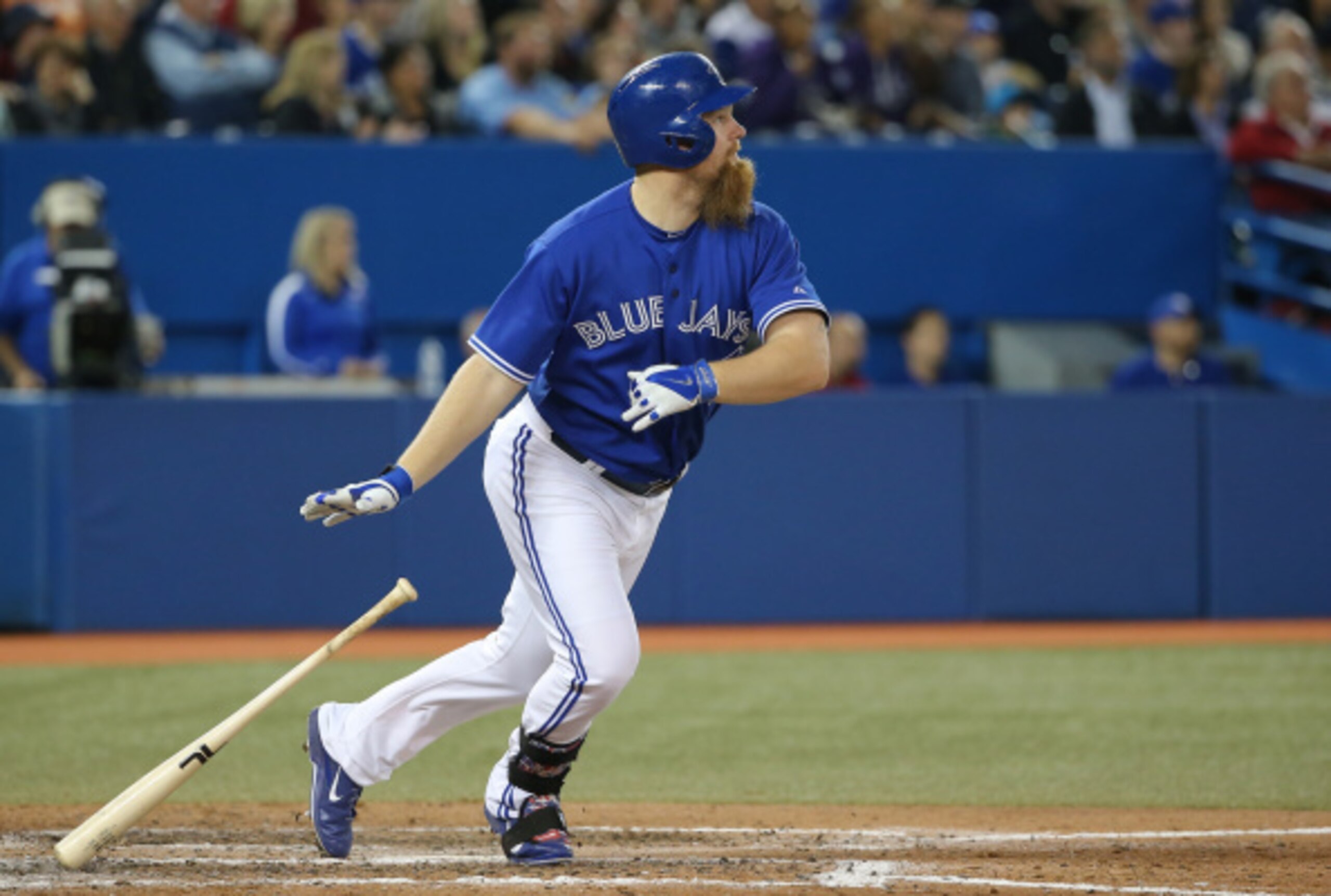
Hitting
Lind is strictly a platoon hitter, but he's basically the ideal platoon hitter. That he’s mixing discipline with contact goes to show how well he sees right-handers, and they really don’t have anything to get him out with. While his high average on ground balls looks fluky, he spreads his grounders around more than most lefty hitters. All told, his approach allows him to get his hits and take his walks.
Power
With a fly-ball rate in line with what he did in 2013, Lind should be hitting for power. He’s not because he’s not hitting the ball in the air to his pull side, preferring to target left and center field instead. He’s not without power in those directions, but he doesn’t have enough of it to duplicate his best power days. Factor in his part-time status and his advancing age, and you’re not looking at much of a power source.
Baserunning
Lind hasn’t stolen bases throughout his career, and it doesn’t look like he’s about to start now that he’s past 30. But he’s not hopeless. At least not by DH standards, as a 46 XBT% will do nicely for a guy whose job is to hit and do little else. Add in how he hasn’t run into many outs, and Lind’s baserunning looks alright.
Total
If you want a guy who can hit right-handed pitching, Lind is one of the better choices you’re going to come across. He sees them well, and they don’t really have anything to get him out with. Just be warned that his power's best days are likely behind him at this point.
5. Adam Dunn, Oakland A's
7 of 11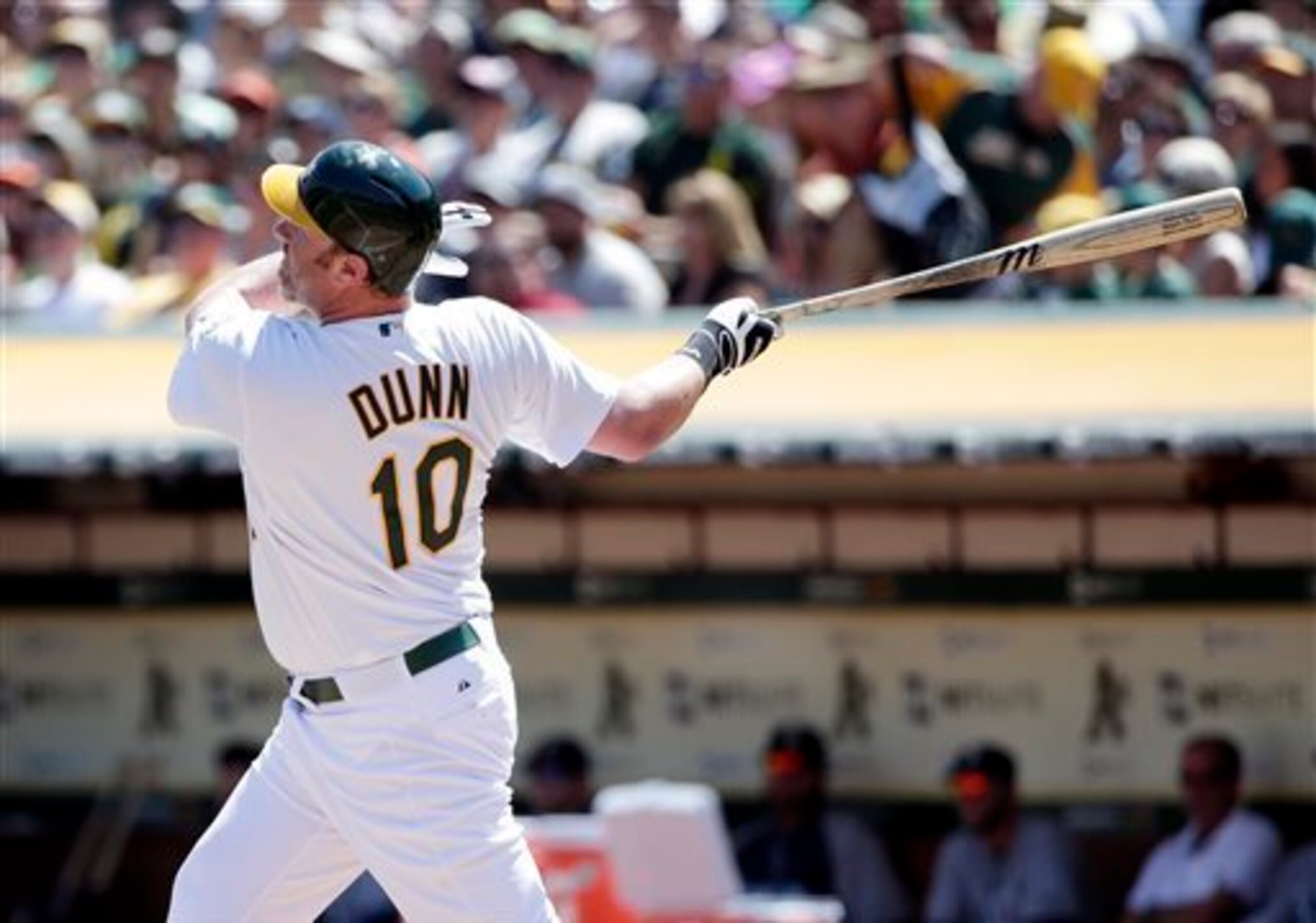
Hitting
Dunn is rarely swinging or expanding the zone, in part because he’s basically stopped swinging at breaking balls. As a result, he’s having no problems keeping the walks coming. He’s also helped himself by hitting more fastballs for line drives. It all sounds fine until you realize fastballs are all he can hit and that he still has a huge strikeout problem. He may look less like Adam Dunn, but he’s still Adam Dunn.
Power
Dunn’s success as a power hitter has long stemmed from his ability to frequently hit the ball in the air. That ability is alive and well, and Dunn can use it to jolt the ball to any part of the yard, including to left field, where he’s had a few near-misses. Whether Dunn wants to play in 2015 is a good question. But if he decides he does, he should be able to make another run at 25 or 30 homers.
Baserunning
Well, let’s see. Stolen bases are pretty much out of the question. He only has a 13 XBT%. He's run into more outs on the bases than he has since 2006. He’ll soon be 35 years old. And his name is Adam Dunn.
Total
Whether this will be Dunn’s last season is something we won’t know for sure until it’s all over. You have to figure there’s at least a decent chance it will be. But if he does come back for one more season, whoever picks him up will get pretty much the same walk and home run merchant he’s always been.
4. Chris Carter, Houston Astros
8 of 11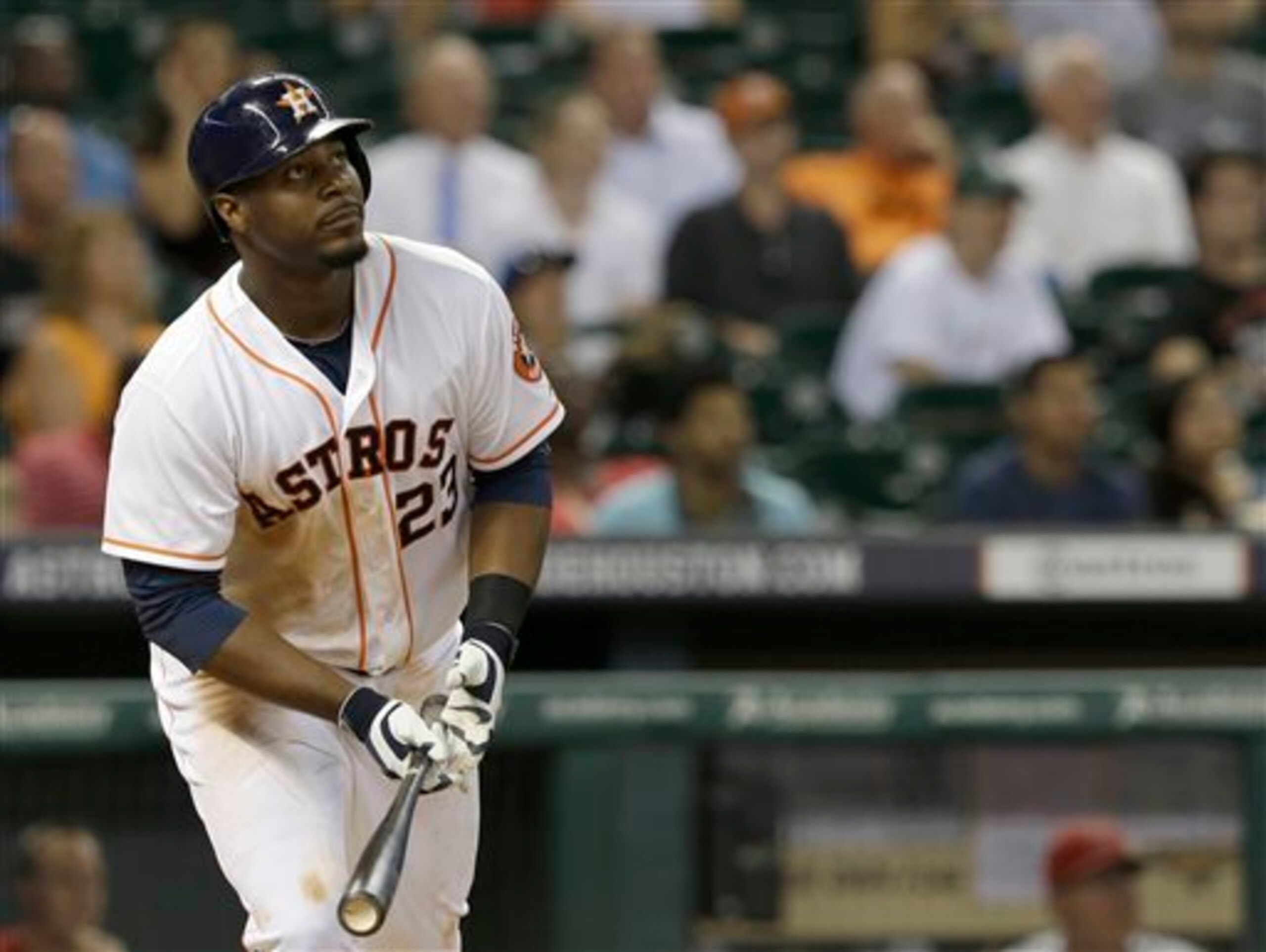
Hitting
The Carter of 2014 is actually even less disciplined than the Carter of 2013, and he’s even more likely to swing and miss on slow stuff. He’s also more likely to hit the ball in the air and has been useless hitting the ball to the opposite field. But since he can still draw walks and has actually gotten better at hitting slow stuff for line drives, he could be worse.
Power
Here’s where all of those fly balls come in handy. Carter pops up a fair number of them, but the ones he does square up go a very long way. It helps that he’s been even more active pulling fly balls to left field than he already was, and he’s done so without hurting the likelihood of them going over the fence. Hey, if you’re going to be a power hitter, might as well go full power hitter.
Baserunning
Carter’s not a burner by any stretch, but give him credit for coming up with a few steals this year. And though his XBT% has fallen from 29 to 23, that he’s been less careless about making outs on the basepaths is a solid trade. He’s not going to be mistaken for a good baserunner any time soon, but he’s OK by DH standards.
Total
Outside of his power, Carter has basically nothing to offer. It’s a good thing, then, that an extreme fly-ball style and extreme raw power make the power he has to offer arguably the best in the American League.
3. David Ortiz, Boston Red Sox
9 of 11
Hitting
Ortiz has been less disciplined than usual. He also hasn’t poked as many line drives the other way. In addition, he's been frequently bested by slow stuff and 90-plus heat. It all sounds bad, but it’s worth noting how many hits he’s lost to the shift. Take that and combine it with how he can still take his walks and how he’s a solid contact hitter for a slugger with an all-fields approach, and you still get a talented hitter.
Power
Ortiz’s power is essentially where it was in 2013. He’s helped himself by hitting more fly balls, and he basically hasn’t missed when he’s hit them to right field. That his opposite-field power has been downright poor by his standards deserves some skepticism, as that’s something that could well be an age-related crack. Even if it is, though, it doesn’t look like Ortiz is running out of power any time soon.
Baserunning
A year after going 4-for-4 in stolen bases with a passable 23 XBT%, Ortiz has slowed down quite a bit. He’s more than likely going to finish the season with zero steals, and he’s only working on a 15 XBT%. Take that and combine it with the outs he’s run into at second and third—and the reality that he’s not going to get any faster at the age of 38—and baserunning is not something you can expect Ortiz to do well.
Total
By keeping the home run power coming this season, Ortiz has kept his place among the elite DHs in the game. He’s just not the elite DH in the game anymore. There are some real cracks in his hitting, and even in his power if you take his opposite-field decline into account.
2. Nelson Cruz, Baltimore Orioles
10 of 11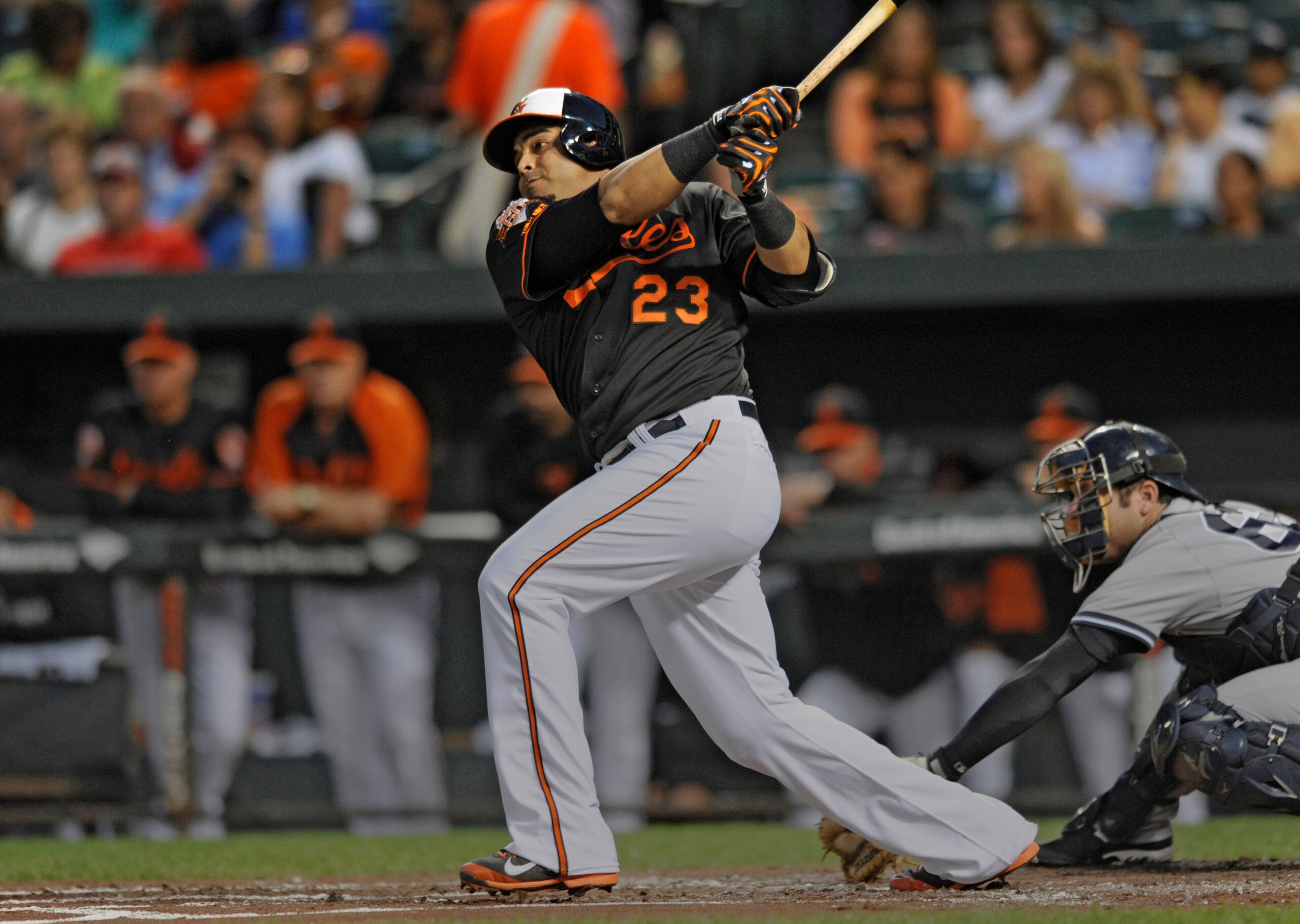
Hitting
Cruz is still a hacker who expands the zone and whiffs too often, and he’s been largely bamboozled by slow stuff. And because he forgoes line drives for ground balls and fly balls, hitting for average isn’t easy. The only thing he really excels at is crushing fastballs, whiffing on them relatively rarely and hitting them for line drives increasingly often. It's not much, but it's enough to save par.
Power
All Cruz has to do is get the ball in the air, and it has a pretty good chance to go. Fortunately for him, getting the ball in the air is no problem. Likewise, hitting it hard in any direction and over any fence is also no problem. Do this, and you’re going to hit 40 homers. And though Cruz repeating this performance hinges on him staying healthy, being locked into DH duty will help him do so.
Baserunning
Once upon a time, Cruz stole 20 bases. Alas, he’s not that guy anymore, as he’s not a good base stealer whether you’re talking volume or efficiency. What’s better is the 34 XBT% he has this year, which is an upgrade both over last year’s 22 XBT% and his career mark of 32 percent. But, alas once again, next to that is a decent-sized pile of outs on the bases. He’s not bad by DH standards, but he’s not good either.
Total
Cruz is arguably the best power hitter in the game right now, as he’s been able to stay healthy and has ridden his usual fly-ball style and thunderous power to a career-high number of home runs. Aside from that, however, he’s still himself: a guy with an inconsistent bat who can’t run the bases.
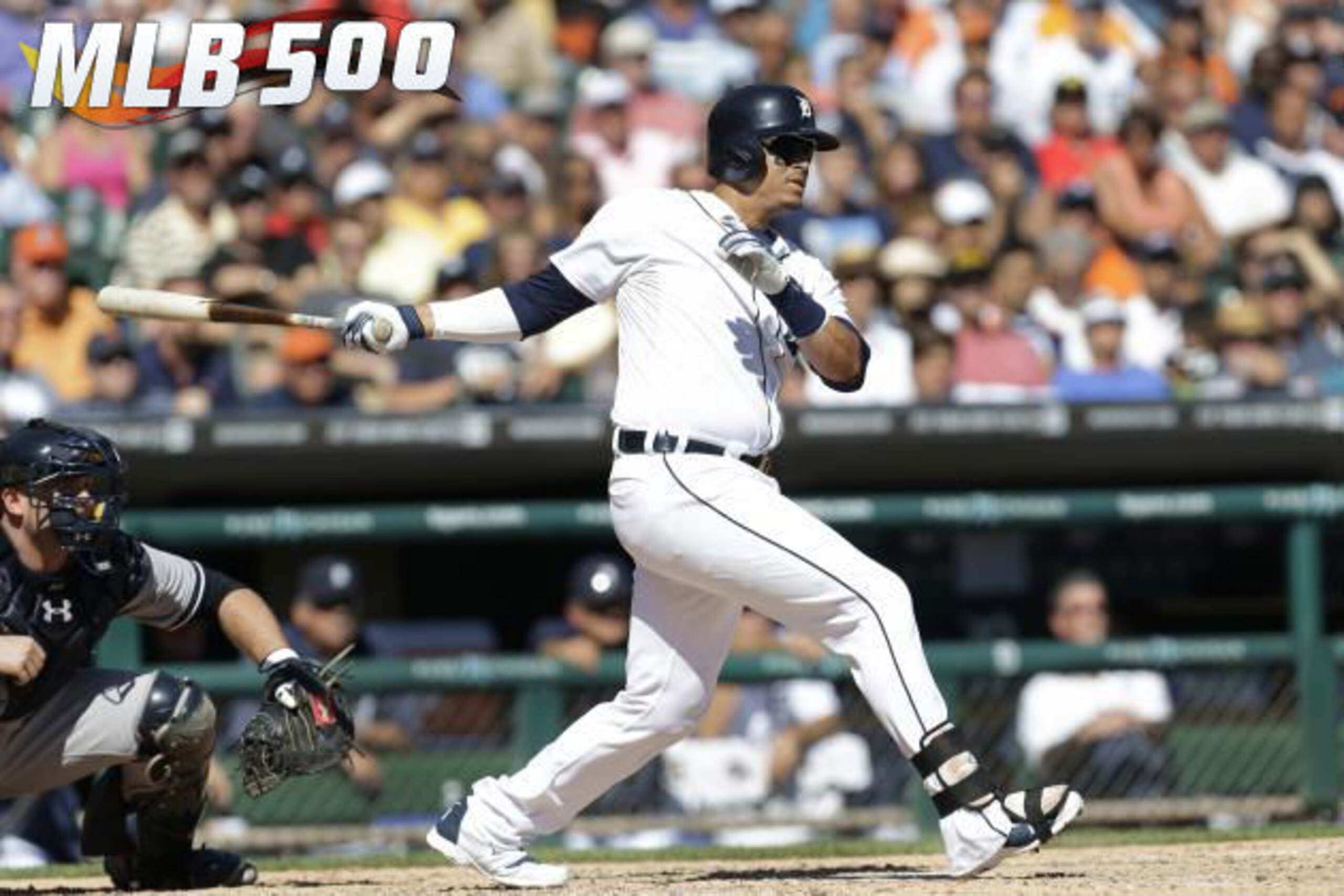
1. Victor Martinez, Detroit Tigers
11 of 11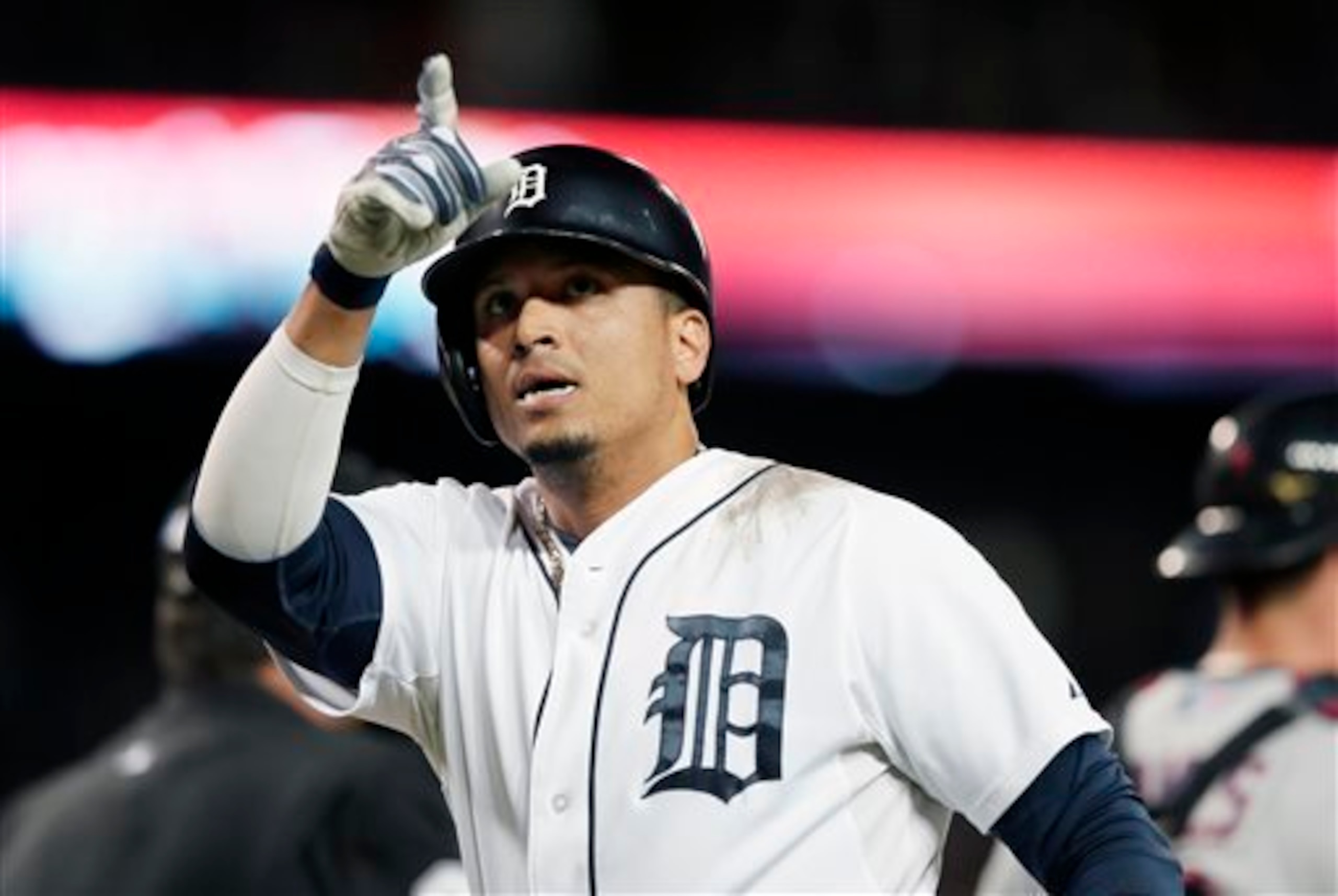
Hitting
Martinez has a solid walk rate this year, but it’s largely thanks to intentional walks. His actual approach is too aggressive. But these are nitpicks. He’s as capable a contact hitter as he’s ever been, he’s the best low-ball hitter in the league, he hits everything for line drives, and there’s not a pitch he’s weak against or a part of the field he can’t cover when batting lefty. In all, he has the whole hitting thing figured out.
Power
Martinez’s power surge isn’t an accident. He’s hitting more fly balls than he did his past two seasons. Of course, it also helps that he can drive the ball in any direction as a righty and pull fly balls to right field consistently as a lefty hitter. He’s put up a performance that guys in their mid-30s don’t tend to accomplish twice, but even a step down would still mean fantastic power.
Baserunning
Martinez actually has a few stolen bases this year, but don’t get too caught up in that. He’s still among the slowest baserunners in the league, and it shows most in how his 19 XBT% is low even by his standards. Steals or no steals, he’s still one of the worst station-to-station runners in the business.
Total
What’s happening with Martinez is what you hope will happen when you stick a guy at DH late in his career. Free-swinger though he may be, he’s hitting everything, and hitting everything hard. There aren’t many good ones to choose from, but he’s the best true DH in the game right now.

.jpg?w=2560 "Insiders: Cowboys Overpaid for Porter")
.jpg?w=2560 "Every Trade's Best Trade Asset 🔁")
.jpg?w=2560 "Top NFL Trade Targets")
.jpg?w=2560 "Daniels Eyeing Week 5 Return")
.jpg?w=2560 "No Rift Between Maye, Vrabel")