B/R MLB 500: Top 40 Center Fielders
After checking in with relief pitchers, the B/R MLB 500 now turns its attention to arguably the most athletic players on the diamond: center fielders.
Center fielders will be scored as such: 25 points for Hitting, 25 points for Power, 20 points for Baserunning and 30 points for Defense, for a total of 100 points.
The Hitting category involves not only looking at how good guys are at putting the bat on the ball and how they hit the ball, but also things like patience and plate discipline.
The Power category is not so much about raw power. It's more of a look at how much power guys have in actual games, which involves looking into how they tap into their power for extra-base hits.
The Baserunning category could be complicated, but we're going to keep it simple by focusing on how good guys are at stealing bases, taking extra bases and avoiding outs on the bases.
For Defense, the main focus will be range. That's not to say it's all about speed, mind you, as range can also come from quick jumps, good reads and direct routes. Though arm strength is less important—or, at least, less expected—in center field, it will also be given some attention.
One thing we're not doing this year is a category for health. Rather than handle them separately, any health concerns we have will be applied to a specific category that could be impacted.
Please note that a score in the middle (i.e., 15/30 or 12/25) denotes average, not failing. And while the discussion will be centered on 2014, we also have one eye on 2015. Part of that includes B/R prospect guru Mike Rosenbaum providing scores and scouting reports for some MLB-ready center fielders.
Lastly, any ties will be resolved with the following question: "If we could pick only one, who would it be?"
When you're ready, you can read on.
A Note on Links and Sources
1 of 41
Before we begin, there are some things you should know about the links and stats that lie ahead.
The most important thing is that CLICKING ON THE LINKS IS NOT MANDATORY. The links are there in case you're curious where a given point (or points) is coming from.
They're not from the same place. The links will take you to Baseball-Reference.com, FanGraphs.com, BrooksBaseball.net, BaseballSavant.com and BaseballProspectus.com. All have different data to offer, the combination of which was the backbone for the research of this project.
However, just because this project was heavily informed by stats doesn't mean you're about to be hit over the head with sabermetric jargon in this space. There are really only a couple of terms to know.
One is XBT%. That stands for "extra bases taken percentage," and it's Baseball-Reference.com's way of tracking how often players advance more than one base on singles and doubles. It's a crude way to get a picture of aggressiveness, and you'll have to pardon us for being a day behind on the percentages, but it'll have to do.
I'm also going to repeatedly refer to "the defensive metrics." This means ultimate zone rating (UZR) and defensive runs saved (DRS), which are both tracked by FanGraphs. They go about it differently, but the idea behind both is to evaluate how good players are on defense.
40. Emilio Bonifacio, Atlanta Braves
2 of 41
Hitting
Emilio Bonifacio no longer has the plate discipline he showed in 2011 and 2012, and it shows in his declining walk rate. He also still doesn't have an answer for righties who pound him inside with heat. It's a good thing he's cleaned up the problem he had making contact last year and has also mixed in some more line drives with his ground balls. Flawed though he may be, 2014 has been better than 2013.
Power
Bonifacio's high ground-ball rate pretty much bars him from hitting for power, but he also doesn't give himself many chances to hit for power when he does elevate the ball. Well-hit balls have been few and far between this year, especially from the left side. His best hope for power is slapping balls down either foul line and then using his speed, which isn't the best avenue to consistent power.
Baserunning
Bonifacio has notched his fourth straight season with at least 20 stolen bases, and he's tacked on a 55 XBT% on the side. There are two catches, though. One is that his stolen-base habit still doesn't come with ideal efficiency, and the other is that 2014 has been one of his worst seasons for running into outs. Add in how he'll soon turn 30, and his days as a truly outstanding baserunner are likely behind him.
Defense
The defensive metrics have reversed course and are rating Bonifacio as a solid defensive center fielder, but let's not take that as gospel. He still doesn't look like a natural in center field, oftentimes getting bad reads and taking adventurous routes to fly balls. Such imperfections would likely hurt his defensive rating over a larger sample size, so I'd say his best defensive talent is still his ability to play all over.
Overall
All Bonifacio really has to offer is his speed and a glove that can be installed at pretty much any position. While that doesn't sound like much, it's at least enough to keep him around as a capable part-timer.
39. Gregor Blanco, San Francisco Giants
3 of 41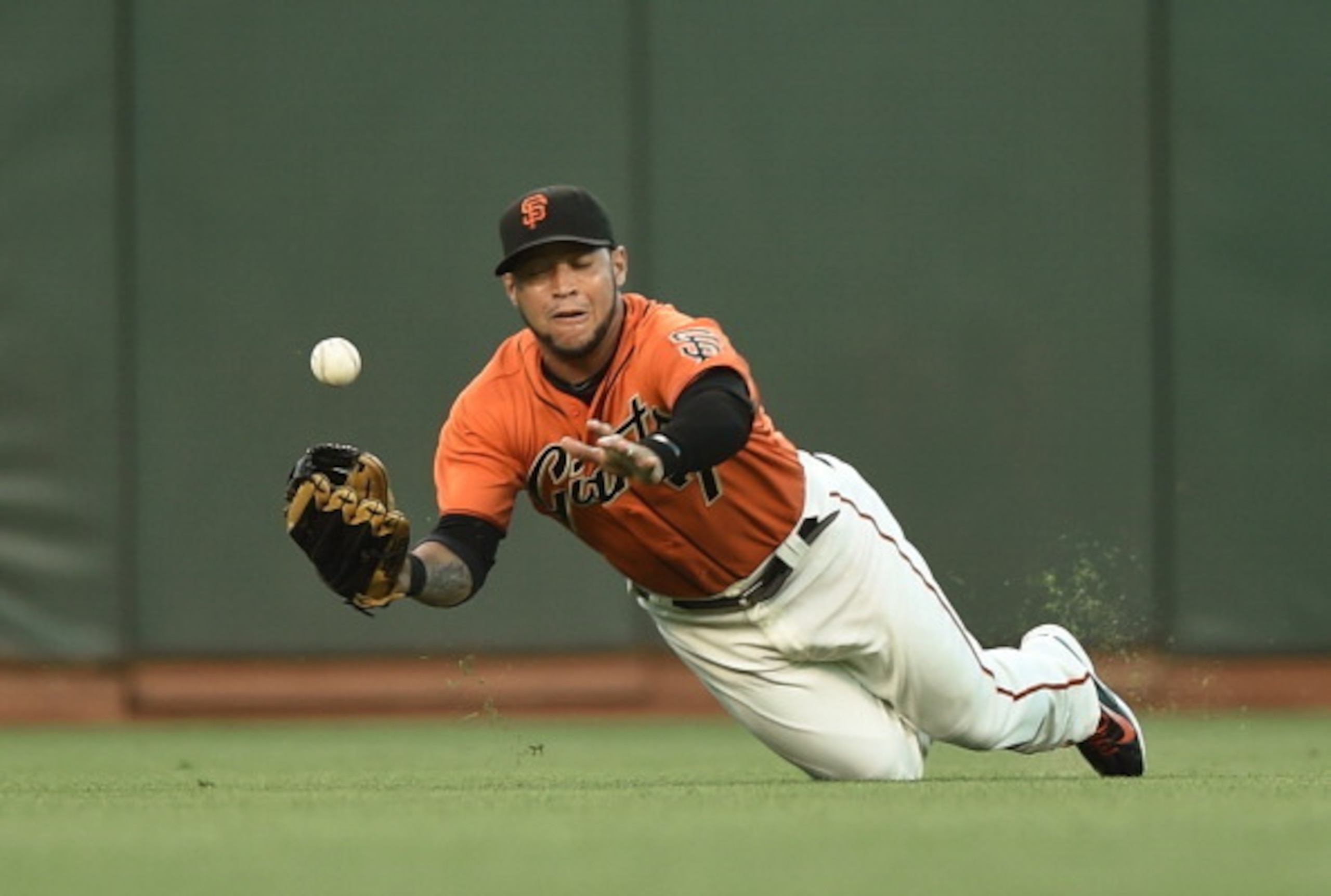
Hitting
Gregor Blanco plays mainly against right-handers, and his ability to work patient and disciplined at-bats says he clearly sees them well. Actually hitting them, though, has been tough. Beyond spotty zone coverage, he's had a tough time squaring righties up for line drives. And overall, Blanco's swinging strikes are up, and his line drives are down. He's needed some good luck to get his numbers where they are.
Power
Blanco has been hitting more fly balls this year, and those haven't been totally for naught. He can easily give the ball a ride to his pull side, and he hits the ball in the air in that direction frequently enough to pick up his share of extra-base hits. He certainly doesn't have power to left or center, and he's limited by playing time, but the power he offers is fairly decent for a part-timer.
Baserunning
Blanco wasn't able to repeat his 26-steal season in 2012 last year, and he's going to fall short once again. It looks like he only has 10- to 15-steal potential coming off the bench, and that likely isn't changing with his age-31 season due up. In addition, his 40 XBT% is nothing special by center field standards, and he's once again had issues running into outs. Looking ahead, baserunning may be only a modest strength.
Defense
After liking what he did in center field in 2013, the defensive metrics are now rating Blanco's center field defense as below average. He's earned it, as he really hasn't had the best season reading or tracking fly balls. And while his speed is good, it's not elite enough to erase every mistake he makes. He's certainly better than he's shown, and he's at least still cutting it in left field, but some concern is warranted.
Overall
Blanco's hitting, baserunning and defense have all seen better days, making him out to be less than a stud bench player. But as long as he can offer a good eye against righties, occasional power and at least passable defense in center and left field, he'll have enough to stick around.

38. Cameron Maybin, San Diego Padres
4 of 41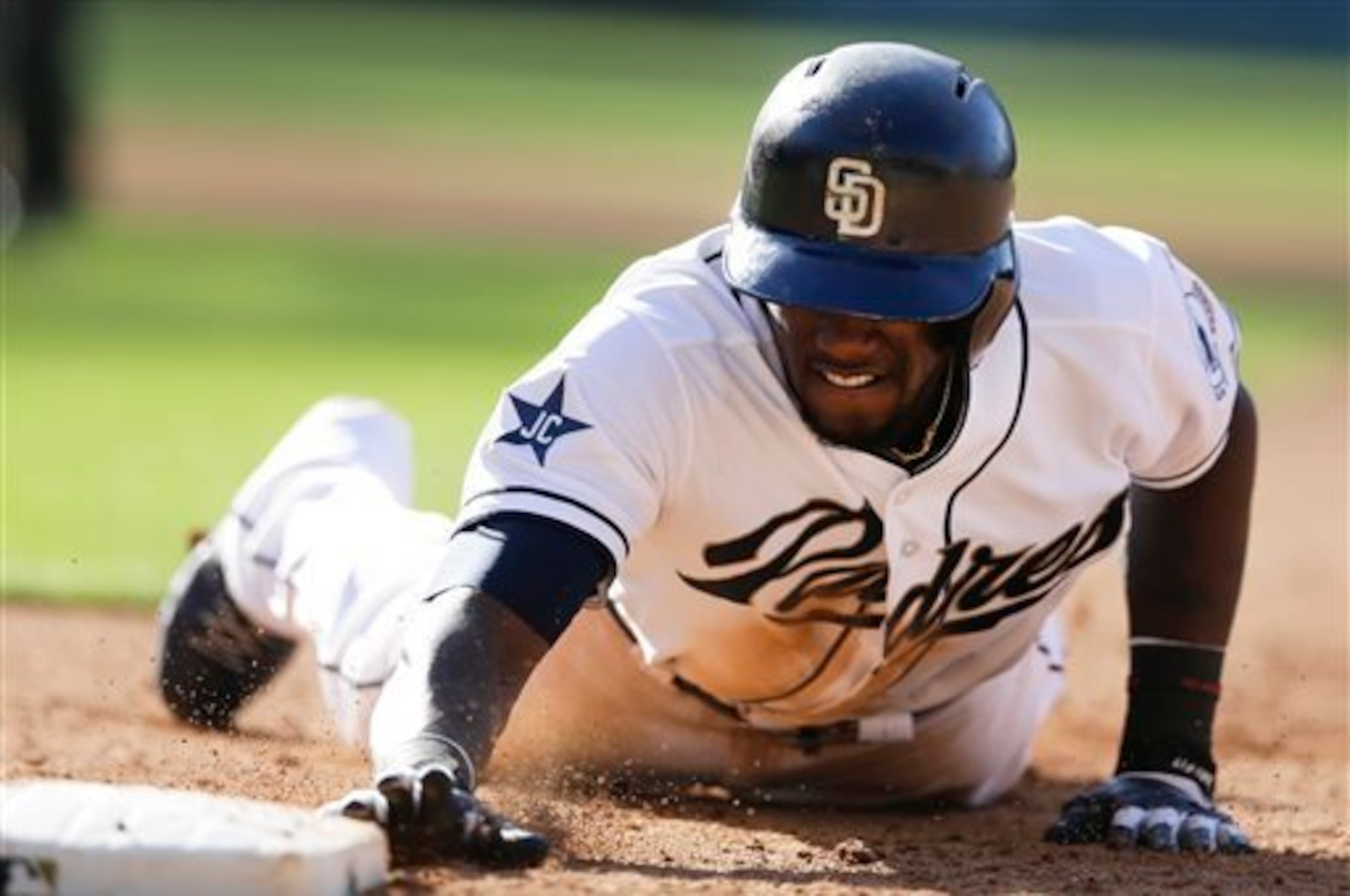
Hitting
Cameron Maybin can be counted on to put together patient and disciplined at-bats, but that's about it. He's had a rough time whiffing on breaking balls and overall has continued struggling to hit slow stuff. And though it's not the worst thing that he's an extreme ground-ball hitter, he still hasn't found a way to mix in line drives consistently. That's a pretty good combination of things to hold a guy's hitting down.
Power
When over 50 percent of your batted balls are on the ground, you're not going to be hitting for much power. It doesn't help that Maybin has also recently battled shoulder, knee and wrist injuries. In light of these things, it's something of a silver lining that he's demonstrated he still has some of his old ability to drive the ball up the middle of the field. Even if it's only good for doubles and triples, it's something.
Baserunning
Maybin no longer resembles the guy who swiped 40 bases back in 2011, as injuries have done their part to slow him down. Even expecting double-digit steals from him is too much at this point. On the bright side, he at least has a 53 XBT% that's up from 33 percent in limited action last year, and it comes with few outs on the basepaths. He's not the baserunner he used to be, but he's not a liability either.
Defense
For all the problems Maybin has now, defense isn't one of them. The defensive metrics rate him as an above-average center fielder, which is mainly thanks to his range. Though he doesn't move as well as he used to, he can still track and chase balls well enough to make up for it. It's not good enough to duplicate the elite defense he once offered, but it's good enough.
Overall
Maybin is no longer the center fielder he was in 2011, when he boosted his value with strong hitting, power, baserunning and defense. But at the very least, he still has a pretty good glove to offer. Given that he plays a premium defensive position, that's worth something.
37. Michael Bourn, Cleveland Indians
5 of 41
Hitting
There's nothing wrong with Michael Bourn's approach, which still leans toward patience and discipline. It's also a good look that he's back to hitting breaking balls squarely. But with his whiff rate on off-speed stuff skyrocketing, you wonder if he's starting to cheat a little bit. And as long as he continues to struggle so mightily on offerings down and away, I'd expect to see pitchers continue to pound him there.
Power
Because Bourn still isn't much of a fly-ball hitter, his power production shall continue to have a natural cap on it. But he does pack a bigger wallop than you might think. Balls hit in the air to his pull side tend to be well struck, and he also has some power up the middle of the field and into left-center. Enough to clear the center fielder, anyway, and he can easily turn those balls into doubles and triples.
Baserunning
Bourn's going to fall short of 20 stolen bases for the first time since 2007, and he's also watched his XBT% fall from 54 to 41 percent. It's true that his leg injuries haven't helped, but that doesn't mean anyone should be optimistic about a rebound. Such injury troubles may not go away with him closing in on 32 years old, and Bourn's not going to be as fast as he once was when he's healthy anyway.
Defense
The defensive metrics had Bourn rated as roughly an average defender in center last year, and this year they view him as below average. They might be right. Bourn has shown that he can still read fly balls fine, but the closing speed he used to have seems to be extinct. His range is going to suffer without it, and without range, there's not much he can do to be an asset on defense.
Overall
Bourn is still capable of putting together good at-bats and of delivering some occasional power. But he was at his best when he had elite speed to offer on the basepaths and in center field. Thanks to age and injuries, that elite speed is no longer there.
36. Tyler Naquin, Cleveland Indians (Prospect)
6 of 41
Hitting
Tyler Naquin has repeatedly answered questions about his hit tool by putting up a solid batting average against advanced pitching. The 23-year-old has some swing-and-miss to his game, but he's an overall patient hitter who sees lots of pitches and isn't afraid to coax a walk.
Power
The biggest knock on Naquin always has been his lack of power, as it's merely average at best and could potentially make him a "tweener." In Naquin's case, that means he lacks the thump to profile as an everyday corner outfielder despite the hit tool and on-base skills.
Baserunning
Naquin isn't a true plus runner, but he's able to get out of the box and down the line quickly and moves well on the basepaths. He'll likely steal roughly 10-12 bases in a given season, though that has more to do with his instincts and ability to read pitchers.
Defense
Naquin has long been considered a right fielder given his plus-plus arm strength, but he's proved capable of holding down center field since turning pro and could stick there long-term. His range isn't particularly exciting, but he gets to the balls he should and is fundamentally sound.
Overall
Naquin is more of a high-floor than high-ceiling prospect, but there's certainly nothing wrong with a potential everyday center fielder that can do a little of everything.
35. Sam Fuld, Oakland A's
7 of 41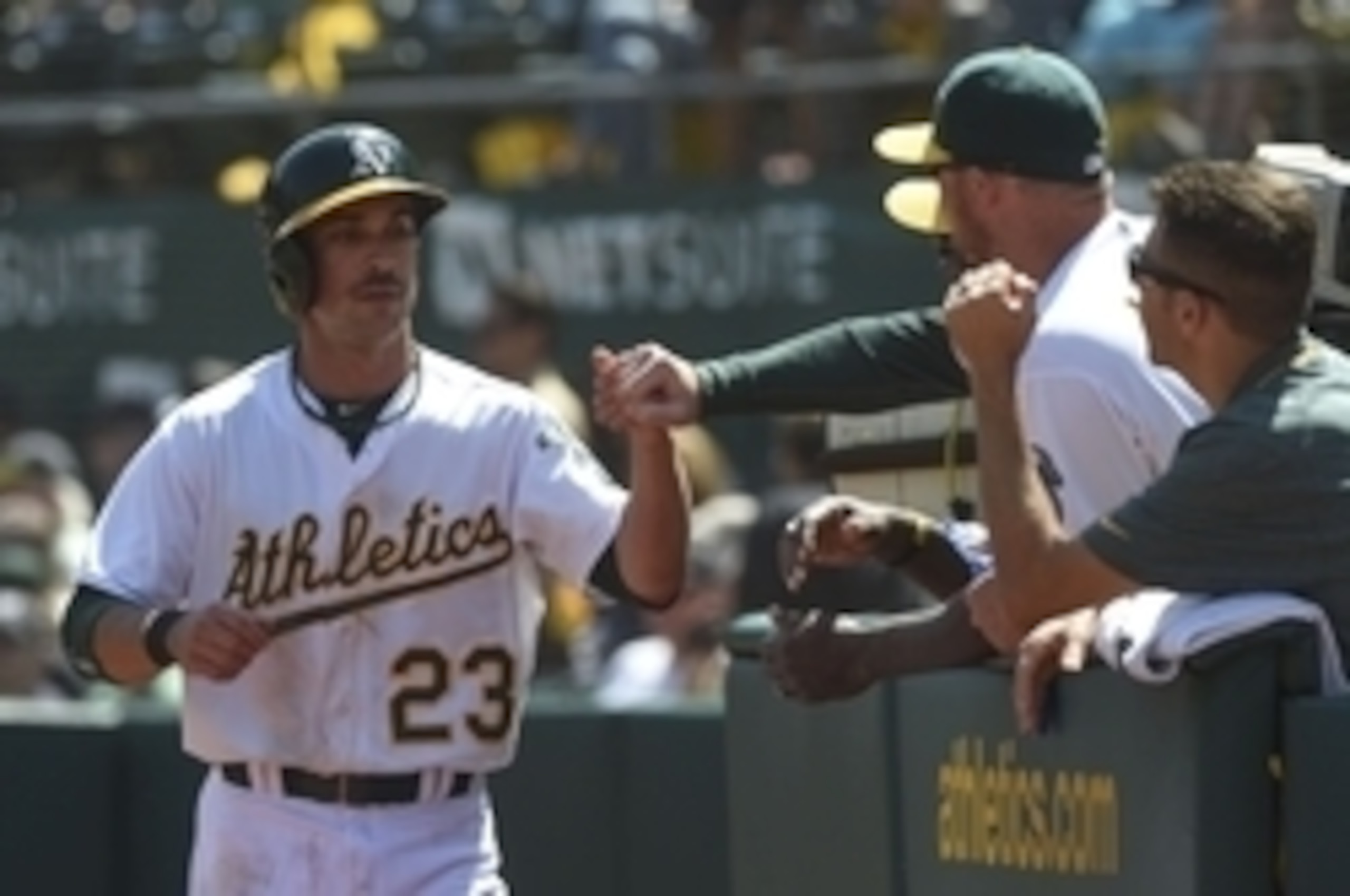
Hitting
Sam Fuld is good for patient and disciplined at-bats as well as contact, which should translate into walks and a good average. But while he can handle the walks, hitting for average is tough because of how he mixes in pop-ups with his preference for ground balls. He's also weak against anything even remotely close to him. In addition, he doesn't really work as a platoon guy because of his roughly even splits.
Power
Fuld's modest line-drive and fly-ball habits make extra-base hits hard to come by, and it doesn't help that he has zero power the other way. At least he's good at hitting the ball to his pull side when he does put it in the air, and he's capable of finding the right-center gap and driving it over the right fielder's head. Though this power is only a part-time thing, it could be worse.
Baserunning
Fuld has stolen 20 bases for the second time in his career, which is good stuff for a part-time player. And though his XBT% for the season is only a modest 46 percent, that’s skewed by the 35 XBT% he had in Minnesota. His 56 XBT% with Oakland is much more like him, making him a pretty good all-around baserunning threat off the bench.
Defense
This is the most Fuld has gotten to play in center field in his major league career, and the defensive metrics think he's doing a terrific job. The main attractions are his speed and his complete and utter willingness to give up his body to make plays. Not that he's perfect, though. His routes can be adventurous, and he's fooling the metrics into thinking his arm is better than it really is.
Overall
Fuld is only good enough to be a part-time player—and not even an ideal one due to his even platoon splits. But if you're looking for a guy who can put together some good at-bats, run the bases and play an energetic center field, he's your huckleberry.
34. Ender Inciarte, Arizona Diamondbacks
8 of 41
Hitting
Ender Inciarte has actually hit lefties pretty well, so his passable numbers aren't owed to a platoon advantage. And though he's been aggressive, he's also been a very strong contact hitter. His ability to make good contact, however, is largely limited to the hard stuff. His contact against slow stuff has consisted largely of ground balls to the right side. With weaknesses like these, being a consistent hitter will be tough.
Power
Inciartedoesn't hit many fly balls, and he rarely hits the ball in the air to his pull side. As long as that's the case, home runs are going to be about as infrequent as they've been this year. And really the only thing he does have is good line-drive power in the left-center gap. He can pick up some doubles with that strength, but not enough to make him even close to a consistent power source.
Baserunning
Inciarte arrived in the majors with a heck of a track record as a base stealer in the minor leagues, and he's been able to translate that talent pretty well in the majors. But it hasn't been all good for him on the basepaths. He only has a 34 XBT%, and he's also run into too many outs at second and third. Until he gets that cleaned up, his base stealing will only keep his baserunning value afloat.
Defense
Albeit in a limited amount of time, Inciarte has blown away the defensive metrics with his play in center field. He's done that partially with a good arm, but more so with his range. That range comes from speed more than instincts, as he can occasionally get iffy reads on the ball and take indirect routes accordingly. But his speed is so good now that this doesn't really matter.
Overall
Inciarte has shortcomings when he has a bat in his hand, and his baserunning hasn't fully lived up to his minor league track record. But at the least, he's been a defensive wizard in center field. Guys like that can be valuable no matter what else they can do.
33. Arismendy Alcantara, Chicago Cubs
9 of 41
Hitting
The switch-hitting Arismendy Alcantara has come up and shown a reasonable amount of patience at the dish, but there really aren’t many other positives to latch on to. He’s been prone to whiffs on slow stuff and in general has done little against it. It also looks like any right-hander who can spot a fastball away from him stands a good chance of getting an out. The talent is there, but so is the list of things to work on.
Power
Alcantara hasn’t hit much, but he’s hit for power pretty well. Much of that stems from his high fly-ball rate, and he hasn’t needed a large sample to show that anything he pulls in the air as a left-handed batter is going to be well hit and very likely over the fence. It looks like he also has some line-drive power in the left-center gap when he bats lefty, so he has at least two solid avenues for pursuing power.
Baserunning
Though he’ll need to get on base more and choose his spots better, it does look like the strong base-stealing habit Alcantara had in the minors is going to translate in the majors. He’s a good bet for 20 steals over a full season, and a repeat of this year’s 45 XBT% would work fine so long as it continues to come with no outs on the basepaths.
Defense
For a guy who was a middle infielder in the minors, you have to hand it to Alcantara for convincing the defensive metrics he’s a solid center fielder. Realistically, though, he’s at best average. The athleticism is there, but getting reads on balls and running good routes are skills that are still coming to him. He better get a hang of these things, because there’s certainly no room for him in the Cubs infield.
Overall
Alcantara needs plenty of work before his hitting is up to par, and all he really has working for him in center field is his athleticism. But athleticism in center field can be good enough, and his mix of power and speed is a good fit for the position.
32. Michael Taylor, Washington Nationals (Prospect)
10 of 41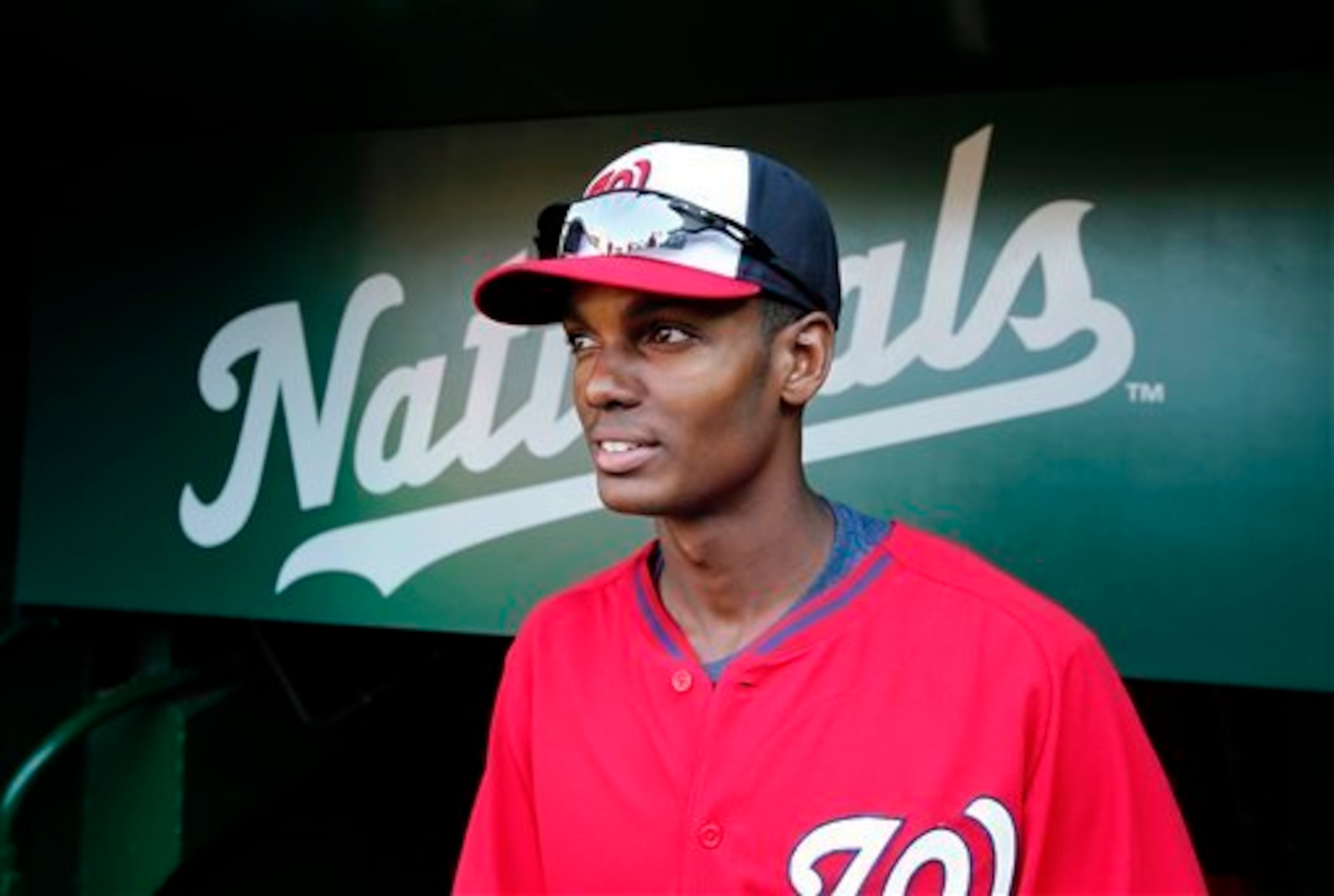
Hitting
Michael Taylor’s game still features too much swing-and-miss, as evidenced by his 144 strikeouts in 493 plate appearances (29.2 percent strikeout rate) this season. But his contact rate still trended in the right direction and helped him establish career highs in both batting average and on-base percentage.
Power
Though he’s always possessed good strength to his 6’3”, 210-pound frame, the 23-year-old finally grew into his power this year to hit a career-high 23 home runs. The contact rate will likely prevent his power from fully translating in the major leagues, but he’s certainly proved it’s present.
Baserunning
As one might expect given the above description of his build, Taylor is a top-flight athlete with plus speed and the ability to cover ground with his long strides. After stealing 88 bases over the last two seasons, it’s clear Taylor has the speed to make a similar impact in The Show, though it will depend on the development of his on-base skills.
Defense
Taylor is one of the better defensive center fielders in the minor leagues, as his athleticism, speed and instincts translate to plus range and allow him to get to virtually every ball.
Overall
Taylor has all the tools to be an impact everyday center fielder in the major leagues. However, at 23, he’s still a very unrefined player who has more natural ability than usable baseball skills. That said, he’s still very young and has shown slow but steady improvement while moving through the Nationals system.
31. B.J. Upton, Atlanta Braves
11 of 41
Hitting
We can give B.J. Upton credit for turning his strong plate discipline into walks and also for how his whiff tendencies against slow stuff are getting better rather than worse. The trade-off, though, is that he’s getting worse against fastballs, with anything even so much as& above the knees being a whiff threat. And as long as he’s mixing ground balls and pop-ups, getting hits on balls in play will continue to be tough.
Power
Aside from his strikeouts and his mix of ground balls and pop-ups, another drain on Upton’s power is how line drives and fly balls to left field are only becoming more infrequent. His power’s not dead yet, though. He’s hit balls well in every direction this season, and his production wouldn’t look so bad if he got some more results on well-hit balls to center field.
Baserunning
It’s hard to be a stolen-base threat when you’re on base so infrequently, but Upton’s at least knocking on the door of the 20-steal threshold again. Just as good is how he’s upped his XBT% from 33 percent to 51 percent, and he’s never been less careless making outs. Some skepticism is warranted due to how he’s now over 30 and has a lot of miles on his legs, but his baserunning has definitely been revitalized.
Defense
The defensive metrics have a hard time knowing what to make of Upton’s defense, but this year they’re convinced he’s not very good. That he’s error-prone doesn’t help his cause, and he’s not particularly strong coming in on the ball. But he can still generate range with his long strides and smooth routes, and don’t sleep on the good arm he has for the position. He’s better than the metrics say he is.
Overall
Upton’s best hitting, power, baserunning and defense are clearly behind him. Because of that, he is indeed a subpar player. But with that said, 2014 hasn’t been as big a disaster as 2013. He’s been a little better at the plate, has become a solid baserunner again and isn’t the defensive disaster the metrics say he is.
30. Jackie Bradley Jr., Boston Red Sox
12 of 41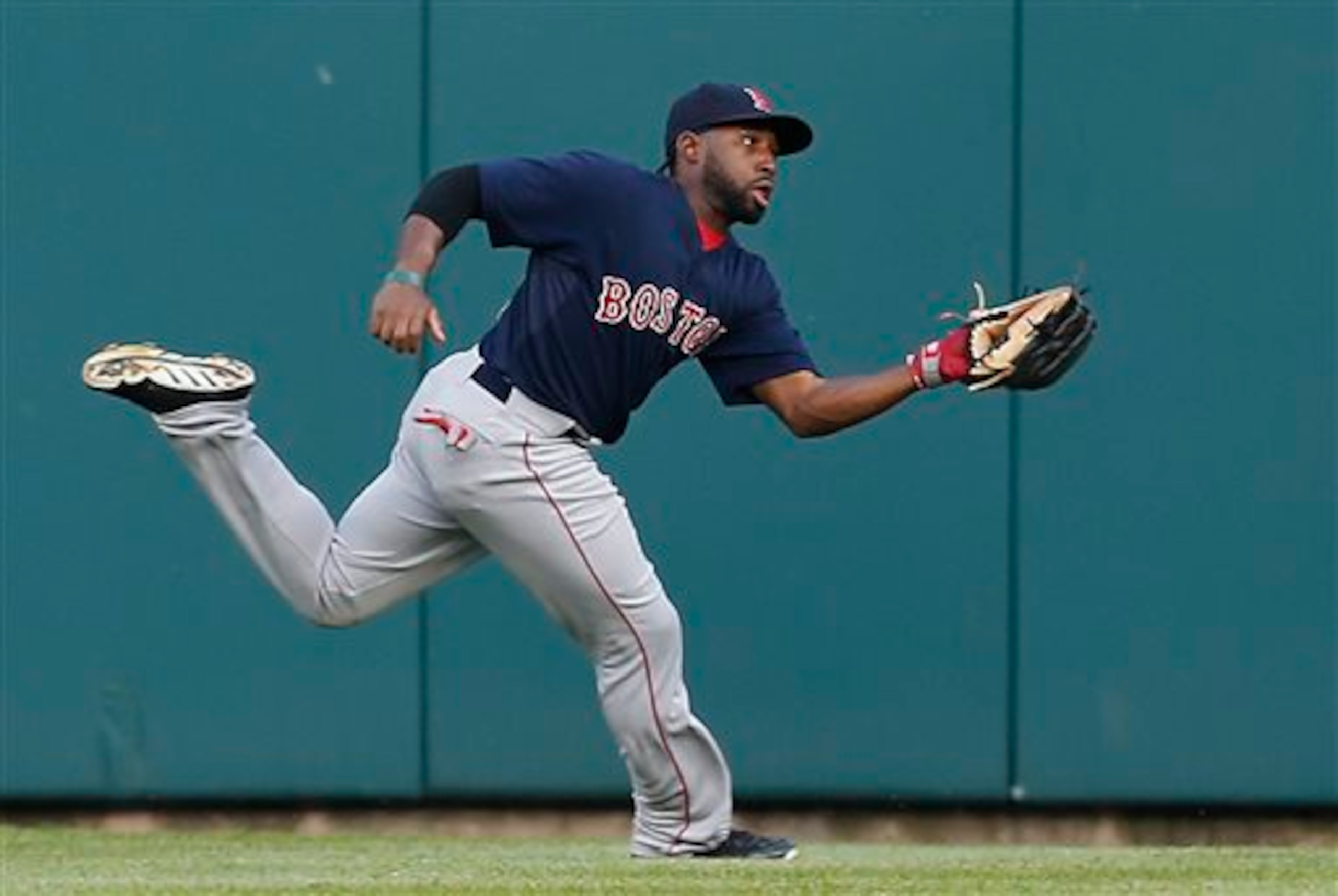
Hitting
It’s not all bad. Jackie Bradley Jr. has at least displayed patience and a good eye at the plate, and he’s had an easier time hitting the ball on a line than he did in 2013. It’s just mostly bad. Bradley hasn’t been able to hit anything well, and you’re just not going to go very far when you’re swinging through so many high fastballs and rolling over so many slow pitches. He’s not without strengths, but he needs a lot of work.
Power
Bradley’s power production looks bad, but his power potential belongs in the “Not As Bad As It Looks” file. His home run power will be forever limited as long as he barely hits anything in the air to right field, but the 2014 season has seen him display solid doubles power to left and left-center. Since that’s a habit that plays well at Fenway Park, it’s at least something to build on.
Baserunning
Bradley’s not a burner, so flirting with double-digit steals like he has this year may be as good as it gets. But he’s at least been efficient when he has attempted stolen bases, and he’s otherwise done well at rounding the bases. He has a 51 XBT% that includes 14 first-to-thirds in 27 chances. That’s a pretty good rate and good support for Bradley as an instinctive baserunner.
Defense
The defensive metrics believe Bradley has at least made good on his defensive potential in 2014, and they’re not wrong. The 2014 season has given him a chance to show off not only his terrific arm, but how easily he makes up for his lack of elite foot speed with good jumps and direct routes on fly balls. His bat may say he’s unplayable, but his defense says otherwise.
Overall
In his first (somewhat) full season as a major leaguer, Bradley has shown that he can’t hit, hit for power or run the bases especially well. But since he’s on a shortlist of candidates for the title of best defensive center fielder in baseball, don’t downplay him as a capable major league player.
29. Mookie Betts, Boston Red Sox
13 of 41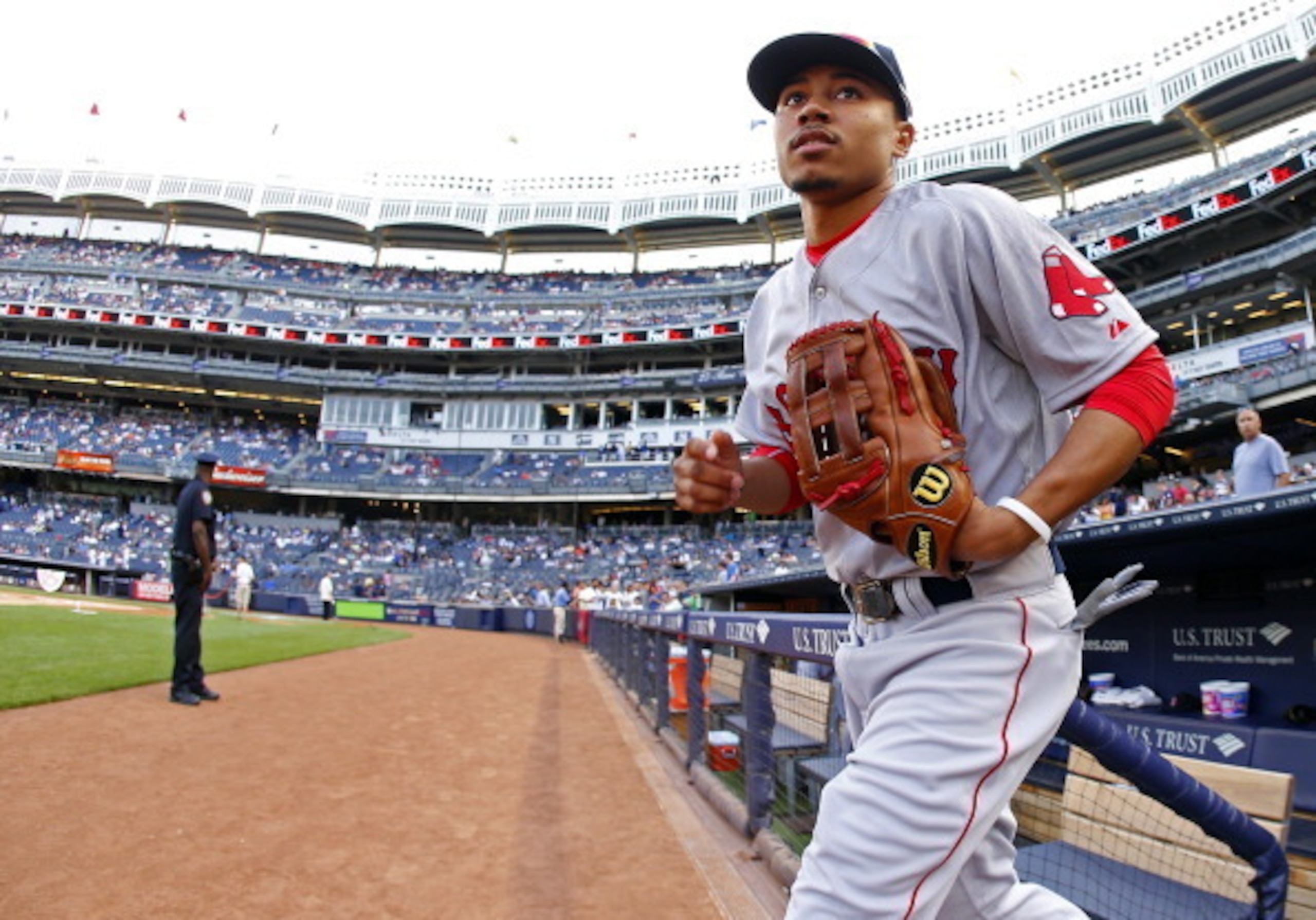
Hitting
Small sample size and everything, but you have to like how Mookie Betts has shown extreme patience, even more extreme discipline and an elite contact ability. If you mix the three of those things, you’re going to do all right. Now all Betts has to do is solve right-handed breaking balls and low and away fastballs, as he’s only going to be so good without an ability to hit these things.
Power
Again, small sample size and everything, but Betts has been a good source of fly balls. And since the bulk of those have come up in the inner two-thirds of the zone, it’s not surprising that he’s hit the ball in the air to left and left-center. And when he gets it in that direction, he can really get it. Even if he doesn’t develop power the other way, that’s a good enough habit for (at least) average power.
Baserunning
Betts put his good speed to use stealing bases in the minors, and what he’s done in limited action makes it look like he could do so in the majors too. There’s an outside chance he’ll make it to double-digit steals by the end of the season, and he might also exit the year with a 52 XBT%. It’s not hard to imagine Betts as a 20-steal guy with good aggressiveness on the side over a full season.
Defense
The defensive metrics haven’t seen enough of Betts’ defense to really form a solid opinion of him yet, but the eye test pretty much says it all. Betts is plenty athletic for center field, but it’s mostly clear that he’s still green at the position. Though he reads balls off the bat well enough, his routes can get adventurous, and he often has to improvise in order to finish off plays.
Overall
It could be a while before Betts is a capable defender in center field, but everything else looks promising. He’s shown off an advanced approach at the plate, hit for some good power and put his speed to good use on the basepaths. Without getting too excited, he looks like he could be a good one.
28. Craig Gentry, Oakland A's
14 of 41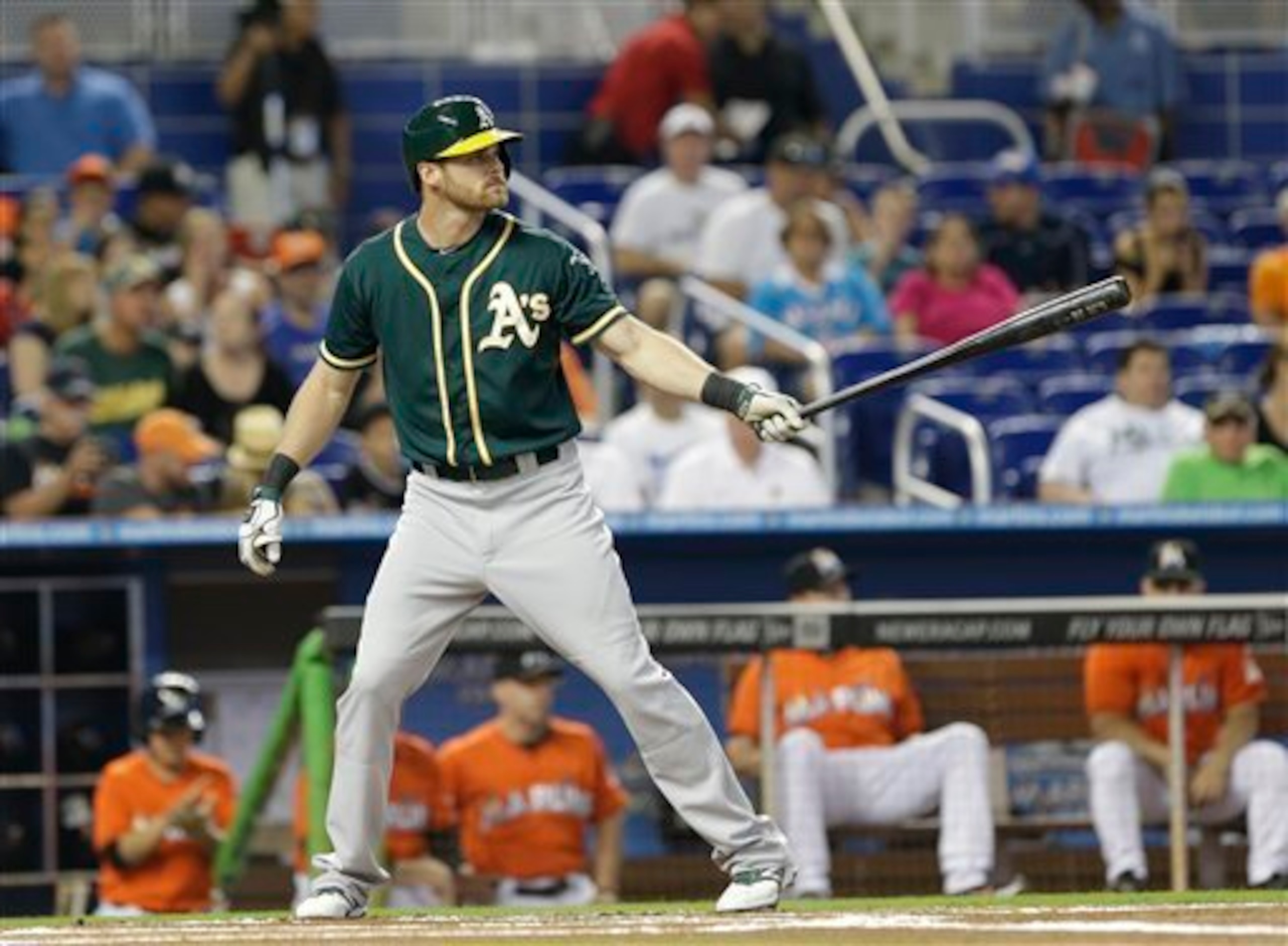
Hitting
Craig Gentry is still showing a good eye, but he hasn’t drawn walks because of how pitchers have ramped up their aggressiveness in the zone. He hasn’t responded by becoming more dangerous in the zone. Also, an increase in breaking balls hasn't helped his numbers. It’s a good thing, then, that he’s still mixing ground balls and line drives well enough to post a respectable average on balls in play.
Power
Amazingly, there’s a decent chance that Gentry will finish the 2014 season with under 10 extra-base hits. That he doesn't dabble in fly balls is one restriction on his power. Another is how he’s shown zero power to right field throughout his career. About the only thing he can do is give the ball an occasional ride to left field. But given his playing time situation, it really is only occasional.
Baserunning
This is the second year in a row that Gentry’s topped 20 steals with good efficiency, and he’s tacked on a 54 XBT% with zero outs on the basepaths. This is really good stuff for a part-time player, and it’s worth acknowledging that Gentry’s status as a part-time player means he should have more well-preserved legs than the typical 30-year-old.
Defense
Gentry has found himself playing a lot of right field in 2014, but his main home has been center. The defensive metrics still very much like what he can do there. His range comes largely from his speed, but he further helps himself by getting good jumps and tracking balls well. He also has a better arm than the metrics are giving him credit for. That leaves but one gripe: He only does this on a part-time basis.
Overall
There are good reasons for why Gentry hasn’t been the same offensive force that he was in 2012 and 2013, and his lack of power only adds to his hitting woes. But you can still plug him in and get terrific baserunning and defense, and such things do have value.
27. Drew Stubbs, Colorado Rockies
15 of 41
Hitting
Drew Stubbs’ turnaround has to be taken with a grain of salt. His production has come thanks to his domination against left-handers and at Coors Field. Elsewhere, he still has a whiff habit to balance out his strong discipline. He’s also still a ground-ball hitter, with a track record that suggests this year’s high average on grounders won’t last. In sum: Don’t expect too much going forward.
Power
Here’s another area where Stubbs’ overall numbers are skewed, but we can cut him some slack. Though primarily a ground-ball hitter, he’s always mixed in enough line drives and fly balls to keep his power production afloat. He’s also once again showing that he can give the ball a jolt in any direction and that he can get results doing so. Platoon and ballpark splits be damned, he has some solid power to offer.
Baserunning
Stubbs peaked as a base stealer when he stole 40 in 2011, which was also the last season he got a full year’s worth of playing time. The best he can do now is 15-20 steals as a part-timer, and even that may be a stretch going forward, with his 30th birthday due up soon. Knowing that, it’s not a good sign that his XBT% has fallen all the way to 46 percent. As a baserunner, he’s trending toward average.
Defense
The defensive metrics once again view Stubbs as a slightly below average defender in center field. He still has his plus arm to help him out, but the closing speed he once had to boost his range looks like it’s gone missing. Without it, his tendency to get poor reads and take iffy routes to the ball has become more of an issue.
Overall
It’s hard to ignore how much Stubbs’ 2014 season has been boosted by favorable circumstances, and his defense in center field hasn’t been the strength that it once was. But hey, if you’re looking for a good platoon player who can offer some power and some speed, you could do a lot worse than Stubbs.
26. Angel Pagan, San Francisco Giants
16 of 41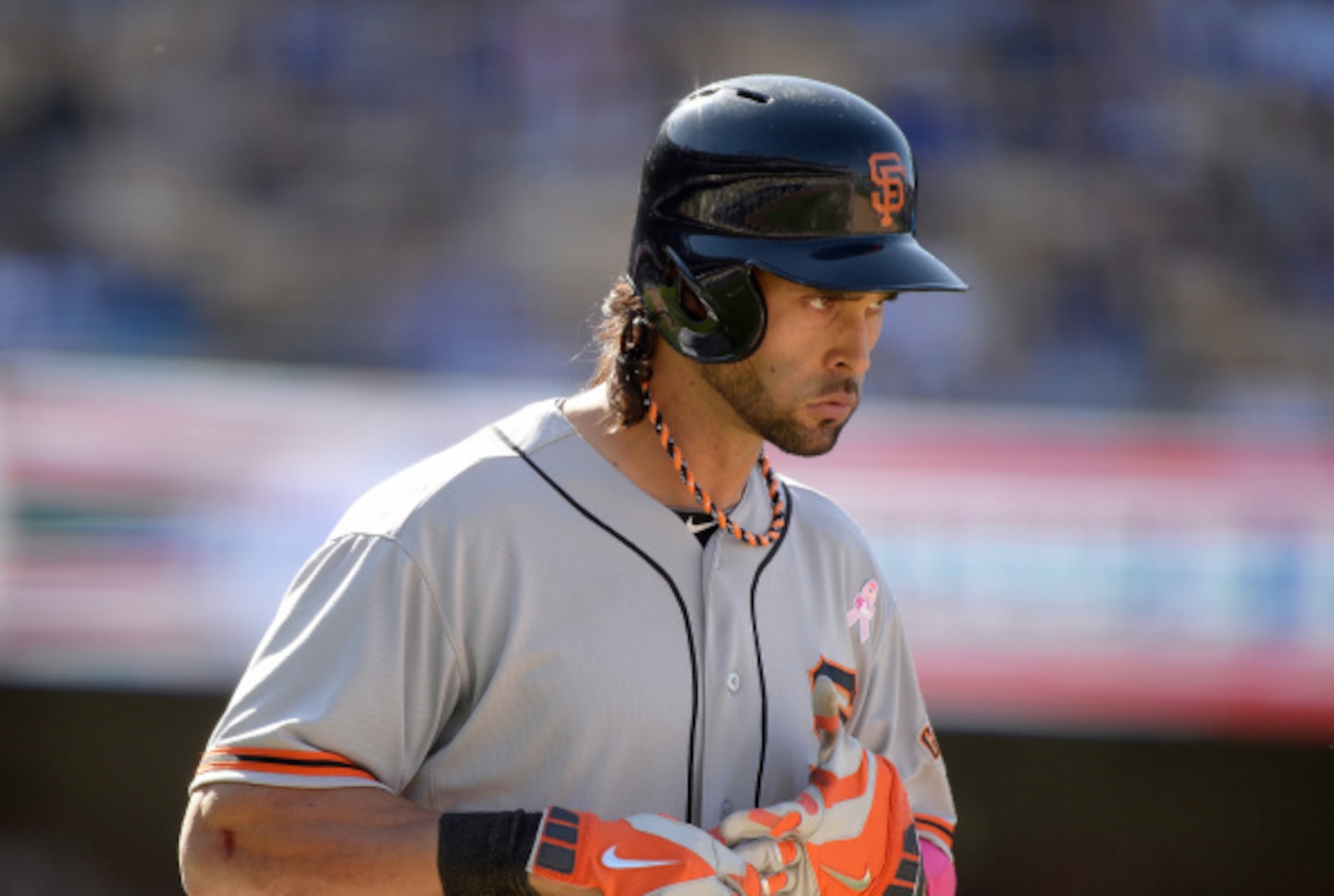
Hitting
We’ve seen mainly the good version of Angel Pagan in 2014, as he’s shown off a strong approach and hit line drives at a career-best rate. It helps that he’s seen more fastballs and that he’s crushed them like never before. The only real catches are that Pagan is actually too good at making contact to draw walks, and he’s been largely bamboozled by left-handed slow stuff.
Power
That Pagan has basically ditched his fly-ball habit helps explain why his power has been down in 2014. We’re also still not seeing him routinely crush the ball from the left side like he did back in 2012. That he’s battled back and leg problems certainly hasn’t helped. Such problems are likely going to be a part of life for the 33-year-old from now on, so expectations for his power shouldn’t be too high.
Baserunning
Pagan’s injury problems mean some skepticism is warranted here too, but his baserunning isn’t on the same thin ice as his power. He’s once again made it to double-digit steals, and his 46 XBT% is the best he’s managed in years. Also, foolish outs on the bases have been highly infrequent. This is probably as good as it gets from now on, but it still passes for pretty good baserunning.
Defense
The defensive metrics haven’t really liked Pagan’s defense in center field ever since 2010, and they have good reasons to be skeptical of it this year. He still has enough speed to track down most fly balls, but it’s not the kind of speed that allows him to get away with poor reads. Unfortunately, those don’t come infrequently when Pagan’s playing center field.
Overall
Pagan is still one of the better line-drive hitters you’re going to find, and age and injuries haven’t robbed him of his good speed just yet. But since that speed is no longer great and what power he had is drying up, he’s trending toward becoming merely an average regular.
25. Colby Rasmus, Toronto Blue Jays
17 of 41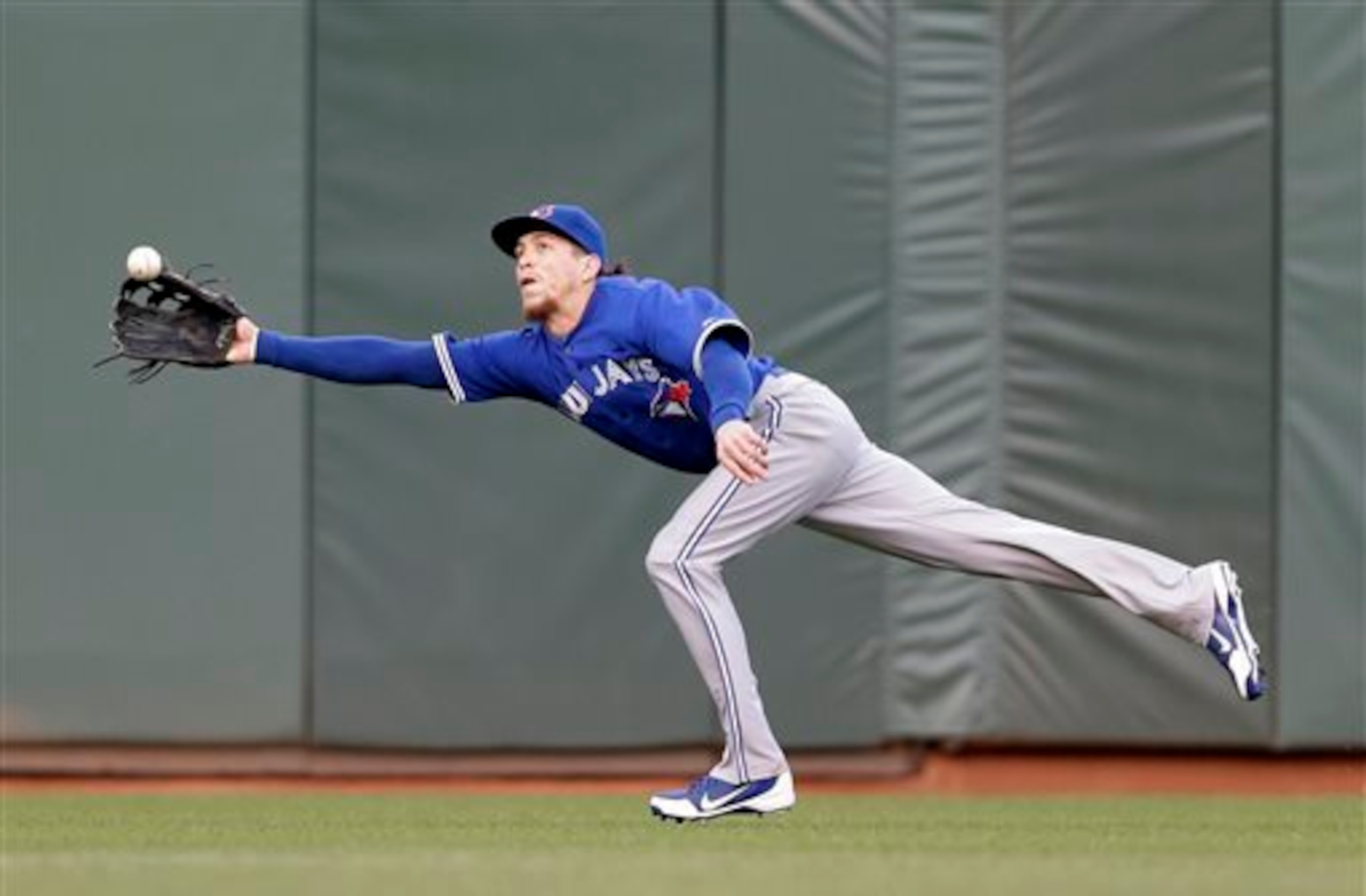
Hitting
It’s hard to look at Colby Rasmus without noticing his upward-climbing strikeout habit, and that can be chalked up mainly to how easy it is to make him swing and miss on slow stuff. Indeed, he can’t hit it at all. And though he’s at least a solid line-drive hitter, that only counts for so much. His high fly-ball habit limits his ability to hit for average, and so does his pull tendency on ground balls.
Power
Here’s why Rasmus’ terrible hitting can be tolerated. His proneness to injuries—he’s spent several weeks on the DL in three of four seasons—is one limit on his power potential, but that’s about it. His extreme fly-ball habit gives him plenty of chances to hit for power, and his ability to drive the ball extends beyond his pull side. As long as that’s the case, his power will continue being a meal ticket.
Baserunning
Rasmus usually makes up for modest stolen-base production with good aggressiveness, but not this year. His XBT% has fallen from over 50 all the way to 25 percent. How much his early-season hamstring injury is a factor in this is a good question. That and his youth are an excuse to cut Rasmus a break. Even still, a fall that far can’t be brushed off completely.
Defense
The defensive metrics had Rasmus rated as a plus defender last year but are now viewing him as below average. The bad wheel he had earlier in the season could be a factor here too, as he hasn’t had much range into the gaps this year thanks to a lack of closing speed. He still gets good reads and tracks balls well for the most part, however, so I’ll err on the side of optimism.
Overall
Rasmus has gone from being one of the better center fielders in the league in 2013 to a broken-down mess. This should make his free agency very interesting. But because he has good power for a center fielder and hasn't totally lost his ability to play the position, don’t be surprised when somebody gives him good money.
24. Peter Bourjos, St. Louis Cardinals
18 of 41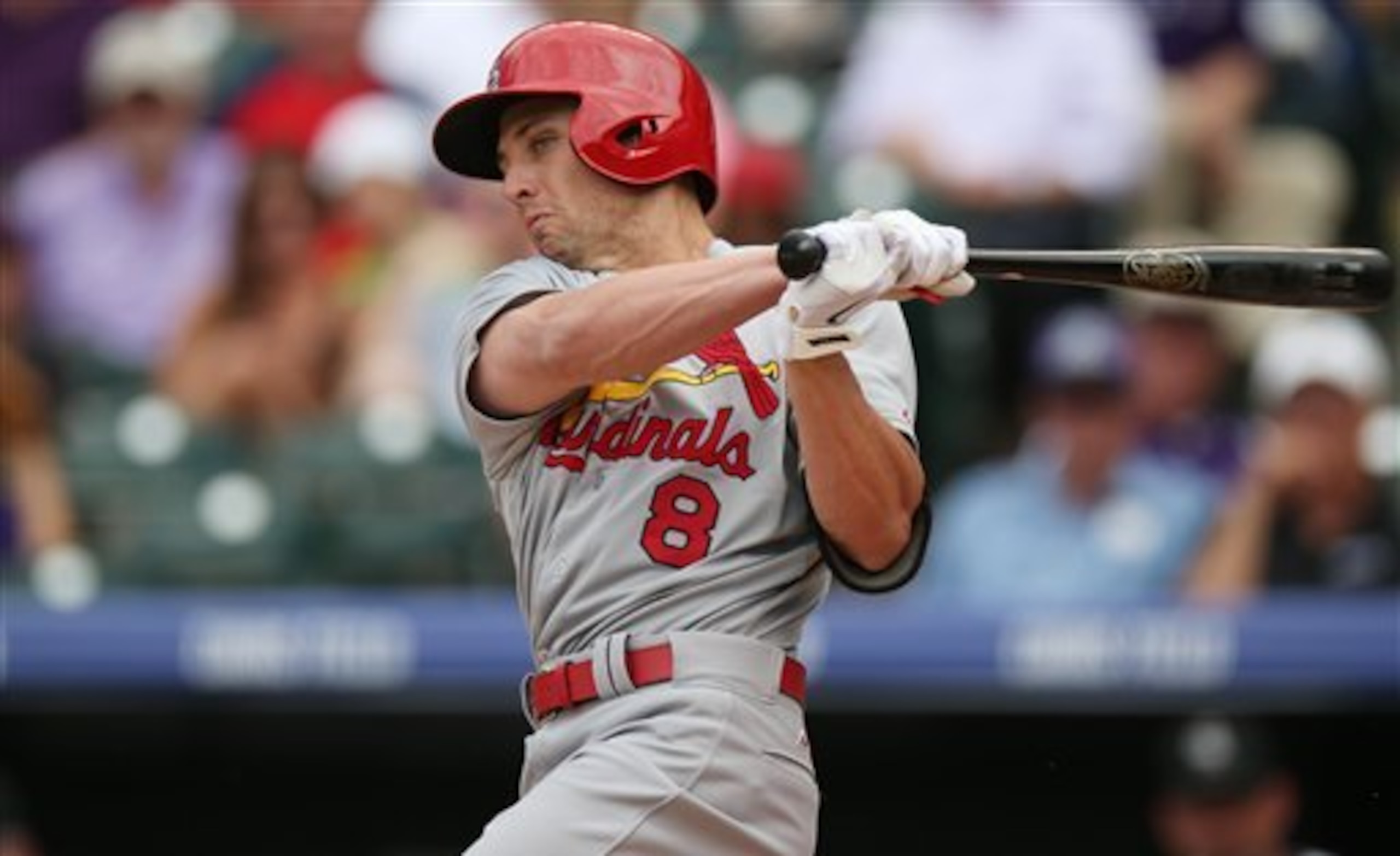
Hitting
Though he’s not a wild swinger, irregular playing time hasn’t helped Peter Bourjos keep a tight approach. He’s also struggled to hit breaking balls, and he really hasn’t produced at all against non-fastballs. The silver lining is that he’s been hitting fastballs on a line like never before, and he might deserve better results given how well he’s mixed line drives and ground balls. We can give him a slight benefit of the doubt.
Power
That Bourjos leans more toward line drives and ground balls means he leans more toward his speed than his power. That and his status as a part-timer say not to expect too much power production. He’s not without an ability to drive the ball, however—particularly up the middle of the field, where he’s picked up the bulk of his extra-base hits. For a part-time speedster, the power he offers really isn’t bad.
Baserunning
For a guy who has such terrific speed, it’s disappointing that Bourjos still only has one 20-steal season. He’s shown this year that it’s a stretch to even count on him for 10 steals in a part-time role. The bright side is that he doesn’t disappoint running the bases, as his 67 XBT% is superb by any measure. That he can do such things without also making outs on the basepaths is a bonus.
Defense
Defense is what Bourjos is known for the most, and rightfully so, as far as the defensive metrics are concerned. Though he doesn’t always get the best jumps or run the prettiest routes, it doesn’t matter with his speed. He can track down anything, and he certainly has the knack for tough catches. He may lack a great arm, and he may only do it part-time, but his speed-based defense is legit.
Overall
Though irregular playing time hasn’t helped his timing, Bourjos is a better hitter than he’s looked like for much of the year. But his best asset is still his speed, and he puts it to enough use rounding the bases and playing defense to make himself a more-than-capable part-time player.
23. Jarrod Dyson, Kansas City Royals
19 of 41
Hitting
The lefty-swinging Jarrod Dyson’s job has been made easier by a platoon role against right-handed pitching. It’s to his credit that he clearly sees righties well, putting together disciplined at-bats and making contact. They also have a hard time beating him with fastballs. It’s too bad they beat him very easily with slow stuff and that he’s an extreme ground-ball hitter who’s getting by on a lot of good luck this season.
Power
Don’t come to Dyson looking for power, because you won’t get it. In addition to being a part-time player with a very extreme tendency toward ground balls, he can only give the ball a ride to his pull side. And though he can do it, he does so very infrequently. That he entered September with 99 games played and only seven extra-base hits pretty much says it all.
Baserunning
But hey, when you can run the bases like Dyson, you don’t really need to hit for power. Despite his limited playing time, this is his third season in a row with more than 30 steals. And though he’s not working on an XBT% in the high 60s like he managed in 2011 and 2012, this year’s 57 XBT% is perfectly acceptable. Part-time player or not, the guy can run the bases.
Defense
Even with limited playing time, the defensive metrics have Dyson pegged as one of the best in center field. The amount of ground he covers is owed more to his speed than top-notch reads or route-running, and that’s OK. He has more than enough speed to make him one of the game’s top fly-ball catchers. And though he’s 30 years old, several years of only semi-regular playing time have helped preserve his legs.
Overall
Dyson is a platoon hitter with virtually no power and really only one truly impressive tool: his speed. It’s a good thing, then, that he makes the most out of his speed on the basepaths and on defense. He’s one of the game’s better sources of value in both departments.
22. Ben Revere, Philadelphia Phillies
20 of 41
Hitting
Ben Revere is one of the best contact hitters in the game. That’s thanks largely to how he doesn’t miss fastballs, especially when they’re in the zone. And because he doesn’t hit fly balls, he doesn’t let his modest strength hold him back. It’s too bad that his contact habit gets in the way of him drawing walks, and his extreme tendency toward ground balls means his average can only go so high.
Power
When you hit as many ground balls as Revere does, you’re not going to hit for much power. And when he does hit fly balls, he rarely pulls them to right field. But hey, at least Revere has shown that he’s not totally without home run power after all, and he’s a threat to turn anything into a gap or down a line into a triple. His power potential is very weak, but it's not nonexistent.
Baserunning
Revere has stolen over 40 bases for the second time in three years, and with career-best efficiency to boot. He often doesn’t have to aggressively round the bases because of this, but his 51 XBT% puts him on track to finish with a rate over 50 percent for a second straight year. Until Billy Hamilton mixes in some efficiency with his baserunning, Revere’s the best baserunner center field has to offer.
Defense
With his speed, Revere should be a terrific defender in center field. But the defensive metrics are convinced that he’s not, instead rating him as a disastrous center fielder. They have a gripe. Revere will occasionally remind that good speed can easily make up for iffy reads and routes, but his reads and routes are all too often downright poor instead of merely iffy. Until he shapes up, his defense is going to be a problem.
Overall
Revere is an elite contact hitter who can hit for average and run the bases very well. These things make him a viable regular. But without OBP-boosting walks, power or good defense in center field, a viable regular is really all he is.
21. Dexter Fowler, Houston Astros
21 of 41
Hitting
Dexter Fowler is becoming more willing to take a walk every year. He owes that to his terrific plate discipline, which is only becoming more valuable to him as he sees fewer and fewer fastballs. Add in a solid mix of line drives and ground balls, and you have a pretty good base for hitting production. Now all Fowler has to do is show that he can actually hit the slow stuff, which is still proving to be difficult.
Power
Fowler didn’t arrive in Houston with a track record as a major power source, and not much has changed. He hasn’t hit many long flies to his pull side as a lefty hitter, and his power to left field has been largely absent. And as a righty hitter, he limits himself by making straightaway center his main power alley. This leaves him still looking like a 10-homer guy with only occasional doubles power.
Baserunning
Fowler once stole as many as 27 bases in a season back in 2009, but he now looks like a guy who’s going to struggle to hit double digits in a full season. And though his baserunning looks considerably better if you focus on how his 59 XBT% is par for the course, he still hasn’t cleaned up his longstanding problem of running into outs on the basepaths. He’s not a bad baserunner, but he is short of good.
Defense
The defensive metrics have never been especially fond of Fowler’s defense in center field, but they really don’t like it this year. He’s a good athlete, but his range of playmaking ability is limited by a couple things. One is a lack of elite closing speed. The other is how he often tends to be too casual with his routes, which occasionally causes him to turn easy catches into tough ones.
Overall
There’s plenty to like about Fowler’s approach at the dish, and he can provide at least some power and some speed. It’s how he can only provide “some” that’s disappointing, however, and Fowler’s already iffy defense isn’t getting any stronger.
20. Jon Jay, St. Louis Cardinals
22 of 41
Hitting
It’s easy to look at what Jon Jay’s doing and chalk it up to his platoon role, but he’s actually been better against lefties. What’s really helping is how he’s toned down his first-half aggressiveness in the second half, allowing for better at-bats. He’s also hit everything for line drives and is back to going up the middle with slow stuff. It's only one good half, but it's something to build on all the same.
Power
Jay rarely hits fly balls, so his power potential has a pretty big natural cap on it. That he hits the ball almost exclusively to center and left when he does hit it in the air is another natural cap. He’s not incapable of splitting the gaps for extra-base hits, however, and he does have some home run power to right field he can tap into. It’s not good power, but it’ll do for decent power.
Baserunning
Jay’s base-stealing habit has fallen pretty far since he swiped 19 in 2012. He’s now a candidate for only five to 10 steals, which isn’t many for a center fielder. And while his 52 XBT% looks like a silver lining, next to that is the fact that he’s set new career highs for outs on the basepaths in each of the last two seasons. Baserunning isn’t a severe weakness, necessarily, but it’s not a strength either.
Defense
The defensive metrics are back to being OK with Jay’s defense after hating it in 2013. That they’re not punishing him as much for his weak arm is a factor, but they’re also back on board with his range. It’s definitely limited by a lack of foot speed, but that’s not hurting him as much as it did last year. He’s getting better jumps and making better reads, and those can count for a lot.
Overall
It was an up-and-down year-and-a-half for Jay, but he’s gotten back to doing the things that helped make him a .300 hitter in 2012. Even without much power or baserunning value, that and his at least solid defense in center field combine to make him a pretty good regular.
19. Coco Crisp, Oakland A's
23 of 41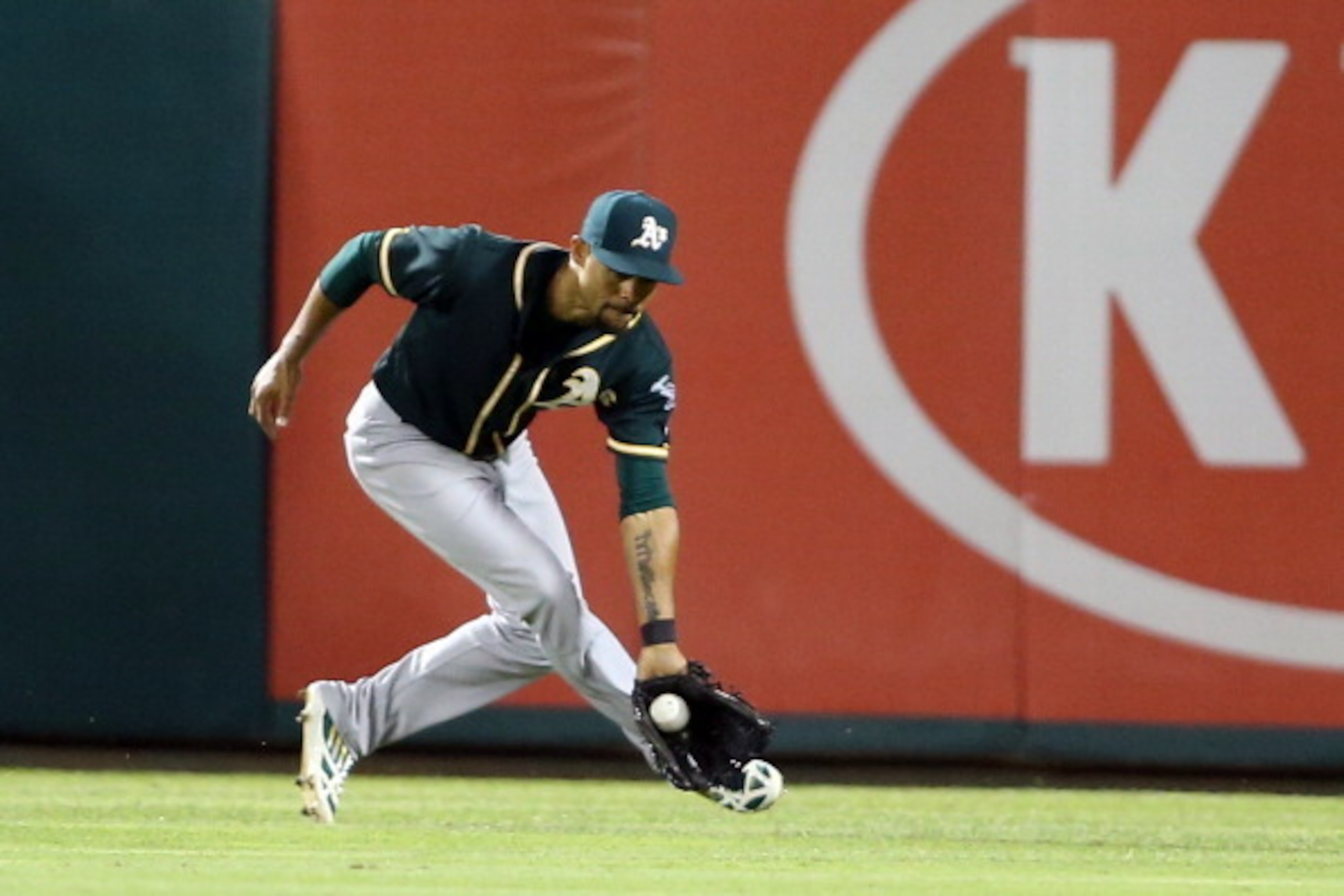
Hitting
Coco Crisp is too much of a fly-ball hitter to post a high average on balls in play, and he’s once again been too pull-heavy for his own good from the left side. But he makes up for these weaknesses simply by being a fantastic contact hitter with elite plate discipline. He also deserves props for hitting slow pitches on a line more frequently. He’s an advanced hitter who’s not running out of tricks.
Power
All 22 of the homers Crisp hit last year were right down the lines, so it’s not like he suddenly got that much more powerful. We’re seeing a performance much more indicative of his true power level this year. His fly-ball habit makes extra-base hits a constant threat, but the threat level is always low due to how he can really only hit the ball hard to his pull side whether he’s batting righty or lefty.
Baserunning
Crisp stole a whopping 88 bases between 2011 and 2012, but he’s made it clear over the last two seasons that he’s getting too old for that. He’s not going to make it far over 20 steals this season, and anything more than 20 steals could be a challenge in his age-35 season next year. Factor in how he’ll only be looking to duplicate a 46 XBT%, and it’s fair to look forward to good but not great baserunning from him in 2015.
Defense
The defensive metrics are down on Crisp’s defense, and not just because he has the same weak arm he’s always had. Indications are his range is down, and that would appear to be true. Crisp has long been a fielder who’s made up for questionable reads and inefficient routes with outstanding closing speed, and that closing speed hasn’t been seen as much in 2014. Without it, he’s just not much of a fielder.
Overall
Crisp’s best talent these days is his ability to put together terrific at-bats, which feed into his very strong on-base habit. But without the power he had in 2013 or the speed he’s had for much of his career, he can only be so much of an above-average player.
18. Austin Jackson, Seattle Mariners
24 of 41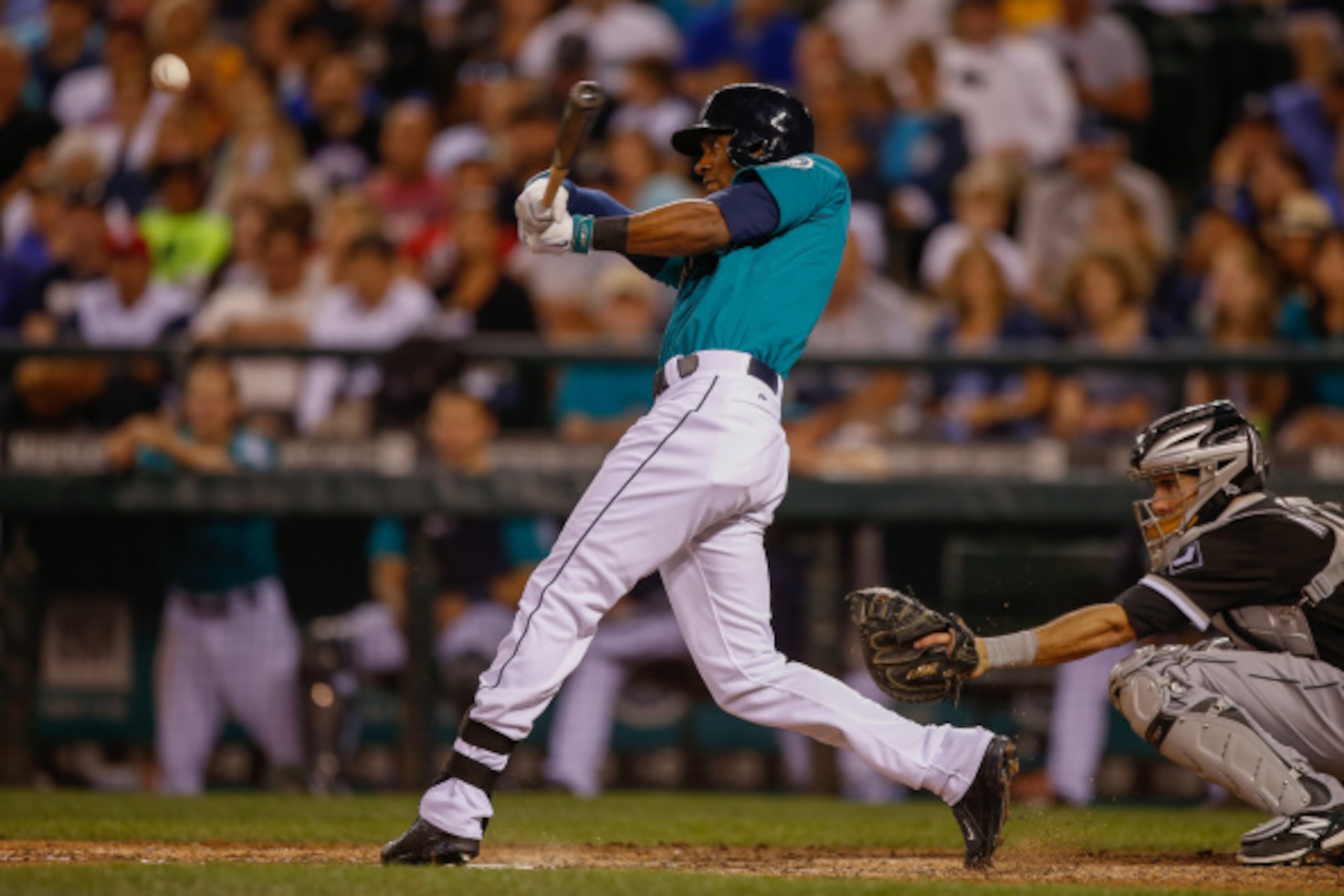
Hitting
Austin Jackson’s approach combines good patience with good discipline, and he swings and misses less than you might think. He’s also still a strong line-drive hitter who can hit ‘em to all fields. It’s therefore too bad about his tendency to lift so many harmless fly balls to right field, and he’s still struggling to repeat his 2012 performance on non-inside fastballs. Habits like these are anchors on his production.
Power
Jackson’s power has fallen pretty far from its 2012 peak. That so much of his fly-ball habit is wasted on flies to right field is a factor, and it doesn’t help that his main power alley is more up the middle than to his pull side. However, he is more capable of driving the ball up the middle than his results indicate, and he still has the speed to be a good triples threat. In other words, he’s better than he’s shown.
Baserunning
Jackson peaked as a base stealer as a rookie back in 2010, but it’s encouraging that he’s been more active since he arrived in Seattle. He may yet have 20-steal potential, and then there’s how he’s fixing to finish with an XBT% over 50 for a second time in three years. Though he’s still not immune to making outs on the bases, there’s enough for optimism looking ahead to Jackson’s age-28 season.
Defense
The defensive metrics once had Jackson pegged as arguably the class of the league in center field, but not anymore. There frankly is something to the idea that his range isn’t what it once was, as Jackson doesn’t seem to have the same legs under him that he did when he was in his early 20s. But he still plays a very smooth center field, and his reads and routes into the gaps are still particularly strong.
Overall
The further we get away from Jackson’s excellent 2012 season, the more it looks like an outlier. And no, his defense is not as good as it used to be. But since his bat is better than his production says it is and he still has some athleticism to put to use on the basepaths and defense, he’s a solid all-around player.
17. Marcell Ozuna, Miami Marlins
25 of 41
Hitting
Marcell Ozuna fortunately has some pretty good bat control for a guy who hits so many ground balls, as he’s demonstrated that he can hit ‘em wherever he pleases. But his hitting floor is going to be pretty low as long as he is indeed such a heavy ground-ball hitter, and then there’s the reality that pitchers are on to his inability to make contact with and hit slow stuff.
Power
When Ozuna does hit the ball in the air, the good news is that he often crushes it. He’s launched an assault on the deepest parts of the yard and has, not surprisingly, showcased an ability to pick up extra-base hits in any direction along the way. There’s going to be a cap on his doubles power as long as he remains such an infrequent line-drive hitter, but 20- to 25-homer power is good stuff even without doubles.
Baserunning
And now back to the things Ozuna needs to work on. He hasn’t yet shown that he has the base-stealing ability typically found at the position, and it’s not a good look that he’s mixing just a 42 XBT%, with several outs at second and third base. He’s plenty young enough to figure things out, but for now, he’s a below-average baserunner by center field standards.
Defense
The defensive metrics are split on what to think of Ozuna’s defense in center field, with one rating him as average and the other rating him as easily above average. He’s probably closer to average. He’s really a corner outfielder playing center field, and it shows most when he doesn’t get good reads off the bat. There is a bright side, though: His arm is plus for a corner outfield spot, never mind center field.
Overall
Ozuna packs a good arm for center field and even better power. Thanks to those two things, he’s a quality player. He’s not the best fly-ball catcher, however, and his hitting and baserunning are too inconsistent for him to be anything more than a solid all-around player.
16. Byron Buxton, Minnesota Twins (Prospect)
26 of 41
Hitting
Byron Buxton’s combination of explosive bat speed and hand-eye coordination should help him hit for a high batting average in the major leagues, while his mature approach and pitch recognition should make the right-handed-hitter a consistent on-base threat.
Power
Buxton’s power was zapped by his wrist injury this spring, but the 20-year-old had already proved to be an extra-base machine when healthy and also has the raw power to produce 20-plus home runs at the highest level. It might not arrive next season, but Buxton has enough thump to potentially hit in the middle of an order.
Baserunning
Buxton has legitimate 80-grade speed; he’s a phenomenal baserunner capable of pushing 100 runs and 50 steals in a season given his potential to hit for average and get on base. It should always represent one of his greatest strengths, even if the offensive skills fail to translate.
Defense
As a supremely gifted athlete with the aforementioned 80-grade speed, it shouldn’t come as a surprise that Buxton has the potential to be an elite defender in center field. However, it’s yet to be seen whether his season-ending concussion affects how he attacks the ball.
Overall
Buxton has the ceiling of an MVP-caliber player in his prime, with five potentially plus tools and a feel for making in-game adjustments. However, after losing nearly all of 2014 due to injuries, he now faces at least some pressure to make up for the lost time.
15. Danny Santana, Minnesota Twins
27 of 41
Hitting
Danny Santana has established himself as a free swinger prone to both chasing and whiffing. But he’s done his bit to earn his high average on balls in play with a mix of line drives and ground balls, notably balancing out a high whiff rate on breaking balls with a high line-drive rate. As a lefty hitter, he’s shown an ability to use the whole field. Though he's been a little too lucky on grounders, the hitting talent is clearly there.
Power
It looks like Santana isn’t going to hit fly balls frequently enough to be a serious home run threat in the majors. Then there’s the reality that he’s really only shown pull power from either side of the dish. The bright side is that he only has to get the ball in one of the gaps or down either line, and he can let his speed take care of the rest. He should get plenty of doubles and triples throughout a full season.
Baserunning
Santana had a strong track record as a base stealer in the minors, and he’s lived up to it. Given what he’s done in a little over half a season, it’s fair to expect him to be a 30-steal guy over a full season. And though his 46 XBT% is only OK by center field standards, it looks better in light of the fact that he hasn’t made any outs on the basepaths. He has the look of a strong baserunner in the making.
Defense
Because Santana is a shortstop by trade, it makes sense that the defensive metrics aren’t liking his defense in center field yet. One thing he does have is a good arm for center. But he needs work reading the ball off the bat and tracking down fly balls, especially on plays that require him to go back on the ball. As a shortstop who’s used to having the play in front of him, you’d expect as much.
Overall
It bears repeating that Santana likely isn’t as good of a hitter as his numbers say he is, and his defense in center field needs work before it can even be called average. All the same, he does have the look of a guy who can at least be a good hitter and baserunner with some doubles and triples power. That’s a solid player.
14. Leonys Martin, Texas Rangers
28 of 41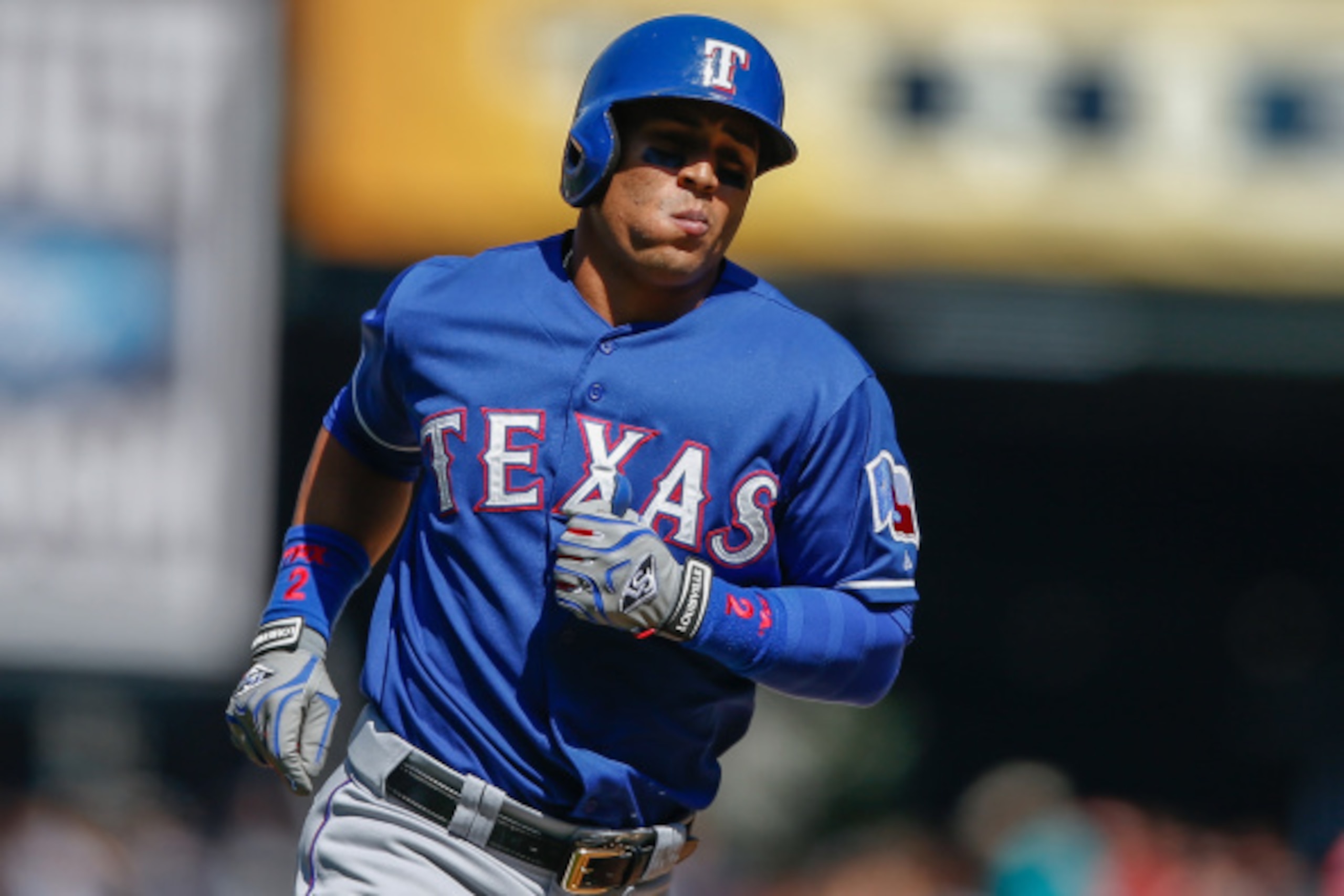
Hitting
Leonys Martin is still an impatient and undisciplined hitter with a whiff habit, in part because he’s not getting any better at laying off slow stuff. He’s also totally overmatched against lefties, which may not change any time soon. Fortunately, he can hit almost any fastball, and a hitter with his speed indeed should be favoring ground balls and line drives. On these strengths, he can be a solid hitter.
Power
Because half of Martin’s batted balls go on the ground, his power potential only goes so high. Then there’s the reality that his home run power basically only goes down the right field line. He’s not incapable of giving the ball a jolt into either gap, however, and anything that gets down is a potential double or triple with his speed. It may be limited, but Martin’s power potential isn’t nonexistent.
Baserunning
Martin has taken a couple steps back as a base stealer, as he’s going to fall short of replicating what he did in 2013 in terms of both volume and efficiency. He still has 30-steal potential, though, and this is the second year in a row he’s going to finish with an XBT% over 50 percent. While he’s been caught stealing more often, that he otherwise hasn’t made as many outs on the basepaths is a fair trade.
Defense
The defensive metrics once again rate Martin as a well-above-average defender in center field. Like in 2013, the main attraction is his (by center field standards) excellent arm strength. While he can occasionally be careless about how he fields the ball, he has excellent range too. His speed definitely helps, but he helps himself even more by breaking quickly and running good routes.
Overall
Goodness knows Martin has his limits as a hitter, ranging from a lack of discipline to an inability to hit lefties to limited power. But he hits righties well enough to save par, and the value he can provide running the bases and playing center field must not be overlooked.
13. Joc Pederson, Los Angeles Dodgers (Prospect)
29 of 41
Hitting
Joc Pederson projects to be a slightly above-average hitter at the highest level, with a mature approach and line-drive-oriented swing that encourages line-to-line contact. He already demonstrates a feel for working counts and getting on base, so expect his trend of high strikeout and walk rates to continue at the highest level.
Power
Pederson has hit for at least above-average power at every minor league stop, as he set a career high in 2014 with 33 bombs. His power will play even if the average doesn’t translate, as the 22-year-old is patient enough to wait out specific pitches each trip to the plate.
Baserunning
Pederson's consistency on the basepaths rivals his power frequency, as he has now swiped at least 26 bases in each of the last four seasons. Beyond that, his knack for getting on base and using his speed to put pressure on opposing defenses should always make him a consistent source of runs.
Defense
Pederson is a natural in center field, with plus range, excellent instincts and above-average arm strength that also makes him a candidate to see time at both corner outfield positions.
Overall
Pederson is an impressive athlete with quiet strength, showcasing five average-or-better tools and good secondary skills. His power/speed combination makes him one of the more intriguing prospects heading into 2015 and has him seemingly poised to receive considerable playing time in the Dodgers outfield next season.
12. Adam Eaton, Chicago White Sox
30 of 41
Hitting
As long as Adam Eaton remains such an extreme ground-ball hitter, his hitting potential can only go so high. He’s also prone to whiff on breaking balls, which he’s really struggled to hit over the last two years. It’s a good thing, then, that he’s an excellent contact hitter who also has some discipline to offer. He has terrific bat control as well, spreading his ground balls around and consistently visiting center and left field.
Power
Though it doesn’t help his hitting ceiling, Eaton’s extreme ground-ball habit certainly hurts him in the power department. Don’t expect him to ever be much of a home run hitter, especially knowing that he also hardly ever hits the ball in the air to his pull side. These complaints aside, he’s at least pretty good at slapping the ball down either line and can occasionally split either gap.
Baserunning
Eaton should be a terrific base stealer with his speed, but he really hasn’t gotten a fair chance to prove himself as one. He arrived late in 2012 and has been injured for a good chunk of the last two seasons. Still, he’s shown this year that he can at least handle double-digit steals and a solid XBT% at 49 percent. In light of this, we can be at least a little optimistic.
Defense
The defensive metrics have gotten their best look yet at Eaton, and they’re split on how good he is. That sums him up pretty well. He has a pretty good arm for center field, and his speed allows him to run down plenty of fly balls. But at the same time, his range is complicated by occasionally iffy reads at the crack of the bat and indirect routes. He’s definitely good, but he's short of great.
Overall
Thanks in part to injuries continuing to rob him of playing time, Eaton hasn’t yet proved himself as a great baserunner or the most advanced center fielder, and he has little power to offer. He’s done enough, however, to establish himself as a very good major league hitter with enough athleticism to potentially be a terrific all-around player.
11. Desmond Jennings, Tampa Bay Rays
31 of 41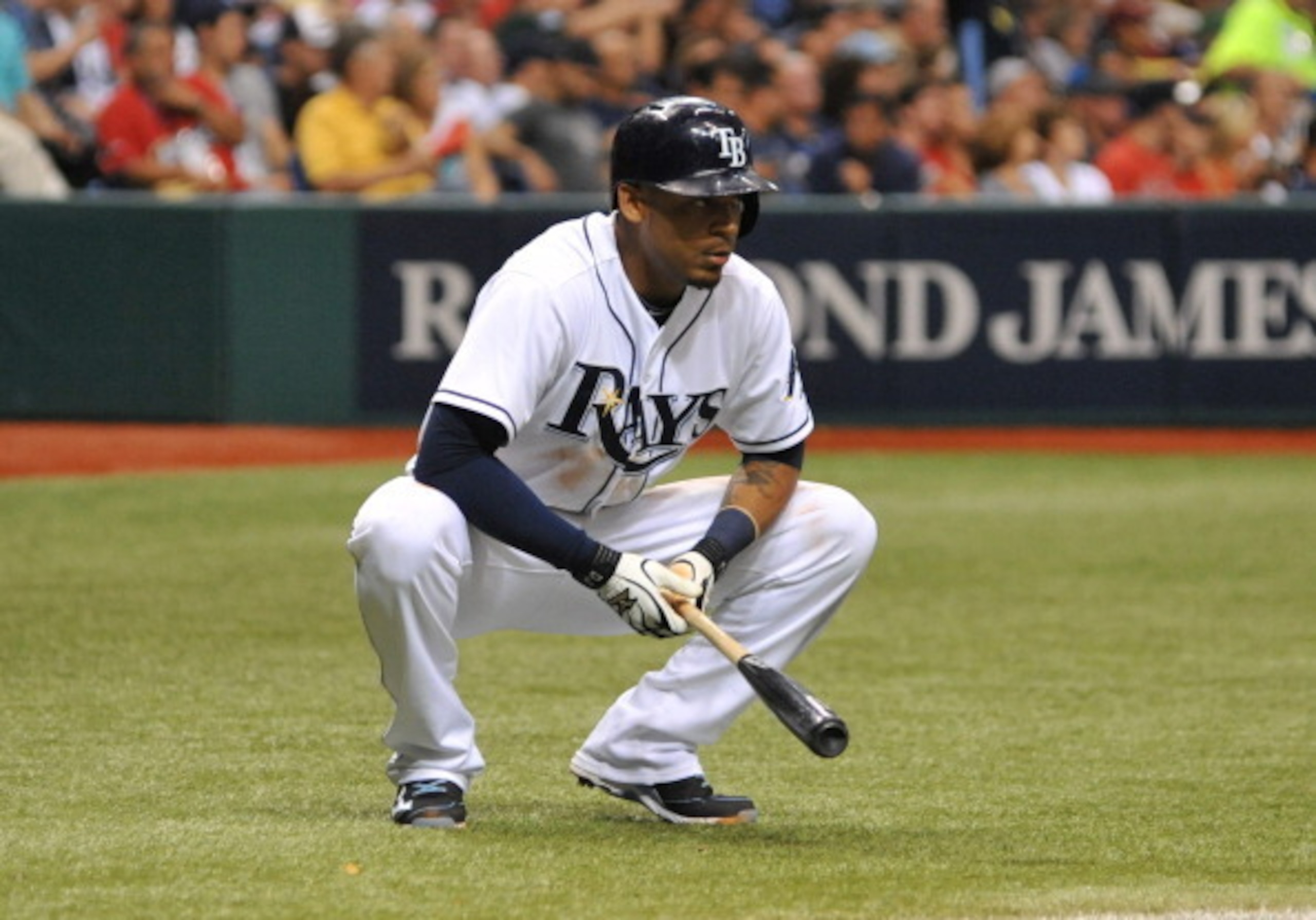
Hitting
Desmond Jennings has a good eye, and this year has seen him make contact more consistently than in 2013. It helps that he’s turned around an upward-trending whiff habit on fastballs. However, he's still inconsistent at hitting outside heat, and he’s only whiffing on more and more breaking balls while struggling to hit them. Since pitchers like to feed him both of these things, it’s on him to adjust.
Power
Jennings’ power potential is limited in how he deals mainly in ground balls. He also tends to target the middle of the field, and line drives and fly balls to his pull side are becoming more and more infrequent. What saves him is that he at least has the pop to pick up extra-base hits in any direction, with the power he has in the gaps being especially noteworthy. He can handle above-average power.
Baserunning
Jennings’ base stealing clearly peaked when he stole 31 in 33 tries in 2012, as he’s now worsened to a point where even expecting 15 steals from him going forward is pushing it. It’s a good thing, therefore, that his aggressiveness is in good shape. Jennings has a 61 XBT% that’s in line with his career mark of 58 percent, and he doesn’t run into many outs on the basepaths to boot.
Defense
The defensive metrics are back up on Jennings’ defense in center field, in part because he hasn’t angered the metrics with errors again. With that issue fixed, only his arm is holding him back in the eyes of the metrics. His range is fine, as he combines a good first step with direct, smooth routes to fly balls. Specifically, he’s probably more comfortable going back on balls than your average center fielder.
Overall
That Jennings has holes in his bat that help cancel out his good approach is the biggest thing working against him. But aside from that, he’s a slick-fielding center fielder with some solid power and speed on the basepaths to offer. Such players tend to be good to keep around.
10. Juan Lagares, New York Mets
32 of 41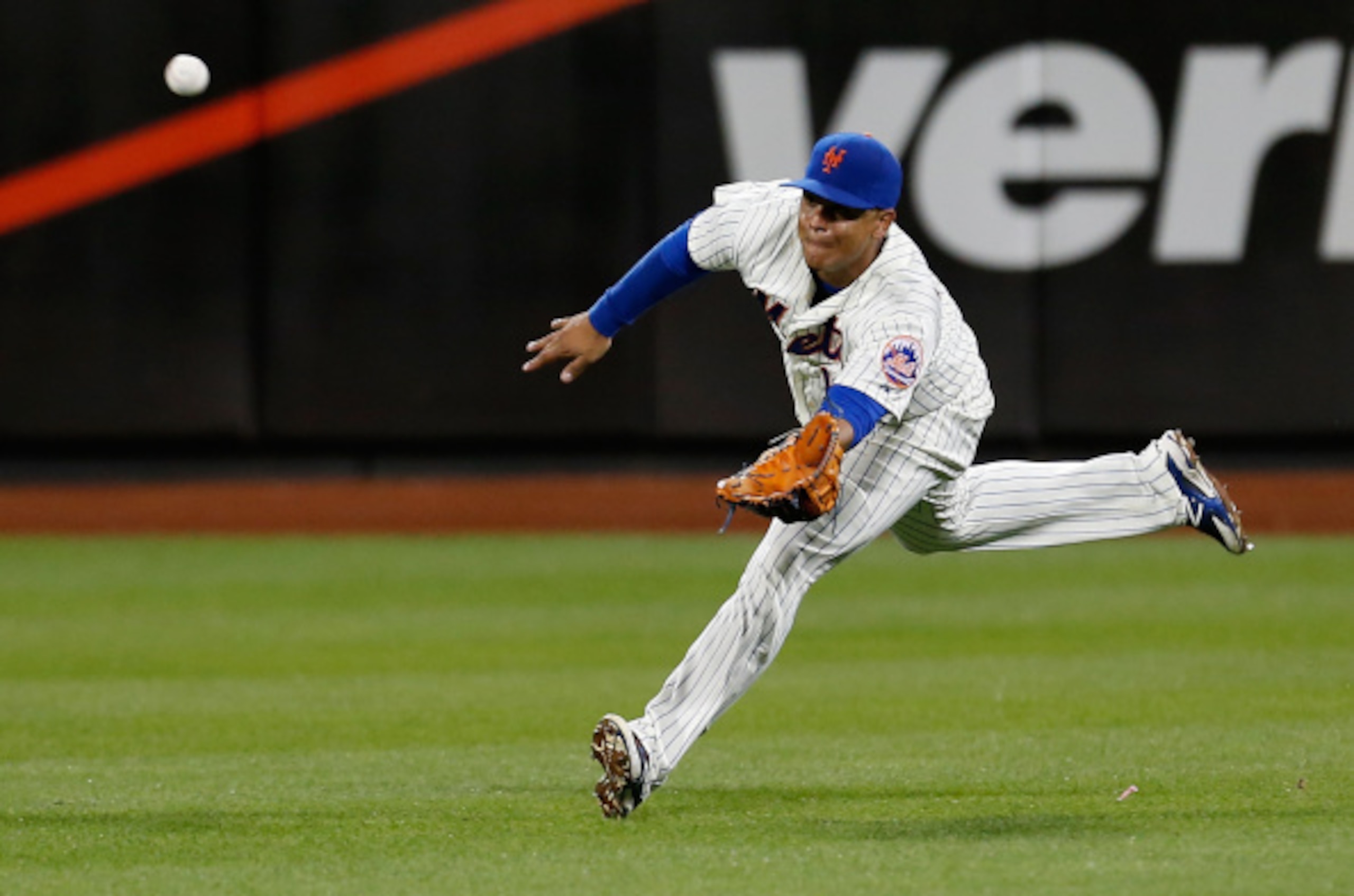
Hitting
Juan Lagares is too much of a hacker to draw any walks, and pitchers can still get him to whiff on hard stuff up and slow stuff low. But Lagares deserves props for upping his line-drive rates on fastballs and breaking balls. In particular, he’s had an easier time squaring up hard stuff in the zone than he did in 2013. He’s not a strong on-base merchant yet, but he’s at least made himself into a decent hitter.
Power
Becoming less of a fly-ball hitter is something Lagares needed to do to achieve more consistency at the plate, but power is going to be harder to come by as long as he continues on that path. On the bright side, he does have some good pop up the middle of the field and to right-center, giving himself a consistent avenue in which to get doubles and triples.
Baserunning
Lagares belongs in the “good athlete, iffy base stealer” camp. He’s shown double-digit-steal ability this year, but not with much efficiency. It’s a good thing he’s going to finish the season with yet another XBT% over 50 percent, and he also hasn’t been as careless about running into outs. The goods are there for him to be a solid baserunner.
Defense
The defensive metrics are pretty well convinced that Lagares is the class of the league in center field, and they’re not wrong. In addition to a terrific arm, he also has range to rival any center fielder. He’s not the fastest runner, but he’s Andruw Jones-like in his ability to run optimal routes every single time. Add in a flair for the dramatic catch, and you get a truly special defender.
Overall
Between his arm and his range, Lagares is the ideal package in center field. Because of that, his defense alone is enough to make him a quality player. But now that he can hit a little bit too, he may be on his way to becoming a star.
9. Denard Span, Washington Nationals
33 of 41
Hitting
Denard Span has two ideal skills you want your leadoff hitter to have: a good eye and an elite ability to make contact. He further helps himself by hitting primarily line drives and ground balls, and he’s only getting better at hitting hard and breaking pitches on a line. The catch is that he’s actually too good at making contact to draw many walks, effectively cancelling out that good eye of his.
Power
Given all the fly balls he’s hit this year, Span should be hitting for more power. And indeed, he’s definitely benefited from the career-high number of balls he’s hit in the air to right field. But one thing that’s still true of Span’s power is that it’s virtually nonexistent to the left of center field. That and what’s still very limited home run power keep the ceiling on his power potential pretty low.
Baserunning
Rather than slow down, Span has celebrated his age-30 season by setting a new career high for stolen bases. With solid efficiency to boot. As a bonus, he’s also upped his XBT% from 42 to 54, making this maybe the best year he’s ever had running the bases. But while he’s succeeded in showing his legs are far from worn out, banking on a repeat performance at age 31 in 2015 isn’t the best idea.
Defense
After consistently viewing him as an easily above-average defender between 2012 and 2013, the defensive metrics think Span is just OK this year. This can’t be ignored as a warning that he’s losing a step in the outfield, but he frankly still passes the eye test just fine. He gets after balls quickly, tracks them well and appears to still have pretty good closing speed.
Overall
It’s fair to downplay Span’s power and have doubts about his legs holding up after such a strong showing at age 30, but for the most part, he offers plenty to like. Best of all are his ideal leadoff hitter’s approach and fly-ball-catching skills, the former of which has been put to better use than ever before.
8. Jacoby Ellsbury, New York Yankees
34 of 41
Hitting
You can get Jacoby Ellsbury out on pitches up in the zone, and he’s back to having the same swing-and-miss problem with off-speed stuff he had in 2011. But these are minor gripes compared to his strengths. Those include putting together patient and disciplined at-bats while also making plenty of contact and taking pitches back up the middle. He’s also never been a better line-drive hitter.
Power
Yankee Stadium isn’t the reason Ellsbury’s power is up. It has more to do with him elevating the ball more, and he simply hasn’t missed on fly balls to right field. Whether his power has actually improved, however, is debatable. When comparing his 2013 batted ball map to his 2014 map, you just don’t see the same power the other way. Now that he’s 31, expecting that power to come back isn’t a good idea.
Baserunning
Repeating last year’s 52-steal season probably always was unlikely, so what Ellsbury has done in the stolen-base department this year shouldn’t be viewed as a disappointment. Neither should his aggressiveness, as he’s upped his XBT% from 42 to 51. That leaves just one reason to worry: Will Ellsbury’s stolen-base total fall even further in his age-31 season next year?
Defense
After rating Ellsbury as an elite defender in 2013, the defensive metrics are now split on his defense. He still looks above average to the eye, but there could be something to the notion that he’s slipping. His range has always been based more on speed than good reads, and there have been times when his speed in center has looked decidedly human. He’s still good enough, but some skepticism is warranted.
Overall
Ellsbury is still a dandy of a player. He’s a disciplined hitter who’s now hitting scores of line drives, he still has solid power, and his legs are still useful on the basepaths and in the outfield. Trouble is his legs haven’t been as useful on the basepaths and in the outfield as they were in 2013. Without that same speed, he’s less of a superstar-level player and more of a mere star-level player.
7. Lorenzo Cain, Kansas City Royals
35 of 41
Hitting
Lorenzo Cain has gone from being an advanced contact hitter to being a free swinger with a whiff habit. The whiff habit is concentrated mainly on slow stuff, which he’s struggled to hit. As such, it’s a good thing he’s been crushing fastballs with excellent zone coverage, and overall, he still boasts more or less an ideal combination of line drives and ground balls. Not a bad way to make an aggressive style work.
Power
Cain doesn’t get the ball in the air often enough to be a consistent power threat, and he’s not getting any more prolific at peppering left field with line drives and fly balls. He’s not hopeless, though. He packs enough of a wallop to give the ball a ride to center field, and his power in the gaps and down both lines could be a lot worse. He won’t hit many homers, but he can handle doubles and triples.
Baserunning
Cain has really found his stride as a base stealer in 2014, topping 20 steals for the first time, with good efficiency to boot. Given that he has another year to go until he hits 30, he may yet be able to improve even more. Even better is how his XBT% has improved to 50, his best mark over a full season. Knowing that, it’s not just base stealing he’s improved at.
Defense
This is the second year in a row that the defensive metrics have rated Cain as an easily above-average center fielder. Rightfully so. Though I wouldn’t say he has eye-popping closing speed, he doesn’t really need it because he generally gets good jumps and takes good routes to the ball. Factor in how he can also play plus defense in right field, and you’re looking at one of the best defensive outfielders in the majors.
Overall
Cain would be a solid player even if all he could do was play plus defense in center field and right field. But because he can also hit a little bit and run the bases, he’s easily better than solid.
6. A.J. Pollock, Arizona Diamondbacks
36 of 41
Hitting
A.J. Pollock has some likely unsustainable averages on ground balls and fly balls and is still too much of a ground-ball/fly-ball hitter in general. But skepticism over his hitting only goes so far. He has enough patience and discipline, and he’s at least made better contact against breaking balls and on low pitches. Though he doesn’t look like a great hitter, he at least looks like an above-average hitter.
Power
Pollock has quietly been a solid power source since breaking into the majors last year. His ability to drive the ball deep to center is a good reflection of his raw pop. And though he doesn’t hit many line drives, he makes them count, with good line-drive power from line to line. And while he missed half the season with a broken hand, that it was the righty swinger’s right hand and not his left is the bright side.
Baserunning
Pollock hasn’t shown elite base-stealing skills, but what’s there is definitely encouraging. Given what he’s done in less than half a season this year, in particular, it’s plausible that he could swipe 20 bags with good efficiency over a full season. His aggressiveness is a question mark, though, as he’s followed up just a 39 XBT% in 2013 with another sub-40 XBT% this year.
Defense
The defensive metrics loved Pollock’s defense in 2013, and it’s the same story this year. He has a good arm for center field, and he adds very good range comprised of both good speed and a strong ability to track balls. That he never gives up on a play is another thing that sets him apart. He doesn’t mind diving or running into walls, making him not just a good defender, but an entertaining one too.
Overall
After he was overlooked in 2013, the broken hand that sidelined Pollock for several months this year effectively robbed him of a fair shot at a big breakout. But as long as he keeps his solid bat, good power, good speed and terrific glove in center field, don’t rule out Pollock finally achieving his big breakout in 2015.
5. Billy Hamilton, Cincinnati Reds
37 of 41
Hitting
It’s encouraging that Billy Hamilton has worked good at-bats by staying patient and keeping his swings largely confined to the zone. He’s also responded well to a heavy diet of fastballs, notably showing solid zone coverage as a lefty. But until he masters slow pitches and learns to make like Willie Mays Hayes and hit the ball on the ground more than he has, it’s hard to get too excited about his bat.
Power
Hamilton has very little power, and Hamilton has pretty good power. Weird, I know. He hasn’t shown much of an ability to drive the ball consistently from either side of the plate, but he really doesn’t need such an ability to pick up extra-base hits. Due to his speed, anything that lands or finds its way into the outfield is a potential double or triple. He’s lacking in raw power, but his power potential is solid.
Baserunning
All right, so maybe Hamilton’s not the best baserunner of all time just yet. He’s the first player to top 20 caught-stealings since 2007, and it’s discouraging how many of those have been pickoffs. But when you factor in Hamilton's 50-plus steals, his baserunning looks better. Then you factor in his awesome 64 XBT%, and it looks even better. He’s not perfect, but he’s darn good.
Defense
The defensive metrics view Hamilton as an elite defender, and rightfully so. His range is more about speed than reads at this point, but he’s good enough at the latter to take full advantage of the former to cover as much (or more than) ground as any other center fielder. Also, the former shortstop’s arm has proved to be a good one for center field. Hats off to a good choice to move him, Reds.
Overall
At the absolute least, the Reds knew they had a weapon for the basepaths in Hamilton. What he’s shown is that he can indeed be more than that. He’s shown off a solid, if not quite good, bat and a tremendous glove. This leaves us to chuckle while adding this: Just wait until his baserunning improves.
4. Adam Jones, Baltimore Orioles
38 of 41
Hitting
There’s a realistic chance of pigs flying before Adam Jones learns to take a walk, and his hyper-aggressive style frustratingly features plenty of whiffs as well. He has, however, responded to another decrease in fastballs by improving at making contact (and good contact) against slow stuff. He’s also been more willing to take it back up the middle. He may be aggressive, but this tells us he’s hardly brainless.
Power
Though Jones’ power production isn’t living up to his 2012-2013 standards, his power itself still looks fine. Though he’s more of a ground-ball hitter, he’s continued hitting what liners and flies he does hit very well. His power stretches from line to line, and it’s notable that he hasn’t gotten results on all his deep drives. He still has the look of a 30-homer guy with doubles power.
Baserunning
Not that Jones was a prolific base stealer before, but he’s been even less active stealing bases in 2014. It’s a good trade that he’s improved his efficiency, however, and it’s an equally good look that he’s upped his XBT% from 43 to 52 while cutting down on the outs he made on the basepaths in 2012 and 2013. Even without the steals, he’s still a strong baserunner.
Defense
The defensive metrics actually have Jones rated as an above-average fielder for a change this year. That has much to do with his arm, which is indeed a dangerous one by center field standards. He’s still more error-prone than a center fielder should be, though, and I’m still skeptical of him as a fly-ball catcher. He doesn’t have the best closing speed, nor does he always take the most efficient routes.
Overall
If we push aside Jones’ mysterious defense and his unwillingness to take walks, there’s plenty to like about his game. His hitting may not have a high ceiling, but he does enough (and is actually doing more) to make sure it has a high floor. Add in good power and baserunning, and you get a fairly complete player.
3. Carlos Gomez, Milwaukee Brewers
39 of 41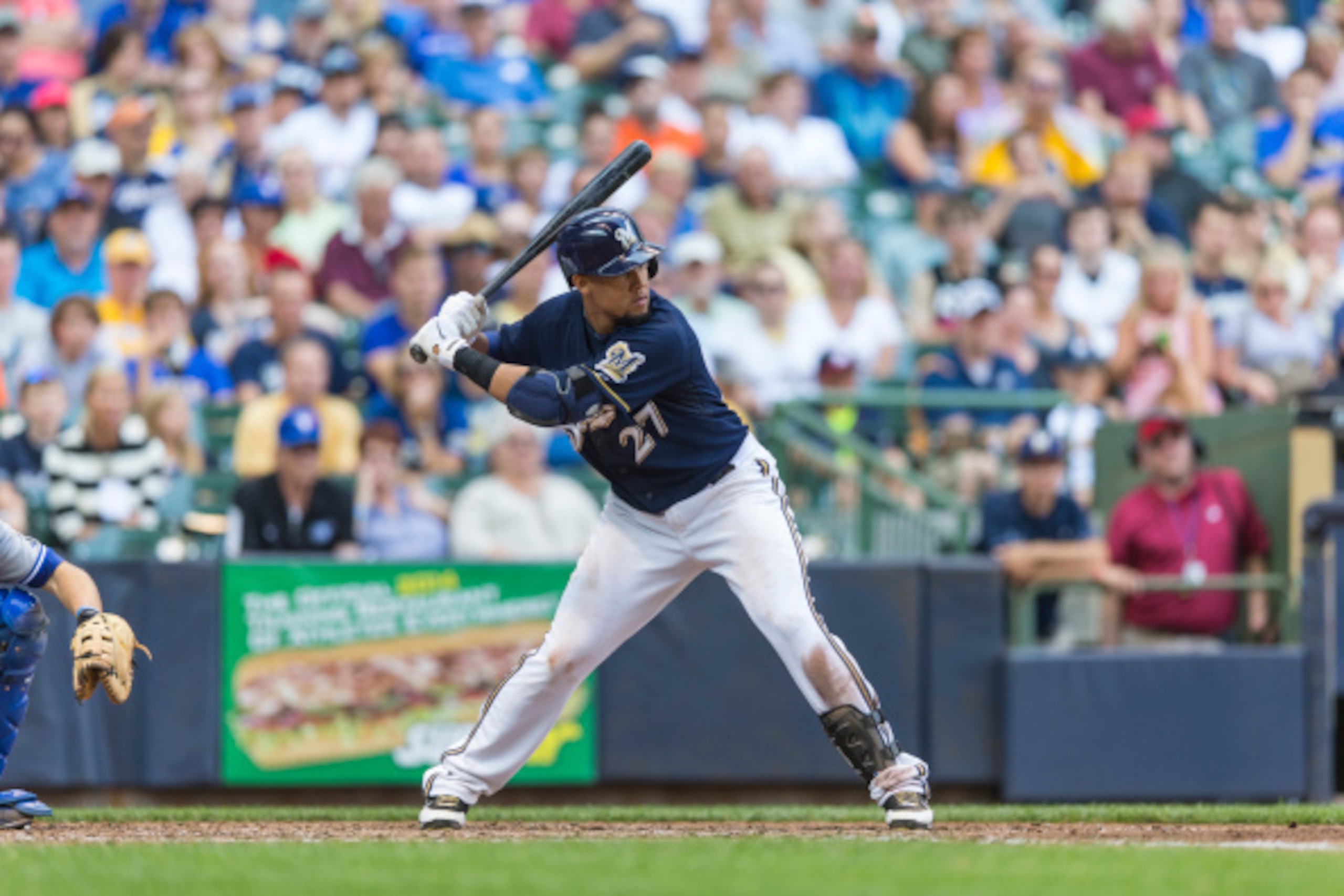
Hitting
Carlos Gomez has become less of a whiff candidate against breaking balls and has also hung on to last year’s line-drive rate. Even better, it’s no longer easy to beat him at the top of the zone. It’s too bad he’s become an even wilder swinger than he already was, hacking, whiffing and expanding the zone more than ever. You can get away with that if you’re a good bad-ball hitter, but he’s not.
Power
Gomez upping his fly-ball rate in 2014 hasn’t made him a better power hitter. It hasn’t helped that a good chunk of those flies have gone to right field, where his power is less explosive. Still, this is nitpickery. Gomez hasn’t lost his ability to drive the ball to center and left, and he’s hit more line drives and fly balls in those directions than he did in 2013. In other words: His power potential is just fine.
Baserunning
Gomez once again surpassed the 30-stolen-base plateau, marking the third year in a row he’s done so. He’s also taken what was a 44 XBT% in 2013 and upped it to 54. It’s not all good, though. Gomez’s efficiency stealing bases has taken a hit, and he’s still surprisingly mediocre at going first to third. And lastly, this is two years in a row he’s made double-digit outs on the bases.
Defense
After falling in love with Gomez in 2013, the defensive metrics have backed off. It is indeed hard to be that good two years in a row. There aren’t always going to be home runs to rob, which is a bummer for a guy who’s arguably the best at going back on deep fly balls. But make no mistake, Gomez still covers a ton of ground in center field, and you don’t want to sleep on the good arm he has for the position.
Overall
Gomez has done enough to put to rest any notions that his 2013 season was a fluke, as he’s continued to display a terrific combination of power and speed while (in my opinion) still playing a fine center field. If there’s something worth worrying about, though, it’s his hitting. He can make a free-swinging approach work, but he won’t repeat this year’s wildness if he knows what’s good for him.
2. Andrew McCutchen, Pittsburgh Pirates
40 of 41
Hitting
It’s a bummer that Andrew McCutchen’s ever-escalating line-drive habit has finally taken a step back, and he still hasn’t responded to an ever-increasing percentage of breaking balls by hitting them better. But oh well. McCutchen’s batting eye, patience and ability to make contact are all sharp, his plate coverage is outstanding, and he really hasn’t needed a high line-drive rate to continue making loud contact.
Power
Relative to 2012 and 2013, McCutchen has been dabbling more in fly balls and has boosted his power in the process. It’s also helped that he has blasted hard-hit drives to every part of the yard, and it’s worth noting that his power-suppressing home park hasn’t helped him add to his home run total. He probably should have more. In all, the only real gripe is this: He’s not Mike Trout.
Baserunning
McCutchen hasn’t been stealing bases in the same volume that he was in 2013, but the trade-off has been a huge increase in efficiency. Even if he doesn’t make it to 20 steals by the end of the year, he may not exit the year with more than one caught-stealing. The downside? That’s that his XBT% has fallen from the 60-70 range in 2012 and 2013 all the way to 41 percent.
Defense
The defensive metrics are back to being down on McCutchen’s defense, but they’re being harsh. As one brilliant demonstration from the MLB Advanced Media tracking system can show, he’s plenty capable of good first steps, efficient routes and closing speed. If he does have a problem, it’s consistency. Beyond the occasional iffy read, he can underestimate his closing speed and ease up on catchable balls.
Overall
McCutchen hasn’t had the kind of all-around excellent season that he had in 2013, but he hasn’t done anything to really damage his reputation as one of the game’s top talents. His bat and power are both potent, his baserunning is still an asset and his defense isn’t the liability the metrics think it is.
1. Mike Trout, Los Angeles Angels
41 of 41
Hitting
The things Mike Trout excels at include working disciplined at-bats, hitting low pitches, hitting slow pitches and generally clobbering the ball all over the yard. However, it’s no secret that he’s developed a problem swinging through high fastballs, and his production at the top of the zone is basically nonexistent. For as good as he is, that’s a flaw that can’t be ignored.
Power
Of course, more fly balls isn’t the worst curse in the world if you have some power. And Trout has that. Lots of it. Enough of it to blast a career-high number of homers and carry out an all-out extra-base hit assault on the deepest parts of the yard. Already a good power hitter, Trout is now arguably (or maybe not at all arguably) one of the five best power hitters in the game.
Baserunning
After 49 steals in 2012 and 33 in 2013, Trout won't even hit 20 this year. So yeah, what we’re doing is giving a very speedy runner the benefit of the doubt that steals might happen again. Aside from that, the good news is that Trout hasn’t stopped being an aggressive baserunner. His 59 XBT% is the same as last year, and he’s gone first to third almost 60 percent of the time.
Defense
The defensive metrics don’t like Trout’s defense this year. But what’s notable about that is that it’s really the weakness of his arm that’s hurting him. His range and ability to make plays are hurting him less, and that’s no surprise knowing you can watch him and still see a center fielder who gets good jumps, reads balls well and has terrific closing speed. Basically: Yeah, he gets the benefit of the doubt here too.
Overall
What we’ve witnessed in 2014 is the sluggerization of Mike Trout. After being by far baseball’s most complete player in 2012 and 2013, he’s turned into much more of a bat-first player. It’s a good thing his bat has been good enough to keep him among the game’s elite. And if you want to talk about which player has the most pure talent, it’s still no question. The answer’s Trout.


.jpg?w=2560 "Insiders: Cowboys Overpaid for Porter")
.jpg?w=2560 "Every Trade's Best Trade Asset 🔁")
.jpg?w=2560 "Top NFL Trade Targets")
.jpg?w=2560 "Daniels Eyeing Week 5 Return")
.jpg?w=2560 "No Rift Between Maye, Vrabel")