B/R MLB 500: Top 35 Shortstops
After paying a visit to the guys at second base, the B/R MLB 500 will now move on to the jewels of the infield: shortstops.
Shortstops will be scored like so: 25 points for Hitting, 25 points for Power, 20 points for Baserunning and 30 points for Defense for a total of 100 points.
The Hitting category involves not only looking at how good guys are at putting the bat on the ball and how they hit the ball but also things like patience and plate discipline.
The Power category is not so much about raw power. It's more of a look at how much power guys have in actual games, which involves looking into how they tap into their power for extra-base hits.
The Baserunning category is one that could be complicated, but we're going to keep it simple by focusing on how good guys are at stealing bases, taking extra bases and avoiding outs on the bases.
For Defense, various amounts of attention will be paid to the various things that make a good shortstop: range, sure-handedness, arm strength, etc.
One thing we're not doing this year is a category for health. Rather than handle them separately, any health concerns we have will be applied to a specific category that could be impacted.
Please note that a score in the middle (i.e., 12/25 or 15/30) denotes average, not failing. And while the discussion will be centered on 2014, we also have one eye on 2015. Part of that means no Derek Jeter. it also involves B/R prospect guru Mike Rosenbaum dishing some knowledge on a few MLB-ready shortstops.
Lastly, any ties will be resolved with the following question: "If we could pick only one, who would it be?"
When you're ready, you can read on.
A Note on Links and Sources
1 of 36
Before we begin, there are some things you should know about the links and stats that lie ahead.
First and foremost is that CLICKING ON THE LINKS IS NOT MANDATORY. The links are there in case you're curious where a given point (or points) is coming from.
They're not from the same place. The links will take you to Baseball-Reference.com, FanGraphs.com, BrooksBaseball.net, BaseballSavant.com and BaseballProspectus.com. All have different data to offer, the combination of which was the backbone for the researching of this project.
However, just because this project was heavily informed by stats doesn't mean you're about to be hit over the head with sabermetric jargon in this space. There are really only a couple of terms to know.
One is XBT%. That stands for "extra bases taken percentage," and it's Baseball-Reference.com's way of tracking how often players advance more than one base on singles and doubles. It's a crude way to get a picture of aggressiveness, and you'll have to pardon us for being a day behind on the percentages, but it'll have to do.
I'm also going to be repeatedly referring to "the defensive metrics." This means ultimate zone rating (UZR) and defensive runs saved (DRS), which are both tracked by FanGraphs. They go about it differently, but the idea behind both is to evaluate how good players are on defense.
35. Ruben Tejada, New York Mets
2 of 36
Hitting
Though his walk rate has been inflated by intentional walks, Ruben Tejada does have a pretty good eye for the zone. He’s also gotten better at hitting everything for line drives, giving himself a much-needed average booster. However, he still hits the ball in the air too often for a guy with his power, and he’s still far too easy to get out on pitches away from him. In short: a good hitter, he is not.
Power
As referenced above, Tejada doesn’t have the power to make a high fly-ball rate work. In fact, he might specialize in hitting shallow fly balls more than any hitter in the game. It makes matters even worse that he has very little gap power and that fly balls and line drives to his pull side aren’t exactly frequent. All told, there’s simply not much he can do to pad his power production.
Baserunning
Tejada doesn’t have much to offer here either. He’s not a base stealer now, and he's never really shown base-stealing potential since arriving in the majors in 2010. To make matters worse, his XBT% has fallen from the 45-50 range all the way to 25 percent this year. He’s better than that but not to a point where we can do him too much of a kindness with his score.
Defense
The defensive metrics have Tejada’s defense pegged as his saving grace in 2014, rating him as an above-average defender. He’s at least been more reliable, as he hasn’t had issues with throwing errors like he did in 2012 and 2013. The bigger question is his range, which is limited by oftentimes sluggish first-step quickness and quickness.
Overall
Tejada’s not a totally unplayable shortstop. He at least has a good eye at the plate, and his defense is better than passable. But without a good bat, good power, good baserunning or a truly elite glove, it’s hard to see him becoming any better than just playable.
34. Everth Cabrera, San Diego Padres
3 of 36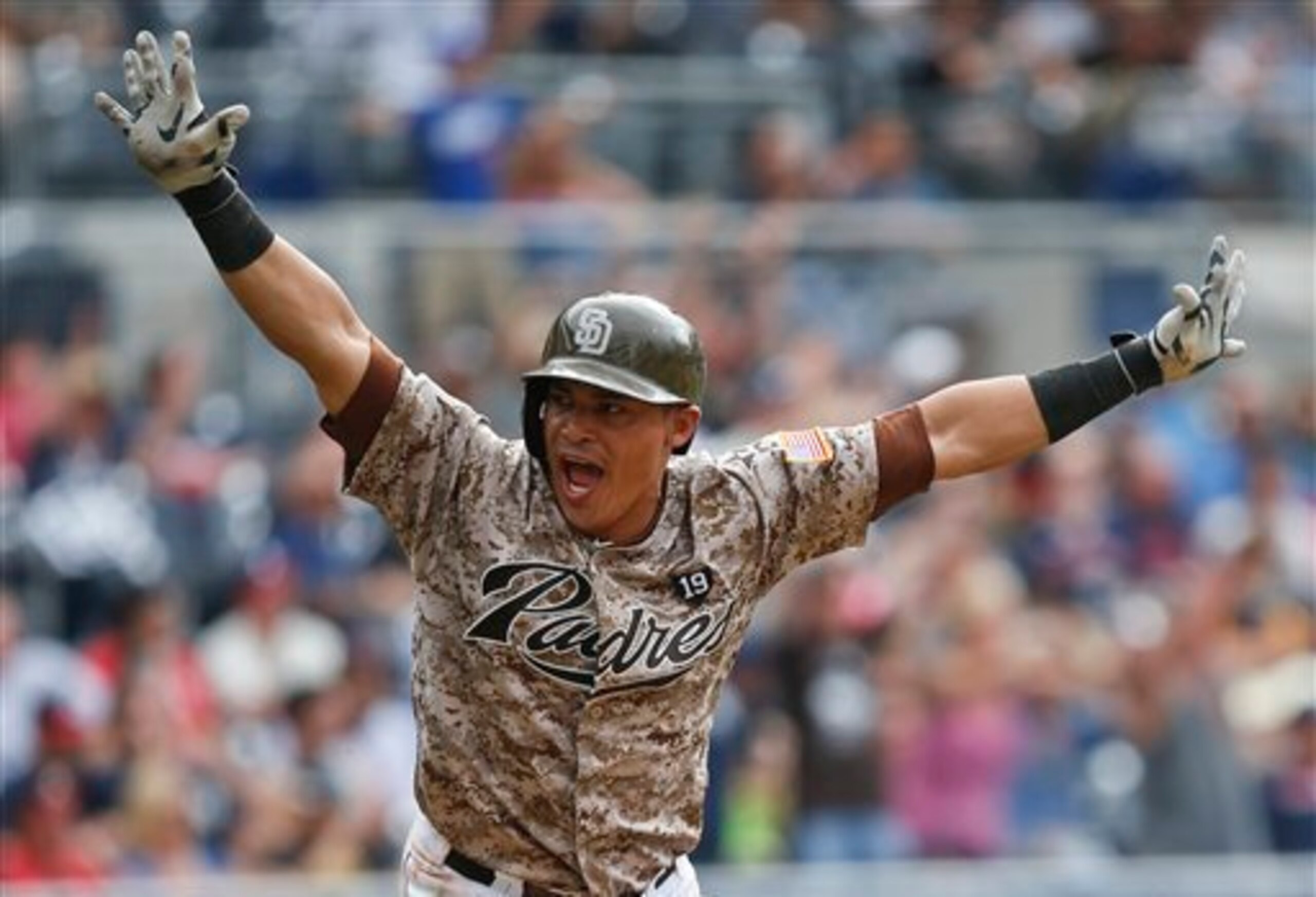
Hitting
Everth Cabrera has gotten worse at everything he was doing well in 2013. His approach has gotten more aggressive and less disciplined, and the strong contact habit he developed has been wrecked by elevated whiff rates. He’s also the ground-balliest player in the league, which isn’t ideal even for a guy with his speed. He’s not broken beyond repair, but he definitely needs a lot of fixing.
Power
Because the overwhelming majority of balls off Cabrera’s bat go on the ground, there’s a natural cap on his power. That he plays at Petco Park is another factor. He’s not without the capacity to surprise, however. Especially from the left side of the plate, where he has the power to pop one over the right field wall or the center fielder’s head, as well as the ability to slap some liners down the left field line.
Baserunning
After stealing 81 bases between 2012 and 2013, Cabrera’s been a disappointment in 2014. His left hamstring is partially to blame. It put Cabrera on the disabled list once in 2013 and has sent him to the DL twice this year. Still, some level of optimism is warranted on the basis that Cabrera is pushing 20 steals with a 52 XBT% on the side. And at 27-going-on-28, he’s not too old for a baserunning comeback.
Defense
The defensive metrics are still on the fence about Cabrera’s defense, and that pretty well sums him up as a defender. His ability to accelerate quickly gives him pretty good range and allows him to make tough plays, but he’s also prone to misplays and occasionally iffy reactions at the crack of the bat. Knowing that, it’s hard to call him any better than average.
Overall
It’s been some downfall for Cabrera. His breakout 2013 season was interrupted by his Biogenesis suspension, and his 2014 season has been governed by Murphy’s law. But even if his bat isn’t fixed and he doesn’t get back to being a big stolen base threat, there’s at least some value left in his legs and glove.

33. Marwin Gonzalez, Houston Astros
4 of 36
Hitting
Marwin Gonzalez has done himself a favor by cutting down on his swings against the slow stuff and hitting it on a line more regularly. But this is merely a step in the right direction until his production against it actually improves, and that’s not happening until he stops hitting it primarily on the ground. And in general, he’s too much of an undisciplined ground-ball/fly-ball hitter to really be consistent.
Power
Be careful about taking Gonzalez’s 2014 power at face value. Beyond him being a heavy ground-ball hitter, his dingers have come courtesy of shots down the line that barely had enough. Take those away, and you see a hitter who doesn’t often pull the ball in the air or assault the gaps with line drives when batting lefty. That leaves little to like.
Baserunning
This could be the last year we see Gonzalez try to steal bases. He wasn’t a good base stealer to begin with, and this year he’s done more harm than good. Fortunately, he’s not doing any damage when it comes to his aggressiveness. His XBT% has gone up each year, peaking at 46 percent in 2014. If he can up his XBT% again while avoiding getting thrown out trying to steal, he can pass for a solid baserunner.
Defense
Just as they were in 2013, the defensive metrics are split on what to make of Gonzalez’s defense. That puts it up to the eye test, which says Gonzalez is more likely a tick below average than above average. He has solid range, but it’s limited in how he doesn’t always take good paths to the ball and how his arm strength is nothing special.
Overall
Because Gonzalez has made some adjustments as a hitter, he’s now a guy who can give the Houston Astros some decent offense and defense at short. It just might not get any better than decent, so he should be considered merely their best placeholder until Carlos Correa is ready. And we'll have more on him soon enough...
32. Eugenio Suarez, Detroit Tigers
5 of 36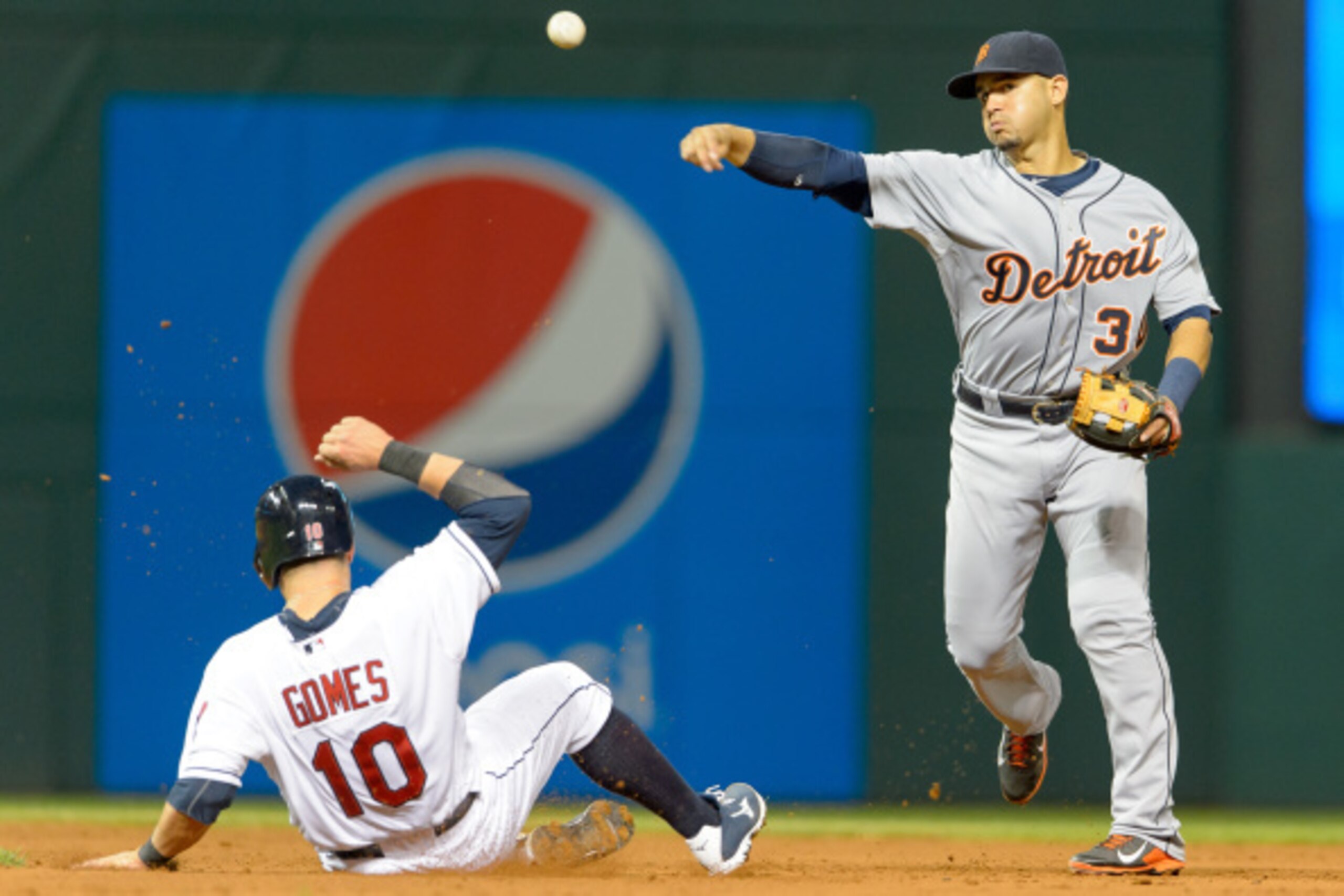
Hitting
The good: Eugenio Suarez has shown off good awareness of the strike zone and has been able to hit breaking and off-speed stuff for line drives. The bad: He hasn’t been great at making contact, he’s been too passive on pitches within the zone, he hasn’t been able to hit pitches up in the zone and he’s really only hit grounders and liners to left field. That leaves him with limited avenues to boost his production.
Power
Another thing Suarez has done in the majors is hit a lot of fly balls. That’s ordinarily good for power, but not for him. His main fly-ball alley has been to center field, and he doesn’t have enough pop in his 5’11”, 180-pound frame to hit for consistent power in that direction. And because his line-drive habit really only applies to left field, his potential for doubles power is also restricted.
Baserunning
Suarez had only modest success stealing bases in the minors, and he hasn’t teased that he’s going to be any better at it in the majors. He also has only a 27 XBT%, most notably going first to third in just two out of 19 opportunities. As such, he’s definitely lived up to the note in Baseball America’s post-2013 scouting report (subscription required) that he’s a below-average runner.
Defense
The defensive metrics have had a fair amount of time to form an opinion of Suarez’s defense, and so far, they think he’s at best average. Errors are partially to blame, but Suarez has shown that he has the playmaking ability to make up for those. His hands and arm are both assets, and he has solid first-step quickness too. With these things, he's not without solid potential.
Overall
The first few weeks of Suarez’s big league career were an intriguing tease. But in reality, the player he’s been more recently is likely the more accurate portrayal. He’s merely a passable hitter with the potential to be an above-average defender at short, which he’ll have to be if he wants to stick in the majors.
31. Yunel Escobar, Tampa Bay Rays
6 of 36
Hitting
Yunel Escobar looks a lot like the hitter he was in 2013, and that’s both good news and bad news. It’s good because his approach still features a mix of patience and discipline, and he’s still getting better at hitting hard stuff on the nose. It’s bad because he’s still overmatched against good changeups and because of how frequently he rolls over ground balls. So while he’s a capable hitter, capable is as good as it gets.
Power
The elevated fly-ball rate Escobar has this year should be making him a better power hitter, but one thing that restricted his power in 2013 is still restricting it. Just as he tended to only drive the ball mainly to center field last year, he’s doing it all over again this year. Escobar has solid pop in that direction, but it’s clear now that it’s not solid enough for him to sustain himself as a quality power supply.
Baserunning
That Escobar has stopped trying to steal bases is an upgrade, as he didn’t do any good with his 4-for-8 effort in 2013. That he’s stopped running into outs at second base is another positive development. It’s therefore a bummer that he’s following up a 42 XBT% with only a 38 XBT% this year. He’s not getting any more aggressive on the basepaths, and I wouldn’t expect any better after he turns 32.
Defense
Escobar has tended to rate as a strong defender, but the defensive metrics are seeing him as an utter disaster this year. That he’s gone back to being error-prone is part of the problem, but he hasn’t been as explosive a playmaker either. To the naked eye, he doesn’t seem to have the same spring in his legs, making it tough for him to cover ground. That could be his 31 years beginning to take hold.
Overall
After riding a solid bat and plus defense to a terrific bounce-back season in 2013, Escobar has gone back in the other direction. His hitting is hanging in there OK, but there’s something to how poorly he’s rating on defense. He doesn’t look like the guy who was all over the place defensively in 2013.
30. Jordy Mercer, Pittsburgh Pirates
7 of 36
Hitting
Pitchers have the right idea in giving Jordy Mercer fewer fastballs to hit. If he doesn’t whiff on slow stuff, he’s extremely likely to hit it on the ground. If he doesn’t fix that, he’s going to have trouble being consistent. His saving grace, however, is that he can handle the fastballs he does see. He has the zone covered reasonably well and can hit them for line drives in any direction.
Power
The bulk of Mercer’s power this season has been situated to his pull side, but he’s not without pop up the middle of the field. That makes him a solid power threat as far as shortstops go. Even still, his power does come with restrictions. It mainly only applies to fastballs, and he’s too much of an inconsistent line-drive and fly-ball hitter to boost his power production.
Baserunning
The best thing Mercer has done on the basepaths this season is be more careful, which is something he needed to do after running into eight outs in 2013. But he’s still not a base-stealing threat, and what was a 41 XBT% in 2013 has fallen all the way to 30 percent. Notably, he’s gone first to third just once in 16 chances. So outside of him being more cautious, there’s not much to speak of.
Defense
The defensive metrics are split on Mercer’s defense—and in a big way. While one rates him as average, the other rates him as way above average. He’s likely not actually that good, as he’s limited in terms of athleticism. But he has been more active making plays this year, taking good paths to ground balls and using his strong arm to finish the job. Maybe he's great, but he’s at least good.
Overall
The real surprise this season has been Mercer’s defense, as more regular playing time has given him the chance to show what he can do with the glove. But while his defense is solid, he’s merely passable as a hitter and as a baserunner.
29. Didi Gregorius, Arizona Diamondbacks
8 of 36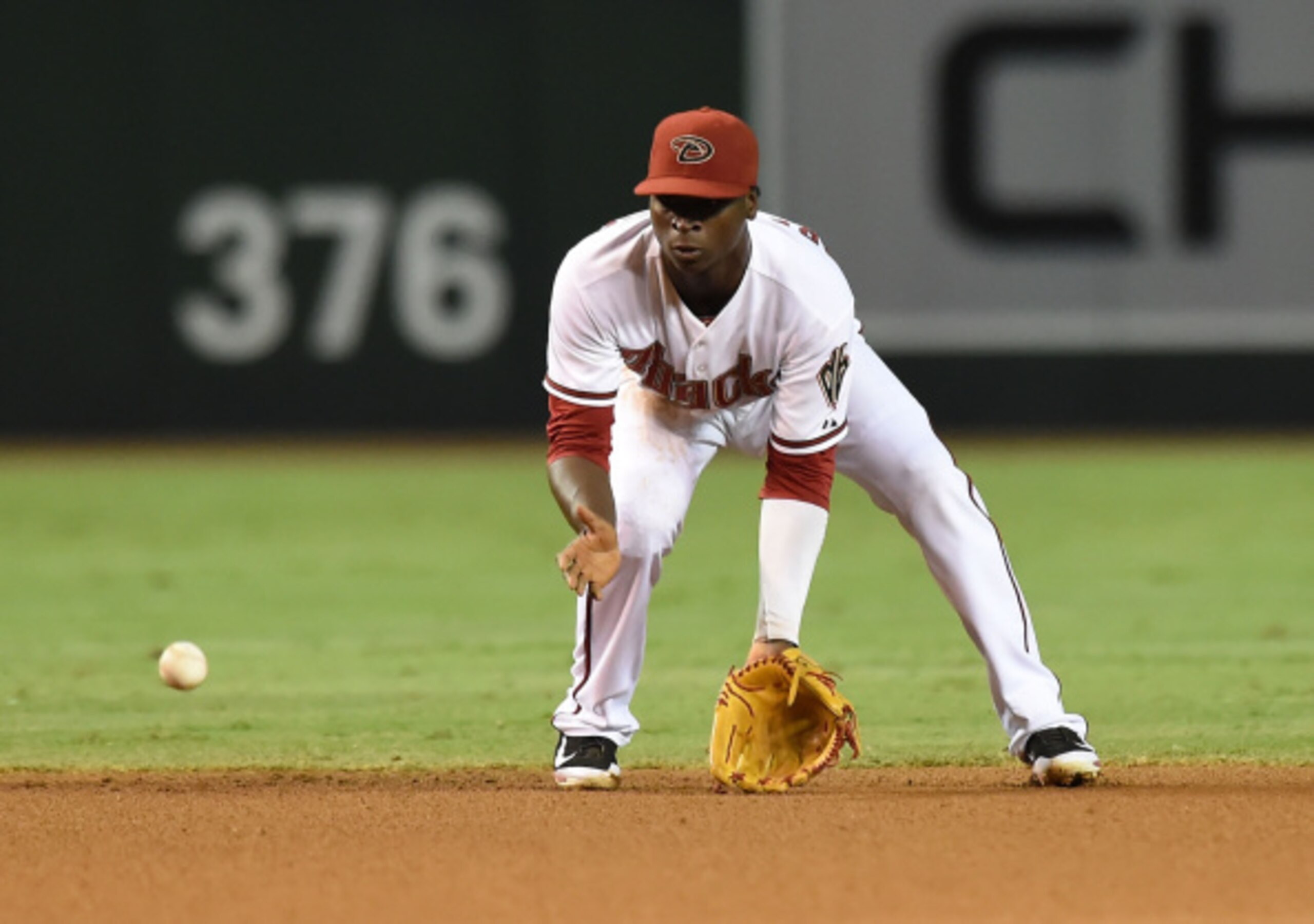
Hitting
After ending 2013 in a prolonged slump, Didi Gregorius hasn’t done much to improve. His decreased aggressiveness has happened outside the zone rather than inside. He’s only gotten worse at making contact with slow stuff and in general hasn’t been able to hit it. He’s also still hitting way too many fly balls for a guy with his power. At this point, it’s hard to believe he’s anything better than a .200 hitter.
Power
Gregorius doesn’t have the kind of power that justifies such a high fly-ball rate, but his power isn’t a total waste of time. Anything in the air to right field this season has been trouble, and he’s struck the ball to left field with more authority than he did in 2013. He hasn’t gotten results doing so, but it’s possible there’s some potential there.
Baserunning
Gregorius still doesn’t look like he’s going to be any better of a base stealer than the scouting reports said he would be. Over a full season, he might fit into only the five- to 10-steal range. So it’s a good thing that he’s shown he can handle an XBT% over 50, following up last year’s 51 percent with 54 percent this year. If he can do that while providing some steals, that’ll work.
Defense
The future of Arizona’s middle infield and how Gregorius fits into it is murky, but he’s definitely a shortstop by trade. And though the defensive metrics aren’t crazy about his defense, he still passes the eye test well enough. His footwork can get a little iffy, and his playmaking ability will be limited as long as that’s the case. But his 6’2” frame allows him to cover ground well, and his arm strength is an easy plus.
Overall
Exactly how Kevin Towers saw a young Derek Jeter in Gregorius is still a mystery, as his time in the majors has done plenty to reveal the various holes in his hitting. But as a guy who can offer some solid power, baserunning and defense, he’s not worth giving up on just yet.
28. Xander Bogaerts, Boston Red Sox
9 of 36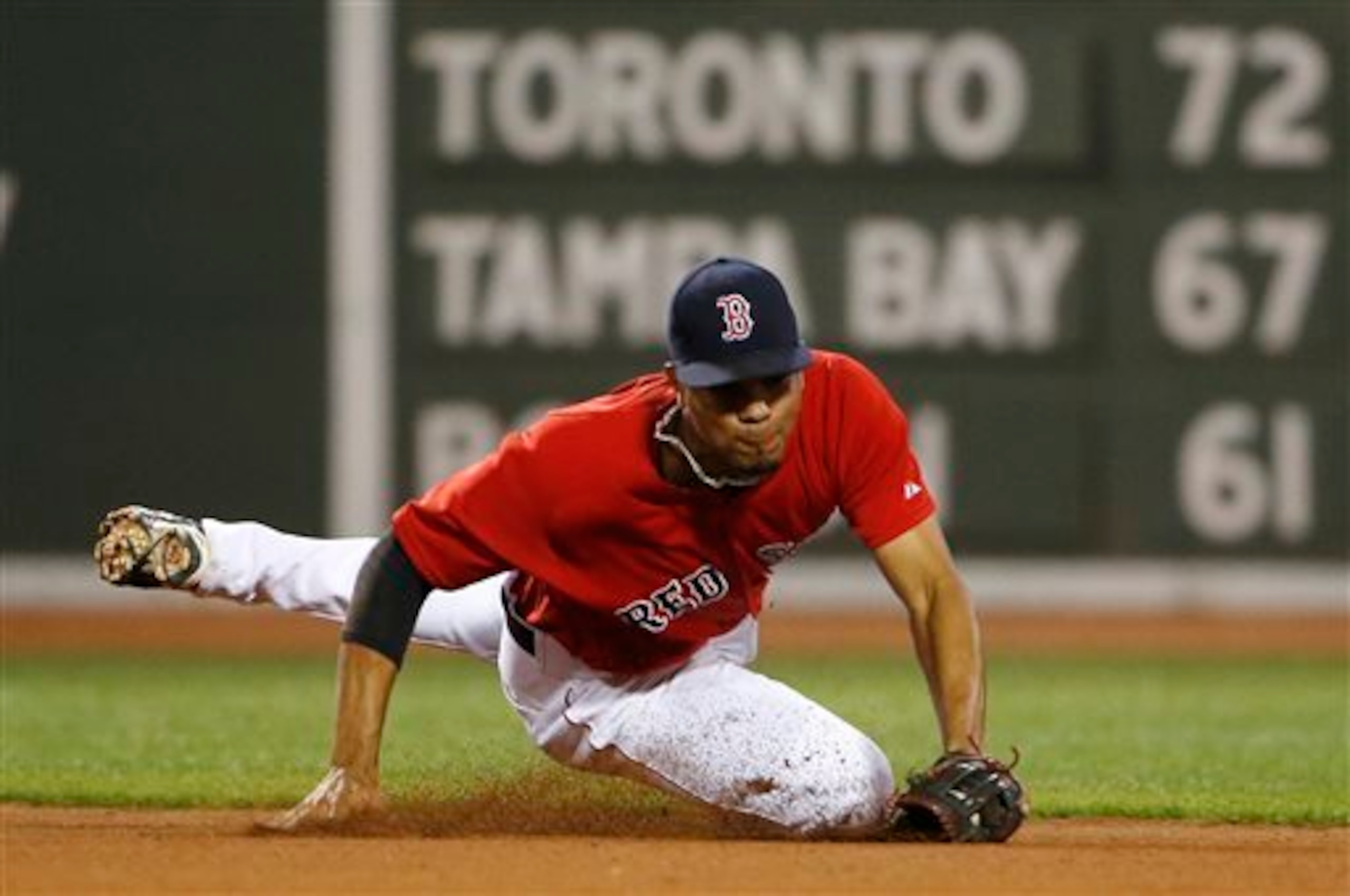
Hitting
If there’s hope for Xander Bogaerts, it’s in how his approach in his first full season has hardly been wild. He’s not Joey Votto, but he’s continued to show off the solid patience and discipline he teased last October. But aside from that, we’ve found out that he’s extremely weak against breaking balls and that he can’t do much with low hard pitches. These are really, really bad weaknesses to have at the MLB level.
Power
While Bogaerts has shown that he needs some serious work in the hitting department, things aren’t so bad with his power. He’s hit a lot of fly balls and in doing so has shown good power up the middle of the field. The best thing for him to do is try to pull the ball more so he can take advantage of the Green Monster, but there’s no question that his power potential is better than his production makes it look.
Baserunning
With both what he did in the minors and what he’s done so far in the majors, Bogaerts has made it clear enough that he’s not going to be a base stealer. He has shown he can be a deft baserunner, though, following up a small-sample-size 50 XBT% last year with a 44 XBT% this year. On top of that, outs on the basepaths have been highly infrequent.
Defense
If Bogaerts is going to be locked into shortstop for the long haul, the defensive metrics suggest that the Red Sox better be ready to live with below-average defense. So does the eye test. Bogaerts is big for a shortstop, and it shows in his first-step quickness and general lack of acceleration. He’s also shown in his time at both short and third base this season that his throwing accuracy needs work.
Overall
You can go back to early June to find a time when Bogaerts was not only living up to the hype, but surpassing it. But then the league found his weaknesses, and he’s done nothing to patch that up while playing subpar defense. The potential is still there, but it’s clear he’s further away from reaching it than it first appeared.
27. Chris Taylor, Seattle Mariners
10 of 36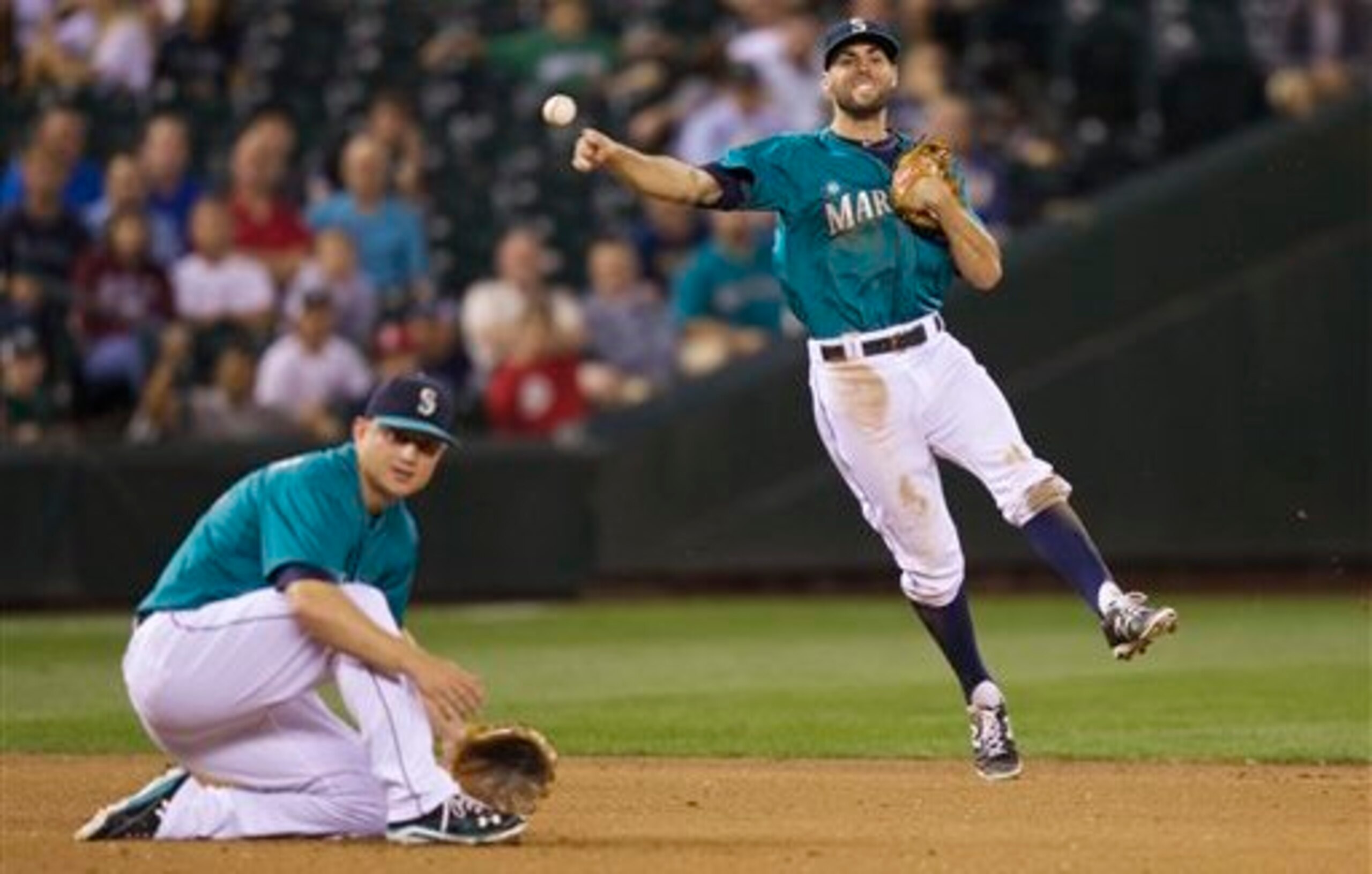
Hitting
It’s early yet, but so far, Chris Taylor has shown a strong awareness of the zone and something of an ability to use the whole field. However, he’s shown a tendency to whiff on slow stuff and a weakness on pitches up in the zone as well. He’s also mainly been a ground-ball/fly-ball hitter, and he’s gotten way too lucky on the grounders. So outside of his approach, actual tangibles strengths are hard to pinpoint.
Power
Taylor wasn’t much of a power producer in the minors, and he hasn’t become one in the short time he’s been in the majors. He will give himself plenty of chances to hit for good pop if his fly-ball rate is a sign of things to come, however, and it’s worth something that he’s at least teased good pop to left field and straightaway center field. Without getting too carried away, we can err on the side of optimism.
Baserunning
Taylor swiped 38 bases in the minors in 2013 and 14 at Triple-A this year. He hasn’t made good on that potential yet, as his first couple of attempts saw him get a dose of humility. One thing he has done aside from that is take the extra base, putting up a solid 47 XBT% in a limited sample. In light of that and his minor league track record, it’s hard to imagine him being anything less than at least a solid baserunner.
Defense
The defensive metrics haven’t had much time to form an opinion of Taylor’s defense, but they like what they see so far. So does the eye test. He’s had his adventures securing the ball—and that’s not just a reference to the fielding errors he’s made—but he’s also shown really good range stemming from a quick first step and good instincts. If only he had a plus arm to go with that range, as his looks fringy for short.
Overall
It’s admittedly too early to have a really good sense of what kind of hitter Taylor is going to be in the majors, but one thing we know well enough for now is that his range gives him the potential to be a really good defender at short. And really good defenders at short are, of course, pretty valuable players.
26. Brad Miller, Seattle Mariners
11 of 36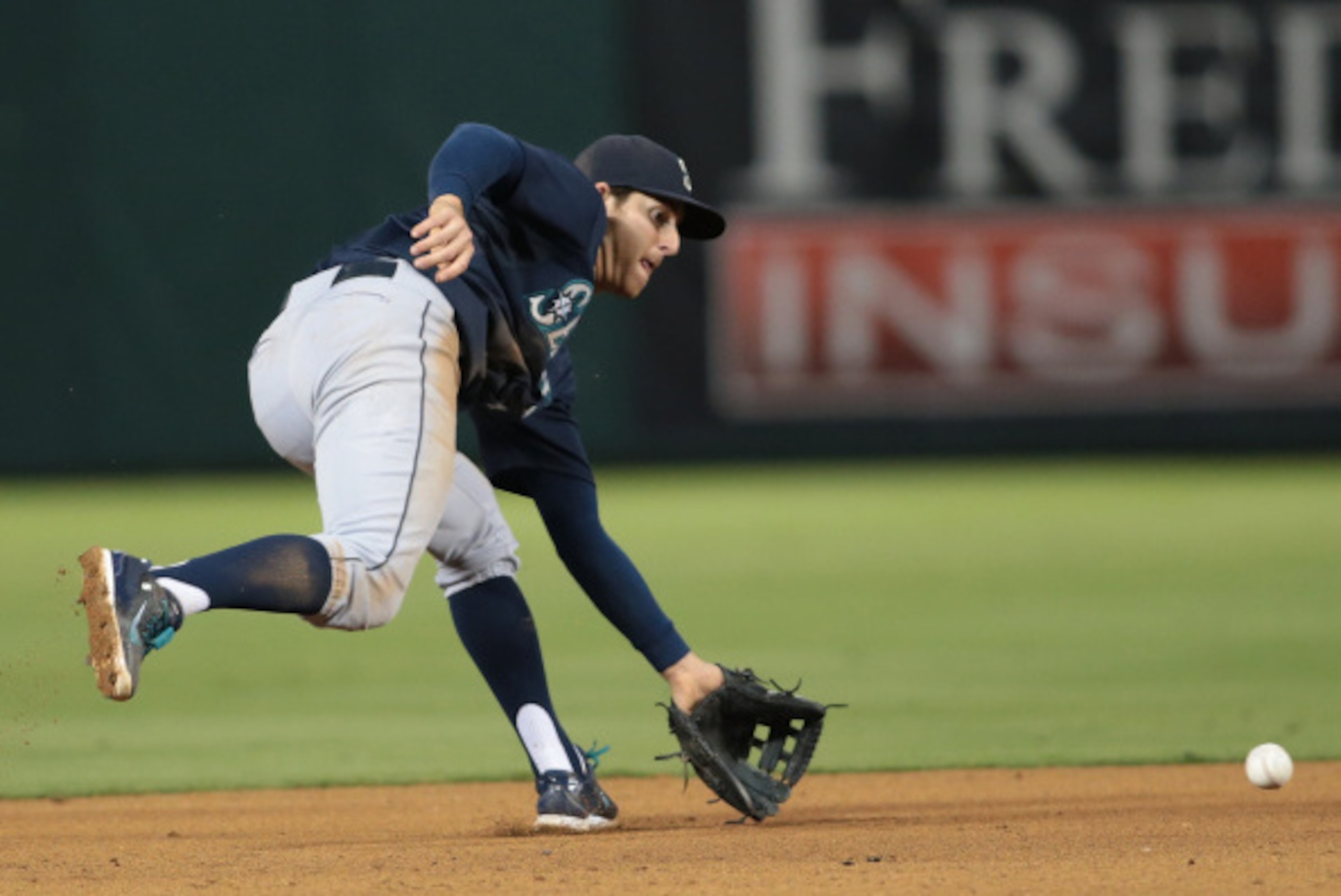
Hitting
Let’s just say it’s difficult to find anything that Brad Miller does well as a hitter. His approach is solid, but not overly patient or disciplined. He’s solid at making contact, but less than good. Then there’s how he can’t hit breaking balls, is too pull-heavy and generally has hardly any coverage of the zone outside of the down-and-in lefty wheelhouse. So let’s just put it this way: He’s a bad hitter.
Power
A bad hitter, of course, isn’t necessarily a bad power hitter. So it is with Miller. He gives himself plenty of chances to hit for power by hitting a lot of fly balls, and he can hit the ball hard anywhere between the left-center gap and the right field foul line. Trouble is that his line-drive power isn’t on the same level as his fly-ball power, as coming up with line drives of any kind consistently has been a struggle for him.
Baserunning
Miller’s a solid athlete, but his speed isn’t meant for stealing bases. He’s showed as much since he arrived in the majors in 2013, attempting few steals and succeeding without the benefit of much efficiency. It’s also hard to give him point for his aggressiveness. He may have a 47 XBT%, but he’s also made too many outs at second and third. As a baserunner, average is as good as it gets.
Defense
The defensive metrics are split on Miller’s defense, in part because he hasn’t helped himself with all the errors he’s made. The majority of those have been throwing errors, which highlights how wild he is with his arm. In light of that, it’s a good thing he has good range that stems from a good first step. The miscues can’t be forgiven, but he can make just enough snazzy plays to make up for them.
Overall
It’s easy to focus on Miller’s batting numbers, and they don’t lie. He really is that out of his depth as a hitter, and he is arguably unplayable for that. The only reason we say “arguably” is because he at least has good power and a decent glove for the position.
25. Jed Lowrie, Oakland A's
12 of 36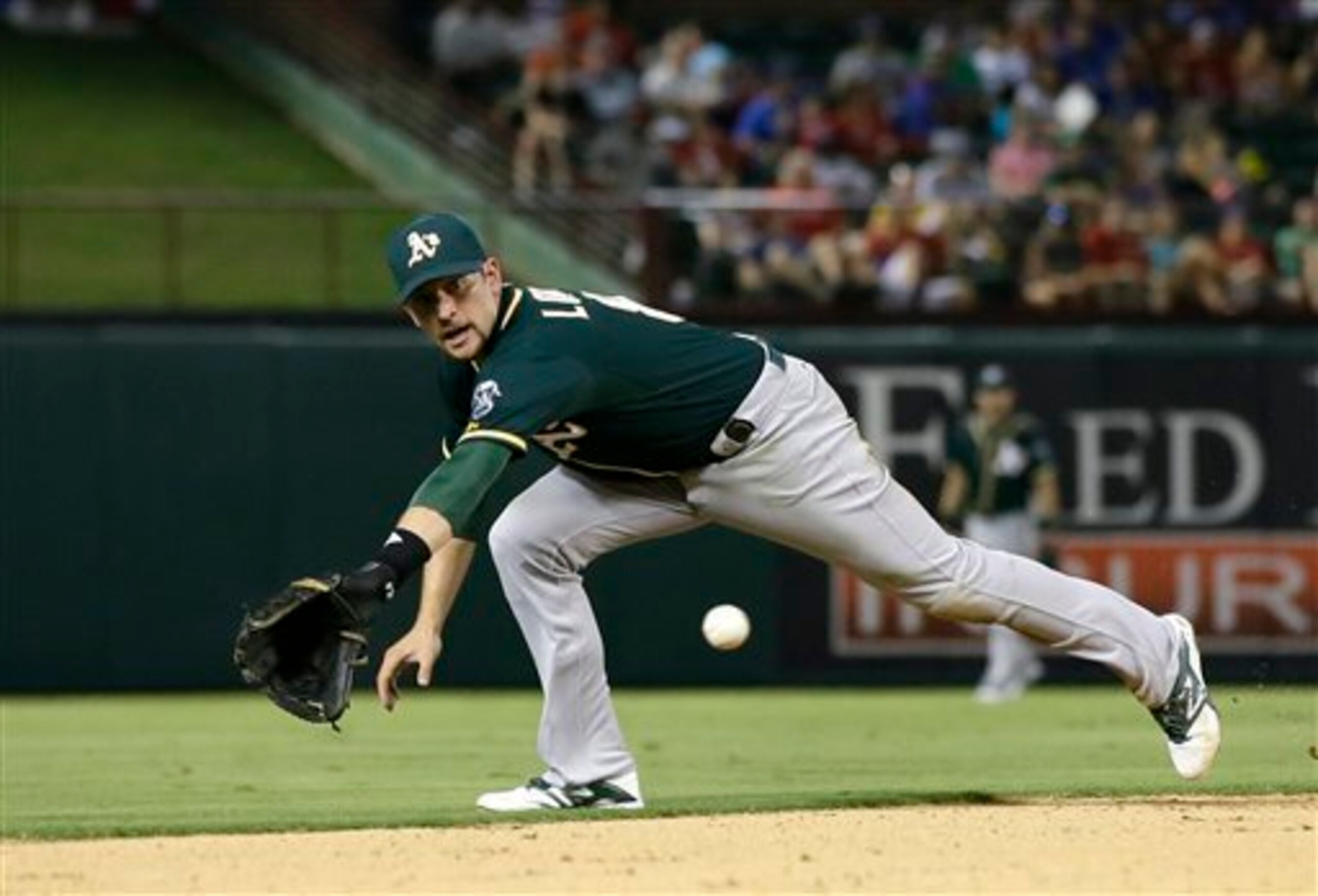
Hitting
Jed Lowrie still has a batting eye that comes in handy drawing walks, and he still has a strong contact habit as well. Also, his average on line drives has regressed far more than his line-drive rate, indicating plenty of bad luck. However, the increase in hard stuff he’s seen is a concern. He’s never been a great fastball hitter, and his low average against 90-plus heat isn’t a good look for a guy who’s approaching 31.
Power
Lowrie is among baseball’s least frequent ground-ball hitters. That should make him a good power threat, and he certainly is a good one by shortstop standards. But as a lefty, he clearly hasn’t driven the ball like he did in 2013 and 2012. The same goes for his righty hitting, as he had better oppo power in 2013 than he’s had this year. Factor in his age and his recent finger injury, and his power is not without concerns.
Baserunning
If Lowrie’s made anything clear during his career, it’s that he doesn’t do stolen bases. That makes him entirely dependent on aggressiveness for baserunning value, and he doesn’t really do that either. After just a 29 XBT% in 2013, he’s improved only to 35 percent this year, with just three first-to-thirds in 25 chances. All told, there’s not a whole lot that he can do to provide value as a runner.
Defense
The defensive metrics tend to go back and forth on Lowrie’s defense, but there’s really nothing that he does especially well on defense. He’s not particularly sure-handed or strong-armed, and his range is limited by his general lack of athleticism. He’ll presumably market himself as a shortstop in free agency this winter, but you wonder how many clubs will actually view him as one.
Overall
Even with the question marks that have emerged this season, there’s little question that Lowrie’s a better hitter than he’s shown. But since he’s a poor baserunner and an iffy defender, he’s more of a hitter playing shortstop than a shortstop with a good bat.
24. Stephen Drew, New York Yankees
13 of 36
Hitting
Stephen Drew has retained neither the patience nor the discipline that he showed last year. He hasn’t been able to hit anything slow. He’s been a threat only against down-the-middle pitches. He’s hardly used left field. He’s been hitting too many fly balls. So while you want to cut him some slack because of how he started his season late, his age (32 next March) and his laundry list of problems make that tough.
Power
Drew’s power hasn’t suffered as much. That’s the reality of a high fly-ball rate at work, though long drives off Drew’s bat have actually been infrequent. He’s hit the ball with authority only to his pull side, and he’s fortunate that virtually all of those hits have produced results. He’ll need to stay at Yankee Stadium for that to keep up...which, granted, could definitely happen with No. 2 calling it a career.
Baserunning
Drew hasn’t been on base enough to be a stolen-base threat, so his lackluster production in that department can be forgiven. What’s less easy to forgive is how he’s following up a 42 XBT% rate with an XBT% of just six percent. He’s better than that, but such Adam Dunn-like bumbling can only be forgiven so much.
Defense
Drew is filling in mainly at second base for now, but he’ll presumably be a shortstop again in 2015. The defensive metrics like his defense at short even more than they liked it in 2013, and for good reason. He’s mostly looked like the guy who played superb defense last October, combining a good first-step with good reads and good footwork to boost his range, and he’s been pretty sure-handed to boot.
Overall
The long wait to start playing in 2014 has done a number on Drew’s bat, and his baserunning has been negatively impacted as well. It’s a good thing he’s shown he can still play a good shortstop while at least offering some power at the plate.
23. Corey Seager, Los Angeles Dodgers (Prospect)
14 of 36
Hitting
A left-handed hitter, Corey Seager has the potential for above-average hit and power tools at maturity, though there may always be some swing-and-miss to his game. Seager has an easy, direct swing that allows him to sting the ball from line to line, and there aren’t enough positive things to say about his ability to pick apart pitchers and hit in all counts.
Power
Seager has always shown impressive power to the opposite field, albeit mostly doubles, but he’s learned to turn on the ball more consistently this season and has seen his power numbers spike as a result. He’ll only get stronger moving forward, so it’s not crazy to think Seager, like his older brother Kyle, will be a consistent 20-homer threat at maturity.
Baserunning
Seager’s speed represents his only down tool; he’s an average-at-best runner but still moves well enough on the basepaths to put pressure on opposing defenses. While he could potentially enjoy seasons with 10-12 steals, Seager’s knack for extra-base hits likely means his days as an aggressive base stealer are behind him.
Defense
As a shortstop, Seager’s range is only average, but it’s good enough for him to remain at the position in the short term. At 6’4”, 215 pounds, Seager is expected to physically outgrow the position sometime down the line, but his impact bat and defensive profile should also be a clean fit at the hot corner.
Overall
Regardless of where he ends up defensively, Seager’s bat will have him hitting in the middle of a big league lineup sooner rather than later. To put it simply, the 20-year-old rakes, and the fact that his production has translated at the Double-A level, outside the hitter-friendly California League, during the second half has only further confirmed his status as a top-tier prospect.
22. Adeiny Hechavarria, Miami Marlins
15 of 36
Hitting
Not that he was disciplined to begin with, but 2014 has seen Adeiny Hechavarria turn into a swing-at-everything hitter. Fortunately, he could be a worse contact hitter he’s become even more of a line-drive and ground-ball hitter, and he is becoming Jeter-esque in his ability to punch the ball to the opposite field. He’s not a good hitter yet, but this is progress in the right direction.
Power
Hechavarria’s increasing abandonment of left field isn’t going to make it any easier for him to hit for power, but it’s not by accident that he’s a good triples hitter. His main power alley is up the middle. That’s a tough place to hit home runs at Marlins Park, but Hechavarria at least has the power to get it over the center fielder’s head. Add in his speed, and you have a guy who can survive without home runs.
Baserunning
Hechavarria’s a rarity in that he has good speed but, at best, a mediocre ability to steal bases. After going 11-for-21 in 2013, he really hasn’t been markedly better this year. He’s better at taking extra bases on balls in play and is actually only getting better in the XBT% department. He’s jumped from 41 percent to 56 percent, with increased aggressiveness going first-to-third being part of the equation.
Defense
The defensive metrics rate Hechavarria as a subpar defender, which might sound like blasphemy for those who have seen his plus range and arm strength on the highlights. And it is indeed hard to buy him as a below-average shortstop in light of those plays. But his vice is inconsistency. FanGraphs’ Jeff Sullivan did a fine job of showing how, highlighting Hechavarria’s come-and-go focus and tendency to misplay the ball.
Overall
Right now, Hechavarria is a shortstop with a suspect bat and an inconsistent glove, realistically making him barely a viable regular. Fortunately, he’s getting better rather than worse. In particular, here’s thinking we haven’t seen his best defense yet.
21. Jean Segura, Milwaukee Brewers
16 of 36
Hitting
Jean Segura’s approach is aggressive and undisciplined, and his solid contact habit is wasted on ground balls. The combination makes him more reliant on good luck than most hitters. That luck simply hasn’t been there this year, as his average on ground balls has plummeted. A turnaround could happen in 2015, but this year has made the point that Segura’s performance will be prone to fluctuate until he makes some changes.
Power
Like with any ground-ball hitter, Segura’s power potential is in limited simply by how infrequent balls in the air occur. Which is a shame, because he does have some pretty good raw power. He made that clear by making center field his main power alley in 2013, and this year’s struggles haven’t completely robbed him of that ability. That puts Segura’s power in a weird category: limited but also better than it looks.
Baserunning
Segura’s base-stealing habit has been limited mainly by how infrequently he’s been on base in 2014, but he’s also hurt himself with his efficiency. He’s looked nothing like the guy who stole 44 bases in 2013. But because he’s at least kept himself in range of the 20-steal discussion while putting together a rock-solid 68 XBT%, baserunning has hardly become a weakness for him.
Defense
Just as they were in 2013, the defensive metrics are split on how good Segura is in the field. It doesn’t help that errors are still very much a part of the equation and that his arm strength is nothing special for short, but the range he gets from his quick acceleration helps him make up for those shortcomings. That doesn’t make him a great defender, but it at least makes him a solid one.
Overall
Not much has gone right for Segura in 2014, and in the process the various shortcomings in his game have been revealed. It’s not as hopeless as it looks, though. He still has a good mix of pop and speed, and he has an approach to hitting that makes a sudden rush of good luck a legit possibility.
20. Zack Cozart, Cincinnati Reds
17 of 36
Hitting
Zack Cozart’s approach is neither particularly patient nor disciplined. He has yet to show a consistent line-drive ability, specializing instead in ground balls to the left side of the infield and pop-ups over the right side of the infield. And after anything inside was an adventure in 2013, anything away has been an adventure this year. All this leaves but one silver lining: At least he’s gotten better at making contact.
Power
Cozart’s power is typically his saving grace as a hitter, but he’s had less and less to offer every year. That he hits so many ground balls and pop-ups doesn’t help, nor does it help that he’s getting worse and worse at pulling the ball in the air to left field. That’s especially true this year, as virtually all of his well-hit balls have been to center field. He doesn’t have the raw power to succeed at doing that.
Baserunning
Cozart has at least provided some stolen bases to make up for his decline, setting a new career high and teasing that he might have 10-steal potential going forward. He’s also kept his XBT% over 40 percent, albeit barely. These things don’t make him an explosive baserunning threat, but he's good enough to pass for solid.
Defense
The defensive metrics already liked Cozart’s defense at short, and they really like it this year. That he’s played a largely mistake-free shortstop has helped. And while the metrics probably like his range and playmaking ability a bit too much this year, he does have a good first step and an innate knowledge for how to play each ball. Both of these things help make up for what’s really just OK athleticism.
Overall
It’s only becoming more clear that Cozart is little more than a low-.200s hitter, and it’s not a good look that pitchers seem to have figured out how to avoid his power. But when you can run the bases reasonably well while playing plus defense at short, you can hold your own as a solid regular.
19. Carlos Correa, Houston Astros (Prospect)
18 of 36
Hitting
The right-handed hitting Carlos Correa has a simple, direct swing that allows him to stay inside the ball and utilize the entire field. He’s batted at least .320-plus at both Class-A levels, while his advanced plate discipline and pitch recognition (12.3% BB%, 15.4% K%) have produced on-base percentages consistently north of .400.
Power
At 6’4”, 205 pounds, Correa, 19, possesses plus raw power but doesn’t swing for the fences, instead employing an approach that’s geared toward consistent hard contact and getting on base. Considering his age, Correa will show more pop as he fills out, with the potential to hit upward of 20 home runs in his prime.
Baserunning
Correa’s speed is a shade above average, while his long strides help him gain ground once underway. He suffered an ugly ankle injury in late June that required season-ending surgery, so it’ll be interesting to see how he runs next spring. If he stays healthy, Correa should be able to swipe 10-15 bases over a full season.
Defense
Despite his large frame, Correa is an excellent athlete with the tools to stick at shortstop long term, including soft hands, good range and plus-plus arm strength that produces lasers in the mid- to upper-90s across the infield. Meanwhile, his profile on both sides of the ball could also make him an impact third baseman should he become too thick and/or lose a step.
Overall
Correa is a physically blessed player with present plus makeup and the potential for five average-or-better tools at maturity, and he’s still on the fast track to the major leagues despite the ankle injury. In general, the 19-year-old has one of the highest ceilings in the minors, with the potential to be a perennial All-Star and possibly even an MVP candidate in his prime.
18. Eduardo Escobar, Minnesota Twins
19 of 36
Hitting
Eduardo Escobar is a hyper-aggressive hitter with poor plate discipline and a weak contact ability, and he has yet to prove he can hit slow stuff from righty pitchers. And while he’s gotten a high average on balls in play courtesy of a high line-drive rate, he’s achieved that exclusively by hitting hard pitches for line drives. Because he’s seeing fewer of those ever year, his 2014 performance doesn’t look too sustainable.
Power
While Escobar’s hitting is questionable, that his power is continuing on an upward trend is less questionable. He’s been driving balls to both fields as a righty hitter and as a lefty hitter this season. It doesn’t look like he’s about to develop any real home run power anytime soon, but the power he has now is a terrific fit for Target Field and its big outfield.
Baserunning
Escobar leaves stealing bases up to other shortstops. He was a solid base stealer in the minors but has yet to take up the habit in the majors. He’s also not a very aggressive baserunner, as his XBT% has fallen from 56 in 2012 to 47 in 2013 to 35 this year. By shortstop standards, his baserunning is inadequate now and only becoming more so.
Defense
Escobar isn’t strictly a shortstop, but it’s where he plays the most. The defensive metrics are split on whether he’s above average or below average defensively. In reality, he’s likely in between the two. He’s sure-handed, but his limited quickness gives him limited range. Even still, an average defensive shortstop who can also fill in at other positions is a good guy to have.
Overall
Escobar’s subdued score here is largely owed to how he’s overachieving at the plate while continuing to provide subpar baserunning for a shortstop. He’s not a bad power source, though, and he’s at least versatile defensively if not particularly talented. That’s a decent regular.
17. Addison Russell, Chicago Cubs (Prospect)
20 of 36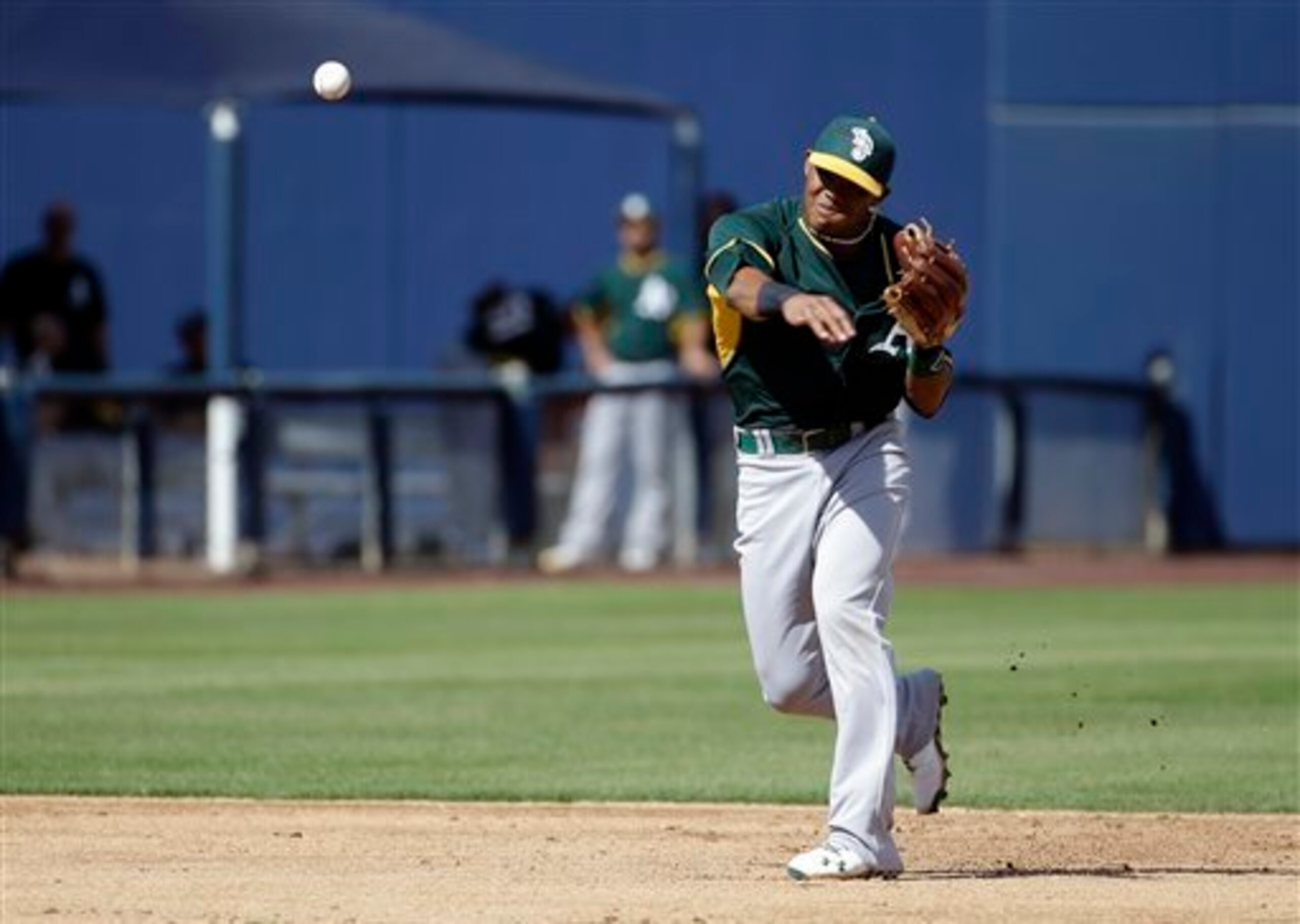
Hitting
Addison Russell makes lots of hard contact thanks to his plus bat speed and innate bat-to-ball skills, and he’s really started driving the ball to all fields over the last year. His swing will get long at times, but Russell gets through the zone so quickly that his average won't suffer due to strikeout totals. Lastly, his mature approach and pitch recognition will lead to plenty of walks and high on-base percentages during his career.
Power
The right-handed hitter’s combination of plus bat speed and a deep point of contact should generate above-average power at the highest level, possibly more depending on his physical development in the coming years. And given his ability to use the entire field, Russell should always tally a high number of doubles and triples.
Baserunning
Russell is an above-average runner with the athleticism and instincts to swipe 15-20 bags annually, but he’s been significantly less aggressive this season after missing the first half with a hamstring injury.
Defense
Russell still has room left to improve defensively, but he already possesses incredible range to both sides and is especially slick when charging the ball. His plus arm strength allows him to make throws from virtually anywhere on the infield, but there also are times when he doesn't set himself properly and uncorks inaccurate throws.
Overall
Russell has the makings of an All-Star-caliber shortstop, but there’s still a sizable gap between his present ability and overall potential. He should be ready to make an impact in the major leagues at some point next season, though the Cubs first will have to determine where he’ll play given their impressive depth up the middle.
16. Elvis Andrus, Texas Rangers
21 of 36
Hitting
Elvis Andrus is one of baseball’s most discerning hitters, and his good bat control allows him to pepper center and right with line drives and ground balls. That he still hits a lot more ground balls than line drives holds him back, however, and he’s not getting better at drawing walks, even despite his good eye. Pitchers go right at him, which is what they’ll do with ground-ball hitters who aren't dangerous in the zone.
Power
Andrus isn’t totally without power. He provides occasional reminders of that when he blasts line drives into the gaps for doubles and triples. But extreme ground-ball hitters like Andrus do have a tendency to struggle in the power department. He’s no different, as his power looks considerably worse if you take away the career-high number of doubles he’s gotten on ground balls this year.
Baserunning
Following a 42-steal season, Andrus’ base-stealing habit has taken a turn for the worse. It’s doubtful he’ll even make it to 30 steals, and he’ll likely end up leading the league in caught-stealings. The bright side is that a 20- to 25-steal shortstop is still a good thing to have, and Andrus’ 70 XBT% this season is superb by his standards. And since he’s still only 26, it shouldn’t get any worse than this.
Defense
Andrus’ defensive reputation precedes him, yet the defensive metrics aren’t buying it in 2014. Both have him as a below-average defender. But while it might not be too far-fetched that Andrus is losing a step—there are times when he’s slow to accelerate after his first step—he still has a fantastic feel for the position. He knows how to play every ground ball, and he still has the arm to make tough throws.
Overall
Andrus is still a capable everyday player, as he can still hit and run the bases reasonably well while playing defense that’s better than the defensive metrics think it is. But even though we can give him that much credit, it’s hard to ignore how he’s not as good at these things as he used to be.
15. Francisco Lindor, Cleveland Indians (Prospect)
22 of 36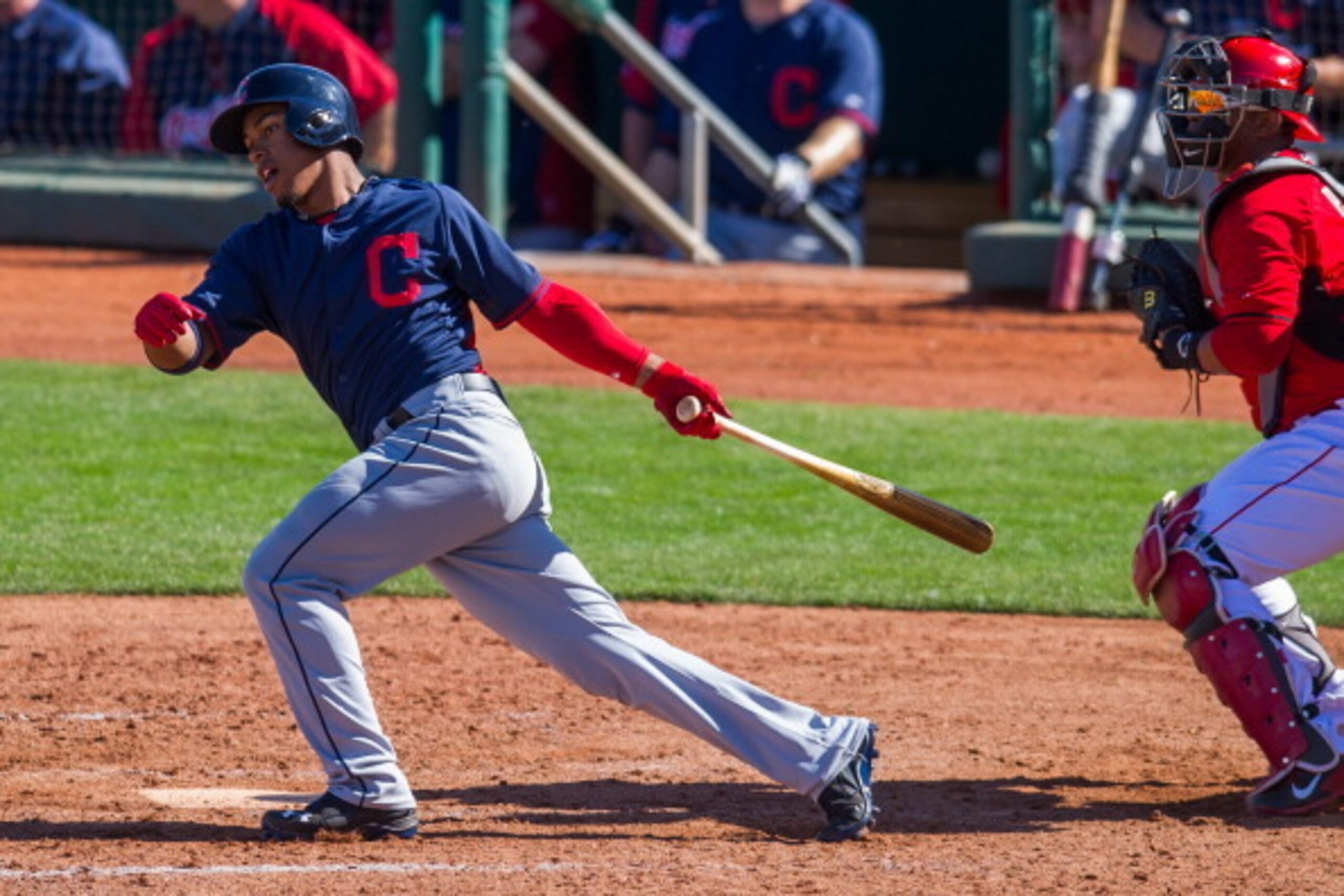
Hitting
The switch-hitting Francisco Lindor’s offensive skills have steadily improved over the last four years, as he’s developed an outstanding hitting eye and aptitude from both sides. He’s also refined his ability to read pitchers and stay within his zone, which in turn has led to him working deeper counts and chasing fewer pitches out of the zone.
Power
Lindor never will offer much power, but he has enough strength and bat speed, especially from the left side, to hit 10 to 12 homers at maturity. He’s more likely to be a line-drive machine who accrues roughly 20 to 25 doubles and a handful of triples over a full season in The Show.
Baserunning
Lindor’s above-average speed fuels his extra-base hit total, as his wheels and base-running instincts help him turn singles into doubles and doubles into triples. Lindor is also an adept base stealer who knows how to pick his spots, while his on-base skills suggest numerous seasons with 15 to 20 stolen bases.
Defense
Lindor is an absolute wizard with the glove and profiles as an elite defensive shortstop in the major leagues. The 20-year-old’s phenomenal instincts always have him in the right spot to make plays, and that doesn’t take into account his impressive range and quick feet. Meanwhile, his plus arm strength is ideal for the position.
Overall
Even if Lindor’s bat doesn’t develop as hoped, he still has the potential to enjoy a long, successful career in the major leagues based on his defensive prowess, superb makeup and ability to control the speed of the game. However, even modest offensive production could make Lindor a perennial All-Star.
14. Brandon Crawford, San Francisco Giants
23 of 36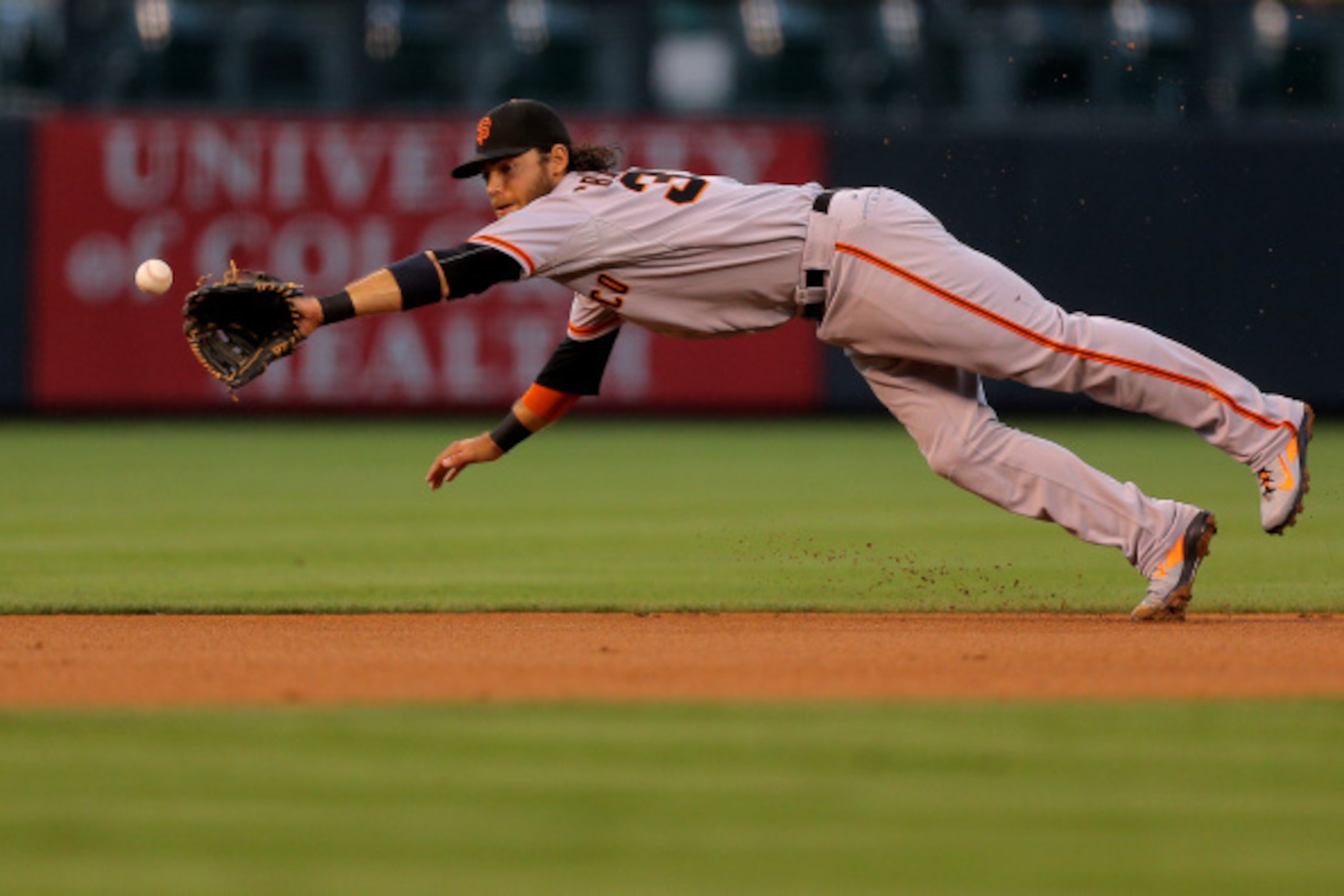
Hitting
Brandon Crawford’s eye is getting better, as he’s dropped his chase rate each of the last two years. He’s also liable to smack a line drive to any field. But alas, the whiff correction he made last year hasn’t stuck. It’s also alarming to see a lefty struggle so badly against righties, who can get him out with anything slow and, increasingly, hard stuff on the inner third of the zone.
Power
Fly balls are the best way to power, and Crawford’s boosted his power by hitting a lot more of them. But while that’ll do for progress, it’s not the best sign that relatively few of those have been fly balls to right field, where his home run power resides. That doesn’t mean his extra fly balls are a waste, but it also doesn’t mean he’s transitioning that quickly from a gap power guy to a home run hitter.
Baserunning
Crawford’s a good athlete, but his is the kind of athleticism that doesn’t apply to stealing bases. He’s done more harm than good in that department in his career and hasn’t shown any signs of getting better. As such, it’s a good thing he can at least manage a 46 XBT% rate that passes well enough for an acceptable rate for a shortstop.
Defense
Crawford is becoming less of the darling of the defensive metrics. They now rate him as an average defensive shortstop at best, in part due to the occasional carelessness that has led to a career-worst season for errors. But while those can’t go unpunished, he’s certainly not lacking in ability. His combination of good first-step quickness, a quick release and a strong arm is still intact, and it still makes for some pretty plays.
Overall
Despite what the metrics indicate, Crawford’s defense is his best talent. He’s also a solid power threat who’s at least teasing an ability to get batter. That just leaves him with some holes to fix in his hitting, which unfortunately will not be an easy process.
13. Chris Owings, Arizona Diamondbacks
24 of 36
Hitting
Chris Owings has shown that he’s definitely an aggressive and undisciplined hitter—and one who’s not going to be elite at making contact. That’s ordinarily a recipe for disaster, but give Owings credit for showing that he can hit anything on a line when he does make contact. He also has the look of a good low-ball hitter by righty standards. His wild approach is going to limit his potential, but perhaps not as much as it should.
Power
As long as Owings continues to favor ground balls and line drives, his power potential is only going to go so high. But it is encouraging that he’s teased power in directions other than left field, with enough raw power to drive the ball to center. The question, though, is if his long absence due to a bad left shoulder could have lingering effects, as it’s not like we’ve never seen an injury to a front shoulder sap power.
Baserunning
The base-stealing potential Owings flashed in the minors looks pretty real. Albeit in small sample sizes, he’s been able to steal bases pretty much at will. His merely decent 38 XBT% this year goes to show how he hasn’t lit up the basepaths much when he hasn’t been stealing bases, but he’ll be a good baserunning asset if he realizes his legit 20-steal potential in 2015.
Defense
The defensive metrics have dug what they’ve seen, rating Owings as an above-average defender at short. They’re probably overstating his range somewhat to do so. While Owings reacts fine off the bat, he’s not one to cover a ton of ground in a hurry. Beyond that, throwing accuracy looks like it could potentially be a real issue. So pardon me for not being ready to take the metrics’ word for it just yet.
Overall
Thanks to his shoulder injury, we’re still in the “getting to know you” phase with Owings. And in reality, he probably did look a little too good before his injury. Doubts aside, though, he does look like a shortstop who can play at least passable defense while hitting for some power and making things happen on the basepaths. That’ll do.
12. Starlin Castro, Chicago Cubs
25 of 36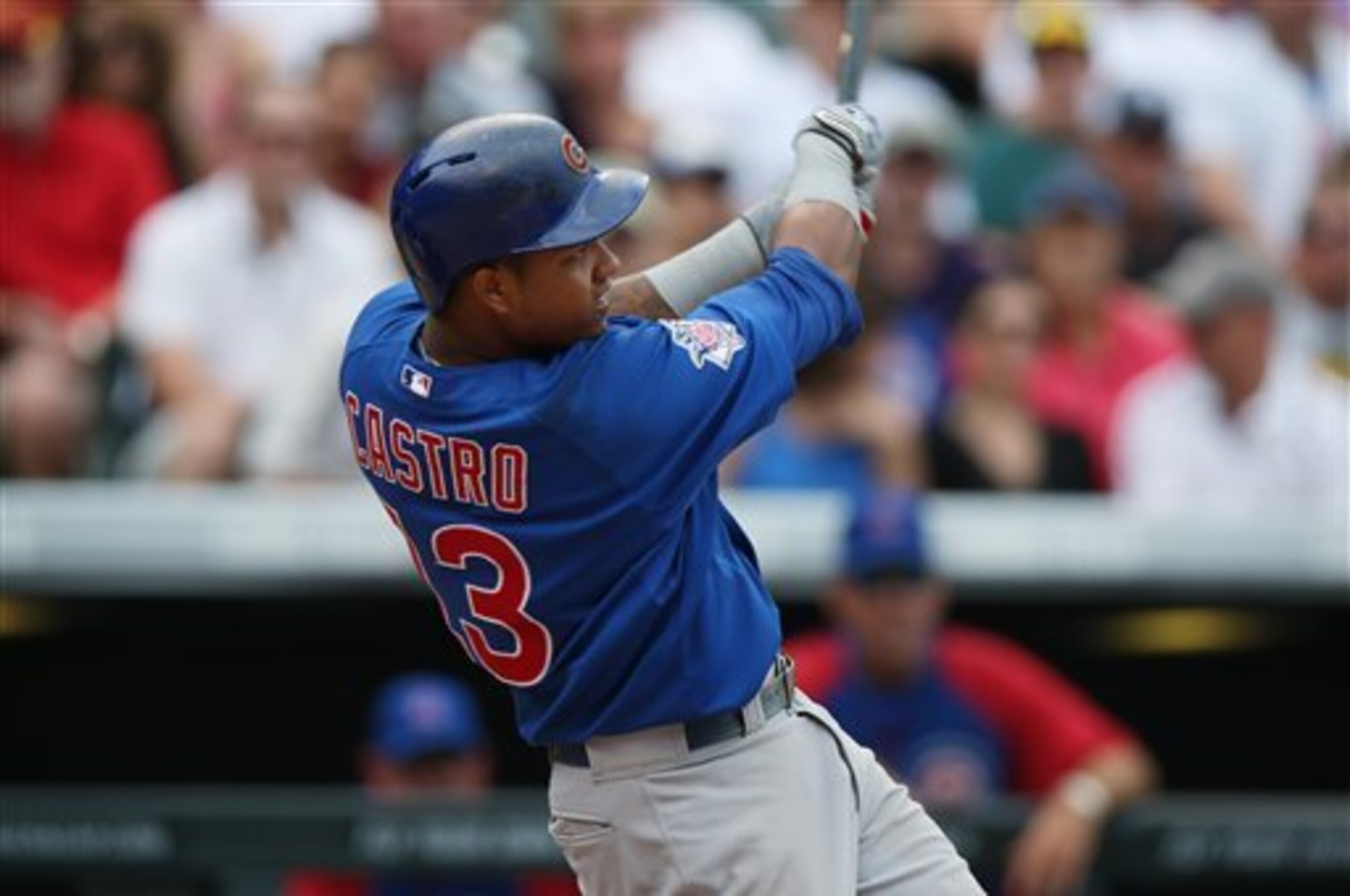
Hitting
Starlin Castro’s swinging-strike rate keeps climbing, and the issues he had hitting slow stuff in 2013 haven’t been solved in 2014. But it looks good that he’s laid off low-and-away junk so well despite seeing more of it than ever, and he’s been absolutely punishing fastballs. That doesn’t mean he has this hitting thing solved, but good discipline doing one thing and good consistency doing another can count for a lot.
Power
The revival of Castro’s power can be traced largely to the revival of his fly-ball rate but also to greater consistency hitting the ball in the air to his pull side. He’s doing that better than ever, and he's definitely been rewarded with extra-base hits. Add in the power he has to right-center, and you have a guy who’s safely back in the 15-homer-plus-doubles-power discussion.
Baserunning
It’s beginning to look like the league-high 13 caught-stealings Castro racked up in 2012 were the last straw. His base stealing has gone into hiding since then. So has his aggressiveness on the basepaths. He’s working on a 27 XBT%, well below his career norm of 40 percent. He doesn't appear to be in any hurry to put his athleticism to more frequent use, and his recent high-ankle sprain might further convince him.
Defense
The defensive metrics still don’t like Castro’s defense, once again rating him as a subpar defender. The silver lining is that he’s at least cleaned up his errors somewhat, as he should finish with less than 20 for the first time in his career. That’ll do for a start, but he needs to work on taking better paths to ground balls, as right now he’s still a little too content to let the ball come to him.
Overall
It’s been a fine rebound season for Castro, as he’s tightened up his discipline while also attacking fastballs and taking better advantage of his power. But a good bat without baserunning and defense is only worth so much. Castro seems to have given up on one and is still working on improving at the other.
11. Erick Aybar, Los Angeles Angels
26 of 36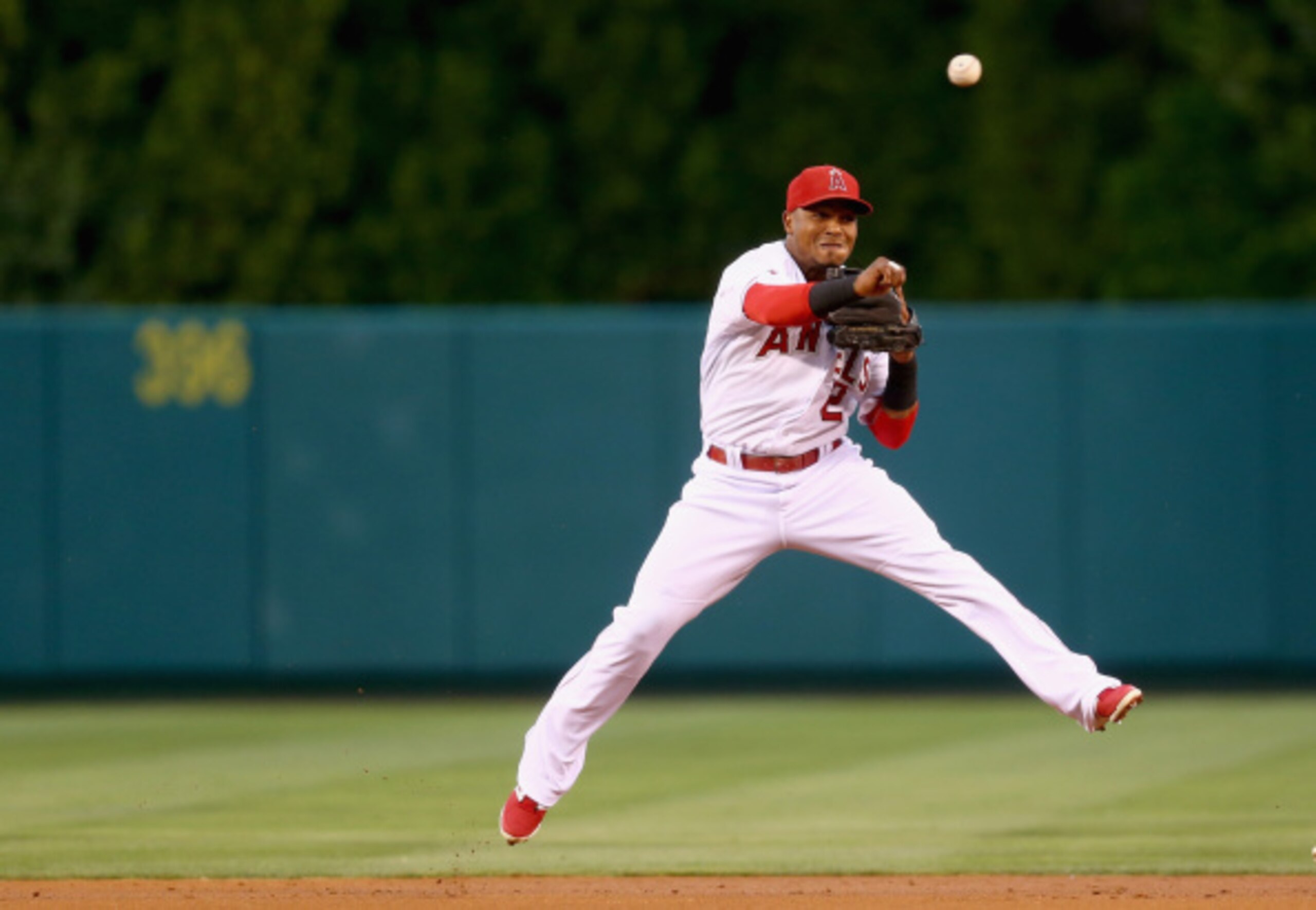
Hitting
Erick Aybar being aggressive at the plate is a constant. That he’s responded to an increase in breaking balls by taking more of them shows how he’s selective in his own way, however, and he’s still a good contact hitter who favors line drives and ground balls and can use the whole field as a lefty. But despite all that he does well, he’s basically cursed to live with averages on balls in play around the .300 threshold.
Power
That Aybar rarely hits the ball in the air means there’s a natural cap on his power production. It’s further limited by how he has virtually no ability to drive the ball to left field when batting lefty despite his strong ability to go that direction consistently. He does have some pull home run power, however, and the slap power he has down the foul lines helps make up for modest gap power.
Baserunning
Aybar can still steal bases, but his ugly success rate does do a good job of reflecting how he’s lost a step at age 30. With his 31st birthday due up soon, that step presumably isn’t coming back. And while it’s all well and good that he has a face-saving 54 XBT%, it’s only good for so much knowing that his longstanding problem with running into outs on the bases is still alive and well. He's now a pretty ordinary baserunner.
Defense
The defensive metrics are split on Aybar’s defense, with one viewing him as above average and the other viewing him as below average. He’s likely somewhere in between. It’s good that he still has a quick release and strong arm and that he’s cut back on his fielding errors, but the latter looks like it’s thanks to fading range. There are times when he looks slow getting after balls, yet another way in which he looks his age.
Overall
That Aybar appears to be slowing down in his 30s isn’t good, but the silver lining is that he’s shown he can still be a capable baserunner and defender even despite that. Add in his average to above-average bat, and you still have a quality player on your hands.
10. Jose Reyes, Toronto Blue Jays
27 of 36
Hitting
Jose Reyes is more aggressive and is more likely to swing and miss than he’s been in a long time. And because it’s only getting easier to get him to whiff on slow stuff, you wonder if he’s beginning to cheat a little. But if he is, he’s making it work. Reyes is back to hitting hard stuff on a line like he did in 2011 and 2012, and he’s turned around a downward trend on hard stuff over 90. If he keeps that up, he’ll be fine.
Power
Whether as a righty hitter or as a lefty hitter, Reyes is inching more and more toward being a strictly pull-power guy. But that would be more concerning if he was having trouble turning on balls and hitting them hard. He’s not, with his primary strength still being his ability to whack fly balls and line drives down the right field line as a lefty hitter. It’s not much, but it’ll work as a good cushion for his power.
Baserunning
Due to both his age and the ever-growing pile of leg injuries he’s sustained, Reyes is more than likely done as a 40-steal guy. But he’s shown this year that the 25-30 range is still in play—and with excellent efficiency to boot. And though he’s still liable to make outs on the basepaths, that his XBT% simply won’t dip below 50 is a good sign. He’s losing speed, but not aggressiveness.
Defense
The defensive metrics aren’t changing the opinion that they’ve had for a couple years now: that Reyes is a below-average defender. Errors are still a problem, as he’s made over 15 of them for a fourth year out of five. And while he still has good range to help make up for that, the fact he’s inconsistent about setting his feet costs him valuable seconds and/or zip on his throws.
Overall
That Reyes struggles to even play passable defense at shortstop definitely helps drag down his overall value, and he’s neither the hitter nor the baserunner that he used to be. But since his bat and baserunning are still valuable tools, he’s not done as a quality everyday player.
9. Alcides Escobar, Kansas City Royals
28 of 36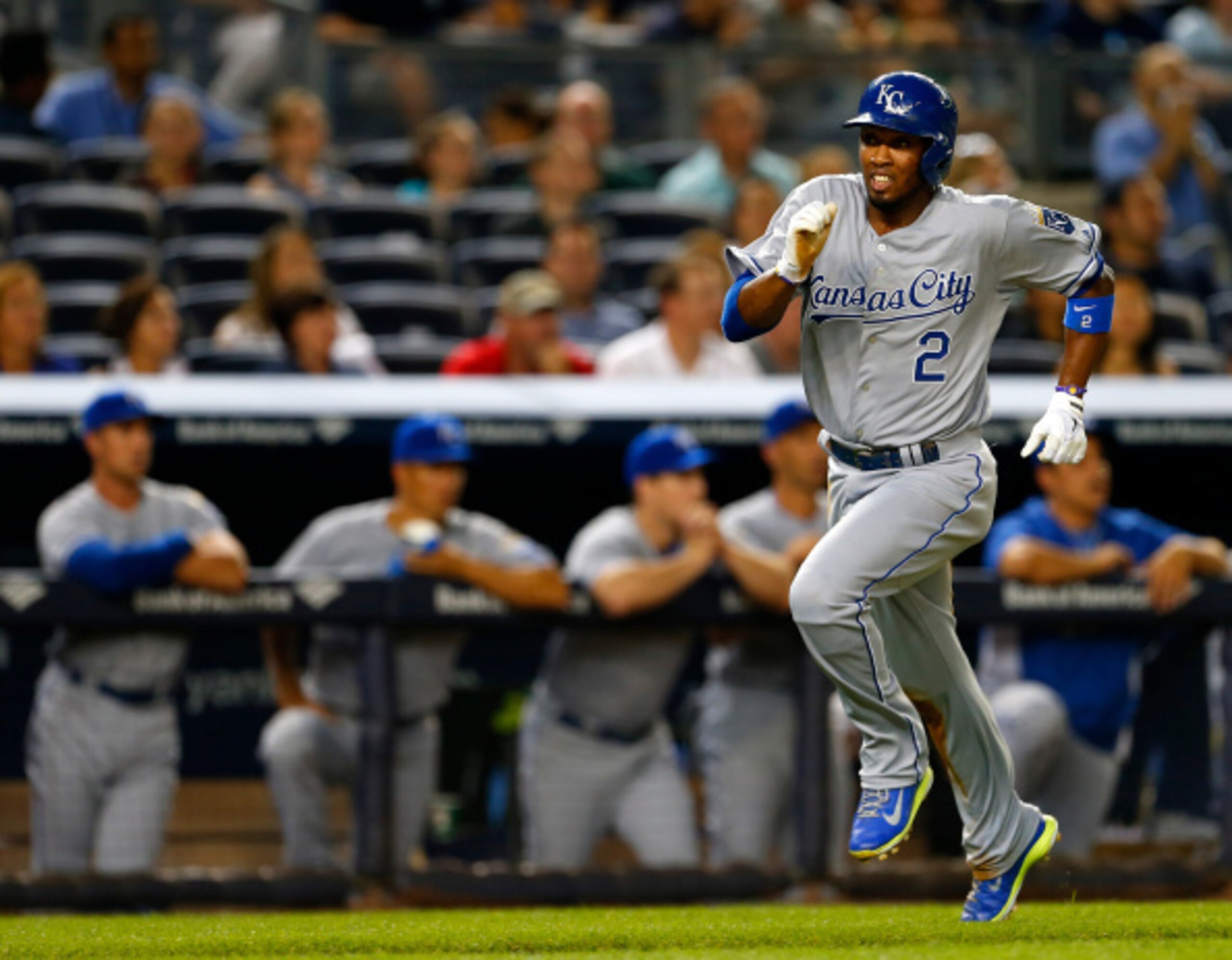
Hitting
Alcides Escobar is still an aggressive hacker, but keeping his swings confined to the zone more consistently has helped. His career-best line-drive rate exists largely thanks to swings inside the zone. This is not to say he doesn’t have limitations, as he’s still not one to take a walk and, just as important, is a mediocre contact hitter for such an aggressive swinger. Especially on slow stuff, which opposing pitchers know all too well.
Power
The sheer volume of line drives Escobar has hit this year has helped his power, and he’s helped himself by being a line-drive threat who can cover both foul lines. As long as that remains the case, he’ll continue to be a solid source of doubles and triples. He doesn’t have much power in the gaps, however, and it says it all that an elevated fly-ball rate has done nothing to give him more home run power.
Baserunning
Escobar is not only one of the more productive base stealers in the league, but one of the most efficient base stealers in the league too. He’s not going to post a 100 percent success rate like he did in 2013, but there’s a good chance he’ll finish the season with 30 steals and a success rate around 90 percent. On top of that, his XBT% is going strong at 55 percent, making him one of the league’s better baserunners.
Defense
There was a slight difference of opinion with the defensive metrics over Escobar’s defense in 2013, but this year, they agree that he’s closer to average. There’s something to that, as he doesn’t play the most mistake-free shortstop and his speed probably plays better on the basepaths than it does on defense. Still, his range is plenty good enough, and his strong arm makes it count.
Overall
Escobar has his limitations, but he’s arguably a more well-rounded player now than he was in any of his first three seasons with the Kansas City Royals. More consistent contact has made him at least a passable hitter and power source, and he’s still running the bases well and playing a quality shortstop.
8. Ian Desmond, Washington Nationals
29 of 36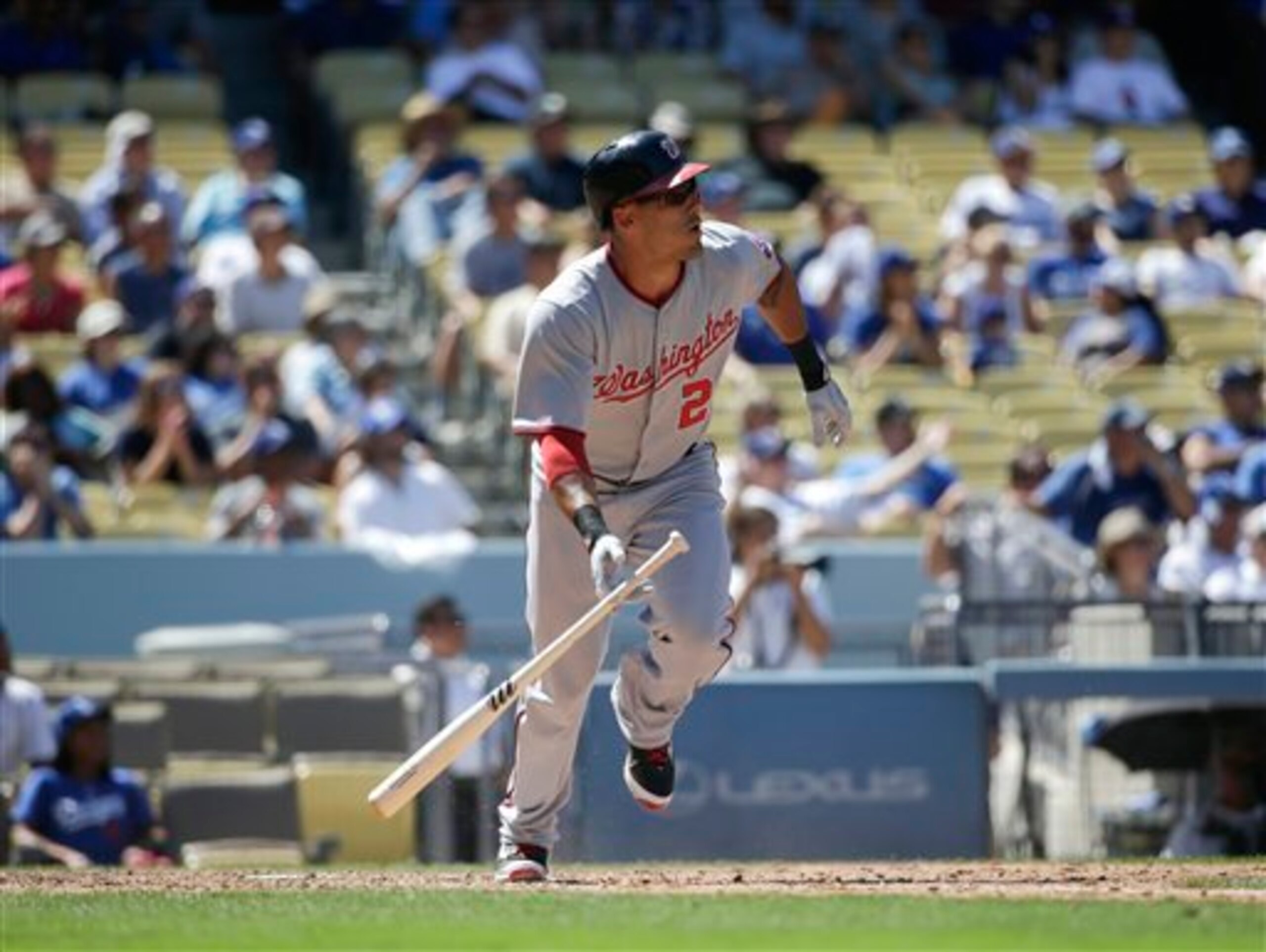
Hitting
Ian Desmond is doing his best to tone down his aggressiveness, and he’s better at spreading his batted balls around than I think people realize. But he otherwise struggles badly with swings and misses. Fastballs up and in kill him, and he’s had no answer for the increased amount of breaking stuff he’s seen. And because the problem is getting worse rather than better, you do have to worry about the future.
Power
You’d think Desmond would be a fly-ball guy, but he’s actually not. And outside of 2013, he hasn’t been much of a line-drive guy either. It’s a good thing he has the raw power to make up for these shortcomings, as he can blast the ball all over the yard when he does square pitches up. That kind of power is rare for a shortstop, and it ensures Desmond’s spot as one of the best power bats at the position.
Baserunning
Desmond still belongs in the realm of 20-steal shortstops, but he hasn’t come any closer to patching up the relative inefficiency that accompanies his base stealing. That’s a bummer, and so is how he’s working on having a 40 XBT% for the second time in three years. The bright side: Unlike in past years, outs on the basepaths have been rare for him. He may not be perfect, but he’s still good.
Defense
Desmond’s one of those guys who tends to confuse the defensive metrics, but they agree his defense hasn’t been good this season. But really, the best way to sum up Desmond’s defense is that he’s just plain inconsistent. That applies not only to his proneness for errors, but in how he reacts off the bat and in the paths he takes to ground balls. In all, he relies too much on his (admittedly quite good) athleticism.
Overall
Between his speed, power and general athleticism, Desmond is one of the best packages of tools you’re going to find at shortstop. But consistency is something he struggles mightily with, especially when it comes to hitting the baseball. And that’s a problem that’s getting worse rather than better.
7. Jimmy Rollins
30 of 36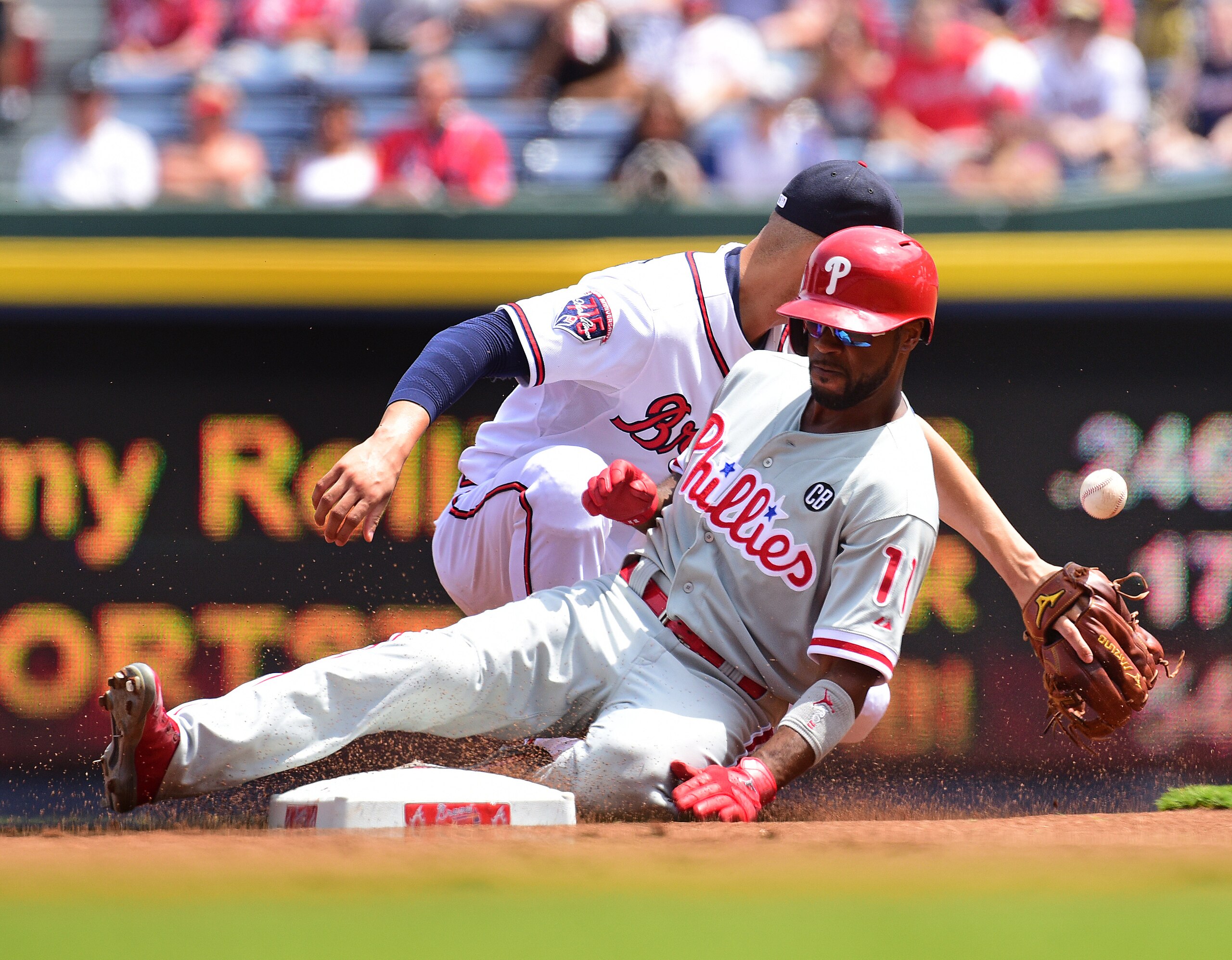
Hitting
Jimmy Rollins hasn’t lost his strong batting eye, and this year’s spike in breaking balls is something pitchers should reconsider knowing that he’s only getting better at squaring up breaking balls. But that doesn’t change how he’s mainly a fly-ball hitter, making it tough to hit for average. Then there’s his escalating strikeout problem and how easy he is to beat with good heat. That’s where he looks his age (35) the most.
Power
It turns out that last year’s rumors of the demise of Rollins’ power were exaggerated. He’s getting around on balls as a lefty batter in a way he simply wasn’t doing in 2013. Keeping that up is of paramount importance knowing that pull power from the left side is really all he has. But it’s probably not something we want to lean too heavily on looking ahead to Rollins’ age-36 season.
Baserunning
Though it should be at his age, this part of Rollins’ game simply refuses to die. He has a shot to hit 30 steals for a third year out of four, which is good stuff for a 35-year-old. So is his 40 XBT%, even if it is subpar by his usual standards. This is probably as good as it gets at Rollins’ age, but it’s plenty good enough to pass for quality baserunning.
Defense
The defensive metrics have been up and down on Rollins’ defense in recent years, but this year, they both view him as roughly average. I’ll rate him slightly better than that. He doesn’t have the range he once did, but he still has good hands and a strong arm, and he deserves props for his awareness. He has a knack for knowing how much time he has to make a play, especially with speedy baserunners.
Overall
Rollins has welcomed back his power and speed while continuing to play at least a decent shortstop. He’s at that age where he can’t keep this up forever, but he’s at least shown that he can keep doing it for longer than we were all thinking last year.
6. Hanley Ramirez, Los Angeles Dodgers
31 of 36
Hitting
Hanley Ramirez has toned down his 2013 aggressiveness, treating himself to fewer whiffs and more walks. He’s also retained some of last year’s ability to hit line drives. But his drop-off against hard stuff is hard to ignore, as he’s neither hit it as solidly nor covered the top and bottom of the zone like he did in 2013. That could be owed to how banged up he’s been, but it could also be him showing his 30 years.
Power
I’m not sure any other hitter clobbered the ball as consistently as Ramirez in 2013. I mean, seriously. And if we’re being fair, he’s done plenty to demonstrate that he can still drive the ball all over. But his fly-ball tendency has essentially gone back to normal, and his power production has really only been impressive in how he’s peppered left field with line-drive doubles. Once again, you fear the age factor.
Baserunning
Credit where it’s due, Ramirez has responded to his power decline by ramping up his baserunning again. Beyond stealing more bases, he’s gone from a 38 XBT% to a 46 XBT%, thereby putting a transformation into a full-on slugger on hold. This is probably as good as it gets knowing how old (relatively speaking, of course) and banged up Ramirez is, but it’s good to know his athleticism hasn’t dried up yet.
Defense
The defensive metrics’ insistence that Ramirez played good defense in 2013 was believable. He seemed to find some kind of spark that wasn’t there before on defense, helping make up for iffy skills with simple energy. But now it’s equally believable that it’s all gone back the other way. His slow movements make him look like a corner infielder who’s out of position, and his throws are all too often adventures.
Overall
Ramirez’s bat is still very good by shortstop standards, and he’s absolutely a quality player because of that. But his bat does have some concerning holes in it, and his defense...well, there’s no defense for it. And while injuries definitely haven’t helped Ramirez, it’s not a good idea to trust too heavily in a turnaround. It’s not like he was a picture of health before 2014, and he’s not getting any younger.
5. J.J. Hardy, Baltimore Orioles
32 of 36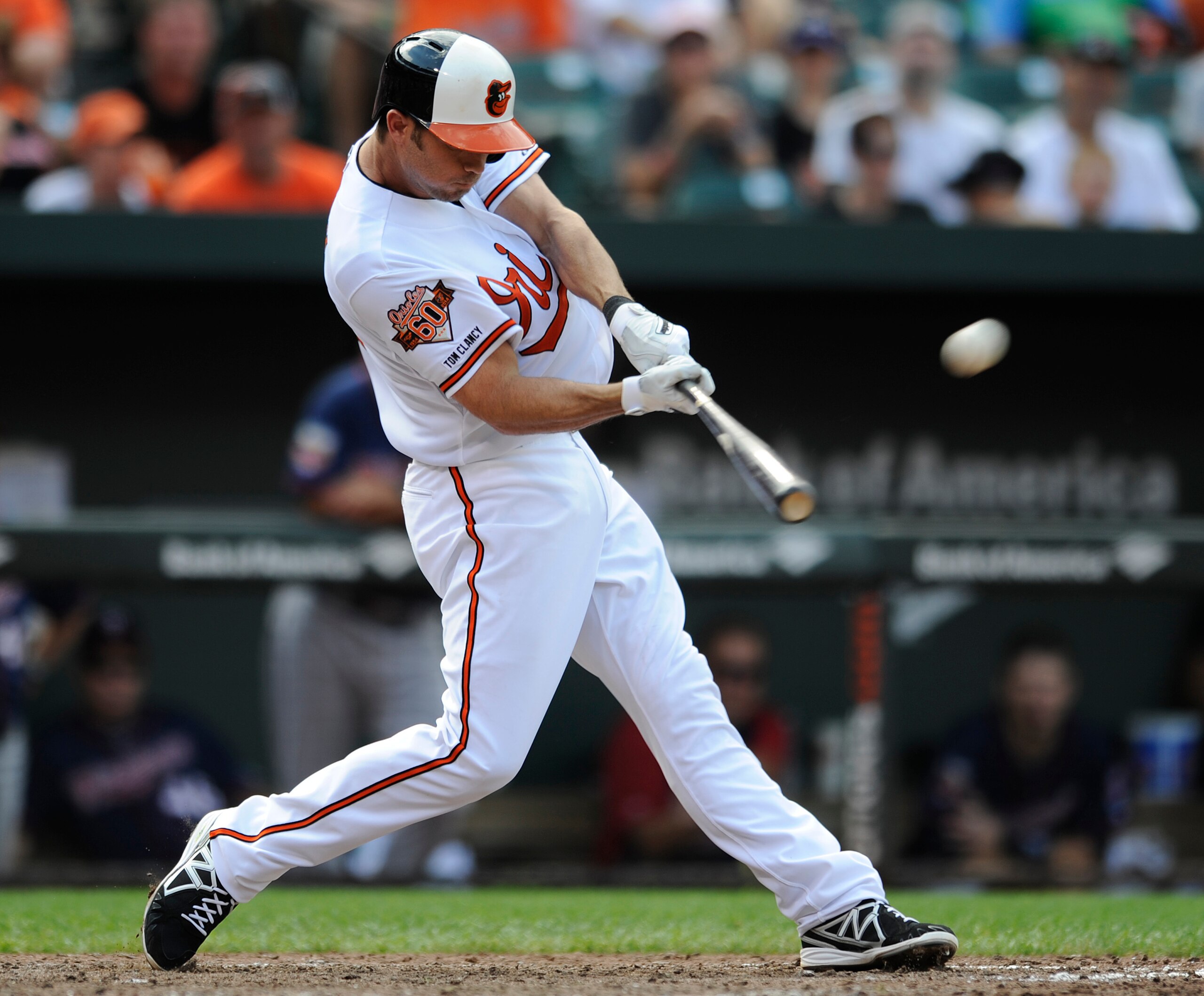
Hitting
J.J. Hardy’s still not taking any walks, and his formerly strong ability to make contact outside the zone has been killed by a career-worst season whiffing on junk slow stuff. What’s saving him is that he’s still getting better at hitting all pitches for line drives, and he’s upheld last year’s increase on grounders and liners to the right side. So yeah, Hardy’s still a weird hitter who keeps finding ways to get by.
Power
It took until June 21 for Hardy to hit his first dinger. But he never lost his ability to hit the ball in the air, and his power has been more normal ever since that first dinger. A comparison of before and after batted-ball maps makes that clear, as Hardy really has been driving the ball more regularly. And yet we wonder: With Hardy now safely beyond 32, was that early season power outage a warning?
Baserunning
Hardy may play a position where there are plenty of base stealers to be found, but he’s never been one of them. And at his age, he’s not going to become one. Beyond that, it’s a bad look that he’s following up last year’s 25 XBT% with a 25 XBT% in 2014. As far as shortstops go, he’s very much a station-to-station runner.
Defense
The defensive metrics still like what they see from Hardy. The eye test does too. He doesn’t wow you with athleticism, but there might be nobody better at knowing exactly how to play every ground ball. And once the ball’s in his glove, his quick release and arm strength take care of the rest. There’s the slight worry about those aging legs, but he’s definitely one of the best.
Overall
The rebound of Hardy’s power since his first home run in June only inspires so much optimism, and he still barely passes for a capable hitter. But as long as he has at least a solid bat to go with his outstanding defense at shortstop, he’ll continue being one of the best in the business at the position.
4. Alexei Ramirez, Chicago White Sox
33 of 36
Hitting
Compared to 2012 and 2013, Alexei Ramirez has dialed back his aggressiveness. As a bonus, he’s hit hard stuff in the zone for line drives more frequently and is working on one of his best batting averages against it. Despite all this, he still won’t take a walk, his longstanding tendencies to pop up and hit the ball on the ground are still there and he’s gone back to being a dead pull hitter. His hitting potential is still limited.
Power
With a likeness for pop-ups, ground balls and hitting the ball to left field, Ramirez’s power potential only goes so high. And at his age, 32, power doesn’t tend to stay for very long. The guy does deserve some credit, though. Hard-hit drives down the left field line are a common occurrence, and he can pick up his share of both homers and doubles on those. Limited power though it may be, it’s reasonably effective.
Baserunning
Ramirez isn’t going to make it to 30 steals like he did in 2013, but he'll likely reach 20 for a third straight year. And with better efficiency than usual, to boot. Factor in a 51 XBT%, and a guy who’s long been a quality baserunner is still just that. Really the only thing worth worrying about is how much longer he can keep this up for knowing that he’s quickly approaching his 33rd birthday.
Defense
The defensive metrics aren’t sold on Ramirez’s defense, rating him as roughly average. That’s a bit harsh. Though he’s sometimes been slow to react, he's having one of his best seasons avoiding errors and a he’s probably made more athletic plays (his list of highlights is definitely worth a scroll) this year than in any other year. His best defense could well be behind him, granted, but he’s more than good enough at short.
Overall
For all his various imperfections, Ramirez is still a shortstop who can handle the bat, run the bases and play above-average defense. How much better he can get at any of these things at his age is a good question, but he’s done enough this year to show that he’s not ready to go into a harsh decline just yet.
3. Andrelton Simmons, Atlanta Braves
34 of 36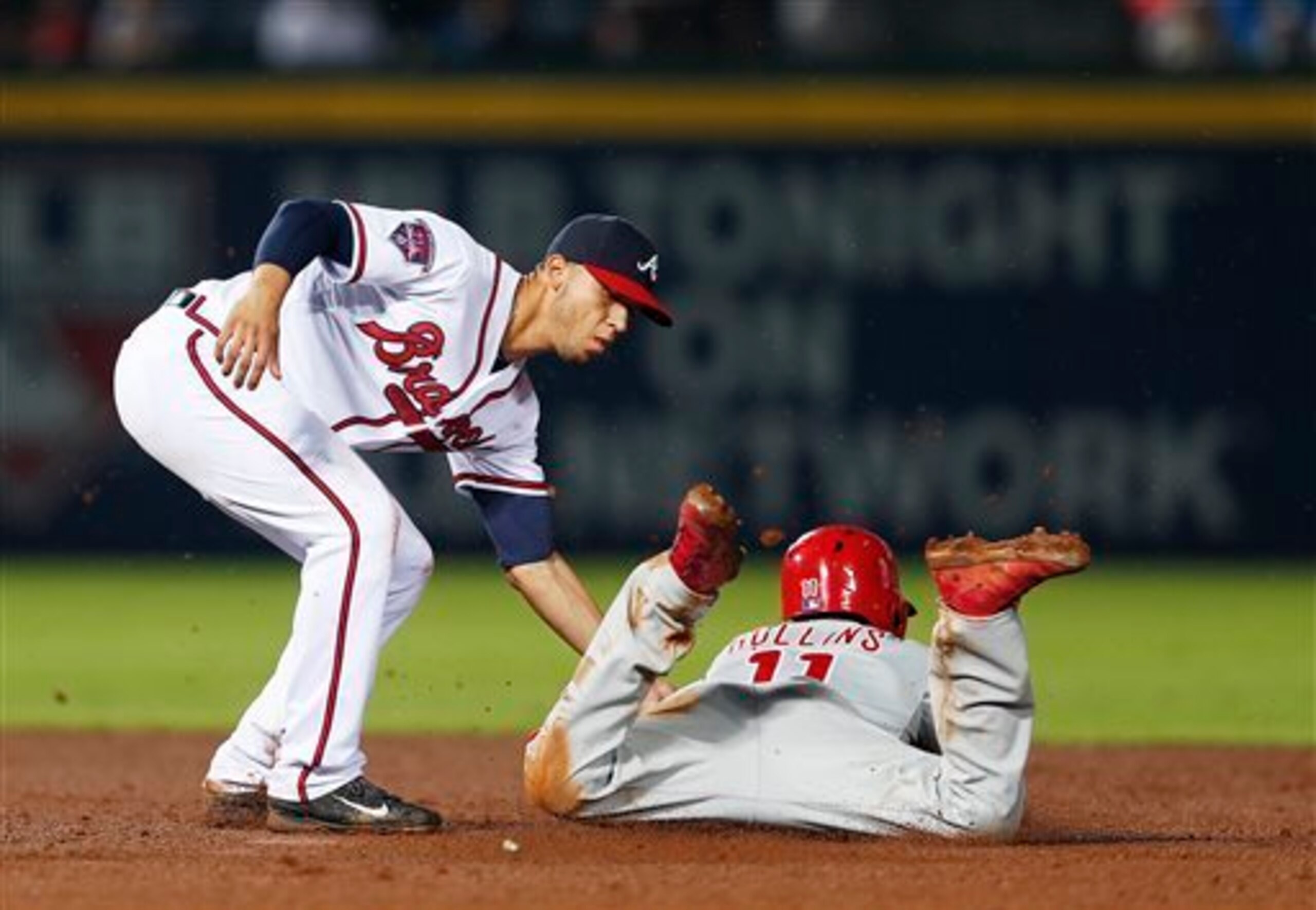
Hitting
That Andrelton Simmons can be aggressive without being undisciplined with an outstanding contact ability is impressive. It’s also for the best that he’s toned down his fly-ball habit and taken to punching ground balls all around. But good contact is still too infrequent, with the most disturbing trend this season being how many fastballs he’s been late on and popped to right field. He’s still searching for the right balance.
Power
One thing Simmons’ 2013 fly-ball habit did was keep his power production afloat, particularly in how consistent he was at pulling fly balls to left field. Beyond his fly-ball rate dropping, it’s remarkable how infrequent fly balls to left field have been in 2014. The raw power is still there—he’s made that clear enough on several occasions—but this is yet another area where Simmons is still searching for the right balance.
Baserunning
You’d expect a talented athlete like Simmons to be a quality baserunner, but he’s really just OK. He hasn’t figured out how to steal bases yet. It’s therefore a good thing that he’s increased his XBT% rates each year, topping out at 50 percent this year. As long as he keeps that up, he should be a quality baserunning asset even without steals.
Defense
No, Simmons isn’t blowing away the defensive metrics like he did in 2013. But they still love him. And so does the eye test. With quick reactions, good acceleration, good paths to balls and the strongest throwing arm in the shortstop industry, Simmons is still very much the ideal defensive shortstop. This thing pretty much nails it.
Overall
Simmons’ defense is good enough to make him not only one of the game’s elite shortstops, but one of the game’s top players. But until he settles on the right way to make good use of his contact-making ability at the plate, his bat will continue to lag well behind his glove and render him a lesser player than he should be.
2. Jhonny Peralta, St. Louis Cardinals
35 of 36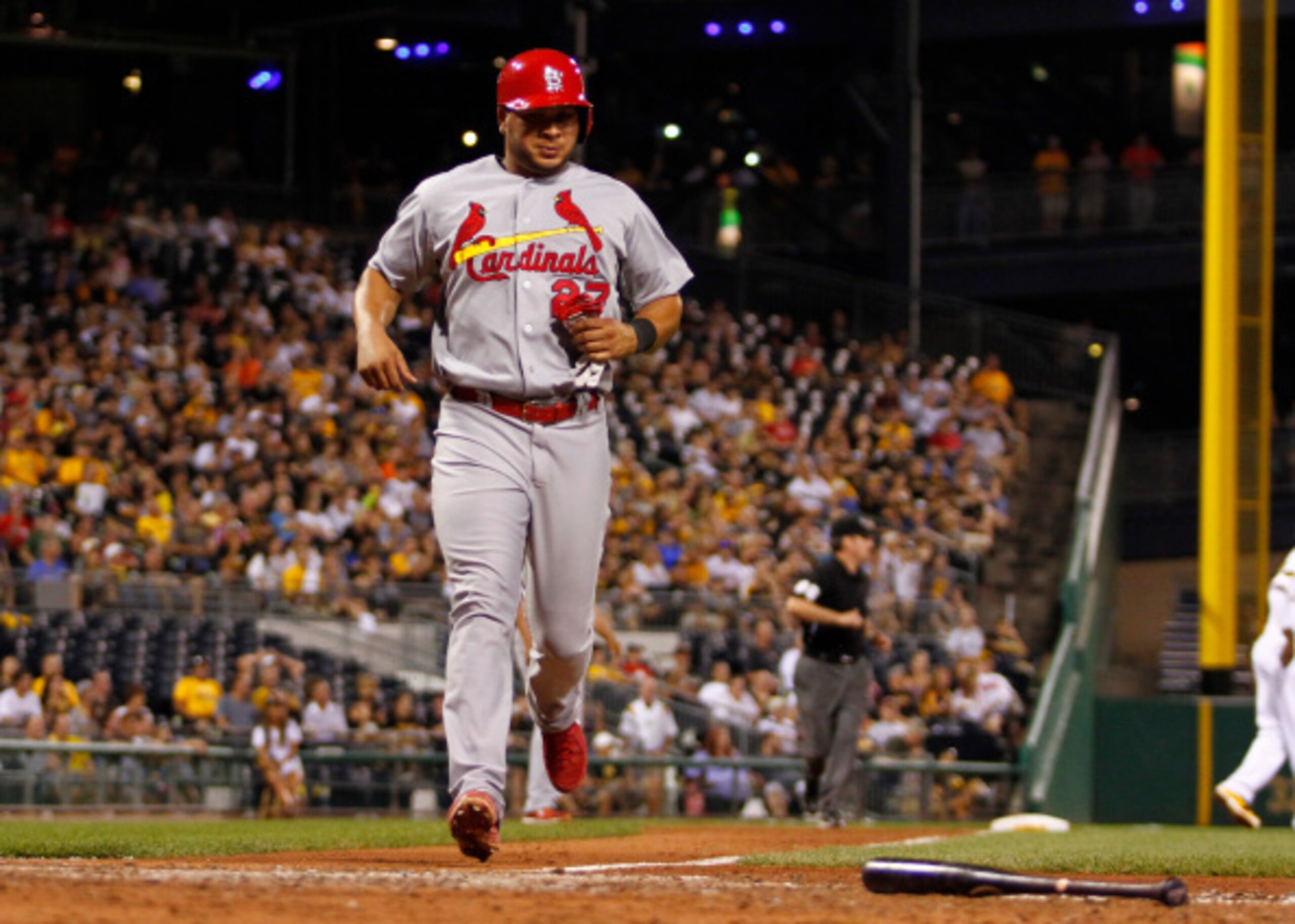
Hitting
Jhonny Peralta has been the right kind of aggressive in 2014. His extra hacks have occurred mainly in the strike zone—and on fastballs, to boot. And against those, he’s padded his production by hitting them to all fields. What’s less encouraging is how little of his production has come on slow stuff, and what little production there is has been achieved almost exclusively through hitting mistakes.
Power
Suddenly, Peralta is back in the discussion of 20- to 25-homer shortstops. Upping his fly-ball rate from where it had been the last two seasons has helped. And though somewhat alarming that he’s needed to rely so heavily on straightaway left field for his homers, it has been something of a vintage year for him hitting line drives and fly balls in that direction. If he can keep that up, he can keep the power coming.
Baserunning
You’re not going to confuse Peralta for a good baserunning shortstop anytime soon. If he had any best stolen-base days, they’re long behind him at this point. And though not too bad, the 35 XBT% he’s working on is both unspectacular by shortstop standards and normal by his standards. In other words, him being a subpar baserunning shortstop is nothing new.
Defense
This is where it gets tough to evaluate Peralta. The defensive metrics think he’s an elite defender. I have a hard time believing that he’s actually that good, but there is something to the notion of him being better than advertised. His first-step quickness is better than you’d expect, and beyond that he does seem to have a knack for using efficient paths and throws to make some of the tougher plays.
Overall
You can look at Peralta’s WAR and conclude that he’s one of the game’s elite position players. But that owes a lot to his debatable defensive value. In reality, what’s likely only solid defense combines with a good power bat to make him a quality player but less than a great player.
1. Troy Tulowitzki, Colorado Rockies
36 of 36
Hitting
I mean, sure, we can talk about the Coors Field effect. Troy Tulowitzki did finish his season with a .417 average at home and a .257 average in road games. But when you have a measured plate approach, a solid contact habit, zone coverage that has few holes and an ability to hit rockets all over the field, only giving Troy Tulowitzki a perfect score here is really the biggest way we can knock him for the Coors Field effect.
Power
Again, you can focus on the Coors Field effect. But it says it all that even Tulowitziki’s .191 road ISO (Isolated Power) is elite by this year’s shortstop standards. He really does have power that’s unrivaled at shortstop. His preference for line drives and fly balls allows him to easily tap into it, and he can pick up extra-base hits in any direction he pleases.
Baserunning
And now for the point where the Tulowitzki love fest gets put on hold. Injuries have helped influence a decline into a subpar baserunner by shortstop standards. He doesn’t steal bases anymore, and he finished his season with (by far) a career-low 25 XBT%. Knowing that he’s headed for his age-30 season with yet another significant lower-half injury in his wake, no, things probably aren’t getting better.
Defense
Tulowitzki had yet another strong defensive season as far as the defensive metrics are concerned, playing mistake-free defense and making a boatload of tough plays. On those, it’s not so much amazing quickness. It’s more so his arm strength, as he can salvage seemingly un-makeable plays by unleashing throws that maybe nobody other than Andrelton Simmons can make. The one worry: How much longer can his body hold up at short?
Overall
For much of 2014, Tulowitzki was the best player in baseball thanks to insanely hot hitting and terrific defense at shortstop. It’s too bad that yet another injury came along and ruined everything. And with so many injuries now on his soon-to-be-30-year-old body, it’s best if we expect him to be, you know, only slightly elite going forward.


.jpg?w=2560 "Insiders: Cowboys Overpaid for Porter")
.jpg?w=2560 "Every Trade's Best Trade Asset 🔁")
.jpg?w=2560 "Top NFL Trade Targets")
.jpg?w=2560 "Daniels Eyeing Week 5 Return")
.jpg?w=2560 "No Rift Between Maye, Vrabel")