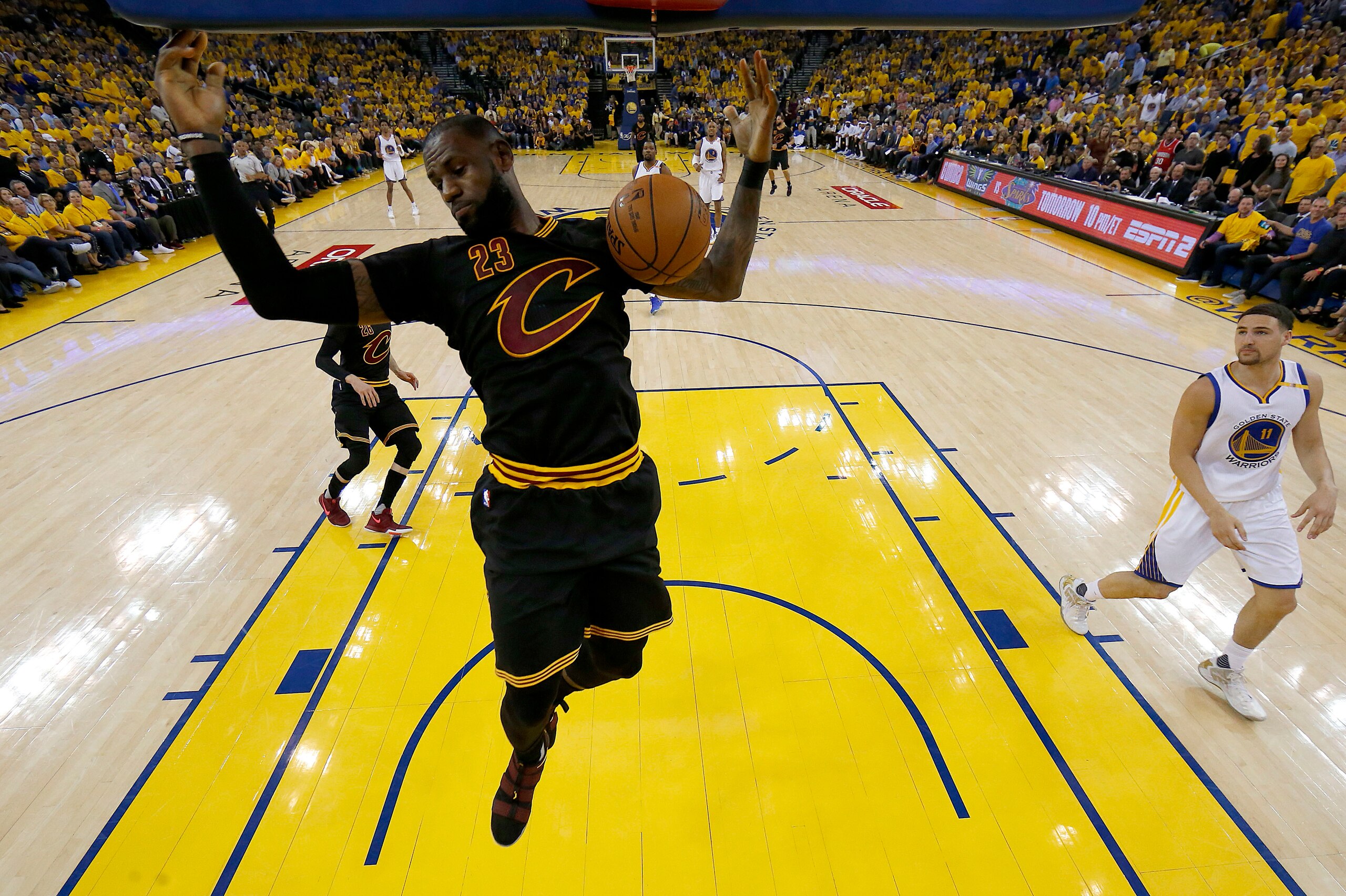

2017 Offseason Blueprint for Cleveland Cavaliers
It's hard to call a season in which you made it to the NBA Finals, a disappointment, but when you're the defending champs, it has to be a little discouraging. Now the Cleveland Cavaliers begin their offseason pursuit to come out on top of the Golden State Warriors again.
They have serious challenges here. According to Spotrac, the Cavaliers are already about $27 million over the cap, $7 million over the luxury tax and $2 million over the apron. And that's with just 10 players signed.
According to Michael Ginnitti, co-founder and editor of Spotrac, the Cavs are conservatively looking at handing out $195,900,033 in salaries and taxes, and that doesn't include re-signing Kyle Korver. That's not just cost-prohibitive, but it also makes the rules a lot harder on them.
It doesn’t mean the Cavs can't improve. It just means they have to make the right moves. Following is a five-step plan for how they can get past the Warriors in next year's (seemingly inevitable) Finals.
Re-Sign David Griffin
1 of 5
David Griffin gets maligned every time people talk about how LeBron James is the real general manager of the Cavaliers, but Griffin has done an amazing job in his tenure.
According to Joe Vardon of Cleveland.com, Griffin's salary is under $2 million, and his contract is coming to an end June 30. The GM, whose roster went to three consecutive Finals, doesn't have a new deal in place and will be meeting with majority owner Dan Gilbert in the coming days "to determine his future with the franchise."
"I feel good about our talent, our personnel, coaching staff, everything," Gilbert said after the Warriors defeated the Cavs 129-120 in Game 5 at Oracle Arena on Monday.
Griffin is highly sought after, according to Vardon, as the Orlando Magic, Atlanta Hawks and Milwaukee Bucks have all asked to speak to him, though the Hawks and Magic did not receive permission to do so. That interest indicates he is in high enough demand that he should be getting paid more.
Gilbert needs to make a deal quickly and decisively. It's hard to have an effective offseason without a GM, and if you have one of the best in the business already, there's no point in fooling around.
Scour the World for Hidden Gems
2 of 5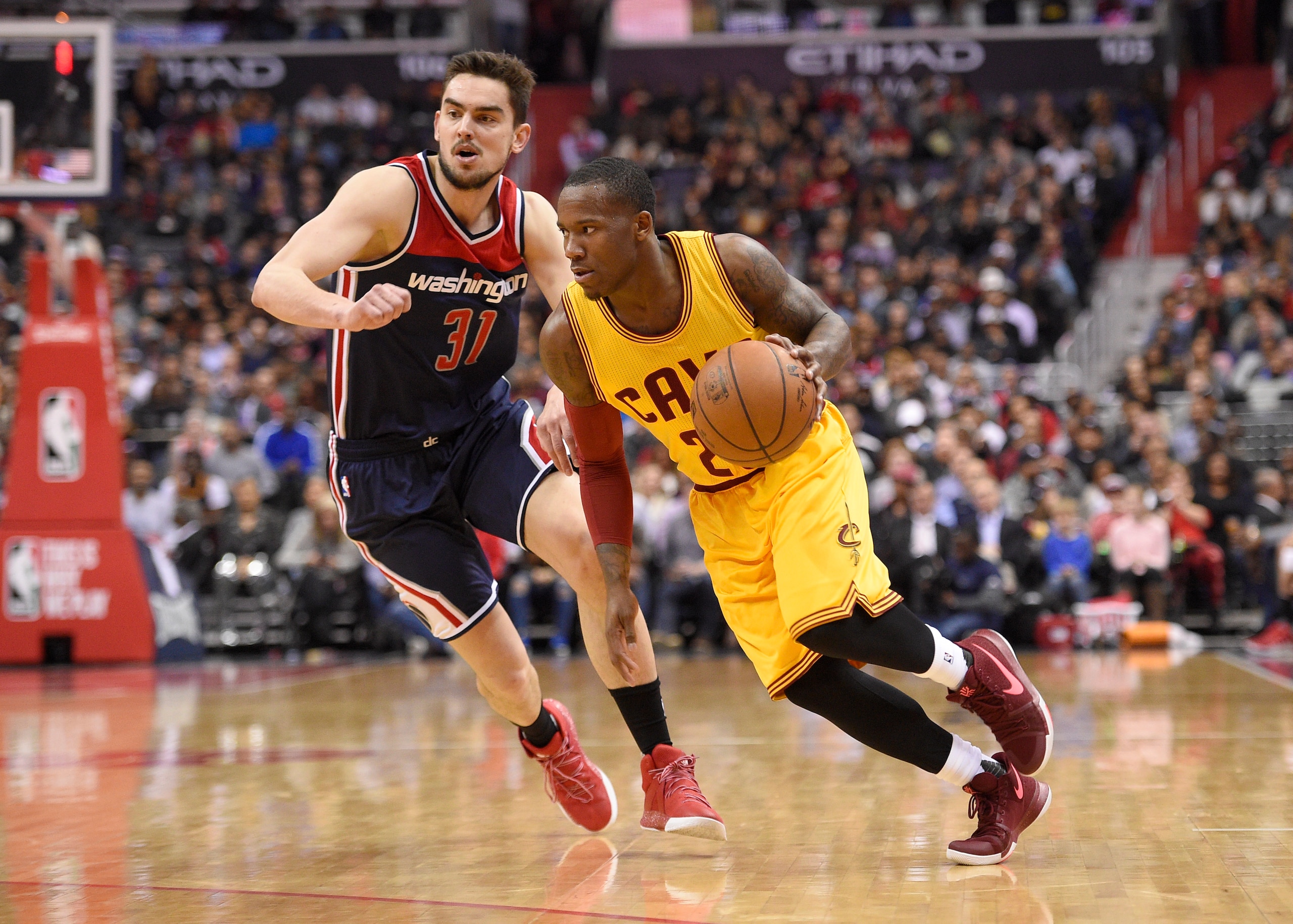
Both the Miami Heat and the Cavaliers have tried the same thing to fill the tail end of their rosters: stack them with veteran players who still have something to contribute at the end of their careers. Guys like Richard Jefferson can come in handy in the postseason.
And while having some of those guys is a plus, the Cavaliers have a dearth of youth on their roster. Kay Felder was the only player under 24 who played a minute for them last year, according to Basketball Reference, and he only averaged 9.2 minutes per game over 42 contests.
According to RealGM, the Cavs tied with the Los Angeles Clippers for the oldest team in the league in 2016-17 with an average age of 29.9 years.
They need some youth. With three straight trips to the Finals, they need someone who can give them fresh legs from time to time. Plus, you never know when a kid is going to blossom when given a chance—as Yogi Ferrell did for the Dallas Mavericks this past season.
The strength of an older lineup is you know what you're getting. The limitation is you can't get any more than that. Jefferson isn't going to break out next year. Peppering in some youth gives Cleveland at least a chance of discovering that next talent.
And without any picks in the 2017 NBA draft next Thursday at the Barclays Center in Brooklyn, New York, they're going to need to scour the G-League and Europe for hidden gems.
Sign Deron Williams with the Mid-Level Exception
3 of 5
When the Cavs inked Deron Williams in February after he was released by Dallas and cleared waivers, it looked as though he could be the answer to their "third creator" problem. After all, this guy once rivaled Chris Paul as the best point guard in the league.
During the 2017 playoffs, Williams was sporadic. He disappeared for the Finals, scoring just five points—not per game, but total. So, it's understandable if there's some chagrin over the idea of bringing him back.
But prior to that disaster, Williams was playing pretty well in the postseason, averaging 5.6 points in 15.5 minutes per contest.
Also, he was a total of plus-52 over the postseason and only a minus-seven during the Finals, placing him ahead of Iman Shumpert (minus-nine), JR Smith (minus-26), Kyrie Irving (minus-32), Kevin Love (minus-35) and Tristan Thompson (minus-41). This is an indication that his defense and all those non-scoring things he does were having more of an impact than his stats suggest.
Given a full offseason to become more comfortable with the roster, he should be better next year. And for the tax-payer mid-level exception of $5,192,000, it's hard to see where the Cavs are going to find someone better than him.



Keep Kyle Korver at a Hefty Cost
4 of 5
The Cavs have Kyle Korver's Bird rights, and they should use them. Two things are probably true here:
- Other teams are going to be interested in Korver's services. In the three-point age, he's an asset.
- He would probably take less to stay in Cleveland and contend for a title.
The question then is: How much less?
Here, let's stop to appreciate how much money the taxes are costing Cleveland. Based on Larry Coon's FAQ, if the Cavs use their mid-level exception, the tax on that is $5.25 per dollar for about the first $3 million and $5.75 for the next $2 million.
That's already worked into the Spotrac estimate of close to $200 million. Any deal for Korver is not factored in, though.
This is where things get wild.
If Korver signed for just $7 million per year (which would be a sizable discount), the tax on the first two million of that would be $17.25 million (at a rate of 5.75-1). On the next five million, it would be $31.25 million at a rate of 6.25-1. Thus, Korver's deal would cost the Cavs a total of $48.5 million.
And every dollar the Cavs spent after that would be taxed at a rate of 6.75-1.
You know the old adage, though: "in for a dime, in for a dollar" (or, in this case, for a quarter-of-a-billion dollars). At this point, the Cavs may as well just go ahead and retain Korver because they're not getting someone better or equal to him for less.
Explore the Trade Market for Kyrie Irving and Kevin Love
5 of 5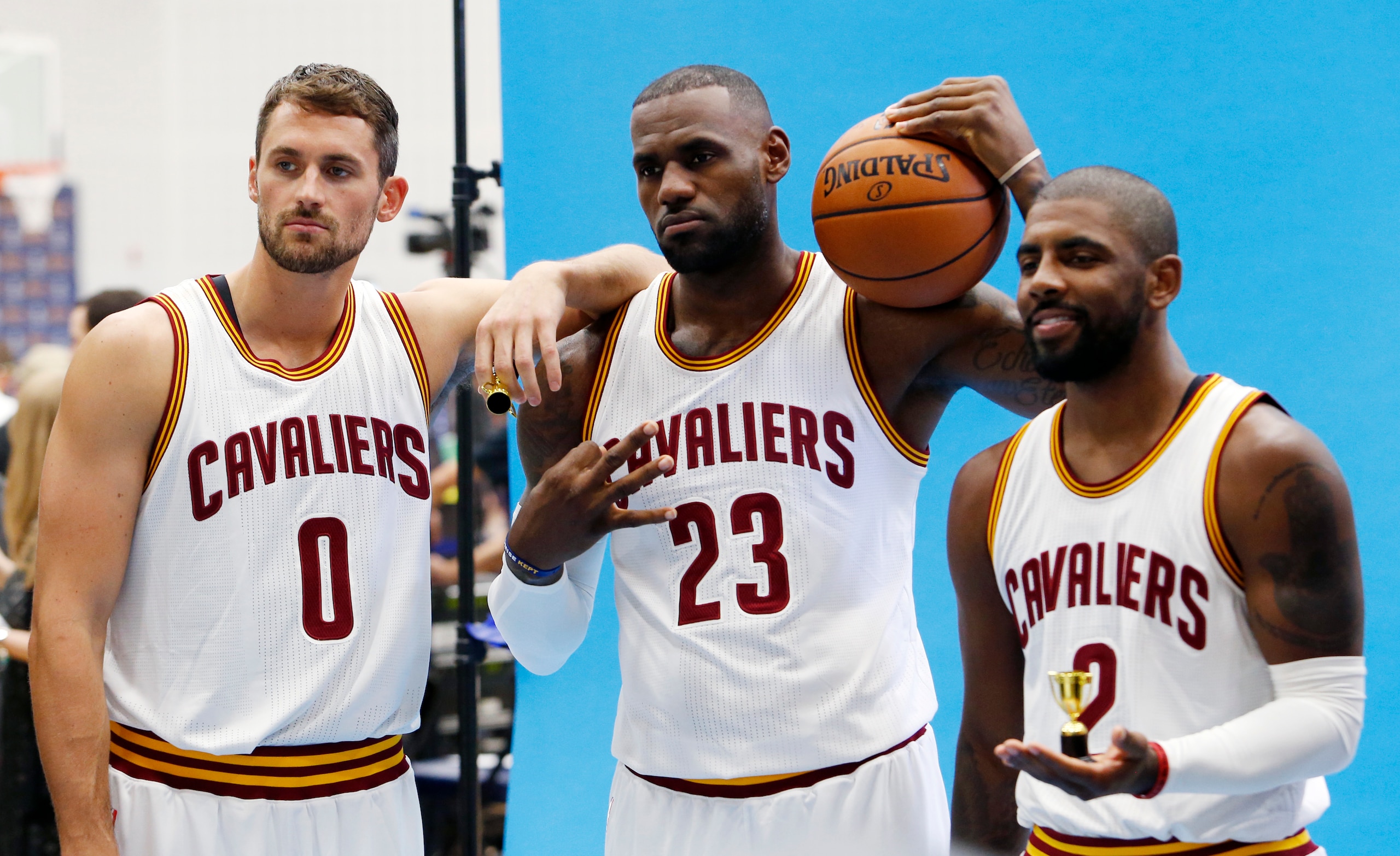
The only way the Cavaliers can improve significantly is to trade one of their elite players. No one is champing at the bit to add Tristan Thompson or Iman Shumpert. Sorry, Cavs fans—that's just the way it is.
There is no way the Cavs would want to get rid of James (who would need to give his permission for a trade), so that leaves Kyrie Irving and Kevin Love.
Jonathan Tjarks of The Ringer argues Cleveland should trade Love for Paul George of the Indiana Pacers:
"Creating a trade that makes sense for Cleveland and the team that acquires Love is difficult, but there is one possible deal that would work for all parties involved: Love for Paul George. Not only would the trade give Cleveland a much better chance of beating Golden State, it would allow Indiana to remain relevant without George, who is widely rumored to be leaving in free agency at the end of next season. It almost makes too much sense not to happen."
As I argued for FanRag Sports, however, the Cavs should be trading Irving.
First, the Pacers likely won't accept a Love-for-George deal. Tjarks argues that Love would open lanes for Jeff Teague, Monta Ellis and Lance Stephenson. But Ellis and Stephenson have struggled to find any semblance of consistency over the past few years (albeit, on multiple teams as far as Stephenson is concerned), and Love isn't the kind of player known for instantly making his teammates better.
There's also Teague's unrestricted free agency to keep in mind, which is important if part of your justification for acquiring Love is opening up opportunities for the point guard.
And it doesn't seem like building a team around Love and Myles Turner is something that would excite the Pacers, especially if they don't have a great pick-and-roll point guard to set up the offense and utilize the big men.
Finally, it's doubtful the Pacers believe the best value they can get for George is Love, who will turn 29 before the 2017-18 season. There's no denying the power forward brings a floor-stretching element to an offense. But his defense comes and goes, and, quite frankly, he's disappeared for crucial stretches during his time with the Cavs.
Even if indications are George wants to leave Indiana, the Pacers would be smart to exhaust all options instead of trading hastily. Enter another Cleveland star.
It makes more sense from the Pacers' perspective to do what they can to acquire Irving for George. Irving, 25, has far more star appeal than Love, and Indiana would jump at the chance. Irving is also a better fit with Turner.
And from a Cavs perspective, the team was better with Love and James and no Irving (plus-14.4 net rating) than it was with James and Irving and no Love (plus-11.0). And the Cavs are more versatile with Love because he can play the 4 or the 5.
And a James, JR Smith, Paul George, Richard Jefferson and Kevin Love lineup could do a better job of defending the "positionless" Draymond Green, Kevin Durant, David West, Andre Iguodala, Klay Thompson lineup that obliterated the Cavs in Game 5.
A PG13-King tandem would give the Cavs a tremendous boost on defense, and landing George should be a priority over keeping the trio together.
It's Cleveland's best chance of climbing over the Warriors in the 2018 Finals.

.jpg?w=2560 "Raiders Could Start Mendoza")
.jpg?w=2560 "Rodgers Iced Out on Plane 💎")

.jpg?w=2560 "🚨 Week 8 AP Top 25 Poll")