
Grading the Los Angeles Lakers' Trade Deadline Performance
The Los Angeles Lakers were arguably the most active team at the trade deadline, but some of their biggest moves didn’t involve trades.
Primarily, they overhauled their front office.
In the macro, the moves mark a much-needed change in direction for a franchise that has been floundering for the last few years. They indicate a change in vision, a patient approach to rebuilding.
However, there are also valid reasons to maintain a bit of skepticism. Change was needed, but whether the right changes were made is another story.
Let’s look at each of the moves and how each should impact the Lakers’ future.
1. Jeanie Buss In, Jim Buss and Mitch Kupchak out
1 of 6
Jim Buss is out as the one primarily calling the basketball shots. That move all by itself makes the Lakers' deadline a win. His sister Jeanie is now running the show, according to Sam Amick of USA Today.
Bleacher Report’s Kevin Ding scribed how, among his many blunders, Jim might be as responsible for the blown Chris Paul deal as much as then-NBA Commissioner David Stern was:
"They aren't the only questions, but Jim Buss' fixation on Andrew Bynum was a considerable blockade. Yes, the most controversial non-trade trade in NBA history can now feed the imagination in yet another fascinating way: Chris Paul to the Lakers...for Bynum?
Using Bynum to get Paul, according to sources close to late owner Jerry Buss, was Buss' initial request to his son, Jim, in 2011. It was also the sort of rebuilding centerpiece that then-Commissioner David Stern would have more likely approved for the then-league-owned New Orleans Hornets, according to NBA sources.
"
Now fired general manager Mitch Kupchak owned his share of boo-boos too, largely based on his fixation on “winning now” according to Ding:
"So even as the Lakers drafted well, Kupchak has curbed young players' opportunities by adding veterans with limited upside at their positions. The backlash has already begun in earnest for signing Luol Deng and Timofey Mozgov to future-cap-clogging deals last summer. Coach Luke Walton swapped out Deng at starting small forward with rookie Brandon Ingram and replaced Mozgov in the rotation at center with rookie Ivica Zubac.
"
This is a tiny sampling of a very long list of gaffes by the front office, and for the complete record, Ding’s piece is a worthwhile read.
It’s not that everything the Lakers have done over the last five years has been a disaster. They hired Walton and have drafted well with later picks, such as Zubac, Larry Nance Jr. and Jordan Clarkson. But their overall view of priorities was unrealistic, and that has prolonged the rebuild.
Jeanie seems to be the most pragmatic of the Buss siblings, and the franchise is in better hands answering to her than Jim.
Grade: A
2. Hiring Magic Johnson as President of Basketball Operations
2 of 6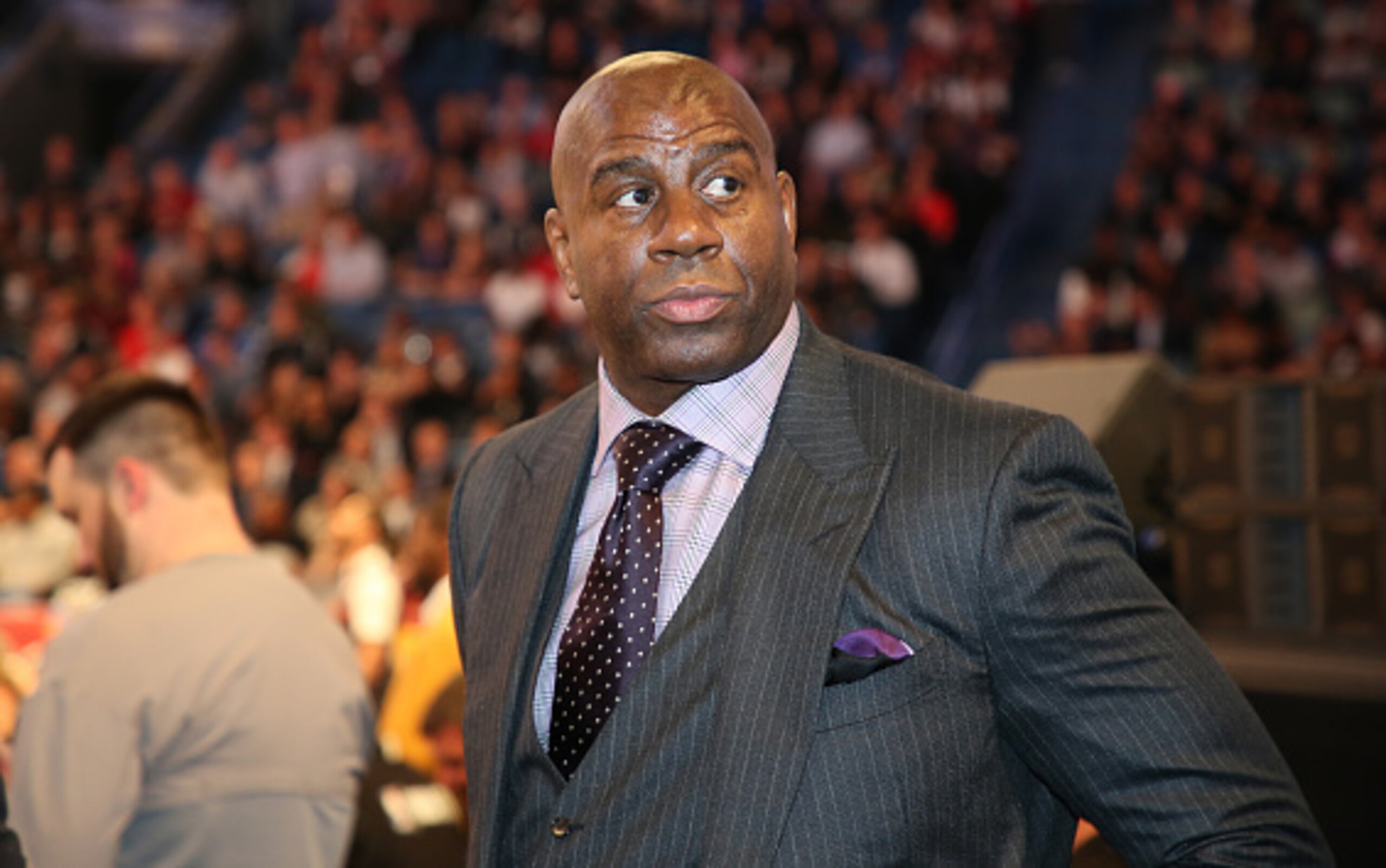
While a major shakeup in the front office was necessary, it’s going to take some time to see if Magic Johnson was the right person to be the new president of basketball operations.
Johnson certainly has a legacy as a player and businessman. He also had a part in bringing the Los Angeles Sparks a WNBA championship.
But does he have what it takes to be the one “calling the shots,” as he framed it for Josh Peter of USA Today?
"“Working to call the shots, because it only works that way,” Johnson told USA TODAY Sports when asked what he hopes his role with the franchise will be. “Right now I’m advising. I get that. But at the end of the day, then we all got to come together and somebody’s got to say, ‘I’m making the final call,’ all right? And who’s that going to be?”
"
Magic’s Twitter account, though, offers some troubling “insights,” which include, among other things, praise for the Chicago Bulls’ offseason acquisitions of Dwyane Wade and Rajon Rondo.
Great players have an inconsistent record as front-office personnel. They can be successful (see Jerry West). They can also be disasters (see Michael Jordan).
While Johnson has preached the right message of patience since taking over, there is still reason for skepticism going forward. The Lakers should have gone with a proven commodity who has exhibited a grasp of the modern game.
Until Magic shows an aptitude for team-building, fans have a right to withhold praise.
Grade: D
3. Signing Rob Pelinka as General Manager
3 of 6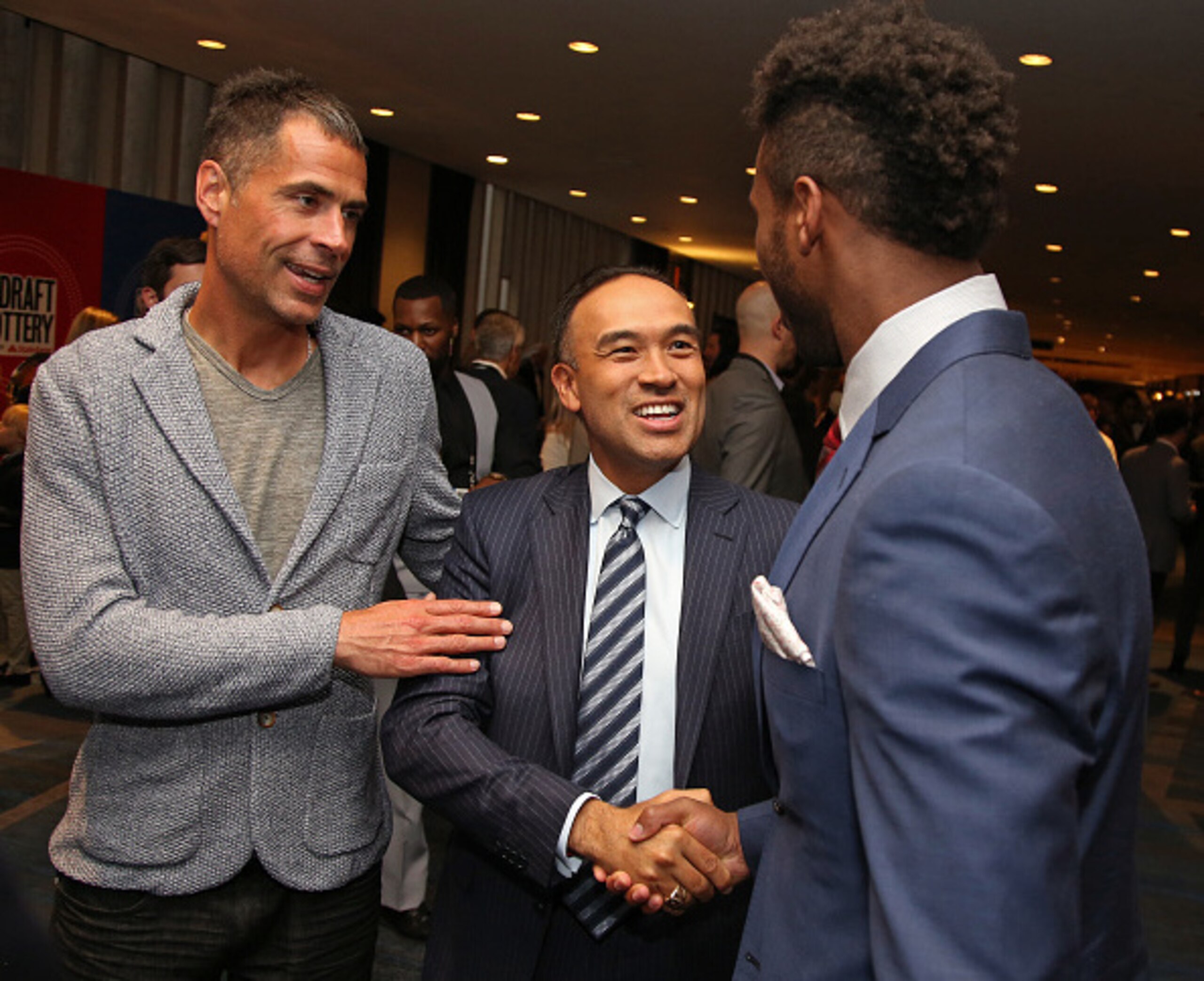
The Lakers' first choice for general manager was Bob Myers, currently running the Golden State Warriors, as Adrian Wojnarowski of the Vertical reports:
"The Lakers are following the model of the Golden State Warriors, who hired former agent Bob Myers as general manager. Myers has had a spectacular run as Warriors GM, and prior to the overhaul of the Lakers’ front office, Myers was the Lakers’ top target for GM, league sources said. The Lakers didn’t have confidence that Myers would be willing to push for his Warriors exit – especially after a new contract extension – to join them, league sources said.
"
Enter Rob Pelinka, another former agent of big-name clients like James Harden, who Dan Woike of the Los Angeles Times writes has several similarities to Myers:
"Like Myers who played at UCLA, Pelinka played in college, a reserve on the “Fab Five” team at Michigan. Both men eventually worked for agent Arn Tellem, with Pelinka founding Landmark Sports Agency, bringing Bryant with him as his most visible client. In addition to Harden, his roster of current NBA clients includes former Clipper Eric Gordon, former Laker Trevor Ariza, Boston’s Avery Bradley and Golden State’s Andre Iguodala.
"
But the move seems like it’s trying too hard to find “the next Bob Myers” and not the best GM. Myers had the guidance of Jerry West, who has been building championship teams since the Showtime Lakers. While Myers has the final say, it’s with the input of others, including West, as Adam Lauridsen of the San Jose Mercury News wrote two years ago:
"The Warriors’ front office, by its own admission, operates by committee. Joe Lacob and his son, Kirk, are strong voices at the table. Long-time director of player personnel Travis Schlenk is a trusted advisor. Jerry West, obviously, commands tremendous respect when he contributes his opinion to the mix. But one person is responsible for taking all these inputs and assembling them into a coherent plan. Since the 2012 draft, that person has been GM Bob Myers.
"
Pelinka will doubtless have a good grasp of the collective bargaining agreement and an ability to connect with players, but that doesn’t mean he has the vision of how to put the pieces together the way Myers has or how Daryl Morey has in Houston.
Where are the voices with experience in assembling teams? If they wanted a Myers-type, they should have gone with Schlenk, who has years of front-office experience and a prior working relationship with Luke Walton.
Grade C-



4. Not Trading for DeMarcus Cousins
4 of 6
I don’t think I’m alone in saying that, when I saw the return the Sacramento Kings got back for DeMarcus Cousins, I was shocked.
Buddy Hield (whose player efficiency rating is just 9.9), Tyreke Evans, Langston Galloway and a first-round pick, (potentially not even in the lottery), and top-three protected if it is—that’s a price the Lakers could have easily beaten.
They had the chance, too, but didn’t want to give up Brandon Ingram, according to Wojnarowski.
The chances that Ingram develops into a player as dominant as Cousins are about as slim as Ingram, which is to say, pretty darned slim.
That doesn’t mean the Lakers made the wrong move, though.
Cousins came with several huge risks: There was no guarantee he would stick around in 2018 when his contract expires. Adding him would have also hindered the very necessary tanking the Lakers must do to keep their top-three protected pick this year, according to RealGM.com. If the Lakers do lose that, they also lose their unprotected 2019 one to the Orlando Magic (the last vestige of the Dwight Howard trade).
Having only one high pick in three years is no way to go about a rebuild.
Additionally, Cousins doesn’t fit the timeline. He’s already 26 and has probably had all he can handle with being on bad teams. Even if he did stick around, that's a powder keg ready to go off if the Lakers aren’t improving, which they wouldn’t be for the aforementioned draft reasons.
Cousins is the type of move they would have made over the last few years, and not doing it is a positive signal that they’re stepping in the right direction.
Grade: A
The Tyler Ennis Trade
5 of 6
According to Wojnarowski, the Lakers traded Marcelo Huertas to Houston for Tyler Ennis. Ennis logged just 196 minutes with Houston this year, but this does signal the right thinking from L.A.
For his short career, Ennis is averaging 11.0 points, 5.8 assists and 3.7 rebounds per 36 minutes. The Phoenix Suns took him with the 18th pick of the 2014 NBA draft, then he was part of the trade that sent Brandon Knight to the Suns before eventually ending up with the Milwaukee Bucks. Then, last summer, the Bucks swapped him to the Rockets for Michael Beasley.
But other players had a history of getting bounced around the league before they landed somewhere; Jeremy Lin and Hassan Whiteside come to mind.
Guys like Jerami Grant and Robert Covington carved out places as legitimate role players by grinding it out through horrible Philadelphia 76ers teams.
The Lakers are wise to follow that pattern.
Ennis is not, by himself, a "great move" but it does indicate the right direction: Throw enough bad players at the wall and hope one of them sticks.
Grade: A
5. The Lou Williams Trade
6 of 6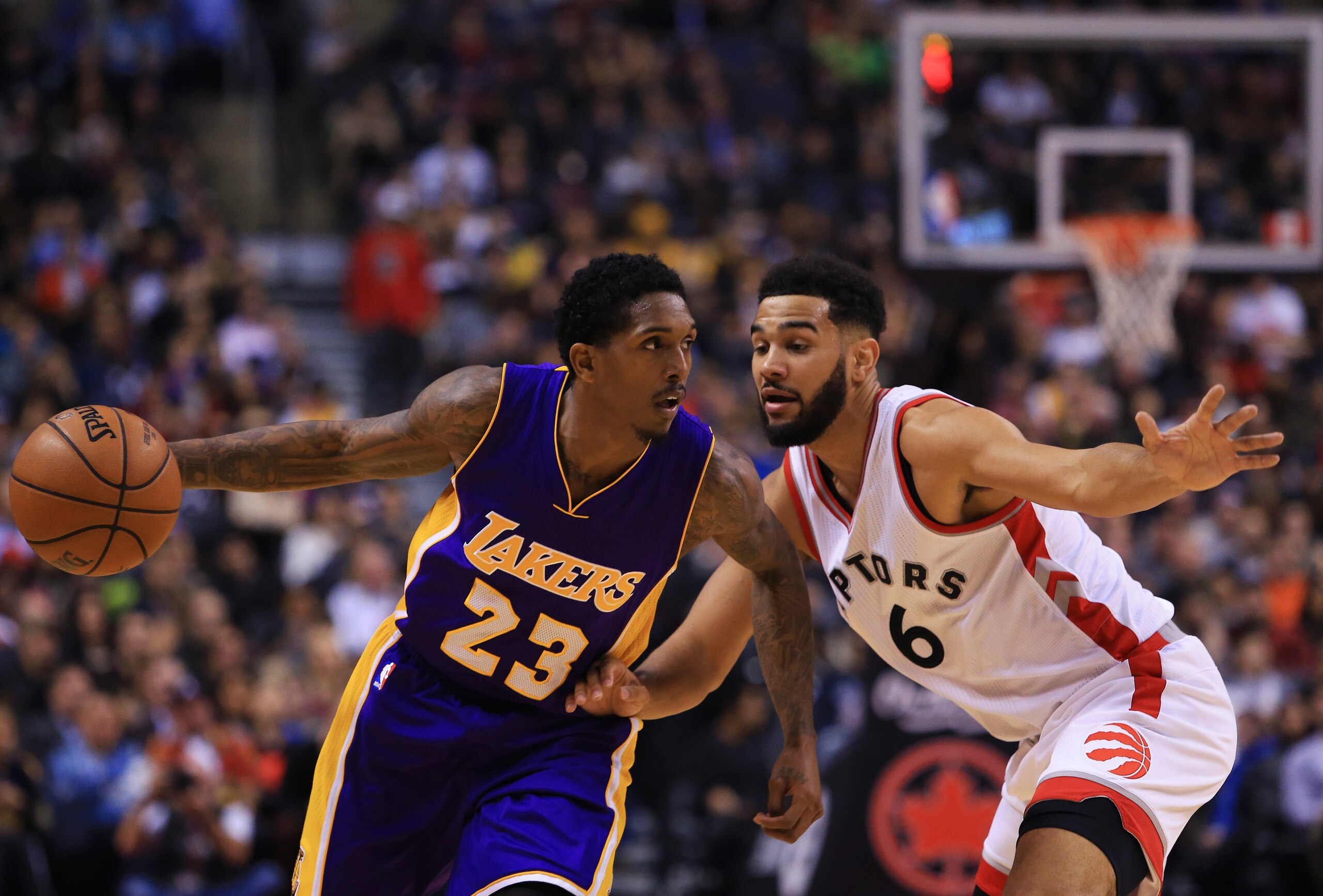
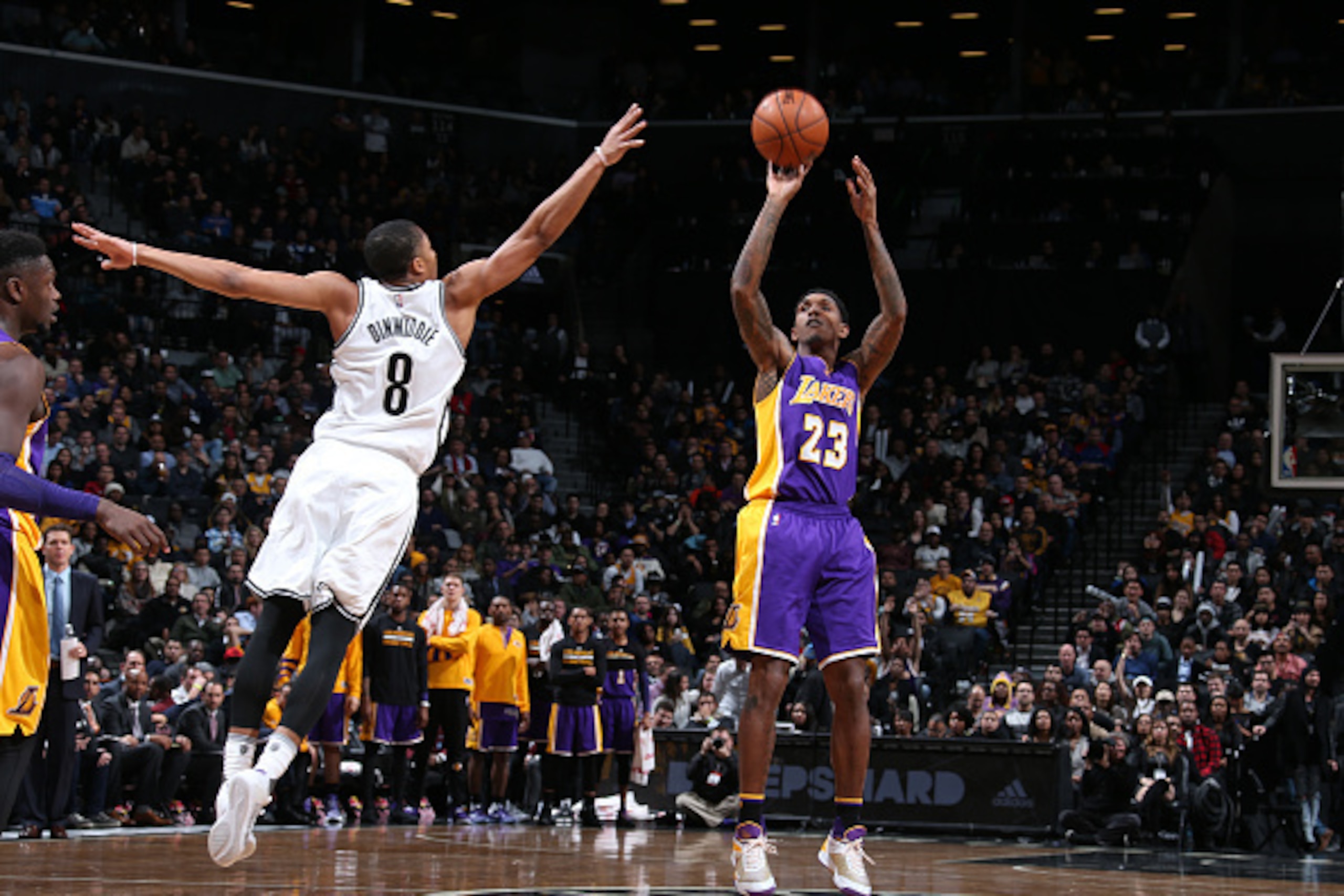
The Lakers dealt Lou Williams to the Houston Rockets for Corey Brewer and the Rockets' first-round pick.
The best part is that they speed themselves along in the tanking process. The Lakers' net rating this year with Williams is a reasonable minus-1.3. Without him, they’re a disastrous minus-12.5.
At present, they have the NBA's third-worst record, which gives them a 46.9 percent chance of keeping their pick, according to Tankathon.com. The Nets have a vertical lock on the most lottery balls, but the Lakers can sink themselves into the second-worst slot, increasing their chances of retaining their rights by 6.9 percentage points.
They also got a first-round pick in return, even if it is a late one. As I wrote earlier, accumulating as many picks as possible is the way to go. On the other hand, as I wrote for FanRagSports.com, players this far down in the draft have about a 40 percent chance of becoming rotation players and only about a five percent chance of being All-Stars.
More troublesome is acquiring Corey Brewer’s contract in return for the deal. Brewer does nothing to speed along the building process. His PER is a paltry 7.6, and he’s past 30.
And while he was once amazing in transition, he’s now averaging a measly .734 points per possession on such plays, which places him in just the sixth percentile, according to SynergySportsTech.com. When he is the primary player on defense, he ranks in just the 17th percentile.
And the worst part is that the Lakers actually lost money in the trade. Spotrac.com shows that Williams is slated for $7.0 million next year to Brewer’s $7.6 million.
Thus, the trade was the right idea but wrong execution. The Lakers would have been better off pushing for a younger, less-utilized player on a better contract and with more upside, such as Houston's K.J. McDaniels.
Grade: C+
Statistics courtesy of Basketball Reference and NBA.com unless otherwise noted.
.jpg?w=2560 "NFL investigating 2 referees for separate viral exchanges")
.jpg?w=2560 "OBJ Calls Out Giants After Release")
.jpg?w=2560 "Tyreek makes another cryptic post amid Chiefs rumors")
.jpg?w=2560 "Report: Chiefs Contact Hill's Agent")