Ranking LeBron James' Best Supporting Casts During His 6 NBA Finals Appearances
LeBron James has done it again.
He's now set to play in the NBA Finals for the fifth season in a row, something only eight players had done prior to the 2014-15 campaign. And even more impressively, it's the sixth Finals adventure of his already incredible career, which makes him one of just 34 players in NBA history to achive such a feat.
But James' latest apperance is coming with the Cleveland Cavaliers, and he's only played for them and the Miami Heat during his professional tenure. Of the other 33, every single one suited up for either the Los Angeles Lakers, San Antonio Spurs, Boston Celtics or Chicago Bulls during many of their conference-winning runs.
James has done no such thing. Instead, he's carried his teams to the brink of success time and again, and this is one of his most impressive jobs yet.
Heading into the season, his supporting cast was far from heralded. The other two members of the Cleveland Big Three, Kevin Love and Kyrie Irving, hadn't even appeared in a single playoff game. But is this the weakest supporting cast of his career?
That's what we're trying to answer here, doing so in objective fashion by looking at the combined regular-season and playoff value over replacement player (VORP) of his teammates during each Finals run. The methodology is no more complicated than that, and the outcome in the biggest series of the NBA calendar is ultimately irrelevant.
6. 2007 Cleveland Cavaliers
1 of 6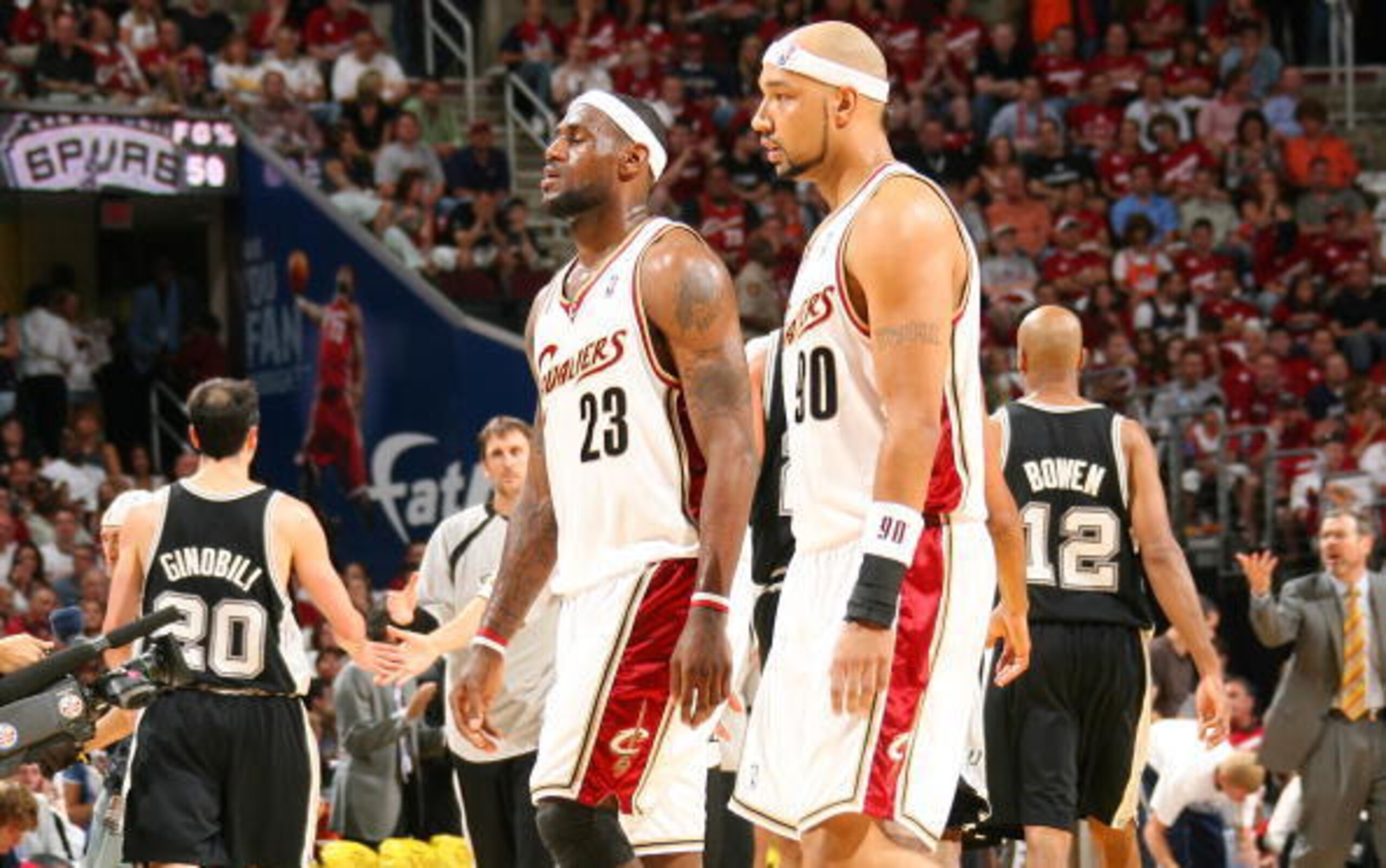
Teammates' Regular-Season VORP: 6.6
Teammates' Postseason VORP: 1.6
Teammates' Total VORP: 8.2
Top 3 Teammates: Drew Gooden, Zydrunas Ilgauskas, Anderson Varejao
It remains stunning that LeBron James managed to carry this team to the NBA Finals. Throughout the entirety of the 2006-07 season, the following players started for the Cleveland Cavaliers:
- Shannon Brown (five starts)
- Daniel Gibson (16)
- Drew Gooden (80)
- Larry Hughes (68)
- Zydrunas Ilgauskas (78)
- LeBron James (78)
- Ira Newble (one)
- Sasha Pavlovic (28)
- Eric Snow (45)
- Anderson Varejao (six)
- David Wesley (five)
Even the most recognizable names weren't exactly in their primes.
Ilgauskas was 31 years old, and he'd average 11.9 points and 7.7 rebounds during the regular season. On the flip side, Varejao was 24 and playing out his third season in the Association. He hadn't yet broken into the starting five on a consistent basis, though he was already a strong rebounding presence.
What's truly impressive is that James carried a team with only three other players boasting above-average player efficiency ratings all the way to the Finals, where they were entirely overmatched against the San Antonio Spurs. Those three were Ilgauskas (18.0 PER), Gooden (16.5) and Donyell Marshall (15.3), who only played in 16.8 minutes per game.
With the exception of a certain forward, nothing about this team was even remotely special.
5. 2012 Miami Heat
2 of 6
Teammates' Regular-Season VORP: 6.6
Teammates' Postseason VORP: 2.1
Teammates' Total VORP: 8.7
Top 3 Teammates: Shane Battier, Mario Chalmers, Dwyane Wade
The biggest issue here was one member of the Miami Heat's Big Three. It's not a mistake that Chris Bosh's name is missing from the information block above, as nothing about his statistical profile indicated that, on a per-possession basis, he was more valuable to the team than Shane Battier or Mario Chalmers.
And yes, I realize how insane that sounds.
Throughout the lockout-shortened campaign, Bosh struggled to fit in alongside LeBron James and Dwyane Wade. And unlike in other years when schematic shifts were needed, his numbers declined rather significantly. The big man averaged only 18.0 points and 7.9 rebounds while shooting 48.7 percent from the field and 28.6 percent from beyond the arc.
His PER? A sub-standard 18.9. Even though that was and is his personal-worst mark since his first two seasons as a pro, it was misleadingly low, driven up by some volume shooting. According to offensive box plus/minus, Bosh was a negative contributor on the scoring end, and his defense was only strong enough to make him a net zero for the 2011-12 Heat.
With so much money sunk into the power forward, Miami simply didn't have anyone else on the roster who could realistically pick up the slack. This was a team that had to use Battier, Chalmers, Udonis Haslem, Joel Anthony, Norris Cole, Mike Miller, Ronny Turiaf, Terrel Harris and James Jones in the rotation, and it's not like any of those guys were squarely in the midst of their primes.
4. 2014 Miami Heat
3 of 6
Teammates' Regular-Season VORP: 7.8
Teammates' Postseason VORP: 1.9
Teammates' Total VORP: 9.7
Top 3 Teammates: Chris Bosh, Mario Chalmers, Dwyane Wade
At this point, Chris Bosh had figured it all out. Just take a look at how his 2013-14 campaign stacked up against his 2011-12 struggles in a number of per-game stats, shooting percentages and advanced metrics:
| 2011-12 | 18.0 | 7.9 | 48.7 | 28.6 | 18.9 | -0.3 | 1.0 |
| 2013-14 | 16.2 | 6.6 | 51.6 | 33.9 | 19.0 | 0.5 | 1.6 |
That's a substantial change, even if Bosh's per-game numbers declined. If your analysis stops there, you're missing out on a lot of information.
The big man was finally comfortable with his role in the Miami offense, and he added a workable three-point stroke. It only got deadlier during the postseason, as he knocked down 40.5 percent of his deep tries while taking 3.7 per game.
Of course, the rest of this team wasn't too strong. There were solid veteran contributors such as Ray Allen and a resurgent Chris Andersen, but head coach Erik Spoelstra had to work hard all season to figure out the answer to the team's depth problems.
As Grantland's Kirk Goldsberry wrote heading into the NBA Finals battle against the San Antonio Spurs, "While lineup flexibility might favor the Heat, depth is clearly on the side of the Spurs. Not only do the Spurs have home-court advantage this year, they also have the deepest bench in the league, and that’s not a coincidence."
It was a legitimate knock against Miami throughout the season, especially when injuries took their toll. The veterans could come through in big moments, but consistent production was an entirely different issue.


3. 2015 Cleveland Cavaliers
4 of 6
Teammates' Regular-Season VORP: 9.6
Teammates' Postseason VORP: 3.0
Teammates' Total VORP: 12.6
Top 3 Teammates: Kyrie Irving, Kevin Love, J.R. Smith
As LeBron James told Sports Illustrated's Lee Jenkins in the official announcement of his return to the Cleveland Cavaliers:
"I'm not promising a championship. I know how hard that is to deliver. We're not ready right now. No way. Of course, I want to win next year, but I'm realistic. It will be a long process, much longer than it was in 2010. My patience will get tested. I know that. I'm going into a situation with a young team and a new coach.
"
Obviously, that's changed.
After sweeping the No. 1 seed out of the Eastern Conference Finals, James and the rest of the Cavs are four victories away from delivering the first title in franchise history. And though his supporting cast is largely inexperienced—with the exception of veteran role players coming off the bench—it's not exactly weak.
Kyrie Irving had one hell of a season, and it's not like Kevin Love lacked value, even if he was rather disappointing during the first post-Minnesota Timberwolves campaign of his career. But the true difference, as well as the largest reason that James' initial sentiments have been rendered inaccurate, comes via a set of midseason moves.
Trading first-round picks for Timofey Mozgov was quite beneficial, as the former Denver Nugget settled in nicely as a consistent rim-protecting threat for a defense that so sorely needed one. Acquiring J.R. Smith and Iman Shumpert from the New York Knicks ended up paying large dividends, and the same is true of getting rid of Dion Waiters, who had a minus-0.2 VORP before he was traded.
Losing Love for the postseason ultimately holds this team back—per FATS, the Cavs improved by 19 wins when he was on the floor—but the growth of young players such as Tristan Thompson and the midseason additions ensured that this supporting cast was still a solid one.
2. 2013 Miami Heat
5 of 6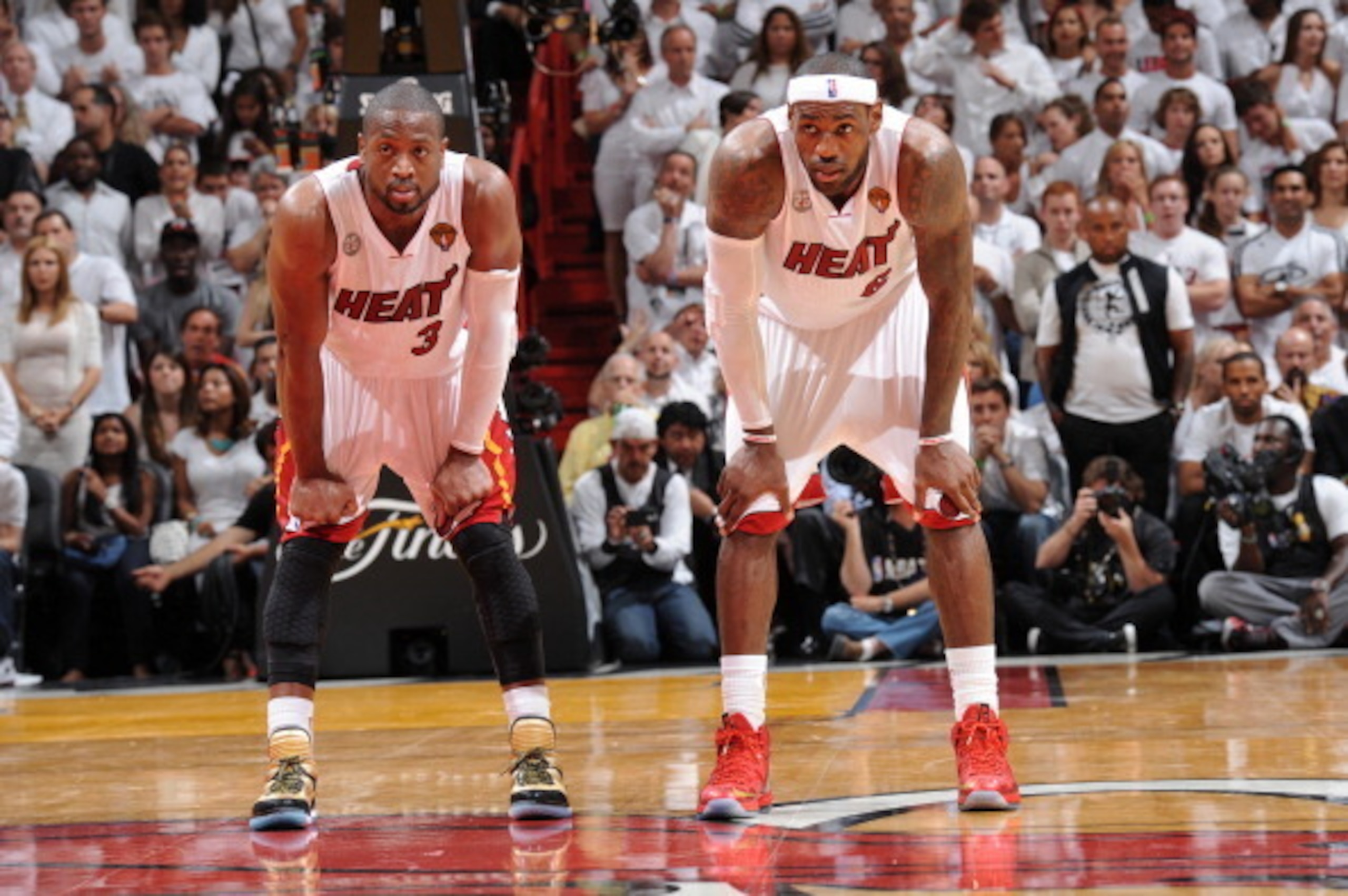
Teammates' Regular-Season VORP: 9.3
Teammates' Postseason VORP: 4.0
Teammates' Total VORP: 13.3
Top 3 Teammates: Chris Bosh, Mario Chalmers, Dwyane Wade
The 2012-13 Miami Heat were quite impressive during the regular season, and they took things up a notch once the playoffs rolled around. Everyone seemed to contribute, even if Dwyane Wade struggled to excel as a scorer.
Even though the Heat needed seven games to beat the Indiana Pacers in the Eastern Conference Finals and then were brought back from the dead when Ray Allen knocked down his infamous jumper from the right corner in Game 6 of the NBA Finals, this was probably the most successful Heat squad during the LeBron James era.
It won 66 games during the regular season, then blitzed past its first two postseason opponents, beating the Milwaukee Bucks and Chicago Bulls in four and five games, respectively. And though James was utterly spectacular during his MVP campaign, the Heat didn't exactly lack talent.
For the most part, the typical starting five actually stayed healthy. James played in 76 games, while Mario Chalmers (77), Chris Bosh (74) and Udonis Haslem (75) broke past the 70-appearance barrier. Only Wade fell short, and he still suited up in 69 contests.
Whether it's the 27-game winning streak or the championship over a tough San Antonio Spurs squad, this was the most successful season of James' career. Of course, a lot of that is due to the four-time MVP playing some of the best basketball of his life, not just the strength of the pieces around him.
1. 2011 Miami Heat
6 of 6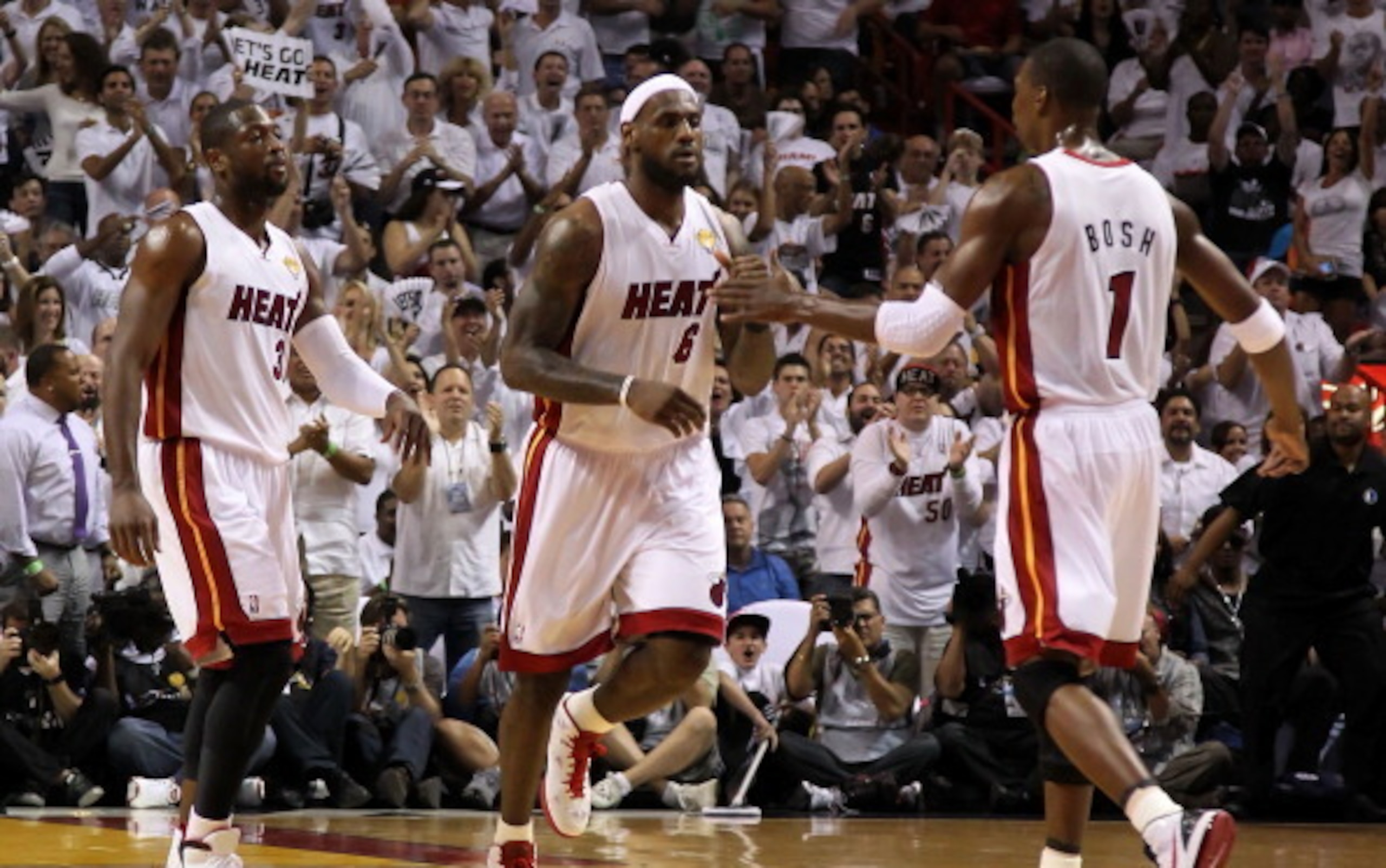
Teammates' Regular-Season VORP: 10.9
Teammates' Postseason VORP: 3.1
Teammates' Total VORP: 14.0
Top 3 Teammates: Joel Anthony, Chris Bosh, Dwyane Wade
The 2011 Miami Heat may have fallen apart against the Dallas Mavericks in the NBA Finals, but this was easily the best team LeBron James has been a part of. The issue was chemistry, as it took the entire season for him and Dwyane Wade to figure out how they could coexist.
Sheer talent? Not a problem.
Age is a tacit factor in these rankings, as Wade and Bosh got older—obviously—throughout the Heat's four trips to the NBA's biggest stage and weren't exactly young studs when he first arrived. And with extra years comes more wear and tear on the tires, leading to additional absences and the occasional poor performances popping up more frequently.
During the 2010-11 season, Chris Bosh was only 26 years old and remained quite effective on the offensive end, even while adjusting to an entirely new role from the one he filled as the Toronto Raptors' No. 1 option. Dwyane Wade was 29 and still playing at a Hall of Fame level. The 2-guard averaged 25.5 points, 6.4 rebounds and 4.6 assists while knocking down half of his shots from the field.
And as if that weren't enough, the Heat had a stable of veteran contributors who were just fine in their minor roles.
Only five players finished the season with a below-replacement-level VORP (Udonis Haslem, Jerry Stackhouse, Dexter Pittman, Carlos Arroyo and Juwan Howard), though Stackhouse and Pittman combined for 61 minutes on the court all year. In 2013, eight players qualified as negative contributors.
Members of the 2011 roster who finished with a positive VORP and weren't counted among the Big Three? James Jones, Joel Anthony, Mario Chalmers, Erick Dampier, Mike Miller, Eddie House, Mike Bibby and Zydrunas Ilgauskas. In 2013, there were only six.
The sheer volume of positive contributors and the age-aided excellence of the stars are enough to push this squad into the pole position, even if a championship proved out of reach.
Note: All stats, unless otherwise indicated, come from Basketball-Reference.com.
Adam Fromal covers the NBA for Bleacher Report. Follow him on Twitter: @fromal09.

.jpg?w=2560 "Rodgers Iced Out on Plane 💎")
.jpg?w=2560 "Raiders Could Start Mendoza")
.jpg?w=2560 "🚨 Week 8 AP Top 25 Poll")
.jpg?w=2560 "Mahomes Told Teammate to Leave Meeting")
.jpg?w=2560 "Lamar Being Out Shocked Ravens")

.jpg?w=2560 "Packers Safety Slams Refs 🤬")