Atlanta Hawks Still Searching for 'Go To' Answer on Offense
In the NBA playoffs, several truisms spring to the forefront of the national consciousness.
Referees begin to swallow their whistles, refusing to call ticky-tack fouls that might otherwise lead to free throws during the regular season (with the occasional exception, of course). Play slows down a bit, with each possession becoming all the more important. And perhaps most of all, teams have to figure who's going to serve as their go-to guy when the game is tight and the clock is ticking down toward triple zeroes.
It's the last part that still has the Atlanta Hawks searching for some answers, even though they used a dominant regular season to earn the top seed in the Eastern Conference. Their system-based excellence does occasionally break down, and when it does, they're left without any clear-cut solutions.



Throughout their 60-win campaign, Jeff Teague was often the answer.
The waterbug of a point guard was uniquely able to dive into the teeth of the defense and create his own looks. He could get up good shots—typically floaters around the basket—when the offense wasn't operating at its usual level, carrying the team for short stretches until Mike Budenholzer's schemes began humming along once more.
Not only did this happen in late-game situations, but also during cold spells at any point in the game. Despite playing on a team that prioritized a ball-sharing system above all else, Teague thrived when he was able to put the rock on the floor and create his own shots. Dennis Schroder did as well, but he wasn't on the floor as often in those crucial moments.
It's not hard to see how the Wake Forest product stands out among his fellow starters, both when freeing himself for two-point attempts and working his way into space from beyond the arc:
But during the playoffs, that simply hasn't been true—at least not to the same extent.
An ankle injury in late March hindered him during the end of his regular season, and while Teague has been effective ever since returning to the lineup, he just hasn't been quite as aggressive when looking for his own shot. It didn't help that a right ankle sprain sent him to the locker room during a Game 4 victory over the Brooklyn Nets.
Yes, that's the same problematic joint that's been giving him trouble throughout the season, even before that late-March injury.
Now, the attack mentality might be there, but he's unable to get by players quite so easily. He's requiring assists on 20.7 percent of his two-point makes during the playoffs, and that's in conjunction with his average number of two-point buckets dropping from 4.6 in the regular season to 3.6 in the playoffs.
More evidence? Teague is driving to the hoop 10.6 times per contest, per NBA.com's SportVU data, and that leaves him trailing only Michael Carter-Williams (10.7), DeMar DeRozan (12.8), Damian Lillard (12.8) and LeBron James (13.7). Problem is, he's shooting only 33 percent on those looks, leaving him scoring just 4.2 points per game on drives—the No. 20 mark in the playoffs.

During the regular season, Teague drove 11 times per outing (No. 7 in the Association), shot 46 percent on those attempts and averaged 6.7 points per game on drives. Even with all players from lottery teams factored in, that still left him ranked No. 12 in individual production on his bursts to the hoop.
To the point guard's credit, he's still been quite effective, even with this diminished ability right around the basket. His scoreless game against the Nets in the series-clinching affair, for example, saw him record 13 assists and only a single turnover. Despite the goose egg in the points column, he still earned rave reviews.
Teague controlled the Atlanta offense quite nicely in that outing, but that's a completely different element of the game. He's been unable to do what he's done so often in the past—take over as a scorer when his team desperately needs one.
And if not Teague, who?
That's the question that's been plaguing the Hawks during the playoffs. It's part of the reason they've been unable to get off the schneid after going cold for a prolonged period, as they did while scoring just 35 points in the entire second half of Game 1 with the Washington Wizards.
Many of the shots that clanged off the iron (or drew even less than that) were actually good looks. The Hawks kept trusting the system that got them into the playoffs and in such an advantageous position, even if the results weren't there. And that's what they should keep valuing going forward—process over results.
But sometimes, changes are necessary. Especially in the playoffs, there's the occasional stretch where shots just aren't going to fall, no matter how good a team is at creating uncontested attempts. And that's when having that one creator becomes all the more important.
The Golden State Warriors are another team that runs a pass-heavy offense. Much like the Hawks, they want to record assists on plenty of their converted baskets, and they often do. But unlike Atlanta, the Dubs have players who can put the ball on the floor and simply get buckets when the moment calls for it.
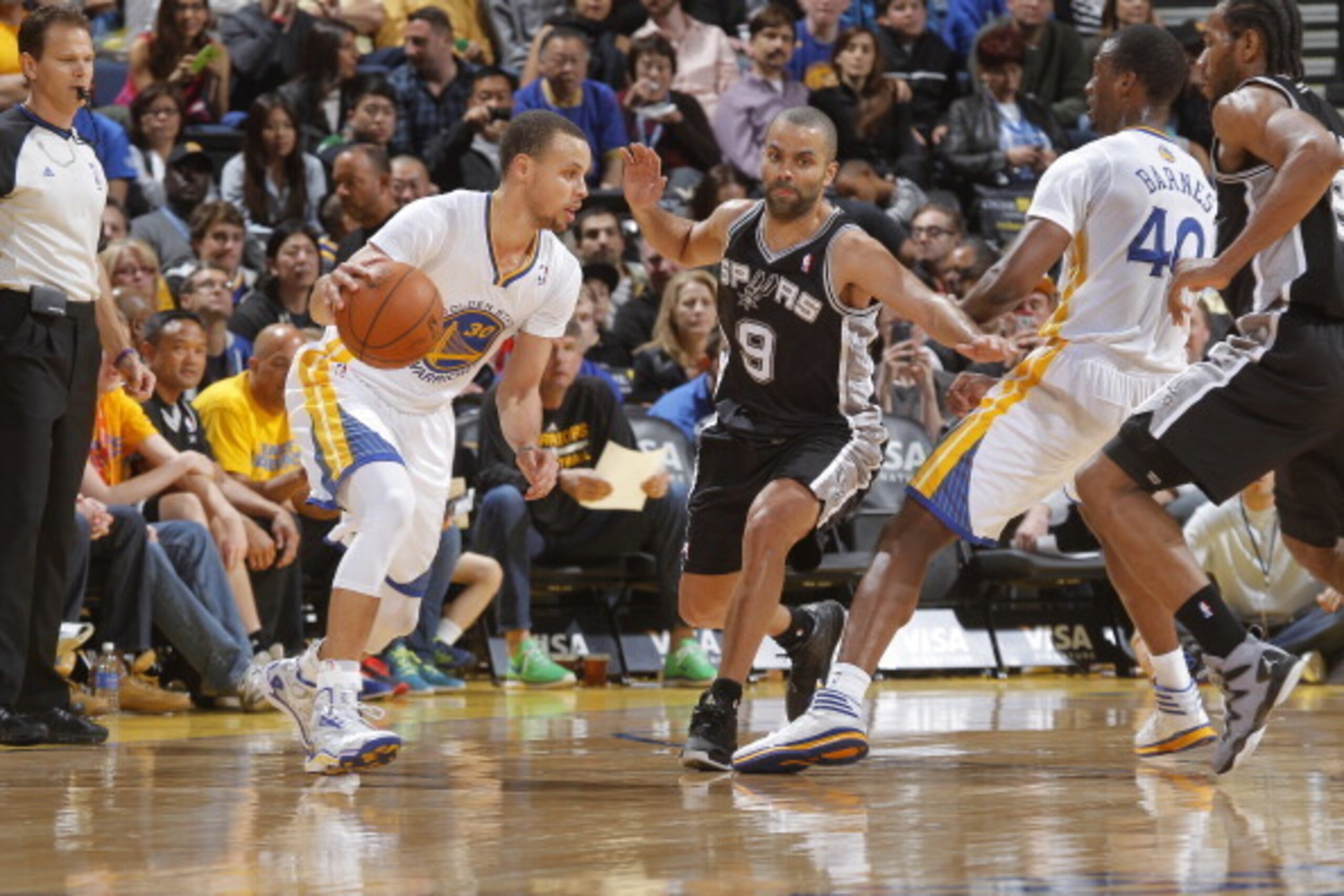
Look at the San Antonio Spurs during the last decade.
Gregg Popovich's system—which has notably led to many of the principles used in Budenholzer's schemes—is a remarkably famous and reliable one, but the Spurs always have players who can get their own looks. Tony Parker is quite adept at pulling up and knocking down mid-range attempts. Manu Ginobili is enduringly slithery and always seems able to get to the hoop. Tim Duncan has always been capable of working in space and banking in a big shot or going to his patented right-handed jump-hook in the lane.
Do the Hawks have anything like that when Teague has trouble finishing plays?
Back in late January, there were still doubters in NBA offices, as Bleacher Report's Ric Bucher elaborated upon. And yes, this was in the midst of Atlanta's perfect month, one in which the team would leave no doubt it was the top contenders for the East's No. 1 seed:
"A rough survey of NBA personnel attending last week's NBA D-League Showcase in Santa Cruz, California, resulted in a split decision as to whether the Hawks, currently atop the Eastern Conference by a comfortable margin, can replicate their regular-season success in the playoffs. The skeptics believe Atlanta's lack of size and a go-to scoring superstar will hurt it when the pace slows down, rotations shorten and games are decided by who executes the best on last-minute possessions, when the opponent has had days to prepare for every tendency. That's when having a player who can create a shot all by himself, or draw enough attention to create a shot for a less wily teammate, becomes paramount.
"
Of course, this may not end up being important.
The Hawks could very well overcome all of their cold spells, relying on a system that produces one good shot after another to bail them out on a consistent basis. It's worked all season long, and the results during the playoffs have been just as spectacular when the perimeter shooters are all connecting, relatively rare as that's been. Already in the second round, we've seen a 37-point first quarter in Game 1 and sustained offensive production during Game 2.
But that's not going to ease the long-standing concerns, especially when so many NBA fans are programmed to count on "superstars" down the stretch of tight games. Troublingly for the Hawks, they've been legitimate fears in the playoffs.

Throughout the regular season, Atlanta was an absolute machine during crunch-time situations, which NBA.com defines as the last five minutes of games separated by no more than five points. The Hawks found themselves in those moments 41 times during the best campaign in franchise history, and they excelled.
Not just because they compiled a 29-12 record in those contests, which prorates to 58 wins over the course of a full season, but because they were one of the best shooting squads in the league.
Atlanta shot a scorching 48.5 percent from the field in clutch situations, edging out the Dallas Mavericks for the top spot in the Association. On top of that, the team knocked down 40.3 percent of its shots from three-point territory, which left it trailing only the Memphis Grizzlies, strangely enough. And perhaps most impressively, here were the top five average point differentials in crunch time:
- Atlanta Hawks, +2.1
- Golden State Warriors, +2.0
- Dallas Mavericks, +1.9
- Memphis Grizzlies, +1.5
- Cleveland Cavaliers, +1.2
But as was so often a cited concern when writing off the Hawks, this hasn't translated to the postseason. Between cold shooting, tired legs and series play, which allows teams more time to prepare for the systematic perimeter-oriented onslaught utilized by these birds of prey, all the numbers have trended in the wrong direction.
Atlanta has already played in five contests that featured a margin of no more than five points in the final five minutes. That's tied with the Chicago Bulls and Los Angeles Clippers for the most during this postseason.
However, the Hawks have knocked down just 41.7 percent of their field-goal attempts, good for the No. 8 mark among the 16 playoff squads. They've connected on their deep tries at a 17.6 percent clip, which is quite frightening for a team that relies so heavily on outside marksmanship.
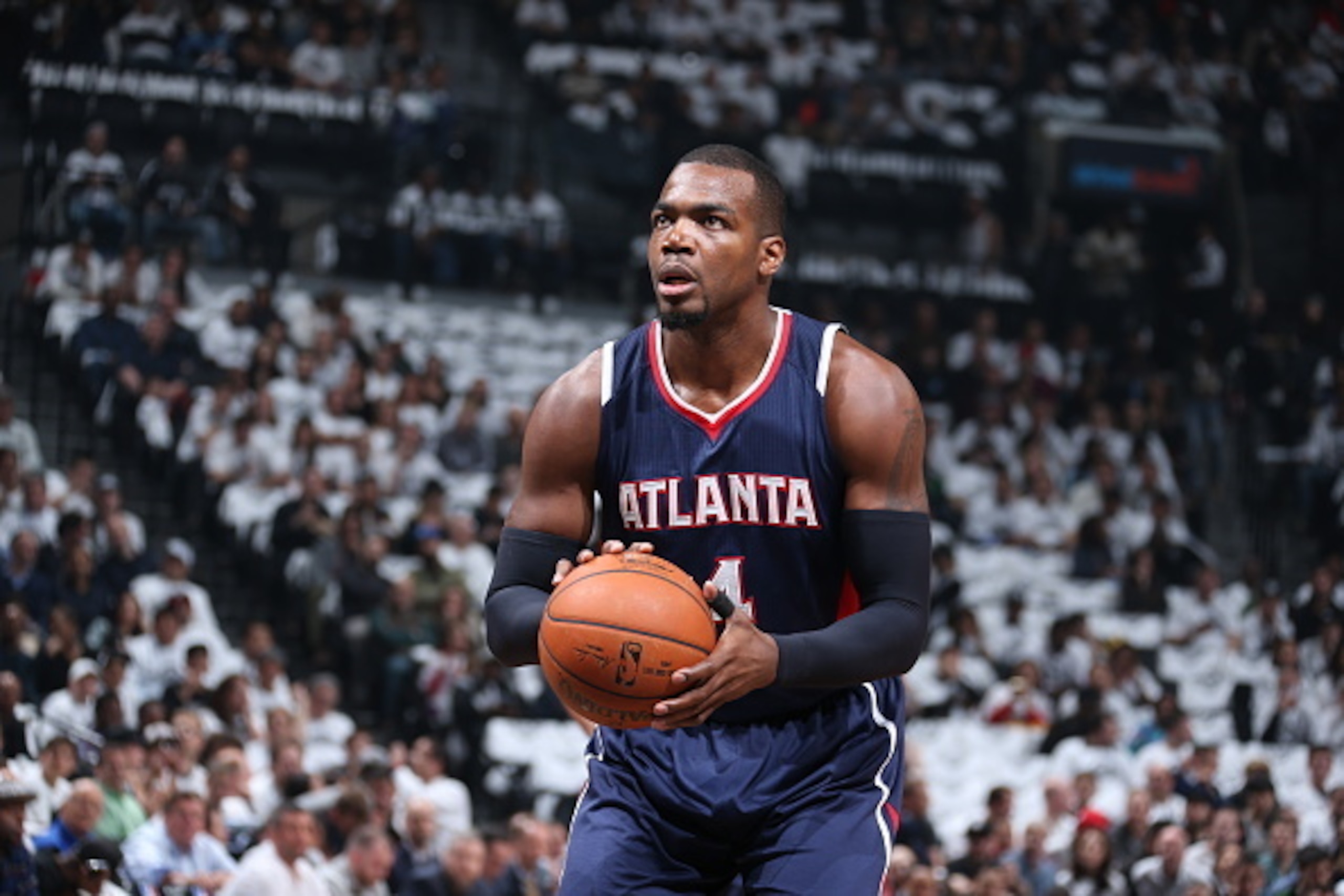
Thanks to strong defensive play, they're still 3-2 in these games. However, they're outscoring the opposition by just a single point. Not only is that 1.1 fewer than during the regular season, but the Hawks have lost their grip on the No. 1 spot, now falling behind the Wizards (plus-7.3), Warriors (plus-5.3) and Houston Rockets (plus-1.7).
Perhaps this is just small sample size coming into play. But based on the combination of poor shooting down the stretch of close playoff games and inexplicably cold quarters occurring far more frequently than they did during the regular season, that might be an overly optimistic take.
This feels like a bigger issue, and the Hawks certainly have to treat it as one.
The team-based nature of their offensive play did lead to an excellent regular season, and it does often work in crunch-time situations, despite the general public's widespread preference for play that qualifies as "hero ball." Nonetheless, the length of this postseason run could very well depend on figuring out the answer to the question of the go-to player.
Maybe it's a healthy Teague. Maybe it's DeMarre Carroll, who now has six consecutive games to his credit with at least 20 points. Maybe it's Schroder, coming off the bench in big situations to use his speed advantageously. Maybe it's one of the frontcourt studs in the starting lineup.
Whomever it may be, it has to be someone.
Note: All stats, unless otherwise indicated, come from NBA.com.
Adam Fromal covers the NBA for Bleacher Report. Follow him on Twitter: @fromal09.

.jpg?w=2560 "Raiders Could Start Mendoza")

.jpg?w=2560 "Rodgers Iced Out on Plane 💎")
.jpg?w=2560 "Packers Safety Slams Refs 🤬")
.jpg?w=2560 "🚨 Week 8 AP Top 25 Poll")