

San Francisco 49ers: Reevaluating the 2005 NFL Draft 10 Years Later
With the 2015 NFL draft beginning in less than a week, it’s reasonable to be excited about the potential this year’s class brings. However, it’s important to remember that potential doesn’t always provide instant results on the field. Even if the San Francisco 49ers get the highest grade among all teams the week after the draft, there’s every chance that we’ll look back a decade hence and wonder what went wrong.
A decade ago, Troy Williamson, David Pollack and Erasmus James were considered first-round talents who would fundamentally change the face of their franchises, and yet all were washed up after a few seasons at best. While teams this year will be thrilled to see, say, DeVante Parker, Shane Ray or Arik Armstead join their franchises, we won’t know how well a team really performed until the careers have had a chance to play out.
The San Francisco 49ers had the first overall pick a decade ago and were looking to make one of those franchise-altering picks. A Peyton Manning type, perhaps, to reboot what was, at the time, the worst franchise in the NFL. New head coach Mike Nolan and new vice president of player personnel Scot McCloughan had the most capital in the draft to try to reshape the team and bring it back to respectability after bottoming out in the Dennis Erickson era.
To their credit, they pulled off a very good draft, ending up with a top-three class overall and one of the top five players in the draft. To their detriment, that was not the result of the No. 1 overall pick.
Before we bury ourselves in the 2015 draft, let’s take one last look at the 49ers a decade ago. Like this year’s team, it was a new head coach trying to put his stamp on the franchise. Which surefire great picks bombed, and which sleepers did they find? Consider these the final grades for the 2005 draft.
Round 1 (No. 1 Overall): Alex Smith, QB, Utah
1 of 11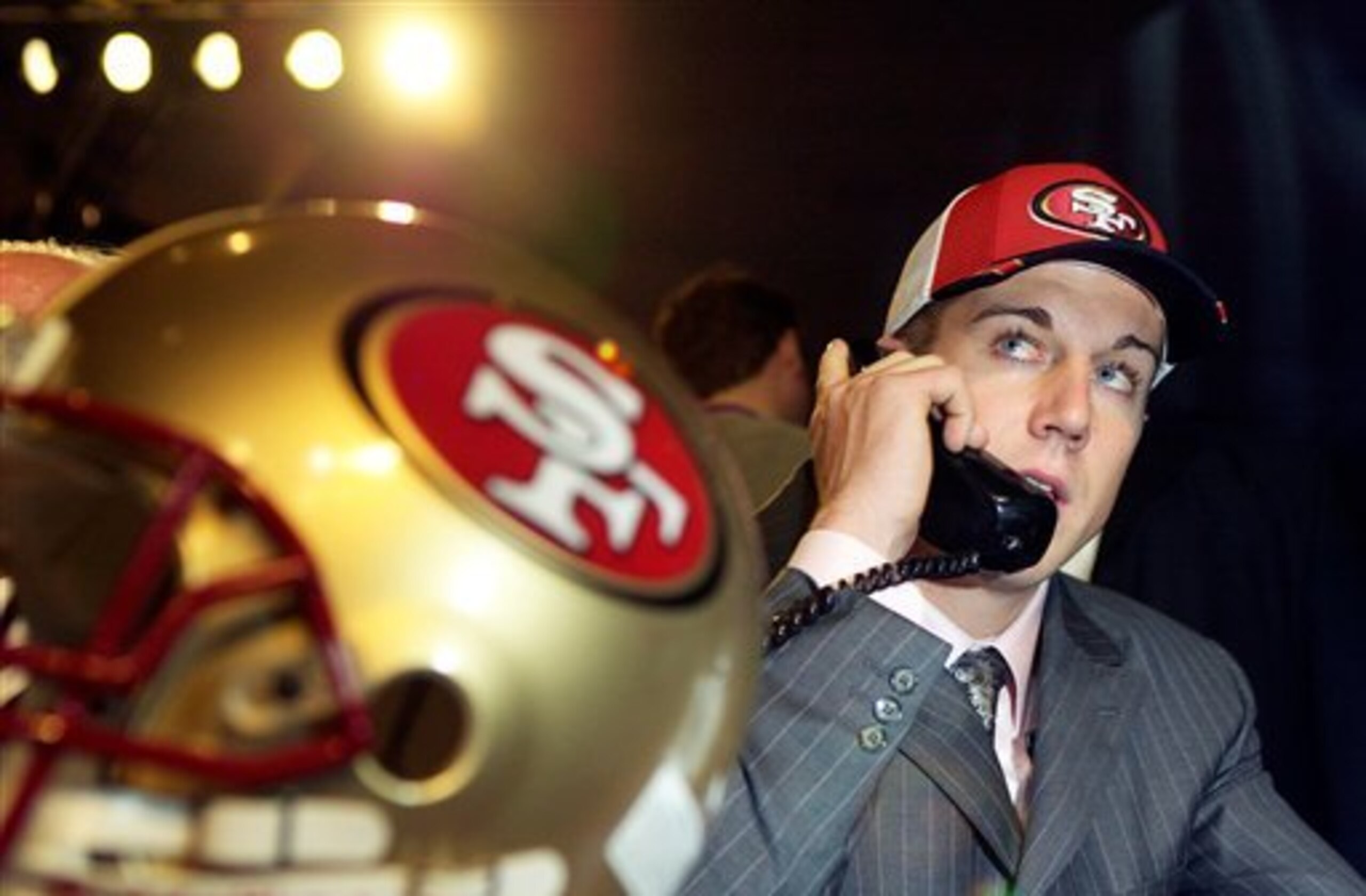
So, here was the big decision. Do the 49ers take Alex Smith, the shotgun-slinging, mobile, small-handed quarterback out of Utah, or do they take local boy Aaron Rodgers out of California, the boy with the cannon for an arm?
I was in the Rodgers camp back then but only barely. I thought either would make a great long-term addition to the team.
It had to be a quarterback, of course. The 49ers were still struggling with Tim Rattay as their starter, and you don’t start to repair a shattered franchise with anything but a quarterback. They were disappointed when Matt Leinart opted to return to college, but at least they could get a first-round-caliber player to build around, right?
While we’ll never know if Rodgers would have developed in the turmoil that was the 49ers organization at the time, it’s safe to say the 49ers made the wrong choice. However, compared to five years ago, the choice of Smith does look better. It took forever, and multiple changes in coaching staff and offensive coordinators, but Smith did develop into a borderline Pro Bowl-caliber quarterback. He’s obviously not Rodgers, who might be the best player in football today, but he’s easily the second-best quarterback of his class.
You have to go all the way down to DeMarcus Ware at the 11th pick to find a player who has produced more than Smith has in his NFL career, though you could make an argument for Antrel Rolle at the eighth pick. If you were to redo the 2005 draft with the knowledge you have today, Smith wouldn’t be a top-10 pick, but he’d still end up in the first round; he’s pretty much the definition of a league-average quarterback.
That’s all silver lining, when you could instead imagine Aaron Rodgers with the Red and Gold for the past decade, but the selection of Smith wasn’t the worst thing they could have done, and it’s far from the biggest mistake ever made with a first-round pick. Smith’s not Tim Couch or JaMarcus Russell, but he’s more than adequate for a playoff team.
Grade: C+
Round 2 (No. 33 Overall): David Baas, OG, Michigan
2 of 11
Coming into the 2005 draft, the 49ers had Eric Heitmann and Kyle Kosier as their starting guards. At the time, neither precisely set the world on fire, though Heitmann eventually became a solid enough center and Kosier had success in Dallas. Still, it seemed odd to use a second-round pick on the position, considering the needs elsewhere. The 49ers needed a running back to provide some sort of a ground game and offensive tackles to keep their new quarterback upright; an interior lineman seemed something of a luxury pick.
There were also question marks about Baas’ size, coming in at just 319 pounds. Some thought he would work better as a center than a guard. However, there was no doubting his athleticism and explosion—if he had been 20 pounds heavier, he might have been a first-round pick.
Baas never became a stud, but he was a very solid player once he finally cracked the starting lineup in 2007. He never really grew into his full potential but was an acceptable piece for the 49ers and Giants before injuries ended his career after the 2013 season.
If the 49ers wanted an offensive lineman, though, they should have gone with Eastern Washington’s Michael Roos, who went eight picks later to Tennessee and made a Pro Bowl blocking for Chris Johnson in his 2,000-yard season. Barrett Rudd, the linebacker from Nebraska, would also have been a better pick here.
Getting a solid contributor can never result in a bad grade, but Baas didn’t really live up to the expectations like a top-40 player should.
Grade: C+
Round 3 (No. 65 Overall): Frank Gore, RB, Miami (FL)
3 of 11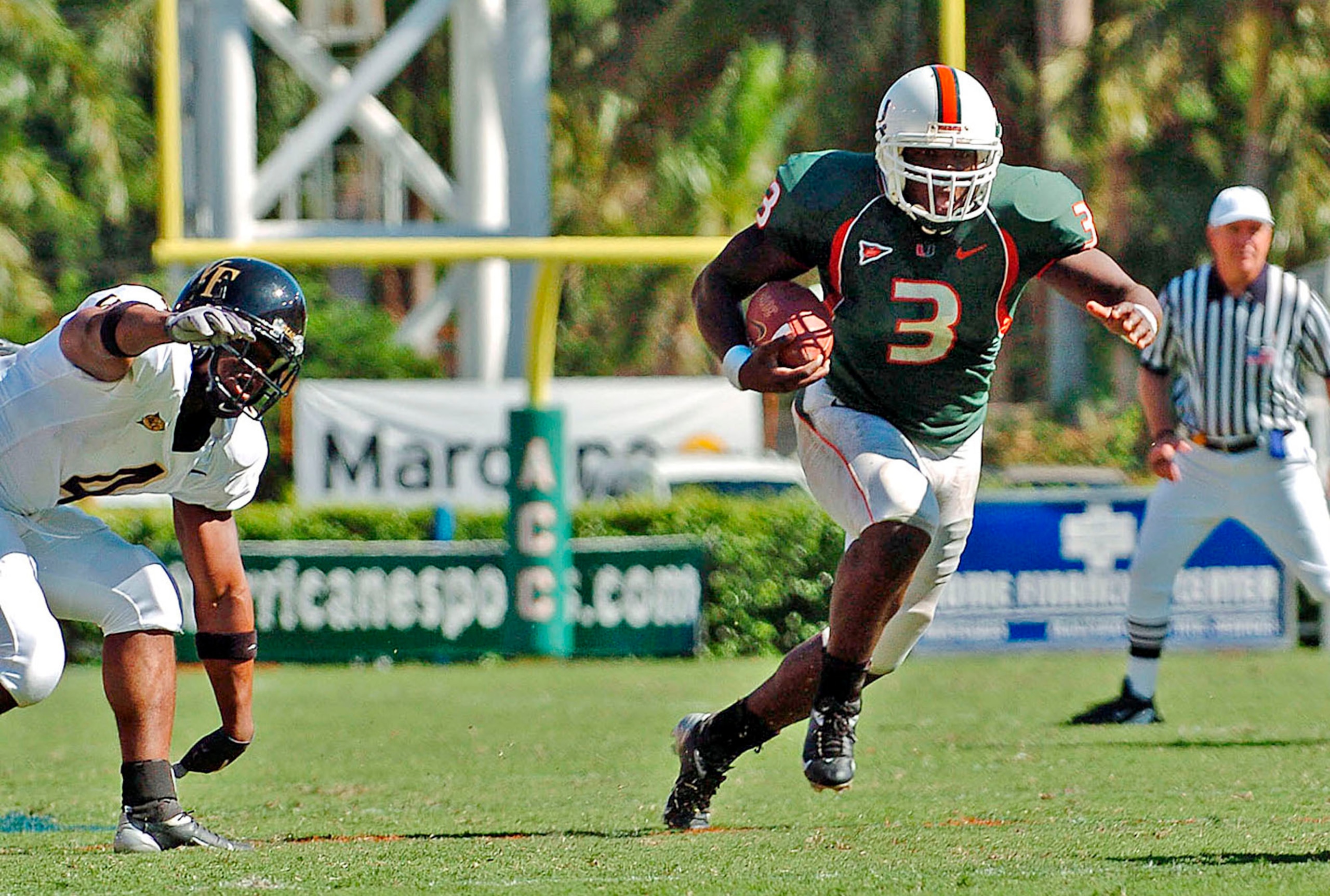
If you were to redraft the 2005 draft today, Aaron Rodgers would go first overall, likely followed by six-time Pro Bowl guard Logan Mankins. Pass-rushing terror DeMarcus Ware would be in that group as well, rounding out the top three.
Once you get past them, though, you’ll find the steal of the 2005 draft. There’s no way that Frank Gore, who has contributed day in and day out since the day he entered the league, wouldn’t have been a top-five pick, even considering the relative value of running backs in today’s pass-happy NFL. While Gore has never been the flashiest back in the league, he’s been one of the most dependable; an 1,100-yard-a-season rusher who can always be counted upon to gain the tough yards.
Gore was a massive risk at the time, however. He missed the entire 2002 season with torn a torn ACL and MCL and tore his ACL again the next season. He hadn’t fully recovered his speed or strength when the 2005 draft rolled around, so he was a Todd Gurley-esque risk.
The risk paid off. Gore worked behind Kevan Barlow for his rookie season and then was the 49ers’ undisputed workhorse until leaving the team as a living legend this offseason. Imagine how hard to watch the Mike Nolan or Mike Singletary 49ers would have been without one of the greatest rushers in franchise history fighting through eight-man fronts. Gore kept the hopes of fans alive in some of the worst eras of 49ers football.
Grade: A+
.jpg?w=2560 "Titans Colts Football")
.jpg?w=2560 "Chiefs Giants Football")
.jpg?w=2560 "Eagles Jaguars Football")
Round 3 (No. 94 Overall): Adam Snyder, OT, Oregon
4 of 11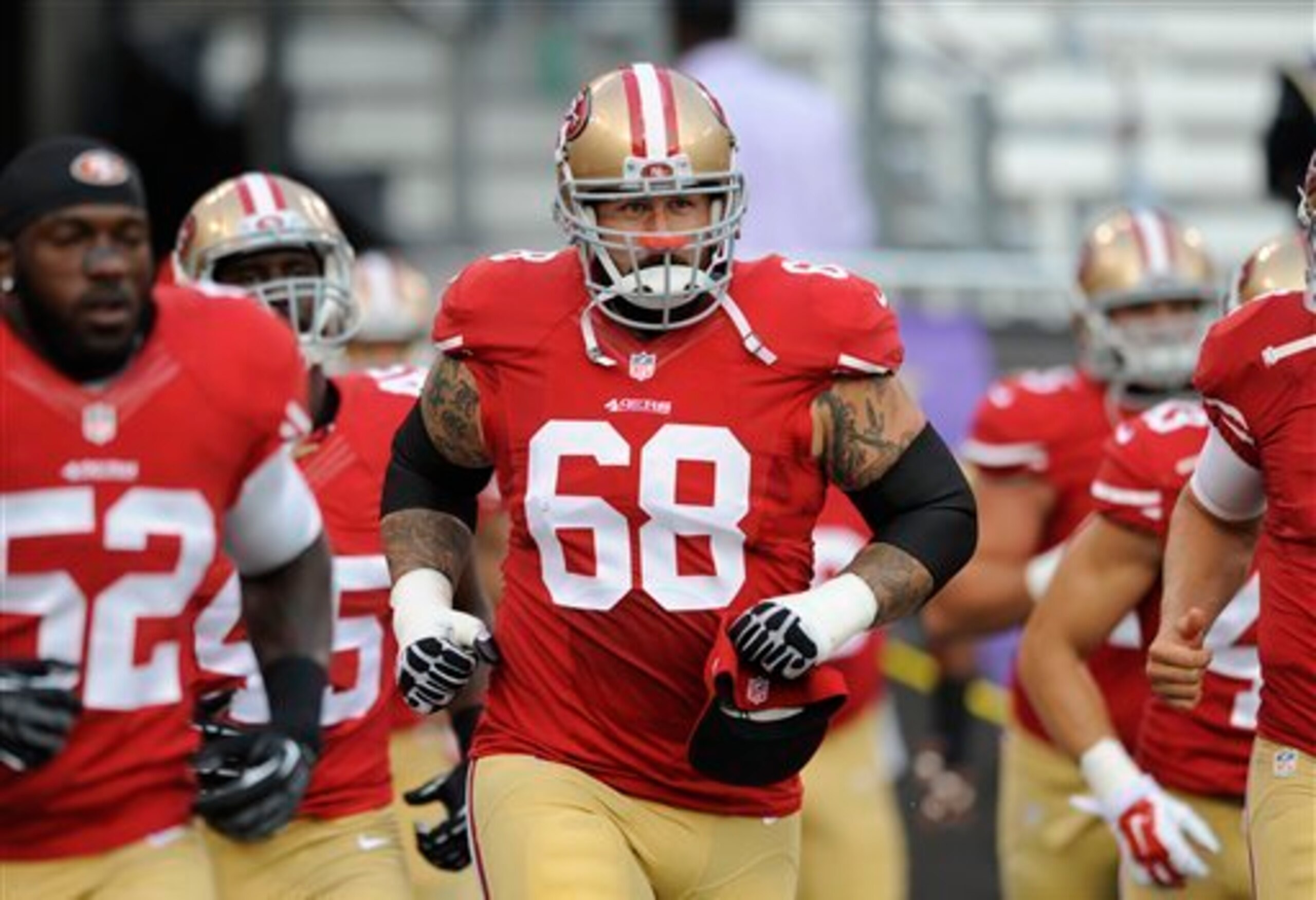
Unlike today’s 49ers, the team of a decade ago was very averse to draft-day trades. The 49ers only made one move all draft, giving up their fourth- and sixth-round picks to the Philadelphia Eagles for the rights to draft Adam Snyder.
The trade was, overall, a good one—no one particularly solid wound up in those draft slots—and the logic made sense at the time. If you’ve just drafted a franchise quarterback, by all means, you need to take players to keep him standing upright. Having passed on Eastern Washington’s Michael Roos in Round 2 and seeing a run of guards with Chris Colmer and Trai Essex jumping off the board just ahead of Snyder, the 49ers made a move to provide Smith some protection.
Snyder did end up starting 73 games for the 49ers, so that’s fairly good value out of a pick at the end of the third round. Unfortunately, he was mostly a starter thanks to a lack of a solid replacement, rather than thanks to his impressive on-field skills. He was always more comfortable as a swing tackle, as he was in 2010 or 2013 on the 49ers, rather than an every-day starter. The 49ers simply didn’t have anyone better to plug in front of him, so a starter he became.
If the 49ers wanted a tackle, they should have gone with Nick Kaczur, whom the Patriots took six slots later. His career was short, lasting only five seasons due to injury, but in those five seasons, he was a much better player. It would have bridged the gap until Joe Staley and Anthony Davis arrived in 2007 and 2010.
The best pick at any position the 49ers could likely have made here was linebacker LeRoy Hill, who had a very solid career in Seattle. Kyle Orton and Marion Barber were also picked in this range, but the 49ers had already taken Alex Smith and Frank Gore, so doubling up on those positions would have been foolish.
Grade: B-
Round 5 (No. 137 Overall): Ronald Fields, DT, Mississippi State
5 of 11
Ronald Fields was carved like a defensive tackle should be carved. At 6’2”, 310 pounds, he looked the part of a defensive tackle, looking primed to star in a two-gap scheme and clog up gaps in the running game. He had the power to bull rush through opposing linemen, but he had conditioning concerns and couldn’t keep that up for a full game. The hope was that Fields would sit behind Anthony Adams for a few years and work his way into the rotation at nose tackle, where his bulk and strength could best shine.
Fields never really developed, starting only nine games for the 49ers in 2006 and then getting a try as Denver’s starting nose tackle in 2009. In both cases, the teams quickly realized that he wasn’t precisely the stud interior linemen they were hoping for and moved him back into a reserve or rotational role. He was serviceable at best and worse than that more often.
If the 49ers wanted a stud defender here, the pick should have been Cincinnati’s Trent Cole, who fell to No. 146 overall thanks to a lack of ideal size. He would have moved to outside linebacker in the 49ers’ 3-4 scheme at the time and flourished. He’s become a two-time Pro Bowler in Philadelphia, four times recording double-digit sacks in a season. Fields only recorded double-digit starts once.
Grade: D+
Round 5 (No. 174 Overall): Rasheed Marshall, WR, West Virginia
6 of 11
The 49ers receiving corps at this point was headlined by second-year player Brandon Lloyd and aging veteran Johnnie Morton. They had spent a first-round pick the year before on Rashaun Woods, but he ended up spending the entire 2005 season on injured reserve and never playing another down in the NFL. The 49ers clearly needed youth at the position.
Marshall was an athlete more than a football player, transitioning from quarterback to receiver in the pros. The idea was that his lateral movement, leaping ability and speed could translate into an Antwaan Randle El-esque “slash” threat, but it was all projection.
All that projection amounted to just one reception for negative-one yard, one carry for negative-seven yards and a handful of forgettable returns in the NFL. I’m loathe to give out a full “F” for any player who makes a roster, but Marshall might as well have not bothered showing up, only producing negative yardage for the team.
This could have instead been safety Chris Harris, who had several successful seasons starting in Chicago. If they were determined to get a pass-catcher of some kind, they could have taken tight end Bo Scaife from Texas, who put up 251 receptions in his career. Almost anyone would have been better than Marshall, who provided absolutely nothing.
Grade: F
Round 6 (No. 205 Overall): Derrick Johnson, DB, Washington
7 of 11
Derrick Johnson was one of the most highly touted players in the entire 2005 draft. Sadly, that was Texas linebacker Derrick Johnson, not the cornerback the 49ers took five rounds later.
This Johnson ended up unranked by most draft services, including ESPN. Johnson had set a school record with interceptions in four consecutive games and had shown flashes as a returner before a 2001 foot injury, but he was mostly an unpolished player the 49ers were hoping to coach up.
Not much coaching up happened. He spent one year with the team, starting five games and defending four passes. After one more year bouncing around the league, he was out of football.
The sixth and seventh rounds saw quite a bit of value in 2005. Both Jay Ratliff and Matt Cassell, solid players each, were picked within a round of Johnson. Tackle Joe Berger, picked by Carolina two picks after Johnson, is still in the league as well, which is great value for the end of the sixth round.
Johnson at least made a roster, so he’s not an entirely failed pick, but he’s mostly been a nonentity.
Grade: D
Round 7 (No. 215 Overall): Daven Holly, DB, Cincinnati
8 of 11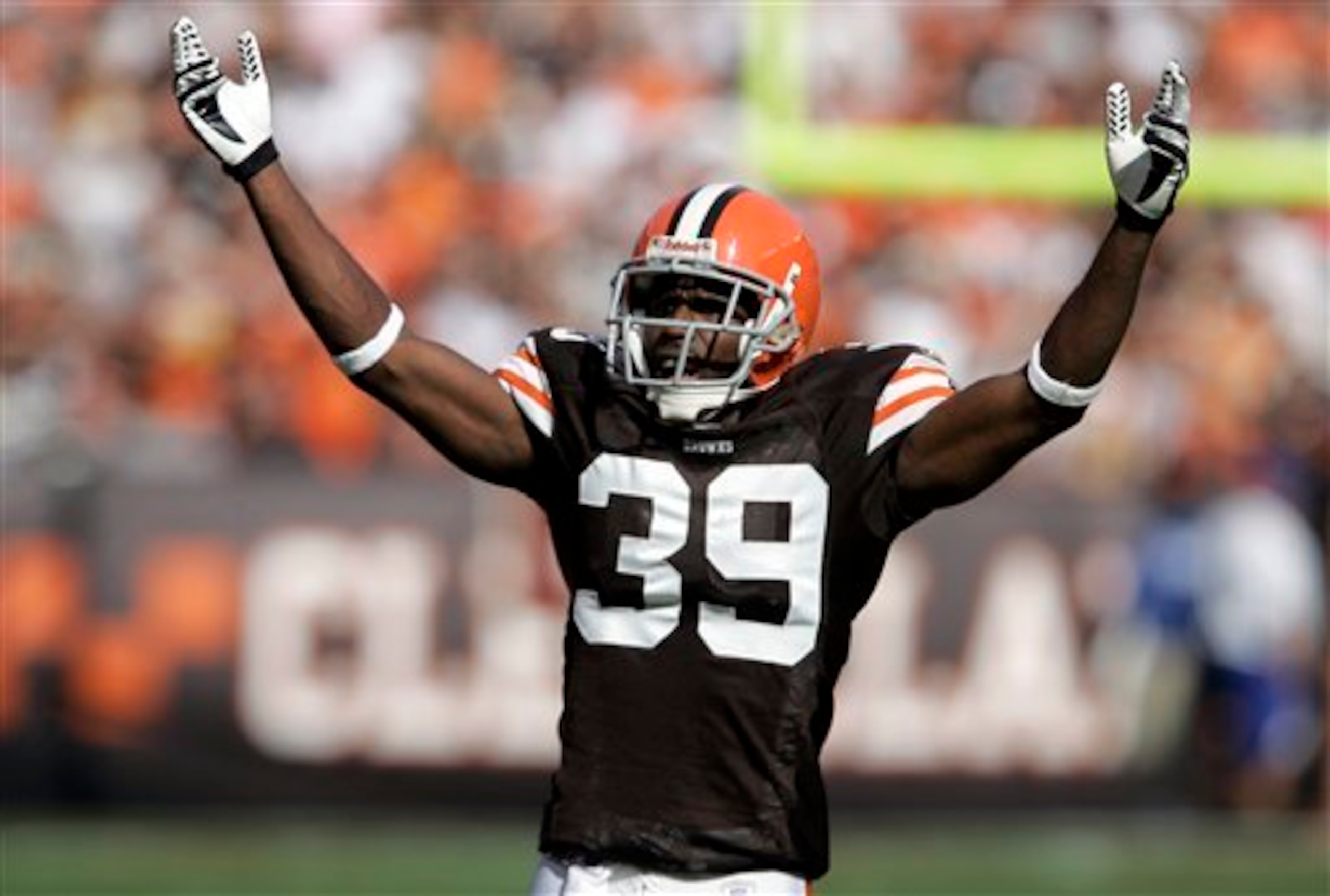
Daven Holly had a better career than Johnson, albeit not with San Francisco.
Holly was cut in the preseason, with the idea of being re-signed to the practice squad in the immediate aftermath. However, before that could happen, the Chicago Bears claimed him, and one year later, he became the starting cornerback for the Cleveland Browns. He had five interceptions in 2006, but torn knee ligaments after the 2007 season ended his career prematurely.
If the 49ers had wanted a defensive back with one of these two picks, Reynaldo Hill (who went 218th overall to the Titans) might have been the best choice. Hill started 26 games for Tennessee and served for a bit longer as a reserve. Still, Holly’s career wasn’t that bad, and if the 49ers had managed to sneak him onto the practice squad, he could have provided dividends for the team in the long run. It was the right strategy in the draft but an unfortunate result.
Grade: C-
Round 7 (No. 223 Overall): Marcus Maxwell, WR, Oregon
9 of 11
Marcus Maxwell’s career contributions total one reception for five yards in Cincinnati. He bounced around on practice squads, NFL Europe and the UFL for quite some time but never really cracked the big leagues. That’s about to be expected out of a seventh-round pick. The fact that he made a roster at all keeps it from being a total failure of a pick—anything, no matter how small, out of a seventh-rounder is a net gain.
Of course, it hurts that two of the next 10 picks were Jay Ratliff and Matt Cassel, but you can’t win them all.
Grade: D
Round 7 (Picks No. 248 and 249): Patrick Estes and Billy Bajema, TE
10 of 11
With their last two picks, the 49ers doubled down on a pair of tight ends.
Patrick Estes, from Virginia, was the lesser of the two players. He appeared in eight games for the 49ers but didn’t record a single stat, being used primarily on special teams and transitioned into a pure offensive tackle. He was signed and cut from the 49ers three times, and he never made an impact.
Billy Bajema, from Oklahoma State, went on to a nine-year career for San Francisco, St. Louis and Baltimore, totaling only 40 receptions but serving as a more than serviceable blocking tight end. He even won a Super Bowl ring with the Ravens, beating the 49ers in Super Bowl XLVII. That’s a pretty great career for a seventh-round pick.
That just goes to show you how difficult it is to judge seventh-round picks. They’re lottery selections; maybe they have a great career, or maybe they wash out. There’s really no way to know.
Grade: D
Overall
11 of 11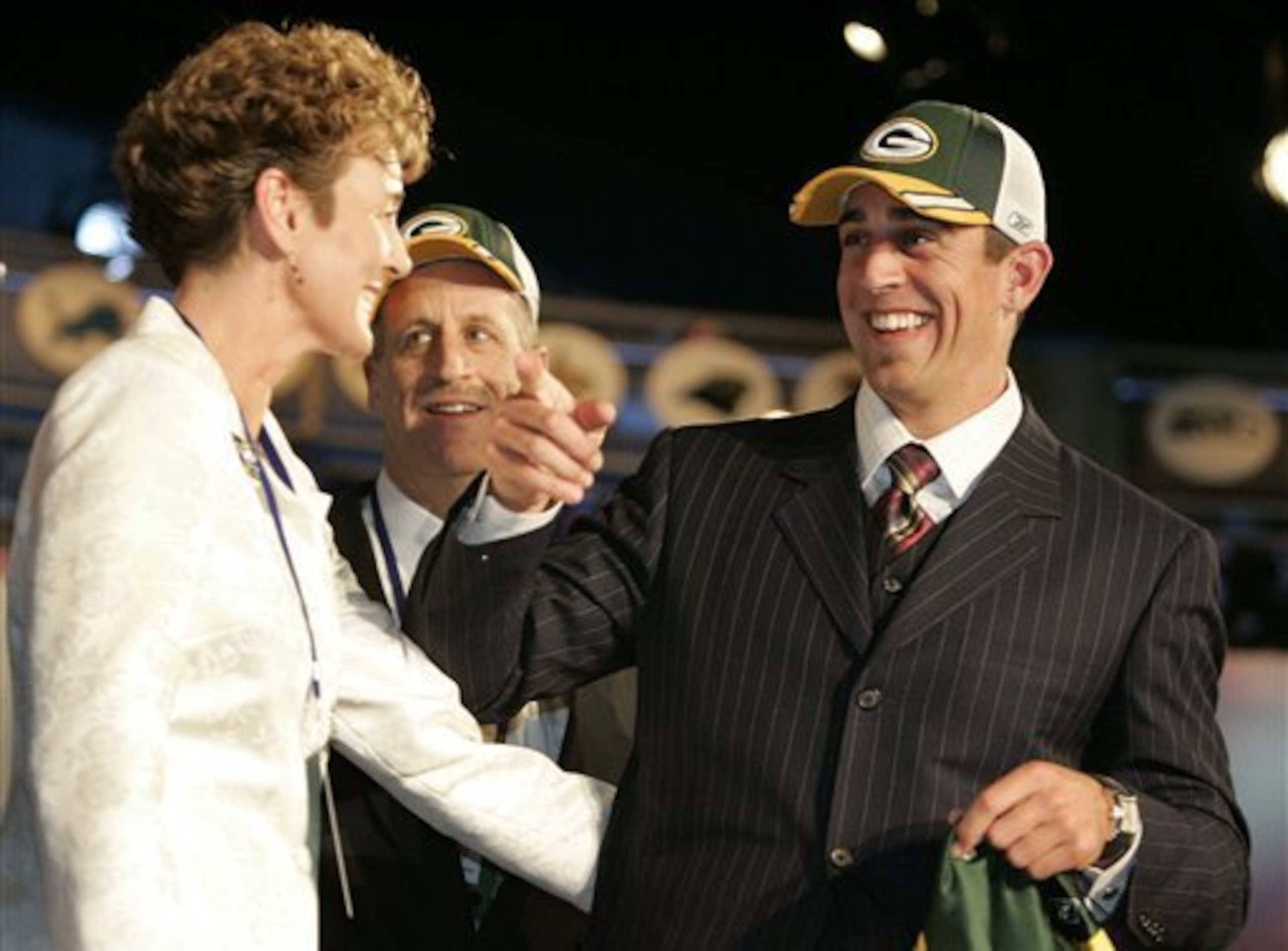
Finding Frank Gore in the third round makes the 2005 draft worth it; Gore’s an all-time great 49er and one of the top five players taken in the draft. That’s the kind of value teams need to compete over the long term.
All four picks in the first three rounds were solid as well, though you’re hoping for more than just “solid” when you’re picking first overall. If you flipped the rounds of Gore and Alex Smith, the draft feels a lot better, despite having the same players involved. The first four picks developed at least adequately, which makes the draft a winner overall.
It’s still a “what might have been” draft, considering they took Smith over Aaron Rodgers, but that’s a fairly solid class in what was a weak overall year. Dallas had the best year, grabbing DeMarcus Ware, Marcus Spears, Kevin Burnett, Marion Barber, Chris Canty and Jay Ratliff. New England also had one of its always-solid drafts, taking Logan Mankins, Ellis Hobbs, Nick Kaczur, James Sanders and Matt Cassell. Other than those two teams, however, no one found more decent contributors than the 49ers did in the 2005 draft.
Yes, the team needed a home run out of its first pick and got a bunt single instead, but taken as a whole, the draft could have been much worse.
It could have been better, too. If you ignored positions of need and just grabbed the best players available whenever the 49ers were on the clock, you would have ended up with quite the arsenal. Here’s how that might have looked, if the 49ers could have drafted with perfect foresight:
Round 1, Pick 1: Aaron Rodgers, QB, California
Round 2, Pick 33: Vincent Jackson, WR, Northern Colorado
Round 3, Pick 65: Frank Gore, RB, Miami (FL)
Round 3, Pick 94: Darren Sproles, RB, Kansas State
Round 5, Pick 137: Trent Cole, DE, Cincinnati
Round 5, Pick 174: Chris Myers, OG, Miami (FL)
Round 6, Pick 205: Kevin Vickerson, DT, Michigan State
Round 7, Pick 215: Jay Ratliff, DE, Auburn
Round 7, Pick 223: Matt Cassel, QB, USC
Round 7, Pick 248: Ryan Fitzpatrick, QB, Harvard
Round 7, Pick 249: Billy Bajema, TE, Oklahoma State
Unless otherwise noted, all contemporary scouting reports come from Scouts, Inc and ESPN.
Bryan Knowles is a featured columnist for Bleacher Report, covering the San Francisco 49ers. Follow him @BryKno on twitter.
.jpg?w=2560 "Colts Football")
.jpg?w=2560)





