

Jacque Vaughn Had the Odds Against Him and Did Little to Improve Them
As the inevitable became increasingly imminent a few weeks ago, a couple of NBA scouts were chatting about the reasons it hadn't worked very well for one of Gregg Popovich's proteges, Jacque Vaughn, in Orlando.
"He never had a chance," one said.
"He didn't do much with whatever chance he had," the other interjected.
TOP NEWS

LeBron's Special Helicopter Deal

MJ Makes Record-Setting Donation 🙌
Shams: KAT, Hart Could Be Trade Names
On the day of Vaughn's firing, following a 58-158 record over two-and-a-half seasons, the clear conclusion is that both premises can be equally true.
Young coaches, and Vaughn was that—just 37 at the time of his hiring—don't typically get their choice of first-time opportunities, not unless they're five-time champions coming straight from high-profile television gigs such as Steve Kerr. They take what's out there. And what's out there, typically, is a rebuilding situation, the sort that Orlando represented in the summer of 2012, not much different from what Philadelphia was when Brett Brown took his first job there in the summer of 2013, or Utah when Quin Snyder took his first there last June.
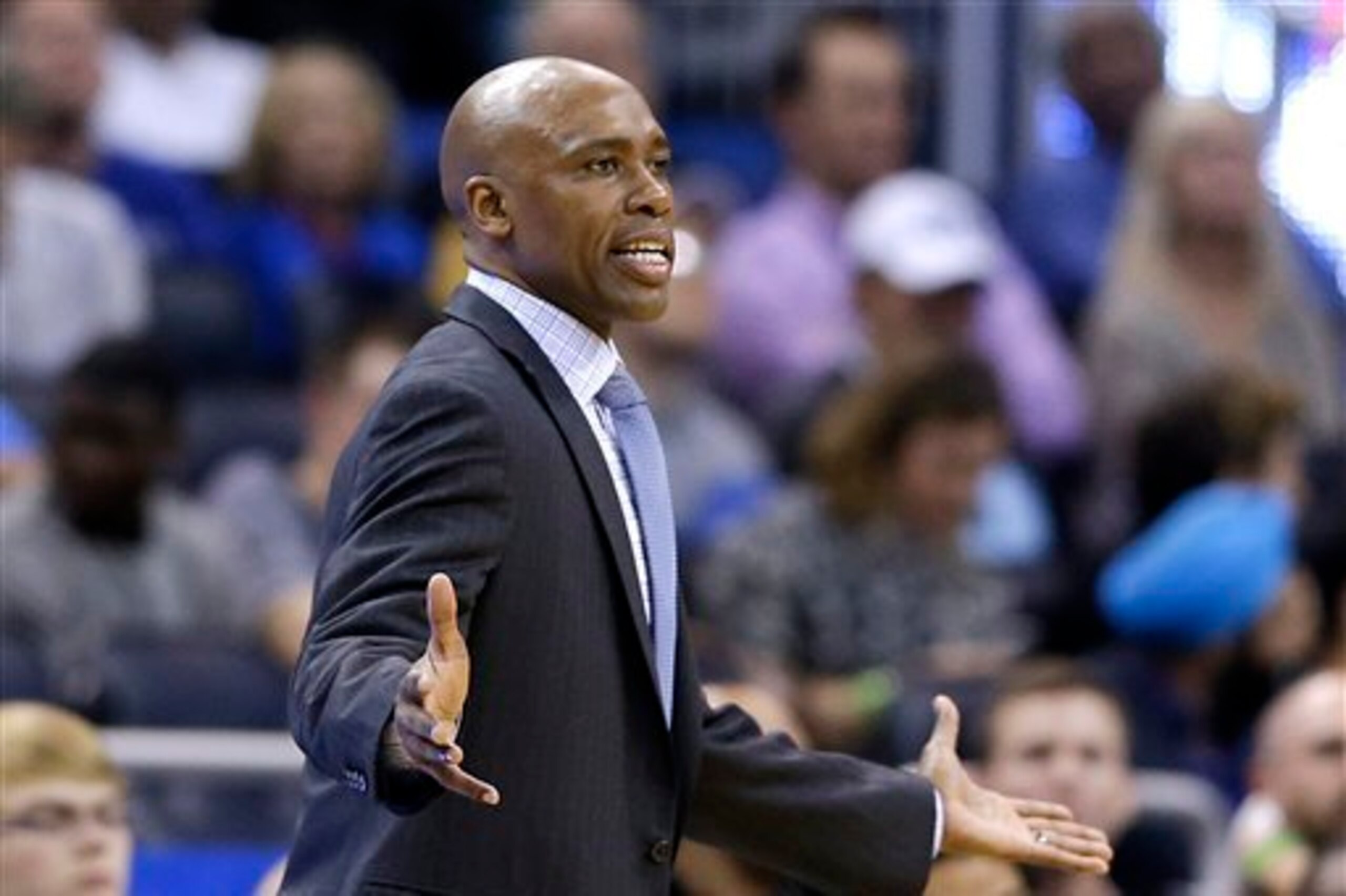
The Magic's lone superstar, Dwight Howard, had yet to be traded, but that was a foregone conclusion, and when it occurred two weeks later, the Magic's rebuild was officially underway.
Vaughn could have passed on the opportunity for the same reason that Heat assistant David Fizdale shied away from being a candidate for a few jobs, out of fear that if you take the wrong job first and fail to exceed unreasonable expectations quickly, you'll be ousted without much chance of another. That has happened to countless coaches, and everyone understood that Vaughn ran that risk, especially with the Magic front office intent on acquiring future assets, even if came at the expense of current wins.
He took it anyway.
Then the front office, led by Rob Hennigan, started taking away his experienced players.
In Vaughn's first season, he had veterans Jameer Nelson, J.J. Redick, Glen Davis, Arron Afflalo and Josh McRoberts. By the time of his dismissal, all were elsewhere. In their place: a number of talented but raw kids, two of which (Victor Oladipo and Aaron Gordon) missed significant time this season, one of which (Elfrid Payton) is progressing but playing the NBA's most loaded position and another (Maurice Harkless) who hasn't lived up to his first-round status, leaving two guys in their early 20s, Nikola Vucevic and restricted-free-agent-to-be Tobias Harris, to anchor the others.
Even in the anemic East, it hasn't been enough, not when the only veteran additions have been Ben Gordon, Luke Ridnour and Channing Frye—one past his prime, one limited and one hurt to start the season.
And yet, even in light of these challenges, Vaughn's record is tough to defend, his winning percentage barely inching up from .244 to .280 to .288, and his team ranking in the bottom six in both offensive and defensive rating, with the defense actually worse than it was last season.
The third year is generally when a coach needs to start to show something during a rebuilding project, or else he'll be stripped of any excuses and then his job title.
And, yes, some in recent times have done so, managing to skate to safety while on the thinnest of ice.
Dwane Casey didn't inherit a star when he took over for Jay Triano after a 22-60 Raptors season, then went 23-43 and 34-48 and was reportedly on the hottest seat in chilly Canada when the general manager who didn't hire him, Masai Ujiri, traded his most proven player, Rudy Gay, in December 2013. But the Raptors unexpectedly, and somewhat inexplicably, starting rolling, all the way to a 48-34 record and an Atlantic Division title. So Casey got a fourth season and is now 33-17.
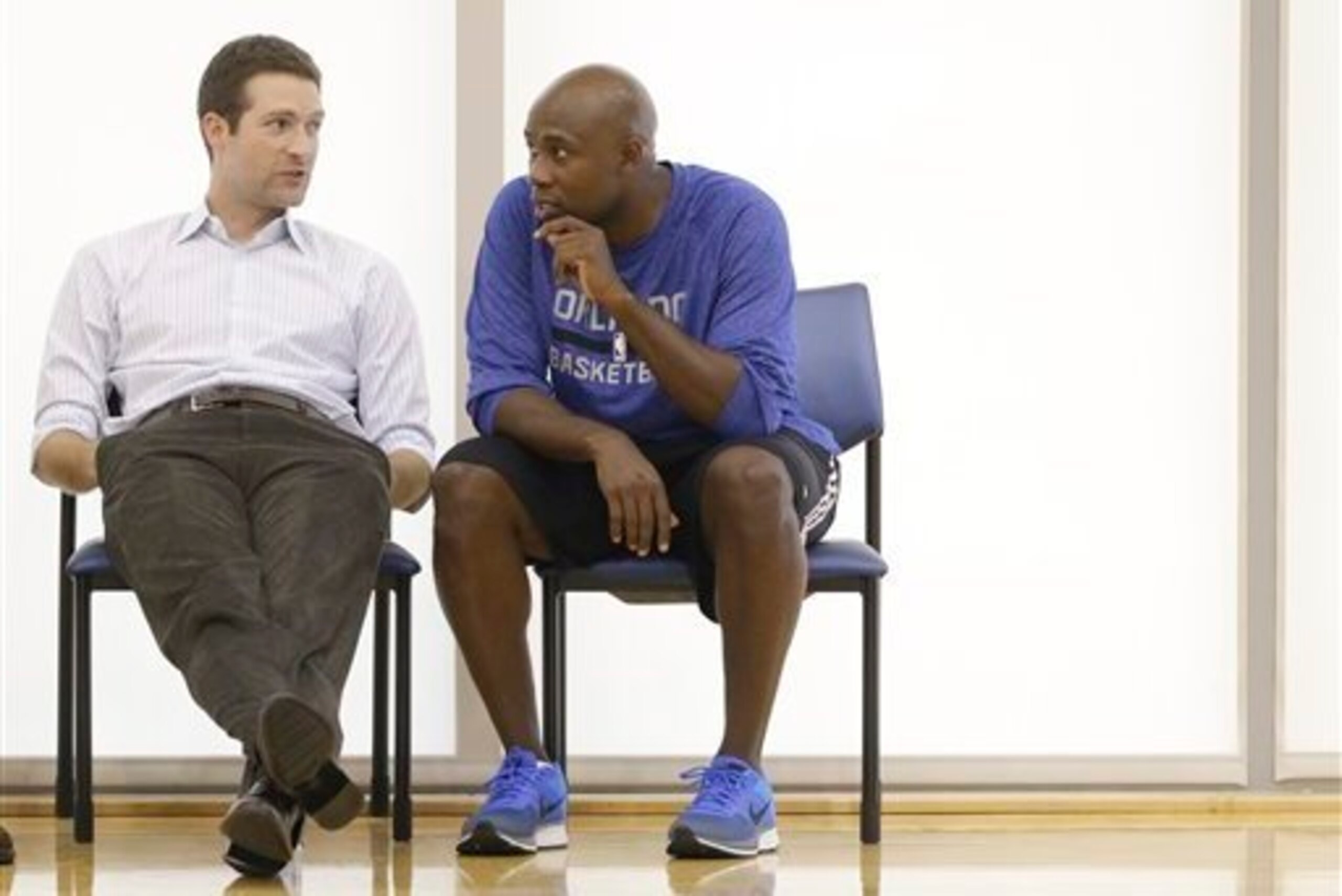
Randy Wittman, when taking over for Flip Saunders in Washington during the 2011-12 season, was given a gifted guard in John Wall, but one who had done little but lose early in his career. After going 29-53 the next season, Wittman recorded a winning record (44-38) in his third year, and his Wizards—fortified by acquired veterans such as Paul Pierce, Nene and Marcin Gortat—are 31-20, tussling with Toronto, Chicago and Cleveland behind Atlanta in the East.
For all the criticism that Scott Brooks endures now, recall that the Thunder, with second-year man Kevin Durant and rookie Russell Westbrook, were 1-12 when Brooks replaced P.J. Carlesimo during the 2008-09 season. The Thunder have gone 50-32, 55-27, 47-19, 60-22 and 59-23 since, until injuries contributed to their 25-24 record this season.
So it can be done.
You can engineer a turnaround, even with most of the circumstances initially pitted against you.
Sometimes, you can get even get some slack.
Brown, another branch on Popovich's tree, doesn't appear in serious danger of hearing the chainsaw in Philadelphia, and it would be ridiculous if he did, considering that it's hard to do better than 30-102 when your general manager is swapping every serviceable performer for a future second-round pick.
In a conversation with Bleacher Report earlier this season, former coach and current ABC analyst Jeff Van Gundy spoke of having a "perverse respect for Philly, because they're not blaming Brett Brown. But most people don’t have the [guts] to undertake what they thought they had to undertake. So they start this rebuilding, and the heat gets turned up, and then, well, (bleep) it, let's fake the fans, we're going to fire the coach."
What Orlando did isn't nearly as egregious as Brown's firing would be because Vaughn was given better players, even if they're not all what they will someday become. Premature? Perhaps. But not entirely unfair and hardly unprecedented.
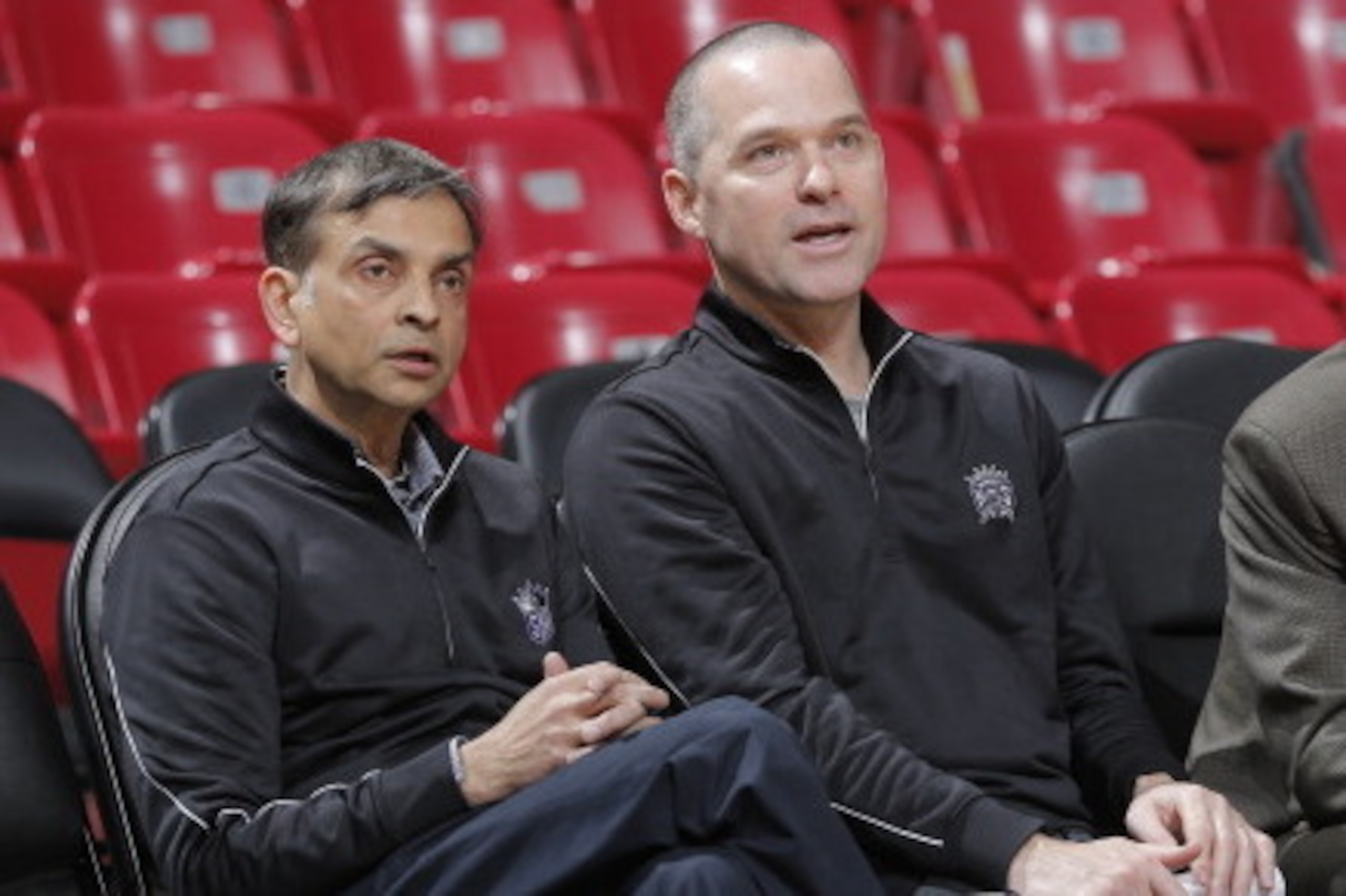
You can get fired for a lot of things in the NBA. You can get fired for not aligning with the owner's wacky vision, which was apparently Mike Malone's mistake in Sacramento, with the Kings predictably paying for that shortsighted dismissal so far. You can get fired for wanting an extension that the front office isn't comfortable offering, which is one reason George Karl was dumped by Denver after winning the Coach of the Year, with 57 wins. You can get fired justifiably, which is what will ultimately occur in Denver, as Karl's replacement, Brian Shaw, has a 55-77 record with a roster that is somewhat, but not drastically, different.
You can get fired for taking too long to restart the ascent after a rebuild, which may be Monty Williams' undoing in New Orleans; the Pelicans coach got a pass for going 21-45, 27-55 and 34-48 after Chris Paul and David West went elsewhere, but he likely won't get the same if he finishes only slightly over .500 and misses the playoffs with all-world forward Anthony Davis and some big-name complementary pieces.
And you can get fired for getting stuck in the mud for too long, rather than growing enough fresh grass.
That's what happened to Jacque Vaughn.
Actually, in a league of limited patience, that's the easiest way for the inevitable to become imminent.
Ethan Skolnick covers the NBA for Bleacher Report. Follow him on Twitter @EthanJSkolnick. All quotes obtained firsthand unless otherwise noted.


.jpg?w=2560 "Grading WWE Raw 🔠")
.jpg?w=2560 "Viral Rams Coach Vid 🖕")
.jpg?w=2560 "Injury-stricken Seahawks signing veteran RB")
.jpg?w=2560 "Bijan's INSANE 1st Half 🤩")
.jpg?w=2560 "2 NFL Officials Suspended")
