
Predicting the Biggest Changes We'll See from Houston Rockets Next Season
The Houston Rockets face a paradoxical conundrum: While they technically got worse, they are at a point in their rebuilding efforts when they are normally expected to improve. That presents some big challenges for them in the upcoming campaign.
During the offseason, Houston attempted to bring over a max-contract stud but whiffed. In the process, it essentially gave away three key contributors from last season: Chandler Parsons, Jeremy Lin and Omer Asik. That’s how it got worse.
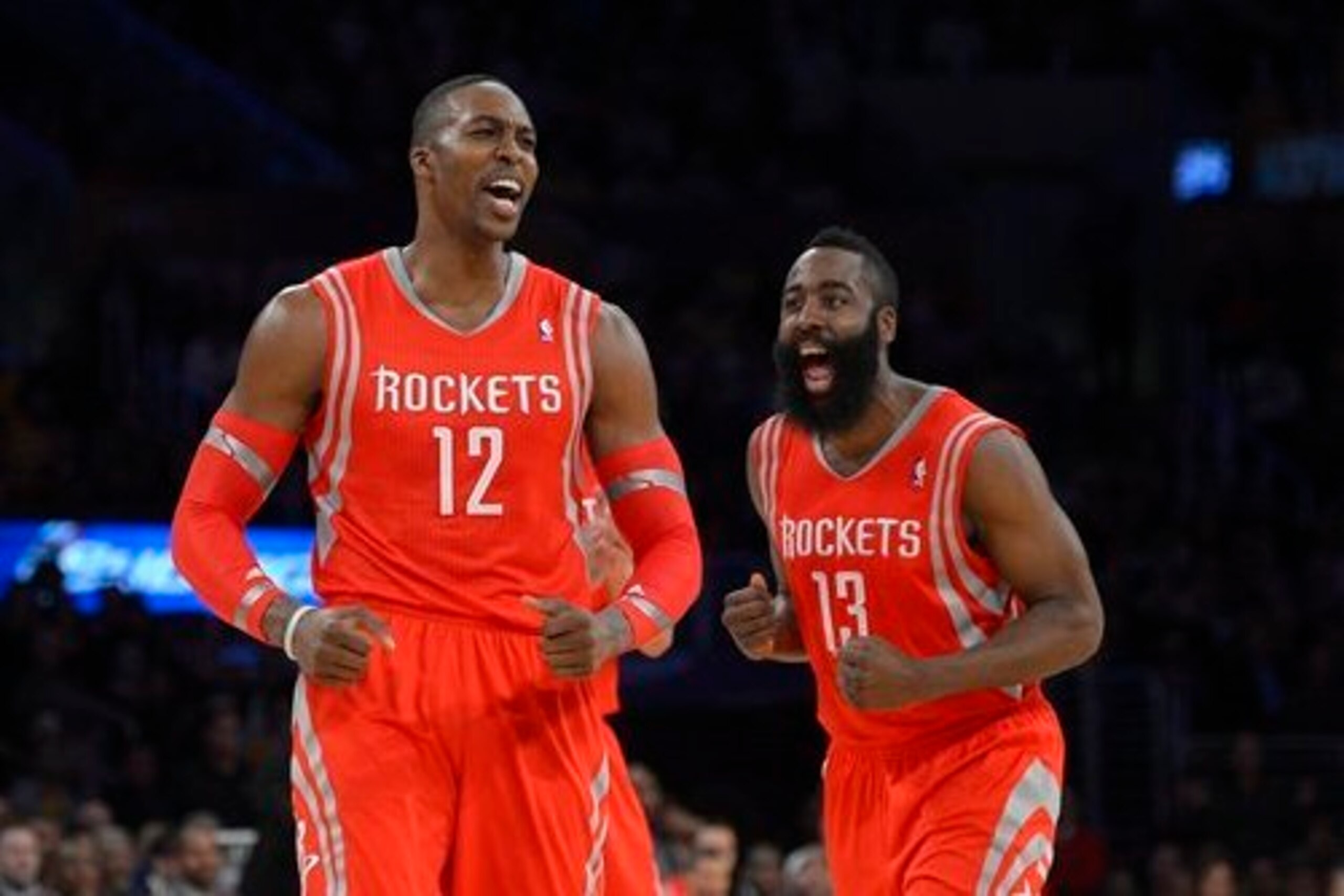
Conversely, this will be James Harden’s third year in Houston and Dwight Howard’s second. Superstars are acquired and combined for the purpose of winning championships, not just getting to the playoffs. While a one-year learning curve for those stars to develop chemistry is normal, when they are together for two years and don’t make it past the first round, words like “failure” and “bust” start getting tossed about. Thus, they are expected to improve.
So, the Rockets need to get better in spite of having less talent. They can actually do that by cheating the system. Even if they win fewer games, by winning a playoff series, they would be one step closer to a championship. Thus they’d be “better” without actually being better.
There are significant challenges the Rockets must overcome in order to do that. They are listed here in chronological order.
Solidify the Rotation
1 of 5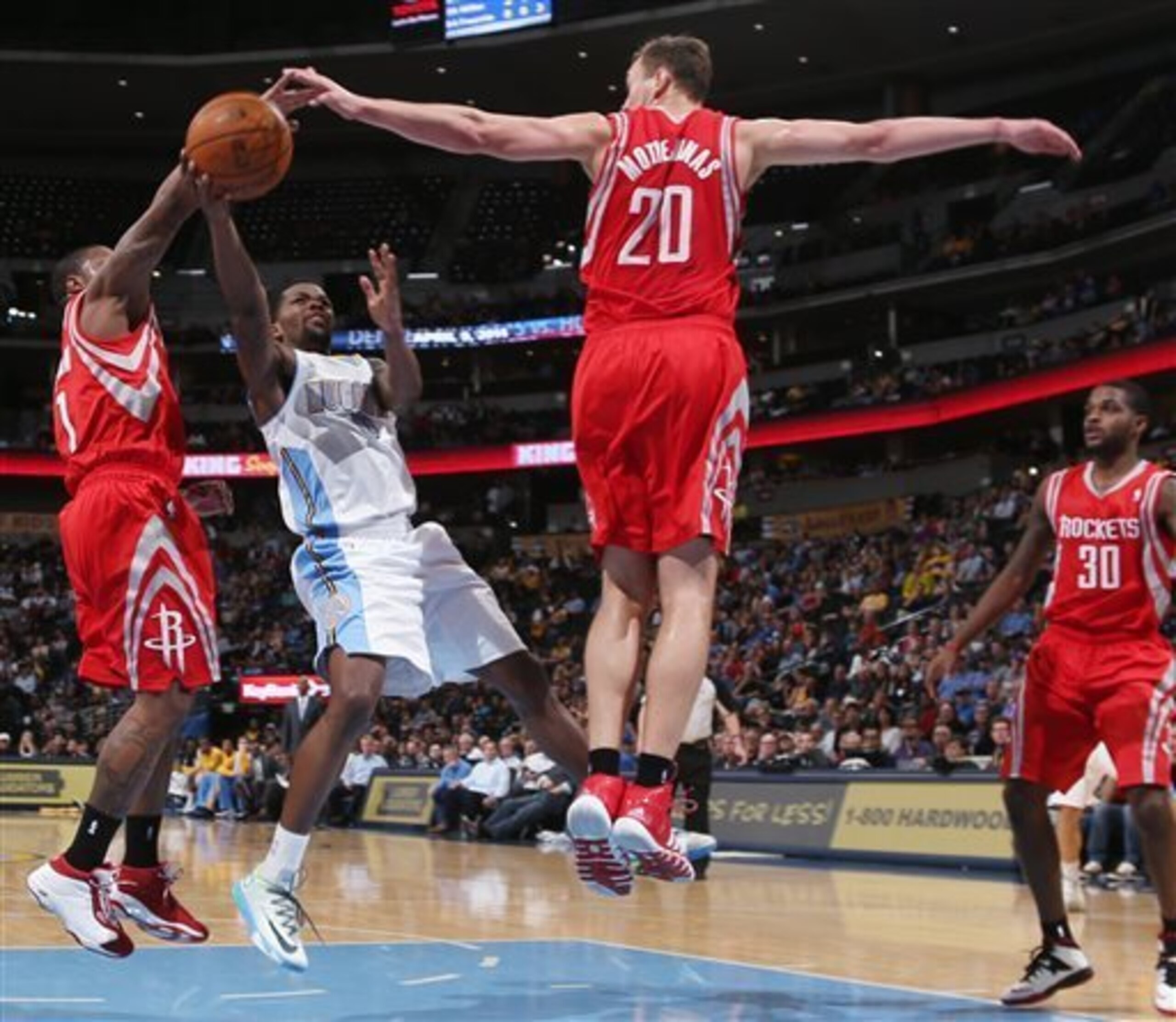
The Rockets’ rotation underwent a makeover this offseason. Other than Harden and Howard, the players they retained include: Patrick Beverly, Isaiah Canaan, Troy Daniels, Robert Covington, Francisco Garcia, Terrence Jones and Donatas Motiejunas.
Players they added are: Trevor Ariza, Jeff Adrien, Tarik Black, Clint Capela, Joey Dorsey, Nick Johnson, Ish Smith and Jason Terry.
That’s essentially your 2014-15 Houston Rockets’ roster, though Black is unlikely to make the final cut. The starting five is projected to be Beverley, Harden, Ariza, Jones and Howard. That’s pretty solid, but the rest of the rotation is undefined.
Of particular concern is scoring off the bench. I added up last year’s point totals for Houston’s entire second unit (including the new acquisitions), and it came out to just 1,597. To put that in perspective, last year's Sixth Man of the Year, Jamal Crawford, scored 1,282.
In theory, though, the Rockets do have a bench with guys who can score. Johnson has the type of athleticism that lends itself to a sixth-man role. Daniels is a lights-out shooter. Canaan led the summer league team in scoring. Terry is a former Sixth Man of the Year.
But each of those have a flaw that raises doubts. Johnson is undersized for the 2 at 6’3” and is an unproven rookie. Canaan hasn’t shown himself to be much of a facilitator. Daniels can’t create his own shot. And Terry is old.
One of the early challenges the Rockets will face is finding a pecking order and rhythm in that second unit. If they can get the basic outline of that done by the end of the preseason, it would mean a lot going into the regular season.
Games aren’t typically won or lost off the bench. But they can make a difference in whether a game is winnable or not. Blowouts frequently occur when the second unit is getting badly outplayed. The Rockets need to establish scoring from their reserves to keep that from happening.
A Good Launch
2 of 5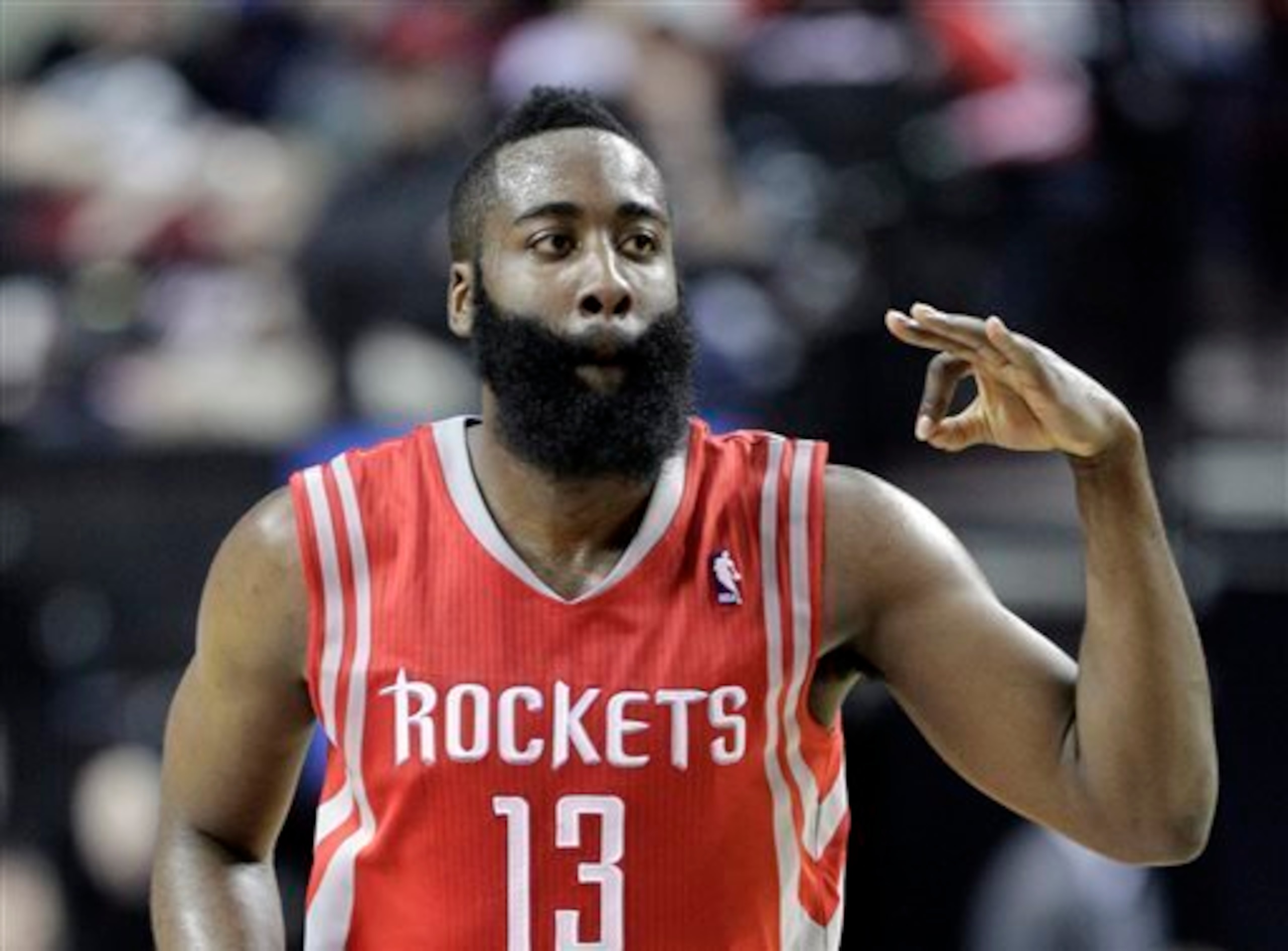
The Rockets need a good launch to their season. Nothing washes away the bitterness of a disappointing loss from your mouth like the sweet taste of victory.
The Rockets’ first four games are pretty winnable: the Los Angeles Lakers, Utah Jazz, Boston Celtics and Philadelphia 76ers. All of those teams missed the playoffs last season and weren’t really in much contention for them.
Getting off to a 4-0 start isn’t going to overwhelm anyone, but it’s enough to give a young team confidence it can win.
Harden told Joaquin Henson of The Philippine Star:
"Dwight (Howard) and I are the cornerstones of the Rockets. The rest of the guys are role players or pieces that complete our team. We’ve lost some pieces and added some pieces. I think we’ll be fine next season.
"
That comment was spun by some to sound more negative than Harden’s intent, which was to provide assurance that he had confidence in the group around him. It was just a poorly worded reply.
That said, the sincerity of that belief is questionable. Does Harden really believe they didn’t lose anything? On some level, he, Howard and the rest of the Rockets have to be wondering if they will really “be fine.”
A 4-0 start would do a lot to assure those nagging doubts.
Find a Clear Third Option
3 of 5
The biggest loss for the Houston Rockets was Chandler Parsons, and part of the reason for that is he was so clearly the third-best scorer on the team.
Ariza replaced Parsons, but is Ariza a true third option? He averaged 14.4 points compared to Parsons’ 16.6. So that’s a bit of a drop, though not an egregious one. That difference is even more negligible when you adjust for pace. Per Basketball-Reference.com, Ariza had 20.9 points per 100 possessions and Parsons had 22.0.
There’s a catch to that though—as in catch-and-shoot. According to the player-tracking data at NBA.com, 509 of Ariza’s 1,107 points came on those type of shots. That accounts for 46 percent of his offense. For Parsons that number was 392 of 1,226 points, or 32.0 percent.
That suggests Ariza’s points are more dependent on someone else setting him up. John Wall was one of the elite table-setters in the NBA last year, placing third in passer rating. While Harden is a terrific dispenser for a shooting guard (second at his position), he’s no John Wall.
And that’s where the problem is. Harden needs more help in creating scoring, not more demands. The Rockets require someone who can take the pressure off him when teams focus their defense on there.
One of the reasons they lost in the playoffs last year was Harden’s unusual lack of efficiency. His true shooting percentage fell from .618 to .519 in the playoffs. That’s because, even with Parsons, the Rockets didn’t have that second guy. A step back is the wrong direction here.
Late in games, there’s a certain detriment in going to Howard because of his poor free-throw shooting, and that’s not going to change. Ariza developing his handles or Canaan improving his facilitating can help. Jones continuing to emerge at the 4 would also be a big asset.



Stay Committed to Defense
4 of 5You’ve probably heard that defense is mostly about effort. That’s both true and false at the same time. There’s more to defense than just trying.
In fact, trying hard stupidly can create bad defense. If you’re rushing the shot too hard and/or gambling on passing lanes, you can make it easier for your opponent to score. That said, you can’t have a great defense without a consistent effort.
That effort can’t just happen in games. Zach Lowe wrote about the Chicago Bulls defense back in February of 2013:
"Chicago is the best in the league at this sort of moving half-help. The whole team is a testament to what can happen when the right players meet the right coach. Chicago employs three of the league’s best defenders in Noah, Deng, and Gibson, with Butler a budding multi-positional stopper off the bench. The rest of the players are more limited defensively, but they follow the rules all the time. They know the game plan, the opponent’s game plan, and the opposing personnel, in part because Thibodeau drills and re-drills all that stuff during famously detailed shootarounds and practices. More than one player has compared Thibodeau to the famously perfectionist Stan Van Gundy, with one difference: No one on the Bulls, and especially not the stars, has grown tired of Thibodeau’s style.
"
With Ariza, the Rockets can do the same thing. They have three elite defenders in him, Beverley and Howard. But what they need now is practice. Yes, I’m talking about practice.
Trying isn’t just about keeping on your man; it’s staying engaged when your man doesn’t have the ball. It’s always, always, always knowing where to be and when to be there, then actually being there.
We need look no further than the last play of the Rockets' season last year to prove that everyone having a proper understanding of the defense is critical. Damian Lillard sent the Rockets packing because someone didn’t know where they were supposed to be. Exactly who was at fault is a matter of some controversy, but it was a defensive breakdown to let that shot happen.
Problems like that aren’t solved in 30-second timeouts. They’re solved in the preseason and refined in the regular season. Defense isn’t just effort in the moment, it’s the effort in studying it, having it ingrained and staying committed to it.
And it has to be everyone on the team. Harden gets the bulk of the blame for the Rockets' defensive woes, and at times he deserves criticism. But all the problems aren’t on him. He just makes a good symbol for them.
For the Rockets to win a series, they’ll need a constant defensive effort, not a sporadic one.
Find a Leader
5 of 5
Leadership is essential to any team, and frankly, it’s hard to find it on the Rockets right now. Sure, they have on-court leaders in Harden and Howard, but where is the moral and psychological leader?
Harden is renowned for his “old man’s game,” but the aforementioned lack of commitment to both sides of the ball makes it hard for him to be pronounced the definitive leader. How is he going ride teammates for skating on defense when he has such a propensity to do so?
By definition, you can’t lead if you’re at the end of the line.
Howard’s general fun-loving attitude makes him more of a laissez-faire leader. That’s not as much a criticism as an observation. He’s never been the type to scold the young pups into place or challenge them to fight through adversity.
The best player doesn’t have to be the leader. Kevin Garnett was the man on the Brooklyn Nets last year, but he was a long way from being their first option at this stage of his career. The Rockets don’t have a guy like that on their roster.
In many ways, it seemed that was Parsons. For example, he was the key to recruiting Howard to come play in Houston. But now he’s gone.
The Rockets new roster is young. Jason Terry has a veteran presence but doesn’t command the same level of respect as an all-time great like Garnett. He might add some fortitude, but not leadership.
Some teams don’t need a player to be a leader at all. The San Antonio Spurs have one of the 10 greatest performers in the history of the league, Tim Duncan, and he’s not their leader. Gregg Popovich is. The Spurs are uniformly committed to his system, and that’s the leadership.
Kevin McHale is no Gregg Popovich, though. (I doubt I get much argument on this statement.)
So who is the Rockets’ leader going to be? Either Harden is going to have to get serious about his defense, Howard is going to have just get serious, period, or both.
What will push the Rockets past the first round of the playoffs is mental fortitude, and that requires a General. If achieving what is expected won’t get you where you need to be, then you must overachieve. True leadership is getting a team to do just that. If their superstars can deliver that, expect the Rockets to do more than expected.

.jpg?w=2560 "Raiders Could Start Mendoza")

.jpg?w=2560 "Rodgers Iced Out on Plane 💎")
.jpg?w=2560 "🚨 Week 8 AP Top 25 Poll")
.jpg?w=2560 "Packers Safety Slams Refs 🤬")
