Are the Spurs the Greatest Outliers in American Big League Sports?
SAN ANTONIO, Texas — The San Antonio Spurs as we know them didn't happen by accident, even if head coach Gregg Popovich might have you believe otherwise.
"Good fortune plays a huge role," Popovich said of winning championships at the team's media day in late September. "What's good fortune? It's a guy off the bench having a great series. It might be a call or a non-call by an official. It might be an injury. It could be a lot of different things—the way the ball bounces as it ordinarily wouldn't do in this or that circumstance."
But after winning the 2014 Finals by a record 14.5 points per contest, pinning the Spurs' accomplishments on luck isn't an easy sell.

Fortune alone doesn't account for the organization's five championships since 1999 or the fact that it hasn't missed the playoffs since 1997. The only other franchise in the four major team sports to win as many championships in its sport's last 16 seasons is the Los Angeles Lakers—good company.
The Spurs' sustained success in a small market is an anomaly across big league sports in the era of free agency.
Most small-market NBA franchises are elite for relatively brief periods when capitalizing on a draft bonanza—LeBron James' first tour in Cleveland or Shaquille O'Neal and Dwight Howard in Orlando. It remains to be seen how far the Oklahoma City Thunder can take Kevin Durant and Russell Westbrook.
Major League Baseball organizations that struggle to generate revenue, like the Oakland A's and Tampa Bay Rays, often develop top talent but don't retain it. NHL teams such as the Carolina Hurricanes and many of the Canadian clubs spike into contention but soon fall back. The NFL's system of revenue sharing realistically eliminates any franchise from being a small-market operation, even the Green Bay Packers.
| TEAM | SPORT | TITLES | WIN PCT. | MARKET RANK |
| San Antonio Spurs | NBA | 5 | .707 | 37 |
| Los Angeles Lakers | NBA | 5 | .623 | 2 |
| New York Yankees | MLB | 4 | .598 | 1 |
| New England Patriots | NFL | 3 | .703 | 7 |
| Detroit Red Wings | NHL | 3 | .615 | 11 |
| Miami Heat | NBA | 3 | .571 | 16 |
| Boston Red Sox | MLB | 3 | .560 | 7 |
The winning only partially represents what the Spurs do so well. This franchise came in first in the four major professional sports, according to ESPN's Ultimate Team Rankings—a measure that assesses a broad range of indicators, including ownership, coaching and fan relations.
With a television market that ranks 37th among metropolitan areas, per StationIndex.com, and the NBA's 15th-highest payroll in 2014-15, according to HoopsHype, the Spurs haven't attracted NBA royalty by free agency or trade.
Their story begins with drafts, coaches and a distinct personality.
Business as Usual
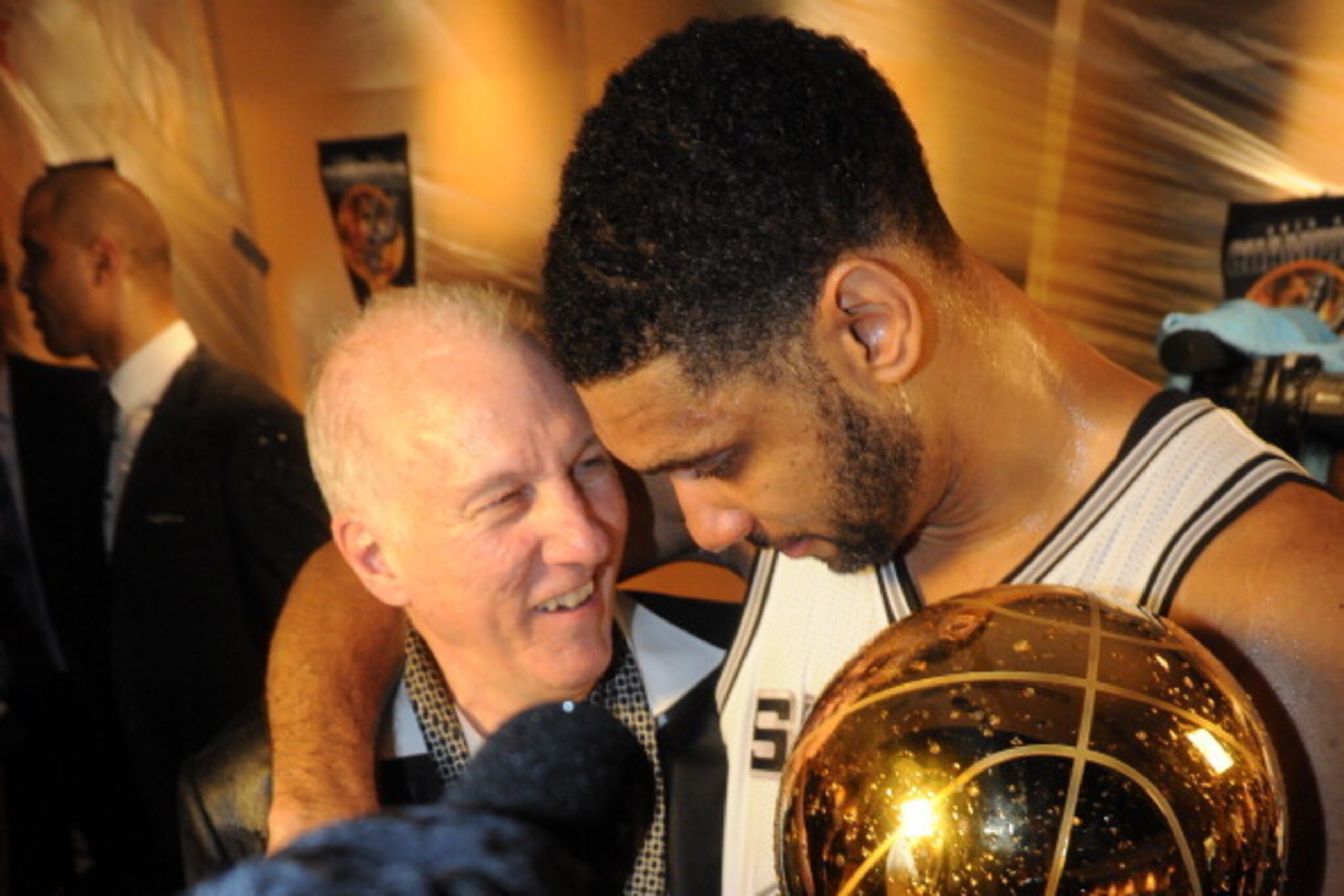
It's easier to maintain a sense of corporate identity when you somehow keep all of your core personnel for well over a decade. This season's roster is virtually identical to last year's, except for the addition of rookie Kyle Anderson.
"It'll be fun to have everybody back here and start up where we left off," Tim Duncan said at media day. "That'll be a huge boost for us in terms of not having to get reacclimated with whose role is what...and everything else. I think that brings a comfort level for us and for Pop and for everyone."
Continuity has bred connectivity in San Antonio, and that's produced results. En route to the fifth title of the Duncan-Popovich era, the trio of Duncan, Tony Parker and Manu Ginobili surpassed Los Angeles Lakers Magic Johnson, Kareem Abdul-Jabbar and Michael Cooper (110 wins) as the winningest Big Three in playoff history with 118 postseason wins.
Duncan became the first in league history to appear in the Finals as a starter in three different decades, a testament to longevity rarely witnessed in professional sports. An MVP in three of those Finals and 14-time All-Star, Duncan is entering his 18th season at age 38.
He passed Abdul-Jabbar in Game 4 of the Finals to become the all-time leader in postseason minutes, simultaneously a function of excellence and endurance. Duncan is daring time itself to slow him down, still anchoring the interior for basketball's best team at an incredibly high level.
The Spurs have won at least 50 games in each of their last 15 seasons—an NBA record—and cracked 60 in four of them. Even as the Lakers matched this team's dominance, they did so over the course of a decade—from 1999 to 2010—and with two distinct peaks.
The Lakers also built their dynasty with the likes of Kobe Bryant, O'Neal and Pau Gasol.
The Spurs built theirs with Duncan—and a different way of doing things.
Corporate Culture

No. 1 overall draft picks in 1987 (David Robinson) and 1997 (Duncan) shaped this franchise from the inside out. Their professional, team-first personalities had a viral effect, ultimately thriving under Popovich's no-nonsense regime.
Popovich himself originally joined the club as an assistant coach under Larry Brown in 1988—returning to the organization as general manager in 1994 and taking the coaching reins from Bob Hill early in the 1996-97 season.
"I knew he was going to be a great coach," Brown, now head coach at SMU, recently told Bleacher Report. "'Cause of the people he played for, the respect they had for him, the respect he has for the game and how much he wanted to do well.
"He's always prepared, a real hard worker, has this rare ability to get on guys, yet they know he's trying to coach 'em and get 'em better. I always felt if I had an opportunity, I was going to hire him."
Robinson, Duncan and Popovich made the franchise their own, and they made it distinctly unique.
"There should be an appreciation of differences," Popovich explained in June 2013, per ESPN.com's Kevin Arnovitz. "In players, in teams, in organizations, in how things are done."
In a league that prototypically markets over-the-top personalities, there's a real sense in which the muted Spurs are a countercultural operation—pioneering in their own understated, apolitical way. From Duncan to 2014 Finals MVP Kawhi Leonard, it's a humble crowd—proud but, at the end of the day, also nice.
Rare, yes, but not without inspiration.
An inspiration provided by Jerry Sloan's Utah Jazz.
"They weren't in a high-profile market, but they were incredibly consistent," general manager R.C. Buford told ESPN.com's Marc Stein in May. "They were incredibly competitive, defensively tough-minded and had a mentality that we knew we needed to get to. We knew we had to get tougher to get to their level.
"It wasn't so much style of play as it was the demeanor and the competitiveness and the consistency with which they kept their group together. We were also in similar markets, so it helped us to think, 'If they can do it, so can we.' It helped us believe there's no reason we can't be successful because we were in San Antonio."
The Spurs have built upon that model and coined one of their own, a professional and collective commitment to winning. No one complains about touches. Contract negotiations don't become sideshow subjects of contention. This operation is allergic to drama.
While Popovich himself may seem a tad misanthropic, the truth is he takes good care of those under his watch—one reason this house always seems to be in order.
"[The Spurs] took it to another level because of the way they treat people," Brown said. "I don't think anybody in the league treats their players any better than they do. They do everything in such a first-class way, the way Pop treats his players and his coaching staff and everybody connected with the organization. Nobody's like that."
So it's no surprise Popovich tends to distribute credit widely among his personnel—and those responsible for acquiring said personnel.
Mergers and Acquisitions

Buford—who debuted with the organization under Brown as an assistant coach in 1988—was eventually named GM in 2002 after rejoining the team as head scout in 1994. It's a partnership that has allowed San Antonio to consistently find and develop first-rate talent, even—if not especially—in places no one else is looking.
The Spurs turned to Argentina to find Ginobili with the 57th overall draft pick in 1999. And after looking to France and selecting Parker with the 28th overall pick in 2001, a precedent had been set. Buford and Co. were good at this. They used a keen scouting staff and outside-the-box thinking to zero in on the best talent abroad.
By now, San Antonio has virtually patented the strategy of drafting and subsequently stashing prospects overseas. It's a luxury few teams can afford given the pressures to introduce new talent.
But the Spurs' willingness to delay gratification continues to pay dividends.
The organization even dispatched an assistant to monitor Livio Jean-Charles' development in France. Jean-Charles was selected with the 28th overall pick in 2013, but it may be another couple of years before the 20-year-old makes his way to the NBA.
Davis Bertans, a 21-year-old Latvian selected 42nd overall in 2011, will continue his young career in Spain this season, similarly awaiting a potential debut with the Spurs.
They won't all becomes Ginobilis or Parkers, but the more modest success stories suggest San Antonio's talent base is as much a product of development as scouting.
The Spurs drafted Brazilian standout Tiago Splitter in 2007 and waited until 2010 for him to finish a successful career in Spain. In four seasons since, the 29-year-old is now a steady contributor and started in 116 regular-season games.
The roster's global composition—which also includes Boris Diaw (France), Patty Mills (Australia) and Marco Belinelli (Italy)—is an extension of its well-traveled coach.
"As coaches go, Popovich is a pretty worldly guy," wrote ESPN The Magazine's Seth Wickersham in June 2013. "He majored in Soviet studies at the Air Force Academy. He speaks Russian and Serbian. He played on military basketball teams during his stint in the armed forces, traveling Eastern Europe in the '70s."
Importantly, Wickersham added, "Even then, he knew that the foreign guys were a mostly untapped wealth of talent. So in the late '80s, as an assistant coach with the Spurs, Pop traveled to see the European championships in Cologne. The only other NBA coach there was Don Nelson."
While Buford deserves the lion's share of credit for building the team's global architecture, it has Popovich's fingerprints all over it.
By now, San Antonio's familiarity with foreign talent and penchant for integrating it has become one of this operation's chief competitive advantages, a way to find affordable talent others pass up.
It's just one of the things the Spurs do best.
Best Practices
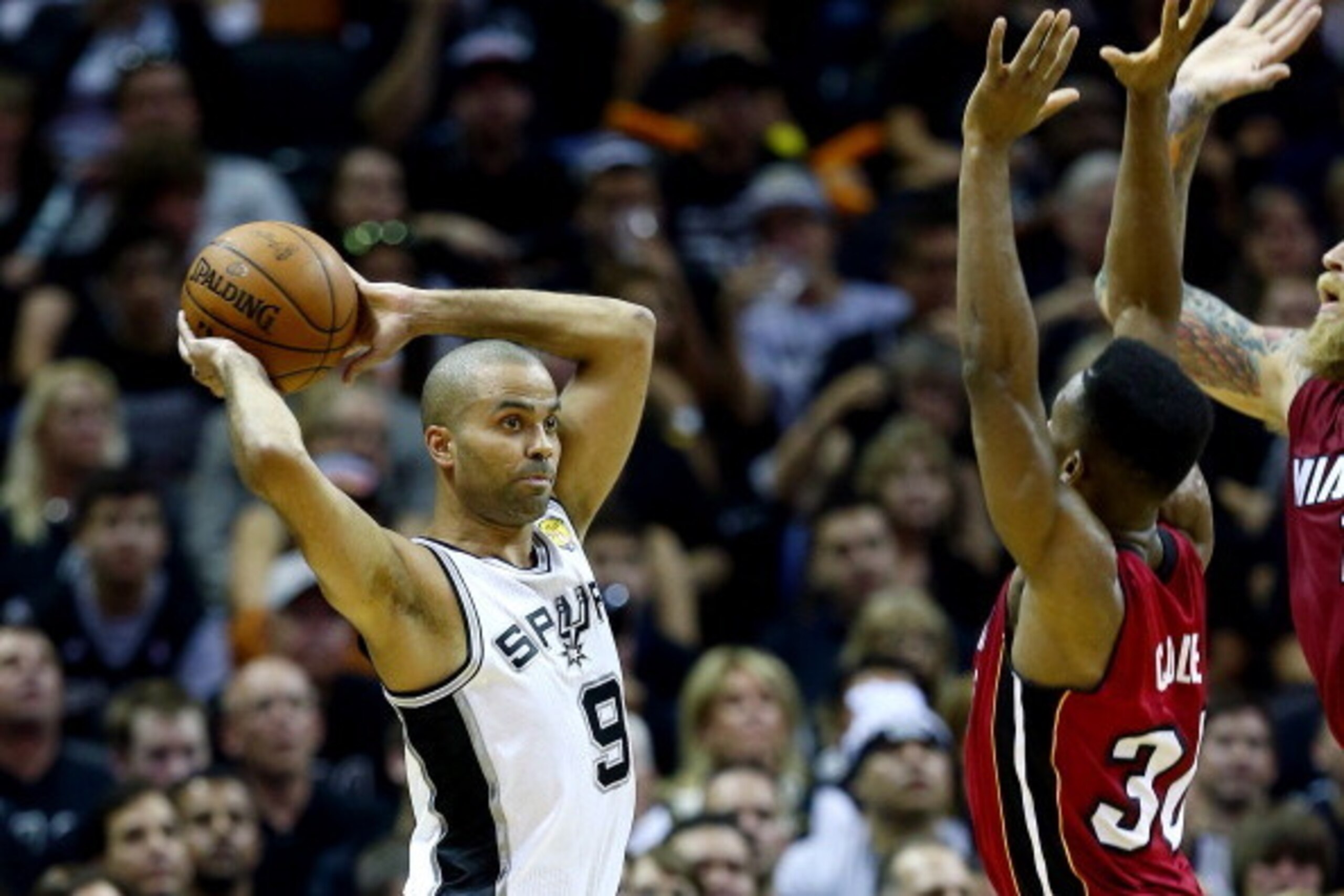
If you were playing a game of word association, "system" would probably make you think "Spurs."
The ball movement. The good-to-great shots produced thereby. The unselfishness and discipline, lofty intangibles often discussed and rarely embraced. The spartan yet harmonious execution is probably unmatched anywhere in the Association. And everyone does his job.
Grantland's Kirk Goldsberry posited in June that there's a reason for that.
"While Popovich and Buford both got trophies for their hard work this season, they had some help behind the scenes, and Buford suggests that the team's developmental coaches, [Chip] Engelland and Chad Forcier, deserve a lot of the credit," wrote Goldsberry.
"They are the guys who improve the jump shots and fix the free throws," he added. "They spend hundreds of hours with each player, fine-tuning their game and making sure they're ready to contribute when needed."
Popovich's cadre of assistants has undergone several iterations with success stories like Brett Brown and Mike Budenholzer finding teams of their own (the Philadelphia 76ers and Atlanta Hawks, respectively).
But this remains a staff that ensures the entire roster—top to bottom—is conditioned and ready to make an impact. It's why the 2013-14 Spurs were the only team in league history in which no player averaged 30 or more minutes per game.
"It's the way Pop likes to play," Buford told Goldsberry. "The way the bench played this year and the number of minutes they got was because [assistant coach] Chip Engelland and Pop have really been pushing our group to trust our bench. They brought us to where we are. We said, 'Let's not shorten the rotation the first time the clouds get dark.'"
Yes, San Antonio still has some formidable star power, too. Duncan, Parker and Ginobili have all—to varying degrees and at different times—been exceptional. And Leonard may be next.
Forecasts

How do you improve upon this kind of stuff?
In their predictable refusal of complacency, the Spurs added two new assistant coaches this summer: longtime European legend Ettore Messina and former WNBA standout Becky Hammon.
"They're two new faces, and they're going to try to get themselves acclimated, and it will be interesting to see what they bring to the table," Duncan said of the coaches at media day. "It'll be fun to add to our coaching staff, and Pop's really excited about it."
While the Daryl Moreys of the world look to add superstars, Buford and Co. choose to add perspectives.
And they chose to sign Popovich to a multiyear extension, likely ensuring the post-Duncan era begins on a stable foundation.
"Why would he leave?" Brown said. "He starts out with David and Sean [Elliott] and an unbelievable group. They develop a relationship. They get Parker and Ginobili. Tim is somebody that embraced everything the Spurs stand for, and he's the best coach. You've got the best coach, the best player, the best organization."
The Spurs will continue to evolve even as they remain so remarkably familiar. At least for now.
And one day soon, those Spurs will—for the first time in seemingly forever—look very different.
But with a personality that's been so deeply internalized and institutionalized at every level of the organization, a remnant of this era's greatness is likely to endure as if by shared DNA.
The Spurs of the future may seem strangely familiar, echoes of a legacy built by a forward-thinking coach, a humble superstar and—perhaps most importantly—a singular way of doing things.

.jpg?w=2560 "NFL House in Paris Closes for Protests")
.jpg?w=2560 "Trevon Diggs Cut by Seahawks")