
Power Ranking the Philadelphia Phillies and MLB's 25 Best Pitching Staffs Ever
Ranking the greatest anything of all time is not a simple task.
There are so many variables that must be taken into consideration when ranking an item over the course of time, that often, and in this case, teams that are probably deserving of a spot in the rankings are left out. When ranking MLB's greatest pitching staffs of all time, the first thing that must be questioned is, what is a pitching staff?
Baseball's pitching staff has changed so much over the course of time that it is extremely difficult to rank such great teams on an even keeled scale.
The first question you must consider is what constitutes a pitching staff? In today's game, a pitching staff is like an outline: five starting pitchers that rotate throughout the season, a corps of middle relievers usually limited to one inning, and the team's two best relievers stocked in the back of the bullpen as the eighth inning set-up man and closer in the ninth inning.
Twenty to 30 years ago, the game was a bit different. Starters were relied on deeper into the game, middle relievers were used more frequently, and closers were less important, but equally as vital.
Now, when you travel back 50 to 60 years, it was unusual for a good starter to not throw a complete game every time he took the mound.
So how is a pitching staff calculated in these rankings?
Firstly, the only time that a pitching staff in these rankings should be considered is the year in which they are listed. For example, a team like the Atlanta Braves had many different variations of that great staff in the '90s, but only the listed year is the one garnering the ranking.
One thing that hasn't changed over the course of baseball's illustrious history is the value of a pitcher. How valuable was a pitcher to the team's overall success, and how vital was a team's group of pitchers (the staff) to their overall success?
Sure, any number of SABRmetrics like WAR and FIP are okay barometers of a staff's value, but how valuable was that group of pitchers to their team in a select time period with completely different circumstances, to that of another time period? For that reason, a team's ranking will be defined by a number of things:
- Staff's overall talent.
- Staff's success.
- Depth of a staff.
With those factors in mind, where do the Philadelphia Phillies' "Four Horsemen" rank among the greatest staffs of all time?
25. 1998 San Diego Padres
1 of 25
Who made them great? Kevin Brown, Andy Ashby and Trevor Hoffman.
Kevin Brown was a San Diego Padre for just one year, but in 1998, he anchored a Padres staff that would challenge the New York Yankees in the World Series, before losing in disappointing fashion in four games.
Acquired from the Florida Marlins for first baseman Derrek Lee and other prospects, Brown was everything the doctor ordered for that Padres' staff. He had a very successful regular season in 1998, posting a record of 18-7 with an ERA of just 2.38, averaging 9.00 strikeouts per nine innings and walking just 1.72 batters per nine.
He generated an impressive 9.3 WAR, and despite slamming the Padres' media and fan base for cheering for Sammy Sosa during his home run chase, and blowing a save in a rare relief appearance in the 1998 NLCS, Brown was the cog of an impressive machine.
One of the more unheralded part of this Padres staff in 1998 was a man that had already spent four impressive years with the Friars, right handed pitcher, Andy Ashby. With Kevin Brown taking care of the San Diego media, Ashby posted an impressive 17-9 record to go with a 3.39 ERA, excelling as the second man in a rotation that took the National League by storm. Never known as a strikeout pitcher, good control and limiting the home run was something that Ashby, and this Padres staff as a whole, excelled in.
However, it wasn't the starting rotation that pitched the Padres into the playoffs, and eventually, the World Series. That recognition belonged to one of the greatest pure closers to every pitch in the game of baseball, right-hander, Trevor Hoffman. Hoffman was nearly unhittable in 1998, posting a K/9 of over 10, and walking just 2.59 men per nine innings.
Paired with a good fastball, Hoffman made hitters look foolish trying to swing at his change-up well into the '00s, but really had it working in 1998, helping himself to 53 saves and finishing 61 games for the Padres. With Hoffman lurking in the ninth inning, the Padres staff was that much better.
24. 2004 Boston Red Sox
2 of 25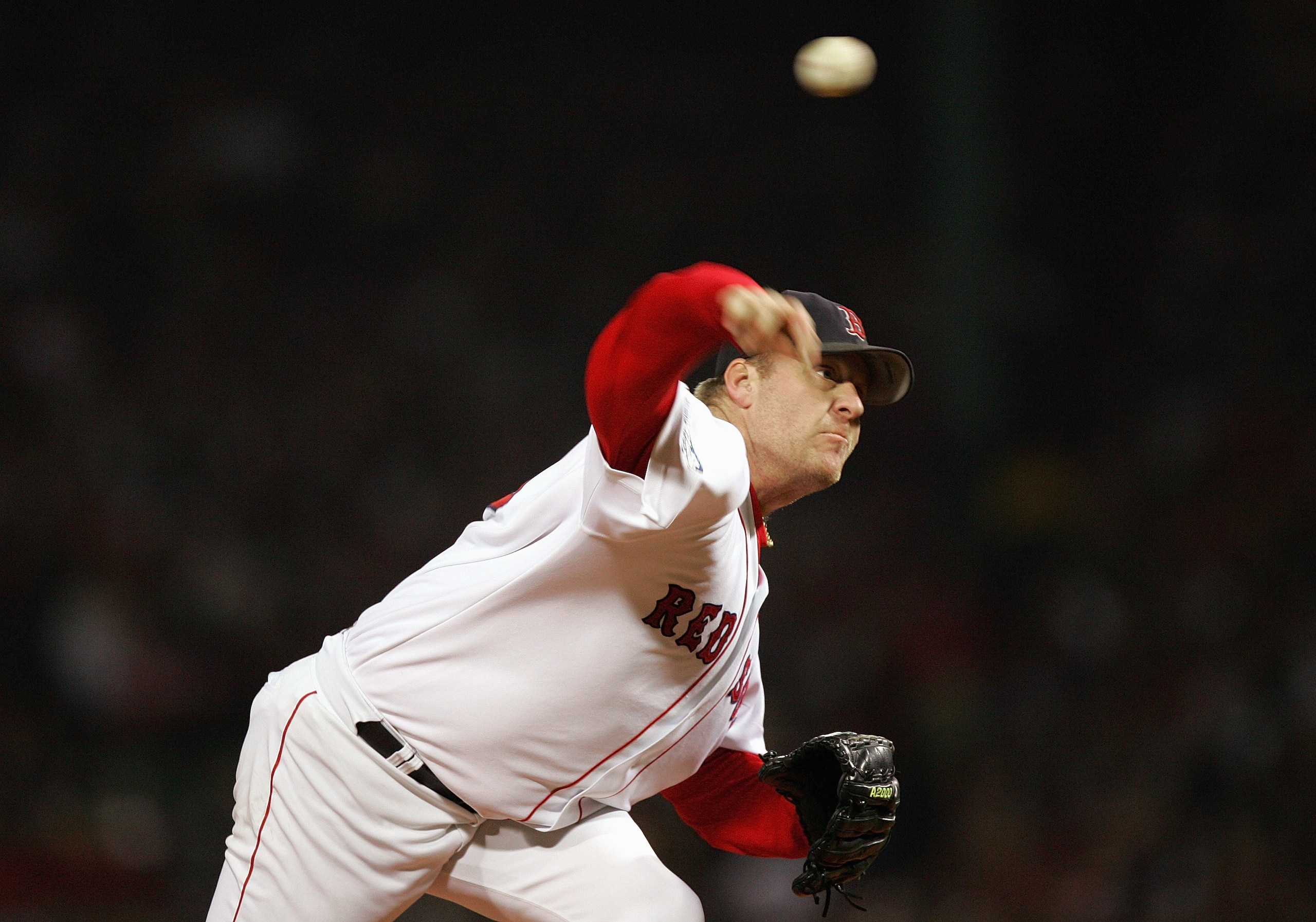
Who made them great? Curt Schilling, Pedro Martinez and Keith Foulke.
The 2004 Boston Red Sox will forever be remembered in baseball history as the team that broke the "curse," winning the World Series for the first time since trading Babe Ruth to the Yankees, and the first time in 86 years. However, it was stellar pitching that got the Red Sox to the World Series in the first place, led by a former World Series champion, trying to reach glory again.
Curt Schilling was everything the Red Sox hoped for when the acquired him from the Arizona Diamondbacks before the 2004 season. One thing that they felt the team desperately needed was a World Series veteran.
Schilling would prove to be much more than that, though, as he led the Red Sox pitching staff with a record of 21-6, to an ERA of 3.26, though his FIP suggested that his ERA should be closer to 3 at 3.11. He kept up his record of pinpoint control, walking just over a batter per nine innings, compiling a WAR of 7.3.
It would be wrong, however, to call him the "ace" of that staff. "Co-ace" is more acceptable, as the man pitching behind him was no slouch either. In fact, he was a Red Sox fan favorite by this point in his career.
The year before he would leave Boston for the New York Mets, Pedro Martinez pitched the Red Sox into the World Series, posting a record of 16-9 with an ERA of 3.90. Like Schilling, however, his FIP suggests that his ERA, if it were completely in his control, would have been around 3.58. He had a K/9 of 9.41, and walked just over two batters per nine, adding another 5.7 WAR to the Red Sox' staff.
Schilling and Martinez found comfort in knowing that by the time the ninth inning rolled around, they'd be handing the ball to one of the better closers from the 2004 season, right-hander Keith Foulke. Though he blew seven saves in 2004, Foulke still managed to convert 32 saves, posting an ERA of 2.17, and walking just over a batter per nine, while striking out 8.57.
What made the Red Sox most formidable, however, was the depth of their starting rotation. After Schilling and Martinez, the Sox three through five starters in the rotation consisted of knuckleball legend Tim Wakefield, and the future aces of the Atlanta Braves and Cincinnati staffs, Derek Lowe and Bronson Arroyo, respectively.
23. 2001 Arizona Diamondbacks
3 of 25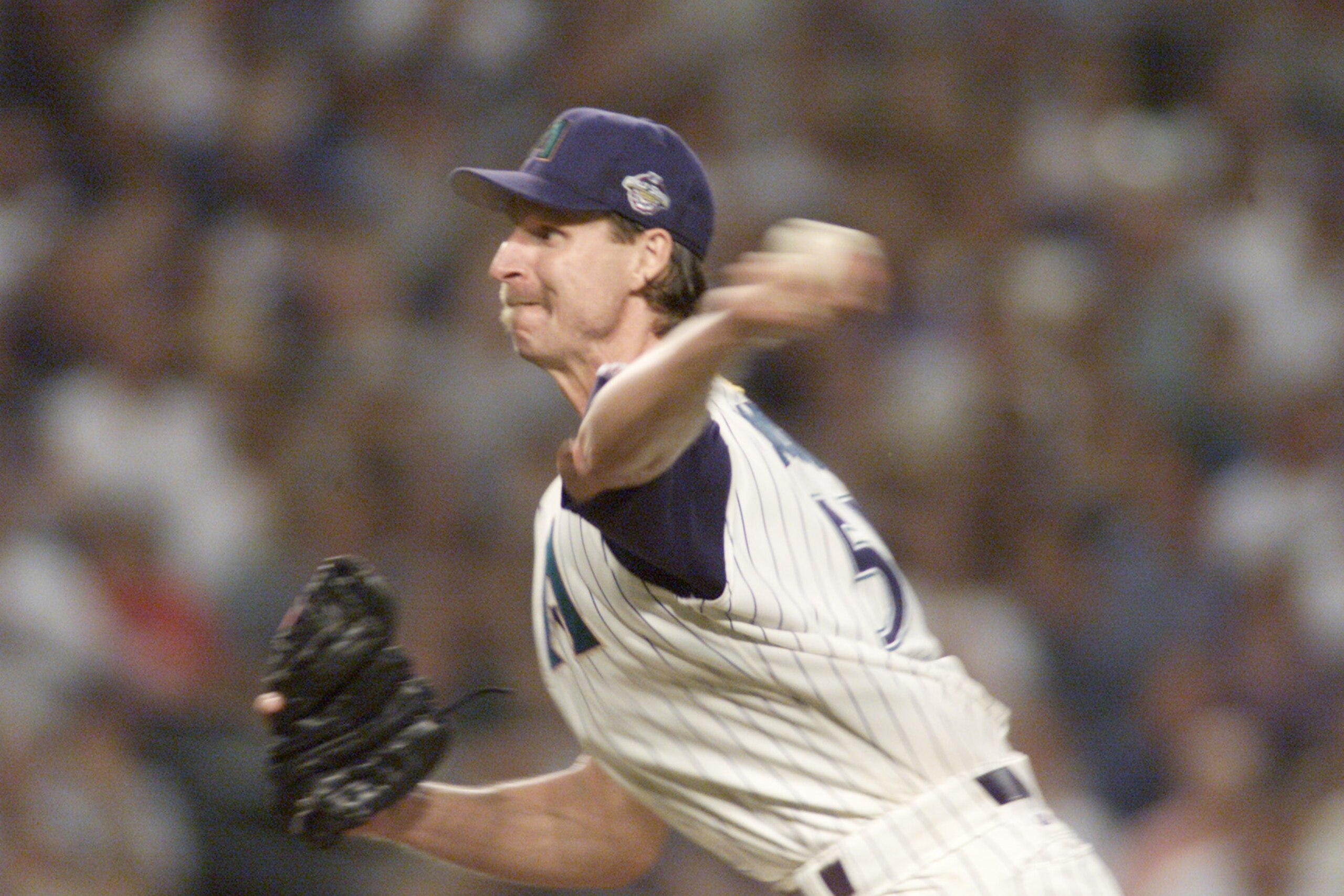
Who made them great? Curt Schilling, Randy Johnson and Byung-Hyun Kim.
He's back.
Very rarely can a rotation that features three unspectacular arms at the bottom and a closer-by-chance reliever be called one of the greatest of all time. However, when two dominant pitchers at the top of their game are anchoring said rotation and doing it with ease, it makes of the rest of the rotation, and the bullpen that follows, that much better.
A few years before he was achieving greatness with the Red Sox, Curt Schilling was the anchor of a Diamondbacks rotation that featured a Hall of Famer in Randy Johnson.
What made Schilling the ace? How about the ridiculous 22-6 record he posted in 2001, along with a pristine ERA of 2.98? Paired along with the fact that he struck out 10.27 guys per nine while walking just 1.37, it's simple to see why Schilling, and the top of the D-backs rotation for that matter, was untouchable in 2001. You'd have to face Schilling one night...
...and Johnson the next. Trying his hardest not to be outdone by Schilling, Johnson went 21-6 with an ERA of just 2.49 in 2001, with a FIP that suggests his ERA could have been around 2.11. He dominated the competition with his fastball and devastating slider, posting a K/9 of over 13.41, and a BB/9 of 2.56. He and Schilling combined to go 43-12, accounting for nearly half of the D-backs' wins.
One of the more pleasant surprises, aside from winning the World Series, of course, was closer Byung-Hyun Kim. Following two unimpressive seasons for the D'backs in years prior, Kim stepped up as the team's closer in 2001, posting a record of 5-6, but converting 19 saves with an ERA of 2.94. He turned what many considered to be a weak D-backs bullpen into a decent threat in the latter innings.

22. 2005 Chicago White Sox
4 of 25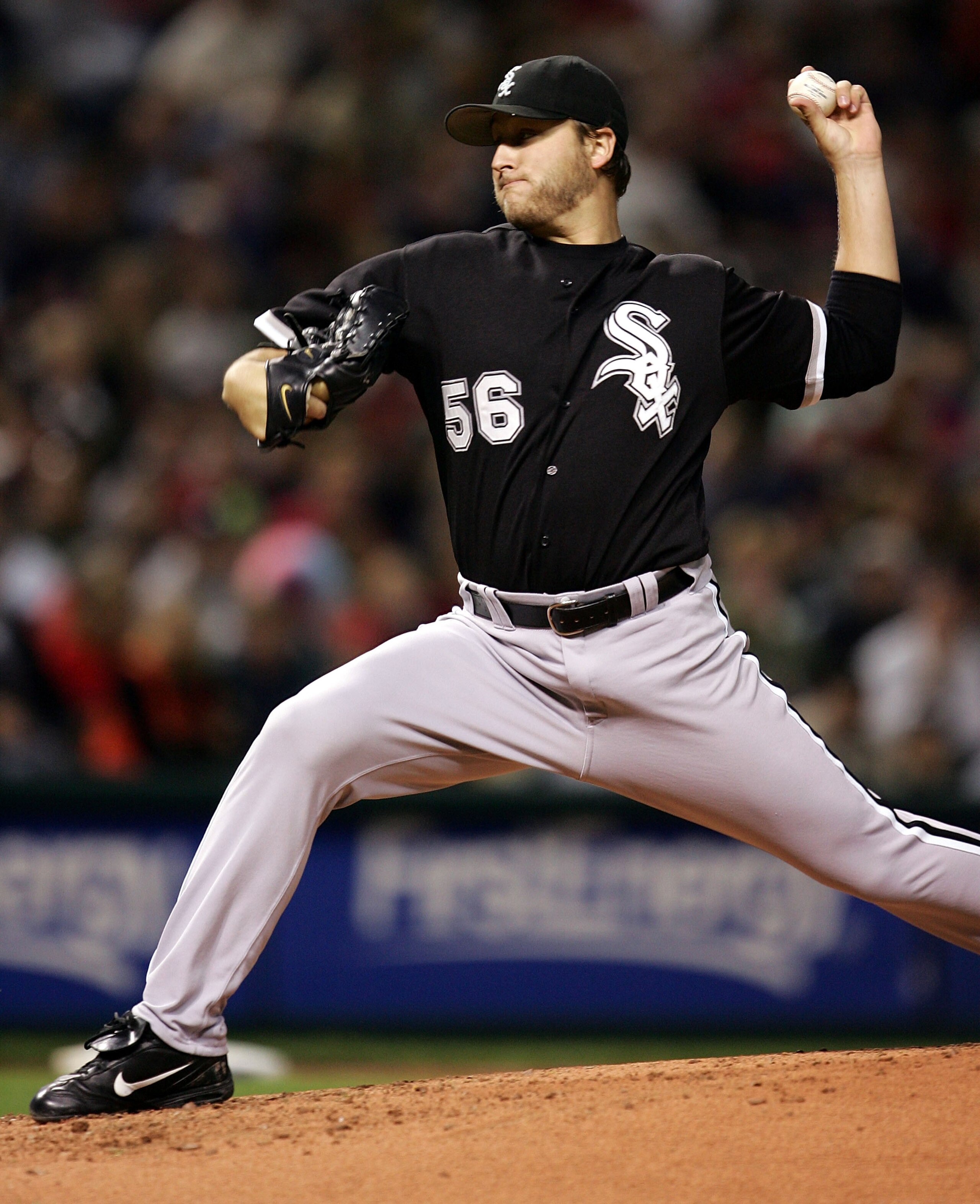
Who made them great? Mark Buehrle, Freddy Garcia, Jon Garland, Jose Contreras and Dustin Hermanson.
The 2005 Chicago White Sox have, easily, one of the most underrated pitching staffs of all-time. Though none of them were overly spectacular, they were one of the deepest rotations in the game, and really took it to the American League in 2005 on their way to the World Series.
The ace of the rotation is still a fixture on the Chicago White Sox today, left-hander Mark Buehrle.
Before his perfect game a few years later, Buehrle was one of the most consistent starting pitchers in baseball, and 2005 was no different. He showed pinpoint control in 2005, walking just over a batter per nine innings on his way to a 16-8 record, and an ERA of just 3.12. He was rarely taken out of the yard, with his HR/9 averaging just 0.76. He was equally as good in the postseason, a common factor among all of these starters.
Following Buehrle was a right=handed pitcher coming off of a few career years in Seattle. Though he has fallen apart since, Freddy Garcia was an integral part of the White Sox' 2005 World Series run. He joined Buehrle with double-digit wins, posting a record of 14-8 with an ERA of 3.87.
The third starter in the rotation, Jon Garland, was equally as impressive as the first two. Garland had, arguably, the best year of his career with the White Sox in 2005, winning 18 games, losing 10 and posting an ERA of 3.50. Never known as a strikeout pitcher, Garland really had the ground ball working in 2005, and as a result found great success in what is normally known as a hitter's ballpark.
However, it was the fourth starter in this rotation, Jose Contreras, who proved just how deep it was. After a few unimpressive seasons with the New York Yankees, Contreras came to Chicago and won 15 games as the No. 4 starter in the rotation. He posted an ERA of 3.61, and rounded out a strong front four from the Chicago White Sox. Each of their first four starters had wins in the double digits, ERAs below 4, and walked away with a World Series ring. Not bad, for one of the deepest rotations ever.
However, the man that is often overlooked is the closer, Dustin Hermanson. After several seasons for several different teams as a starting pitcher, Hermanson found real success with the White Sox as the team's closer. With just five blown saves, Hermanson converted 34 save opportunities, and posted an ERA of just 2.04.
With Buehrle, Garcia, Garland, and Contreras logging an average of seven innings per start, seeing Hermanson come in to the game in the ninth was a sign of things to come for the opposition—nothing, that is. All zeroes.
21. 1998 Houston Astros
5 of 25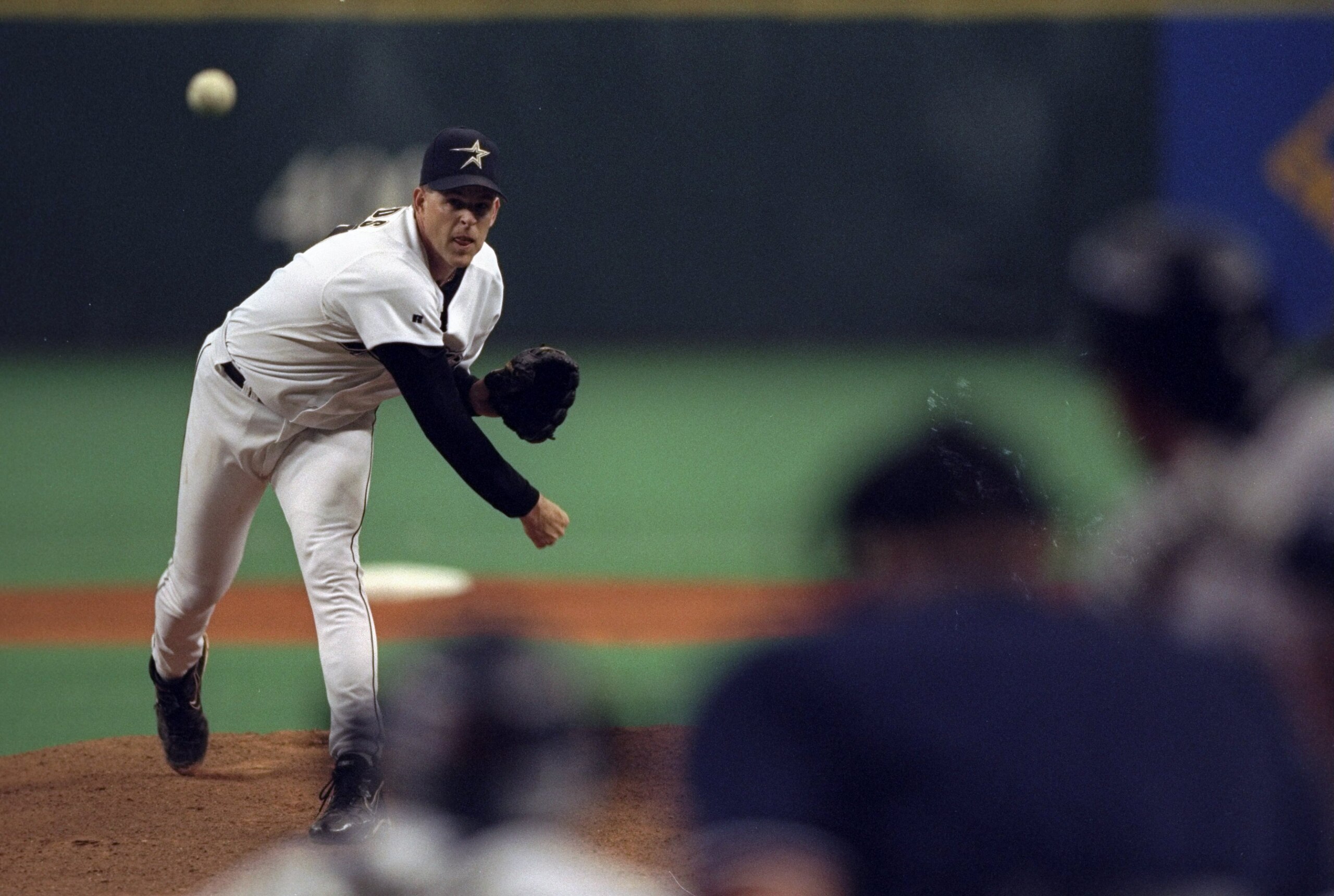
Who made them great? Shane Reynolds, Jose Lima, Mike Hampton, Sean Bergman, Randy Johnson, Doug Henry and Billy Wagner.
The 1998 campaign was a crazy season for professional baseball. If I told you that the Houston Astros finished the season with 102 wins, but didn't have the best record in baseball, you'd probably call me crazy. That's the truth, though. The New York Yankees (114) and the Atlanta Braves (106) both finished with more wins than the Astros. However, that didn't stop them from making their second consecutive trip to the playoffs as the only Houston Astros team to ever win 100 games.
Where the Yankees and Braves both made the postseason with a solid lineup, the Astros made the postseason, in large part, thanks to their deep pitching staff.
It all started with Shane Reynolds. Reynolds, who had been with the team since 1992, had won 16 games for the Astros in 1996, and after a down year in 1997 was expected to rebound in a big way. And he did. Reynolds posted a record of 19-8 for Houston, putting together an ERA of 3.51. He was experiencing a career year, striking out 8.06 batters per nine, a career high, and walking just over two. He logged 233 innings that year, proving to be the anchor of a very solid staff.
Following Reynolds was the late Jose Lima. Though he would go on to have his best year as a starter in 1999, Lima had a breakout year in 1998. Despite weak strikeout numbers, Lima showed good control, and featured good movement on all of his pitches, as he located his way to a record of 16-8 with an ERA of 3.70.
Joining Reynolds and Lima in the rotation to begin the 1998 season was a young, healthy, Mike Hampton. Just 25 years old in 1998, Hampton logged 211.2 innings as the third man in the Astros rotation, going 11-7 with an ERA of 3.36. With a low strikeout and high walk rate, Hampton's success was improbable, but he managed to keep the ball in the ballpark and strand runners on base.
It was one offseason acquisition, however, that would push the Astros pitching staff over the top.
On July 31, 1998, the Astros struck a deal with the Seattle Mariners, acquiring future Hall of Famer Randy Johnson for two future major league regulars, Freddy Garcia and Carlos Guillen.
Johnson would take the National League by storm, appearing in 11 games for the Astros and winning all but one of them. He would go 10-1 after being traded, and post a slim ERA of just 1.28. He had hitters clearly baffled, posting a better walk rate then he did in the American League, and striking out 12.38 National League hitters per nine, solidifying an already very good Astros rotation.
However, the success of the Astros staff didn't end with their starting rotation. The bullpen was also a very strong suit.
Two relievers really helped shut games down for the Astros, the first being middle reliever/set-up man, Doug Henry. Though walks were somewhat of a problem for Henry, he would go on to post a record of 8-2 out of the Astros bullpen, appearing in 72 games and posting an ERA of 3.04 while effectively setting the stage for the team's young, fireballing closer, Billy Wagner.
Entering his second full season as the team's closer, Wagner was as "lights out" as you could get. He finished the season with a record of 4-3, finishing 50 games for the Astros and picking up 30 saves, all the while putting together an impressive ERA of 2.70.
With a starting rotation that consisted of Reynolds, Lima, Johnson and Hampton, the Astros had no problems getting seven solid innings out of their starters, letting Henry and Wagner finish the job.
20. 1951 Cleveland Indians
6 of 25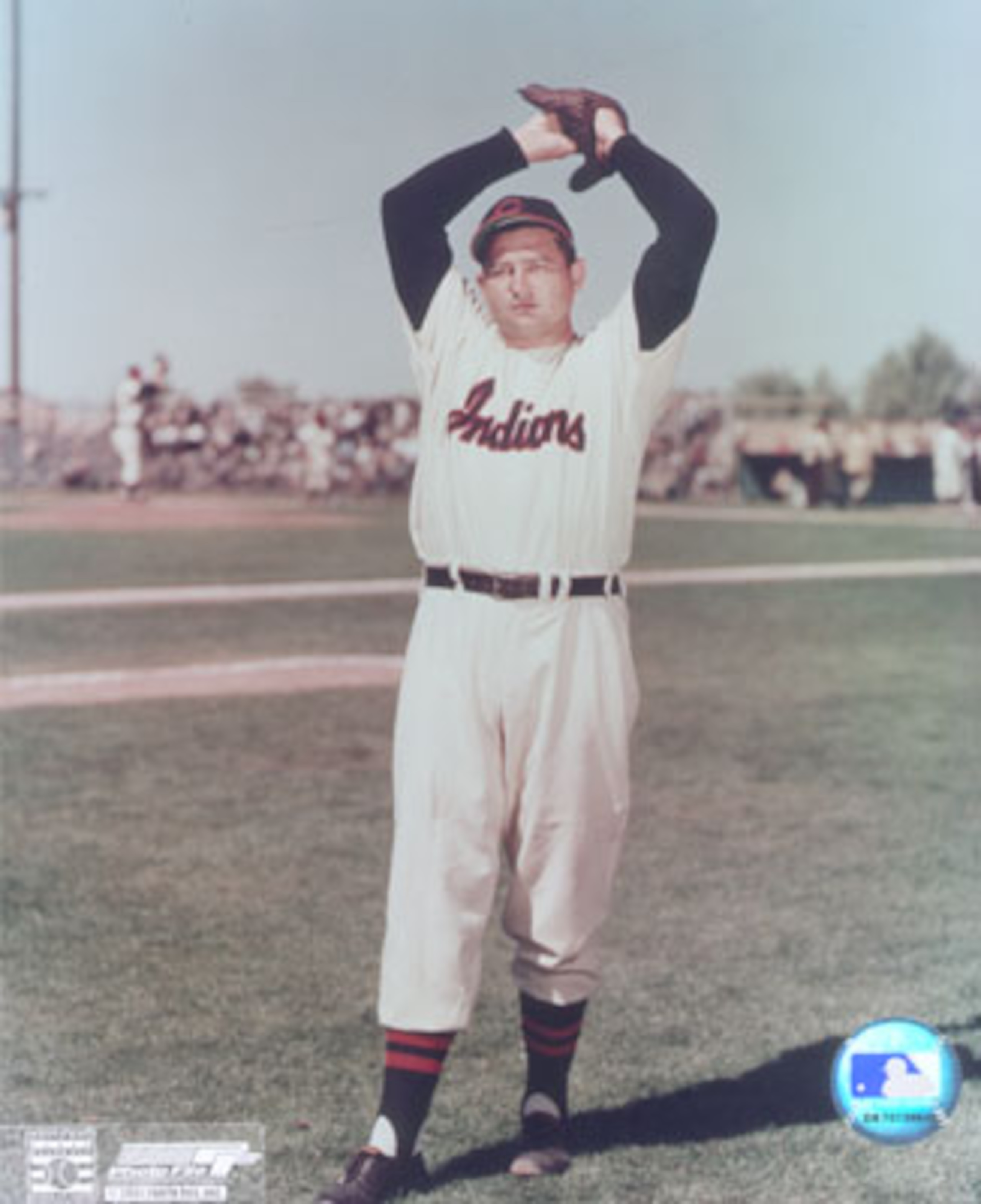
Who made them great? Early Wynn, Bob Lemon, Mike Garcia, Bob Feller and Lou Brissie.
When Bob Feller is your fourth starter, you know you're doing something right.
The success of this Cleveland Indians staff started with its ace, however, and that man was Early Wynn. With a perfect name for baseball, Wynn usually did guarantee the Indians and "early win." In 1951, he led the Indians, posting a record of 20-13, his first 20-win season, to go with an ERA of 3.02. In 274 innings of work, the ball rarely left the yard. Wynn's HR/9 rate was a minescule 0.56. Of course, parks were also much different back in 1951.
Following the Hall of Famer Wynn was yet another Hall of Famer, right-hander Bob Lemon. Though his best year was still a few seasons away, Lemon was an integral part of the 1951 staff. Following Wynn, he posted a record of 17-14, compiling an ERA of 3.52. A contact pitcher over most of his career, Lemon interestingly nearly as many walks as strikeouts, both averaging around four.
This staff would feature three Hall of Fame pitchers, but the unsung hero of sorts, and consequently, the pitcher not in the Hall of Fame was right-hander Mike Garcia. The second 20-game winner on this staff, Garcia would out-pitch Lemon, posting a record of 20-13 with an ERA just above three, at 3.15.
He featured better control than Lemon, and gave up fewer home runs than Wynn. One could make the argument that he could be called the ace of this 1951 staff. Though he started 30 games, he appeared in 47, also making appearances as a reliever and recording six saves. The man had an arm made of rubber.
Once you worked through the first three, two becoming members of the Hall of Fame, you had to face yet another eventual member of the Hall of Fame, recently departed right-hander Bob Feller. The third 20-game winner on this staff, Feller was 22-8, with an ERA of 3.50.
During the season, the Indians would partake in a three team trade including the Philadelphia Athletics and the Chicago White Sox, with another integral part of this staff eventually being sent to Cleveland, right hander, Lou Brissie.
Brissie was much better with the Indians than he was with the Athletics. With no real impressive season under his belt, he was a pleasant surprise. He appeared in 54 games for the Indians, posting a record of 4-3 with an ERA of 3.20, finishing 26 games.
19. 1995 Cleveland Indians
7 of 25
Who made them great? Dennis Martinez, Charles Nagy, Orel Hershiser, Eric Plunk, Julian Tavarez and Jose Mesa.
I know what you're thinking. The last slide featured an Indians staff that had three Hall of Famers and 20-game winners on it. What makes this one any better?
The simple answer is that they pitched in different time periods. Where as it was not uncommon for guys to throw a ton of innings and nab 20 wins in 1951, the 1995 Indians showed how a great, well-tuned pitching staff worked in today's version of the game, with a few great starters, but a bullpen that was flat out untouchable.
The first of those starters was right-handed pitcher Dennis Martinez. Nearing the end of his career in 1995, many believed that he was out of gas. However, Martinez proved to the baseball world that he could still win games and anchor a staff for a contending ball team, going 12-5 with an ERA of 3.08 in 187 innings, as the Indians returned to the World Series for the first time since 1954. Despite losing two games in the playoffs, Martinez pitched well, recording an ERA of just 2.74.
Joining him in the rotation was another right-handed starter, Charles Nagy. Having won 17 games just a few years prior, the potential was there. Though his ERA of 4.55 was rather unimpressive, he was good enough to win 16 games for the Indians, striking out more than seven batters per nine. His WAR of 3.4 proves that he was more valuable to the rotation than just his ERA suggests,
Another veteran starter really solidified this staff. Former Dodger and current broadcaster Orel Hershiser was a perfect fit on the 1995 Indians squad. In one of his best seasons since winning 23 games in 1988, Hershiser posted a record of 16-6, with an ERA of 3.87.
As great as these starters were, the strength of this pitching staff was not its starting rotation, but a dominant bullpen that feature three of the best arms the team offered: Eric Plunk, Julian Tavarez and Jose Mesa.
Plunk was a right-hander who appeared frequently in the middle innings for the Indians. Whereas most teams relied on their starters for seven strong innings, the presence of Plunk and the rest of this bullpen shortened that need. In 1995, Plunk posted a record of 6-2 with an ERA of 2.67. He struck out close to 10 batters per nine innings, and set the stage nicely for a dominant, young set-up man in the eighth inning.
That man was 22-year-old Julian Tavarez. Though he would bounce between the bullpen and starting rotation throughout his career, Tavarez broke onto the scene as a very good reliever in 1995. Appearing in 57 games and throwing 85 innings for the Indians, he posted a record of 10-2, with an ERA of just 2.44. He was viewed as a second closer, and for the opposition, that was bad news, especially since the man he was setting the stage for would have one of the best years of his career in 1995.
Though he struggled in years prior to 1995 and years after, Jose Mesa would turn in one of the most impressive seasons from a closer in the '90s. Appearing in 62 games and logging 64 innings, Mesa would post a record of 3-0 with an ERA of just 1.13, saving 46 games for the Tribe.
When the Indians sent a tough starter like Martinez, Nagy, or Hershiser to the mound, there was a high probability of facing some combination of that fearsome bullpen, and on a night where Plunk, Tavarez and Mesa were all available, a lot of the opposition's regulars took early showers.
18. 2003 Chicago Cubs
8 of 25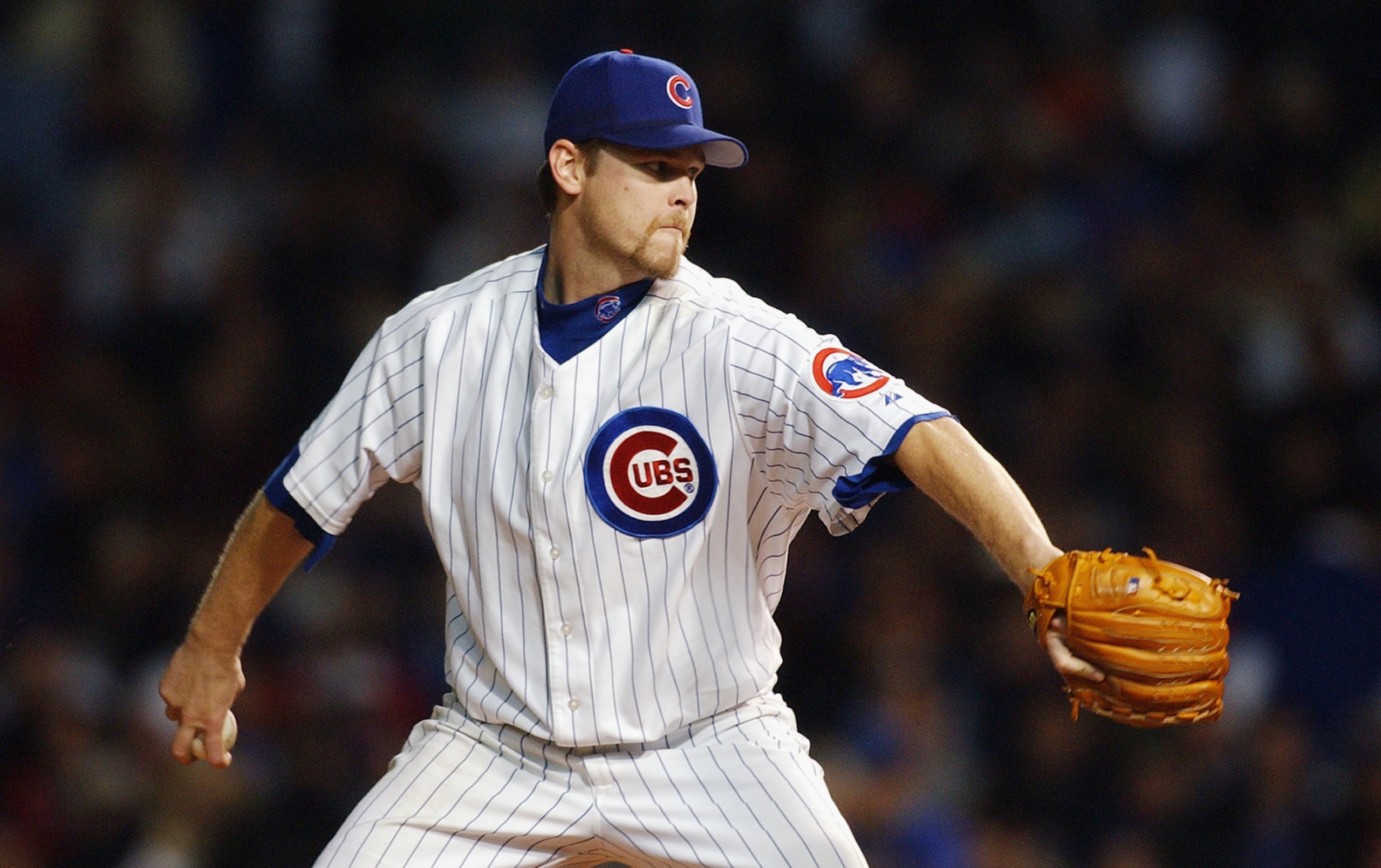
Who made them great? Carlos Zambrano, Kerry Wood, Mark Prior, Mark Guthrie, Mike Remlinger, Kyle Farnsworth and Joe Borowski.
Like many of the teams that precede the Cubs, the combination of a great starting rotation and a very good bullpen gave the Cubs one of the better pitching staffs in recent memory. The starting rotation of that staff featured a three-headed monster that terrorized the National League Central: Carlos Zambrano, Kerry Wood and Mark Prior.
Zambrano, just 22 in 2003, quickly emerged as one of the best starters in baseball. In his first full season as a starter, Zambrano logged 214 innings, pitching to a record of 13-11, while posting an ERA of 3.11. Despite winning 18 games a few years later, Zambrano's 4.9 WAR in 2003 was the highest of his career. "Big Z," as he is called, gave up just nine home runs in 2003, while striking out just over seven games per nine innings.
Wood was the eldest of the big three, but even then, he was just 26 years old. He posted a record of 14-11 in 211 innings, with an ERA of 3.20. One of the best strikeout pitchers in the game in 2003, he recorded a K/9 of 11.35, despite having control issues and walking over four batters per nine innings.
Perhaps the best starter in the rotation was another young gun, 22-year-old Mark Prior. Like Stephen Strasburg in today's baseball world, there was a ton of hype surrounding Prior, heralded as one of the greatest pitching prospects of all-time. In just his second season, Prior posted a record of 18-6, and an ERA of just 2.43. Like Wood, strikeouts played a large part in his success, though his control was much better than Wood's. He had the greatest value of the three starters, with a WAR of 7.6.
The Cubs bullpen rounded out one of the best staffs of the 2000s. Among the highlights of that bullpen included relievers Kyle Farnsworth, Mark Guthrie and Mike Remlinger, as well as closer Joe Borowski.
Farnsworth was the definition of reliable out of Chicago's bullpen in 2003, appearing in 77 games for the Cubs, posting an ERA of 3.30. Remlinger was signed by the Cubs following a very successful 2002 season, and though he wasn't as successful, he was a valuable asset out of the bullpen, striking out over ten batters per nine. Control was his downfall, as he walked over five batters per nine.
The most successful season out of the middle relief corps came from left hander Mark Guthrie. Appearing in 65 games as a lefty specialist, Guthrie posted an ERA of just 2.74, stranding over 90 percent of runners on base.
The team's closer in 2003 is often lost in the luster behind names like Mark Prior and Kerry Wood. That man is Joe Borowski. Striking out over eight batters per nine while walking just above two, Borowski recorded 33 saves for the Cubs and appeared in 68 games. He recorded an ERA of 2.63, capping off a very talented Cubs pitching staff.
17. 1973 Oakland Athletics
9 of 25
Who made them great? Ken Holtzman, Vida Blue, Catfish Hunter and Rollie Fingers.
The talent that this A's staff possessed was simply extraordinary. So when names like Blue Moon Odom and Dave Hamilton are at the back of your rotation having "down" years, it's no surprise that the 1973 Oakland Athletics were World Series champions. But who got them there?
At the forefront of the A's talented staff was 27-year-old left-hander Ken Holtzman. He was a horse for the A's, logging 297 innings and posting a record of 21-13, with an ERA of 2.97. Hotlzman had good control, and though he wasn't a strikeout pitcher, he gave up few home runs. The opposition hit just .247 against him.
Following Holtzman in the rotation was another young gun and 20-game winner, 23-year-old left hander Vida Blue. He had one of his best years in 1973, posting a record of 20-9 and an ERA of 3.28. Like Holtzman, he was not an overpowering pitcher, but he had good movement and control over all of his pitches, so when the opposition made contact, the ball didn't go far. The opposition hit just .223 against him.
With two 20-game winners at the helm, the man who may have had the best year was 27-year-old right hander Catfish Hunter. On the way to his third straight (of five straight) 20-win seasons, Hunter went 21-5, with an ERA of 3.34. Though he was somewhat prone to the home run, he didn't give up much else. Opponents hit just .235 against him.
One of the unsung heroes of this pitching staff, however, came out of the bullpen. The team's closer, 26-year-old right hander Rollie Fingers, had an excellent season out of the A's bullpen. He posted a record of 7-8 to go with an ERA of just 1.92, converting 22 saves for the A's. Though, with the strength of their rotation, opportunities weren't all that frequent.
16. 2002 Oakland Athletics
10 of 25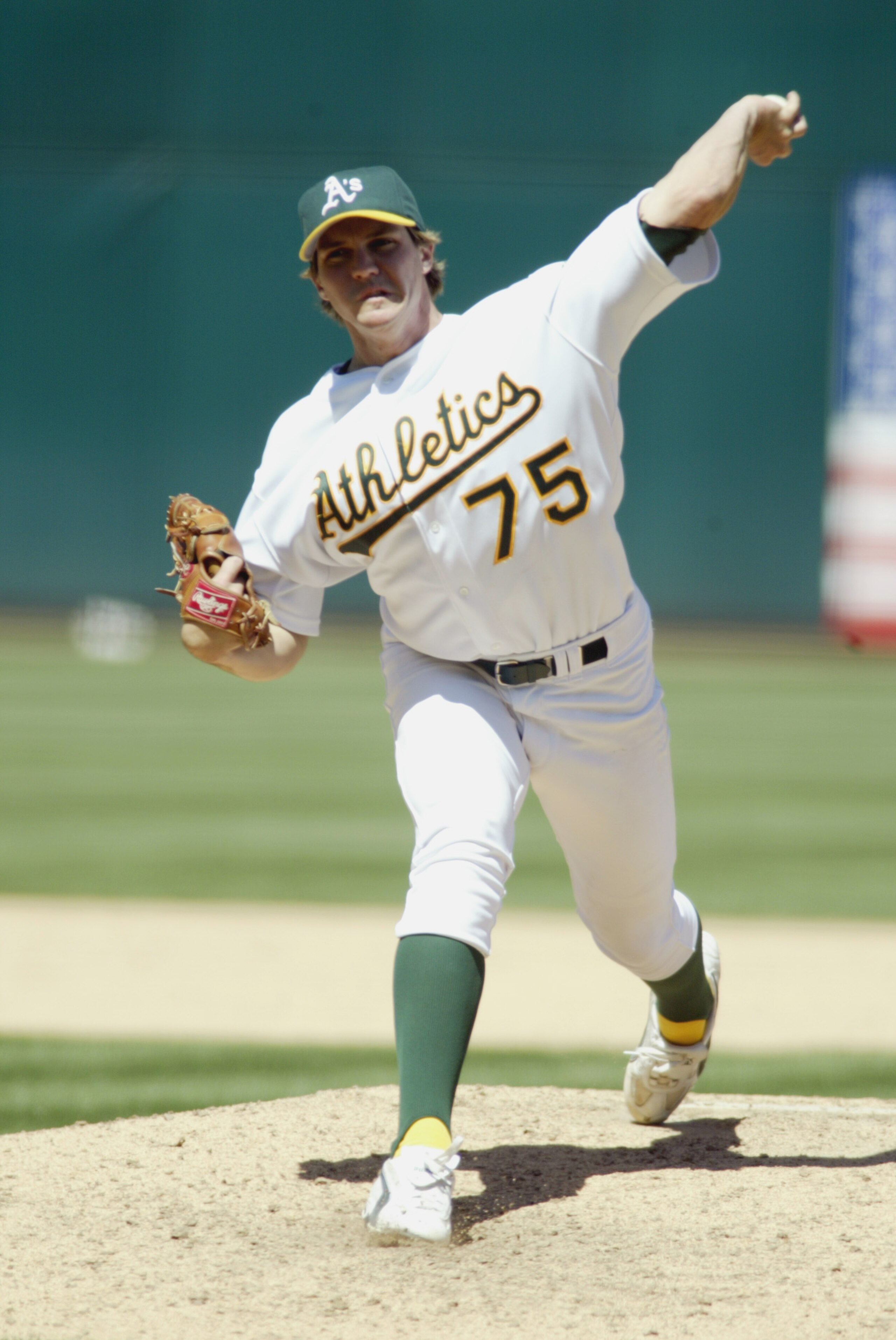
Who made them great? Tim Hudson, Barry Zito, Mark Mulder and Billy Koch.
Before he became a fixture in the Braves rotation, Tim Hudson was part of a three-headed monster in Oakland that rivaled those of the 1970s. In 2002, Hudson posted a record of 15-9 to go with an ERA of 2.98. He didn't overpower hitters, striking out just over five batters per nine innings, but he was able to induce a ground ball with great frequency, a rate of 55.4 percent. Opponents hit just .261 against him.
Joining him in the rotation was the best pitcher in the American League in 2002, Cy Young Award winner Barry Zito. A few seasons before he signed one of the worst free-agent contracts in the history of baseball, Zito was basically untouchable. He posted a record of 23-5 with an ERA of just 2.75. Though he was never a strikeout pitcher, Zito punched out sever batters per nine innings. In 229 innings, the opposition hit just .220 against him, as he put together the best season of his career.
The third head in this rotation belonged to Mark Mulder. Before injuries forced him to retire early, Mulder was one of the best pitchers in the American League. In 2002, he posted a record of 19-7 and an ERA of 3.47. Like Hudson, he posted strong ground ball rates, and when the ball was put in play, it was usually hit toward a defender. The opposition hit just .237 against him.
Highlighting a strong bullpen was the team's closer, right-hander Billy Koch. Though it's unusual for a closer to record double digits in wins, that's exactly what Kotch did, posting a record of 11-4, and an ERA of 3.27. He posted strikeout rates higher than any of the three starters, striking out over eight batters per nine innings. Though control was somewhat of an issue, he was still able to strand 75 percent of his runners on base.
15. 2010 Philadelphia Phillies
11 of 25
Who made them great? Roy Halladay, Cole Hamels, Roy Oswalt, Ryan Madson and Brad Lidge.
In his first year in the National League, Roy Halladay sure did not disappoint. On his way to collecting the National League Cy Young Award, Halladay threw two no-hitters, one of which was a perfect game, the second of which came in his first ever postseason appearance.
He posted a record of 21-11, his third 20-win season, and an ERA of just 2.44. He continued to do what he does best—show pinpoint control. He also struck out over seven batters per nine innings, with the opposition hitting just .246 against him.
In 2008, the Phillies had a young ace named Cole Hamels. After a down year in 2009, people weren't sure what to expect out of him in 2010. However, a tweak to his pitching mechanics and the addition of a cutter to his repertoire showed that Hamels was here to stay. Despite finishing towards the bottom of the league in run support, he still managed to post a record of 12-11, compiling an ERA of just 3.06. He struck out more than nine batters per nine innings, and the opposition hit just .239 against him.
The Phillies received a shot in the arm when they acquired Roy Oswalt at the trade deadline. Once he donned a Phillies uniform, he caught fire. Making 13 starts for the Phillies, Oswalt posted a record of 7-1, gathering an ERA of just 1.74 with Philadelphia and an ERA of 2.76 for the season. Perhaps the best starter down the stretch, the opposition hit just .185 against him, earning the rotation the moniker of "H2O."
The Phillies pitching staff featured a strong, underrated back of the bullpen. The eighth inning featured talented set-up man Ryan Madson. Posting a record of 6-2, Madson was equally as tough against left-handed hitters as he was against right-handed hitters. He compiled an ERA of just 2.55, striking out more than ten batters per nine innings, setting the stage effectively for the closer.
That closer, of course, was Brad Lidge. Two seasons removed from a perfect year as the Phillies closer, Lidge struggled through all of 2009, citing injuries as the source. A healthy Lidge made a return in 2010, and by the end of the season, he was unhittable. He posted a record of 1-1, with an ERA of 2.96. He converted 27 saves for the Phillies, striking out more than 10 batters per nine innings. Despite walking more than four batters per nine, he managed to leave them on base, posting a rate of 82 percent LOB.
14. 2010 San Francisco Giants
12 of 25
Who made them great? Tim Lincecum, Matt Cain, Jonathan Sanchez, Madison Bumgarner, Sergio Romo and Brian Wilson.
It is very rare to have two great rotations manifest in the same season, but the Philadelphia Phillies and San Francisco Giants of 2010 were very comparable staffs. In fact, while the Phillies' front three may be stronger, the depth of the Giants rotation and bullpen gave them a slight edge in 2010. Winning the World Series, of course, doesn't hurt either.
At the head of that rotation was young right-hander Tim Lincecum. Though it wasn't his best of years, he managed to post a record of 16-10, with an ERA of 3.43. In 212 innings, he struck out close to 10 batters per nine innings, and the opposition managed to hit just .245 against him. He was equally as good in his first postseason, posting a record of 4-1 with an ERA of just 2.43.
Joining him in the rotation was highly underrated right hander, Matt Cain. His 13-11 record was somewhat misleading, as he posted an ERA of 3.14, along with strong strikeout (7.13 K/9) and walk (2.46) rates. He gave up the home run ball on very rare occassions, and the opposition managed to hit just .223 against him overall.
The third member of the rotation featured a talented young left-hander Jonathan Sanchez. He posted a record of 13-9, compiling an ERA of 3.07. Striking out close to 10 batters per nine innings, he is the type of pitcher that must overpower a hitter to excel. For that reason, a walk rate close to five was his downfall in 2010. With that being said, he is the owner of a no-hitter in his career, and the opposition does not enjoy facing him. They hit just .207 against him in 2010.
Also breaking into the rotation in 2010 was a young left-hander named Madison Bumgarner. A highly touted prospect in year's prior, he was one of the best No. 4 starters in the league in 2010. Though he posted a record of 7-6, he compiled an ERA of 3.00, proving to be a strong complement to the strong right-handers at the top of the rotation.
The greatest strength of this Giants staff, however, was their bullpen.
One of the best, most reliable relievers throughout the 2010 season was right-hander Sergio Romo. Romo posted a record of 5-3 in 2010, to go with a very strong ERA of 2.18. He struck out over 10 batters per nine innings while walking just over two, strong rates out of a reliever. In 62 innings out of the Giants bullpen, the opposition hit just .208 against him.
The best reliever on this staff, and in baseball, was right-handed closer Brian Wilson. Known for his crazy beard and wild antics on the mound, Wilson posted a record of 3-3, converting 48 saves while posting an ERA of 1.81. He struck out more than 11 batters per nine innings, and stranded over 86 percent of his runners on base.
13. 1990 Oakland Athletics
13 of 25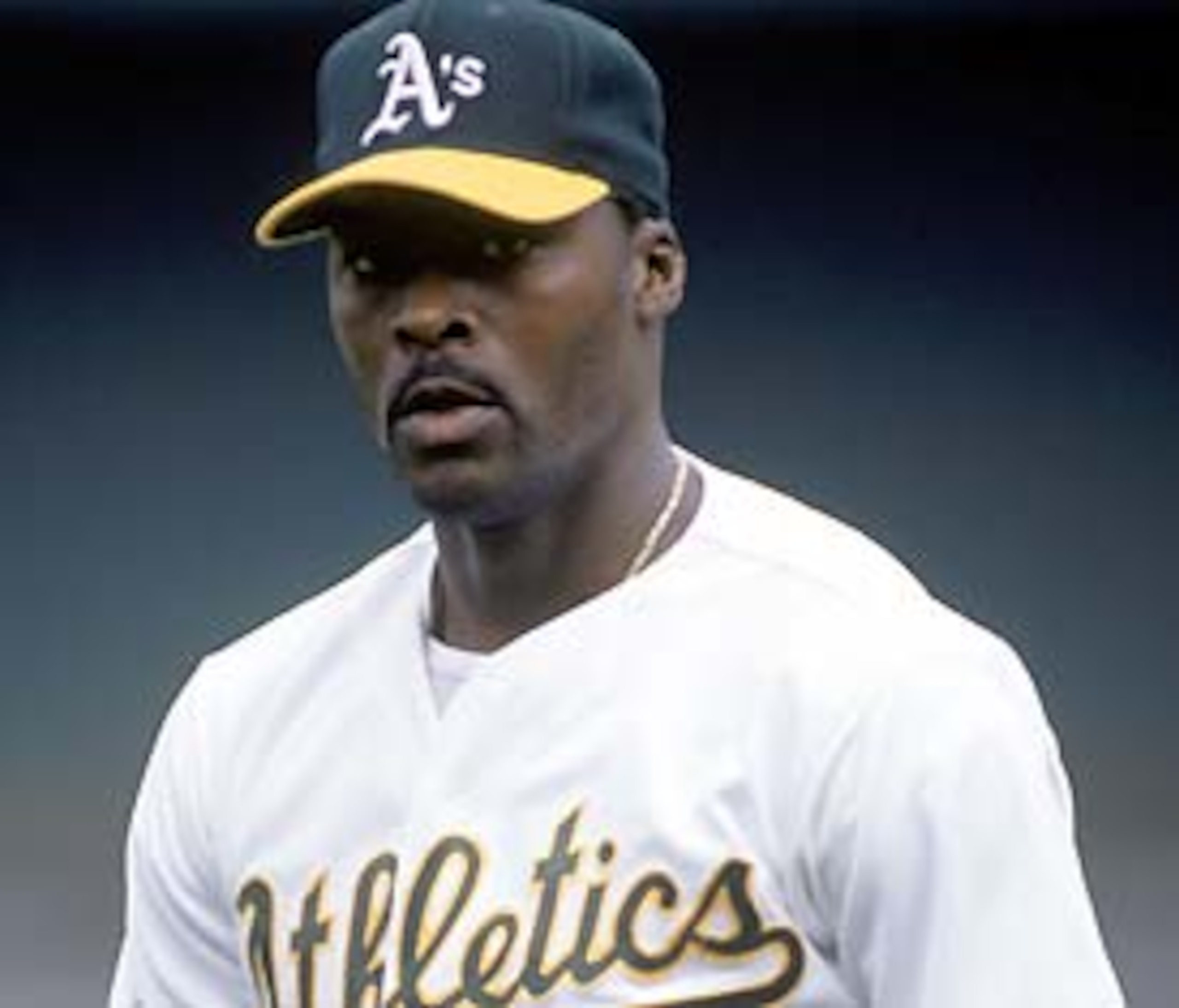
Who made them great? Dave Stewart, Bob Welch, Scott Sanderson and Dennis Eckersley.
It shouldn't be a surprise to see the A's appearing on this list so many times. They put together, over the course of their history, some of the greatest staffs of all time. That includes the A's staff of 1990, which saw four pitchers simply dominate different aspects of the game.
The first of those pitchers was right-hander Dave Stewart. Entering the 1990 season, Stewart was coming off of three straight 20-win seasons. In 1990, he posted a record of 22-11, with an ERA of 2.56. He showed great control, and was rarely taken out of the ball park. The opposition hit just .230 against him, and he threw a no-hitter against the Toronto Blue Jays on June 29, 1990.
However, the greatest A's pitcher on this staff was the winner of the Cy Young Award in 1990, right-hander Bob Welch. He posted an incredible record of 27-5 in 1990, and an equally impressive ERA of 2.95. In 238 innings, the opposition hit just .242 against him.
Joining them in the rotation was veteran right-hander Scott Sanderson. In his only season with the A's, Sanderson posted a record of 17-11, and an ERA of 3.88 in 208 innings.
Coming out of the bullpen was starter-turned-reliever Dennis Eckersley. He had one of his greatest seasons as a reliever in 1990, slamming the door right in the opponent's face. He posted a record of 4-2, converting 48 saves for the A's, compiling an ERA of just 0.61. He rarely walked anyone, fewer than a batter per nine innings, and struck out close to nine hitters per nine. The opposition hit just .165 against him in 1990. He was virtually, like the rest of this staff, untouchable.
12. 1911 New York Giants
14 of 25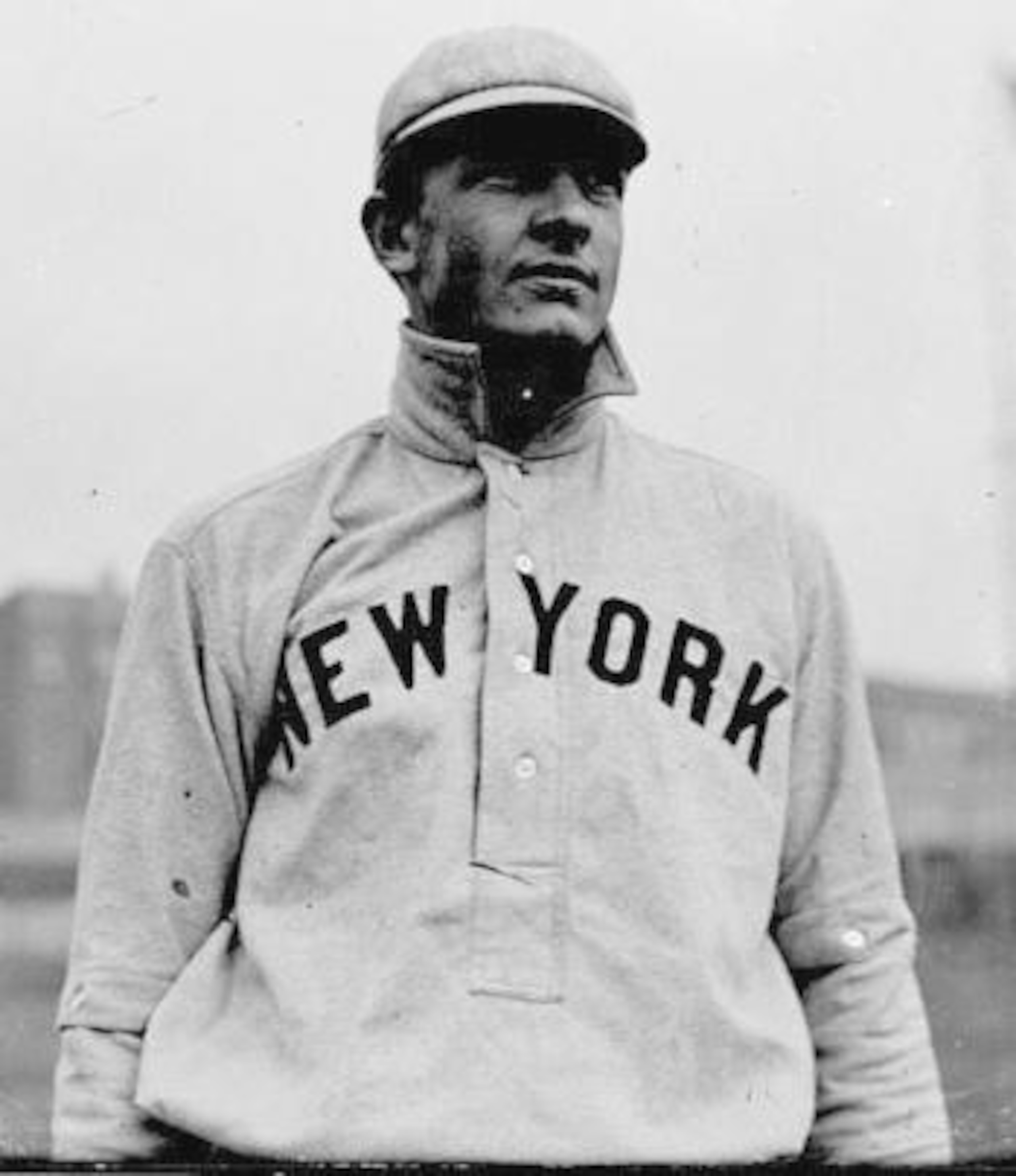
Who made them great? Christy Mathewson, Rube Marquard, Red Ames and Hooks Wiltse.
Any staff that features the likes of Christy Mathewson can be considered one of the greatest of all-time, as the man was somewhat like a starting rotation all by himself. We're talking about a man who won over 30 games three times in his career, so by Mathewson's standards, a record of 26-13 in 1911 was a bit of a down year.
In 307 innings for the New York Giants in 1911, Mathewson compiled an ERA of just 1.99. He gave up just five home runs, and the opposition hit just .254 against him. He was one of the greatest pitchers in the history of baseball, and when you pair that with a few more great pitchers, you have one scary staff.
When Mathewson wasn't pitching, which seemed like every day, a left hander by the name of Rube Marquard took the hill. He posted a record of 24-7 for the Giants in 1911, paired with an ERA of just 2.50.
In a time where strikeouts weren't a large part of the game, Marquard punched out seven batters per nine innings, and like Mathewson, hardly ever gave up a home run. Take in to account the fact that Matthewson and Marquard combined to post a record of 50-20. The New York Giants won 99 games in 1911, and Mathewson and Marquard won more than half of their games.
A third starter was equally as good for the Giants in 1911, though his record may not suggest that. Red Ames posted a record of 11-10 behind Mathewson and Marquard, as both a starter and a reliever. He compiled an ERA of 2.68. Interestingly enough, he didn't give up a single home run in 1911, striking out just over five batters per nine innings. The opposition hit just .227 against him.
Like Ames, the Giants used a left-hander named Hooks Wiltse in much of the same fashion. He started and appeared in relief for the Giants, posting a record of 12-9, with an ERA of 3.27. Like the rest of this staff, he posted strong strikeout rates for the time, hardly walked anyone, and gave up very few home runs.
11. 1978 New York Yankees
15 of 25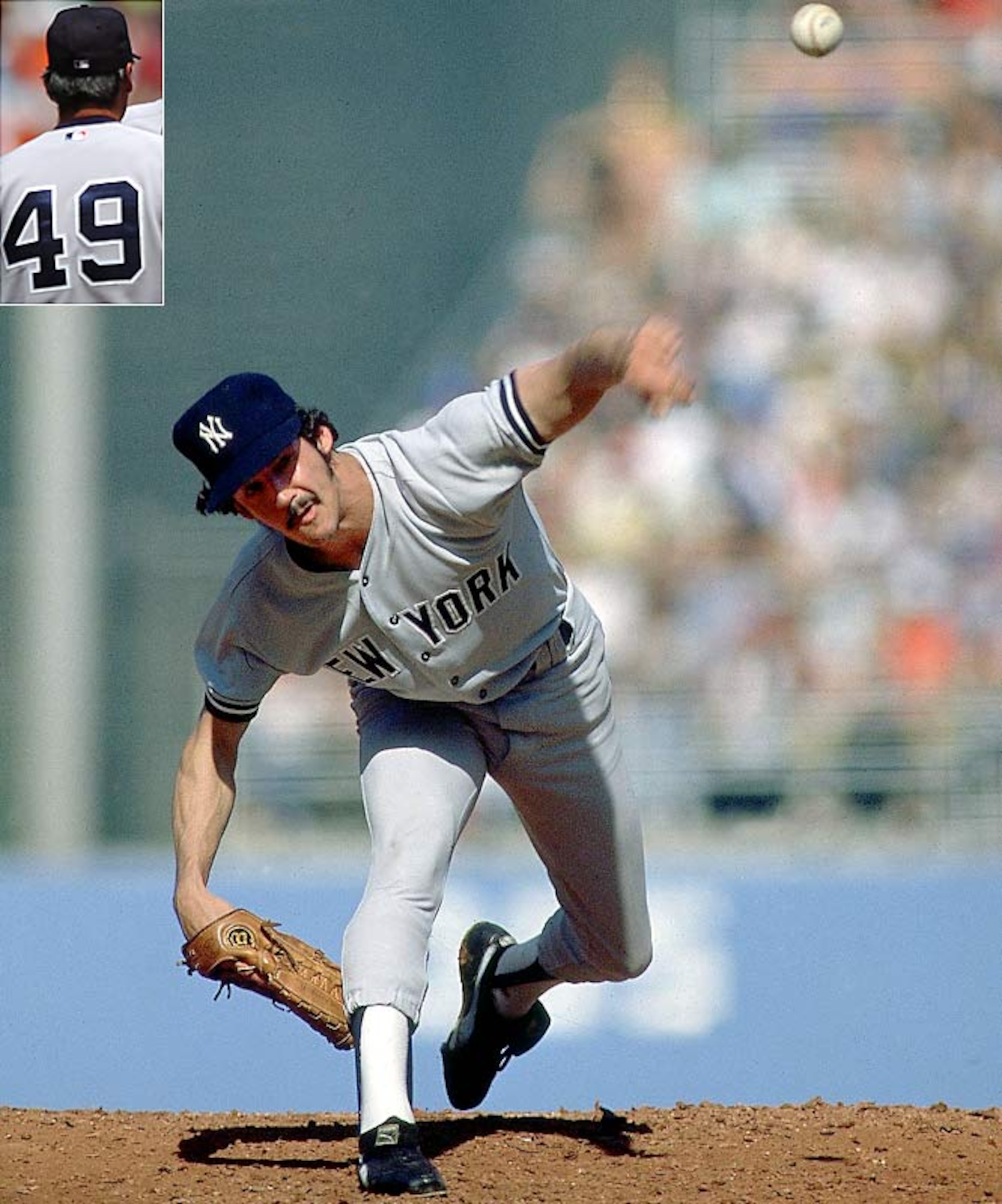
Who made them great? Ron Guidry, Ed Figueroa, Dick Tidrow, Jim Beattie, Catfish Hunter, Sparky Lyle and Goose Gossage.
The 1978 New York Yankees were a lot like the Yankees that baseball has come to know today—acquire a cast of great players, pay them what they want and go out and win the World Series. That was exactly what they did in 1978, with an All-Star cast of pitchers, both in the rotation and in the bullpen.
The first man in that rotation was left-hander Ron Guidry. Guidry pitched his entire career with the Yankees, and in 1978, he posted a record of 25-3, one of his greatest seasons, while gathering an ERA of just 1.74, an effort that would earn him the Cy Young Award that year. He struck out over eight batters per nine innings, rarely surrendering the home run, and walking just over two batters per nine innings. He threw 273 innings for the Yankees in 1978, and opponents hit just .195 against him.
Following him the rotation was right hander, Ed Figueroa. He posted a record of 20-9 in 1978, to go with an ERA of 2.99. He was the definition of "contact pitcher," rarely striking anybody out. He averaged just three strikeouts per every nine innings. That being said, he left over 76 percent of his runners on base, and opponents hit just .245 against him.
Following that strong one-two punch at the top of that rotation was a very deep bottom half, consisting of Dick Tidrow, Jim Beattie, and Catfish Hunter. Together, they combined to post a record of 25-26, but posted ERAs of 3.84, 3.73 and 3.58 respectively.
Follow a strong, deep rotation was a very good bullpen. One of the Yankees' best relievers in 1978 was Sparky Lyle, who thew 111 innings as a reliever, and posted a record of 9-3 with an ERA of 3.47.
However, the strongest man out of the bullpen was the closer, Goose Gossage. He posted a record of 10-11 with an ERA of just 2.01. He struck out over eight batters per nine innings, throwing over 100 innings as the team's closer, and the opposition hit just .187 against him.
10. 2005 Houston Astros
16 of 25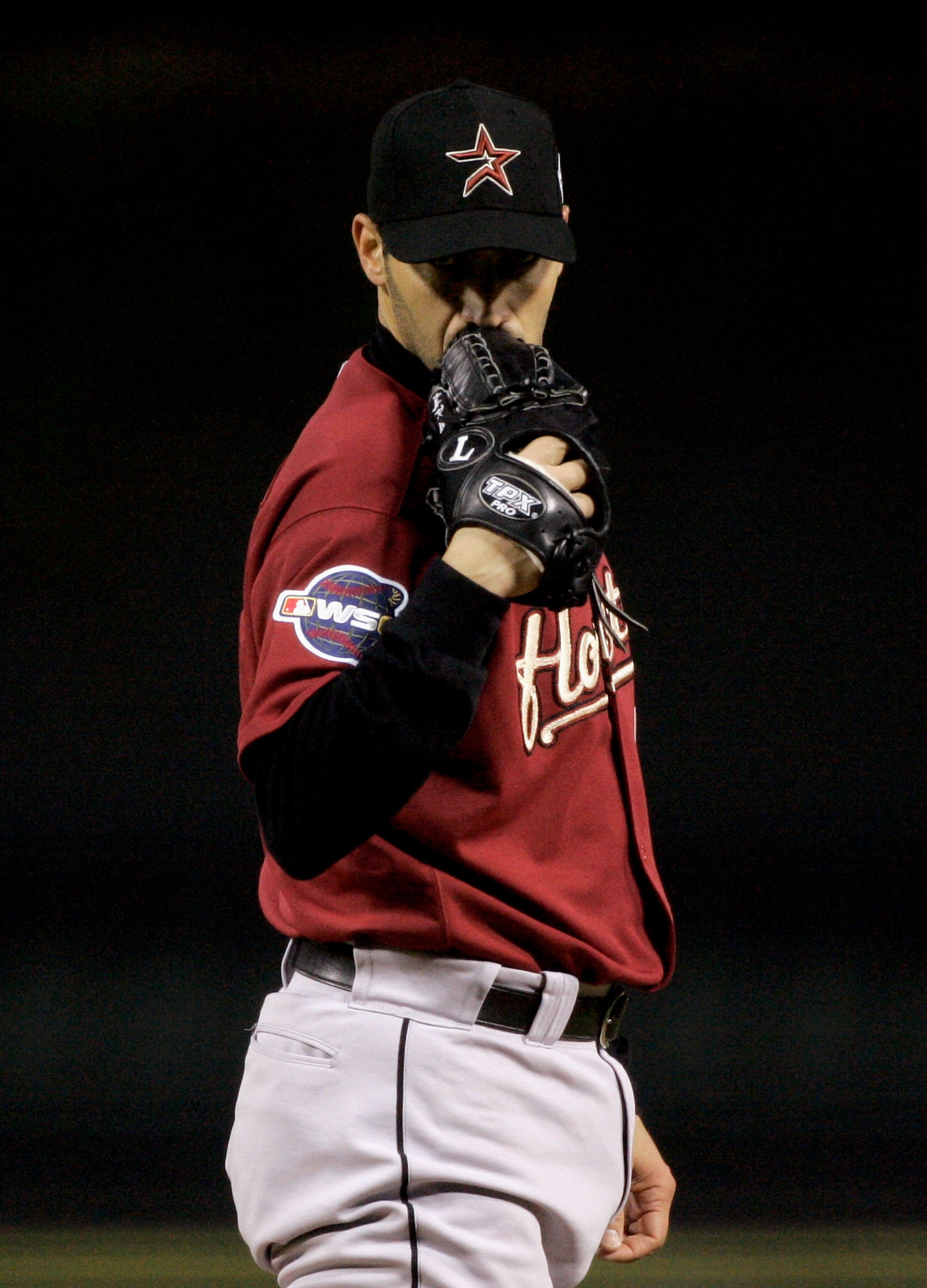
Who made them great? Roy Oswalt, Roger Clemens, Andy Pettitte, Chad Qualls, Dan Wheeler and Brad Lidge.
The Astros had one of the most feared rotations in the recent history of the major leagues in 2005, but their strengths didn't end there. They also featured one of the best closers in the game, and two relievers that were shutting down the opposition with ease.
That staff had, arguably, three aces, but the longest tenured Astro is first up. That man is Roy Oswalt. Before he joined the Phillies super-rotation, Oswalt was among another great rotation that features two likely Hall of Famers. Throwing 241 innings in 2005, Oswalt finished his second straight 20 win season, posting a record of 20-12, with an ERA of 2.94. He walked fewer than two batters every nine innings, while striking out upward of seven.
Spurned by the Yankees a few years earlier, Andy Pettitte joined the Astros rotation in 2004. However, he had a disappointing season in 2004, so many Astros' fans were expecting a rebound in 2005, and rebound he did. He posted a record of 17-9, with an ERA of just 2.39. Much like Oswalt, he walked less than two batters per nine innings, and struck out over six. The opposition managed to hit just .231 against him.
The most interesting, and subsequently dominant, arm in that rotation belonged to a man who had already won 20 games five times in his career, "The Rocket," Roger Clemens. Before his legal issues became the focal point, Clemens was lights-out for the Astros in 2005. He posted a record of 13-8, but recorded an ERA of just 1.87. He struck out over seven batters per nine innings, and the opposition hit just .202 against them.
Pair that three-headed monster with a good bullpen, and the opponent was in trouble—and that's what the Astros did.
Two of the best and most dependable relievers of the 2005 season were a pair of right-handers out of the Astros pen: Chad Qualls and Dan Wheeler. Qualls posted a record of 6-4 with an ERA of 3.28, striking out more than six batters per nine innings. Wheeler was equally as good, posting a record of 2-3 with an ERA of 2.21. He struck out more than eight batters per nine innings, and helped to effectively set the stage for a young, fireballing closer.
That man, of course, was Brad Lidge. Before he imploded in Houston a few years later, Lidge was one of the best in the game. He posted a record of 4-4, converting 42 saves and posting an ERA of just 2.29. His "stuff" was practically unhittable. He struck out more than 13 batters per nine innings, and the opposition hit just .225 against him.
9. 1986 New York Mets
17 of 25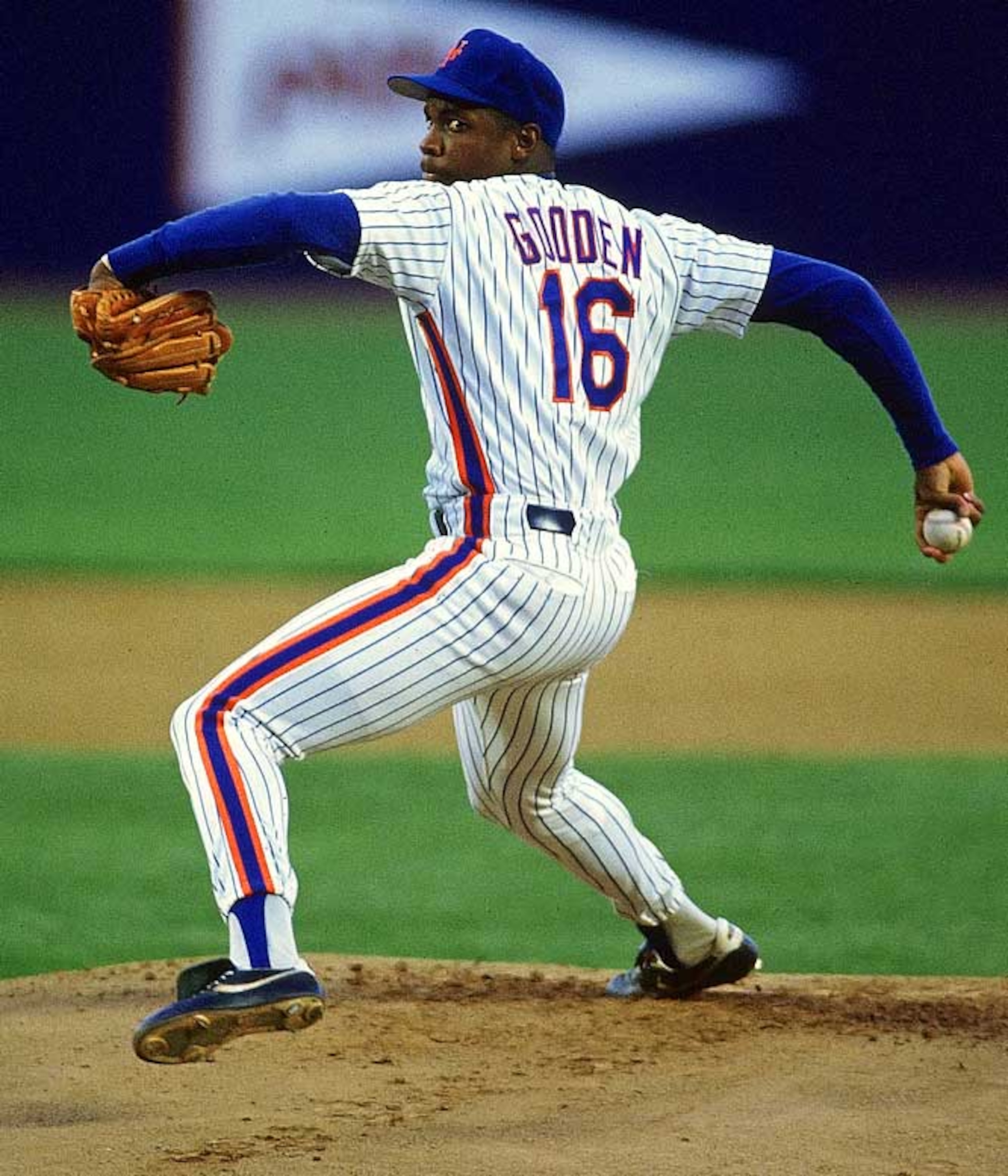
Who made them great? Dwight Gooden, Ron Darling, Bob Ojeda, Sid Fernandez, Jesse Orosco and Roger McDowell.
In just his third season in the big leauges, Dwight Gooden was developing into one of the best pitchers of his time. Coming off of a 20 win season the year prior, Gooden posted a record of 17-6, with an ERA of 2.84. He struck out more than seven batters per nine innings, and the opposition hit just .218 against him.
Ron Darling was just as good. He posted a record of 15-6 in 1986, with an ERA of just. 2.81. He logged 237 innings for the Mets, punching out just under seven batters per nine innings. Though he struggled with control at times, he left runners on base with ease, and rarely surrendered the home run ball, the opposition managing an average of just .233 against him.
The most impressive starter on that staff in 1986 was playing out the first year of his contract with the Mets, that man being left-hander Bob Ojeda. He posted a record of 18-5 with an ERA of 2.57. He threw 217 innings for the Mets, with good control, and striking out more than six batters per nine innings. The opposition hit just .232 against the lefty.
One thing the 1986 Mets boasted was a deep rotation. The front three of Dwight Gooden, Ron Darling and Bob Ojeda took a lot of pressure off of the team's fourth starter, left-hander Sid Fernandez. Fernandez posted a record of 16-6, with an ERA of 3.52. He struck out more than eight batters per nine innings, and the opposition hit just .218 against him.
The Mets also had options out of the bullpen, two men that could have been closers on this team: Jesse Orosco and Roger McDowell.
Orosco had been a reliever of a couple of seasons, and a good one at that. In 1986, he posted a record of 8-6, with an ERA of 2.33. He struck out close to seven batters per nine innings, and though he struggled with control, he rarely gave up the home run ball, and managed to leave runners on base. McDowell, on the other hand, was just as good. He appeared in 75 games for the Mets in 1986, posting a record of 14-9 out of the bullpen, posting an ERA of 3.02, and converting 22 saves.
8. 1969 New York Mets
18 of 25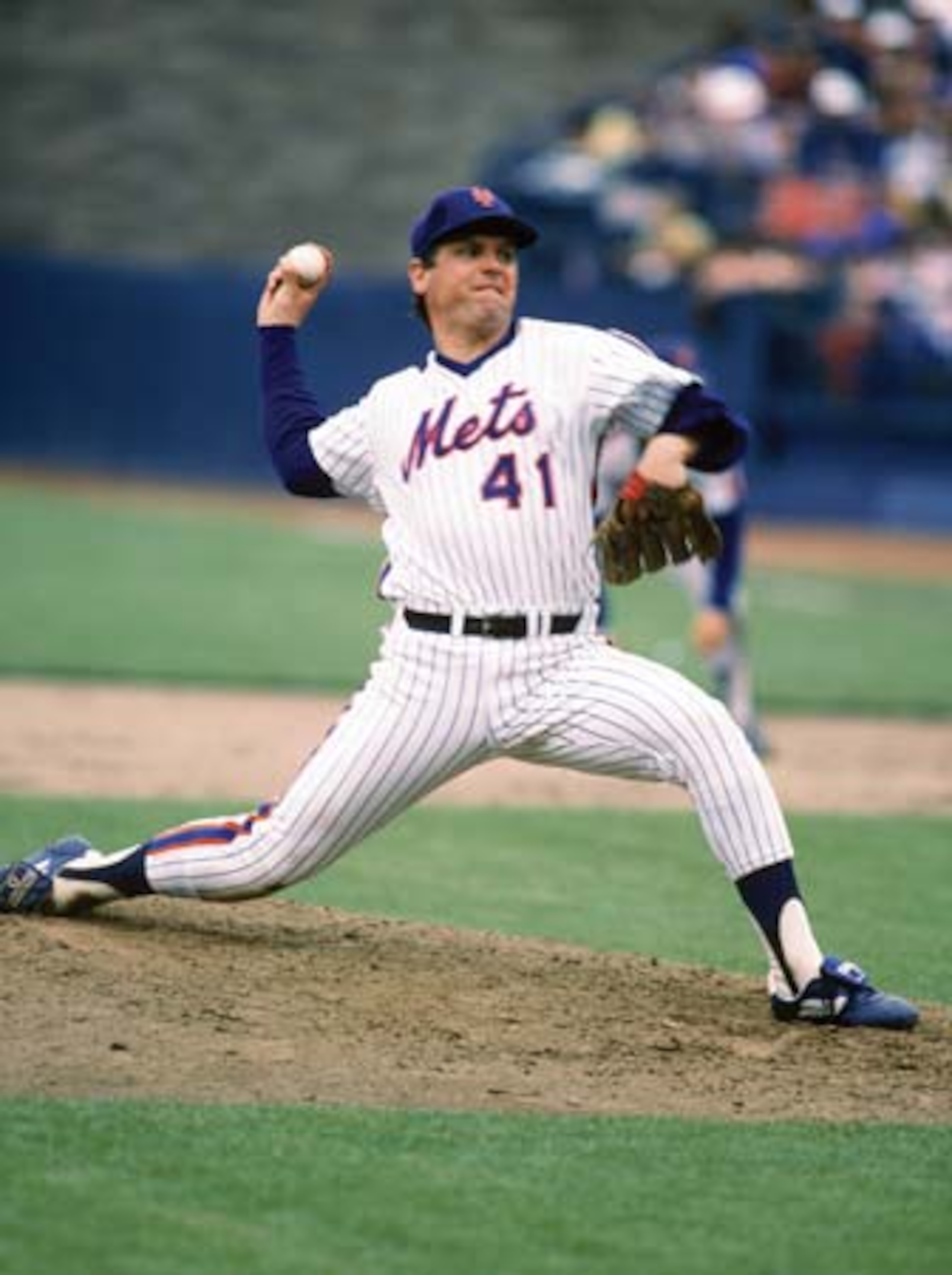
Who made them great? Tom Seaver, Jerry Koosman, Ron Taylor, Tug McGraw and the bullpen.
This staff was led by none other than the great Tom Seaver. Seaver had one of his most dominant seasons in 1969, posting a record of 25-7, with an ERA of 2.21. He walked less than three batters per nine innings, and struck out more than six. He was not prone to giving up the home run ball, and in 273 innings, the opposition hit just .208 against him.
Following him in the rotation was a young left-hander named Jerry Koosman. Though he'd go on to have a great career, he broke out onto the scene in 1968, and hit his stride in 1969. He posted a record of 17-9 with an ERA of 2.28.
If a batter reached base against him, there was a good chance he wasn't going to score. He walked just over two batters per nine innings, hardly ever gave up a home run, and stranded over 80 percent of all runners that reached base. He also struck out close to seven batters per nine innings, and the opposition hit just .216 against him.
One of the Mets' greatest strengths on this 1969 team was the depth of their bullpen.
Consider the fact that should the Mets rotation struggle, which was rare, they could turn to elite relievers like Gary Gentry, Don Cardwell and Jim McAndrew early in the game. In 1969, that core of relievers posted ERAs of 3.43, 3.01 and 3.47 respectively. And those were the first guys out of the bullpen.
Later in the game, the Mets could turn to two men that at some point would be dominant closers in their careers: set-up man Tug McGraw and closer Ron Taylor. In 1969, these two complemented each other well. The left handed McGraw posted a record of 9-3 with an ERA of 2.24. He struck out more than eight batter per nine innings and opponent's batted just .239 against him. He set the stage nicely for closer Ron Taylor to enter in the ninth. Taylor posted a record of 9-4 with an ERA of 2.72.
7. 1997 Atlanta Braves
19 of 25
Who made them great? John Smoltz, Tom Glavine, Greg Maddux, Denny Neagle, Alan Embree and Mark Wholers.
The Atlanta Braves had several great staffs in the 1990s, and their rotations are considered some of the greatest of all-time. Like the 2011 Phillies staff that has sparked so much debate, three of those men were definite aces, and the fourth starter could be considered another.
One of these pitchers was John Smoltz. Though his numbers weren't the greatest in 1997, he was an integral part of a great staff. He posted a record of 15-12, with an ERA of 3.02. He struck out more than eight batters per nine innings, while walking just over two. The opposition hit just .245 against him.
That staff also featured a 300-game winner, left-hander Tom Glavine. He posted a record of 14-7 in 1997, with an ERA of 2.96. Known as more of a control pitcher than Smoltz, he only struck out a little over five batters per nine innings. Like the rest of the rotation, he rarely gave up home runs, and the opposition hit just .225 against him.
Joining the staff is another sure-fire Hall of Famer, right hander Greg Maddux. Maddux put together an All-Star season in 1997, posting a record of 19-4, with an ERA of 2.20. Had Pedro Martinez not been so excellent that season, he would have won the Cy Young Award without a problem. He walked less than a batter every nine innings, showing pinpoint control, and striking out over six. In 232 innings, the opposition hit just .234 against him.
The fourth member of that deep staff was Denny Neagle, and although he isn't as popular a name as Smoltz, Glavine or Maddux, the left-hander had the best year of his career with the Braves in 1997. He posted a record of 20-5 with an ERA of 2.97. He displayed good control, walking less than two batters per nine inning, striking out an upward of six. The opposition hit just .237 against him.
The first four members of the Braves rotation logged over 200 innings each, but they also had some nice options in the bullpen.
The first of said relievers was Alan Embree. He posted a record of 3-1 with an ERA of 2.54, appearing in 66 games for the Braves, his only full season with them. He struck out over eight batters per nine innings, and the opposition hit just .217 against him, setting the stage nicely for the closer, Mark Wholers.
Wholers was much better than his numbers suggest in 1997. He posted a record of 5-7, converting 33 saves, and appearing in 71 games. Though his ERA was 3.50, his FIP suggests that it should have been in the mid-twos. What was most impressive about Wholers was his ability to strike batters out, doing so at a rate of just over 11 per nine innings.
6. 1967 San Fracisco Giants
20 of 25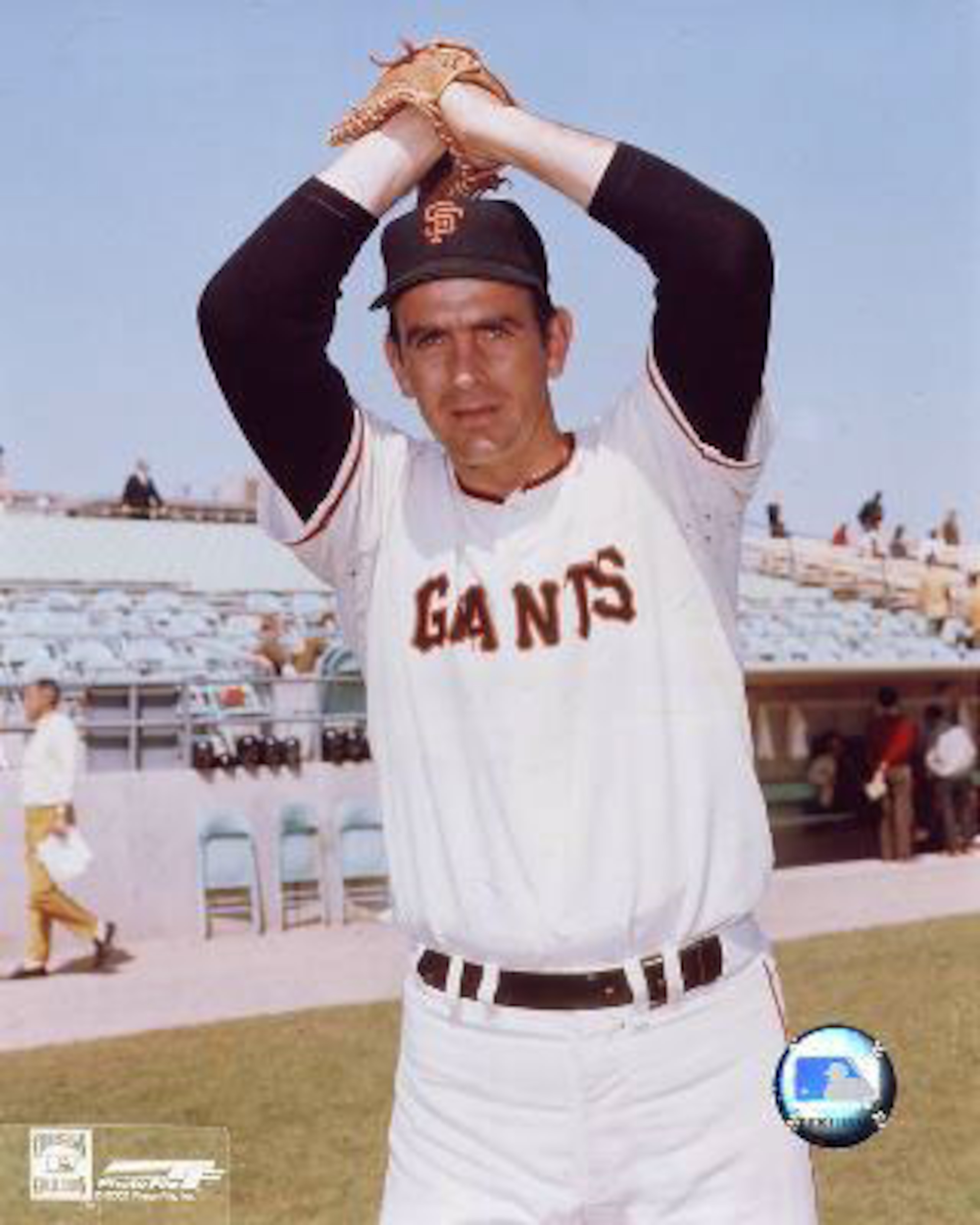
Who made them great? Gaylord Perry, Mike McCormick, Juan Marichal, Ray Sadecki and Frank Linzy.
The 1967 version of the San Francisco Giants roster featured a ton of talent. One of the top talents on that roster was right-hander Gaylord Perry. Despite a nasty win-loss record of 15-17, Perry posted an ERA of just 2.61. He threw close to 300 innings for the Giants in 1967, striking out over seven batters per nine innings, and walking just over two. He rarely gave up the home run ball, and the opposition hit just .218 against him.
The Giants followed up Perry with a very good left-hander, Mike McCormick. McCormick had his best season in 1967, posting a record of 22-10, with an ERA of 2.85. He struck out just over five batters per nine, while walking just over two. The opposition hit just .229 against him, and he averaged less than a HR/9, like the rest of this staff, the most talented of which was yet to come.
That man, of course, was Juan Marichal. Though his career was surrounded in controversy, Marichal was one of the best pitchers of the 1960s. Though he didn't win 20 games in 1967, he still posted a record of 14-10 with an ERA of 2.76. He struck out over seven batters per nine, walking less than two. The opposition hit just .255 against him.
The fourth member of this rotation was just as talented as the first three, left-hander, Ray Sadecki. In 1967, Sadecki posted a record of 12-6, with an ERA of 2.78. He struck out close to seven batters per nine innings, walking just over two. He rarely gave up home runs, just 0.39 HR/9. The opposition hit just .237 against him as a whole.
The Giants also had a very talented reliever entering the game in the later innings, right hander, Frank Linzy. Linzy posted a record of 7-7, with an ERA of just 1.51, striking out just under four batters per nine innings, while converting 17 saves for the Giants. He pitched in 95 innings, and the opposition hit just .199 against him.
5. 2011 Philadelphia Phillies
21 of 25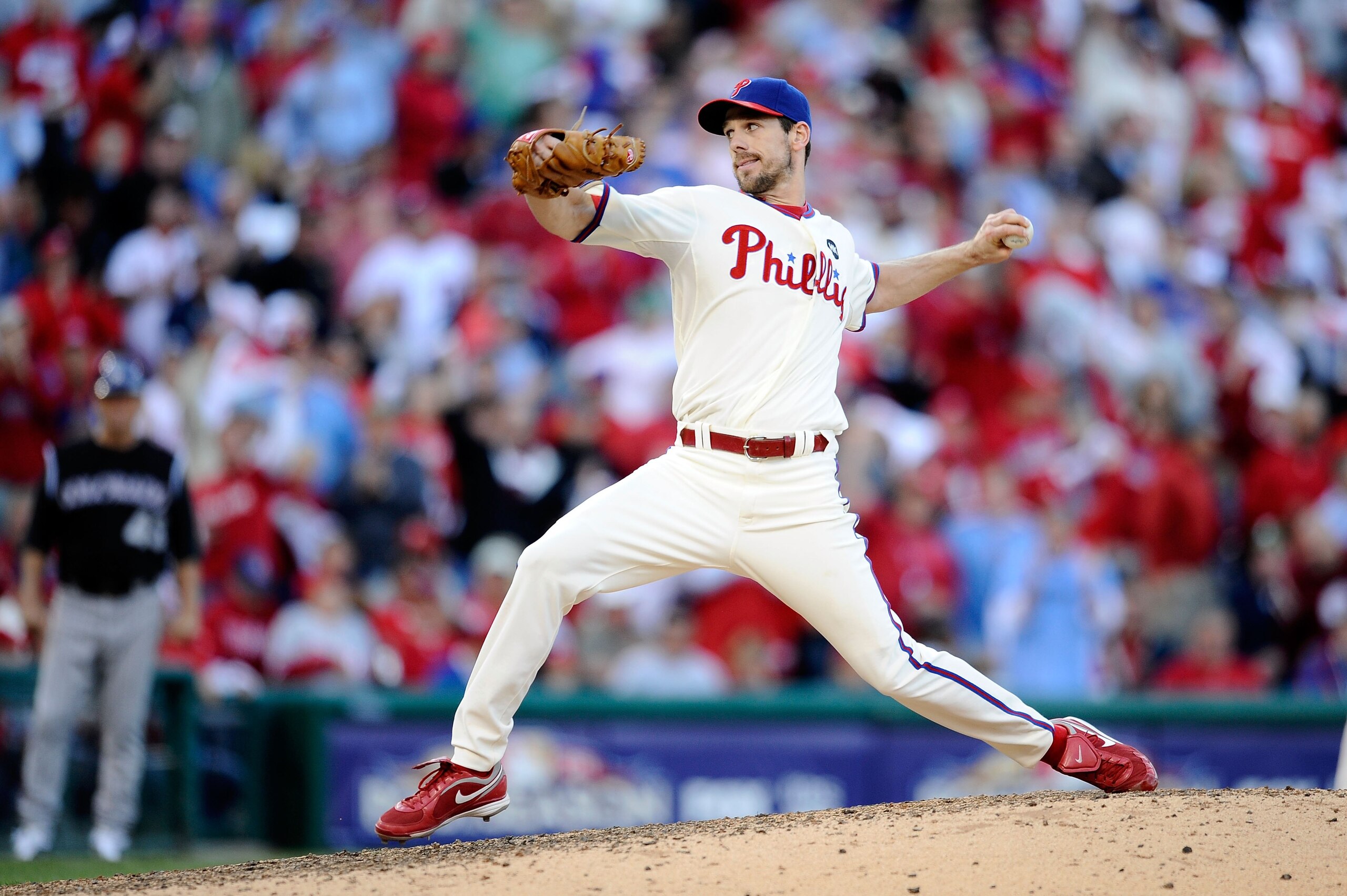
Who should make this staff one of the best of all time? Roy Halladay, Cliff Lee, Roy Oswalt, Cole Hamels, Ryan Madson and Brad Lidge.
Time to play devil's advocate.
There's been much discussion about where the Phillies pitching staff ranks amongst the greatest of all-time. Well, how do they stack up against the greatest? Do they have a deep rotation? Yes. Do they have three or more above average starting pitchers? Yes. In fact, they have four. Do they have a good bullpen? It's not great, but Ryan Madson and Brad Lidge are two of the best, when on their game. So why do they rank sixth?
The first reason is the reigning Cy Young Award winner, Roy Halladay.
Halladay won 21 games for the Phillies in 2010, but with a bit of run support, he could have easily won 25 games. With some run support in 2011, he should, and has a legitimate chance to. Bill James, who predicts the next year's stats for current players, projects Halladay to win 18 games, and post an ERA around 3.16. Many consider that second number to be high, since the guy posted an ERA of 2.44 in 2010. He'll strike out around seven batters per nine innings, and control all parts of the plate.
The second starter in this rotation is the man that sparked the debate, left-hander Cliff Lee. A return to the National League and the ease of pitching behind Roy Halladay will do Lee some good, or better stated, an opportunity to be better than he was last season.
In his first stint in the National League, with the Phillies in 2009, Lee posted a record of 7-4, with an ERA of 3.39, though his FIP suggests his ERA should have been right around 2.83. There are a lot of intangibles surrounding Lee's return to the Phillies rotation, the first of which is comfortability. He hasn't pitched for a single team in a season since 2008, a year where he posted a record of 22-3, with an ERA of 2.54. A full season with a team that he wants to be on, with the guarantee that he'll be around for an entire season, should bring a return to Lee's 2008 numbers, or at least, close to them.
The third member of this rotation will also be his first season in Philadelphia, right-hander Roy Oswalt. Oswalt had electric stuff in his first 13 games with the Phillies, posting a record of 7-1 with an ERA of 1.74. Over the course of 2011, James projects that Oswalt will post a line of 16-9, with an ERA of 3.38, but if he goes along the same path that he took in 2010, it's not absurd to project Oswalt to have an ERA even lower in the threes, and verging into the twos. Don't forget, he's the third starter in this rotation.
The final ace that the Phillies' rotation will feature is left-hander, Cole Hamels. The longest tenured member of the Phillies' rotation, Hamels saw what I'm calling his "re-emergence" into the league in 2010. He tweaked his pitching mechanics, and added a cutter to his repertoire, helping him to use his fastball and change-up more effectively.
James projects Hamels to have a season similar to that of Oswalt - a record of 15-9, with an ERA of 3.45, but it wouldn't surprise me to see Hamels post an ERA lower than that, and as the fourth starter in the Phillies rotation, have a record better than Oswalt. He's going to strike out between 8-9 batters per nine innings, and with a full season of his repertoire, could be even better than the Hamels that took the Phillies to the World Series in 2008.
As much as the media has made out the Phillies rotation to be, the back end of the bullpen is often left unnoticed.
The Phillies have one of the best set-up men in baseball in right-hander Ryan Madson. Because he uses his chageup so effectively, he is equally as successful against left-handed hitters as he is against right handed hitters. He'll strike out around 10 batters per nine inning, a very valuable asset out of your eighth inning man. He has good control, and a fastball that can sit consistently in the mid-90s.
And finally, there is Brad Lidge. What can the Phillies expect our of Brad Lidge? Will the 2011 season be more akin to his 2008 perfect season? Or will it be more akin to his 2009 season of terrors. I took a look at what Phillies fans can expect out of Brad Lidge a few weeks ago, and his numbers over the last few months of the season should be a good indicator.
Over the last two months, Lidge posted an ERA of just 0.76, striking out 25 batters while walking 10. This can be explained by two things—a return of Lidge's confidence and the use of his slider. When he was injured, specifically his elbow injury, he threw his fastball much more than he needed to. Now that he is fully healthy, he's throwing that great slider once again, and has the confidence to do so.
There is no reason to believe that this pitching staff shouldn't be one of the best ever.
4. 1966 Los Angeles Dodgers
22 of 25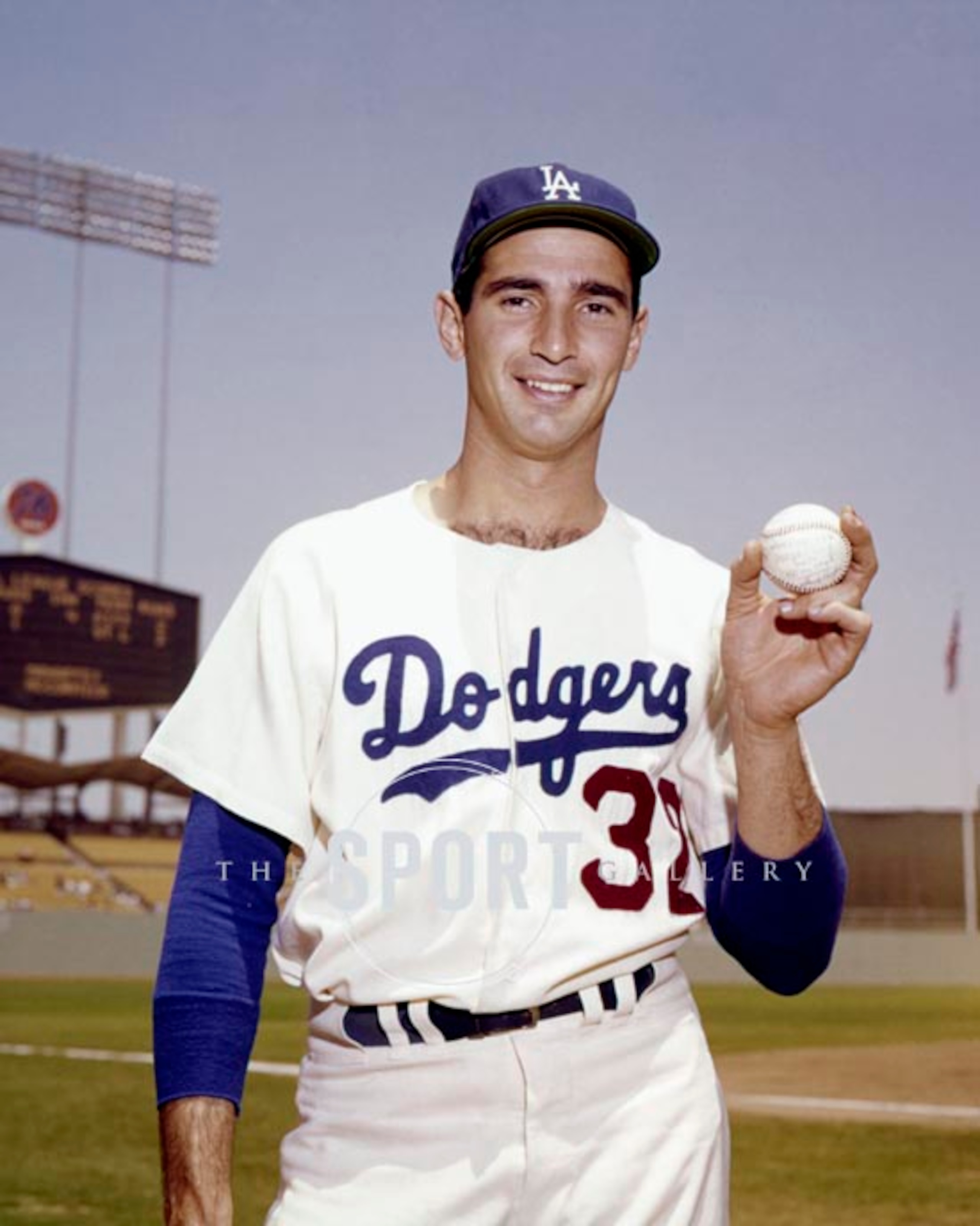
Who made them great? Sandy Koufax, Don Drysdale, Claude Osteen, Don Sutton, Ron Perranoski and Phil Regan.
Sandy Koufax was one of the best pitchers to ever play the game of baseball, and he showed why in 1966, his final season in Major League Baseball. Koufax posted an amazing record of 27-9, with an ERA of just 1.73. He struck out over eight batters per nine innings, walking just over two. Surrendering less than a home run per nine innings, he was practically untouchable, with the opposition hitting just .209 against him. He also became the first pitcher to win three Cy Young Awards.
Joining Koufax at the top of the rotation was another veteran starter, right-hander Don Drysdale. His won/loss record was unimpressive in 1966—just 13-16—but his ERA of 3.42, which according to FIP should have been much lower, gave the Dodgers a nasty one-two punch at the top of their rotation.
The 1966 Dodgers had one of the deepest rotations of all-time. Along with Koufax and Drysdale, the Dodgers rotation also boasted Claude Osteen and Don Sutton. Osteen was very good in 1966, posting a record of 17-14, with an ERA of 2.85. His HR/9 was just 0.22, and the opposition hit just .260 against him.
The No. 4 starter was equally as good. In 1966, Sutton posted a record of 12-12 in his rookie season, along with an ERA of 2.99. He struck out more than eight batters per nine innings, walking just over two. The opposition hit just .230 against him.
The Dodgers also boasted a strong bullpen, headlined by relievers Ron Perranoski and Phil Regan. Perranoski logged 82 innings for the Dodgers in 1966, posting an ERA of 3.18. He stranded 78 percent of his runners on base, and rarely surrendered a home run. The more effective of the two, though, was Regan.
In 1966, he was absolutely dominant, posting a record of 14-1 out of the bullpen, to go with an ERA of 1.62. He struck out more than six batters per nine innings, walking less than two, and the opposition managed to hit just .205 against him.
3. 1968 St. Louis Cardinals
23 of 25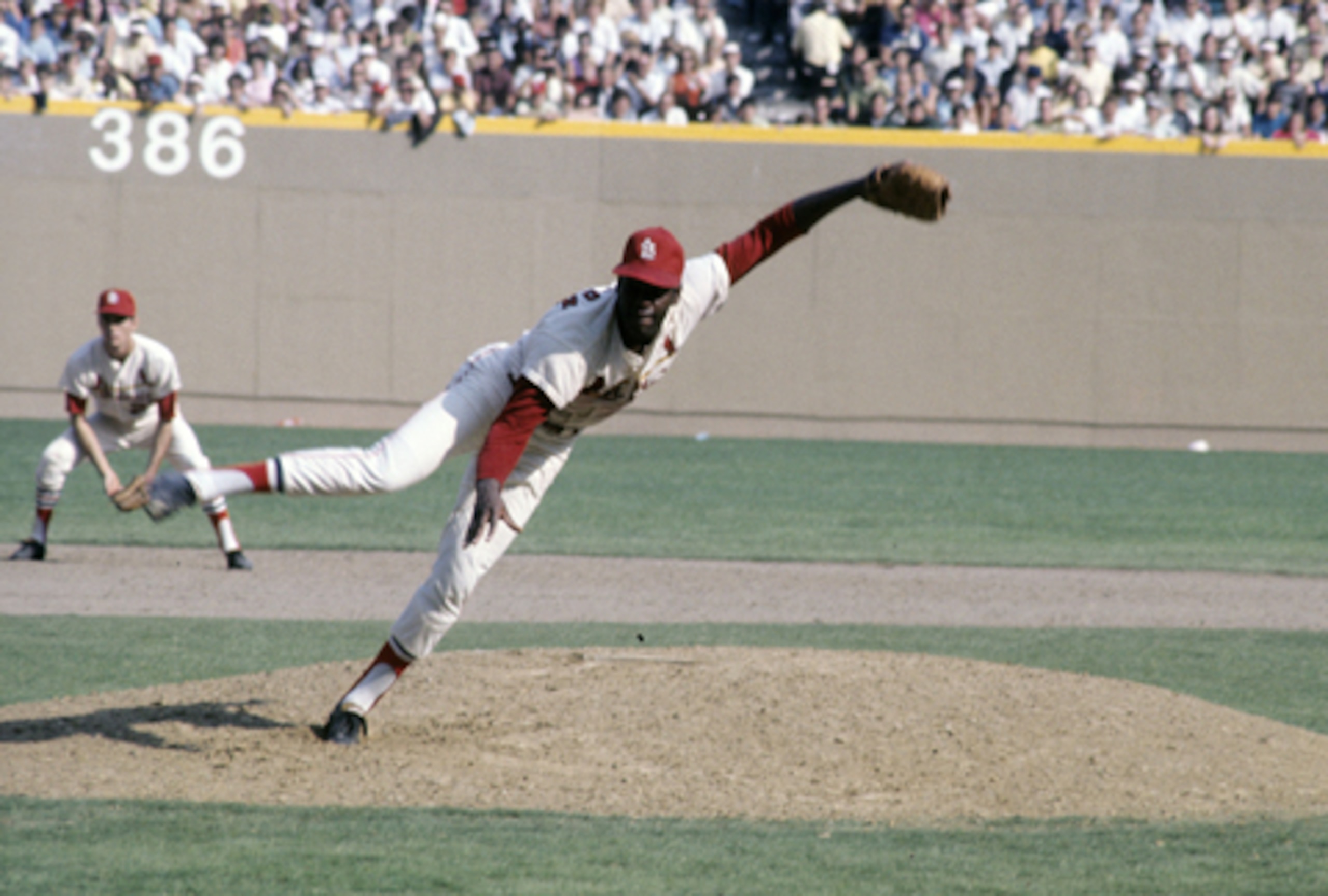
Who made them great? Bob Gibson, Nelson Briles, Steve Carlton, Ray Washburn and Joe Hoerner.
The 1968 St. Louis Cardinals had one of the most talented rotations of all-time, headlined by the great Bob Gibson and his unorthodox style that made it seem as though he was defying gravity. In 1968, Gibson posted a record of 22-9 with an ERA of just 1.12. His stats from this season were amazing. He pitched 304 innings, threw 28 complete games—13 of which were shutouts, and limited the opponent's batting average to just .182. His season was so great that he would win both the MVP and Cy Young Award at the season's end.
Following him in the rotation was no slouch, right-handed starter Nelson Briles. He had his best season in 1968, posting a record of 19-11, with an ERA of 2.81. He struck out close to six batters per nine innings, walking just over two.
The third member of this talented rotation was a young left-hander that would go on to be the ace of the Philadelphia Phillies for many years, Steve Carlton. In 1968, Carlton posted a record of 13-11, and an ERA of 2.99. He struck out close to seven batters per nine innings, and walked just over two. He rarely gave up a home run, with a HR/9 rate of just 0.43. Opponents hit just .247 against him.
The fourth member of the rotation was just as good as the last two, with Gibson sitting comfortably atop this rotation. That man was right-hander Ray Washburn. Washburn had his best season in 1968, posting a record of 14-8 with an ERA of just 2.26. He struck out five batters per nine innings, walking well under two. Like the first three, he rarely surrendered a home run, and opponents hit just .240 against him.
They also boasted one of the game's best relievers in 1968, left-hander Joe Hoerner. He posted a record of 8-2 out of the bullpen, converting 17 saves and logging 48 innings out of the Cardinals' bullpen, compiling an ERA of just 1.48. He struck out more than seven batters per nine innings, and opponent's hit just .199 against him.
2. 1971 Baltimore Orioles
24 of 25
Who made them great? Jim Palmer, Mike Cuellar, Pat Dobson, Dave McNally and Eddie Watt.
In a lot of people's minds, this is the greatest pitching staff of all-time. The last team to have four starters to win 20 games, they are certainly a distant way ahead of the No. 3 staff. This O's staff was led by big right-hander Jim Palmer. Palmer posted a record of 20-9 in 1971, with an ERA of 2.68. In 282 innings, the opposition managed to hit just .225 against him.
The same rotation featured left-hander Mike Cuellar. He posted the same record as Palmer in 1971, 20-9, and an ERA of 3.08. Though posting some of the lowest strikeout rates of his career, he managed to keep guys off base regardless, walking right around two batters per nine innings. He left 76 percent of those runners on base, and the opposition hit just .233 against him.
The second right-hander in this staff was Pat Dobson. Though he pitched just two seasons for the O's, he made his mark on this 1971 team. He posted a record of 20-8, with an ERA of 2.90. He struck out close to six batters per nine innings, while walking just over two. He rarely surrendered the home run ball, and the opposition managed to hit just .238 against him.
The final member of this quintet was the second left-hander, Dave McNally. In his fourth straight 20-win season, McNally posted a record of 21-5, with a 2.89 ERA. He also posted low strikeout numbers, but was a contact pitcher that excelled in getting hitters to ground to his fielders. He left over 80 percent of all runners that reached base against him on base, and the opposition managed to hit just .229 against him.
Perhaps the man that is overshadowed by this great rotation is a strong reliever for the O's, right-hander Eddie Watt. Posting a record of 3-1 out of the bullpen, he posted an ERA of just 1.82 for the Orioles in 1971, striking out close to six batters per nine innings, and walking less than two. The opposition hit just .259 against him.
1. 1906 Chicago Cubs
25 of 25
...but the honor of the greatest pitching staff of all time belongs to the 1906 Chicago Cubs.
Who made them great? Mordecai Brown, Jack Pfiester, Ed Reulbach, Carl Lundgren, Jack Taylor and Orval Overall.
Mordecai Brown was the right-handed ace of this Cubs staff. In 1906, he posted a record of 26-6, with an ERA of 1.04. He was untouchable, striking out close to five batters per nine—a lot for this time period—and walking less than two. He surrendered one home run in 1906, and the opposition hit just .202 against him, and he was the best of an incredibly talented staff.
The second man of that staff was a left hander named Jack Pfiester. He was the second 20 game winner for the Cubs in 1906, posting a record of 20-8, with an ERA of 1.51. In more than 250 innings, he struck out close to six batters per nine innings, and walked less than two. He gave up just three home runs, and the opposition managed to hit just .197 against him.
Ed Reulbach was another tough right-hander. In just his second year with the Cubs, he posted a record of 19-4, with an ERA of 1.65. Though he walked nearly as many hitters as he struck out at three, he only surrendered two home runs, and the opposition hit just .173 against him.
Pretty good, right? Well, the list goes on.
Carl Lundgren won another 17 games for the Cubs in 1906, along with six losses. In 207 innings, he struck out close to five batters per nine innings, and the opposition hit just .215 against him.
Another right-hander named Jack Taylor was also part of this staff. He posted a record of 12-3 with the Cubs, and an ERA of 1.83. He also only surrendered just one home run, and the opposition hit just .218 against him.
The final notable member of this staff was a right-hander with an interesting name, Orval Overall. He also posted a record of 12-3, logging an ERA of just 1.88. He too surrendered just one home run, and struck out close to six batters per nine innings, with the opposition hitting just .222 against him.
This clearly was the most talented staff of all-time.

.jpg?w=2560 "KOC Contacted OBJ After Release ☎️")