MLB Trade Rumors: Weighing 5 Options at Pitcher for New York Yankees
The New York Yankees are in trouble, no denying that. The Boston Red Sox have flown past them this winter, and the Yankees' inability to lure free-agent ace Cliff Lee with a colossal seven-year contract offer leave them hurting badly for starting pitching.
Zack Greinke, the second-best available pitcher and current ace of the Kansas City Royals, seems to be on their radar screen.
Assuming that the Royals do not lessen their sky-high price tag for Greinke, though, the Yankees are hardly in the right position to make a deal.
It would probably take Jesus Montero (whom the organization does not want to trade), Joba Chamberlain and another prospect to get the deal done, and Greinke has the right to reject a trade to New York if he so chooses.
Therefore, though Greinke remains the best option on the market, the Yankees need to have multiple contingency plans in place. They currently have only three established big-league starting pitchers on their staff, though Ivan Nova is a fine fill for the back end of the rotation.
Read on for five guys GM Brian Cashman would do well to try and pry away from their current squads between now and Opening Day 2011, along with the pros and cons of acquiring each hurler.
5. Barry Zito
1 of 5
Pros
Zito has thrown at least 180 innings in each of the last 10 seasons, so he can definitely hold down a spot near the back of the Yankee rotation.
He is a lefty, which helps a great deal in Yankee Stadium: Lefty batters can expect a 24-percent boost in homers at the new Stadium, while right-handed hitters get only a 10 percent bump, according to statcorner.com.
Having southpaw starters to mitigate the value of Boston's Adrian Gonzalez, Carl Crawford and David Ortiz is critical for New York.
Cons
Money. Zito has at least three years and $66.5 million left on his current contract, a monumental investment of which the Giants would likely eat only 35-40 percent in any deal.
The Yankees never struggle to find an extra dime, but Zito does not produce enough to make that kind of expenditure efficient. Unless the Yanks really cannot find anyone or anything else, this is probably a non-starter.
4. Joe Blanton
2 of 5
Pros
Blanton has great command, as he demonstrated by walking less than one batter for every four innings of work in 2010. He also misses some bats, though his strikeout numbers will not blow anyone away.
He learned a cutter from teammate Roy Halladay this season in Philadelphia, and put it to good use right away to keep hitters unsteady against his 89-91 MPH fastball.
Some bad batted-ball luck hurt his surface-level numbers, but he keeps the ball on the ground more often than not, so that should even out in time.
Cons
It would be a bitter pill for the Yankees to help the Phillies shed Blanton's salary in order to accommodate Lee, who chose Philadelphia over more money in New York.
Blanton also missed the first month of the season in 2010 with a strained oblique muscle, which often spells long-term trouble for pitchers.
3. Carlos Zambrano
3 of 5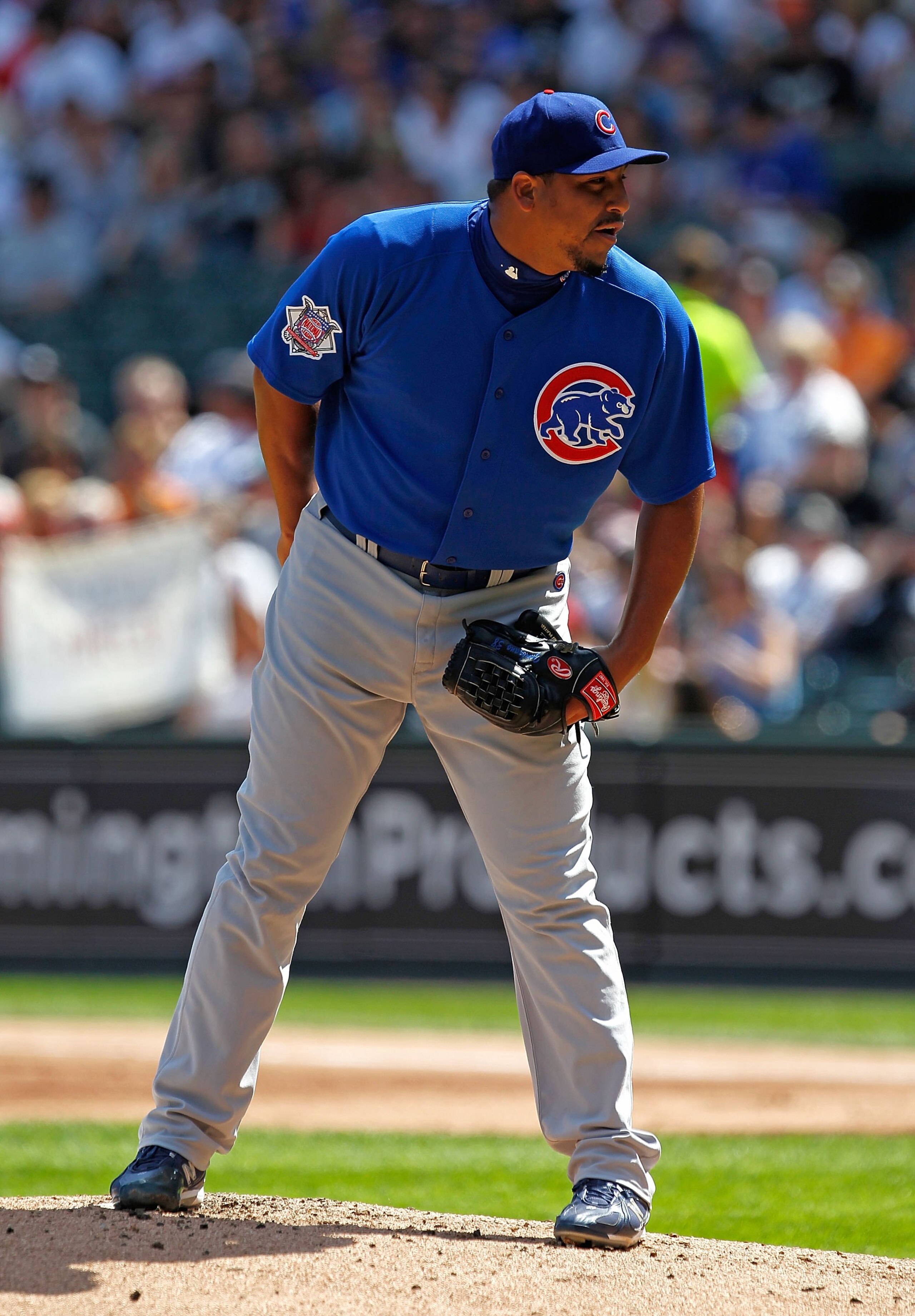
Pros
Zambrano finished 2010 on a tear, winning eight times over his final 10 starts and posting a 1.10 ERA for the month of September.
He threw a cutter more often down the stretch, an effective adjustment he credited to pitching coach Larry Rothschild, who now works for the Yankees.
Zambrano follows a formula that is always welcome in hitter-friendly environs like Yankee Stadium: Strike batters out, and put the ball on the ground.
Cons
You have to love or hate Zambrano as both a pitcher and a clubhouse presence, and lately Cubs fans (not to mention the organization) have begun leaning toward the latter.
His histrionics in the dugout in June drew the ire of team captain Derrek Lee and an eventual suspension; his wildness on the mound has begun to look like a chronic and degenerative condition.
Finally, there is the matter of money: Zambrano is owed a shade over $37 million over the next two seasons, and the Cubs (in rebuilding mode and regretting their massive expenditure) seem unlikely to take on much of that in order to get a deal done.
Zambrano embodies the high-risk, high-reward approach to solving this problem for New York.

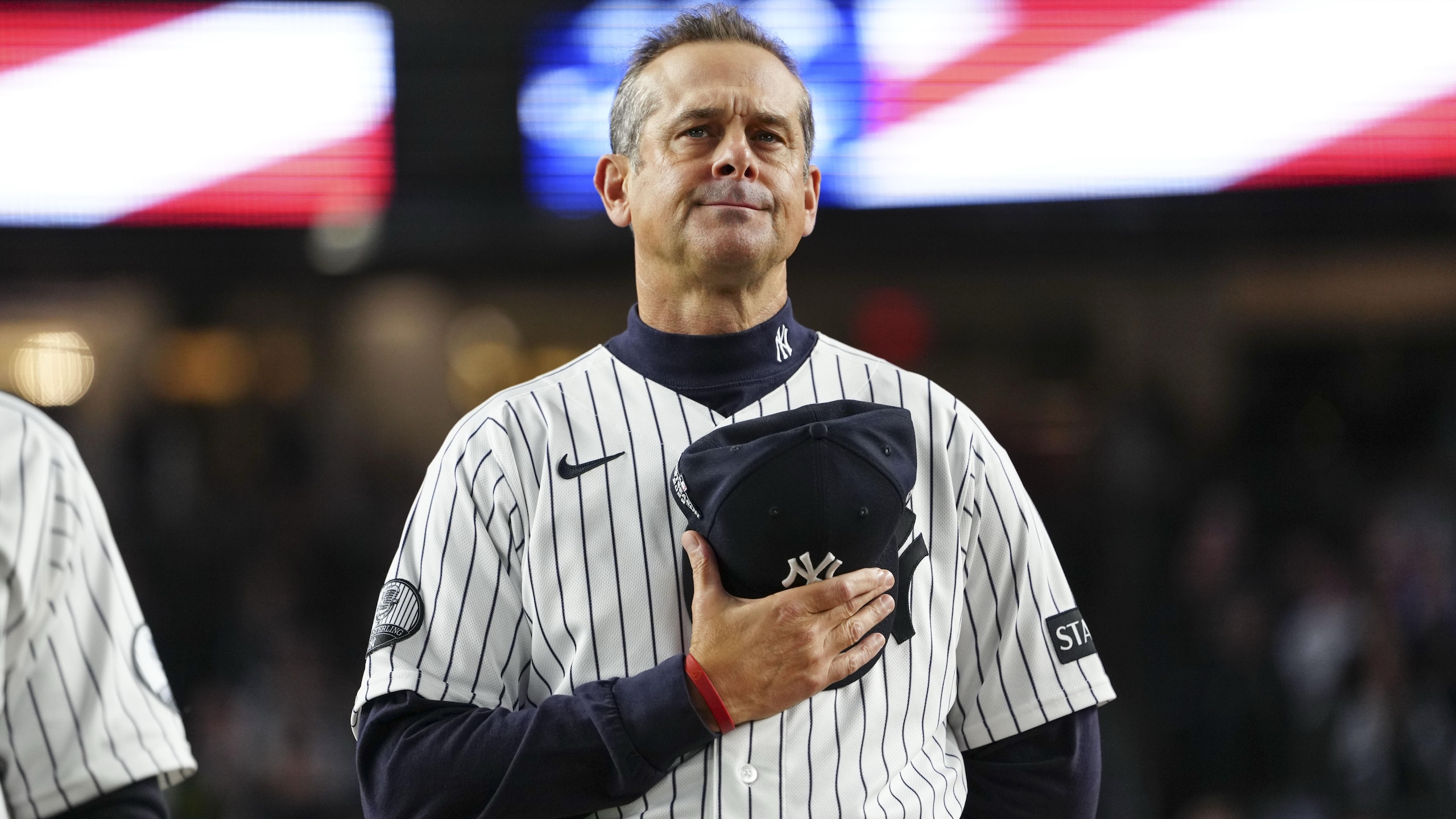
2. Ricky Nolasco
4 of 5
Pros
Nolasco has all the earmarks of a reliable, even excellent starting pitcher. He strikes out a ton of batters (342 of them in 342.2 IP over the past two seasons) and walks very few (77 free passes during the same time frame, for a K/BB ratio of 4.44).
He has a pair of excellent breaking pitches, a fastball that can reach 95 mph on rare occasions and a splitter that, thrown more often than ever this season, helped Nolasco post his best ground-ball rate as a big leaguer in 2010. He could become an ace at any moment.
Cons
Nolasco does not get it, somehow. Perhaps New York would only exacerbate his problem, but it seems fair to guess that it could instead help him focus more clearly and prepare more intensely.
For whatever reason, Nolasco makes mistakes within the strike zone more frequently than even obviously inferior pitchers, and those mistakes tend to get crushed.
He also tore a knee meniscus and missed the last five weeks of the season in 2010, so there is risk there. Still, Nolasco (who seems far from eager to talk extension with the Marlins and will cost Florida at least $5 million this winter) seems a perfect fit for the Yankees, depending on the asking price.
1. Zack Greinke
5 of 5
Pros
Greinke is the best available pitcher—unless the rather dubious whispers about the Mariners trading Felix Hernandez have legs—and Greinke will cost just $27 million on a contract that runs through 2012.
He won the 2009 Cy Young Award for a reason, and though he does not look like quite the dominant ace he was for that one season in the long run, he has the tools to pitch effectively behind CC Sabathia in the Yankees rotation.
Cons
Kansas City wants the world in return for Greinke, and it ought to demand as much: Nothing compels KC to move its ace now, with two years left on his contract and no ready replacement for his ability to sell tickets or for his role as the face of the franchise.
Greinke might want out of there as soon as possible, but he likely will remain in a Royals uniform at least until the trade deadline.
Greinke can also reject a move to New York, which could give him the leverage to demand a lucrative long-term deal if the two sides managed to get a deal together.


.jpg?w=2560 "KOC Contacted OBJ After Release ☎️")