

Major Changes: A Very Unorthodox Proposal for Major League Baseball
A common criticism of Major League Baseball, besides the lack of a salary cap or parity, is the unfair scheduling and division setup. The division setup in both leagues is very unusual. The American League West has four teams, the National League Central has six teams and every other division has five. This adds up to 14 teams in the AL and 16 in the NL, which has led to uneven scheduling.
So I am suggesting a dramatic change in both leagues.The new division format should be just like the National Football League, which also has an excellent rotating scheduling system.
I also suggest cutting regular season games and adding an extra round in the postseason, which would allow teams that would have been previously left out of the wild card to have a chance at the World Series
American League East
1 of 14
1. New York Yankees
2. Boston Red Sox
3. Toronto Blue Jays
4. Baltimore Orioles
Makes the most sense geographically and historically. These four teams have been in this division since 1977. The Yankees and Red Sox are still together.
The Tampa Bay Rays are moved to another division, and it's now a four-way battle between middle- to big-market teams.The Blue Jays have been in the discussion for playoffs for the past few years, and under the new playoff system they can make the playoffs.
The Orioles, on the other hand, are just hopeless.
American League North
2 of 14
1. Minnesota Twins
2. Chicago White Sox
3. Detroit Tigers
4. Cleveland Indians
Similar to the NFL, this is the former Central division. The Kansas City Royals leave, and this division focuses mostly geographically on the Great Lakes region of the United States.
These are the four teams that were intense competitors in the American League Central when it was first formed. The Indians have won this division seven times going back to 1995, the Twins have won it six times in the last 10 years, and the White Sox have won it three times since 2000.
This would still be a very competitive division.
American League West
3 of 14
1. Oakland Athletics
2. Los Angeles Angels of Anaheim
3. Kansas City Royals
4. Seattle Mariners
Out go the defending American League Champion Texas Rangers, and in come the Kansas City Royals. This year, the winner would have been the A's in an awful division.
The move makes sense from a geographic standpoint, but this would have been an awful division this year. But may have been more competitive in previous years under a different playoff format.



American League South
4 of 14
1. Tampa Bay Rays
2. Texas Rangers
3. Expansion Team
4. Expansion Team
This would have been a horrendous division before the Rangers and Rays became relevant. Expansion would probably not be a great idea in this economic state.
But in an ideal economy, places where MLB may want to expand are the Carolinas of Tennessee, despite the fact they are two states not big on baseball and only on football.
They are still big enough markets to support a major league team.
National League East
5 of 14
1. Philadelphia Phillies
2. New York Mets
3. Washington Nationals
4. Pittsburgh Pirates
Out go the Atlanta Braves and Florida Marlins, and in comes the Pittsburgh Pirates. This makes the most geographical sense. These four teams all were in the East before MLB expanded to three divisions.
The Phillies would likely dominate this division. The only other team with a shot is the Mets.
National League North
6 of 14
1. Cincinnati Reds
2. St. Louis Cardinals
3. Milwaukee Brewers
4. Chicago Cubs
This may not make the most geographical sense (Cardinals), but it does keep the Cubs-Cardinals rivalry together.
The other teams have had minor rivalries with each other over the years. Each team has made the playoffs in the last five years, so it will be very competitive.
National League West
7 of 14
1. San Francisco Giants
2. Colorado Rockies
3. San Diego Padres
4. Los Angeles Dodgers
Obviously, this setup makes a whole lot of geographical sense. Each team has been in the playoff hunt in the last five years.
The Padres won the West in 2005 and 2006 but lost a spot in 2007 and 2010. The Rockies made the playoffs in 2007 and 2009. The Giants are the new World Champions, and the Dodgers won the division in 2008 and 2009.
This is a very competitive division.
National League South
8 of 14
1. Atlanta Braves
2. Florida Marlins
3. Houston Astros
4. Arizona Diamondbacks
The D'backs are the odd men out in the West, so they join the Stros, Bravos, and Fish in the newly formed South.
The inclusion of the D'backs doesn't make any geographical sense, but they are more south than the Rockies, so they get booted out of the NL West.
The Braves and Marlins come from the East.
Scheduling
9 of 14
Another common complaint of Major League Baseball is the length of the schedule and unfair scheduling. So I've decided to cut the schedule by 16 games, or over two weeks.
The NFL has a great rotating schedule that determines a team's interconference and intraconference schedule.
16 games vs. 3 division opponents = 48 games. 24 home, 24 away
6 games vs. interleague rival = 6 games. 3 home, 3 away
3 games vs. 4 interleague teams = 12 games, 6 home, 6 away
8 games vs. select division (4 teams) = 32 games, 16 home, 16 away
6 games vs. other two divisions (8 teams) = 48 games, 24 home, 24 away
Total: 146 games. 73 home, 73 away
Each team would have its own interleague rival it plays six times a year. If they play each others' respective division, an extra three games will be added between the teams.
Also, it would cut down the amount of division games to make it more fair.
Interleague Rivals
10 of 14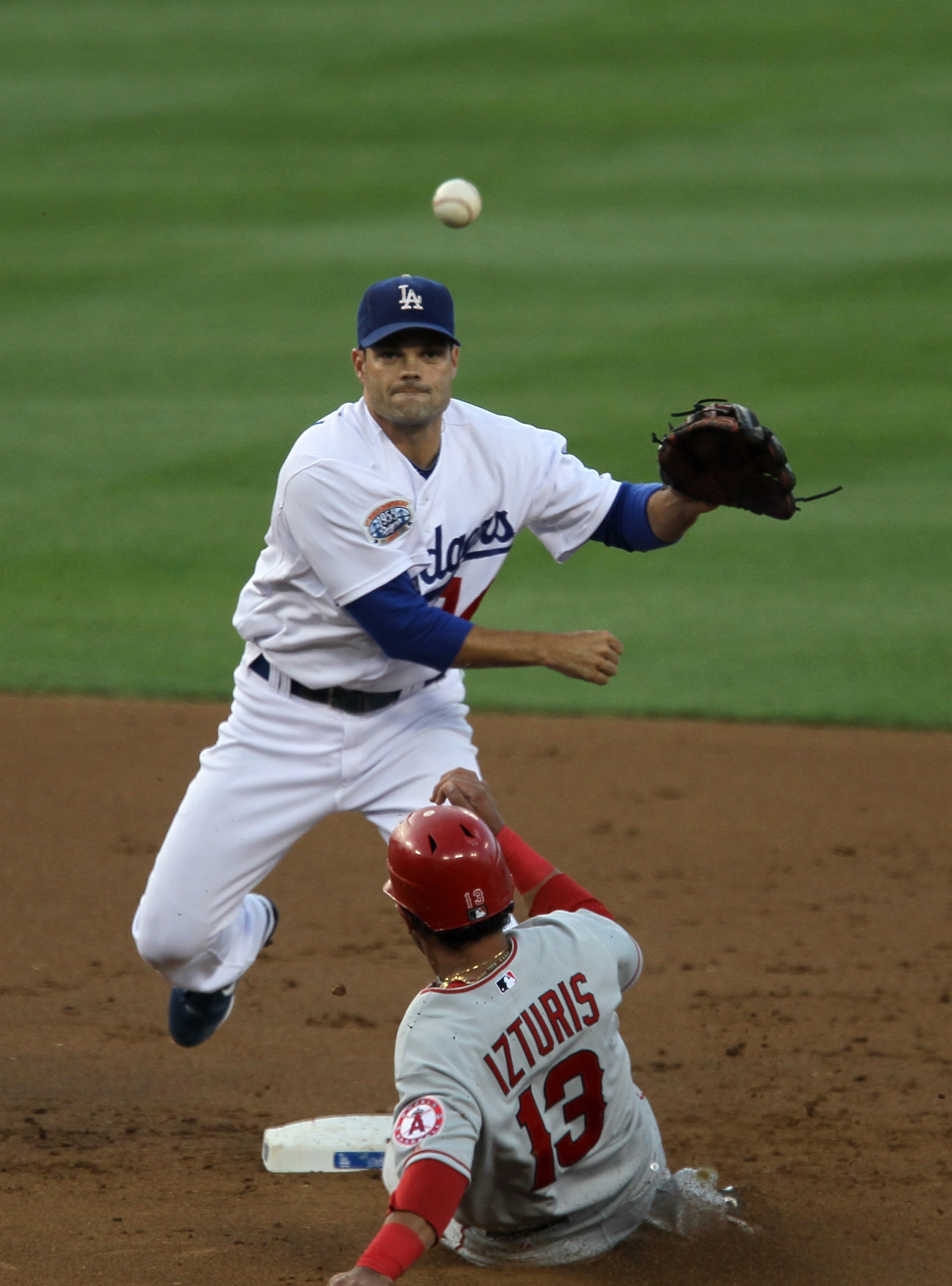
Some of these are obvious, some not.
New York Yankees vs. New York Mets
Chicago White Sox vs. Chicago Cubs
Oakland Athletics vs. San Francisco Giants
Los Angeles Angels of Anaheim vs. Los Angeles Dodgers
Tampa Bay Rays vs. Florida Marlins
Texas Rangers vs. Houston Astros
Cleveland Indians vs. Cincinnati Reds
Kansas City Royals vs. St. Louis Cardinals
Baltimore Orioles vs. Washington Nationals
Minnesota Twins vs. Milwaukee Brewers
Boston Red Sox vs. Philadelphia Phillies
Toronto Blue Jays vs. Pittsburgh Pirates
Seattle Mariners vs. San Diego Padres
Detroit Tigers vs. Atlanta Braves
Expansion Team vs. Arizona Diamondbacks
Expansion Team vs. Colorado Rockies
Playoffs
11 of 14
I know this is going to be controversial, but I would definitely like to see longer playoffs, similar to that of the NBA and NHL.
Playoffs
8 teams per league
4 division champions
4 wild cards
8-League Wild Card Series
Best of 5
1 vs. 8
2 vs. 7
3 vs. 6
4 vs. 5
4-League Division Series
Best of 5
Best left vs. Worst left
Middle vs. Middle
2-League Championship Series
Best of 7
World Series
Best of 7
146 regular season games + 24 maximum postseason games = 170 games total
Compared to:
162 regular season games + 19 maximum postseason games = 181 games total
So in actuality, the current schedule would be longer than this proposal. It makes more sense than what Bug Selig has considered adding to the playoffs.
What If This System Was In Use Already From 2001-2010? (2006-2010)
12 of 14
I went back and looked back at the standings from the last 10 seasons and tried to see who would make the playoffs under this proposed playoff format. I came up with this:
2010 Playoffs
AL
1. Tampa Bay Rays vs. 8. Toronto Blue Jays
2. New York Yankees vs. 7. Chicago White Sox
3. Minnesota Twins vs. 6. Boston Red Sox
4. Oakland Athletics vs. 5. Texas Rangers
NL
1. Philadelphia Phillies vs. 8. Florida Marlins
2. San Francisco Giants vs. 7. Colorado Rockies
3. Cincinnati Reds vs. 6. St. Louis Cardinals
4. Atlanta Braves vs. 5. San Diego Padres
2009 Playoffs
AL
1. New York Yankees vs. 8. Tampa Bay Rays
2. Los Angeles Angels of Anaheim vs. 7. Seattle Mariners
3. Texas Rangers vs. 6. Detroit Tigers
4. Minnesota Twins vs. 5. Boston Red Sox
NL
1. Los Angeles Dodgers vs. 8. Chicago Cubs
2. Philadelphia Phillies vs. 7. Atlanta Braves
3. St. Louis Cardinals vs. 6. San Francisco Giants
4. Florida Marlins vs. 5. Colorado Rockies
2008 Playoffs
AL
1. Los Angeles Angels of Anaheim vs. 8. Cleveland Indians
2. Tampa Bay Rays vs. 7. Toronto Blue Jays
3. Boston Red Sox vs. 6. Minnesota Twins
4. Chicago White Sox vs. 5. New York Yankees
NL
1. Chicago Cubs vs. 8. Florida Marlins
2. Philadelphia Phillies vs. 7. St. Louis Cardinals
3. Houston Astros vs. 6. New York Mets
4. Los Angeles Dodgers vs. 5. Milwaukee Brewers
2007 Playoffs
AL
1. Boston Red Sox vs. 8. Toronto Blue Jays
2. Cleveland Indians vs. 7. Seattle Mariners
3. Los Angeles Angels of Anaheim vs. 6.Detroit Tigers
4. Texas Rangers vs. 5. New York Yankees
NL
1. Arizona Diamondbacks vs. 8. Milwaukee Brewers
2. Colorado Rockies vs. 7. Atlanta Braves
3. Philadelphia Phillies vs. 6. New York Mets
4. Chicago Cubs vs. 5. San Diego Padres
2006 Playoffs
AL
1. New York Yankees vs. 8. Toronto Blue Jays
2. Minnesota Twins vs. 7. Los Angeles Angels of Anaheim
3. Oakland Athletics vs. 6. Chicago White Sox
4. Texas Rangers vs. 5. Detroit Tigers
NL
1. New York Mets vs. 8. Atlanta Braves
2. San Diego Padres vs. 7. Cincinnati Reds
3. St. Louis Cardinals vs. 6. Philadelphia Phillies
4. Houston Astros vs. 5. Los Angeles Dodgers
What If This System Was in Use Already from 2001-2010? (2001-2005)
13 of 14
Earlier part of the decade:
2005 Playoffs
AL
1. Chicago White Sox vs. 8. Minnesota Twins
2. Los Angeles Angels of Anaheim vs. 7. Oakland Athletics
3. New York Yankees vs. 6. Cleveland Indians
4. Texas Rangers vs. 5. Boston Red Sox
NL
1. St. Louis Cardinals vs. 8. Milwaukee Brewers
2. Atlanta Braves vs. 7. New York Mets
3. Philadelphia Phillies vs. 6. Florida Marlins
4. San Diego Padres vs. 5. Houston Astros
2004 Playoffs
AL
1. New York Yankees vs. 8. Cleveland Indians
2. Los Angeles Angels of Anaheim vs. 7. Chicago White Sox
3. Minnesota Twins vs. 6. Oakland Athletics
4. Texas Rangers vs. 5. Boston Red Sox
NL
1. St. Louis Cardinals vs. 8. San Diego Padres
2. Atlanta Braves vs. 7. Chicago Cubs
3. Los Angeles Dodgers vs. 6. San Francisco Giants
4. Philadelphia Phillies vs. 5. Houston Astros
2003 Playoffs
AL
1. New York Yankees vs. 8. Chicago White Sox
2. Oakland Athletics vs. 7. Toronto Blue Jays
3. Minnesota Twins vs. 6. Seattle Mariners
4. Texas Rangers vs. 5. Boston Red Sox
NL
1. Atlanta Braves vs. 8. St. Louis Cardinals
2. San Francisco Giants vs. 7. Los Angeles Dodgers
3. Chicago Cubs vs. 6. Houston Astros
4. Philadelphia Phillies vs. 5. Florida Marlins
2002 Playoffs
AL
1. New York Yankees vs. 8. Chicago White Sox
2. Oakland Athletics vs. 7. Seattle Mariners
3. Minnesota Twins vs. 6. Boston Red Sox
4. Texas Rangers vs. 5. Los Angeles Angels of Anaheim
NL
1. Atlanta Braves vs. 8. Philadelphia Phillies
2. St. Louis Cardinals vs. 7. Houston Astros
3. San Francisco Giants vs. 6. Los Angeles Dodgers
4. Montreal Expos vs. 5. Arizona Diamondbacks
2001 Playoffs
AL
1. Seattle Mariners vs. 8. Boston Red Sox
2. New York Yankees vs. 7. Chicago White Sox
3. Cleveland Indians vs. 6. Minnesota Twins
4. Texas Rangers vs. 5. Oakland Athletics
NL
1. St. Louis Cardinals vs. 8. Los Angeles Dodgers
2. Houston Astros vs. 7. Chicago Cubs
3. San Francisco Giants vs. 6. Atlanta Braves
4. Philadelphia Phillies vs. 5. Arizona Diamondbacks
What Do You Think?
14 of 14
I know this is so much to digest, but what is your take on this?
Is this just all ridiculous, or does it make a lot of sense when you dig deeper?
That is for you to decide.


.jpg?w=2560 "Post-Preseason Player Rankings")


.jpg?w=2560 "49ers DE's Hilarious Plan for Australia Flight")

.jpg?w=2560 "QB's wife owns up to social media 'burner' situation")
.jpg?w=2560 "Raiders Name Cousins QB1")