
NLCS Reports Cards: Phillies Fall Behind in a Giant Way
After three games into the 2010 NLCS, we have already seen as many confusing turn of events as one could've imagined.
But for the Philadelphia Phillies, being down two to one in the series is a by-product of their own design in many ways.
This is not to say the Phillies are playing bad necessarily, rather, just making some key errors that favor the competition.
Let's take a look at how the Phillies have graded through three crucial games in the NLCS, since at this point, it becomes ever so important to really tighten any loose bolts.
1B, Ryan Howard
1 of 8
Howard has been marginally acceptable in his performance thus far, but he hasn't been that bat he is capable of being, and that's a slight issue.
Howard can play either side of the ball (small ball or power), but it has been his small ball that has really taken precedent through the series, not so much the power.
Howard needs to step things up in the power department if he is going to give the Giants pitchers something to worry about. If not, then it becomes easier to pitch to a guy who is susceptible to the lower speed pitches; a collection of pitches that also saves the arm life of a pitcher.
Final Grade: B minus
2B, Chase Utley
2 of 8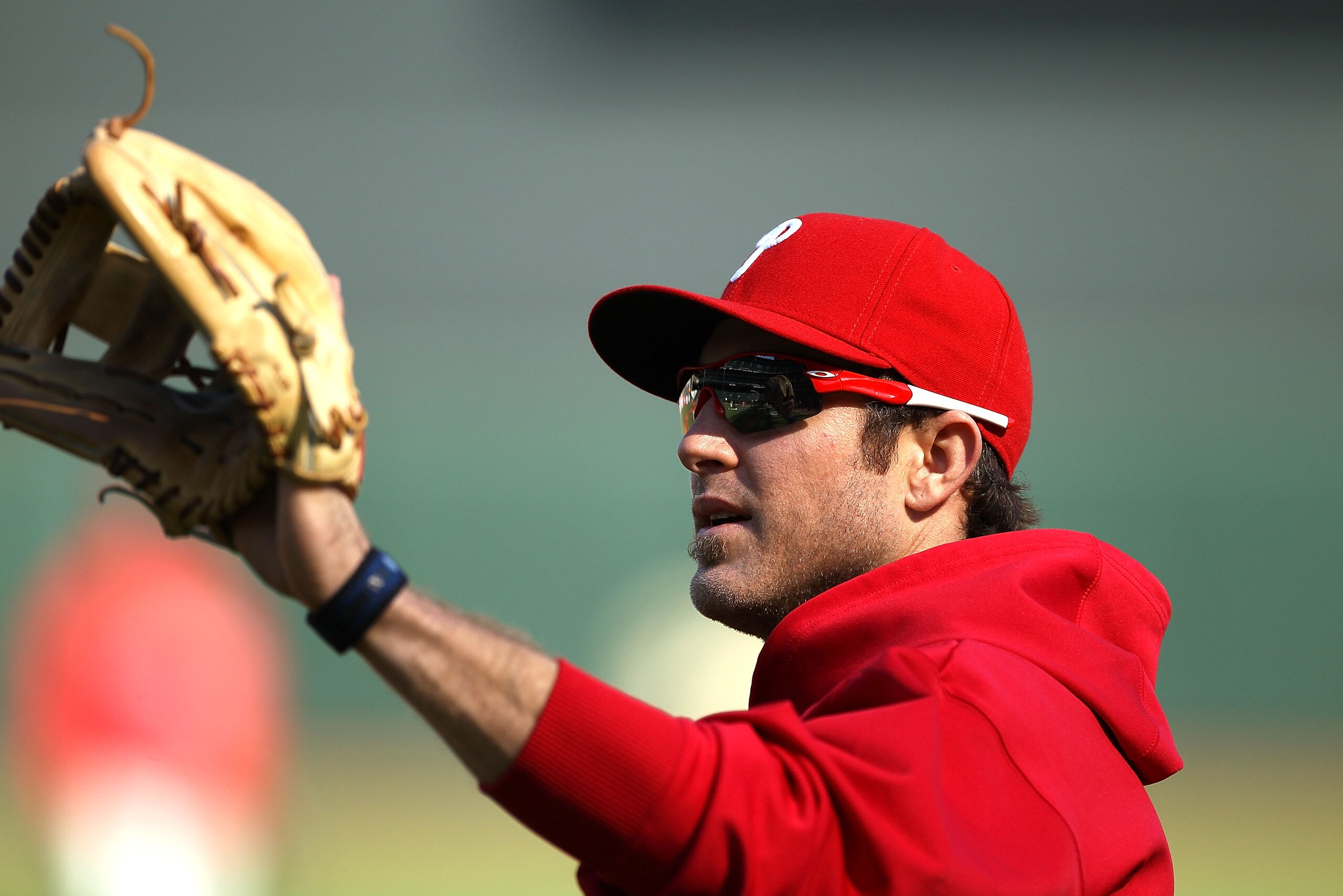
Utley has, at times, been clutch with his defense and bat. But there have a lot of other times he has been curious at best, as he has been susceptible to strike outs, and defensive follies.
Striking out against good pitching is understandable at times; defensive follies are not.
The Phillies make their living on their infield defense, so dropped balls and other little discrepancies just won't cut it in the NLCS, especially against a team that is comparable to you.
Utley will have to tighten a few, apparent, loose bolts if he is to be a major role player going forward.
Final Grade: C minus
SS, Jimmy Rollins
3 of 8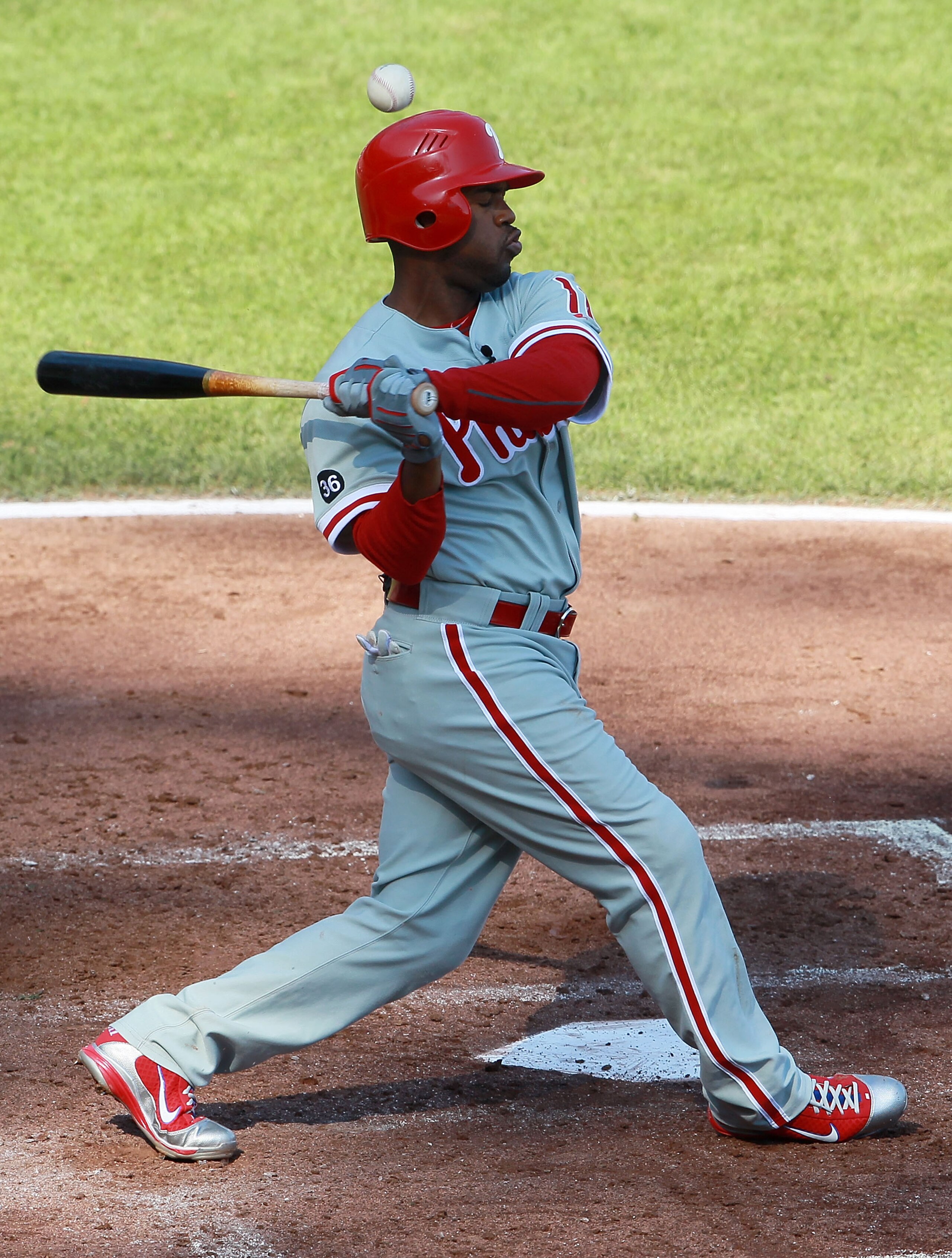
Rollins has done about as much as you could expect from a guy who has a suspect hamstring against a stingy pitching staff.
But the real important mention here, has got to be his ability to still contribute defensively in a time of the season that matters most; something he has done admirably.
But for a guy who is running at about 85%, there is only so much he can do against the Giants pitching staff as a hitter, an against Buster Posey as a base runner.
Final Grade: B minus


3B, Placido Polanco
4 of 8
Polanco is batting well below .250 with almost no runs driven, and for a guy who hit .298 in the regular season, this isn't acceptable.
Grant it, your not going to get a lot of power out of Polanco, but what you're supposed to get is situational play, and without it, it's a lot harder to get those ever-so-precious runs batted in.
Defensively, Polanco has been average at best, which means he will have to hunker down going forward if the Phillies want to remain competitive in this series.
Final Grade: C minus
The Outfield
5 of 8
Werth has been sensational, Victorino has been marginal, and Ibanez has been forgettable.
This outfield has so much power and ability to make a significant impact in any game, but when they play separated, they (The Phillies) have mixed results.
Werth has been a solid source of contribution offensively and defensively, and has been the best out of three; ironically enough, he'll be the one traded next year.
Victorino has been acceptable offensively, and better than average defensively. But Victorino's base running penchant has been missed greatly, and his ability to produce runs, and scoring opportunities has been missed.
Ibanez has been nothing short of miserable. Defensively has has been borderline marginal, and offensively he has been MIA.
Werth Final Grade: A minus
Victorino Final Grade: C plus
Ibanez Final Grade: D minus
OUtfield Final Grade: C minus
C, Carlos Ruiz
6 of 8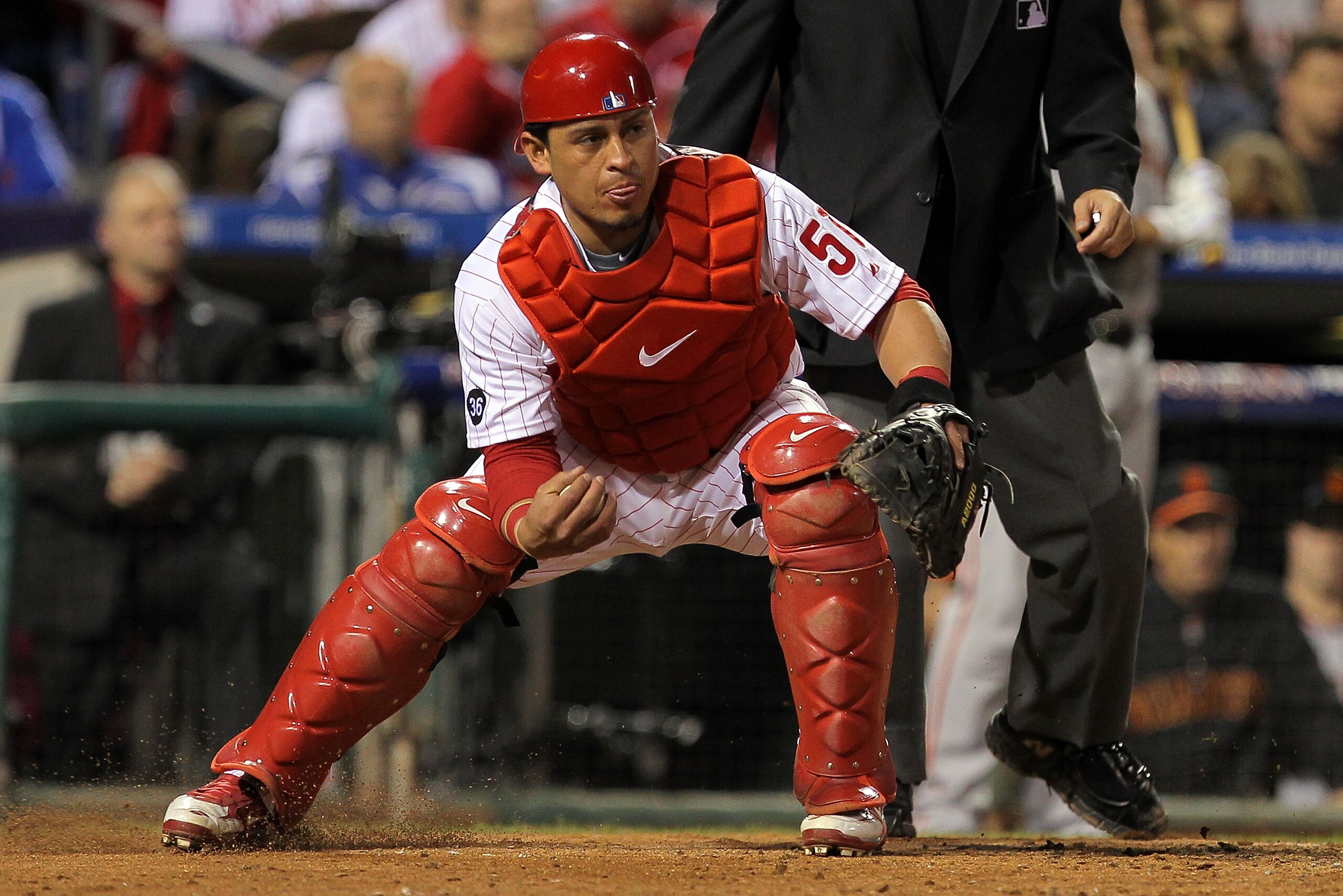
Ruiz has continued his stellar regular season success into the postseason by hitting exceptionally well, and defending the plate very well.
He's been clutch, spot on, and a rounded version of an all contributing player—the most contributing player offensively—giving the Phillies a chance every single game.
Final Grade: A minus
PItching
7 of 8
It's been a very different performance from the three headed monster of Philadedlphia in the NLCS, when compared to the NLDS.
But if you think about it, it's bound to happen.
Halladay failed to deliver in Game One, whereas, Roy Oswalt pitched brilliantly in Game Two, with Hamels pitching so-so in Game Three.
Each of these guys have had issues with on common pitch though, a pitch that has been murder on the Phillies: the high fastball.
Nearly every ball that has been tagged for a homerun (namely by Cody Ross) has been the high fastball right down the middle, and each of these three have suffered greatly from it.
Going forward, Halladay, Oswalt, and Hamels will have to start leading the batter, paint the corners more, and stay away from the middle of the plate if they are to beat the Giant bats of the Giants' hitters.
Halladay Final Grade: C plus
Oswalt Final Grade: A minus
Hamels Final Grade: C plus
Final Pitching Grade: C plus
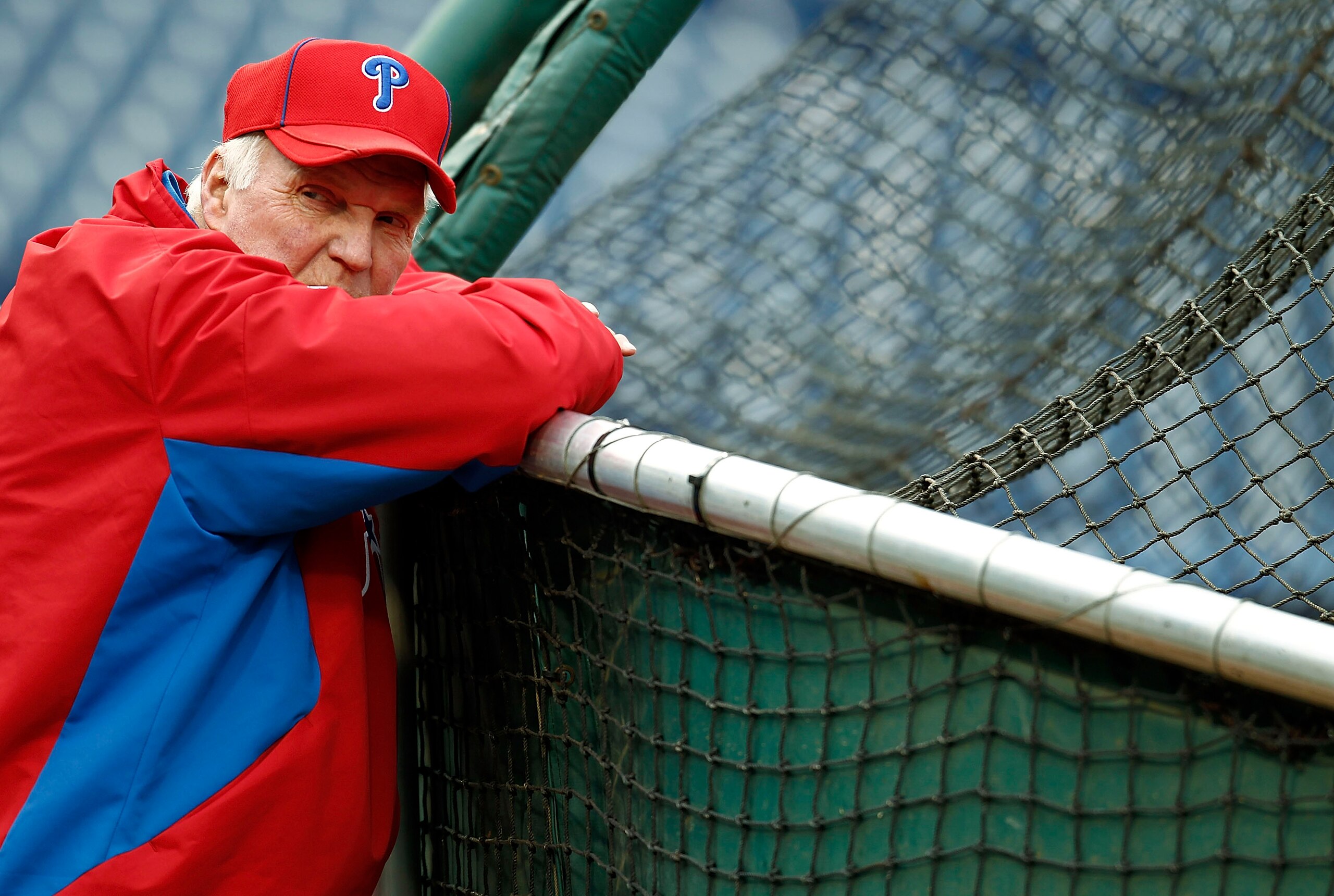
Manager, Charlie Manuel
8 of 8
It's hard to talk about the negative issue surrounding one of the greatest manager in Phillies' history, but as a sports writer you have to be objective.
In the NLDS, Manuel did a bang up job.
In Game One of the the NLCS, he did a good job, but just couldn't get that extra run out of his guys.
In Game Two, he promised that is if he had guys on base he would run, but failed to make good on that claim, and that was the real problem in my mind. How many guys were on first with one out? That's when you send a runner, and if he makes it, you eliminate the easy double play, and put a runner in scoring position with only a single out.
In Game \Three, he failed to adjust to a fading Hamles.
Taking into consideration a team comparable to that of the Cincinnati Reds, there have been some curious decisions going on, and Charlie will have to take advantage of the next three games, and be far more aggressive.
Charlie Manuel Final Grade. C minus.

-(1).jpg?w=2560 "Grading WWE Raw 🔠")

.jpg?w=2560 "Waiver-Wire Pickups 👀")

.jpg?w=2560 "Week 1 Rankings 📊")
.jpg?w=2560 "Best Fantasy Team Names")
.jpg?w=2560 "Monday Night Raw Results 👊")