
Notable First Playoff Starts of Philadelphia Phillies Pitchers Over The Years
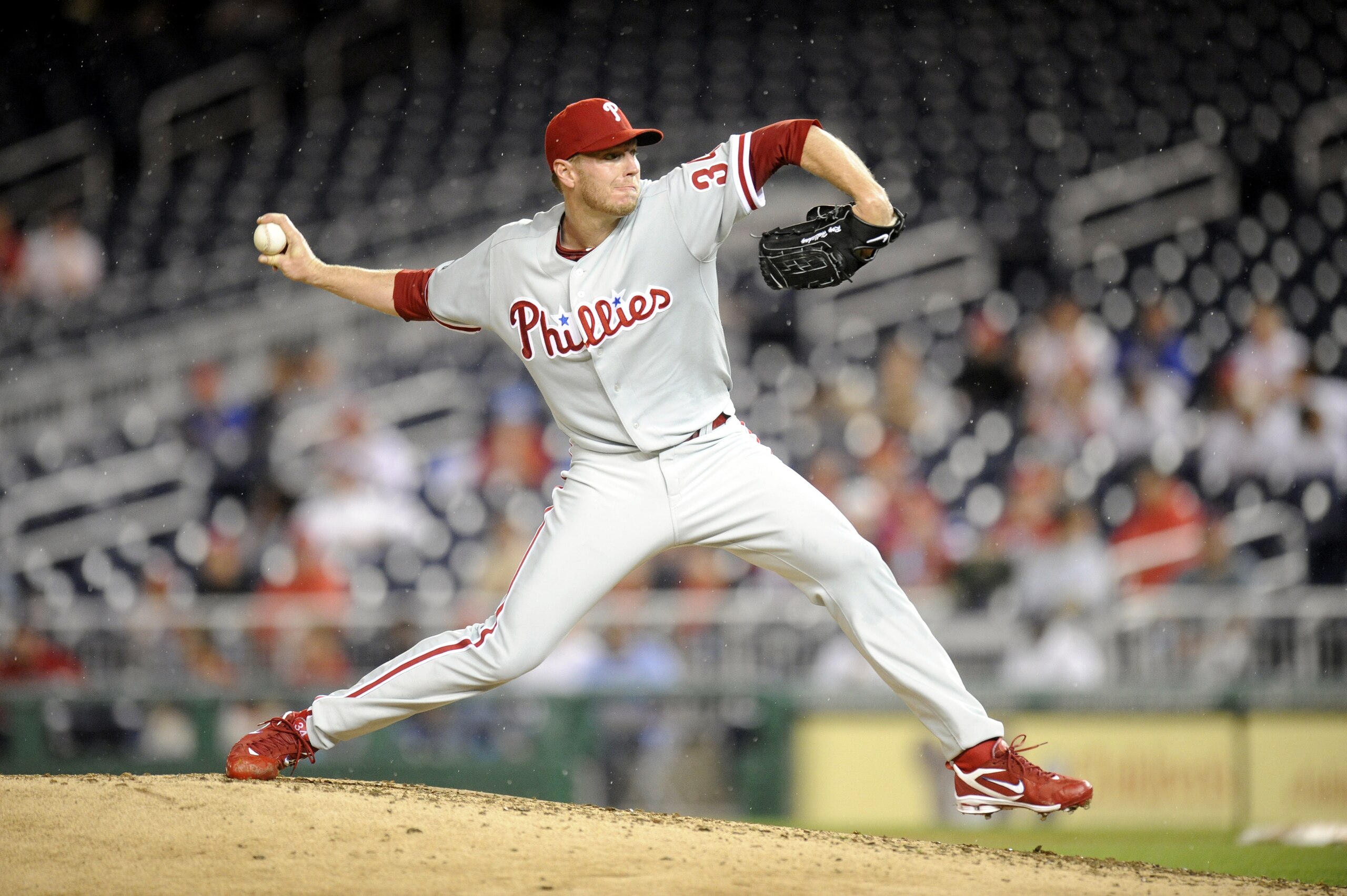
With his 97-pitch complete game shut out of the Washington Nationals, Phillies starter Roy Halladay sent the Phillies back to the postseason for the fourth straight year.
Soon after, pitching coach Rich Dubee announced that Halladay would be the Phillies Game 1 starter in the NLDS, it will mark the first time in Halladay's career that he pitches in the postseason.
Halladay has been one of the most elite pitchers in baseball over the past decade. Despite being near the top the league every year statistically, his Toronto Blue Jays were never able to overcome the Yankees or Red Sox and later the Rays.
This brings up the point: Who are some other Phillies starters whom, regardless if they had been with the team a long or short while, made their playoff debuts in red pinstripes.
Here are a couple notable starting pitchers who made their first career postseason starts with the Phillies.
Cliff Lee: 2009
1 of 5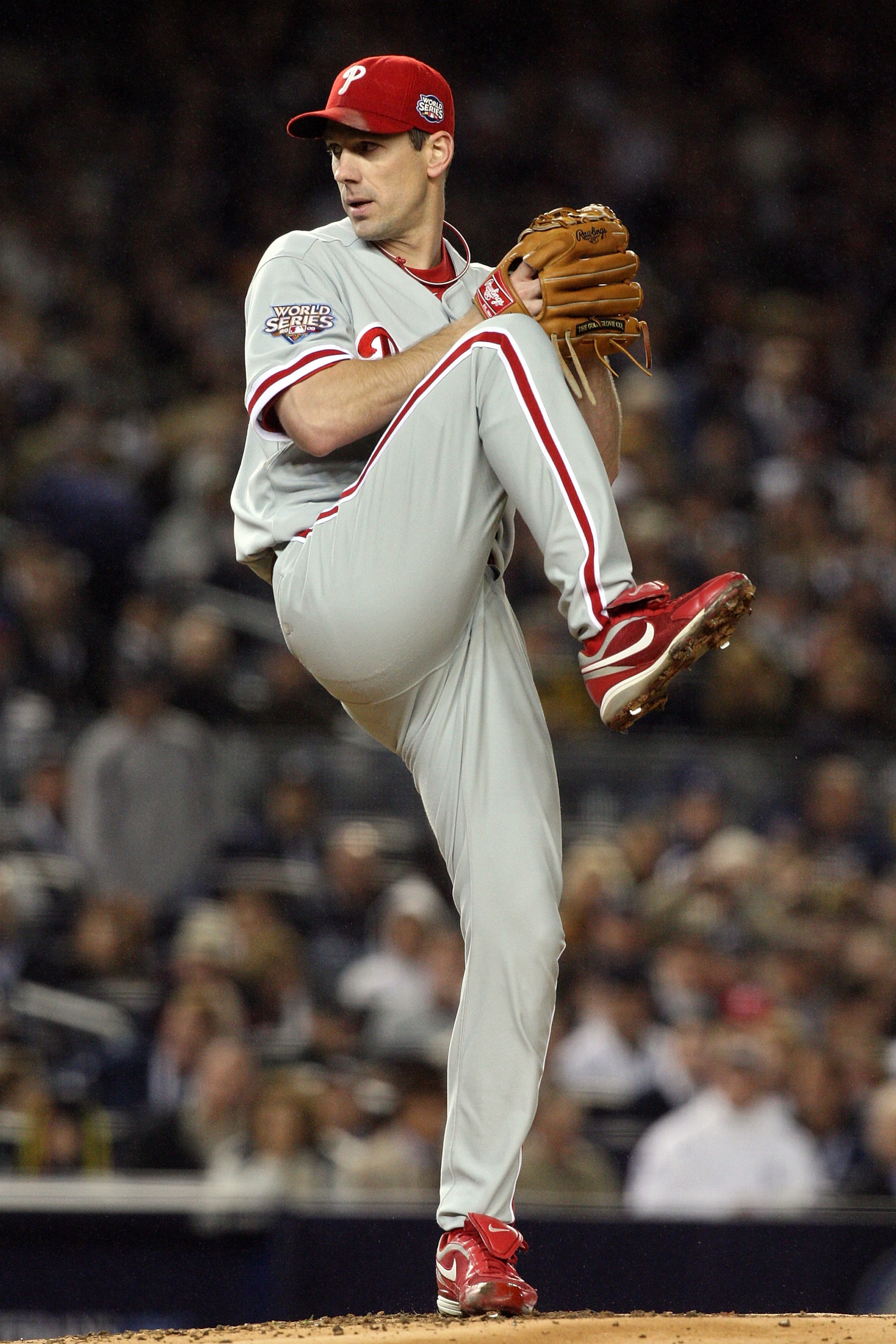
After General Manager Ruben Amaro Jr. failed to acquire Halladay at the deadline last year, he turned his efforts to 2008 AL Cy Young award winner Cliff Lee in Cleveland.
During his two month stint with the Phillies, Lee went 7-4 with a 3.39 ERA entering postseason play in October. The Phillies drew the NL Wild Card winner Colorado Rockies, who previously swept them in their previous playoff series in 2007.
Cliff Lee showed why the Phillies traded for him at the deadline, pitching a complete game en route to a 5-1 Phillies Game 1 victory. Lee would have a very stellar postseason for the Phillies, going 4-0 with a 1.57 ERA and two complete games. This also included two wins in the World Series, the only games the Phillies would win against the eventual champion New York Yankees.
Brett Myers: 2008
2 of 5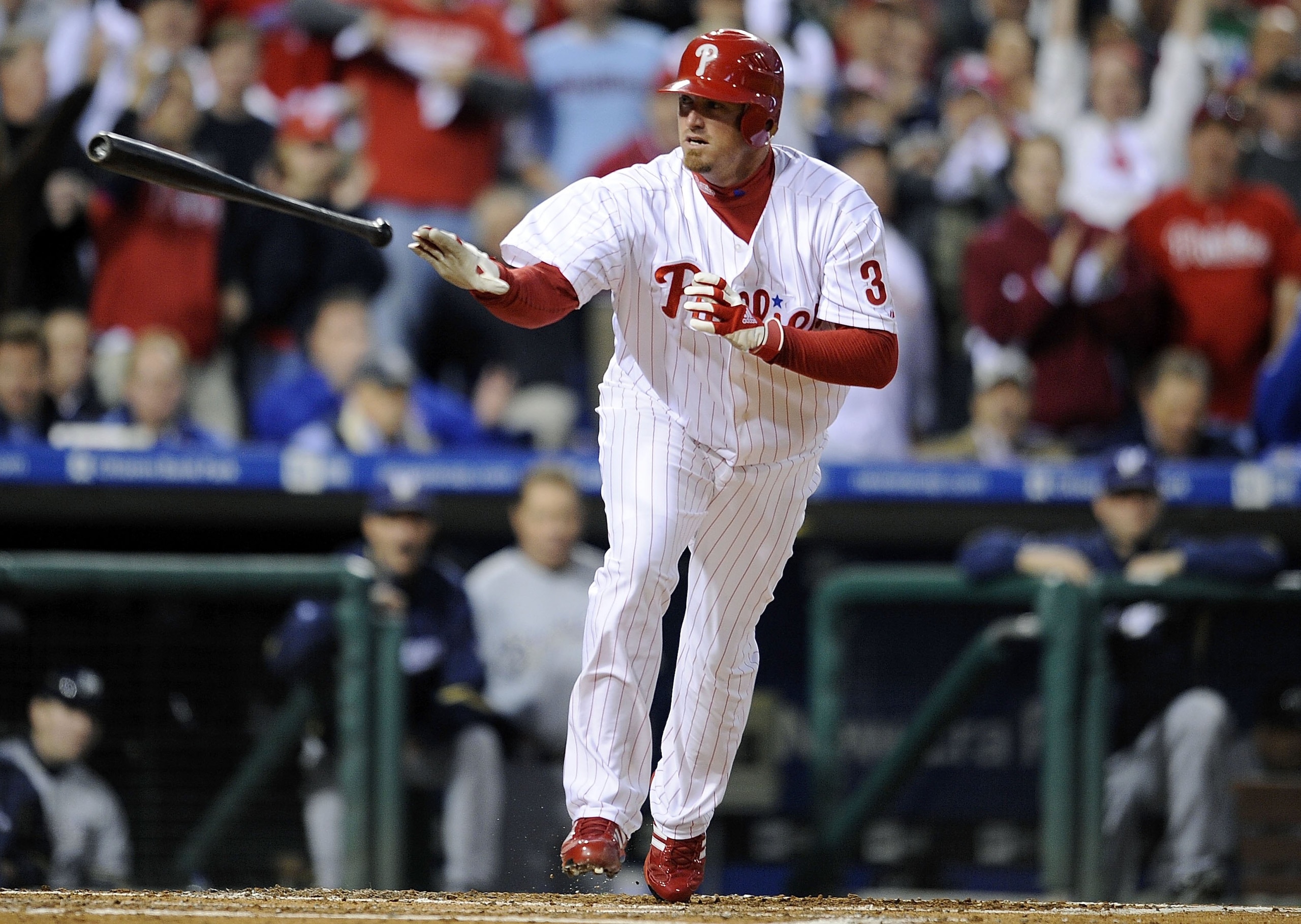
Although Brett Myers made his playoff debut with in 2007, he was in the closer's role at the time. Now back at his normal starter role, Myers took the hill in Game 2 of the 2008 NLDS against the Milwaukee Brewers.
He would be going against trade acquisition and Brewers ace CC. Sabathia, who had been pitching on short rest most of September to will the Brewers back into the postseason for the first time since 1982.
After giving up an run in the first inning to the Brewers, Myers perhaps made his most notable impact at the plate against Sabathia. With a runner on third and two outs, Myers kept fouling off pitch after pitch to work the count to 3-2.
Sabathia ended up walking Myers after nine pitches and was clearly flustered. He ended walking Jimmy Rollins on four pitches to load the bases. After jumping ahead to a 1-2 count, Sabathia left one over the middle to Shane Victorino, who promptly hit it out to left for a Grand Slam.
That would be all the offense Myers would need. He went seven strong innings, giving up only two runs as the Phillies would win the game 5-2 and jump out to a 2-0 lead on the Brewers, eventually winning the series and later the World Series.
Cole Hamels: 2007
3 of 5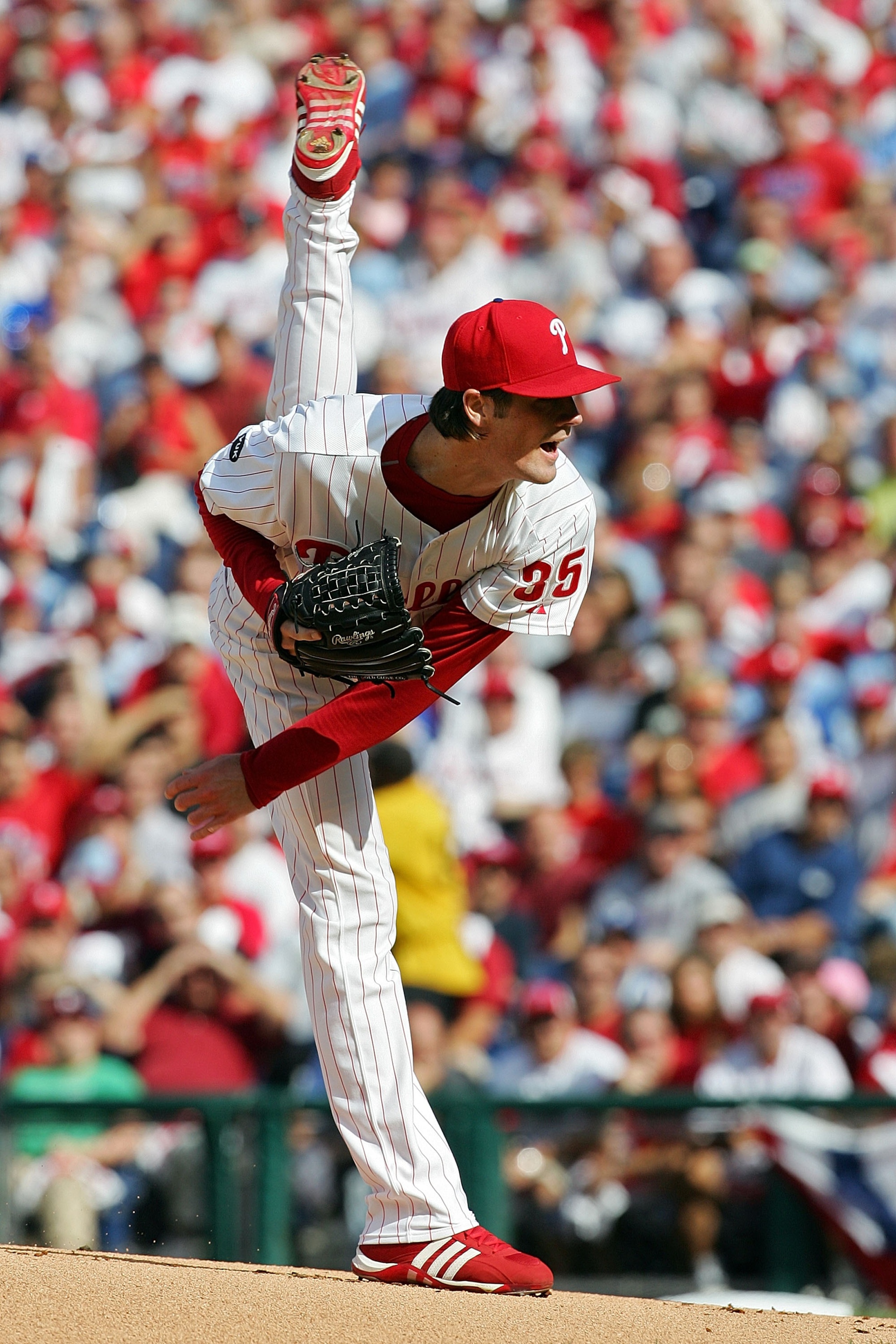
Cole Hamels was the ace of the staff in 2007 as the Phillies made one of the most memorable September comebacks in history by overcoming a seven game deficit with 17 to play to pass the New York Mets and win the NL East crown.
Hamels and company would be greeted by the scorching hot Colorado Rockies, who had won 21 of 22 games to force a one game playoff against the San Diego Padres to get to the postseason.
Hamels would go against 17 game winner Jeff Francis in Game 1 in Philadelphia. After retiring the first three in order, Hamels would struggle in the 2nd inning, thanks to a lead off triple by Todd Helton that spurred on a three run inning for Colorado. It would be all the Rockies needed as they were able to hold of for the 4-2 win en route to a three game sweep of the Phillies.
Despite Hamels getting the loss in his debut, the experience was valuable. He would return to the playoffs next year and lead the Phillies to their second World Series Championship while winning the World Series MVP award.

Curt Schilling: 1993
4 of 5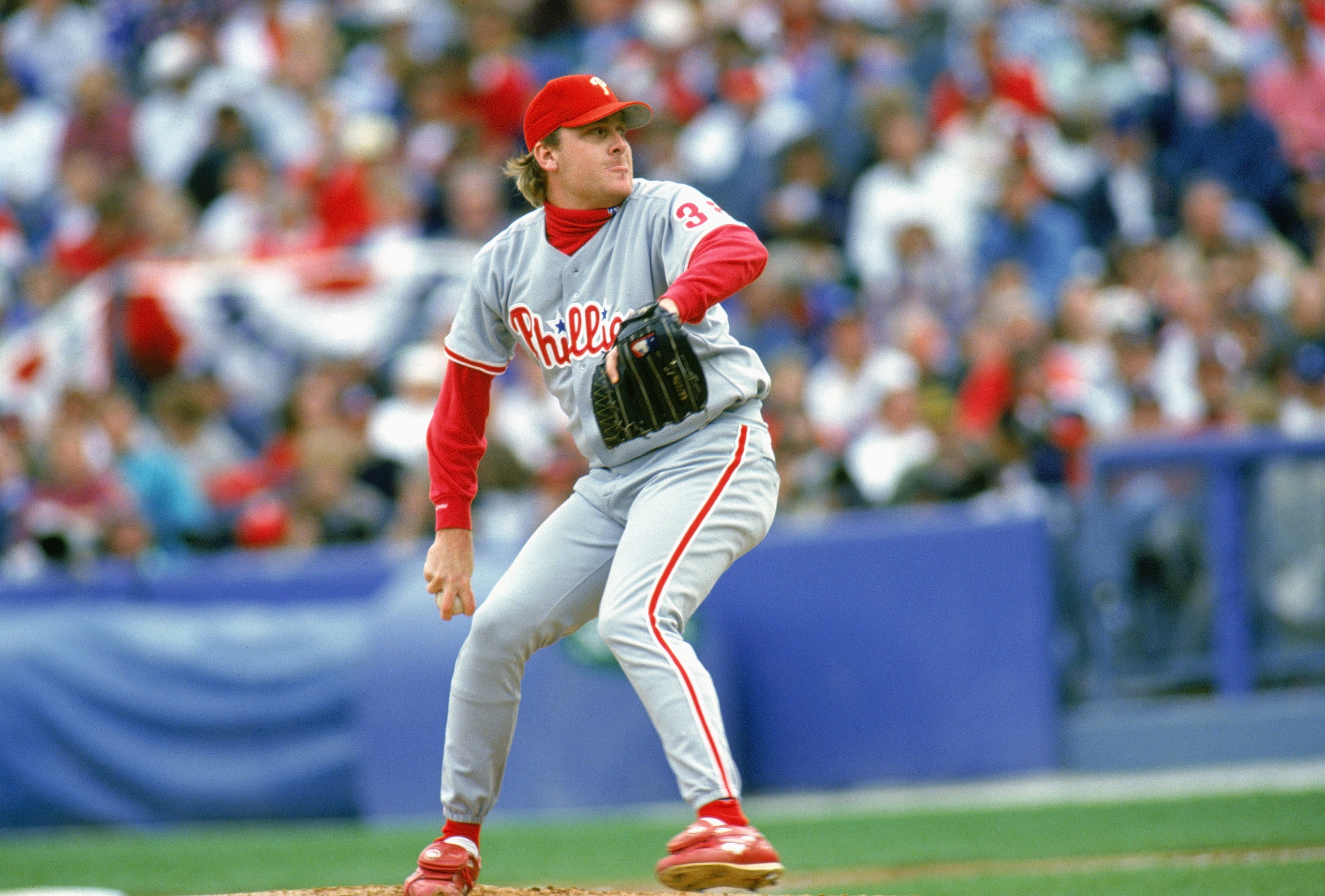
Curt Schilling was the young ace of a Phillies team who made one of the most unexpected runs to the postseason in baseball history. The 1993 Phillies were noted for their macho personalities and were donned "Macho Row."
While most of these looked nothing like a baseball team, they racked up 97 wins and won the National League East for the first time in 10 years.
They would be matched up in the NLCS against the two time defending NL Champion Atlanta Braves, lead by 15-plus game winners in Steve Avery, Greg Maddux, Tom Glavine, and Curt Schilling.
Schilling would match up against 18 game winner Avery in Game 1 and would out-pitch the Atlanta ace, throwing eight innings while only surrendering two runs while striking out 10. Unfortunately, "Wild Thing" Mitch Williams would go on to blow the save only to be saved by his Phillies hitters in extras in a 4-3 win.
Schilling would continue to pitch solidly in the postseason in 1993, going 1-1 with two no decisions. He would have to wait eight more years to return to the postseason with the Arizona Diamondbacks, where he and fellow ace Randy Johnson helped lead the D'Backs to the 2001 World Series over New York.
He also would help deliver two World Series to the Boston Red Sox, including the 2004 crown in which they won their first championship in 85 years.
Robin Roberts: 1950
5 of 5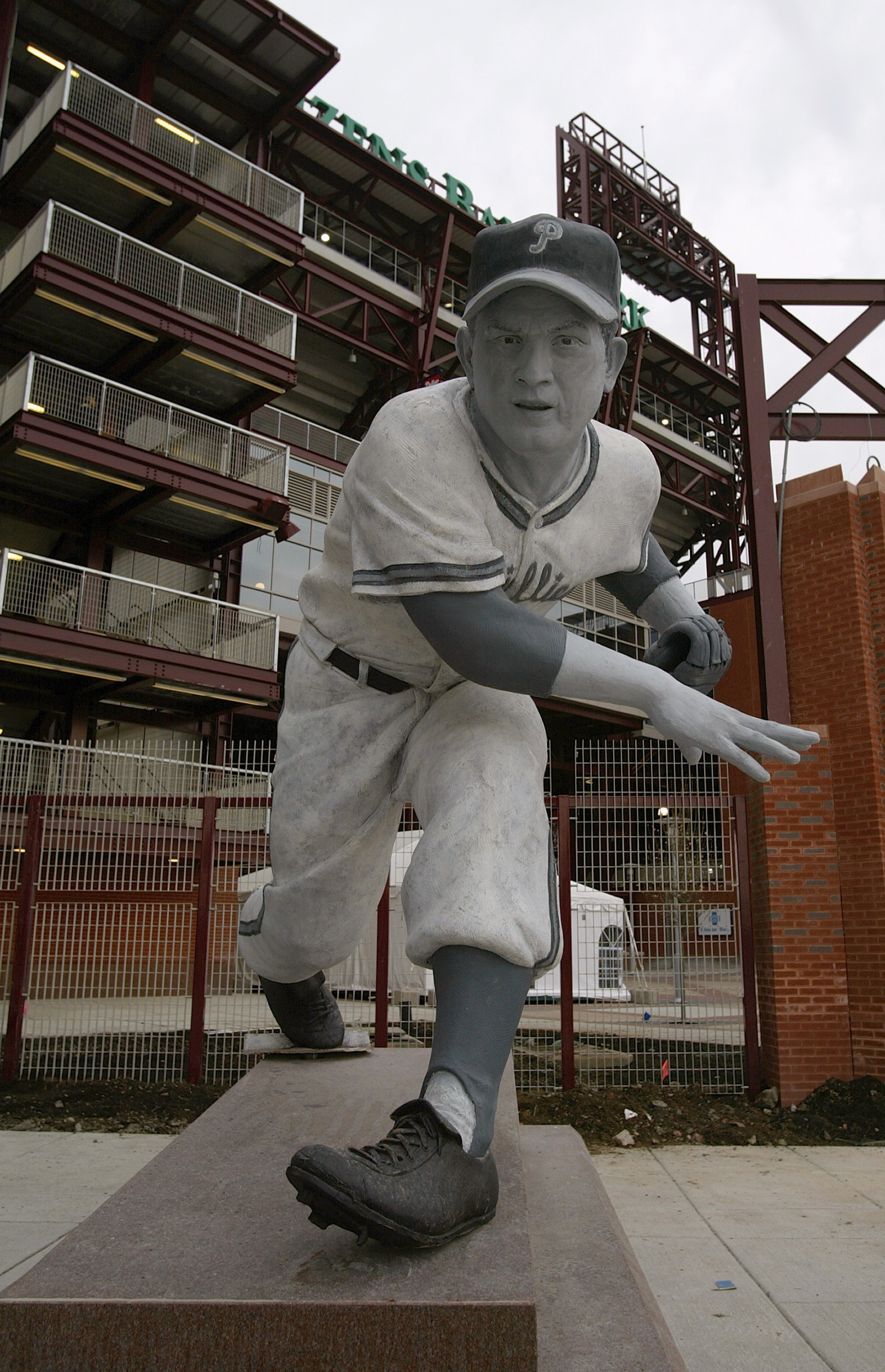
Robin Roberts had only finished his second full season for the Phillies when they won the 1950 NL Pennant. Nicknamed the "Whiz Kids" due to being a fairly young baseball club, the Phillies were led by the 23-year-old Roberts and 21-year-old Curt Simmons on the mound against the AL Champion New York Yankees.
After the Phillies lost Game 1, they looked to Roberts to even up the series as he took on Allie Reynolds of the Yankees. The starters gave up only one run each as the game went into extra innings. Roberts remained in the game into the 10th when Joe DiMaggio launched a tie breaking HR to lead off the inning. Reynolds quickly retired the side as the Yankees won Game 2, 2-1.
Roberts sadly would never pitch another postseason game in his Hall of Fame career. 1950 marked the first of six straight 20 win seasons. He left the Phillies in 1962 and went on to play three more seasons with the Baltimore Orioles before ending his career in 1966 after splitting time in Houston and Chicago.
The 1950 Phillies would be the only NL pennant winner until 1980 when the Phillies returned back to the World Series and eventually won their first title.
.png?w=2560)
.jpg?w=2560 "Lawrence to Retire After 2026")

.jpg?w=2560 "James Pearce Jr. Suspended 8 Games (AP)")
.jpg?w=2560 "Report: Colts Coach Suffers Serious Knee Injury")
.jpg?w=2560 "Tua Underwhelms in Debut 🤙")
.jpg?w=2560 "Breaking News")