

Texas Rangers: 10 Reasons They Can Beat the NY Yankees in the Playoffs
With their thrilling 4-3 victory over the A's in Oakland on Saturday, the Texas Rangers have finally made their long-awaited return to baseball's promised land, earning their first postseason berth since 1999.
While it was nearly a foregone conclusion that they would eventually clinch the AL West, considering their significant division lead, nothing in baseball is ever set in stone until the other potential outcomes are mathematically eliminated. The Rangers were able to erase any lingering doubt, claiming the American League West division crown with a week's worth of regular-season action remaining.
The ability to clinch with a week left should not be underestimated. Although their rotation has been set-up for postseason action for the last few weeks, the Rangers now don't have to rely on dramatic "must-win" scenarios for at least a week, easing the burden on their staff.
Relievers can also be used judiciously, keeping them fresh for baseball's "second season," while still giving them the proper amount of work to keep them sharp and ready. Similarly, position players are now afforded the opportunity to heal their weary bodies, and opportunity that their opponents, Tampa or New York won't have.
In baseball, it pays to adhere to the age-old cliches of "taking one day at a time" or "never looking beyond today's game," but now the Rangers can actually look ahead somewhat, with their clinching victory rendering the remainder of the regular season meaningless in terms of playoff ramifications.
Texas knows that since the Rays and Yankees hail from the same division, they are unable to play each other in the first round of the divisional playoffs, so one must play the Rangers, and the other, the Twins.
Currently, with the Yankees and Rays embroiled in a tight division race, only separated by a half-game, the AL East battle is likely to go down to the final day of the season. As it stands today, the Rays lead the East with the best record in the league, and would therefore play the postseason entrant with the lowest winning percentage, the Rangers.
That could all change over next few days if the Tampa and New York were to exchange places in the East standings, in which case, the Rangers would then face the Yankees in the Division Series. Although the Yankees have been a strong team, and are the defending World Series champions, there are many factors that may contribute to that being a match-up that the Rangers would actually prefer, if given the choice.
Texas' Left-Handed Starters Pose a Threat To Yankee Lineup
1 of 10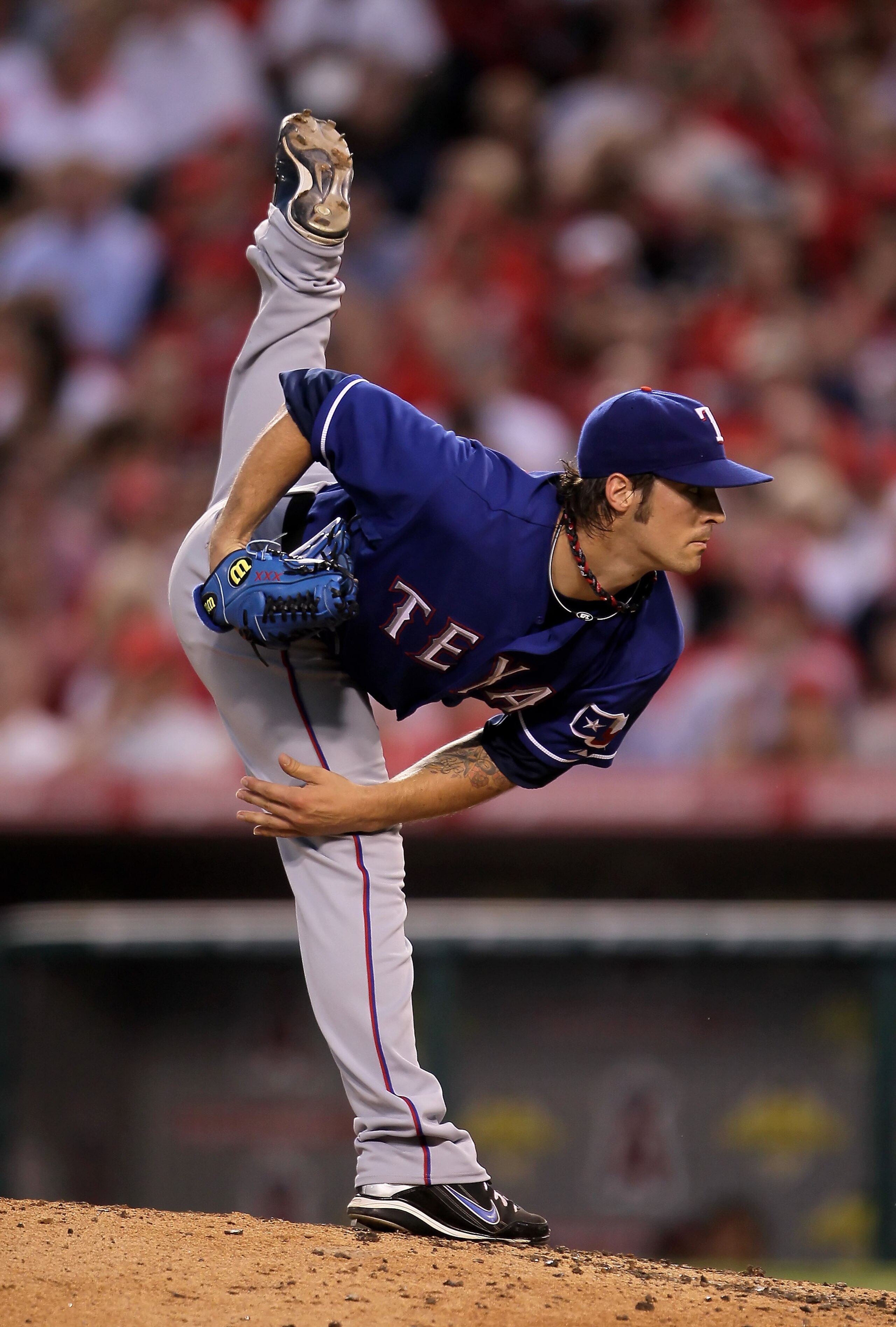
In the case that the Rangers do face the Yankees, it would mean that New York won the AL East crown, thus guaranteeing them home-field advantage against Texas. That would mean that the first two games would be played in that hitters' haven with the short porch in right-field, new Yankee Stadium.
It comes as no surprise that Yankee sluggers enjoy aiming for the 314 foot right-field foul-pole, and the accompanying short wall that cuts straight across right-center-field offers an inviting target to aim for when driving the ball to the right side of the diamond.
Some days, it only seems like you have to hit a ball solidly to moderately deep right-field to get the ball to carry out for a home run. This particular attraction is the reason the Yankee lineup is loaded with left-handed hitters, and switch-hitters capable of taking advantage of the cozy home environs.
As the Rangers rotation is currently set, the first two starting pitchers would be Cliff Lee in Game 1 and C.J. Wilson in Game 2. This configuration benefits the Rangers, since the left-handed starters would help to neutralize a portion of the Yankees' home-field advantage by either minimizing the amount of damage particular left-handed Yankees can do at the stadium or turning around the several switch-hitters in the NY lineup to the right side of the plate.
This strategy comes into play the most against outfielders Curtis Granderson and Brett Gardner, as Granderson hits .258 with an .875 OPS against righties, but when facing a lefty, drop to .238 with a .634 OPS. Gardner's splits aren't nearly as dramatic in 2010, hitting .285 with a .768 OPS against RH pitchers, and .252 with a .731 OPS against LH pitchers.
The Yankees have long-favored loading their team with switch-hitters in an effort to balance out their lineup, and make them less susceptible to relief specialists. Mark Teixeira, Nick Swisher, Jorge Posada, and Lance Berkman all provide depth and versatility to the lineup by hitting from both sides.
Most of the Yankee switch-hitters, aside from Berkman, can hit fairly well from both sides of the plate, some even better from the RH side, but the point is to take away the ability to easily shoot the ball over the short right-field fence from the left-handed batters' box.
During the 2010 season, Teixeira has actually hit far better from the right side, hitting .280 with a .943 OPS, versus .249 with an .815 OPS from the left side. However, he has hit 23 home runs batting left, and only 10 right, with most of those coming at Yankee Stadium. Although he may be a better all-around hitter from the right side, taking away that ability to loft fly balls over the short right-field porch could be critical to Ranger success.
Nick Swisher has had success from both sides of the plate as well, hitting .291 left-handed with an .888 OPS, while batting .286 right-handed, with an OPS of .836. The significant difference, and the reason that the Rangers would prefer to turn him around to the right side in Yankee Stadium, is that 24 of his 28 home runs have come from the left side of this plate.
Jorge Posada, although he has been a superior hitter right-handed throughout his career, has mastered the art of hitting home runs out of Yankee Stadium's right-field over his 16 years in pinstripes. To turn him around to the right side, and make him try to hit it out of the much more spacious left-center portion, known as "Death Valley," could be highly advantageous to the Ranger pitching staff.
Robinson Cano and Marcus Thames help balance out the equation, as Cano has hit 13 of his 28 home runs against left-handed pitchers. Some guys can simply hit no matter who is on the hill. Thames has been a lefty killer in his career, posting an .838 OPS as a part-time player. He is certain to get a few starts at DH against left-handed starters.
The most interesting case that no one seems to realize is that Alex Rodriguez is actually a better hitter against right-handed pitchers than he is against lefties. Since 1994, he has hit .307 with a .961 OPS against righties, while hitting .289 with a .952 OPS against lefties. That's not a significant enough difference to base many decisions upon, but glancing at his 2010 splits, the numbers tell a vastly different story.
In 2010, A-Rod is hitting .296 with a .905 OPS, 24 home runs and 85 RBI against right-handed pitchers. Conversely, he has struggled mightily against left-handed pitchers, batting .209 with a .727 OPS, five home runs, and 34 RBI. What one might expect from one of the most feared sluggers in the game, is actually the opposite of the truth in 2010.
While the Yankees are a deep, potent lineup, several of their key players can be either neutralized significantly or in the case of several others, turned around to the right side of the batters' box, where they are less likely to do significant damage in Yankee Stadium.
If the Rangers are able to meet with the Yankees in the ALDS, they possess two top-flight lefties of their own, Cliff Lee and C.J. Wilson, the Games 1 & 2 starters who will be tasked with keeping the Yankee sluggers away from the short right-field porch in the Bronx.
Rangers' RH Bats Lessen Impact Of Yankees' Best Starters Sabathia And Pettitte
2 of 10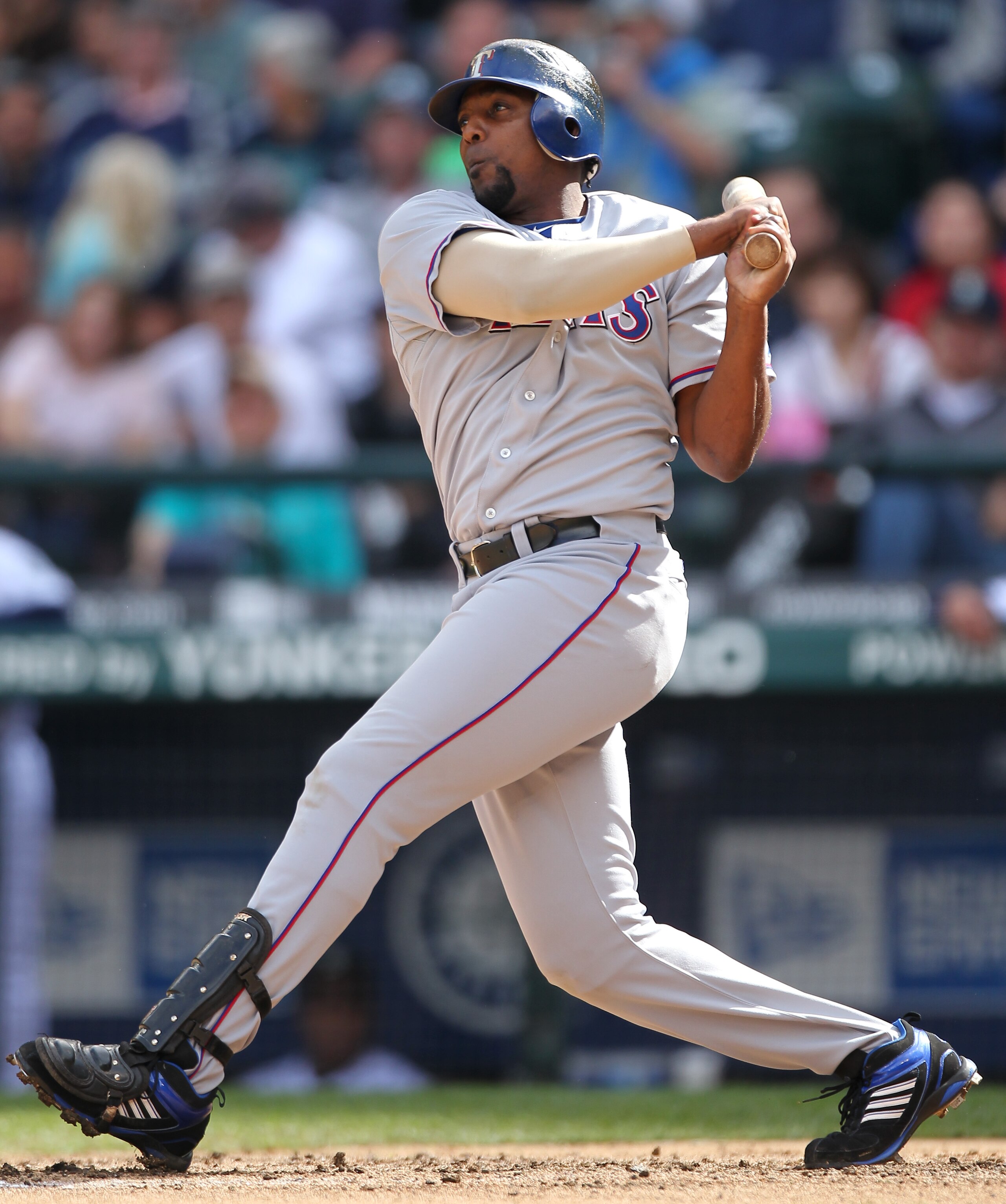
The Yankees have two horses on which they can depend in their starting rotation. Phil Hughes, A.J. Burnett, and Javier Vazquez all come with their own varying degrees of uncertainty regarding their ability to succeed in the postseason. CC Sabathia and Andy Pettitte don't carry those concerns.
CC led the the way for the rotation in 2009, going 3-1 with a 1.98 in five playoff starts, and Pettitte, as usual, found ways to win in the postseason, going 4-0, with a 3.52 ERA, earning the victory in the clinching game of each series.
A significant factor contributing to the success of the left-handed veterans is the ability to take away left-handed sluggers aiming for the short right-field porch in Yankee Stadium. This is also a factor in Texas, as the famed jet stream to right-center makes the Ballpark in Arlington an attractive hitters' haven as well.
Over his career, CC has fared very well against left-handed batters, holding them to a .238 batting average, and a .649 OPS, in comparison to right-handed hitters, who have hit .247 with a .690 OPS against him. Interestingly, in 2010, he has actually been tougher on right-handed batters, as they've only hit .238 against him, with a .664 OPS, in contrast to left-handed hitters who have hit .260 with a .666 OPS versus CC this year.
Andy Pettitte has been a much clearer case of lefty-on-lefty dominance during 2010. For his career, the splits are fairly even, with lefties owning a .700 OPS against Andy, as opposed to a .730 from right-handed hitters. In 2010 however, Pettitte has shut down lefties, only allowing a .189 opponents' batting average and a minuscule .484 OPS, as well as a 6.33 strikeout-to-walk ratio. Right-handed hitters have fared much better, hitting .272 with a .764 OPS, with a much less impressive 1.72 strikeout-to-walk rate.
This is where the Ranger lineup comes into play.
Aside from Josh Hamilton, who has been absolutely mashing pitchers of any type this year, but is questionable due to his fractured ribs, and David Murphy, the majority of Rangers' hitters swing from the right side of the plate. Not only do they hit right-handed, but a good portion of them vastly prefer left-handed hurlers.
Long-time Ranger, Michael Young, has blistered lefties in 2010, batting .319 with an .866 OPS, but against right-handed hurlers has only hit .276 with a .750 OPS. Vlad Guerrero has terrorized left-handed pitchers, hitting .338 with a .930 OPS, in comparison to .288 with an .815 OPS against righties.
Ian Kinsler has also feasted upon southpaws in 2010, hitting an astronomical .386 with a .976 OPS, versus a pedestrian .265 with a .755 OPS against right-handed hurlers. Although Nelson Cruz has hit both lefties and righties at a similar pace in 2010, his splits against lefties are impressive, batting .321 with a .957 OPS.
Since the Yankees' two most effective and reliable starting pitchers, CC Sabathia and Andy Pettitte, are left-handed, the right-handed dominant Texas lineup may provide the perfect foil for New York's top two pitchers. If the Rangers were able to defeat CC and Andy, forcing Burnett, Vazquez, or Hughes to beat them, Texas would stand a fantastic chance of knocking the Yankees out of the ALDS en route to their first ever American League Championship Series appearance.
Cliff Lee Is In The Yankees' Heads
3 of 10
One can easily point to his 2-0, 2.81 ERA, .217 batting average, and .537 OPS allowed performance against New York in the 2009 World Series as evidence supporting his success against the Yankees. After all, en route to their 27th World Series title, the Yankees only lost four games, and Cliff Lee earned the victory in two of those, on the way to his own personal 4-0 postseason showcase.
This doesn't even have everything to do with Cliff Lee specifically. It's more about the type of pitcher he is, a guy that works quickly, throws first-pitch strikes, constantly works ahead in the count, and doesn't beat himself. In other words, precisely the kind of pitcher that can utterly baffle the Yankees.
When at the top of their game, this current crop of Yankee hitters is taking tons of pitches, working deep counts, and grinding out tough at-bats all throughout their lineup. Led by best in the majors Brett Gardner, the Yankees have five hitters in the top 25 American League players in regards to pitches per plate appearance, all with 3.94 pitches/PA or above. That type of approach is a significant weapon to wield against pitchers who are timid near the strike zone.
The Yankees can wait out a hurler, take their walk,s and be patient until the moment he gives in and makes a mistake, to strike and cause optimal damage.
Against a pitcher like Cliff Lee, that strategy simply does not work. Currently, Lee outpaces all MLB pitchers in first-pitch strike percentage, with an astounding 70.1 percent. He also leads all pitchers with a 56.7 percent rate of pitches thrown within the strike zone. Cliff Lee throws strikes, and he throws them often.
It's really difficult to patiently await a pitcher's mistake pitch when he's constantly ahead of you in the count. Against a team like the Yankees, that favors long at-bats and deep counts, the most effective way to fight that strategy is to never let them employ it in the first place. A 70.1 first-pitch strike percentage is a highly effective way to combat patient hitters.
We've seen it repeatedly over the last few years, even if a pitcher doesn't have shut-down stuff, he can be successful against this current crop of Yankees. Throw strikes, keep ahead of them in the count, and suddenly you've got them abandoning their patient tendencies and flailing at pitchers' pitches. If there is a pitcher in baseball who has mastered this technique, and is prepared to utilize it against an offensively dynamic club such as the Yankees, it is certainly Clifton Phifer Lee of the Texas Rangers.
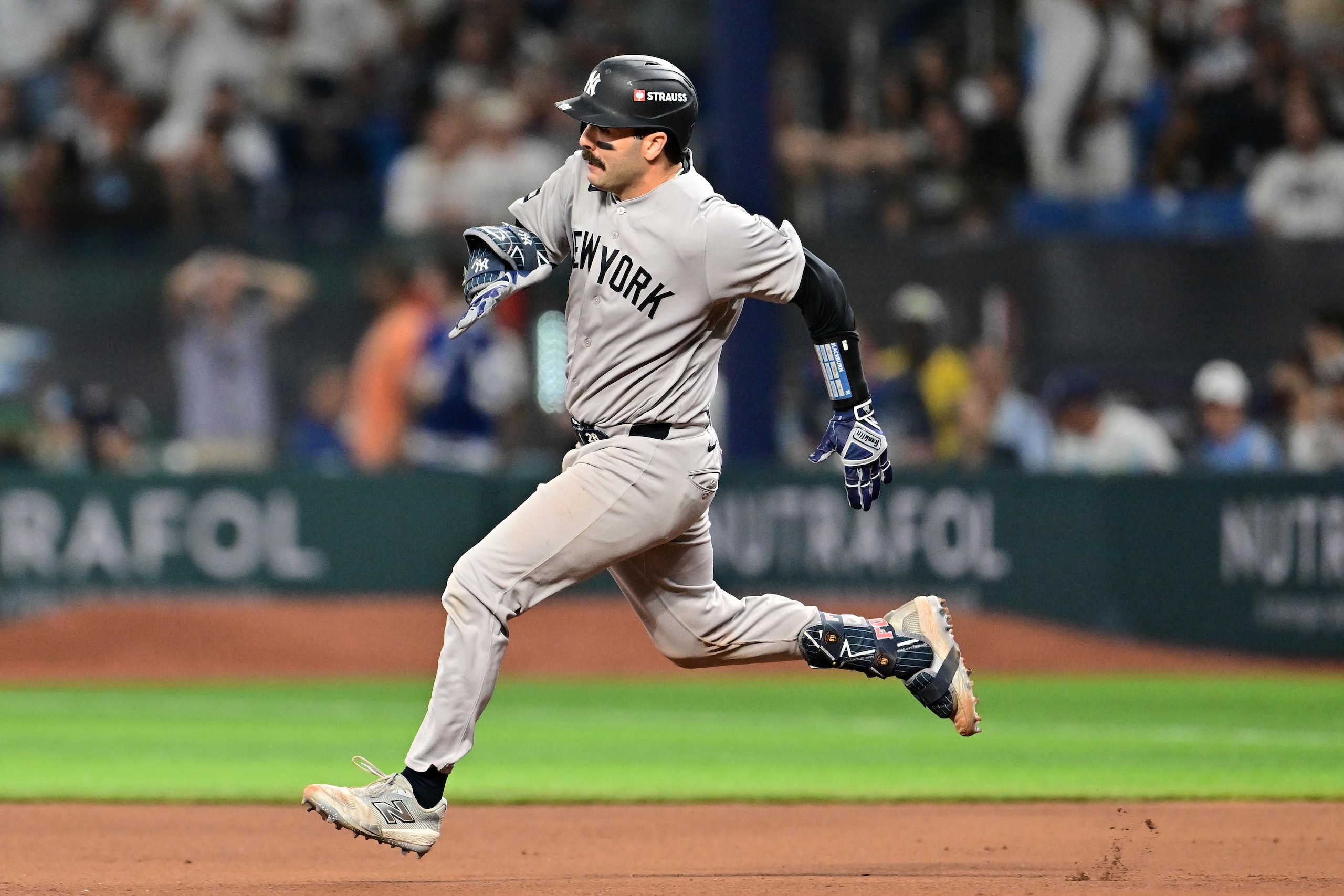
The Current State Of The Yankees
4 of 10
For a team that has owned the best record in baseball for large portions of the 2010 season, this Yankee club has been decidedly inconsistent for much of the year.
After coming off of their 27th World Series championship in franchise history, one would think that the most storied franchise in the history of American sports would have some swagger to them that would carry over to the next season. Instead, the Yankees have looked surprisingly vulnerable all season.
It may seem unreasonable to worry for a team that, as previously mentioned, has been the top team in the league for most of the year, but this version of the Yanks is not without their chinks in the armor.
Perennial superstars Derek Jeter and Alex Rodriguez have dealt with what many perceive to be the rigors of age, each under-performing through various chunks of the season, and in Jeter's case, prompting many to speculate that he has suddenly succumbed to the inevitable age-related decline phase.
Robinson Cano and Nick Swisher have been steady performers, as well as Brett Gardner, but should-be stalwarts, Mark Teixeira and Curtis Granderson have seen their share of peaks and valleys in their performances this year, as well as their own injury problems.
Aside from CC Sabathia, Andy Pettitte, Mariano Rivera, and recently Kerry Wood, every pitcher on the Yankee roster has given some reason for concern throughout the year.
Even Andy Pettitte has become an issue, after dominating the first several months of the season, he also is now a health risk. A.J. Burnett and Javy Vazquez, two pitchers of considerable MLB experience, have pitched like AAA starters for much of the year, leaving the Yankees to wonder if either are viable options in the playoffs.
The bullpen, outside of Mariano Rivera has seemingly rounded into form after the arrival of Kerry Wood, but Joe Girardi will still likely harbor trepidation in the postseason when needing to hand the ball to Joba Chamberlain, David Robertson, or Boone Logan.
That being said, these are still the Yankees, so they should not be under-estimated even if they are apparently limping into the postseason. A couple hot weeks out of Jeter and A-Rod, along with solid pitching, could be enough to propel them toward October success.
There are enough question marks surrounding the Yankees' recent performances though to give the Rangers confidence if facing up against them in the Division Series. After a blistering July, the Yankees cooled off to go 16-13 in August, then have struggled mightily in September, going 12-14 in their first losing month of the 2010 season.
Following an eight-game winning streak that ended just before Labor Day, the Yankees have lost 14 of their last 22 games, and 5-of-7 heading into Wednesday's match-up with Toronto.
The Rangers have the offense, depth, and pitching to exploit a strong Yankee team when they're down. If the last month is any indication, the Yankees may have already played their best baseball of the season, as they head into October a wounded giant.
The Yankees Haven't Played Tremendously Well Against Good Teams All Year
5 of 10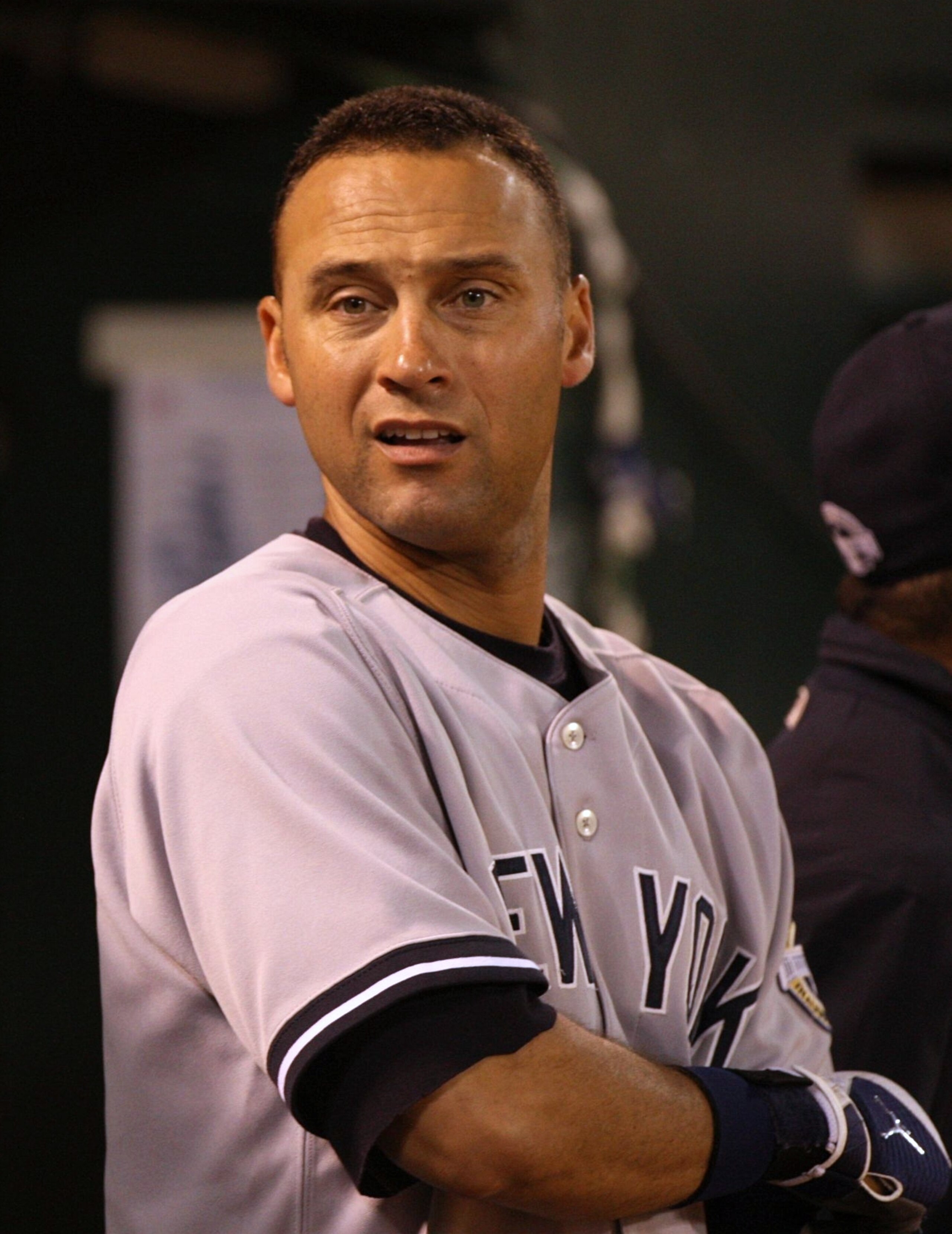
For a team to have the best record in baseball, it would seem logical that they have a fairly solid record against everyone in the league, including all the best teams.
Owners of a 94-64 record, currently good for second place in the AL East, 0.5 game behind leaders Tampa Bay, the Yankees have built much of that record by feasting on lesser teams Of course, those games count just the same in the standings, and that's what top teams do, is win the games that they're supposed to.
However, when looking ahead to postseason action, there are no Orioles, Athletics, Mariners, Indians, or Royals. Against those five teams, the Yankees are 39-15, and against everyone else they have played, 55-49.
If you remove their 11-7 interleague record, 18 games in which they played the D-Backs, Astros, Mets, Dodgers, and Phillies, then the Yankees are only 44-42 against the remainder of the AL, the Red Sox, Rays, Blue Jays, White Sox, Tigers, Twins, Angels, and Rangers. Two games over .500 against the tougher AL competition in 2010 is certainly no intimidating success rate.
Since the beginning of September, the Yankees have played eight series, only winning three of them, against Oakland, Toronto, and Baltimore. The series that they won in Baltimore, could have very easily gone the other way, as Game 1 of that set was won on Alex Rodriguez's two-strike, two-out home run which was almost a strike-out looking on the previous pitch.
Don't forget also that the Yankees were almost swept at home by the Orioles in the week of Labor Day, only saved by another dramatic home run, this time a two-out shot to left-center off the bat of Nick Swisher with the Yankees down a run.
This last weekend, he Yankees were almost swept at home by the Red Sox, Game 3 on Sunday coming down to blown saves by both Mariano Rivera and Jonathan Papelbon, the Yanks needing an 11th inning walk-off bases on balls to rescue their last home game of the regular season.
Over the course of 2010, the Yankees are 16-16, exactly .500 against the Rays, Rangers, and Twins, so the Rangers have every reason to feel they can defeat the Yankees in any series they end up facing them in.
Joe Girardi
6 of 10
While plenty of Yankee fans support Joe Girardi simply out of necessity, he is the manager of the Yankees after all, by default, he's sure to earn his fair share of support. But in my tremendously unscientific research, I have yet to find more than a handful of fans who think he is a great manager.
Most I encountered feel that he veers wildly between not doing enough in obvious managerial situations, to extreme micro-managing in other situations.
Derided as "Genius Joe" by his detractors, Girardi has made a number of missteps that have cost the Yankees at crucial times this season.
Common threads tend to be a lack of understanding how to properly manage a bullpen, leaving starters in beyond their point of effectiveness, then once he does reach the bullpen, utilizing every pitcher he can, on a batter-to-batter basis, until he's run out of arms.
He often neglects to bunt in obvious sacrifice situations, often acknowledging the error later. Joe even pulled Ramiro Pena from a critical at-bat in a recent game, in favor of pinch-hitter Marcus Thames, which would not be so abnormal if he hadn't done it after the first strike of the at-bat.
Girardi is also taken to task quite a bit for his player selections. Several times throughout 2010, he has put out inferior lineups, minus several regulars as if possibly conceding a game on a getaway day, only to manage frantically later in the game, as if it's a "must-win" scenario.
These transgressions may appear minor to the casual observer, but to Yankee fans, those miscalculations could lead to loss of home-field advantage, or in a tighter race, potentially leave the Yankees home watching in October.
It's difficult to heavily criticize a man that is fresh off a World Series title in just his second year on the job, but critics like to point out the payroll in excess of $200 million and the fact that he has at least three future Hall of Famers on his 25-man roster, if not two or three more.
Whether he's a skilled tactical manager or not, we may never know, as manager of the New York Yankees, he's always going to have those advantages over nearly every other team he plays, which can help to partially obscure many miscues that he does make.
You can bet though, that even the most seemingly innocuous move on Girardi's part will be heavily scrutinized throughout October by Yankee fans and baseball analysts alike. He better hope he gets them right.
Rangers Own a Better Head-To-Head Record Against The Yankees Than Against Tampa
7 of 10
Although the difference between being 4-4 versus the Yankees in 2010, and being 2-4 against the Rays this year may seem insignificant, teams are always looking for a psychological edge in baseball. The mental aspect of the game can never be underestimated, as getting into your opponents' heads can be a crucial factor in achieving victory.
Texas knows that they have a better record against the Yankees, and that they have won four out of their last five against New York. You can bet the Rangers aren't thinking much about being swept by the Yankees in the the Bronx during the third week of April, by now, that's ancient history.
Although the Yankees' pitchers held the Ranger offense in check over the eight meetings, Texas in turn pitched solidly against the Yankees, posting a 4.63 ERA versus NY, their lowest ERA against any of their potential playoff foes. A 4.63 ERA is nothing to write home about, but since it was lower than it was against Tampa or Minnesota, it may be enough for that elusive psychological edge. Combined with the fact that they beat Mariano Rivera twice in those four victories, makes it enough to prefer to face NY over Tampa.
On the other hand, the Rangers have only won twice out of six tries against Tampa this year for a 2-4 record. In fact, after winning their first two meetings of 2010, they have lost four consecutive games to the Rays. Their pitching staff allowed a 6.35 ERA against the Rays, a .283 average, and an .834 OPS. An aspect of their team that has been a strength against most other clubs has been anything but against Tampa Bay.
Seemingly insignificant records over a six- or eight-game season series may not seem like something to be overly concerned with. But, since the objective in a best-of-five Division Series is to win three games, knowing that your team has won four of five against the Yankees, rather than lost four in a row to the Rays, could be one more factor to cling to in attempting to gain the psychological edge to vanquish your foes in the postseason.
Recent History Between The Two Teams
8 of 10
Of course, the head-to-head match-up between the 2010 Texas Rangers and New York Yankees stands at 4-4 for the year, with the Yankees outscoring the Rangers by a 39 to 33 margin. Over the course of this season, the two teams have been pretty evenly matched, with each sweeping the other at their own home park in a three game series, and the two teams splitting a two game series in Arlington in early August.
However, the April 16-18 series in the Bronx doesn't feel as relevant in the grand scheme of how the year has progressed. At the time of that meeting, the Rangers entered the series 5-4, and would leave New York at 5-7. They had yet to coalesce into the AL West winning powerhouse that they would eventually become after May.
August 10 and 11, the two teams split a close, mid-week two-game series in Texas. Over the weekend of September 10-12, the Yankees returned to Arlington for another three-game set. With Josh Hamilton out, it seemed the Rangers were at a severe disadvantage as the Yankees had been a hot team shortly before coming back to the ballpark.
The Rangers won the first two games, one-run nail-biters, before Cliff Lee wrapped up the series sweep on Sunday with a dominant eight-inning victory in which he only allowed five base-runners.
That final game being a symbol of the Rangers' growing confidence and a reminder of Cliff Lee's ability to shut down a Yankee lineup.
Have The Rangers Solved Mariano Rivera In 2010?
9 of 10
While 4.2 innings over the course of a baseball season is nothing to draw too many solid conclusions from, it can help serve as an indicator at least, and in the case of a closer, possibly be enough for the Rangers to draw confidence from.
Mariano Rivera enters October as the most dominant relief pitcher in postseason history, as well as one of the best pitchers to ever grace a mound. His sterling reputation is well earned, as his playoff resume boasts 39 career postseason saves, a 0.77 WHIP and a 0.89 ERA to go along with his five World Series rings.
Those numbers haven't meant a thing to the 2010 Rangers, as they've found success against the man known simply as Mo several times this season.
In his only inning against the Rangers at Yankee Stadium, he was flawless, striking out two of the three batters he faced.
Pitching in Texas though, he has met adversity, having two of his worst outings of 2010 facing the Rangers' hitters. There was the August 10 outing, when he entered a tied game in the bottom of the 10th inning, only to allow singles to the first two batters he faced, before retiring Vlad Guerrero, walking Nelson Cruz to load the bases, and then allowing a walk-off single to David Murphy.
His September 11 outing was a baffling one, as he looked little like the closer that has dominated baseball for 16 seasons. Inexplicably, his control abandoned him as he walked Vlad, a tough task in itself, to lead off the inning. He then had trouble locating his pitches, as Nelson Cruz worked a full count before singling. Next up, Ian Kinsler doubled to tie the game, necessitating a walk to Chris Davis to load the bases. After getting Andres Blanco to pop out on the first pitch, Mariano unbelievably hit Jeff Francoeur with the first pitch to him, forcing in the winning run.
During 2010, Mo's two losses to the Rangers, seven hits allowed, three earned runs, 5.79 ERA, .333 batting average allowed, .916 OPS, and 2.143 WHIP are all his worst numbers against any opponent this year.
Of course, the sample size is very small, and could be just a bump in the road for a great closer, but you can rest assured that the Rangers are aware that they've gotten to Mariano this year, and they'll show little fear of him if getting the opportunity to face him once again in the postseason.
The Running Game
10 of 10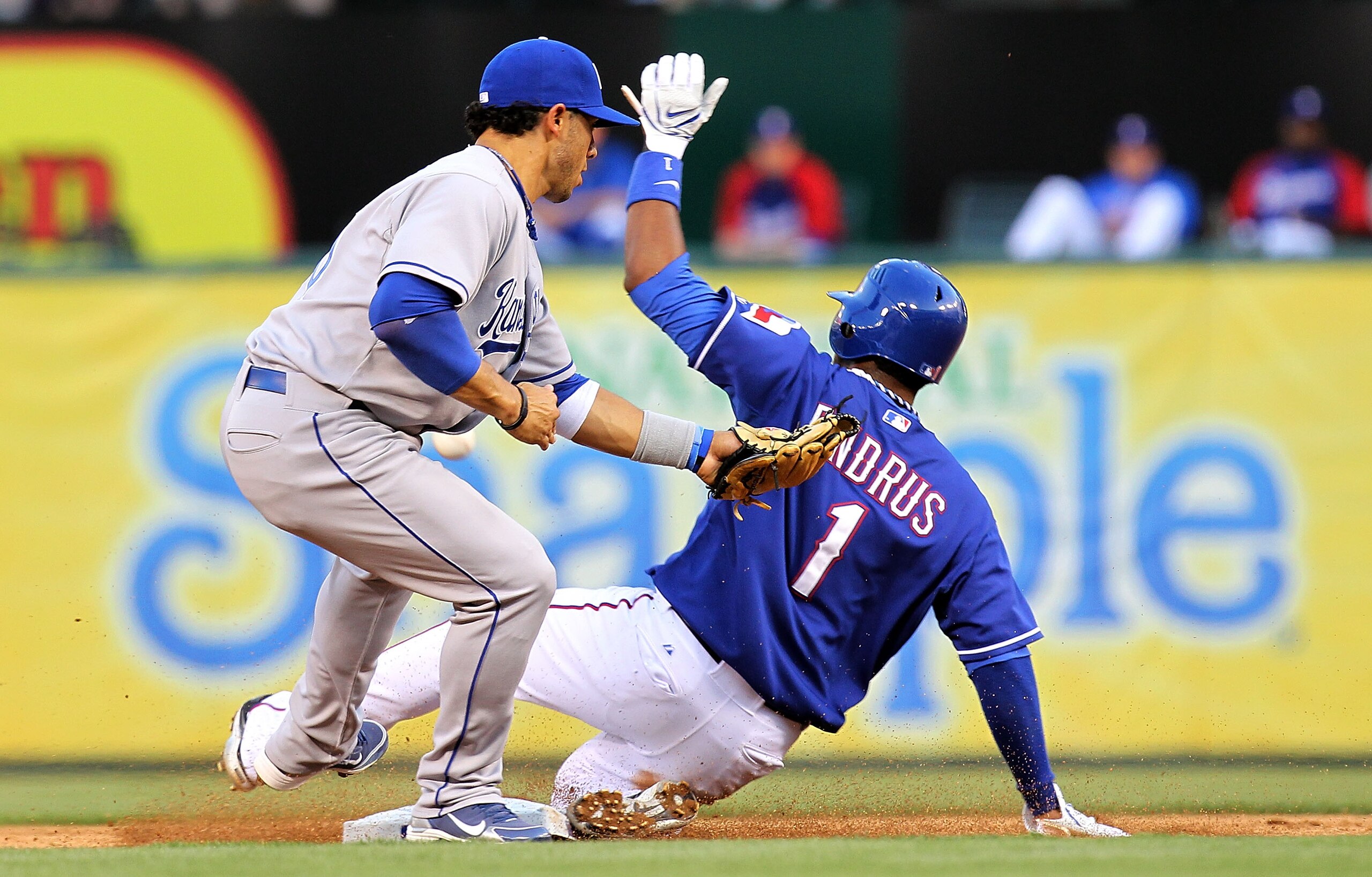
If the Rangers do end up facing the Yankees in the Division Series, it could help make Texas a more complete team, which could end up being a serious factor in games they play away from the ballpark in Arlington.
At home, the Rangers are a significant offensive force, currently slugging their way to third among American League clubs in runs scored at home. They should jump to second any day, as the Tigers, currently only eight runs ahead of them, have finished their home schedule, while the Rangers still have seven home games remaining. Their .291 team batting average at home leads all AL teams, and their .810 team OPS is second only to the Yankees. Simply stated, the Rangers can hit at home.
On the road however, Texas' offense isn't nearly as threatening. At the moment, they rank fourth in road scoring, but due to other trailing teams having two remaining homestands, the Rangers could be surpassed by at least a team, or even two, dropping them to fifth or sixth. While they still hit .265 on the road, good for third in the AL, their power drops off significantly, as they find themselves eighth in home runs, eighth in slugging percentage and seventh in OPS.
Since they're far less likely to out-slug teams away from home, Ron Washington might have to find creative ways to jump-start the offense in order to win ballgames. One way they could accomplish this is to utilize their running game against a Yankee team that is not adept at preventing the stolen base.
Although Texas ranks a mediocre ninth in the AL in team stolen base success at 71 percent, they have several players capable of wreaking havoc on the base-paths, taking the pitchers' attention away from the critical man at the plate.
Strangely, the likely two fastest players on the Rangers, Elvis Andrus, and Julio Borbon happen to be the worst base-stealers on the team, succeeding at only 70 and 65 percent respectively. Their lack of success can likely be attributed to inexperience, but Andrus still has to be paid attention to, since he has nabbed 32 bases so far this season.
There are several veteran players on the team though, always capable of stealing a key base, and putting pressure on opposing pitchers and catchers to attempt to thwart the running game. David Murphy is a stellar 14-for-16 in his attempts, while Nelson Cruz complements his power with a 16-for-20 stolen base success rate. Ian Kinsler is 14-for-19 as well, and Josh Hamilton is 8-for-9, although his health status could prevent him from running too often.
This could be a critical advantage against a team such as the Yankees, that has displayed a particular inability to slow down a team blessed with stolen base prowess.
Both Yankee catchers, Jorge Posada and Francisco Cervelli, have struggled mightily to throw out potential base stealers during 2010. Posada, who has only made a handful of decent throws in the last couple years, has only caught 13-of-80 runners for a 16 percent rate. Cervelli, after a brilliant 2009 in which he threw out a stellar 43 percent of attempted base stealers, has only caught 9-of-62 this year, for a meager 15 percent rate.
Of course, the Yankees' 16 percent success rate at throwing out potential base stealers cannot be laid on the catchers alone. Much of the responsibility rests on the pitching staff to hold runners well, and to be quick to the plate to even give a catcher a chance to catch a runner. Andy Pettitte stands out from the pack, as his highly respected pick-off move prevents most runners from even attempting to steal a base. In fact, in 20 starts this year, only three players have attempted a stolen base against him.
Javier Vazquez is also another traditionally tough pitcher to run on, only 4-of-8 attempts against him have been successful this year. CC, because he's left-handed, presents a challenge for would-be base stealers, but once his hulking frame moves towards the plate, runners have been successful in 15-of-18 tries. Phil Hughes is decent for a right-hander, allowing 10-of-15 attempts.
With A.J. Burnett on the mound is where the real opportunity arises, as he has been terrible at preventing the running game in 2010. A whopping 36-of-41 stolen-base attempts have been successful against him this year, so expect the Rangers to exploit that weakness in an effort to get him flustered.
Clearly, the Yankees are a team that can be run on, and the Rangers have the capability to utilize that flaw to their advantage when more traditional scoring opportunities prove difficult to come by. If Ron Washington so chooses, stealing bases against the Yankees could be a key component in their battle to overcome them in October.
.jpg?w=2560 "OBJ Calls Out Giants After Release")


.jpg?w=2560 "Rap: Lions, LaPorta End Contract Talks")

.jpg?w=2560 "Report: Baker May Miss Up to 6 Weeks")