

Bud Selig Wants To Expand MLB Postseason: Five Reasons Why It's an Awful Idea
Commissioner Bud Selig said in an interview today that he would be open to revisiting discussions about expanding the postseason.
"It's a fair question. We have less teams than any other sport. Eight teams make the playoffs. One wild card in each league. We certainly haven't abused anything."
Major League Baseball explored the idea several years ago, but never came to a decision.
Now, with the NFL threatening to expand its regular season schedule to 18 games, Selig may feel pressured to do something to increase baseball's revenue.
Having the All-Star game determine home field advantage in the World Series was and still remains a terrible idea. This idea may be even worse. Here are five reasons why.
The Current System Works
1 of 5
The saying, "If it's not broke, don't fix it," gets overused a lot these days. But in these case it's actually accurate.
The baseball postseason is one of the most popular sporting events in the country, trailing only the Super Bowl, the Olympics, and the NBA Finals.
Last year, the 30 MLB postseason games averaged nine million viewers, up 30 percent from the 2008 postseason (6.9 million).
The World Series, meanwhile, averaged 19.4 million viewers, topping out with 22.8 million viewers during Game 4.
The system obviously works as is. Expanding the postseason might increase total viewers, but it's not going to make the World Series any more popular (which is where most of the revenue comes from anyway).
Expansion Means at Least Six Teams
2 of 5
When Selig says he's considering expansion, that doesn't mean to five teams. You can't have an odd number of playoff teams—the matchups would never work.
At minimum expansion would require six teams (if MLB wants to copy the NFL set-up), or even eight teams (if MLB wants to copy the NBA and NHL).
Presumably, the divisions would remain the same so that means that there would now be three Wild Card teams in each league.
Let's use 2010 as a case study to see how this would shake down.
In the American League, the Red Sox and White Sox would join New York, Minnesota, Texas, and Tampa Bay.
In the National League, the Braves and Cardinals would join Philadelphia, Cincinnati, San Francisco, and San Diego.
Fans of those extra four (two in each league) teams would certainly join viewers from the other eight teams in watching the postseason. But there's a reason they couldn't make the playoffs under the current postseason format.
They're not good enough!
Why waste everyone's time by pairing the juggernauts of baseball with second-rate teams that don't belong in the playoffs in the first place? Sure, you might see an occasional upset. But the majority of the time the No. 5 and No. 6 seeds will be the first ones eliminated.
The Tainting of Baseball History
3 of 5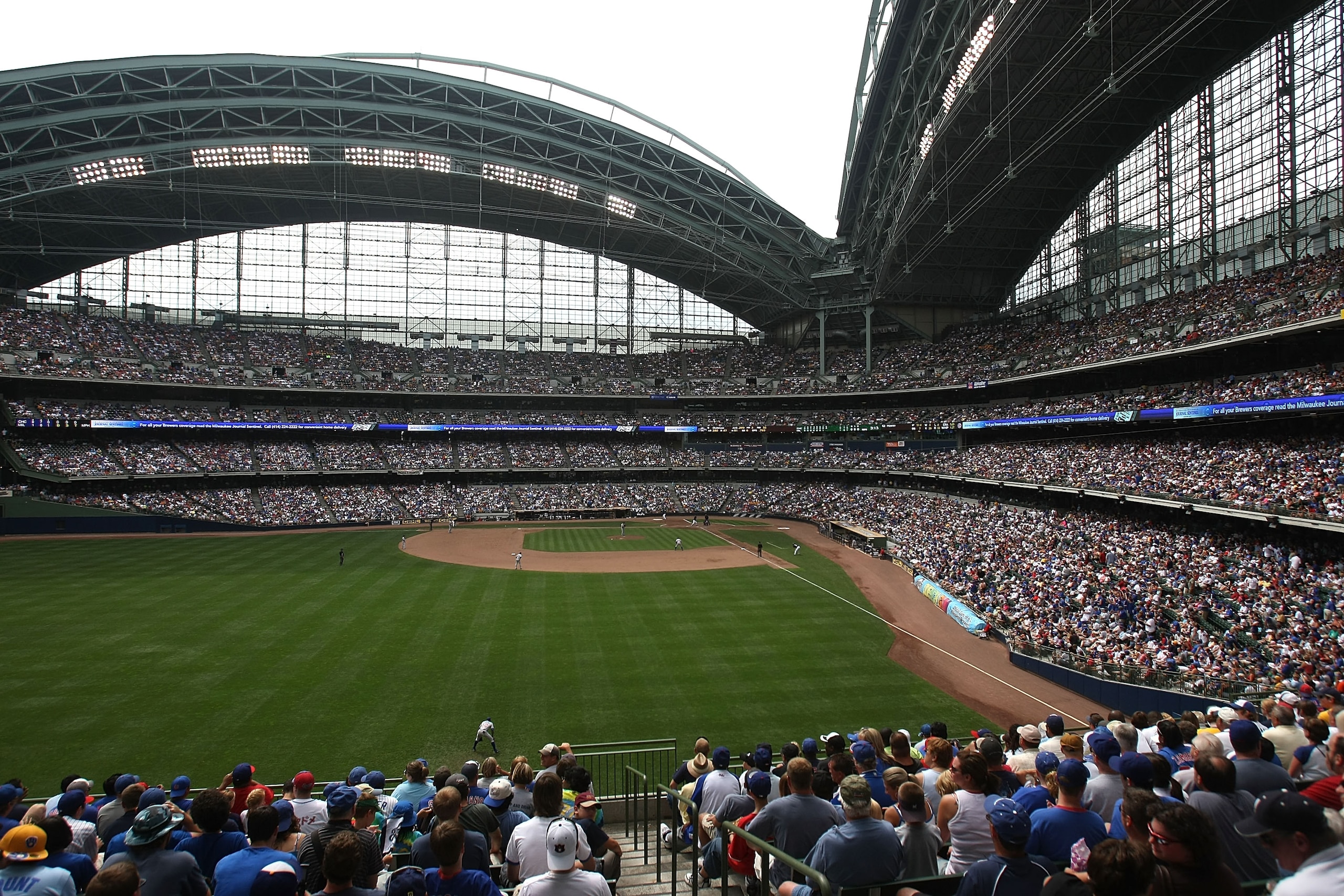
This is already a problem in the post-steroid era. Nobody knows how to view those 20-plus years from the late 1980's through the early 2000's.
Do we erase the history books and start all over? Do we make a special section for people accused of steroid use? How do we differentiate between who's a cheater and who's not?
If Selig expands the postseason, he'll be driving a stake through the accomplishments of every future World Series champion.
Why?
In the current format a baseball team only has to win a total of 11 games and defeat three teams to emerge as champions. With two dominant starting pitchers a team can feel confident that they can get seven or eight wins just between two players. An additional three wins suddenly doesn't sound so daunting.
With expansion, those 11 games would likely increase to 14 (assuming the implementation of an additional five-game series). This represents an exponentially harder task for a potential champion.
If the change goes through future World Series champions will be able to point to those 14 wins as proof that they are a better team than any team of the past 100 or so years.
Debate is fun, but only to an extent. Baseball history is just fine the way it is.

You Can't Play Baseball in November
4 of 5
OK, that's not necessarily true.
Last year's World Series ended on November 4th. But any later than that and baseball is risking knocking on winter's door.
Expanding the playoffs would require adding an extra round of play, probably a five-game series. That means extending postseason play into mid-November, unless Selig rearranges the playoff format to take away travel days (which would elicit its own set of problems).
That may not be an issue if the World Series is between, say, the San Diego Padres and the Texas Rangers. But if it's Boston, New York, or Philadelphia? The field may look like the photo above.
Not only is the cold going to affect the level of play, but MLB is also running the risk of having to cancel postseason games because of snow.
We already know that baseball players run off the field at the slightest hint of rain (slight exaggeration, but it's true), so just imagine what would happen if it started snowing.
Having to postpone a significant amount of playoff games would be a disaster for baseball. Having the World Series go well into November is asking for that disaster to happen.
Don't do it, Bud.
More Teams Doesn't Mean More Equality
5 of 5
Some might equate postseason expansion with increased parity, reasoning that it gives more teams an opportunity to play for the World Series.
No.
Parity in baseball is a myth. It doesn't exist and, until there's a stricter salary cap, it never will.
There were will always be exceptions to the rule. Low revenue teams constantly shock the baseball world by competing with the "big boys" in New York, Los Angeles, Philadelphia, and Boston.
The best example of this is the Florida Marlins, who in 2003 defeated the New York Yankees with a payroll of only $48 million (less than one-third of the Yankees payroll).
But since then the World Series champion has always been a big-market team. In order, Boston (2004), Chicago (2005), St. Louis (2006), Boston (2007), Philadelphia (2008), and New York (2009).
The lowest payroll of any potential 2010 playoff team belongs to the San Diego Padres with just under $38 million in committed salaries. The Texas Rangers also make the list with a payroll under $65 million.
But no baseball pundit honestly thinks either the Padres or the Rangers have a realistic shot at winning it all. It's fun to see the small-market teams compete. But in the end they almost always fall short.
Postseason expansion would not create parity, it would only promote false hope.

.jpg?w=2560 "NFL Preseason Week 1 Winners & Losers 📊")
.jpg?w=2560 "NFL player rips Bills' new field")
.jpg?w=2560 "Cowboys Signing Von Miller")


.jpg?w=2560 "Cowboys Linked to CB")