Jed Lowrie Or Marco Scutaro: Who Will Be The Red Sox Starting Shortstop In 2011?
One month ago and this conversation would not have even scratched the surface of Red Sox nation.
But after Jed Lowrie's 4-for-4 performance (including a home run and three singles) in a 10-8 win over the New York Yankees, the debate suddenly becomes a valid one.
Lowrie has become Boston's starting shortstop after a rotator cuff injury sidelined opening day starter Marco Scutaro.
Scutaro will be healthy for 2011 and will be in the final year of his contract. Lowrie, however, will also be healthy for a change and offers more upside than the 34-year old journeyman.
So who will manager Terry Francona decide to go with?
Here is a breakdown of the case for each player and a suggestion of what the final decision might be. Share your thoughts below.
The Case For Scutaro
1 of 5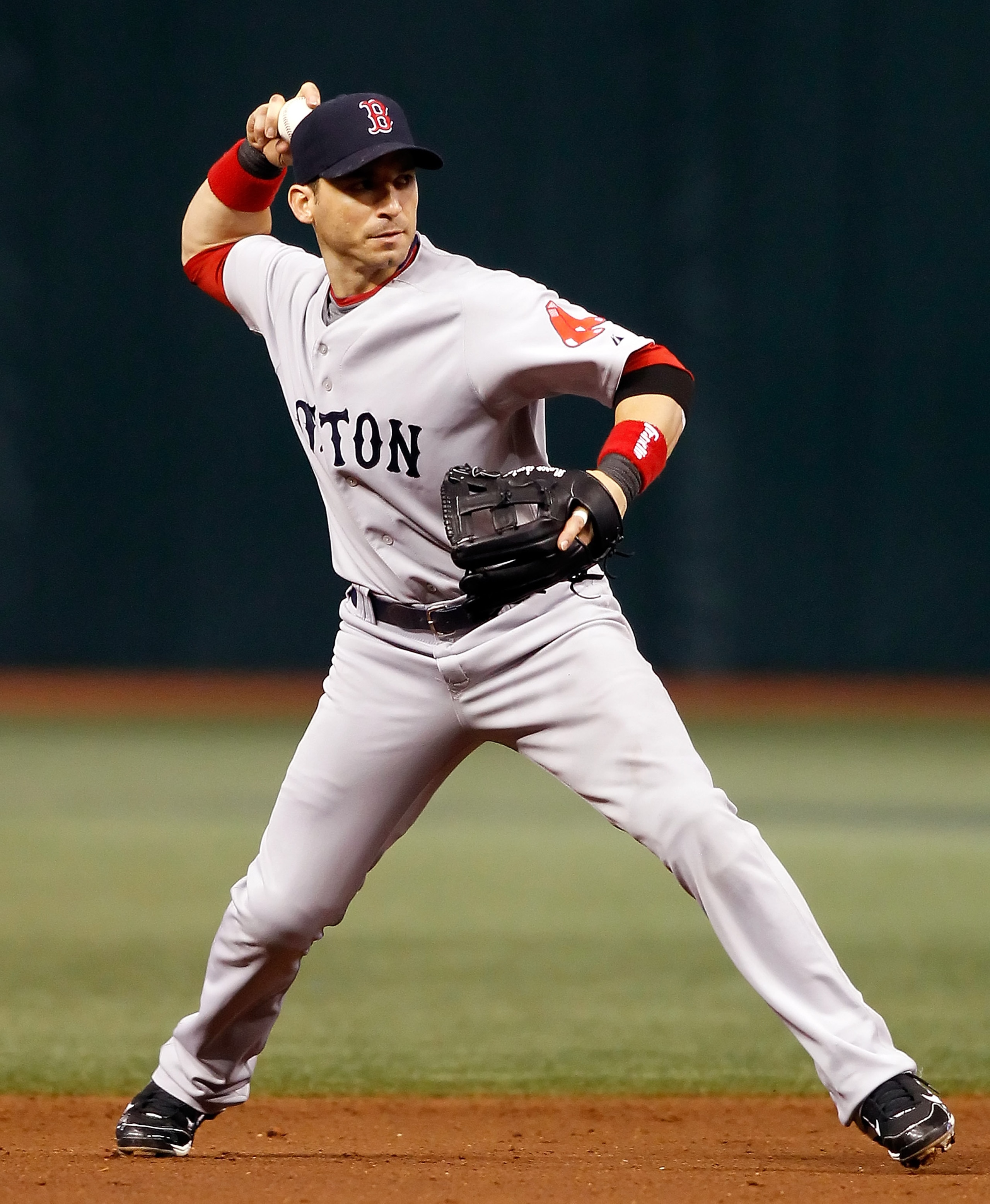
The Red Sox signed Scutaro in the offseason to a two-year, $10.5 million deal, hoping to bridge the gap between a string of underachieving Boston shortstops (Edgar Renteria, Julio Lugo) and sensational prospect Jose Iglesias.
Scutaro had a solid season as the starting shortstop and performed admirably in the leadoff role after Jacoby Ellsbury had an unfortunate run-in with third basemen Adrian Beltre.
In 145 games (tying a career high), Scutaro hit .271 with a .331 on-base percentage and 87 runs scored. He was shaky at times defensively (18 errors at short and two errors at second), but was one of the lone stabilizing forces on a team devastated by injuries.
The Case Against Scutaro
2 of 5
While Scutaro's 2010 season was a refreshing reminder for Red Sox fans of what it's like to have a competent shortstop, it was still far short of spectacular.
His on-base percentage of .331 is lower than that of every other regular in the Boston lineup, in addition to utility guys like Daniel Nava (.343) and Darnell McDonald (.342). It's certainly not what you would expect from a leadoff hitter (Ellsbury's was .355 last year).
This season also represented a drop-off from Scutaro's career year in 2009 while with the Toronto Blue Jays, in which he hit .282 (.379 on-base percentage) and scored 100 runs. But he's 34 years old now, and it's unrealistic to expect a player who's spent the majority of his career as a utility man to improve on his numbers at this point.
Scutaro's past may actually work to his disadvantage as well.
In nine major league seasons Scutaro has played all over the field, including shortstop, second base, third base, outfield, and first base. He's perfectly suited to be a utility man, and in fact has made way for Lowrie at short by sliding over to second.
But is his production good enough to make him the everyday starter?
The Case For Lowrie
3 of 5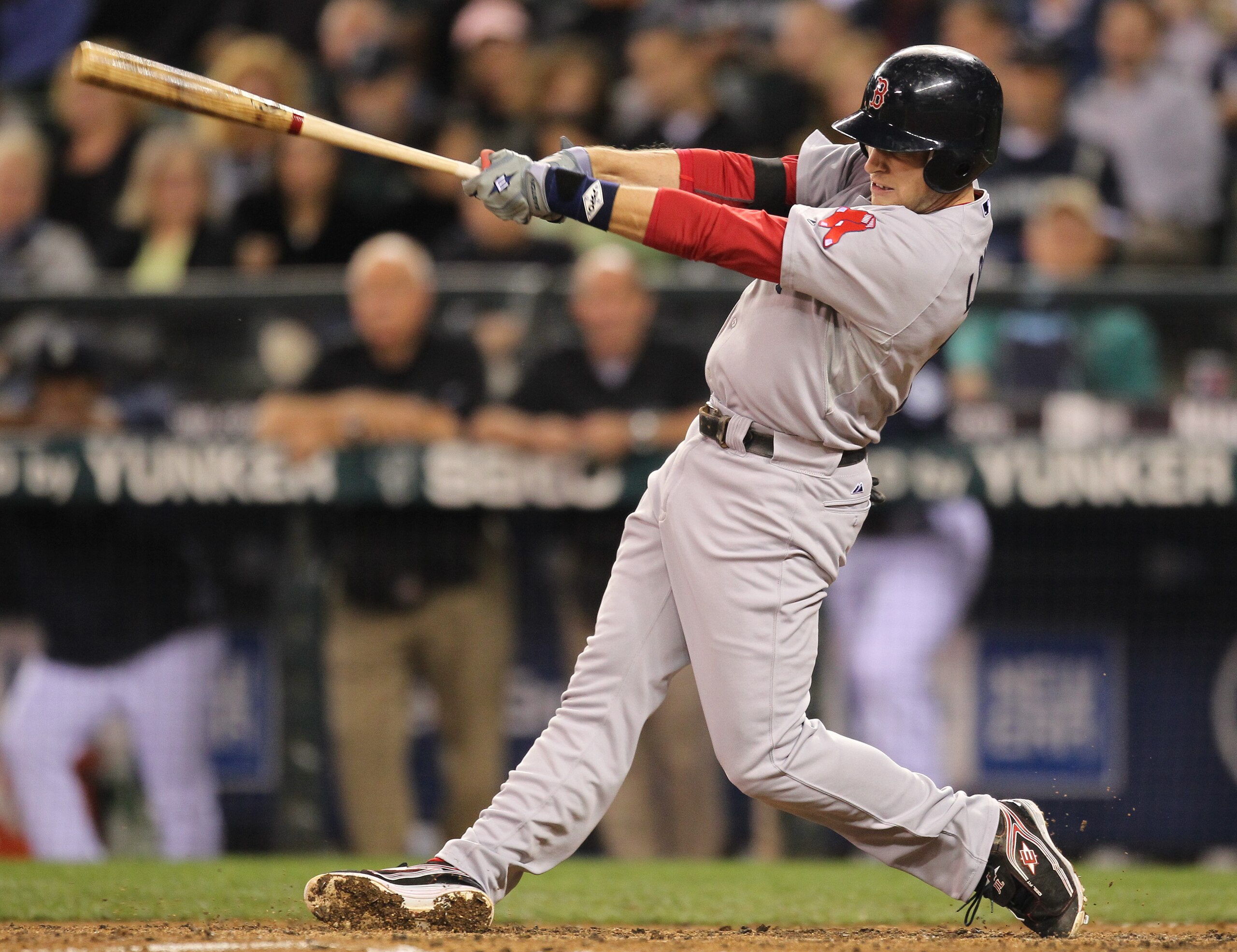
Lowrie was one of the top prospects in the Red Sox system and made his major league debut in 2008 at the age of 24. He was never great defensively, but his bat made scouts rave about the future major league shortstop.
His first two-plus seasons in the majors were plagued by injuries and poor production, including a debilitating 32-game stint in 2009 in which Lowrie hit only .147.
But now Lowrie is finally healthy, and he's tearing the cover off the ball.
In 46 games this season (37 of them starts between shortstop and second base), Lowrie is hitting a .282 with a robust .514 slugging percentage, including seven home runs and 12 doubles.
More importantly, it seems like he's finally figured out major league pitching and has shown the ability to have good pitch selection (19 walks in 162 plate appearances).
He's also held his own defensively with a .977 fielding percentage at shortstop and a .976 fielding percentage at second (Scutaro's career percentages are .972 and .992, respectively). Lowrie's career fielding percentage at short, meanwhile, is .993 over 90 games and 76 starts.
So at worst Lowrie is just as good as Scutaro defensively at short, and a better hitter.
The Case Against Lowrie
4 of 5
The case against Lowrie is, and always will be, his ability to stay healthy.
Since breaking through with the big league club in 2008, Lowrie has spent more time on the disabled than off it.
In 2009, he was placed on the 15-day disabled list with a left wrist sprain. The wrist required surgery and landed Lowrie on the 60-day DL. He came back briefly in July, but was back on the 15-day DL again a month later with ulnar neuritis in his left wrist.
Then in early 2010, Lowrie suffered from mononucleosis and missed the first three-and-a-half months of the season. He didn't make his season debut until July 21.
Lowrie says he's still doing therapy on his wrist, but that he feels healthy. His recent production would seem to back up that comment, but can he keep it that way?
The Final Verdict
5 of 5
Most major league teams would be begging to have this problem. Luckily for the Red Sox, there's a third candidate in this debate—Jose Iglesias.
The smooth-fielding shortstop from Cuba has drawn comparisons to Omar Vizquel and is rising swiftly through the Red Sox system. He's only 20 years old but has already shown the ability to hit professional pitching.
He dominated A ball (.350 batting average and .500 slugging percentage), and has played well in AA in his first full season in the Red Sox system. Despite missing several games with a broken knuckle, Iglesias still managed to bat .285 with a .315 on-base percentage.
He needs at least one more year of seasoning before he's ready for the majors, but the Red Sox are serious about him as their future shortstop. They wouldn't have signed to a four-year, $8.25 million deal otherwise ($6 million signing bonus).
So what does that do about 2011?
Lowrie, if healthy, is likely the better player. However, why make him the starter now if he's just keeping the spot warm for Iglesias?
The Red Sox could start both Lowrie and Scutaro, probably moving Scutaro to third to replace free agent Adrian Beltre. But neither is a good enough hitter for a corner infielder, and then who's going to be the utility infielder (assuming Bill Hall isn't resigned)?
Look for Boston to stay with Scutaro for 2011 and try to package Lowrie as part of a trade for an impact bat (Adrian Gonzalez?). It doesn't make sense to hold on to Lowrie unless he's going to be the full-time starter, and he's not a long-term answer at third base.
The Red Sox are also financially committed to Scutaro and it's very difficult to move a $5.5 million utility man.
The wrinkle to this is that if the Red Sox can't find a trade partner for Lowrie, he has to be the starter in 2011. Not only is he a more productive player than Scutaro, but it'd also be silly to devalue your trade assets by sticking them on the bench.

.png?w=2560 "Week 1 Winners & Losers 📊")
.jpg?w=2560 "Jayden Daniels Left Off LSU Montage")
.jpg?w=2560 "Projecting NFL Win Totals 🔮")