

Comparing MLB's Next Generation of Young Megastars to Their Legendary Peers
Although Major League Baseball hasn't been hurting for young stars in recent seasons, more keep coming every year. And there's no ignoring how some of them look...well, familiar.
So, we might as well get on with making comparisons that are at once flattering and totally unfair.
We did this last year when we compared 15 modern young stars—e.g., Mike Trout, Bryce Harper, Kris Bryant, et al—to MLB legends from various yesteryears. Since the 2017 season proceeded to expand baseball's collection of young stars, it's time to expand our own list in preparation for 2018.
Some comps are based on testimonials from third parties. Others are based on things like body type, stats and playing ability.
We have eight players to get to, starting now.
Andrew Benintendi: Carl Yastrzemski
1 of 8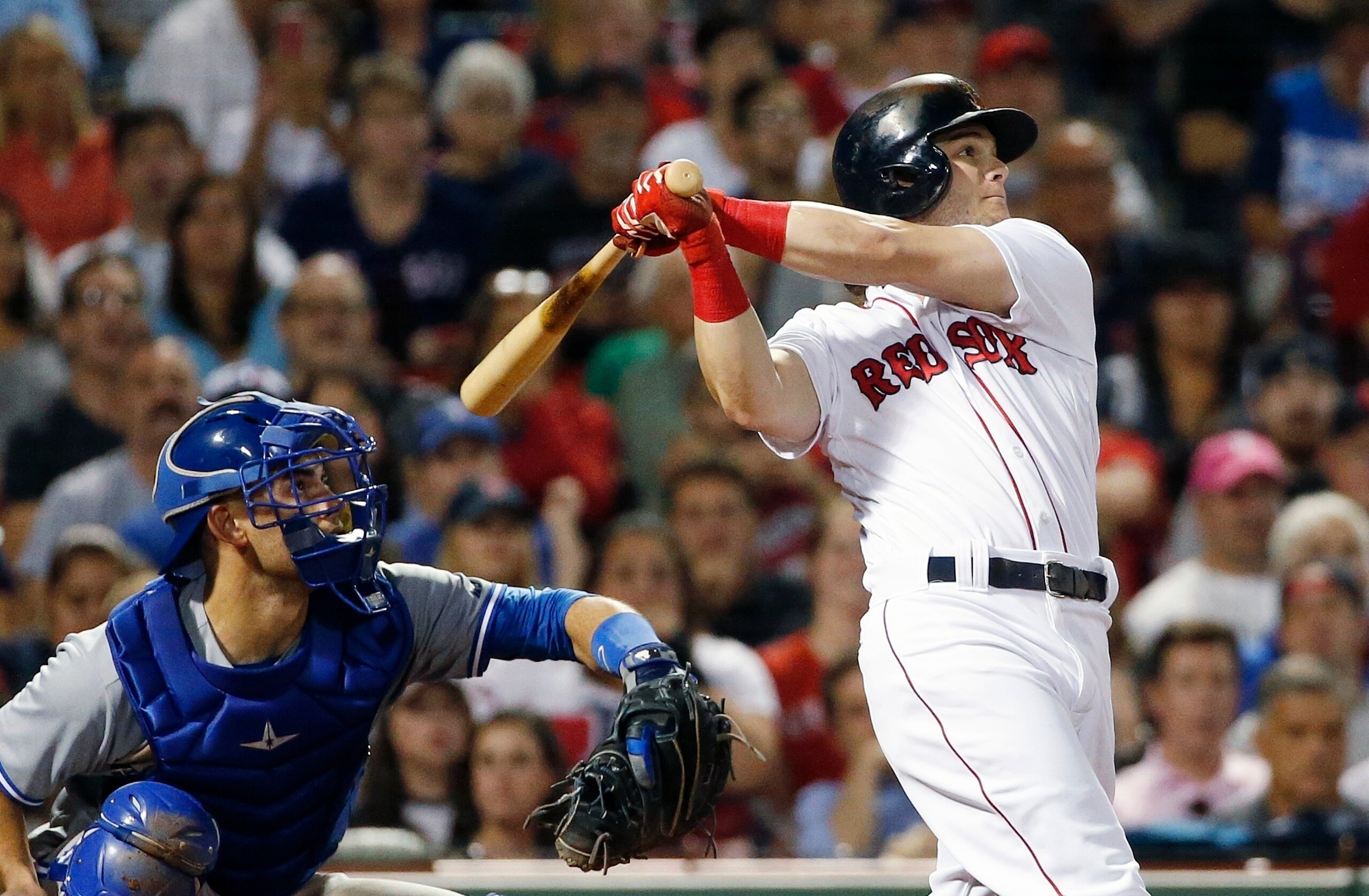
The Boston Red Sox have had plenty of wunderkinds patrol Fenway Park's outfield over the years. Andrew Benintendi is merely the latest, and some look at him and see the next Fred Lynn.
Except, of course, for Lynn himself, who poked a few fair holes in the comparison in a 2017 chat with Nick Cafardo of the Boston Globe.
So, it's on to the other oh-so-obvious player to compare Benintendi to: Carl Yastrzemski.
At 5'10", 170 pounds, Benintendi does have a similar build to Yaz, who played at 5'11", 175 pounds. They also both broke in when they were 21 and have oddly similar numbers through the age of 22:
- Yastrzemski, 1961-1962: .282 AVG, .345 OBP, .434 SLUG, 106 OPS+
- Benintendi, 2016-2017: .274 AVG, .353 OBP, .432 SLUG, 105 OPS+
Like Yastrzemski was in his early years, Benintendi is advanced beyond his years as a hitter and also has some power and speed on the side. Yaz's power eventually produced three 40-homer seasons. Benintendi's might, too, if he keeps his swing decidedly Yaz-like.
Tim Britton of the Providence Journal broke it down well:
"The hands finish high and together, the left arm straight across the chest, right above the team name on the jersey. The hips have cleared the hitting zone, and the right leg is nearly straight, the toes of the spikes off the ground. It’s almost eerie."
And now for an obligatory: "No pressure, kid."
Aaron Nola: Adam Wainwright
2 of 8
Aaron Nola isn't a household name yet. But that will change in a hurry if he builds on a 2017 campaign in which he authored a 3.54 ERA with 184 strikeouts and only 49 walks in 168 innings.
How did he do that? Basically by pitching like Adam Wainwright.
Granted, the 6'7", 235-pound Wainwright has five inches and 40 pounds on the 6'2", 195-pound Nola. But as far as anyone knows, the Philadelphia Phillies' 24-year-old right-hander is the only guy who's ever had a curveball that bends like Wainwright's.
Among all starting pitchers who have thrown over 1,000 curveballs since 2007, Nola and Wainwright rank 1-2 in average horizontal movement.
That's in reference to the extreme glove-side run that Nola has used to baffle many a hitter, and by which he himself was baffled when he saw Waino's famed Uncle Charlie with his own two eyes.
Nola has another thing in common with the St. Louis Cardinals veteran: He has to get around less-than-stellar fastball velocity. By working in, out, up and down with different movements, he's conquered that issue in much the same way that Wainwright did when he was in his prime.
Wainwright's prime was certainly something to behold, as a healthy season for him between 2009 and 2014 typically included an ERA south of 3.00 over north of 220 innings. But if Nola keeps playing his cards like Wainwright played his, the two hurlers may end up sharing more than just a pitching style.
Matt Chapman: Nolan Arenado
3 of 8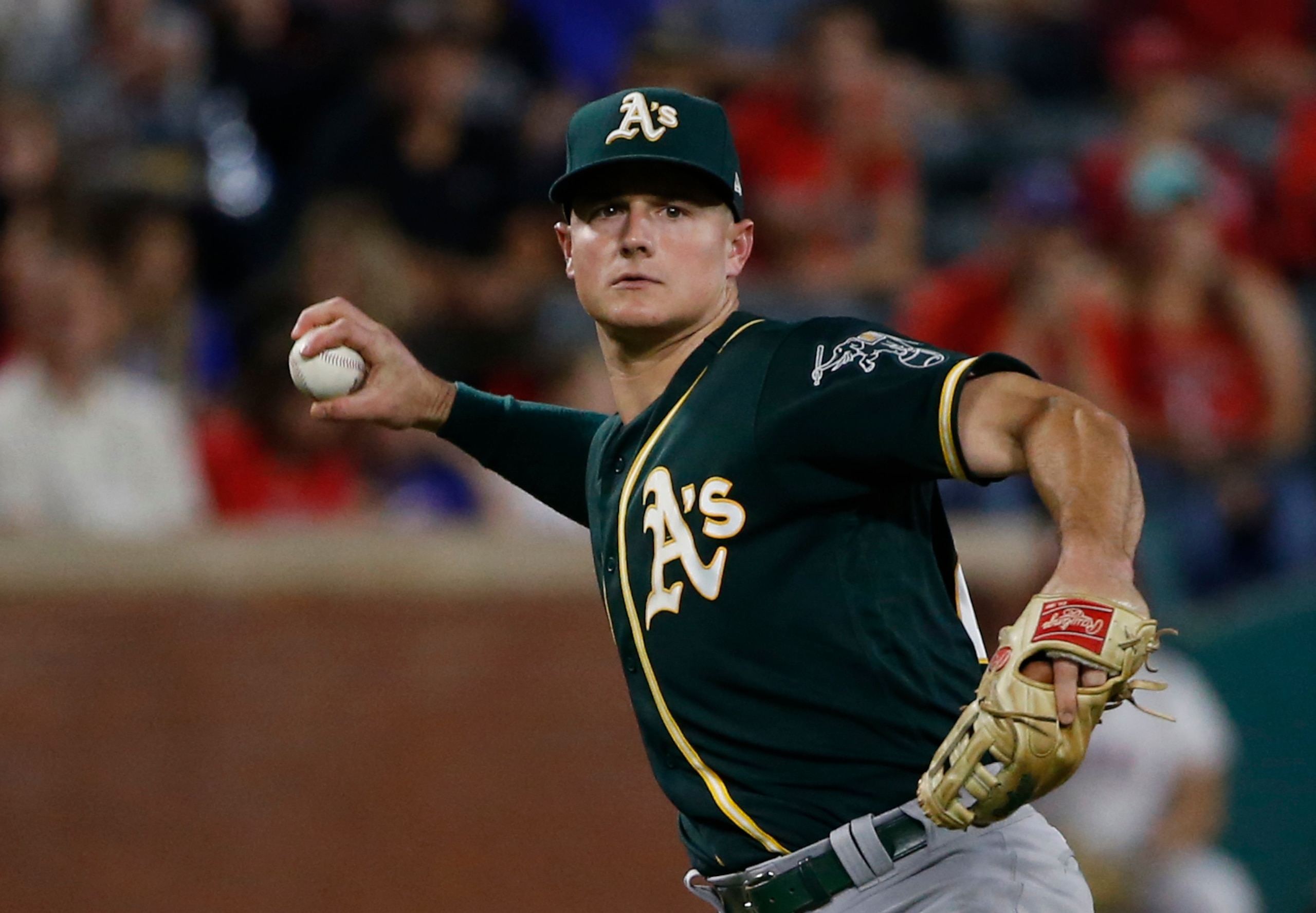
Watch Matt Chapman play third base, and you're liable to see flashes of Brooks Robinson in the way he can get to anything and finish off any play.
Given the circumstances, however, Nolan Arenado is a more appropriate comparison.
The "circumstances" in this case cover the fact that Chapman and Arenado were teammates at El Toro High School in Lake Forest, California, before destiny delivered the former to the Oakland Athletics and the latter to the Colorado Rockies. While there, Chapman was careful to study Arenado like a book.
As he said last year during an NBC Sports podcast:
“I think my arm got stronger just by trying to keep up with how hard he threw the ball. The things he did were incredible. I think I became a better player just watching him and trying to emulate some of the things he does and pick his brain.”
In light of how Arenado has won five Gold Gloves in five seasons, this looks like a fine plan in retrospect.
And it's already paying off for Chapman, who tallied a whopping 19 defensive runs saved in only 727 innings as a rookie last year. Whether he was ranging back for a catch (here vs. here), making a throw from foul ground (here vs. here) or making a spectacular dive and starting a double play (here vs. here), he looked conspicuously like the American League's very own Arenado.
Chapman hasn't yet equaled Arenado's offensive prowess, but give him time. His power-hitting ability is starting from a higher point than Arenado's did. He also has a bit of speed on his side.


Willson Contreras: Ivan Rodriguez
4 of 8
Willson Contreras is a young catcher who's known for his powerful bat and rocket arm. So, it's only natural that he's sometimes been compared to Ivan Rodriguez.
"He has such great physical tools behind the plate," Bill Buckner, a former major leaguer and mentor of Contreras from his days at Low-A Boise, told Mark Gonzales of the Chicago Tribune. "He throws as well as anyone I've seen. He kind of reminds me of Ivan Rodriguez."
Talk like this qualifies as "bold" to at least one extent: At its peak, Rodriguez's arm strength was probably the best the catcher position has ever seen. It sure looks the part on video, and it played a huge part in making him a 13-time Gold Glove winner and Hall of Famer.
Still, the comparison isn't totally unwarranted.
According to MLB.com's Mike Petriello, Statcast measured Conteras' average on "max effort" throws at 87 mph last year. That placed the Chicago Cubs' 25-year-old fourth among qualifiers.
As a hitter, Contreras has mechanics that are more reminiscent of fellow Venezuelan Miguel Cabrera than Rodriguez. He is an excellent all-fields hitter like Pudge was in his day, however. He also has at least as much power as Rodriguez did when he averaged 26 homers per year during his 1997-2001 peak.
Rodriguez netted himself an MVP in that span. It may not be long before Contreras has one of his own.
Byron Buxton: Mike Cameron
5 of 8
Because he's an otherworldly speed demon who plays an amazing center field and also has some power, it's tempting to compare Byron Buxton to Mike Trout, Willie Mays and everyone in between.
The problem is the potential of Buxton's bat is still far more appealing than the reality of it. In that sense, the Minnesota Twins' 24-year-old has more in common with an underrated great from the 1990s and 2000s: Mike Cameron.
Even the three Gold Gloves that Cameron won during his 17-year career don't do his defense proper justice. He was as good as they came for a while, as he could cover ground with the best of 'em and he was shy of no wall.
Cameron was also a good base-stealer who ultimately swiped 297 bags with a 78 percent success rate. Although he never kicked his strikeout habit, it didn't stop him from developing as a power hitter who supplied 22 homers per year between 1999 and 2009.
Buxton already looks like the next coming of Cameron on the basepaths and on defense. The 2012 second overall pick has stolen 41 bases in only 46 tries in three years and is fresh off winning his first Gold Glove in center field. His sprint speed is unmatched by any modern player, and his defense features a Cameron-esque lack of regard for his safety around the warning track.
All Buxton has to do now is make like Cameron and become a competent hitter in spite of his own strikeout habit. Judging from the way he seemed to figure it out late in 2017, that should be doable.
Luis Severino: Bob Gibson
6 of 8
There's only ever been one pitcher exactly like Bob Gibson, and that's Bob Gibson.
The Hall of Famer was an electric right-hander who did it all in a 17-year career with the Cardinals, including winning two Cy Young Awards and setting the modern single-season ERA record with his 1.12 mark in 1968.
Still, Luis Severino is sort of like a modern-day Gibson. He might even be the closest thing baseball has seen to Gibson in a long time.
At 6'2", 215 pounds, the New York Yankees right-hander is built similarly to the 6'1", 189-pound Gibson. And he has a similar pitching style, to boot.
Gibson used a "here it is, hit it" approach with his overpowering fastball/slider combination, which resulted in a ton of strikeouts and few walks. For his part, Severino had the hardest fastball (97.6 mph) and one of the hardest sliders (88.4 mph) of 2017. He also hit the strike zone more often than any other AL starter.
The 24-year-old also has a bit of Gibson's hyper-competitiveness in him. The difference is he shows his by wearing his emotions on his sleeve rather than by scaring the daylights out of opposing hitters by way of an intense glare and frequent chin music.
Of course, Severino hasn't yet set any ERA records or won any Cy Youngs. But knowing that the 2.98 ERA, 230 strikeouts and 51 walks he put up in 193.1 innings last year was merely his opening act, he shouldn't be ruled out of accomplishing any feat.
Cody Bellinger: Shawn Green
7 of 8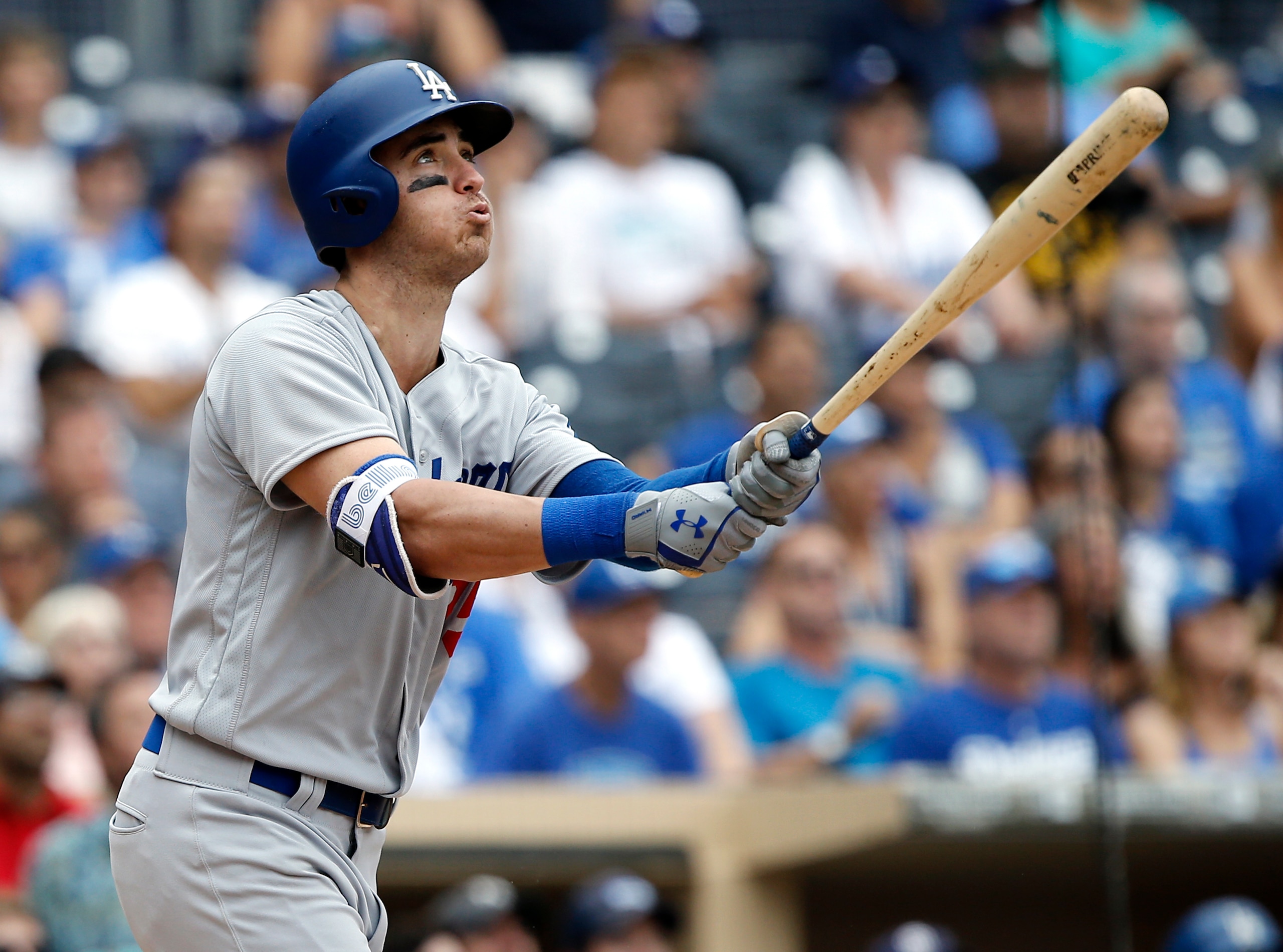
Cody Bellinger is a tall, somewhat slender left-handed hitter with a swing that's easy on the eyes. That invites comparisons to Darryl Strawberry. Or to Ted Williams, if you really want to raise eyebrows.
Or, you could be reasonable like Alex Anthopoulos and compare the reigning National League Rookie of the Year to Shawn Green.
“First thing that came to mind when I saw him was he looked like Shawn Green," the former Los Angeles Dodgers vice president of baseball operations said last year in an interview on Sportsnet 590 The Fan. "Wiry, lean, long; just the way they move.”
If nothing else, the 6'4", 210-pound Bellinger does have a similar body type to the 6'4", 190-pound Green. The two also resemble each other in the batter's box: They stand tall, coil up slightly and then unleash long, looping and yet explosive swings.
Green did some solid damage with his swing during his 15-year career, especially in averaging a .914 OPS and 38 homers (including four in one game) per year between 1998 and 2002. He was also a quality athlete who peaked at 35 stolen bases in '98 and won a Gold Glove in '99.
After blasting a National League rookie record 39 homers in 2017, it's fair to say that the 22-year-old Bellinger has at least Green's potential as a hitter. Because he's an excellent athlete and defender in his own right, he also has it in him to surpass Green's other credentials.
Aaron Judge: Frank Howard
8 of 8
Due to his intimidating size and propensity for hitting baseballs to unknown regions, reigning American League Rookie of the Year Aaron Judge has occasionally been compared to Dave Kingman.
But if he was so inclined, the 6'6", 210-pound Kingman could actually hide behind the 6'7", 282-pound Judge. The Yankees' 25-year-old slugger is really more of a Frank Howard type.
When Howard debuted in 1958, baseball had never seen anything like his 6'7", 255-pound frame. Contained within was raw power that he introduced by damn near killing Los Angeles Dodgers teammate Duke Snider with a line drive off his head.
"They picked me up and I was dizzy for three, four, five days," the future Hall of Famer told William Leggett of Sports Illustrated in 1964. "Frank Howard has more raw power than anyone in baseball."
What followed was a 16-year career in which Howard slugged 382 homers, many of which were moonshots like this one.
There is an unfortunate trait that Howard and Judge both share: a propensity for striking out. But Judge has just as much raw power, if not more. In hitting a rookie-record 52 homers in 2017, he set high marks for both distance (495 feet) and exit velocity (121.1 mph).
It's also to Judge's credit that he's hit his stride sooner than Howard did. Whereas the latter didn't become an elite hitter until he was in his 30s, Judge is an elite hitter right now.
Factor in how he's already a much better defender than Howard ever was, and he's clearly the better role model for giant humans who seek a career in Major League Baseball.
Stats courtesy of Baseball Reference, FanGraphs, Baseball Savant and Baseball Prospectus.

.jpg?w=2560 "Grading WWE Raw 🔠")



.jpg?w=2560 "Viral Rams Coach Vid 🖕")
.jpg?w=2560 "2 NFL Officials Suspended")
