NFL1000 Week 2 Notebook: Chicago Needs to Start Mitchell Trubisky
Week 2 of the 2017 season further proved several things that showed up last week. The Kansas City Chiefs have the most exciting offensive game-planning you'll see. The New Orleans Saints defense is still awful. Mike Glennon still doesn't look like an NFL quarterback, and the Philadelphia Eagles are still putting too much on Carson Wentz's plate.
Other Week 2 occurrences did not play to type. The Dallas Cowboys offense looked completely overwhelmed against the Denver Broncos, and Tom Brady looked like his old self after a tough Week 1 game against the Chiefs.
The NFL1000 team of scouts addresse these things and more in the Week 2 Notebook, which covers the games through Sunday afternoon.
Lead Scout: Doug Farrar
Quarterbacks: Mark Schofield
Running backs/Fullbacks: Mark Bullock
Receivers/Tight Ends: Marcus Mosher
Offensive Line: Ethan Young
Defensive Line: Justis Mosqueda
Linebackers: Derrik Klassen
Secondary: Ian Wharton
Without further ado, here's everything that stood out to our scouts from Sunday's action.
It’s Time for the Chicago Bears to Turn to Mitchell Trubisky
1 of 10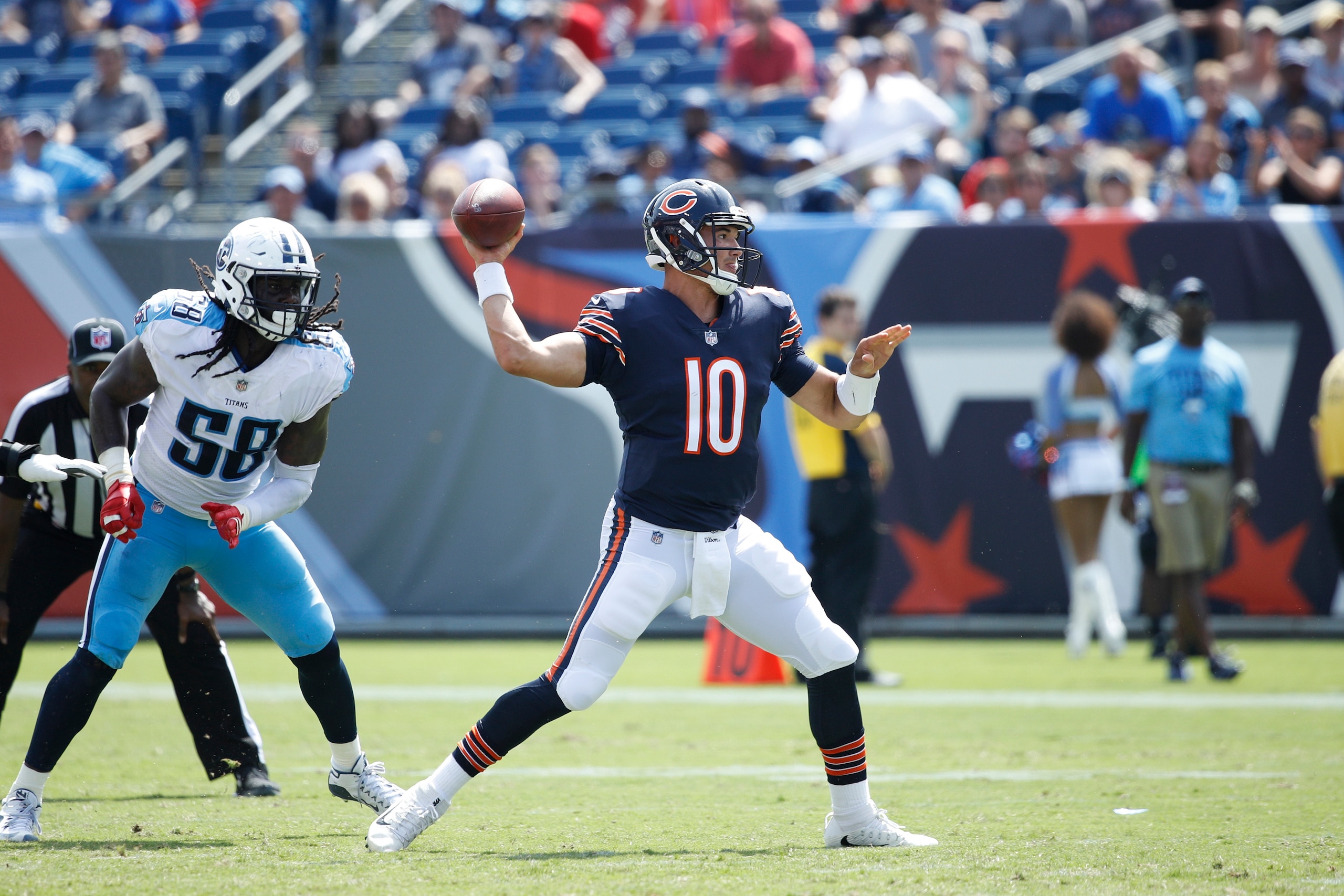
Following the Chicago Bears' 29-7 loss to the Tampa Bay Buccaneers on Sunday, Bears head coach John Fox said that he would not be benching veteran quarterback Mike Glennon in favor of rookie Mitchell Trubisky, emphasizing that he wouldn't put it all on the quarterback, especially before he watched the tape.
When Fox does watch the tape, he may feel differently. Glennon threw two interceptions against the Buccaneers, one was returned for a touchdown and both were based on bad reads. The first pick came with 2:42 left in the first quarter. Glennon was trying to hit tight end Dion Sims on a quick comeback out of a tight formation, but he completely missed Tampa Bay linebacker Kwon Alexander dropping into coverage, and Alexander easily jumped the route. As Alexander is one of the more adept coverage linebackers in the NFL, missing him as a potential drop defender is inexcusable.
The second pick, which resulted in a touchdown for the Bucs, came with 4:21 left in the first half. Here, Glennon was trying to hit receiver Josh Bellamy on an up-and-out route, but cornerback Robert McClain boxed Bellamy out before he hit the first stem in his route. McClain had inside position when Glennon still had the ball, but he threw it anyway and McClain had an easy pick, which he took to the house.
There is no advantage to having Mike Glennon as a starting quarterback in the NFL. He processes things too slowly, and he takes too long to throw once he does decide on a receiver. This results in compensatory bad decisions, and this likely will not change over time.
The only question now should be whether Trubisky is ready to start. Right now, Trubisky is more mobile than Glennon, has a better arm, is able to fire the ball downfield more quickly as long as he has easy reads and we've already seen offensive coordinator Dowell Loggains develop a game plan for the rookie that works.
Trubisky will undoubtedly undergo growing pains on the field, but at least he has physical potential. Mike Glennon has showed us exactly what he is—and decidedly what he isn't. It's time for the Bears to make a change.
Eagles Putting Too Much on Carson Wentz Without a Running Game
2 of 10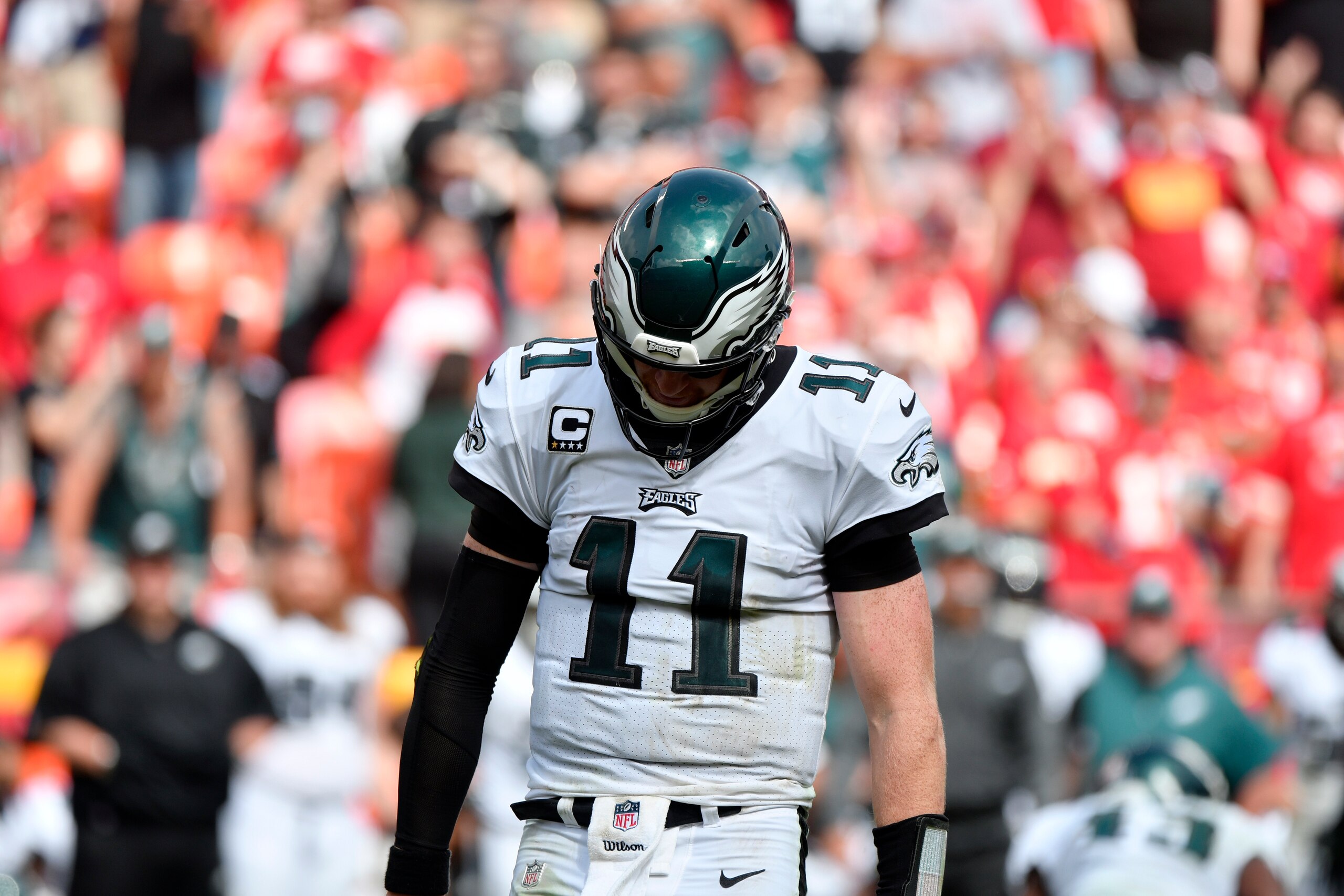
In his rookie season, Philadelphia Eagles quarterback Carson Wentz attempted 607 passes—the second most of any first-year quarterback in NFL history behind only Andrew Luck. That Wentz was able to complete 62.4 percent of his passes for 3,782 yards, 16 touchdowns and 14 picks was impressive, considering he played his college ball at North Dakota State and hadn't seen a lot of advanced coverages before he became a professional quarterback.
Eagles head coach Doug Pederson insisted before the 2017 season he would address the running back situation and give Wentz a break from the burden of carrying the entire offense by himself. Philadelphia signed former Patriots running back LeGarrette Blount and selected San Diego State back Donnell Pumphrey in the fourth round of the 2017 draft, hoping that a rotation of Wendell Smallwood, Darren Sproles and Corey Clement would fill in the gaps.
But the Eagles placed Pumphrey on injured reserve Friday due to a hamstring injury, and at 5'9" and 176 pounds, he wasn't going to be a lead back anyway. Blount had no carries against the Kansas City Chiefs in Week 2, and it's already apparent that his lumbering style doesn't fit Philly's quick zone, shotgun offense. Smallwood and Sproles are more role players than alphas. Clement, an undrafted rookie from Wisconsin, has the size and power to do some things, but there is no dominant back on this roster.
Inevitably, the lack of a good run game will affect Wentz negatively. He completed 25 of 46 passes for 333 yards, two touchdowns and an interception against Kansas City in a 27-20 loss. Wentz actually led his team in rushing in the game with 55 yards on four scrambles; he was also sacked six times. That pressure will continue, as no defense has to respect Philly's run game. It also takes play-action out of Wentz's hands as a realistic option, and he's going to face fewer stacked boxes—he'll have to earn every completion in ways other quarterbacks don't.
The Eagles failed to address their running back situation the way they promised, and Wentz will feel that in the 2017 season. Perhaps Clement is the answer, but if he isn't—and nobody else is—the pressure could force Wentz to implode this season.
— NFL1000 Lead Scout, Doug Farrar
Never Question Tom Brady, Patriots Dominance… They’re Back
3 of 10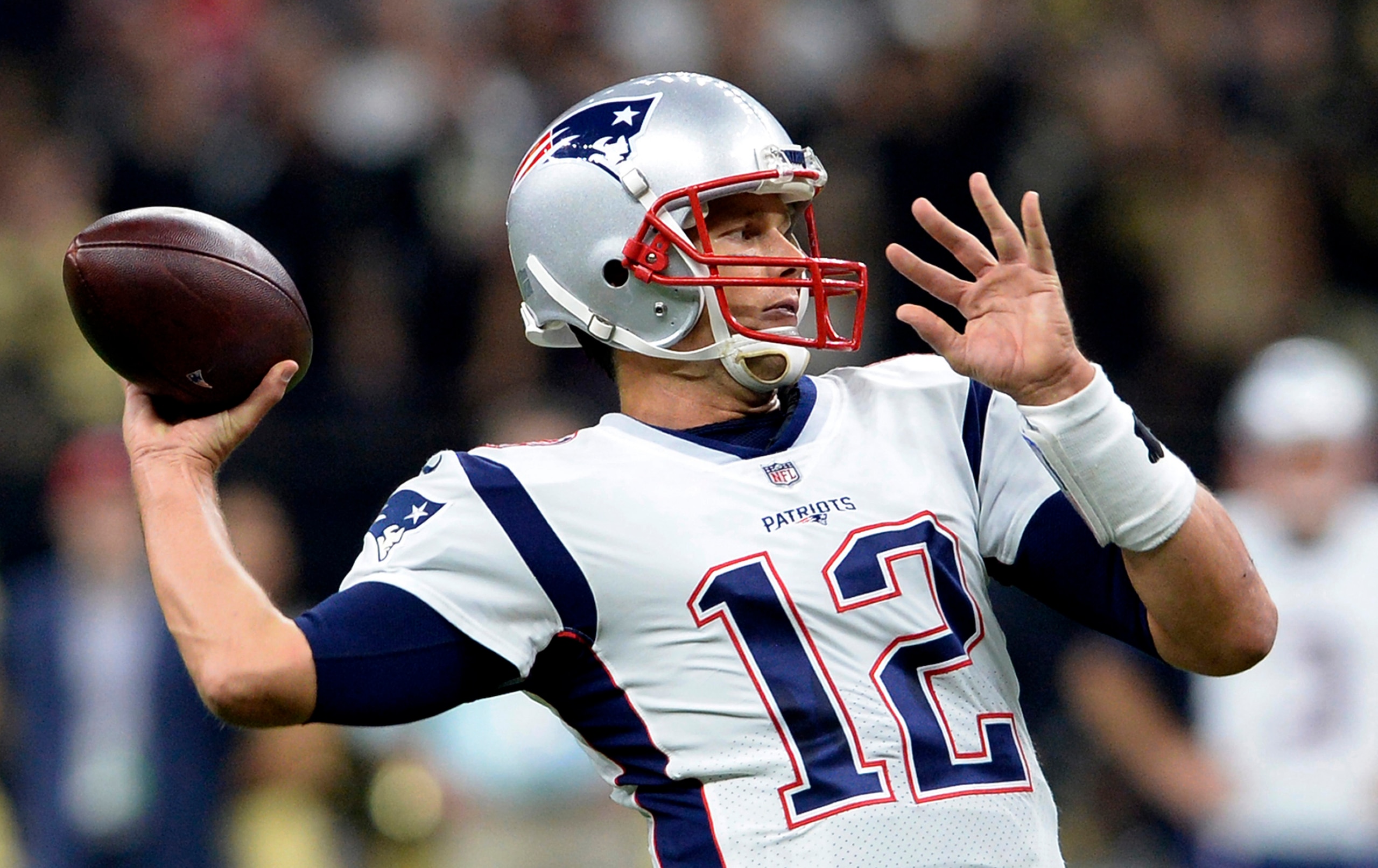
Patriots Nation was rather, unsettled we can say, in the wake of New England's opening-night blowout loss at the hands of the Kansas City Chiefs. With a trip down to New Orleans on the horizon, there was hope a matchup against a shaky Saints secondary might be the elixir to ease the panic in Boston-area living rooms, but there was also concern. Teams that begin the season 0-2 face a steep climb to the playoffs, given that since 2009 only 8.06 percent of teams that started in that hole made it to the postseason.
With the concerns back home, Tom Brady and the Patriots offense put on another of their clinical performances Sunday in a 16-point road victory. Brady was very impressive on the afternoon, completing 30 of 39 passes for 447 yards and three touchdowns. What might have been even more impressive was how offensive coordinator Josh McDaniels drew up play designs to take advantage of potential mismatches against the back seven of New Orleans.
On Brady's first touchdown strike, a fade route to running back Rex Burkhead out of the slot, the offense used motion to get Burkhead in a one-on-one situation with rookie linebacker Alex Anzalone. The second touchdown pass, a 53-yard catch and run from Rob Gronkowski, also found Anzalone on the wrong end of the play. This was a simple crossing route where the rookie linebacker was in decent coverage, but when the pocket broke down and the scramble drill began, Anzalone could not stay with the tight end as he broke vertically.
To his credit on the play, Brady did what he often does so well, buying time with his feet and body to stay upright and deliver the throw. Brady is often like a boxer in the pocket who uses his footwork to create just enough room to get off a punch—or deliver a touchdown pass.
There were also some new wrinkles in the playbook, including a fake bubble screen to the recently acquired Phillip Dorsett that opened up Chris Hogan on a slant route for a simple throw and a very long gain.
Brady and the rest of the Patriots had a rough opening night, but it's a long season and opening week is not going to dictate the rest of the season for the Patriots. As they showed against New Orleans on Sunday, they still have plenty left.
—NFL1000 QB Scout, Mark Schofield

.jpg?w=2560 "49ers Player Shooting Arrests Football")

Move Over, DeMarco Murray; It's Derrick Henry Time
4 of 10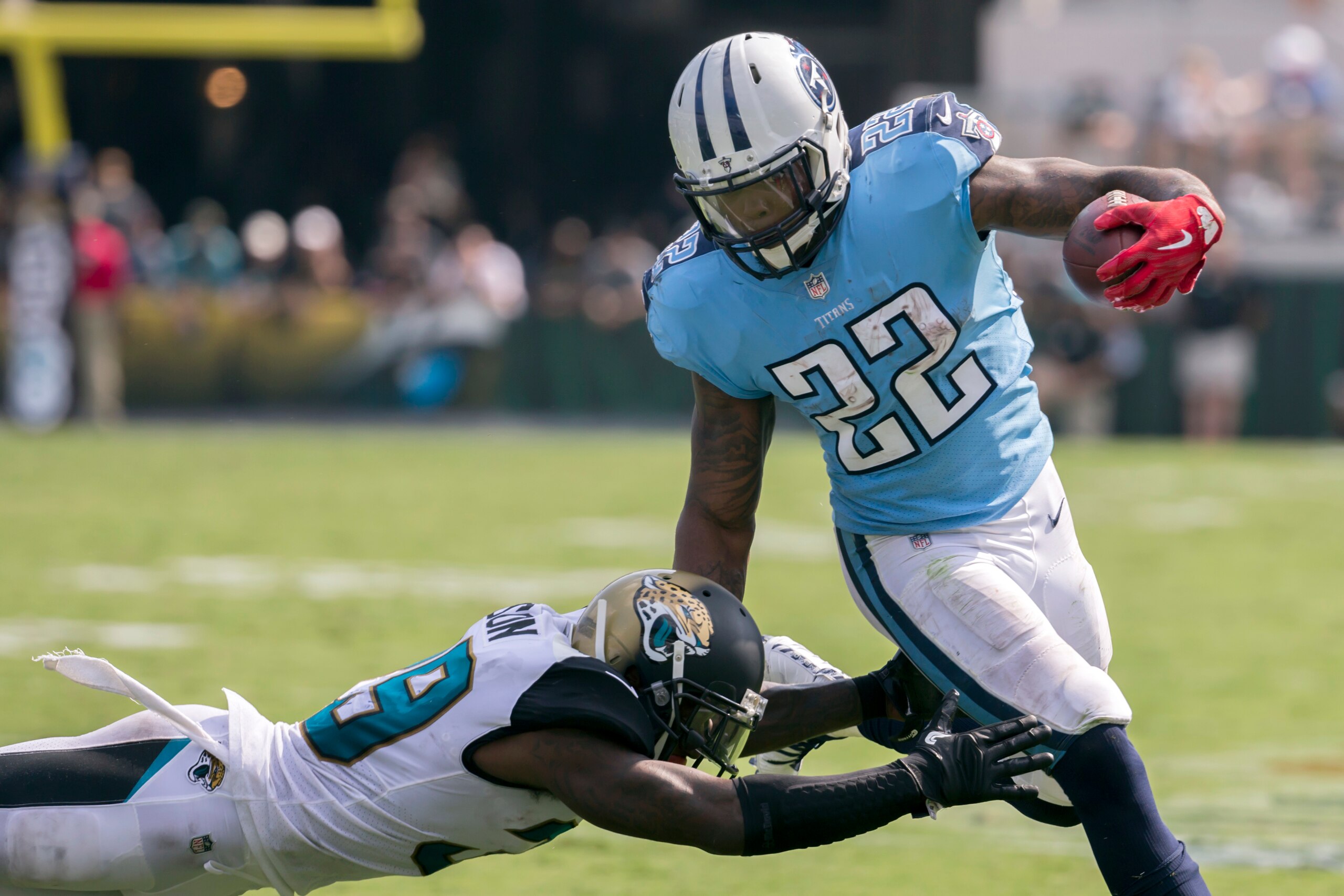
It may well be time for the Tennessee Titans to give running back Derrick Henry the bulk of the carries over DeMarco Murray. In Sunday's 37-16 win over divisional rivals Jacksonville, Tennessee started Murray at running back, but he only managed 25 yards on nine carries, an average of just 2.8 yards per carry, and left the game due to hamstring tightness. He appeared somewhat uncertain when forced off his initial track and lacked a confident burst when having to cut the ball back. This meant that unless the play was blocked perfectly, Murray was unable to maximize the potential gain on each play.
Henry, meanwhile, only saw two carries in the first half and his third didn't come until midway through the third quarter. On 1st-and-10 from the Jaguars' 17-yard line, having just entered the red zone, Henry took a carry up the middle, felt the hole develop as he burst through at full speed and got into the secondary. From there, he ran over the only defender left, a safety, to get into the end zone for a 17-yard touchdown run.
From that point on, Henry was the feature back. On a drive that started at the end of the third quarter, the Titans gave Henry the ball on six straight plays as he picked up 42 yards. With the Jaguars so focused on Henry and the run game, the Titans were able to finish the drive with a tight end screen to rookie Jonnu Smith that resulted in a 32-yard touchdown.
That put the game beyond the reach of Jacksonville, but when the Titans recovered an onside kick attempt, they put the ball back in Henry's hands to kill off the game. He continued to run with power and vision. On the first-down carry, the Jaguars loaded the box and had every lane closed, but Henry made multiple cuts behind the line of scrimmage to avoid would-be tacklers and bounced his run all the way back to the outside before cutting back up field to pick up seven yards.
Henry finished the game with 92 yards and a touchdown on just 14 rushes, a 6.6 yards-per-carry average. He took over the game once the Titans gave him the ball and the difference between him and Murray was clear. The Titans face a stout Seahawks defensive front next week, and if they want to maximize every run, it might be time to hand the keys over to Derrick Henry.
— NFL1000 RB Scout, Mark Bullock
Let the Martavis Bryant Breakout Begin
5 of 10
He's finally back from serving a season-long suspension in 2016 after multiple failed drug tests . Martavis Bryant, one of the most dangerous receivers in the NFL, made a big statement on Sunday that he's ready to make one of the most explosive offenses in the NFL even more dynamic in 2017.
At 6'5", Bryant ran a 4.42 40-yard dash at the NFL combine back in 2014 and is one of the most dangerous deep threats in the entire NFL. He's paired with one of the best deep-ball passers in Ben Roethlisberger, and with the Steelers already having a No.1 wide receiver in Antonio Brown and an elite runner in Le'Veon Bell, Bryant doesn't have to be a focal point of the offense.
But what he can do is make one or two explosive plays throughout the course of a game that can completely alter the outcome. On Sunday, Bryant saw just four targets, but caught three passes for 91 yards and a touchdown. He also forced a pass interference call that resulted in 49-yard penalty by the Vikings because of how bad he beat his defender. That call ended up leading a JuJu Smith-Schuster touchdown three plays later.
Bryant is going to have some monster games and some quiet ones, depending on the matchup. But make no mistake about it: Bryant is a major difference-maker for the Pittsburgh Steelers' Super Bowl aspirations. He's got that much talent and makes that big of an impact. Bryant is back and he's just getting started. Bigger games and performances are on their way.
— NFL1000 WR Scout, Marcus Mosher
Travis Kelce Highlights Chiefs' Schematic Brilliance
6 of 10
After a pedestrian performance in the first game of the season (five catches for 40 yards), Travis Kelce exploded in Week 2 against the Philadelphia Eagles. Kelce was targeted 10 times and caught eight for 103 yards and was easily the best player on offense for the Chiefs. His best play of the day came on a shovel pass in which he avoided a handful of defenders and leaped from the 5-yard line for a Chiefs touchdown.
Kelce caught the shovel pass on 2nd-and-5 after coming in motion from the right side. His athleticism plus his fearless mindset allow the Chiefs to use him in nontraditional ways. Last week, Kansas City used Kelce out of the backfield to run the read-option. This week, it wanted to get him in the open field and allow him to make plays.
With the Chiefs having so many versatile pieces, including Tyreek Hill and Kareem Hunt, their offense is much more explosive and dynamic than in years past. But the biggest difference-maker in that offense is Kelce because of all that he can do as a receiver.
As long as he's healthy, the Chiefs will be a tough offense to deal with because of how many different ways they use him. He's one of biggest receiving threats in the NFL maybe the best tight end period.
— NFL1000 TE Scout, Marcus Mosher
What Happened to the Cowboys Offense in Week 2?
7 of 10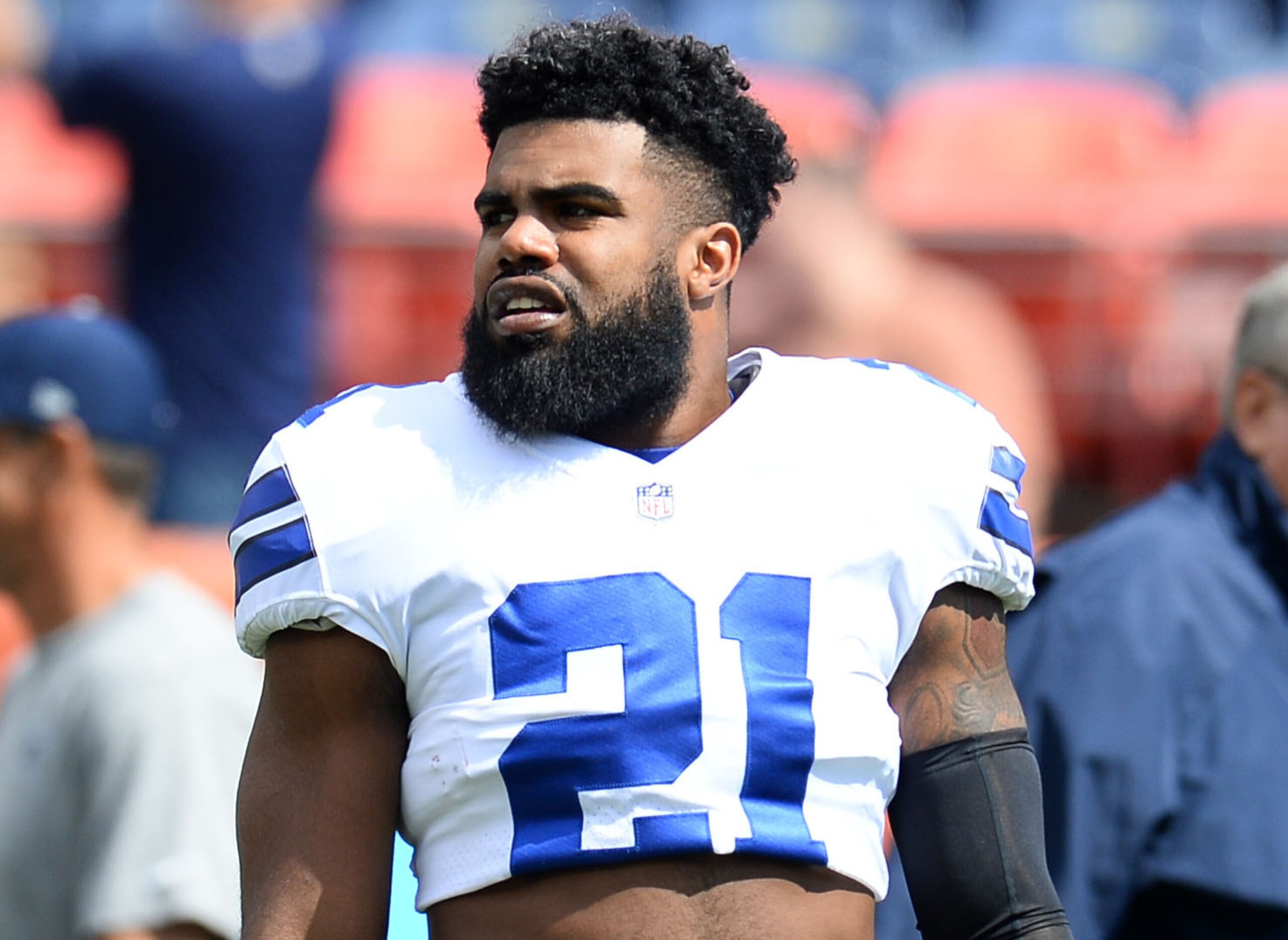
While Ezekiel Elliott's final stat line of only eight rushing yards on nine carries may scare Cowboys fans— especially since his career-low rushing total before Sunday was 51 yards—there is no need to worry about Dallas' ability to open up holes up front.
Sure, the Broncos won the battle up front and made it seem like Zeke had nowhere to run, but that was because Denver played with stacked boxes to limit the Cowboys ground game. Combine that with an unlucky game flow that put Dallas behind early, and there is no need to sweat this going forward.
Pass protection was a different story for Dallas, however.
In his first battle against an elite pass-rusher at right tackle, La'el Collins struggled with Von Miller. Facing stacked boxes and overloaded gap blitz packages, Dak Prescott had to get rid of the ball quickly. The Cowboys' play design didn't align with that strategy at first, so the Cowboys front had to play a numbers game it couldn't consistently win. Prescott hit his safety valves at times throughout the game, but when that first read was smothered, his response seemed to be tossing up fades. That's exactly what the Broncos wanted with their ballhawking defensive backs.
Later on in the game, the score forced the Cowboys to get one-dimensional, which compounded every issue they were having up front. Their offensive linemen seemed to get worn out as well, which is why they started losing their normal assignments and put up some bad reps in the second half.
Ultimately, Dallas fans shouldn't be concerned. Denver is as talented of a defense as the Cowboys will face all year, and this was one of those games where everything went the Broncos' way. While this game was a lowlight for the Dallas offensive line, the unit should be fine moving forward. The linemen also weren't solely to blame for this down game.
— NFL1000 OL Scout, Ethan Young
Demarcus Lawrence Looks Like NFL's Emerging Pass-Rusher
8 of 10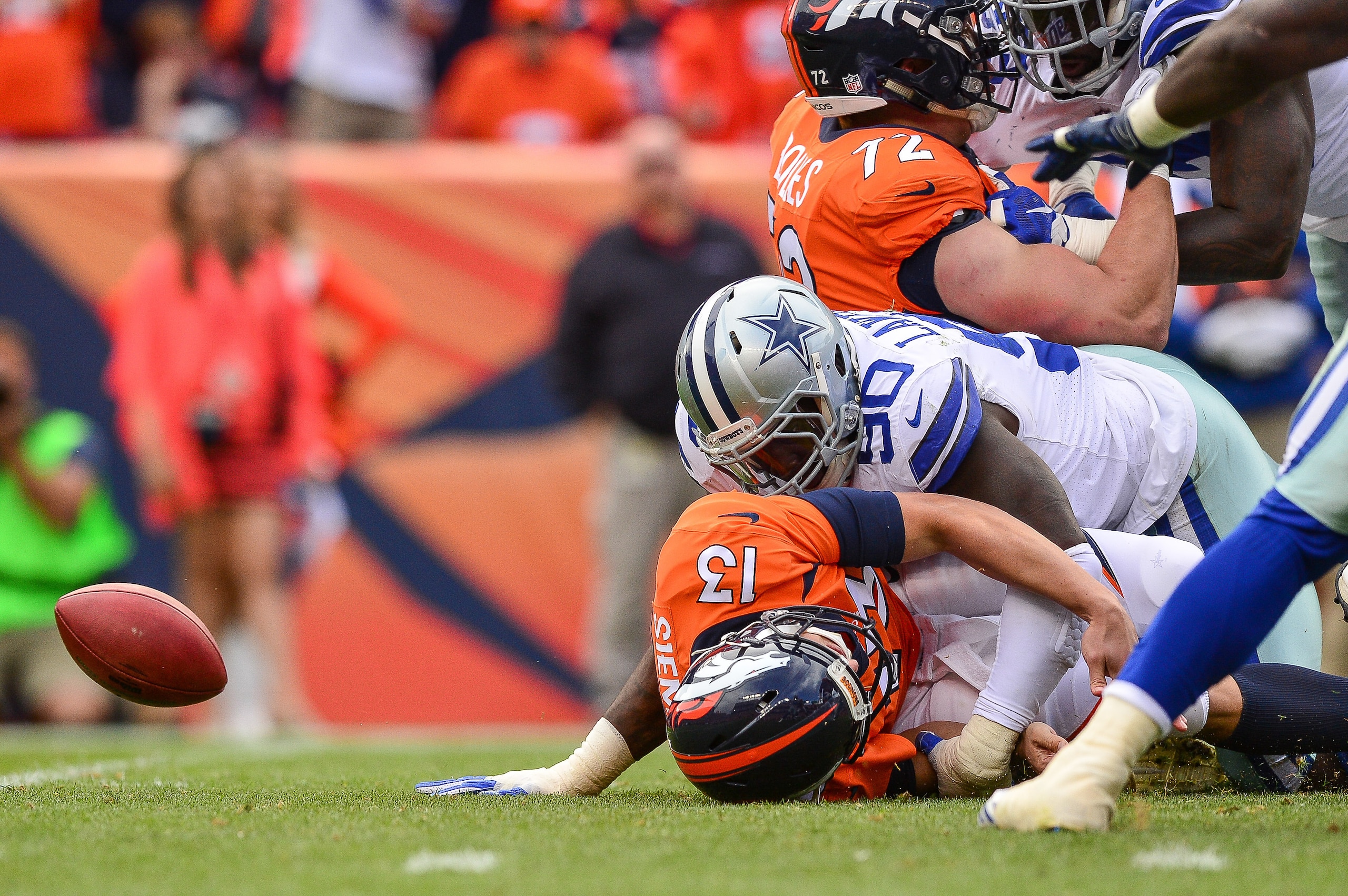
Few pass-rushers have had more interesting NFL careers than Demarcus Lawrence in terms of pedigree and production. Two games, four sacks and a forced fumble into the 2017 season, he's clearly the Dallas Cowboys' highest-graded defensive lineman once more.
This potential shouldn't be a surprise. Lawrence, an early second-round pick, registered eight sacks as a 23-year-old. For over a decade, that has been an easy indicator for success, no matter which round a pass-rusher went off the draft board. Aside from Lawrence, 20 players have accomplished that feat since 2005, with the lone outlier player who didn't achieve significant success being Kamerion Wimbley in 2006.
Lawrence had the pedigree. He had the production.He was young. He was on track for stardom. He had everything going right for him in 2015, but a drug suspension derailed his 2016 season. Coming off of that eight-sack season, he missed four games due to suspension, missed three other games due to injury and recorded just one sack.
We've seen this before. After posting 30 sacks in his first two years in the NFL, Miller only recorded five sacks in his 2013 season, which started off with a suspension. Bruce Irvin, a first-round pick, recorded eight sacks in his rookie year of 2012, but he missed four games in his sophomore season due to a suspension. He had just two sacks upon his return that year, was moved to linebacker and hasn't matched his rookie sack total since.
Suspensions tend to cause down seasons, which helps explain Lawrence's drop from eight sacks in 2015 to one sack in 2016 and his immediate jump back to four sacks over two games in 2017. He has faced some below-average offensive tackles, as he lined up against the New York Giants and Denver Broncos, but keep his name highlighted as this year's breakout candidate.
The Cowboys drafted Taco Charlton in the first round despite not grading him as a first-round talent, as they were looking for a premier pass-rusher. They might have already had one in the chamber.
— NFL1000 DL Scout, Justis Mosqueda
Justin Houston Back to All-Pro Form
9 of 10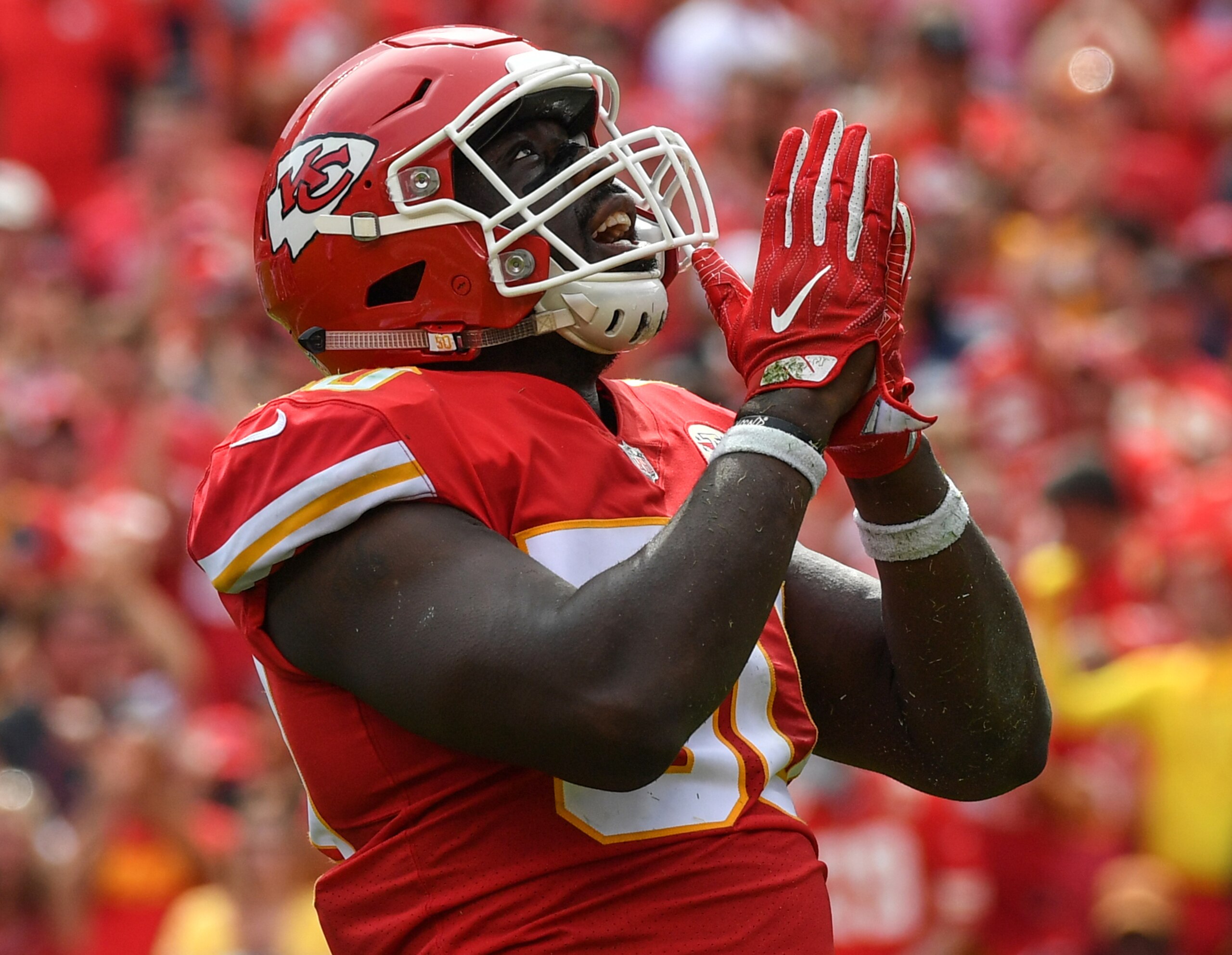
It's easy to forget how dominant Justin Houston can be. Though he led the league with 22 sacks in 2014, Houston missed 16 games between 2015 and 2016. Houston was still a force when he did play during that stretch; he just couldn't stay on the field. Between his general absence and Kansas City's lack of an exciting, prime-time market, Houston was swept under the rug in favor of Khalil Mack, Von Miller, Vic Beasley and others.
Houston is reasserting himself as one of the best this season, and it's hard to ignore. Against the New England Patriots last week, Houston sacked Tom Brady twice, once nearly for a safety. Houston showed up again this week versus the Philadelphia Eagles. Houston, along with defensive tackle Chris Jones, gave Carson Wentz fits all day. Houston came away with one sack on the day, already his third of the season.
What makes Houston so impressive is that he's impactful beyond pass-rushing downs. Houston is a vortex on rushing plays. Anytime a runner heads his way, Houston outmuscles a blocker and wrecks the play. His understanding of how to out-leverage blockers and contain the edge is among the best at his position. When runners have tried to bounce around him this season, they've had no luck. Houston still has plenty of spring in his step despite having ACL surgery a year-and-a-half ago.
Houston can even play well in coverage. Versus New England, Houston was regularly asked to drop into coverage as the Chiefs employed three-man rushes. Houston knew how to recognize and react to New England's crossing routes and shut them down. He pummeled Danny Amendola on one occasion for trying to catch a pass in his vicinity. Houston played less in coverage versus Philadelphia, but still displayed comfort in space and didn't allow for easy receptions to get by him.
It's clear that Houston is back to being the guy capable of leading the league in sacks. If Houston can remain healthy—and that is a big "if" at this point—then he can be in the running for Defensive Player of the Year.
— NFL1000 LB Scout Derrik Klassen
New Orleans Saints’ Defensive Deficiencies Are in Both Talent and Scheme
10 of 10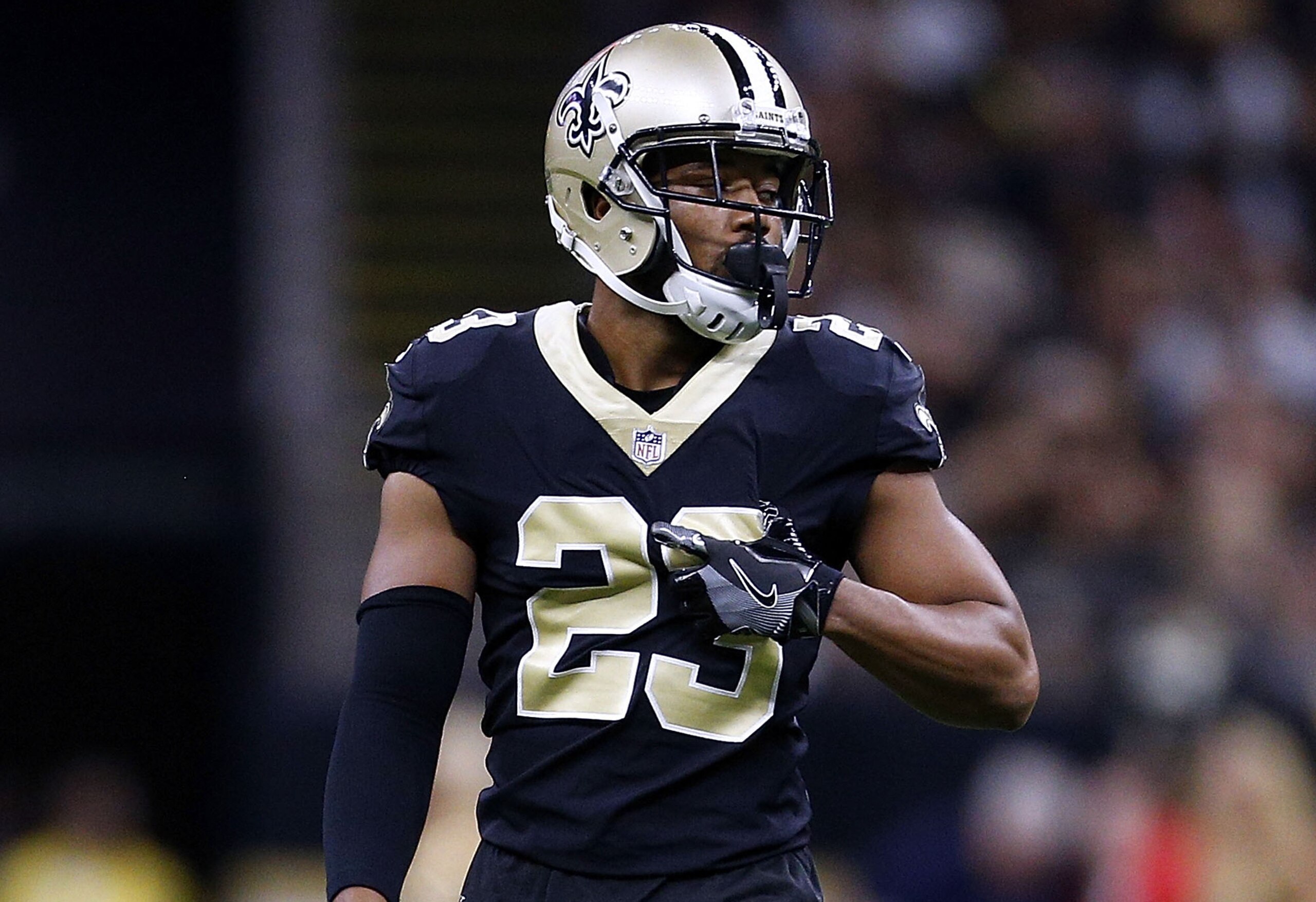
Coming off yet another disastrous defensive performance, the New Orleans Saints are sitting at 0-2 in a competitive NFC South. Despite dumping significant assets into the unit, Saints defensive coordinator Dennis Allen has struggled to find any way to slow down passing offenses. After allowing 777 passing yards in the first two games, it's time Allen shows the ability to adjust his scheme to help account for struggling talent.
Currently, the Saints run a man-heavy scheme, which has suited rookie and budding star Marshon Lattimore well. Allen should have trust in Lattimore, as he gave up just 28 passing yards in Week 2, per Pro Football Focus' Mike Renner. Ceding that Lattimore is the building block in the young secondary could expose him on an island, but the current strategy of dedicating a split-high safety behind him isn't properly protecting fellow corners P.J. Williams and De'Vante Harris. Those two have been shredded repeatedly, especially Williams, who is playing out of position in the slot.
Instead of having his safeties and linebackers play so much man on tight ends, Allen should pivot to a more conservative scheme that will attempt to force offenses to nickel-and-dime them downfield. A bend-don't-break approach may not help the Saints pass rush, but the back seven is unable to play man for more than a few seconds without a receiver getting wide open. At least playing a zone such as quarters or Cover 6 will tighten intermediate and deep routes and allow the youthful secondary to worry less about pre-snap responsibilities, stick to their zones and play more instinctively.
The Saints don't have overwhelming talent to work with, especially considering their combined experience. But the four early-round picks from the last three drafts that are getting playing time are more capable of being effective than serving as a sieve as they have thus far. It's up to Allen to maximize the unit now with schematic adjustments that can help save the Saints' season.
— NFL1000 CB/S Scout, Ian Wharton
.jpg?w=2560)
.jpg?w=2560 "Cardinals Giants Football")