

2-Way MLB Superstar Revolution Is Looming, but Can Anyone Make It Big?
Brendan McKay believes he can do this. He really does.
He can pitch and he can hit, and he can do both at a high level. He did it in the College World Series for the University of Louisville. He's been doing it this summer in the Class A New York-Penn League, in his first months as a professional in the Tampa Bay Rays organization.
He's hitting .220 in 31 games with the Hudson Valley Renegades, with four home runs. He has a 1.80 ERA in 15 innings.

"At this moment, I love both equally as much," McKay said. "I've been doing it for so long, for me it feels easy to do both."
Why would he think he should stop? Why, other than years and years of history where baseball has had hitters and baseball has had pitchers, but baseball hasn't had full-time pitchers who are also full-time hitters?
Matt Bush doubts anyone can do this.
"Very difficult," Bush said. "It's not high school or college anymore. You need to focus on one area and perfect it. It's hard enough to put in the time to be the best you can be at shortstop, or whatever."
Bush was picked first overall in the 2004 draft as a shortstop. He tried that path to the big leagues and only when it didn't work did he switch to pitching. Now he's a major league pitcher—a full-time major league pitcher who hasn't had as much as a single major league at-bat—with the Texas Rangers.
"One or the other is going to click," Bush said. "They're not going to be dominant at both."
For now, though, McKay can try. The Rays drafted him in the first round in June (fourth overall) and said right away they would at least initially give him a two-way chance. Two picks earlier in the first round, the Cincinnati Reds took Hunter Greene, another two-way prospect. He's doing both in the minor leagues, too.
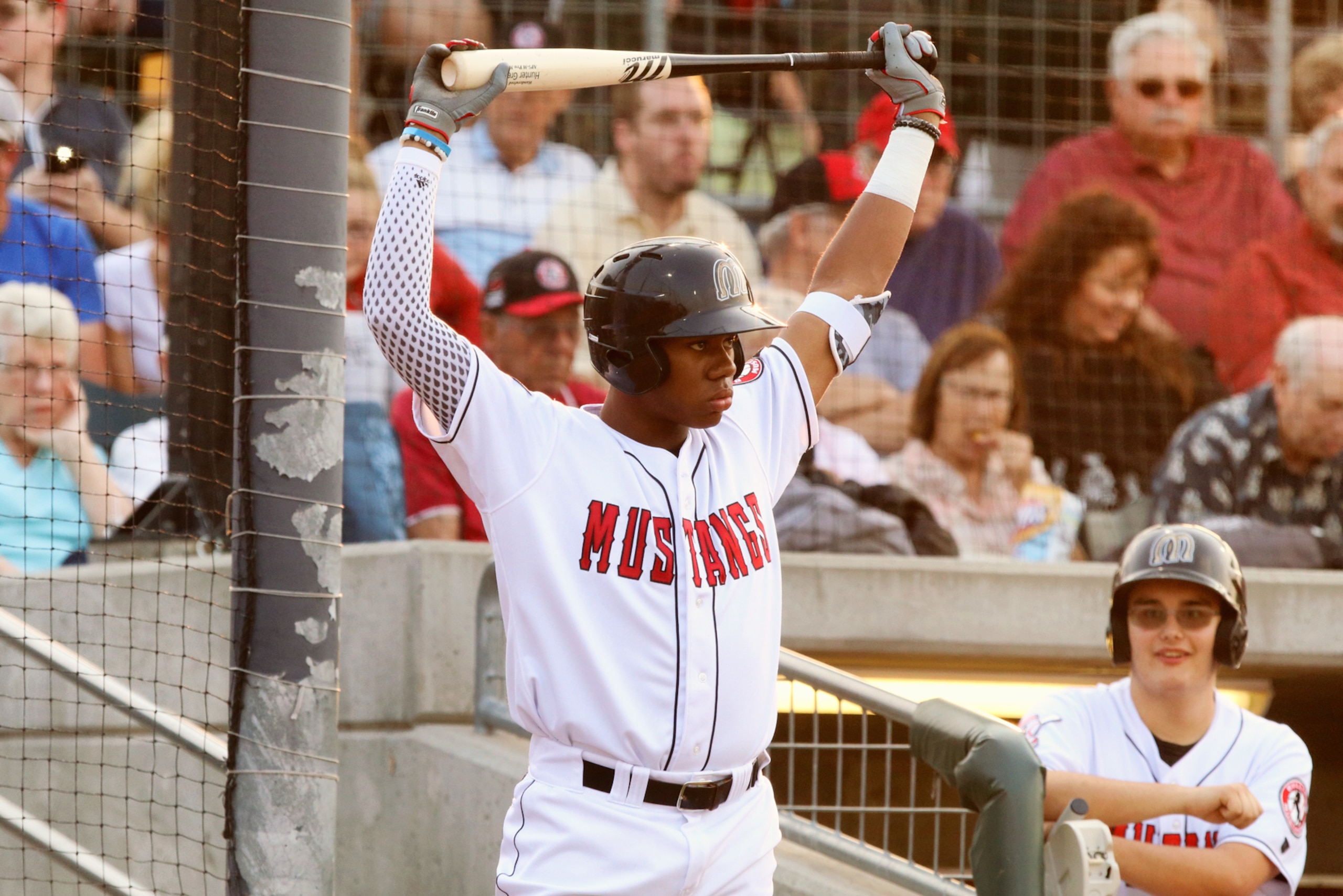
Greene's professional pitching career consists so far of only one inning in the Rookie level Pioneer League, but according to 406mtsports.com, his sixth pitch for the Billings Mustangs was clocked at 100 mph.
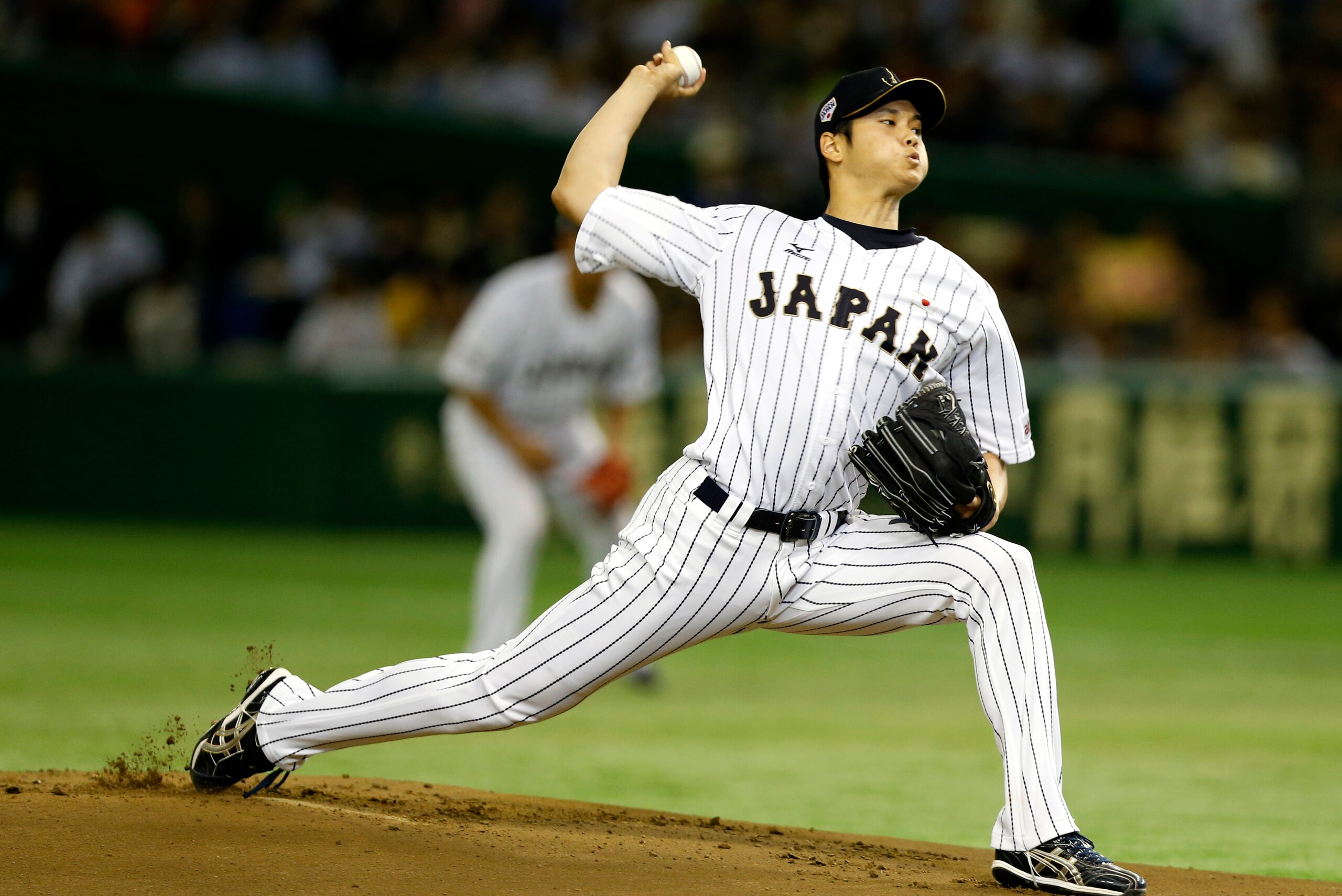
With McKay and with Greene and with Shohei Ohtani, who has already been a two-way star at the top level of Japanese baseball, the prospect of a true two-way player in the major leagues is more real than it has been in decades. Ohtani, described by one MLB club official as the "best baseball player in the world" in a Scott Miller story for Bleacher Report in March, may jump to the major leagues as soon as this winter.
Thursday, when Ohtani pitched for the Hokkaido Nippon Ham Fighters, scouts from 15 of the 30 major league teams were in attendance, according to Ken Rosenthal of The Athletic.
One reason there were so many scouts: Ohtani was making just his second start as a pitcher this season, because of ankle and thigh injuries.
The risk of injury and the toll on the body of trying to play full-time as a hitter and work as a pitcher is one reason to doubt that anyone can do both in the major leagues. Even some scouts who believe Ohtani has the talent to make it as either a hitter or pitcher don't think he'll be able to (or be allowed to) try both at the same time.
Some major league players and coaches expressed even stronger doubts, not just about Ohtani, McKay and Greene, but also about anyone who would want to try.
"No chance," said Rangers pitching coach Doug Brocail, who pitched in the major leagues for 15 years (and hit .174, respectable for a pitcher, in 69 at-bats). "Look at all the work you have to put in to do just one of them. I don't see it happening. I'm not saying [McKay] is not a better athlete than most. But it's so difficult to do one thing. I don't see a guy being able to do both."
No one really has, not in the major leagues, not since Babe Ruth pitched 17 games and made 106 starts in the outfield for the 1919 Boston Red Sox. The Red Sox sold Ruth to the New York Yankees that winter, and he basically gave up pitching before he went on to become the best offensive player of his era.
There have been a few attempts since then, but no one who came anywhere close to making it big while doing both at the same time. Brooks Kieschnick's name sometimes comes up, but the two years he pitched for the Milwaukee Brewers, he started just three games in the outfield. Rick Ankiel went from pitching to hitting after he lost the ability to throw strikes, but he didn't do both at the same time, either.
Joe Maddon said he absolutely loved the versatility Travis Wood gave him with the Chicago Cubs, but even Maddon only used Wood as an outfielder three times all season (and as a pinch hitter or pinch runner a handful of other times).
The ever-creative Maddon is one major league manager willing to at least consider the idea of a true two-way player.
"I see nothing wrong with it," he said.
Maddon agreed it would be easier for an American League team, which could use the player as a designated hitter on the days he didn't pitch. As for a National League team, "they'd have to be in a position where they did limited throwing," he said.
McKay plays first base on the days he doesn't pitch for Hudson Valley. Greene was a shortstop in high school, but his limited appearances so far in pro ball have been either as a designated hitter or pitcher. Ohtani has been an outfielder at times in Japan, although since 2014 he almost exclusively has been a DH on days he didn't pitch.
"First base isn't going to take a whole lot out of you," said McKay, who played first base most days he didn't pitch at Louisville, although he would DH the day after he pitched.
The position question is another complication on the road to a true two-way player. To be able to do it and keep doing it, the guy is going to need to be a strong enough hitter that a team will decide DH at-bats should go to him and not someone else.
And in the case of McKay and Greene, will their offensive and pitching skills develop at a similar pace? In other words, will they be able to handle Double-A pitching as a hitter at the same time they'll be advanced enough to compete in Double-A on the mound?
"Obviously, there could be a time that one is ahead of the other," McKay agreed. "But they're typically close together."
McKay said that before the draft, several teams told him they were excited by the chance to let him both pitch and play a position. He was excited to be drafted by the Rays, a team that was open to the idea, just as he had chosen to go to Louisville in part because the Cardinals coaches told him he could try to do both.
He doesn't even think that makes him unique.
"If you show it could be done, I think it could open it up to other players, too," McKay said.
For now, most remain skeptical. Most are like Joey Gallo, who threw 97 mph as a high school pitcher but has never thrown even a single pitch since he signed his first professional contract in 2012.
"Pitching and hitting at this level would be tough," said Gallo, who plays first base for the Rangers. "I think eventually, they pick the one that's more advanced."
Gallo made his pick while he was still in high school. He said as many as 25 of the 30 teams wanted to sign him as a pitcher, but he was so determined to play every day that he wouldn't tell scouts what days he would be pitching.
"I'd literally hide, so they wouldn't see me pitch," he said. "Pitching was fun. I liked pitching a lot. I enjoyed being out there controlling the game. But I wanted to play every day. I liked playing the field. I liked hitting."
McKay does, too. He loves hitting. It's just that he loves pitching, too. For now, at age 21, he's still convinced he can eventually do both in the major leagues.
You'd think after all these years, someone would be able to do it. With McKay, Greene and Ohtani all seemingly ready to try, perhaps this is the time it happens.
Danny Knobler covers Major League Baseball as a national columnist for Bleacher Report.
Follow Danny on Twitter and talk baseball.
.jpg?w=2560 "Immigration Baseball Coach")
_2.png?w=2560)
.jpg?w=2560 "York Responded to Ad on Prostitution Site Before Arrest")
.jpg?w=2560 "WWE NXT Results, Winners, Live Grades, Reaction, Highlights Before Heatwave 2026")
.jpg?w=2560 "Sky Ban Enes Kanter Freedom from Home Games (AP)")
.jpg?w=2560 "Players with Shocking Career Earnings 😳")