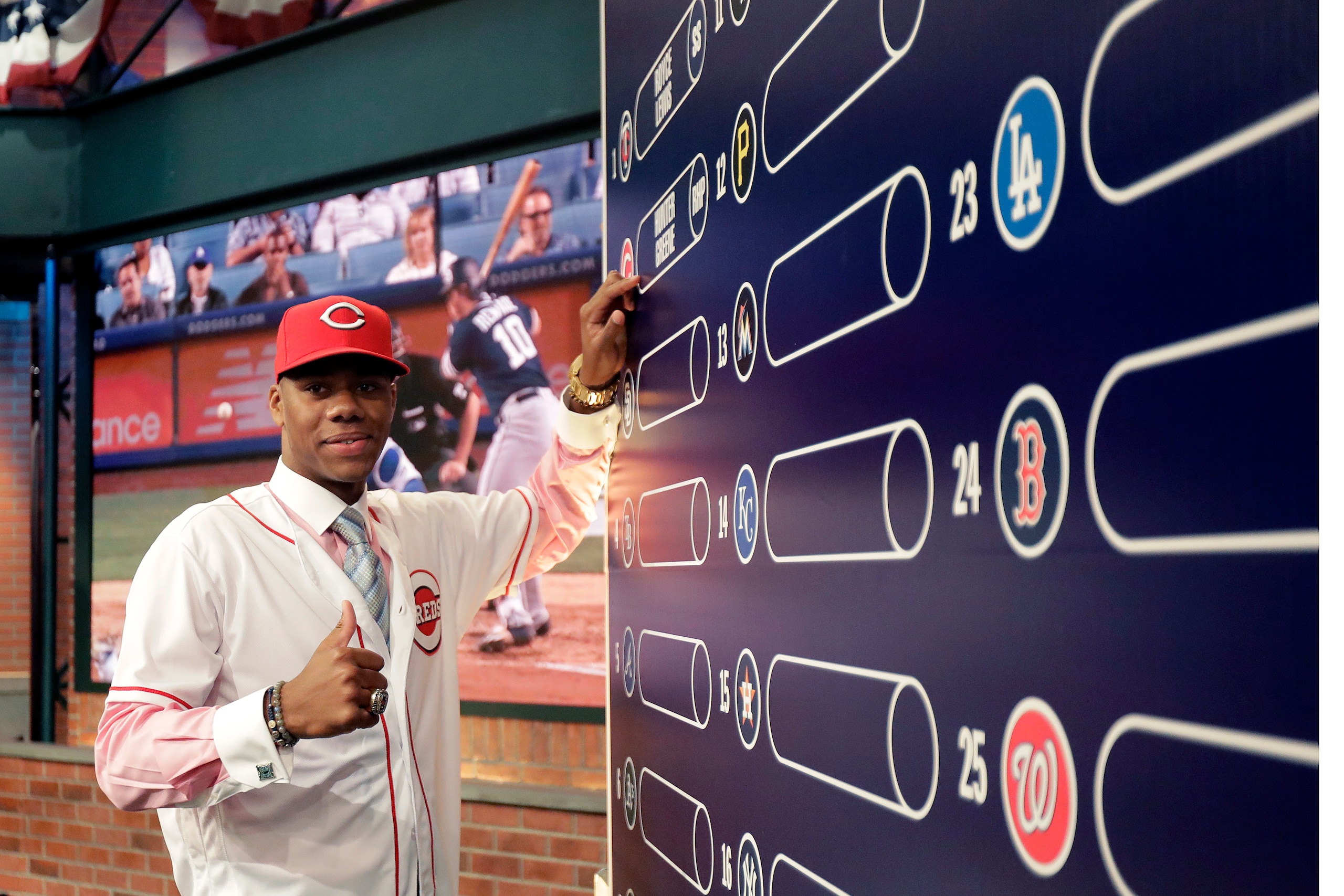


The 2017 MLB draft has arrived, and the next wave of high school and college talent is set to join the professional ranks.
The three-day event kicked off Monday night with the first two rounds and 75 total selections.
All 75 of those picks are laid out team-by-team in the following article, with expert scouting reports, pick analysis and draft grades provided for each selection.
Because they signed Dexter Fowler and forfeited a pair of second-round picks to the Houston Astros, the St. Louis Cardinals do not have a Day 1 pick. Their first selection will come in the third round, at No. 94 overall.
Note: Parts of this slideshow repeat analysis from B/R's first Round 1 mock draft.
Arizona Diamondbacks
1 of 29
First Round (No. 7 Overall): Pavin Smith, 1B, Virginia
It speaks to what a polished offensive player Virginia slugger Pavin Smith is that a college bat with a first-base-only defensive profile was a consensus top-10 talent.
Smith hit .342/.427/.570 this spring with 11 doubles, 13 home runs and 77 RBI, and his in-game power has steadily improved during his three years on campus. As long as that power continues to develop, he has a chance to develop into a prototypical middle-of-the-order threat.
Even more impressive than his counting numbers is the fact that he struck out just 12 times in 274 plate appearances while also walking at a healthy 13.9 percent clip.
Grade: A
Smith will move as quickly as any bat in this class and that will leave the D-backs with a good problem with franchise cornerstone Paul Goldschmidt blocking his path. This is a prime example of drafting on talent, not need, which is what the MLB draft is all about.
Second Round (No. 44 Overall): Drew Ellis, 3B, Louisville
Ellis was tasked with protecting Brendan McKay in the middle of the Louisville order, and he had an equally impressive season from a statistical standpoint.
The draft-eligible sophomore hit .367/.457/.729 with 18 doubles, 20 home runs and 61 RBI, and he drew more walks (55) than he struck out (53) in his two years on campus.
He played third base when McKay was at first and shifted over to first when McKay pitched, and given his limited range, a full-time move across the diamond could be coming as a pro.
Grade: B-plus
If he can stay at third base, this could be a steal. If not, his bat should still play, and it's hard to argue with grabbing two of the top collegiate power bats in the class.
Lottery Round B (No. 68 Overall): Daulton Varsho, C, UW-Milwaukee
Varsho had the best hit tool among this year's catching crop.
He posted a .362/.490/.643 line with 11 doubles and 11 home runs this spring, and that was right in line with the .381 average and 1.133 OPS he put up as a sophomore.
He's a plus athlete behind the plate with legitimate 60-grade speed on the bases, but he has a below-average arm. A move to left field isn't out of the question, and he has the bat to make that work.
Grade: B
Varsho obviously has more value if he can find a way to stay behind the plate, but his athleticism and potential versatility is intriguing.
Atlanta Braves
2 of 29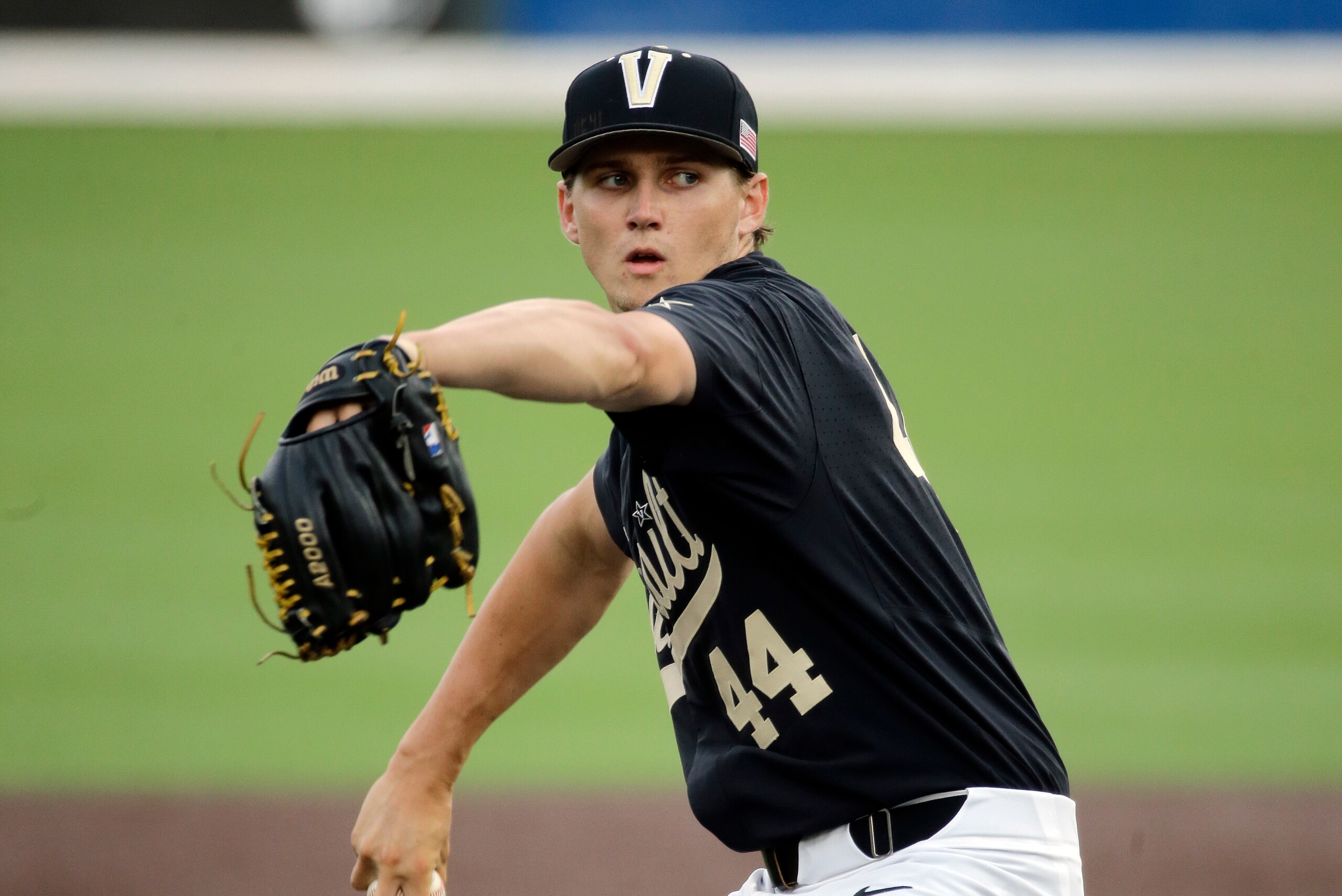
First Round (No. 5 Overall): Kyle Wright, RHP, Vanderbilt
Undrafted out of high school, Kyle Wright now checks all the boxes a team looks for when picking a college arm early in the draft.
He was a standout collegiate performer with an advanced four-pitch mix, easy mechanics and remaining projectability in a 6'4" frame that has already tacked on 40 pounds of muscle since he walked on campus at Vanderbilt.
His fastball now tops out at 97 and he backs it with a curveball that keeps lefties off-balance, a hard slider that serves as his strikeout pitch against righties and a passable changeup.
Grade: A-plus
The Braves get a guy that many expected to go No. 1 overall just a few weeks ago at the No. 5 spot. He brings a rare mix of upside and projectability for a collegiate arm and he was the best available here for a team that loves grabbing pitchers early.
Second Round (No. 41 Overall): Drew Waters, OF, Etowah HS (Ga.)
In a deep crop of Georgia high school talent, Waters won Gatorade Player of the Year honors.
The switch-hitting outfielder batted .493 and slugged 1.126 with 13 home runs, 35 RBI and 43 runs this spring, helping Etowah High School to a berth in the Class 7A state tournament.
MLB.com graded out all five of his tools at 50 or better, and his combination of power, speed and defense could make him extremely valuable as a potential everyday center fielder.
Grade: A-plus
Expect to see this one on plenty of "biggest steal" lists. In a farm system loaded with pitching talent, he could quickly become one of the top bats.
Baltimore Orioles
3 of 29First Round (No. 21 Overall): D.L. Hall, LHP, Valdosta HS (Ga.)
With a 6'0", 180-pound frame, D.L. Hall doesn't offer the huge projection of some prep arms, but that's not an issue.
He has a fastball that sits in the 90-93 mph range and touches 95 and a hard curveball that generates plenty of spin-rate buzz. He's also shown enough with his changeup, which could develop into a third solid offering.
A smooth delivery, good command and quality stuff make him one of the more polished prep arms in this class, and he might immediately grade out as the organization's top pitching prospect.
Grade: A-plus
This is the steal of the draft so far. Hall was rumored to be going to the Marlins at No. 13, so the O's had to be thrilled to still see him on the board.
Second Round (No. 60 Overall): Adam Hall, SS, A.B. Lucas SS (Canada)
Hall was the top position player among this year's Canadian crop.
He should be able to stay at shortstop and, as MLB.com put it, he's "capable of making the spectacular play" on defense.
There's also some power potential as he fills out his 5'11", 165-pound frame and he makes enough consistent contact to eventually tap into it. That said, he's still rough around the edges and will be something of a project.
Grade: D
I like Nick Allen, Brady McConnell and Greg Jones better if they wanted a high school shortstop.
Lottery Round B (No. 74 Overall): Zac Lowther, LHP, Xavier
In a thin class for college lefties, Lowther was one of the best available.
The 6'2", 235-pound southpaw went 5-5 with a 2.92 ERA, 0.97 WHIP and 123 strikeouts in 83.1 innings this spring to rank fourth in D-1 with 13.3 strikeouts per nine innings.
His stuff doesn't blow hitters away, but he knows how to pitch, and with three useable offerings he should get a chance to start. Otherwise, he'd move quickly as a reliever.
Grade: B
A little bit of a reach here, but I like the player. There's always value in a lefty arm that knows how to miss bats, even if he doesn't find his way into the future rotation.

Boston Red Sox
4 of 29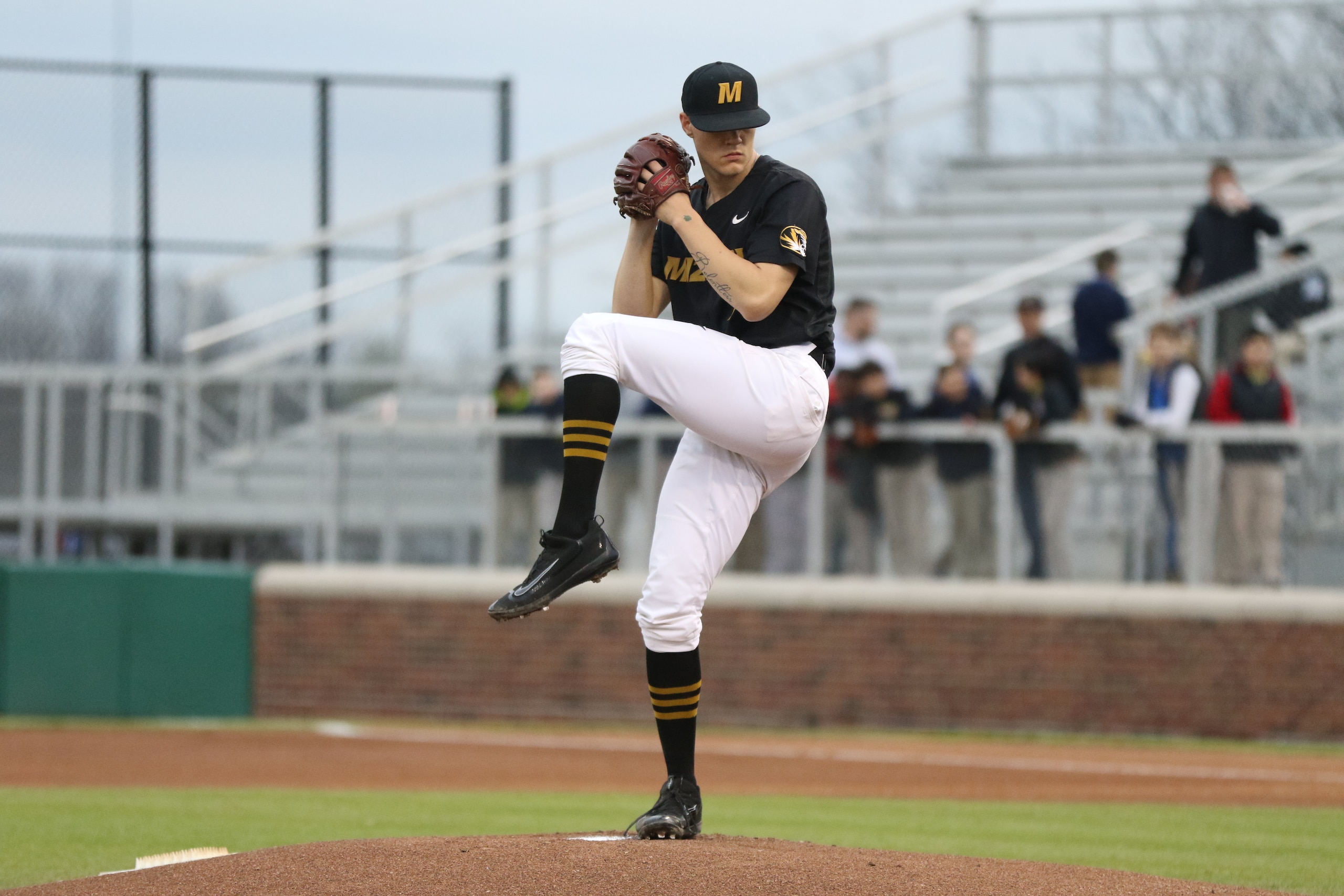
First Round (No. 24 Overall): Tanner Houck, RHP, Missouri
Tanner Houck has the big fastball and the durable frame to develop into an impact starter.
There are also questions about his secondary stuff and his mechanics, though, leaving the Missouri ace as an intriguing upside play toward the end of the first round.
Houck works in the 92-96 mph range and can touch 98 with his fastball. He gets good sink and late life out of the pitch, too. There were times, however, when that was his only reliable offering, and that could make him a future high-leverage reliever.
Grade: B-plus
It's easy to dream on Houck as a future power pitcher and innings eater if he can smooth out the rough edges, but it's also easy to envision him as a quick-to-the-majors reliever. Either way, he's a solid addition to the Boston system.
Second Round (No. 63 Overall): Cole Brannen, OF, Westfield School (Ga.)
Brannen has one standout tool—his speed.
"Brannen stands out most with his well above-average speed. It enhances his chances of getting on base, makes him a threat to steal once he does and allows him to cover a lot of ground in center field," MLB.com wrote.
There's offensive potential beyond just his wheels, too, as he should be able to hit for a decent average and develop into a 12-15 home run threat thanks to his impressive all-around athleticism.
Grade: B
This is right about where most evaluators had Brannen ranked, so it's not a reach. The ceiling is obvious and the floor might be fairly high thanks to his speed and defensive potential.
Chicago Cubs
5 of 29
First Round (No. 27 Overall): Brendon Little, LHP, State JC of Florida
Most considered Nate Pearson to be the top JUCO arm in this year's class, but the Cubs made left-hander Brendon Little the first one off the board here at No. 27.
The 6'2" southpaw works off a mid-90s fastball that touches 97 and backs it with a 12-to-6 curveball and a changeup that has shown some potential.
He posted a 2.53 ERA and punched out 133 hitters in 85.1 innings this spring, and while there are still some things to iron out as far as his mechanics and secondary stuff is concerned, he might eventually have a better chance of sticking as a starter than Pearson.
Grade: B
Power lefties are hard to find, but there were higher ceilings still on the board, if the Cubs were looking to go off script with their first of two picks here in the top 30.
First Round (No. 30 Overall—Dexter Fowler comp): Alex Lange, RHP, LSU
Alex Lange burst onto the scene as a freshman in 2015 and went 12-0 with a 1.97 ERA and 131 strikeouts in 114 innings.
In the two years since, he's refined his overall command and improved his changeup to the point that it's a passable third pitch alongside his mid-90s fastball and a hammer curve that ranks as one of the better breaking pitches in the class.
He's prone to overthrowing at times and has some effort to his delivery, but with a strong 6'4", 200-pound frame and the ability to maintain his stuff late into games, he'll be given every chance to start.
Grade: A-minus
This is a nice high-floor pick after a considerably riskier selection earlier in the round. There's a good chance the Cubs have saved some money with these first two picks, so look for a splashy above-slot move later on.
Second Round (No. 67 Overall): Cory Abbott, RHP, Loyola Marymount
Abbott was downright dominant this spring, going 11-2 with a 1.74 ERA and 130 strikeouts in 98.1 innings, allowing just two earned runs in 67 innings during conference play.
The development of a new pitch—a slider—caused his draft stock to soar and give him a legitimate putaway pitch to back his average fastball and curveball.
He doesn't have the highest ceiling, but he now looks like a potential future starter thanks to that slider. The baseball acumen that comes with being able to pick up a new pitch so quickly is an intriguing intangible.
Grade: B-
Chicago White Sox
6 of 29
First Round (No. 11 Overall): Jake Burger, 3B, Missouri State
Jake Burger was one of the top college power bats in this year's draft following a stellar junior season at Missouri State.
He hit .328/.443/.648 this spring and his 22 home runs marked the second year in a row that he's topped the 20-homer mark, while his on-base skills also took a significant step forward and he drew more walks (43) than strikeouts (38).
There are some questions about his ability to stay at third base defensively and he's not the most athletic player by any means, but his bat will play and his power is legit.
Grade: C-minus
Burger should develop into a solid contributor, but if the White Sox preferred to go the college-bat route, I like Jeren Kendall or Evan White here instead.
Second Round (No. 49 Overall): Gavin Sheets, 1B, Wake Forest
Gavin Sheets was asked to fill the shoes of 2016 first-round pick Will Craig in the middle of the Wake Forest lineup, and he didn't disappoint.
He raised his OPS from .891 to 1.063 and slugged 20 home runs while driving in 81 runs and drawing more walks (44) than strikeouts (33) on his way to a .429 on-base percentage.
The 6'5", 235-pound slugger will be limited to first base and DH duties, so his bat will have to carry him.
Grade: C
This pick would have made a lot more sense if the White Sox had gone with a high-ceiling high school prospect in the first round.
Cincinnati Reds
7 of 29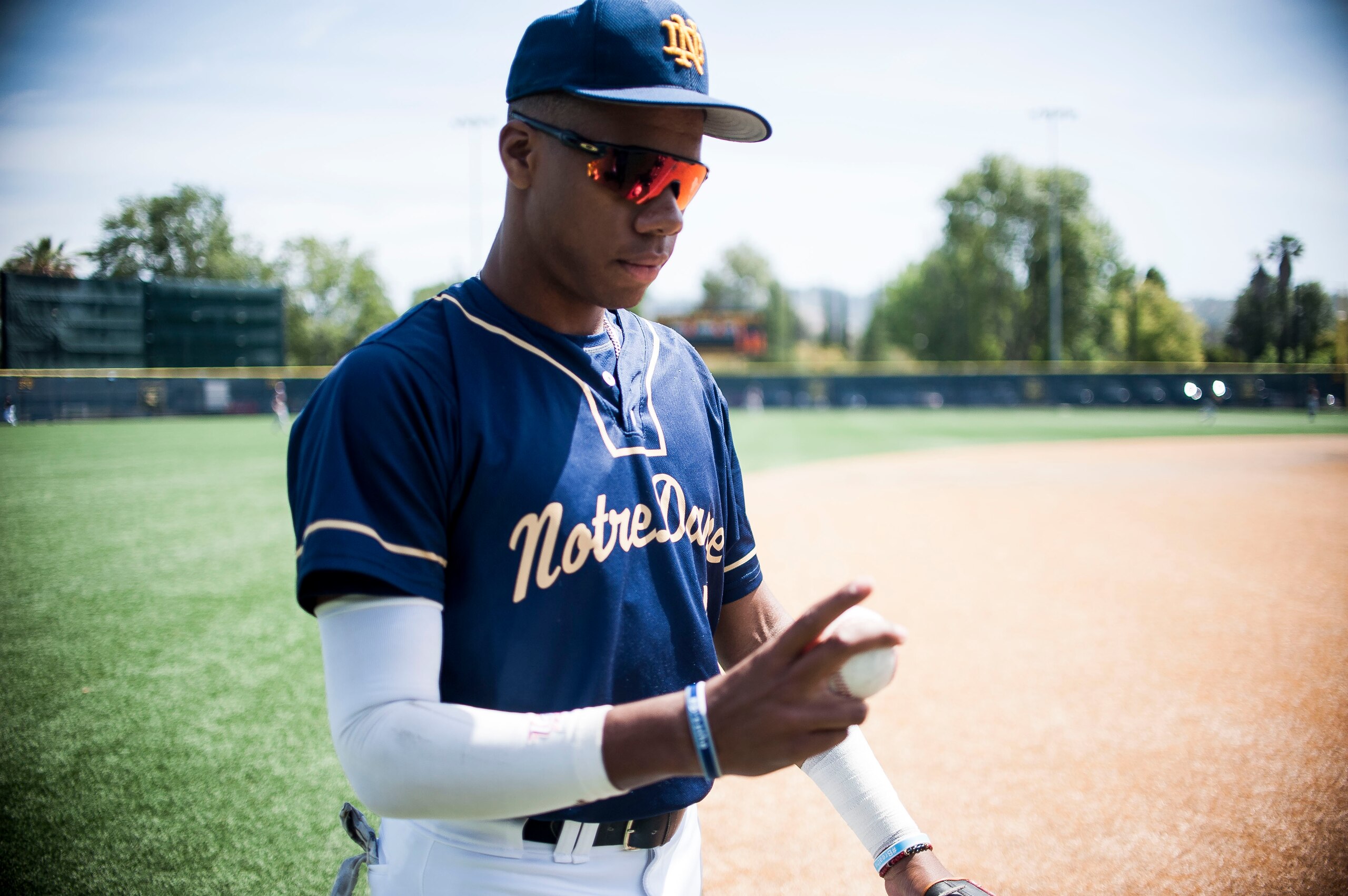
First Round (No. 2 Overall): Hunter Greene, RHP, Notre Dame HS (Calif.)
As a shortstop, Greene has five-tool potential, and he likely would have still been a first-round pick.
His future is on the mound, though, where his fastball consistently sits in the 95-98 mph range and has been clocked as high as 102 this spring. His secondary stuff—a hard slider and a seldom-used changeup that has shown flashes—needs further development, but both pitches have a chance to be plus offerings.
His athleticism serves him well on the mound, where he displays advanced command for a prep arm, and he has little effort in his delivery, especially considering his elite velocity.
Grade: A-plus
Simply stated, Greene has a chance to be a generational talent. He has a ways to go to reach that ceiling, but there's no question it's the highest in this class.
Lottery Round A (No. 32 Overall): Jeter Downs, SS, Monsignor Pace HS (Fla.)
Downs showed the ability to make consistent hard contact, and he has plenty of over-the-fence power potential to grown into.
With good range and an above-average arm, he should also be able to stay at shortstop, making his offensive profile that much more intriguing.
Grade: A-plus
I actually like Downs more than fellow prep shortstop Christopher Seise, who snuck into the first round at No. 29 overall. Might have the highest ceiling of any middle infielder in this class.
Second Round (No. 38 Overall): Stuart Fairchild, OF, Wake Forest
After a disappointing sophomore season, Fairchild rebounded nicely to hit .359/.438/.645 with 18 doubles, 17 home runs and 20 stolen bases as a junior.
He had as good a power-speed mix as any player in college baseball this year, and if he shows he can hit with wood bats after he struggled in the Cape Cod League last summer, this could be a steal.
Grade: A
Fairchild had some serious helium leading up to the draft, and the Reds may very well have walked away with three first-round-caliber talents on Day 1.
Cleveland Indians
8 of 29Second Round (No. 64 Overall): Quentin Holmes, OF, Monsignor McClancy Memorial HS (N.Y.)
For more on Quentin Holmes, I'll direct you to our full player profile here.
The quick summary is he's the fastest player in this year's draft class and perhaps the only player with a legitimate 80-grade tool.
He's more than just a burner, though, as he has a projectable frame and already started to flash some intriguing power potential this spring. His speed also plays well in center field.
Grade: A-plus
I liked Holmes at the back of the first round, so this is a great pick by the Indians, especially considering it's their first selection.
Lottery Round B (No. 71 Overall): Tyler Freeman, SS, Etiwanda HS (Calif.)
Freeman profiles more as a future utility player than a potential everyday shortstop, and his best fit defensively is actually at second base.
He's also expected to be a tough sign away from his commitment to TCU, and the Indians would likely have to go above the $816,500 slot value here.
Not sure that's the best use of their funds.
Grade: D
Don't get this pick at all, unless they expect to have to go well above slot to sign Holmes.
Colorado Rockies
9 of 29Second Round (No. 48 Overall): Ryan Vilade, 3B, Stillwater HS (Okla.)
The Rockies were without a first-round pick after they signed Ian Desmond, but that didn't stop them from landing one of the best power bats in the class in Ryan Vilade.
MLB.com wrote: "Vilade's power potential stands out more than his contact. The winner of the home run derby at the Under Armour All-America Game in August, he has good bat speed, impressive pop to his pull side and the room to add more strength to his 6'2" frame. After his right-handed swing showed a tendency to get long in the early portion of the high school showcase circuit, he showed the ability to make adjustments and played better later in the summer."
The Gatorade Player of the Year in Oklahoma, he hit .410 with a .778 slugging percentage this spring.
Grade: B-plus
I'm of the opinion that the Rockies should always go with pitching early, but they got a first-round talent at No. 48 overall, so it's tough to complain.
Lottery Round B (No. 70 Overall): Tommy Doyle, RHP, Virginia
One of college baseball's best relievers, Doyle saved 14 games this spring with a 1.87 ERA and 10.2 K/9.
His fastball touches 97, and his slider has a chance to develop into a quality secondary offering. His curveball and changeup will likely be scrapped as a pro.
Grade: D
This was at least two rounds too early for Doyle, who has limited upside and doesn't look like a future closer.
Detroit Tigers
10 of 29
First Round (No. 18 Overall): Alex Faedo, RHP, Florida
The Detroit Tigers have long targeted hard-throwing high school arms, but they went the college route with Florida ace Alex Faedo—who entered the spring in the mix to go "one-one" (as in Round 1, Pick 1).
Minor surgery on both knees last offseason led to a slow start to his junior campaign, but he's rounded into form as the spring has progressed and again looks like one of the nation's top arms.
With an advanced three-pitch mix and solid command, the 6'5" righty has gone 7-2 with a 2.60 ERA, 1.16 WHIP and 132 strikeouts in 107.1 innings.
Grade: A-plus
Most expected Faedo to be long gone at this point, so the Tigers did well to scoop him up. After seemingly hitting on Kyle Funkhouser with a fourth-round pick last year, they're quietly piling up some quality advanced arms.
Second Round (No. 57 Overall): Reynaldo Rivera, 1B, Chipola College
Rivera put together a monster offensive season for perennial JUCO powerhouse Chipola College.
The imposing 6'6", 250-pound slugger hit .438/.534/.865 with 20 doubles, 20 home runs and 77 RBI in 238 plate appearances.
However, he also struck out 43 times against lower-level pitching, and his only value is in his bat. He'll need to be more than an all-or-nothing slugger in today's game.
Grade: B-minus
I had a feeling Rivera was going to go earlier than expected in a class that is lacking in power hitters at the college level. He's going to hit some bombs, and he has a good approach at the plate, but it's a big jump from JUCO to the pro level. His swing-and-miss tendencies are troubling.
Houston Astros
11 of 29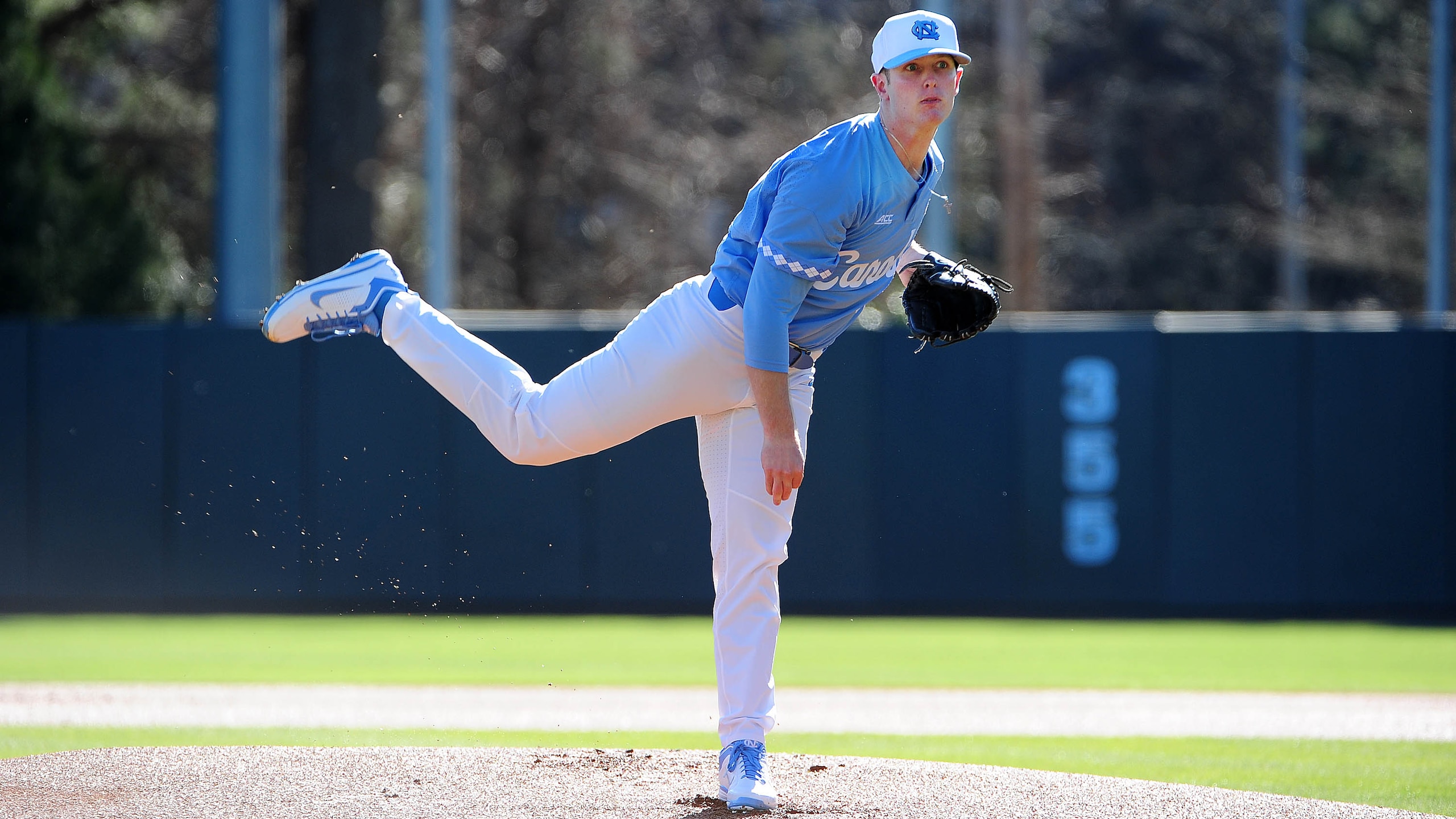
First Round (No. 15 Overall): J.B. Bukauskas, RHP, North Carolina
If not for a strong commitment to UNC, J.B. Bukauskas might have been a first-round pick out of high school. Baseball America ranked him as the No. 33 prospect in the 2014 class.
While he's a bit undersized at 6'0" and 195 pounds, he has electric stuff, with a heavy mid-90s fastball and a lethal slider that might be the best breaking pitch in the class.
After punching out 111 hitters in 78.1 innings as a sophomore, Bukauskas went 9-1 with a 2.53 ERA, 1.07 WHIP and 116 strikeouts in 92.2 innings to solidify his place as one of the nation's top arms.
A brutal start in the NCAA regionals against Davidson might have caused him to slide a bit, but he could be quick to the majors, especially if he winds up in the bullpen.
Grade: A-minus
The Astros got a top-10 talent at No. 15, and his potential upside as a reliever mitigates some of the risk.
Second Round (No. 53 Overall): Joe Perez, 3B, Archbishop McCarthy HS (Fla.)
Most evaluators thought more highly of Joe Perez as a right-handed pitcher than as a third baseman, but he's headed for Tommy John surgery, and the Astros selected him as a third baseman.
That doesn't mean his time on the mound is done, but for now, it looks like they'll be focusing on his bat.
If that is in fact the case, this is quite the reach. MLB.com called him a "fifth- or sixth-round talent as a hitter" and focused its scouting report on his work as a pitcher.
Grade: D
I guess we'll have to wait and see how he's used once his pro career begins, but this looks like a huge reach unless they have an above-slot target in mind with one of their next two Day 1 picks.
Second Round (No. 56 Overall—STL breach comp): Corbin Martin, RHP, Texas A&M
A dominant performance in the Cape Cod League (15.2 IP, 8 H, 2 ER, 3 BB, 22 K) put Martin on the draft radar. While he hasn't turned in the dominant spring some were expecting, he was still worthy of a Day 1 selection.
The 6'3", 200-pound right-hander works in the mid-90s with a curveball that ranks as one of the best in the draft and is a true strikeout pitch. His slider and changeup are passable offerings as well, but it all hinges on the further development of his command.
He struck out 94 batters in 86 innings this spring but also walked 37 en route to a 1.41 WHIP.
Grade: B-plus
In the hands of the right pitching coach, Martin could develop into a first-round talent and a legitimate middle-of-the-rotation arm.
Lottery Round B (No. 75 Overall—STL breach comp): J.J. Matijevic, 2B, Arizona
There may be no college hitter who did more to boost his stock this spring than Matijevic.
After forgettable freshman (.238 BA, .723 OPS) and sophomore (.287 BA, .746 OPS) seasons, he hit .376 with a 1.002 OPS in the Cape Cod League last summer.
He then picked up right where he left off to start his junior campaign, hitting .383/.436/.633 with 30 doubles, 10 home runs and 65 RBI.
While most expected him to be limited to first base or left field defensively, the Astros drafted him as a second baseman. Regardless, it's his bat that will carry him.
Grade: A
The strong Cape performance and the monster spring have made me a believer in his bat, though I'm not necessarily sold on the second base idea.
Kansas City Royals
12 of 29First Round (No. 14 Overall): Nick Pratto, 1B, Huntington Beach HS (Calif.)
Nick Pratto is arguably the best pure hitter among this year's prep bats and perhaps in the entire draft.
MLB.com explained: "High school first base-only types can be a tough profile—Adrian Gonzalez and Freddie Freeman are the biggest success stories, but Pratto isn't as big. Most believe in Pratto's bat enough, though, to take the Southern Cal commit early in the first round."
Aside from his hitting ability, Pratto also draws rave reviews for his intangibles. He stood out during his time playing for Team USA.
Grade: A
Pratto immediately becomes the heir to free-agent-to-be Eric Hosmer at first base, and if his hit tool is as advertised, he could move quicker than most prep bats. He'll immediately push for the No. 1 prospect spot crown in the K.C. organization.
Second Round (No. 52 Overall): MJ Melendez, C, Westminster Christian School (Fla.)
Melendez was the consensus top defensive catcher in this year's class, and it's his bat that will determine if he develops into an everyday backstop.
He does have some offensive potential, according to MLB.com: "Offensively, he has tremendous bat speed and he shows pull power now. A refined approach and continued added strength should help him become a better all-around hitter."
The glove gives him a relatively high floor as a future backup, but it's not out of the question to think he could wind up being the best catcher in this draft class.
Grade: A
I really like this pick, and giving Melendez the chance to work with Salvador Perez should only increase his chances of developing to his full potential.
Lottery Round B (No. 73 Overall): Evan Steele, LHP, Chipola College
Steele began his college career at Vanderbilt before eventually landing with JUCO power Chipola College after being deemed ineligible.
After missing a month with thrombosis early in the season, he returned to make 10 starts, going 5-0 with a 2.01 ERA and 58 strikeouts in 40.1 innings.
His changeup lags behind a mid-90s fastball and a good slider, so his future might be in the bullpen.
Grade: C
This was a reach, but he could move quickly if he's immediately transitioned to the bullpen.
Los Angeles Angels
13 of 29First Round (No. 10 Overall): Jo Adell, OF, Ballard HS (Ky.)
Jo Adell is a physical specimen at a strong 6'2" and 195 pounds, and he put together an absolutely monster senior season at Ballard High School in Kentucky.
He hit .562/.667/1.437 with 25 home runs in 138 plate appearances and he also showed a mid-90s fastball on the mound, so his arm will be a weapon in the outfield.
"Adell has the best all-around tools in the 2017 draft," wrote MLB.com.
Questions remain about his hit tool, but he has the raw talent to quickly become the No. 1 prospect in a paper-thin Angels system.
Grade: C
An Angels team with the worst farm system in baseball had to go the college route here. Adell has tremendous upside, no question, but he also comes with some clear risk here, and it's a risk this organization can't afford to take at No. 10 overall.
Second Round (No. 47 Overall): Griffin Canning, RHP, UCLA
Griffin Canning looks like the classic high-floor college arm with advanced pitchability.
He has a four-pitch repertoire headlined by one of the better changeups in the class, and he looked like a safe bet to go in the first round after he improved inis strikeout rate from 7.8 to 10.6 this spring while going 7-4 with a 2.34 ERA and 140 punchouts.
At the very least, he looks like a solid back-of-the-rotation arm who should move quickly.
Grade: A-plus
Canning might be tempted to return to college for his senior season after slipping this far, but the Angels will do everything in their power to bring him aboard. Nice pairing with the risky early selection of Adell.
Los Angeles Dodgers
14 of 29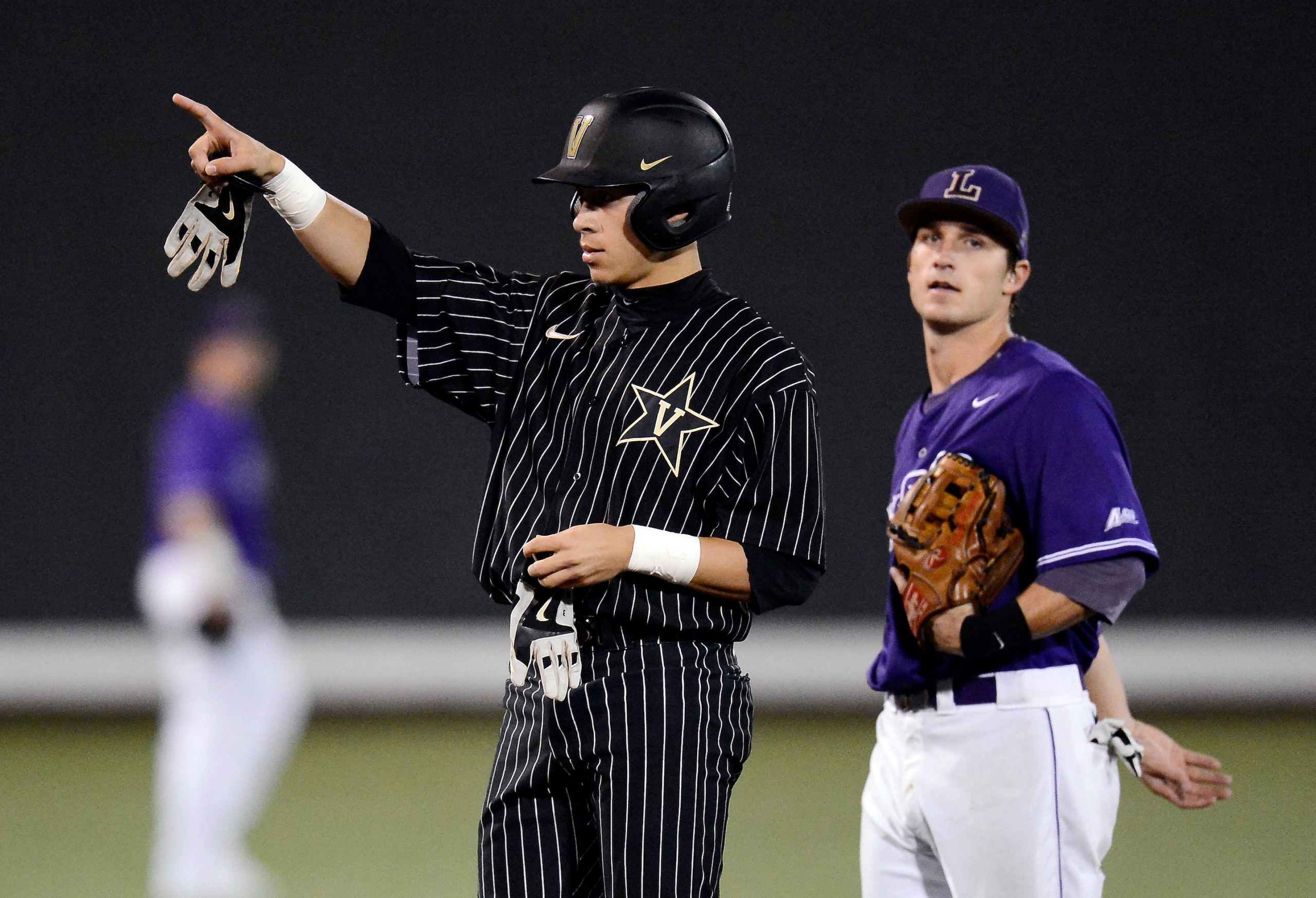
First Round (No. 23 Overall): Jeren Kendall, OF, Vanderbilt
At the start of spring, Jeren Kendall was the consensus top college bat in this year's class.
The Vanderbilt outfielder possesses five-tool potential and was one of the nation's top hitters as a sophomore, batting .332 with a .964 OPS.
However, what was a relatively high strikeout rate last year (21.5 percent) has actually gotten worse (25.1 percent) during his junior season, raising some red flags and causing his stock to slip.
Still, he hit .307/.372/.556 with 15 home runs and 20 stolen bases this spring.
Grade: A
Kendall came with some risk in the top half of the first round, but outside the top 20, his tools are well worth a roll of the dice. This could be a great get for the Dodgers.
Second Round (No. 62 Overall): Morgan Cooper, RHP, Texas
After going 3-5 with a 4.03 ERA and 1.27 WHIP as a sophomore, Cooper took a major step forward this season as the ace of the Longhorns staff.
He underwent Tommy John surgery in the fall of 2014, so he's a 22-year-old redshirt junior who has finally come into his own this spring.
Cooper has a four-pitch mix that grades out average to slightly above-average across the board, and he generates good downward action with his 6'4", 220-pound frame.
His floor is high and so are his chances of sticking as a starter—albeit with a limited ceiling.
Grade: B
Not the most exciting pick, but a quality college arm here at the end of the second round.
Miami Marlins
15 of 29First Round (No. 13 Overall): Trevor Rogers, LHP, Carlsbad HS (N.M.)
With smooth mechanics and a fastball that already touches 95 with room for more as he fills out, Trevor Rogers was a man among boys in the state of New Mexico.
The 6'6" lefty went 11-0 with a 0.33 ERA and 134 strikeouts in 63.1 innings for a Carlsbad High School team that reached the state semifinals.
His secondary stuff lags behind, due in part to him not needing it as much while facing lesser competition during the spring, but he has as much projectability on the mound as anyone outside of Hunter Greene.
Grade: A
D.L. Hall might have been a safer pick here, but after going the high-floor route with Braxton Garrett last year, an upside play makes sense for a prospect-thin Marlins team.
Lottery Round A (No. 36 Overall): Brian Miller, OF, North Carolina
Brian Miller has leadoff-hitter upside with a good hit tool, plus speed and good instincts on the bases.
He hit .343/.422/.502 with 26 extra-base hits and 24 stolen bases in 30 attempts this spring, and there's no question he's come a long way since walking on his freshman year.
Grade: B
Miller might wind up profiling more as a fourth outfielder than an everyday center fielder, but he should be a solid contributor and a passable defender up the middle.
Second Round (No. 51 Overall): Joseph Dunand, 3B, NC State
Dunand hit .287 with a 45-to-19 strikeout-to-walk ratio, but he also flashed some intriguing power with 18 home runs after hitting just 11 total in his first two seasons at NC State.
He didn't belong at shortstop where he played in college, but has a chance to be at least an average defender at the hot corner.
Grade: C-
Not sure I see enough hit tool to tap into that power potential.
Milwaukee Brewers
16 of 29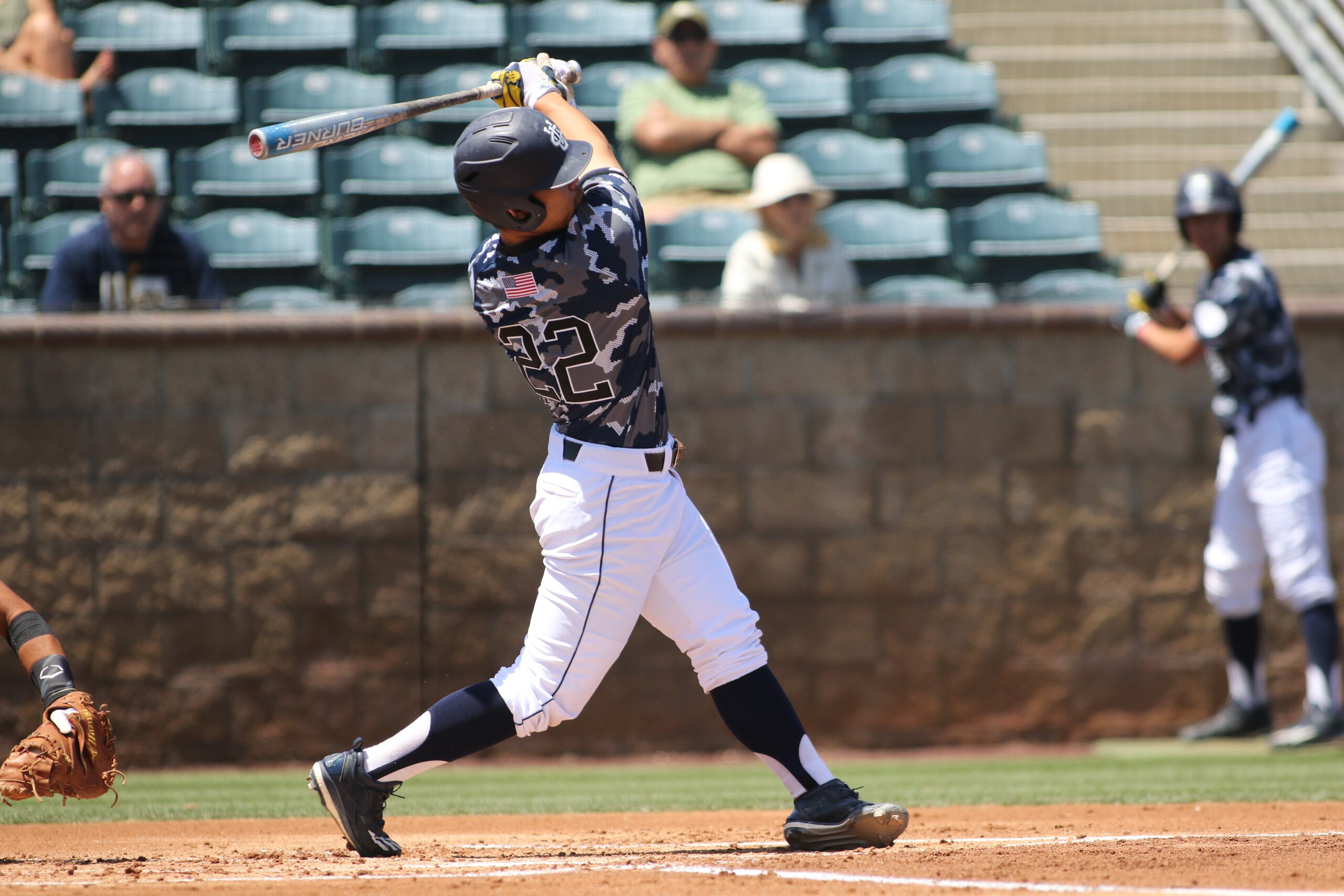
First Round (No. 9 Overall): Keston Hiura, 2B/OF, UC Irvine
Keston Hirua was considered by some to be the best pure hitter in this year's draft.
The UC Irvine standout hit .442/.567/.693 with 24 doubles, eight home runs and 42 RBI, and his walk rate (19.2 percent) and strikeout rate (14.6 percent) both speak to a player with an elite feel for the strike zone.
He might have gone even higher if not for an elbow injury that relegated him to DH duties this spring and could wind up requiring Tommy John surgery.
The Brewers will need to decide on a long-term offensive position, but the bat will play.
Grade: A
Hiura is similary to Dodgers prospect Willie Calhoun—just let him mash and the defensive situation will work itself out. In a thin crop of college bats, we could easily look back 10 years from now on Hiura as the best of the bunch.
Lottery Round A (No. 34 Overall): Tristen Lutz, OF, Martin HS (Texas)
After grabbing one of the best pure hitters in the draft in Keston Hiura, the Brewers added one of the best power bats in the class in Tristen Lutz.
MLB.com noted: "Lutz's calling card is his big right-handed power, the product of bat speed and strength. He might have even more pop if he had less of a crouch in his stance and got more leverage out of his 6'3", 210-pound frame. He's more than just a slugger, as he has natural hitting ability, recognizes pitches well and uses the whole field."
With that power profile and a strong throwing arm, he fits the prototypical right fielder profile, and his solid hit tool makes him more than just an all-or-nothing slugger.
Grade: A-plus
I thought Lutz could go as high as No. 20 to the Mets, so this looks like a steal for the Brewers.
Second Round (No. 46 Overall): Caden Lemons, RHP, Vestavia Hills HS (Ala.)
Lemons looked like a strong commit to Ole Miss heading into the spring, but a major uptick in velocity vaulted him into the second round, and the Brewers should be able to make a serious run at signing him.
The 6'6", 175-pound right-hander sat in the low-90s on the showcase circuit last summer, but he was touching 97 mph with his fastball this spring.
He's still incredibly raw with middling secondary stuff and mechanics that often get out of sync, but it's easy to dream on what he could become.
Grade: C-plus
It will presumably take an above-slot deal to sign Lemons, and if that's the case, there were more appealing options on the board, such as Blayne Enlow and Alex Scherff.
Minnesota Twins
17 of 29First Round (No. 1 Overall): Royce Lewis, SS/CF, JSerra Catholic HS (Calif.)
Royce Lewis was the consensus top prep bat in this year's class and he's been viewed as one of the draft's elite talents since last summer when he took home MVP honors at the Perfect Game All-American Classic and the Under Armour All-American Game at Wrigley Field.
Speed is his best present tool, but he has a chance to grade out as a five-tool talent depending on the further development of his raw power and where he eventually lands defensively.
He'll be given every chance to stick at shortstop, where he has quick-twitch athleticism but may be lacking a bit in the arm department. If he winds up shifting to the outfield, his speed should allow him to become a plus defender there as well.
Grade: A
A lot of fans no doubt wanted to see Hunter Greene here, but arms are always riskier than bats and Lewis has an extremely high ceiling in his own right. Solid pick.
Lottery Round A (No. 35 Overall): Brent Rooker, 1B, Mississippi State
Few college hitters have enjoyed a better 2017 season than Rooker.
The redshirt junior is already 22 years old, which means he'll need to move quickly once his pro career begins, but he put together a spring that's impossible to ignore.
He hit .392/.498/.820 with 30 doubles, 23 home runs and 82 RBI, and he's also shown decent wheels considering his 6'4", 215-pound frame, swiping 18 bases in 23 attempts.
Grade: A-plus
Rooker can flat-out rake, but his age and defensive profile were enough to knock him out of the first round. Expect big numbers to begin his pro career.
Second Round (No. 37 Overall): Landon Leach, RHP, Pickering HS (Canada)
Leach was the top arm out of Canada this year, and he has a chance to be a good one.
His 6'4", 224-pound frame and the fact that he didn't throw a ton in a colder-weather area mean he has significant projection, and he already sits in the mid-90s with his fastball and complements it with a solid curveball-changeup pairing and good overall command.
He impressed during Team Canada's trip to spring training in Florida.
Grade: B-plus
A nice finish to a solid first day for the Twins. Fans might not be happy they passed on Greene, but they've added some quality talent.
New York Mets
18 of 29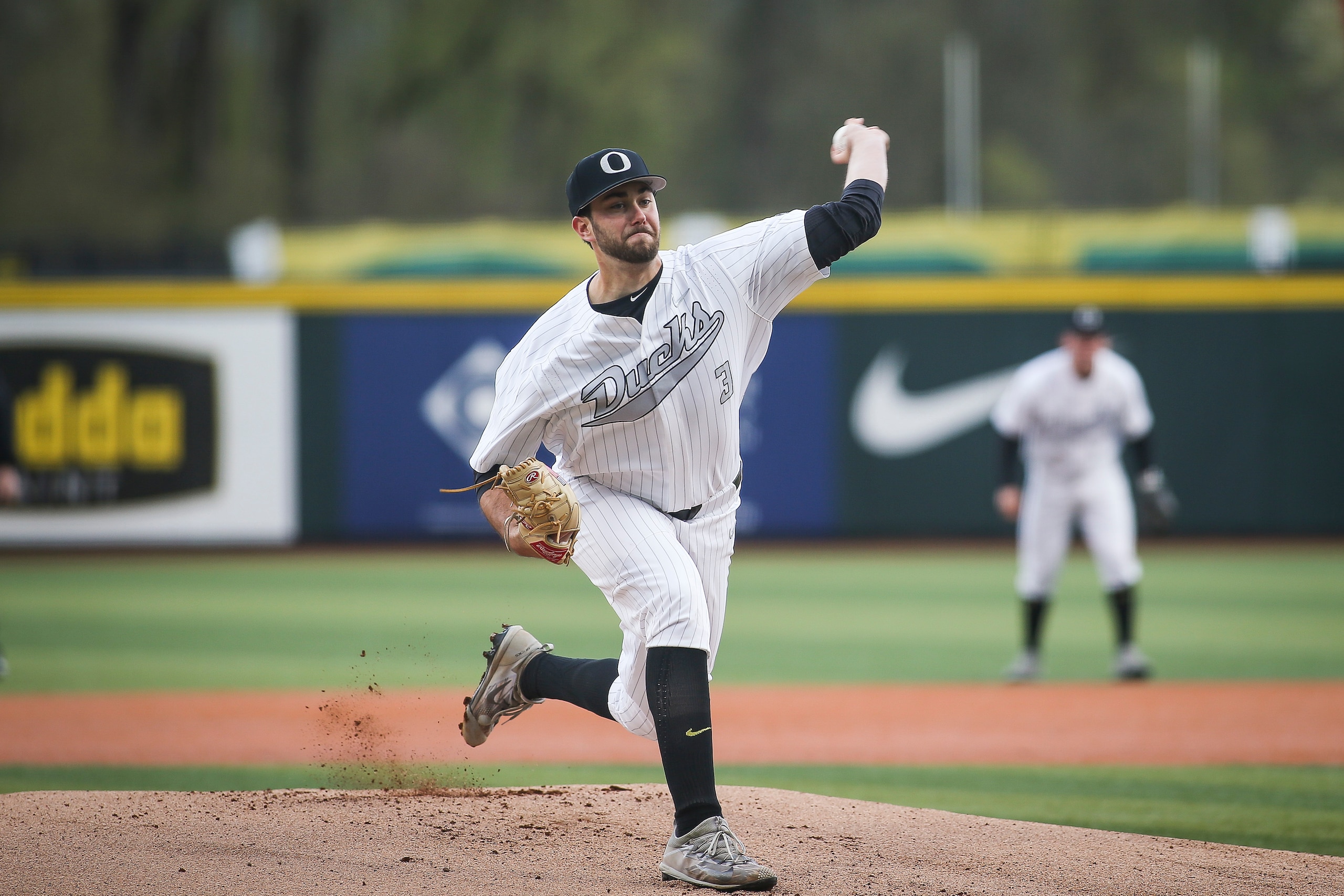
First Round (No. 20 Overall): David Peterson, LHP, Oregon
David Peterson—a 6'6" southpaw who turned heads with a 20-strikeout performance earlier this spring—has come a long way since the Boston Red Sox took him in the 28th round out of high school.
Armed with a fastball-slider combination that can be dominant, an average changeup and a get-me-over curveball, Peterson put together a dominant junior campaign for the Ducks.
Over 100.1 innings of work, he was 11-4 with a 2.51 ERA, 1.03 WHIP and an impressive 140-to-15 strikeout-to-walk ratio.
Worst-case scenario, that fastball-slider pairing would play up in the bullpen, but he has a strong frame and plus control to stick as a starter and develop into a good one.
Grade: B-minus
The Mets might regret not going with a high-ceiling prep arm like D.L. Hall or Sam Carlson here, but Peterson should develop into a solid contributor in some capacity with the upside to fill a rotation spot.
Second Round (No. 59 Overall): Mark Vientos, 3B, American Heritage School (Fla.)
MLB.com wrote: "Vientos entered the spring as one of the more intriguing high school bats in the country, one who many thought had first-round potential. An up-and-down spring has made him a bit more of a polarizing prospect than that, with opinions on him varying greatly."
That could mean it takes an above-slot deal to sign him away from his commitment to the University of Miami.
However, if he delivers on his power potential and continues to show plus bat speed, he could be well worth that investment.
Grade: A
It's a risk/reward pick to be sure, but it has a chance to deliever some terrific value here at No. 59 overall.
New York Yankees
19 of 29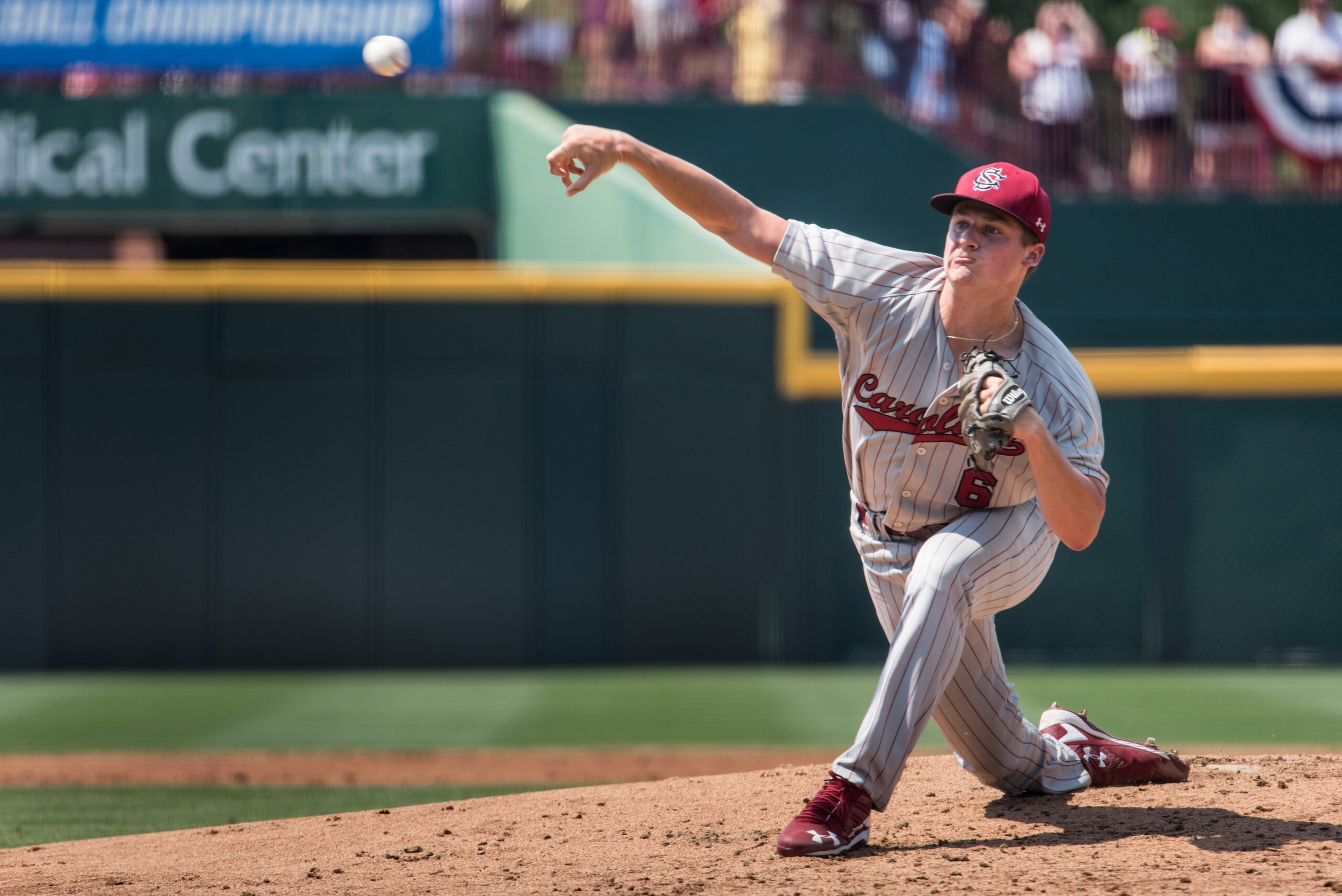
First Round (No. 16 Overall): Clarke Schmidt, RHP, South Carolina
Clarke Schmidt underwent Tommy John surgery in May. Otherwise, there's a good chance he would have been one of the first college arms off the board.
The Gamecocks junior was one of the fastest-rising college arms in the class earlier this spring, pitching to a 1.34 ERA and 0.98 WHIP with 70 strikeouts in 60.1 innings before his season came to an abrupt end.
He has a 6'1", 200-pound frame, and with a mid-90s sinker and a pair of polished off-speed pitches, his floor is high provided he avoids future injury issues.
Grade: C-plus
The Yankees have a deep enough farm system and the payroll flexibility to take a chance like this, but why not Alex Faedo or Griffin Canning if they wanted a college pitcher?
Second Round (No. 54 Overall): Matt Sauer, RHP, Ernest Righetti HS (Calif.)
Sauer had as much helium as any high school pitcher in the class, as he was touching 97 with his fastball this spring and showing off a nasty slider in the upper 80s as well.
His changeup is well behind those two pitches and needs a lot of work, and his delivery has some effort, so his future could be at the back of the bullpen where he has closer upside.
For now, expect him to work as a starter as he tries to develop that second off-speed pitch and further strengthen his 6'4", 195-pound frame.
Grade: A-plus
The Yankees got one of the best high school arms still on the board here and one whose stock was clearly on the rise. They'll probably have to go above the $1.2 million slot value, but Schmidt should give them some wiggle room.
Oakland Athletics
20 of 29First Round (No. 6 Overall): Austin Beck, CF, North Davidson HS (N.C.)
A torn ACL and meniscus in his left knee last May cost Austin Beck the entire summer showcase circuit and his stock bottomed out as a result.
However, after an impressive spring, he had as much helium as any prep bat in the class and clearly Oakland believes enough in his raw power to grab him here at sixth overall.
MLB.com wrote of his potential: "If he hits and taps into his power, he has 25-25 potential and should become a star."
Grade: B-plus
Beck has the upside, but for an Oakland team that can't afford to miss on a pick this early, it was somewhat surprising to see the A's not go the college route with one of the Virginia guys (Pavin Smith or Adam Haseley).
Lottery Round A (No. 33 Overall): Kevin Merrell, SS, South Florida
With 75-grade speed and an improving hit tool, Merrell has a chance to be a game-changer atop the batting order.
He hit .384/.464/.569 with 11 doubles, seven home runs and 19 stolen bases in 23 attempts this spring.
While his defensive future might be in center field, he should get a look at middle infield to begin his pro career. At any rate, it's his impact wheels that make him worthy of selection this early.
Grade: B
After picking a high-ceiling high school bat at No. 9 overall, it's not surprising the A's went the college route. They might be able to save some money with this pick, and as the old saying goes, you can't teach speed.
Second Round (No. 43 Overall): Greg Deichmann, OF, LSU
Deichmann was one of college baseball's most productive hitters this spring.
The LSU star raised his OPS from .859 as a sophomore to 1.045 this season while hitting .322 with 19 home runs and 71 RBI.
A shortstop in high school who spent some time at the hot corner for the Tigers, he's likely ticketed for right field, where his power bat and strong arm will be a good fit.
Grade: B-plus
Oakland shouldn't have any problem signing Beck after going with a pair of college bats to round out Day 1. Deichmann fits the mold of an Oakland target as an advanced college bat with good on-base skills (.431 OBP).
Philadelphia Phillies
21 of 29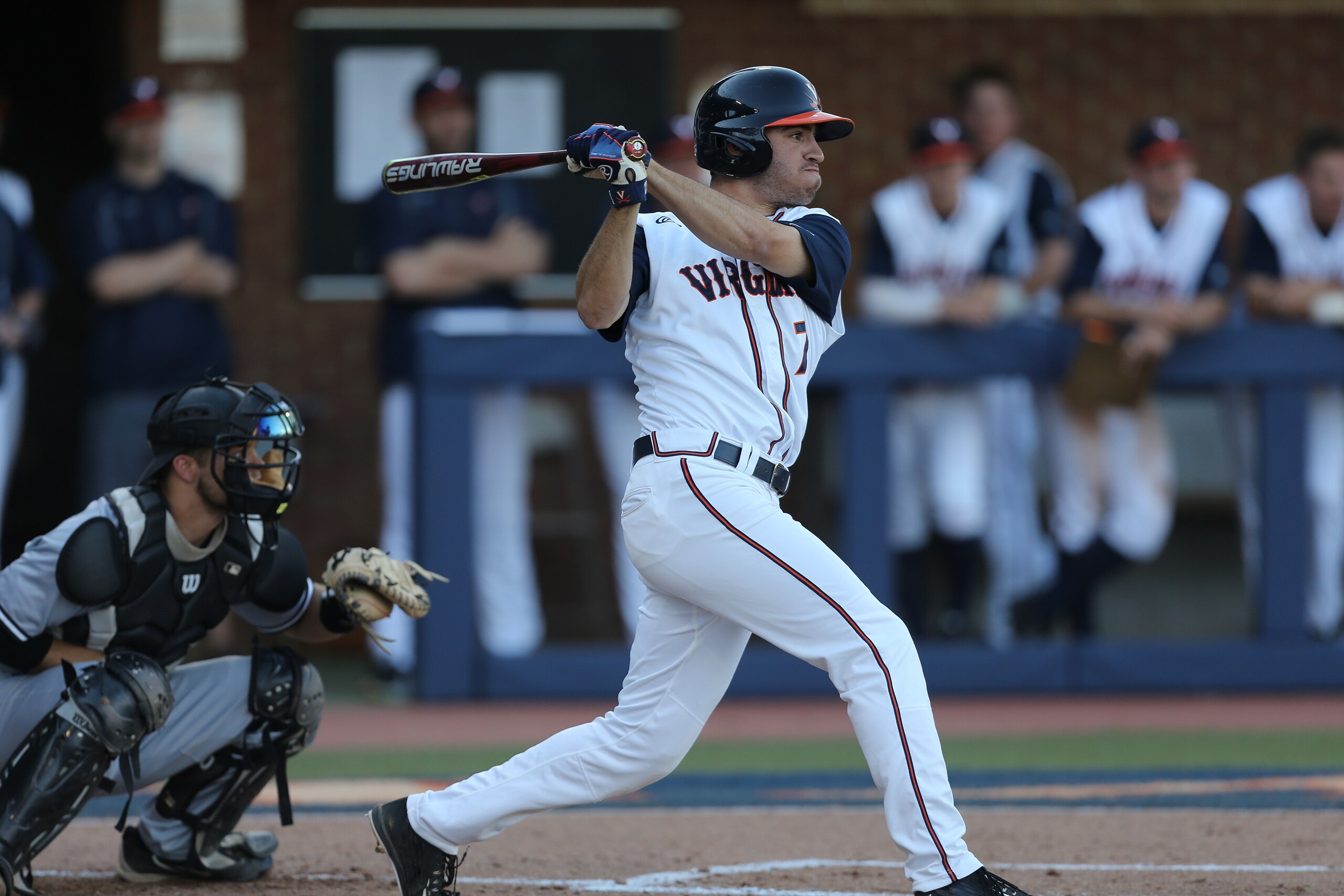
First Round (No. 8 Overall): Adam Haseley, OF, Virginia
A two-way standout throughout his time at Virginia, Adam Haseley solidified his place as a first-round talent in the outfield with a huge junior season.
He hit .390/.491/.659 with 16 doubles, 14 home runs and 56 RBI and had twice as many walks (44) as strikeouts (21) while playing a solid center field.
MLB.com wrote: "There could be some upside here, with more to be unlocked once he stops pitching and focuses 100 percent on hitting. His stock was soaring as much as any college position player as the spring unfolded."
Grade: A-plus
This pick is perfect, especially for the Phillies. He brings an attractive mix of polish and upside that's rarely found in a college bat and even if he doesn't stick up the middle in center field, he has a chance to be a piece of the future in Philly.
Second Round (No. 45 Overall): Spencer Howard, RHP, Cal Poly-San Luis Obispo
Spencer Howard checked in at No. 137 on Baseball America's draft prospect list and No. 99 on MLB.com's list, so he looks like the first real reach at No. 45 overall.
He moved into the rotation this spring and went 8-1 with a 1.95 ERA, 1.08 WHIP and 97 strikeouts in 87.2 innings.
With a durable 6'3", 205-pound frame, smooth mechanics and a polished repertoire, he does have starter upside.
Grade: C
Howard had some helium, and it's easy to see why. Still, a rebuilding team like the Phillies shouldn't be reaching—unless they're eyeing an above-slot deal down the line.
Pittsburgh Pirates
22 of 29First Round (No. 12 Overall): Shane Baz, RHP, Concordia Lutheran HS (Texas)
Outside of Hunter Greene and MacKenzie Gore, most evaluators agreed Shane Baz was the best high school pitcher in this year's class.
MLB.com wrote: "Baz may have the deepest arsenal in the 2017 high school class. His fastball has kicked up a notch to 92-96 mph with a peak of 98 this spring, and he has shown the ability to run and sink it while maintaining its velocity throughout a game. His 84-88 mph cutter generates a lot of swings and misses, and he also can turn the cutter into more of a true slider, spin a curveball that's a distinctly different pitch and unveil a changeup that could develop into a solid offering."
He likely would have gone inside the top 10 if not for a strong commitment to TCU, but with Day 1 picks, the Pirates have the money to go above-slot here.
Grade: A-plus
This grade is obviously contingent on the Pirates being able to sign him. If they can, Baz could wind up being one of the biggest steals of the draft here outside the top 10.
Second Round (No. 42 Overall—Nick Lodolo comp): Steve Jennings, RHP, DeKalb County HS (Tenn.)
The Pirates got to pick at No. 42 after they failed to sign prep left-hander Nick Lodolo away from TCU last June.
They chose one of the bigger mysteries in the draft in Steve Jennings.
A standout quarterback who tore his ACL in September, Jennings didn't spend much time on the showcase circuit last summer and wasn't heavily scouted early this spring.
However, his fastball was bumping 95 mph this spring, and he backed it with a plus slider and showed smooth mechanics from a projectable 6'2", 175-pound frame, which sent him flying up draft boards.
Grade: A
I like the idea of using what feels like a bonus pick on a lottery ticket. Jennings has a short track record, but he's turned heads.
Second Round (No. 50 Overall): Cal Mitchell, OF, Rancho Bernardo HS (Calif.)
After a strong showing on the summer showcase circuit last year, Mitchell saw his stock drop this spring when he started trying to show more power at the expense of his hit tool.
Considering he had first-round potential heading into the spring, slipping this far could make him a tough sign away from his commitment to the University of San Diego.
He's worth an above-slot deal to a team that thinks it can get him back to where he was last summer, though.
Grade: B
I'm digging the theme from the Pirates here—draft on upside and worry about signing everyone when the time comes. If you'll recall, that worked well for the Braves last year.
Lottery Round B (No. 72 Overall): Conner Uselton, OF, Southmoore HS (Okla.)
Uselton was given 55-grade power, and there's still plenty of room to fill out his 6'3", 190-pound frame.
He's shown an improved approach at the plate this spring and better swing mechanics, allowing him to flash the plus raw power and impressive bat speed that scouts love to see.
He's a capable center fielder for the time being, but bulking up could mean a move to right field where his strong throwing arm would play nicely.
Grade: A
Uselton could easily outperform Mitchell, 22 picks later. It's another high-ceiling selection and a nice finish to an exciting first day for the Pirates.
San Diego Padres
23 of 29First Round (No. 3 Overall): MacKenzie Gore, LHP, Whiteville HS (N.C.)
MacKenzie Gore has seen his stock climb as much any prep player in the nation this spring and that came on the heels of a nearly perfect junior season (83.1 IP, 1 ER, 174 K) at Whiteville High School.
After sitting in the 89-92 range with his fastball and topping out at 94 last season, he's seen his stuff improve across the board by consistently working in the mid-90s and maintaining that velocity late into games.
Equally impressive is his curveball, which is among the best in the class and a plus secondary offering. He also throws a slider and changeup—both of which flash plus—which gives him a four-pitch mix.
Gore also uses an exaggerated leg kick that helps generate deception, and while he may not have the ceiling of Hunter Greene, he's more polished with a higher floor.
Grade: A-plus
The Padres are building for the long haul and are still not close to contention. With that in mind, going with the higher ceiling of Gore over the polished arm of Brendan McKay makes sense here.
Second Round (No. 39 Overall): Luis Campusano-Bracero, C, Cross Creek HS (Ga.)
Campusano separated himself from the pack this spring as the top catcher in this year's class.
A rocket arm and some intriguing raw power are his best tools, and he has the athleticism behind the plate to develop into a plus defender.
Whether he makes enough consistent contact to become a 20-plus homer threat remains to be seen, but if his hit tool improves, he has the makings of an everyday backstop.
Grade: A
Catchers have a way of sneaking up draft boards since it's generally slim pickings at the position. Some saw Campusano-Bracero sneaking into the first round, so this is a nice get at No. 39.
Lottery Round B (No. 69 Overall): Blake Hunt, C, Mater Dei HS (Calif.)
Hunt had the most helium of any catching prospect leading up to the draft, and he has the defensive tools to rival MJ Melendez for the title of top defender at the position among this year's crop.
The question is whether he'll hit enough to be an everyday guy or if his future is as a glove-first backup. He has the strength to develop some playable power, but he currently lacks the bat speed to make an impact at the plate.
Grade: C-minus
Despite his rise up draft boards, Hunt still went quite a bit earlier than expected here. Perhaps pairing Campusano-Bracero with a collegiate backstop would have been a better move if they wanted to double down.
San Francisco Giants
24 of 29First Round (No. 19 Overall): Heliot Ramos, OF, Leadership Christian Academy (P.R.)
Heliot Ramos has what scouts like to call "loud" tools, and he was the top prospect out of Puerto Rico this year.
MLB.com wrote: "There is no question that Ramos has a big, strong athletic build and has legitimate power potential. It's after that the debate begins. Those who really like him see a solid hit tool and the ability to tap into that raw power consistently, keeping the barrel of the bat in the zone a long time and creating backspin. Others question the bat speed a bit more and wonder if he can turn on balls enough to reach that power."
While he has plus athleticism and is currently a center fielder, a move to right field will likely come at some point down the line. If Ramos' power develops as hoped, he could fit the prototypical mold there.
Grade: C
The Giants are never shy about going off-book when it comes to their early picks, and more times than not, they've proven the doubters wrong. Ramos immediately becomes the "toolsiest" prospect in their system, but this still feels like a reach.
Second Round (No. 58 Overall): Jacob Gonzalez, 3B, Chaparral HS (Ariz.)
We have our first notable legacy prospect of the draft, as Jacob is the son of former Arizona Diamondbacks slugger Luis Gonzalez.
The younger Gonzalez possesses some intriguing power potential of his own, albeit with limited athleticism and a hit tool that still isn't where it needs to be if his bat is going to carry him to the majors.
The bloodlines and the power are enough to intrigue, though.
Grade: D
This was a stretch, especially with Mark Vientos, Quentin Holmes, Garrett Mitchell, Jacob Pearson and others still on the board. The Giants have proved me wrong more than a few times in the past, though.
Seattle Mariners
25 of 29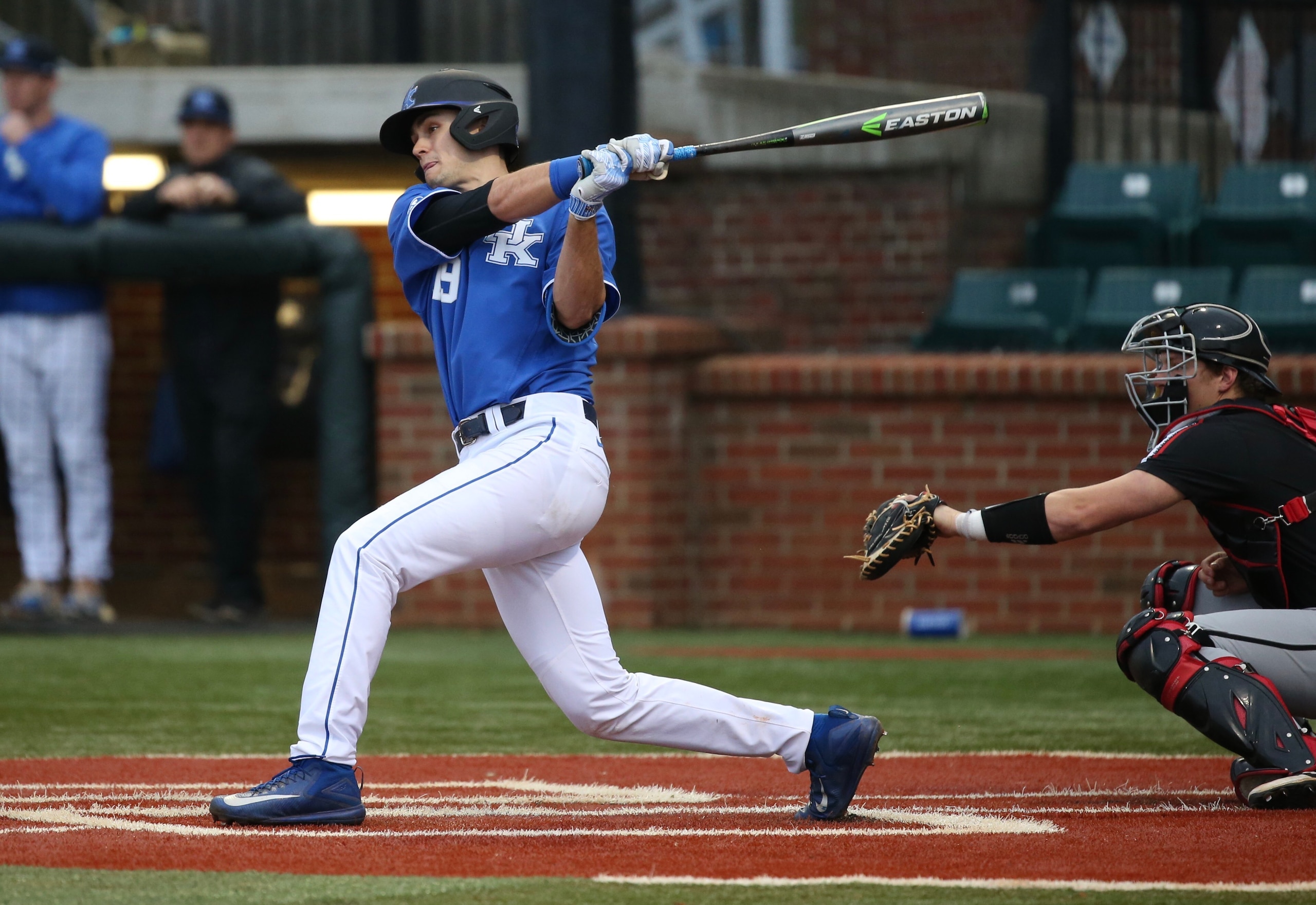
First Round (No. 17 Overall): Evan White, 1B/OF, Kentucky
Evan White is by no means the prototypical first baseman, as MLB.com explained: "White has an unusual profile. He bats right-handed and throws left-handed, he's as athletic as it comes among first basemen and—unheard of at his position—his power might be weakest among all of his tools."
That said, there's plenty of room for him to add strength to his 6'3", 177-pound frame, and his hit tool should play regardless of how much power he develops.
Against strong SEC competition, White hit .373/.453/.637 with 24 doubles and 10 home runs, improving his ISO from .159 to .264.
Grade: A
After taking Kyle Lewis last spring, the M's got another terrific college bat. First base has been a hole in Seattle since the days of Richie Sexson, and White could be the answer in short order.
Second Round (No. 55 Overall): Sam Carlson, RHP, Burnsville HS (Minn.)
Carlson fell short of becoming the first high school pitcher from the state of Minnesota ever to go in the first round of the draft, but he's likely still headed for a hefty payday.
His stock has been soaring thanks to improved fastball velocity, as he's been working in the 93-97 range this spring and getting good sink and late life on the pitch as well.
He backs that with a slider that he can consistently throw for strikes and one of the better changeups among prep pitchers with a good feel for that pitch, so the stuff is undoubtedly there for him to start.
Add to all of that his plus athleticism—he'd likely be picked in the first five rounds as an outfielder—and it's easy to see why he's been flying up draft boards this spring.
Grade: A+
I had Carlson going No. 15 overall to the Astros in my mock draft, so this might be the biggest steal of Day 1 for me.
Tampa Bay Rays
26 of 29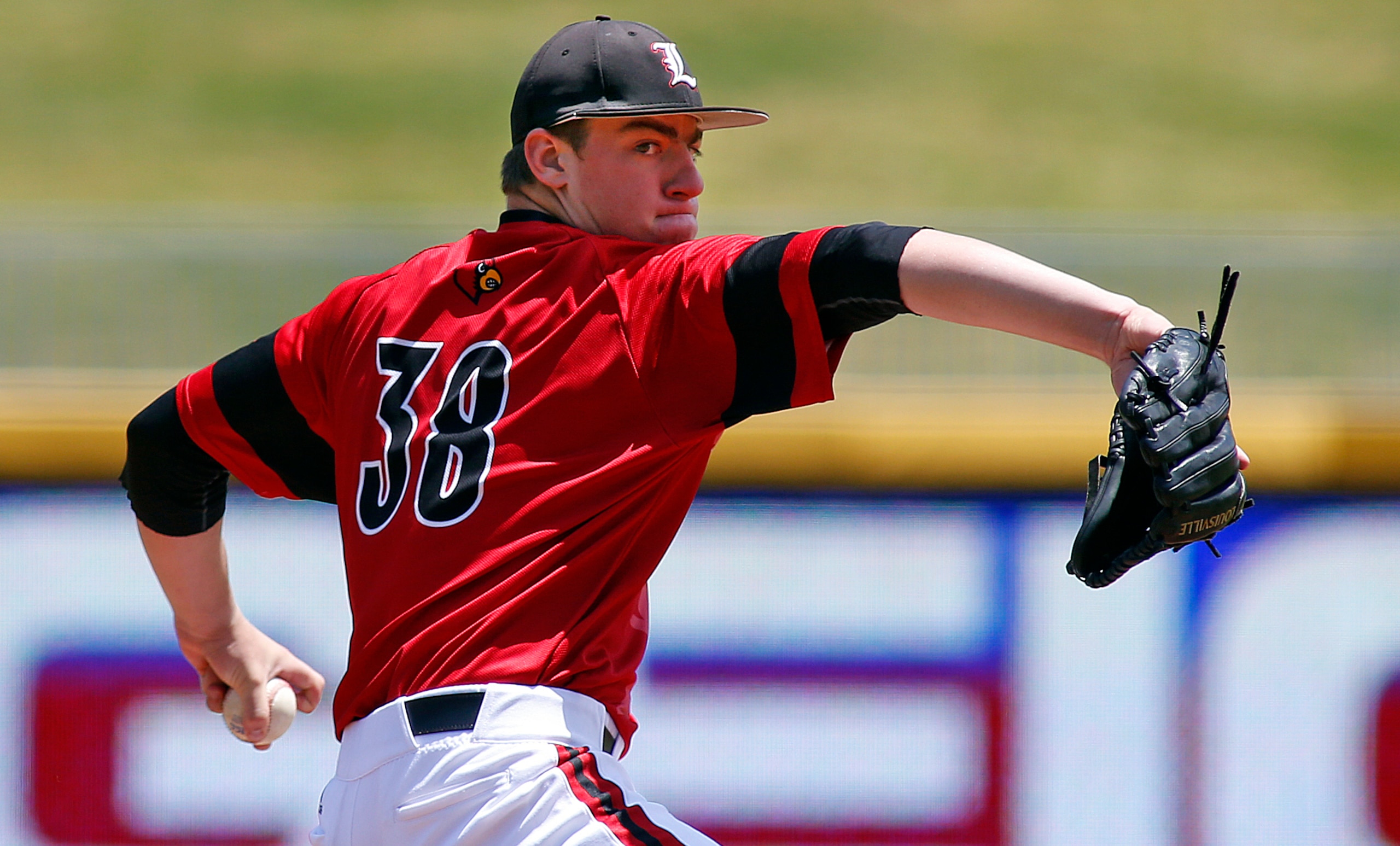
First Round (No. 4 Overall): Brendan McKay, 1B, Louisville
Brendan McKay was the best two-way player in the country and perhaps the best college baseball has seen since John Olerud starred at Washington State in 1988.
As a first baseman, he hit .343/.464/.657 with 13 doubles, 17 home runs and 56 RBI while recording more walks (45) than strikeouts (36).
He has the hit tool and strike-zone recognition to be a perennial .300 hitter with 20-plus home run power, and his uptick in power this season was what cemented his place as an elite bat.
Meanwhile, he went 10-3 with a 2.34 ERA, 0.98 WHIP and 140 strikeouts in 104 innings of work as the ace of a Louisville staff that is headed to the College World Series.
Grade: A
McKay was announced as a first baseman when selected, so that's telling of the team's future plans for him. He was a top-five talent on both sides of the ball and, if nothing else, pitching will be an intriguing Plan B. Great pick for a team that always seems to need offense.
Lottery Round A (No. 31 Overall): Drew Rasmussen, RHP, Oregon State
Drew Rasmussen returned from Tommy John surgery in April, and he's been one of the fastest-rising college arms in the class ever since.
In six starts, he's 4-1 with a 3.41 ERA, 0.97 WHIP and 42 strikeouts in 37 innings as a draft-eligible sophomore.
The 6'2", 225-pound right-hander has the three-pitch mix and solid frame to start, but his stuff could play up out of the bullpen.
Grade: B-plus
The Rays know how to develop pitching talent, and they got an intriguing block of clay to mold in Rasmussen. Don't be surprised if he's one of the first player from this class to reach the majors.
Second Round (No. 40 Overall): Michael Mercado, RHP, Westview HS (Calif.)
As far as projection goes, few have more than the 6'4", 160-pound Mercado.
If not for a strong commitment to Stanford, he might have climbed into the first round, but the Rays obviously think they can sign him.
He has the makings of three quality pithes, with a fastball that he commands well, a good curveball and a quality changeup. He also throws a slider that lags behind the other three pitches but offers good overall pitchability.
Grade: A
Assuming they can save some money on the Rasmussen pick, the Rays went with an above-slot target. That's great, as long as he signs.
Texas Rangers
27 of 29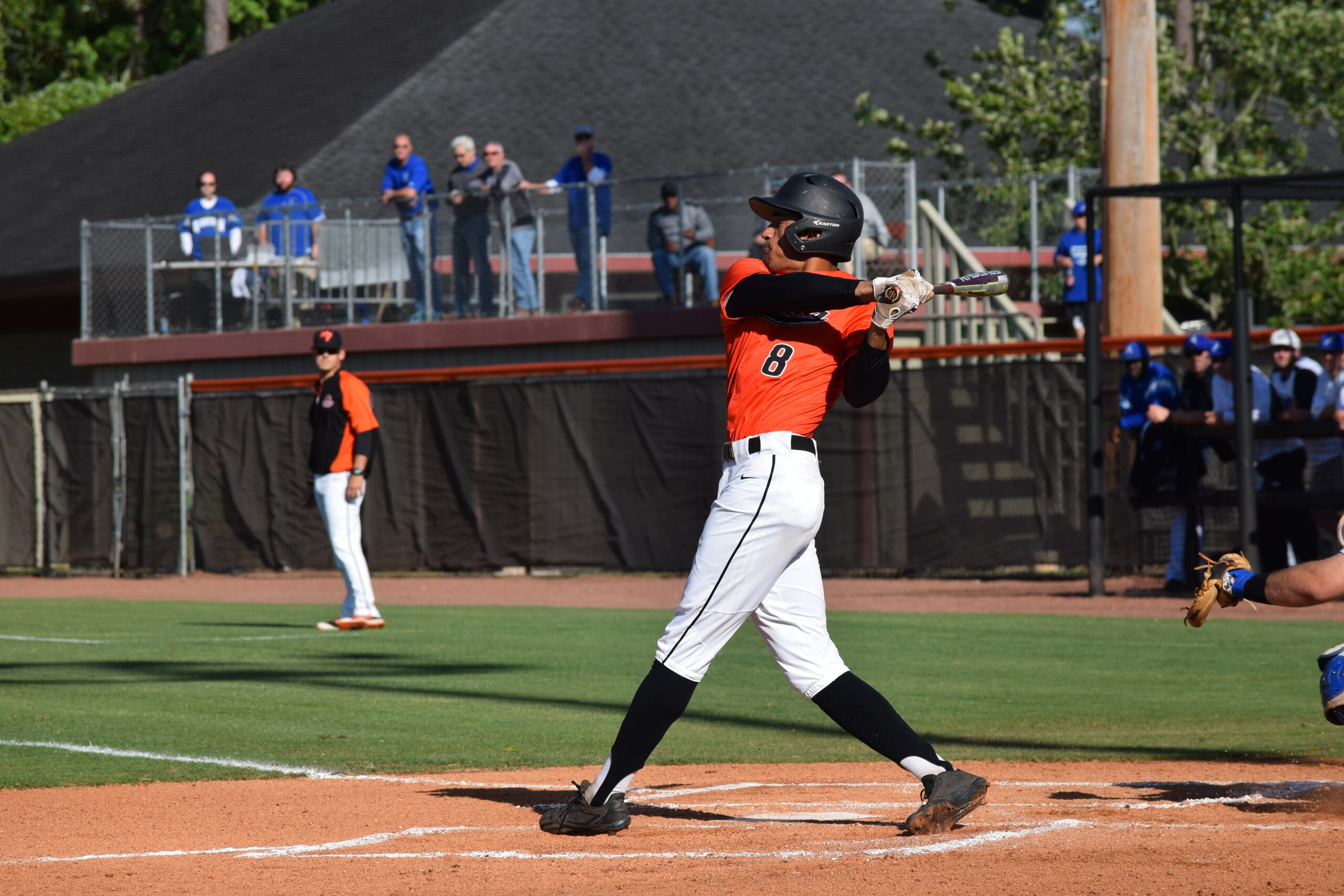
First Round (No. 26 Overall): Bubba Thompson, OF, McGill-Toolen HS (Ala.)
A two-sport star who quarterbacked the McGill-Toolen football team to the Alabama 7A state championship, Bubba Thompson had offers to play football at Tennessee and Ole Miss.
Thompson has the speed and instincts to be a standout defensive center fielder, a better hit tool than you might expect for someone who was splitting his focus and enough raw power to potentially develop into at least a 15-homer threat.
All told, he's a bit more polished than most two-sport standouts and there's always the possibility that his tools will take off once he turns his full attention to baseball.
Grade: A
Thompson to the Dodgers rumors were persistent leading up to the draft, so for a Rangers team that loves premium athletes, it had to be a pleasant surprise to see him still on the board. He could be the next Anthony Alford.
First Round (No. 29 Overall—Ian Desmond comp): Chris Seise, SS, West Orange HS (Fla.)
Chris Seise has the strong throwing arm and plus speed to stick as a shortstop at the highest level.
His offensive game is the bigger question mark, but adding 20 pounds of muscle to what is now a 6'2", 175-pound frame has helped unlock some of his potential at the plate.
There's a lot of room between floor and ceiling here, but his athleticism will go a long way toward helping him tap into his upside.
Grade: C
This looks like a reach, so we'll see what they have in mind in the second round. Don't love this pick though, as there were higher upside plays still on the board.
Second Round (No. 66 Overall): Hans Crouse, RHP, Dana Hills HS (Calif.)
Crouse was among a handful of college arms that some thought might sneak into the back end of the first round—perhaps to the Rangers at No. 29 overall.
Instead, he falls to the second round where it will likely take a deal above the $926,500 slot value to sign him away from a USC commitment.
There's significant projection remaining in his 6'5", 190-pound frame, and he can already dial the fastball up to 97 mph. However, his secondary stuff is still below average, and he has some effort in his delivery.
He'll get every chance to start, especially if they go above slot to get him, but a future in the bullpen is a possibility.
Grade: A+
Even if he ends up in the bullpen down the road, this is a great value if the Rangers can sign him.
Toronto Blue Jays
28 of 29
First Round (No. 22 Overall): Logan Warmoth, SS, North Carolina
The top college shortstop in the nation generally sees his stock trend upward leading into the draft, and there's little question that happened to Logan Warmoth this year.
After a strong showing in the Cape Cod League last summer (.780 OPS, 6 2B, 4 HR), he put together a terrific junior season with a .336/.404/.554 line that included 19 doubles, 10 home runs and 18 stolen bases.
Defensively, he gets by more on instincts and good hands than raw athleticism, but he should be able to stay at shortstop at the next level.
Grade: B
This is a fairly safe pick given who else was on the board—including a number of high-ceiling arms. With that in mind, keep an eye on where the Jays go with their other first-round pick.
First Round (No. 28 Overall—Edwin Encarnacion comp): Nate Pearson, RHP, Central Florida JC
Nate Pearson—a 6'6", 240-pound right-hander—went 5-2 with a 1.56 ERA, 1.02 WHIP and 118 strikeouts in 81 innings of work this spring for the College of Central Florida.
That's largely thanks to a 70-grade fastball that was consistently bumping triple digits in a late bullpen session in front of scouts. It's the development of his secondary stuff that's the big question, though.
His slider is his best off-speed pitch, and he also throws a curveball and a changeup. All three pitches flash plus at times, but they remain largely inconsistent on a start-to-start basis. He could really thrive in the bullpen, but he'll get a look as a starter first.
Grade: A
This is the perfect risk pick to pair with a fairly safe one earlier in the first round. Pearson has closer upside out of the bullpen, and that kind of velocity can't be taught.
Second Round (No. 61 Overall): Hagen Danner, C, Huntington Beach HS (Calif.)
Danner might have been the most polarizing two-way player in this year's class, and the Blue Jays will trot him out as a catcher to begin his pro career.
MLB.com wrote: "He has good hands and a plus arm defensively, and while he's a below-average runner, his athleticism helps him move well behind the dish. He swings the bat well from a crouch setup, with quiet pop that could end up being average power in the future."
A mid-90s fastball with a promising curveball/changeup pairing to back it makes for an interesting fallback plan if catching doesn't work out.
Grade: B+
I expected Danner to be taken as a pitcher, but given this year's crop of catching talent, this outcome isn't a shock by any means. Good value here, regardless of what role they decided to use him in.
Washington Nationals
29 of 29First Round (No. 25 Overall): Seth Romero, LHP, Houston
The Nats are the one team that has proved time and again that they're not scared off by health concerns or off-field issues if it means potentially getting good value out of a pick.
Seth Romero comes with plenty of baggage, as he was suspended from the University of Houston squad twice before he was dismissed from the team in May.
Before that, his stock appeared to be on the rise, as improved conditioning had resulted in an uptick in what was already good stuff from the left side.
With a fastball in the 92-95 mph range that tops out at 97, a wipeout slider that can be untouchable when it's on and a vastly improved changeup, he has potential front-line stuff if he can stay out of trouble.
Grade: A-plus
It's a lottery-ticket pick, no doubt, but the jackpot would be a hefty one.
Second Round (No. 65 Overall): Wil Crowe, RHP, South Carolina
Crowe missed the entire 2016 season recovering from Tommy John surgery, but his stuff has bounced back nicely this spring.
He's gone 6-5 with a 3.41 ERA and 90 strikeouts in 92.1 innings thanks to a heavy mid-90s fastball and an advanced three-pitch mix of off-speed stuff that is highlighted by a plus curveball.
The medical history and the fact that he turns 23 in September was enough to bump him out of the first round, and he doesn't have the highest ceiling, but he has a chance to be a solid starter if he can stay healthy.
Grade: B
Why not back a character risk with an injury risk? I guess the Nationals know what they're doing.
All college stats courtesy of The Baseball Cube.

.jpg?w=2560 "Mahomes Told Teammate to Leave Meeting")
.jpg?w=2560 "🚨 Week 8 AP Top 25 Poll")


.jpg?w=2560 "Baker Gets Glove From Rays 🧤")
.jpg?w=2560 "Updates from EVERY NFL Game 🏈")
.jpg?w=2560 "NFL investigating Eagles")
.jpg?w=2560 "CFP Bracket After Week 8 🏆")