The Terrifying Process of Hiring a New Head Coach in the NFL
So you're an NFL general manager and your 2016 season sucked.
Insert whatever softer or harsher description you'd like, but the ending doesn't change. You'll be watching the playoffs instead of participating in them, and it's become clear a fresh direction is needed. Even if, like the happier times for the San Francisco 49ers pictured above, the expiration date for the current direction came far too fast.
A new direction means a new face to lead that redirect, and a new head coach. There's some darkness involved in reaching that point, as Black Monday is more than just a name capable of spawning a thousand splashy headlines.
Coaches lose their jobs and the annual warp-speed spinning of the carousel begins. On a basic human level, the thought of finding new employment while potentially jetting across the country can be scary. But those feelings pale in comparison to what's happening on the other side of the table as the next generation of potential head coaches is evaluated.
The team executive filling a head coaching vacancy after Black Monday faces the daunting challenge of finding the next great football mind. More than just the success of the franchise is at stake. There's a delicate house of cards covering many areas, both personally and professionally. It can topple if the new coach is the wrong one.
"Your job is on the line too, along with your happiness," former Philadelphia Eagles president Joe Banner said during a conversation with Bleacher Report. "The financial success of the franchise may be on the line as well. Almost anything that gives you satisfaction in that job, starting with just having it, is on the line when you get this decision either right or wrong."
Are you terrified yet?
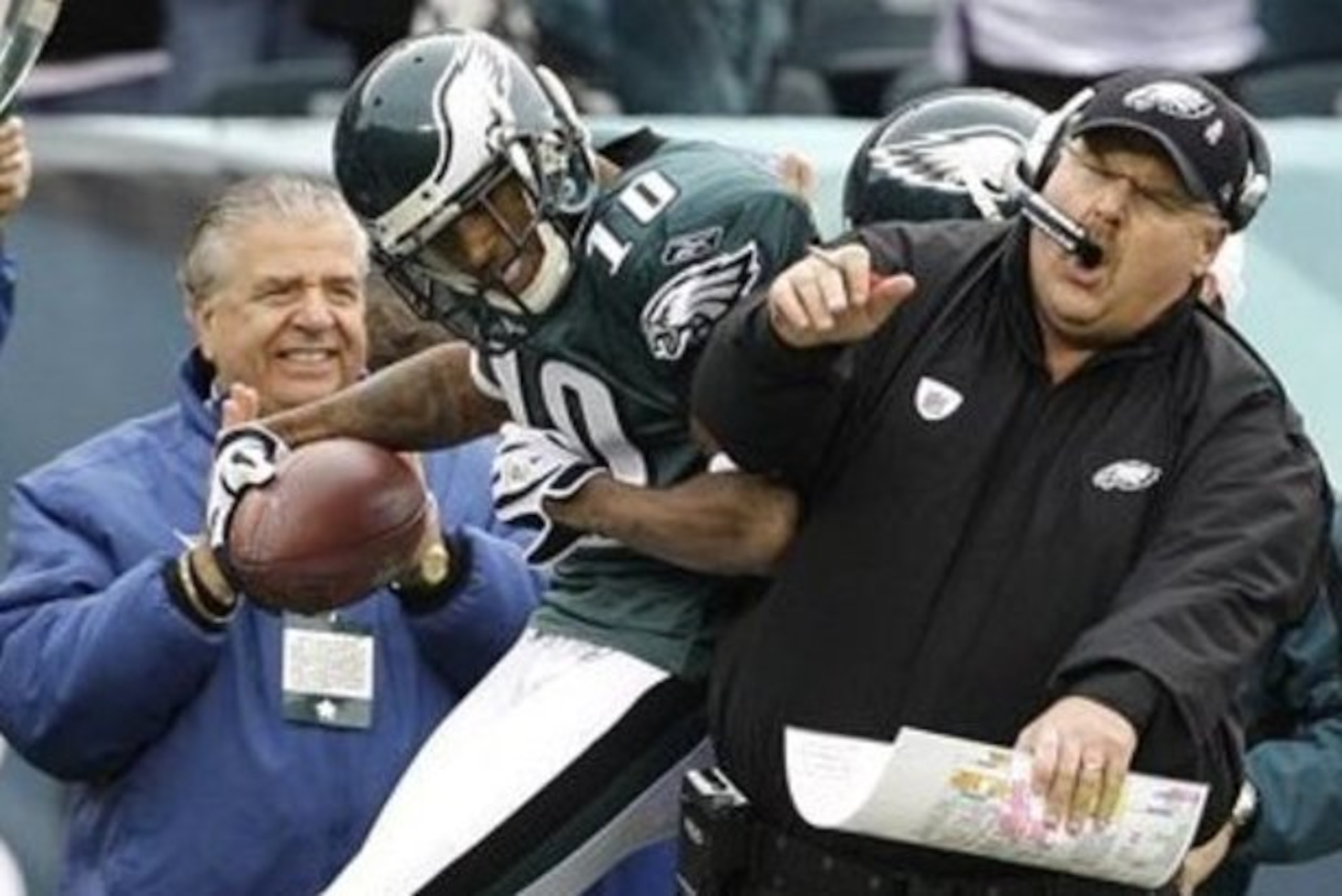
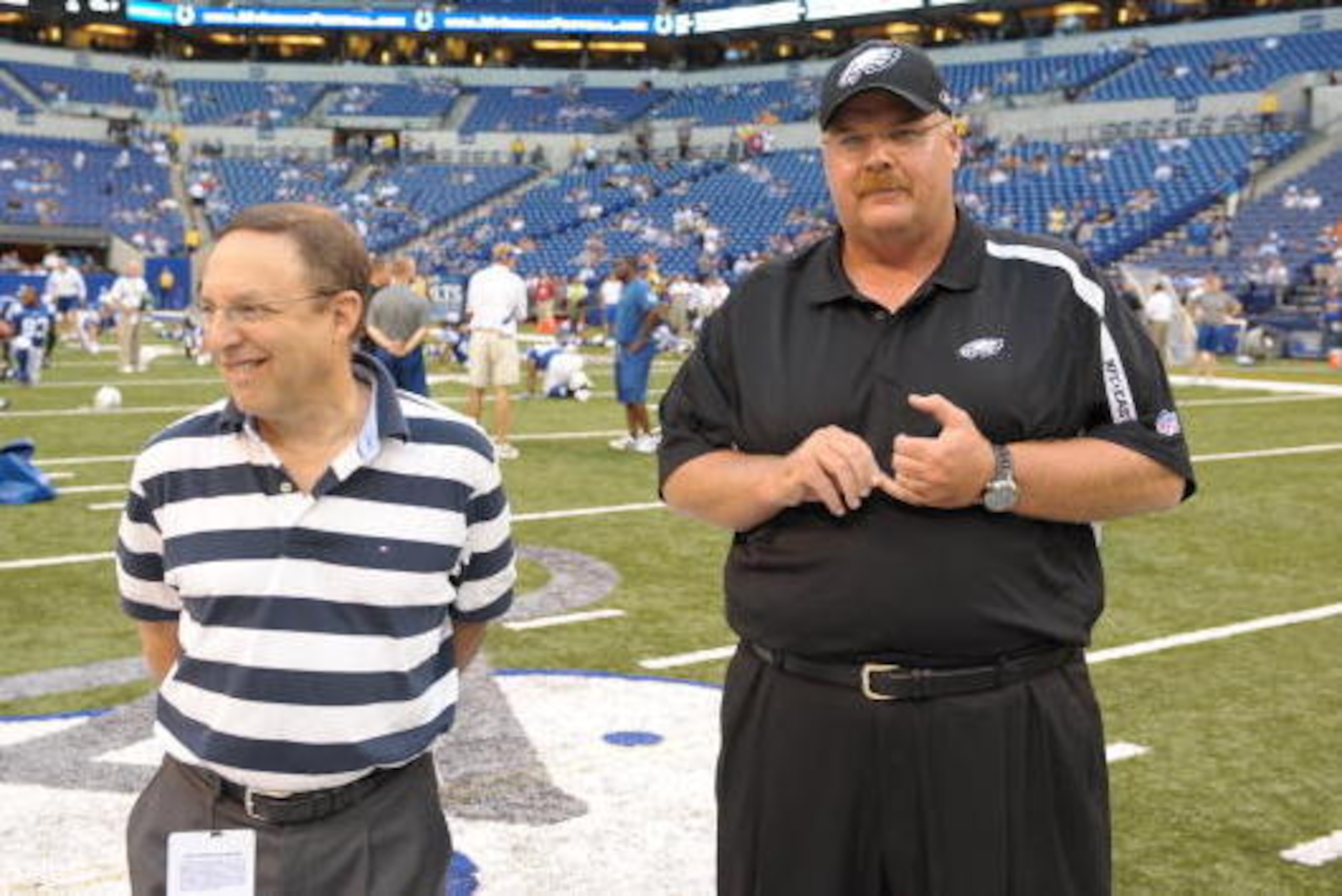
Banner was the Eagles' president from 1995 to 2012, a long tenure for any executive. It was a comfortable period with six division titles, five conference championship game appearances and one trip to the Super Bowl. And most importantly, one head coach presided over nearly all of that period: Andy Reid.
Reid is an example of a hiring home run, the rarest kind. Said coaches don't send team executives reaching for the reset button every few years. Or worse, finding a new job themselves.
There are only four head coaches who have been with their current NFL teams for more than a decade, a list that could get shorter if the New Orleans Saints move on from Sean Payton.
Tenure is the ultimate sign of success. Winning leads to deep playoff runs, job security and a strong safety net after a poor season. Most of all, winning because the right head coach was plugged in at the right time rebuilds a franchise's foundation.
| Bill Belichick | New England Patriots | 2000 |
| Marvin Lewis | Cincinnati Bengals | 2003 |
| Mike McCarthy | Green Bay Packers | 2006 |
| Sean Payton | New Orleans Saints | 2006 |
| Mike Tomlin | Pittsburgh Steelers | 2007 |
Black Monday is just the beginning, and sometimes the easiest part if a team was truly struggling. What happens in the days and weeks that follow either sets success and even a championship path in motion or maintains the current cycle of hirings, firings and semi-annual Black Monday darkness.
How do you avoid the latter scenario? And how does a home run hiring process begin? In some cases, it never really ends.
An ongoing list
The important work is what happens long before Black Monday. The interviews that take place during the hiring process are critical, but they're the culmination of intense research a team does weeks or months in advance.
The wheels often start rolling with about one month left in the season, when a team determines a coaching change is a possibility. For others like Banner, those wheels are constantly in motion.
"I was always keeping a list," Banner said. "Every time I went to the Senior Bowl, I would ask people, 'Hey, who in your building is really good? Who do you think is a good leader?' Sometimes I would even ask directly about some young coach, gauging if he's head coach material one day, or just a good position coach or coordinator.
"If I ever got to the point—which I only did at the very end of Andy's tenure—when a change was even a consideration, I then had accumulated a book that had all kinds of names and notes with who I spoke to and what they said, all in the effort to fit what we were looking for."
Even teams that ultimately don't make a coaching change often go through the process of laying the initial groundwork with basic but critical research, with the preliminary probe taking place late in the season.
They want to know how many other openings there may be, and the potential competition for hot head coaching candidates. They want to dig into the minutiae of every candidate's coaching history, getting an idea of who he is as a teacher and leader.
But more importantly, there's an element of introspection and self-discovery.
Knowing what you want and what it looks like
There's a crossover between the early stages of the hiring process and the early stages of dating. You won't have success in either without spending some alone time to figure out what exactly it is you're looking for and how to find it.
Reid's hiring, for instance, serves as a fascinating case study of successfully looking inward first. As 6ABC's Jeff Skversky noted, the Eagles have struggled with establishing a team identity since firing Reid in 2012.
Meanwhile, Reid has done just fine with the Kansas City Chiefs. They've now made the playoffs in three of Reid's four seasons as head coach, and they took the AFC West crown with a 12-4 record in 2016.
Reid was an unconventional hire back in 1999. He spent seven years with the Green Bay Packers coaching on the offensive side, but none of that time included work as a coordinator.
Logging time as a coordinator is still often considered a prerequisite even to be considered for any head coaching vacancy. Teams generally don't use that position purely as a gauge of football intelligence. Instead, they want to be assured a candidate can manage the workload to lead an entire unit rather than just a handful of players in one position group.
But Banner was after more than merely experience when he hired Reid. He was chasing a characteristic, and thus, he conducted an elaborate project.
"We decided to do a research project to see if we could identify the qualities in successful head coaches that we should be looking for," he said. The pinnacle of success for Banner and his Eagles front office was appearing in at least two Super Bowls.
"We took a list of all those head coaches and then started to learn everything we possibly could about them. Were they mostly offensive or defensive guys? Were they aggressive or passive? What was their age when hired? What was their background? What kind of coaches had they worked under? It was everything you could possibly imagine put onto a list to see if we could find what they may have had in common and we should be looking for."
So what did they have in common? Nothing at all, at least when it came to Xs and Os.
"Some were from offense and some were from defense. Some were younger and some were older. There were things with a slight link, like for example it was a little more likely great coaches would be hired on the younger end of the age spectrum. But we didn't find anything all that consequential."
Here's the thing though: Intangibles matter.
They matter deeply, even if they can't be quantified and are therefore clouded with grayness in a sport that craves black and white. And the similarities between past championship-caliber coaches could be found in those essential qualities.
"They were all excellent leaders," Banner said. "They were all very, very detail-oriented. They were all excellent at hiring people and managing them well. They had good instincts to put other coaching talent around them. They had good convictions about what they believed. They didn't necessarily believe the same thing, but the fact they had strong convictions about a particular belief allowed them to be very strong leaders, and people would then trust and follow them.
"So we hired Andy Reid, who had never even been a coordinator, because we were out there looking for those characteristics instead of worrying about who had led the league in offense last year and who was the coordinator of that offense."
That decision, which led to more than a decade of franchise stability, was a product of unconventional thinking. And it's led to plenty of unconventional advice since then whenever the hiring cycle cranks up.
"I've had a lot of people call me and ask what they should be looking for because Andy wasn't an obvious hire," Banner added. "My answer has always been to forget about the football part of it. I mean, there obviously has to be a minimum standard. But if the candidates are working in the NFL and are on a winning team, then assume they meet the football criteria. Then you need to look for these other intangibles."
In theory, that sounds like well-reasoned and logical thinking. But in practice, the example Banner and the Eagles set with Reid—just as the New England Patriots have with Bill Belichick and the Cincinnati Bengals did with Marvin Lewis or the Green Bay Packers did with Mike McCarthy—is the most difficult gem to unearth in football.
Maybe even more challenging than locating the elusive franchise quarterback.
It's all just so very terrifying
A general manager typically gets one shot at nailing his head coach hire. There are exceptions (hey there, Doug Whaley), but most of the time, if the lead executive's hire is booted to the curb, he'll also be packing up his novelty office desk easy button.
Months of research and preparation often come down to a six- to eight-hour interview. Sometimes a second interview follows, but that's usually to confirm a decision. The real work and evaluation are done in the first meeting.
The candidate's mere presence in a room means the team is confident in him. But even after the best interviews when the candidate impresses with, say, evolved thinking about who he would hire around him and why—as Reid did, complete with a book of notes on potential assistants—there's still a crippling sense of anxiety.
"Terrifying is the right word to describe this process," said Banner, who's now an ESPN analyst. "There's nobody arrogant enough to think that after only six to eight hours you won't have any doubts. You can be hopeful and confident, but you can't be sure you have the guy for the next however many years. In Andy's case, it ended up being 14 years. You're hopeful you'll win a lot of games together and have fun, and it'll be someone you'll have a relationship with for the rest of your life."
Since the 2005 offseason, 75 new head coaches have been hired, according to The Cauldron's Donovan Rose. That's over twice the amount of teams available to coach. Per Rose, the average head coach tenure between 2005 and 2015 was 3.13 years.
The process behind hiring a head coach is delicate and all too often not fruitful despite the best intentions and thorough research. Far more than just football acumen is being judged. It's an exercise rooted in grand questions tied to human psychology.
Yes, you want someone who is fluent in the language of football and can be the translator to a group of men. But you also want someone who embodies qualities that are present in successful head coaches yet hard to describe and even more impossible to measure.
They need to be detail-obsessed leaders who can readily identify other like-minded individuals. Essentially, the hiring bull's-eye needs to be the subject of a statement like this last one from Banner.
"Part of what was impressive with Andy was the length he thought about why he thought what he thought. It wasn't just a gut reaction. It was all really sophisticated, thought-out and then researched to feel confident."
That's confusing at first. Then a little amusing and then, like the rest of coach searching, pretty terrifying.
Coaches who stick around do more than think critically. They observe, absorb and then make judgments.
That's the guy teams are searching for, if he's out there.
.jpg?w=2560 "Commanders Football")